Oil price buoyed by US economic stimuli #ศาสตร์เกษตรดินปุ๋ย

#ศาสตร์เกษตรดินปุ๋ย : ขอบคุณแหล่งข้อมูล : หนังสือพิมพ์ The Nation

https://www.nationthailand.com/business/30384795?utm_source=category&utm_medium=internal_referral

Oil price buoyed by US economic stimuli

Mar 25. 2020
By The Nation

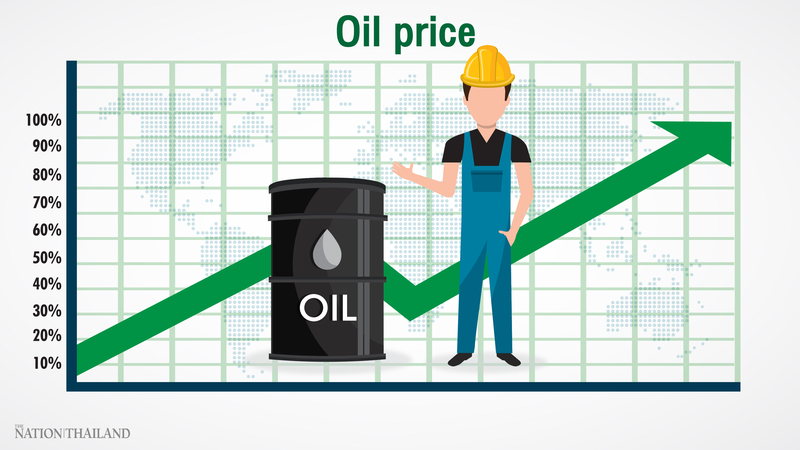
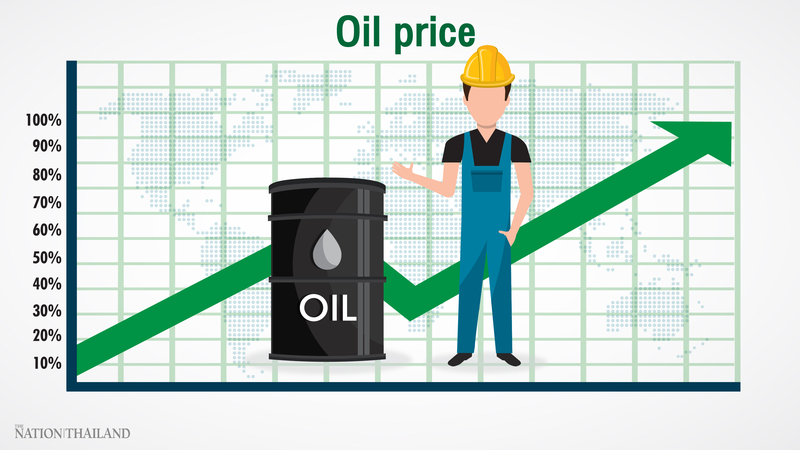
Economic stimulus measures announced in the United States hoisted the price of crude oil on Wednesday (March 25), according to an analyst at Thai Oil.

The US Federal Reserve has unveiled a massive stimulus package and Congress is expected to prove another $2 trillion worth soon.

Meanwhile Indian Prime Minister Narendra Modi ordered 1.3 million people into home self-quarantine for three weeks starting on Wednesday, and that will affect oil demand there, the analyst noted.

The oil price remains under pressure, however, after Saudi Arabia said it would begin exporting up to 10 million more barrels per day in May than the 7.3 million barrels shipping this month.

The American Petroleum Institute said crude oil production in the US for the week ending March 20 dropped to 451.4 million barrels, the first decrease in eight weeks.

The price of benzene fuel rose less than that of Dubai crude oil, a factor blamed on the spread of the Covid-19 virus in the Middle East and increasing supply in India.

Diesel fuel was selling for more than Dubai crude oil, though, gaining support from India, but the virus is also limiting demand.

NGV price dropping for public transport #ศาสตร์เกษตรดินปุ๋ย

#ศาสตร์เกษตรดินปุ๋ย : ขอบคุณแหล่งข้อมูล : หนังสือพิมพ์ The Nation

https://www.nationthailand.com/business/30384792?utm_source=category&utm_medium=internal_referral

NVG price dropping for public transport

Mar 25. 2020

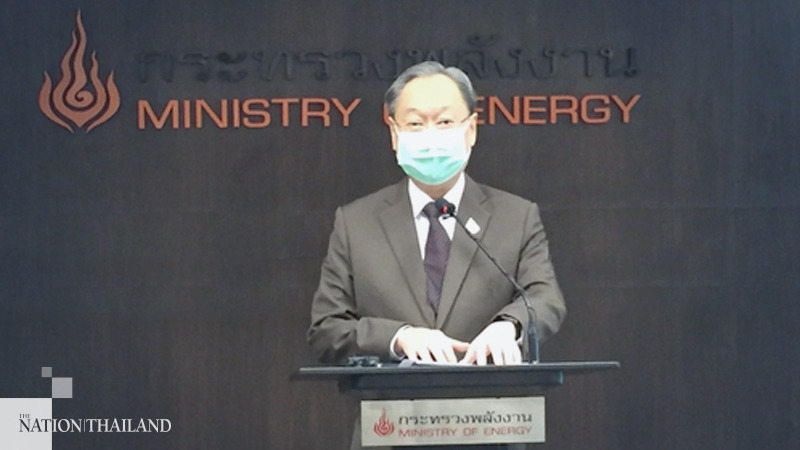
Energy Minister Sontirat Sontijirawong

Energy Minister Sontirat Sontijirawong
By THE NATION
The retail price of natural gas (NGV) for public buses will be lowered by Bt3 per kilogram to Bt10.62 for three months starting next Wednesday (April 1).

The lower rate will also apply to taxis, tuk-tuks and public vans.

The Energy Policy Administration Committee decided this week to drop the price to ease the financial burden of bus operators amid the Covid-19 outbreak, said Energy Ministry Sontirat Sontijirawong.

SET gains but worries mount about state of emergency #ศาสตร์เกษตรดินปุ๋ย

#ศาสตร์เกษตรดินปุ๋ย : ขอบคุณแหล่งข้อมูล : หนังสือพิมพ์ The Nation

https://www.nationthailand.com/business/30384791?utm_source=category&utm_medium=internal_referral

SET gains but worries mount about state of emergency

Mar 25. 2020
By The Nation

The Stock Exchange of Thailand (SET) Index rose by 39.81 points, or 3.85 per cent, to 1,073.65 in Wednesday’s (March 25) morning session.

A stock analyst at Krungsri Securities expected the index would move upside between 1,055 and 1,065 before weakening as regional stocks sharply rebounded after the US Federal Reserve used unlimited quantitative easing bond purchase programme and increased the credit line by $300 billion, allowing businesses to borrow at lower interest cost.

“Also, investors hope the US Congress would reach an agreement to relieve the burden of the American people and businesses affected by the Covid-19 impact worth US$2 trillion, which will be a positive sentiment for risk asset investment,” the stock analyst said.

“However, uncertainty inside the country following Prime Minister Prayut Chan-o-cha declaring a state of emergency to contain the Covid-19 pandemic, starting from March 26 to the end of April, will pressure the economy. Besides, foreign investors have made net sales continuously. This month alone, they have made net sales of Bt73 billion, which would pull the index down.”

The analyst recommended three groups of stocks for investors:

● ICT stocks which benefit from work from home trends, such as ADVANC, INTUCH, and DTAC.

● Retail stocks, which benefit from people stocking up on products during the Covid-19 situation, such as CPALL and BJC.

● Food stocks, which would benefit from the weakening baht, such as CPF and TU.

Starbucks closures can’t stop coffee’s massive rally #ศาสตร์เกษตรดินปุ๋ย

#ศาสตร์เกษตรดินปุ๋ย : ขอบคุณแหล่งข้อมูล : หนังสือพิมพ์ The Nation

https://www.nationthailand.com/business/30384771?utm_source=category&utm_medium=internal_referral

Starbucks closures can’t stop coffee’s massive rally

Mar 25. 2020
By Syndication Washington Post, Bloomberg · Marvin G. Perez, Isis Almeida · BUSINESS, US-GLOBAL-MARKETS

Not even Starbucks closing most of its U.S. and Canadian locations is enough to damp coffee’s rally as potential supply disruptions outweigh demand concerns.

With more governments enacting nationwide lockdowns and many people staying home, there’s growing fears that labor and logistical interruptions will curb the flow of beans.

Arabica coffee for delivery in May was up 2.8% at 11:57 a.m. in New York, heading for a fifth straight gain to the highest level since early January.

Coffee is defying the global market rout fueled by the coronavirus outbreak partly amid signs that traders are encouraging consumers to secure supplies ahead of possible disruptions. Also helping are comments by the exchange that it can’t ensure the sampling and grading process will be completed in time for the expiry of May contracts.

Now possible labor disruptions — particularly where bean picking is labor intensive such as Central America and Colombia — are giving further price support. In recent years, Venezuelan migrants have become an important part of the Colombian workforce. Now that border has closed.

“So far things are okay, but the harvest is yet to start,” said Roberto Velez, chief executive officer at the Colombian Federation of Coffee Growers, referring to the mid-crop collected from April. “We are yet to coordinate with authorities on permission for pickers to move freely.”

Brazil, the world’s top exporter of arabica beans, won’t start the 2020-21 harvest until May. Colombia is the second-largest arabica supplier, followed by Honduras.

In Honduras, exporters have special government authorization to continue operating and “are doing so” said Miguel Pon, executive director of Adecafeh, the country’s main exporter association.

“The government has extended the absolute curfew until March 29 and this week will be crucial to learn of new cases of COVID-19 and what new determinations the government will make,” he said.

Central American countries “have very little coffee,” said Ernesto Alvarez, managing director for Coex Coffee International in Miami. “I see a problem that is now getting worse. Coffee inventory is flying.”

While a Colombian presidential decree states that people involved in agricultural supply chains have free mobility, some mayors are contravening that, said Manuel Rueda, general manager of Integra Trading SAS.

“It may take some time to sort out all the details that surround this mandate,” he said, adding that the company “will try to continue operating as usual and continue to monitor how everything is evolving.”

The labor concerns aren’t restricted to farm workers. In Brazil, for example, stevedores at the giant Santos port are threatening to strike.

“As Latin American countries feel the ripple effect of the virus grow into bigger waves, our market is exposed,” said Alex Boughton, a broker at Sucden Financial in London. “Supply concerns are still prevalent, and that’s not going to go away any time soon.”

In locked-down London, traders still show up at deserted desks #ศาสตร์เกษตรดินปุ๋ย

#ศาสตร์เกษตรดินปุ๋ย : ขอบคุณแหล่งข้อมูล : หนังสือพิมพ์ The Nation

https://www.nationthailand.com/business/30384769?utm_source=category&utm_medium=internal_referral

In locked-down London, traders still show up at deserted desks

Mar 25. 2020
A lone cyclist rides along the River Thames in London on March 24, 2020. MUST CREDIT: Bloomberg photo by Simon Dawson

A lone cyclist rides along the River Thames in London on March 24, 2020. MUST CREDIT: Bloomberg photo by Simon Dawson
By Syndication Washington Post, Bloomberg · Stefania Spezzati, Harry Wilson, Sonia Sirletti · BUSINESS

As Britain awoke to unprecedented peacetime limits on freedom of movement, a core band of finance professionals still had to find their way to the office.

Deutsche Bank and Credit Suisse Group armed “critical staff” with letters in case authorities demanded documentation to explain why they were out and about. Barclays Plc covered Uber rides for some employees avoiding public transport. UniCredit SpA checks to make sure none has a fever.

There was no need for the top brass to change their behavior in the wake of Prime Minister Boris Johnson’s announcement late Monday that all unnecessary movement of people was banned for at least three weeks. Senior executives have been working remotely for weeks as the coronavirus pandemic ravaged much of Europe and began spreading illness and alarm throughout Britain.

In contrast to the financial crisis a decade ago, when groups of bankers and policymakers huddled to bail out the financial system, best practices now force key players to communicate without body language or that tell-tale raised eyebrow.

“So much of crisis management is looking people in the eyes,” says Philip Hampton, who was named chairman of Royal Bank of Scotland after the bank was bailed out in 2008. “In a crisis you often have to pack everything up and work through the night. You have to be there with the lawyers and the contractual documents and I don’t see how all of that can be done remotely.”

Take the leaders of Standard Chartered. The top three executives, Chief Executive Officer Bill Winters, Chief Financial Officer Andy Halford and Chief Risk Officer Mark Smith, haven’t met in person for three weeks to avoid risk they get infected at the same time, a person with knowledge of the bank’s plan said.

At Lloyds Banking Group, CEO Antonio Horta-Osorio is running the U.K.’s biggest retail lender from his home.

“I am now running the bank with a much shorter horizon and I am now having virtual meetings,” he said at a virtual financial services conference hosted by Morgan Stanley last week. “Our planning cycle has shortened significantly.”

A government list of “key workers” who can still go to the office includes “staff needed for essential financial services provision,” giving banks some leeway in organizing their staff. And while desks are largely barren, some have been asked — or told — to make their way to an office: Equity and credit markets melting down and volatility is off the charts.

At Lloyds, a trader drove his own car through the traffic-less metropolis instead of using public transport. Deutsche Bank’s critical employees comprise mostly traders and security staff. The few Commerzbank employees showing up to the office are being discouraged from taking public transport, with car parking, bike parking and even company accommodation provided.

At Goldman Sachs, only staff performing “essential functions” should go to the office, Richard Gnodde, who heads its international business in London, said in a memo to its staff.

Italian companies, applying harsh lessons learned at home, has most staff working from home.

UniCredit, Italy’s biggest bank by assets, has adopted the same standards for all its offices. In London, like in Milan and Munich, there is a rotation system and traders are deployed to different floors. The bank checks each employee’s body temperature, and it pays the commute for all of them to avoid public transport.

Of Mediobanca’s 100-person London staff, all are working from home except for about five traders who rotate in the office.

Home or not, there are still standards to be maintained.

RBS Chairman Howard Davies turned up on Bloomberg TV Tuesday morning via FaceTime wearing a white shirt and a tie against a backdrop of book shelves.

U.S. stocks surge on hopes that a stimulus deal is imminent #ศาสตร์เกษตรดินปุ๋ย

#ศาสตร์เกษตรดินปุ๋ย : ขอบคุณแหล่งข้อมูล : หนังสือพิมพ์ The Nation

https://www.nationthailand.com/business/30384767?utm_source=category&utm_medium=internal_referral

U.S. stocks surge on hopes that a stimulus deal is imminent

Mar 25. 2020
By The Washington Post · Rachel Siegel, Thomas Heath · BUSINESS, US-GLOBAL-MARKETS 

U.S. markets soared Tuesday as investors eagerly awaited word on a $2 trillion stimulus agreement between the Senate and White House aimed at rescuing the nation’s economy, businesses and individuals alike.

The Dow Jones industrial average soared 1,600 points by midday, wiping away Monday’s losses. The Standard & Poor’s 500 and Nasdaq climbed 7.7 and 6.7 percent, respectively. In futures trading, the indexes hit 5 percent “limit up” levels, meaning they could not trade beyond that point.

The turnaround follows a volatile session that sent markets plunging after the Senate twice failed to advance the coronavirus stimulus bill.

Late Monday night, Senate leadership and the Trump administration came closer to an agreement after a day of fiery exchanges on the Senate floor. As negotiations wrapped up just before midnight, Senate Minority Leader Chuck Schumer, D-N.Y., and Treasury Secretary Steven Mnuchin signaled that an agreement could come the next day.

Though some details are in flux, the legislation would provide direct payments of $1,200 to many American adults and another $500 for children. It would also create roughly $850 billion in loan and assistance programs for businesses, states and cities and increase spending for the unemployment insurance program, as well as hospitals and health-care providers.

Earlier Monday, the Fed launched an unprecedented effort to keep money flowing to companies, households and cities by buying unlimited amounts of U.S. Treasurys and mortgage-backed securities. The response goes far beyond any the central bank took during the 2008 financial crisis and comes as more businesses shutter by the day and on the expectation that millions of people will lose their jobs.

“We’ve already seen the Federal Reserve throw the kitchen sink at this crisis and now investors are looking to Congress and weighing the impact of this imminent rescue package,” said Nicole Tanenbaum, chief investment strategist at Chequers Financial Management. “Once a stimulus deal is reached, while it won’t be the silver bullet to curb the virus outbreak, it will provide some much needed clarity and what an ultimate path to economic recovery may look like.”

The Fed announcement caused a brief spike in the markets Monday, then investors returned their focus to Capitol Hill. The Senate twice failed to advance the stimulus bill, pushing the Dow nearly 600 points lower, or 3 percent, to close at 18,591. The S&P 500 dropped roughly 3 percent and the Nasdaq tipped down 0.3 percent.

A worldwide turnaround also was afoot Tuesday, buoyed in part by stimulus hopes in the United States. In Europe, Britain’s FTSE 100 climbed 4.9 percent, and Germany’s DAX 7.1 percent. The benchmark Stoxx 600 rose 5.56 percent.

In Asia, Japan’s Nikkei 225 surged 7.1 percent, and Hong Kong’s Hang Seng 4.46 percent.

Govt relief package falls far short, say economists #ศาสตร์เกษตรดินปุ๋ย

#ศาสตร์เกษตรดินปุ๋ย : ขอบคุณแหล่งข้อมูล : หนังสือพิมพ์ The Nation

https://www.nationthailand.com/business/30384763?utm_source=category&utm_medium=internal_referral

Govt relief package falls far short, say economists

Mar 25. 2020
Deputy Prime Minister Somkid Jatusripitak

Deputy Prime Minister Somkid Jatusripitak
By Wichit Chaitrong
The Nation

The government’s economic relief package earmarked for people reeling from the fallout of the Covid-19 pandemic would not be sufficient, considering the vast extent of the economic damages, say economists and a businessman.

“Judging from the figure of 3 million people to receive handouts of Bt5,000 per month each for the next three months, it is far lower than the number of people left unemployed, thus the majority of them will not be getting any financial aid, Nipon Poapongsakorn, distinguished fellow at Thailand Research Development Institute, an independent think-tank, told the Nation.

Nipon estimated that more than 10 million people were affected.

His comment came after Deputy Prime Minister Somkid Jatusripitak announced on Tuesday (March 24) that the government would offer financial aid to those left jobless through closures of the business venues where they worked , following the enforcement of government measures to curb the spread of Covid-19.

Prime Minister General Prayut Chan-o-cha declared a state of emergency to contain the virus on the same day, but not much details were announced.

“Those not coming under the Social Security system will each be given a Bt5,000 cash handout for three months,” said Somkid, adding that “This includes temporary workers, freelancers and self-employed people. The government estimated that up to 3 million people were affected by the preventive measures”.

People registered under the social security scheme will be entitled to 50 per cent of their respective monthly salary for 180 days if their employers closed the businesses, or 90 days in the event of the government ordering the business to suspend operation.

“Furthermore, the government will provide Bt40 billion in loans to affected workers at a maximum of Bt10,000 per person,” added Somkid. “These loans, carrying an interest rate of 0.1 per cent per month, require no collateral”. Government Savings Bank and the Bank for Agriculture and Agricultural Cooperatives will be responsible for extending the lending to about four million people.

If the first batch of loans failed to meet demand, the government will inject another Bt20 billion into the programme, but at a higher loan rate of 0.35 per cent per month.

To further alleviate people’s financial burden, state-owned pawn shops have received a budget of Bt2 billion to provide loans at a low interest rate of 0.125 per cent per month.

Somkid has promised more relief measures if needed.

Nipon, however, criticised the package, saying the government based the spending on the Bt96 billion-emergency fund under fiscal budget 2020.

“It is too small, given the scale of problems, the government may need Bt300 to Bt 500 billion,” said Nipon.

Many countries have launched massive stimulus package, with Germany set to spend as much as $800 billion(Bt26 trillion) to offset impact of the virus on its economy.

He suggested the government issue an emergency decree to borrow adequate funding for solving the economic problems, warning that the economy could become stagnant if nothing is done.

“The government should first secure adequate funding and if the situation improve, part of the loan is not needed to be spent,” he said.

“Financial supports should be universal, covering everyone except personal income tax payers and wealthy individuals. Universal coverage could raise the number of welfare recipients from the 14 million currently receiving monthly grants under the State Welfare Card scheme,” he estimated.

Nipon also questioned how the Finance Ministry could be sure that it is handing out cash to people who were actually impacted by the virus outbreak and business closures .

Employers Confederation of Thai Trade and Industry vice president Tanit Sorat shared similar view, saying each workers should get at least Bt300 per day, equivalent to the minimum wage of Bt9,000 per month.

“However, getting Bt5,000 a month is better than nothing,” he said.

Tanit also expressed doubts about the extension of soft loans to individuals from state-owned banks. It might be similar to the lending facility of Bt150 billion for small and medium-sized enterprises , which has proved difficult for SMEs to access, he added.

Meanwhile, Kobsidthi Silpachai, head of capital markets research at Kasikornbank said the government measures were just a defensive approach to contain economic damages. “Given the small amount of cash handout offered by the government and business disruption, consumers would only spend a small proportion of the money which would hardly have a effect on the economy,” he said.

According an informed source who asked not to be named, the government may need about Bt600 billion to cushion economic impact form the virus outbreak.

Somkid has promised more support measures if the situation does not improve , adding that the next relief package will help farmers during the dry season between between April to July.

The package announced on Tuesday included a rise in personal income tax deduction for health insurance to Bt25,000 per annum from Bt15,000.

The Personal income tax payment date is postponed to the end of August from June while tax return filing is encouraged as taxpayers would get faster tax returns this year than in previous years. State agencies will organise career training and each participant will get a grant of Bt300 a day.

Tax exemption for medical personnel will apply to income generated from work dealing with Covid-19.

Tourism related businesses such as tour agents, spa, transportation , hotels, room rental and restaurants will be eligible to apply for soft loans at the Small and Medium Enterprise Development of Thailand, up to Bt3 million each with 3 per cent interest rate for the first two years of a 5-year term. The SME Bank will provide Bt10 billion for this purpose and borrowers could apply for loans until December 30 this year.

Unlisted firms are also allowed to delay corporate income tax payment until the end of September in some cases.

SET rises on latest govt stimulus package, Fed move #ศาสตร์เกษตรดินปุ๋ย

#ศาสตร์เกษตรดินปุ๋ย : ขอบคุณแหล่งข้อมูล : หนังสือพิมพ์ The Nation

https://www.nationthailand.com/business/30384759?utm_source=category&utm_medium=internal_referral

SET rises on latest govt stimulus package, Fed move

Mar 24. 2020
By The Nation

The Stock Exchange of Thailand (SET) Index closed at 1,033.84 today (March 24), an increase of 9.38 points, or 0.92 per cent, from Monday’s close.

Transactions amounted to a total of Bt64.144 billion, with an index high of 1,067.51 and a low of 1,024.38.

A stock analyst at Krungsri Securities had expected the index to rebound as central banks and governments worldwide issued economic stimulus measures.

“Although markets are still concerned that Covid-19 would pressure the global economy into recession, central banks and governments have moved to issue measures to deal with the situation. That would be a positive sentiment for investment,” he said.

The US Federal Reserve announced it would use an unlimited quantitative easing bond purchase programme and increase the credit line by US$300 billion (Bt9.85 trillion), allowing businesses to borrow at lower interest cost as part of a massive stimulus package.

Meanwhile, the Thai government today announced an economic package including cash handouts to low income earners, soft loans, and tax cuts for affected people.

As of 4.49pm, global stocks were seeing a tendency to move upside.

The crude oil price rose by $1.45, or 6.21 per cent, to $24.81 per barrel, while the price of gold increased by $61.80, or 3.94 per cent, to $1,629.40 per ounce.

The top ten stocks with the highest trade values today were BAM, PTT, AOT, Advanc, CPAll, Gulf, GPSC, PTTEP, KBank and SCC.

Elsewhere in Asia, Japan’s Nikkei closed at 18,092.35, up 1,204.57 points, or 7.13 per cent.

China’s Shanghai SE Composite Index ended the day at 2,722.44, up 62.27 points, or 2.34 per cent, while the Shenzhen SE Component Index closed at 9,921.68, up 230.15 points, or 2.37 per cent.

Hong Kong’s Hang Seng ended at 22,663.49, up 967.36 points, or 4.46 per cent.

South Korea’s Kospi Index closed at 1,609.97, up 127.51 points, or 8.60 per cent.

Taiwan’s TaiEx

Gold stays on upward trend #ศาสตร์เกษตรดินปุ๋ย

#ศาสตร์เกษตรดินปุ๋ย : ขอบคุณแหล่งข้อมูล : หนังสือพิมพ์ The Nation

https://www.nationthailand.com/business/30384758?utm_source=category&utm_medium=internal_referral

Gold stays on upward trend

Mar 24. 2020
By The Nation

Gold price rose Bt50 per baht weight at the close of trade on Tuesday (March 24), the Gold Traders Association reported.

As of 4.38pm, buying price of a gold bar stood at Bt24,400 per baht weight with selling price at Bt24,500, while gold ornament was Bt23,967.96 per baht weight to buy and Bt25,000 to sell.

Prices increased from morning trade when a gold bar cost Bt24,350 to buy and Bt24,450 to sell, while gold ornaments cost Bt23,907.32 to buy and Bt24,950 to sell.

As of 4.49pm, Gold contracts in COMEX futures to be delivered in April rose by US$61.80 or 3.94 per cent to $1,629.40 per ounce as the US Federal Reserve announced massive economic stimulus measures to deal with the Covid-19 outbreak, which has been ravaging the economy.

Crude oil price edges up expecting a lift from US stimulus measures #ศาสตร์เกษตรดินปุ๋ย

#ศาสตร์เกษตรดินปุ๋ย : ขอบคุณแหล่งข้อมูล : หนังสือพิมพ์ The Nation

https://www.nationthailand.com/business/30384738?utm_source=category&utm_medium=internal_referral

Crude oil price edges up expecting a lift from US stimulus measures

Mar 24. 2020
By The Nation

The price of crude oil rose slightly as hopes rose over US economic stimulus measures and Opec resumed negotiations to maintain crude oil price stability, an energy analyst at Thai Oil said on Tuesday (March 24).

West Texas Intermediate (WTI) and Brent crude oil price increased slightly as investors hoped the US government and Federal Reserve would issue measures to boost the economy impacted by Covid-19, while Saudi Arabia and Russia would resume talks on maintaining crude oil price stability.

UBS, a global firm, expected that oil demand in March this year would decrease by 5 to 10 million barrels per day year on year, while WTI and Brent crude oil price in June this year would remain at US$20 per barrel.

The US Senate has not yet approved a US$2 trillion stimulus package to boost the economy amid the outbreak of Covid-19 virus. The Senate vote on Monday was 49-46, well short of the 60-vote threshold needed to advance the legislation for a final debate.

Benzene fuel prices dropped more than those of Dubai crude oil after India and Indonesia enhanced measures to deal with the Covid-19 outbreak, while China’s oil refineries increased benzene fuel production capacity.

Diesel fuel prices dropped to the same level as those of Dubai crude oil as oil demand decreased due to the Covid-19 outbreak, while the demand of diesel fuel dropped after India locked down the country.