Thai stocks slump on sharp increase in US Covid-19 cases #ศาสตร์เกษตรดินปุ๋ย

#ศาสตร์เกษตรดินปุ๋ย : ขอบคุณแหล่งข้อมูล : หนังสือพิมพ์ The Nation

https://www.nationthailand.com/business/30384651?utm_source=category&utm_medium=internal_referral

Thai stocks slump on sharp increase in US Covid-19 cases

Mar 23. 2020
By The Nation

The Stock Exchange of Thailand (SET) Index fell by 68.77 points, or 6.10 per cent, to 1,058.47 in the morning session on Monday (March 23).

The SET nearly used the circuit breaker after the index opened trading and fell almost 8 per cent due to the sharp increase in the number of confirmed Covid-19 cases in the US, causing uncertainty following the global economic recession.

A stock analyst at AIRA Securities expected the SET Index to fluctuate on the downside, while forecasting the support level from 1,100 to 1,070 and resistance level from 1,165 to 1,185.

“The market gained negative sentiment from the decline in global stock markets after the number of confirmed Covid-19 cases in the US increased to 38,200, up 5,681 cases or 20.9 per cent, causing worries of a global economic recession,” the stock analyst said.

The analyst said that the market would gain positive sentiment from central banks in many countries relaxing monetary policy and issuing measures to deal with the Covid-19 impact.

“The Bank of Thailand March 20 cut the policy rate by 0.25 of a percentage point to 0.75 per cent from the previous 1.00 per cent,” the stock analyst said.

“We expected that the market had already responded to this positive sentiment, but it would limit the recovery in banking stocks.”

The analyst expected that the Bangkok Metropolitan Administration (BMA)’s move to close department stores and markets in the capital, as well as asking the private sector to allow employees to work from home would cause a short-term negative sentiment on department store and electric train stocks, while it would benefit retail stocks.

“The government’s move to issue measures to mitigate the impact may pressure the Thai economy in the short to medium term, but the market has a chance to recover in the short term,” the stock analyst said.

The analyst advised investors to follow the oil price war between Saudi Arabia and Russia closely after the US signalled it would intervene in the matter.

“We expect that this factor would cause fluctuation in crude oil price during this period, resulting in volatility in energy stocks and the Thai stock market,” the stock analyst said.

“Also, we suggest following the Covid-19 situation in Thailand after the number of confirmed cases rose sharply in the previous week, expecting to pressure the country’s economy and the market in the next period.”

The analyst recommended medium and long term investors who are able to take high risks to gradually buy value stocks that have high competitiveness, pay dividends continuously and whose price has dropped below reasonable price.

BOT ready to pump Bt1 trillion into ailing financial markets #ศาสตร์เกษตรดินปุ๋ย

#ศาสตร์เกษตรดินปุ๋ย : ขอบคุณแหล่งข้อมูล : หนังสือพิมพ์ The Nation

https://www.nationthailand.com/business/30384623?utm_source=category&utm_medium=internal_referral

BOT ready to pump Bt1 trillion into ailing financial markets

Mar 23. 2020
Central bank Governor Veerathai Santiprabhob, third from left, senior officials from the Ministry of Finance and representatives from the financial market hold an emergency press conference on Sunday (March 22) to announce a plan to inject liquidity of over Bt1 trillion into the bond market, which is hit by tight liquidity as a result of virus fears.

Central bank Governor Veerathai Santiprabhob, third from left, senior officials from the Ministry of Finance and representatives from the financial market hold an emergency press conference on Sunday (March 22) to announce a plan to inject liquidity of over Bt1 trillion into the bond market, which is hit by tight liquidity as a result of virus fears.
By Wichit Chaitrong
The Nation

The Bank of Thailand (BOT) has pledged to inject over Bt1 trillion to rescue the financial markets while the Ministry of Finance promised extra economic relief to support people affected by the Covid-19 fallout.

The BOT will allow banks to borrow money from it should investors make panic sales of investment units in bond mutual funds, BOT Governor Veerathai Santiprabhob said on Sunday.

Veerathai, senior officials from the Finance Ministry and representatives from financial markets held an emergency press conference on Sunday (March 22) to announce measures to support the bond market, which is suffering from a potential liquidity crunch as investors want to hold cash amid the uncertainty fuelled by the virus fears.

Virathai said that commercial banks could use investment grade bonds as collateral for borrowing money from the central bank’s lending facility, worth over Bt1 trillion.

Investment in money market funds and daily fixed-income funds is estimated to be over Bt1.6 trillion while the market liquidity has become thin as investors worry about the severe impact of the Covid-19 outbreak.

Banks that also own investment management companies, managing mutual funds, are ready to buy investment units from their subsidiaries when investors sell investment units back to the fund managers, Predee Daochai, president of the Thai Bankers’ Association said.

Veerathai said the central bank will coordinate with commercial banks, Government Savings Bank, insurance companies and Government Pension Fund to create a bridging fund of between Bt70 to Bt100 billion. The bridging fund will provide short-term lending for up to 270 days for those companies that had previously issued corporate bonds and could not adequately redeem it when the bonds reached maturity. Usually, bond issuers do not find a problem as they roll-over their bonds when corporate bonds reach maturity, but the current market has become thin, due to virus fears, said Veerathai. The bridging fund will top up when insurers cannot fully raise money in the financial market to meet their obligations.

Veerathai also promised to provide more liquidity in the government bonds market after the central bank recently purchased Bt100 billion worth of government bonds.

Prasong Poontaneat, permanent secretary of the Finance Ministry, said the ministry will on Tuesday submit to the Cabinet another economic package to support people and labour affected by the impact of the coronavirus outbreak. He did not reveal details but said that Social Security will support those who lose their jobs while the ministry will provide support to those who are not members of the Social Security Fund.

The secretary-general of the Securities and Exchange Commission, Ruenvadee Suwanmongkol, promised new measures to support the stock market affected by investors selling-off shares. Restrictions on treasury stocks, or buying back stocks, would be eased in order to allow corporates, or executives of companies to buy back stocks more easily. Currently they have to wait for one year after the first buyback takes place, she added.

Veerathai assured the markets that Thailand has plenty of liquidity due to high international reserves, banks having adequate capital and corporates having lower foreign debt. “This situation is different from the Asian financial crisis of 1997 when the country ran out of reserves, banks did not have enough capital and corporates had high foreign debt, but this time, international reserves are high, and banks have a solid capital base,” Veerathai added.

Below is the joint statement issued on Sunday on the Thai financial market’s response to the Covid-19 situation:

“The recent development of the Covid-19 situation has led to turbulence in financial markets and sales of assets across the world. This has affected liquidity and functioning of the financial market, and regulators in many countries have issued several measures to stabilise the financial markets.

“Even though the Thai financial system remains strong, with commercial banks holding healthy levels of capital and liquidity reserves, the liquidity stress and the resulting irregularity in the global financial market have begun to affect the Thai financial market. The Bank of Thailand (BOT) alleviated the situation through a government bond purchase programme of more than Bt100 billion from March 13-20, and the reduction and cancellation of BOT bond issuance, while the Monetary Policy Committee has reduced the policy rate to the record-low level of 0.75 per cent per year on March 20. “The BOT stands ready to make additional purchases of government bonds to lower the volatility of the government bond yield and ensure the normal functioning of the government bond market.

“Nonetheless, the highly volatile environment has led some investors to redeem their investment units from bond mutual funds. This has forced some bond mutual funds to liquidate their bond holdings — most of which are high-quality — at prices below fair value, impacting the funds’ value. This rapid decrease in the funds’ value might lead to further selloff of other mutual funds and result in the disruption of the bond markets, mutual funds, and eventually the overall financial markets and economy at large.

“The Ministry of Finance, the Securities and Exchange Commission, and the Bank of Thailand have been closely monitoring the situation in the financial market, and deem it necessary to take the following measures to stabilise the financial market and stop the liquidity problem from spreading further:

“Bond mutual funds: The BOT has set up a special facility to provide liquidity for mutual funds through commercial banks. Commercial banks that purchase investment units of high-quality money market funds or daily fixed income funds, which are impacted by the decreased market liquidity, will be able to use the underlying unit trust as collateral for liquidity support from this special facility. The facility will remain open until the market condition returns to normal. The BOT’s preliminary estimate of eligible bond mutual funds is approximately Bt1 trillion.

“Corporate bonds: The Thai Bankers’ Association, the Government Savings Bank, Thai insurance providers, and the Government Pension Fund have together set up a Bt70 billion to Bt100 billion Corporate Bond Stabilisation Fund to invest in high-quality, newly issued bonds by corporates that cannot fully roll over maturing corporate bonds.

“Government bonds: The BOT will continue to provide liquidity to the government bond market through bond purchasing to ensure the government bond market continues to function normally

“These measures are expected to provide liquidity and help the normal functioning of the financial market and help build investors’ confidence. Relevant public and private institutions will continue to work together, monitor the situation, and provide additional measures to ensure the normal and efficient functioning of the financial market.

“As the current stress period is the result of the temporary liquidity shortage while bond mutual funds still hold low-risk, good-quality assets, they urged the public not to rush to redeem during this period of market abnormality. Doing so might result in prices that are significantly below fair value.”

Standard Chartered predicts two more rate cuts by BOT but says that alone won’t help economy #ศาสตร์เกษตรดินปุ๋ย

#ศาสตร์เกษตรดินปุ๋ย : ขอบคุณแหล่งข้อมูล : หนังสือพิมพ์ The Nation

https://www.nationthailand.com/business/30384624?utm_source=category&utm_medium=internal_referral

Standard Chartered predicts two more rate cuts by BOT but says that alone won’t help economy

Mar 23. 2020
Tim Leelahaphan

Tim Leelahaphan
By The Nation

The Bank of Thailand (BOT) cut the key policy by 25 basis points at its emergency meeting on Friday, taking the rate to a new low of 0.75 per cent. The decision was a unanimous one.

The committee’s move is aimed at reducing the interest burden on borrowers affected by the outbreak and to alleviate the liquidity strain in the financial markets.

The committee urged the BOT to closely monitor each financial institution’s assistance to borrowers and ensure sufficient liquidity.

“We see prospects for two more policy rate cuts of 25 basis points each in the second and third quarters, taking the rate to a record low of 0.25 per cent at end-2020,” Tim Leelahaphan, economist at Standard Chartered Bank predicted.

The bank said it did not expect any changes at the scheduled meeting of the Monetary Policy Committee on March 25.

“We expect the BOT to downgrade its macroeconomic forecasts sharply. Its revised 2020 GDP growth and inflation forecasts could be negative given the still-worsening coronavirus outbreak and low global oil prices,” Standard Chartered said.

“We expect negative growth (minus 1 per cent) in Thailand this year,” the bank said, adding the BOT faces limitations in its ability to be as dovish or aggressive as other central banks.

“Further deep cuts without a clear positive impact or the desired market response could risk complicating the BOT’s monetary policy-making ability.

“Policy rates below 0.5 per cent could create transmission difficulties, with banks unable to match the BOT cut given their mandatory contribution to the bailout fund (the BOT has yet to announce an adjustment to the contribution),” Tim said.

The central bank has warned of the adverse impact of ultra-low interest rates given longstanding concerns about risks to financial stability.

“While we expect the economic situation to require the BOT to cut rates to 0.25 per cent by year-end, we see little room for zero or negative rates against this backdrop,” Standard Chartered said, adding, “QE (quantitative easing) is also unlikely given the unclear pass-through to businesses, especially those that do not have access to financial markets.”

Standard Chartered said it believes fiscal policy needs to do more of the heavy lifting to support the economy and “avoid the need for zero or negative rates; fiscal stimulus measures announced so far appear to have had limited effectiveness”.

Kasikornbank to cut overdraft rate by 25 basis points #ศาสตร์เกษตรดินปุ๋ย

#ศาสตร์เกษตรดินปุ๋ย : ขอบคุณแหล่งข้อมูล : หนังสือพิมพ์ The Nation

https://www.nationthailand.com/business/30384577?utm_source=category&utm_medium=internal_referral

Kasikornbank to cut overdraft rate by 25 basis points

Mar 21. 2020
KBank president Predee Daochai

KBank president Predee Daochai
By THE NATION

Kasikornbank will lower its Minimum Overdraft Rate (MOR) by 25 basis points to 6.62 per cent and minimum retail rate (MRR) by 12 basis points to 6.50 per cent to ease the burden on small and medium-sized clients and individual clients, according to its statement today.

KBank president Predee Daochai said the move will take effect from March 24.

The move is in line with the Monetary Policy Committee’s decision on Friday (March 20) to cut the key policy rate by 0.25 of a percentage point, from 1.00 to 0.75 per cent, effective from March 23 to reduce the interest burden on borrowers affected by the Covid-19 outbreak and to alleviate liquidity strain in the financial markets.

Thai stocks gain on hopes of Covid-19 antiviral drug, but situation still worrisome #ศาสตร์เกษตรดินปุ๋ย

#ศาสตร์เกษตรดินปุ๋ย : ขอบคุณแหล่งข้อมูล : หนังสือพิมพ์ The Nation

https://www.nationthailand.com/business/30384567?utm_source=category&utm_medium=internal_referral

Thai stocks gain on hopes of Covid-19 antiviral drug, but situation still worrisome

Mar 21. 2020
By The Nation

The Stock Exchange of Thailand (SET) Index on Friday (March 20) recovered due to hopes from China’s move to produce Favipiravir, an antiviral drug able to cure Covid-19 virus, and investors making a short covering to buy back stocks, Sunthorn Thongthip, strategist at Kasikorn Securities said.

The SET Index yesterday closed at 1,127.24, up 83.05 points or 7.95 per cent with total transactions worth Bt93.027 billion.

He said that at the same time, central banks worldwide had tried to inject liquidity into the monetary system and issued various measures to mitigate the Covid-19 impact, resulting in hopes for the market.

“Currently, the market hopes that the number of infected people would decline after the antiviral drug goes under production,” he said.

“We expect that the recovery of the market this time would be able to maintain at this level for one or two weeks to see the situation from now on meets expectations.”

He advised investors not to buy back stocks when stock prices begin to rise.

“Although the production of the antiviral drug has started, as long as there is no vaccine or the number of infected people remains very high, the chance of severe volatility is still possible,” he said.

“Investors who have previously held shares or have gained profit from buying stocks when its prices fell into the buy zone, may consider reducing their portfolios and holding cash to wait and see the situation again.”

He added that the antiviral drug currently being produced seemed to have a 30 per cent curing record, so one cannot be sure that the situation will be resolved.

“Meanwhile, economic activity has still not fully recovered, causing the SET Index to face difficulty in recovering to the level between 1,400 and 1,500,” he added.

“We estimate the index’s resistance level at 1,165, while the index is expected to swing between1,100 and 1,200 for a while.”

A stock analyst at Tisco Securities warned investors to be careful since the index had a tendency to fall.

“The index rebounded sharply at close on Friday, but the Covid-19 situation could be more severe because the disease is still spreading in Europe and Thailand,” the stock analyst said. “We estimate that the index would move at between 1,070 and 1,200.”

Gold price was at US$1,505.20 per ounce, while its price in Thailand was Bt23,200 per baht weight.

A strategist at YLG Bullion International said that the Mayor of Los Angeles city had issued an emergency order “Safer at Home”, while the number of infected people in the US surpassed 13,000, having a negative sentiment on gold price.

“Initially, if the price is not able to rise above the resistance level at US$1,523 per ounce, the gold price would gradually weaken again,” the strategist said.

“We evaluate the support level in the range of between US$1,451 and US$1,445 per ounce.”

Senate struggles to finalize trillion-dollar stimulus bill as economic calamity grows #ศาสตร์เกษตรดินปุ๋ย

#ศาสตร์เกษตรดินปุ๋ย : ขอบคุณแหล่งข้อมูล : หนังสือพิมพ์ The Nation

https://www.nationthailand.com/business/30384553?utm_source=category&utm_medium=internal_referral

Senate struggles to finalize trillion-dollar stimulus bill as economic calamity grows

Mar 21. 2020
By The Washington Post · Erica Werner, Jeff Stein, Paul Kane, Mike DeBonis · NATIONAL, BUSINESS, POLITICS, CONGRESS, WHITEHOUSE 
WASHINGTON – The Senate worked to reach agreement late Friday on a trillion-dollar stimulus bill to save the economy from collapsing under the ravages of the coronavirus, but bipartisan agreement proved elusive as lawmakers debated how best to allocate enormous sums of money to help individual Americans and businesses large and small.

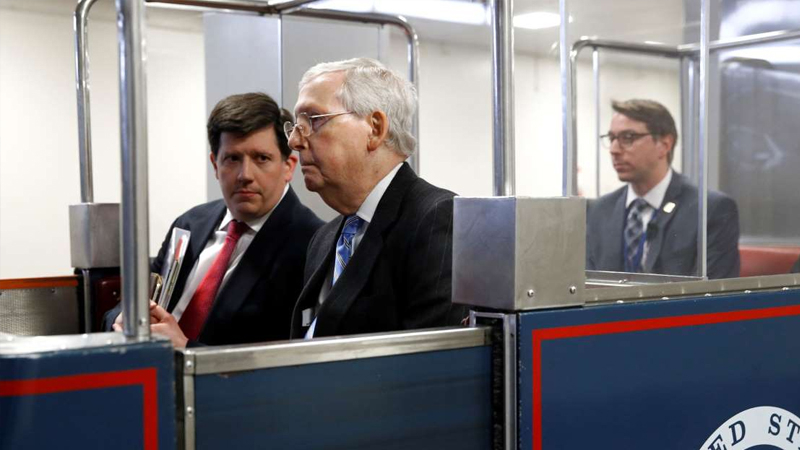
Early in the day, Majority Leader Mitch McConnell, R-Ky., said it was imperative to a reach a deal by Friday night on the legislation to be able to pass it on Monday. By Friday evening, though, major issues remained unresolved, including a push by Democrats to add many tens of billions of dollars to unemployment insurance programs to catch the tidal wave of people bracing for layoffs.

A related issue — how to structure direct payments to individuals and how much to spend on them — was also unresolved, as were numerous other matters, making it likely that talks would stretch into Saturday.

Nonetheless, participants voiced optimism about the progress made on the legislation, which was introduced only Thursday. The process, McConnell has remarked, amounts to “warp speed” for the Senate.

“I’m not optimistic, but I’m not pessimistic at this point. Conversation is positive on a lot of good fronts,” said Sen. Richard Durbin of Illinois, the No. 2 Senate Democrat. “There’s still some things that need to be worked out that could be deal breakers, so it isn’t over.”

Leaving a meeting of key Republicans, White House legislative affairs director Eric Ueland acknowledged that some sticking points are likely to require negotiating throughout the weekend, but he said Senate lawyers would formally draft agreed-upon portions of the bill late Friday and throughout the weekend so that whenever the final pieces come together, a vote can be held quickly.

“I don’t want to be negative about where we are, because, again, we made a significant amount of progress but the clock is ticking and the need for legislation in order to deliver urgently needed aid to the American people and the American economy leaves us no time to hesitate or pause,” Ueland told reporters. The legislation’s final pricetag appeared sure to far eclipse $1 trillion.

As talks intensified, lawmakers and President Donald Trump’s team kept pushing to make the package bigger and more aggressive in its scope. They were also working to scrap limits in the initial GOP bill that would have directed smaller cash payments to lower-income Americans than to others, amid blowback from the White House, Democrats, and Republicans.

As initially written, the plan would have given many Americans $1,200 in a one-time payment, but the poorest families – those without federal tax liability – could get as little as $600. That structure has drawn bipartisan criticism, and senators appeared all but certain to change it to ensure poorer Americans didn’t receive less money. And Trump said the initial payment amount would likely be substantially higher than $1,000.

“We’re not talking about a thousand dollar check. We’re talking about much more than that,” Trump said Friday. “We’re also talking about doing phases. If this doesn’t work, we’re going to keep doing until we get it going.”

Trump also voiced support for barring any corporations that receive aid from being able to do stock buy-backs, or use money to repurchase their stock in order to drive their equity prices higher, enriching shareholders. That issue is not addressed in the bill as initially written, but Trump said he discussed it with Schumer.

“We talked about as an example, buybacks, stock buybacks. I don’t want to have stock buybacks,” Trump said. “I want that money to be used for the workers and also for the company to keep the company going, but not for buybacks.”

McConnell and Treasury Secretary Steven Mnuchin hope to see the legislation pass the Senate on Monday, but it remained unclear whether the negotiators could meet the deadline for such a massive bill, which could be the largest economic rescue in history.

The frantic negotiations are taking place as the economic problems in the United States are multiplying. JPMorgan Chase has estimated that the U.S. economy could shrink by 14 percent between April and June, the biggest contraction in the post-World War II era. Goldman Sachs has estimated that 2.25 million people filed for unemployment this week, a nearly tenfold increase from one week ago and the largest number ever recorded.

Underscoring the urgency of the situation as the administration searches for every possible tool to respond, Mnuchin announced Friday that the nation’s tax filing deadline would be pushed back from April 15 to July 15.


Democrats, whose votes will be needed to pass the stimulus legislation in the House and Senate, panned the bill as unveiled by McConnell on Thursday as overly weighted toward industry. But Schumer and House Speaker Nancy Pelosi, D-Calif., were engaged in talks throughout the day Friday, although Pelosi is at home in California with the House out of session. House members would have to be called back to vote on the bill, a complication unto itself given the spread of the virus with two House members already announcing they’ve tested positive.

Schumer and Democrats were pushing for expanding unemployment benefits in order to provide six weeks of pay with 100 percent wage substitution, and waive existing delays in securing payments, among other changes to make the program more generous. A different coronavirus relief bill signed into law earlier this week already boosted unemployment insurance programs, but Democrats insist they most be expanded as layoffs cascade throughout the economy, rather than just provide individuals with a one-off check as envisioned by the Senate GOP bill as originally introduced.

Some Republicans were voicing concerns about the ability of states to administer large-scale increases in the program, and Labor Secretary Eugene Scalia joined the negotiations Friday to issue a warning on that front. Economists expect a staggering increase in unemployment claims in coming weeks that could potentially shatter records.

“That is our bottom line. It is our single most important issue,” Sen. Ron Wyden, D-Ore., told reporters about expanding unemployment. “The administration has raised questions, as you know, about how it would be administered. We have said, well, we think in most states it can be handled.”

Democrats were also pushing for a large state stabilization fund to answer the pleas of governors. Schumer said that issue, too, remained a sticking point.

“That’s another big issue. That’s a big issue that hasn’t been resolved,” Schumer told reporters late Friday, adding: “There are still many issues outstanding.”

Despite their disagreements on policy details lawmakers in both parties agreed time was of the essence in face of the unprecedented economic threat posed by the coronavirus, which has now brought much of the nation into lockdown.

“We need to deliver relief now,” McConnell said on the Senate floor. “We need to go big. We need to minimize new complexity. And we need to move swiftly.”


As originally proposed the bill includes an extensive list of proposals aimed at alleviating the economic shock facing both small and large businesses: delaying corporate taxes; providing zero-interest loans; and paring back the paid family leave plan recently approved by Congress, among other changes.

The plan includes numerous delays on corporate and business taxes, and would allow the hospitality industry to immediately write off the costs of building improvements, changing a provision in the 2017 tax law. These changes are opposed by many Democrats.

Beyond the general corporate tax changes, the Senate GOP bill also proposes relief for bigger firms and corporations, a move that some critics have alleged could amount to taxpayer funded bailouts. The bill would not provide direct cash subsidies to these large firms. But it does call for other forms of emergency federal help, such as low-interest loans. The airlines would receive $50 billion in “loans and loan guarantees,” while cargo air carriers would receive $8 billion.

The legislation also calls for creating an additional fund, of $150 billion, to help rescue other industries hurt by the coronavirus downturn. It gives the Treasury Department wide authority in determining which businesses qualify for the fund, which would give the Trump administration significant discretion over a large pool of money — and Senate Republicans are expected to increase the amount beyond $150 billion before the final text is introduced, according to three congressional aides and lobbyists aware of the internal discussions.

The bill’s enormous interventions for small firms appeared to be the portion of the legislation with the most bipartisan agreement. Spearheaded by Sen. Marco Rubio (R-Fla.), the proposal calls for $300 billion in loans to be made available through lenders certified by the Small Business Administration, with the maximum loan capped at $10 million. Unlike the part of the bill for large companies, small businesses could be eligible to have their loans forgiven at a future date if they retain their employees during this period at the same level as before the coronavirus hit.

Rubio told reporters that lawmakers are also looking at loosening the SBA definition of small business – currently set at 500 – to ensure that somewhat larger businesses don’t miss out on relief.

“Just making sure that we’re not cutting businesses off,” Rubio said, citing the example of a hotel that might have more than 500 employees, predominantly low-wage workers.

The legislation, as originally written by the Senate GOP, would have rolled back parts of the paid sick leave plan recently enacted by Congress and signed into law by Trump. Numerous Republican senators and business groups have complained that package requires firms to pay an expensive new benefit, but does not compensate them with a federal tax cut until they would already be driven out of business. It’s unclear whether Democrats would push back on changes to this area.

Democrats were, however, pushing for a variety of additional restrictions to ensure any corporate aid doesn’t amount to bailouts that help corporate executives at the expense of workers and taxpayers. Some in organized labor were irate over the bill as introduced and demanding changes.

Democrats and Republicans attacked the initial GOP bill design that aimed to limit the direct payments to lower-income households. The legislation would have provided $1,200 per adult and $500 for child, with checks beginning to phase out for those earning more than $75,000. But the poorest families, because they had no federal income tax liability, would have seen smaller benefits, with the minimum set at $600.

“There’s a lot of us who would like to see that changed,” said Sen. Mike Rounds, R-S.D. “They have the same expenses everybody else does. Just because they’re on the lower end of the income scale doesn’t mean they don’t have some basic expenses.”

U.S. markets wrap up worst week since the 2008 financial crisis #ศาสตร์เกษตรดินปุ๋ย

#ศาสตร์เกษตรดินปุ๋ย : ขอบคุณแหล่งข้อมูล : หนังสือพิมพ์ The Nation

https://www.nationthailand.com/business/30384547?utm_source=category&utm_medium=internal_referral

U.S. markets wrap up worst week since the 2008 financial crisis

Mar 21. 2020
By The Washington Post · Thomas Heath, Taylor Telford · NATIONAL, BUSINESS, US-GLOBAL-MARKETS

U.S. markets wrapped up one of their messiest-ever weeks Friday, tumbling more than 10 percent from where they began Monday for their worst finish since the 2008 financial crisis. Stocks were wrenched all week in hourly spasms as investors tried to fathom where the coronavirus will eventually leave the U.S. economy.

The craziness ran right up to the closing bell, with the Standard & Poor’s 500 and the Dow Jones industrial average plunging more than 3 percent minutes after the World Health Organization warned that global health systems were “collapsing” under the strain of the pandemic.

Wall Street’s meltdown over the past month has erased all of the stock market gains since Donald Trump entered the White House. On Feb. 12, the Dow peaked at 29,551.42 – a 49 percent jump from its close on Trump’s Inauguration Day in January 2017. But within a span of weeks it has lost a third of its value as the coronavirus crisis has played out. On Friday, it lost an additional 913.21 points, roughly 4.6 percent, to close at 19,173.98.

The S&P finished at 2,304.92, down 4.3 percent, while the tech-heavy Nasdaq composite slid 3.8 percent to close at 6,879.52.

Investors remain in the same fog they have inhabited since markets began their swift drop in February, after the S&P 500 and Dow hit all-time highs. All three indexes are now in a bear-market decline of at least 20 percent from their highs. The Dow and S&P have erased more than 30 percent in a month.

“We had years of low volatility and rising markets, and this virus crisis made it all come to an end at once,” said Kathy Jones, chief fixed-income strategist at the Schwab Center for Financial Research. “There is no endpoint in sight, and that’s causing a degree of panic because people are saying, ‘I just need to hold some cash.’ There will be more turmoil, but we flushed out a lot of the people who were leveraged. A lot of good things are happening to restore liquidity and order to markets.”

Markets lurched all week, but nothing signified the chaos like oil prices, which dropped below $20 a barrel for part of the day Friday – a mark not seen in years. Oil prices are so low that the industry may go through a generational restructuring. Prices need to be at least in the $50-a-barrel range for companies and producing states to make a profit.

Oil prices saw their worst and best percentage changes in back-to-back days Wednesday and Thursday as a Saudi-Russian feud resets markets. The federal government said it might jump in, ordering millions of barrels of oil purchases for the nation’s Strategic Petroleum Reserve to help soak up excess supply and protect prices.

Governments and central banks have unleashed a torrent of measures to relieve the economic stranglehold of the coronavirus. But those moves have yet to calm investors and institutions that have been unloading assets from stocks to bonds to gold to meet cash obligations.

“People feel like a battered boxer, unsure of how to respond to a flurry of economic punches,” said Sam Stovall of CFRA Research. “The good news out of this bad news is the volatility looks like it is coming to a crescendo. Only two other periods in the past half-century have seen a high level of volatility. History tells us the worst may be behind us.”

The Federal Reserve rolled out eight emergency actions this week, establishing a special backstop for money-market mutual funds (typically a risk-free place for investors to store cash), slashing interest rates to zero and restarting the crisis-era bond-buying program known as “quantitative easing.”

The central bank also announced plans to buy short-term business loans known as commercial paper, ramped up “swap lines” with foreign central banks to ensure other nations have enough dollars, allowed banks to borrow money from the Fed at a 0.25 percent interest rate and announced loans for primary dealers of U.S. Treasury bonds.

Treasury Secretary Steven Mnuchin announced Friday that the administration had moved back the Internal Revenue Service tax-filing deadline from April 15 to July 15 because of the widespread disruption caused by the outbreak. Mnuchin made the announcement on Twitter, citing President Trump’s directive.

Signs of progress in the war against covid-19 stoked some positive feelings on Wall Street. The U.S. dollar, which had skyrocketed as worried investors rushed to secure greenbacks, weakened against other currencies.

Investors also seemed to embrace the increasingly stringent measures being used to combat the spread of the virus. California on Thursday night ordered its 40 million residents to mostly stay at home, and Illinois on Friday announced a similar order. As of Friday afternoon, nearly 260,000 coronavirus cases had been confirmed around the globe. The World Health Organization noted that it took more than three months to reach 100,000 cases worldwide – but only 12 days to log the next 100,000.

“These massive shutdowns in California, New York and elsewhere are going to take a toll,” said Ivan Feinseth of Tigress Financial Partners. “But stocks will come back. I believe in the human spirit and resiliency of people and of markets.”

U.S. economy deteriorating faster than anticipated as 80 million Americans forced to stay at home #ศาสตร์เกษตรดินปุ๋ย

#ศาสตร์เกษตรดินปุ๋ย : ขอบคุณแหล่งข้อมูล : หนังสือพิมพ์ The Nation

https://www.nationthailand.com/business/30384546?utm_source=category&utm_medium=internal_referral

U.S. economy deteriorating faster than anticipated as 80 million Americans forced to stay at home

Mar 21. 2020
By The Washington Post · David J. Lynch, Heather Long · NATIONAL, BUSINESS, HEALTH 

The U.S. economy is deteriorating more quickly than was expected just days ago, as extraordinary measures designed to curb the coronavirus keep 84 million Americans penned in their homes and cause the near-total shutdown of most businesses.

In a single 24-hour period, the governors of three of the largest states – California, New York and Illinois – ordered residents to stay home, except to buy food and medicine, while the governor of Pennsylvania ordered the closure of nonessential businesses. Across the globe, health officials are struggling to cope with the growing number of patients, with the World Health Organization noting that while it required three months to reach 100,000 cases, it took only 12 days to hit another 100,000.

The resulting economic meltdown, which is sending several million workers streaming into the unemployment line, is outpacing the federal government’s efforts to respond. As the Senate on Friday raced to complete work on a financial rescue package, the White House and key lawmakers were dramatically expanding its scope, pushing the legislation far beyond the original $1 trillion price tag.

With each day, an unprecedented stoppage gathers force, as restaurants, movie theaters, sports arenas, and offices close to shield themselves from the disease. Already, it’s clear that the initial economic decline will be sharper and more painful than during the 2008 financial crisis.

Next week, roughly 3 million Americans will file first-time claims for unemployment assistance, more than four times the record high set in the depths of the 1982 recession, according to Bank of America Merrill Lynch. That’s just the start of a surge that could send the jobless rate spiking to 20 percent from today’s 3.5 percent, a JPMorgan Chase economist told clients on a conference call Friday.

Estimates of the pandemic’s overall cost are staggering. Bridgewater Associates, a prominent hedge fund manager, says the economy will shrink over the next three months at an annual rate of 30 percent. Goldman Sachs pegs the drop at 24 percent. JPMorgan Chase says 14 percent.

“We are looking at something quite grave,” said economist Janet Yellen, the former Federal Reserve chair. “If businesses suffer such serious losses and are forced to fire workers and have their firms go into bankruptcy, it may not be easy to pull out of that.”

Little more than seven months before the presidential election, President Donald Trump already is looking past the crisis and promising a swift recovery. “We’re going to be a rocket ship as soon as this thing gets solved . . . We think it’s going to come back really fast.” the president said Thursday.

Most economists expect the economy to begin climbing out of its deep hole in the second half of this year. But those forecasts depend upon the pandemic being brought under control and the U.S. and other governments enacting policies that prevent lasting harm to factories and financial arteries. Even if all that happens, the economy will be smaller at the end of this year than it was at the beginning, according to Bridgewater, Goldman and JPMorgan.

The truth is no one really knows what will happen months from now. No one on Wall Street or in Washington has any experience dealing with the kind of complex threat that has suddenly materialized to upend American life: a global health scare that is strangling the economy and disrupting financial markets.

Individual workers and their families – many only recently recovered from the 2008-09 economic cataclysm – are already feeling the effects. The unexpected economic shock found millions of Americans living on the precipice of ruin. In a Federal Reserve survey last year, 39 percent of Americans said they would be unable to handle an unexpected $400 expense.

Lyndsy Hartmann knew something was wrong last weekend when she went to her job at a spa company in Charlottesville, Virginia. Hartmann, 34, normally handles 150 calls a day from people interested in booking spa treatments and massages. But on Saturday and Sunday, she received a total of six.

Her boss laid off most of the staff Monday morning. Tuesday, it was Hartmann’s turn.

Her husband, who works as a personal chef, also has lost his job. He had a side gig driving for Uber, but the college kids who were his main customers disappeared earlier this month when the virus forced the University of Virginia to close. Now, the couple is worried about paying their $1,300 apartment rent.

“I don’t have savings. My rent is so high that I live paycheck to paycheck,” Hartmann said. “Everyone is talking about how the coronavirus is affecting restaurants, but it’s affecting hotels, spas and hospitality in general. I don’t know how I’m going to pay rent and pay my bills.”

The situation is much the same in Mount Clemens, a suburb of Detroit. Steve Manzo is a cook and bartender at a popular Irish pub who began the week anticipating double pay for St. Patrick’s Day. Instead, he lost his job Monday and spent hours on the state’s unemployment website trying to apply for government aid that will make up less than half of his typical $60,000 annual salary.

Like many, Manzo lives paycheck to paycheck and is worried he might not even have a restaurant to return to if the pandemic endures.

“I keep looking out my window and everything looks normal, but it doesn’t feel normal,” said Steve Manzo. “I live downtown with bars and restaurants and nobody is here.”

Even Yellen, 73, the former Fed chair, has not escaped the anxiety. She’s hunkered down in her District of Columbia home running economic forecasts that all look grim. Her son, who flew home from London on Saturday and was caught in the mass of people at passport control at Dulles Airport, is self-quarantining in the family’s basement to avoid endangering his mother. Yellen, one of the world’s top economists, leaves plates of food for him at the top of the basement stairs.

Senate consideration of a financial rescue of $1 trillion-plus came amid mounting signs of economic distress. In a joint letter, United Airlines CEO Oscar Munoz and union officials warned of imminent layoffs and urged the airline’s nearly 100,000 employees to lobby Congress for help.

“While many in Washington, D.C. now realize the gravity of this situation, time is running out,” the letter said. ” . . . To be specific, if Congress doesn’t act on sufficient government support by the end of March, our company will begin to take the necessary steps to reduce our payroll in line with the 60% schedule reduction we announced for April. May’s schedule is likely to be cut even further.”

Lawmakers’ willingness to countenance massive spending and corporate bailouts in response was one sign that Americans increasingly recognize the battle against the coronavirus involves a stark choice between health and wealth.

U.S. officials are deliberately engineering a sharp recession to blunt the spread of a fatal disease for which there is no cure, definitive treatment or vaccine. Governors in Florida, New Jersey and Nevada on Friday all took, or indicated they’d take, significant action to limit activity outside the home.

The only way to interrupt the viral blitzkrieg is to implement “social distancing.” But keeping friends and co-workers apart is a recipe for crippling the consumer spending that drives 70 percent of the $21 trillion economy.

Alexis Walker, 40, earned about $60,000 last year with a patchwork series of jobs: working part-time job at an after school program in Philadelphia, which ended a week ago; substitute teaching; working as a nanny; DJ’ing at parties; selling homemade special shea butter; and occasionally renting her apartment on Airbnb.

Last weekend, Walker had $500 worth of babysitting and DJ gigs lined up, but all her customers canceled, along with her entire lineup of Airbnb guests this spring. Her landlord is letting her delay her rent payment, but she knows it will eventually come due.

“Those bills still have to be paid. My debts keep accruing,” said Walker, who hopes to establish a virtual after-school program to keep some money coming in. “What will send this country into a depression is all the bills people will have to pay in two months.”

Dean Baker, senior economist at the Center for Economic and Policy Research, said a depression would involve a more protracted period of unusually low activity than what seems likely.

“Everything depends on how long we are effectively locked down,” said “If it’s just 2-3 weeks, then it need not be this bad. But if we locked down for most of the quarter, then we are looking at a really bad story.”

The sudden turnaround in U.S. economic fortunes is without historic parallel. As 2020 began, the U.S. had been growing without interruption since the middle of 2009. The jobless rate was near a half-century low and the stock market was headed toward a record high.

Now, the economy is screeching to a halt and the stock market is in free fall. On Thursday, the Big3 automakers said they would close their factories through March 30. Real estate agents have canceled open houses. And Marriott, the largest hotel company in the world, is closing its hotels and furloughing thousands of workers.

In a video message to employees, CEO Arne Sorenson said he would not take any salary for the rest of the year. The pandemic “is like nothing we’ve never seen before,” he said.

The sudden loss of hotel business exceeded the combined effects of the Great Recession and the aftermath of the September 11, 2001 terrorist attacks. On average, hotel revenue is down 75 percent, which requires draconian retrenchment.

“I can tell you that I have never had a more difficult moment than this one,” said an emotional Sorenson. “There is simply nothing worse than telling highly valued associates, people who are the very heart of this company that their roles are being impacted by events completely out of their control.”

On Wall Street, the bloodletting continued almost without interruption. After a brief respite on Thursday, stocks sank again on Friday. The Dow Jones industrial average closed at 19,173.98, down more than 913 points or 4.6 percent. Since reaching an all-time high on Feb. 12, the Dow lost 35 percent of its value.

“Get out, get out while you can before they shutter the whole darn United States. A stunning reversal of fortune for the best economy in history to the worst economy in history in not even two months. The fastest recession in history. With no one spending a dime, it will stay that way a long, long time,” Chris Rupkey, chief financial economist for MUFG.

For small business owners, there is palpable fear of bankruptcy.

Bryan DeHenau already has filed for bankruptcy once before, when the construction industry crashed amid the Great Recession. In the years since then, he’s built up a roofing business in hopes of developing a more recession-proof income stream.

Six weeks ago, he said, he had work “coming out the ying-yang.” Now business is down 50 percent and he worries about obtaining enough roof shingles for his remaining customers or dealing with a potential lockdown if Michigan follows the lead of other states.

“We’re just trying to manage day-to-day. It’s all you can do,” DeHenau said. “But if everybody is laid off, they aren’t going to be buying a roof.” –


S&P 500 sinks to 3-year low as oil tumbles #ศาสตร์เกษตรดินปุ๋ย

#ศาสตร์เกษตรดินปุ๋ย : ขอบคุณแหล่งข้อมูล : หนังสือพิมพ์ The Nation

https://www.nationthailand.com/business/30384545?utm_source=category&utm_medium=internal_referral

S&P 500 sinks to 3-year low as oil tumbles

Mar 21. 2020
By Syndication Washington Post,  Bloomberg · Claire Ballentine, Todd White · BUSINESS, US-GLOBAL-MARKETS

U.S. stocks gave up gains, Treasuries rose and the dollar halted its rally as investors assessed unprecedented government measures to shield jobs and economies from the coronavirus pandemic.

Consumer companies led the slump in the S&P 500 as New York and London announced new restrictions meant to slow the disease’s spread and President Donald Trump said “non-essential” travel will be suspended across the U.S. border with Mexico. Tech stocks performed best as bottom feeders sought bargains. Gains in Asia and Europe cut the weekly drop for stocks worldwide to just under 10%.

The 10-year Treasury yield headed for its lowest closing level since Monday. The dollar weakened after vaulting more than 8% in the previous eight sessions. The pound, Australian dollar and South Korean won all surged as the Federal Reserve coordinated action with global central banks to beef up dollar liquidity swap line arrangements. WTI oil slumped. Gold rose.

“This is not a market that is going to all of a sudden heal itself,” Marvin Loh, senior global macro strategist at State Street Global Markets, said by phone.

Investors are weighing a faster pace of coronavirus infections against flickers of optimism that have followed extraordinary government actions, from plans for stimulus and cash handouts to nationalizing companies. Hedge funds, stock exchanges, banks and even brick-and-mortar businesses in the U.S. are lobbying Washington policymakers not to shut markets.

U.S. stock trading volumes surged to about 60% above the average for the time of day, a phenomenon known as quadruple witching caused by expiring options and futures contracts.

Even with stocks down, the turmoil across assets seems to be easing. Still, the World Health Organization said that the pace of infections is speeding up. Cases doubled to 200,000 in the 12 days through Thursday, but just one day later the tally already was almost halfway to 300,000.

“We are now starting to lean into risk,” Chad Morganlander, senior portfolio manager at Washington Crossing Advisors, told Bloomberg TV. “The tail of this is going to be potentially somewhat more extended than what the overall market thinks, so we’re not going to get back to business as usual for the next three months, but the policy backdrop across the globe will help soften the blow.”

These are the main moves in markets:

Stocks:

– The S&P 500 Index fell 1.4% at 12:19 p.m. New York time; the Nasdaq Composite slid 0.7%.

– The Stoxx Europe 600 Index rose 1.8%.

– The MSCI Asia Pacific Index surged 2.6%.

Currencies:

– The Bloomberg Dollar Spot Index dipped 0.4%.

– The euro advanced 0.1% to $1.0698.

– The British pound climbed 2.2% to $1.1734.

– The Japanese yen slipped 0.5% to 111.3 per dollar.

Bonds:

– The yield on 10-year Treasuries dipped 18 basis points to 0.96%.

– Germany’s 10-year yield fell 14 basis points to -0.34%.

– Britain’s 10-year yield decreased 17 basis points to 0.54%.

Commodities:

– Gold gained 0.9% to $1,485.04 an ounce.

– West Texas Intermediate crude fell 8.1% to $23.17 a barrel.

BOT cuts key rate by 25 basis points in sudden move #ศาสตร์เกษตรดินปุ๋ย

#ศาสตร์เกษตรดินปุ๋ย : ขอบคุณแหล่งข้อมูล : หนังสือพิมพ์ The Nation

https://www.nationthailand.com/business/30384526?utm_source=category&utm_medium=internal_referral

BOT cuts key rate by 25 basis points in sudden move

Mar 21. 2020
Bank of Thailand makes an emergency rate cut by 25 basis points to 0.75 per cent , effective on Monday March 23, in response to the economic impact from Covid-19.

Bank of Thailand makes an emergency rate cut by 25 basis points to 0.75 per cent , effective on Monday March 23, in response to the economic impact from Covid-19.
By The Nation

The Monetary Policy Committee (MPC) voted unanimously on Friday (March 20) to cut the key policy rate by 0.25 percentage point, from 1.00 to 0.75 per cent, effective from March 23 to reduce the interest burden on borrowers affected by the Covid-19 outbreak and to alleviate liquidity strain in the financial markets.

The Bank of Thailand (BOT)’s MPC held a special meeting to assess the impact of the virus outbreak on the economic outlook and domestic financial markets.

The MPC viewed the fallout from the outbreak in the period ahead to be more severe than previously expected and the situation would take some time before returning to normal. This would severely affect the Thai economy. The committee also noted that the outbreak had resulted in concerns among global financial markets, affecting liquidity and the functioning of Thai financial markets despite the overall stability of the financial system.

They believed the rate cut would mitigate the impact on the economy and also reinforce fiscal measures already implemented and forthcoming.

The MPC viewed the policy rate cuts in the previous and Friday’s meetings would benefit the economy if financial institutions took active roles in addressing liquidity problems of borrowers, especially small and medium-sized enterprises and households, as well as accelerating debt restructuring to have noticeable and meaningful impact.

The committee urged the BOT to closely monitor each financial institution’s assistance to borrowers. Moreover, the BOT should ensure sufficient liquidity, as well as the proper functioning and stability of the financial markets.

The MPC is scheduled to have its regular meeting on March 25.