Oil price war threatens widespread collateral damage #ศาสตร์เกษตรดินปุ๋ย

#ศาสตร์เกษตรดินปุ๋ย : ขอบคุณแหล่งข้อมูล : หนังสือพิมพ์ The Nation

https://www.nationthailand.com/business/30383720?utm_source=category&utm_medium=internal_referral

Oil price war threatens widespread collateral damage

Mar 09. 2020
By The Washington Post · Steven Mufson, Will Englund · BUSINESS, US-GLOBAL-MARKETS

The oil price war Saudi Arabia launched against Russia over the weekend sent crude prices into one of the steepest falls in history Monday, causing casualties for oil field workers, U.S. shale drillers, investors and members of the Organization of the Petroleum Exporting Counties that rely on oil to make their budgets add up.

Moscow’s refusal to cut its oil output by half a million barrels a day shattered the unusual three-year marriage of OPEC, led by the Saudis, and major non-OPEC producers, led by Russia, as oil producers scrambled to find a way to respond to weakening global demand resulting from the deepening crisis over the coronavirus.

Saudi Arabia, angered by Moscow’s position, said Sunday that it would open its spigots and drive down prices, making this oil price cycle the only one in nearly a century to combine weak demand with a global price war.

Global markets opened down sharply Monday, with the leading benchmark varieties of crude tumbling more than 20 percent after other big falls in recent weeks. The drop was the steepest since prices plunged 35 percent Jan. 17, 1991, the day the U.S.-led coalition launched Operation Desert Storm to force Iraq to withdraw from Kuwait.

The plunge in prices, however, will also benefit consumers who should see markedly lower prices at the pump. For them, the price war will act like a tax cut, putting more money in the pockets of motorists.

“I consider this as a $1 trillion stimulus to the world economy with a $30 oil price decline,” Scott Sheffield, chief executive of Irving, Texas-based Pioneer Natural Resources, one of the biggest independent oil companies, said in an email.

Is the oil world big enough for two swing producers?

President Donald Trump weighed in on Twitter about the plunge in oil prices, noting that lower prices were “Good for the consumer, gasoline prices coming down!” The president also tweeted that “Saudi Arabia and Russia are arguing over the price and flow of oil. That, and the Fake News, is the reason for the market drop!”

Sheffield said Pioneer is secure, but other companies plying the vast shale in places such as North Dakota, Oklahoma and Texas will face difficulties.

“We are preparing for two years of low prices and will make the necessary adjustments to maintain our great balance sheet,” he said. But, he added, “there will be many bankruptcies in our industries and tens of thousands of layoffs over the next 12 months.”

Investors pummeled a broad range of stocks Monday. By midmorning, shares of Pioneer, Continental Resources and oil service giant Schlumberger were all down 35 percent. Shares of the major international oil companies were down 7 to 17 percent.

Oil demand will decline for the first time since 2009, the International Energy Agency said Monday, revising its earlier forecasts. The IEA said that global demand will shrink by 2.5 million barrels a day in the first quarter of the year.

“This is the first time since 1930 and ’31 that a massive negative demand shock has coincided with a supply shock,” Robert McNally, president and founder of the Rapidan Energy Group, said in an email. “It’s sort of like a black swan to simultaneous hurricane event.”

McNally, who served on President George W. Bush’s national economic and security councils, said that in late 1930, giant fields in Texas started up “right into the teeth of the Depression, sending oil prices down to pennies on the barrel. This ultimately forced Texas to send troops into the oil fields, and that was the beginning of decades of strict oil quotas.”

The weak conditions for oil led some investment houses to reassess the ratings of OPEC countries, especially those with large populations such as Nigeria. Fitch Ratings said that many of those countries were “still struggling to adjust” to the fall in oil prices in 2014. It said that for those countries to balance their budgets, which rely heavily on oil revenue, they would need “break-even oil prices well above current market rates.”

But most of the places that will be hurt worst by the crash in prices will be the U.S. shale fields, where costs are substantially higher than the giant reservoirs of Saudi Arabia or Russia. Thanks to technological advances and untapped shale layers, U.S. oil and natural gas output has soared, insulating the U.S. economy somewhat and easing price pressures worldwide. Texas now produces more crude oil than Iraq, and production has also increased in states such as North Dakota and Oklahoma.

But the higher costs and the short lives of shale wells – usually 18 to 24 months – make the U.S. fields more sensitive to lower prices. Sheffield said he expects U.S. shale production to start declining in the third quarter of this year and to fall more than 1 million barrels a day in 2021. And the number of wells operating onshore in the United States is already down 25 percent from a year ago, according to the authoritative Baker Hughes rig count.

“No question U.S. shale producers will experience collateral damage in this price war between Russia and Saudi Arabia,” McNally said. “They were already under enormous pressure, and supply growth was set to taper off sharply by the end of the year. So they had pneumonia and just got hit with the coronavirus.”

– – –

This isn’t the first time Saudi Arabia has sought to punish other oil exporting countries for expecting the kingdom to act as the sole swing producer, cutting its own output while other exporters benefit. In the 1980s, Saudi Arabia drove down prices to less than $10 a barrel.

“From time to time a price bust serves to instill discipline and remind producers of the importance of collective supply management,” McNally said. “Since the early 1980s episode, when Saudi Arabia’s production fell to 2 million barrels a day, the kingdom is unwilling to be the sole swing producer, especially when huge cuts are needed.” Saudi production capacity is about 12 million barrels a day.

Saudi Arabia kept production relatively high during 2014 to 2016, when prices fell to $26 a barrel. “Apparently, Moscow needs a reminder,” McNally said.

Oil-exporting countries had agreed to production cuts of 2.1 million barrels a day that were due to expire at the end of March. At an OPEC meeting last week, those cuts were extended through the end of the year. But OPEC also proposed an additional 1.5 million barrels a day of cuts, with non-OPEC countries providing half a million barrels a day of output cuts. Russia declined.

“The new price war is between Saudi and Russia. It is NOT about shale,” said Pavel Molchanov, senior energy analyst at the investment firm Raymond James. “They pretended to be allies for three years, and now the pretense is over.”

Molchanov said that the spat between the two giants was “partly economic” but also political, with differences over Iran and Syria, both foes of the Saudi regime but both on good terms with Moscow.

Nonetheless, Russia, which has been working to expand its influence in the entire region, had taken part in an earlier production cut in cooperation with the cartel, one that began in January and is due to expire at the end of March. Last fall, Russian President Vladimir Putin made a much-publicized visit to Riyadh as the two countries were trying to improve ties beyond the energy sphere.

“To the extent that there is silver lining, it is this: Saudi cannot keep this going for long,” Molchanov said. He said that the kingdom needs $80 a barrel oil to balance its fiscal needs, and while Saudi Arabia has large reserves, current price levels are “not even in the ballpark of what would sustain its economy.”

Moreover, Saudi Aramco, the national oil company, is now a public company. Low prices over a prolonged period will hurt private investors.

Recession looms in Europe as French demand ‘call to arms’ #ศาสตร์เกษตรดินปุ๋ย

#ศาสตร์เกษตรดินปุ๋ย : ขอบคุณแหล่งข้อมูล : หนังสือพิมพ์ The Nation

https://www.nationthailand.com/business/30383719?utm_source=category&utm_medium=internal_referral

Recession looms in Europe as French demand ‘call to arms’

Mar 09. 2020
By Syndication Washington Post, Bloomberg · William Horobin, Fergal O’Brien · BUSINESS, WORLD 

The euro-area economy may be headed for its first recession in seven years as the coronavirus outbreak takes an increasing toll on businesses and consumer confidence.

With Italy attempting a sweeping lock-down across its richest areas and infections nearly doubling in Spain, economists at Morgan Stanley and Berenberg expect euro-zone gross domestic product to shrink in the first half of the year. In France, the central bank now sees output barely growing in the first quarter.

French Finance Minister Bruno Le Maire highlighted his concern, saying Europe needs a “call to arms” to defend the already-weakened economy. The outbreak has disrupted companies’ supply chains, forced airlines to cut capacity and prompted shoppers in some countries to stockpile essential food items. The Spanish city of Vitoria ordered a shutdown of all schools for 15 days.

The downbeat assessments come amid a meltdown in financial markets not seen since the height of the global financial crisis in 2008. It marks a grim start to the week for European Central Bank policy makers, who meet in Frankfurt and may be forced to lower interest rates and step up bond purchases. The U.S. Federal Reserve has already acted, with an unexpected easing last week.

“I want a strong, massive, coordinated response,” Le Maire said on France Inter Radio as the central bank slashed the outlook for the country’s economic expansion this quarter to 0.1% from 0.3%.

“We should work on a stimulus plan with fiscal and budgetary measures, and tax cuts, so that when the epidemic crisis is over we can relaunch the economic machine,” he said.

The virus is another blow to the euro area’s second-largest economy, after disruption from strikes caused output to shrink at the end of 2019.

“This slowdown is potentially severe but temporary,” Bank of France Governor Francois Villeroy de Galhau said in a rare statement accompanying the report.

Germany, Europe’s largest economy, said it will invest an additional 12.4 billion euros ($14.1 billion) between 2021 and 2024 and introduce changes that will make it easier for companies heavily affected by the virus like Deutsche Lufthansa AG to apply for aid to offset wages when they are forced to temporarily halt work.

One major problem with the current crisis is the potential for a shutdown of consumer demand if people stay home. Household spending gave a lift to many economies in 2019 during the savage manufacturing recession, so the loss of that support is a huge blow.

Morgan Stanley on Monday cut its 2020 growth prediction for the euro area to just 0.4% from 0.9%. Nomura downgraded its full-year view to 0.4% as well.

At Berenberg, economists are also predicting a euro-zone recession, with huge slumps of at least 0.4% this quarter and next. The economy won’t even eke out growth over the full year, it said.

Its latest predictions include a 1.2% slump in Italy this year, while Germany, Europe’s largest economy, will contract by 0.4%.

Breakneck speed of sell-off jeopardize longest bull market #ศาสตร์เกษตรดินปุ๋ย

#ศาสตร์เกษตรดินปุ๋ย : ขอบคุณแหล่งข้อมูล : หนังสือพิมพ์ The Nation

https://www.nationthailand.com/business/30383713?utm_source=category&utm_medium=internal_referral

Breakneck speed of sell-off jeopardize longest bull market

Mar 09. 2020
Pedestrians pass the

Pedestrians pass the “Charging Bull” sculpture in New York on Jan. 24, 2019. MUST CREDIT: Bloomberg photo by John Taggart
By Syndication Washington Post, Bloomberg · Lu Wang, Claire Ballentine · BUSINESS, US-GLOBAL-MARKETS 

In terms of sentiment shifts, few episodes compare with what’s happening in U.S. stocks now. And with each lurch, the longest-ever bull market comes closer to ending.

Investors who three weeks ago were doubling down on the rally’s longevity are being forced to unwind bets with a fury that is rarely ever seen. Engulfed in the quickest correction ever, American stocks are in serious danger of suffering the fastest bear-market plunge from an all-time high, unless the pace of selling slows.

If the rally that began 11 years ago Monday finally ends, a signature theme of its last chapter will be that hysteria broke out smack at the market’s top and came with no prologue. Even the Crash of 1987, when the Dow Jones Industrial Average fell 22.6% in one day, occurred months after the peak was reached.

“We’ve gone from a state of euphoria to a state of pessimism,” said Kevin Caron, portfolio manager for Washington Crossing. “That requires a fast adjustment.”

S&P 500 futures suffered one of their biggest spasms yet on Sunday night, extending a slide that left the March contract within 4% of completing the 20% tumble that traditionally denotes a bear market. In fact, it could be closer than that. The overnight sell-off triggered exchange circuit breakers that limit losses in futures to 5%. An exchange-traded fund tracking the S&P 500 that isn’t subject to those curbs was changing hands 18.3% below its Feb. 20 high as of 8:16 a.m. in New York.

Should a 20% decline to 2,708.92 on the S&P 500 be completed before April 1, it would mark the fastest slump into a bear market from a record high. During the 1929 Great Depression, it took 42 days to kill the bull.

The violence of the repricing can be seen in a set of charts that show investors scrambling to adjust to the coronavirus’s impact. It’s also, perhaps, a consideration for anyone using stock reactions as a litmus on the outbreak’s toll. While the prospect of a pandemic is terrifying, part of the market’s pain reflects its own excesses being unwound.

From computer-driven funds to stock pickers, money managers have been slamming the sell button. According to a survey by the National Association of Active Investment Managers, equity exposure at funds just had its biggest decline since 2014.

Commodity trading advisers, or trend followers known as CTAs, were likely “at the core” of the equity selling in late February, according to JPMorgan Chase & Co.’s strategists including Nikolaos Panigirtzoglou. Based on their estimates, the group went from a fairly long position in mid-February to fairly short at end of the month.

It created a “negative flow impulse,” Panigirtzoglou wrote in a Feb. 28 note to clients. “Momentum traders were caught up with very long U.S. equity futures positions into the correction and were forced to unwind these positions abruptly, propagating their own negative momentum.”

In an update Friday, Panigirtzoglou estimated that equity selling from CTAs in the final week of February approached $400 billion. Should the S&P 500 fall another 4%, that would trigger $120 billion of additional selling, he said.

At Deutsche Bank AG, strategists including Binky Chadha aggregated fund positioning and found their overall exposure has gone from “extremely overweight” to “very underweight.” Measured against the past 10 years, the positioning indicator stood at the 5th percentile as of March 5, down from the 95th percentile a few weeks ago.

Equity bears, who have had a hard time staying in business during the 11-year equity rally, are getting a moment of vindication. A Goldman Sachs Group Inc. basket of the most-shorted stocks tumbled 14% in the final week of February, handing those betting against them the best gain since 2012. It fell another 5.6% last week.

As market losses snowballed, short sellers kept boosting bets. The SPDR S&P 500 ETF Trust, ticker SPY, saw the amount of shorted shares rise to 7% of its total outstanding, according to IHS Markit data. At the start of the year, it was about 1%, the lowest since 2018.

In the derivatives market, panic has replaced euphoria. The 5-day moving average of the equity put-to-call ratio, which rises as bearish bets increases, jumped to almost 0.8, hitting the highest level since last August. A month ago, the ratio sat at a nine-year low of less than 0.5.

“The million dollar question is whether the stock-market drop in the last two weeks starts to spread the malaise from Wall Street to Main Street,” Chris Rupkey, chief financial economist for MUFG Union Bank. “Stocks may be out in front of the economy with these double-digit recession magnitude losses. But the game is over if companies start to lay off workers because then a recession would mean the bull market in stocks is really over for the next few years.”

Oil slammed by price war and virus in worst loss since 1991 #ศาสตร์เกษตรดินปุ๋ย

#ศาสตร์เกษตรดินปุ๋ย : ขอบคุณแหล่งข้อมูล : หนังสือพิมพ์ The Nation

https://www.nationthailand.com/business/30383712?utm_source=category&utm_medium=internal_referral

Oil slammed by price war and virus in worst loss since 1991

Mar 09. 2020
By Syndication Washington Post, Bloomberg · Dan Murtaugh, Alex Longley, Jackie Davalos · BUSINESS 

Oil plunged as both Russia and Saudi Arabia stood poised to flood the market with cheap crude in an all-out price war just as the coronavirus is spurring the first contraction in demand since 2009.

The former allies pledged swift retribution for the collapse of the OPEC+ alliance meeting last week. The Gulf kingdom has slashed its official crude prices and is threatening record output. Russia’s largest producer, meanwhile, said it will ramp up production next month. Oil futures fell more 30% in New York and London on Monday, the biggest drop since the Gulf War in 1991, before pulling back to around a 20% decline.

The freefall ricocheted across financial markets. U.S. stocks plunged almost 6% with the S&P 500 index down 18% from its Feb. 19 all-time high. All of the annual growth the International Energy Agency had anticipated last month — just over 800,000 barrels a day — has been wiped out and demand is now expected to contract by 90,000 barrels a day.

“The situation we are witnessing today seems to have no equal in oil market history,” said IEA Executive Director Fatih Birol. “A combination of a massive supply overhang and a significant demand shock at the same time.”

The cataclysmic price collapse will resonate through the energy industry, from giants like Exxon Mobil Corp. to smaller shale drillers in West Texas. It will hit the budgets of oil-dependent nations from Iraq to Nigeria and could also reshape global politics, eroding the influence of countries like Saudi Arabia. The fight against climate change may suffer a setback as fossil fuels become more competitive against renewable energy.

“Markets are bracing for oil prices in the 20s,” said Ellen Wald, president of Transversal Consulting and a nonresident fellow at the Atlantic Council’s Global Energy Center. “I don’t think production can win this war. There’s not enough demand for it. That’s the difference between 2014 and today.”

Brent for May settlement tumbled as much as $14.25 a barrel to $31.02 on the London-based ICE Futures Europe Exchange. West Texas Intermediate crude for April slumped as much as 34% to $27.34 a barrel on the New York Mercantile Exchange, before paring losses to 19%.

“It’s just a nightmare,” said Tamas Varga, an analyst at PVM Oil Associates Ltd. in London.

Hammered by withering demand due to the coronavirus, the oil market is sinking deeper into chaos on the prospect of a supply free-for-all. Saudi Arabia slashed its official prices by the most in at least 20 years over the weekend and signaled an unambiguous declaration of intent to flood the market with crude.

The state-owned Saudi producer has privately told some market participants it plans to raise output well above 10 million barrels a day next month and could even reach a record 12 million a day, according to people familiar with the conversations, who asked not to be named to protect commercial relations.

Russia’s state oil company Rosneft PJSC is planning to lift oil production as soon as the current OPEC+ deal ends, according to a person close to the company. That suggests the company could start ramping up output on April 1 and add 300,000 barrels a day within weeks of that date.

Oil prices have suffered massive drops each time Saudi Arabia has launched a price war to drive competitors out of the market. WTI fell 66% from late 1985 to March 1986 when the country pumped at will amid a resurgence of U.S. oil output. Brent crude briefly dipped below $10 a barrel when the kingdom had a showdown with Venezuela in the late 1990s.

With oil demand already plummeting due to the economic impact of the coronavirus, traders forecast that prices will go even lower. The oil market is now faced with two highly uncertain bearish shocks with the clear outcome of a sharp price sell-off,” said Jeffrey Currie, head of commodities research at Goldman Sachs Group Inc. in New York.

While the price crash has been dramatic, for oil specialists the movements in time-spreads, options and volatility are just as remarkable. Brent’s three-month price structure widened sharply as oil for prompt delivery collapsed against later shipments.

It moved deeper into contango, a sign of bearishness and oversupply, making it profitable for physical traders to buy crude and put it into storage, either in onshore tank farms or at sea on tankers.

S&P 500 plunges 7%, triggering market-wide stock trading halt #ศาสตร์เกษตรดินปุ๋ย

#ศาสตร์เกษตรดินปุ๋ย : ขอบคุณแหล่งข้อมูล : หนังสือพิมพ์ The Nation

https://www.nationthailand.com/business/30383711?utm_source=category&utm_medium=internal_referral

S&P 500 plunges 7%, triggering market-wide stock trading halt

Mar 09. 2020
By Syndication Washington Post, Bloomberg · Claire Ballentine, Sarah Ponczek, Vildana Hajric · BUSINESS, US-GLOBAL-MARKETS

 Scary as Monday’s start to U.S. stock trading was, the halt that it triggered looks to have done its job, at least for now.

The S&P 500 plunged 7% four minutes into the session, tripping a NYSE circuit breaker aimed at preventing a broader panic. After trading resumed, the index dipped just a bit more, then quickly pared losses to trade about 5.5% lower as of mid-morning in New York.

“There’s a reason why they have those circuit breakers — it’s to give people time to come back from panicked feelings,” said Chris Zaccarelli, the chief investment officer at Independent Advisor Alliance. “It’s always a good idea to give people time to digest the move and apply some logic.”

The stock rout, spurred by tumbling oil prices and growing fear of the economic impact of the coronavirus, put the vitality of the longest-ever bull market in jeopardy. The index is now down about 17% from a record reached in mid-February.

“Certainly that 15-minute pause seemed to create a little bit of stability,” said Rob Romano, head of Americas portfolio advice at UBS Global Wealth Management. “That’s exactly why we have it in place, to ensure that moves are orderly.”

Volatility has reigned in markets around the world amid an outbreak that has infected more than 108,000 people. At least 10 billion shares have traded on U.S. exchanges each day for two weeks, and the VIX — dubbed Wall Street’s “fear gauge” — has closed above 30 for seven days straight.

Futures had plunged 4.89% overnight Sunday, triggering exchange rules that limit losses on those contracts and distorting price discovery for the cash market before the opening. Crude oil fell as much as 34% to $27.34 a barrel, the worst day since the Gulf War in 1991, after Saudi Arabia initiated an all-out price war.

Another 15-minute pause would happen if stocks reverse course and losses reach 13%, a drop that would put the S&P 500 at 2,585.96. If the decline hits 20%, or 2,377.9, markets will close for the day. Only the 20% rule applies in the final 35 minutes of cash trading. Traders have never seen a 13% or 20% breaker trip.

Today’s stoppage likely interrupted computer-driven trades based on algorithms, potentially preventing much bigger losses, according to Matt Maley, an equity strategist at Miller Tabak & Co.

“That doesn’t mean the market cannot go back down and make a lower-low at some point, but the circuit breaker worked as it was intended to this morning,” he said.

Cryptos no refuge in market carnage as bitcoin breaks $8,000 #ศาสตร์เกษตรดินปุ๋ย

#ศาสตร์เกษตรดินปุ๋ย : ขอบคุณแหล่งข้อมูล : หนังสือพิมพ์ The Nation

https://www.nationthailand.com/business/30383709?utm_source=category&utm_medium=internal_referral

Cryptos no refuge in market carnage as bitcoin breaks $8,000

Mar 09. 2020
By Syndication Washington Post, Bloomberg · Eric Lam · BUSINESS, US-GLOBAL-MARKETS

Cryptocurrencies are not immune to the gyrations rocking global markets, plunging along with a broad range of assets on Monday in the wake of the collapse in crude oil prices.

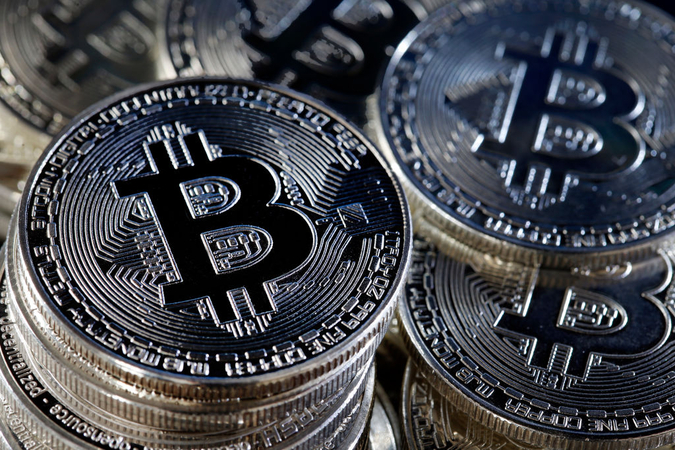
Bitcoin, the largest digital currency, dropped as much as 16% from Friday’s close after extending a sell-off begun over the weekend, and was trading at around $7,820 as of 7:31 a.m. in New York. That’s the biggest one-day slump at least since September, according to consolidated pricing compiled by Bloomberg.

The wider Bloomberg Galaxy Crypto Index fell as much as 18% as major cryptocurrencies Ether, XRP, Dash and Litecoin also retreated.

Asia equities plunged with sovereign bond yields, while currencies swung wildly on Monday after Brent oil prices crashed more than 30%, the second-largest decline on record after the plunge during the Gulf War in 1991.

“Macro dominoes are falling to create a chain of negative sentiment, which is in turn triggering a sell-off of crypto,” said Jehan Chu, managing partner with blockchain investment and advisory firm Kenetic Capital. “Bitcoin has always been subject to short-term sometimes-violent volatility, but today’s drop is nothing we haven’t seen before” and it could move lower still, he said.

There’s also a bullish argument, according to Chu — that the weakness in the global economy, oil’s collapse and the coronavirus outbreak are helping to make the case for investing in digital assets.

Even with the latest sell-off, Bitcoin is still up about 9% this year, with much debate within the industry on the potential impact on pricing of the upcoming “halvening” — a scheduled reduction in the mining rate of the coin designed to combat inflation.

“A similarly rapid turnaround and appreciation is equally anticipated on the way to higher levels leading into the halvening,” he said.

Gold price falls Bt350/baht at close of trade #ศาสตร์เกษตรดินปุ๋ย

#ศาสตร์เกษตรดินปุ๋ย : ขอบคุณแหล่งข้อมูล : หนังสือพิมพ์ The Nation

https://www.nationthailand.com/business/30383701?utm_source=category&utm_medium=internal_referral

Gold price falls Bt350/baht at close of trade

Mar 09. 2020
By The Nation

Gold price fell by Bt350 per baht weight at the close on Monday (March 9), the Gold Traders Association reported.

At 4.15 pm, buying price of a gold bar was Bt24,800 per baht weight and selling price Bt24,900, while buying price of gold ornaments was Bt24,346.96 per baht weight and selling price Bt25,400.

Prices dropped from the level in morning trade when buying rate of a gold bar was Bt25,150 with selling rate at Bt25,250, while gold ornaments cost Bt24,695.64 to buy and Bt25,750 to sell.

Meanwhile, gold contracts in COMEX futures increased by US$22.80, or 1.36 per cent, to $1,695.20 per ounce on Monday at 6.25 am Thailand time since investors turned to buy gold as a safe haven asset after the Dow Jones Index dropped sharply by 900 points due to declining oil prices and the Covid-19 outbreak.

Crude oil contracts in West Texas Intermediate which traded at the New York Mercantile Exchange (NYMEX) market fell by $8.75, or 21.20 per cent, to $32.53 per barrel due to the Organisation of the Petroleum Exporting Countries and its partners led by Russia unable to reach an agreement to cut oil production at a meeting in Vienna last Friday.

As a result, Saudi Arabia officially announced to cut oil price, signalling the beginning of a price war.

SET plummets by over 100 points, driven by falling oil price, Covid-19 anxiety #ศาสตร์เกษตรดินปุ๋ย

#ศาสตร์เกษตรดินปุ๋ย : ขอบคุณแหล่งข้อมูล : หนังสือพิมพ์ The Nation

https://www.nationthailand.com/business/30383700?utm_source=category&utm_medium=internal_referral

SET plummets by over 100 points, driven by falling oil price, Covid-19 anxiety

Mar 09. 2020
By The Nation

The Stock Exchange of Thailand (SET) Index closed at 1,255.94 points today (March 9), a decrease of 108.63 points, or 7.96 per cent, over Friday’s close and the lowest level seen in the past four years after the index came under pressure from falling oil prices and Covid-19 worries.

The daily trade volume was Bt103.623 billion, with an index high of 1,299.77 and a low of 1,249.31.

A stock analyst at Krungsri Securities expected the SET Index to fall to the low level of 1,320 due to a decline in the oil price after Opec and its partners did not reach a conclusion on reducing oil production.

“As a result, Saudi Arabia responded by lowering oil prices and announcing it was ready to increase production to gain market share from Russia, causing a negative sentiment in oil refinery and petroleum stocks,” the analyst said.

“Moreover, the uncertainty amid the Covid-19 situation, in which the number of infected people has increased to more than 100,000, will damage the global economy, resulting in investors turning to safe haven assets, which can be seen from rising gold prices and the declining US bond yield.”

The top ten stocks with the highest trade value today were PTT, PTTEP, CPAll, PTTGC, BAM, CPF, AOT, TOP, Advanc, and SCC.

Elsewhere in Asia, Japan’s Nikkei Index closed at 19,698.76, down 1,050.99 points, or 5.07 per cent.

China’s Shanghai SE Composite Index ended the day at 2,943.29, down 91.22 points, or 3.01 per cent, while the Shenzhen SE Component Index closed at 11,108.55, down 474.27 points, or 4.09 per cent.

Hong Kong’s Hang Seng ended at 25,040.46, sliding 1,106.21 points, or 4.23 per cent.

South Korea’s Kospi closed at 1,954.77, down 85.45 points, or 4.19 per cent.

Taiwan’s TaiEx ended at 10,977.64, falling by 344.17 points, or 3.04 per cent.

SET Index falls almost 7% #ศาสตร์เกษตรดินปุ๋ย

#ศาสตร์เกษตรดินปุ๋ย : ขอบคุณแหล่งข้อมูล : หนังสือพิมพ์ The Nation

https://www.nationthailand.com/business/30383694?utm_source=category&utm_medium=internal_referral

SET Index falls almost 7%

Mar 09. 2020
Pakorn Peetathawatchai, SET president

Pakorn Peetathawatchai, SET president
By The Nation

The Stock Exchange of Thailand (SET) Index dropped sharply as energy and public utility stocks fell due to plunging crude oil prices, president Pakorn Peetathawatchai said today (March 9).

He said the index dropped by more than 6.77 per cent in the morning session because energy and public utility stocks, which accounted for 30 per cent of market capitalisation, declined due to falling oil prices.

“The decline in the SET Index was in line with global stock markets,” he pointed out. “The SET has reported the information to the Bank of Thailand, the Finance Ministry and the Securities and Exchange Commission, which are concerned.

“Meanwhile, the Finance Ministry has established a working group to monitor movement in the capital market.”

He said the SET hasn’t come out with any special measures because the existing ones are sufficient for now.

“At this time, no abnormalities have been found in stock trading orders and forced sales in industry stocks,” he said. “The SET is currently considering helping listed companies, securities firms and asset management companies and a decision will be made soon,” he added.

“This period is a good time for investment, but people should diversify their investments in various industries,” he recommended.

Cabinet not to take up proposal yet to give low income people cash: PM #ศาสตร์เกษตรดินปุ๋ย

#ศาสตร์เกษตรดินปุ๋ย : ขอบคุณแหล่งข้อมูล : หนังสือพิมพ์ The Nation

https://www.nationthailand.com/business/30383689?utm_source=category&utm_medium=internal_referral

Cabinet not to take up proposal yet to give low income people cash: PM

Mar 09. 2020
PM Prayut Chan-o-cha

PM Prayut Chan-o-cha
By THE NATION

The Finance Ministry’s proposal to hand out Bt2,000 to low income people will not be tabled before the Cabinet tomorrow, Prime Minister Prayut Chan-o-cha said today (March 9).

He added that the Cabinet wanted to give top priority to urgent measures that could quickly lift the economy.

The Cabinet will consider two proposals tomorrow – the refund of Bt3,000 of electricity meter deposits per household and soft-loan measures to help the tourism and hotel sectors.

The Council of Economic Ministers had on March 6 endorsed a Finance Ministry proposal to give low-income people Bt2,000 each via the e-payment channel.

Minister Uttama Savanayana said after the meeting that there would be a payment of Bt1,000 per month for two months to low-income earners, farmers and people who do freelance work. The handouts will begin in April.