Chamber of Commerce head urges Congress to step up on privacy, labor #ศาสตร์เกษตรดินปุ๋ย

#ศาสตร์เกษตรดินปุ๋ย : ขอบคุณแหล่งข้อมูล : หนังสือพิมพ์ The Nation

https://www.nationthailand.com/business/30380356?utm_source=category&utm_medium=internal_referral

Chamber of Commerce head urges Congress to step up on privacy, labor

Jan 10. 2020
Tom Donohue, president and chief executive officer of the U.S. Chamber of Commerce, in Washington D.C. on May 15, 2017. MUST CREDIT: Bloomberg photo by Andrew Harrer.

Tom Donohue, president and chief executive officer of the U.S. Chamber of Commerce, in Washington D.C. on May 15, 2017. MUST CREDIT: Bloomberg photo by Andrew Harrer.
By Syndication Washington Post, Bloomberg · Ben Brody

 Congress should move past gridlock and take the reins on issues such as privacy, where liberal states have enacted new laws, the leader of the U.S. Chamber of Commerce says in a Thursday speech.

“Washington’s inability to make progress on data privacy is resulting in a patchwork of state rules and regulations that will stifle the free flow of goods and services across state borders,” chamber Chief Executive Officer Tom Donohue said in prepared remarks.

As part of his annual “State of American Business” address, Donohue expressed worry about state-by-state approaches, particularly regarding data protection and worker classification in the gig economy, according to excerpts provided by the chamber, one of the most influential and highest-spending business associations in Washington.

California has enacted laws on both fronts, and a handful of other Democratic-controlled states are considering measures or have passed bills.

Divergent state laws “would create conflict for businesses, confusion for consumers, and increase costs for everyone,” Donohue added in his remarks.

Like an array of business groups, the chamber has pushed Congress to pass a privacy law overruling state laws in order to smooth compliance and extend protections across the U.S. Many consumer groups worry, though, any law that gets bipartisan support in Washington would fail to provide the robust protections available in individual states.

California’s new privacy law went into effect Jan. 1. Lawmakers on key congressional committees released a number of proposals for privacy legislation at the end of 2019, which revealed divisions between Democrats and Republicans over the role of state laws.

Donohue, in his remarks, also slammed the new California law that could force gig companies like Uber to reclassify their workers as employees, and thus guarantee employment protections for them like minimum wage and overtime.

“The business model that has revolutionized entire sectors of the economy will screech to a halt.” he said. “The same is true for the innovation we are seeing in everything from home repair tasks to grocery delivery.”

The California labor law dictates that workers can generally only be considered contractors if they are doing work outside the usual course of a company’s business.

In his speech, Donohue also rejected the conventional Washington wisdom that Congress rarely passes major legislation in election years.

“It’s not going to be a year of inaction,” he predicted.

The address comes at a moment of transition for the chamber. Long associated with Republicans and a reliable source of campaign funds for conservative politicians, the group in recent years has expressed frustration with partisan gridlock that stalled its ambitions on issues like infrastructure. It has also objected to the trade-skeptic mood that has taken hold in the capital and in the administration of President Donald Trump.

Donohue, 81, who announced in his 2019 address that his group would evaluate lawmakers’ bipartisanship while still emphasizing a pro-business agenda, is planning to step down after 2022. He took over the organization in 1997.

In addition to regulatory issues, Donohue was expected to address trade in his speech. The group has worked for months to secure congressional passage of Trump’s revamped North American Free Trade Agreement, known as the U.S.-Mexico-Canada Agreement. The chamber, which steered a coalition backing the deal, said in December that it had held more than 1,000 meetings with lawmakers and congressional staff-members.

The agreement passed the House in December after Democrats negotiated changes to strengthen its labor, environment, drug patent and enforcement provisions, but a Senate vote may not come before next week.

Trump has also said he will sign the first phase of a trade deal with China on Jan. 15. As part of that agreement, China would increase purchases of American farm goods in exchange for lower tariffs on some of its products.

Hedge fund manager admits bilking $20 million from investors #ศาสตร์เกษตรดินปุ๋ย

#ศาสตร์เกษตรดินปุ๋ย : ขอบคุณแหล่งข้อมูล : หนังสือพิมพ์ The Nation

https://www.nationthailand.com/business/30380353?utm_source=category&utm_medium=internal_referral

Hedge fund manager admits bilking $20 million from investors

Jan 10. 2020
By Syndication Washington Post, Bloomberg · Christian Berthelsen 

The co-founder of a Connecticut hedge fund firm pleaded guilty to charges that he defrauded investors of almost $20 million in a Ponzi-like scheme, prosecutors said.

Jason Rhodes of Sentinel Growth Fund Management LLC was facing conspiracy and fraud charges in Manhattan federal court. Last month, prosecutors filed a new indictment in the case adding more allegations. Trial was scheduled to begin next week.

Rhodes, 47, of Rowayton, Connecticut, is scheduled to be sentenced on April 6, according a statement by Manhattan U.S. Attorney Geoffrey Berman.

According to prosecutors, Rhodes and his co-conspirators raised funds from about two dozen investors from 2013 to 2016, telling them their money would be invested in the market.

But the money was diverted to a variety of personal uses, including a $1 million payment to settle an unrelated civil lawsuit, a trip to Dubai, a luxury time-share and a trucking company Rhodes co-owned with his wife. Some of the funds were also used to repay $4.2 million to an investor who discovered his money had not been invested.

A lawyer for Rhodes could not immediately be reached for comment. Rhodes had initially sought to challenge the case against him by claiming his due-process rights were being violated by collaboration between prosecutors and the U.S. Securities and Exchange Commission. The judge rejected his request to seek evidence to support his theory.

Another Sentinel co-founder, Mark Varacchi, previously pleaded guilty to fraud and agreed to cooperate with prosecutors.

The charges against Rhodes carry maximum penalties of between five and 20 years in prison.

Stocks gain, gold drops amid Mideast calm; dollar rises #ศาสตร์เกษตรดินปุ๋ย

#ศาสตร์เกษตรดินปุ๋ย : ขอบคุณแหล่งข้อมูล : หนังสือพิมพ์ The Nation

https://www.nationthailand.com/business/30380350?utm_source=category&utm_medium=internal_referral

Stocks gain, gold drops amid Mideast calm; dollar rises

Jan 10. 2020
By Syndication Washington Post, Bloomberg · Randall Jensen, Vildana Hajric 

U.S. stocks rose as investor appetite for risk returned after America and Iran stepped back from the brink of war. The dollar advanced.

The S&P 500 headed for another record as the conflict between the U.S. and Iran, which drove futures down as much as 1.7% Wednesday, hasn’t escalated. Tech led gains. Oil fell below $60 a barrel in New York, gold declined for a second day and the Japanese yen dropped to a two-week low versus the dollar.

The greenback gained against major currencies for a third straight day after jobless claims fell by more than expected, adding to signs of economic strength ahead of the U.S. payrolls report Friday. Ten-year Treasury yields declined following a government auction.

In company news, retail took a hit from signs of poor sales before earnings ramp up next week. Bed Bath & Beyond Inc. slid 19% after results missed analyst estimates, while Kohl’s Corp. also slumped following a disappointing holiday season.

“Things have calmed down a bit and with the market hitting new intra-day highs today it seems investors are willing to buy the very little dip we got due to these geopolitical issues,” said Jennifer Ellison, principal at San Francisco-based BOS. “Markets go up and down despite what happens geopolitically, and in many cases geopolitical issues like this really don’t have a direct economic impact.”

If the relative geopolitical calm holds, it will allow traders to switch focus to the next clue on the health of the world’s biggest economy, which will come with the non-farm jobs report. Adding to sentiment, the partial trade deal between the U.S. and China looks locked in as China’s vice premier will visit Washington next week for a signing ceremony.

Elsewhere, the pound touched its lowest in two weeks after Bank of England Governor Mark Carney said policy makers are debating merits of more monetary stimulus. European and emerging-market shares rose.

Here are some events to watch for this week:

–The U.S. monthly non-farm employment report is due Friday.

These are moves in major markets:

Stocks

–The S&P 500 index gained 0.6% as of 2:58 p.m. New York time.

–The Nasdaq 100 index rose 0.8%.

–The Stoxx Europe 600 index climbed 0.3%.

–Germany’s DAX index jumped 1.3%.

Currencies

–The Bloomberg Dollar Spot index gained 0.2%.

–The British pound decreased 0.3% to $1.3058.

–The euro was little changed at $1.1107.

–The Japanese yen weakened 0.4% to 109.51 per dollar.

Bonds

–The yield on 10-year Treasuries fell two basis points to 1.85%.

–Britain’s 10-year yield was little changed at 0.819%.

Commodities

–West Texas Intermediate crude was steady at $59.59 a barrel.

–Gold dropped 0.4% to $1,553.40 an ounce.

Keep power bills down in these hard times, Egat told #ศาสตร์เกษตรดินปุ๋ย

#ศาสตร์เกษตรดินปุ๋ย : ขอบคุณแหล่งข้อมูล : หนังสือพิมพ์ The Nation

https://www.nationthailand.com/business/30380327?utm_source=category&utm_medium=internal_referral

Keep power bills down in these hard times, Egat told

Jan 10. 2020
By THE NATION

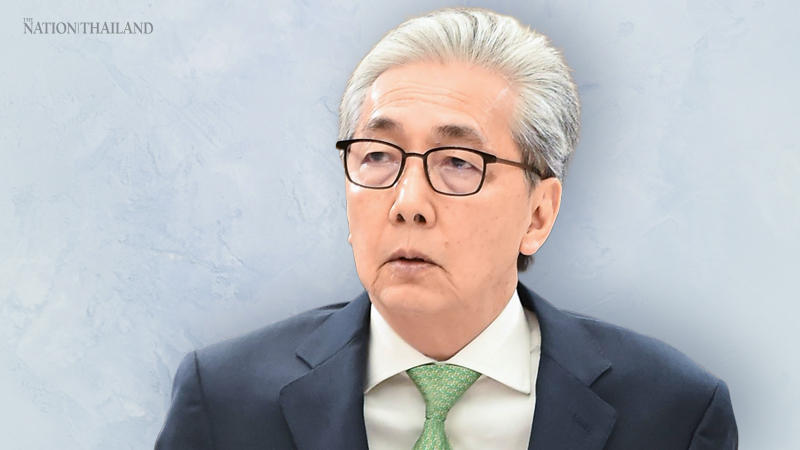
Deputy Prime Minister Somkid Jatusripitak has asked the Electricity Generating Authority of Thailand (Egat) to refrain from hiking the price of electricity while many citizens are struggling to meet ends meet due to the sluggish economy.

The request came during his visit to Egat’s offices on Thursday (January 9), where he was briefed on current performance.

He said he believed that the authority, given its sound financial state, will be able to keep household power bills at the same level.

He also urged Egat to hasten investments this year.

Energy Minister Sontirat Sontijirawong agreed to move quickly with the relevant state agencies in finding ways to lower electricity bills for small and medium-sized enterprises and for low-income earners.

He said he would meet Egat and PTT executives on Friday and urge them to take advantage of the baht’s current strength against other currencies by accelerating their investments.

Egat governor Viboon Rerksilathai said Egat would spend Bt600 billion on multiple projects this year and into 2024.

Most involve the continuing installation of power transmission lines.

It also wants to build eight power plants at cost of Bt300 billion to generate a combined 5,400 megawatts a day, he said.

The plants are due for Cabinet consideration soon, with construction expected to begin in 2022.

PTT president Chansin Treenuchagron said PTT had already accelerated investments in existing projects in order to cash in on the baht’s high value.

Lebanon bans ex-Nissan chief Ghosn from traveling #ศาสตร์เกษตรดินปุ๋ย

#ศาสตร์เกษตรดินปุ๋ย : ขอบคุณแหล่งข้อมูล : หนังสือพิมพ์ The Nation

https://www.nationthailand.com/business/30380344?utm_source=category&utm_medium=internal_referral

Lebanon bans ex-Nissan chief Ghosn from traveling

Jan 10. 2020
Carlos Ghosn, former chief executive officer of Nissan and Renault, gestures as he speaks to the media in Beirut, Lebanon, on Jan. 8, 2020. MUST CREDIT: Bloomberg photo by Hasan Shaaban.

Carlos Ghosn, former chief executive officer of Nissan and Renault, gestures as he speaks to the media in Beirut, Lebanon, on Jan. 8, 2020. MUST CREDIT: Bloomberg photo by Hasan Shaaban.
By The Washington Post · Sarah Dadouch 

BEIRUT – Former auto executive Carlos Ghosn was placed under a travel ban in his native Lebanon on Thursday, six days after the country received an Interpol red notice for the fugitive Lebanese national.

On Dec. 30, Ghosn made a stealthy exit from Japan, where he was under house arrest facing trial on four charges of financial misconduct during his tenure as chairman of auto company Nissan. He suddenly showed up in Lebanon, sending shock waves throughout Japan as officials scrambled to understand how he had escaped.

Ghosn said the procedures after his arrest in Japan in November 2018 were “anachronistic and inhumane.” He said he was held for 130 days in solitary confinement in a tiny cell, allowed outside for only half an hour a day on weekdays. He said his interrogations extended into the night, sometimes reaching eight hours and in the absence of a lawyer, with lights left on round-the-clock.

“It’s not very difficult to come to the conclusion that you’re going to die in Japan or you have to get out,” he said Wednesday during a news conference in Beirut, his first public appearance since his escape. He insisted that he was innocent and the target of a conspiracy to bring him down, and called Japan’s justice system corrupt.

Japanese Justice Minister Masako Mori responded that Ghosn was spreading false information about the country’s justice system and that his audacious escape could itself be a crime.

Ghosn appeared at a hearing in Lebanon on Thursday, two days after Lebanon’s caretaker justice minister, Albert Serhan, said the country’s public prosecutor had received the Interpol red notice about Ghosn and would be taking the necessary steps. He was placed under house arrest.

A few days after his arrival in Lebanon’s capital, Ghosn found himself in more legal trouble: A group of lawyers last Thursday lodged a legal complaint against him for visiting Israel as chairman of Renault and later Nissan. Lebanon and Israel have been in a state of war for the past six decades, and Lebanese law considers interacting with Lebanon’s southern neighbor and sworn enemy a crime.

Ali Abbas, one of the two lawyers who filed the Israel-related complaint against Ghosn, said the travel ban was a formality that usually comes after receiving Interpol notices, especially red notices, which alerts police about internationally wanted fugitives but does not compel any country to arrest the fugitive.

The Lebanese lawyer said evidence of Ghosn’s dealings in Israel were in a legal memorandum he submitted, including a contract signed in 2015 that came into effect in 2017.

Abbas said that he and his colleague filed the complaint because no one should be above the law and that all nationals should be treated equally before the judiciary, regardless of economic class or social standing. It’s an issue that Lebanon grapples with – “wasta,” a mix of nepotism and connections, frequently helps some people avoid legal complications.

Abbas also said different rules should not apply for those fortunate enough to possess multiple passports. The court said Thursday that it is continuing investigations into Ghosn’s Israeli connections.

Ghosn is a Lebanese, French and Brazilian national, and was asked to surrender his passports to his lawyers under the terms of his bail in Japan. But he was allowed to keep a spare French passport at his home in a locked case, the keys of which were held by his lawyers. His lawyers maintain that they did not assist in and were not aware of his escape.

During Wednesday’s news conference, Ghosn said the allegations against him in Japan were “untrue, and I should never have been arrested in the first place.” He claimed collusion between Nissan and Japanese prosecutors to edge him out to prevent closer relations between Nissan and French partner Renault.

Ghosn was charged with underreporting his income and diverting company funds for his own use. He said that not only had the income never been paid but that the final amount had not even been decided.

Speaking in a packed conference room from Beirut, Ghosn said he was happy to be in Lebanon.

“I don’t consider myself a prisoner,” he said. “I prefer this prison to the one I was in.”

Swiss trader spills secrets of global insider network #ศาสตร์เกษตรดินปุ๋ย

#ศาสตร์เกษตรดินปุ๋ย : ขอบคุณแหล่งข้อมูล : หนังสือพิมพ์ The Nation

https://www.nationthailand.com/business/30380342?utm_source=category&utm_medium=internal_referral

Swiss trader spills secrets of global insider network

Jan 10. 2020
By Syndication Washington Post, Bloomberg · Bob Van Voris 

He tapped a safe full of cash to pay off corrupt stock tipsters and used phony invoices for artwork sales to mask some payments. He stole information from his banker girlfriend, placed stories with journalists and disguised illegal trades by using other people to make share purchases.

On Wednesday, Marc Demane Debih, a failed Swiss entrepreneur, revealed to a New York jury the secret methods he used to earn $70 million in illegal profit from a global insider-trading network. Testifying for U.S. prosecutors, he is the government’s star witness in the trial of Telemaque Lavidas, the first to face a U.S. jury after a multiyear government probe of a wider alleged conspiracy.

“We agree (with) each other to share inside information and rumors,” Demane Debih said about his relationship with one member of the network. “If he got inside information, he would give it to me. I would trade it for him.”

Demane Debih has been jailed since his 2018 arrest in Serbia and pleaded guilty in October to 38 insider-trading charges. Prosecutors say he was a key player in a sprawling network of contacts on three continents that shared information about pending corporate takeovers and paid off tipsters — from executives to bankers to an art collector.

The 49-year-old Demane Debih, who has agreed to cooperate with authorities to reduce his sentence, testified that Lavidas’ tips helped produce profit on shares of Boston-based Ariad Pharmaceuticals Inc.

Lavidas got inside information from his father, who was an Ariad board member at the time, and passed it along to Georgios Nikas, a Greek businessman who owned restaurants in New York, according to prosecutors. Demane Debih, who described Nikas as a friend, said he never got tips directly from Lavidas.

The secret Ariad information stood out from the other tips he got from investment bankers because it came “from somebody who worked there — in this case a board member,” Demane Debih told jurors on Wednesday.

In addition to Nikas, Demane Debih testified he got leaks from John Dodelande, a French art collector connected to investment bankers. Dodelande sometimes provided him with stolen deal documents and shared information about more than 15 transactions in all, Demane Debih said. He concluded Dodelande’s sources probably worked for Moelis & Co. and Centerview Partners.

Benjamin Taylor, a former Moelis banker, and Darina Windsor, formerly of Centerview Partners, were charged by the U.S. in October. Taylor and Windsor shared a London apartment, sometimes communicating in code and using the pet names “Pops” and “Popsy” in emails, according to the government. They’re charged with providing inside information on 22 companies.

Taylor and Windsor haven’t appeared in court to face the charges. Prosecutors said Taylor is in France and Windsor in Thailand. Dodelande didn’t immediately respond to an email seeking comment.

On Tuesday, former Goldman Sachs investment banker Bryan Cohen pleaded guilty to passing confidential information to Demane Debih. Nikas, who faces insider-trading charges, is in Greece and considered a fugitive by the U.S. Lavidas’s father, Athanase Lavidas, hasn’t been charged.

Demane Debih said he got into stock trading about 14 years ago after failed stints at importing coffee, selling cigarettes and trying to bring foreign businesses to Serbia. A diamond business he financed with a partner fell apart after only a couple of months. He used $3 million he got from the sale of a family boat and from an inheritance to fund his initial trading activities.

After trading stocks for a few years, Demane Debih testified that he moved to London from Geneva to find his own sources of information, getting his first tip from a JPMorgan Chase investment banker. He also described how he got details about pending takeovers involving three mining companies from an unwitting girlfriend who worked at Goldman Sachs.

During one four-year period of insider trading he lived in Switzerland, Greece, the U.K., France, Lebanon and the United Arab Emirates. As part of his guilty plea, he agreed to forfeit about $49 million.

He told jurors he learned early on to disguise illegal trades by using other people to make share purchases, buying other stocks in the same sector as the target stock and selling off part of a profitable position before an expected share move. He later came to insist that insider-trading contacts communicate with him in person or on burner phones.

Demane Debih said he took steps to hide the flow of payments from authorities, sometimes paying off tipsters from a cash-filled safe in his apartment. Phony invoices for artworks helped obscure payments to Dodelande, whom he said he paid more than $12 million. Other payments were made to and from companies set up to hide the source of payments. He told jurors that he sometimes used illegal tips to plant stories with financial news outlets, including Bloomberg News, then profited when the stories moved share prices.

Demane Debih said he met Telemaque Lavidas once, at a 2011 birthday dinner for a friend of Nikas. Sometime after the dinner, Demane Debih claims, Nikas told him he had access to information about Ariad from Lavidas’s father.

On cross-examination, defense lawyer Jonathan Streeter worked to minimize the connection between Lavidas, who lives in New York, and Demane Debih. The trader answered “no sir” to a series of questions establishing that he hadn’t ever seen Lavidas after that first meeting and never met his father, whose name he didn’t know.

He never witnessed either Lavidas providing insider information, he said.

Streeter suggested that Demane Debih, who faces many years in prison, is lying about Lavidas to reduce his own sentence. He told jurors in his opening statement Monday that Windsor, the former Centerview Partners banker, was the source of Nikas’s Ariad information, not his client.

Since 2013, American prosecutors, working with other countries, have investigated an alleged web of insider-trading that includes residents of the U.S., U.K., France, Switzerland, Israel, Cyprus, Greece and Hong Kong. The participants allegedly used secret information to profit from mergers, regulatory moves and other market-moving actions involving pharmaceutical companies.

Demane Debih told jurors that a Turkish-Swiss contact in Geneva passed along a rumor in 2013 that Ariad was going to be acquired and taken private. He testified that he ran the scenario by Nikas, because he knew Nikas had access to Lavidas. Nikas told him there was nothing to the rumor.

Demane Debih said he “strongly advised” his Geneva contact to sell his position. “I told him I had a very good source,” the trader said. “It was not the time to be long on the stock. It was time to be short on the stock. He was very happy. I saved him a huge loss on this position.”

The case is U.S. v. Lavidas, 19-cr-716, U.S. District Court, Southern District of New York (Manhattan).

Fed’s Clarida says policy appropriate if economy stays on track #ศาสตร์เกษตรดินปุ๋ย

#ศาสตร์เกษตรดินปุ๋ย : ขอบคุณแหล่งข้อมูล : หนังสือพิมพ์ The Nation

https://www.nationthailand.com/business/30380339?utm_source=category&utm_medium=internal_referral

Fed’s Clarida says policy appropriate if economy stays on track

Jan 10. 2020
Federal Reserve System Vice Chairman Richard Clarida at the Bloomberg offices in New York on Nov. 1, 2019. MUST CREDIT: Bloomberg photo by Kholood Eid.

Federal Reserve System Vice Chairman Richard Clarida at the Bloomberg offices in New York on Nov. 1, 2019. MUST CREDIT: Bloomberg photo by Kholood Eid.
By Syndication Washington Post,  Bloomberg · Donald Moore, Craig Torres

Federal Reserve Vice Chairman Richard Clarida said U.S. monetary policy is “in a good place” amid solid growth while there is a risk that inflation continues to miss the central bank’s 2% target.

The vice chairman said Thursday that the Federal Open Market Committee’s baseline view is that core inflation rises back to the central bank’s 2% target following three interest rate cuts in 2019, which in his view were put in place partly to offset surprisingly strong global disinflationary headwinds.

U.S. central bankers forecast last month that inflation minus food and energy would rise to 2% in 2021. That measure stood at 1.6% in November.

“If there is a risk to that outlook, it is skewed to the downside,” Clarida said in a question and answer period following his opening remarks to the Council on Foreign Relations. “We need to be nimble and we need to be alert not only to U.S. but global circumstances.”

Clarida said monetary policy is “in a good place” and should continue to support sustained growth, a strong labor market, and inflation running close to 2%.

“If developments emerge that, in the future, trigger a material reassessment of our outlook, we will respond accordingly.”

His remarks on downside risks to inflation, however, suggest that the committee is giving that indicator some weight as it assesses the need to change policy in the future.

Clarida suggested the committee wants to give the rate cuts time to work through to inflation expectations and actual prices.

“The global disinflationary pressures which I referred to are very powerful forces and policy needs to factor that in, in setting policy to get inflation up to the objective,” he said in the question and answer period. Even so, “we do think that policy is appropriate, and, under our baseline outlook, will continue to be appropriate.”

Fed officials left interest rates unchanged in a range of 1.5% to 1.75% at their final meeting of 2019. They also signaled policy would be on hold through 2020, keeping the central bank on the sidelines during a U.S. presidential election year.

Investors see almost no chance of a rate cut in the next six months, according to pricing in federal funds futures contracts.

Minutes of the Dec. 10-11 meeting released Jan. 3 showed officials still see some downside risks to their outlook for continued growth and were prepared to move rates up or down if there was a “material” change in their forecasts. “There are some indications that headwinds to global growth may be beginning to abate,” Clarida said.

“The U.S. economy begins the year 2020 in a good place,” he said. “The unemployment rate is at a 50-year low, inflation is close to our 2% objective, gross domestic product growth is solid.”

The release of the minutes last week coincided with news of a U.S. air strike that killed a top Iranian general.

Oil prices rose in anticipation of retaliation by Tehran but have since fallen back, reassured by the restraint shown so far by both sides. President Donald Trump said Wednesday that Iran was “standing down” from the confrontation.

Clarida is leading the Fed’s review of monetary policy strategy, tools and communications policy. In December, Fed officials discussed feedback from their listening sessions with community and business leaders around the country. He said conclusions from the review will be shared with the public “later this year.”

Sovereign creditworthiness outlook for Asia Pacific negative: Moody’s #ศาสตร์เกษตรดินปุ๋ย

#ศาสตร์เกษตรดินปุ๋ย : ขอบคุณแหล่งข้อมูล : หนังสือพิมพ์ The Nation

https://www.nationthailand.com/business/30380312?utm_source=category&utm_medium=internal_referral

Sovereign creditworthiness outlook for Asia Pacific negative: Moody’s

Jan 09. 2020
By THE NATION

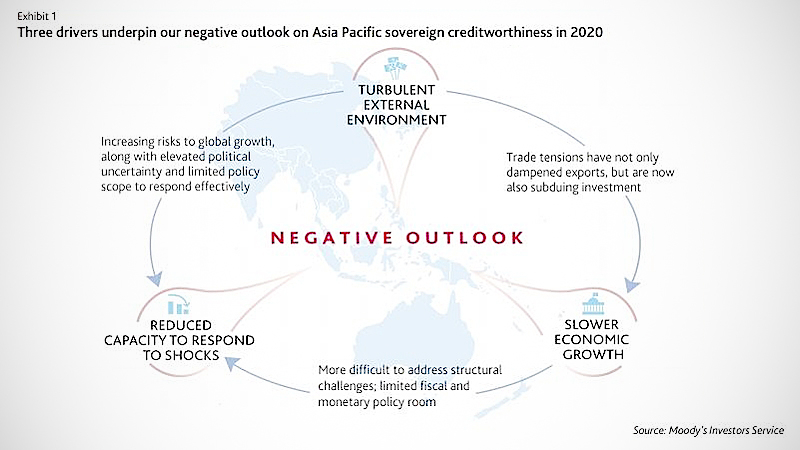
Moody’s Investors Service says in a new report that its outlook for Asia Pacific sovereign creditworthiness in 2020 is negative, underpinned by slower economic growth, a turbulent external environment and some governments’ reduced capacity to respond to shocks.

Moody’s has published an outlook report titled “Sovereigns – Asia Pacific: 2020 outlook negative as slower growth amplifies long-standing fiscal, liquidity and demographic challenges”.

A gradual slowdown in growth globally, exacerbated by trade tensions between China (A1 stable) and the US (Aaa stable) — notwithstanding the phase one trade deal — will constrain the credit quality of rated sovereigns in Asia Pacific, the report said.

“Despite the phase one deal, the prospect of the US and China agreeing on long-term issues like industrial policy, intellectual property and market access remains highly uncertain. As a result, the US-China trade relationship will remain a source of uncertainty and volatility in 2020,” says Martin Petch, Moody’s vice president and senior credit officer.

These trade frictions will spread via global supply chains, and Asia Pacific sovereigns embedded in global supply chains such as Hong Kong (Aa2 negative), South Korea (Aa2 stable), Malaysia (A3 stable), Singapore (Aaa stable) and Thailand (Baa1 positive), along with Vietnam (Ba3 negative) to a degree, will be impacted as a result, the report said.

Weakening trade is also curbing investment, which if sustained, will further reduce potential growth and amplify long-standing structural challenges including fiscal vulnerabilities and demographic change, the report added.

“In APAC [Asia Pacific], trade tensions are no longer simply exacerbating the global slowdown in trade volumes. The shock is now also extending to investment, with businesses putting off their expansion plans amid economic, political and policy uncertainties, which will hurt income growth, competitiveness and productivity in the long run,” adds Petch.

On average across Asia Pacific, Moody’s forecasts gross domestic product growth of 4.0 per cent in 2019-21, slower than 4.4 per cent over 2014-18, but still robust by global standards.

The erosion of fiscal positions as governments try to buffer against external and domestic growth shocks will be a risk for some sovereigns.

For governments such as India (Baa2 negative), China, Pakistan (B3 stable) and Sri Lanka (B2 stable), slower growth prospects will increase restrictions on fiscal space, further limiting the capacity of the authorities to support their economies.

A few, including Hong Kong, Korea and Singapore, have much more fiscal flexibility.

In addition, weaker growth will compound structural challenges in the region, which range from rapid ageing, to creating enough jobs for large and growing young populations in places like the Philippines (Baa2 stable), Indonesia (Baa2 stable) and Malaysia, the report said.

Amid heightened unpredictability, Asia Pacific’s frontier markets are vulnerable to any sudden shift in investor appetite.

Nineteen of Moody’s 25 rated Asia Pacific sovereigns have stable outlooks, while four have negative outlooks and two have positive outlooks.

Coleman’s hedge fund Tiger Global ends 2019 with 33% gain #ศาสตร์เกษตรดินปุ๋ย

#ศาสตร์เกษตรดินปุ๋ย : ขอบคุณแหล่งข้อมูล : หนังสือพิมพ์ The Nation

https://www.nationthailand.com/business/30380305?utm_source=category&utm_medium=internal_referral

Coleman’s hedge fund Tiger Global ends 2019 with 33% gain

Jan 09. 2020
By Syndication Washington Post, Bloomberg · Hema Parmar

Chase Coleman’s Tiger Global Management returned 33% last year, beating the broader stock market even after slashing its valuation of beleaguered e-cigarette company Juul Labs Inc.

The stock-picking hedge fund was just down 0.2% in December, according to a person familiar with the matter.

In September, the fund cut its valuation Juul by half to $19 billion, Bloomberg reported. The fund was poised to record a $1 billion profit on its private investment in exercise company start-up Peloton Interactive Inc. if it went public at $26 a share. Peloton debuted at $29. The S&P 500 Index gained 29% last year.

Tiger Global’s returns benefited as its seven-largest disclosed U.S. stock positions as of the third quarter all climbed double-digits last year. Of them, Apollo Global Management Inc. jumped about 107%, TransDigm Group Inc. soared 84% and JD.com Inc. rose 68%.

Coleman’s Tiger Global, which runs both a hedge fund and also makes private venture investments, oversees $36 billion. The firm’s assets have swelled by 80% since May 2015.

A spokeswoman for the firm declined to comment.

Stocks rebound after Trump addresses nation on tensions with Iran #ศาสตร์เกษตรดินปุ๋ย

#ศาสตร์เกษตรดินปุ๋ย : ขอบคุณแหล่งข้อมูล : หนังสือพิมพ์ The Nation

https://www.nationthailand.com/business/30380304?utm_source=category&utm_medium=internal_referral

Stocks rebound after Trump addresses nation on tensions with Iran

Jan 09. 2020
By The Washington Post · Rachel Siegel, Thomas Heath 

Oil prices and U.S. stock futures whipsawed Tuesday night after Iran fired on Iraqi bases housing U.S. troops, but markets calmed down and eventually rebounded after President Donald Trump eased fears that a skirmish was going to escalate into a full-blown war.

All three major U.S. stock indices ended in positive territory, with the technology-heavy Nasdaq composite hitting an all-time high of 9,129, a gain of 60 points or 0.67 percent. The Dow Jones industrial average posted a 161-point gain after having sunk more than 400 points on the overnight scares. The Dow finished at 28,745, a 0.56 percent gain. The Standard & Poor’s 500 index ended the day at 3,253, a 16-point advance, after having struck an all-time high during the day.

In an address to the nation just before noon on Wednesday, Trump said the U.S. would impose additional economic sanctions on Iran but that “the U.S. is ready to embrace peace with all who seek it.”

The president’s statement calmed nervous investors and stocks took off.

“Iran responded. No lives were lost. America is back to business. Next?” said Michael Farr, president of Farr, Miller & Washington, a District of Columbia investment firm. Farr said markets had rallied on the new “peace.”.

But there was skepticism over whether the peace will hold and for how long.

“The ‘all clear’ has yet to be signaled, as tightened economic sanctions will likely fan the flames of hostility,” said Sam Stovall, chief investment strategist at CFRA.

The analysts saw Iran’s ballistic missile attack on American bases in Iraq as a face-saving move for Tehran, allowing it to say it had followed through on its promised retaliation for the United States killing of its top military commander. “Once the smoke cleared, literally, from the Iranian missile attacks, it was clear that our worst fears were not realized. No U.S. fatalities and no damage to any oil infrastructure,” said John Kilduff, an analyst with Again Capital.

“Investors concluded that neither Iran nor the U.S. want to up the ante,” said Ed Yardeni, president of Yardeni Research.

Investor anxiety also was seen in the surge of gold and bitcoin prices overnight. Both gold and bitcoin are considered to be safe investments during waves of economic volatility or political upheaval. Those markets pared back Wednesday morning from their late-night highs.

“You can put money into what is perceived as a safe haven, such as bitcoin and gold today” said Ivan Feinseth, chief investment officer of Tigress Financial Partners. “You can risk on, risk off with a mouse click.”

Meanwhile, in the oil market, Brent crude and West Texas Intermediate pulled back after spiking more than 3 percent in the hours after the missile attacks. A barrel of WTI was was down more than 4 percent in late-afternoon trading on Wednesday. Brent crude, which is seen as more vulnerable to an interruption, was trading down more than 3 percent late in the day.

So long as oil kept flowing out of the region, analysts expected no immediate impact on consumer gas prices. Last week, immediately after Iranian Maj. Gen. Qasem Soleimani was killed in the airstrike ordered by Trump, crude oil prices jumped about 3 percent and investors braced for retaliation.

On Tuesday night, Trump tweeted that “All is well!” Meanwhile, Iran’s Revolutionary Guard claimed dozens of U.S. soldiers were killed.

“All is well! Missiles launched from Iran at two military bases located in Iraq. Assessment of casualties & damages taking place now. So far, so good! We have the most powerful and well equipped military anywhere in the world, by far! I will be making a statement tomorrow morning,” Trump wrote.

Aerospace giant Boeing was one of the biggest drags on the Dow. Early Wednesday, a Ukrainian passenger jet carrying more than 170 people crashed in Iran shortly after takeoff. Iranian state media quoted a senior official at Tehran’s main international airport saying that the Boeing 737-800 probably crashed because of technical difficulties.

But Ukraine banned all flights from Iranian airspace, as did several other countries in response to escalating tensions between Iran and the United States.

The crash comes at a time of extreme tumult for Boeing, which last month fired its chief executive, Dennis Muilenburg. The century-old American company has struggled to overcome two fatal airplane crashes blamed on a faulty software program and poor corporate oversight.

“Regardless of what led to the crash, a 737 crash of some sort has been in the news in each of the last three years,” said Jamie Cox of Richmond-based Harris Financial Group. “Investors are rightfully nervous of what the future holds for a company whose reliability quotient is being questioned.”

Still, the Dow was buoyed by strong payroll numbers for the end of 2019. A report Wednesday from ADP and Moody’s Analytics said companies added 202,000 positions in December as the solid labor market headed into 2020.