U.S. stocks slide amid conflicting signs on trade

ศาสตร์เกษตรดินปุ๋ย : ขอบคุณแหล่งข้อมูล : หนังสือพิมพ์ The Nation

https://www.nationthailand.com/business/30378620?utm_source=category&utm_medium=internal_referral

U.S. stocks slide amid conflicting signs on trade

Nov 22. 2019
By Syndication Washington Post,Bloomberg · Vildana Hajric ·277 Viewed

U.S. equities edged lower following losses in Europe and Asia as traders weighed conflicting signals about the outlook for a trade deal between Beijing and Washington.

Declines slightly outnumbered gains among members of the S&P 500 index. The dollar held steady and Treasuries dipped as China’s chief trade negotiator reportedly said he was “cautiously optimistic” about reaching a phase-one accord. Pessimists focused on speculation Donald Trump may sign legislation backing Hong Kong protesters, setting up further conflict between the nations. TD Ameritrade soared on reports that Charles Schwab Corp. is in talks to buy the brokerage.

Hong Kong’s deteriorating situation may prove crucial to the trade talks, and on Thursday a commentary from China’s state-run news agency accused the U.S. of applying a double standard. China has threatened to retaliate for the passage of the American bill and said supporting the protesters was a “gross” interference in Hong Kong affairs. With stocks still within 1% of a record high, traders will be watching for signs of progress ahead of a Dec. 15 deadline for further tariffs.

“Investors now are starting to worry again that we may not see that phase one in 2019,” said Chris Gaffney, president of world markets at TIAA. “It’s going to be tough to have the next leg up without a trade deal.”

Elsewhere, oil futures rose. European bonds tracked Treasuries lower and emerging-market stocks slid.

Here are some key events coming up this week:

–Economic indicators due for release include U.S. and European PMI data for November on Friday.

These are the main moves in markets:

Stocks

–The S&P 500 index fell 0.1% as of 2:39 p.m. New York time.

–The Stoxx Europe 600 index dipped 0.4%.

–The MSCI Asia Pacific index declined 0.7%.

–The MSCI Emerging Market index fell 0.8%.

Currencies

–The Bloomberg Dollar Spot index was little changed.

–The euro slipped 0.1% to $1.1059.

–The British pound slid 0.2% to $1.2899.

–The Japanese yen was little changed at 108.64 per dollar.

Bonds

–The yield on 10-year Treasuries increased three basis points to 1.78%.

–Germany’s 10-year yield increased two basis points to -0.33%.

–Britain’s 10-year yield jumped two basis points to 0.75%.

Commodities

–West Texas Intermediate crude gained 2.4% to $58.46 a barrel.

–Gold decreased 0.5% to $1,463.81 an ounce.

Export forecast for 2019 goes sub-zero

ศาสตร์เกษตรดินปุ๋ย : ขอบคุณแหล่งข้อมูล : หนังสือพิมพ์ The Nation

https://www.nationthailand.com/business/30378614?utm_source=category&utm_medium=internal_referral

Export forecast for 2019 goes sub-zero

Nov 22. 2019
By THE NATION

806 Viewed

Thai exports are expected to contract between 1.5 and 2 per cent for the full year, the Commerce Ministry announced on Thursday (November 21).

Pimchanok Vonkorpon, director-general of the ministry’s Trade Policy and Strategy Office, was downgrading a prior prediction of zero growth in 2019.

But the situation is expected to improve next year, she said.

Contraction this year might not reach 2 per cent if the baht does not further strengthen in value against foreign currencies and there is no further steep plunge in global oil prices.

She said exports to shrink this month, then expand next month.

The department announced on Thursday (November 21) that the overall Thai export sector shrank in October by 4.57 per cent, leaving total trade value at US$20.8 billion.

Pimchanok said a 25-per-cent-plus decrease in the price of oil and lower demand for commodities including rice and rubber were chiefly to blame.

The effects of international trade wars are improving, as can be seen in a rise in Thailand’s electronics exports, she said.

But there are other harmful contributing factors, such as the baht’s appreciation and Brexit worries, that can affect Thai exports in the long term.

Total exports for the first 10 months of 2019 were valued at $207 billion, a 2.4-per-cent decrease from the same period last year.

Pimchanok expects exports next year to expand by at least 2 per cent since exporters have already adjusted to the trade-war situation and are seeking out new markets.

FTA with EU will raise Thai GDP by 1.63%: study

ศาสตร์เกษตรดินปุ๋ย : ขอบคุณแหล่งข้อมูล : หนังสือพิมพ์ The Nation

https://www.nationthailand.com/business/30378607?utm_source=category&utm_medium=internal_referral

FTA with EU will raise Thai GDP by 1.63%: study

Nov 21. 2019
By THE NATION

1,322 Viewed

A free trade agreement between Thailand and European Union (EU), if achieved, could boost the country’s gross domestic product (GDP) by 1.63 per cent, according to a joint study by the Department of Trade Negotiations and Institute of Future Studies for Development.

The department will forward results of the public hearing on whether Thailand should resumeThailand-EU FTAtalks to the Cabinet soon.

Auramon Supthaweethum, the department’s director-general, said if import tariffs on all items in the pact are reduced to zero per cent, Thailand’s GDP would grow by 1.63 per cent.

The pact would also boost Thailand’s export by 3.43 per cent and import by 3.42 per cent.

Thai export products that will benefit from the deal include auto parts, clothes, and electronic devices, while sugar, vegetables, and fruits will be affected.

In 2018, Thai exports to the EU totalled US$25.04 billion, dominated by computers and computer parts, electrical circuits, electronic products, gems and jewelleries and air conditioners and parts.

Thailand’s imports from the bloc were valued at US$22.24 billion last year, with the main products being machines and machine parts, aircraft, gliders, aviation equipment, electrical machinery and parts, chemicals, medicine, and pharmaceuticals.

Thai and Asian stocks drop over fears on Hong Kong democracy bill and trade war

ศาสตร์เกษตรดินปุ๋ย : ขอบคุณแหล่งข้อมูล : หนังสือพิมพ์ The Nation

https://www.nationthailand.com/business/30378591?utm_source=category&utm_medium=internal_referral

Thai and Asian stocks drop over fears on Hong Kong democracy bill and trade war

Nov 21. 2019
The Stock Exchange of Thailand Index is expected to trade below 1,600 level as investors worry that a US-China trade deal will not be reached this year.

The Stock Exchange of Thailand Index is expected to trade below 1,600 level as investors worry that a US-China trade deal will not be reached this year.
By Wichit Chaitrong
The Nation

1,948 Viewed

The Stock Exchange of Thailand Index is expected to trade below 1,600 level as investors worry that a US-China trade deal will not be reached this year, Tisco Research said today (November 21).

US told to stop meddling in HK affairs

The SET closed below the important barrier 1,600 points yesterday at 1,596.83 points. It last fell below this barrier three weeks ago. Tisco, however, predicts that downside risks are limited and expects the index will shored up by energy and petrochemical sectors. The market also expects the Thai government will spend more to stimulate the sluggish economy in light of the Thai industries sentiment index in October dipping to 91.2, its lowest level in 17 months.

The SET index was down by 0.30 per cent in the morning session. The SET closed at 1,591.86  points, down 4.97 points or 0.31 per cent from previous day.

Major Asian stocks also turned into negative territories. Japan’s Nikkei was down 0.77 per cent, Hang Seng in Hong Kong dropped sharply by 1.6 per cent and South Korea’s Kospi fell 1.6 per cent over concerns at a delay in the deal. Investors are also worried about a potential rise of tension between the US and China after the U.S. House of Representatives on Wednesday passed two bills aimed at supporting protesters in Hong Kong.

The House voted 417 to 1 for the “Hong Kong Human Rights and Democracy Act,” which passed the Senate unanimously on Tuesday. And the House passed by 417 to 0 a second bill, which the Senate also approved unanimously on November 19, to ban the export of certain crowd-control munitions to the Hong Kong police force. That measure bans the export of items such as tear gas, pepper spray, rubber bullets and stun guns, according to Reuters news agency.

The market is now closely watching whether President Trump is going to sign or veto the bills in light of the ongoing trade negotiations between the world’s largest economies.

If President Trump vetoes the two bills, then his vetoes would be difficult to sustain given that the measures passed both the Republican-controlled Senate and Democratic-controlled House with almost no objections, said Reuters.

A two-thirds majority would be required in both the Senate and House to override a veto.

Stocks drop on worry over trade deal’s timing

ศาสตร์เกษตรดินปุ๋ย : ขอบคุณแหล่งข้อมูล : หนังสือพิมพ์ The Nation

https://www.nationthailand.com/business/30378574?utm_source=category&utm_medium=internal_referral

Stocks drop on worry over trade deal’s timing

Nov 21. 2019
By Syndication Washington Post,Bloomberg · Sarah Ponczek, Claire Ballentine

497 Viewed

The S&P 500 index posted its biggest loss in a month after a report that Washington and Beijing are unlikely to reach a trade deal this year. The dollar rose and oil jumped.

Telecom companies and automakers led losses on the gauge after Reuters said that a pact may be delayed, though the index pared losses following a report that progress is being made. The developments came after China threatened to retaliate for the Senate’s passage of a bill that sought to support Hong Kong’s autonomy from Beijing. The House votes on the measure later Wednesday.

After reaching fresh highs Monday, U.S. stocks have retreated on concern about the outlook for trade. While investors are sensitive to any reports on the economy, the potential of a detente between China and the U.S. had driven gains this year that left stocks poised for their best performance since 2013.

“The market for most of the year has been trading off of trade — trade hope and trade fear,” said Ed Clissold, chief U.S. strategist at Ned Davis Research Inc. “There were expectations over the last several weeks that some sort of interim deal would get done. And the reality of the situation is setting in.”

Oil jumped, paring Tuesday’s more-than 3% loss, as American crude stockpiles rose less than expected and inventories at a key storage hub shrank by the most since August. Ten-year Treasury yields sank to a two-week low.

Travel and leisure companies led the retreat in the Stoxx Europe 600 index. Swedbank AB dropped after a report that American authorities are investigating possible breaches of sanctions against Russia by the Swedish lender.

Hong Kong shares fell along with Japanese and South Korean benchmarks. Australian equities slumped after allegations of financial crimes at Westpac Banking Corp. hit financial stocks.

Here are some key events coming up this week:

–U.S. economic indicators due for release include initial jobless claims on Thursday.

–Federal Reserve speakers this week include district bank presidents Loretta Mester and Neel Kashkari.

–European central bankers speaking this week include European Central Bank President Christine Lagarde, Bundesbank chief Jens Weidmann, along with Yves Mersch, Luis de Guindos, Pablo Hernandez de Cos and Philip Lane.

These are the main moves in markets:

Stocks

–The S&P 500 index fell 0.4% at the close of trading in New York.

–The Stoxx Europe 600 index dropped 0.4%.

–The MSCI Emerging Markets index fell 0.5%.

Currencies

–The Bloomberg Dollar Spot index gained 0.2%.

–The euro fell 0.1% to $1.1072.

–The British pound decreased 0.1% to $1.2918.

–The Japanese yen was little changed at 108.58 per dollar.

Bonds

–The yield on 10-year Treasuries sank five basis points to 1.73%.

–Germany’s 10-year yield dipped one basis point to -0.35%.

–Britain’s 10-year yield was little changed at 0.73%.

–Japan’s 10-year yield sank three basis points to -0.124%.

Commodities

–West Texas Intermediate crude increased 3.4% to $57.11 a barrel.

–Gold was little changed at $1,472.34 an ounce.

Uttama upbeat on EEC investments

ศาสตร์เกษตรดินปุ๋ย : ขอบคุณแหล่งข้อมูล : หนังสือพิมพ์ The Nation

https://www.nationthailand.com/business/30378562?utm_source=category&utm_medium=internal_referral

Uttama upbeat on EEC investments

Nov 21. 2019
By THE NATION

901 Viewed

Finance Minister Uttama Savanayana is confident that more local and foreign companies will invest in the Eastern Economic Corridor (EEC).

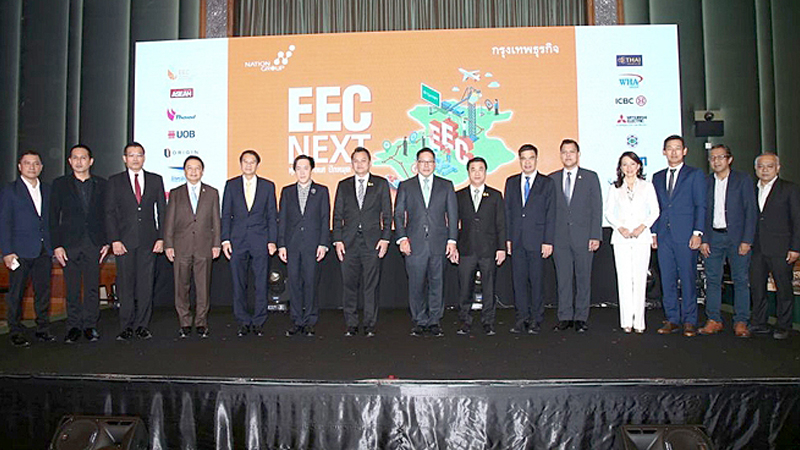
The government has been developing infrastructure and preparing legal groundworks to facilitate investments, he said yesterday (November 20) at a seminar on EEC, hosted by Krungthep Turakit newspaper.

Kanit Sangsubhan, secretary general of Eastern Economic Corridor Office of Thailand, said the PTT group planned to invest Bt200 billion in the EEC during next five years with PTT Global Chemical (PTTGC) putting up half of the investment.

Kanit said investments were coming in at this stage of EEC development and  the office would ensure harmony between industry growth and local communities living within the zone.

It also gave importance to environment protection, targeting to eliminate accumulated waste in the area within 12 years.

The EEC project covers the three eastern provinces of Chachoengsao, Chonburi and Rayong.

AOT nods to second terminal at Suvarnabhumi Airport

ศาสตร์เกษตรดินปุ๋ย : ขอบคุณแหล่งข้อมูล : หนังสือพิมพ์ The Nation

https://www.nationthailand.com/business/30378563?utm_source=category&utm_medium=internal_referral

AOT nods to second terminal at Suvarnabhumi Airport

Nov 21. 2019
By THE NATION

1,074 Viewed

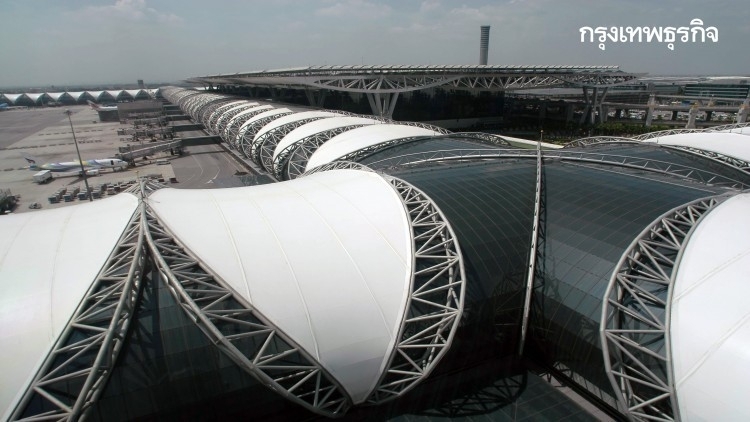
The Airports of Thailand (AOT) board yesterday (November 20) approved a plan to establish a second terminal on the northern part of Suvarnabhumi Airport.

The board also nodded to a 50 per cent discount in landing fee for international charter flights at six airports under the AOT for a period of five months.

The discount measure will run from December 1 this year to April 30 next year as part of an AOT strategy to boost tourism in the short term.

AOT has 6 international airports under its management: Don Mueang, Phuket, Chiang Mai, Hat Yai, Chiang Rai and Suvarnabhumi.

The agency would submit plan for the second terminal to the Transport Ministry soon, said AOT president Nitinai Sirismatthakarn.

Construction cost of the new terminal is estimated at Bt42 billion. It is expected to become operational in 2023 or 2024, to help ease passenger traffic at the airport.

The new terminal will be able to serve a maximum of 40 million passengers a year. Once opened, the airport will be able to serve a total of 82 million passengers annually.

The AOT board meeting yesterday also approved the fifth master plan for Suvarnabhumi Airport, focusing on its role in connectivity of the three international airports with the Eastern Economic Corridor.

Amazon to open cashierless supermarkets next year

ศาสตร์เกษตรดินปุ๋ย : ขอบคุณแหล่งข้อมูล : หนังสือพิมพ์ The Nation

https://www.nationthailand.com/business/30378566?utm_source=category&utm_medium=internal_referral

Amazon to open cashierless supermarkets next year

Nov 21. 2019
The new Amazon Go grocery store in Seattle is adjacent to Amazon's headquarters. CREDIT: Bloomberg photo by David Ryder
Photo by: David Ryder — Bloomberg

The new Amazon Go grocery store in Seattle is adjacent to Amazon’s headquarters. CREDIT: Bloomberg photo by David Ryder Photo by: David Ryder — Bloomberg
By Syndication Washington Post,Bloomberg · Matt Day · BUSINESS ·

1,068 Viewed

Amazon.com is preparing to open Amazon Go supermarkets and pop-up stores, an expansion of the company’s cashierless ambitions that includes the possibility of licensing the technology to other retailers.

The new store formats and licensing initiative could launch as soon as the first quarter of 2020, according to a person familiar with the project. Amazon is testing a supermarket equipped with Go technology in a 10,400-square-foot retail space in Seattle’s Capitol Hill neighborhood.

The Go expansion is the e-commerce giant’s latest attempt to compete in the $900 billion U.S. grocery industry and perhaps other areas of retail, as well. The company already operates the Whole Foods Market chain and last week confirmed plans to launch a separate supermarket brand, starting with a location in the upscale Woodland Hills neighborhood of Los Angeles. Those stores will have human cashiers. The previously unreported plan to expand Go revives Amazon’s original vision of creating full-size grocery stores without checkout lines.

Amazon opened the first Go convenience store at its Seattle headquarters almost two years ago and now operates 21 locations around the U.S. It’s not clear how much money the company has lavished on the project, but some of the 1,000 or so people working on it were recently told their cumulative salaries have totaled more than $1 billion since the project got underway in 2012, the person said.

Customers have praised the Go stores as technical marvels. But retail analysts have wondered whether the low margins at a typical corner store chain would offset the costs of the Go technology, a complicated array of cameras and software that figures out what shoppers have grabbed and automatically charges them when they exit.

The Go team, which recently folded previously separate hardware groups and engineering support staff into a new entity called Physical Retail Technologies, has spent the past two years streamlining the technology. The efforts were aimed at making the existing Amazon Go stores more profitable and the guts of the system cheap enough to entice other retailers, said the person, who requested anonymity to discuss an internal project.

Amazon declined to comment.

People familiar with the program estimate that Amazon spent millions of dollars on the cameras, networking gear and servers in the first store alone. Newer versions of Go’s hardware feature fewer backroom servers and more efficient cameras, software and networking capabilities, substantially cutting the cost of setting up a new store, the person said.

Amazon had originally envisioned a larger Go supermarket before abandoning the concept in favor of simpler, smaller convenience stores. Most Go locations are close to 2,000 square feet and stock grab-and-go staples-cold drinks, packaged sandwiches, salads-and a smaller selection of such household items as cold medicine and phone chargers.

Now, having improved the technology, the company is getting closer to its original ambition. Amazon aims to support stores as large as 30,000 square feet, the size of a typical modern supermarket. At the Capitol Hill space in Seattle, engineers are stress-testing the camera arrays with large groups of people, the person said. (Amazon confirmed to technology news site GeekWire last month that the Go team was running tests at the site.)

The Go teams are also working on a sort of pop-up kiosk, a self-contained, miniature version of an Amazon Go, designed for faster setup than equipping leased retail space with all of Go’s hardware. Potential users include malls and sports stadiums, the person said.

CNBC, which reported in September that Amazon was exploring licensing the technology behind Go, said the company had held talks with airport concessions operator OTG’s CIBO Express brand, and Cineworld Group PLC’s Regal movie theater chain.

The person said both chains were prospective customers. OTG declined to comment. Regal didn’t respond to requests for comment.

Amazon hasn’t settled on a licensing business model. Options under consideration vary by industry and include charging an upfront fee for use of the system or a percentage of total sales of a Go-equipped store, the person said.

Amazon is famous for trying many things out-including separate supermarket chains with and without cashiers-so some analysts have viewed Amazon Go as an expensive retail experiment. Now it’s clearer that Amazon is serious about mainstreaming the technology.

“The big question isn’t will the tech work-Amazon will make it work,” says Brendan Witcher, who tracks retail and consumer behavior at Forrester Research. “The question will be, ‘Will it work for a consumer, will they see this way of shopping as valuable?'”


Uttama signals launch of new stimulus measures

ศาสตร์เกษตรดินปุ๋ย : ขอบคุณแหล่งข้อมูล : หนังสือพิมพ์ The Nation

https://www.nationthailand.com/business/30378558?utm_source=category&utm_medium=internal_referral

Uttama signals launch of new stimulus measures

Nov 20. 2019
Finance Minister Uttama Savanayana

Finance Minister Uttama Savanayana
By THE NATION

1,624 Viewed

Finance Minister Uttama Savanayana said today (November 20) that the government may launch additional measures to help lift the economy before 2020.

“The ministry is monitoring the economic situations. It’s possible that we’ll launch additional economic stimulus measures,” he said, adding that the new measures would support all sectors, including SMEs, and boost local consumption.

On November 19, Prime Minister Prayut Chan-o-chaurged the Council of Economic Ministers to prioritise solving the problems of grassroot people.

He said the ministers would have to solve economic problems for people at all levels of society, especially low-income earners. The premier expressed his concern after a briefing by the National Economic and Social Development Council onthe economic situation in the third quarter.

In a related matter, the Thai Industries Sentiment Index in October slid to 91.2 from 92.1 in September, hitting the lowest point in 17 months since last June.

The drop was partly attributed to SMEs’difficulty in accessing funds as banks have been more prudent in lending, coupling with the strengthening baht and the prolonged US-China trade war.

A positive factor in October was that businesses were receiving more orders form foreign customers for New Year-related products, especially fashion and food items.

Bond market growth steady amid global slowdown

ศาสตร์เกษตรดินปุ๋ย : ขอบคุณแหล่งข้อมูล : หนังสือพิมพ์ The Nation

https://www.nationthailand.com/business/30378553?utm_source=category&utm_medium=internal_referral

Bond market growth steady amid global slowdown

Nov 20. 2019
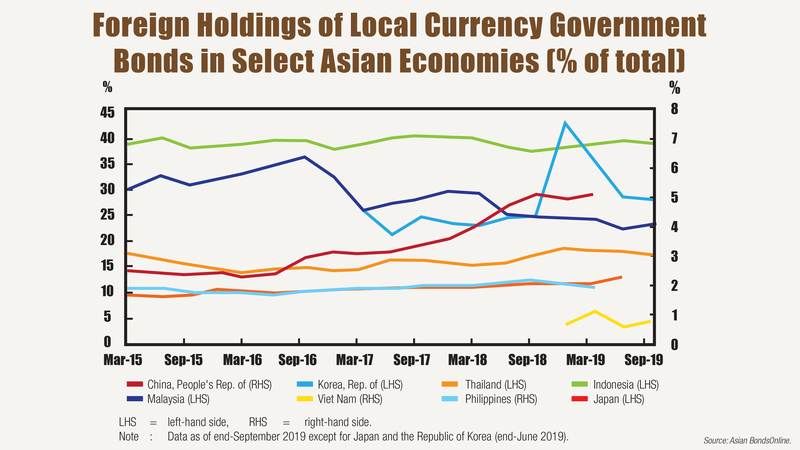
Emerging East Asia’s local currency bond market posted steady growth during the third quarter of 2019 .

Emerging East Asia’s local currency bond market posted steady growth during the third quarter of 2019 .
By The Nation

1,545 Viewed

Emerging East Asia’s local currency bond market posted steady growth during the third quarter of 2019 despite persistent trade uncertainties and a global economic downturn, according to the Asian Development Bank’s (ADB) Asia Bond Monitor.

“The ongoing trade dispute between China and the United States and a sharper-than-expected economic slowdown in advanced economies and the China continue to pose the biggest downside risks to the region’s financial stability,” said ADB chief economist Yasuyuki Sawada.

“However, monetary policy easing in several advanced economies is helping to keep financial conditions stable.”

Emerging East Asia is defined as China and Hong Kong, Indonesia, South Korea, Malaysia, the Philippines, Singapore, Thailand and Vietnam.

Local currency bonds outstanding in emerging East Asia reached US$15.2 trillion at the end of September. This was 3.1 per cent higher than at the end of June.

Local currency government bonds outstanding totalled $9.4 trillion, accounting for 61.8 per cent of the total, while the stock of corporate bonds was $5.8 trillion.

A total of $1.5 trillion in local currency bonds were issued in the third quarter, up 0.9 per cent versus the previous three months.

China remained emerging East Asia’s largest bond market at $11.5 trillion, accounting for 75.4 per cent of emerging East Asia’s outstanding bonds.

Indonesia had the fastest-growing local currency bond market in the region during the third quarter, boosted by large issuance of treasury bills and bonds.

One chapter of the Monitor examines the relationship between bond market development and the risk-taking of banks. The analysis finds that well-developed bond markets reduce the overall risk for banks and improve their liquidity positions. This suggests bond market development can contribute to the soundness of the banking system.

An annual survey included in the report shows increased liquidity and trading volumes in most regional local currency bond markets in 2019 versus 2018.

It also highlights the need for a well-functioning hedging mechanism and diversified investor base for both government and corporate bonds.