Investors keen on EEC, but funding still limited

ศาสตร์เกษตรดินปุ๋ย : ขอบคุณแหล่งข้อมูล : หนังสือพิมพ์ The Nation

https://www.nationthailand.com/business/30378336?utm_source=category&utm_medium=internal_referral

Investors keen on EEC, but funding still limited

Nov 14. 2019
By The Nation

1,323 Viewed

Requests for support in investing in the Eastern Economic Corridor (EEC) increased by 37 per cent in the first nine months of the year, expanding from 262 projects to 360, the Board of Investment (BOI) said this week.

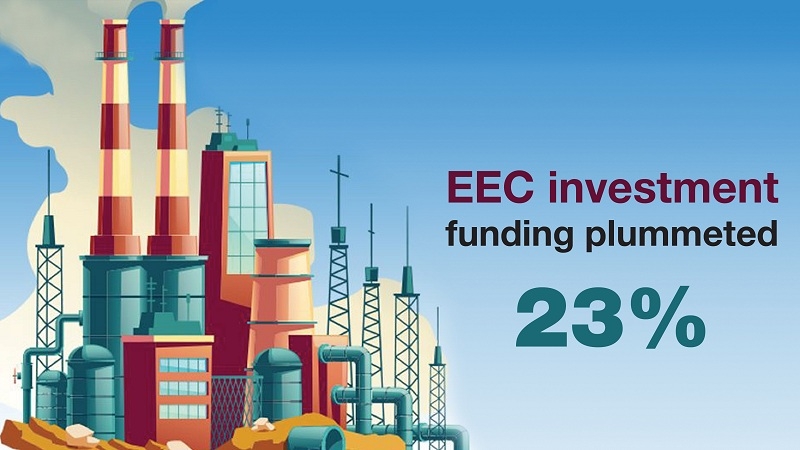
But investment funding plummeted 23 per cent in the same period, from Bt2.3 billion to Bt1.67 billion, due to the limited number of large projects undertaken thus far, said Deputy-Secretary General Narit Therdsteerasukdi.

He said the automotive and electronics industries still have a key role to play in developing the EEC, primarily in the construction of a high-speed railway connecting three airports and Map Ta Phut Port Phase 3.

Of 177 projects with a combined value of Bt86.7 million, 51 worth Bt26.5 million involved the electronics industry and 43 worth Bt30.8 million in the automotive industry. Another 36 projects worth Bt14.5 million involved the chemical-petrochemical industry.

Thaioil’s Bt100-billion-plus investment in fuel production in Chonburi has made that province the most popular target for investments, which currently total Bt92.1 million, followed by Rayong with 157 projects valued at Bt57.9 million and Chachoengsao with 40 valued Bt17.9 million.

Investors in other countries including China and Japan have expanded their stakes in 10 targeted Thai industries, boosting requests for assistance in Foreign Direct Investment by 69 per cent year-on-year, with 689 projects valued at Bt203.4 billion.

Most such requests have come from Japan, which has entities investing in 167 projects valued at Bt59.2 billion, followed by China with 139 projects valued at Bt45.4 billion and Switzerland with 15 projects valued at Bt11.7 billion.

Narit credited the “Thailand Plus” promotional scheme in predicting that investment in the EEC would ultimately hit Bt300 billion.

New scheme coming for long-term savings

ศาสตร์เกษตรดินปุ๋ย : ขอบคุณแหล่งข้อมูล : หนังสือพิมพ์ The Nation

https://www.nationthailand.com/business/30378334?utm_source=category&utm_medium=internal_referral

New scheme coming for long-term savings

Nov 14. 2019
By THE NATION

1,303 Viewed

The Finance Ministry will within the next two weeks finalise specifics for a substitute for the long-term fund (LTF) introduced to promote long-term savings among the general public.

Minister Uttama Savanayana said on Thursday (November 14) the new scheme to replace the LTF, which expires at year’s end, will attract more elderly investors.

The ministry has asked Prime Minister Prayut Chan-o-cha to establish a Capital Market Development Committee and it will convene for the first time in the next two weeks, Uttama said.

The Thai economy is expected to endure further volatility next year, he added, but the government is poised to introduce new economic stimulus measures if necessary.

Bid urged for management of 3 provincial airports

ศาสตร์เกษตรดินปุ๋ย : ขอบคุณแหล่งข้อมูล : หนังสือพิมพ์ The Nation

https://www.nationthailand.com/business/30378307?utm_source=category&utm_medium=internal_referral

Bid urged for management of 3 provincial airports

Nov 13. 2019
Deputy Transport Minister Thaworn Senneam

Deputy Transport Minister Thaworn Senneam
By THE NATION

1,477 Viewed

The Department of Airports should call a bid for professional management of its three provincial airports in Udon Thani, Tak, and Burirum, said Deputy Transport Minister Thaworn Senneam.

Earlier, the state agency was keen on hiring Aiports of Thailand (AOT) for the task.

He said the department should offer the opportunity to other parties besides AOT, adding that the three airports are state asset that need to be managed by a qualified company serving the best interest of the country.

If state enterprises or private companies are allowed to manage these three airports, the department should also apply the same method for the management of its other airports.

NBTC nods to draft licensing rules for 5G spectrum bands

ศาสตร์เกษตรดินปุ๋ย : ขอบคุณแหล่งข้อมูล : หนังสือพิมพ์ The Nation

https://www.nationthailand.com/business/30378277?utm_source=category&utm_medium=internal_referral

NBTC nods to draft licensing rules for 5G spectrum bands

Nov 12. 2019
By THE NATION

1,378 Viewed

The National Broadcasting and Telecommunications Commission (NBTC) board today (November 12) approved the draft rules on licensing the spectrum bands of 700MHz, 1800MHz, 2,600MHz, and 26GHz.

The board also approved the timeframe for the bands’ auctions.

It has also approved the NBTC’s frequency management plans of 2,500MHz, and 2,690MHz.

The NBTC will auction 700MHz, 1800MHz, 2,600MHz, and 26GHz in an single event this year to provide 5G wireless broadband service.

It will auction three licences of the 700MHz, each containing 2x5MHz bandwidth at a starting price of Bt8.792 billion each. The bidders are required to place a guarantee of Bt2.637 billion. They can raise the price by Bt440 million per time.

The licence term is 15 years. The total payment for the licence is divided into 10 installments, each at 10 per cent of the winning price. The NBTC does not cap the maximum number each contender can bid for this licence.

It will auction seven licences of 1800MHz, each containing 2x5MHz bandwidth at starting price of Bt12.486 billion each. The bidders are required to place a guarantee of Bt4.994 billion. They can raise the price by Bt25 million per time. The licence is good for 15 years.

The NBTC caps the maximum number each contender can bid for this licence at four. The upfront payment is divided into three installments, beginning with 50 per cent in the first installment, followed by 25 per cent in each of the second and last installments.

The winners of this band are obliged to start providing service to 40 per cent of the country’s population in the first four years before rising to 50 per cent within eight years.

The watchdog will also call a bid for 19 licences of the 2,600MHz, each containing 10MHz bandwidth at price of Bt1.862 billion each.

The bidders are required to place guarantee of Bt1.862 billion. They can raise the price by Bt93 million per time. The licence is good for 15 years.

Each bidder can take a maximum of 10 licences of this band. The bidders are required to pay an upfront of 10 per cent of the total winning price in the first year and enjoy a grace period during the second to fourth year. They will pay 15 per cent annually of the balance in the fifth to tenth year.

The winners are obliged to provide service covering 40 per cent of the Eastern Economic Corridor (EEC) within one year and 50 per cent of the business zones in several major cities within four years, including Bangkok and Greater Bangkok, Chiang Mai, Nakon Ratsima, Khon Khaen, Songkhla, and Phuket.

The NBTC will auction 27 licences of the 26GHz, each containing 100MHz bandwidth at price of Bt423 million each. The bidders will place a guarantee of Bt507.6 million each. They can raise price at Bt22 million per time. The licence is valid for 15 years.

Each bidder can bid for a maximum of 12 licences. They will have to pay the upfront at one time.

The NBTC will hold a hearing on the auction rule draft from November 13 until December 12. It is expected to be published in the Royal Gazette on December 27.

The NBTC will invite bidders from January 2 to February 3. The multiple band auction will be held on February 16 with the licences expected to be awarded in March.

Bid winners are expected to start providing services in some areas in July next year.

Visiting chair of UK-Asean trade council upbeat on opportunities

ศาสตร์เกษตรดินปุ๋ย : ขอบคุณแหล่งข้อมูล : หนังสือพิมพ์ The Nation

https://www.nationthailand.com/business/30378271?utm_source=category&utm_medium=internal_referral

Visiting chair of UK-Asean trade council upbeat on opportunities

Nov 12. 2019
Baroness Lucy Neville-Rolfe DBE CMG, Chair of UK-Asean Business Council

Baroness Lucy Neville-Rolfe DBE CMG, Chair of UK-Asean Business Council
By MANOTE TRIPATHI
SPECIAL TO THE NATION

2,092 Viewed

As Britain grapples with Brexit amid great fanfare surrounding a looming general election, Baroness Lucy Neville-Rolfe DBE CMG, Chair of UK-Asean Business Council, was in Bangkok recently to promote existing and future business opportunities between Asean and the United Kingdom to boost trade ties between Asean-member countries and the UK.

During her Bangkok visit, Baroness Neville-Rolfe met with Deputy Prime Minister Somkid Jatusripitak for the first time to discuss the current state of trade relations between the two kingdoms.

“It was my first meeting with Deputy Minister Somkid and we talked in general terms. I tried to build a relationship. He sees that I like Thailand and I also have ministerial and government experience. We talked about investment both ways. We talked about the EEC as we have an investment there. We talked about Thailand investing in the UK. It was positive. We talked about the Thai ownership of Leicester City, how to develop universities here, what to do about R&D, education, etc. Education that’s focused on the elite level where you’re opening English schools here is great. It’s also important to know how you train the workforce with that digital knowledge. By the end of the meeting, we left on good terms. We got promises to do further. I said I will come again,” she says.

Three careers 

Baroness Neville-Rolfe has had 3 careers in politics, business and the civil service. Currently she’s a Conservative peer, sitting on the Lords EU Committee (and its Financial Services sub-committee). She’s also Chairperson of Red Tractor (the food assurance organisation) and is a non-executive director of Capita plc, Secure Trust Bank Plc, Thomson Reuters Founders Share Company and Health Data Research UK.

She became a peer in 2013 and was Parliamentary Under-Secretary of State for Business and Minister for Intellectual Property from 2014-2016. She represented the UK on the Digital Single Market and in the EU Competitiveness Council. From 2016-2017 she was the Minister of State responsible for energy and then Commercial Secretary at the Treasury.

Her main career was at Tesco from 1997-2013, as Director for Corporate and Legal Affairs, and served on the main board from 2006-2013.

With an extensive business background, she believes that Asean and the UK stand to gain from developing further trade relations between either Thailand or Asean and the UK. Asean continues to thrive on its strengths. The market is strong and growing on the back of young populations, she says, while people are willing to learn new skills and work hard.

“We are keen on promoting development of trade between Asean and the UK. We have Jon Lambe, our ambassador to Asean based in Jakarta and Natalie Black, our Trade Commissioner for Asia-Pacific, based in Singapore. My council work with them in this region. My job is to make sure people from Asean such as delegations come to the UK. The idea is we can ease the conversation in London and other cities in the UK where there are links and there might be investment opportunities for Thailand and the other way around. We’ve lately got delegations from Brunei, Malaysia and Singapore coming to the UK.

“We want to deepen the trade we already have. If you look at our council, that tells you quite a lot. We have financial services, we have big investors like HSBC, Prudential, etc. I would say there are digital opportunities in our trade relationship. I’m sure it’s important for Thailand. You’ve got these different threads: education, skills, digital. All of these things are very good issues. We would like two-way tourism between UK and Thailand. Lots of Thais come to the UK for education, too.

“As I came from retail, there’s big investment here at the moment. And retail is being challenged by the digital change. I’m also interested in the EEC, which has the potential for overseas investors collaborating. Particularly opportunities for the UK will be in things like design, architecture and aerospace. We’ve got Rolls Royce,” says the Baroness.

While the current state of trade relations between Asean and the UK is good, the baroness hopes that relationship will remain “business as usual” in the post-Brexit UK.

“We have had three years of uncertainty. And to some extent, that uncertainty continues. As you know, a general election has been called. That’s because Boris Johnson came in and he said he’d do a Brexit deal and he has done a Brexit deal. But he hasn’t got through the parliament. So he has called an election which will take place in December. And clearly a lot depends on that generation election. But I hope we will get a clear majority. That will enable the deal that has been negotiated with the EU to go through the parliament in good order by 31st of January,” she says.

She adds that the new prime minister has strongly emphasised the importance of looking globally. “You know, our Foreign Secretary Dominic Raab came to visit Asean as his first stop since he was appointed. Asean is an important market. I am now chairman of the UK Asean Business Council. But I’ve taken on this job because I support the government in seeing a lot of potential of the Asean area including Thailand. British people love Thailand. I love Thailand.”

Poll win key to Brexit deal 

“Boris Johnson is standing on a platform to get the Brexit done. That’s why the election is happening. He wanted to get Brexit done by 31st of October. But he couldn’t get it done. We got a deal agreed for the EU, but it was not possible because of the complexity of our parliament. It was the parliamentary numbers to get the legislation through. So after a certain amount of coming and going, a election has been called. It now takes more time for the Brexit process to be completed and for the general election to be held. I hope there would be a clear majority. I would hope it would be the Conservative. But the talk in the papers over the last 24 hours has been that the Conservative and the Brexit Party will at least come together in some areas. My advice on the results: it’s very difficult for anybody to tell. Everything about Brexit is extremely difficult to predict over the last 3 years as you have seen,” she says.

Regardless of the next election’s results, the baroness believes that Asean will remain part of a global opportunity story.

“I think it’s strong. You might say EU is our priority because we need to conclude a free trade agreement with them with a certain timetable. And the existing trade with Europe is substantial. Clearly if agreement without tariffs be agreed, that will continue. Brexit has kept its focus on that. That’s why we’ve been focused on that. The US relationship is always important. But Asia has very much gone up in the eyes of Britain and British politicians in recent years,” she says with a grin.

Meet pushes for set-up of digital investment agency

ศาสตร์เกษตรดินปุ๋ย : ขอบคุณแหล่งข้อมูล : หนังสือพิมพ์ The Nation

https://www.nationthailand.com/business/30378247?utm_source=category&utm_medium=internal_referral

Meet pushes for set-up of digital investment agency

Nov 12. 2019
Suphachai, left, and Kalin

Suphachai, left, and Kalin
By THE NATION

886 Viewed

The government should set up an office dedicated to promoting investment in digital business in Thailand, said Digital Council of Thailand’s chairman Suphachai Chearavanont, after a meeting between the council and the Thai Chamber of Commerce and the Board of Trade of Thailand yesterday (November 11).

It could play a similar role as the Eastern Economic Corridor (EEC) office, which coordinates with related parties in hastening the project’s development, while the Board of Investment should offer more tax incentives to companies planning to invest in digital business.

Thailand’s neighbouring countries have set up one-stop centre to draw foreign investment in the sector, Suphachai said.

Moreover, the government should set up a fund worth between US$100 million to US$1 billion in support of digital investment here and to invest in tech startups, following the lead of Singapore and Israel, he added.

Kalin Sarasin, chairman of the Thai Chamber of Commerce and Board of Trade of Thailand, said the council and the chamber were ready to upgrade Thailand to be the hub of digital innovation in Asean.

He added that the chamber recently introduced the TAG THAI application for booking hotel rooms and airline flights. The app provides an alternative to Thai consumers, apart from those of foreign online travel agencies.

The TAG THAI app was a collaboration of 28 tourism related associations.

Thais use wearables, biometrics more than other consumers in region

ศาสตร์เกษตรดินปุ๋ย : ขอบคุณแหล่งข้อมูล : หนังสือพิมพ์ The Nation

https://www.nationthailand.com/business/30378241?utm_source=category&utm_medium=internal_referral

Thais use wearables, biometrics more than other consumers in region

Nov 11. 2019
By THE NATION

1,195 Viewed

Thai consumers are more aware of or use wearables and biometrics to make payments more than their counterparts in other Southeast Asian nations, digital payments company Visa said on Monday (November 11), referring to findings from the Consumer Payment Attitudes study.

The Visa Consumer Payment Attitudes Study 2018 was conducted by Intuit Research on behalf of Visa in 2018 across eight Southeast Asian countries – Thailand, Cambodia, Indonesia, Malaysia, Myanmar, the Philippines, Singapore and Vietnam. The study was conducted on at least 4,000 consumers, including 500 working adults in Thailand aged 18-65, covering all education groups with a minimum income of Bt15,000.

The study tracks payment habits and attitudes as well as explores emerging topics related to payments in the eight Southeast Asian nations.

According to the study, 65 per cent of Thai consumers are aware of or currently use wearables to make payments, the highest percentage in the region.

Singapore and Indonesia rank second at 60 per cent, followed by Malaysia and Vietnam at 52 per cent, and the Philippines at 44 per cent.

In addition, Thai consumers have also recorded the highest level of awareness – 66 per cent – in Southeast Asia in using biometrics for payment and authentication. Vietnam and Singapore follow close behind with 60 and 55 per cent, respectively.

“We are heartened that Thai consumers recognise the benefits of innovations and how it contributes to making payments more secure, faster and more convenient,” Visa Thailand manager Suripong Tantiyanon said. “The findings can be attributed to how everyone in the payment ecosystems collaborate, make progress and transform the way consumers and businesses in Thailand make payments.”

Thai respondents also displayed the most comfort across the region in using wearables to make payments. More specifically, they include smartwatches (84 per cent versus the regional average of 71 per cent), wrist bands/bracelets (71 per cent vs 59 per cent) and smart rings (66 per cent vs 52 per cent).

When asked about the most preferred wearable option, Thai respondents indicated smartwatches as their top choice (55 per cent), followed by wrist bands/bracelets (22 per cent), microchip implants (11 per cent), rings (8 per cent) and smart glasses (4 per cent).

At the same time, biometrics are becoming a more preferred method for consumers to authenticate themselves for access and payments, in place of a traditional password. For Thai consumers, 2 in 3 (66 per cent) are aware of biometric payments, the highest level in Southeast Asia.

When asked about the comfort level in using biometrics, Thais expressed the most comfort across three categories, including finger scanning (87 per cent vs the regional average of 78 per cent), retina scan (88 per cent vs 61 per cent), and facial recognition (80 per cent vs 65 per cent).

Further findings show Thai respondents most prefer finger scanning as their top option for biometric payments and authentication (56 per cent), followed by retina scan (26 per cent), facial recognition (12 per cent) and voice recognition (6 per cent).

“In Thailand, we have taken the lead in introducing innovative payment solutions, such as Visa QR payments, contactless technology and cross-border business solutions, while working with our clients and partners to expand the adoption of digital payments. While we are proud of the progress, we remain committed to leveraging our global network and payment innovations to contribute to Thailand’s transition towards a cashless future,” Suripong added.

Thai entrepreneurs urged to look at new markets and S-curve businesses

ศาสตร์เกษตรดินปุ๋ย : ขอบคุณแหล่งข้อมูล : หนังสือพิมพ์ The Nation

https://www.nationthailand.com/business/30378232?utm_source=category&utm_medium=internal_referral

Thai entrepreneurs urged to look at new markets and S-curve businesses

Nov 11. 2019
Pisit Serewiwattana

Pisit Serewiwattana
By THE NATION

1,674 Viewed

Export-Import Bank of Thailand (Exim Thailand) has suggested Thai entreprenuers to tap into new markets and expand investment in S-curve industries to alleviate the trade war impact and boost competitiveness in the New Trade Era.

The bank report that global export value has contracted for the first time in three years. In the first half of 2019, global exports shrank by 2.8 per cent or US$268 billion and Thai exports by 2.9 per cent or $3.6 billion, partly as a result of the US-China trade war which has caused a slowdown in exports of most of Thailand’s trade partners in Asia and Europe.

Faced with a sluggish domestic economy, Thai exporters should diversify their export destinations to new market countries or regions with continued economic growth and little dependence on exports to the US and China.

In addition, they should also put in place a long-term plan to invest in S-curve industries which would help add more value and boost competitiveness of Thai exports of goods and services as well as relieving effects of the trade war that may be prolonged.

The bank’s president Pisit Serewiwattana made the point that the extended US-China trade war has resulted in global trade shrinkage for the first time in three years.

According to the World Trade Organization’s recent findings, in the first six months of 2019, overall global exports shrank by 2.8 per cent or $268 billion, representing 0.3 per cent of global GDP.

Thailand’s main export markets, the US and China with 11 per cent and 12 per cent also felt the impact with export contraction of 2.9 per cent or more than $3.6 billion.

In the first half of 2019, US imports from Thailand expanded to substitute for those from China due to higher prices of Chinese goods in the face of import duty hikes, resulting in an increase in Thai exports to the US by 17 per cent.

However, the overall Thai economy, which is driven principally by exports representing more than 55 per cent of GDP, was inevitably affected by the slowing economies of most of Thailand’s trade partners. And Thailand isn’t feeling the impacts as much as many other countries that rely heavily on exports of goods in China’s supply chain.

In addition, countries that rely more on the US market than the Chinese market are less affected, such as Mexico, Canada, Vietnam, India and Philippines, while countries that depend heavily on the Chinese market, especially South Korea with 27 per cent of total exports going to China recorded an $25 billion contraction in export.

A short-term solution for Thai entrepreneurs is to expedite diversification of export markets to new frontiers in Asia, Africa, Middle America and Latin America, particularly the CLMV (Cambodia, Lao PDR, Myanmar and Vietnam) where purchasing power has increased in line with their consistent economic growth.

Pisit further said that in the long run Thai entrepreneurs need to adjust themselves by expanding investment in S-curve industries, such as investing in Eastern Economic Corridor (EEC), or businesses using new innovations, which would enhance Thai entrepreneurs’ competitive advantage on the global market, and enable them to survive and thrive amid global economic uncertainties, be it the prolonged trade war or new forms of trade measures.

The 10 target or S-curve industries promoted by the government to drive the economy comprise next-generation automotive industry, intelligent electronics, health and wellness tourism, advance agriculture and biotechnology, food processing, robotics, and so on.

“The prevailing trade war represents only one aspect of international economic and political uncertainties, which can weigh on several countries including Thailand,”.

“There are ways for Thai entrepreneurs to weather these difficulties such as being forward-looking in terms of product and market development, starting from production technology development, innovation, and increase in product and service value propositions, as well as ongoing exploration and creation of new business opportunities even in new unfamiliar markets,”

“EXIM Thailand is fully equipped to work with both the public and private sectors to create new trade and investment opportunities for Thai entrepreneurs who are ready to compete in the international trade arena,” Pisit added.

Survey reveals that Airbnb’s guests spend a small fortune at local restaurants

ศาสตร์เกษตรดินปุ๋ย : ขอบคุณแหล่งข้อมูล : หนังสือพิมพ์ The Nation

https://www.nationthailand.com/business/30378231?utm_source=category&utm_medium=internal_referral

Survey reveals that Airbnb’s guests spend a small fortune at local restaurants

Nov 11. 2019
Airbnb's guest community spent at least an estimated Bt808 billion at restaurants and cafes in 2018.

Airbnb’s guest community spent at least an estimated Bt808 billion at restaurants and cafes in 2018.
By THE NATION

1,199 Viewed

According to new survey findings and an analysis of internal data released today (November 11), Airbnb’s guest community spent at least an estimated Bt808 billion at restaurants and cafes in 2018 based on data for 46 countries and regions alone.

If spending levels remain the same, Airbnb guests are estimated to spend more than Bt940 billion at restaurants and cafes in these same locations in 2019.

In Thailand, a country famous for its cuisine and culinary experiences, Airbnb guests spent more than Bt6.8 billion at restaurants and cafes in 2018.

Airbnb’s mission is to create a world where anyone can belong anywhere. For many travellers, belonging means experiencing a place through local foods and flavors by learning to cook a traditional recipe or discovering neighborhood restaurants and cafes, all while creating authentic memories and connections to a destination.

Unique aspects of the Airbnb community are helping to drive this spending to new places, forge offline connections and keep the benefits local.

-84 per cent of hosts say they recommend restaurants and cafes to guests, driving more people to visit places they might not otherwise discover online. Half of guests say they spent the money they saved by staying on Airbnb in the places they visited, multiplying the economic benefits of the Airbnb community beyond the platform.

-On average Airbnb guests say 42 per cent of their spending occurs in the neighborhoods where they stay, keeping the impacts local and expanding the economic benefits of travel and tourism outside of traditional tourism areas where other accommodation options are often concentrated.

-That restaurants and cafes particularly benefit from these dynamics is no surprise: they are community gathering places, and 77 per cent of guests say wanting to live like a local matters in their decision to use Airbnb.

The influx of tourism spending by Airbnb guests at restaurants and cafes is being felt around the world.In Asia, Airbnb guests spent at least an estimated Bt78 billion at restaurants and cafes in 2018, including more than Bt24 billion in Japan and Bt16 billion in China.

Consultations ending on restart for Thai-EU trade talks

ศาสตร์เกษตรดินปุ๋ย : ขอบคุณแหล่งข้อมูล : หนังสือพิมพ์ The Nation

https://www.nationthailand.com/business/30378183?utm_source=category&utm_medium=internal_referral

Consultations ending on restart for Thai-EU trade talks

Nov 11. 2019
By THE NATION894 Viewed

The Commerce Ministry is preparing to wrap up consultations with relevant agencies and organisations across the country on a proposal to resume free-trade talks with the European Union.

Auramon Supthaweethum, director-general of the Department of Trade Negotiations, said a summary of opinions would be submitted to a committee on international economic policy chaired by deputy Prime Minister Somkid Jatusripitak.

Auramon said many parties support the resumption of trade talks, but concerns were expressed over the possible influx into Thailand of products such as wine and liquor on a zero-per-cent tariff

if a trade pact were ultimately to be signed.

Some parties were worried that access to cheaper wine and liquor would have an adverse impact on public health.

She said Thailand would meanwhile hold further free-trade talks with Turkey next month.

The European Free Trade Association (EFTA), which represents Iceland, Liechtenstein, Norway and Switzerland, has yet to be consulted as to whether it wishes to resume talks with Thailand.

Those negotiations have been stalled for more than 13 years since the initial two rounds held in 2005-2006.

Seven European states established the EFTA in 1960 to promote free trade and economic integration, but Britain, Austria, Denmark and Portugal subsequently opted to join the parallel but competing European Union.

Lichtenstein, previously represented by Switzerland, became a fourth member of the EFTA in 1991.