Exim Thailand cuts interest rates

ศาสตร์เกษตรดินปุ๋ย : ขอบคุณแหล่งข้อมูล : หนังสือพิมพ์ The Nation

https://www.nationthailand.com/business/30378193?utm_source=category&utm_medium=internal_referral

Exim Thailand cuts interest rates

Nov 09. 2019
By THE NATION

1,852 Viewed

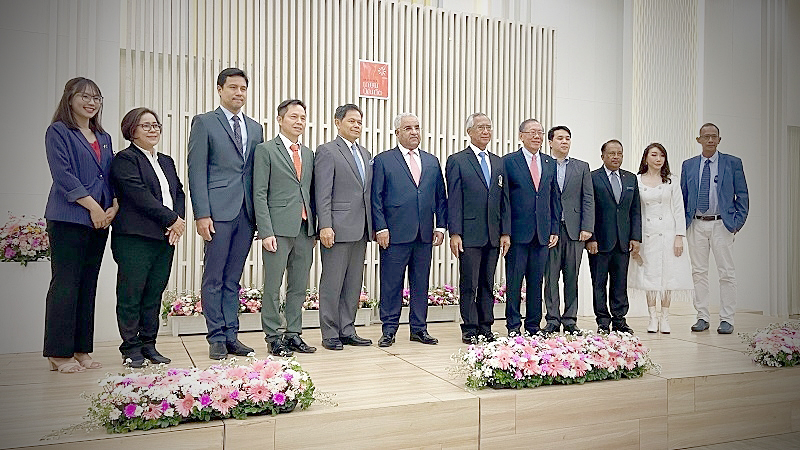
The Export-Import Bank of Thailand (Exim Thailand) has announced a prime interest cut to 6 per cent per annum down from 6.125 per cent to support the government policy to help Thai entrepreneurs, especially SMEs, reduce international trade and investment costs.

The cut takes effect on November 11

The rate cut is in response to the government policy to help Thai entrepreneurs as well as drive Thai export growth amid a decline in world trade resulting from various trade barriers and the trade war between the US and China.

The bank’s president Pisit Serewiwattana revealed said that, as a state-owned specialised financial institution with a mission to support Thailand’s exports, imports and investment, Exim Thailand welcomed the Monetary Policy Committee (MPC)’s recent rate cut policy and recognised the need to help facilitate Thai entrepreneurs’ business.

“EXIM Thailand is ready to work in collaboration with both the public and private sectors to support Thai entrepreneurs and SMEs in particular so that they can start up or expand their international trade and investment without interruption amid the current global economic uncertainties and continue to drive Thai economic growth and development,” Pisit added.

Jakarta aims to revive economy with new measures to boost exports

ศาสตร์เกษตรดินปุ๋ย : ขอบคุณแหล่งข้อมูล : หนังสือพิมพ์ The Nation

https://www.nationthailand.com/business/30378192?utm_source=category&utm_medium=internal_referral

Jakarta aims to revive economy with new measures to boost exports

Nov 09. 2019
Indonesia's Trade Minister Agus Suparmanto (second from left) and on his right Deputy Trade Minister Jerry Sambuaga during a media briefing on Indonesia's plans to boost its exports to revive economic growth.PHOTO: LINDA YULISMAN

Indonesia’s Trade Minister Agus Suparmanto (second from left) and on his right Deputy Trade Minister Jerry Sambuaga during a media briefing on Indonesia’s plans to boost its exports to revive economic growth.PHOTO: LINDA YULISMAN
By The Straits Times

153 Viewed

Indonesia’s new administration is seeking to roll out a set of measures to boost its exports in a bid to revive economic growth amid pressure from the ongoing trade war between the US and China.

The country’s trade activities have been dwindling amid slower economic growth in China – its top export destination – that resulted from its prolonged trade war with the world’s biggest economy.

Still, South-east Asia’s largest economy has managed to expand around 5 per cent in the past few years against the backdrop of an unfavourable global environment, thanks largely to its relatively resilient household consumption, which makes up more than half of its gross domestic product.

The government wants to boost its exports to help the economy to grow by between 5.4 per cent and 6 per cent in the next five years, newly appointed Trade Minister Agus Suparmanto said yesterday.

The move will also be expected to narrow the country’s trade deficit, he added.

“To keep the trade balance in check, our strategy is to raise non-oil-and-gas exports,” he told journalists in a press briefing.

From January to September, Indonesia’s non-oil-and-gas outbound shipments, which make up the largest chunk of exports, declined by 6.22 per cent to US$114.75 billion (S$156 billion) on a yearly basis, whereas its inbound shipments, excluding oil and gas, slipped by 5.54 per cent to US$110.25 billion, according to Statistics Indonesia.

Overall exports settled at US$124.17 billion, down 8 per cent from last year, while its total imports were valued at US$126.12 billion, down 9.12 per cent from a year earlier, resulting in a US$1.95 billion deficit.

The ministry also aims to enlarge non-oil and gas exports by 6.88 per cent to 12.23 per cent annually from next year until 2024 to drive total exports to rise by 4.5 per cent to 8.63 per cent, said Mr Agus, a businessman who runs a shipyard company in the province of Bangka Belitung Islands.

Indonesia still sees room to improve its outbound shipments to its two key markets – China and India, its fourth-largest export destination – particularly with commodities such as bird’s nests to China and palm oil to India.

“We see the market access to China is wide open and we are identifying our domestic products to be exported. Basically, they want goods with good quality that can meet their standards,” Mr Agus said.

He added that greater palm oil exports to India will likely be achieved following New Delhi’s recent move to lower its duties on the commodity.

The trade ministry will also encourage the export of products such as food and beverages, textile and textile products, vehicles, pharmaceutical products, fisheries produce, wood and furniture.

The ministry expects total exports to reach at least US$190 billion next year, up from US$175 billion targeted this year.

A trade mission will be sent to the US, Indonesia’s second-biggest export destination after China, this month to discuss the extension of tariff cuts for Indonesian goods under the US generalised system of preference scheme, said Deputy Trade Minister Jerry Sambuaga.

The facility, which Indonesia has enjoyed since 1980, is under review.

During his visit to Indonesia on Wednesday, US Commerce Secretary Wilbur Ross expressed his hope to resolve the issue soon.

To obtain wider market access globally, Indonesia will soon ratify 13 newly concluded agreements, such as the Indonesia-Australia comprehensive economic partnership agreement (Cepa), while also speeding up negotiations on 11 deals, including Cepas with the European Union and Turkey.

EU Council approves EU-Singapore Free Trade Agreement which will take effect on Nov 21

ศาสตร์เกษตรดินปุ๋ย : ขอบคุณแหล่งข้อมูล : หนังสือพิมพ์ The Nation

https://www.nationthailand.com/business/30378191?utm_source=category&utm_medium=internal_referral

EU Council approves EU-Singapore Free Trade Agreement which will take effect on Nov 21

Nov 09. 2019
Minister-in-charge of Trade Relations S. Iswaran (right) announced the FTA with EU trade commissioner-designate Phil Hogan at a gala dinner on Nov 8, 2019.PHOTO: MINISTRY OF TRADE & INDUSTRY

Minister-in-charge of Trade Relations S. Iswaran (right) announced the FTA with EU trade commissioner-designate Phil Hogan at a gala dinner on Nov 8, 2019.PHOTO: MINISTRY OF TRADE & INDUSTRY
By The Straits Times

157 Viewed

SINGAPORE – The Council of the European Union (EU) has approved the EU-Singapore Free Trade Agreement (FTA), which will remove nearly all customs duties between the two jurisdictions from Nov 21.

Minister-in-charge of Trade Relations S. Iswaran announced this with EU trade commissioner-designate Phil Hogan at a gala dinner on Friday (Nov 8).

Mr Iswaran said the FTA marks a watershed moment in the relationship between them. It is the first such agreement between the EU, which is the world’s largest single market, and an Asean member state.

He also said it will be a step towards a larger relationship between the EU and Asean, which is expected to be the world’s fourth largest market by 2030.

“This is a an excellent opportunity for companies on both sides, in the EU and in Singapore, and in particular for our small and medium enterprises (SMEs),” said Mr Iswaran.

Singapore will continue to ensure its SMEs can benefit from FTAs, he added, citing last month’s FTA symposium here for SMEs to understand specific aspects of such trade agreements.

Enterprise Singapore has also set up a website where SMEs can access a tariff calculator that will tell them what are their preferential margins for particular products or markets based on Singapore’s 24 existing FTAs, Mr Iswaran said.

The EU-Singapore FTA will allow 84 per cent of Singapore exports, including food products and electronics, to enter the EU duty-free, with the rest to follow in the next three to five years.

It also contains strong rules on trade and sustainable development, including the protection of labour rights and the environment, Mr Iswaran said.

“Under the agreement, the EU and Singapore will remove obstacles to trade and investment in green technologies, as well as foster green public tendering and create new opportunities in environmental services.

“These forward-looking provisions recognise the increasing need for trade to contribute positively towards the fight against climate change and reaffirms our commitment to the Paris Agreement.”

Mr Hogan said a “European Green Deal” will be a priority for the next European Commission – the executive arm of the EU – which will take office next month.

“Singapore will be able to tap into the initiatives that will be proposed to ‘green’ business activities across the EU.

“There will be a lot of money invested in new initiatives and opportunities for environmental services, businesses and software industries that Singapore will be able to take advantage of.”

Govt announces 20 policies to upgrade business environment for foreign investors

ศาสตร์เกษตรดินปุ๋ย : ขอบคุณแหล่งข้อมูล : หนังสือพิมพ์ The Nation

https://www.nationthailand.com/business/30378190?utm_source=category&utm_medium=internal_referral

Govt announces 20 policies to upgrade business environment for foreign investors

Nov 09. 2019
[Photo/IC]

[Photo/IC]
By China Daily

211 Viewed

China has rolled out 20 measures friendly to foreign investors, including further removing business restrictions and leveling the playing field for foreign businesses, to safeguard a more “fair, transparent and predictable” business environment for foreign enterprises.

The State Council, China’s Cabinet, released a guideline on further improving the utilization of foreign investment on Thursday, with pledge to continue shortening the national and free trade zone negative lists for foreign investment and to eliminate restrictions outside the negative lists, opening up more sectors to foreign investors.

All restrictions on the business scope for foreign banks, securities firms and fund management companies will be lifted, while an equal treatment in market access to new energy vehicles produced by domestic and foreign automakers will be ensured by refined policies, the document said.

The guideline also made it clear to deepen reforms to facilitate investment, including to lower the cost of cross-border capital use and make it easier for foreigners to work in China. Foreign businesses will be encouraged to use their capital for equity investment in China.

The country will also strengthen the protection of legitimate interests of foreign investors, fully implementing the Foreign Investment Law, the document said.

Authorities will establish and improve institutions for accepting complaints from foreign enterprises, improve the intellectual property rights protection mechanism, and strictly ban forced transfer of technology.

Thai Mart Bahrain to boost Thai products and medical services in Middle East

ศาสตร์เกษตรดินปุ๋ย : ขอบคุณแหล่งข้อมูล : หนังสือพิมพ์ The Nation

https://www.nationthailand.com/business/30378188?utm_source=category&utm_medium=internal_referral

Thai Mart Bahrain to boost Thai products and medical services in Middle East

Nov 09. 2019
By The Nation
Kunanon Kanjanatecha

823 Viewed

A new 6,700-square-metre shopping centre in Bahrain will serve as a distribution point for Thai goods serving neighbouring Middle East countries including Saudi Arabia, a 30-minute drive away across a bridge.

Thai Mart Bahrain, in a residential area that’s already home to Dragon Mart, a successful retail outlet for Chinese goods, will have a soft opening next month and officially open next March, speakers said at a seminar for Thai entrepreneurs held on Friday (November 8) at Kasem Bundit University’s Romklao campus.

Thai Mart Bahrain will have around 200 shops as well as leisure areas and a medical centre where Bahrainis can make arrangements for hospital treatment in Thailand.

Mobile applications in use there such as Shopee have agreed to host sections only for Thai products to make access easier.

Akavut Tangsilikusonwong, the founder and chief executive of Thai Mart Bahrain, said it presents Thais a great opportunity to invest while the baht remains strong against most foreign currencies.

Bahrainis and Saudis have significant purchasing power, he said, and they appreciate Thai products for their high quality and low value-added tax.

He recommended investing in franchises so that Bahrainis can buy into a business that’s ready to go.

Suphat Chitranukroh, a Thai former ambassador to Bahrain, said improving relations between our countries will further enhance trade and investment.

They have no free-trade agreement, but Bahrain is open to Thai investment in its medical and renewable-power endeavours, he said.

Bahraini Ambassador Ahmed Abdulla Al-Hajeri said the kingdom is strengthening its position as a hub for international business in the Middle East by spending US$32 billion on interconnecting transport and logistics infrastructure over the next three to five years.

Thai investors will find policies and incentives already in place for the private sector, along with cost competitiveness and economic freedom, he said.

Bahrain allows for 100 per cent foreign ownership of companies, so foreign entrepreneurs can manage all income under the general exchange rate.

He said imports from Thailand increased 52 per cent in 2018 year on year, with a value of more than $285 million, while exports to Thailand increased 18 per cent, valued $70 million.

Thailand ranks 15th among Bahrain’s trading partners and 16th among importers of Bahraini products.

Al-Hajeri also remarked that Thai halal food has become quite popular there and could also catch on across the Middle East.

Govt makes it easier to buy a home

ศาสตร์เกษตรดินปุ๋ย : ขอบคุณแหล่งข้อมูล : หนังสือพิมพ์ The Nation

https://www.nationthailand.com/business/30378181?utm_source=category&utm_medium=internal_referral

Govt makes it easier to buy a home

Nov 08. 2019
Charnkit Detvitak

Charnkit Detvitak
By THE NATION

2,025 Viewed

The Finance Ministry, Government Housing Bank (GHB), three real estate associations and several small property firms will mount a campaign this month and next for people who want to own their own homes.

Charnkit Detvitak, a vice minister attached to the Prime Minister’s Office, said the campaign would run from Monday (November 11) to December 31.

The GHB will offer mortgage loans with fixed annual interest of 2.5 per cent over three years, totalling Bt50 billion in value.

Buyers of single, attached and town houses, homes in commercial buildings and condominium units will be exempted from paying transfer and mortgage fees.

They will also benefit from promotional offers and discounts from the participating developers.

The project covers only homes worth up to Bt3 million.

The realty groups participating in the campaign are the Thai Real Estate Organisation, Thai Condominium Association and Housing Business Association.

Charnkit said the campaign would welcome developers across Thailand and invited them to contact any GHB branch.

Finance Minister vows more action if baht continues rapid appreciation

ศาสตร์เกษตรดินปุ๋ย : ขอบคุณแหล่งข้อมูล : หนังสือพิมพ์ The Nation

https://www.nationthailand.com/business/30378166?utm_source=category&utm_medium=internal_referral

Finance Minister vows more action if baht continues rapid appreciation

Nov 08. 2019
Finance Minister Uttama Savanayana said the central bank and the Finance Ministry had together come up with the measures announced on Wednesday.

Finance Minister Uttama Savanayana said the central bank and the Finance Ministry had together come up with the measures announced on Wednesday.
By The Nation

1,088 Viewed

The baht on Thursday closed at Bt30.32 to the dollar in onshore trade, maintaining Wednesday’s level when the central bank cut its policy rate and issued key measures to rein in the rapid appreciation of the Thai currency.

Finance Minister Uttama Savanayana said the central bank and the Finance Ministry had together come up with the measures announced on Wednesday.

“It is the first step, and we will do more in the future,” he said in response to scepticism about the effectiveness of the measures to rein in the rising baht in the long run.

The central bank announced several measures including allowing exporters to park more money abroad, allowing retail investors to invest directly in foreign securities, increasing the aggregate investment limit regulated by the Securities and Exchange Commission, facilitating easier transfer of money out of the country for individuals and allowing foreign currency settlement for onshore gold trading.

“We don’t believe that the rate cut and the measures to boost capital outflows would be effective in weakening the baht,” said Jitipol Puksamatanan, chief markets strategist at Krung Thai Bank.

“Market participants believe the baht is a safe haven asset and hence there is high demand for the Thai currency,” he added.

He, however, agreed that it was an important step in increasing liquidity in the foreign exchange market, which may lead to less market intervention by the central bank in the long run. Gold traders will also enter the currency speculation turf, he added.

Phacharaphot Nuntramas, senior director at Krungthai Compass research, predicted that the baht may continue to appreciate and even rise to Bt29 to the dollar by early next year. This is because the steady increase in tourist arrivals would bring in more earnings in foreign currencies. It is also the season for exporters to repatriate their earnings back home, he noted.

Meanwhile, Visit Limluecha, vice chairman of the Thai National Shippers’ Council — an exporters’ club — said that exporters were satisfied with the latest measures to curb the baht’s rise. However, it remains to be seen whether these measures will be effective. “If the baht is going to continue to rise, the central bank may need to impose drastic measures to deter short-term inflows aimed primarily for speculation,” he said.

Somprawin Manprasert, chief economist and executive vice president at Krungsri Bank, said the rate cut and capital outflow measures demonstrated that the central bank was moving in the right direction. The baht is unlikely to appreciate rapidly as it did in the past, he said, adding Thailand could achieve economic growth of 2.9 per cent this year, down from the 3.8 per cent growth forecast early in the year.

“The economy will not slide further,” he said, sounding optimistic.

He, however, suggested that the Bank of Thailand should communicate more with the market.

SME revenues surge, riding rapid e-commerce growth

ศาสตร์เกษตรดินปุ๋ย : ขอบคุณแหล่งข้อมูล : หนังสือพิมพ์ The Nation

https://www.nationthailand.com/business/30378152?utm_source=category&utm_medium=internal_referral

SME revenues surge, riding rapid e-commerce growth

Nov 07. 2019
Santitarn Sathirathai, Sea group chief economist

Santitarn Sathirathai, Sea group chief economist
By THE NATION

1,000 Viewed

Small and medium-sized enterprises (SMEs) in Thailand are enjoying boost in revenues of up to 130 per cent thanks to the growth of e-commerce in the country, according to a new research report published on Thursday (November 7) by Sea, the leading consumer internet company in Southeast Asia and Taiwan.

The report, titled “E-commerce & SMEs: Uncovering Thailand’s Hidden Assets” is based on research of some 7,000 shops and sellers nationwide on Shopee, Sea’s e-commerce platform.

It was conducted by the Sea Insights team, Sea’s research and public policy unit. It includes in-depth analysis of the effects of e-commerce adoption on sellers’ household income, productivity, and efficiency.

Key findings include:

➤ E-commerce can drive explosive growth in revenue for SMEs — 133 per cent growth for SMEs with both online and offline selling channels and up to 370 per cent for fully digital SMEs (where e-commerce sales make up over 80 per cent of total retail revenue).

➤ Approximately 82 per cent of SMEs also report a higher household income due to e-commerce.

➤ E-commerce is driving greater connectivity between buyers and sellers across Thailand. Buyers and sellers are now no longer geographically limited to markets in their area.

Sellers can access distant markets, while buyers can discover a broader range of products, with the lower income regions such as the North, Northeast and South seeing the greatest increase in share of merchants selling outside their own regions (increase of 49, 47 & 45 percentage points respectively).

The report indicates the potential of e-commerce as a tool for empowerment of sellers, and also reveals the large-scale economic impact of e-commerce.

E-commerce has the potential to create inclusive growth in terms of income, employment, efficiency, and decrease the limitations of their physical location, the report says.

The report illustrates how e-commerce can be a pathway to inclusive growth, by uncovering the untapped potential of groups such as SMEs, merchants outside Bangkok, and also hidden entrepreneurs (eg homemakers and students).

Thailand’s e-commerce industry is experiencing high growth. From 2015 to 2019, gross merchandise value (GMV) grew 54 per cent and is valued at US$5 billion.

The e-commerce industry is expected to grow by 24 per cent annually to $18 billion in GMV by 2025. In addition to rapid growth, Thailand has a strong foundation for e-commerce with 38 million digital natives out of a total population of 68 million people, and a smartphone penetration of 71 per cent, the report says.

Additionally, 78 per cent of Thailand’s population is banked, compared to only 41 per cent for the Asean6 countries. Moreover, 51 per cent of consumers buy goods using social media. However, e-commerce in Thailand is still underpenetrated. Compared to China’s e-commerce industry, which accounts for 30 per cent of the country’s total retail in 2018, Thailand’s only accounts for 2 per cent.

Santitarn Sathirathai, Sea group chief economist, states: “This is the largest in-depth report on e-commerce in Thailand, and shows that it is generating a tangible economic benefit for [the country]. In particular, it is increasing the competitiveness of SMEs, empowering sellers who reside outside Bangkok, and paving the way for new types of entrepreneurs, or what we call ‘hidden entrepreneurs’. We hope that this report will be beneficial for both private and public entities, as well as, strengthening the digital economy ecosystem, and bridging the collaboration between private and public sector, which is an important element in digital economy.”

The other findings from the report include:

Traditional SMEs, retail SMEs who had an existing offline business prior to adopting e-commerce, gain several benefits from e-commerce:

1) A surge in total revenue. On average, e-commerce adoption lifts both online and offline revenue by 133 per cent, which is roughly an average annual increase of 51 per cent. This increase ranges from a 93 per cent boost for merchants with online sales below 20 per cent of total sales, to as high as 369 per cent for sellers who fully embrace digital integration (ie online sales for more than 80 per cent of sales). The higher the level of digital integration the bigger the jump.

2) A sharp improvement in efficiency. Merchants also attained higher revenue through an increase in efficiency rather than having to hire a large sales force. The report defines efficiency as revenue per employee. On average, sellers underwent a 128 per cent increase in efficiency. This is especially important in the context of Thai economy where there are severe labour shortages.

3) A substantial investment in employment. Thai sellers also employed more people on average. When asked what merchants primarily do with their profits from e-commerce, those that decided to use their profits to invest in labour saw an improvement in employment of up to 46 per cent.

For sellers outside Bangkok, e-commerce allows merchants to discover new markets by reducing distance constraints. It also helps buyers find new products from faraway provinces more easily by reducing search costs.

Before adopting e-commerce, 45 per cent of SMEs sold outside of their own region. After adopting e-commerce, 81 per cent of SMEs now sell outside their own region.

The number of trade connections roughly doubled after adopting e-commerce. E-commerce allows instantaneous reach across the country, with regions with relatively lower incomes such as the North, Northeast and South seeing the greatest increase in share of merchants selling to provinces outside their own regions.

For instance, the proportion of sellers in the North of Thailand who sell to customers outside the region they live in rose by 49 percentage points, from 43 per cent of all sellers to 92 per cent.

For the hidden entrepreneurs, e-commerce helps generate alternative sources of income. Entrepreneurs come in many forms, and are not limited to those who own offline businesses. These “hidden entrepreneurs” each have unique contexts, nuances and environments that they require to properly flourish.

These hidden entrepreneurs include students, homemakers, and employees. They are more likely to have full-time responsibilities (63 per cent) such as being a homemaker, employed, or student, 58 per cent are not the primary earner, and 75 per cent are female.

Hidden entrepreneurs have different motivations for adopting e-commerce. For instance, homemakers value the ability to have more household time through e-commerce.

For students, the two important motivations are the ease to set up a business and lower business cost. Hidden entrepreneurs also use profits from e-commerce differently depending on their needs and situation. For example, students are most likely to utilise profits to pay for their education, and in doing so, achieve a higher standard of living for themselves. On the other hand, the top use of profits for homemakers is to care for their family.


Tisco warns of rate-cut blowback for banks

ศาสตร์เกษตรดินปุ๋ย : ขอบคุณแหล่งข้อมูล : หนังสือพิมพ์ The Nation

https://www.nationthailand.com/business/30378154?utm_source=category&utm_medium=internal_referral

Tisco warns of rate-cut blowback for banks

Nov 07. 2019
By The Nation

1,333 Viewed

Tisco Financial Group predicts that interest-rate cuts will have a far more adverse effect on large banks than smaller ones.

It said this week the Bank of Thailand’s immediate rate cut announced on Wednesday (November 6) to 1.25 per cent would impact commercial banks differently depending on their scale of business.

The key policy rate is the lowest since the 2008 global financial crisis.

Commercial banks have begun trimming their lending and deposit rates in step with the central bank’s cut, Tisco noted.

One of two scenarios can be expected to emerge. Banks might cut their minimum lending rate (MLR) rate by 25 basis points or their minimum retail rate (MRR) and minimum overdraft rate (MOR) by 12.5 basis points.

If so, it could drop profits by 4 per cent for large and midsized banks and 1 per cent for smaller banks such as Kiatnakin Bank (KKP) and Thanachart Bank.

Only Bangkok Bank (BBL), due to its large size, could expect larger profits next year – up to 7.8 per cent in the first scenario and 4.2 per cent in the second, Tisco said.

The projection does not take into account cuts in the deposit rates, which are currently already so low that banks have little leeway for further reductions.

Tisco advised investors to buy BBL at Bt203 per share, Kasikornbank at Bt174, Siam Commercial Bank at Bt145, KKP at Bt84 and Krung Thai Bank at Bt18.40.

If banks cut their MRR and MOR by 25 basis points but keep deposit rates unchanged, it said, profits would recede by 6-8 per cent for large banks and 2-4 per cent for smaller ones.

When the central bank cut its policy rate in August, banks dropped lending rates by 15 basis points and deposit rates by 10, resulting in profits declining by 1-2 per cent for large banks and rising by 0-1 per cent for smaller banks.

Salary increase remains stable amid changing workforce landscape

ศาสตร์เกษตรดินปุ๋ย : ขอบคุณแหล่งข้อมูล : หนังสือพิมพ์ The Nation

https://www.nationthailand.com/business/30378125?utm_source=category&utm_medium=internal_referral

Salary increase remains stable amid changing workforce landscape

Nov 07. 2019
By THE NATION796 Viewed

Mercer released today (November 6) the results of its ‘2019 Thailand Total Remuneration Survey’, an annual study identifying key remuneration trends and making hiring and pay increase predictions for the following year.

The survey is Mercer’s flagship annual compensation and benefits bench-marking study, with participation increasing to 607 companies this year across various industries.

In addition, it also conducts regular pulse surveys throughout the year to keep up with impact of the rapidly changing business environment as well as the latest trends in compensation and workforce.

The 2020 salary increase forecast across key industries in Thailand remains stable at 5 per cent, consistent with the low rate of inflation projected at 1.1 per cent, compared to 1 per cent this year, according to an executive briefing form IMA Asia/Asia Pacific in October.

The automotive sector is forecast to enjoy the highest salary increase of 5.5 per cent, while salary in the chemical industry is likely to see a slight rise of 5.2 per cent.

The forecast of variable bonus trend across all industries that plan to pay workers for their 2019 performance is 2.3 times the monthly base salary.

The automotive industry is predicted to pay the highest variable bonus at 3.6 times the monthly base salary when compared with other industries, followed by the life insurance and high tech industries, which plan to pay a variable bonus of 2.5 times the monthly base salary.

Voluntary attrition trends

Across industries, the voluntary turnover rates were on the rise last year with the turnover rate increasing to 12.8 per cent in 2018 compared to 12.5 per cent in 2017. However, according to the latest data from Mercer’s Asia Market Pulse Survey, in Q1/2019 the voluntary attrition rate seemed to have stabilised and remained the same as the first quarter of 2018 at 4 per cent.

While the main reasons cited for employees leaving their organisation in Asia varies by age group and gender, in general the top three reasons for employees leaving their organisation are competitive pay, manager interaction, and clear career path and job security, according to Mercer Asia Pulse Survey(first-half/2019) and 2019 Global Talent Trends Study.

The high-tech industry in Thailand has the highest involuntary turnover rate at 7 per cent and this can be attributed to the increasing role of technology and the need for organisations to adapt to automation and digitalisation.

Hiring trends

The hiring trend in Thailand in 2020 is expected to drop slightly with 29 per cent of organisations planning to add new hires compared to 31 per cent in 2019. Given the stabilising voluntary turnover rate, the focus of most organisations is on upskilling and retaining key talent.

Piratat Srisajalerdvaja, Mercer Thailand’s Career Product Leader, said: “The jobs we are familiar with today are disappearing and the emphasis on access to new skills needed for the future workforce will impact the way we define and benchmark jobs in the future.”

“To cope with the demand for digital skill sets, companies are paying a premium for discrete skills or relying on broadly defined jobs to give them the scope to bring in or build these skills. We anticipate that work will morph into ‘skill clusters’ which will become the foundation of base salaries in the future. Rather than being merely technical or functional skills, a skill cluster is more holistic and includes both cognitive and behavioral skills,” Piratat said.

“Digital transformation forms a key part of Thailand’s national agenda with the Thailand 4.0 Master Plan and Digital Economy Plans (2018-2021) and in order to attract, retain and grow, companies need to adapt to the new digital reality and an evolving workforce,” said Juckchai Boonyawat, CEO of Mercer Thailand.

“Faced with changes including digital disruption, an aging population and gig or contract workers, companies in Thailand need more than ever to revisit their total rewards and compensation and personalise and incentivise the experience for each of their diverse employees. A number of companies have already implemented flexible benefits programmes and pay-for-performance incentive models to meet these challenges,” Juckchai added.

Shift to agile rewards

As new roles are created and existing roles change with automation and AI, it is becoming more difficult to keep up with employee pay expectations and market values. According to Mercer’s 2019 Global Talent Trends Study, the number 1 workforce rewards priority is offering more diverse rewards.

The good news is that priorities in human resource (HR) reflect what employees are asking for, both HR and employees agree that offering a wider variety of incentives and differentiating rewards for high performers will make a difference.

To truly align to the business, investments in rewards should reflect a company’s strategic focus. In many cases, this means taking a step away from market norms and moving towards more differentiated offerings to satisfy both changing employee needs and the demand for new skills. Leading firms are focusing on the overall pay experience and expanding the focus beyond base pay to include career growth, incentives, and recognition.

Puneet Swani, Senior Partner and Career Business Leader/International Region at Mercer said: “As the pace of change accelerates and we enter into this new world of work, companies should rethink how they can be future fit by putting their people at the heart of the change. Whether embracing digitalisation, building competencies and skills needed for future competitive advantage or creating the right work environment and culture, changing the way organisations invest in their employees will yield a greater return for the business far into the future”.