Finance Ministry eyes new packages to support developers, home buyers

ศาสตร์เกษตรดินปุ๋ย : ขอบคุณแหล่งข้อมูล : หนังสือพิมพ์ The Nation

https://www.nationthailand.com/business/30377542

Finance Ministry eyes new packages to support developers, home buyers

Oct 19. 2019
Finance Minister Uttama

Finance Minister Uttama
By The Nation

670 Viewed

Finance Minister Uttama Savanayana said on Friday (October 18) that his ministry is considering issuing new measures to support home buyers who have been adversely affected by the central bank’s loan-to-value (LTV) regulation imposed in April this year.

However, he did not elaborate on the kind of measures to be offered.

An informed source from the Finance Ministry said the ministry plans to seek Cabinet approval for new measures to support people who want to purchase homes worth no more than Bt3 million.

The ministry will propose a 2-per-cent reduction on transaction fees and 1-per-cent cut on mortgage fees, so they only account for 0.01 per cent each of the house’s value. For instance, home buyers currently pay about Bt30,000 in fees if they purchase a house worth Bt1 million. But if the fees are cut, they will only be paying Bt200 in fees.

The reduced fees will be in place for six months as the ministry aims to cut down on the stock of unsold new homes, which in turn will also benefit housing developers, the source said.

The source added that this new measure will be beneficial for the middle-income group after the government previously helped the low-income group purchase homes.

The government recently introduced many measures to help boost the local economy amid the global and domestic slowdown.

Paraquat ban could cost Bt570 billion, warn academics

ศาสตร์เกษตรดินปุ๋ย : ขอบคุณแหล่งข้อมูล : หนังสือพิมพ์ The Nation

https://www.nationthailand.com/business/30377543

Paraquat ban could cost Bt570 billion, warn academics

Oct 19. 2019
By The Nation

860 Viewed

Millions of sugarcane farmers and some academics have voiced opposition to the ban on farm chemicals paraquat and glyphosate, saying the discontinuation of these substances can cost the sugar industry as much as Bt570 billion.

Thongkam Cheongklad, chairman of the Sugarcane Farmers Association, said if paraquat – a chemical used to control weeds – is prohibited, it will have a significant impact on the cost of production for farmers. It has also been reported that the substitution for paraquat is quite expensive and may not be as effective.

He said some 1.2 million people involved in the sugar industry in the Central, North, East and Northeast regions are opposed to the ban on the two chemicals.

Kitti Choonhawong, president of the Thailand Society of Sugarcane Technologists said sugarcane plantations cover about 11 million rai nationwide and generate as much as Bt300 billion annually. He added that the ban of the two chemicals may lower the production of sugar, which will have an impact on sugar factories and export, accounting for losses of as much as Bt570 billion.

He also said that the export market may lose as much as Bt94.6 billion, as Thailand is second only to Brazil as the world’s leading sugar exporter.

Viroj Na Ranong, research director at Thailand Development Research Institute, warned that if Thai sugar farmers are no longer allowed to use chemical pesticides and chemical fertilisers, the country will not be able to produce enough food for consumption.

However, he said, if chemical pesticides are banned but chemical fertilisers still allowed, then there may be enough food for domestic consumption, though the cost of production will rise as more labour will be required and the cost of labour is very high.

“The government has to implement measures based on research, not on social trends and politics,” he noted.

The National Hazardous Substances Committee is scheduled to meet on October 27 to decide on whether the use of three toxic farming chemicals — paraquat, glyphosate and chlorpyrifos – should be banned.

The panel set up by the government had proposed to end the use of the three chemicals from December 1, as they are considered to be harmful to people’s health and cause soil contamination.

Shopee helps push e-commerce growth in Asean

ศาสตร์เกษตรดินปุ๋ย : ขอบคุณแหล่งข้อมูล : หนังสือพิมพ์ The Nation

https://www.nationthailand.com/business/30377533

Shopee helps push e-commerce growth in Asean

Oct 18. 2019
By The Nation

510 Viewed

Statistics from Google-Temasek-Bain shows that e-Commerce is one of the key sectors driving the digital economy in Asean which is expected to reach a net worth of $153 billion in 2025.

Shopee is the number 1 shopping application in Asean and Taiwan in terms of download times and the average number of users per month.

Chris Feng, Shopee’s chief executive officer said that in just four years after the launch in 2015, we have expanded our on-line sales to the categories of electronics, home decor, health, beauty, maternal and children, fashion and sports equipment. Today, Shopee ranks as the market leader in this region with potential for continuous growth.

Shopee plans to create an interesting shopping experience through interaction with users and has improved the features for fun shopping by communicating between users and platform.

Furthermore, it has launched on its platforms in all regions 15 more games including Shopee Shake Shake which has been played over 700 million times, while the 9.9 Super Shopping Day campaign helped triple online orders.

Shopee is a member of the Sea group in Singapore which has extended to Malaysia, Thailand, Taiwan, Indonesia, Vietnam and the Philippines. It previously developed a platform for payments and logistics support in the Asean region.

The regional market is different, given its high internet usage on mobile devices and users looking for entertainment content that has been adapted for people in the region. It is this factor that helped Shopee grow, we understand and reach out to our customers. According to App Annie, in the second quarter of 2019, Shopee was ranked the number 1 application in the shopping category from Monthly Active Users with the average download total on Google Play and Apple Store being the highest in Asean and Taiwan, Chris said.

In addition, the wallet of Shopee (GMV) is now worth over $3.8 billion with 246.3 million orders, increasing 72.3 per cent from the the second quarter of 2018.

In addition, we have recorded more than 200 million in total downloads, with 7 million more users for Active Sellers this year. There are many brands and more than 10,000 affiliate stores on Shopee Mall, of which more than 95 per cent are available on mobile orders.

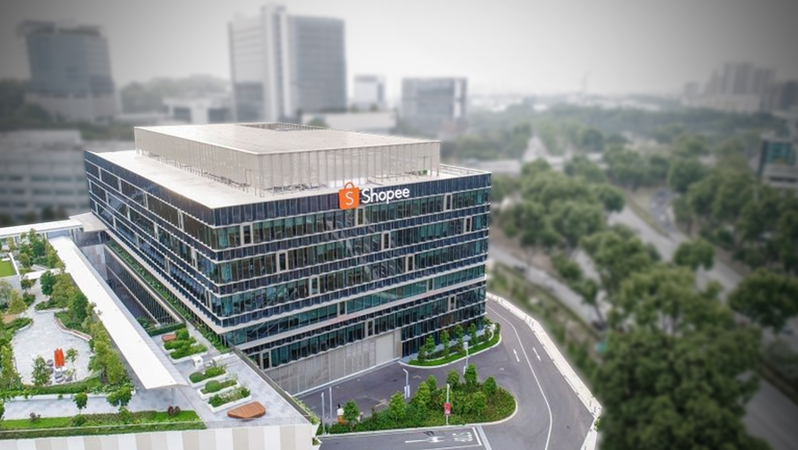
The new headquarters in Singapore underscores our success in online shopping as Shopee provides a good experience that interacts and socialise with the customers. The new headquarters is part of our long-term investment plan to drive the region’s e-commerce business, Chris said.

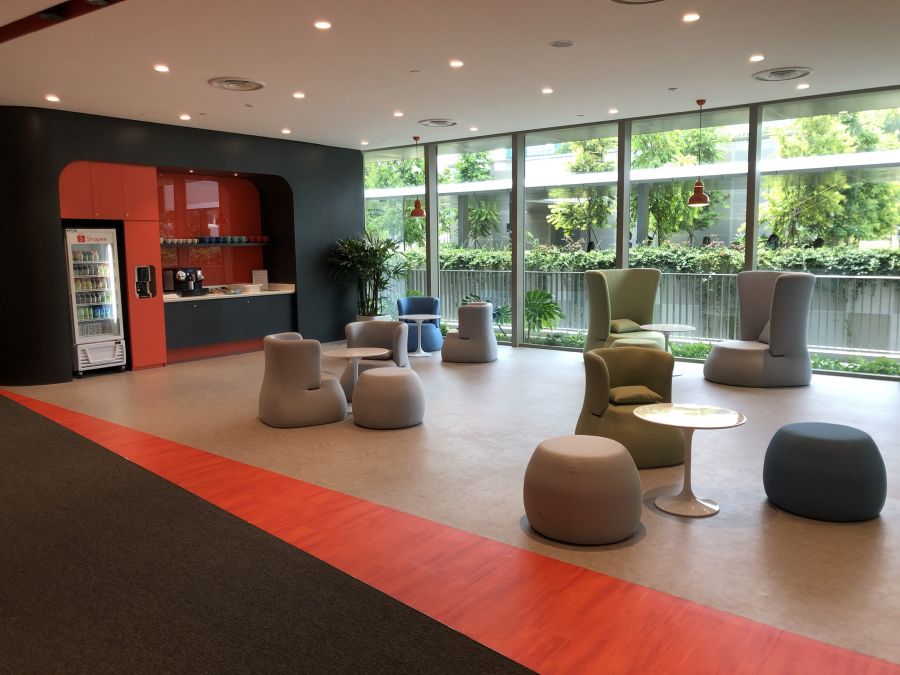
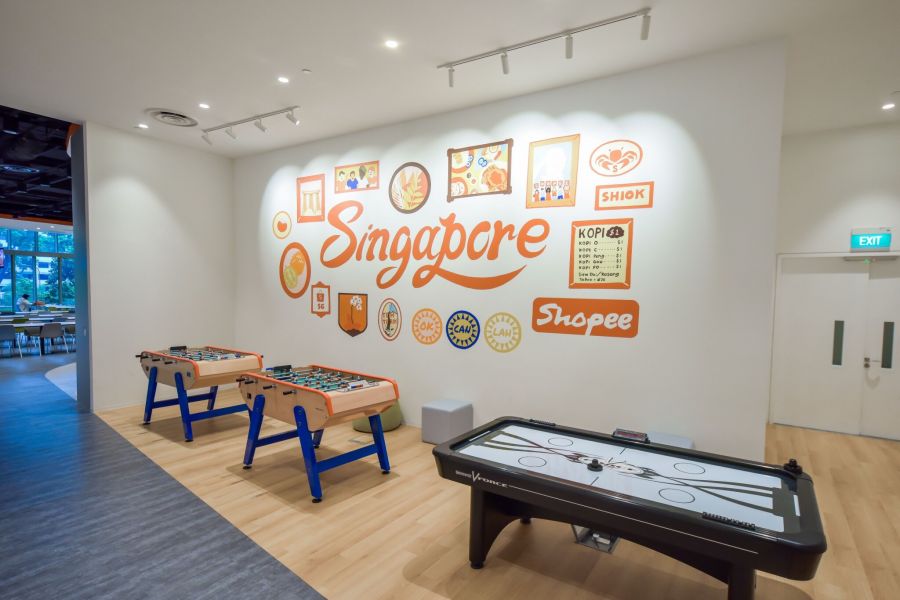
The new headquarters will cover more than 244,000 square feet and will be an innovation hub in support of Shopee’s expansion in all 7 countries, It can accommodate up to 3,000 employees with various facilities that support a creative working environment and sense of unity. Shopee’s working culture is conveyed through the modern design and reflects the concept of Connectivity, Collaboration and Community.

In addition, Shoppee launched “11.11 Big Sale” today (October 18), its biggest event of the year, in all seven countries. It will run until November 11.

Shopee has a clear strategy and business plan to drive the e-commerce market in this region through interaction and connecting users in the social media”, Chris added.

Don Mueang Airport duty-free concession up for bids

ศาสตร์เกษตรดินปุ๋ย : ขอบคุณแหล่งข้อมูล : หนังสือพิมพ์ The Nation

https://www.nationthailand.com/business/30377491

Don Mueang Airport duty-free concession up for bids

Oct 18. 2019
By THE NATION

701 Viewed

Airports of Thailand (AOT) invited bids for concessions to the duty-free zone in Don Mueang Airport on Thursday (October 17), with AOT president Nitinai Sirismatthakarn saying the concession will run from October 1, 2023 to March 31, 2034.

He added that he expects at least five companies to bid for the concession. As per the terms of reference (ToR), only companies that have no court disputes or are in arbitration with the AOT will be eligible for bids.

The ToR are expected to be available from October 24 to November 8, while AOT is expected to announce the names of qualified bidders on December 11, the day bidders are also expected to submit their bids.

AOT is also expected to announce the bid winner by mid-December.

Commerce Ministry sets 4 clear strategies to boost export market

ศาสตร์เกษตรดินปุ๋ย : ขอบคุณแหล่งข้อมูล : หนังสือพิมพ์ The Nation

https://www.nationthailand.com/business/30377498

Commerce Ministry sets 4 clear strategies to boost export market

Oct 18. 2019
Somdej Susomboon

Somdej Susomboon
By THE NATION

659 Viewed

The Commerce Ministry has come up with four strategies to boost export next year, including plans to expand existing major markets, namely the US, European Union, Japan, China and Asean.

Somdej Susomboon, acting director-general of the Commerce Ministry’s Department of International Trade Promotion, said the second strategy is to seek new markets such as South Asia, Latin America, Africa and the Middle East.

The third strategy is to revive existing markets, such as the export of rice to Iraq and establishing a stronger market for Thai products in Bahrain.

The fourth strategy is to boost border and cross-border trade as well as boost e-commerce.

The ministry plans to hold more than 50 export-related events from this month until December, including a fair to promote Thai products at match-making events.

It will also promote the use of Thai rice in Japan’s processing industry as well as promoting riceberry rice in EU and Russia.

Opposition rejects 2020 budget, accuses govt of focusing more on arms than people’s hardship

ศาสตร์เกษตรดินปุ๋ย : ขอบคุณแหล่งข้อมูล : หนังสือพิมพ์ The Nation

https://www.nationthailand.com/business/30377508

Opposition rejects 2020 budget, accuses govt of focusing more on arms than people’s hardship

Oct 18. 2019
Opposition leader Sompong Amornvivat

Opposition leader Sompong Amornvivat
By The Nation

830 Viewed

The opposition attacked the government for prioritising military spending instead of helping people cope with economic hardships on Thursday (October 17), as Parliament began debating the budget bill.

The attack came after Prime Minister General Prayut Chan-o-cha spent two hours presenting the Bt3.2-trillion bill to the House of Representatives.

The government and the opposition will spend two more days debating the fiscal 2020 national budget in its first reading. If the bill is passed by Parliament, it is due to be implemented early next year.

The government has continued running budget deficits amid a sharp domestic and global economic slowdown.

In his presentation, Prayut said this budget is in line with the government’s 20-year national strategy (2018-2037), which aims to improve people’s living standards and develop the economy sustainably.

The opposition shot back, saying the government was prioritising defence spending instead of focusing on boosting people’s income.

Opposition leader Sompong Amornvivat said that despite five years under Prayut’s junta-led administration when the country’s total spending had hit Bt14.3 trillion with loans of Bt2.2 trillion, the economy failed to advance.

He also pointed out that more than Bt6 billion had been allocated to the Defence Ministry in the latest budget, while the Interior Ministry is getting Bt25 billion more than the previous year. The government also set aside a large central fund of Bt518.8 billion, which it can spend freely without Parliament’s scrutiny or consent, Sompong said, as he warned the government against using this money to purchase more military hardware.

He also said that the government’s move to stimulate domestic tourism by giving cash to travellers is a waste of money because it will not boost productivity.

“The budget bill should be redrafted,” he said.

Meanwhile, Pol General Sereepisut Temiyavej, leader of the Seree Ruam Thai Party, said the government does not have the legitimacy to rule as Prayut’s oath-taking was incomplete as he did not say the words required by the Constitution. Hence, he said, this government does not have the authority to propose a budget bill.

Anudit Nakorntab, Pheu Thai MP, called on the government to postpone its plans to purchase arms, especially since the country is not facing an emergency situation and that the issue of people facing economic hardship is more important.

He also pointed out that the previous junta-led government had also used the central fund to purchase tanks and build guesthouses for the Navy.

Study outlines reasons for lack of investment among Thais

ศาสตร์เกษตรดินปุ๋ย : ขอบคุณแหล่งข้อมูล : หนังสือพิมพ์ The Nation

https://www.nationthailand.com/business/30377503

Study outlines reasons for lack of investment among Thais

Oct 17. 2019
Marnix Zwart, Chief Commercial Officer and Co-Founder of GoBear

Marnix Zwart, Chief Commercial Officer and Co-Founder of GoBear
By THE NATION

744 Viewed

The low rate of investment by Thais stems from a lack of financial liquidity, rather than limited investment know-hows, a study commissioned by GoBear shows.

Conducted last month, results of the study was released today (October 17). The study was commissioned to award-winning, full-service research agency Kadence International and was conducted in four of GoBear’s key markets in Asia, namely Hong Kong, Indonesia, Singapore and Thailand.

Marnix Zwart, Chief Commercial Officer and Co-Founder of GoBear, said that the study was produced with the purpose of learning and understanding what people think, feel and do about personal finance.

In Thailand the study was conducted on 1,000 respondents and across five Thai age groups, ranging from 18-25, 26-35, 36-45, 46-55 to 56-65.

It found that about 50 per cent of all age groups do not invest because they do not have money left from their monthly expenses.

Other reasons are a lack of sufficient knowledge on investment or perceiving that an investment always carries risks.

In addition, 50 per cent of the respondents admitted that they did not have enough savings in their bank accounts that could cover their expenses for more than six months if they suddenly lost their regular income.

Moreover, 66 per cent also admitted to having recurring personal cash flow problem while 15 per cent of those not having an income or unemployed are left without any financial support, whether it be from their relatives or those around them.

The lack of financial discipline often leads to other problems, including debt, zero savings and no planning for retirement.

The study also shows that the new generation aims to retire at the age of 50, while people aged 46 and above said they would retire at 60.

This means that despite more Thai people wanting to retire earlier, those without financial discipline may have to continue working after reaching the age of 60. In addition, the study from Kadence reveals that 38 per cent of people aged 18-25 and up to 26 per cent of people aged 36-45 have not started planning for their retirement.

According to the study, Thailand scored 61 per cent for overall financial health. Part of this could be attributed to the fact that Thais scored relatively low for financial knowledge.

The major financial problems facing Thai people can be divided into the four areas:

1) The problem of expenses exceeding income is the main reason why Thai people do not save or invest. The study shows that 49.8 per cent of Thais could not invest because they did they have the financial capacity.

In fact, those with low income and high expenses are recommended to invest in products that require a small amount of money and have low risk of losing the initial capital.

2) 50% of Thais said they would have cash flow problem if they are laid off by their employers as they do not have enough savings to cover expenses for more than six months. This means that losing their income stability due to unemployment or in case of an emergency will make their life extremely difficult.

3) The lack of financial planning for retirement or starting too late is another major problem among Thais. The study found that Thai people start paying attention to financial planning at the average age of 41.5 years. In fact, financial planning for retirement should start from the age of 20+ or after graduation. Those who start saving early do not have to put aside a lot of money at a time but can be assured that they will have enough money for retirement.

In contrast, people aged over 30 and 40 who have just started planning for their retirement need to have different ways of saving, as opposed to those who started savings in their twenties.

4) Limited financial literacy among some Thais can possibly lead to financial management mistakes. The study shows that 19.5 per cent of the respondents are not keen to invest because they have limited knowledge or are not familiar with the concept of investment.

Moreover, 17.3 per cent perceive that investment in general carries some risks despite the fact that there are various types of investment, coming with high and low risks.

GoBear Thailand today (October17) invited celebrities and financial experts to participate in the seminar “GoBear Fin Detective #สืบฟินวินทุกเรื่องเงิน,” aiming to encourage Thai people to pay attention to their financial health, which in turn, will benefit their long-term financial planning.

It also invited financial guru Dr Benjarong Suwankiri, Chief Executive Officer, ME by TMB, to advise on how to enhance the financial health of Thai people.

ADB to pour Bt3 billion in Energy Absolute’s green bonds

ศาสตร์เกษตรดินปุ๋ย : ขอบคุณแหล่งข้อมูล : หนังสือพิมพ์ The Nation

https://www.nationthailand.com/business/30377488

ADB to pour Bt3 billion in Energy Absolute’s green bonds

Oct 17. 2019
By The Nation

718 Viewed

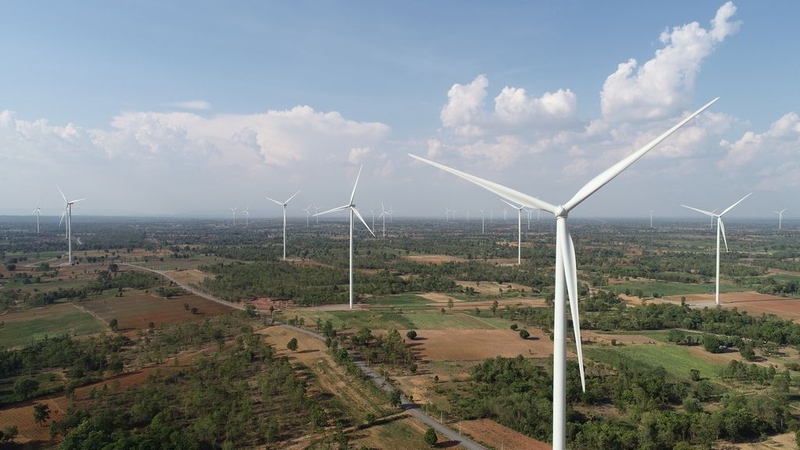
The Asian Development Bank (ADB) will invest Bt3 billion ($98.7 million) in Energy Absolute’s maiden green bond issuance, proceeds from which will help support long-term financing of the company’s 260-megawatt (MW) Hanuman wind farm in Thailand.

The bank’s investment will contribute to Thailand’s renewable energy objectives and its ongoing efforts to reduce carbon emissions.

The bond will have a total issuance value of Bt10 billion. It will only be the second Climate Bonds Standard-certified bond issued by a Thai energy company and the first green bond for a wind power project in Thailand. Proceeds from green bonds are used to fund, in part or in full, new or existing projects that deliver environmental or climate-related benefits.

The agreement was signed in Bangkok today (October 17) by Christopher Thieme, Deputy Director General of ADB’s Private Sector Operations Department and Energy Absolute’s Deputy Chief Executive Officer Amorn Sapthaweekul on the sidelines of a knowledge-sharing event—the Capital Market Research Forum: Development of Green Bonds in Thailand, hosted by ADB and the Stock Exchange of Thailand’s Capital Market Research Institute.

“Thailand has ample renewable energy resources and its green and climate bond market has tremendous potential,” said Thieme. “This maiden green bond issuance by Energy Absolute will contribute to the evolution of that market, while supporting the clean energy ambitions of Thailand’s Power Development Plan by underpinning the growth of wind power generation.”

“The green bond issuance benefits our company through lower cost of financing and demonstrates our strong commitment to sustainable development including environmental and social dimensions,” said Sapthaweekul.

“After the success of the 260 MW Hanuman Wind Project, we took another significant step to become a more value-added business by focusing more on patent development and innovation in clean energy and related industries including energy storage systems, electric vehicles (EV) and EV charging stations, and electric ferries. We are also preparing to launch an energy trading platform, which we have studied and developed through our own technology and innovation. This platform will play a major role in demand-side management for energy efficiency”.

Renewable energy sources are expected to contribute 15 to 20 per cent of Thailand’s total energy production by 2036, up from the current 10 per cent. The Hanuman wind farm in northeastern Chaiyaphum Province is the largest wind farm in Thailand and is expected to reduce the country’s annual carbon emissions by 200,000 tonnes by 2020.

Energy Absolute was established in 2006 and is one of the largest renewable energy companies in Thailand with an installed capacity of 664 MW at four solar and two wind power plants. Its strategy is aligned with both Thailand’s industrial development and climate targets and with ADB’s Strategy 2030, under which at least 75 per cent  of the bank’s committed operations will support climate change mitigation and adaptation by 2030.

ADB’s climate financing is expected to reach $80 billion over 2019–2030.

The Climate Bonds Standard is a science-based international labeling scheme for debt investments used by bond issuers, governments, and investors to assess investments which genuinely help to address climate change.

ADB is committed to achieving a prosperous, inclusive, resilient, and sustainable Asia and the Pacific, while sustaining its efforts to eradicate extreme poverty. In 2018, it made commitments of new loans and grants amounting to $21.6 billion. Established in 1966, it is owned by 68 members with 49 from the region.

South Korea seeks closer Asean cooperation amid trade tensions with Japan

ศาสตร์เกษตรดินปุ๋ย : ขอบคุณแหล่งข้อมูล : หนังสือพิมพ์ The Nation

https://www.nationthailand.com/business/30377481

South Korea seeks closer Asean cooperation amid trade tensions with Japan

Oct 17. 2019
By The Nation
Kunanon Kanjanatecha
Seoul

730 Viewed

The South Korean Minister of SMEs and Startups Park Young-sun along with about 40 high-level representatives from the Republic of Korea and Asean nations were in Seoul this week to attend the launch of the “Asean Korean Train: Advancing Together”. The event, which kicked off on Wednesday, was hosted by the Ministry of Foreign Affairs and organised by the Asean-Korea Centre (AKC) to promote economic and socio-cultural cooperation between Asean Member States and the Republic of Korea. The 10-nati

The move also comes amid trade tensions between Japan and South Korea.

The Asean-Korea Train began its 3-day journey in Seoul and travelled to various cities including Busan, Suncheon and Gwangju to promote peace, prosperity, and quality. It also served as a platform for around 200 delegates from the member states and Korea to exchange ideas that will help move each nation forward.

The Thai Chamber of Commerce’s director Dej Churdsuwanrak said that the event was a great opportunity to brainstorm and share visions for the future and there were many things Thailand can learn from such cooperation. From the academic perspective, Dr Onusa Nongtrud, lecturer from the Department of Music, Surat Thani Rajabhat University, added that exchanges arising from this type of international collaboration can help widen vision of the students and teachers from different nations. They are more likely to embrace new learning methods and apply them in academic uses.

This event was also a preparation for the ASEAN-Republic of Korea Commemorative Summit 2019, which takes place on November 25-26 in Busan.

Korea’s Ambassador to Asean Lim Sung-nam expressed his belief that the event would lay the foundation for increased economic and human exchange between Asean countries and the Republic of Korea while the First Secretary of Royal Thai Embassy in Seoul noted that Thailand will continue to strengthen the well-established relationship between Thailand and South Korea.

“We have already played a major role in moving Asean forward through the 34th Asean summit which was held in June under the chairmanship of Thailand,” he added.

Govt confident Parliament will pass budget bill but opposition says it fails to tackle challenging

ศาสตร์เกษตรดินปุ๋ย : ขอบคุณแหล่งข้อมูล : หนังสือพิมพ์ The Nation

https://www.nationthailand.com/business/30377462

Govt confident Parliament will pass budget bill but opposition says it fails to tackle challenging

Oct 17. 2019
Thanathorn

Thanathorn
By The Nation

791 Viewed

Prime Minister General Prayut Chan-o-cha will today table the budget bill for fiscal year 2020 before the House of Representatives.

Prayut (left),  Thanathorn (right)

Prayut (left), Thanathorn (right)

The bill was delayed due to the general elections in March and the time it took to form the coalition government. Usually, the annual budget bill is passed by Parliament around August and implemented in October.

The government plans to spend Bt3.2 trillion in the current fiscal, up 6.7 per cent over fiscal 2019 which ended on September 30. The new spending outlays are equivalent to 18 per cent of gross domestic product.

Capital spending has been set at Bt655.8 billion, accounting for 20.5 per cent of total budget, which is also not much compared with the larger share of current spending such as salaries of state officials that are set at Bt2.39 trillion, up 5.3 per cent. The current spending has put high pressure on overall spending, as it accounts for 75.8 per cent of total budget.

The budget is based on the assumption of economic growth at between 3 to 4 per cent, higher than the 2.7 to 3.2 per cent forecast for this year. The government continues to run up a budget deficit as in past years. This fiscal the deficit is set at Bt469 billion, or 2.6 per cent of GDP, as the government wants to stimulate the economy amid a contraction in exports.

Finance Minister Uttama Savanayana on Wednesday expressed his confidence that lawmakers would approve the bill despite the coalition government having only a slim majority in the lower house. The house will spend three days in the first reading of the budget bill.

MPs from the opposition camp over the past few days have raised objections to the government’s “high” spending plans on national security and arms purchases. The government plans to spend Bt428.2 billion on national security, which amounts to 13.4 per cent of total budget. Spending on strategy for creating opportunity and social equality has been set at Bt765.2 billion, or 23.9 per cent of total budget, the largest share. The government is seen as giving priority to reduce the huge income gap in the country. Thailand is among the most unequal societies in the world with a huge gap in the incomes and wealth of the rich and the poor, according to recent reports.

Future Forward Party leader Thanathorn Juangroongruangkit has blamed the way the government allocates funds without answering questions on the huge income gap, looking at the quality of living of people in rural areas, and labourers who are under increasing pressure of being laid off by their employers. He also said the government was spending too little to address natural disasters caused by flooding and drought.

Thanathorn criticised the centralised budgeting system as making government spending less effective. He called for fiscal decentralisation, which would allow people to have a greater say in tax spending. Government investments in mega-projects needed to be reviewed to ensure wider benefits for groups of people rather than being beneficial to a few big capitalists, he said. He also called for the implementation of the universal social welfare system instead of social welfare for targeted groups as implemented by the government.