Stronger baht pounding rice exports, say traders

ศาสตร์เกษตรดินปุ๋ย : ขอบคุณแหล่งข้อมูล : หนังสือพิมพ์ The Nation

https://www.nationthailand.com/business/30375384

Stronger baht pounding rice exports, say traders
Aug 26. 2019
By Wichit Chaitrong
The Nation

897 Viewed

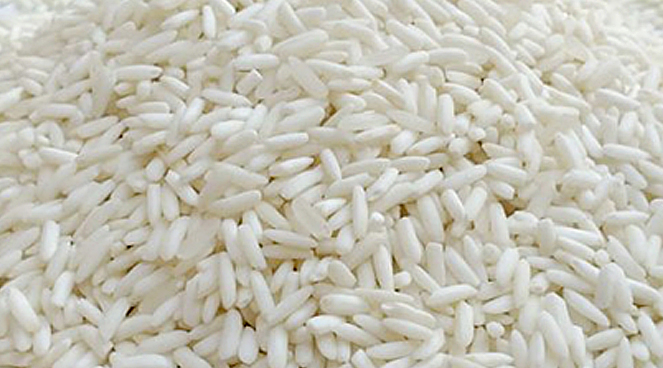
Charoen Laothamatas, president of the Thai Rice Exporters Association, has expressed concern over the impact the baht’s appreciation is having on his sector.

The baht has risen about 6 per cent against the US dollar since January, whereas the Vietnam dong has held study and the Indian rupee has even weakened, Charoen noted, citing Thailand’s chief competitors in the global rice trade.

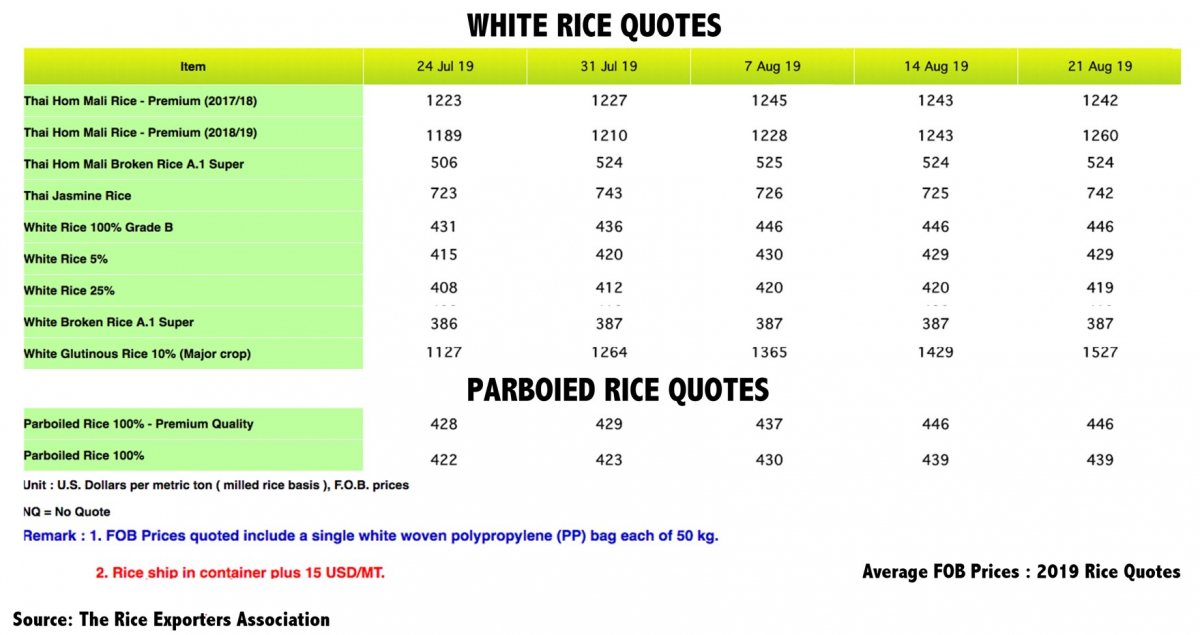
“The stronger baht has largely made Thai rice more expensive than those of our competitors,” he said. “Homali fragrant rice, for example, currently cost $1,200 per metric tonne, while Vietnam jasmine is only $520.”

The association puts the price of Indian basmati at between $1,030 and $1,140 per tonne and Cambodia’s pkha malis at $935.

Thailand exported 4.4 million tonnes between January and June, down 19.6 per cent year on year, and the value plunged 17 per cent to Bt72.2 billion.
Charoen said total rice exports this year are expected to reach 9 million tonnes, down from 11.2 million last year.

Severe drought this past season might not greatly affect the first crop now that rain has appeared, he said, but the second crop will be hit because there’s so little water in reserve at the dams.

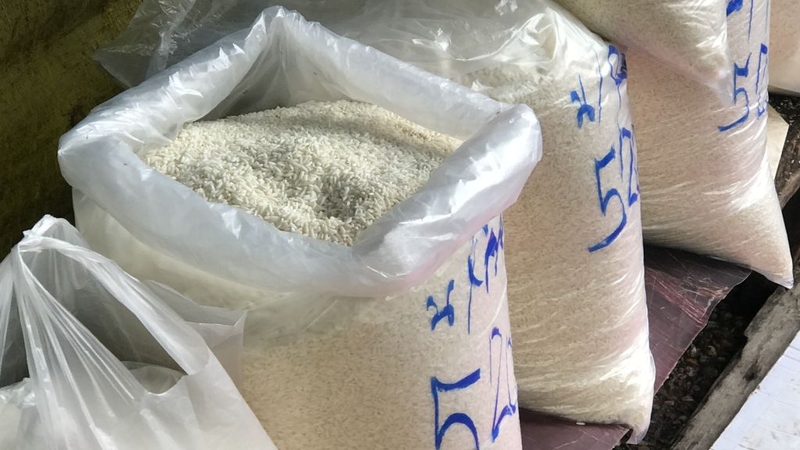
Rice vendors have meanwhile been complaining about the rising cost of glutinous rice.

Charoen pointed out, though, that glutinous rice is for domestic consumption rather than export and its price is quite sensitive to local demand and supply.

Farmers in the Northeast  have given up growing it as preferences shift to fragrant rice, he said, resulting in a diminished supply.

Revenue Dept collects more tax than estimated

ศาสตร์เกษตรดินปุ๋ย : ขอบคุณแหล่งข้อมูล : หนังสือพิมพ์ The Nation

https://www.nationthailand.com/business/30375383

Revenue Dept collects more tax than estimated

Aug 26. 2019
(File Photo) Ekniti Nitithanprapas/Photo by The Nation

(File Photo) Ekniti Nitithanprapas/Photo by The Nation
By The Nation

533 Viewed

The Finance Ministry’s Revenue Department reported tax collection worth Bt1.59 trillion in the first 10 months of this fiscal year (October 1, 2018 to July 31, 2019), the department’s director-general Ekniti Nitithanprapas told Finance Minister Uttama Savanayana, who visited the department on August 26.

He added this is higher than the earlier estimation of Bt48.44 billion or 3.1 billion higher than the Bt101.84 billion collected in the same period last year.

“We believe the department will be able to achieve Bt2 trillion in tax revenues by the end of this fiscal year,” he said.

He said the department has created a software to manage tax payers by using big data and data analysis to study tax payers as well as the tax system. The department will also develop a service under the My Tax Account system, which will involve e-stamps, e-donation and VRT Blockchain, he said.

Prayut wants rising sticky rice price to be urgently curbed

ศาสตร์เกษตรดินปุ๋ย : ขอบคุณแหล่งข้อมูล : หนังสือพิมพ์ The Nation

https://www.nationthailand.com/business/30375380

Prayut wants rising sticky rice price to be urgently curbed

Aug 26. 2019
By THE NATION

533 Viewed

Prime Minister General Prayut Chan-o-cha called on the Commerce Ministry to urgently find a way of controlling the rising price of sticky rice, government spokesperson Narumon Pinyosinwat said on August 26.

She said that in response, Commerce Minister Jurin Laksanavisit ordered the Department of Internal Trade to see if sticky rice is being hoarded and to prevent such action right away.

Jurin has also told the department to talk to rice traders, millers and related parties and have them package sticky rice and sell it at an especially low price to the public.

The price of sticky rice has jumped due to drought, which has affected both in-season and off-season planting. The situation is expected to improve after the latest crop is harvested in October.

Meanwhile, one rice vendor in Phayao province lamented that she has had to purchase sticky rice at Bt1,950 per sack, compared to Bt800 per sack over the past few months. She said this high price is forcing her to sell the rice at a high price of Bt35 per kilogram, adding that other vendors are selling the rice for as much as Bt40 to Bt45 per kilo.

As of August 16, the price of paddy sticky rice stood at between Bt13,900 and Bt17,600 per tonne, up from Bt9,549 per tonne late last year, while white sticky rice was between Bt38,500 and Bt38,600 per tonne, up from Bt19,610 per tonne.

Central bank warns to currency volatility in view of US-China trade spat

ศาสตร์เกษตรดินปุ๋ย : ขอบคุณแหล่งข้อมูล : หนังสือพิมพ์ The Nation

https://www.nationthailand.com/business/30375379

Central bank warns to currency volatility in view of US-China trade spat

Aug 26. 2019
Chantavarn

Chantavarn
By THE NATION

745 Viewed

Trade tensions on the international front are likely to be lengthy and intense after the US responded to China’s decision to boost tariff on $75 billion worth of US goods by hiking the tariff on most exports from China, said Chantavarn Sucharitakul, assistant governor of the central bank’s Corporate Strategy and Relations group.

The tariffs cover agricultural products as well as clothing, chemicals, textiles and automobiles, making global trade more fragile, she said.

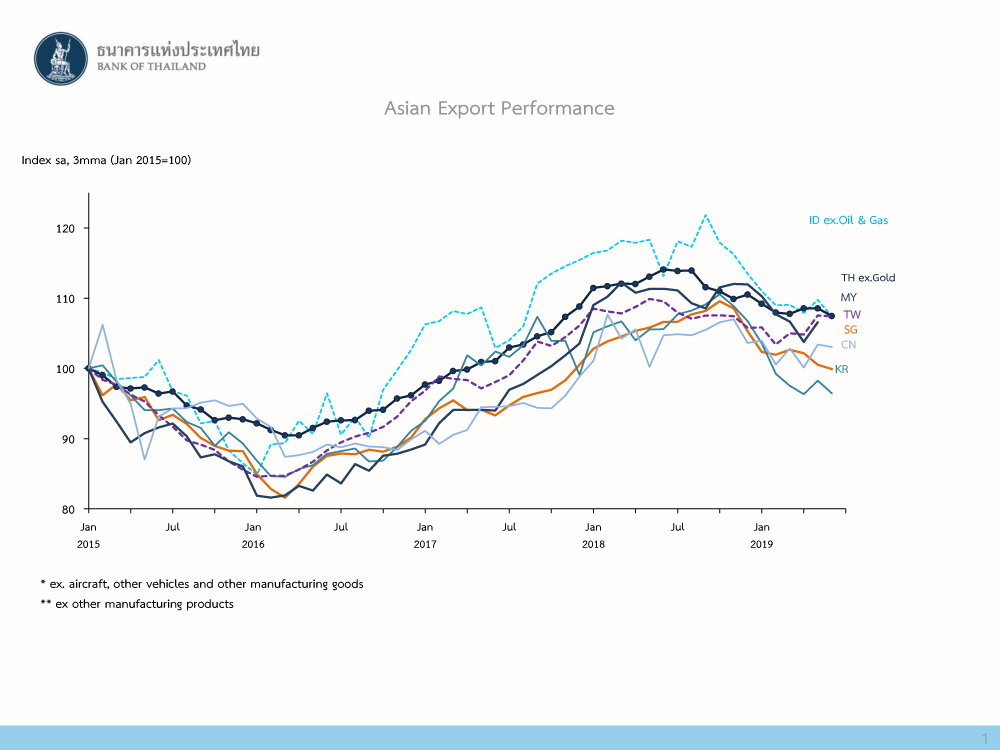
Thailand has been negatively affected by this trade spat between the two superpowers, which has brought Thai exports down in the past six months. However, she said, Thailand’s exports are still relatively steady compared to neighbouring countries.


She also said that since the trade war has made exchange rates volatile, entrepreneurs should pay more attention to foreign exchange risk management by the Bank of Thailand, she said.

The Thai National Shippers’ Council, the Thai Chamber of Commerce and the Federation of Thai Industries have also come up with different tools to keep entrepreneurs informed, including tools on managing exchange rate risks, she said.

Commerce Ministry sets up ‘war room’ to boost exports

ศาสตร์เกษตรดินปุ๋ย : ขอบคุณแหล่งข้อมูล : หนังสือพิมพ์ The Nation

https://www.nationthailand.com/business/30375377

Commerce Ministry sets up ‘war room’ to boost exports

Aug 26. 2019
Deputy prime minister and Commerce Minister Jurin Press conference after the metting in the morning./Photo by Commerce Ministry

Deputy prime minister and Commerce Minister Jurin Press conference after the metting in the morning./Photo by Commerce Ministry
By THE NATION

692 Viewed

The Commerce Ministry has joined the private sector in setting up a “war room” to work on boosting the export of rice and cassava, Commerce Minister Jurin Laksanavisit said on August 26.


The move is to boost Thailand’s annual shipments and maintain the export level at 4.28 per cent, which was achieved in July.

“Apart from the income guarantee scheme for farmers, for which the government has allocated Bt21 billion, we will also look for ways to boost the export of rice and cassava because shipments have dropped in the first half due to the stronger baht,” Jurin, who is also deputy PM, said.

The key target markets for rice export include Iraq, China, the Philippines and Japan.

Iraq has historically been a market for Thai goods, but it was recently affected by the poor quality rice that was exported, which also damaged bilateral ties. However, he said, the government is working on restoring ties by working closely with Iraqi government agencies and boosting government-to-government trade in agricultural products, he said.

As for China, a memorandum of understanding has been signed for Thailand to export a million tonnes of rice to China per year. For this year, 300,000 tonnes still remains to be shipped. The Commerce Ministry is also preparing to negotiate a new deal, urging China to purchase more Thai jasmine rice in the future.

The Philippines, meanwhile, has recently started a quota system for private companies in the Philippines to purchase rice from overseas. The Commerce Ministry will act as a medium for the private sector of both countries to engage in business deals and boost Thai exports to the Philippines.

As for the Japanese market, the ministry has already called on Japan to boost its quota for Thai rice.

Meanwhile, the issue on top of the agenda at the war room was cassava, and the participants studied the potential of China and India.

The mainland is a good potential market for cassava, especially since the vegetable is widely consumed in the south of China.

India too is a largely untapped market, he said, adding that the ministry will actively meet with importers and pair them up with exporters to boost the Kingdom’s shipments in the future.

Somkid seeks to soothe rattled traders

ศาสตร์เกษตรดินปุ๋ย : ขอบคุณแหล่งข้อมูล : หนังสือพิมพ์ The Nation

https://www.nationthailand.com/business/30375369

Somkid seeks to soothe rattled traders

Aug 26. 2019
By THE NATION

312 Viewed

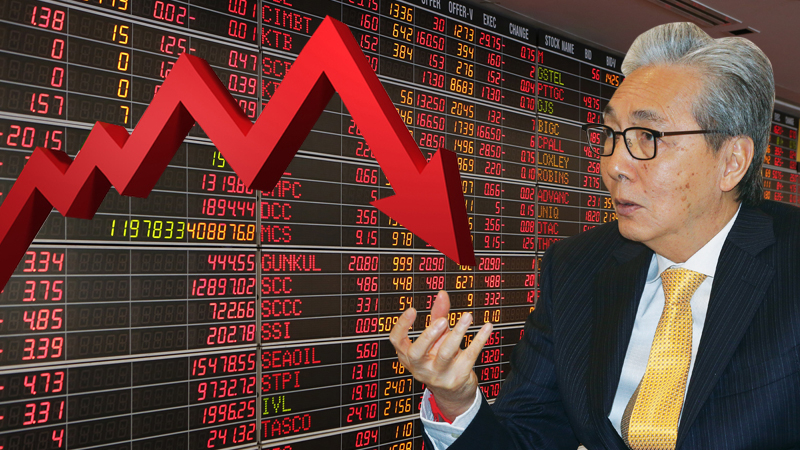
The Stock Exchange of Thailand and Bank of Thailand are monitoring the volatile market closely as the US-China trade war intensifies further, Deputy Prime Minister Somkid Jatusripitak said on Monday (August 26).

He urged investors not to panic, noting that stock markets worldwide are experiencing the same volatility due to the escalating trade war.

The SET Index closed its morning trading session at 1,611.77, falling 2.12 per cent.

PPP board approves hospital, senior residence projects

ศาสตร์เกษตรดินปุ๋ย : ขอบคุณแหล่งข้อมูล : หนังสือพิมพ์ The Nation

https://www.nationthailand.com/business/30375368

PPP board approves hospital, senior residence projects

Aug 26. 2019
Perspective of Medical Center at Bang Sue Station worth Bt8.2 billion/Photo by SRT

Perspective of Medical Center at Bang Sue Station worth Bt8.2 billion/Photo by SRT
By The Nation

718 Viewed

The Public-Private Partnership board has approved investments in two projects worth Bt13.7 billion, its secretary Prapas Kong-ied, said on Monday.

The first project is for the Health Ministry to develop a medical centre worth Bt8.2 billion. The 510-bed hospital will be located at Bang Sue station, and will offer health services at a reasonable price. The project will involve the private sector to invest in developing the building and finding medical equipment, while the government will provide the services and manage the hospital. This project offers a 30-year contract. This project will also request incentives from the Board of Investment, said Prapas, who is also the director-general of State Enterprise Policy Office of the Finance Ministry.

The second project is to develop a residential project for ageing citizens at Nong Hoi, Chiang Mai under the National Housing Authority of Thailand (NHA). The project will see a private firm rent land from NHA and develop residences in a 30-year contract worth up to Bt5.5 billion, he said.

The committee also approved the draft for an act regarding PPP projects to develop the country’s infrastructure project and public services. Outstanding issues include the port at Map Ta Phut industrial estate, the PPP contract to develop buildings at Siam Square of Chulalongkorn University, and Net Pracharat of the Digital Economy and Society Ministry, he said.

Logistics vital to EEC: Commerce Ministry

ศาสตร์เกษตรดินปุ๋ย : ขอบคุณแหล่งข้อมูล : หนังสือพิมพ์ The Nation

https://www.nationthailand.com/business/30375367

Logistics vital to EEC: Commerce Ministry

Aug 26. 2019
Weerasak/Photo by Commerce Ministry

Weerasak/Photo by Commerce Ministry
By THE NATION

466 Viewed

The government is accelerating its plan to increase the capacity of entrepreneurs in the Eastern Economic Corridor (EEC), Weerasak Wangsuphakijkosol, deputy minister of commerce, said on Monday

The goal is to make the special economic zone covering Chon Buri, Rayong and Chachoengsao provinces a centre for the petrochemical, automotive and manufacturing industries.

“Ultimately, the EEC is meant to be a key force for Thailand’s economic growth in the coming years,” he said.

Weerasak has instructed the Department of Business Development (DBD) to increase the capacity of the logistics industry in the EEC by creating a logistics business network in the area to gather ideas on growing the industry and this is being addressed in today’s brainstorming event “Driving logistics in the EEC with digital technology”.

Logistics business is extremely important for the growth of businesses in the EEC as it supports other industries and increases operational efficiency in the area, he said.

“This event is considered as a starting point for the development of logistics business potential in the EEC and will expand to other special economic zones in the future,” Weerasak added

Currently, there are 26,365 logistics service businesses in Thailand, most of whom or 17,741, are road freight providers, accounting for 67 per cent of all logistics businesses. Meanwhile, 3,336 logistics providers operate in the EEC area, accounting for 88 per cent of the entire Eastern region and 12 per cent of all logistics providers in the country.

Asean labour force needs ongoing training in age of disruption: experts

ศาสตร์เกษตรดินปุ๋ย : ขอบคุณแหล่งข้อมูล : หนังสือพิมพ์ The Nation

https://www.nationthailand.com/business/30375361

Asean labour force needs ongoing training in age of disruption: experts

Aug 26. 2019
Photo by Bank of Thailand

Photo by Bank of Thailand
By The Nation 

239 Viewed

Governments must play an active role in reskilling and up-skilling Asean’s labour force to prepare for the impact of digital disruption on the labour market, experts are urging.

A key challenge from the digital disruption is the need to re-skill and up-skill human capital, starting from the government sector, said Christian Viegelahn, a labour economist at the International Labour Organisation.

Viegelahn was speaking last week to the Asean+3 Regional Economic Outlook 2019 Roadshow on the challenges and opportunities of digital disruption.

The process of re-skilling and up-skilling must take account of whether the new skills are suitable for existing workers. Furthermore, barriers to entry in the market for new graduates will need to be identified in order to know what skills the workforce is lacking, he said.

Finally, he stated, employers need to embrace new technology that can be used to enhance the productivity of their workforce. For high-skill workers, these can be new methods of working such as tele-working or remote working.

Within the public sector, the older population is likely to continue working due to the insufficient pension system, he continued. The ILO has found that up to two-thirds of elderly workers in the region are not supported by a pension scheme.

These workers will need to be reskilled to support themselves in the age of digital disruption, Viegelahn said.

Given that Thailand has one the highest rates of mobile adoption, the impact of digital disruption or transformation will be widespread in the market. Investors need to be creative in finding suitable investment opportunities amid this changing market landscape, said Chat Luangarpa, first senior vice president, Kasikornbank.

Meanwhile, policy markets also have to be creative in their measures and be more proactive in supporting businesses as the shift in consumer behaviour occurs, he said.

In order for all industries to benefit from digital disruption, the “creative economy” needs to grow fast, otherwise there may be severe consequences in the local economy, Luangarpa said.

A key challenge facing our economy stems from the trade war and its impact on Thai exports, said Pimchanok Vonkorpon, director-general of the Commerce Ministry’s Trade Policy and Strategy Office

“I would like the Asean+6 countries to conclude the Regional Comprehensive Economic Partnership (RCEP) agreement so that the flow of goods between all 16 countries will improve,” she said.

As for coping with digital disruption, a key challenge facing the public sector is coordination. Different ministries in the country are not working together sufficiently to come up with adequate solutions to deal with the impact of digital disruption on our economy, Pimchanok said.

There needs to be a change in mindset within the public sector to start getting different ministries to work together and increase the connectivity between different ministries, she concluded.

The Baht remains strong while Asian stock markets slide

ศาสตร์เกษตรดินปุ๋ย : ขอบคุณแหล่งข้อมูล : หนังสือพิมพ์ The Nation

https://www.nationthailand.com/business/30375352

The Baht remains strong while Asian stock markets slide

Aug 26. 2019
By The Nation

612 Viewed

The baht continues to be strong while the escalating trade war and violent protests in Hong Kong cause Asian stock markets to slide.

The Hang Seng Index shed more than 3 per cent at some point this morning (August 26) as investors worried about a new round of trade tensions between the. United States and China. Violent protest in Hong Kong also contributed to the market dropping sharply.

The Stock Exchange of Thailand Index lost 1.69 per cent in open trading this morning.

Japan ‘s Nikkei 225 was down more than 2 per cent in morning trading, South Korea’s Kospi dropped over 1 per cent, China’s Shanghai Composite lost over 1per cent. Singapore’s Straits Times Index and Malaysian Kuala Lumpur Composite Index also dropped more than 1 per cent.

Markets in Asia followed Wall Street’s large drop on Friday after China and the US raised tariffs on each other products.

The baht remained strong this morning moving around Bt30.60 against the dollar, appreciating from Bt30.70 on Friday, according to Kasikorn Research Centre.

Kobsidthi Silpachai, head of capital markets research at Kasikornbank noted the gold price had recovered following tweets by US President Donald Trump, ratcheting up tariffs.

Higher gold prices should mean Thai gold players will take profit on gold by selling gold against the US dollar and then selling the dollar against the baht, he added. The Gold Traders Association in Bangkok quoted gold prices this morning as buying at Bt22,200 per gold bar and selling at Bt22,300.