US resumes cooperation with Thai private sector

ศาสตร์เกษตรดินปุ๋ย : ขอบคุณแหล่งข้อมูล : หนังสือพิมพ์ The Nation

https://www.nationthailand.com/business/30374764

US resumes cooperation with Thai private sector

Aug 14. 2019
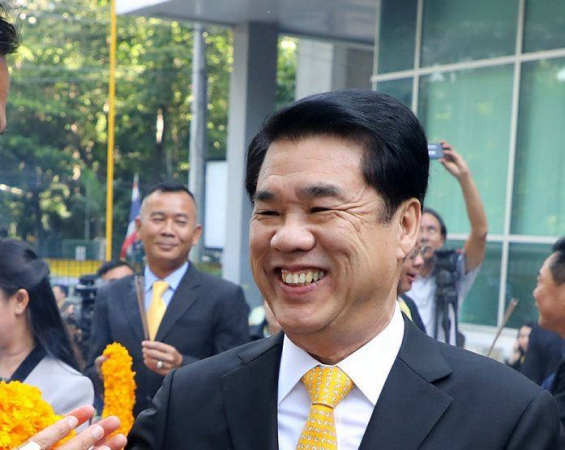
USTDA acting director Thomas R Hardy

USTDA acting director Thomas R Hardy
By THE NATION

816 Viewed

The United States has resumed collaboration with the Thai private sector in a move seen to counter China’s influence in the region.

The US Trade and Development Agency announced on Wednesday the reopening of its programme in Thailand with the goal of supporting the development of priority infrastructure projects in the energy, transportation, and telecommunications sectors, and helping to foster new commercial partnerships between the two countries.

The move is being seen by critics as an effort to counter Chinese influence. The Asian giant has invested in infrastructure projects, such as high-speed railways and major highways, in the region.

The US had cut close economic cooperation and aid to Thailand following the coup in 2014. It has now resumed collaboration after a new elected government took office.

“This is an important day for the USTDA, and we are proud to reopen our programme in Thailand,” said acting director Thomas R Hardy. “This is an ideal time to connect with new partners across the public and private sectors and advance quality infrastructure in support of Thailand’s development goals.”

To mark its reopening, the USTDA awarded a grant to Thailand-based renewable energy company Blue Solar to conduct a feasibility study on a solar photovoltaic power plant with an integrated energy storage system in Suphan Buri province. The project represents one of the first private sector deployments of utility-scale battery storage in Thailand.

Adequate and affordable power supply is critical to meet growing energy needs and drive economic growth in Thailand. Implementation of the project will support the kingdom’s goals to increase its clean energy mix, with new opportunities for US firms to supply solar and energy storage solutions.

The USTDA-funded study will help Blue Solar assess the project’s viability and deliver the designs and analysis required for financing and implementation. This partnership advances the US government’s AsiaEdge initiative to support sustainable and secure energy markets in the Indo-Pacific region.

“We are very grateful to the USTDA for providing a grant to support our project feasibility study,” said Blue Solar managing director Visait Hansaward. “It is our wish that our solar energy storage project will prove that clean energy can be reliable and our country can expect renewable energy to be a mainstream energy source in the near future.”

New study reveals consumer disloyalty is the new normal

ศาสตร์เกษตรดินปุ๋ย : ขอบคุณแหล่งข้อมูล : หนังสือพิมพ์ The Nation

https://www.nationthailand.com/business/30374758

New study reveals consumer disloyalty is the new normal

Aug 14. 2019
Somwalee Limrachtamorn, managing director of Nielsen Thailand

Somwalee Limrachtamorn, managing director of Nielsen Thailand
By THE NATION

580 Viewed

The level of “disloyalty” among consumers across the world is on the rise, with only 8 per cent being committed to their favourite brands, a global consumer study conducted by Nielsen revealed.

Nielsen’s Global Consumer Loyalty shows that consumers are actively on the lookout for new brands as the risk of buying new products is lowered due to rising income levels in developing countries. As many as 42 per cent global consumers have said they love trying new things, while nearly half or 49 per cent have said that though they prefer to stick with what they know, they can be inspired to experiment.

Consumers in the Asia-Pacific region have the highest propensity to switch brands, with 47 per cent saying they are willing to try new products, closely followed by 45 per cent of consumers in Africa and the Middle East and 42 per cent in Latin America. Only 36 per cent of consumers in North America and 33 per cent Europe said they were willing to switch brands. As many as 46 per cent of consumers in Thailand said they were open to trying new things and are on the lookout for new products.

“With an overwhelming majority of consumers being actively or passively open to unfaithful action, the risk for brand owners has never been greater,” said Somwalee Limrachtamorn, managing director of Nielsen Thailand.

She attributed part of this buying behaviour to the rise in e-commerce sites, which expands choices and enables price awareness. However, she said there is more to this change in consumer behaviour.

“Urbanisation in Thailand over these past years has increased significantly and will accelerate further in the next five to 10 years. Plu,s the government is launching several mega projects such as the Eastern Economic Corridor [EEC] and the Special Economic Zone Project. With this, consumers are seeking more convenience and flexibility in both shopping and shipping process, while an increased internet penetration is driving consumers’ demand for clarity and access to information. As consumers are offered more options, expectations are becoming more refined and marketers/retailers need to be agile enough to stay ahead of the curve by focusing consumers’ wants and needs,” she said.

The key factor influencing Thai consumers’ choice is value for money, with more than half or 52 per cent of Thai respondents saying that this influences their decision to try new brands or switch from their favourite brand, followed by enhanced quality or function (43 per cent). Both factors also rank the high in the Asia-Pacific region, with 40 per cent voting for value-for-money, and 42 per cent for superior quality. Apart from the two topmost factors, price, added benefits and convenience also appeared to be key influencers of brand choice (43 per cent, 43 per cent and 42 per cent respectively).

Hence, Somwalee said brands should not focus on winning or retaining loyal customers. “The drag effect of consumer demand for choice and voting with their wallets will overwhelm existing marketing and product development efforts if brands don’t more aggressively address disloyalty in the marketplace,” she said.

Overall, consumers’ willingness to try new brands is on the rise – 50 per cent of global consumers say they are likely to try new brands, compared to five years ago. In the developed markets of North America, Asia-Pacific and Western Europe one-third of consumers love new, as opportunities to be disloyal have been around for much longer due to the long-standing presence of online and physical retail stores, offering well-stocked shelves and multiple choices and price points.

On the flipside, a larger proportion of consumers (closer to half) in developing markets of Asia Pacific (50 per cent), Latin America (49 per cent) and Africa and Middle East (42 per cent), are enthralled with new products demonstrating an increase in brand-switching, given that historically retail and product assortment in these markets have been informal and limited, with only two or three product options on shelf per category. In Thailand, 41 per cent of consumers also agree that they are more likely to try new brands compare to five years ago.

A further multiplier to the equation is that more than a quarter (27 per cent) of Thai consumers are reviewing products across a broader range. This group of “conscious considerers” are important because even though they are choosing more widely than ever across brands, they tell us they prefer to stay with those they’ve tried in the past. It will take more to convince these consumers to change, but they still send signals of disloyalty.

How your company can deal with digital disruption in Thailand

ศาสตร์เกษตรดินปุ๋ย : ขอบคุณแหล่งข้อมูล : หนังสือพิมพ์ The Nation

https://www.nationthailand.com/business/30374756

How your company can deal with digital disruption in Thailand

Aug 14. 2019
Arinya Talerngsri, chief capability officer and managing director at SEAC

Arinya Talerngsri, chief capability officer and managing director at SEAC
By ARINYA TALERNGSRI
SPECIAL TO THE NATION

419 Viewed

How is your company and its staff preparing to address the challenges of digital disruption that has only just begun?

Truth be told, according to research by CA Technologies, Thailand is the most digitally disrupted market in the Asia Pacific and Japan. Some 95 per cent of business and IT leaders in Thailand have indicated that both the market and their organisations have been affected by digitalisation. And 98 per cent have stated that their job has been changed by it.

To be honest, 98 per cent is almost everyone, which means almost all the businesses in Thailand are already going through some sort of change in job roles and organisation.

When we talk about “job change”, it has two implications: First, the role or the job profile has been changed completely. Second, the style of working and nature of the job has changed drastically to the point where old traditional styles and ways of working are no longer applicable.

Another research indicated that an estimated 9.2 million Thais are at risk of losing their jobs to machines, while eight million other jobs are on the line in the next two decades, affecting nearly half of the country’s entire employment.

Looking at these high numbers, one can predict the degree and magnitude of disruption that is approaching, and these raise one essential question: How many companies and staff in Thailand are ready for change and the huge transition of skills?

Another report by IDC has predicted that by 2022, more than 61 per cent of Thailand’s GDP will be digitalised, with growth in every industry driven by digitally enhanced offerings, operations, and relationships.

Considering the size and magnitude of the transition that is coming, with regards to the time left to prepare, it is another confirmation that some traditional jobs are soon going to disappear from the job market in a matter of a few years, while for some of them, the nature of work and style will completely change.

Given the future that lies ahead of us, how can leaders prepare themselves and their organisations for the challenges ahead?

There are two approaches to dealing with this situation – reskilling and upskilling.

Reskilling helps your people to learn an entirely new skill outside of their current skillset and allows them to shift their career on a new path the future promises, even while their current job sector gets disrupted and starts to disappear from the market.

Upskilling is about upgrading your existing skillset to help you carry out your current job better and grow as an individual in all possible dimensions, be it quality, speed, productivity, efficiency, or even all the irreplaceable soft skills that machines cannot provide.

According to a report by PwC, Talent Trends 2019: Upskilling for a Digital World, 79 per cent of CEOs worldwide are concerned that a lack of essential skills in their workforces is threatening the future growth of their organisations, which is a big rise compared to 63 per cent in 2014.

The report also indicated that almost half – 46 per cent – of CEOs globally say significant retraining/upskilling is the most important initiative to close a potential skills gap, against 18 per cent who say it’s hiring from outside their industry.

There are two confirmations from these statistics – there are clearly not enough skills to handle the level of challenges that digital disruption is bringing, and second, out of all the options and proposals we have right now, reskilling and upskilling is probably the most effective and sustainable long-term solution considering our current capacity and resources.

Since reskilling and upskilling appears to be the road ahead, you might be asking – how can you, as a leader, encourage, motivate and empower your people in a way that they embrace change with an open mind, and are constantly willing to learn, grow and evolve to align themselves with the organisational shift?

Honestly speaking, it’s a challenge. Organisational transformation has never been easy for anyone. But it’s not impossible. All you need to do is know your people first, understand their perspective and challenges, and then address the need of change in a way that makes sense to them, and not in terms of some new high-level strategic goal or KPI that the management wants them to meet.

The change you’re proposing needs to be meaningful to every employee in your organisation, and the change begins with you.

Arinya Talerngsri is chief capability officer and managing director at SEAC (formerly APMGroup) Southeast Asia’s Lifelong Learning Centre. She can be reached by email at arinya_t@seasiacenter.com or https://www.linkedin.com/in/arinya-talerngsri-53b81aa.

Markets rally following US surprise move to ease trade war

ศาสตร์เกษตรดินปุ๋ย : ขอบคุณแหล่งข้อมูล : หนังสือพิมพ์ The Nation

https://www.nationthailand.com/business/30374717

Markets rally following US surprise move to ease trade war

Aug 14. 2019
By The Nation

224 Viewed

The US government on Tuesday announced it would delay imposing a 10-per-cent tariff on some additional Chinese imports until December to calm fears of the trade war escalating as a result of a series of US actions, for example, its recent accusation that China was a currency manipulator.

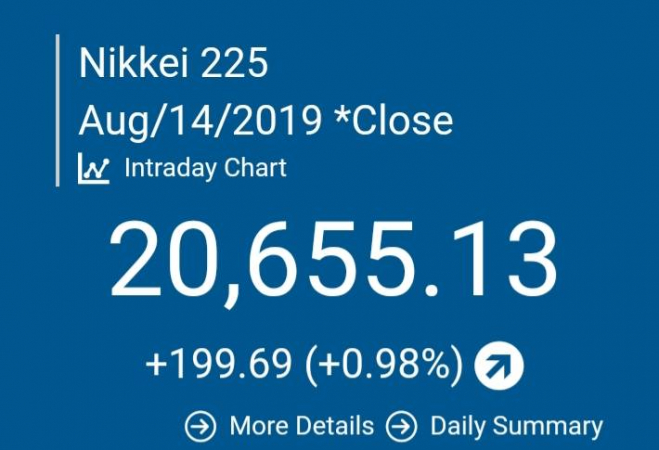
Japan’s Nikkei 225 index increased almost one per cent in early Wednesday trading and South Korea’s Kospi rose more than 1 per cent.

The United States Trade Representative (USTR) announced on Tuesday the next steps in the process of imposing an additional tariff of 10 per cent on approximately $300 billion of Chinese imports.

On May 17, USTR published a list of products imported from China that would potentially be subject to an additional 10-per-cent tariff. This new tariff will go into effect on September 1 as announced by President Trump on August 1. Certain products have now been removed from the tariff list based on health, safety, national security and other factors and will not face additional tariffs of 10 per cent, the USTR said in press release. Furthermore, as part of USTR’s public comment and hearing process, it was determined that the tariff should be delayed to December 15 for certain items including cell phones, laptop computers, video game consoles, certain toys, computer monitors, and certain items of footwear and clothing. USTR intends to conduct an exclusion process for products subject to the additional tariff.

The USTR will publish in the Federal Register as soon as possible additional details and lists of the tariff lines affected by this announcement, the statement added. Following the announcement, US investors welcomed news of the exemptions , pushing the tech-dominated Nasdaq up 1.9 per cent, led by a 4-per-cent rise in Apple shares .The Dow Jones and S&P 500 rose 1.4 per cent.

Top US diplomat discusses investment opportunities with Suriya

ศาสตร์เกษตรดินปุ๋ย : ขอบคุณแหล่งข้อมูล : หนังสือพิมพ์ The Nation

https://www.nationthailand.com/business/30374711

Top US diplomat discusses investment opportunities with Suriya

Aug 13. 2019
By The Nation

373 Viewed

Industry Minister Suriya Juangroongruangkit said the US Charge d’affaires Peter Haymond met him to discuss further investment and expansion of trade. Haymond also invited the Thai government to invest in ExxonMobil, which is interested in building a petroleum chemicals plant in the Eastern Economic Corridor (EEC). The petrol giant is eyeing 1,000-rai (160-hectare) of reclaimed land and plans to spend Bt200 billon on the project.

Suriya said he was pleased with ExxonMobil’s interest in expanding its investment in Thailand and will coordinate the discussion of details between the US company and the Industrial Estate Authority of Thailand (IEAT).

IEAT is currently studying the potential of the project and assessing its environmental impact.

“The process of land reclamation has improved greatly. Many developed countries like Japan and Singapore have done it without having any impact on the environment. If we study the project and plan carefully, it will be of great benefit for our country,” Suriya said.

Meanwhile, Haymond said many small entrepreneurs from the US were interested in investing in Thailand, especially in industries such as the manufacturing of parts of the interior of aircraft, such as kitchen gadgets and seats. If Thailand can produce such products, companies like Boeing will be interested and will support the business.

Asian stock markets drop as US-China row escalates

ศาสตร์เกษตรดินปุ๋ย : ขอบคุณแหล่งข้อมูล : หนังสือพิมพ์ The Nation

https://www.nationthailand.com/business/30374705

Asian stock markets drop as US-China row escalates

Aug 13. 2019
By Somluck Srimalee
The Nation

508 Viewed

Asian stock markets, including the Stock Exchange of Thailand (SET), dropped on Tuesday after the US-China trade war showed signs of escalating and the Hong Kong protests continued, brokerage firms said.

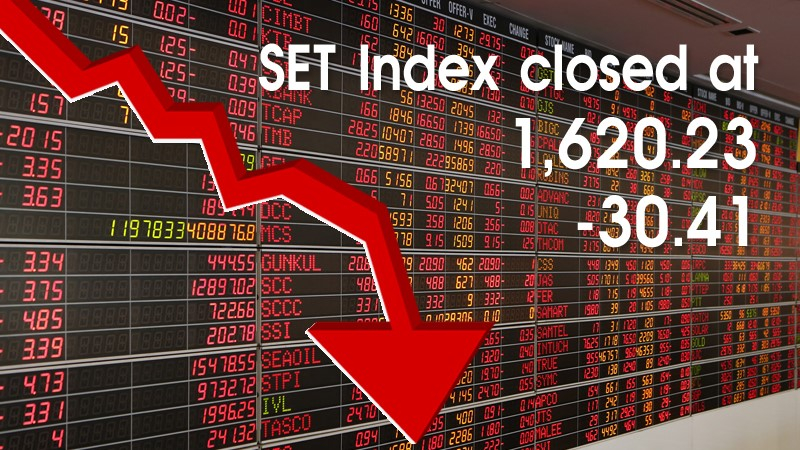
Meanwhile, listed companies in Thailand also announced financial results that were lower than estimated. SET index closed on Tuesday at 1,620.23, dropping by 30.41 points or 1.84 per cent from Friday with a trade value of Bt64.18 billion.

The Hong Kong Hang Seng closed at 25,281.31, recording a 543.42 drop or 2.1 per cent from Monday, over investor concern about the US-China trade war and protests.

Japan’s Nikki closed at 20,455.44, 229.38 points or 1.11 per cent lower compared to Monday.

The Singapore FTSE Straits Times Index closed at 3,146.73, 22.21 points or 0.7 per cent lower, while China’s Shanghai Index closed at 2,930.32, or 18.54 points or 0.63 per cent lower compared to Monday.

Siam Commercial Bank Investment Centre Concept said SET Index has continued to fluctuate because the ongoing US-China trade war is causing uncertainty, which is having a direct impact on regional currencies.

No loans for unsustainable plans, Veerathai urges

ศาสตร์เกษตรดินปุ๋ย : ขอบคุณแหล่งข้อมูล : หนังสือพิมพ์ The Nation

https://www.nationthailand.com/business/30374693

No loans for unsustainable plans, Veerathai urges

Aug 13. 2019
“Reducing ESG risks will improve the financial stability of commercial banks,” says Bank of Thailand governor Veerathai Santiprabhob.

“Reducing ESG risks will improve the financial stability of commercial banks,” says Bank of Thailand governor Veerathai Santiprabhob.
By PHUWIT LIMVIPHUWAT
THE NATION

506 Viewed

Bank of Thailand governor Veerathai Santiprabhob has urged all financial institutions to discontinue practices that might pose environmental, social and governance (ESG) risks.


Such risks directly impact the business prospects of banks as well as their clients, thus presenting a threat to the country’s economic stability, Veerathai said at Tuesday’s Bangkok Sustainable Banking Forum.

As an example, he said commercial banks should intensify their regulations covering loans to unsustainable projects that might harm the environment.

Climate change and natural disasters resulting from environmentally unsustainable projects can directly impact businesses, leading to loan-repayment risks, he warned.

Financial institutions that provide capital for unsustainable projects have a responsibility to actively reduce ESG risks, he said.

Veerathai commended Thai banks such as Siam Commercial Bank and Kasikorn Bank for promoting sustainable investments in Southeast Asia and being included in the Dow Jones Sustainability Indices.

The Stock Exchange of Thailand compiled its own “Thailand Sustainability Investment” list for 2018, which included the Bank of Ayudhya, Bangkok Bank and TMB Bank.

Veerathai urged financial institutions to continue focusing on reducing ESG risks by increasing internal standards for loans sought by unsustainable businesses.

Jeanne Stampe, head of Asia sustainable finance at the World Wide Fund for Nature, noted that the Thai Bankers Association (TBA) has been working with her organisation on standardising sustainable banking throughout the country.

The TBA planned later in the day to release its official sustainable banking guidelines for commercial banks.

No power over BoT by Somkid’s committee, says central bank governor

ศาสตร์เกษตรดินปุ๋ย : ขอบคุณแหล่งข้อมูล : หนังสือพิมพ์ The Nation

https://www.nationthailand.com/business/30374678

No power over BoT by Somkid’s committee, says central bank governor

Aug 13. 2019
The central bank’s Monetary Policy Committee will remain autonomous and continue to base its monetary policy decisions on the existing criteria, said Veerathai Santiprabhob, governor of the Bank of Thailand.

The central bank’s Monetary Policy Committee will remain autonomous and continue to base its monetary policy decisions on the existing criteria, said Veerathai Santiprabhob, governor of the Bank of Thailand.
By PHUWIT LIMVIPHUWAT
THE NATION

701 Viewed

Thailand’s central bank has raised its guard against future intervention in monetary policy by the deputy prime minister, Somkid Jatusripitak.

The Bank of Thailand (BoT) governor has guaranteed that the Fiscal and Monetary Committee to be appointed by Somkid “will not have any power” over the central bank’s monetary policies.

Somkid announced last week that he would soon appoint a committee to supervise the country’s financial stability. He was worried about a strong Baht hurting the economy.

Mainly created to maintain the Baht’s stability, the committee will be comprised of representatives from various financial and economic institutions such as the BoT, the Finance Ministry, the Securities and Exchange Commission (SEC) and the National Economic and Social Development Council (NESDC).

However, private sector representatives raised concerns after Somkid’s announcement, pointing to the need for the central bank’s neutrality and independence from interference, and noting that the committee’s duties seemed to overlap with the central bank’s role.

BoT governor Veerathai Santiprabhob brushed off these concerns early on Tuesday, stating that the Fiscal and Monetary Committee is only meant to play an advisory role and will not impact the central bank’s autonomy.

Veerathai was speaking today at the BoT’s annual “Bangkok Sustainable Banking Forum 2019”.

“The committee will be beneficial to the country, as it will allow different financial institutions in the country to work together to reduce income inequality and cope with global economic threats such as the on-going US-China trade war,” he said.

However, he claimed, the committee will not be able to dictate the central bank’s monetary policies and will only act as advisors to the different financial and economic institutions.

For instance, the central bank’s Monetary Policy Committee (MPC) will continue to base its policy interest rate decisions on the existing criteria, he continued.

The BoT recently cut the policy interest rate from 1.75 per cent to 1.50 per cent.

The key reasons for this decision included the negative impacts of the trade war on Thai exports, which has damaged the overall Thai economy, as well as the low level of inflation, the governor said.

Going forward, he said, the central bank will increase its focus on the country’s financial stability, especially given that interest rates have been lowered.

Thai traders offered Hang Seng commodity for first time

ศาสตร์เกษตรดินปุ๋ย : ขอบคุณแหล่งข้อมูล : หนังสือพิมพ์ The Nation

https://www.nationthailand.com/business/30374674

Thai traders offered Hang Seng commodity for first time

Aug 13. 2019
SET President Pakorn Peetathawatchai/Photo by SET

SET President Pakorn Peetathawatchai/Photo by SET
By The Nation

267 Viewed

The Stock Exchange of Thailand (SET) will on Wednesday (August 14) begin listing the first Hang Seng Index (HSI) derivative warrants (DW) issued by Macquarie Securities (Thailand) Ltd.

The first eight series of the international index warrants start trading that day.

SET president Pakorn Peetathawatchai called the listing a milestone in the exchange’s product development, linking to overseas and broadening investors’ trading opportunities in a foreign stock market.

The DW will be issued over HSI, which tracks the performance of the 50 largest market cap and most liquid stocks listed on the Stock Exchange of Hong Kong.

It is expected that more DWs linked with foreign underlying assets will be issued in the future.

DW has gained popularity among investors in the last three years.

During seven months of 2019, the average daily trading value surged 38 per cent year-on-year ato Bt5.4 billion (US$174 million), representing around 11 per cent of total market trading value.

In addition, there was a 39 per cent year-on-year rise in number of new series, to 2,197.

500 exhibitors expected at Asia Lifestyle Expo

ศาสตร์เกษตรดินปุ๋ย : ขอบคุณแหล่งข้อมูล : หนังสือพิมพ์ The Nation

https://www.nationthailand.com/business/30374673

500 exhibitors expected at Asia Lifestyle Expo

Aug 13. 2019
By THE NATION

225 Viewed

NCC Exhibition Organizer (NEO) and Hong Kong’s Comasia are expecting more than 500 exhibitors to unveil new products at Asia Lifestyle Expo 2019 at Bitec in Bang Na from August 21 to 23.

Most will be from Thailand, Taiwan, India and Hong Kong and the Chinese mainland, with buyers expected from around Asia, the United States, Europe, the Middle East, Africa and Oceania.

“Asia Lifestyle Expo is a new business platform for lifestyle products in the region,” said NEO project manager Panvisut Buranakarn.

For the first time in Thailand, Solmazer from Turkey will exhibit kitchenware, tableware and glass canisters. Kim Jim, a 90-year-old Japanese company, will show its popular “Tepra” printers and introduce “Hitotoki” stationery and label printers.

Gallucci will have its fashionable Italian watches inspired by the renowned Italian celestial scientist of the same name.

“The Thai Retailers Association is very pleased to support the launch of this new show,” said the association’s president, Worawoot Ounjai. “For buyers from the online and offline Southeast Asian retail sector, the expo will be an ideal platform to source lifestyle products from all over Asia right in Bangkok.”

Jirabool Vittayasing, president of the Thai Gifts Premiums & Decorative Association and chairman of the Asean Gifts Federation, predicted that the exposition “will become an important event helping to grow the sector in Thailand”.

There will be free seminars conducted by renowned speakers on topics including “Miracle Marketing: Invest a Small Amount Earning Millions”, “Partnership with Giant: China Opportunities”, “Online Marketing Genius” and “Lifestyle Trend 2020: Sourcing the Right Product”.

Visitors and exhibitors who are interested in networking can also participate in business-matching activities.