BOT parks rate cut in favour of capital inflow controls

ศาสตร์เกษตรดินปุ๋ย : ขอบคุณแหล่งข้อมูล : หนังสือพิมพ์ The Nation

https://www.nationthailand.com/business/30373126

BOT parks rate cut in favour of capital inflow controls

Jul 17. 2019
Presenting the Bank of Thailand’s views at a conference in Bangkok on Wednesday are, from left, deputy governor Mathee Supapongse and governor Veerathai Santiprabhob, along with Titanun Mallikamas, assistant governor and secretary of the BOT’s Monetary Policy Group, and Don Nakornthab, senior director of the economic and policy department.--Photo by The Nation

Presenting the Bank of Thailand’s views at a conference in Bangkok on Wednesday are, from left, deputy governor Mathee Supapongse and governor Veerathai Santiprabhob, along with Titanun Mallikamas, assistant governor and secretary of the BOT’s Monetary Policy Group, and Don Nakornthab, senior director of the economic and policy department.–Photo by The Nation
By PHUWIT LIMVIPHUWAT
THE NATION

625 Viewed

The Bank of Thailand (BOT) will keep its policy interest rate at 1.75 per cent for the rest of his year and focus on implementing measures such as tightening controls on short-term capital inflows to ease the appreciation of the baht.

Tightened controls on hot money inflows have been effective to some extent. However, the implementation of this measure is also intended to have a long-term impact, notably at least five days after the measure’s announcement leading up to July 22 when it will take effect, and for a period to follow.

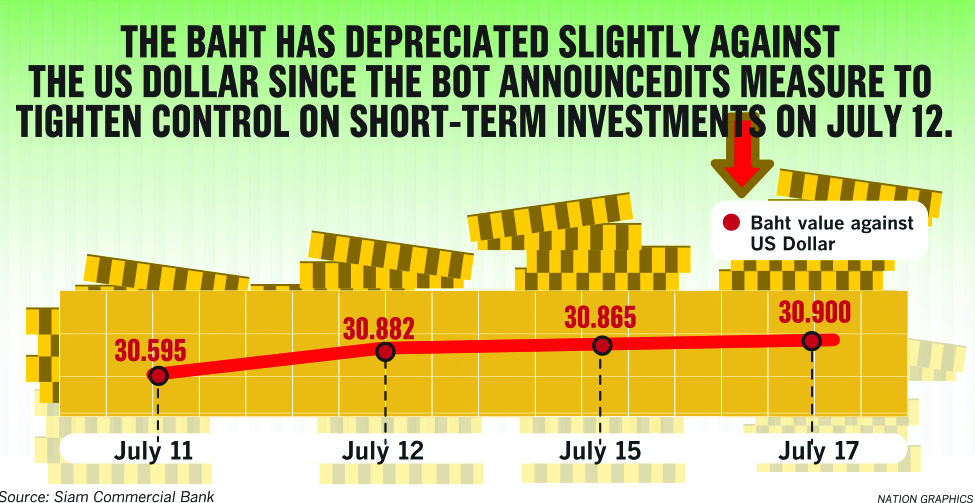
On July 12, the central bank has announced the tightening in controls on short-term speculative capital inflows into Thailand’s economy with a reduction on the limits for outstanding balances of non-resident baht accounts (NRBA) and non-resident baht accounts for securities (NRBS) from Bt300 million to Bt200 million per non-resident.

“The baht has weakened slightly after our announcement to tighten short-term capital inflows,” said BOT governor Veerathai Santiprabhob. “We expect the measure to have more impact on the baht’s strength five days after our announcement leading up to July 22, when the measure will take effect.”

Veerathai was speaking at the Analyst Meeting conference on Wednesday.
 

“Thus far, the level of foreign investment in Thailand’s stock market has not been impacted much by the BOT measures,” said Sukit Udomsirikul, managing director and head of research for SCB Securities, in a separate interview.

This is because the measures are meant to target short-term exchange rate speculation, he said. Therefore, long-term investments in Thai stocks from foreign investors have continued to rise over the past month.

Since January, the Stock Exchange of Thailand (SET) has seen net foreign investment inflows of Bt58 billion. Despite the measure being announced on July 12, when the market reopened on July 12 – after the weekend – it saw net foreign investment inflows of Bt1.27 billion, according to the SET.

The BOT measure is not meant to stop foreign inflows into the country or to decrease the value of the baht, but to cushion the impact of the baht’s appreciation by discouraging short-term exchange rate speculation in Thailand’s market, Sukit said.

Another measure to soften the baht’s appreciation is for the central bank to lower the policy interest rate he added.

The economic outlook of the country, inflation level and financial stability are three factors the Monetary Policy Committee (MPC) analyses when considering whether to lower interest rates. Currently, concerns over financial stability take precedence, the BOT stated.

“The economic slowdown is occurring mostly as a result of external factors such as the trade tensions and the slowdown of the global economy, which have been dampening Thai exports,” said Veerathai. “Furthermore the delay in the government’s formation and the new budget will lead to a delay in public investment towards the end of the year.”

However, the governor expects economic growth to perform better against the low base of last year, especially when the incoming government is likely to implement policies to stimulate the economy before the year’s end.

Titanun Mallikamas, the central bank’s assistant governor and secretary of the Monetary Policy Group, said: “We expect inflation to be at around 1 per cent in 2019, which is low but still within our set bracket. Hence, our worry over Thailand’s financial stability is the key factor for our decision to hold the policy rate at 1.75 per cent.”

He cited household debt, which has increased by 6.3 per cent in the past three years, as a key risk to Thailand’s financial stability.

Another reason deterring the central bank from lowering the policy rate is that it has remained low throughout 2018 to the present.

“The reason why Thailand is more unlikely to relax its monetary policy when compared to other countries in the region is that our interest rate level has remained consistently low throughout 2018,” said Veerathai.

In contrast, he said, other countries in the region have increased their interest rates in 2018 as they have seen capital outflows from their economies, and have started to lower their interest rates back down in 2019.

However, a key concern raised by analysts at the conference was that the BoT’s move to maintain its policy rate against the tightening trend of other central banks would cause even more capital to flow into the country and cause the baht to become even stronger.

The BOT officials addressed this concern by stating that as Thailand’s interest rate is already among the lowest in the region, slightly decreasing the policy rate will not significantly impact the strength of the baht.

“The key reason why the baht has strengthened is the strong current account surplus of Thailand, which reached US$13.49 billion in the first five months of 2019. Hence, the BOT aims to implement other measures to create a financial bumper, which slows down the pace of the baht’s appreciation,” Veerathai said.
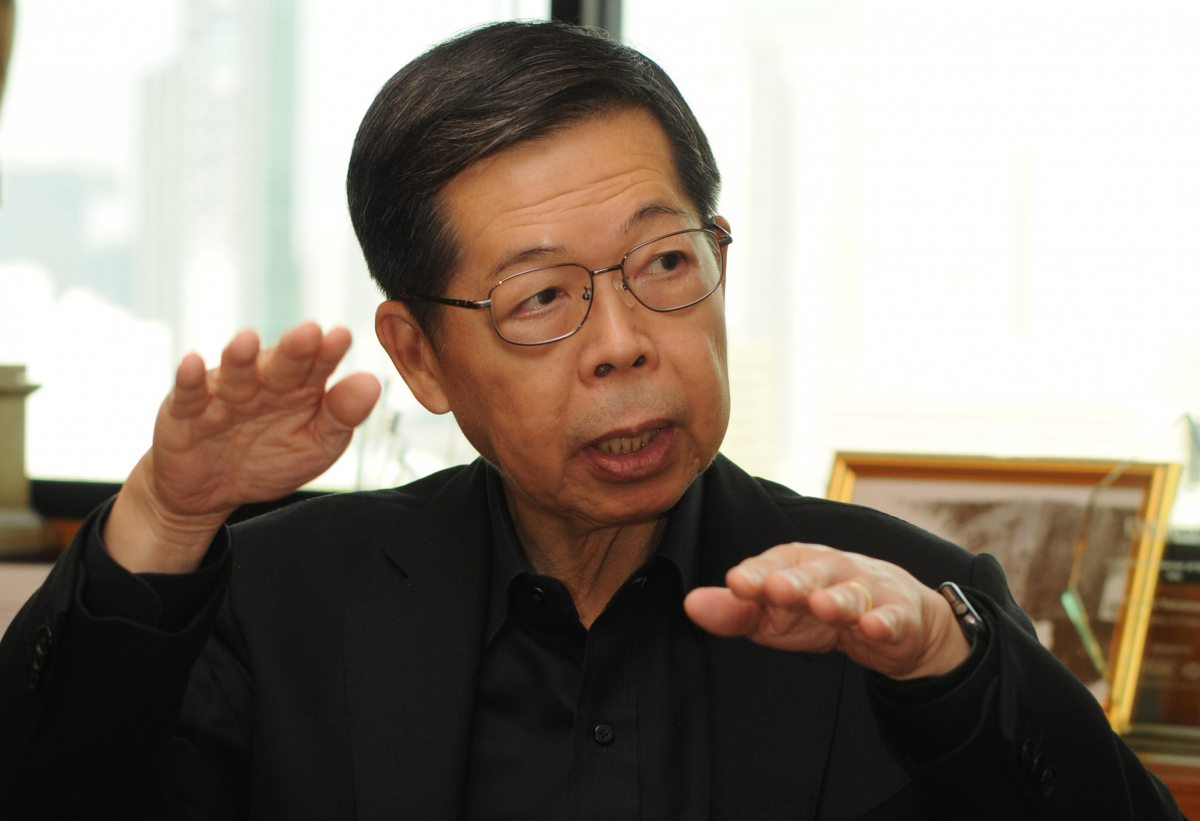
 

Prasarn Trairatvorakul

Prasarn Trairatvorakul

Prasarn Trairatvorakul, chairman of the Equitable Education Fund and former BOT governor comments that the key factors behind the strengthening of the baht are the weakening US dollar and euro as well as domestic issues such as Thailand’s current account surplus and the high level of foreign currency reserves.

The Bank of Thailand will have to adopt appropriate measures to cope with the situation without exhausting its resources for future financial risks, he said, adding that given the low policy interest rate, the country does not have much resources on this front.

He also predicted that in the short-term, the Thai economy will see slower growth, largely due to dampening exports. The new government should issue fiscal policies to stimulate the economy in the second half, he said.

However, the government will also have to balance its resources for long-term economic problems and implement more sustainable economic policies, targeting the productivity of the manufacturing and agricultural sectors.

ERC to discuss new policies on energy stability with minister

ศาสตร์เกษตรดินปุ๋ย : ขอบคุณแหล่งข้อมูล : หนังสือพิมพ์ The Nation

https://www.nationthailand.com/business/30373123

ERC to discuss new policies on energy stability with minister

Jul 17. 2019
Sontirat

Sontirat
By The Nation

216 Viewed

The Energy Regulatory Committee (ERC) is planning to meet new Energy Minister Sontirat Sontijirawong to discuss natural gas-related policies before presenting them to the National Energy Policy Council (NEPC).

ERC president Samerjai Suksumek said both existing and new energy-related policies will be discussed, as will the pressing issue of the Electricity Generating Authority of Thailand (Egat)’s import of 0.8 million to 1.5 million tonnes of liquid natural gas (LNG) per year. ERC will be coordinating with Egat and PTT Plc to ensure the proper usage of LNG and will mitigate any impacts on the country’s energy cost.

Another urgent topic to be put on the meeting’s agenda is the adjustment of the natural gas pipeline fees after the new zoning law allows third-party access to PTT’s reserves and pipelines. The pipeline fee should be divided into two: demand charge which will be revised every three to five years and the commodity charge for zones one to five, which have to be revised on a yearly basis.

“ERC is reviewing NEPC’s policies especially those related to LNG and pipeline fee to address the impact on Thailand’s energy situation. We will compile suitable suggestions to discuss with the new minister and later present the revised action plan to the NEPC for approval,” Samerjai said.

The ERC was established to regulate the operation of Thailand’s energy industry, prevent monopolies and promote fair competition between related parties, including the monitoring of power plants owned by Egat and the private sector, to ensure Thailand’s energy stability.

Price controls announced on basic goods, commodities

ศาสตร์เกษตรดินปุ๋ย : ขอบคุณแหล่งข้อมูล : หนังสือพิมพ์ The Nation

https://www.nationthailand.com/business/30373122

Price controls announced on basic goods, commodities

Jul 17. 2019
226 Viewed

The Commerce Ministry has acted to control the prices of basic goods and commodities in a move aimed at ensuring the stability of the domestic market while improving the monitoring of imports.

A directive was issued by the ministry’s central committee on the prices of goods and services to achieve these outcomes. It is also intended to protect domestic manufacturers and traders from the competition posed by imports as well as curb the smuggling of goods.

The department of Internal Trade’s director-general, Wichai Photechanakij, on Wednesday announced a regular list of goods that are subject to government controls, with price tags mandatorily attached to them.

The proposed price increases for the goods on the list need to be notified to provincial Commerce Ministry offices 15 days in advance, for permission to be granted, said Wichai, citing details in the directive.

The directive also stipulates how certain goods can be transported. For example, onions and garlics cannot be moved to 52 provinces without permission. A similar control is now in place governing the transport of palm oil in 31 provinces and animal corn feed in seven provinces.

Three sectors picked for SET investors in second half

ศาสตร์เกษตรดินปุ๋ย : ขอบคุณแหล่งข้อมูล : หนังสือพิมพ์ The Nation

https://www.nationthailand.com/business/30373114

Three sectors picked for SET investors in second half

Jul 17. 2019
Investors are advised to turn their attention to ‘domestic play’ and invest in stocks that will benefit from the incoming government’s economic policies, said Sukit Udomsirikul, managing director and head of research for SCB Securities.

Investors are advised to turn their attention to ‘domestic play’ and invest in stocks that will benefit from the incoming government’s economic policies, said Sukit Udomsirikul, managing director and head of research for SCB Securities.
By PHUWIT LIMVIPHUWAT
THE NATION

255 Viewed

Investors should focus on industrial estate, infrastructure and retail stocks as these sectors would benefit from the incoming government’s economic policies, to be announced by the end of next week, said Sukit Udomsirikul, managing director and head of research for SCB Securities (SCBS), the securities and capital market arm of Siam Commercial Bank.

The Stock Exchange of Thailand (SET) index is expected to reach 1,750 points by the end of the year, mainly driven by increasing foreign investment in the Thai bourse and formation of the new government, Sukit said at a press conference titled “SCB Wealth Holistic Experts” today (July17).

The SET index rose to 1,731 points at the close on Tuesday.

The return to civilian rules will enhance Thailand’s attractiveness as an investment destination for foreign investors. Furthermore, the new government is expected to implement economic stimulus measures to boost growth in the second half , creating investment opportunities in some sectors, he said.

Further public investment in infrastructure and continued spending in projects in the Eastern Economic Corridor are expected to be the priorities of the new administration, Sukit stated.

It would be a good opportunity for buying stocks in the industrial estate and infrastructure sectors, he added.

Currently, the market cap for industrial estate stocks stands at Bt140 billion, a mere 0.8 per cent of the total market value, indicating the high growth potential of the sector in the second half, he said.

Furthermore, the incoming government is likely to implement short-term measures to stimulate domestic spending either through the welfare card policy or a rise in the minimum wage, Sukit said.

The increase in domestic spending will benefit the retail sectors, making investments in retail stocks a viable choice, he said.

No immediate increase in daily wage, workers told

ศาสตร์เกษตรดินปุ๋ย : ขอบคุณแหล่งข้อมูล : หนังสือพิมพ์ The Nation

https://www.nationthailand.com/business/30373099

No immediate increase in daily wage, workers told

Jul 17. 2019
Nation Photo by Kunlaphun Siripimamporn

Nation Photo by Kunlaphun Siripimamporn
By THE NATION

502 Viewed

Labour Minister Chatu Mongol Sonakul said on Wednesday that raising the minimum daily labour wage to Bt400 as promised by some coalition parties could not be implemented immediately but would first need to be considered by the tripartite national wage committee.

He added that the wage hike would have an impact on many sectors and affect both employers and the macroeconomy.

He personally supports the wage hike for all workers but feels it should be done in increments.

Various political parties proposed minimum wage hikes during the election campaign, among them the pro-junta Phalang Pracharat Party, which promised to bump up the daily wage to Bt400-Bt425.

In March the Federation of Thai Industry (FTI) urged the incoming government to work more closely with the private sector in crafting key economic policies, stating that further hikes in the minimum wage – a policy proposed by several political parties – would hurt the low-income sector and be harmful to the economy.

Virtual banks making inroads in Asia-Pacific

ศาสตร์เกษตรดินปุ๋ย : ขอบคุณแหล่งข้อมูล : หนังสือพิมพ์ The Nation

https://www.nationthailand.com/business/30373079

Virtual banks making inroads in Asia-Pacific

Jul 17. 2019
Photo by: Winnews TV

Photo by: Winnews TV
By The Nation

78 Viewed

Newly licensed indigenous digital banks, global digital-only banks, and digitized traditional banks are all vying for their share across the Asia-Pacific region’s lucrative markets.

That’s according to “The Future of Banking: Virtual Banks Chase The Dream In Asia-Pacific,” a report published on Wednesday by S&P Global Ratings.

“To date, developments in virtual banking have not caused any noteworthy changes to our outlooks for banking sector country risks across the region,” said Gavin Gunning, a credit analyst at S&P Global Ratings. “Our current base case is that virtual banking may not lead to rating or outlook changes for Asia-Pacific banks over the next two years. Over a longer time horizon, however, as virtual banking strategies take hold and further disrupt the traditional bank sector, the potential for ratings differentiation is greater.”

New indigenous entrants in many Asia-Pacific countries including in China, Hong Kong, Taiwan, Australia, Singapore, Japan, South Korea, and India have either already begun operations or are expected to become functional in the next year or so. And with more bank regulators across the region developing the infrastructure to manage and supervise virtual banks, it is expected this trend will continue. In addition, ex-regional players are expanding in Asia-Pacific, such as London-based Revolut Ltd., which is now operating in the region, and traditional banks too are accelerating electronic and digital banking strategies in the race for digital supremacy and a competitive edge.

Two key factors are driving the growth of digital banking in Asia-Pacific:

-Serving the underbanked: Primarily a factor in emerging markets, virtual banking facilitates the introduction of simple banking products through accessible means other than branches.

-Serving the overbanked: Primarily a driver in developed markets, virtual banking mainly seeks to provide customers with greater banking convenience at a lower cost.

Stimulus measures primed as economy falters

ศาสตร์เกษตรดินปุ๋ย : ขอบคุณแหล่งข้อมูล : หนังสือพิมพ์ The Nation

https://www.nationthailand.com/business/30373050

Stimulus measures primed as economy falters

Jul 17. 2019
By THE NATION

842 Viewed

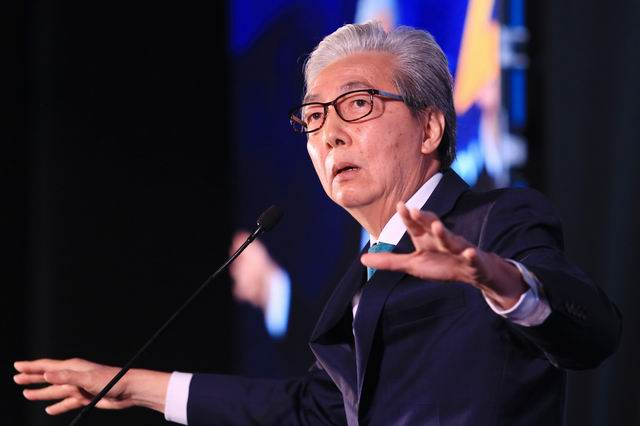
The Fiscal Policy Office has completed economic stimulus measures and will submit them to the incoming Cabinet as soon as possible, says incoming Deputy Prime Minister Somkid Jatusripitak.

The two measures consist of a fiscal package to be implemented by the Finance Ministry and a financial aid package including loans, to be administered by the Government Savings Bank, the Bank for Agriculture and Agricultural Cooperatives and the Small and Medium Enterprise Development Bank of Thailand.

Somkid said that economic growth in the first quarter had fallen to 2.8 per cent, as reported by the National Economic and Social Development Council. He forecast second-quarter growth of 2.8-2.9 per cent.

The new government would continue to push forward the key economic policies of the previous administration, added Somkid, especially measures to woo foreign investment. The priority is to boost state revenue, for which new promising sources would be sought.

He dismissed rumours that the government was running short of funds and had plans to raise value-added tax by one per cent to 8 per cent. He said that raising VAT at a time when the economy was slowing would impact people.

In a related matter, incoming Agriculture and Cooperatives Minister Chalermchai Sri-on has vowed action to tackle the drought gripping parts of the country. He and three deputy ministers will take office on Thursday.

Transport Ministry permanent secretary Chaiwat Thongkamkoonm, meanwhile, said he was preparing details of projects awaiting new minister Saksayam Chidchob’s approval. Most are rail projects aimed at cutting the country’s logistics costs.

He will also submit a list of projects awaiting approval from the new Cabinet, including Thai Airways International’s plan to procure new aircraft.

Law on import duty clarified after backlash

ศาสตร์เกษตรดินปุ๋ย : ขอบคุณแหล่งข้อมูล : หนังสือพิมพ์ The Nation

https://www.nationthailand.com/business/30373067

Law on import duty clarified after backlash

Jul 16. 2019
By THE NATION

1,171 Viewed

The Customs Department defended itself on Tuesday in the wake of a social media storm over travellers’ claims they had been unfairly charged import duty at Thai airports.

Many people complained about being charged for items they were bringing into the country.

There was another angry reaction after a news report suggested that scanners would be installed at Suvarnabhumi Airport’s luggage belts by the end of the year to screen for goods being brought in for commercial purposes.

One woman said she had been forced to pay Bt6,000 tax for soap worth just Bt1,500.

The Customs department said on Tuesday that air passengers could bring in items for their own personal use and worth no more than Bt20,000. If, however, the items were either worth more than Bt20,000 or being brought in for commercial purposes, they would be subject to import tariffs.

Personal use also means just one of the items in question, so if a passenger brings in several of the same item they would be subject to tax, even if they are intended for friends or family, said the Department.

Handbags are subject to 20 per cent tariffs, watches 5 per cent, belts 30 per cent and cosmetics products 30 per cent.

They are also subject to value added tax of 7 per cent.

Thai travellers often bring home brand-name products, such as handbags, watches and cosmetics for their friends and relatives, largely due to lower prices overseas.

If anyone thinks customs officials have treated them unfairly, they can complain by phoning 1332 or messaging on the Line application, line ID: @customshearing.

Or they could complain to anti-corruption commission and the State Audit Office, according to the statement issued by the department on Tuesday.

Stronger baht not keeping tourists away

ศาสตร์เกษตรดินปุ๋ย : ขอบคุณแหล่งข้อมูล : หนังสือพิมพ์ The Nation

https://www.nationthailand.com/business/30373053

Stronger baht not keeping tourists away

Jul 16. 2019
Weerasak Kowsurat, outgoing Tourism and Sports Minister

Weerasak Kowsurat, outgoing Tourism and Sports Minister
By THE NATION

1,421 Viewed

Despite the appreciation of the baht, Thailand has attracted as many as 21.08 million tourists in the first half of this year, marking a 0.81 per cent growth year on year, outgoing Tourism and Sports Minister Weerasak Kowsurat said.

He added that the number of arrivals was on a steady rise for the first four months, but dropped by 1.03 per cent in May before picking up again in June and July.

During the same period last year, Thailand had about 20.9 million travellers.

“The Thai tourism industry has a foundation that is solid enough to cater to many uncontrolled risks, such as a strong baht, which has made things more expensive. However, we have also learned that the average income earned from foreign tourists is still higher than the number of overall travellers entering the country,” Weerasak said.

He said this does not include the revenue generated from the government’s “Thais Travel Thailand” campaign launched to promote tourism in secondary provinces.

“We should expand the structure of the Thailand tourism market, covering more markets and destinations, as well as those who benefit from the sector,” Weerasak added.

He went on to say that the number of arrivals from Asean countries matched those from China, while the number of arrivals from South Asia, mainly India and Nepal, also rose significantly. Arrivals from Taiwan, Hong Kong and Japan also showed good growth, he said.

“We should launch new campaigns to attract travellers from different provinces of China as well as from Eastern Europe and Central Asia,” Weerasak said.

He also said that promotions should be offered for niche travellers, such as family groups as well as people who love sports and adventure, and those who are health conscious.

Ambassador upbeat over bilateral ties with Thailand

ศาสตร์เกษตรดินปุ๋ย : ขอบคุณแหล่งข้อมูล : หนังสือพิมพ์ The Nation

https://www.nationthailand.com/business/30373025

Ambassador upbeat over bilateral ties with Thailand

Jul 15. 2019
By PHUWIT LIMVIPHUWAT
THE NATION

985 Viewed

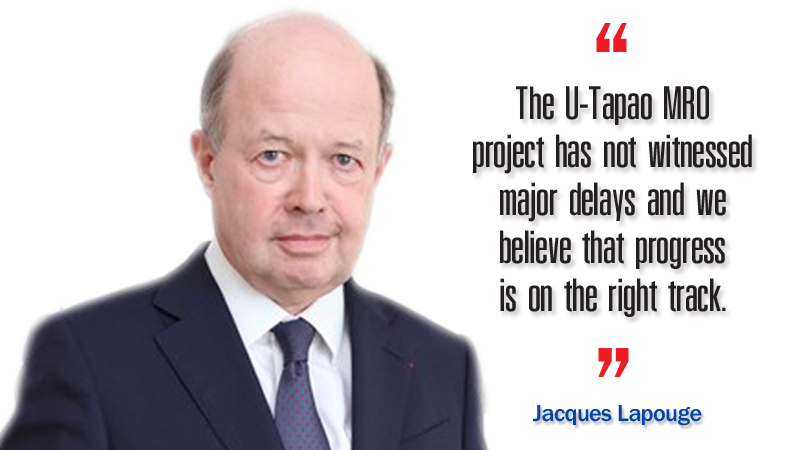
French Ambassador to Thailand Jacques Lapouge says his country and Thailand will continue to strengthen their business ties through the Airbus-Thai Airways (THAI) U-Tapao Maintenance, Repair and Overhaul (MRO) hub and the re-negotiation of the Thai-EU free trade agreement (FTA).

“The U-Tapao MRO project has not witnessed major delays and we believe that progress is on the right track,” he said on Monday.

The French embassy, he claimed, would continue to closely follow the development of the project as it involved Airbus, one of his country’s largest companies.

In June 2018, Airbus and THAI signed a joint venture to cooperate in developing the multi-billion baht MRO hub in U-Tapao with the goal of making it the centre of aircraft maintenance in the Asean region.

Last year, Prime Minister Prayuth Chan-o-cha visited France to attend the joint venture’s signing ceremony at Airbus’s headquarters.

The MRO project is a major component of Thailand’s Eastern Economic Corridor (EEC) mega-investment project, which the government aims to use to promote aviation and other industries.

Dubbed the largest MRO hub of its kind for the Asia-Pacific region, the U-Tapao facility will have an annual capacity to service up to 4,800 wide-bodied aircraft over the next two decades.

Asked about Airbus’s legal and management concerns about the MRO project, Lapouge said Airbus and THAI were already compiling a committee comprising officials from both parties to explore the issues.

Another regional cooperation involving the two countries is the development of the Thai-EU FTA.

In the past year, Thai trade officials have been trying to negotiate with the EU after talks for an FTA were halted back following the 2014 military coup.

“France fully supports the renegotiation of the Thai-EU FTA as we see strategic economic benefits from both sides,” the Ambassador said.

France, in particular, has faced high levels of tariffs from Thailand on such exports as wine, spirits, cosmetics and luxury products.

“These sectors stand to benefit from lowered tariffs from the potential Thai-EU FTA,” Lapouge claimed, pointing out that Thailand and the EU would be involved in major trade negotiations in 2019.

Thailand is currently chair of Asean and is heading the negotiation of the Regional Comprehensive Economic Partnership (RCEP), a 16-country multilateral trade pack which has been stuck in negotiations for the past seven years.

For its part, the EU will be busy with the Brexit negotiations towards the end of the year.

“Hence, the issue of whether Thailand and the EU can resume official negotiations about an FTA by the end of this year this year may be [down to] a question of workload,” he said.