New Covid-19 wave predicted as fresh, more resistant Omicron subvariants rear up
MONDAY, SEPTEMBER 26, 2022
THE NATION
People are being urged to keep an eye out for new Omicron subvariants BA.2.75.2 and BQ.1 because they are more resistant to immunity built from previous infections or vaccines.
In a Facebook post on Monday, Chulalongkorn University’s Faculty of Medicine lecturer Thira Woratanarat said several US medical experts have warned about a new Covid-19 wave from late October.
US experts have been campaigning for people to strictly adhere to Covid-19 prevention measures, especially getting booster jabs and wearing face masks in crowded places, he added.
“The outbreak is expected to peak in December,” he said, adding that people in Thailand should take care because a new Covid-19 wave emerges here six to 10 weeks after it hits other countries.
He expects a new Covid-19 wave to hit Thailand in the middle of December, adding that people’s immunity against Covid-19 will drop sharply at that time.
“Observing the handwashing, facemask wearing principles can reduce the risk of infection,” he said.
Over the past 24 hours, 319 Covid-19 patients have been admitted to hospital, the death toll has risen by eight and 1,145 patients have fully recovered, the Public Health Ministry reported on Monday.
Since January 1, the number of cumulative infections and deaths in the country stands at 2,455,236 and 11,028, respectively.
Bangkok gets its first hospital offering ‘specialised’ treatment at affordable prices
SUNDAY, SEPTEMBER 25, 2022
THE NATION
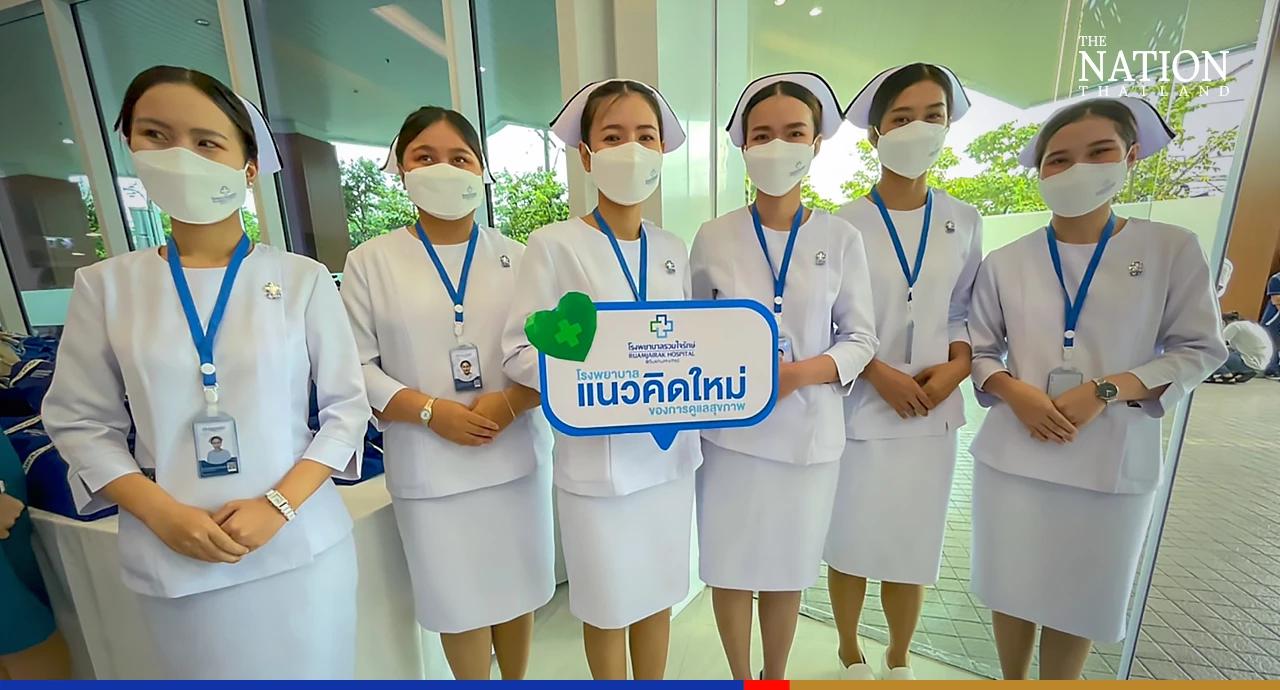
Ruamjairak Hospital @Sukhumvit 62, Bangkok’s first hospital offering “premium medical treatment at reasonable prices”, officially opened its doors on Sunday.
Director Soontorn Sritha said the 12-storey facility in Phra Khanong district can accommodate 144 patients and has parking space for 200 cars.
He added that the main feature of the 3-billion-baht hospital is “personalised” treatment from specialists.
“For instance, if a patient has a problem with their wrist bone, they will get to see a doctor who specialises in wrist bones,” he said.
Also, he said, physicians will treat their patients in cooperation with other experts to ensure there is no reason for unnecessary medical examinations, which will cut down unnecessary costs.
He added that modern and standardised medical equipment is available at the hospital, which also relies on artificial intelligence to help doctors treat their patients effectively.
“All patient data will be stored digitally to reduce the use of papers and prevent human errors,” he said, adding that the hospital is open 24 hours a day.
Nobel laureate Muhammad Yunus on Bangkok mission for latest social project
MONDAY, SEPTEMBER 19, 2022
Stephanie Adair
Nobel laureate Muhammad Yunus, known as the father of microfinance, landed in Thailand last week on a fact-finding mission for his latest social project.
Prof Yunus, the founder of Grameen Bank, visited Thonburi Bamrungmuang Hospital on Friday to learn about its ground-breaking efforts to extend quality medical treatment to people at all social levels.
Speaking on stage, Yunus said he would use the lessons he learned to set up hospitals in his home country of Bangladesh. The new hospitals would deploy high-tech innovations to make quality medical care affordable for all Bangladeshi citizens while also reducing waiting times, he added.
His main idea is to save bed space by treating and discharging patients quickly, turning hospitals into social businesses that are self-reliant and profitable.
The health service in Bangladesh suffers from a chronic shortage of medics, with only about 3.06 doctors per 10,000 people – three times fewer than Thailand.
Bangladesh is also short of nurses, with only one nurse for every three doctors, Yunus explained, adding that he had set up a nursing college to boost that figure.
He said it was also difficult to get medical care beyond the capital of Dhaka, as doctors weren’t keen to set up their practices outside of big cities.
The Covid-19 pandemic piled further pressure on Bangladesh’s meagre healthcare resources.
Prof Yunus remarked that pharmaceutical companies should not own the copyrights to Covid-19 vaccines as this deprived poorer countries of protection against the virus.
A handful of companies had made billions of dollars in profit from the vaccines, he said
When they first came out, “10 per cent of the richest countries in the world bought most of the vaccines, leaving out poorer countries. This method should be abandoned,” Yunus said. “Everyone should be able to produce a Covid-19 vaccine and everyone should have access to the Covid-19 vaccine.’’
The man famous for lifting millions out of poverty with his microloans projects offered one last message to his Bangkok audience.
“Making money is happiness but making others happy is super-happiness,” he said.
Covid-19 gradually becoming endemic in Thailand, says virologist
MONDAY, SEPTEMBER 19, 2022
THE NATION
Thailand’s Covid-19 situation is slowly improving because most people have developed an immunity against the virus either through vaccines or infection, a top virologist said on Monday.
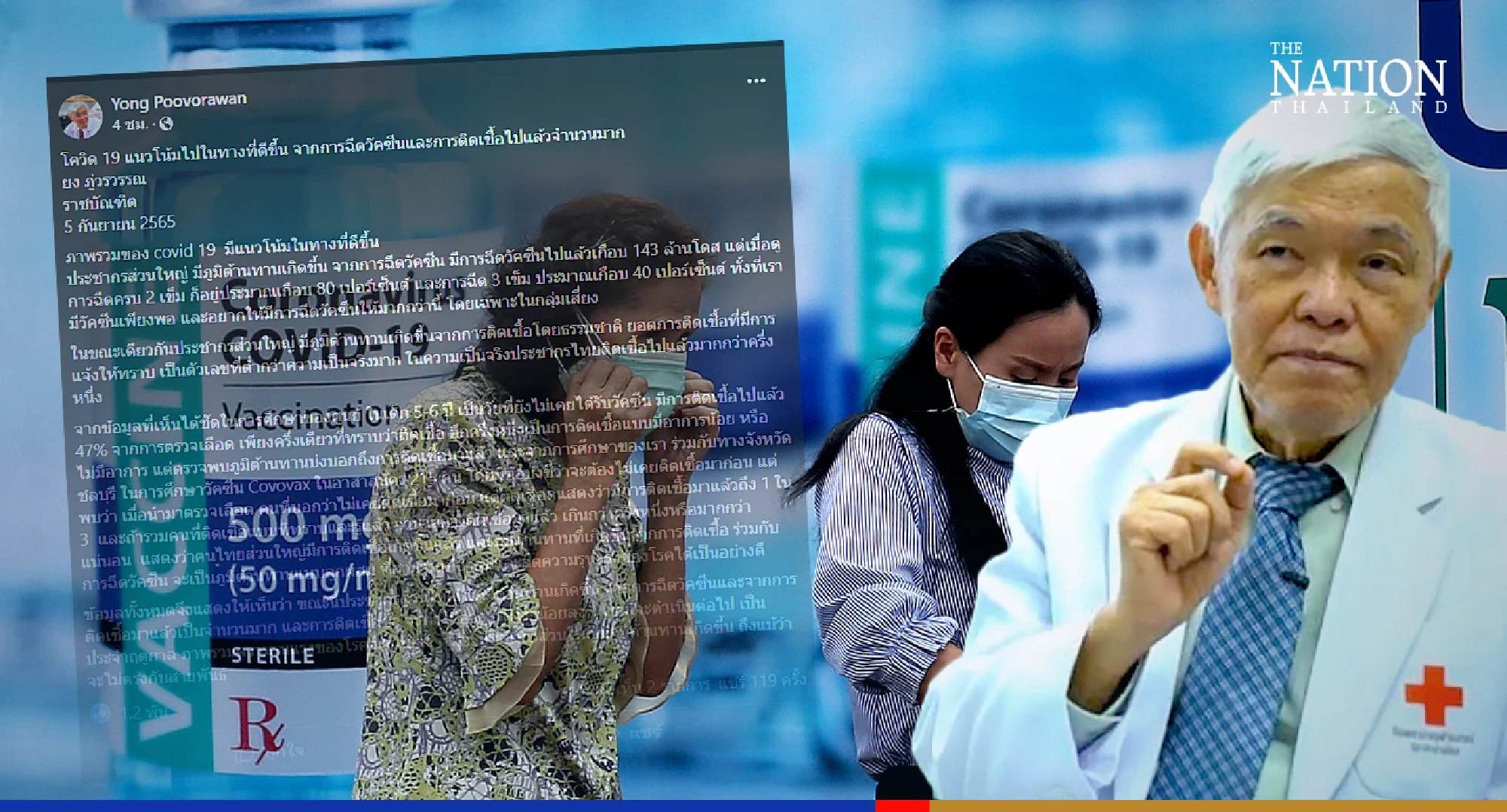
Dr Yong Poovorawan pointed out that 80 per cent of the population has received their second jab, while 40 per cent their third jab.
Citing data released by Chulalongkorn University’s Centre of Excellence in Clinical Virology, Yong said 70 per cent of the population has already contracted Covid-19 at least once.
“This proves that most of the population has developed an immunity against the virus,” said Yong, who also heads the Centre of Excellence.
However, he said, to improve their chance of developing severe symptoms, vulnerable people like the elderly, pregnant women and those with chronic diseases should get at least four jabs. He also advised healthy people below the age of 60 to also get at least three jabs.
Yong said he expects Covid-19 cases to continue dropping until the end of this year but start spreading again during the cool season from January to March.
However, he said he does not expect too many infections between June and September next year because the disease will have become endemic by then.
“We believe the Covid-19 situation will improve further and tourism will pick up,” he said, adding that more schools will start opening up.
On Monday, Thailand recorded 242 new Covid-19 cases and 11 deaths. The country’s total caseload from Covid-19 stands at 4.67 million – 4.63 million of whom have recovered, 8,349 are still in hospitals and 32,640 have died.
As of Sunday, the total number of Covid vaccines administered nationwide came in at 143.15 million. Of them, 57.30 million were first jabs, 53.80 million second jabs and 32.04 million third jabs.
The research was published in iScience, a sub-journal of Cell. It suggests that parents and teachers should pay close attention to social interaction among children, and provide extra guidance and encouragement to timid or submissive children.
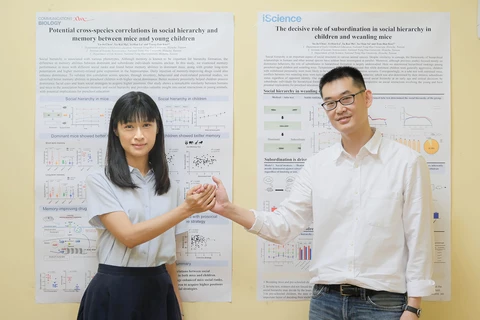
The key to success is not giving up! Cross-species research conducted by an interdisciplinary research team at National Tsing Hua University (NTHU) in Taiwan led by professors Yu-Ju Chou from the Department of Early Childhood Education and Tsung-Han Kuo from the Institute of Systems Neuroscience has found that the social hierarchies of children and mice are similarly formed at an early age.
Surprisingly, they discovered that these hierarchies are not so much determined by who is stronger, but rather by who is willing to yield.
The experiment used to identify young mouse hierarchy is a “tube test,” in which one mouse is forced to retreat by an opponent into a narrow tube. Surprisingly, the outcome is not determined by any particular behavior of the dominant mice, but rather by the inclination to yield among the submissive mice, which could be characterized as the “loser’s decision.”
The team also conducted behavioral experiments on preschoolers and attained similar results. Chou said that the children who won the competition didn’t really need to exert too much effort. The losers either readily gave up or were easily convinced to acquiesce by their opponents. While some children were able to dominate the game by commending others, submissive children were less persistent and more likely to retreat.
Kuo said the results suggest that sometimes the key to success is simply perseverance and holding fast to the original goal. Chou points out that parents and teachers should pay more attention to submissive and timid children. Improving their self-confidence by providing positive experiences of success will greatly benefit their interpersonal relationships.
The study was sponsored by the Office of Research and Development. The merger of NTHU with National Hsinchu University of Education six years ago resulted in extensive cooperation, including this exemplary research.
Chou and Kuo agreed that cross-disciplinary cooperation brings a new perspective to their research. Chou said that there are many ethical restrictions in human studies. In contrast, the fewer number of constraints in animal experiments allows researchers to perform more invasive manipulations in mice. Kuo said that, since mice cannot talk, we can only observe simple behaviors to interpret their social hierarchy. Children, on the other hand, have a much more complex and interesting range of behaviors.
In a follow-up project, Chou and Kuo teamed up with Dr. Shi-Bing Yang from Academia Sinica and found a positive correlation between hierarchy and memory. The study showed that memory-improving drugs can enhance not only memory but also social dominance in mice. It also suggested that children with better memory are good at adopting social strategies and recognizing dominant facial cues, which is conducive to leadership. This research has recently been published in the journal Communications Biology.
Doctors unveil self-testing kits to screen for cervical cancer
FRIDAY, SEPTEMBER 09, 2022
Doctors have unveiled self-sampling test as an Alternative screening without getting pelvic examination on a gynecological table.
The HPV DNA Self-Sampling Kit adds a new option that may encourage more women to undergo screening. The new self-testing kit is designed to be administered once every five years.
Roche Diagnostics (Thailand) Co., Ltd joins hands with National Cancer Institute Thailand, National Health Security Office and Chonburi Cancer Hospital to organize an online academic seminar “Women Must Know: HPV DNA Self-Sampling Test, an Alternative way for Cervical Cancer Screening without getting pelvic examination on a gynaecological table”.
The seminar aims to educate and provide information on the importance of HPV DNA screening for cervical cancer for the public, especially the target group of women who can now collect samples by themselves in the hospital.
It also hopes to provide more alternative ways of screening and reduces concerns in various fields such as fear of pain, the embarrassment of doctors, as well as worries about expenses which are confirmed the screening test and treatment are covered by the health scheme.
It’s believed that early detection of HPV can help reduce cervical cancer risk and mortality. The seminar was held via Roche Diagnostics Thailand’s YouTube live: https://www.youtube.com/watch?v=jU0tvmPRpgE
Dr Piyawat Laowahutanont, Director of Chonburi Cancer Hospital and a doctor specialising in Gynecologic Oncology revealed that although cervical cancer is the most common cancer in women from young to old and it is the 5th most common cancer found in Thai women after breast cancer, colon cancer, liver cancer, and lung cancer, it’s one of the few cancers that is preventable if it has been screened correctly and regularly.
Cervical cancer is caused by infection with the HPV virus with a period of 10 years of disease progression from infection to cell changes until it develops into cancer.
Currently, there are 5,422 cervical cancer cases in Thailand, according to a forecast in 2017, with a slight decline of 5,320 cases steadily in 2020.
Currently, the incidence of cervical cancer is 11.1 per 100,000 people, but the World Health Organization wants all countries to reduce the incidence of cervical cancer to 4 per 100,000 people.
Therefore, Thailand still has to carry out intensive cancer screening together with vaccination for schoolchildren. There are many factors that make women neglect to attend cervical cancer screening, such as not knowing cervical cancer is caused by high-risk HPV strains (genotypes 16 and genotypes 18).
If the infection is detected early, it can be diagnosed and treated early before the infection causes abnormal cells and develop into cervical cancer. It was also caused by personal reasons such as fear of going to a gynecologic table, fear of injury, embarrassment from doctors and concerns about the cost of the examination and treatment if they’re found to have cancer and etc.
Thus, many women visit the doctor when they already have symptoms and are found to have cervical cancer which is too late. Unfortunately, if patients regularly undergo HPV screening, it can reduce the risk of cancer as well as ultimately reduce the mortality rate from this disease.
When there are more options for testing for people at risk, with the opportunity to choose to collect samples by themself to detect HPV which is the main cause of cervical cancer.
” This is different from the Pap smear test that detects cell abnormalities which must wait for abnormal cells to be detected. With the HPV DNA Test, it is believed that it should increase the comfort of the patients in the examination and will be able to plan treatment in a timely manner” Dr Piyawat said.
Dr Suleeporn Saengkrachang, Deputy Director of Health System Development of The National Cancer Institute addressed that Thailand has a policy and planning for service and treatment as well as the health system support for cancer treatment from the government which is recognized as one of the tops of the world.
Bringing the innovation of the HPV DNA Test for cervical cancer screening is one of our intentions to create awareness as well as to create correct understanding to realize the importance of getting screened, including the right to access appropriate treatment which is the long-term strategy of the institute with guidelines for diagnosis in the laboratory that focuses on implementing HPV DNA test nationwide.
Diagnosis of infection must still be carried out by a medical technician in the laboratory or lab only, according to the practice guidelines. However, there will be more options for women to choose whether they want doctors to collect samples as usual or choose to collect samples themselves which must be done in a hospital only.
The nurse will advise you on how to collect samples according to the instruction manual carefully and accurately. Patients must do vaginal self-sampling swabs with a swab stick as instructed in the bathroom and place the swab stick in the specimen box and send it to the laboratory for further analysis.
Hence, when receiving the results of the screening test from the doctor, if HPV is found, patients can develop an appropriate treatment plan with their doctor early on.
On the other hand, if HPV is not found, patients can plan a screening visit again in the next 5 years—no need to recheck every year which is considered another advantage that is different from the traditional cervical cancer screening test” Dr. Suleeporn said and underlined that the HPV DNA self-sampling test for cervical cancer screening is not available in general pharmacies at the moment.
It’s a new option available in government and private hospitals where patients can choose to undergo according to their own needs and medical rights.
Dr Attaporn Limpanyalert, Deputy secretary-general of the National Health Security Office (NHSO) stated that NHSO has goals, policies and strategies of the NHSO in eliminating cervical cancer completely at present and in the future, including providing cervical cancer screening benefits coverage and groups of people, starting from getting screened and providing treatment.
At present, the NHSO has integrated a campaign to actively provide Thai women aged 30-60 years old free cervical cancer screening, using an HPV DNA test, covering all rights nationwide. The collaborative campaign is organized by the provincial public health office and its network of services in each area.
The screening test has been changed from the Pap smear technique which was used in the past, but this year, the new testing method has been adjusted to the HPV DNA test technique or the DNA test to detect HPV which is more accurate and sensitive.
And now we have the newest option, the self-sampling HPV DNA test which women can collect sampling themselves and get the results within 1 month. In the past, there were more than 822,301 cervical cancer screenings among women aged 30-60 years.
Cervical cancer has a chance to be cured if it is taken care of at an early stage. Therefore, to increase the effectiveness of screening and to comply with guidelines (Guideline) revised in September 2018 of the Royal College of Obstetricians of Thailand, the Board of NHSO decided to add “Incentives for cervical cancer screening by HPV DNA Test” to replace the Pap smear method every 5 years by NHSO. And the NHSO supports the budget in the form of payment according to the service list (Fee schedule).
Cervical cancer screening by HPV DNA test technique costs the same amount as the conventional technique, but the difficulty is how to get the target group, in a large number come and get screened.
So, we hope that the new added HPV DNA Self-sampling would be one of the solutions that help ease up the difficulty, including the establishment of a public inspection unit in community areas and health insurance rights which are also expectedly to be another mechanism to increase people’s access to screening tests.
Pichetpong Srisuwankul, Managing Director of Roche Diagnostics (Thailand) Co., Ltd said that the public health industry whether public health care and private sectors around the world are sharing big challenges in completely eliminating cervical cancer, trying to reduce women’s anxiety and increasing access to cervical cancer screening. For these reasons, innovations in cervical cancer screening have been developed using the HPV DNA method and alternative to self-sampling to detect HPV which is the main cause of cervical cancer.
Roche Diagnostics Thailand, as a developer of laboratory diagnostic tools and supporters of today’s seminar, thinks that the development of knowledge to encourage people as well as medical personnel who are well versed in the healthcare industry is very important along with the development of innovative analytical tools to provide diagnosis, treatment and prevention so that people can take care of their health properly and effectively.
” I hope that the cervical cancer screening by HPV DNA Self-sampling technique without undergoing on the gynecologic table would be another option for ladies to more screening tests for themselves and their loved ones,” Pichetpong said.
People who received a dose of smallpox vaccine 40 years ago still have immunity against monkeypox, Thailand’s top virologist Dr Yong Poovorawan said on Tuesday.
They had been given the vaccinia virus, which was originally understood to be cowpox, as a vaccine to boost immunity against smallpox, Yong explained.
“Smallpox is a DNA virus with similar genetic and structural characteristics, so it can protect people from other species as well,” he said.
Smallpox and monkeypox have an average incubation period of nine days, different from Covid-19’s three days, Yong noted.
He said that even though immunity against the disease with a long incubation period had dropped, the body is still able to stimulate defences to protect people from infection and from developing severe symptoms.
For example, only one human papillomavirus (HPV) vaccine jab can help effectively protect people from cervical cancer, thanks to HPV’s long incubation period, Yong pointed out.
“Hence, the immunity of people who received a smallpox vaccine jab a long time ago is unmeasurable,” he said.
People given this dose may have to receive only one shot of a new-generation vaccine to stimulate immunity against monkeypox, he added.
Thailand’s Covid-19 situation is likely to improve as most of the population has immunity generated by vaccination and previous infection, a top virologist says.
Dr Yong Poovorawan cited a recent study showing that more than half of children aged 5-6 had already contracted Covid-19. Writing in a Facebook post on Saturday, Dr Yong reported that all the children were either asymptomatic or had only mild symptoms after catching Covid. The study was conducted by Chulalongkorn University’s Centre of Excellence in Clinical Virology, which Yong heads.
Meanwhile, a separate study on the effectiveness of Covovax vaccine also showed that more than half of the 215 participants had been infected with Covid-19.
“This proves that most Thais have immunity against Covid-19 from both vaccination and infection,” he said, adding that this hybrid immunity reduced the severity of Covid-19 infection.
However, Yong urged the government to vaccinate more people, especially those in vulnerable groups, as only 40 per cent of Thais had received their third jab.
As of September 4, the total number of Covid vaccine doses administered nationwide is 142.85 million. Of them, 57.27 million were first jabs, 53.74 million second jabs and 31.83 million third jabs.
On Monday, Thailand recorded 1,360 new Covid-19 cases and 22 deaths.
Covid-19 is becoming an endemic seasonal affliction like flu, Thailand’s top virologist Dr Yong Poovorawan said in a Facebook post on Sunday.
He added that he expects Covid-19 cases to start dropping from late September to mid-December but start spreading again in the cool season from late December to early March and then again the in the rainy season. He pointed out that most people in Thailand catch flu and other respiratory viruses during the rainy season.
“However, Covid-19 infections are currently on a downward trajectory,” he said, adding that public health agencies should launch vaccination drives for Covid-19 and other viruses before the start of the rainy season every year.
Thailand recorded 1,631 confirmed Covid-19 cases and 25 deaths on Sunday.
After watching her mother struggle with insomnia for more than 20 years, Raksaranrak “Candy” Choong, 34, decided to start looking for a solution.
Amedical graduate from Naresuan University, Candy had learned about cannabis and its therapeutic properties and kicked into action as soon as the herb was decriminalised in Thailand.
Her aim was to come up with something tasty that also provided the medicinal benefits of cannabis, and through much trial and error, she eventually came up with the right recipe.
The result was more satisfactory when her mother – the key target of all her efforts – managed to get a good night’s sleep for the first time in two decades.
Candy then began sending samples out to her friends, who responded by saying her CBD-spiked gummies were delicious and should be put on the market.
So, she launched Candy Afterdark cannabis gummies in June 2021, which became a huge hit almost immediately. She said her products became very popular among foreign expats in Chiang Mai, Bangkok, Phuket and Surat Thani.
She added that most customers come to her seeking solutions to their problems.
“People often want something for insomnia, epilepsy, Parkinson’s disease, attention deficit hyperactivity disorder [ADHD] among children, etc. Some customers have also relied on cannabis to deal with pain caused by surgery,” she said.
“It is these people who need help, and our cannabis gummies work well because they are easy to take.
“Normally, I start with a low dose, but this does not mean the product will suddenly start working. Actually, it gradually eases the symptoms and the patient will slowly recover,” she said.
How did it all start?
Despite spending more than two years experimenting and developing her product, Candy still puts her success down to fate.
She said she spent most of her life working for others, and despite wanting to become independent with a business of her own, she never really succeeded.
Her real dream was to work with Thailand’s famous forensic scientist Khunying Dr Pornthip Rojasunan, and to make this possible, she enrolled at Princess Chulabhorn Science High School in Phitsanulok to study science.
Thanks to her good grades, Candy was offered a place in three universities, but she only wanted a medical degree from Naresuan University. The main attraction was that Dr Pornthip had written textbooks for this faculty.
While in university, Candy was given a chance to join the “Work and Travel Project” in the US, where she could work and study as well as improve her English-language skills and gain experience working with foreigners.
After completing her degree on medical science in 2011, Candy joined the Central Institute of Forensic Science to do an internship with Dr Pornthip. There she was trained in crime-scene investigation and collecting evidence. After completing her stint as a forensic scientist, Candy got jobs in many places, including the Department of Health Service Support and the Health Systems Research Institute’s “Helping Patients with Non-Communicable Diseases” project led by Siriraj Hospital.
She also worked with the Thailand Centre of Excellence for Life Sciences (TCELS) in producing cosmetics, helped develop a masters’ degree curriculum at Naresuan University and produced the “ThailandToday” show on the NBT World TV channel.
Apart from full-time jobs, Candy also tried her luck as a “gig worker” long before working from home became the norm in Thailand. Her “gig” job was to summarise news and evaluate the content of websites.
Candy dabbled in import-export, but unsuccessfully. She did not achieve much success when she began selling food
with her mother, who had closed up her nursery school in Chiang Mai and moved to Bangkok. However, Candy was taking a wellness course at that time, which would prove to be very useful later.
She also built a network of non-Thai friends while working for a Malaysian real-estate broker, and later began an online lingerie business called “Candy Afterdark”.
However, she eventually gave it up due to low profits and the Covid-19 crisis.
How opportunity presents itself
Then, in the middle of the pandemic, she decided to study the potential of cannabis, especially in Thailand’s medical tourism market. This inspired her to do an online course on cannabis offered by the Northern Michigan University, which taught her how to extract oil from cannabis leaves and start making “gummies”.
Cannabis gummies are a new concept in Thailand and restrictions on which part of the plant can be used made it difficult to create an effective health-enhancing supplement, she said.
However, Candy said, she continued studying the plant to find out exactly what can be extracted from its leaves and flowers. In fact, she said, she was ready to start producing edibles as soon as the plant was decriminalised in Thailand.
Her Candy Afterdark gummies are soft, chewy and do not taste of cannabis. They were an immediate hit when she
began selling them online for 800 baht for every 100-gram package.
The gummies became so popular that she began to branch out by expanding her range to cover gummies that also included THC (tetrahydrocannabinol), cannabis-oil spiked brownies and cookies as well as cannabis flavoured fruit juices named Uni Drink.
Eventually, Candy hopes to train others and share her knowledge with those interested in sharing the benefits of cannabis.









 SootinClaimon.Com