United Nations Secretary-General Antonio Guterres on Wednesday slammed the “grotesque greed” of oil and gas companies and their financial backers and urged governments globally to “tax these excessive profits” to support the most vulnerable people.
“It is immoral for oil and gas companies to be making record profits from this energy crisis on the backs of the poorest people and communities, at a massive cost to the climate,” Guterres told reporters.
The two largest U.S. oil companies, Exxon Mobil Corp and Chevron Corp, British-based Shell and France’s TotalEnergies combined earned nearly $51 billion in the most recent quarter, almost double what the group brought in for the year-ago period.
“I urge all governments to tax these excessive profits, and use the funds to support the most vulnerable people through these difficult times,” Guterres said.
“And I urge people everywhere to send a clear message to the fossil fuel industry and their financiers: that this grotesque greed is punishing the poorest and most vulnerable people, while destroying our only common home,” he said.
Politicians and consumer advocates have criticised the oil companies for capitalizing on a global supply shortage to fatten profits and gouge consumers. U.S. President Joe Biden said in June that Exxon and others were making “more money than God” at a time when consumer fuel prices surged to records. Read full story
Last month, Britain passed a 25% windfall tax on oil and gas producers in the North Sea. U.S. lawmakers have discussed a similar idea, though it faces long odds in Congress.
Guterres said Russia’s war in Ukraine and the climate breakdown was stoking a global food, energy and finance crisis.
“Many developing countries – drowning in debt, without access to finance, and struggling to recover from the COVID-19 pandemic – could go over the brink,” he said. “We are already seeing the warning signs of a wave of economic, social and political upheaval that would leave no country untouched.”
China has declared a massive set of war games surrounding Taiwan as Beijing reacts with fury to a visit by US House Speaker Nancy Pelosi to the island.
The military drills, which began August 2 and will last until August 8, will blockade the island from the outside world and intrude into its territorial waters.
They will involve ground, air and sea forces carrying out live fire exercises in the largest threat to the territory’s independence in decades.
Beijing appears to be rehearsing for an attack on the island, which President Xi Jinping has vowed to ‘reunify’ with the mainland – by force if necessary.
Should China invade, the war will likely draw in the US – a close ally of Taiwan – teeing up a direct conflict between the two global superpowers.
But how did things get here? Why are China and Taiwan such bitter enemies? And how did America get involved?
Here are the answers to your questions….
What, and where, is Taiwan?
Taiwan is a collection of islands that sits around 80 miles off the coast of southern China, where the East China Sea blends into the South China Sea.
It is home to 23million people, and has been ruled at various times by Dutch colonisers, China’s Qing emperors, and Imperial Japan.
Why are there tensions around the islands?
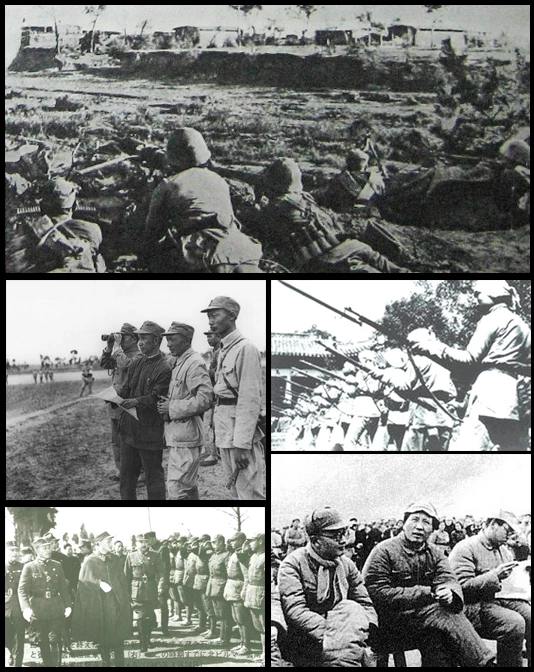
The fighting goes back more than 100 years, to when the mainland was known as the Republic of China having done away with its last dynasty – the Qing – in 1911.
The new nation was at war with itself, divided between various feuding political factions, leftover royalists and warlords.
In an attempt to reunify the country, the Chinese Nationalist Party – fighting on behalf of the Republic – allied with the Chinese Communist Party and in 1927 they launched an attack that began the Chinese Civil War.
Their campaign met with some success but the alliance did not last, and the two were soon fighting amongst themselves. By 1931, the Nationalists were in control of most of China but the war with the Communists had to be put on hold when Japan invaded.
That invasion ended when Japan was defeated in the Second World War. After the Japanese surrendered in 1945, the Nationalists and Communists resumed fighting.
But this time it was the Communists – supported by Soviet Russia – who emerged dominant, and in 1949 the Republic of China was forced to retreat from the mainland to Taiwan, which was already under its control.
Mao Zedong, leader of the Communists, then established the People’s Republic of China on the mainland.
Separated by the Taiwan Strait, the old enemies remain in a standoff to this day.
Taiwan views itself as an independent country, while China views it as a breakaway province to be ‘reunified’ – though in fact the Communists have never ruled there.
How did the US get involved?
America refused to recognise the People’s Republic for decades after the war ended, and instead only maintained relations with Taiwan.
Two crises in the 1950s saw Communist forces attack some of Taiwan’s outlying islands, with the US sending ships to help its ally.
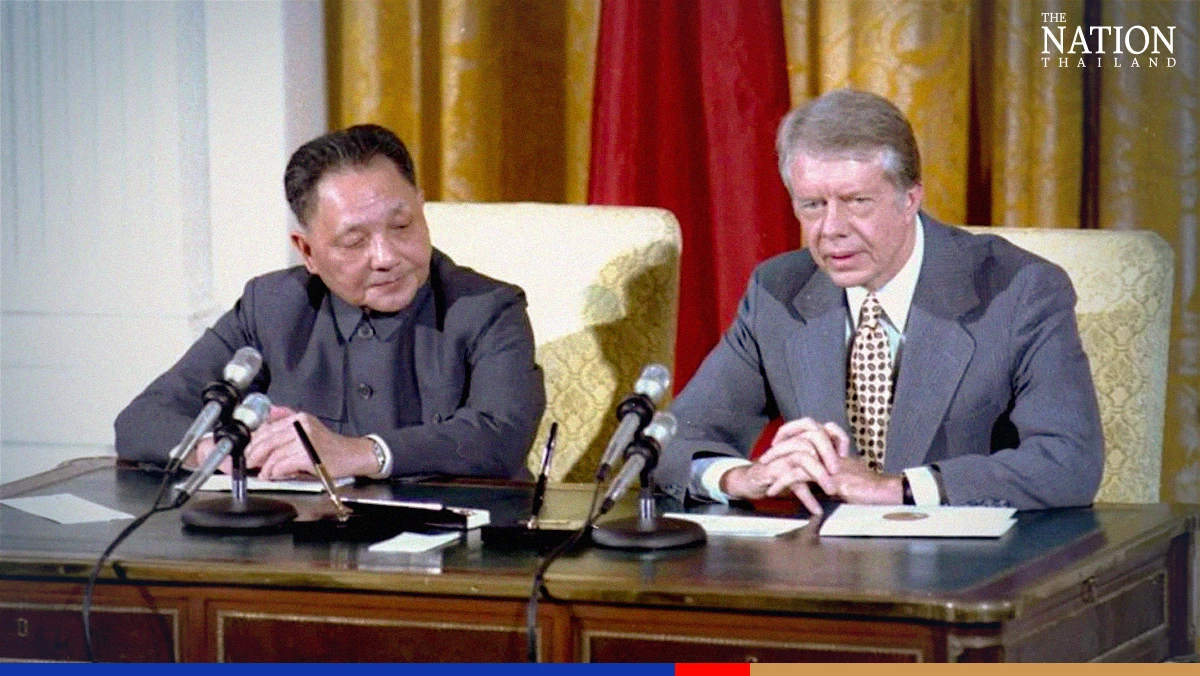
But all of that changed following Mao’s death in 1976, when reformer Deng Xiaoping took over – vowing to open China up to the world.
As China modernised under Deng, President Jimmy Carter agreed to normalise relations with Beijing and in 1979 the two nations signed a deal.
As part of that deal, the Carter administration agreed to recognise the ‘one China’ principle – that there is only one China, and Taiwan is a part of it.
But there was a backlash from Congress, which passed a law compelling America to supply weapons to the island for self-defence.
Another crisis in 1995 saw China try to intimidate Taiwan with a series of missile tests, provoking a huge display of military might by the US.
Beijing ultimately backed down.
How did the current crisis start?
In 2019, Xi Jinping – the current president of China – gave a speech in which he vowed to ‘reunify’ Taiwan with the mainland, calling it the ‘great trend of history.’
Xi opened the door to peaceful reunification but added that: ‘We make no promise to abandon the use of force, and retain the option of taking all necessary measures.’
His remarks came amidst a huge update of the Chinese military, and after China had built bases on islands in the South China Sea and begun threatening US ships sailing near them.
In the years since his speech, Beijing has been menacing Taiwan by flying military jets across the Strait in increasingly large numbers.
America, meanwhile, has been forging new alliances in the region with the likes of India, Australia and Japan as a counter-balance to Beijing’s power.
What has Pelosi’s visit got to do with it?
Pelosi became the highest-ranking US official since Newt Gingrich in 1997 to visit the island when she landed on August 3, 2022.
Her visit came as part of a tour of US allies in the region, designed to show America’s support in the face of increased aggression from Beijing.
Pelosi has been a critic of China’s human rights record for decades, and the trip was seen as cementing that legacy as she nears the end of her career.
But the visit came at a bad time for Mr Xi, who is preparing to be named president for an historic third term in the autumn and views ‘reunifying’ Taiwan as his destiny.
He has reacted with an unprecedented show of strength, vowing that ‘those who play with fire will die by it’.
Xi ordered six days of military drills to take place around Taiwan, that will effectively blockade the island and encroach into its territorial waters.
Could China and the US actually go to war?
Officially, America’s policy towards Taiwan is ‘strategic ambiguity’, which means Washington refuses to say what it would do if China attacked.
But President Biden has said several times that the US would come to Taiwan’s aid in a war – though each time the White House insists that he misspoke. Each time Taiwan has been threatened or attacked in the past, America has sent ships and troops into harm’s way.
Should fighting break out again, it is entirely possible the US would send forces to assist its ally, putting them in the firing line of the Chinese.
By accident or design, it is easy to see how the two superpowers could come to blows – though that outcome is far from guaranteed.
What would happen if Taiwan were attacked?
Any war between Taiwan and China – whether or not it involved the US – would certainly be bloody.
Taiwan has a modern army, equipped with state-of-the-art American weapons and has been preparing for an attack from the mainland for decades.
Though small compared to China, Taiwan’s main island is still larger than Belgium and is surrounded by dozens of smaller islands.
It would not be easy to capture, and resistance is likely to be fierce.
Taiwan also happens to be one of the most densely-populated places on Earth. With nowhere to flee, civilian casualties are likely to be high.
The knock-on effects would be also severe. Tit-for-tat sanctions between the US and China – the world’s two largest economies – are likely, threatening global recession.
Taiwan also sits close to important shipping channels which are likely to be disrupted, and China could throttle its own exports to the West – causing inflation.
The island itself is also the world’s single-largest manufacturer of semiconductors which are used to make computer chips, and any war would shut down production.
That would, in turn, cause shortages of everything from computers to smartphones and cars, whilst also threatening critical infrastructure such as satellites.
Iraqi populist cleric Moqtada al-Sadr on Wednesday told his supporters to continue their sit-in occupation of the Baghdad parliament until his demands, which include early elections and unspecified constitutional changes, are met.
The remarks, delivered by the Shi’ite Muslim leader in a televised address, are likely to prolong a political deadlock that has kept Iraq without an elected government for nearly 10 months.
Thousands of Sadr’s followers stormed Baghdad’s fortified Green Zone, which houses government buildings and foreign missions, last weekend and took over the empty parliament building staging a sit-in that is ongoing.
The moves were a response to attempts by his Shi’ite Muslim rivals, many of whom are close to Iran, to form a government with prime ministerial candidates that Sadr disapproves of.
Sadr won the largest number of seats in parliament in an October election but failed to form a government that would exclude his Iran-backed rivals.
He withdrew his lawmakers from parliament and instead applied pressure through protests and the parliament sit-in, drawing on his popular base of millions of working-class Shi’ites.
Sadr reiterated during his address that he was ready to “be martyred” for his cause.
“Dissolve parliament and hold early elections,” Sadr said.
The deadlock between Sadr and his rivals has left Iraq without a government for a record time in the post-Saddam Hussein era.
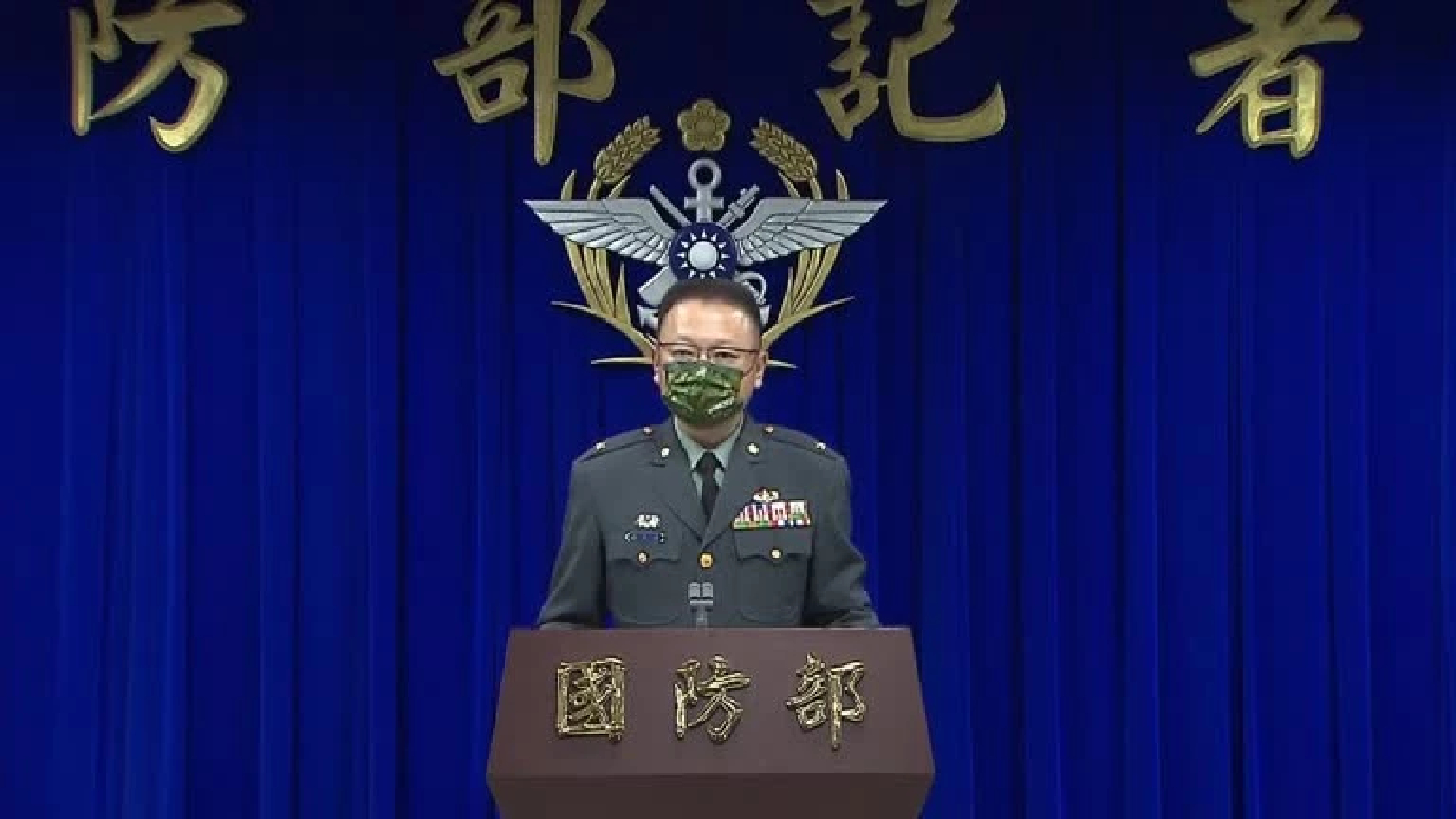
Taiwan’s defence ministry on Wednesday slammed Chinese military drills being conducted amid a visit by U.S. House of Representatives Speaker Nancy Pelosi.
Spokesperson Sun Li-fang said the “reckless” drills were challenging international order, destroying regional security and amounted to a blockade of Taiwan’s territorial air space and waters.
Sun also warned that China was continuing to engage in spreading misinformation and that citizens should not believe in internet rumours.
China considers Taiwan part of its territory and has never renounced using force to bring it under its control. The United States has warned China against using Pelosi’s visit as a pretext for military action against Taiwan.
The Association of Southeast Asian Nations (Asean) will be forced to reconsider a peace plan agreed with Myanmar if the country’s military rulers conduct more executions of prisoners, Cambodian Prime Minister Hun Sen said on Wednesday.
The prime minister said that while the five-point consensus had “not advanced to everyone’s wishes” there had been some progress including in providing humanitarian aid. But he went on to say the current situation had “changed dramatically” and could be seen as even worse than before the peace agreement because of the junta’s execution of the activists.
Myanmar’s military last week defended the execution of the activists as “justice for the people,” brushing off a deluge of international condemnation including by its closest neighbours.
Myanmar will not be represented at this week’s meeting, a spokesperson for the Asean chair said on Monday after its military rulers declined a proposal to send a non-junta representative instead.
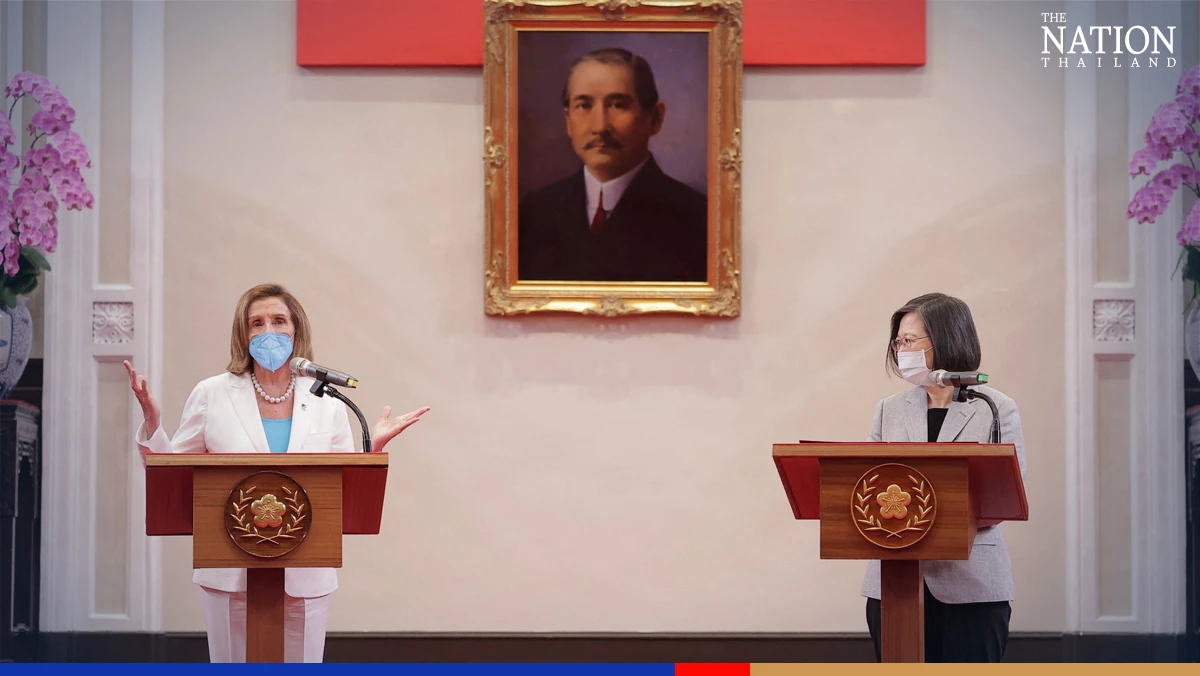
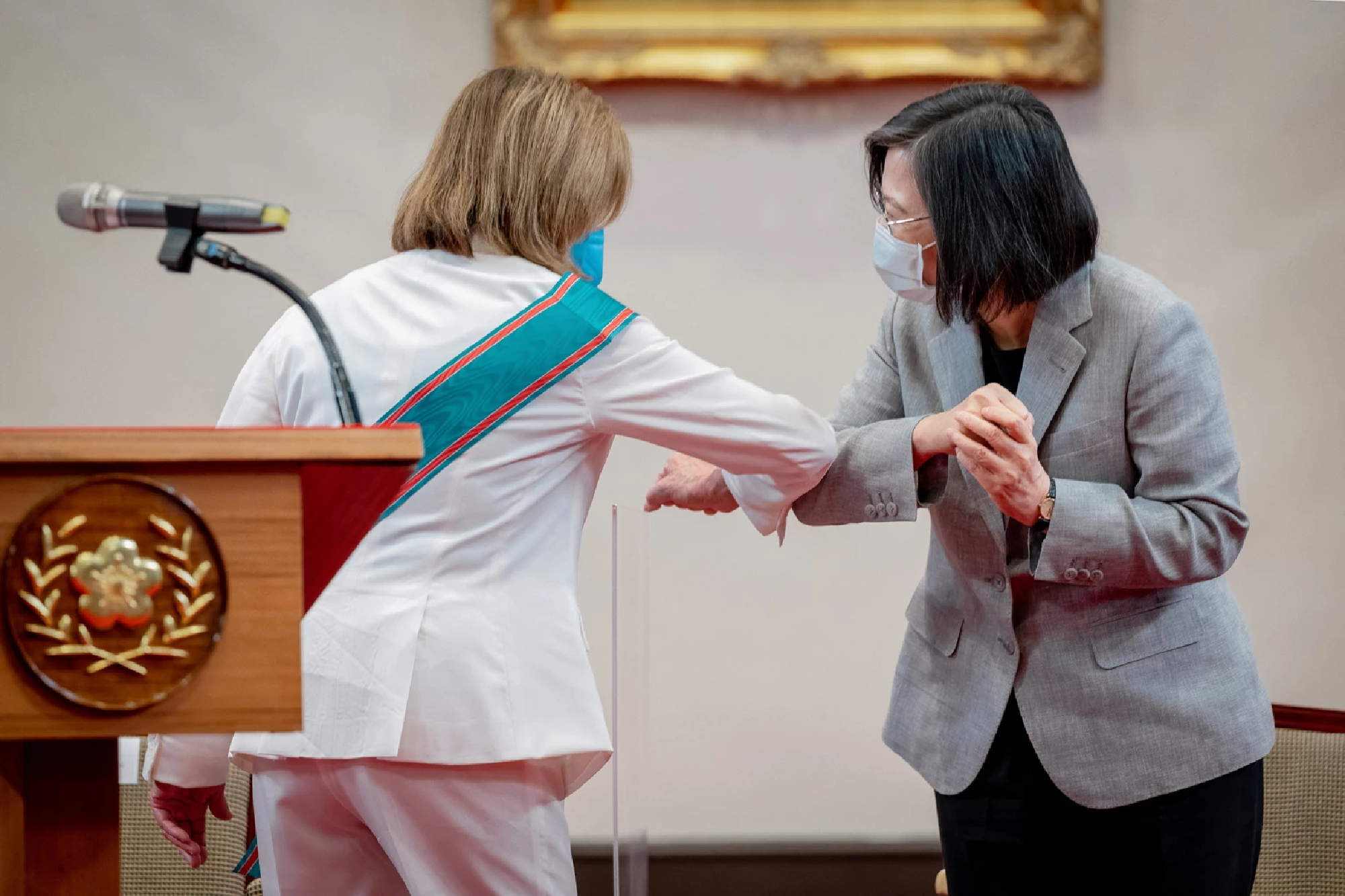
The United States wants Taiwan to always have freedom with security and will not back away from that, U.S. House of Representatives Speaker Nancy Pelosi said on Wednesday, during a visit to Taipei fiercely criticised by China.
While respecting the “One China” policy, our solidarity with Taiwan is more important than ever, Pelosi said, during a joint news conference with Taiwan President Tsai Ing-wen. The U.S. supports the status quo and does not want anything to happen to Taiwan by force, Pelosi added.
Asked about the economic consequences Taiwan has to face as a result of her visit, Pelosi said the US’ chips act opens the door for better economic exchanges between the United States and Taiwan.
Taiwan is committed to maintaining the status quo across the Taiwan strait, Tsai said, adding that China’s military exercises, launched in response to Pelosi’s visit are an unnecessary reaction.
Pelosi arrived in Taipei late on Tuesday on an unannounced but closely watched trip, which has drawn condemnation and vows of retaliation from Beijing.
U.S. House of Representatives Speaker Nancy Pelosi visited the Taiwan legislature on Wednesday (August 3) in a trip condemned by China.
Pelosi addressed the Taiwanese parliament where she said the U.S. chip bill would offer a good opportunity for U.S.-Taiwan cooperation in the chip industry. She also said she wanted to increase parliamentary exchanges with Taiwan.
Nancy Pelosi U.S. HOUSE OF REPRESENTATIVES SPEAKER, Said : “Our purpose, or the three purposes I said, but in doing so, we want to increase interparliamentary cooperation and dialogue. And we do so at a time when our president (Joe Biden) has put forward an Asian-Pacific initiative, which we support, and we want to be specific in terms of how we work with Taiwan in that regard.”
“Thank you. We talk about the economy, thank you for bringing up the chips bill (Chips and Science Act). All of these members were instrumental in passing that important legislation which we think offers greater opportunity for U.S.-Taiwan economic cooperation.”
“In terms of governance, we commend Taiwan for being one of the freest societies in the world, for your success in addressing the COVID-interest issue, which is a health issue, a security issue, an economic issue and a governance issue. We congratulate you for that.”
“And again, we come in friendship, we thank you for your leadership, we want the world to recognise that. And with that, I thank you Vice President Tsai (Chi-chang) for your hospitality, for your kind words.”
Pelosi is due to meet with Taiwan’s President Tsai Ing-wen later on Wednesday and the two will later have lunch together, the presidential office said.
Pelosi, travelling with six other American lawmakers, is the most-senior U.S. political leader to visit Taiwan since 1997.
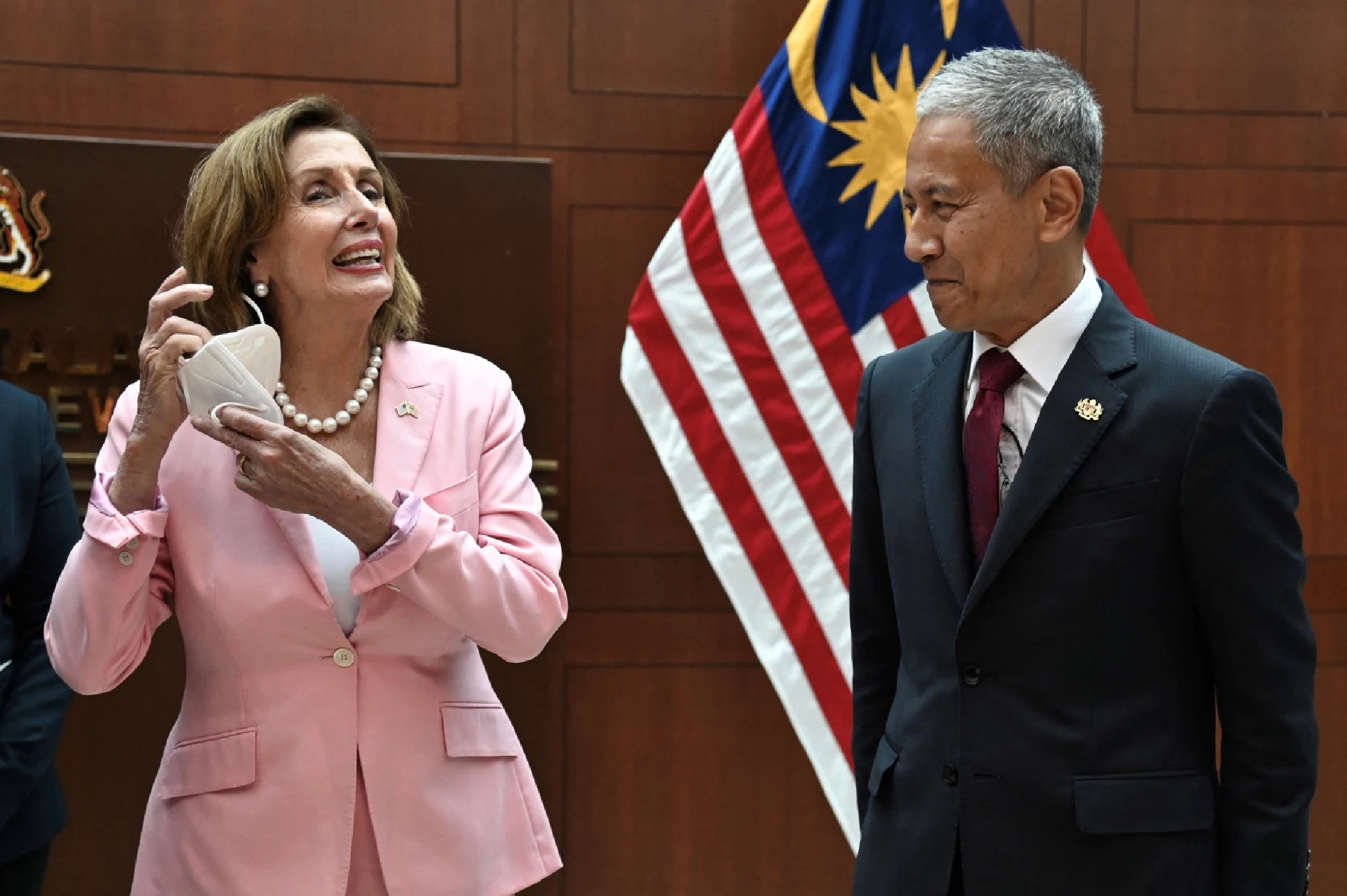
US House of Representatives Speaker Nancy Pelosi arrived in Malaysia on Tuesday for the second leg of her Asia tour amidst intense speculation that she may visit Taiwan.
Pelosi was expected to arrive in Taipei later on Tuesday, people briefed on the matter said, as the United States said it would not be intimidated by Chinese “sabre rattling” over the visit.
In Malaysia, Pelosi met members of Malaysia’s parliament in Kuala Lumpur.
Footage filmed by local broadcaster Astro Awani showed Pelosi entering a room with the Malaysian parliament speaker, before she participated in a meeting accompanied by the U.S. Ambassador to Malaysia.
She is expected to meet Prime Minister Ismail Sabri Yaakob, state news agency Bernama reported.
One person familiar with Pelosi’s itinerary said in Taiwan, most of her planned meetings, including that with Taiwan President Tsai Ing-wen, were scheduled for Wednesday.
Beijing considers Taiwan to be part of its territory and has never renounced using force to bring the island under its control.
Taiwan rejects China’s sovereignty claims and says only its people can decide the island’s future.
Pelosi began her Asia tour in Singapore on Monday. Her office said she will also go to South Korea and Japan, but made no mention of a Taiwan visit.
China views the visit by U.S. officials to Taiwan as sending an encouraging signal to the pro-independence camp on the island.
Washington does not have official diplomatic ties with Taiwan but is bound by U.S. law to provide the island with the means to defend itself.
The Kremlin also warned the United States on Tuesday that an expected visit to Taiwan by Pelosi would put it on a collision course with China and provoke tensions in the region.
“We cannot say for sure right now whether she will or will not get there, but everything about this tour and the possible visit to Taiwan is purely provocative,” Kremlin spokesperson Dmitry Peskov told reporters.
China has repeatedly warned Pelosi against going to Taiwan. Beijing says a Pelosi visit would contravene the one-China principle that Washington has vowed to abide by.
Meanwhile, Taipei residents were divided over a possible visit by Pelosi.
While university student Yang Hsing-ruei believed the visit would help the Taiwan-U.S. relationship improve, his classmate, Chang Yun-fan, thought it won’t bring “any real benefit”.
“In the end, we are just a chess piece in someone else’s game. It is very hard for Taiwan to walk its own path,” said 22-year-old Chang.
Taiwan is preparing its air-raid shelters as rising Chinese military pressure and Russia’s invasion of Ukraine focus new attention on the possibility of a Chinese attack on the democratic island.
China considers Taiwan its territory and has increased military activity around the island. Taiwan vows to defend itself and has made strengthening its defences a priority, with regular military and civil defence drills.
Last month, Taiwan held a comprehensive air-raid exercise across the island for the first time since the coronavirus pandemic disrupted regular drills.
Among the instructions citizens got in case of incoming missiles was to get down in their basement parking lots with their hands covering their eyes and ears while keeping their mouth open — to minimise the impact of blast waves. But some civil defence advocates say more needs to be done.
“We have to be more diligent in preparing. To put it bluntly, we are quite scared and there is no way to know if this thing (war) will also happen here,” said Yang Yu-tung, a local government official.
Other preparations include designating shelters where people can take cover if Chinese missiles start flying in, not in purpose-built military bunkers but in existing underground spaces like basement car parks, parts of the subway system and underground shopping centres.
The capital of Taipei has more than 4,600 such designated shelters that can accommodate some 12 million people, more than four times its population. Entrances are marked with a yellow label, about the size of an A4 piece of paper, with the maximum number of people it can take.
Enoch Wu of the ruling Democratic Progressive Party says he is trying to prepare members of the public for the worst case scenario of having to hide away in a “bare-bones shelter” in his workshops, showing them how to prepare survival kits to take with them into shelters.
Authorities are required by law to keep the shelters clean and open, but they don’t have to be stocked with emergency supplies like food and water. Researchers at parliament called in June for shelters to be provided with emergency supplies.
However, many in Taiwan are still unaware of the shelter system that stretches under much of the city.
Harmony Wu, 18, was surprised to learn that an underground shopping concourse where she and other youngsters were practising dance would become an air-raid shelter in the event of war. But she said she could see why.
“We aren’t prepared and won’t immediately realise when war has arrived, we might still be laughing and having fun without knowing that outside the war already started.”
Taipei officials have been updating their database of designated shelters, putting their whereabouts on a smartphone app, and launching a social media and poster campaign to make sure people know how to find their closest one.
A senior official in the city office in charge of the shelters said events in Europe had brought a renewed sense of urgency.
“Look at the war in Ukraine… normal buildings, organisations or schools could get hit by strikes too,” Abercrombie Yang, a director of the Taipei City Building Administration Office, told Reuters. “In the same vein, Taiwan could face the same situation.”
BloombergNEF reports an 11% year-on-year rise in global renewable energy financing in the first half of 2022, for a total of $226 billion
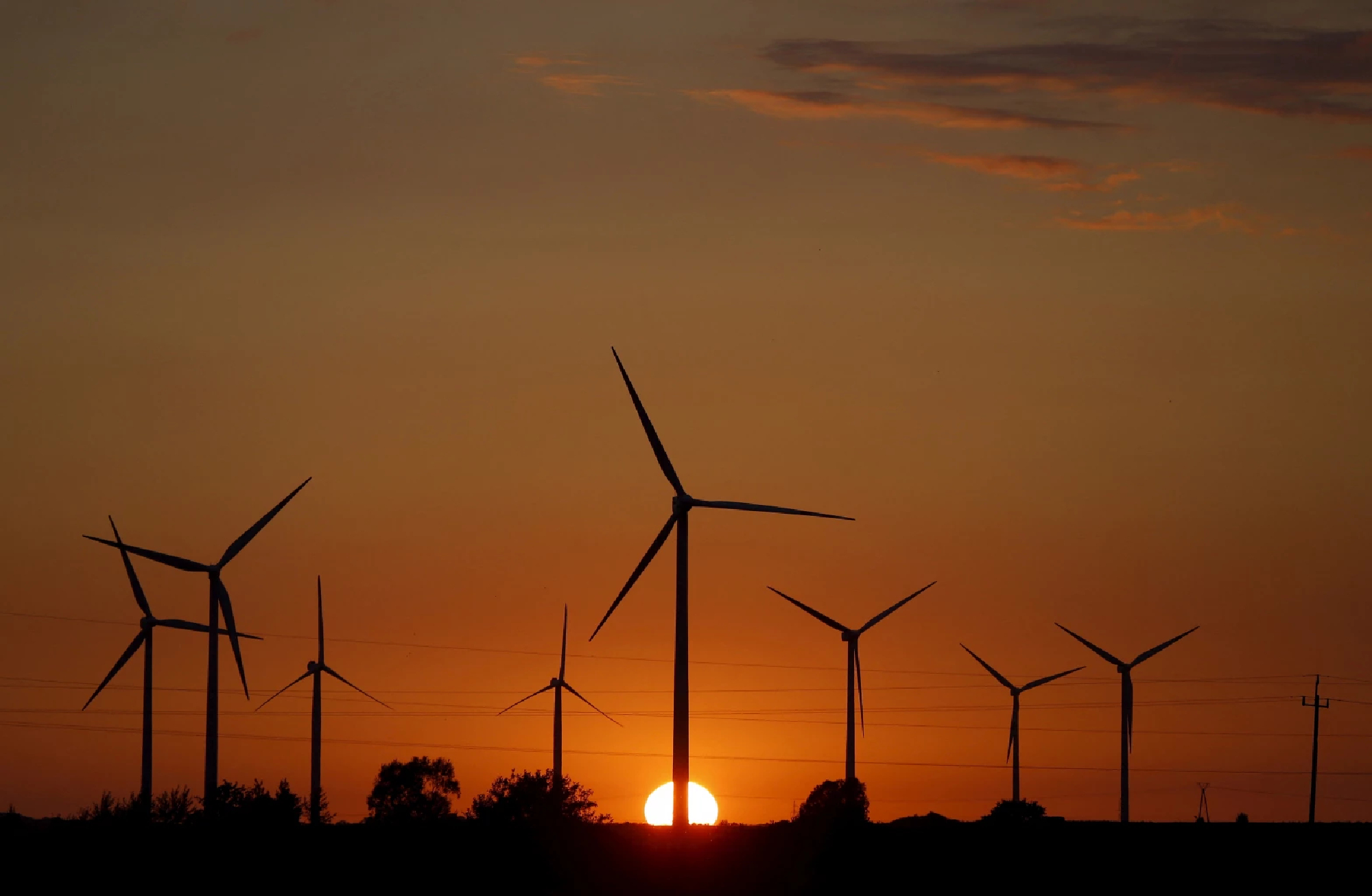
Global investment in renewable energy totaled $226 billion in the first half of 2022, setting a new record for the first six months of a year.
The uptick in investment reflects an acceleration in demand for clean energy supplies to tackle the ongoing global energy and climate crises, according to Renewable Energy Investment Tracker 2H 2022, a new report published by research firm BloombergNEF (BNEF).
Investment in new large- and small-scale solar projects rose to a record-breaking $120 billion, up 33% from the first half of 2021.
Wind project financing was up 16% from 1H 2021, at $84 billion.
Both sectors have been challenged recently by rising input costs for key materials such as steel and polysilicon, as well as supply chain disruptions and rising financing costs.
Yet, today’s figures indicate that investor appetite is stronger than ever, in part due to the very high energy prices currently being seen in many markets around the world.
The Renewable Energy Investment Tracker summarizes BloombergNEF’s tracking of global investment in renewable energy up to and including 1H 2022, and covers both project investments and corporate fundraising.
As well as seeing booming project investments, the first half also saw an all-time record for venture capital and private equity investments into renewables and energy storage, with $9.6 billion raised – up 63% on the previous year.
One category that saw falling investment was public equity issuances. After a very strong first half in 2021, public market issuances for renewable energy companies dropped 65% in 1H 2022, totalling $10.5 billion.
The 2Q figure, at $3.9 billion raised, is the lowest quarterly total since 2Q 2020.
Albert Cheung, head of analysis at BloombergNEF, said: “Policy makers are increasingly recognizing that renewable energy is the key to unlocking energy security goals and reducing dependence on volatile energy commodities. Despite the headwinds presented by ongoing cost inflation and supply chain challenges, demand for clean energy sources has never been higher, and we expect that the global energy crisis will continue to act as an accelerant for the clean energy transition.”
China posted remarkable investment growth in both wind and solar project finance.
The country’s large-scale solar investments totaled $41 billion in 1H 2022, up 173% from the year before.
It also invested $58 billion in new wind projects, up 107% year-on-year. Nannan Kou, BNEF’s head of China analysis, said: “Green infrastructure is the most important investment area that China is relying on to boost its weak economy in the second half of 2022. The investment growth trend follows China’s strategy to build new renewable generation capacity so that it can replace its existing coal fleet. China is well on track to hit its 1,200 gigawatt wind and solar capacity target by 2030.”
Offshore wind was another sector that saw a stark increase, with investment up 52% from the previous year, to $32 billion.
Chelsea Jean-Michel, offshore wind analyst at BNEF said: “Investments in 2022 will flow into projects coming online in the next few years as the offshore wind installed base is set to grow tenfold from 53GW in 2021 to 504GW in 2035.
Offshore wind projects enable companies and governments to make progress toward their decarbonization goals at scale.
The United Kingdom, France and Germany are just a few of the countries that have increased their offshore wind targets in the first half of 2022, signalling further support for investment in the technology.”
BloombergNEF (BNEF) is a strategic research provider covering global commodity markets and the disruptive technologies driving the transition to a low-carbon economy. Our expert coverage assesses pathways for the power, transport, industry, buildings and agriculture sectors to adapt to the energy transition. We help commodity trading, corporate strategy, finance and policy professionals navigate change and generate opportunities.
Bloomberg is a global leader in business and financial information, delivering trusted data, news, and insights that bring transparency, efficiency, and fairness to markets. The company helps connect influential communities across the global financial ecosystem via reliable technology solutions that enable our customers to make more informed decisions and foster better collaboration. For more information, visit Bloomberg.com/company or request a demo.