The European Council said Saturday that it has reached a provisional political agreement with the European Parliament on new legislation to combat hate speech, disinformation and other harmful content online.
The legislation named the Digital Services Act (DSA), “aims to protect the digital space against the spread of illegal content, and to ensure the protection of users’ fundamental rights,” the European Council said in a press release.
The agreement was reached after negotiators from the council and the parliament agreed on a provisional text for new rules to make the Internet a safer space for European citizens. Talks began on Friday and continued till the early hours of Saturday.
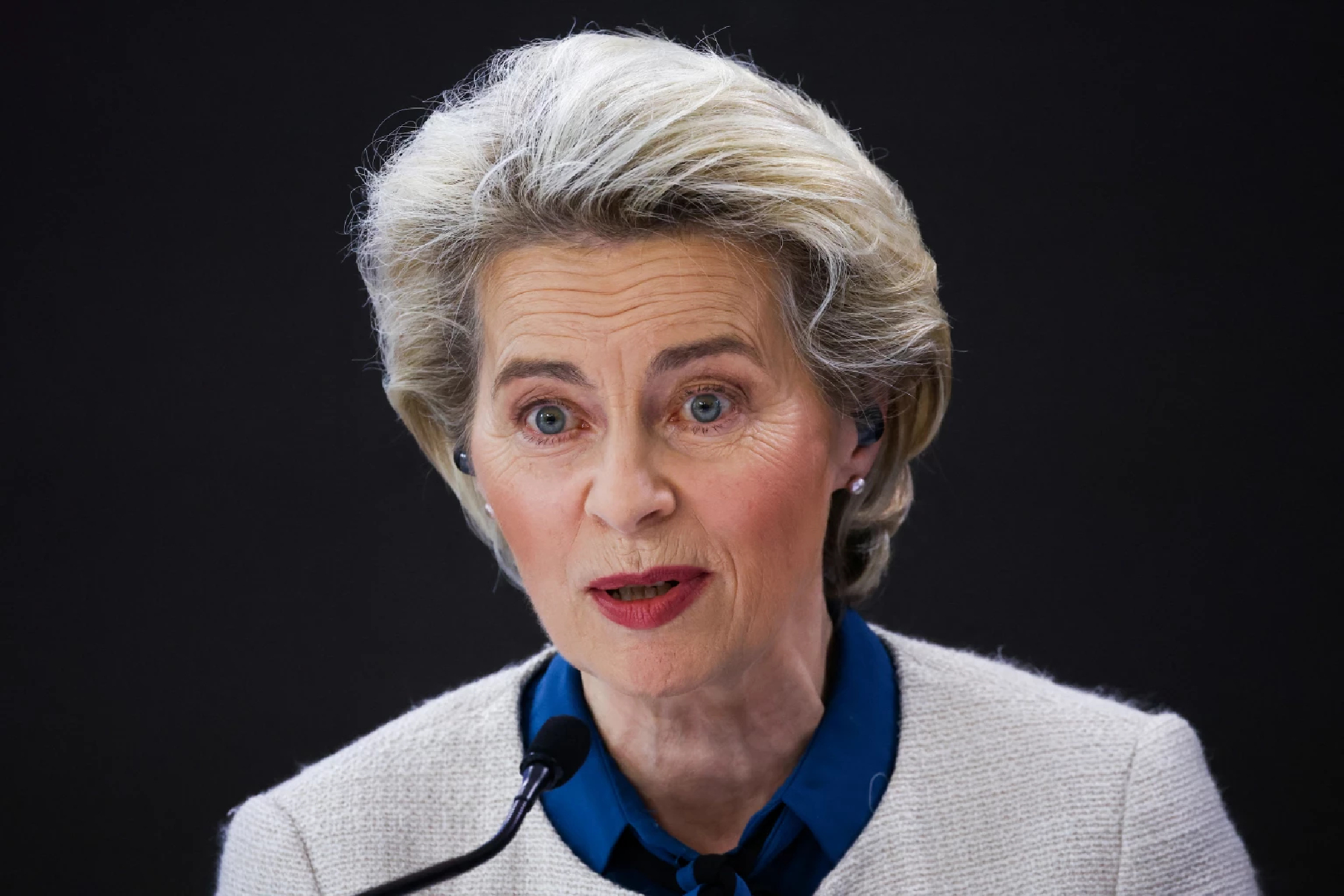
According to European Commission President Ursula von der Leyen, the DSA “gives practical effect to the principle that what is illegal offline, should be illegal online,” and will “upgrade the ground rules for all online services in the EU.”
The provisional political agreement will have to be rubber-stamped by the European Council and the European Parliament before the legislation goes into effect.
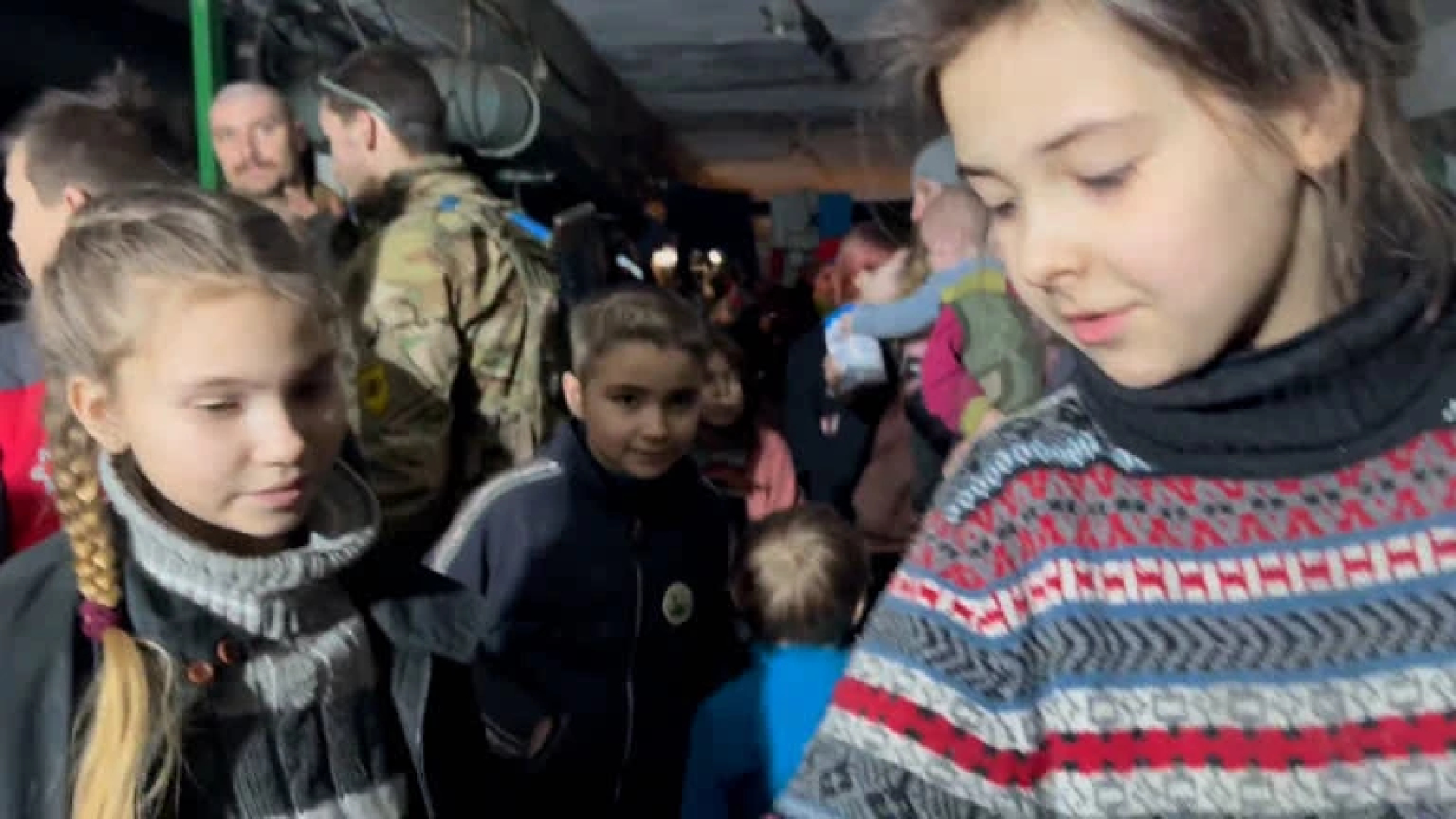
Women and children said to be holding out in the underground bunkers of the Azovstal steel complex in besieged Mariupol, said they wanted to return home to their families, in a video uploaded by Ukraine’s Azov Battalion on Saturday (April 23).
The Azov video showed men in uniform walking inside a location said to be a bunker in the Azovstal steel complex. Letters on the wall of one corridor said ‘Children’ as soldiers walked in and announced they brought food and gifts for the children seen inside a room.
The video showed women wearing the Azovstal uniform design, which Reuters verified, matched in file images.
Reuters could not independently verify where or when the video was shot.
A young girl wearing a grey hoodie, who did not identify herself, said: “We have been playing on the phone but we want to go home, we want to see the sun.”
A woman holding a toddler said they were running out of food and she hoped to be evacuated.
A boy that was not identified in the video, said he had been at the bunker for two months.
“(I hope) we can leave here and see the sun because we’ve been sitting here for two months already. I want to see the sun because here it’s dim, not like outside. When our houses are rebuilt we can live in peace. Let Ukraine win because Ukraine is our native home,” he said.
The Azov Battalion was set up in 2014 as a group comprising pro-Ukrainian nationalist volunteers who fought against pro-Russian separatists in eastern Ukraine. Kyiv later incorporated the Azov fighters as a regiment in its National Guard. Russia accuses the group of being a neo-Nazi organisation, an allegation Ukraine rejects as pure propaganda.
The mayor of Mariupol appealed on Friday (April 22) for the “full evacuation” of the devastated southern Ukrainian city which President Vladimir Putin says is now controlled by Russian forces.
Mayor Vadym Boichenko, who is no longer in Mariupol, did not provide any update on any fighting in or around the port city on the Sea of Azov.
On Saturday Ukrainian Deputy Prime Minister Iryna Vereshchuk said that if all went as planned, evacuations from the besieged city of Mariupol would start at noon (0900 GMT).
On the eve of the presidential election, French voters on Saturday (April 23) were uncertain of the outcome. Meanwhile, Surveys show turnout would be the lowest for a presidential run-off since 1969.
In the capital Paris, ballot boxes were being unloaded and taken into a town hall turned into a polling station for the election on Sunday (April 24).
Voters such as postal worker, Pascal Marignan, were still undecided about their vote.
“I’m going, to be honest, none of them (candidates) interest me. It will be complicated, ” he explained.
Children’s accessory designer, Aurelie Manceau, believes the French could still be surprised by the result of Sunday’s vote.
“I think some Melenchon voters could vote for Marine Le Pen in the second round,” she told Reuters.
Surveys by France’s leading pollsters published on Thursday (April 21) and Friday (April 22) showed President Emmanuel Macron’s score was either stable or slightly rising to reach between 55.5% and 57.5%.
But they also put turnout at between 72% and 74%, which would be the lowest for a presidential run-off since 1969.
The centrist, former merchant banker Macron is a staunch supporter of the European Union and the kind of internationalism which has in recent years suffered setbacks from events such as Brexit and the election of Donald Trump as U.S. president.
Far-right candidate Marine Le Pen says Macron embodies an elitism that has failed ordinary people.
Her policies include a ban on Muslim headscarves in public, giving French nationals priority on jobs and benefits, and limiting Europe’s rules on cross-border travel.
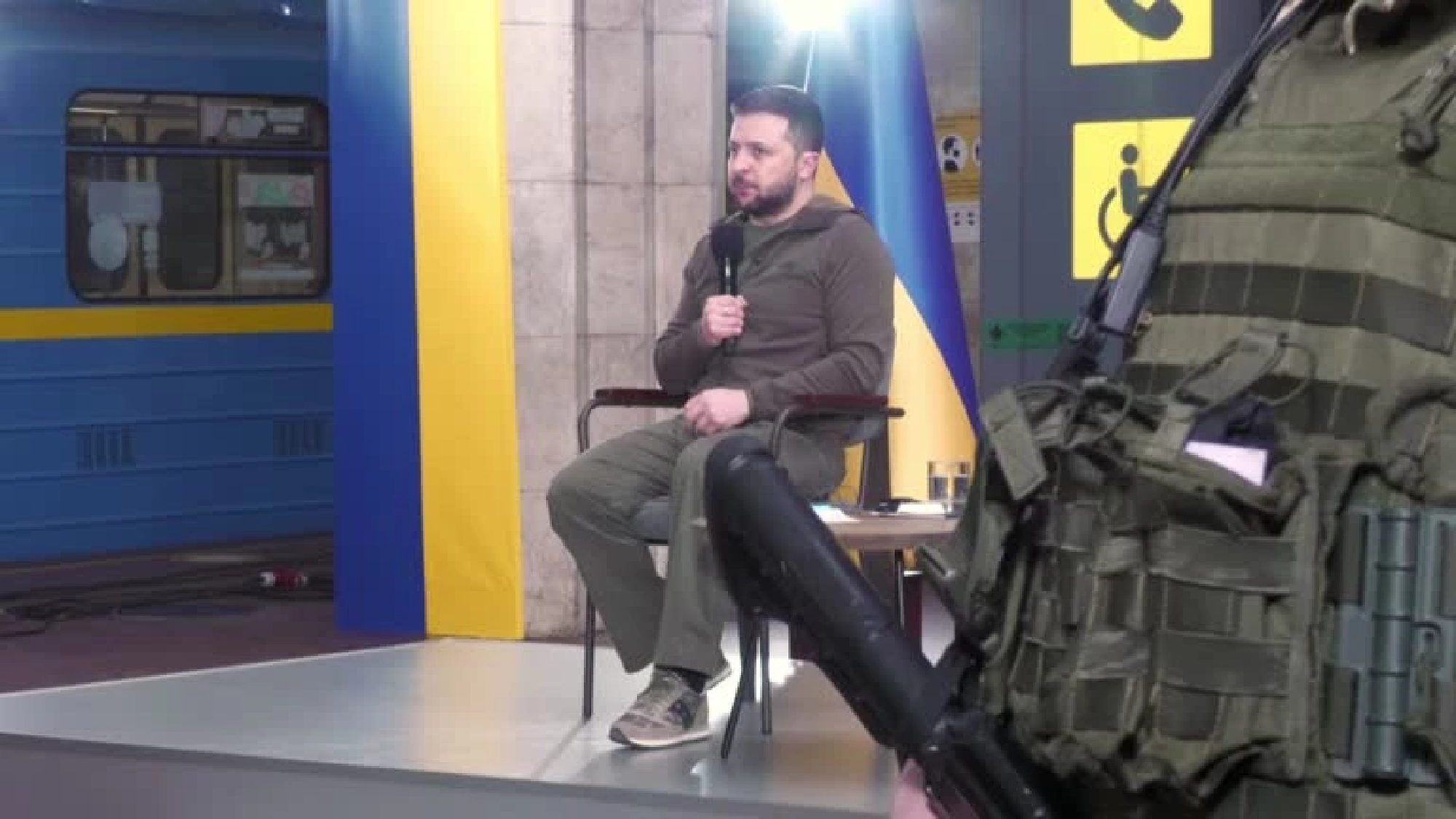
Ukrainian President Volodymyr Zelenskiy held a news conference inside a metro station on Saturday (April 23), as Russia’s invasion of the country enters its third month.
Dozens of journalists from international organisations gathered inside the metro station in Kyiv to ask
Zelenskiy questions, while armed guards stood next to arriving and departing passenger trains.
Journalist Krystyna Berdynskih, who reports for Novoe Vremya, described the news conference’s location as “surprising”.
“Well it’s a war I guess, so that’s the perfect spot to be secure not only for us but for most importantly President Zelenskiy,” she said.
Ryuichi Kanari, the correspondent for the Japanese newspaper The Asahi Shimbun, commented on the unusual location of the news conference inside the active metro station.
“I’m pretty interested [that] even trains still run, and the passengers present, so yeah, this is my first time to attend this kind of press conference,” Kanari said.
At the news conference, Zelenskiy announced the imminent arrival of U.S. Secretary of State Antony Blinken and Secretary of Defense Lloyd Austin for talks on Sunday (April 24), adding that he hopes to secure more heavy weapons in his country’s fight against Russia.
” We will talk about the weapons we need and about the time framework for deliveries,” he said.
The Ukrainian leader warned that Kyiv would quit talks with Moscow if Russia destroyed “our people” surrounded in the war-torn city of Mariupol or staged referendums to create more breakaway republics on newly-occupied Ukrainian soil.
He said that it was vital for Ukraine to obtain more weapons.
He fought back tears at one point saying that he shared the pain of every Ukrainian who had lost children in Russia’s war and that Saturday’s missile strikes had killed eight people in the city of Odesa, including a three-month-old child.
He said that Saturday had been one of the most difficult days yet for Ukrainian forces encircled in Mariupol and that Kyiv had offered Moscow every possible kind of exchange deal to secure their release.
Ukrainian forces are holed up at a steelworks in the city of Mariupol.
A Palestinian influencer on TikTok documents the extraordinary cave life of his 12-member large family in the West Bank region: milking goats, making clay ovens, herding sheep, and above all, recording Israeli settlers’ attacks on local Palestinians.
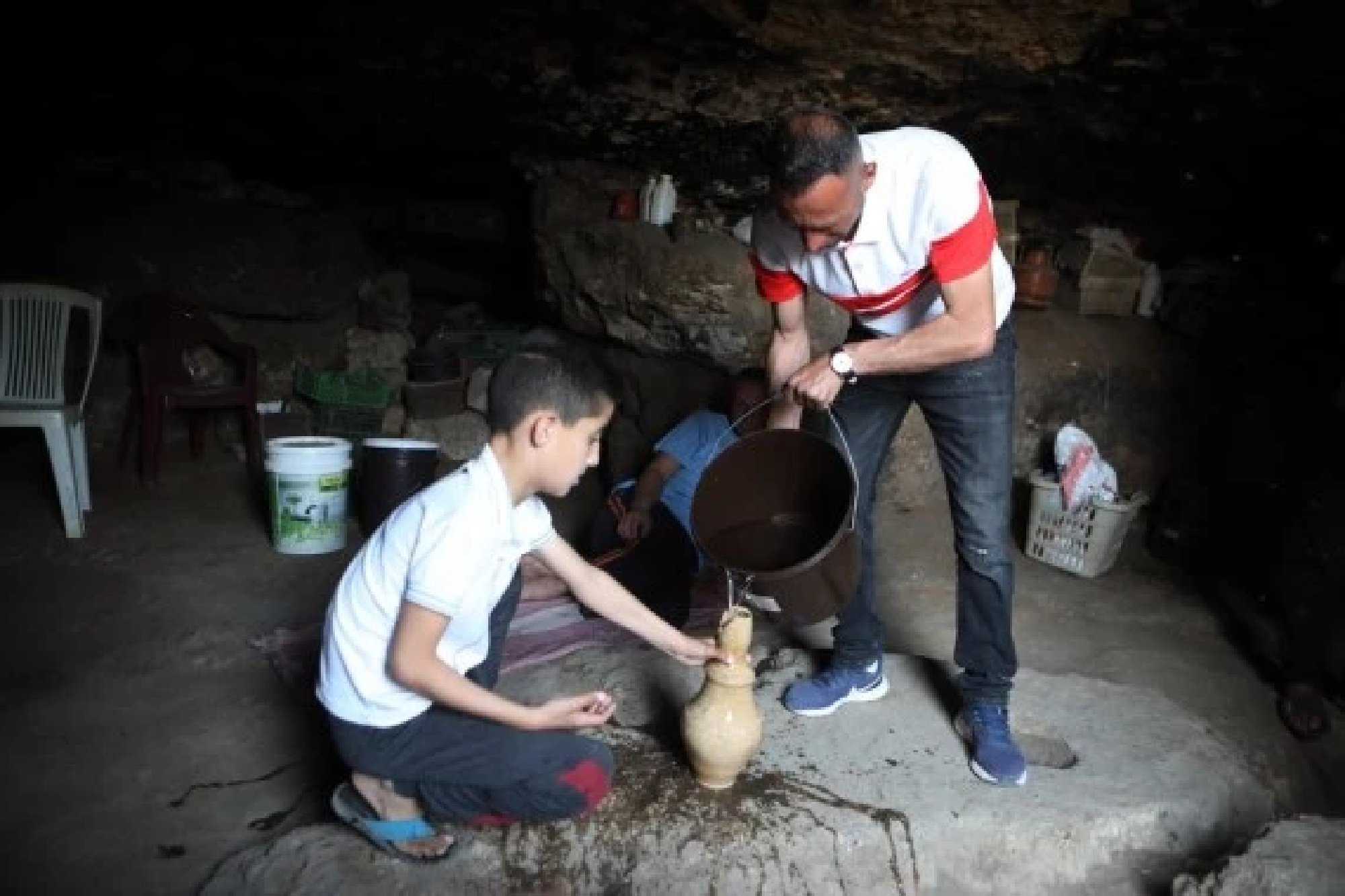
Adel al-Tell, a young Palestinian man who lives with his large family in a dilapidated cave in the West Bank, has been resorting to TikTok to document his extraordinary cave life.
The 32-year-old from Khirbet Zanuta village, located 20 km south of the West Bank city of Hebron, posted his first TikTok video a year ago, soon gaining hundreds of thousands of likes from his burgeoning followers.
In al-Tell’s TikTok short videos, his families are seen milking goats, making tabuns (a clay oven used in parts of the Middle East), herding sheep, and above all, recording Israeli settlers’ attacks on local Palestinians.
“It seems that the situation here is miserable and no one wants to live in this cave,” the young man told Xinhua, referring to the lack of the basic necessities of life such as water, electricity and furniture in his cave.
However, the fact is that “we have enough money to buy a modern house, but we want to stay and live here in order to defend our land against Israeli settlement expansion in our own way,” he explained.
Al-Tell now has more than 60,000 followers on TikTok, and the contents he has published in recent months alone have received as many as more than 1.5 million likes.
Members of the al-Tell family have their iftar inside a cave at Khirbet Zanuta village, south of the West Bank city of Hebron, on April 17, 2022. (Photo by Mamoun Wazwaz/Xinhua)
“TikTok gave me a lot of space to show the world our lives here, not only the Palestinian heritage but also our main cause: protecting our land from settlers who want to seize it and build their settlements,” he noted.
Al-Tell and his family are among some 450 people living in Khirbet Zanuta village, where the majority of the residents live off sheep grazing and the food from the poultry and goats they raise.
Under the Oslo accords signed between the Palestine Liberation Organization and the Israeli government in 1993, the West Bank region was divided into three areas: Area A under the Palestinian control, Area B under Palestinian civil administration and Israeli security control, and Area C under full Israeli control, which comprises about 60 percent of the total territory of the region.
A member of al-Tell family is seen outside a cave, at Khirbet Zanuta village, south of the West Bank city of Hebron, on April 17, 2022. (Photo by Mamoun Wazwaz/Xinhua)
Unfortunately, the Khirbet Zanuta village is located in Area C and has been slated for demolition by the Israeli army in favor of what Palestinians call the expansion of Jewish settlements.
“Our life is very difficult and Israel is working to expel us from our land in order to implement the annexation and settlement expansion plan and to impose its control over all Palestinian lands,” Mariam al-Tell, Adel’s mother, told Xinhua.
“The settlers deliberately attack the residents of the village, and the Israeli forces set up military checkpoints at the entrances to the village to prevent us from bringing water and other needs back,” the mother lamented.
The 67-year-old has always yearned to live safely in her home without fear of demolition by the Israeli authorities.
“We have the right to live on our land and we have the right to bequeath to our children a better future,” she said.
Members of the al-Tell family are seen inside a cave, at Khirbet Zanuta village, south of the West Bank city of Hebron, on April 17, 2022. (Photo by Mamoun Wazwaz/Xinhua)
The Great Barrier Reef, the world’s largest reef which stretches about 2,300 km along the coast of the Australian state of Queensland, remains the “planet’s most beautiful marine environment.”
Aglobal effort is called to reach net-zero greenhouse gas emissions by mid-century in a bid to curb the world’s temperature from increasing by more than 1.5 degrees Celsius.
Mention the Great Barrier Reef (GBR) nowadays and many people assume the vibrantly colored corals have already been bleached by climate change, however, one of the reef’s most enthusiastic custodians has a far more hopeful vision.
Andy Ridley, the chief executive of Citizens of the GBR, believes the world’s largest reef, which stretches about 2,300 km along the coast of the Australian state of Queensland, remains the “planet’s most beautiful marine environment.”
“A lot of people believe the Great Barrier Reef has already gone, but it actually hasn’t — it’s still extraordinary,” Ridley told Xinhua in an interview to mark the Earth Day on Friday.
“Climate change is definitely kicking this year, and we’ve had a bleaching, but it’s also important to know that it doesn’t mean the whole of the reef is bleached.”
Spending most of his time in Cairns, the gateway to the GBR, Ridley said “it’s quite difficult not to fall in love with the actual sight here.” He said the GBR Marine Park is massive, and it contains about 3,000 coral reefs consisting of a variety of coral in myriad shapes, sizes, and colors.
For example, the three kinds of coral the group is trying to detect now are “very common.” “We have Plate coral, which looks like a kind of plate in practice, we also have Branching corals, lots of branches, and so on, they are all very common.”
A tourist snorkels in the waters near the Whitsunday Islands, part of the Great Barrier Reef, Australia, on Feb. 10, 2018. (Xinhua/Justin Qian)
“That’s why we’re so passionate about it. We want people to get involved and to help us protect and conserve it,” Ridley said. “You can still go there today and be blown away by how amazing it is.”
Among his group’s main conservation projects are two Great Reef Census for which volunteers in a flotilla of tourism boats, yachts and fishing vessels have captured more than 42,000 images taken throughout the GBR.
Ridley said the enormous task of analyzing the images would begin within the next few months, so more volunteer “citizen scientists” would be most welcome to help collate the vital data.
“You can help, if you’re OK to spend a bit of time looking at images and verifying them online,” he said. “It’s not complicated, but really important for everybody to get involved.”
Despite his inherent optimism, Ridley concedes the big issue of climate change needs to be confronted on the global stage, a message he shares with organizers of Earth Day.
Earth Day is held annually to heighten awareness of environmental issues with this year’s theme being “Invest in our planet.”
Organizers are calling on a global effort to reach net-zero greenhouse gas emissions by mid-century in a bid to curb the world’s temperature from increasing by more than 1.5 degrees Celsius.
“If you have the chance to get out there in nature, then get out there and breathe in nature and find your inspiration in this amazing planet,” Ridley said.
A tourist takes photos of Whitehaven Beach in the Whitsunday Islands, part of the Great Barrier Reef, Australia, on Feb. 10, 2018. (Xinhua/Justin Qian)
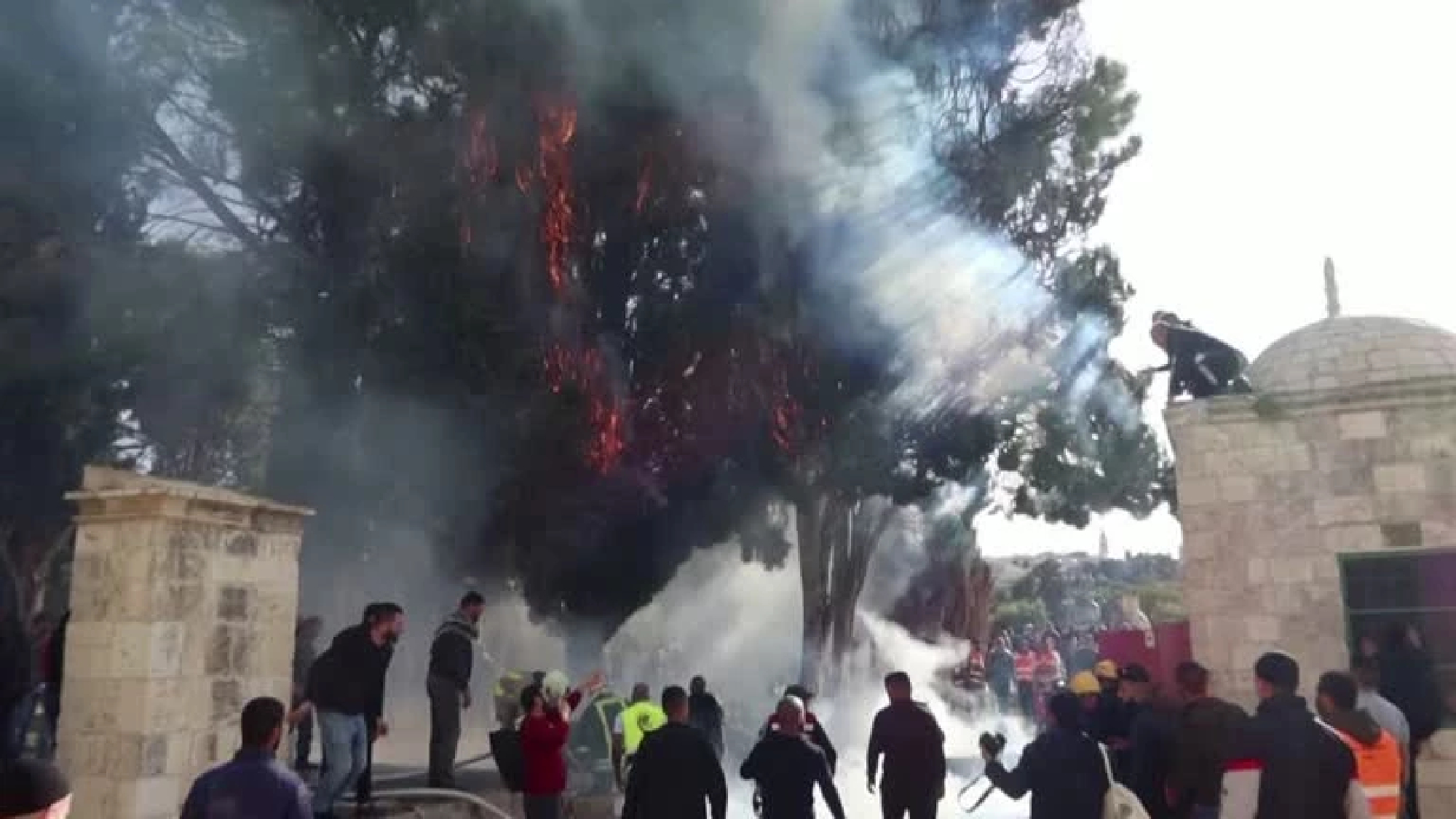
At least 31 Palestinians were injured in clashes with Israeli police at the Al-Aqsa mosque compound in Jerusalem on Friday (April 22), Palestinian medics said, the latest outbreak in a recent upsurge of violence at a site revered by Muslims and Jews alike.
According to the Palestinian Red Crescent ambulance service, 14 Palestinians were taken to the hospital, two with serious injuries.
Israeli police said its forces intervened when hundreds of people began hurling rocks and fireworks and drew close to the Western Wall, where Jewish worship was underway.
Reuters witnesses said police entered the compound after the morning prayers and fired rubber bullets and stun grenades at a crowd of about 200 Palestinians, some of whom were throwing rocks. Police also fired rubber bullets from a close range at a group of journalists documenting the clashes, the witnesses said.
Violence at the compound, known to Jews as the Temple Mount and to Muslims as the Noble Sanctuary, has surged over the past week, raising concerns about a slide back into the wider Israeli-Palestinian conflict.
Tensions this year have been heightened in part by the Muslim holy month of Ramadan coinciding with the Jewish celebration of Passover, which brings more Muslim and Jewish visitors to the compound.
Palestinians accuse Israel of not doing enough to enforce a long-standing ban on Jewish worship at the third holiest site in Islam and see such visits as a provocation. Israel rejects this accusation.
As in previous years, Israel is halting Jewish visits during the final days of Ramadan, starting Friday, an Israeli official said. Traditionally, Muslim attendance at the compound increases during the final days of the fasting month.
Hundreds of men who are over 50, and women crossed Israeli checkpoints toward Jerusalem, to pray at the Al-Aqsa mosque. Some were banned due to Israeli security measures.
Al-Aqsa compound sits atop the Old City plateau of East Jerusalem, which Israel captured in a 1967 war and annexed in a move that has not won international recognition. Palestinians want East Jerusalem to be the capital of a state they seek to establish in the occupied West Bank and Gaza.
Newly disclosed “Ghost” drones that are part of America’s latest arms package for Ukraine were developed by the U.S. Air Force for attacking targets and are destroyed after a single use, the Pentagon said on Thursday (April 21).
The United States and its allies have ramped up arms shipments to Kyiv ahead of Russia’s announced offensive in eastern Ukraine, as Moscow tries to salvage its nearly two-month-old campaign.
Ukrainian forces have used Western weapons including Stinger and Javelin missiles along with drones, like the Turkish Bayraktar TB2 and U.S.-made Switchblade, effectively to target Russian positions.
The White House said earlier on Thursday that over 121 Phoenix Ghost Tactical Unmanned Aerial Systems would be provided to Ukraine as part of the new arms package.
The Pentagon said the Ghost drones are well suited for the coming fight in Ukraine’s Donbas region, which officials have described as flat terrain reminiscent of the U.S. state of Kansas.
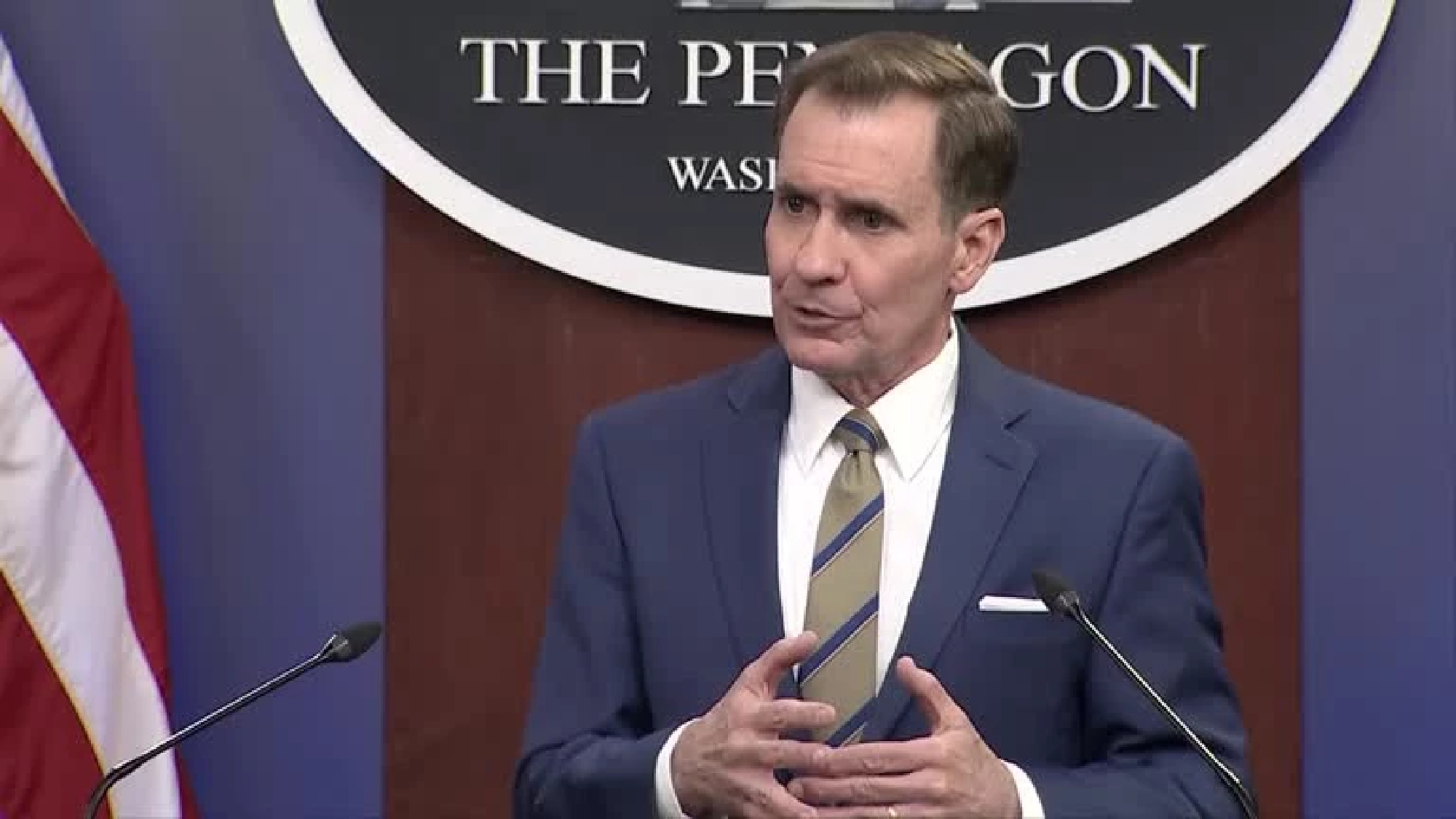
“In discussions with the Ukrainians again about their requirements, we believed that this particular system would very nicely suit their needs, particularly in eastern Ukraine,” Pentagon spokesman John Kirby said, without elaborating.
Little else is known about the drones, including their range and precise capabilities, and Kirby declined to offer more details about them.
Still, he did say they were designed mainly for striking targets.
“This unmanned aero-system is designed for tactical operations, in other words, largely but not exclusively to attack targets,” he added.
A small number of Ukrainians have been trained in the United States on how to operate Switchblade drones, single-use weapons that fly into their targets and detonate on impact.
Kirby said training for the Ghost drones would be similar to the training on the Switchblade. But he declined to detail training plans or say how many Ukrainians would be trained on the new system.
The Ghost drones have not yet been delivered to Ukraine.
Earlier on Thursday, Kirby said the drones had been rapidly developed for Ukraine. But later, at a news conference, he clarified that development had started before the Russian invasion on Feb. 24.
Kirby also mentioned U.S. Defense Secretary Lloyd Austin will host Ukraine-focused defence talks with allies at Ramstein Air Base in Germany on April 26, the Pentagon said on Thursday. Kirby did not say how many allies would participate.
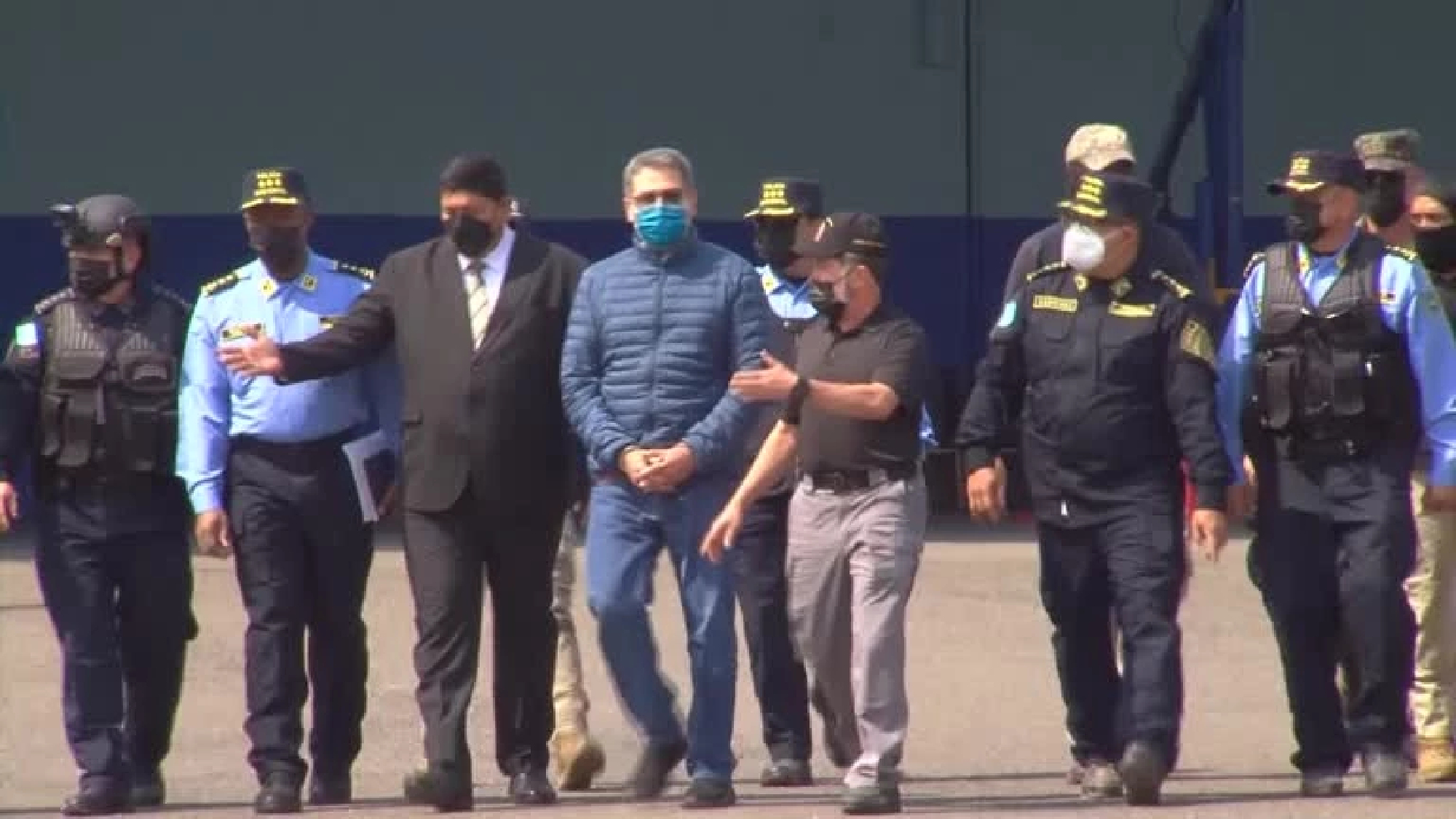
The United States has charged former Honduran President Juan Orlando Hernandez, who was extradited to the U.S. on Thursday (April 21), for alleged participation in a cocaine-importation conspiracy and related firearms offences, the Justice Department said.
Footage showed a handcuffed Hernandez as he departed from Tegucigalpa airport aboard a U.S. Drug Enforcement Administration plane.
Honduran authorities said he received medical examinations before his departure which showed he was in “optimal condition.”
The indictment marked a stunning fall from grace for the former Washington ally who led the Central American nation from 2014 to January 2022.
Federal prosecutors in Manhattan said Hernandez received millions of dollars from drug trafficking organizations, including from the former leader of Mexico’s Sinaloa cartel, Joaquin “El Chapo” Guzman, and used those funds to enrich himself and finance his political campaigns, prosecutors said.
In exchange, Hernandez and other Honduran officials provided drug traffickers with protection from investigation and arrest, gave them access to law enforcement and military information, and prevented their extradition to the United States, according to the indictment.
“The indictment alleges that Hernandez abused his positions in the Honduran government to partner with some of the largest and most violent drug traffickers in the world to traffic hundreds of thousands of kilograms of cocaine through Honduras for distribution in the United States,” the U.S. Justice Department said.
Hernandez “abused his position as the president of Honduras to operate the country as a narco-state,” prosecutors wrote.
The indictment was filed on Jan. 27 – the day Hernandez was replaced by leftist Xiomara Castro following her November victory over Nasry Asfura, the candidate from Hernandez’s right-leaning National Party – but kept sealed until Thursday.
The U.S. Department of Justice generally refrains from indicting sitting heads of state.
Honduran police detained Hernandez in mid-February following a U.S. extradition request, according to a U.S. embassy document seen by Reuters at the time.
The Honduran Supreme Court in March authorized his extradition.
Hernandez was a key ally to the United States under both the Obama and Trump administrations, in both immigration and anti-narcotics operations. But U.S. prosecutors revealed in court filings last year that Hernandez, 53, was under investigation as part of a sprawling probe into Honduras’ bloody narcotics trade.
President Joe Biden has focused on tackling corruption in Central America since taking office in January 2021, to stem the tide of migrants from the region to the United States.
Hernandez’s younger brother, Tony Hernandez, a former Honduran congressman, was sentenced to life in prison in the United States in March 2021 after an earlier conviction on drug trafficking charges.
The former president had strongly denied the allegations, arguing that captured traffickers have smeared him to exact revenge against his government and to reduce their sentences. He has portrayed himself as a fierce opponent of drug trafficking.
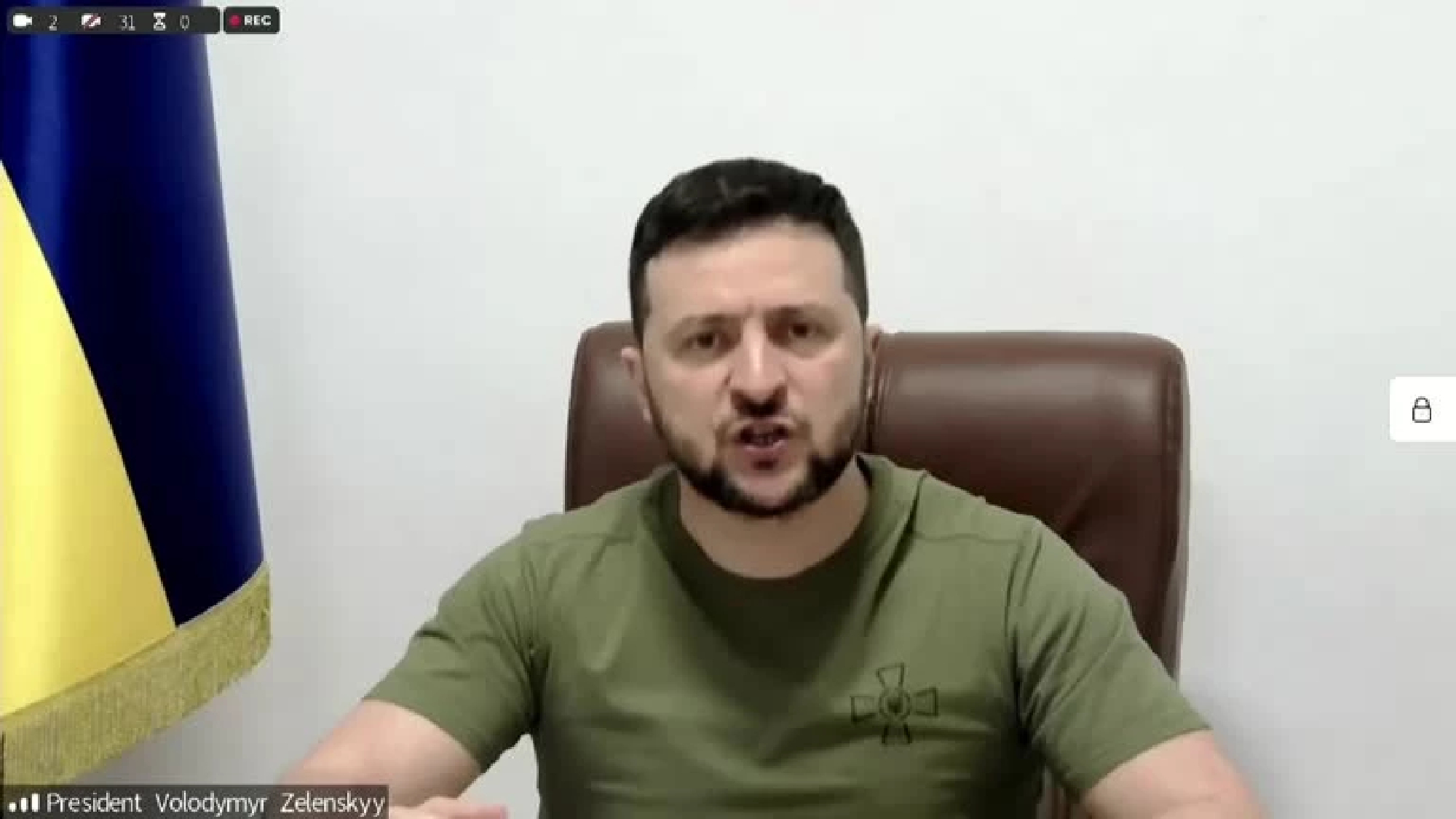
Ukrainian President Volodymyr Zelenskiy on Thursday (April 21) told participants in World Bank/IMF meetings that Ukraine needs $7 billion per month to make up for economic losses caused by Russia’s invasion of his country.
He said the global community needed to exclude Russia immediately from international financial institutions, including the World Bank and the International Monetary Fund and others.
Zelenskiy, in remarks made in a virtual address, called for countries that have imposed sanctions and freezes on Russian assets to use that money to help rebuild Ukraine after the war and to pay for losses suffered by other countries.
World Bank President David Malpass said physical damage to Ukraine’s buildings and infrastructure from Russia’s invasion has reached roughly $60 billion and will rise further as the war continues.
The conference on the sidelines of the IMF and World Bank spring meetings included finance officials from a number of countries, including U.S. Treasury Secretary Janet Yellen, who earlier said the United States would double its direct non-military aid pledge to $1 billion.
Ukrainian Prime Minister Denys Shmyhal, who attended the conference in person, said Ukraine’s GDP could decline by 30% to 50%, with direct and indirect losses totalling $560 billion so far. That total is more than three times the size of Ukraine’s economy, at $155.5 billion in 2020, according to World Bank data.
“If we do not stop this war together, the losses will increase dramatically,” Shmyhal said, adding that Ukraine would need a rebuilding plan similar to the post-World War Two Marshall Plan that helped to rebuild a war-ravaged Europe.


 Members of the al-Tell family have their iftar inside a cave at Khirbet Zanuta village, south of the West Bank city of Hebron, on April 17, 2022. (Photo by Mamoun Wazwaz/Xinhua)
 A member of al-Tell family is seen outside a cave, at Khirbet Zanuta village, south of the West Bank city of Hebron, on April 17, 2022. (Photo by Mamoun Wazwaz/Xinhua)
 Members of the al-Tell family are seen inside a cave, at Khirbet Zanuta village, south of the West Bank city of Hebron, on April 17, 2022. (Photo by Mamoun Wazwaz/Xinhua)
 A tourist snorkels in the waters near the Whitsunday Islands, part of the Great Barrier Reef, Australia, on Feb. 10, 2018. (Xinhua/Justin Qian)
 A tourist takes photos of Whitehaven Beach in the Whitsunday Islands, part of the Great Barrier Reef, Australia, on Feb. 10, 2018. (Xinhua/Justin Qian)