Six young people, who are now aged between 17 and 27, sued the operator of Japan’s disaster-hit Fukushima nuclear power plant, claiming they developed thyroid cancer due to radiation exposure after the plant’s multiple meltdowns.
The operator of Japan’s disaster-hit Fukushima nuclear power plant were sued by six young people on Thursday over claims that exposure to radiation after the plant’s multiple meltdowns caused them to develop thyroid cancer.
They filed their lawsuit at the Tokyo District Court.
On March 11, 2011, when a huge earthquake-triggered tsunami led to one of the world’s worst nuclear crises at the Fukushima plant, the plaintiffs, who are now aged between 17 and 27, were living in the Fukushima area.
The group’s lead lawyer Kenichi Ido told local media that they filed a class-action lawsuit against the plant’s operator Tokyo Electric Power Company (TEPCO) on Thursday afternoon.
According to local reports, the plaintiffs are seeking compensation totaling 616 million yen (5.35 million U.S. dollars).
Photo taken on Feb. 22, 2017 shows bags of contaminated soil at Tomioka, Fukushima Prefecture, Japan. (Xinhua/Hua Yi)
An expert panel compiled by the local government has said there is no causal link between radiation exposure from the disaster and thyroid cancer, while a report by the United Nations has said that the disaster had not directly affected the health of locals a decade after the incident.
Meanwhile, the UN Scientific Committee on the Effects of Atomic Radiation concluded that the reason why a higher rate of thyroid cancer was being detected among children was probably due to more advanced diagnostics.
Ido maintains, however, that none of his plaintiffs’ cancers were inherited and thus it is more than likely that exposure to radiation in the Fukushima region after the meltdowns was the cause of the thyroid cancers.
“Some plaintiffs have had difficulties advancing to higher education and finding jobs, and have even given up on their dreams for their future,” Ido was quoted as saying.
The plaintiffs were aged between six and 16 at the time of the meltdowns and were diagnosed with thyroid cancer between 2012 and 2018.
The Russian vessels will practice communications, safe manoeuvers in areas with intensive navigation, and air defence.
MOSCOW, Jan. 26 — More than 20 Russian warships and support vessels had left their bases for exercises in the Black Sea, Russia’s Defense Ministry said Wednesday.
The naval group, which consists of frigates, patrol ships, missile ships, landing ships, anti-submarine ships and minesweepers, was sailing towards the designated areas, the defence ministry said in a statement.
On the way to the drills, the Russian vessels will practice communications, safe manoeuvers in areas with intensive navigation, and air defence, it added.
On Monday, another 20 Russian warships and supporting vessels started large-scale drills in the Baltic Sea to carry out anti-submarine, air defence and mine-sweeping tasks, according to another statement.
These drills came as the North Atlantic Treaty Organization was putting forces on standby and sending additional ships and fighter jets to Eastern Europe as tensions in and around Ukraine had escalated.
During the weekly questions session in the House of Commons, Britain’s Prime Minister Boris Johnson ruled out his resignation as the opposition parties’ leaders urged him to do so.
Britain’s Prime Minister Boris Johnson on Wednesday defiantly fended off calls for his resignation ahead of the expected release of the findings of an official inquiry into parties that allegedly took place in Whitehall and Downing Street in the past two years in breach of the country’s COVID-19 restrictions.
During the weekly Prime Minister’s Questions (PMQs) session in the House of Commons (lower house of Parliament), Johnson ruled out his resignation as the opposition parties’ leaders urged him to do so.
Asked by Keir Starmer, leader of the main opposition Labour Party, if he should resign for changing his story over the gatherings and misleading Parliament, Johnson said “No.”
“I don’t deny it, and for all sorts of reasons, many people may want me out of the way, but the reason why he (Starmer) wants me out of the way is because he knows this government can be trusted to deliver,” he said.
Photo taken on Aug. 18, 2021 shows the Houses of Parliament in London, Britain. (Xinhua/Han Yan)
When Ian Blackford, leader of the Scottish National Party (SNP), asked Johnson when he would “cop on” and “go,” the prime minister said “I have absolutely no intention of doing what he suggests.”
Revelations of a string of rules-busting parties at Whitehall and Downing Street have enraged the British public, who obediently followed the government-imposed social restrictions that barred them from meeting friends and families for many months in 2020 and 2021. Several grieving families were even unable to say goodbye to dying relatives or attend funerals.
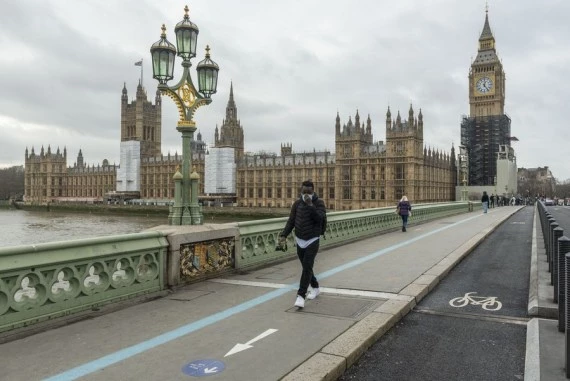
A man wearing a facemask walks across Westminster Bridge in London, Britain, Jan. 19, 2022. (Photo by Stephen Chung/Xinhua)
Two weeks ago, Johnson apologized for attending a Downing Street garden party on May 20, 2020, during the country’s first COVID-19 lockdown. He said he believed it was a work event and stayed there for 25 minutes only.
British media company ITV reported on Monday that the prime minister had a birthday party on June 19, 2020, at Downing Street, which was attended by around 30 people despite the ban on social gatherings indoors.
It remains unclear when the much-anticipated report drafted by Sue Gray, the senior civil servant tasked with investigating the alleged parties at Downing Street, will be released. Foreign Secretary Liz Truss said on Wednesday ahead of the PMQs that Downing Street had not yet received the findings of the Gray report but that it would be released very soon.
Truss told Sky News that parts of the report may be “problematic to publish” and may be “redacted” for “security” reasons.
However, she also stressed that whatever the result, Downing Street needs to mend its ways in the future.
There clearly needs to be a “change in culture,” Truss told the BBC. “We need to get the results of the report, we need to look at the results and fix the issues there are.”
On Tuesday, London Metropolitan Police announced the launch of an investigation into a number of events that took place at Downing Street and Whitehall in the past two years in relation to potential breaches of COVID-19 regulations, citing “deep public concern.”
Forensic officers work at the site of a terrorist-related incident in Streatham, south London, Britain, on Feb. 2, 2020. (Photo by Ray Tang/Xinhua)
“I would say the committee is of a mind to raise the federal funds rate at the March meeting assuming that conditions are appropriate for doing so,” Fed Chair Jerome Powell said, adding inflation risks are “still to the upside” in the views of most Fed officials.
The U.S. Federal Reserve signaled on Wednesday that the central bank is ready to raise interest rates as soon as March to combat surging inflation as it exits from the ultra-loose monetary policy enacted at the start of the pandemic.
“Supply and demand imbalances related to the pandemic and the reopening of the economy have continued to contribute to elevated levels of inflation,” the Fed said in a statement after a two-day meeting.
“With inflation well above 2 percent and a strong labor market, the Committee expects it will soon be appropriate to raise the target range for the federal funds rate,” the Fed said, referring to the Federal Open Market Committee (FOMC), the Fed’s policy-making committee.
The central bank has pledged to keep its federal funds rate unchanged at the record low level of near zero for roughly two years. But many Fed officials have expressed in recent weeks that they would be comfortable with a rate increase in March due to elevated inflation pressures.
Photo taken on Jan. 25, 2022 shows the U.S. Federal Reserve in Washington, D.C., the United States. (Photo by Ting Shen/Xinhua)
The consumer price index rose 7 percent in December from a year earlier, the largest 12-month increase since June 1982, according to the U.S. Labor Department.
At a virtual press conference Wednesday afternoon, Fed Chair Jerome Powell said that the U.S. economy “no longer needs sustained high levels of monetary policy support” due to the remarkable progress in the labor market and higher inflation.
“I would say the committee is of a mind to raise the federal funds rate at the March meeting assuming that conditions are appropriate for doing so,” Powell said, adding inflation risks are “still to the upside” in the views of most Fed officials.
A customer shops for fruit at a Target store in New York, the United States, Jan. 12, 2022. (Xinhua/Wang Ying)
“We will use our tools both to support the economy and a strong labor market and to prevent higher inflation from becoming higher entrenched and watching carefully to see whether the economy is evolving in line with expectations,” he said.
The central bank also decided to continue to reduce the monthly pace of its net asset purchases, bringing them to an end in early March.
Meanwhile, Fed officials discussed the principles for reducing the central bank’s nearly 9-trillion-U.S.-dollar balance sheet, which more than doubled during the pandemic, but they have not yet made any specific decisions.
Diane Swonk, chief economist at major accounting firm Grant Thornton, said that the FOMC made clear the intent to both raise rates and curb the size of the balance sheet in 2022.
“The vote to signal rate hikes and a reduction in the balance sheet following a liftoff in rates was unanimous,” Swonk said Wednesday in an analysis, expecting the Fed to wait until June to begin reductions in its mammoth balance sheet.
“The goal will be to put the balance sheet on remote control as it shrinks. The Fed wants reductions in the balance sheet to be predictable and akin to watching paint dry,” she said.
Joseph Brusuelas, chief economist at accounting and consulting firm RSM US LLP, said the Fed’s post-meeting statement signals that policy normalization will soon be in full swing with a rate increase in March, which will almost surely be followed by three to four additional hikes this year.
“While there is roughly a six-month lag before rates hikes work their way into the real economy, expectations have already resulted in a de-facto tightening of financial conditions and the onset of what is likely to be two to three years of policy normalization,” Brusuelas said.
Following a rate increase in March, Jay H. Bryson, chief economist at Wells Fargo Securities, expected the Fed to raise rates 25 basis points per quarter through the third quarter of 2023, bringing the federal funds rate to 1.75 percent to 2.00 percent.
“The risks seem skewed toward the FOMC moving at a faster pace and/or by more than we currently forecast if inflation remains uncomfortably high,” Bryson said.
Fed officials’ median interest rate projections released in December showed that the central bank could raise interest rates three times this year, up from just one rate hike projected in September, making a hawkish pivot to combat surging inflation.
Spring Festival decorations have been prepared in the China Town of Bangkok, Thailand, waiting for customers to choose to welcome the 2022 Chinese Lunar New Year, which falls on Feb. 1.
The Chinese Zodiac cycles every 12 years, with 2022 being the Year of the Tiger.
A customer picks Spring Festival decorations at a store in the China Town of Bangkok, Thailand, on Jan. 25, 2022. (Xinhua/Rachen Sageamsak)
Photo taken on Jan. 25, 2022 shows the tiger-shaped Spring Festival decorations at a store in the China Town of Bangkok, Thailand. (Xinhua/Rachen Sageamsak)
A customer picks Spring Festival decorations at a store in the China Town of Bangkok, Thailand, on Jan. 25, 2022. (Xinhua/Rachen Sageamsak)
A customer picks Spring Festival decorations at a store in the China Town of Bangkok, Thailand, on Jan. 25, 2022. (Xinhua/Rachen Sageamsak)
In response to the shortage of nurses amid the surging Omicron cases, many Western countries have “stepped up international recruitment as part of a trend that is worsening health inequity,” Reuters said.
As the Omicron variant spreads across the world, rich countries are stepping up efforts to recruit nurses from poorer regions, exacerbating labor shortages and global health inequalities, Reuters has reported.
In response to the shortage of nurses amid the surging Omicron cases, many Western countries have “stepped up international recruitment as part of a trend that is worsening health inequity,” Reuters said, citing Howard Catton, CEO of the International Council of Nurses.
“We have absolutely seen an increase in international recruitment to places like the UK, Germany, Canada and the United States,” Catton said in a Reuters interview.
A dose of COVID-19 vaccine is prepared at Garfield Medical Center, Monterey Park, Los Angeles County, California, the United States, Dec. 18, 2020. (Xinhua)
“I really fear this ‘quick fix solution’ — it’s a bit similar to what we’ve been seeing with personal protective equipment and vaccines where rich countries have used their economic might to buy and to hoard — if they do that with the nursing workforce it will just make the inequity even worse,” he said.
Some international recruits have come from sub-Saharan Africa, including Nigeria, and parts of the Caribbean, Catton said, adding that nurses are motivated by higher salaries, better terms than at home and immigration status.
According to the Reuters report, Catton called for more efforts to strengthen the U.S. workforce, saying “we need a coordinated, collaborative, concerted global effort which is underpinned by serious investment, not just warm words and platitudes and applause.”
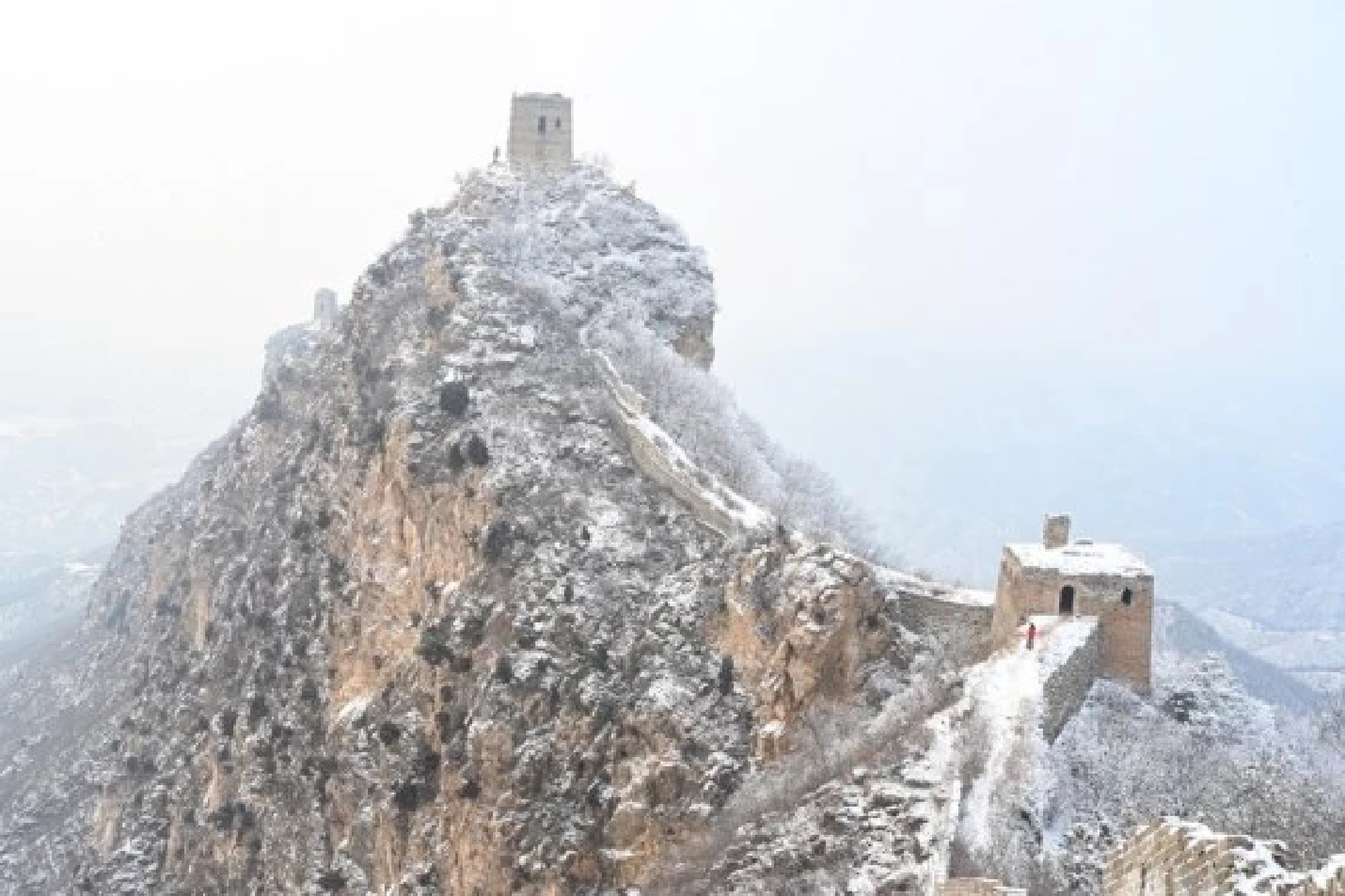
China’s meteorological authorities on Thursday issued a yellow alert for heavy snow in some regions of the country.
From Thursday morning to Friday morning, snowstorms are likely to hit parts of Tibet, Gansu, Shaanxi, Henan, Hubei, Hunan and Anhui, with 4 to 8 centimeters of snowfall expected, said the National Meteorological Center.
In some areas, snowstorms are expected to drop over 10 centimeters of snow, the meteorological center warned.
It advised residents to stay indoors and urged local authorities to take precautions involving roads, railways, electricity and telecommunications.
China has a four-tier color-coded weather warning system, with red representing the most severe, followed by orange, yellow and blue.
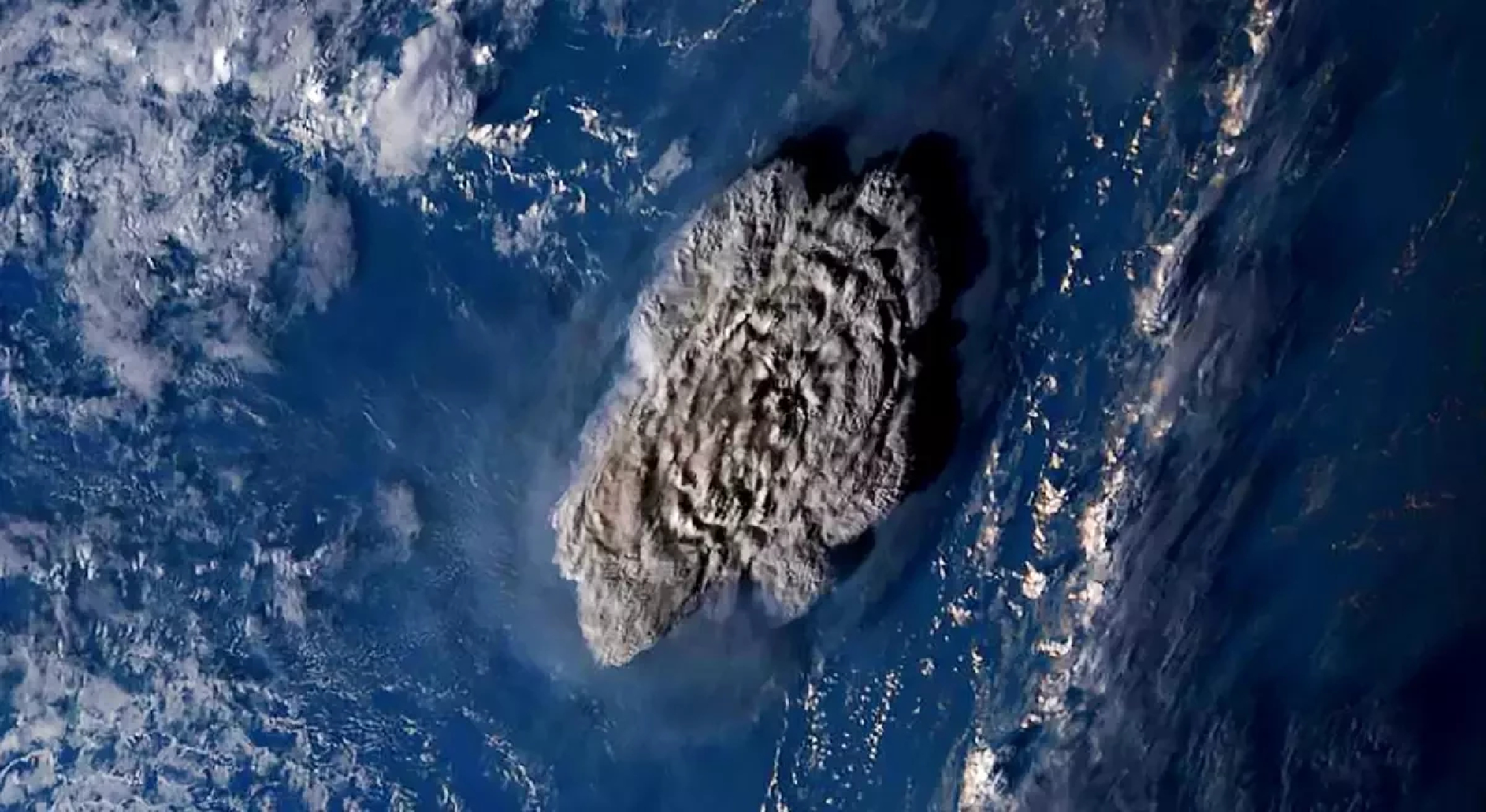
A volcano in Tonga began erupting in late December 2021 and exploded in mid-January 2022, and the phenomenon is being studied by Nasa scientist James Garvin and his colleagues.
The volcanic eruption in Tonga that triggered a tsunami was hundreds of times more powerful than the atomic bomb the US dropped on Hiroshima during World War II, Nasa has said.
The eruption “obliterated” a volcanic island north of the Tongan capital Nuku’alofa, the US space agency said.
The new land had risen above the water in 2015 and joined two islands, and Garvin and the team have been monitoring changes. The team used satellite observations and surface-based geophysical surveys to track the evolution of the piece of Earth.
The maps show dramatic changes at Hunga Tonga-Hunga Ha‘apai which is the upper part of an underwater volcano.
According to the map, it rises 1.8 kilometres from the seafloor and stretches 20 kilometres across. It is topped by a submarine caldera 5 kilometres in diameter. The island is part of Hunga Caldera’s rim and was the only part of the edifice above water. All new lands now are gone with large chunks of the two older islands.
“This is a preliminary estimate, but we think the amount of energy released by the eruption was equivalent to somewhere between 4 to 18 megatons of TNT,” said Garvin.
He added, “That number is based on how much was removed, how resistant the rock was, and how high the eruption cloud was blown into the atmosphere at a range of velocities.”
Garvin worked with researchers to develop maps of Hunga Tonga-Hunga Ha‘apai above and below the water.
They used high-resolution radar, optical observations, and altimetry. They also used sonar-based bathymetry data.
Nasa researchers, Columbia, the Tongan Geological Service, and the Sea Education Association worked together for six years to determine how the terrain was eroding due to waves and cyclones.
They also noted how wildlife had moved from the ecosystems of Hunga Tonga and Hunga Ha‘apai and colonised the landscapes of the newer land.
Things changed dramatically in January.
The volcanic activity seemed typical enough for the first few weeks of this year. The ongoing eruptions were reshaping the landscape and enlarging the island.
“By early January, our data showed the island had expanded by about 60 per cent compared to before the December activity started,” said Garvin.
He added that “The whole island had been completely covered by a tenth of a cubic kilometre of new ash. All of this was pretty normal, expected behaviour, and very exciting to our team.”
A powerful set of blasts sent ash surging into the stratosphere on January 13-14. On January 15, they launched material as high as 40 kilometres in altitude and possibly as high as 50 kilometres, covering nearby islands with ash and causing tsunami waves.
Most Surtseyan eruptions involve a small amount of water coming into contact with magma.
“If there’s just a little water trickling into the magma, it’s like water hitting a hot frying pan. You get a flash of steam and the water burns burn off quickly,” explained Garvin.
“What happened on the 15th was really different. We don’t know why — because we don’t have any seismometers on Hunga Tonga-Hunga Ha‘apai — but something must have weakened the hard rock in the foundation and caused a partial collapse of the caldera’s northern rim. Think of that as the bottom of the pan dropping out, allowing huge amounts of water to rush into an underground magma chamber at very high temperature,” he added.
Magma’s temperature is usually more than 1,000 degrees Celsius while seawater temperature is close to 20 degrees Celsius. The mixing can be incredibly explosive, especially in the confined space of a magma chamber, he said.
“This was not your standard Surtseyan eruption because of the large amount of water that had to be involved. In fact, some of my colleagues in volcanology think this type of event deserves its own designation. For now, we’re unofficially calling it an ‘ultra Surtseyan’ eruption’,” Gavin said.
Watching the birth and evolution of a “Surtseyan island” is “fascinating” for Gavin because there have not been many examples in the modern era. Most new Surtseyan islands get eroded away within a few months or years.
He was interested because it may teach us about Mars. “Small volcanic islands, freshly made, evolving rapidly, are windows in the role of surface waters on Mars and how they may have affected similar small volcanic landforms,” he said.
“We actually see fields of similar-looking features on Mars in several regions.”
“This election is crucial. Nothing less is at stake than our democracy,” House Speaker Nancy Pelosi said in an announcement.
WASHINGTON, Jan. 25 — U.S. House Speaker Nancy Pelosi, Democrat of California, announced Tuesday that she would run for reelection in this year’s midterm elections.
“While we’ve made progress, much more needs to be done to improve people’s lives. Our democracy is at risk because of the assault on the truth, assault on the U.S. Capitol and the state-by-state assault on voting rights. This election is crucial. Nothing less is at stake than our democracy,” Pelosi said in an announcement video posted on Twitter.
“But as we say, we don’t agonize, we organize, and that is why I am running for reelection to Congress and respectfully seek your support. I would be greatly honoured by it and grateful for it,” she added.
The speaker, however, did not mention whether she would seek House Democratic leadership in the upcoming elections slated for November.
Pelosi, who will turn 82 in March, has served as a U.S. representative from California since 1987. She said in 2018 that the current term would be her last as House speaker.
France’s daily number of COVID-19 cases hit a new record on Tuesday after 501,635 cases were recorded in the past 24 hours, according to data from the country’s Public Health Agency.
The number of COVID-19 patients in intensive care had fallen by 35 from a day before to 3,741 on Tuesday, but a further 364 deaths had been registered, showed the data. To date, the country has recorded a total of 102,086 deaths related to COVID-19 in hospitals.
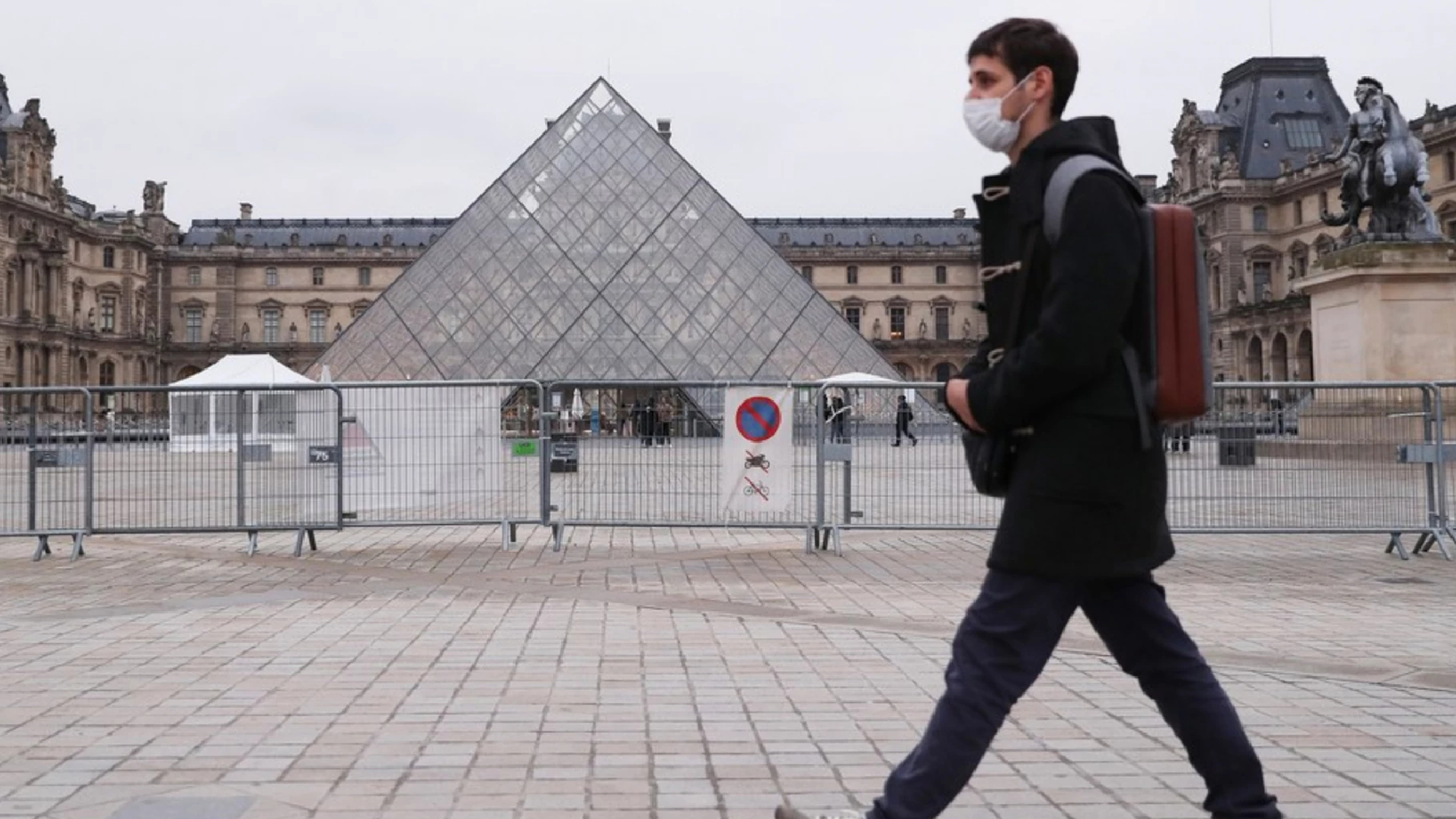
The vaccine pass came into effect in France on Monday and is now mandatory for people over the age of 16 to enter public venues.
Children between the ages of 12 and 15 are not obliged to have the vaccine pass but must present a health pass, and from Monday can receive the booster vaccine.
Minister of Health Olivier Veran told French news channel LCI on Tuesday that 9 million French citizens could lose the pass if they do not have the booster dose by Feb. 15. As of this date, vaccination is considered complete if the booster dose has been received within 4 months of the second injection.
Prime Minister Jean Castex announced on Jan. 20 that certain restrictions would be lifted in February. The wearing of masks outdoors will no longer be required outdoors from Feb. 2, and nightclubs will re-open from Feb. 16.
Also on Tuesday, Portugal reported 57,657 new COVID-19 cases in the last 24 hours, taking the national tally to 2,312,240 since the start of the pandemic, according to official data.
Portugal’s death toll related to COVID-19 rose by 48 to 19,661. Currently, 2,320 people are hospitalized for complications from COVID-19, including 158 in intensive care.


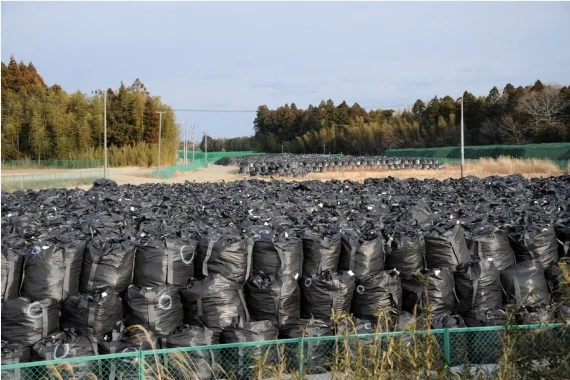 Photo taken on Feb. 22, 2017 shows bags of contaminated soil at Tomioka, Fukushima Prefecture, Japan. (Xinhua/Hua Yi)
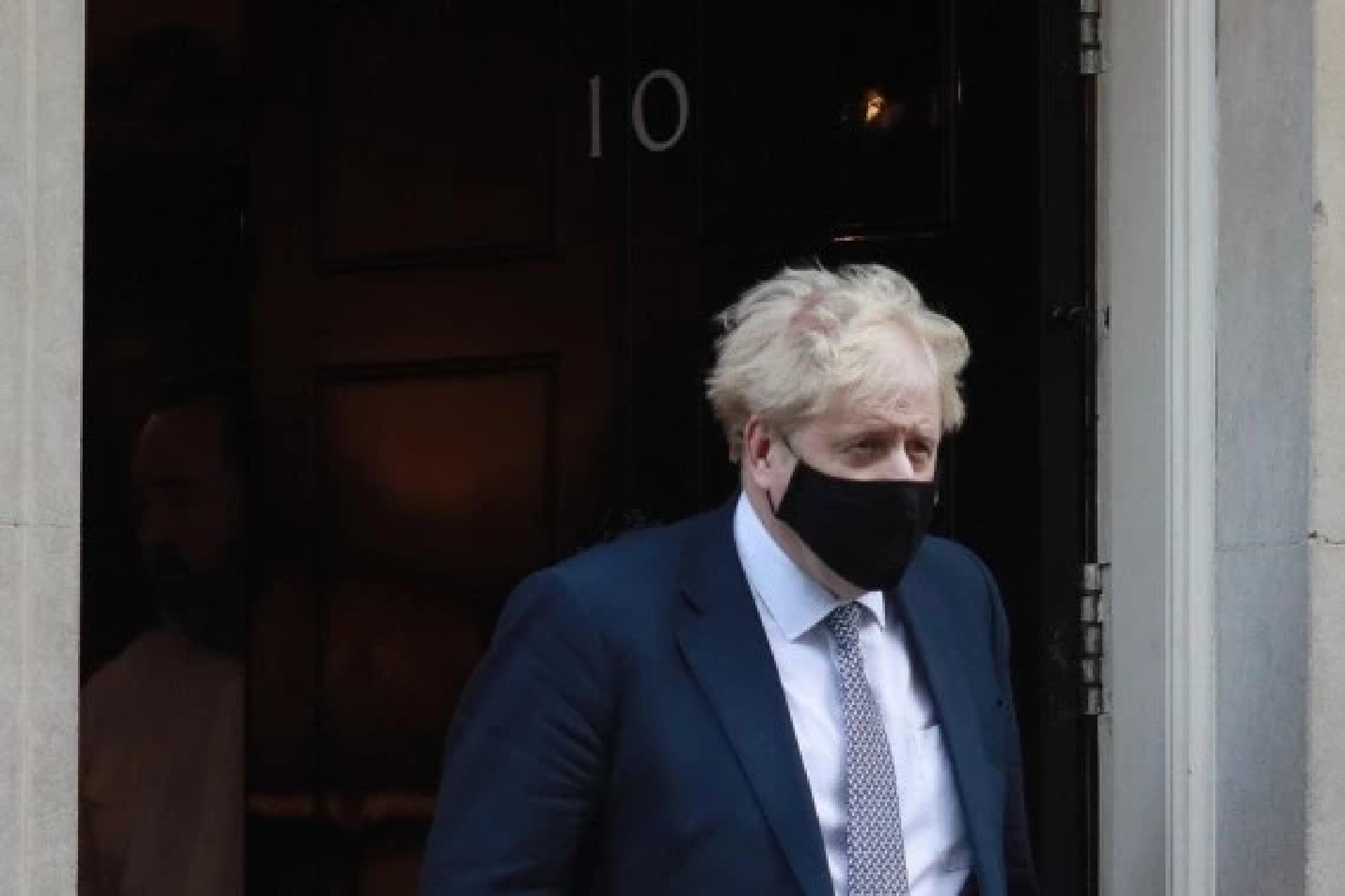
 Photo taken on Aug. 18, 2021 shows the Houses of Parliament in London, Britain. (Xinhua/Han Yan)
 A man wearing a facemask walks across Westminster Bridge in London, Britain, Jan. 19, 2022. (Photo by Stephen Chung/Xinhua)
 Forensic officers work at the site of a terrorist-related incident in Streatham, south London, Britain, on Feb. 2, 2020. (Photo by Ray Tang/Xinhua)
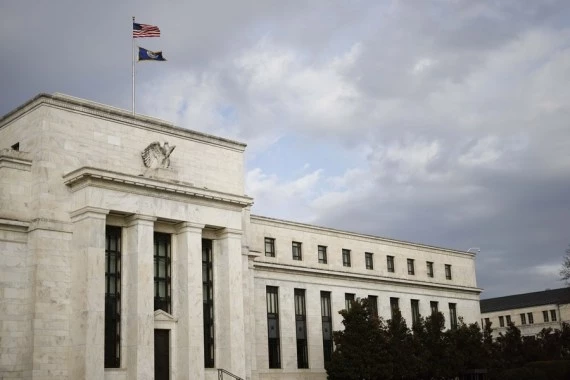 Photo taken on Jan. 25, 2022 shows the U.S. Federal Reserve in Washington, D.C., the United States. (Photo by Ting Shen/Xinhua)
 A customer shops for fruit at a Target store in New York, the United States, Jan. 12, 2022. (Xinhua/Wang Ying)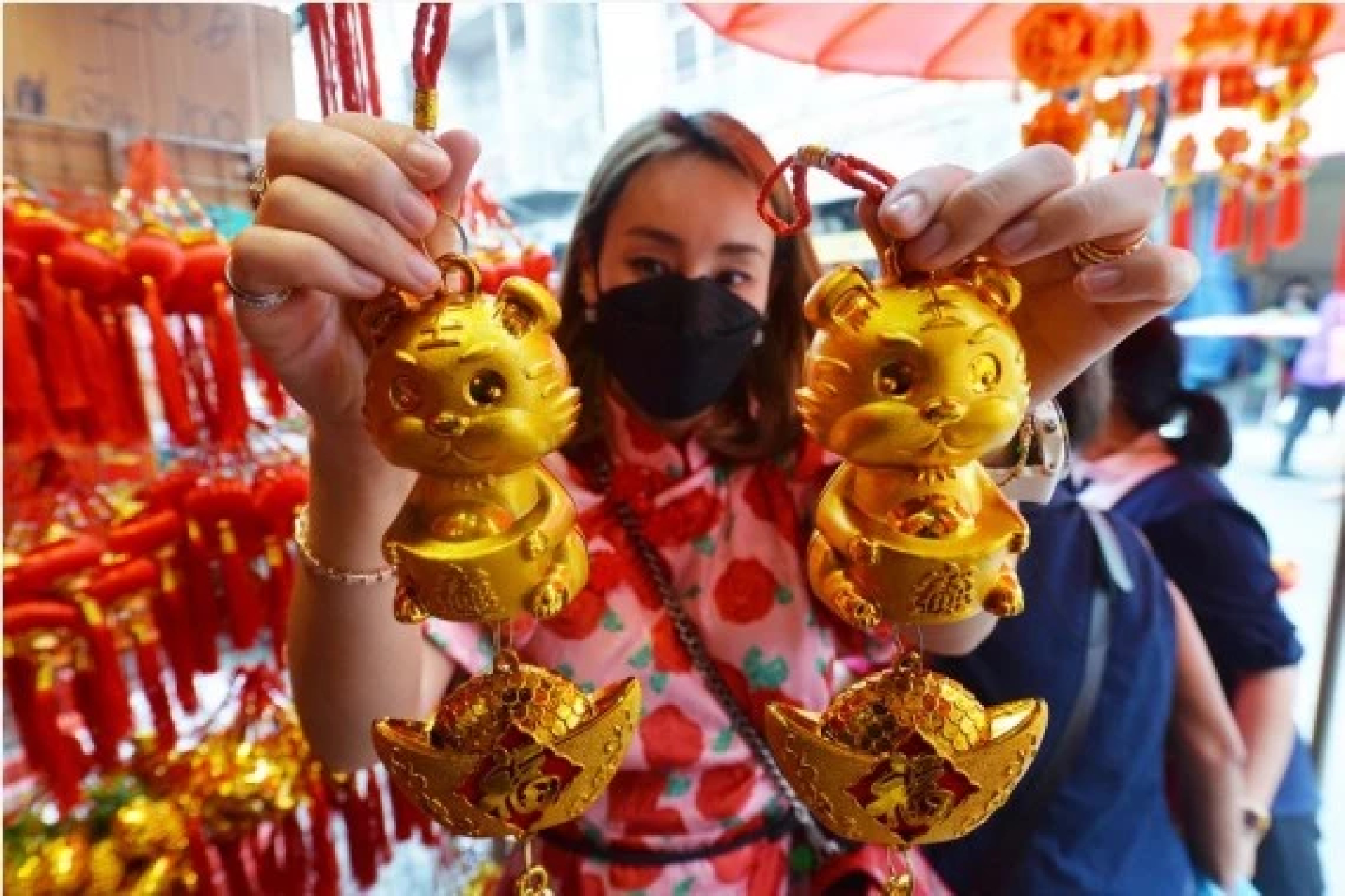
 A customer picks Spring Festival decorations at a store in the China Town of Bangkok, Thailand, on Jan. 25, 2022. (Xinhua/Rachen Sageamsak)
 Photo taken on Jan. 25, 2022 shows the tiger-shaped Spring Festival decorations at a store in the China Town of Bangkok, Thailand. (Xinhua/Rachen Sageamsak)
 A customer picks Spring Festival decorations at a store in the China Town of Bangkok, Thailand, on Jan. 25, 2022. (Xinhua/Rachen Sageamsak)
 A customer picks Spring Festival decorations at a store in the China Town of Bangkok, Thailand, on Jan. 25, 2022. (Xinhua/Rachen Sageamsak)
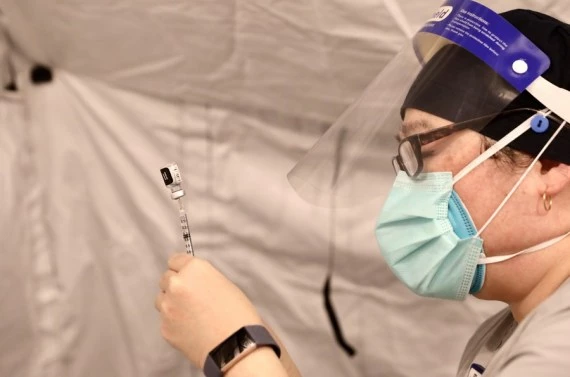 A dose of COVID-19 vaccine is prepared at Garfield Medical Center, Monterey Park, Los Angeles County, California, the United States, Dec. 18, 2020. (Xinhua)