The Russian Foreign Ministry provided article-by-article refutation on the U.S. fact sheet “Fact vs. Fiction: Russian Disinformation on Ukraine.”
MOSCOW, Jan. 22 — The Russian Foreign Ministry on Saturday criticized the U.S. Department of State for publishing a fact sheet full of false information about Russia’s policy on Ukraine.
The Russian ministry in a commentary called the sheet “an overt provocation” by Washington to publish the “Fact vs. Fiction: Russian Disinformation on Ukraine” just a day before Russian Foreign Minister Sergei Lavrov and U.S. Secretary of State Antony Blinken met in Geneva on Friday.
The Russian Foreign Ministry provided article-by-article refutation on the U.S. fact sheet, saying that since Dec. 15, 2021, when Moscow officially sent Washington its draft treaty and agreement on security guarantees, the U.S. side has mostly made obvious attempts to drag out discussions at expert levels and in various formats.
Meanwhile, the United States and its Western allies have launched a “very toxic information and propaganda campaign” by depicting Russia as an “aggressor,” an “enemy of civilized Europe” and a “threat” to the international stability, the ministry said.
It also blasted the Western countries’ “endless threats of painful sanctions against Russia that are designed to bleed our economy dry.”
The Lavrov-Blinken negotiations in Geneva on Friday ended with no breakthroughs in the establishment of legally binding security guarantees between Russia and the West, with the Ukrainian crisis as a core issue.
The West’s withdrawal from Afghanistan and subsequent decisions of the U.S. government have plunged the Afghan population into a humanitarian crisis, according to historian and author Paul Nuttall.
Washington’s refusal to unfreeze Afghanistan’s assets and insufficient humanitarian aid could lead to catastrophic consequences and the death of countless innocent people in the country, according to historian and author Paul Nuttall.
In a recent article published on RT, Nuttall discussed how the West’s withdrawal from Afghanistan and subsequent decisions of the U.S. government have plunged the Afghan population into a humanitarian crisis.
Afghanistan is facing one of its worst catastrophes, while the United States continues to stand by its decision to freeze the country’s central bank assets, according to Nuttall
People wait for work in Kabul, Afghanistan, Jan. 5, 2022. (Photo by Saifurahman Safi/Xinhua)
“Since the farcical withdrawal, and the awful scenes of desperate people falling from aeroplanes at Kabul airport, Afghanistan has had its $9 billion cash reserves frozen by the World Bank,” Nuttall wrote, adding that the United States considers that if those reserves were freed the Taliban would get access to them.
Nuttall argued that as recent reports suggest that 24.4 million Afghans are currently facing extreme hunger and 98 percent are not getting enough food, the United States is faced with the decision to negotiate with the Taliban and unfreeze the reserves, or potentially cause innumerable deaths.
“We have individuals who don’t have access to care. We have a higher degree of hospitalisation and death in our minority populations as we do in the general population.”
The United States is among a handful of countries that have actually suffered the most from COVID-19 and one of the most important reasons is “a fractured and disparate accessibility to healthcare,” top U.S. infectious disease expert Anthony Fauci has said.
“We have individuals who don’t have access to care. We have a higher degree of hospitalisation and death in our minority populations as we do in the general population,” said Fauci at the 2022 World Economic Forum virtual session, when answering the question why the United States, a “first world”, developed, rich economy, is struggling to contain COVID-19.
“We are among a handful of countries that have actually suffered the most…that is really, truly unfortunate and something that we would have hoped would have been avoided,” said Fauci.
Moreover, he continued, “it’s very disturbing, I believe, to all of us as public health officials and scientists, such a degree of pushback against regular normal, easy to understand public health measures. Reluctance to wear masks. Reluctance to promote vaccination.”
A medical worker transfers the body of a victim who died of COVID-19 at a hospital in New York, the United States, April 6, 2020. (Photo by Michael Nagle/Xinhua)
“Even at its best, this is such a formidable virus in its ability to do the things it’s already done, with multiple waves and multiple surges and multiple variants, but you make the virus have an advantage when you don’t implement in a unified way all the very well recognised public health measures, particularly the vaccines,” he warned.
The United States has witnessed a new COVID-19 surge since mid-December due to the highly infectious Omicron variant. The country is now averaging more than 765,000 new COVID-19 cases and 1,700 new deaths each day, up significantly week by week, according to the latest data of the U.S. Centers for Disease Control and Prevention.
The expert also noted that the entire world “is facing, but we certainly are facing it in a very, very disconcerting way in the United States, is the amount of disinformation that is accompanying what should be a problem where everyone pulls together against the common enemy, which is the virus.”
White flags to honor the lives lost to COVID-19 are seen on the National Mall in Washington, D.C., the United States, on Sept. 16, 2021. (Xinhua/Liu Jie)
“So far, there is insufficient evidence to determine whether BA.2 causes more severe illness than Omicron BA.1, but data is limited and UKHSA continues to investigate.”
Anew form of Omicron named BA.2 has been designated a “variant under investigation,” with 426 cases of the Omicron variant sub-lineage confirmed in the United Kingdom (UK), the UK Health Security Agency (UKHSA) said Friday.
“Overall, the original Omicron lineage, BA.1, is dominant in the UK and the proportion of BA.2 cases is currently low,” with the earliest dated Dec. 6, 2021, the agency said in a statement.
In total, 40 countries have uploaded 8,040 BA.2 sequences to the Global Initiative on Sharing All Influenza Data (GISAID) since Nov. 17. At this point, it is not possible to determine where the sub-lineage may have originated, it added.
The first sequences were submitted from the Philippines, and most samples have been uploaded from Denmark (6,411), while other countries that have uploaded more than 100 samples are India (530), Sweden (181), and Singapore (127), according to the agency.
A medical worker conducts an at-home COVID-19 antigen test in Quezon City, the Philippines, on Jan. 10, 2022. (Xinhua/Rouelle Umali)
Meera Chand, incident director at the agency, said new mutations are “expected” as the pandemic continues. “So far, there is insufficient evidence to determine whether BA.2 causes more severe illness than Omicron BA.1, but data is limited and UKHSA continues to investigate.”
Official figures on Friday showed the UK added 95,787 COVID-19 cases in the latest 24 hours, bringing its total caseload to 15,709,059, and 288 more deaths, taking the national death toll to 153,490.
More than 90 percent of people aged 12 and above in the UK have had their first dose of vaccine, more than 83 percent have taken both shots, and more than 63 percent have received booster jabs.
Inner Mongolia Autonomous Region, lying at the forefront of China’s fight against desertification, has been fueling its green drive.
Last year, the north China region planted 5.94 million mu (about 396,000 hectares) of trees and 16.67 million mu of grass, and treated 5.3 million mu of desertified and sandy land, according to the government work report delivered Friday at the sixth session of the 13th Inner Mongolia Autonomous Regional People’s Congress.
The region plans to raise its forest coverage to 23.5 percent and record a forest stock volume of 1.55 billion cubic meters by 2025. It also plans to raise its grassland vegetation coverage to about 45 percent during the period.
Inner Mongolia is home to several large deserts such as Badain Jaran, Tengger, Ulan Buh and Kubuqi. The region has 23.3 percent of China’s total areas of desertified land and 23.7 percent of the country’s total sandy land, respectively.
The autonomous region spans the vast northern territory of China and is an important ecological barrier in the country. It has always attached great importance to ecological construction and protection.
The autonomous region launched a series of major ecological projects, including a project turning marginal farmland into forests.
Meanwhile, commercial logging of natural forests in the region was also halted in a bid to help restore the ecosystem.
One of the world’s most influential Buddhist monks who brought the concept of mindfulness to the West, Thich Nhat Hanh, died on Saturday at the age of 95.
The monk, who was also a peace activist, “passed away peacefully” at the Tu Hieu Temple in Hue, Vietnam, the International Plum Village Community of Engaged Buddhism said in a statement.
“We invite our global spiritual family to take a few moments to be still, to come back to our mindful breathing, as we together hold Thay in our hearts in peace and loving gratitude for all he has offered the world,” the organisation posted on Nhat Hanh’s Twitter account on Saturday, referring to the late monk by the Vietnamese word for teacher.
Funeral rites will be held in Hue for the next five days.
Nhat Hanh, who brought mindfulness to the West – from Hollywood celebrities to boardrooms in Silicon Valley – was only allowed to return to Vietnam after 39 years in exile in France.
He was banished from his home in the 1960s for calling for an end to Vietnam War. The Zen master, whose influence in Buddhism is seen as second only to the Dalai Lama, was also expelled for advocating religious freedom, especially in the communist country where all faiths are strictly controlled.
The monk then travelled to the US and met Martin Luther King, who nominated him for the Nobel Peace prize in 1967 as he was an “apostle of peace and non-violence”.
During his time in the West, Nhat Hanh wrote more than 100 books on mindfulness and meditation, before he was allowed to return and see out his final days at the Tu Hien temple under close police vigil.
On Saturday, King’s daughter Bernice posted a photograph of her father and Nhat Hanh on Twitter with the caption: “My father with his friend and ally, #ThichNhatHanh, who died this week. I celebrate and honour Thich Nhat Hanh’s life and global influence for peace.”
She also posted Thich Nhat Hanh’s quote: “We are here to awaken from our illusion of separateness.”
Rahul Gandhi, a member of the Indian National Congress and grandson of late PM Indira Gandhi, tweeted: “My condolences to the followers of Zen master Thich Nhat Hanh, the Father of mindfulness. His gentle words on peace, gratitude and non-violence will ring true forever.”
US Senator Mazie Hirono tweeted: “It was an honour to meet Thich Nhat Hanh in Vietnam in 2019. His teachings of compassion and mindfulness will continue to lighten this world. Rest in peace.”
China has unveiled a plan outlining major targets for transportation network development in the 14th Five-Year Plan period (2021-2025).
BEIJING, Jan. 18 — High-speed railways will stretch to a total length of 50,000 kilometres in 2025, up from 38,000 kilometres in 2020, and 250-km ones are expected to cover 95 percent of cities with populations above 500,000, per the document released by the State Council.
The country will have 165,000 kilometres of railways in 2025, up from 146,000 kilometres five years earlier; more than 270 civil airports, up from 241; 10,000 kilometres of subway lines in cities, up from 6,600 kilometres; 190,000 kilometres of expressways, up from 161,000 kilometres; and 18,500 kilometres of high-level inland waterways, up from 16,100 kilometres.
The transportation system will also be greener. Cities will see 72 percent of buses running on new energy, an improvement from 66.2 percent, and the carbon dioxide emission intensity of the transportation sector will be decreased by 5 percent.
The main goal is to achieve integrated development in 2025, with tangible breakthroughs in the intelligent and green transformation of the transportation system, according to the plan.
Looking to 2035, the plan aims to build “1-2-3 circles” for passenger trips and the transportation of goods.
That means travel time within cities and city clusters, and among metropolises will be cut to one hour, two hours and three hours, respectively. It will be possible for mail sent by express services to be delivered in as short a time as one day within China, two days when sent to neighbouring countries, and three days when sent to major cities globally.
Xinhua
In 2025, grain, energy and ore transportation safety in major channels will have a stronger guarantee, and international logistics supply chains will be better protected, according to the plan.
International connectivity will also be improved, the plan said, specifying efforts to enhance transportation infrastructure with neighbouring countries, push for the high-quality development of China-Europe freight train routes, and build an “Air Silk Road,” among others.
The test-and-mask moves show that the Biden administration “is trying to step up its coronavirus response as the highly infectious Omicron variant drives a spike in cases across the nation,” says The New York Times.
The Joe Biden administration will make 400 million N95 masks available for free at thousands of locations across the country, a White House official said on Wednesday, as health experts stress the importance of high-quality face coverings to protect against the Omicron variant of COVID-19.
The plan consists of working with pharmacies and community health centers to distribute the nonsurgical masks, which will come from the Strategic National Stockpile. The administration will begin shipments this week and hopes to have the program fully operational by early February.
Tom Inglesby, the administration’s COVID-19 testing coordinator, said in an interview that “we know that these masks provide better protection than cloth masks,” adding that the administration was “confident that people who want to access them will be able to access them.”
The screenshot taken from the website of covidtests.gov on Jan. 19, 2022 shows the pictures and description of the U.S. government
HOME TESTS
The Biden administration’s new website allowing people to order up to four free at-home coronavirus tests quietly went live on Tuesday, a day in advance of its formal launch, and demand already appeared to be significant.
A combined total of more than 1 million visitors were on the home page and the ordering page of covidtests.gov at one point Tuesday evening, more than 40 times as many as were on the government site with the next highest traffic, the U.S. Postal Service’s package-tracking page, according to official data.
The test-and-mask moves show that the Biden administration “is trying to step up its coronavirus response as the highly infectious Omicron variant drives a spike in cases across the nation,” reported The New York Times, noting that the administration at first resisted the idea of sending tests to Americans’ homes.
Airplanes are seen parked at the apron of John F. Kennedy International Airport in New York, the United States, Jan. 3, 2022. (Photo by Michael Nagle/Xinhua)
STRICTER TRAVEL ADVISORY
On Tuesday, the U.S. Centers for Disease Control and Prevention (CDC) moved a whopping 22 destinations into its highest-risk travel category for COVID-19. Adding to the impact, the CDC also moved 22 additional destinations to its Level 3 category, which is considered “high” risk for COVID-19.
By contrast, it moved only two nations to Level 4, or “very high” risk, last week. This week, among the nations moved to Level 4 were Argentina and Australia, which have maintained some of the strictest border controls during most of the pandemic. Level 2 and 1 respectively mean “COVID-19 Moderate” and “COVID-19 Low.”
The CDC advises travelers to avoid travel to Level 4 destinations, where more than 500 cases per 100,000 residents have been registered in the past 28 days. In its broader travel guidance, the CDC has recommended avoiding all international travel until fully vaccinated.
Families visit the Lincoln Memorial at the National Mall in Washington, D.C., the United States, Jan. 17, 2022. (Photo by Ting Shen/Xinhua)
PANDEMIC SURGE
The United States added over 1 million COVID-19 cases again on Tuesday, after setting a global record of over 1.36 million daily cases earlier this month, according to latest data from Johns Hopkins University.
A total of 1,060,747 new cases and 1,896 new deaths were reported across the country on Tuesday.
The country recorded as high as over 5.4 million COVID-19 cases in the week from Jan. 10 to 16, a record high weekly case count since the onset of the pandemic in the country, according to Johns Hopkins University data.
“Cynicism is a path to inaction. If we give in to it, we will be lulled into complacency, into the false belief that our actions do not matter and that we can only await the inevitable,” says Abdulla Shahid.
Abdulla Shahid, president of the 76th session of the UN General Assembly, on Wednesday stressed the need for hope and warned against cynicism.
“Throughout all our efforts, there is one constant that needs to be present: hope. Yes, the tasks before us are daunting. Yet cynicism offers us no solutions,” he told an informal meeting of the General Assembly on his priorities for the remaining eight months of his office.
Abdulla Shahid (at the podium and on the screens), president of the 76th session of the UN General Assembly, speaks at an informal meeting of the General Assembly on his priorities for the remaining eight months of his office at the UN headquarters in New York, on Jan. 19, 2022. (Eskinder Debebe/UN Photo/Handout via Xinhua)
“Cynicism is a path to inaction. If we give in to it, we will be lulled into complacency, into the false belief that our actions do not matter and that we can only await the inevitable,” he said. “Hope is what will strengthen our resolve. Hope is what will give us the courage of our convictions and inspire us to act. Hope is what will remind us of all that we have achieved and all that we can achieve if we work together.”
“That is the basic message I will continue to convey during my ‘Presidency of Hope.’ Through hope, we can make a lasting difference. We can overcome this pandemic, achieve universal vaccination, protect the planet, recover sustainably, promote human rights, and revitalize the United Nations. Through hope, we can lay the foundations for a better tomorrow and build on that vision. Through hope we can ensure that the 76th session of the General Assembly is a successful one,” he added.
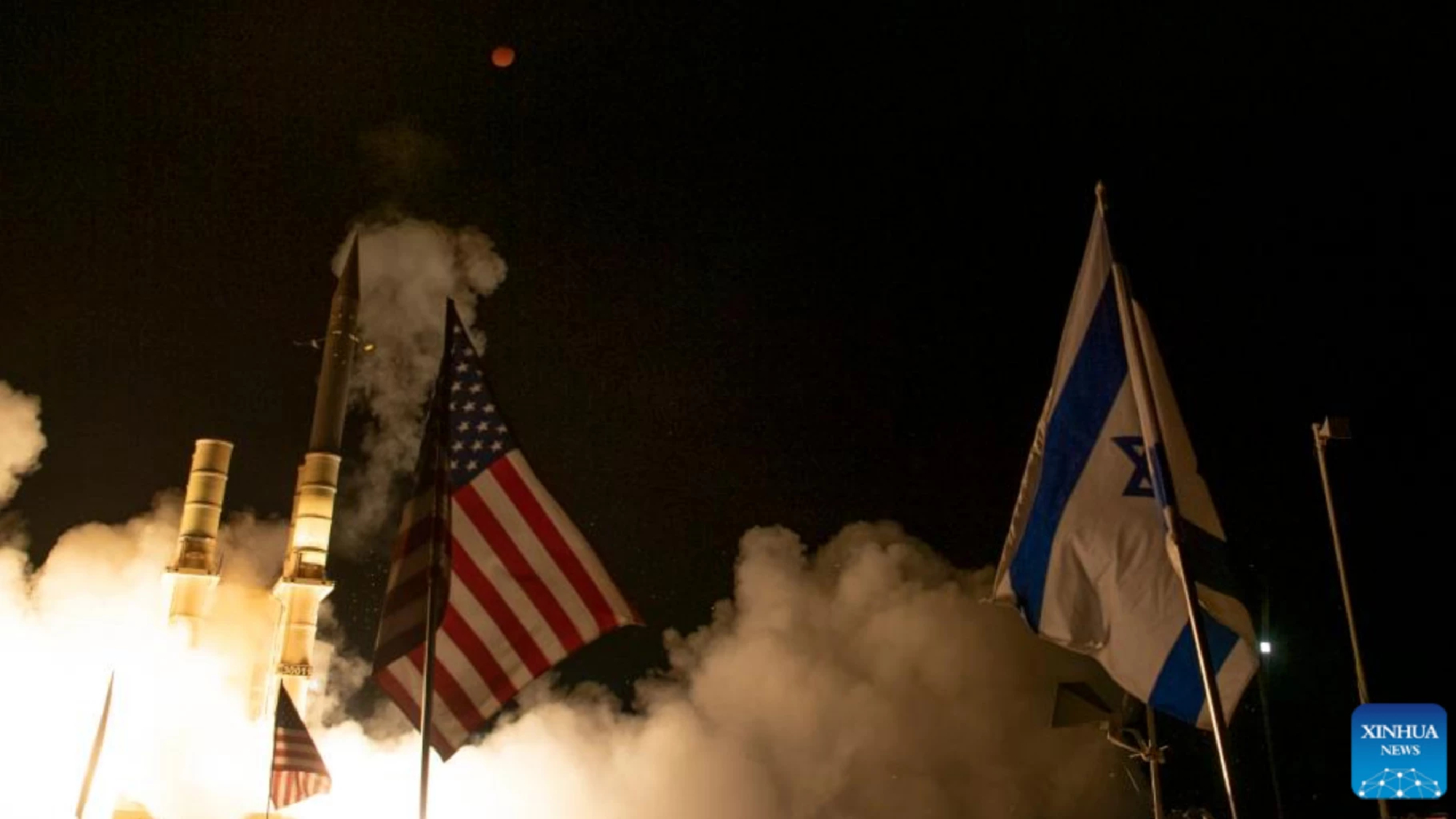
Israel and the United States have completed a successful flight test of the Arrow-3 ballistic missile interceptor, the Israeli Ministry of Defense announced on Tuesday.
JERUSALEM, Jan. 18 (Xinhua) — At a test site in central Israel, the ballistic missile interceptor detected and destroyed a target in outer space, the ministry said in a statement.
The completion of the test was “an important milestone” for Israel to defend itself against existing and evolving threats in the region, said the statement.
Israeli Defense Minister Benny Gantz praised the test for “equipping the State of Israel with the capabilities to defend itself against developing threats,” adding the Arrow-3 system “provides Israel with the freedom to maneuver strategically.”
U.S. Missile Defense Agency (MDA) Director Jon Hill said in the statement that the test was designed to “challenge every element of the Arrow Weapon System, and it performed beautifully.”
Hill added the MDA remains committed to assisting Israel in upgrading its missile defense capability.
The Arrow-3 weapon system is part of Israel’s multi-layer defense system, which includes Iron Dome, a system aimed at intercepting short-range rockets from Gaza, David’s Sling, a medium to long-range missiles defense system, and the long-range Arrow-3.
In 2021, Israel said it was developing a new ballistic shield system, dubbed Arrow-4, jointly with the United States. ■



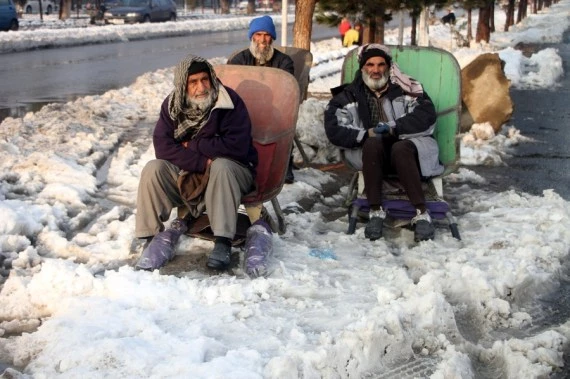 People wait for work in Kabul, Afghanistan, Jan. 5, 2022. (Photo by Saifurahman Safi/Xinhua)
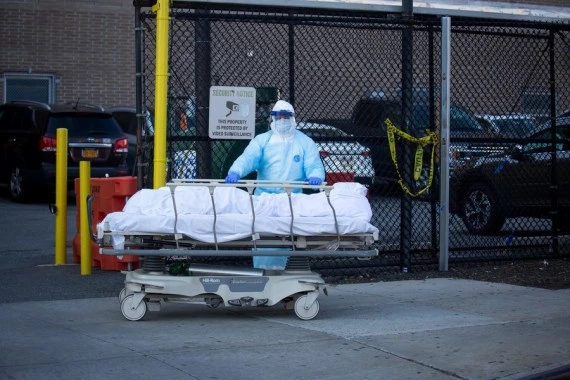 A medical worker transfers the body of a victim who died of COVID-19 at a hospital in New York, the United States, April 6, 2020. (Photo by Michael Nagle/Xinhua)
 White flags to honor the lives lost to COVID-19 are seen on the National Mall in Washington, D.C., the United States, on Sept. 16, 2021. (Xinhua/Liu Jie)
 A medical worker conducts an at-home COVID-19 antigen test in Quezon City, the Philippines, on Jan. 10, 2022. (Xinhua/Rouelle Umali)


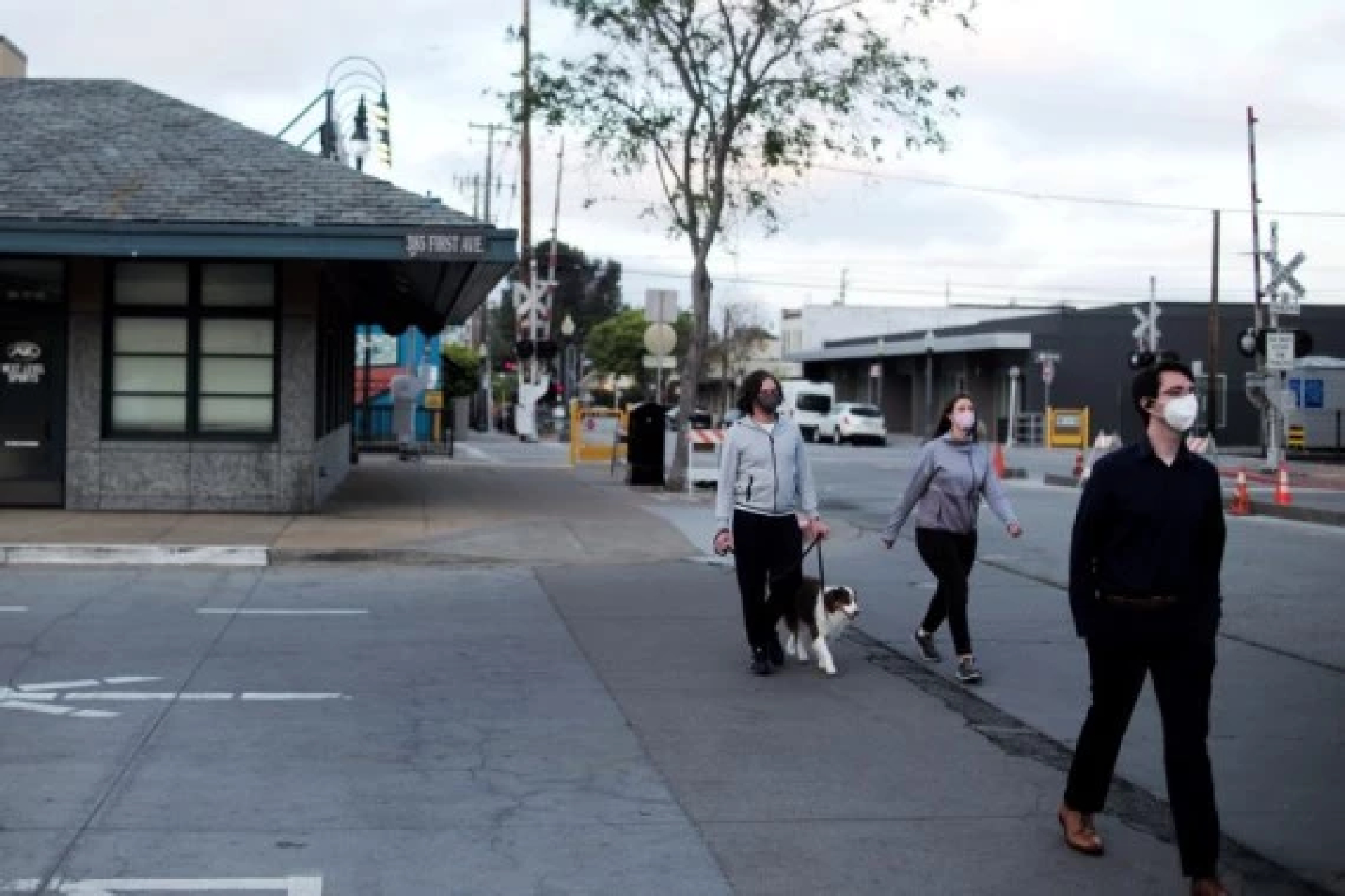
 Airplanes are seen parked at the apron of John F. Kennedy International Airport in New York, the United States, Jan. 3, 2022. (Photo by Michael Nagle/Xinhua)
 Families visit the Lincoln Memorial at the National Mall in Washington, D.C., the United States, Jan. 17, 2022. (Photo by Ting Shen/Xinhua)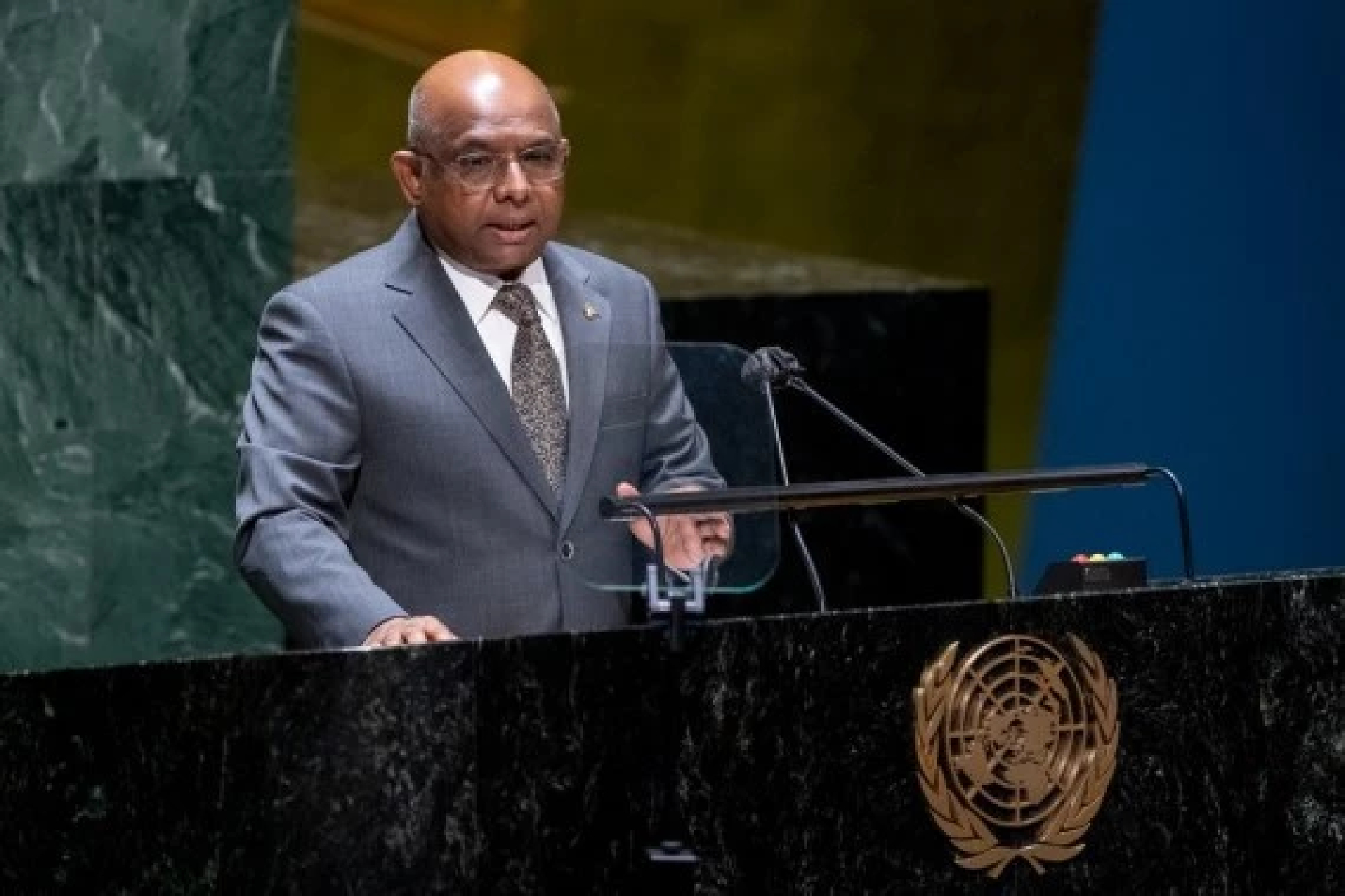
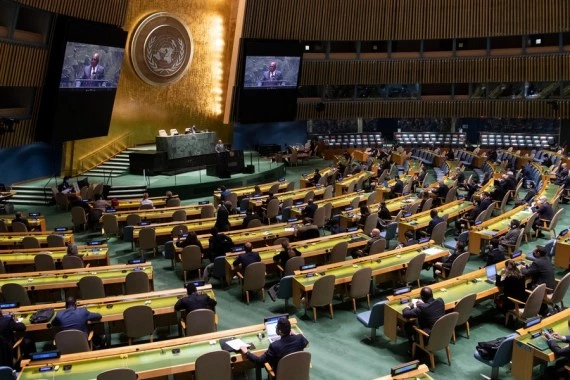 Abdulla Shahid (at the podium and on the screens), president of the 76th session of the UN General Assembly, speaks at an informal meeting of the General Assembly on his priorities for the remaining eight months of his office at the UN headquarters in New York, on Jan. 19, 2022. (Eskinder Debebe/UN Photo/Handout via Xinhua)