Appeals court reinstates Bidens vaccine policy for businesses, setting up a likely showdown at Supreme Court

#SootinClaimon.Com : ขอบคุณแหล่งข้อมูล : หนังสือพิมพ์ The Nation.

https://www.nationthailand.com/international/40010129


A federal appeals court on Friday reinstated the Biden administrations coronavirus vaccination policy for large private businesses, reversing an earlier court ruling that had halted one of the White Houses signature efforts to reduce transmission and drive down case counts.

Appeals court reinstates Bidens vaccine policy for businesses, setting up a likely showdown at Supreme Court

The ruling by the Ohio-based U.S. Court of Appeals for the 6th Circuit can be appealed to the U.S. Supreme Court, which is likely to have the final say over the rules set to take effect Jan. 4.

The Justice Department had asked the court to clear the way for the policy designed to protect workers at large private businesses from the virus that has killed more than 800,000 people in the United States. A spokesperson for the agency declined to comment.

Under the Labor Department rules, employers with more than 100 workers must require staff to get vaccinated or face weekly testing and mandatory masking. There are exceptions for employees who do not work on-site or with others.

Friday’s 2-1 ruling backs the Biden administration’s authority to issue the emergency workplace directive through the Occupational Safety and Health Administration.

“The record establishes that COVID-19 has continued to spread, mutate, kill, and block the safe return of American workers to their jobs. To protect workers, OSHA can and must be able to respond to dangers as they evolve,” according to the opinion written by Judge Jane B. Stranch.

More than two dozen Republican-led states, private businesses and conservative legal groups challenged the policy. Before the legal challenges filed in courts throughout the country were consolidated at the 6th Circuit, a different appeals court temporarily halted President Joe Biden’s plans.

The Louisiana-based 5th Circuit Court of Appeals said the Labor Department exceeded its authority and ordered OSHA to not take any further steps to implement or enforce the rules.

OSHA invoked a rarely used power to issue the policy, which is expected to cover 84 million workers. The Biden administration estimates the rules would save thousands of lives and keep people out of inundated hospitals.

States challenging the policy told the court that the case is one of “exceptional importance” that will “affect the personal health decisions of tens of millions of Americans, coast to coast.”

“It will determine whether private companies – many of which are still struggling to survive the economic carnage inflicted by COVID-19 – must invest resources helping the federal government run a mass-vaccination program,” according to the filing from 27 states, led by Ohio Attorney General Dave Yost.

But the majority of the 6th Circuit panel said the cost of delaying the vaccination policy is potentially high and would harm the public interest.

The directive, they said, “is an important step in curtailing the transmission of a deadly virus that has killed over 800,000 people in the United States, brought our healthcare system to its knees, forced businesses to shut down for months on end, and cost hundreds of thousands of workers their jobs,” wrote Stranch, a nominee of President Barack Obama. She was joined by Judge Julia Smith Gibbons, a nominee of President George W. Bush.

The dissenting judge, Joan Larsen, said OSHA had exceeded its authority to regulate employers’ conduct and should have considered less sweeping alternatives.

“The virus that causes COVID-19 is not, of course, uniquely a workplace condition. Its potency lies in the fact that it exists everywhere an infected person may be – home, school, or grocery store, to name a few,” wrote Larsen, a nominee of President Donald Trump. “So how can OSHA regulate an employee’s exposure to it?”

Separately, the Biden administration asked the Supreme Court on Thursday to allow it to fully enforce a nationwide requirement that health-care workers be vaccinated if they work at facilities participating in Medicare and Medicaid. Lower courts have suspended the policy after 24 states filed lawsuits. On Friday, the Supreme Court told challenging states to respond to the administration’s petition by Dec. 30, which would not leave the court much time for a decision.

On Capitol Hill, Senate Republicans pushed through a recent proposal that aims to repeal the vaccine or testing requirements for private companies, saying the rules are unconstitutional and put jobs at risk. Two Democrats, Sens. Joe Manchin (W.Va.) and Jon Tester (Mont.), joined their GOP colleagues in passing the measure, which is expected to face resistance in the House.

Published : December 18, 2021

By : The Washington Post
Latest round of nuclear talks adjourns

#SootinClaimon.Com : ขอบคุณแหล่งข้อมูล : หนังสือพิมพ์ The Nation.

https://www.nationthailand.com/international/40010128


VIENNA – The latest round of nuclear talks between world powers and Iran adjourned here on Friday after what a senior State Department official said was a two-week session that was “better than it might have been” but “worse than it should have been.”

Latest round of nuclear talks adjourns

The official described “some modest progress” on agenda items for future discussion concerning Iran’s nuclear activities, and Iran’s agreement with the International Atomic Energy Agency that resolved an outstanding verification issue.

“Given how much work needs to be done, and given that we have not yet achieved clarity on other issues . . . there is still a lot of work to be done,” said the official, who spoke on the condition of anonymity under rules set by the State Department. “Time is running out,” he said, to avoid the moment when the nuclear agreement they are working to reestablish becomes “a corpse that cannot be revived.”

The talks adjourned after the chief Iranian negotiator said he was returning to Tehran for consultations, with no firm date set to resume. In response, both the United States and delegations from Britain, France and Germany expressed dismay and said they had been prepared to continue.

“We respect the decision of the Iranian negotiator Bagheri-Kani to travel back to Tehran for consultations today – even if, to our disappointment, this entails a pause in the negotiations,” the Europeans said in a statement. “In just a few weeks – not months – the nonproliferation policy advantages achieved by the [2015 nuclear agreement] will be extinguished. We are rapidly approaching the end of the road for these negotiations.”

The Europeans, along with Russia and China, are negotiating directly with Iran to revive the deal, from which the Trump administration withdrew in 2018. Under the agreement, Iran agreed to sharply limit the quantity and quality of the enriched uranium it produced and submit to IAEA monitoring, while the United States agreed to lift nuclear-related sanctions.

After withdrawal, Trump reimposed and increased economic sanctions designed to strangle the Iranian economy, and Iran followed by significantly expanding the amount and purity of its uranium enrichment far beyond the limits of the deal, known as the Joint Comprehensive Plan of Action.

President Joe Biden came to office promising to reenter the agreement and adhere to its original terms if Iran would do the same. Iran has refused to negotiate directly with the United States, so the Europeans are serving as go-betweens.

Negotiations began in April but were suspended after six sessions in June when Iran elected a new government. Tehran’s return to the table last month, under a more hard-line government, brought what those on the other side called “unacceptable” new demands.

The European statement said that technical progress had been made over the past 24 hours “but that just brings us a little closer to where we were in June.”

“We have now a text that, with some minor exceptions, is common ground for negotiations,” European Union envoy Enrique Mora, who is coordinating the talks, told reporters Friday afternoon. “That doesn’t mean we have an agreement. We don’t.”

He said the process is “going to be politically painful at times, and we do not have much time.”

Iran’s chief negotiator, Ali Bagheri, told reporters that the pace of reaching agreement depends on the others. “If the other side accepts the rational views and positions of the Islamic Republic of Iran, the new round of talks can be the last one and we can achieve a deal in the shortest possible time,” he said, according to Iranian media.

He also indicated that China, which has supported the need to return to the original terms of the JCPOA, is more sympathetic to Iranian demands that other delegations. China has continued to purchase Iranian oil in violation of sanctions.

As described by the State Department official, most of this week’s discussions centered on “nuclear issues” of how the Iranian program would return to compliance with the JCPOA.

Thanks to European diplomacy, the official said, “we now have a common understanding of the text that will serve as a basis for negotiations on nuclear issues.” While a “welcome step,” the official cautioned that enthusiasm should be curbed because “we are now at best where we were last June . . . compiling items on an agenda that have to be resolved but were not resolved during this round.”

The United States and its partners have said that continued expansion of Iran’s nuclear activities have brought it closer to having the materials and much of the know-how to produce a nuclear weapons, although Iran has said that is not its goal. If those activities progress beyond a certain point, including continued use of advanced centrifuges and enrichment and stockpiles of highly enriched uranium far beyond the limits of the JCPOA, there will be little point in continuing the effort.

While the official declined to say when that time would arrive, some experts have estimated it may be a matter of a few months, if not weeks.

“We were ready to continue to do the work necessary,” the official said. “The Iranian delegation has its reasons, I’m sure, for wanting to go back. The point is we hope they return soon . . . with a sense of urgency.”

“Regardless of whatever progress is made, the pace at which we are moving won’t suffice to save the JCPOA,” the official added. “There is going to have to be an acceleration. Iran is going to have to come back with a clear set of issues it prioritizes and how to resolve them. They will find on the part of the U.S. a party prepared to negotiate seriously, constructively and creatively.”

Meanwhile, a group of seven prominent former policymakers, including former CIA director and defense secretary Leon Panetta and former U.S. Central Command chief and CIA director David Petraeus, released a statement Friday calling on the administration to “restore Iran’s fear that its current nuclear path will trigger the use of force against it by the United States.”

In response to their proposals for increased U.S. military exercises and provision of more deterrent weaponry to countries in the region, the senior official said that “no doubt Iran sees very clearly at this point” that it has “two paths in front of it,” the lifting of sanctions and reduction in isolation, and “the path of crisis.”

Published : December 18, 2021

By : The Washington Post
Russia unveils draft treaty with U.S. on security guarantees

#SootinClaimon.Com : ขอบคุณแหล่งข้อมูล : หนังสือพิมพ์ The Nation.

https://www.nationthailand.com/international/40010121


Russia asked the United States to prevent further eastward expansion of the North Atlantic Treaty Organization.

Russia unveils draft treaty with U.S. on security guarantees

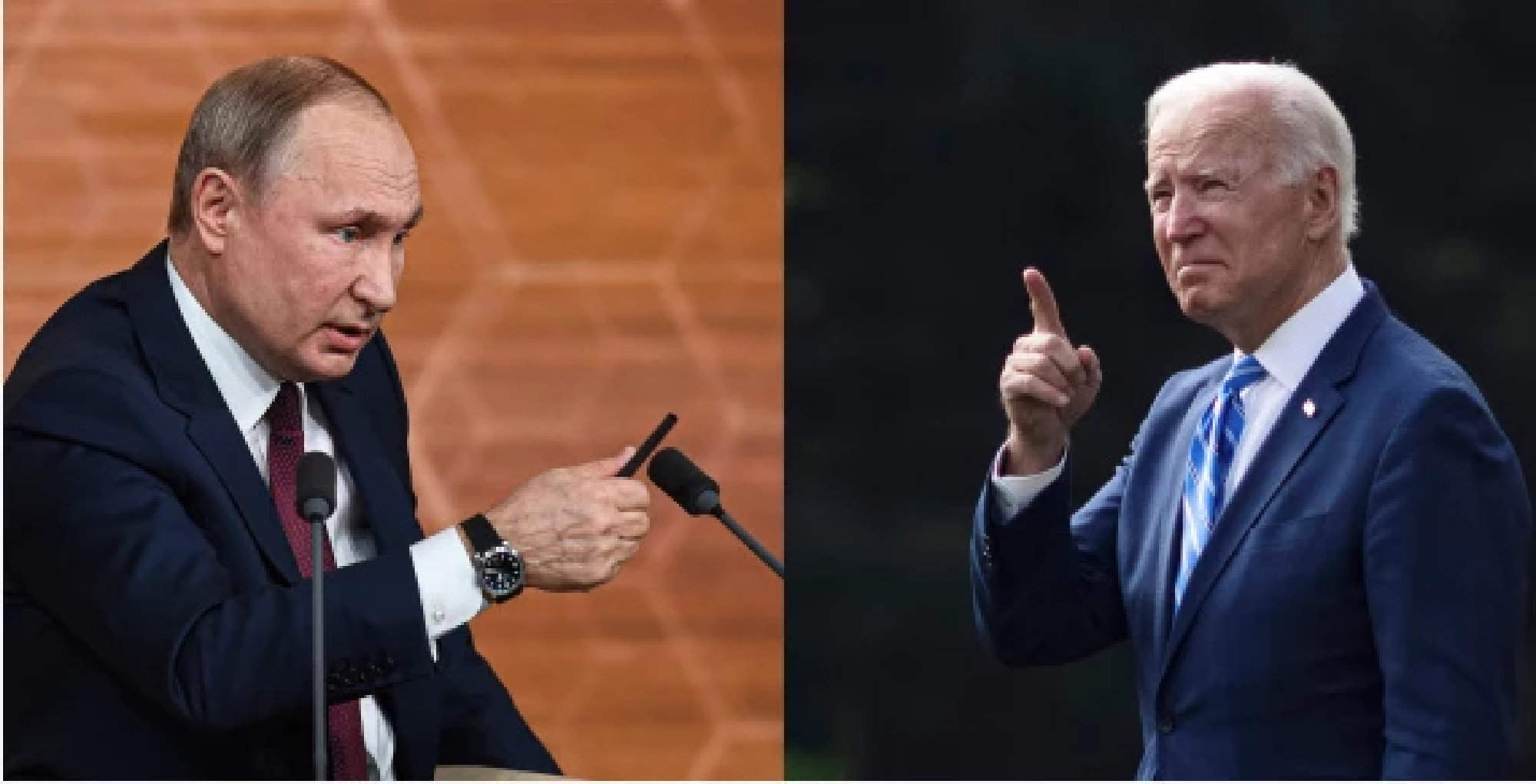
The Russian Foreign Ministry on Friday published a draft treaty it has proposed to the United States on security guarantees.

Both countries shall not undertake actions nor participate in or support activities that affect the security of each other, the document read.

One should not use the territories of other countries to prepare or carry out an armed attack against the other or other actions affecting core security interests of the other, it said.

Russia asked the United States to prevent further eastward expansion of the North Atlantic Treaty Organization (NATO) and deny the former Soviet republics accession to the alliance.

Related Stories

The United States would be banned from establishing military bases in the former Soviet republics that are not NATO members, from using their infrastructure for military activity, and from developing bilateral military cooperation with them, it said.

One would be prohibited from deploying armed forces and armaments in the areas where such deployment could threaten the other, except on its own territory, according to the draft document.

One should not deploy ground-launched intermediate- and shorter-range missiles both on and outside its national territory, from which such weapons can attack the other, it said.

Russia and the United States would be banned from deploying nuclear weapons outside their national territories, and they must return such weapons already deployed outside their national territories.

The 8-article draft treaty has been sent to the United States for consideration.

Published : December 18, 2021

By : Xinhua

Closing schools should be last resort in Omicron fight: UNICEF chief

#SootinClaimon.Com : ขอบคุณแหล่งข้อมูล : หนังสือพิมพ์ The Nation.

https://www.nationthailand.com/international/40010120


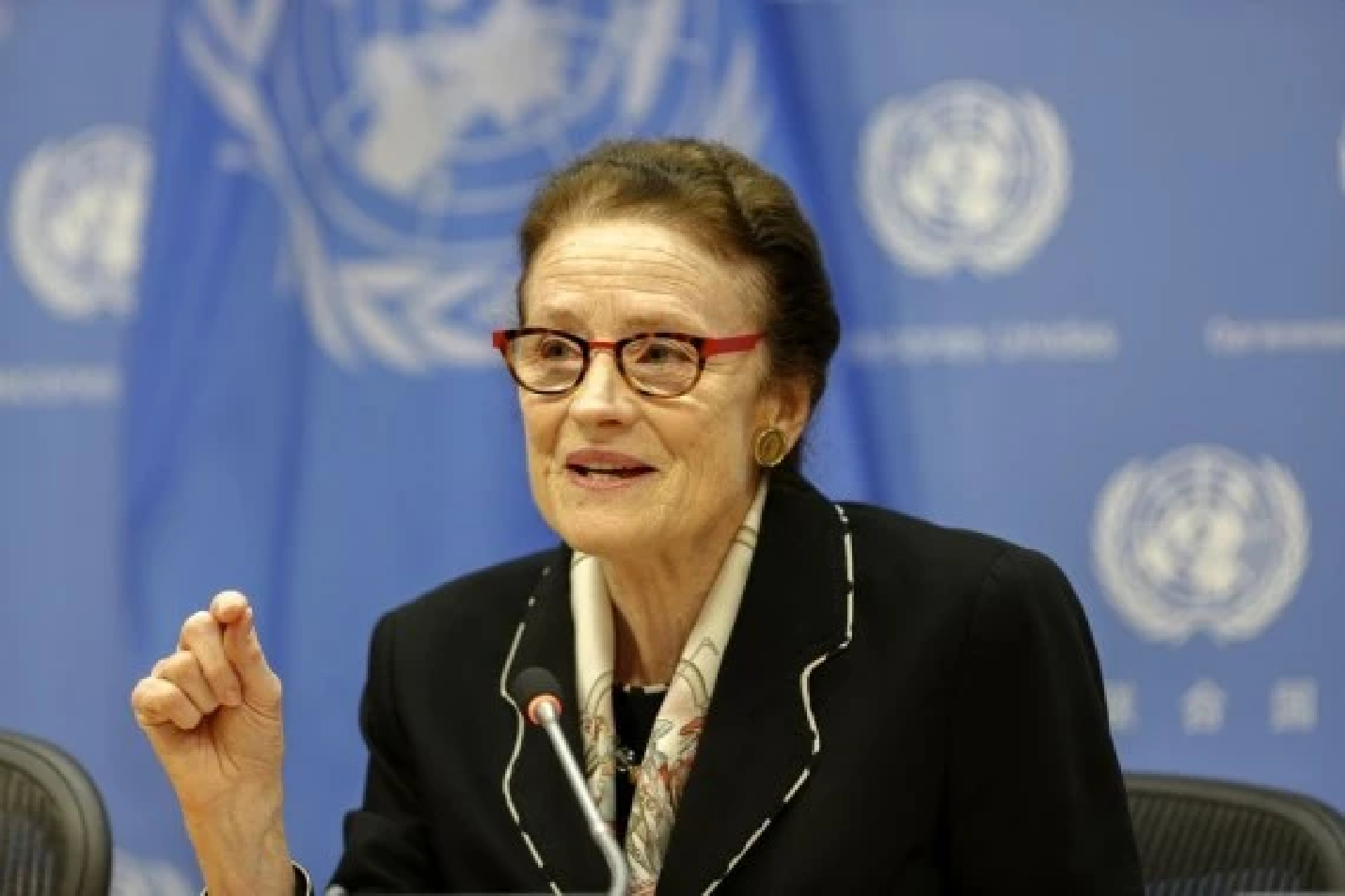
“When COVID-19 community transmission increases and stringent public health measures become a necessity, schools must be the last places to close and the first to re-open,” UN Childrens Fund (UNICEF) chief Henrietta Fore said.

Closing schools should be last resort in Omicron fight: UNICEF chief

School closings because of the COVID-19 variant Omicron should be the last mitigant measure authorities take, UN Children’s Fund (UNICEF) chief Henrietta Fore said on Friday.
 

“Nationwide school closures should be avoided whenever possible,” said the UNICEF executive director in a statement. “When COVID-19 community transmission increases and stringent public health measures become a necessity, schools must be the last places to close and the first to re-open.”

“Another wave of widespread school closures would be disastrous for children,” Fore said. “The evidence is clear: Prolonged, nationwide school closures; limited resources for students, teachers and parents; and lack of access to remote learning have wiped out decades of progress in education and rendered childhood unrecognizable.”

Students wearing face masks attend a face-to-face class at an elementary school in Quezon City, the Philippines, Dec. 6, 2021. (Xinhua/Rouelle Umali)Students wearing face masks attend a face-to-face class at an elementary school in Quezon City, the Philippines, Dec. 6, 2021. (Xinhua/Rouelle Umali)
Related Stories

She said that beyond lost learning, children also lost school safety, daily in-person interactions with friends, access to healthcare and often their only nutritious meal of the day. This generation of schoolchildren could collectively lose 17 trillion U.S. dollars in potential lifetime earnings.

“We know that mitigation measures in schools are effective,” she said. “We must use this knowledge to do everything we can to keep schools open. We must also increase investments in digital connectivity to make sure that no child is left behind.”

Fore, who will be relieved of the post as UNICEF chief, said that next year could not be another year of disrupted learning. “It needs to be the year that education, and the best interests of children, take precedence.”

Fore announced in July her intention to resign as UNICEF executive director because of family health issues. A senior official in the White House of U.S. President Joe Biden, Catherine Russell, has been appointed to succeed Fore by UN Secretary-General Antonio Guterres.

Fore said she would remain in her post until a successor could take over. Russell said she would start as executive director early next year. 

Published : December 18, 2021

By : Xinhua

Asean reported over 26,000 new Covid-19 cases on Friday

#SootinClaimon.Com : ขอบคุณแหล่งข้อมูล : หนังสือพิมพ์ The Nation.

https://www.nationthailand.com/international/40010119


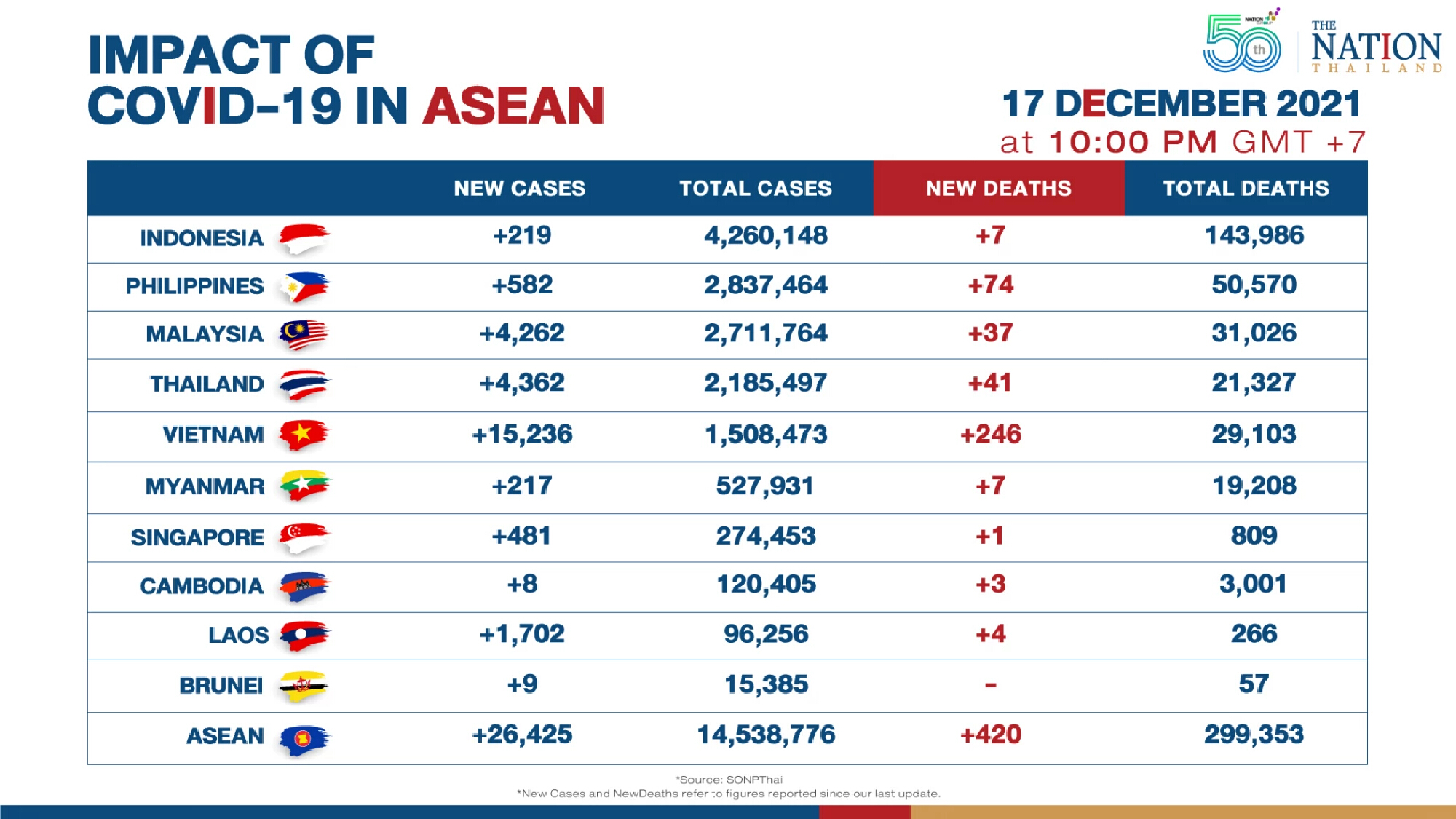
The number of Covid-19 cases crossed 14.53 million across Southeast Asia, with 26,425 new cases reported on Friday (December 17). New deaths are at 420, bringing accumulated Covid-19 deaths in Asean to 299,353.

Asean reported over 26,000 new Covid-19 cases on Friday

Cambodia’s Siem Reap International Airport on Friday welcomed its first international passenger flight in 20 months, with an inaugural flight from Singapore. Cambodia has reopened its borders to fully vaccinated travelers since November after most of its population have been inoculated against the Covid-19, mostly using China’s Sinovac and Sinopharm.

Meanwhile, HCM City People’s Committee has asked Vietnam’s Ministry of Health to send more medical personnel to the city amid a surge in hospitalisations of Covid-19 patients. In its proposal, the city asked for 1,000 doctors and 2,000 nurses, including ICU 300 doctors and 600 nurses, to fill the shortage at Covid-19 treatment hospitals which need to expand the number of beds.

There were 1,175 cases recorded in the city on Thursday (December 16). More than 1,000 patients with severe complications were hospitalised on Thursday and 65 deaths were recorded.
 

Published : December 18, 2021

By : THE NATION

As omicron arrives in China, covid restrictions leave millions facing holidays without family

#SootinClaimon.Com : ขอบคุณแหล่งข้อมูล : หนังสือพิมพ์ The Nation.

https://www.nationthailand.com/international/40010086


All year, Shirley Zhang – a translator in Hangzhou, China – has been looking forward to going home to Xian for Lunar New Year, when small things such as running errands for her parents or catching up on neighborhood gossip fill her with joy. Last year, because of the pandemic, she spent the holiday in her adopted city with friends, heeding government calls not to travel.

As omicron arrives in China, covid restrictions leave millions facing holidays without family

“The meaning of new year is getting together with family. This kind of happiness isn’t the same as with friends,” said the 29-year-old. “We all hope to go home.”

For the third year in a row, millions of people such as Zhang are likely to miss out on Lunar New Year, the most anticipated holiday on the Chinese calendar, as the omicron variant breaches China’s stringent covid-19 defenses and prompts even more severe restrictions ahead of the 2022 Winter Olympics in Beijing.

Authorities this week detected the country’s first omicron cases – one in the port city of Tianjin, close to Beijing, and another in the southern manufacturing hub of Guangzhou. Both municipal governments have rushed to halt transmission with targeted tracing, mass testing and lockdowns.

Even before the new variant’s arrival, officials were tightening border controls and discouraging residents from traveling over the holiday that begins on Jan. 31 and ends, officially, on Feb. 6. In Zhejiang province, the site of a new outbreak of almost 300 cases, more than half a million people have been ordered to stay home and another 100,000 have been sent to quarantine facilities.

China, one of the last countries to maintain a “zero covid” policy, has insisted on the merits of its approach, from locking down entire theme parks, residential blocks and schools when a single case is detected, to quarantining incoming travelers for up to six weeks.

But as residents prepare to spend another Spring Festival, as the holiday is known, without their families, the costs of China’s zero-covid policy have come to the fore, sparking frustration over how long ordinary citizens can be expected to put their lives on hold.

Deng Juanjuan, a 34-year-old English teacher in Beijing, and her husband, an IT engineer at a state-owned securities company, will be “celebrating in place,” as local officials have been encouraging. “We were told that it’s not a mandate, but strongly recommended,” she said, referring to instructions from her husband’s company. Deng’s husband had planned to go home to Hunan province to visit his mother, who lives alone.

“It’s depressing to see the restrictions go on and on, and there is no escape. When is our life going to be normal again?” Deng said.

For many of China’s 370 million migrant workers, the Lunar New Year is their only chance to visit family for an extended break.

“How many three years are there in a person’s life?” one user on the microblog Weibo asked. “Families reuniting for new year has been a tradition for thousands of years. For us, this is as important as defending against the pandemic.”

“When you asked us to get booster shots, I complied. Nucleic acid tests, I also complied. But three years of not going home is too much,” another wrote.

Other residents such as Zhang say they accept the containment measures but wonder whether the current approach can last. “Zero covid is really difficult. People have to follow all kinds of restrictions. You can require that of one person, of 10 people, but you can’t demand that of 1 billion people,” she said.

Citing the risk of omicron spreading, officials in Taiyuan in Shanxi province on Wednesday called on those working for government or state-owned companies to “set an example” and forgo trips home for the holidays.

Langzhong city in Sichuan province on Sunday published an open letter calling on migrant workers not to return unless necessary. In Yulin, in Guangxi province, authorities suggested substituting a trip with video calls. Officials in Shanghai called on residents to cancel nonessential trips.

Additional measures have been taken to prevent omicron from disrupting the Winter Games. Beijing has asked travelers from about a dozen locations deemed risky to report to local health officials on their return to the capital. In Zhangjiakou, 45 minutes from Beijing by high-speed rail, government workers, state company employees and civil servants in an Olympics development zone were asked to cancel nonessential trips over Lunar New Year.

The announcements sparked criticism even in state-run outlets. Hu Xijin, the editor of the Global Times, warned in a post on Sunday against “rashly” asking people to forgo visits to loved ones.

“It’s obvious that the pandemic will not disappear in the short term . . . but life must continue, the economy must continue,” he wrote. The point of the zero-covid approach, he added, is “to minimize the costs of pandemic measures, not disregard the costs.”

“As the pandemic lengthens, it is necessary to consider people’s psychological endurance. In the context of the pandemic, Spring Festival is also a kind of therapy,” an editorial in Beijing News said on Wednesday.

Over the summer, China’s rising vaccination rates and the arrival of the delta variant sparked a debate about whether it was time to join other nations in gradually opening borders.

After pushback and official studies arguing that border relaxation would rapidly lead to more cases than China had faced in Wuhan in early 2020, few experts have since argued for changing course.

The arrival of omicron is likely to reinforce that resolve. Tianjin has set up omicron-only quarantine areas in designated hospitals. In Guangzhou, more than 1,000 people deemed close contacts or suspected close contacts of the infected individual have been placed in centralized quarantine.

Health officials argue that the zero-covid strategy remains the most cost-effective for China. Liang Wannian, head of the National Health Commission’s team for the covid-19 response, told a briefing last week that the “dynamic” approach was not aiming for total eradication of local transmission, which was now impossible, but rather to break new transmission chains as quickly as possible.

“‘Dynamic zero-tolerance’ is not lying flat,” he said, referring to a trend, discouraged by the government, of young Chinese taking it easy in the face of social pressure. “It’s not just letting the epidemic grow, but rather controlling it, cutting it off.”

Published : December 17, 2021

By : The Washington Post

EU strikes deal with Moderna to speed German vaccine supply

#SootinClaimon.Com : ขอบคุณแหล่งข้อมูล : หนังสือพิมพ์ The Nation.

https://www.nationthailand.com/international/40010083


The European Union brokered a deal to expedite deliveries of the Moderna Covid-19 vaccine to countries like Germany that are experiencing temporary shortages as they try to accelerate inoculation and ward off the omicron variant.

EU strikes deal with Moderna to speed German vaccine supply

Moderna agreed to bring forward delivery of 10 million doses to Germany in December, enough for 20 million boosters, the European Commission said Thursday. The company will also provide 25 million extra shots to Germany in the first quarter of 2022.

Germany has started rationing Covid vaccines through the rest of the year as it seeks to maintain momentum in its ramped-up booster campaign going despite an unexpected shortage of BioNTech vaccines.

The country’s new health minister, Karl Lauterbach, said he wants most of the 25 million shots for the first quarter already in January. He’s also seeking to purchase unused doses from countries including Portugal, Romania, Poland and Bulgaria, and is pursuing fresh supplies directly from manufacturers.

“I hope that I can bring you some news of success on this in coming days or weeks,” he said Thursday at a news conference in Berlin.

Germany has already administered over 20 million Covid shots since it kicked off a booster campaign in mid-November, according to data from the RKI public-health institute.

The goal through the end of the year is 30 million, and the country is also seeking to ramp up a program to inoculate children against Covid.

Lauterbach said he had spoken to his counterpart in the U.K., Sajid Javid, earlier Thursday and the latest data on the rapid spread of the omicron strain there were “very worrying.”

Getting third Covid shots administered as quickly as possible is key for ending the current wave of the pandemic and heading off the risk posed by the new omicron strain, he added.

“Our strategy is that we will try to keep the omicron variant under control as far as possible via a very fast, offensive booster campaign,” Lauterbach said. “This is to prevent the health system becoming overloaded and possibly even wider society.”

Germany is also hoping get more BioNTech vaccine from the EU in the first quarter, Lauterbach said. He thanked the German parliament’s budget committee and Finance Minister Christian Lindner for making an extra 2.2 billion euros ($2.5 billion) available for vaccine procurement.

“I want there to be clearly more vaccine available than is being called for at any given time, so that we can cover our needs without delay,” he told reporters.

Germany’s overall vaccination campaign has been less successful than in many of its fellow EU members, with just 70% of the population already receiving at least two doses as of Wednesday. That compares with almost 80% in France and nearly 75% in Italy, according to the Bloomberg Vaccine Tracker.

EU leaders are meeting in Brussels on Thursday, where they’re discussing how to accelerate booster shots across the continent.

Published : December 17, 2021

By : Bloomberg

Amid warnings to Russia over feared Ukraine attack, E.U. struggles over how tough to set sanctions

#SootinClaimon.Com : ขอบคุณแหล่งข้อมูล : หนังสือพิมพ์ The Nation.

https://www.nationthailand.com/international/40010082


BRUSSELS – E.U. leaders are warning Russia that any military move into Ukraine will come at a high cost, with new sanctions from Moscows critical trading partner.

Amid warnings to Russia over feared Ukraine attack, E.U. struggles over how tough to set sanctions

The stern messages to Russia, however, are the easy part.

It’s much more challenging for the European Union’s 27 members to agree on potential economic and diplomatic blows against Russia over any military action in Ukraine, which lost Crimea to a Russian invasion in 2014 and has fought a nearly eight-year war against Moscow-backed separatists in eastern Ukraine. Since spring, Russia has significantly boosted its forces along the Ukrainian border.

All E.U. members have to agree on sanctions but have long been divided on how to handle relations with Russia. Countries including Poland and Sweden have criticized moves to maintain diplomatic contact with Russian President Vladimir Putin. French and Germany, however, have held direct talks with Putin. Hungary’s president, Viktor Orban, is often considered an ally of Putin.

And then there’s the nearly completed Nord Stream 2 pipeline to bring natural gas from Russia to Germany – and bypass current routes through Ukraine. Opposition to the pipeline is widespread in Europe, and some E.U. leaders argue that it is contradictory to sanction Russia while also forming business deals with it. But Germany – one of the European Union’s most-powerful members – wants the pipeline, and E.U. officials haven’t yet indicated if they are considering Nord Stream as part of potential sanctions.

Still, E.U. leaders appear united that they need to spell out the possible fallout to Russia.

“Any aggressive action will be met with a high political and economic cost,” the European Union’s top diplomat, Josep Borrell, said Thursday ahead of a meeting with European leaders. Germany’s new chancellor, Olaf Scholz, said it would be a “serious mistake to believe that violating the borders of a European country would remain without consequences.”

“We are convinced that Russia is actually preparing for the all-out war against Ukraine,” Lithuanian Foreign Minister Gabrielius Landsbergis said, adding that “an unprecedented attack on a country that shows a Western direction” would warrant an “unprecedented” response.

Russia insists it has no plans to send forces over the border. But Putin strongly opposes Ukraine’s deepening ties with the West and called Ukraine’s dream of NATO membership a “red line.”

The Biden administration warned that it would be willing to impose more severe economic sanctions against Russia than it did in 2014 and said the pipeline could be strong leverage in negotiations.

E.U. officials have so far not revealed details about any sanctions they are considering, but many analysts and diplomats say that the bloc is better positioned to take tougher actions than in 2014 after Russia’s annexation of Crimea. Among the reasons: Since 2014, Ukraine has bolstered its alliances with the West, creating a more fervent consensus within the European Union that Ukraine must be protected from Russia.

“I think all of us are willing to put our money where our mouth is when it comes to the red line,” a senior European diplomat, who spoke on the condition of anonymity due to the sensitivity of the internal deliberations, said Wednesday.

“This time, yes,” Borrell told reporters Thursday, when asked if he thought European countries would agree on sanctions.

When Russia invaded Crimea in 2014, the European Union responded with sanctions largely aimed at preventing 44 businesses and organizations and nearly 200 people from borrowing money from European banks. The sanctions prevented these people from traveling into the European Union.

After criticism for limited sanctions, the European Union later ramped up the severity of the penalties, which have been renewed multiple times and are still in place.

The European Union’s close economic ties to Russia positions the bloc to deliver potentially more-consequential sanctions than the United States. But that also means that sanctions could hit its own coffers.

Edward Hunter Christie, a senior research fellow at the Finnish Institute of International Affairs, said the sanctions stemming from the Crimea invasion barely touched Russia’s energy industry, which the European countries rely on.

Yet the International Monetary Fund estimated in 2015 that Western sanctions reduced Russia’s gross domestic product by more than 1%. A subsequent IMF study determined that sanctions slowed the country’s economic growth since then. Those sanctions arrived around the same time as oil prices tanked, delivering Russia a much bigger blow to its economy.

“The [current] sanctions are strong enough that you are going to notice it, but it’s not strong enough that you are going to feel that countries are trying to demolish you,” said Christie, who was a defense economist for NATO in 2014. “And that was deliberate. “

Francesco Giumelli, associate professor of international relations at the Netherlands’ University of Groningen, said that the European Union will have to think of different types of sanctions this time, another potential challenge. When Russians were blocked from accessing European and American banks, many then turned to China.

Giumelli, whose research focuses on international sanctions, warned that if Russia is set on invading Ukraine, economic sanctions alone would be hard to deter them.

So far, leaders appear to divided on whether the Nord Stream 2 pipeline should be included in sanctions.

“It is important to keep energy policy out of the conflict,” Finnish Prime Minister Sanna Marin said Thursday.

Gwendolyn Sasse, senior fellow focusing on Eastern Europe at the Carnegie Europe think tank, said this latest crisis in Russia gives the European Union an opportunity to display its strength during a crisis.

“The urgency is much greater. It’s such a massive buildup. Nothing is covert,” Sasse said. “What’s at stake is whether the E.U. can act and is seen as a strong and coherent foreign policy actor if something happens.”

Published : December 17, 2021

By : The Washington Post

Remaining U.S., Canadian missionaries kidnapped in Haiti have been released: Police

#SootinClaimon.Com : ขอบคุณแหล่งข้อมูล : หนังสือพิมพ์ The Nation.

https://www.nationthailand.com/international/40010081


The remaining members of a U.S.-based Christian missionary group who were kidnapped in Haiti in October have been released, Haiti national police spokesman Gary Desrosiers told The Washington Post on Thursday.

Remaining U.S., Canadian missionaries kidnapped in Haiti have been released: Police

The 17 hostages, who included 16 Americans and one Canadian, were seized by the notorious street gang 400 Mawozo outside Port-au-Prince on Oct. 16 as they were returning from a visit to an orphanage some 90 minutes from their base. The group from Ohio-based Christian Aid Ministries included women and five children, one of whom was 8 months old at the time.

Two of the hostages were released in November and three more were released this month.

Christian Aid Ministries thanked supporters for their “fervent prayers” over the past two months and said they would provide more information “as we are able.”

“We glorify God for answered prayer – the remaining twelve hostages are FREE,” the group said. “Join us in praising God that all 17 of our loved ones are now safe.”

400 Mawozo had demanded $1 million for the return of each victim; its leader had threatened to “put a bullet” in them if the demand wasn’t met. It’s unclear whether a ransom was paid for any of the hostages. The U.S. and Canadian governments have said that they typically do not pay ransoms.

Officials from the State Department and the FBI have been on the ground in Haiti to help secure the release of the hostages.

The kidnapping of the missionaries focused international attention on a terrifying wave of mass abductions by the armed gangs that have tightened their grip on the beleaguered Caribbean nation. The gangs have targeted Haitians of all ages and all walks of life, including doctors, busloads of passengers, even police.

The kidnapping of fuel trucks and their drivers have caused fuel shortages, impacting hospitals and triggering nationwide strikes that have paralyzed the country. When a 7.2-magnitude earthquake struck Haiti in August, gangs temporarily blocked aid convoys from reaching victims.

Police have struggled to respond as gangs have grown more powerful and gained control of more territory. Haiti now has the world’s highest kidnapping rate per capita. U.S. and Canadian officials have urged their nationals to leave the country.

400 Mawozo controls parts of Ganthier, the town east of Port-au-Prince where the missionaries were seized. The gang has grown notorious for targeting religious groups and members of the clergy, who were long considered off-limits. In recent months, it has engaged in mass kidnappings of buses and cars. In April, it kidnapped several priests and nuns, including some French nationals, prompting Catholic schools and universities to close in protest.

The release of the hostages is one piece of bright news in an otherwise difficult year for Haiti, which has been slammed by a convergence of calamities. In July, President Jovenel Moïse was assassinated in a brazen attack at his home that remains unsolved, plunging the nation into turmoil. The earthquake in southern Haiti the next month killed more than 2,200 people. On Monday, a tanker truck carrying gasoline overturned and exploded in the country’s second-largest city, killing at least 66 people and injuring scores more.

Published : December 17, 2021

By : The Washington Post

Five children killed after strong winds send bouncy castle flying in Australia

#SootinClaimon.Com : ขอบคุณแหล่งข้อมูล : หนังสือพิมพ์ The Nation.

https://www.nationthailand.com/international/40010080


SYDNEY – It was meant to be a day of celebration for the children of Hillcrest Primary School in the Australian island state of Tasmania.

Five children killed after strong winds send bouncy castle flying in Australia

Instead, the final day of the school year was marred by tragedy: Five children were killed and at least four others were seriously injured when a bouncy castle was blown into the air by strong winds. As the castle took flight, with the students and a number of inflatable plastic balls inside, nine children tumbled more than 30 feet to the ground below, Tasmanian police said.

Four of the dead – two boys and two girls – were sixth graders. They had been due to begin high school in the new year. (Australian schools follow the calendar year.)

“On a day when these children were meant to be celebrating … we’re all mourning their loss,” Tasmanian Police Commissioner Darren Hine told reporters. “Our hearts are breaking for the families and the loved ones, schoolmates, teachers of these young people who were taken too soon.”

It wasn’t immediately clear whether the castle was tied down at the time of the incident, or how many children were on the castle when it took off. An investigation is underway.

Pictures posted on social media by an Australian Broadcasting Corp. reporter showed part of the deflated castle dangling from a nearby tree. A blue plastic tarpaulin cordoned off an area where the children were likely to have landed. In another photo, two police officers huddled on the grass in front of a deserted playground, comforting each other.

“This is a very tragic event and our thoughts are with the families and the wider school community, and also our first responders,” Commander Debbie Williams told reporters. “There is no doubt that this has been a very confronting and distressing scene.”

Parents rushed to the school, uncertain whether their children were among the injured, the ABC reported. In a statement posted on Facebook, the school asked parents to collect their children “as a matter of urgency” and said it would close for the rest of the day.

It’s not the first time bouncy castles have been sent flying by strong winds. In the United States, four children were reportedly injured in Mesa, Ariz., in May when a gust of wind picked up a bouncy castle along with several children who were playing inside. The structure flew several feet and then collapsed, local media reported at the time. The children, aged 5 to 11, were taken to a nearby hospital after some reportedly suffered severe injuries.

In 2017, a 6-year-old girl was killed in Spain after an inflatable castle went soaring into the sky with seven children inside. A similar incident led to the death of a 7-year-old girl in Britain in 2016.

Australian Prime Minister Scott Morrison said the Tasmanian incident was “unthinkably heartbreaking.”

“Young children on a fun day out, together with their families and it turns to such horrific tragedy, at this time of year, it just breaks your heart,” he said.

Published : December 17, 2021

By : The Washington Post