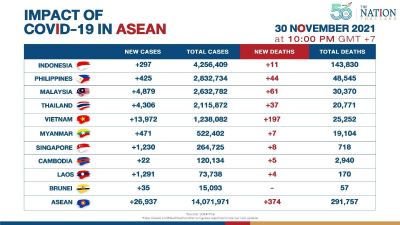
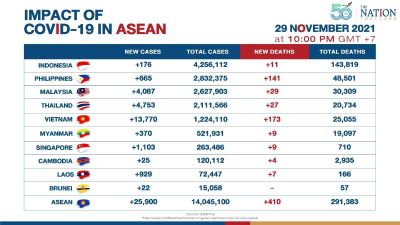
The number of Covid-19 cases crossed 14.07 million across Southeast Asia, with 26,937 new cases reported on Tuesday (November 30), higher than Monday’s tally at 25,900. New deaths are at 374, decreasing from Tuesday’s number of 410. Total Covid-19 deaths in Asean are now at 291,757.
Singapore’s Public Health Ministry announced that from December 2 onwards employees of airports and front-line border workers who may come into contact with travellers from countries or regions affected by the Omicron variant will need to undergo PCR test every week and rostered routine testing (RRT) every 14 days.
Meanwhile, Vietnam’s Public Health Ministry has urged local authorities and agencies to increase the epidemic surveillance and expand the testing scope in their areas to prevent the spreading of Omicron variant of Covid-19. It also proposed the government to ban all incoming and outgoing flights to and from countries that have reports of Omicron cases.
Modernas CEO predicted Tuesday that existing coronavirus vaccines would be much less effective at combating omicron compared with previous covid-19 variants, spooking financial markets in the United States, Europe and Asia as scientists rush to learn about the new variant.
Stéphane Bancel told the Financial Times that it would take months for pharmaceutical companies to manufacture new variant-specific doses to address omicron, as public health officials and vaccine makers worldwide examine the tangible impact of the largely unknown variant. The spread of omicron in South Africa, which was among the first countries to identify the variant and is preparing for a potential surge in infections, caused Bancel to suggest that existing vaccines might need to be modified in 2022.
“There is no world, I think, where [the effectiveness] is the same level . . . we had with delta,” Bancel said, referring to the highly contagious variant that was first detected in India in late 2020.
Even though Bancel cautioned against panic when it comes to a variant the public still does not know much about, he told the Financial Times that his initial talks with scientists indicate what could be “a material drop” in vaccine effectiveness against omicron.
“I just don’t know how much, because we need to wait for the data,” he said. “But all the scientists I’ve talked to . . . are, like, ‘This is not going to be good.'”
Bancel’s comments set off fears in financial markets, including slumps in vaccine-related stocks from Moderna and BioNTech, the German partner of Pfizer. U.S. stock futures are down, and Asian markets retreated, while markets in Europe also fell. U.S. oil prices dropped below $70 a barrel, while gold rose and risk-sensitive currencies such as the Australian dollar weakened against the greenback. The 10-year Treasury yield also declined.
The Moderna CEO’s prediction comes as many questions remain unanswered about omicron – specifically whether it’s as bad as it looks at first glance. Scientists from around the world are scrambling to answer pressing questions surrounding whether it can cause severe illness, if it’s more transmissible than the delta variant and whether it can erode or evade immunity.
The World Health Organization has said the “overall global risk” from omicron is “very high,” and it is pushing for governments worldwide to report cases of omicron and accelerate their vaccination drives. The U.S. Centers for Disease Control and Prevention significantly expanded its recommendations for booster shots, saying that all adults 18 and older should get them.
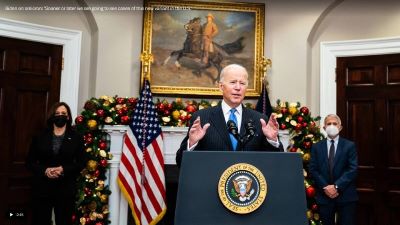
President Joe Biden on Monday expressed confidence that the United States can handle omicron, saying, “This variant is a cause for concern, not a cause for panic.”
“We’ll fight this variant with scientific and knowledgeable actions and speed, not chaos and confusion,” he said at the White House.
But omicron is threatening both the rebound and growth of the U.S. economy. The chair of the Federal Reserve, Jerome Powell, warned in remarks prepared for congressional testimony Tuesday that “the recent rise in covid-19 cases and the emergence of the omicron variant pose downside risks to employment and economic activity and increased uncertainty for inflation.” He added that “greater concerns about the virus” could exacerbate existing problems, such as labor shortages and supply-chain struggles.
Bancel said to the Financial Times that the omicron variant’s unruly swarm of mutations has worried scientists, many of whom did not expect such a highly mutative variant to emerge for another year or two. He noted that 32 of the 50 mutations in omicron have focused on the spike protein – the area where existing coronavirus vaccines help boost a person’s immune system to fight the virus.
Scientists told The Washington Post that omicron’s mutations were new and utterly enigmatic.
“We have seen these mutations in other strains, in twos and threes, and each time they were a little harder to neutralize but didn’t spread particularly well,” Benjamin Neuman, a virologist at Texas A&M University, said in an email to The Post on Tuesday. “Now, all together? It’s a complete black box.”
While it’s unclear whether existing vaccines will need to be modified next year to address omicron, Pfizer and BioNTech have said they are working to understand what level of protection their vaccines offer and how to adapt them. Chinese vaccine maker Sinovac says it is working with international partners to collect and analyze samples of omicron in an effort to determine how effective its inactivated vaccine, CoronaVac, is against the variant.
Bancel told the Financial Times that more data will be available within two weeks regarding how existing vaccines perform against omicron – and whether the variant causes severe illness. He stressed that it would take months before an omicron-specific vaccine is produced at scale for billions of doses.
“[Moderna] and Pfizer cannot get a billion doses next week. The [math] doesn’t work,” he told the outlet. “But could we get the billion doses out by the summer? Sure.”
Bancel emphasized, however, that it would be risky to shift the company’s vaccine production strategy solely toward omicron when other variants are still infecting people.
The explosive growth in Covid-19 cases in Belgium, which has one of the highest infection rates in Western Europe, appears to be easing, but government experts say some of the restrictive measures imposed recently will likely need to be extended.
“It is starting to slow down for the moment,” Steven Van Gucht, head of the viral disease division at the Sciensano national public-health institute, said in a phone interview on Tuesday. “Looking at the infections, it might stabilize this week.”
Belgium, where the daily average of new cases spiked to 17,796 over the past seven days, has seen very high per-capita case rates and hospitalizations have increased significantly.
The government last week ordered a second set of measures to combat the rise, including a closure of nightclubs and restrictions on privately organized parties. It has also confirmed a case of the new omicron variant, which has prompted the European Union to suspend air travel from South Africa and six other countries in the region.
The cases are particularly high in the Dutch-speaking area of Flanders, which has the country’s highest vaccination rate of 80%, according to Sciensano data. Those high vaccination rates, which halved the chance of people being infected, also led Belgians in those areas to double their contacts with other people, helping produce the spike in cases, Van Gucht said.
“We went a bit too fast and I think that caused an exponential increase, also with the seasonal effect,” he said. “We are starting to see the impact of the measures now, but there is still a long way to go.”
He said he hopes that tougher measures could be avoided, but wearing masks indoors should continue during the winter. Other steps, like closing bars early, may be reviewed if the situation improves.
The omicron variant needs to be studied more, he added, saying that “we still have to learn about the protection by previous vaccination or previous infection with other variants.”
Boris Johnson insisted there are no immediate plans to ask Britons to curb socializing and work from home — even after a government adviser said doing so could help limit the spread of the omicron Covid variant.
The British government has tightened rules on face coverings, self-isolation and testing since the emergence of omicron cast doubt over the risk to public health if it was found to be able to evade current vaccines.
But after the head of the U.K. Health Security Agency, Jenny Harries, said Tuesday people should also avoid socializing when they “don’t particularly need to,” Johnson’s government declined to endorse her suggestion.
Asked if people should minimize socializing and cancel Christmas parties, Johnson told a press conference: “No. The guidance remains the same.” He also said working from home is unnecessary, and that another lockdown is “extremely unlikely” — though he declined to rule it out completely.
The mixed messaging from officials is reminiscent of the early days of the pandemic, when the government faced heavy criticism for the confusion over face coverings, social-distancing rules and work from home guidance.
On Tuesday, the U.K. Health Security Agency said it’s identified another eight omicron cases in England, bringing the total to 13, with a further nine in Scotland. In responding to the new variant, the government has said it is taking a “proportionate” approach to buy time for scientists to investigate the new strain, while also considering the impact of tougher rules on the economy.
Face coverings became mandatory again in shops and on public transport — though not in hospitality settings — from Tuesday, along with a requirement for people arriving from all countries to take a PCR test and isolate until they receive a negative result.
Johnson has stopped short of bringing in the government’s full “plan B” list of measures, which include mandatory vaccine certification for some crowded settings and advising people to work from home.
He is relying on an accelerated vaccine booster program to avoid more restrictions, after much of the country was in lockdown last Christmas. The government is expanding the program to include all adults, and is reducing the gap between second and third doses to three months from six.
The shots will be administered according to age, and ministers aim to offer everyone eligible a booster by the end of January.
Johnson said temporary vaccination centers will be “popping up like Christmas trees” and that 400 military personnel would help the effort.
The prime minister also faces pressure from lockdown-skeptic members of his ruling Conservative Party, who are urging the government not to overreact to the omicron variant.
Members of Parliament voted overwhelmingly in favor of the new rules on Tuesday, but a number of Tories criticized the government for bringing in the measures before the vote.
“If we continue to react to these fears and uncertainties by taking the authoritarian course, without impact assessments, because they’re only temporary, you know, then we are embarked on that downward course,” Conservative MP Steve Baker said. “The public are not fools. We’re not here to govern idiots. I have faith in the British public. I have faith that they can choose for themselves to do the right thing.”
Another Tory MP, Desmond Swayne, lashed out at Harries’s advice for people to curb socializing, saying it would be “to the detriment of people’s wellbeing and an industry struggling to recover from earlier lockdowns.”
Meanwhile Night Time Industries Association Chief Executive Officer Michael Kill criticized what he called the government’s “poorly-conceived communications strategy,” saying it will “severely” hurt his industry.
“It is surreal and extremely frustrating to see health-care advisers publicly telling people not to socialize, giving unnecessary uncertainty to our customers and workforce,” he said in a statement.
During an interview with BBC radio earlier on Tuesday, Harries was pressed on whether people in England — which falls under Johnson’s remit for health care purposes — should be advised to work from home as the devolved administrations have said in Scotland, Wales and Northern Ireland.
“If we all decrease our social contacts a little bit, actually that helps to keep the variant at bay,” she said.
Germanys incoming chancellor threw his support behind mandatory Covid-19 vaccinations as European leaders take a tougher line in a bid to check a brutal surge in infections.
During a video conference on Tuesday, Olaf Scholz told outgoing Chancellor Angela Merkel and state premiers that he would support a broad requirement to get shots, according to a person familiar with the discussions. The measure, which may not be approved at the talks, could come into force around February, according to the person, who asked not to be identified because the deliberations are private.
The move would be a major departure for the new administration after German leaders vowed for months that it would be up to citizens to decide if they wanted to take up the government’s offer to get inoculated against Covid. The soft tone may have contributed to the country’s relatively low vaccination rate of less than 70%.
“In order to get the upper hand and prevent a fifth wave, we must now prepare for a general vaccination requirement,” Robert Habeck, the incoming vice chancellor from the Greens, told news agency DPA.
Scholz, Merkel and the heads of Germany’s 16 states are discussing imposing new curbs, including restrictions on fans at soccer games and closing bars and nightclubs in hard-hit areas.
The latest surge in infections appears to have caught German authorities by surprise, and the transition to a new administration under Social Democrat Scholz has complicated pandemic coordination in Europe’s largest economy.
States led by Merkel’s conservative bloc, which is moving into opposition, also called for the new government to prepare for mandatory vaccinations, as well as hard contact restrictions for unvaccinated people, reduced capacity for large events and the shuttering of clubs, according to a document seen by Bloomberg.
Pressure has been growing ahead of the change in power and the gathering allowed the politicians to address a Constitutional Court ruling on Tuesday, which rejected challenges to measures such as nighttime curfews and closing schools. The decision could give leaders additional legal backing for a new round of tougher restrictions, but they’re unlikely to impose a widespread lockdown.
Alongside possible new measures in Germany, Norway extended quarantine rules for people testing positive for Covid, while Greece made Covid vaccines compulsory for people above 60, including a monthly fine of 100 euros ($114) a month for those who don’t comply. Switzerland and Finland also are considering tighter curbs to clamp down on public contact.
France is also bracing for a worsening outbreak. The country reported 47,000 new infections in the last 24 hours, the highest daily level since April. Health Minister Olivier Veran said during government questions in the National Assembly that by the end of this week daily cases could exceed the peak of the third wave of the virus eight months ago.
Authorities have been on high alert as the omicron variant spreads. The Dutch national health service confirmed that the strain, first identified in South Africa, was in the Netherlands a earlier than first thought after detecting two cases in test samples taken a week ago.
The European Center for Disease Prevention and Control has compiled reports of 44 cases of omicron in 11 European countries. So far, those cases have all been recorded with minor symptoms or they’re asymptomatic.
The European Medicines Agency said it would use expedited procedures to approve new versions of Covid vaccines to address omicron if the current ones provide insufficient protection. That would mean regulatory approval could be completed in three to four months after companies move forward.
#SootinClaimon.Com : ขอบคุณแหล่งข้อมูล : หนังสือพิมพ์ The Nation.
WASHINGTON – Senior White House officials have in the past few days studied how much funding they have available to respond to the omicron variant, as the Biden administration makes contingency plans to deal with the next potential stage in the pandemic, three people familiar with the matter said.
The review comes amid fresh tremors on Wall Street related to omicron and the economy’s outlook. The CEO of Moderna alarmed investors Tuesday when he warned that vaccines might not be as effective against this particular variant. Several hours later, Federal Reserve Chair Jerome Powell spooked financial markets even more when he said the central bank could speed up the relaxation of its emergency measures amid concerns about inflation.
The burst of uncertainty comes as government officials try to ascertain both the health and economic risks posed by omicron, a new variant of the coronavirus that was recently detected in southern Africa but is now in multiple countries. The White House Office of Management and Budget and senior Biden administration health officials are working to determine exactly how much remaining funding they have that could be redirected to new problems arising from the variant.
Congress and the White House approved trillions of dollars in emergency funds starting last year to combat the virus’s spread and try to minimize any economic fallout. Officials are working to determine which accounts still have unused funds that could be diverted if omicron creates new challenges.
Stock markets have fluctuated wildly on confusion about whether omicron will prove as risky and deadly as the delta variant did several months ago. Many parts of the economy are already in flux, with consumer confidence trending weaker, inflation trending higher, but the labor market and growth snapping back into stronger positions. There have been signs in recent days that supply chain logjams are loosening, but a fresh round of covid concerns could close some factories and create new delays, driving up the costs of goods and worsening inflation.
Powell said that because of already high inflation “it is therefore appropriate in my view to consider wrapping up the taper of our asset purchases . . . perhaps a few months sooner.” The Fed had extended tremendous economic support to financial markets to keep the economy growing, but he effectively signaled Tuesday that this support could be pulled back faster than earlier estimates. This change in tone led the Dow Jones industrial average and S&P 500 to shed nearly 2% by the end of the day.
Powell said the Fed would continue to monitor omicron as well as inflation and employment as it decides on the path forward.
Over at the White House, officials were working to understand their options but so far do not believe there is a need for an imminent request to Congress for more money. But that could change in coming days, the officials said, as much of the funding already approved for the White House to respond to the pandemic has been earmarked for specific purposes, such as free testing for uninsured Americans. White House officials are looking at how much money they would need in a worst-case scenario, in case the administration needs to immediately purchase mass quantities of vaccines designed to inoculate specifically against the new variant.
The cost of updated vaccines for all Americans could run as high as $7.5 billion, while buying 2 million additional monoclonal antibody treatments could cost $4 billion, according to one senior administration official, who provided rough estimates. Another $5 billion for 10 million antiviral pills could bring the total to $16 billion, the administration official said. The administration official and two other people familiar with internal discussions spoke on the condition of anonymity to reflect private deliberations.
It is unclear whether the White House has enough funding flexibility to cover all the new potential sources of need. A spokesman for OMB declined to provide estimates of how much funding OMB believes is available to respond to the variant.
Budget experts say the federal government has billions of dollars in funds approved in prior legislation for pandemic-related measures. But precise external estimates are hard to come by because federal health funding is not reported in one singular place and is often jointly run by different parts of the federal government.
“They appropriated a lot of money for vaccine testing and tracing and all that stuff. But it’s been the hardest thing for us to track,” said Marc Goldwein, a budget expert at the Committee for a Responsible Federal Budget, which tracks federal funding. “My sense is there’s money in the bank – we appropriated a lot of money in the American Rescue Plan for pandemic purposes.”
A White House request for emergency funding could set off a messy political battle with the GOP, particularly as the two sides would likely have to agree on what existing federal resources to reallocate to the response to omicron. But G. William Hoagland, a senior vice president at the Bipartisan Policy Center, said he does not doubt that Congress would mobilize quickly to provide additional funding if necessary on a bipartisan basis to deal with the variant. He said that process would likely take a few weeks for health officials to gauge the likely health impact.
Hoagland said some of the funding set aside for pandemic response measures is earmarked for free coronavirus testing for the uninsured, which he said may limit how much extra money they have to shift without congressional approval.
“I think it’s far too early to determine ‘what is needed for omicron,’ but given our history if this becomes an issue I doubt there’s any question that the resources will be there,” Hoagland said. “I don’t see a domestic political fight happening over omicron.”
As the White House makes contingency plans, global markets shuddered Tuesday amid growing concerns that existing vaccines may not be enough to stop the highly mutated omicron variant.
Investors were shaken after Moderna chief executive Stéphane Bancel told the Financial Times and CNBC that coronavirus vaccines might be less effective against the new strain, and that new shots targeting omicron would be months away.
“Markets hate uncertainty, and this is precisely what we have now,” Russ Mould, investment director at AJ Bell, said Tuesday in an email. “No one knows how much trouble the new variant is going to cause, and so it seems plausible that we will see heightened volatility on the markets until there is adequate data to better understand the lay of the land.”
Oil markets were hit hard as nations including the U.S. rushed to restrict travel to try to keep omicron out. Brent crude, the international oil benchmark, slid more than 2.8% to trade around $71.13 per barrel. West Texas Intermediate crude, the U.S. oil benchmark, fell more than 2.6% to trade around $68.10.
Companies whose fates are tightly tethered to travel and the pandemic saw their shares fall sharply. Carnival, Royal Caribbean, Delta, United and American Airlines all fell 2% in early trading, as did Moderna.
President Joe Biden expressed confidence on Monday that the United States can handle the new variant, saying it is “a cause for concern, not a cause for panic.” But the host of unknowns about omicron and its potential to set back the global recovery also “pose downside risks to employment and economic activity and increased uncertainty for inflation,” Powell said, according to his prepared remarks.
The uncertainty pushed investors toward safe havens. Gold rose nearly 0.5% to trade around $1,791 per troy ounce. The yield on the 10-year U.S. Treasury note sank 0.054%. Asian markets closed mostly in the red, with South Korea’s Kospi falling 2.4% and Hong Kong’s Hang Seng Index and Japan’s Nikkei 225 both shedding more than 1.5%. European markets were negative across the board in midday trading, with Germany’s DAX and France’s CAC 40 both logging declines of 0.8% or more.
Health officials said Tuesday that even as the world learns anew how “unpredictable” the coronavirus is, with still so much unknown about the omicron variant that has countries around the world sounding alarms, the United States is far better prepared to fight and contain it than it was with other highly transmissible variants, such as delta.
“To be crystal clear – we have far more tools to fight the variant than we had at this time last year,” Rochelle Walensky, director of the Centers for Disease Control and Prevention, said Tuesday during a White House coronavirus briefing. Health officials should “remain ready to be proactive” as data continues to be analyzed and as new mutations evolve, she added.
“One thing has become clear over the past 20 months: We cannot predict the future, but we can prepare for it,” she said.
As part of the ramped-up efforts to ward off new variants, Walensky said, the United States has increased genomic sequencing from 8,000 samples a week earlier this year to 80,000 samples a week – one in every seven positive PCR (polymerase chain reaction) test results.
The CDC is also expanding its surveillance to four of the busiest airports in the country – New York’s John F. Kennedy, San Francisco International, Newark Liberty and Atlanta’s Hartsfield-Jackson – for increased testing for specific international arrivals. The CDC will evaluate additional post-arrival testing and self-quarantines, Walensky added.
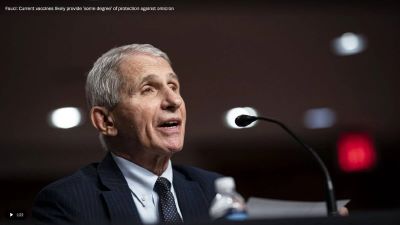
Anthony Fauci, director of the National Institute of Allergy and Infectious Diseases, underlined the “unusual” constellation of changes found in omicron’s genome, arguing that although some of the mutations are also found in delta, this is “something different.”
While these mutations have been associated with increased transmissibility and immunization, Fauci said that it will take two to four weeks for scientists to be able to reach a conclusion on exactly how contagious the variant is, as well as its capacity to evade vaccines and produce severe disease.
Fauci urged the public to get vaccinated or get booster shots.
“The significant reductions are possible because mutations suggest immune evasion, but as with other variants, vaccines and boosters give a level of antibodies that gives you a degree of cross-protection, particularly against severe disease,” Fauci said.
The number of Covid-19 cases crossed 14.04 million across Southeast Asia, with 25,900 new cases reported on Monday (November 29), lower than Sunday’s tally at 26,786. New deaths are at 410, decreasing from Sunday’s number of 448. Total Covid-19 deaths in Asean are now at 291,383.
The Philippines’ government on Monday launched an ambitious drive to vaccinate nine million people against Covid-19 over three days, deploying security forces and using tens of thousands of volunteers to help administer the program. An official said news of the omicron variant made the campaign even more vital.
Meanwhile, Indonesia will ban the entry of travellers who have been in eight African countries and extend quarantine times for all arrivals to curb the spread of the new Omicron variant of the coronavirus. The ban extends to people who have been in South Africa, Botswana, Namibia, Zimbabwe, Lesotho, Mozambique, Eswatini or Nigeria in the past 14 days. The restriction takes effect on Monday and will be evaluated every two weeks.
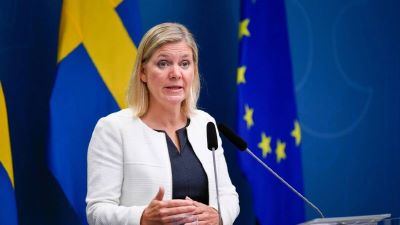
Swedens Social Democrat leader narrowly won a vote in parliament re-electing her as prime minister, easing the political turmoil in the largest Nordic nation prompted by her resignation last week.
Magdalena Andersson, 54, will form a one-party government after her candidacy passed on Monday by a two-vote margin. Having become Sweden’s first female prime minister last Wednesday, she resigned the same day when her junior partner in government quit following a defeat in parliament over the budget.
Sweden’s recent instability is a result of an increasingly fragmented legislature. The emergence of the nationalist Sweden Democrats over the last decade has sapped support for mainstream parties and made it difficult to form stable coalitions.
Andersson’s government will control less than a third of the seats in parliament, and will depend on the support of three smaller parties.
Her appointment was backed by 101 lawmakers, with 75 abstaining and 173 voting against. That means Andersson won by two votes as she needed to avoid an absolute majority opposing her nomination. The next step is for her to announce her cabinet members, before her government takes office after a meeting of the Council of State presided over by the king.
The Sweden Democrats, who have 62 seats out of 349 in the legislature, will seek a shot at power next year in a September election that’s likely to focus on rising gun crime and tension over immigration.
The country’s political landscape has long been a two-horse race between a relatively unified center-right and a bloc of left-leaning parties led by the Social Democrats.
Over the past year, traditional right-wing politicians have accepted that they may need to cut a deal to give the anti-immigrant force a say in government. Neither the Social Democrat-led constellation nor the conservative-nationalist camp have a clear lead at this point.
Countries edged closer to support the idea of a treaty to help avoid future pandemics as more cases of the new omicron strain of Covid-19 popped up around the world.
World Health Organization member states are starting a three-day summit in Geneva on Monday to decide on a proposal that would begin the process of drafting such an agreement, which will take years. A proposal was reached over the weekend that represents a “consensus text,” Gabby Stern, the head of communications for the WHO, said on Twitter Sunday.
“We shouldn’t need another wake-up call,” WHO Director-General Tedros Adhanom Ghebreyesus told member countries Monday, urging a legally binding treaty. “Omicron’s very emergence is another reminder that while many of us think that we are done with Covid-19, it’s not done with us.”
Reluctance from some countries, including the U.S. and Russia, has delayed progress on the idea. But last week, health ministers from 32 nations including Germany, the U.K., South Korea and Turkey signed an article in the BMJ medical journal in favor of a legally binding agreement.
While the proposal Sunday didn’t explicitly call it such and was short of details, it referred to the WHO’s powers to help adopt international treaties. The BMJ document called for a start to drafting the treaty next year and a goal of voting on an agreement in 2024.
Negotiating such international deals takes time. The WHO Framework Convention on Tobacco Control came into force in 2005, for instance, a decade after the idea was proposed.
The world hasn’t moved swiftly enough to make a new plan for pandemics, according to former New Zealand Prime Minister Helen Clark and former Liberia President Ellen Johnson Sirleaf, who headed an independent panel that criticized the response to Covid-19.
The international system, the panel said, remains unfit to avoid another disease from spiraling into one matching Covid-19. Their report proposed a fund of at least $10 billion annually for pandemic preparedness and a pool of as much as $100 billion that would be available in the case of a specific threat.