European firms skirt vaccine mandates as U.S. pushes ahead

#SootinClaimon.Com : ขอบคุณแหล่งข้อมูล : หนังสือพิมพ์ The Nation.

https://www.nationthailand.com/international/40009510


U.S. companies, from United Airlines to Citigroup, are requiring employees to get vaccinated or risk losing their jobs. The situation looks very different in Europe, even as Covid-19 cases surge anew and governments take an increasingly tough line.
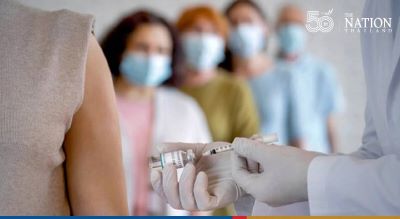
With rules around privacy making corporate “no jab, no job” mandates challenging, many European businesses are using subtler measures to convince workers to get immunized against the coronavirus.

Stellantis, the maker of Fiat, Peugeot and Chrysler cars, insists on its U.S. workers getting inoculated, a spokeswoman said. In Europe, it uses a lighter touch, making employees sign declarations that they’re symptom-free or haven’t been in contact with an infected person for two weeks.

“It’s a lot more gentle encouragement,” said Deborah Margolis, a senior associate at labor law firm Littler in London, referring to the European way. “Rather than that sort of heavy-handed approach.”

Almost two-fifths of the 530 European companies in a Littler survey said they’re trying incentives like paid days off and prizes to persuade staffers to get jabbed. Some are opting for anonymous workforce surveys to gauge how many people are vaccinated. Others hand out home Covid tests and rely on employees to report positive results.

The tactics suggest companies in Europe are still grappling with how to safely bring employees back to the office months after vaccines became widely available.

In the U.S., some companies imposing mandates have taken their cue from President Joe Biden. In September, he ordered all individuals supporting government contracts, as well as anyone who works in the same offices as those employees, to get fully vaccinated.

Banking giant Citigroup said in October it would require U.S. staffers to submit proof of vaccination as a condition of their employment, citing Biden’s directive. That stance isn’t feasible in other markets where the lender operates, including London, where staffers are subject to thrice-weekly testing if they come into its offices, but no mandate.

Data protection and employment discrimination rules in Europe mean employers must figure out if they have the legal grounds to collect workers’ vaccination records to safeguard staff, clients and suppliers. While that’s straightforward for nursing homes, it’s harder to establish in areas beyond healthcare.

“They have to be quite careful about asking about vaccine status,” said Rachel Suff, senior policy adviser for employment relations at the Chartered Institute for Personnel and Development. Companies should only do so if they can argue it’s an important health and safety issue, she said.

Some European businesses have taken a tougher line. Air France-KLM, following guidance from the French government, requires valid Covid passports for all public-facing personnel — meaning employees must either be fully vaccinated or have an up-to-date PCR test.

Private equity firm Blackstone and publishing group Bloomsbury announced in October that they’ll allow only inoculated workers to return to their London offices. Blackstone goes further, requiring regular testing even for those who are immunized. Wm Morrison Supermarkets Plc cut sick pay for unvaccinated employees who need to self-isolate, a move to lower the “biblical costs of managing Covid,” Chief Executive Officer David Potts said, according to the Guardian.

Now, with infections spiraling upward and the emergence of the new, potentially faster-spreading omicron variant, companies may get some help from governments. Countries like Austria, Germany and Greece are considering sweeping measures to increase pressure on the unvaccinated.

Austria became the first European country to announce a vaccine mandate for its population. Set to start in February, the policy would mean fines of as much as 3,600 euros ($4,073) for those who refuse to get a shot.

Germany also took a step closer toward making vaccinations compulsory. The incoming chancellor, Olaf Scholz, threw his support behind the move on Tuesday, calling for a parliamentary vote on the matter before the end of the year.

Greece, meantime, announced a rule requiring those over age 60 who are unwilling to be immunized to pay 100 euros a month starting in January.

“It is not a punishment,” Prime Minister Kyriakos Mitsotakis said Tuesday. “I would say it is a health fee.”

There are signs that tougher tactics, though vehemently opposed by some, often work. Earlier this year, immunizations surged in France when the government began requiring proof of vaccination or a negative test for admission to restaurants, bars and other venues. Workers at those businesses must meet those same requirements.

In the corporate world, United Airlines, the first major carrier to require staff to get immunized, now says nearly all its of U.S. workforce is fully vaccinated.

Still, the measures often meet resistance in Europe because of concerns over individual privacy and potential discrimination. In the U.K., even perks like giving employees a paid day off to get a shot may be problematic, said Suff.

“You have to tread a little bit carefully when you’re offering incentives,” she said. “If some people can’t have a vaccination medically, then you could be discriminating against them.”

Published : December 02, 2021

By : Bloomberg

1 in 3 people around the world have never used the internet, a U.N. report estimates

#SootinClaimon.Com : ขอบคุณแหล่งข้อมูล : หนังสือพิมพ์ The Nation.

https://www.nationthailand.com/international/40009505


Around 37% of the worlds population, or 2.9 billion people, have still never used the internet – and most of them live in developing countries, according to an estimate from a U.N. agency for information and communication technologies.

This is despite the pandemic leading to a “covid connectivity boost” in which the number of people who accessed the internet rose to around 4.9 billion this year, up 17% from 2019, in part because school closures and searches for health updates pushed more people online, the International Telecommunication Union (ITU) said.

The “unusually sharp rise” from 2019 is “good news for global development,” it said, but the data still shows that the “world’s poorest (are) being left far behind.”

The coronavirus pandemic has exposed a deep digital divide, for schoolchildren and employees in particular, as lockdowns pushed lessons and some jobs on to the web.

In the United States, millions of students and some of their teachers struggled without internet at home, more so in rural and poorer parts of the country, prompting efforts to unlock funding to help families, schools and libraries provide virtual education.

Around the world, a generation of poor children also found themselves shut out of learning and at risk of falling behind because they could not afford an internet connection, let alone a laptop.

The latest connectivity numbers show progress during the pandemic, said Doreen Bogdan-Martin, the director of the agency’s telecommunication development bureau. However, she added, across the U.N.’s 46 least-developed countries, which include Afghanistan, Yemen, Niger and Mozambique, “almost three quarters of people have never connected,” facing obstacles such as poverty, illiteracy or limited electricity.

The divide is prominent in rural parts of these countries, where residents are four times less likely to go online than in urban regions, but it also runs along gender lines, leaving four out of every five women in the least-developed countries offline.

Published : December 02, 2021

By : The Washington Post

New Zealand will advocate for an international ban on autonomous weapons systems, or killer robots

#SootinClaimon.Com : ขอบคุณแหล่งข้อมูล : หนังสือพิมพ์ The Nation.

https://www.nationthailand.com/international/40009504


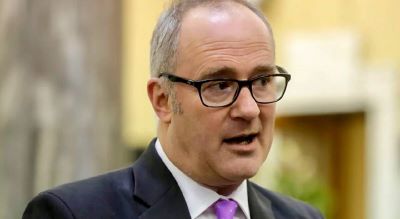
Phil Twyford, the minister in charge of arms control, said in a statement that the “prospect of a future where the decision to take a human life is delegated to machines is abhorrent and inconsistent” with the Pacific nation’s interests and values. While fully autonomous weapons do not appear to have been deployed in large-scale combat, drones that could operate without human control were used in 2020 to “hunt down” soldiers loyal to a Libyan strongman, according to the United Nations.

Lethal autonomous weapons systems, also called “killer robots,” can identify, target and kill without human input, according to the Future of Life Institute. They are usually regarded as distinct from drones, which are generally used under human control and have been deployed extensively in battle.

At least 30 countries have called for a total global ban on killer robots, which arms control and human rights activists have long advocated. But some of the world’s leading military powers, including the United States and Russia, have downplayed the risks of such weapons. China, whose military expenditure has been growing for decades, said it supports a ban on using autonomous weapons but not on developing and producing them.

Mary Wareham, an arms control expert at Human Rights Watch, praised the “thorough” nature of New Zealand’s proposal.

“Alone, [New Zealand] cannot lead,” Wareham said of the nation of some 5 million people. “But it can make a big impact when it works together with other like-minded states, especially when they can come together and form a core group, strategize and come up with a plan to commit fully to create new international law.”

Leading figures and companies in the technology sector, including billionaire Elon Musk, signed on to a 2018 pledge promising not to develop or use autonomous weapons. The pledge – organized by the Boston-based Future of Life Institute, which seeks to reduce the risk of artificial intelligence – called killer robots “powerful instruments of violence and oppression.”

The United States does not prohibit the development and use of killer robots. The nation does not have such weapons, according to a December 2020 Congressional Research Service report, which also noted that military leaders have said the United States could be forced to develop them in response to rivals.

New Zealand’s history as a global disarmament leader goes back to the 1980s, when it declared itself a nuclear and biological weapon-free zone. The stance, which led New Zealand to ban nuclear powered or armed U.S. warships from its waters, prompted Washington to suspend Wellington from a military alliance. The two nations remained close but defense relations were only fully repaired decades later.

Published : December 02, 2021

By : The Washington Post

Facebook reveals broad takedown of global disinformation networks, including some tied to anti-vaccine groups and state actors

#SootinClaimon.Com : ขอบคุณแหล่งข้อมูล : หนังสือพิมพ์ The Nation.

https://www.nationthailand.com/international/40009503


Facebook on Wednesday said it took down disinformation networks tied to a broad swath of political actors and events around the world, including militant group Hamas, Chinese state groups and the immigration crisis along the Belarus-Poland border. The company also removed accounts run by anti-vaccine groups that were using evolving tactics to attack doctors in Europe.

Together, the cat-and-mouse game described in the company’s latest threat report continues to demonstrate how social media is an active battlefield where governments and motivated parties attempt to manipulate public opinion. It also shows the might of the global platform, which has recently come under renewed fire for its role in spreading societal harms.

Facebook, which recently changed its corporate name to Meta, began to develop strategies to fight disinformation campaigns after Russian actors exploited its service during the 2016 election to influence the outcome. Since then, the company has engaged in hundreds of takedowns involving shadowy political organizations, marketing firms, governments and profit-motivated groups. Russia, the company said in a report last year, was still the biggest player in foreign disinformation.

Meanwhile, the threat landscape has evolved significantly. Governments now outsource their disinformation efforts to a growing number of private disinformation-for-hire firms, who sometimes pay unwitting legitimate journalists and influencers to write about topics of interest. Fake profiles can now be generated by artificial intelligence. And a Facebook whistleblower and other critics have accused the company of turning a blind eye to domestic actors that seek to exploit public opinion in their own countries – particularly if those countries are strategic for Facebook’s business interests.

Facebook does not disclose the reach of the disinformation campaigns, making it difficult for outsiders to gauge their actual influence. It discloses accounts removed and the followers of those accounts, but not the views that the posts received.

The China operation was discovered, the company said, after a mysterious account claiming to be a Swiss biologist posted that the United States was pressuring and intimidating World Health Organization scientists studying the origins of the coronavirus in an attempt to blame China for the virus. The false persona was named Wilson Edwards and made the posts on Twitter and Facebook in July.

Almost immediately after the fake biologist’s account, which was created only the day before, began posting its messages, Chinese state-controlled media organizations Global Times and People’s Daily began covering the fake scientist’s story. Facebook initially received reports about the fake account, and began to tie it and a network of hundreds of other fake personas amplifying it to actors in China, including a state-owned infrastructure company.

While Facebook fell short of saying that the operation – which it said was quickly rooted out – was tied directly to the Chinese government, experts say such unusual timing often suggests a coordinated effort.

Facebook also removed dozens of Facebook and Instagram accounts and groups that posed as Middle Eastern migrants to Belarus and Poland, as well as journalists discussing the migrant crisis. The accounts, which were created between September and November and hosted content in English and Arabic, appeared to be attempting to generate criticism of Poland for causing a humanitarian crisis at the border and being hostile to migrants. For example, some of the fake accounts talked about anti-migrant neo-Nazi activity in Poland and the difficulty of border crossings.

Some of these accounts, Facebook said, were tied to the Belarusian KGB, which is the country’s national intelligence agency. European leaders have blamed Belarus for provoking the humanitarian conflict because the country’s strongman leader has openly encouraged Iraqis to use its borders to cross into Europe. European leaders say this is retaliation for sanctions imposed against the country by the European Union.

In Israel’s occupied Gaza Strip, Hamas – the militant organization that is also the political leader of the territory – ran a disinformation operation intended to generate support for Hamas and criticism of Israel and of Hamas’s political rivals. Accounts pretending to be local news organizations and young women living in the West Bank were disabled by Facebook this fall, the company said. The company has previously taken down disinformation operations associated with other political groups in Israel’s occupied territories, showing how social media is a highly active battleground for political viewpoints there.

In addition, the company said it was trying to get ahead of evolving tactics by adversarial groups, and pointed to examples of recent enforcement actions in Europe and in Vietnam as examples of those tactics.

In Italy and France, an anti-vaccination group known as V_V developed coordinated harassment campaigns against doctors and journalists on Facebook. In some examples, they would call doctors and journalists Nazis for promoting coronavirus vaccines and claim that the vaccines would lead to a “health-care dictatorship.” The groups would coordinate on other channels, such as Telegram, to organize the harassment.

Facebook said that such coordinated campaigns, known as brigading, are a new area that the company is starting to police. In addition, it said it had begun policing other types of harassment campaigns, including campaigns to report people’s posts as breaking the rules to get them taken down.

Published : December 02, 2021

By : The Washington Post

Top U.S., Russian diplomats to meet amid Ukraine showdown

#SootinClaimon.Com : ขอบคุณแหล่งข้อมูล : หนังสือพิมพ์ The Nation.

https://www.nationthailand.com/international/40009502


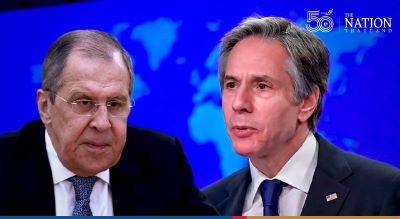
RIGA, Latvia – Secretary of State Antony Blinken will meet this week with his Russian counterpart, Sergei Lavrov, the State Department said Wednesday, as a showdown intensifies between Russia and the West over Ukraine.

The top American diplomat will speak with Lavrov on the sidelines of an Organization for Security and Cooperation in Europe summit in Stockholm on Thursday, a State Department official said, a day after Blinken and other NATO officials at a ministerial meeting in the Latvian capital discussed a potential alliance response to Moscow’s military buildup along its border with Ukraine. The official, like other officials, spoke on the condition of anonymity under ground rules set by the department.

NATO officials’ warnings during two days of talks in Riga of serious consequences should Moscow launch an invasion of Ukraine, together with new demands from Russian President Vladimir Putin on Wednesday for guarantees against NATO’s eastward expansion, offered fresh evidence of the growing hostility between Moscow and the trans-Atlantic alliance.

Blinken said he was concerned by what he called evidence of Russian plans for “significant aggressive moves” against Ukraine, including a buildup of combat forces and attempts to portray Ukraine as an aggressor. He compared the situation to that before Russia’s 2014 annexation of Crimea.

“Those plans include efforts to destabilize Ukraine from within as well as large-scale military operations,” he told reporters after the conclusion of the NATO talks. “We don’t know whether President Putin has made the decision to invade. We do know that he is putting in place the capacity to do so on short order should he so desire. So despite uncertainty about intentions and timing, we must prepare for all contingencies while working to see to it that Russia reverses course.”

Blinken declined to give specifics about what sort of repercussions Moscow would face in the event of an invasion but said the Biden administration was prepared to impose “high-impact economic measures” that it has withheld in the past.

“We are prepared to impose severe costs for further Russian aggression in Ukraine. NATO is prepared to reinforce its defenses on the eastern flank,” he said.

Blinken said the possibility of a diplomatic solution remained. He also urged Russia to pull weapons and troops back from Ukraine’s border and to cease what he called efforts to destabilize the country internally.

“That’s how we can turn back from the crisis that would have far-reaching and long-lasting consequences for our bilateral relations with Moscow, for Russia’s relations with Europe, for international peace and security,” he said.

Blinken is also scheduled to meet with Ukraine’s foreign minister in Stockholm.

Speaking at a credentialing ceremony for foreign ambassadors in Moscow, Putin said the Kremlin wants “concrete agreements” with NATO that the alliance will not expand to the east. That would include not adding any new members or weapons systems, he said.

“We express concern not only about the fact that the international community is acting in disarray and cannot unite to solve truly important problems, but also about the way our partners behave towards our country, towards Russia, trying in every way to restrain our development, exert sanctions pressure and escalate tensions at our borders,” Putin said.

“This is more than serious for us,” Putin added. “In this situation, Russia is taking adequate military-technical measures.”

Also on Wednesday, Russian Foreign Ministry spokeswoman Maria Zakharova claimed the Ukrainian government has deployed 125,000 troops, about half its army, to the Donbas region in eastern Ukraine, the site of a protracted conflict between Kyiv’s forces and Moscow-backed separatists.

U.S. and Ukrainian officials in turn have voiced concerns about what they say is a buildup of nearly 100,000 Russian troops along Russia’s border with Ukraine. Moscow has called its activities purely defensive and said it is Kyiv that is attempting to provoke a confrontation.

Lavrov described the situation in Donbas as “disquieting.”

“It turns out that they are deploying additional forces, while those that are supposed to be replaced aren’t going anywhere, either,” Lavrov told reporters Wednesday. “I believe that Western colleagues are perfectly aware of the situation because Ukraine does nothing without notifying them or receiving support.”

This week, Putin warned the West against stationing missile-defense systems in Ukraine similar to those in Romania and Poland, claiming that they could be secret offensive weapons capable of reaching Moscow within 10 minutes.

“Then we’ll have to create something similar to those who threaten us,” Putin said, referencing his country’s development of hypersonic weapons.

The Biden administration is attempting to establish a unified NATO position, which could include new military aid or sanctions, that would deter any new military action by Russia but also avoid supplying Putin with a rationale to invade in response.

A senior State Department official said the Riga talks had yielded a strong consensus in support of Ukraine’s territorial integrity. “We are not looking for any military engagement, but we will stand up for Ukraine’s sovereignty,” the official said.

Andrew Weiss, a scholar at the Carnegie Endowment for International Peace, said that Putin appeared to be concerned that NATO support for Ukraine’s military and cyber-capabilities would threaten Russian security.

“They’d like to nip that threat in the bud and put constraints on what Western countries can and can’t do,” he said.

NATO Secretary General Jens Stoltenberg said Moscow had no right to dictate events in neighboring countries, even smaller ones, and would not be able to veto a potential NATO decision to admit Ukraine as a member.

He said NATO should not be seen as a threat to Russia. “This idea that NATO support to a sovereign nation is a provocation is just wrong,” he told reporters after the ministerial talks.

But Stoltenberg also noted that because Ukraine is not a NATO member, the alliance did not have a mutual defense responsibility.

“Of course there’s a difference between a close and highly valued partner, Ukraine, where we provide support, and NATO allies where we actually have our collective defense force, where we provide security guarantees,” he said.

Published : December 02, 2021

By : The Washington Post

More cases of Omicron variant detected in UK

#SootinClaimon.Com : ขอบคุณแหล่งข้อมูล : หนังสือพิมพ์ The Nation.

https://www.nationthailand.com/international/40009471


John Swinney, deputy first minister of Scotland, has confirmed there is no travel history in “some” of these cases. That suggests there has been at least a level of community transmission, which makes controlling the variant more difficult.

Another two cases of the Omicron coronavirus variant have been detected in London, bringing the total number of people with the strain identified in Britain to 11, British health authorities confirmed Monday.

The UK Health Security Agency (UKHSA) said the latest two cases in London have links to travel in southern Africa. The two people are not connected to each other and are not linked to the previously confirmed cases, it added.

It comes after authorities confirmed six cases were found in Scotland earlier Monday in addition to the three detected in England over the weekend.

However, John Swinney, deputy first minister of Scotland, has confirmed there is no travel history in “some” of these cases.

That suggests there has been at least a level of community transmission, which makes controlling the variant more difficult.

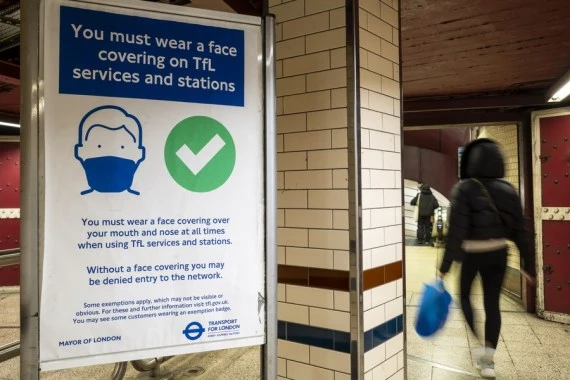
A commuter passes a sign requiring people to wear face covering while travelling on the tube in London, Britain, on Nov. 9, 2021.  (Photo by Stephen Chung/Xinhua)A commuter passes a sign requiring people to wear face covering while travelling on the tube in London, Britain, on Nov. 9, 2021. (Photo by Stephen Chung/Xinhua)

Meanwhile, British Health Secretary Sajid Javid confirmed Monday that he’s accepted the Joint Committee on Vaccine and Immunisation (JCVI)’s recommendation on boosters, including booster jabs for everybody over the age of 18, shortening the gap between a second jab and a booster from six months to three months and giving a second jab to children aged between 12 and 15 years old – again after no less than three months.

Britain registered 42,583 new COVID-19 infections, bringing the total number of coronavirus cases in the country to 10,146,915, according to official figures released Monday.

The country also reported a further 35 coronavirus-related deaths. The total number of coronavirus-related deaths in Britain now stands at 144,810. These figures only include the deaths of people who died within 28 days of their first positive test.

More than 88 percent of people aged 12 and over in Britain have had their first dose of vaccine and more than 80 percent have received both doses, according to the latest figures. More than 30 percent have received booster jabs, or the third dose of a coronavirus vaccine.

To bring life back to normal, countries such as Britain, China, Germany, Russia and the United States have been racing against time to roll out coronavirus vaccines.

A mask is seen discarded on the ground in London, Britain, Nov. 25, 2021. (Xinhua/Li Ying)A mask is seen discarded on the ground in London, Britain, Nov. 25, 2021. (Xinhua/Li Ying)
Published : December 01, 2021

By : Xinhua

U.S. urges broader COVID-19 vaccination as concerns rise over Omicron variant

#SootinClaimon.Com : ขอบคุณแหล่งข้อมูล : หนังสือพิมพ์ The Nation.

https://www.nationthailand.com/international/40009470


U.S. President Joe Biden urged Americans to get vaccinated and schedule boosters, calling the shots “the best protection against this new variant or any of the variants out there.”

All adults should get a COVID-19 booster shot following the emergence of the new Omicron variant of COVID-19, though no case has been reported yet in the United States, according to the U.S. Centers for Disease Control and Prevention (CDC) on Monday.

Previously, the CDC advised people over 50 or living in a long-term care facility “should” get a booster, while all other adults “may” get boosters at least six months after their previous shots. Now all adults should get a booster, the CDC said.

Meanwhile, U.S. President Joe Biden has expressed confidence that the United States can handle the new variant. He also urged Americans to get vaccinated and schedule boosters, calling the shots “the best protection against this new variant or any of the variants out there.”

News portal Politico reported on Tuesday that “the sudden emergence of the Omicron variant has sparked fears of another devastating wave of the virus, one that could endanger the White House’s plans to focus on Biden’s legislative agenda and efforts to battle inflation and a bottlenecked supply chain.”

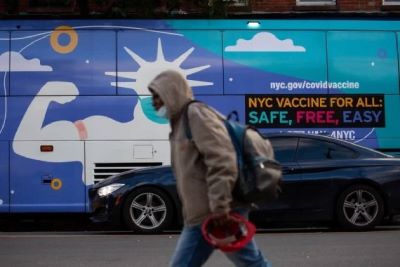
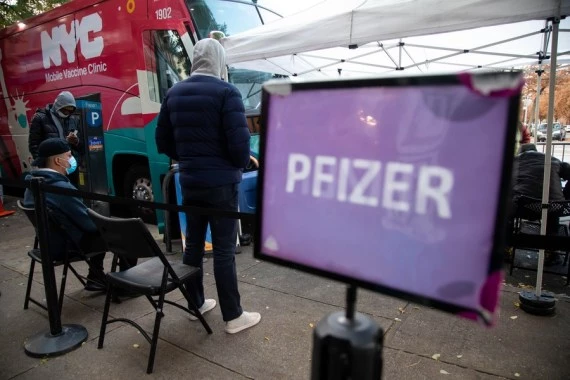
People wait at a mobile COVID-19 vaccination site in the Brooklyn borough of New York, the United States, Nov. 19, 2021. (Photo by Michael Nagle/Xinhua)People wait at a mobile COVID-19 vaccination site in the Brooklyn borough of New York, the United States, Nov. 19, 2021. (Photo by Michael Nagle/Xinhua)

Related Stories

“Hoping to avoid some of the toll that Delta took, the administration is moving quickly to respond. But little is yet known about the new variant, first identified just days ago in South Africa, complicating exactly what they can say or do.” it added.

On Monday, The Hill reported that “there are steps that can be taken in the meantime, ranging from getting more people vaccinated and boosted, both in the U.S. and globally, to improving surveillance to detect the new variant and distributing new antiviral treatments.”

CALM NEEDED

Pfizer and its partner BioNTech are expected to ask the Food and Drug Administration in the coming days to authorize its booster shot for 16- and 17-year-olds, and the regulators are expected to sign off quickly, The Washington Post on Monday quoted reliable sources as saying.

Currently, Americans who are 18 and older are eligible for boosters six months after receiving the second shot of the Pfizer-BioNTech or Moderna vaccines. They can receive the Johnson & Johnson booster two months after getting the single-shot vaccine.

“The move to expand eligibility among teens comes as the White House is grappling with the Omicron variant that has captured the world’s attention,” said the report. Biden has said “this variant is a cause for concern, not a cause for panic. We’ll fight this variant with scientific and knowledgeable actions.”

“Scientists were stunned (by Omicron),” said The Washington Post in another report on Tuesday. “It had an unruly swarm of mutations. Many were known to be problematic, impeding the ability of antibodies to neutralize the virus. But there had never been a variant with so many of these mutations gathered in a package.

“We have seen these mutations in other strains, in twos and threes, and each time they were a little harder to neutralize, but didn’t spread particularly well. Now, all together? It’s a complete black box,” Benjamin Neuman, a virologist at Texas A&M University, was quoted by the newspaper as saying in an email.

Biden’s chief medical adviser Anthony Fauci has asked the public not to panic while scientists around the world rush to understand the threat posed by Omicron. It’s going to take some time to “get a good handle” on the newly discovered strain, and “we should not be freaking out,” Fauci told “CBS Mornings” on Monday.

ECONOMY RATTLED

The global economy could suffer a modest blow from the Omicron variant of COVID-19, though the scale of damage will hinge on the potency of the strain itself, The Wall Street Journal on Tuesday quoted economists as saying.

“Tourism spending will likely weaken, and perhaps so too will restaurant spending and shopping at stores,” said the report. But compared with the initial wave of COVID-19 in March 2020 and the Delta variant this summer, Omicron’s threat to economies will likely be less severe, in part because each new virus strain has had a diminished economic impact.

Economists predict Omicron could slow growth this quarter and early next year, but the impact won’t lead to a contraction, according to the report. “It takes a boom into a boomlet,” Diane Swonk, chief economist at accounting and advisory firm Grant Thornton LLP, was quoted as saying. “We’ve got a lot of momentum coming in and that helps.”

On Monday, Federal Reserve Chairman Jerome Powell said that the recent rise in COVID-19 cases and the emergence of the Omicron variant pose downside risks to U.S. employment and economic activity and increased uncertainty for inflation. “Greater concerns about the virus could reduce people’s willingness to work in person, which would slow progress in the labor market and intensify supply-chain disruptions,” he said.

On Tuesday, coronavirus vaccine maker Moderna set off alarm bells in financial markets by warning that current vaccines may be less effective at combating the Omicron variant compared with previous strains. “I think it’s going to be a material drop,” Stephane Bancel, Moderna’s chief executive officer, told the Financial Times.

Tourists ride on a double decker bus on Lincoln Road in Miami-Dade County, Florida, the United States, Aug. 6, 2021. (Photo by Monica McGivern/Xinhua)Tourists ride on a double decker bus on Lincoln Road in Miami-Dade County, Florida, the United States, Aug. 6, 2021. (Photo by Monica McGivern/Xinhua)

On the heels of this prediction, U.S. stock futures slumped and Asian markets retreated. Markets in Europe also fell. U.S. oil prices dropped back below 70 U.S. dollars a barrel, while gold rose and risk-sensitive currencies such as the Australian dollar weakened against the greenback. The 10-year Treasury yield also declined. 

Published : December 01, 2021

By : Xinhua

Global vaccination plan only way to stop pandemic, says UN chief

#SootinClaimon.Com : ขอบคุณแหล่งข้อมูล : หนังสือพิมพ์ The Nation.

https://www.nationthailand.com/international/40009469


“Everyone, everywhere, must have access to COVID-19 vaccines, tests and treatment,” UN Secretary-General Antonio Guterres said, asking for support for the ACT-accelerator and the COVAX facility.

United Nations Secretary-General Antonio Guterres argued on Tuesday that “the only way out of a global pandemic and out of this unjust and immoral situation is through a global vaccination campaign.”

The secretary-general was speaking at a meeting at the UN headquarters in New York of Foreign Ministers of the Group of 77 (G77) and China, where he noted that the COVID-19 pandemic “continues to wreak havoc” on developed and developing countries alike.

He said that the UN stands behind the vaccination strategy set out by the World Health Organization, with the goal of getting vaccines into the arms of 40 percent of people in all countries by the end of this year, and 70 percent by the middle of 2022.

“Everyone, everywhere, must have access to COVID-19 vaccines, tests and treatment,” the top UN official said, asking for support for the ACT-accelerator and the COVAX facility.

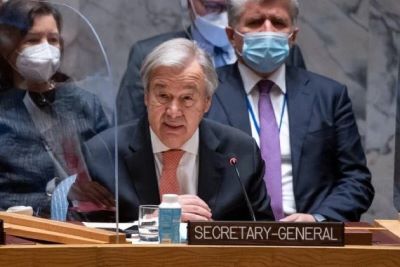
A UN staff member checks a batch of COVID-19 vaccines, as part of the global COVAX initiative, at the Carthage International Airport in Tunis, Tunisia, May 16, 2021. (Photo by Adel Ezzine/Xinhua)A UN staff member checks a batch of COVID-19 vaccines, as part of the global COVAX initiative, at the Carthage International Airport in Tunis, Tunisia, May 16, 2021. (Photo by Adel Ezzine/Xinhua)

Related Stories

The world economy is expected to grow by 5.9 percent this year, but the pace of recovery is extremely uneven, Guterres said.

When developed economies invest 28 percent of their GDP in recovery, middle income countries invest 6 percent, and least developed nations invest just 1.8 percent, this does not seem surprising to him.

In Sub-Saharan Africa, for example, the International Monetary Fund (IMF) projects that cumulative economic growth per capita over the next five years will be 75 percent less than the rest of the world.

“This dangerous divergence threatens to widen as growth rates are expected to decrease in 2022. Rising inflation could also have a negative impact on the cost of borrowing and servicing debt,” he warned.

Climate change, inequality, and the development of new technologies were also addressed by the UN chief, who called for “a quantum leap in unity and solidarity” to address these global problems.

During the pandemic, the secretary-general highlighted the importance of multilateralism and the role of the United Nations.

UN country teams released socio-economic response plans for 139 countries and territories. Approximately 3 billion U.S. dollars was repurposed to prioritize immediate support, and another 2 billion dollars was mobilized.

For the secretary-general, it was recent reforms that enabled the world body to adjust and respond quickly.

“As a result, more than 90 percent of host governments have indicated that the United Nations today is more relevant to their country’s development needs when compared to three years ago,” he said.

On the 2030 Agenda and the Paris Agreement, the UN chief said that “we must intensify our efforts in this Decade of Action to deliver the Sustainable Development Goals. This is vital to achieving a fair globalization, boosting economic growth and preventing conflict.”

Noting that the outcome of COP26 in Glasgow was the bare minimum required to keep the 1.5-degree promise of Paris alive, Guterres said that he counts on the leadership of the G77 and China over the coming year “to increase ambition and push for that ambition not only on mitigation, but on adaptation — a basic need for so many countries — on finance, and on loss and damage, where we still have such a long way to go.”

“We need a quantum leap in unity and solidarity to make collective decisions on the global challenges we face, from the climate crisis to our suicidal war on nature, unsustainable levels of inequality, and the unchecked development of new technologies,” he said.

Published : December 01, 2021

By : Xinhua

Blanket travel bans will not prevent intl spread of Omicron variant: WHO

#SootinClaimon.Com : ขอบคุณแหล่งข้อมูล : หนังสือพิมพ์ The Nation.

https://www.nationthailand.com/international/40009468


The WHO advised that persons “who are unwell, or who have not been fully vaccinated or do not have proof of previous SARS-CoV-2 infection and are at increased risk of developing severe disease and dying, including people 60 years of age or older or those with comorbidities that present increased risk of severe COVID-19 (e.g. heart disease, cancer and diabetes) should be advised to postpone travel to areas with community transmission.”

The World Health Organization (WHO) warned on Tuesday that blanket travel bans will not prevent the international spread of the COVID-19 Omicron variant, even as dozens of countries have already introduced such restrictions.

Although labeling Omicron as a “variant of concern”, the WHO said blanket travel bans will only place a heavy burden on lives and livelihoods, while also “disincentivizing countries to report and share epidemiological and sequencing data.”

The Omicron variant was first reported to the WHO by South Africa last week. So far, several countries and regions have confirmed cases of infection with Omicron.

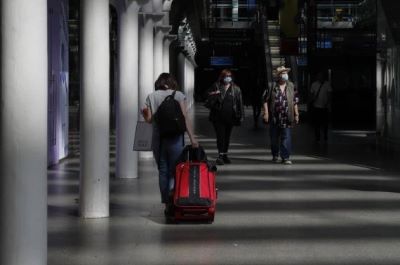
 Photo rotated 180 degrees shows a cyclist riding outside St. Pancras International Station in London, Britain, July 29, 2021. (Xinhua/Han Yan)Photo rotated 180 degrees shows a cyclist riding outside St. Pancras International Station in London, Britain, July 29, 2021. (Xinhua/Han Yan)
Related Stories

“It is expected that the Omicron variant will be detected in an increasing number of countries as national authorities step up their surveillance and sequencing activities,” WHO said in an updated travel advice.

As of Nov. 28, 56 countries were reportedly implementing travel measures aimed at potentially delaying the importation of the new variant, according to the WHO.

At a member states session on the Omicron variant on Tuesday, WHO Director-General Tedros Adhanom Ghebreyesus thanked Botswana and South Africa for detecting and reporting this variant so rapidly. It is deeply worrying that these countries were being penalized by others for doing the right thing, he said.

He called the “blunt, blanket measures” introduced by some member states “not evidence-based or effective on their own.” He urged countries to take “rational, proportional risk-reduction measures, in keeping with the International Health Regulations.”

Meanwhile, the WHO advised that persons “who are unwell, or who have not been fully vaccinated or do not have proof of previous SARS-CoV-2 infection and are at increased risk of developing severe disease and dying, including people 60 years of age or older or those with comorbidities that present increased risk of severe COVID-19 (e.g. heart disease, cancer and diabetes) should be advised to postpone travel to areas with community transmission.”

“Studies are ongoing to understand more about these mutations (of the Omicron variant) and their impact on transmissibility, virulence, diagnostics, therapeutics and vaccines,” it said.

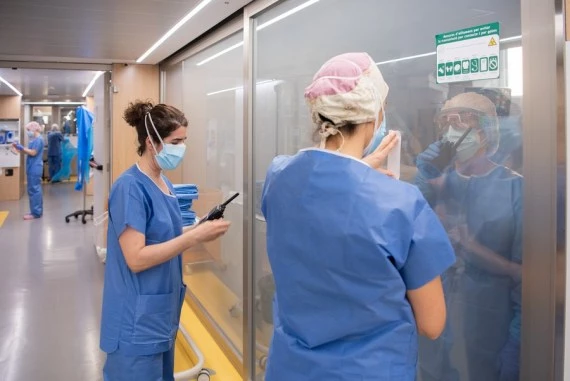
Medical workers communicate with colleagues inside a ward at a hospital in Barcelona, Spain, April 8, 2021.  (Photo by Francisco Avia/Xinhua)Medical workers communicate with colleagues inside a ward at a hospital in Barcelona, Spain, April 8, 2021. (Photo by Francisco Avia/Xinhua)
Published : December 01, 2021

By : Xinhua

U.S. FDA experts narrowly recommend Mercks COVID-19 new drug molnupiravir

#SootinClaimon.Com : ขอบคุณแหล่งข้อมูล : หนังสือพิมพ์ The Nation.

https://www.nationthailand.com/international/40009467


Merck plans to study whether molnupiravir is effective against the Omicron variant that was discovered days ago.

An expert committee on Tuesday voted to narrowly recommend that the U.S. Food and Drug Administration (FDA) authorize a COVID-19 pill from Merck for high-risk adults, the first in a new class of antiviral drugs that could work against a wide range of variants, including Omicron.

The drug, known as molnupiravir, has shown efficacy to modestly reduce the risk of hospitalization and death, predominantly from the Delta, Mu and Gamma variants, reported The New York Times (NYT). Merck plans to study whether molnupiravir is effective against the Omicron variant that was discovered days ago.

The panel, known as the Antimicrobial Drugs Advisory Committee, voted 13 to 10 in support of the FDA granting its use to patients who are older or have medical conditions that make them vulnerable to severe illness. The pill could be authorized in the United States within days, and available by year’s end.

Related Stories

Last week, the company said that a final analysis found the drug to be about 30 percent effective at reducing the risk of hospitalization and death in high-risk people, lower than the 50 percent efficacy first announced in October after a preliminary look at the data.

In the coming weeks, the FDA may also greenlight a similar pill from Pfizer that goes by the name Paxlovid, but it hasn’t scheduled a meeting of outside advisers to discuss the drug yet. The Pfizer pill was reported to be 89 percent effective at reducing risk of hospitalization and death.

Health officials around the world have been counting on the new pills to reduce the number of severe cases and save lives. “If Omicron causes a surge in severe infections, it could make them even more important,” said NYT.  

Published : December 01, 2021

By : Xinhua