The new variant, first detected in South Africa, features “unusual” alterations that are concerning since they may let it evade the immune system and become more transmissible.
Anew COVID-19 variant known as B.1.1.529 has been confirmed in Belgium, the country’s Minister of Health and Social Affairs Franck Vandenbroucke said on Friday.
Two suspect samples were being analyzed, according to virologist Marc Van Ranst of the Catholic University of Louvain. One sample was confirmed as the novel B.1.1.529, the virologist tweeted.
The new variant, first detected in South Africa, features “unusual” alterations that are concerning since they may let it evade the immune system and become more transmissible.
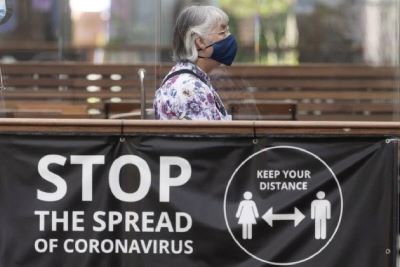
A sign to notice pedestrians wearing face masks and keeping social distance is seen in Brussels, Belgium, Nov. 5, 2021. (Xinhua/Zheng Huansong)
Belgium decided on Friday to suspend flights from the southern African region, following a proposal from the European Commission. Belgian travelers returning from South Africa and other nearby countries must adhere to a ten-day quarantine.
Several European countries, notably the United Kingdom, Germany and Italy, have already decided to close their borders to the region.
People queue up for check-in in the departure hall at the Brussels Airport in Zaventem, Belgium, July 1, 2021. (Xinhua/Zheng Huansong)
A survey conducted by the CBA showed that 82 percent of Aussies would try to make the most of any discounts over the weekend, and 80 percent said they would be encouraged to shop at stores offering Black Friday discounts.
This weekend Aussies across the country are expected to crowd stores both in person and online for one of Australia’s largest and most anticipated shopping holidays, Black Friday.
Data from Australia’s largest commercial bank, the Commonwealth Bank of Australia (CBA), showed that Aussies had spent more than ever over the four-day holiday in both 2019 and 2020.
Retail and consumer expert from CBA Jerry Macey said the 2021 event would likely be no different.
“The increase in sales in 2020 in comparison to 2019 bodes well for the Black Friday sales this coming weekend,” he said.
People shop at a shopping center in Sydney, Australia, Nov. 26, 2021. (Photo by Hu Jingchen/Xinhua)
With several major Australian cities only recently exiting lockdown and the Christmas season fast approaching, Aussies have been keen to take full advantage of the sales.
A survey conducted by the CBA showed that 82 percent of Aussies would try to make the most of any discounts over the weekend, and 80 percent said they would be encouraged to shop at stores offering Black Friday discounts.
In anticipation of the holiday, many large retailers have extended their opening hours and slashed up to 50 percent off a variety of consumer goods.
People shop at a shopping center in Sydney, Australia, Nov. 26, 2021. (Photo by Hu Jingchen/Xinhua)
This month the Australia Retailers Association (ARA) projected that total sales for the weekend would reach 5.4 billion Australian dollars (about 3.9 billion U.S dollars), almost half of which is forecast to be in online sales.
Gary Starr, executive general manager of Australia Post, said Australia’s national postal service was gearing up for what is expected to be a record year in online sales.
“We’ve set ourselves up with 30 percent more processing capacity, more planes in the air, and thousands of extra people to sort and deliver parcels,” said Starr.
“We know people are keeping a close eye on the big online sales events and planning ahead for what they want to buy, so we’re expecting this year to be huge,” he said.
A new variant of the coronavirus with a “constellation” of mutations has been identified in Botswana. Tom Peacock, a virologist at Imperial College London, branded the mutations “really awful” on Twitter.
More than 10 million coronavirus cases have been recorded in Britain since the start of the COVID-19 pandemic, according to official figures released Thursday.
The country reported another 47,240 coronavirus cases in the latest 24-hour period, bringing the total number of coronavirus cases in the country to 10,021,497.
Britain also recorded another 147 coronavirus-related deaths. The total number of coronavirus-related deaths in Britain now stands at 144,433. These figures only include the deaths of people who died within 28 days of their first positive test.
The latest data came as coronavirus cases surge across Europe, making the continent the epicentre of the pandemic again.
People walk past a sign of free rapid COVID-19 tests in Manchester, Britain, Nov. 10, 2021. (Xinhua/Jon Super)
Meanwhile, a new variant of the coronavirus with a “constellation” of mutations has been identified in Botswana.
Designated as B.1.1.529, scientists are still unclear whether existing antibodies would react well to the variant, which has 32 spike protein mutations.
Tom Peacock, a virologist at Imperial College London, branded the mutations “really awful” on Twitter.
People queue up outside a vaccination center in Manchester, Britain, Nov. 10, 2021. (Xinhua/Jon Super)
“Given the large number of mutations it has accumulated apparently in a single burst, it likely evolved during a chronic infection of an immunocompromised person, possibly in an untreated HIV/AIDS patient,” said Francois Balloux, professor of computational systems biology and director of Genetics Institute at University College London.
“For the time being, it should be closely monitored and analysed, but there is no reason to get overly concerned, unless it starts going up in frequency in the near future,” Balloux said.
Earlier this month, England’s deputy chief medical officer, Jonathan Van-Tam, said the modelling is “getting more difficult to give us any clear sense of whether things will turn up or down.”
“We’re in for potentially some difficult months over the winter,” he told reporters.
However, British Prime Minister Boris Johnson said earlier this week that there is “nothing in the data saying we need to move to Plan B” in Britain.
A man receives the second dose of the Pfizer-BioNTech COVID-19 vaccine at Hyde Leisure Centre in Greater Manchester, Britain, on Jan. 7, 2021. (Xinhua/Jon Super)
“The best single thing you can all do is get your booster. When you are called forward to get it, please do so,” Johnson said to reporters after his speech at the Confederation of British Industry (CBI) annual conference.
Plan B involves advice to work at home and requirements to wear masks in certain scenarios.
In a recent report, the National Audit Office (NAO) said that the coronavirus pandemic exposed Britain’s vulnerability to whole-system emergencies and left the British government unprepared.
The government did not act on warnings from pandemic simulations carried out prior to COVID-19 based on an influenza outbreak, said the NAO.
Gareth Davies, head of the NAO said: “This pandemic has exposed the UK’s vulnerability to whole-system emergencies, where the emergency is so broad that it engages all levels of government and society. Although government had plans for a flu pandemic, it was not prepared for a pandemic like COVID-19 and did not learn important lessons from the simulation exercises it carried out.”
In its conclusions, the NAO called on the British government to strengthens its preparations for system-wide emergencies. It suggested the Cabinet Office establish who leads and manages system-wide risks, and strengthen oversight and assurance arrangements over preparations for system-wide emergencies.
Meanwhile, a research has found the NHS is facing the “most difficult winter in its history,” with almost 90 percent of hospital trust leaders feeling “extremely concerned.”
A man wearing a face mask walks past a bus in London, Britain, on Nov. 24, 2021. (Xinhua/Li Ying)
NHS Providers, which carried out the survey, said that while cases of COVID-19 are “well below” their peak in January, some trusts are “beyond full stretch.”
It is urging the government to offer cash bonuses of about 500 pounds to stop social care staff leaving for jobs in “hospitality, supermarkets, or online firms such as Amazon.”
More than 88 percent of people aged 12 and over in Britain have had their first dose of vaccine and more than 80 percent have received both doses, according to the latest figures. More than 28 percent have received booster jabs, or the third dose of a coronavirus vaccine.
To bring life back to normal, countries such as Britain, China, Germany, Russia and the United States have been racing against time to roll out coronavirus vaccines.
People pass an ambulance outside the emergency entrance at St Thomas
“The Iraqi government is working to bring back all stranded Iraqis voluntarily,” Iraqi Prime Minister Mustafa al-Kadhimi said.
The Iraqi Foreign Ministry said Thursday that it has evacuated 617 migrants stranded in Belarus, most of whom are women, children and the elderly.
“The ministry’s efforts are continuing to evacuate the migrants voluntarily, and 617 Iraqis are now returned, in coordination with Iraqi Airways, from the Belarusian capital Minsk,” Ahmed al-Sahaf, a spokesman of Iraq’s Foreign Ministry, told the official Iraqi News Agency.
In an earlier statement, Iraqi Prime Minister Mustafa al-Kadhimi stressed the importance of taking all “necessary joint measures to preserve the security and safety of Iraqi citizens and work to avoid any Iraqis becoming a victim of human trafficking networks.”
Photo taken on Nov. 14, 2021 shows a refugee camp near the Belarusian-Polish border in Belarus. (Photo by Henadz Zhinkov/Xinhua)
“The Iraqi government is working to bring back all stranded Iraqis voluntarily,” al-Kadhimi said.
Earlier in the month, the Iraqi Foreign Ministry announced the suspension of direct flights to Belarus to protect Iraqi migrants from human trafficking gangs.
Thousands of migrants, many of them are from Iraq, Syria and Yemen, have been gathering on the Belarusian side of the border with Poland, in an attempt to enter Poland and then Germany to seek asylum in European countries.
As other industries with workers in public-facing roles, like airlines and hospitals, have moved toward requiring COVID-19 vaccines, “retailers have dug in their heels, citing concerns about a labor shortage,” reported The New York Times.
Some 92 percent of U.S. federal employees and military personnel have received at least one dose of coronavirus vaccines, far above the national level of less than 70 percent, while daily COVID-19 cases nationwide hover well above 90,000 during the holiday season.
Among them, nearly 5 percent more have asked for exemptions on religious or medical grounds, the White House said on Wednesday. At the largest federal agency, the Defense Department, 93.4 percent of military and federal personnel combined have received at least one vaccination dose, while another 5.5 percent have asked for exemptions, The Washington Post reported.
Among civil servants, vaccination percentages range from 86.1 percent at the Agriculture Department to 97.8 percent at the Agency for International Development (AID). Percentages of employees asking for exemptions also vary, from 10.2 percent at the Department of Veterans Affairs to 1.3 percent at AID and the State Department, said the report.
As of Thursday morning, 231,367,686 people have received at least one dose of COVID-19 vaccine, making up 69.7 percent of the whole U.S. population; fully vaccinated people stood at 196,168,756, accounting for 59.1 percent of the total, official data show.
An employee works at a grocery store in Washington, D.C., the United States, on Nov. 10, 2021. (Photo by Ting Shen/Xinhua)
As other industries with workers in public-facing roles, like airlines and hospitals, have moved toward requiring COVID-19 vaccines, “retailers have dug in their heels, citing concerns about a labor shortage,” reported The New York Times (NYT) on Thursday. “A portion of one of the country’s largest work forces will remain unvaccinated.”
At the heart of the retailers’ resistance is a worry about having enough people to work. In a tight labor market, retailers have been offering perks like higher wages and better hours to prospective employees in hopes of having enough people to staff their stores and distribution centers, according to the report.
The industry showed how strongly it feels about the issue this month when the (Joe) Biden administration directed companies with 100 or more workers to mandate vaccines or weekly tests by Jan. 4. “Five days after that announcement, the National Retail Federation sued to stop the effort,” said the report.
Meanwhile, according to the Centers for Disease Control and Prevention (CDC), as of Tuesday, only 13 percent, or slightly more than 3.5 million of the nation’s 28 million children from ages 5 through 11, have already received their first dose of COVID-19 vaccines, in the month since that age group was granted eligibility.
“The central goal of vaccinating children against the coronavirus has largely been for their own health and, more broadly, to ease the strain on school and day care systems that are in a perpetual cycle of shutdowns, testing and re-openings as children become infected,” said NYT in another report on Thursday.
For some families with several generations or worrying about a family member with a severe illness, the vaccine for young children is a crucial barricade of protection for the others. “It’s a hug recovery program, with giant stakes,” said the report. Immunized children have also become a force shield for families in places where overall vaccination rates are low.
Medical workers wheel a patient into the emergency room at Maimonides Medical Center in the Brooklyn borough of New York, United States, March 8, 2021. (Xinhua/Michael Nagle)
STRAINED HOSPITALS
The U.S. federal government has granted a request from Governor Gretchen Whitmer for staffing assistance to support medical personnel treating COVID-19 patients amid a surge in infections in Michigan, reported The Detroit News on Wednesday.
Under the agreement, two teams of 22 members each will help staff at Beaumont Hospital in Dearborn and Spectrum Health in Grand Rapids. The teams will include registered nurses, doctors and respiratory therapists and will arrive next week.
“Hospitals are at capacity across the state, particularly in Metro Detroit and West Michigan, and this is taking a tremendous toll on our health care workers,” Elizabeth Hertel, director of the state health department, was quoted as saying.
Hospitals in Massachusetts will cut back on non-urgent scheduled procedures starting on Monday because of staffing shortages and longer patient hospital stays, NYT on Wednesday quoted the state’s health authorities as saying.
Coronavirus cases have been rising in Massachusetts for several weeks, but hospitalizations have risen at a lower rate. The staffing shortage was largely driven by the pandemic, but the pressure on hospitals relates to other COVID-19 consequences.
The pandemic has contributed to the loss of some 500 medical, surgical and ICU hospital beds in Massachusetts, and hospitals are seeing an influx of patients who delayed visiting the doctor when COVID-19 cases were higher, according to the report.
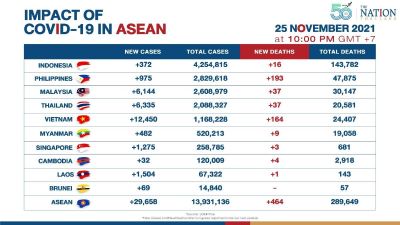
The number of Covid-19 cases crossed 13.93 million across Southeast Asia, with 29,658 new cases reported on Thursday (November 25), higher than Wednesday’s tally at 28,912. New deaths are at 464, decreasing from Wednesday’s number of 465. Total Covid-19 deaths in Asean are now at 289,649.
Singapore and Malaysia to reopen land and air travel on November 29. While the air lanes are open to all vaccinated travellers, the land crossing will for now only open up to vaccinated travellers who hold citizenship, permanent residency or work and student permits.
Singapore’s Prime Minister’s Office said the limitation on who could use the lane for land crossings was to “give priority for those who have been working in either country to visit their families”. It also added that about 95 per cent adult population in both countries have been vaccinated against Covid-19.
Meanwhile, Indonesia’s Domestic Affairs Ministry has issued a ban on civil servants and workers in state-owned and private companies taking leave around Christmas and New Year, in a strong pre-emptive measure to avoid a Covid-19 flare-up. This will affect about 4.2 million civil servants and two million workers in the state-owned companies, and many more in private firms.
Violence shook the capital of the Solomon Islands for a second day despite a lockdown, with protesters targeting Chinatown as the nations embattled leader vowed to hold the perpetrators accountable and Australia said it would send troops to quell the unrest.
Smoke billowed over Honiara on Thursday, a day after protesters demanding the prime minister’s resignation set fire to Parliament and several other buildings.
The escalating riots – fueled by domestic grievances over development priorities and the country’s decision to switch diplomatic recognition from Taiwan to China – led Prime Minister Manasseh Sogavare to call on neighboring Australia for help. His Australian counterpart pledged to send about 120 soldiers and police officers to keep the peace.
“Our purpose here is to provide stability and security to enable the normal constitutional processes in the Solomon Islands,” Scott Morrison said in a news conference Thursday. “It is not the Australian government’s intention in any way to intervene in the internal affairs of the Solomon Islands. That is for them to resolve.”
Morrison said two dozen Australian police officers were on their way to Honiara, where they would soon be joined by more than 40 soldiers and 50 additional police. He expected the deployment to last “a matter of weeks.”
“We have always been there to help our Pacific family when they have needed us, and this is such a time,” Morrison said.
Mihai Sora, a former Australian diplomat who was posted to Honiara from 2012 to 2014, said the quick request for help and Australia’s rapid response were hopeful signs that the Solomon Islands could avoid a repeat of past bloodshed.
“How rapidly the situation escalated came as a surprise to many,” Sora said. “If Australia hesitated, if they took days or weeks to consider a response, the situation may have deteriorated to such a low point where recovery would have been difficult.”
In a national address late Wednesday, Sogavare called the riots a “sad and unfortunate event aimed at bringing a democratically elected government down” and announced a 36-hour lockdown in Honiara.
“Hundreds of citizens took the law into their own hands,” he said, claiming they had been “led astray by a few unscrupulous people” whom he did not name but said would “face the full brunt of the law.”
Many of the protesters came to Honiara, on the island of Guadalcanal, from Malaita, the most populous island in the archipelagic nation in the South Pacific, about 1,000 miles northeast of Australia.
Tensions have simmered between the two islands since the national government switched diplomatic allegiance from Taiwan to China in 2019, a move opposed by Malaita’s premier, Daniel Suidani, who claimed he had been offered a bribe to support the switch. Sogavare denied the accusation.
Suidani pledged Malaita would never engage with Beijing and terminated licenses of businesses owned by ethnic Chinese, drawing a rebuke from the national government. Tensions grew in May when Suidani sought medical treatment in Taiwan, a trip the government said was “unauthorized.”
Chinese Foreign Ministry spokesman Zhao Lijian said Thursday that China paid great attention to the developments in the Solomons and supported the government’s efforts to halt violence. Any attempt to disrupt relations between China and the Solomon Islands would be futile, he said. Beijing, which claims Taiwan as its territory, has been picking off Taipei’s remaining diplomatic partners since the election of Tsai Ing-wen as president in 2016.
Taiwan’s Foreign Ministry spokeswoman Joanne Ou said Taipei was aware of the situation but had no comment on the Solomon Islands’ domestic politics.
On Tuesday, members of Parliament from Malaita issued a statement expressing fear over planned protests in Honiara and calling on Suidani to “recall our people, our brothers and sons from carrying out such a potentially dangerous and violent actions.”
Suidani said the protests, which he did not attend, were the result of the government ignoring the people’s concerns over issues such as the diplomatic switch and infrastructure projects.
“Whatever the government wants the people to know, they must stand and tell them,” he told the Guardian on Wednesday. “They cannot run away from problems. It will not solve anything.”
Hundreds of protesters began to gather in front of the national Parliament building on Wednesday morning, shouting for Sogavare to step down, according to videos posted online by local journalists.
By midday, smoke could be seen coming from a grass hut next to Parliament where lawmakers sometimes gather. Soon, the hut was engulfed in flames. Then a police station and several buildings in Chinatown – including at least one Chinese-owned store – were set on fire.
Salote Mataitini, a Fijian pilot, said she was flying from Kiribati to the Solomon Islands when she and her co-pilot landed in the midst of the unrest on Wednesday. The route to their quarantine hotel was blocked because of the disorder, with police in riot gear using shipping containers to close access to the port. When the pilots arrived at another hotel, they found police officers clashing with protesters.
“I got a shock when I first heard the rubber bullets and tear gas because I thought I heard shootings,” she told The Washington Post in a social media message. “As we entered the room … we were told to stay away from the windows.”
Thursday morning was quiet, she said, but the violence resumed in the afternoon, with rioters again targeting Chinatown. Mataitini watched from her hotel balcony as black smoke began pouring from buildings nearby. Staff told her to pack a small bag with important documents in case the hotel had to evacuate.
As the arson and looting continued, the political situation also kept deteriorating, with national opposition leader Matthew Wale calling for Sogavare to resign.
The Solomon Islands, known for World War II battles between U.S. and Japanese forces, are in a volatile region where Beijing has been expanding its influence.
Sora, who is a research fellow at the Lowy Institute, an Australian think tank, said recent tensions between China and Australia added significance to Morrison’s decision to send troops but would not have been the deciding factor.
“Even without the notion of a geopolitical competitor in the region, Australia would have looked to be the first responder” in the Solomon Islands, he said, citing historical ties between the two countries.
Sogavare, who is serving his fourth stint as prime minister, first came to power in the aftermath of a 2000 coup fueled by tensions between ethnic groups. The conflict, which began in 1998, claimed around 200 lives and lasted until 2003, when an Australian-led force restored law and order.
The prime minister alluded to the history of violence in his address.
“I had honestly thought that we had gone past the darkest days in the history of our country,” Sogavare said. However, he added, the events were “a painful reminder that we have a long way to go.”
Indias population growth is losing steam as the average number of children born crossed below a key threshold, according to newly released data from a government survey.
India’s most recent National Family Health Survey, which is conducted every five years by the Health Ministry, was released Wednesday and showed the total fertility rate (TFR) across India dropping to 2.0 in 2019-2021, compared with 2.2 in 2015-2016. A country with a TFR of 2.1, known as the replacement rate, would maintain a stable population over time; a lower TFR means the population would decrease in the absence of other factors, such as immigration.
The figures were hailed as a heartening signal by government officials and researchers in a country that is expected to overtake China to become the world’s most populous sometime this decade. Since the mid-20th century, Indian leaders have tried to curb high birthrates, which are often reversely correlated with women’s welfare metrics and economic progress. A burgeoning population is seen, in the longer term, as a hurdle to development and a driver of environmental degradation and greenhouse gas emissions.
Indian fertility rates have been trending downward for the last two decades as the country grew richer, underwent rapid urbanization, and rolled out programs that provide contraceptives and family planning education. But the progress shown in just the last two national surveys has been significant, demographers said.
“This is of course good news,” said Nandita Saikia, a professor of public health at the International Institute for Population Studies (IIPS) in Mumbai. “It indicates there has been some kind of transformation in the last four years in socioeconomic conditions.”
India’s population has been expected to overtake China’s sometime around the year 2027. That date “could be delayed if this trend continues,” Saikia added, “but not for long.”
The dropping fertility rate does not mean India’s population is already decreasing, but rather its growth rate is slowing. India’s population, which stands at just under 1.4 billion, will continue to rise beyond the year 2050 and peak at over 1.6 billion before stabilizing and returning to about 1.4 billion by 2100, according to United Nations projections.
Several Indian leaders since the country’s independence in 1947 have grappled with the population question. In the 1970s, Prime Minister Indira Gandhi carried out a controversial mass sterilization drive. Population control measures – and the difference in birthrates between India’s religious groups – remain one of the most polarizing issues in domestic politics today.
The declining fertility rate observed in recent years was backed by an uptick in several key indicators, demographers said. The proportion of women who used contraceptives rose from 54 to 67%, according to the national survey, while those who reported an unmet need for contraceptives fell. The proportion of teenage marriages has also decreased, according to the study, while there has been an improvement in the gender balance of newborns in a country with a deeply held preference for sons. For every 1,000 baby boys, there are now 929 baby girls, up from 919 girls five years ago.
In cities across India – as in other countries – women are opting for fewer children: the urban fertility rate is 1.6.
The study showed the long-standing gap between India’s north and south widening: the large, poor tracts that line the northern Ganges River continue to show high fertility rates, with women in Bihar state having an average of three children each. Southern states including Tamil Nadu and Karnataka had fertility rates below the replacement rate.
“This is not saying the country’s problems of unemployment, inequality, education, and everything else are automatically over,” said Sanjay Kumar Mohanty, the head of population policies at IIPS. “But population is no longer a top priority concern.”
Global health leaders are urging caution as the holiday season gets underway, pointing to a 23% spike in coronavirus cases across the Americas in the past week, a surge that follows spikes in Europe – which officials warn could be a “window into the future for the Americas.”
“Time and again, we’ve seen how the infection dynamics in Europe are mirrored here several weeks later,” Carissa Etienne, director of the Pan American Health Organization, said during a Wednesday briefing. “The future is unfolding before us, and it must be a wake-up call for our region because we are even more vulnerable.”
On the same day, the head of the World Health Organization urged against complacency, expressing concern about a “false sense of security that vaccines have ended the pandemic and that people who are vaccinated do not need to take any other precautions.”
WHO Director General Tedros Adhanom Ghebreyesus said: “While Europe is again the epicenter of the pandemic, no country or region is out of the woods.”
He underlined the trouble in Europe, where the agency reports nearly 60% of worldwide coronavirus deaths were concentrated from Nov. 15 to 21. In that time, the WHO said new cases jumped 11%. Countries in Europe have been implementing new lockdowns and restrictions – an effort to reduce numbers ahead of the end-of-year holidays.
The PAHO pointed to upward trends in new cases in the United States and Canada, with a “two-to-three-fold increase in new infections over the last week” in Canada’s Yukon and Northwest territories.
In the United States, new daily reported cases have increased 8% in the past week, and deaths have grown 9%, according to tracking by The Washington Post. In that time, hospitalizations have inched up 6%. The situation is particularly dire in pockets of the nation. In Michigan, which leads the nation in covid hospitalizations, the unvaccinated covid-19 patients are swarming emergency departments and driving capacity to grueling levels.
In Canada, there was a 5% increase as of Wednesday in new confirmed cases over the past two weeks, compared with the previous two weeks, according to Our World in Data, which cites data gathered by Johns Hopkins University’s Center for Systems Science and Engineering.
During the Thanksgiving eve briefing, health officials urged that mitigation measures – including mask-wearing, social distancing and staying away from crowds – should be kept up regardless of vaccination status.
“During these holiday periods, not just for Thanksgiving in the U.S., of course, but through the end of the year, it’s really important that all of us continue to take measures to keep us and our loved ones safe,” said Maria Van Kerkhove, an epidemiologist leading WHO’s coronavirus response during the briefing. “Those of you who have access to vaccines, who are offered vaccination, please get vaccinated when it’s your turn.”
In the United States, slightly more than 59% of the entire population is fully vaccinated, according to tracking by The Post. More than 19% has been fully vaccinated and has received a booster shot.
As of Nov. 19, about three-quarters of the total population of Canada is fully vaccinated, according to the government dashboard.
In South America, many countries are reporting an increase in cases, including in the Southern Cone, with the highest spikes in Bolivia and Paraguay. Central America is the only area to have experienced a drop in new infections.
Bolivia has reported a 50% increase in the number of new confirmed cases over the past 14 days, compared with the number in the previous 14 days, according to Our World in Data.
In the Bolivian department of Santa Cruz, which includes the city of the same name – the highest populated area in the country – cases have increased by 400% following recent strikes and protests, where hundreds of thousands of people gathered for days to protest anti-money laundering laws passed in August, the PAHO reported.
Paraguay – where only a little more than a third of the population is vaccinated – there has been a 73% spike in cases in the past two weeks, which has prompted health officials to sound the alarm.
Ecuador, which experienced one of Latin America’s most aggressive covid outbreaks in the region, and where nightmarish images of bodies abandoned on the streets of cities such as Guayaquil shocked the world, is also showing a 32% increase in new cases.
The country recovered from the brutal first wave in 2020 and has now one of the highest vaccination rates in South America, with 62.5%. Five out of the 12 nations in the region have a vaccination rate of over 60% of the population, according to data tracked by The Post.
In Peru, a country with the world’s highest covid death rate per capita, Health Minister Hernando Cevallos warned this week that the small nation is facing a “dangerous increase in cases” and urged people to be careful ahead of the Christmas holidays, according to local news reports.
Colombia’s two largest cities – Bogotá and Medellín – are reporting a rise in cases and hospitalizations, especially among younger people. The country is also seeing an overall 30% increase in cases.
The Southern Cone countries of Chile, where over 84% of the population has been vaccinated, and Argentina, which has imposed strict curfews and prolonged lockdowns throughout the pandemic, are also seeing a rise in new cases.
In the Caribbean, Trinidad and Tobago reached a seven-day average of about 555 daily new confirmed cases, its highest, according to Our World in Data. At least five of its hospitals are at more than 80% capacity, the PAHO reported. Barbados, the Cayman Islands and the Dominican Republic are also reporting high rates of new infections.
The uptick in many South American countries comes after the region experienced a brief but sharp drop in cases following a dramatic surge in the summer.
Containment measures in Latin America and the Caribbean have been uneven and largely lackadaisical as governments have had to grapple with financial devastation and poor health infrastructure, and have long wanted to jump-start the languishing economies.
Vaccination rates have been similarly unequal.
While just more than half of people are fully vaccinated in Latin America and the Caribbean, there are 19 countries where vaccination coverage lags below 40% of the population – a factor that could spearhead further surges, according to the PAHO.
The PAHO warned Wednesday that despite the sluggish vaccination rates and case surges, protective measures are being lifted or relaxed in densely populated areas.
“This is a worrisome combination that keeps us vulnerable to the virus and threatens our hard-fought gains,” Etienne said.

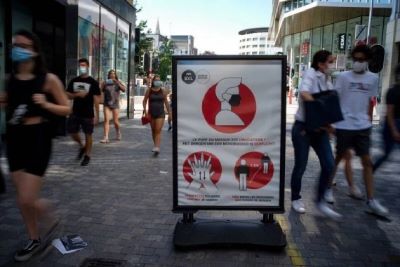
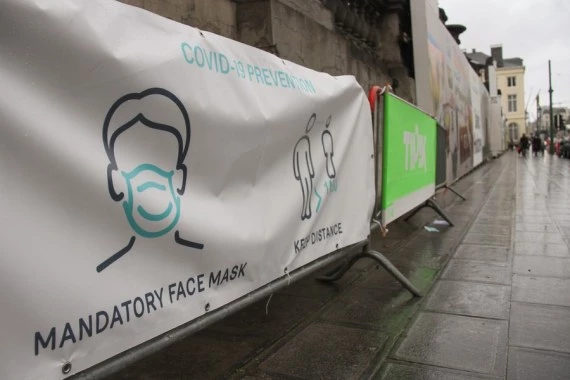 A sign to notice pedestrians wearing face masks and keeping social distance is seen in Brussels, Belgium, Nov. 5, 2021. (Xinhua/Zheng Huansong)
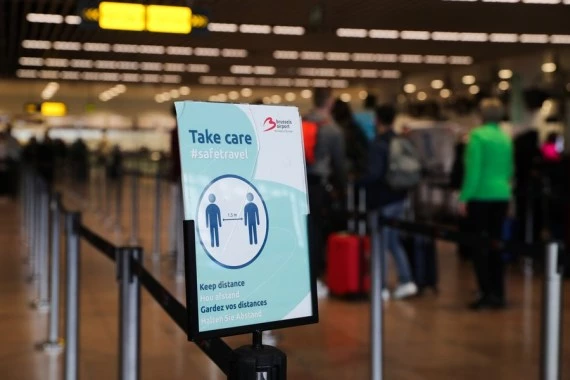 People queue up for check-in in the departure hall at the Brussels Airport in Zaventem, Belgium, July 1, 2021. (Xinhua/Zheng Huansong)
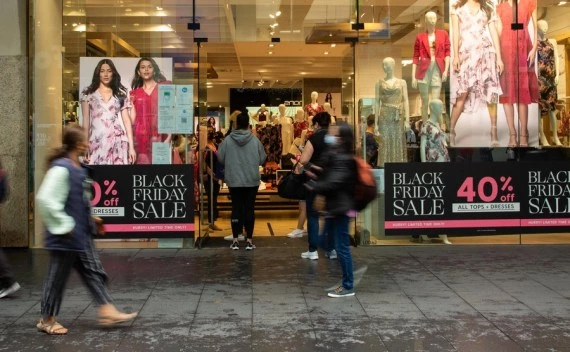 People shop at a shopping center in Sydney, Australia, Nov. 26, 2021. (Photo by Hu Jingchen/Xinhua)
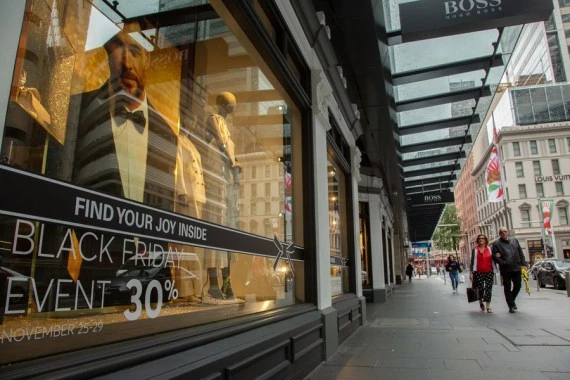 People shop at a shopping center in Sydney, Australia, Nov. 26, 2021. (Photo by Hu Jingchen/Xinhua)
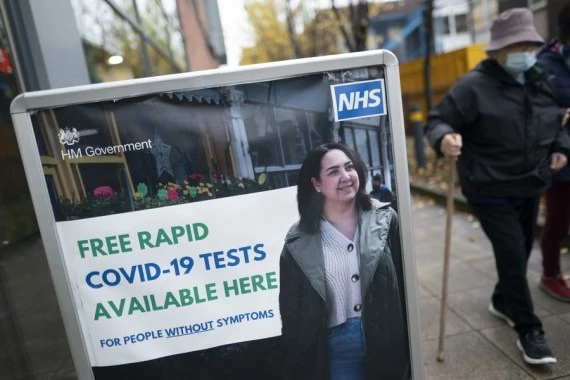 People walk past a sign of free rapid COVID-19 tests in Manchester, Britain, Nov. 10, 2021. (Xinhua/Jon Super)
 People queue up outside a vaccination center in Manchester, Britain, Nov. 10, 2021. (Xinhua/Jon Super)
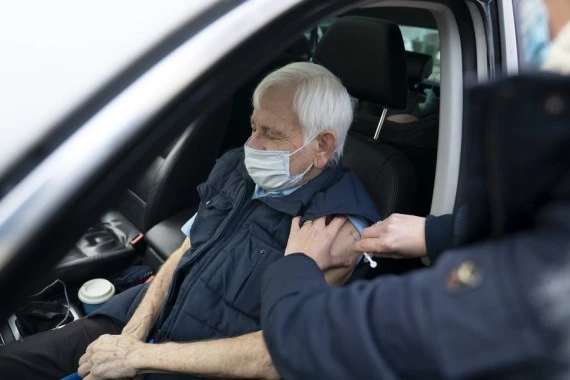 A man receives the second dose of the Pfizer-BioNTech COVID-19 vaccine at Hyde Leisure Centre in Greater Manchester, Britain, on Jan. 7, 2021. (Xinhua/Jon Super)
 A man wearing a face mask walks past a bus in London, Britain, on Nov. 24, 2021. (Xinhua/Li Ying)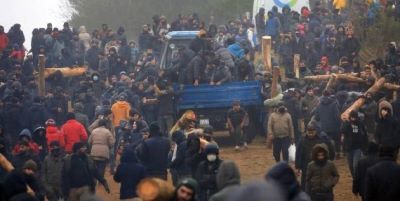
 Photo taken on Nov. 14, 2021 shows a refugee camp near the Belarusian-Polish border in Belarus. (Photo by Henadz Zhinkov/Xinhua)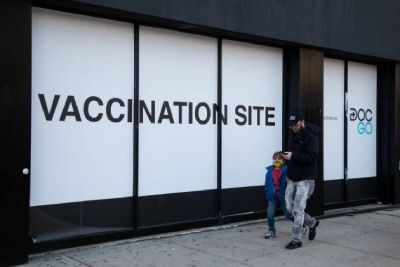
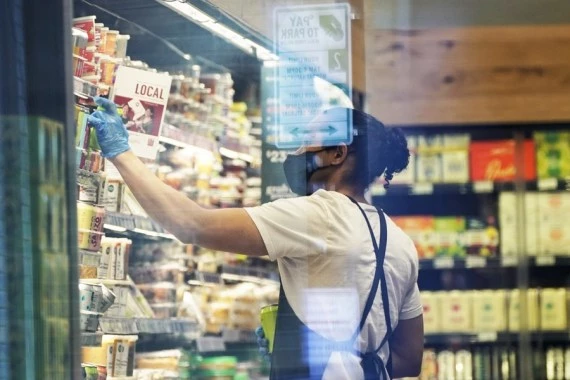 An employee works at a grocery store in Washington, D.C., the United States, on Nov. 10, 2021. (Photo by Ting Shen/Xinhua)
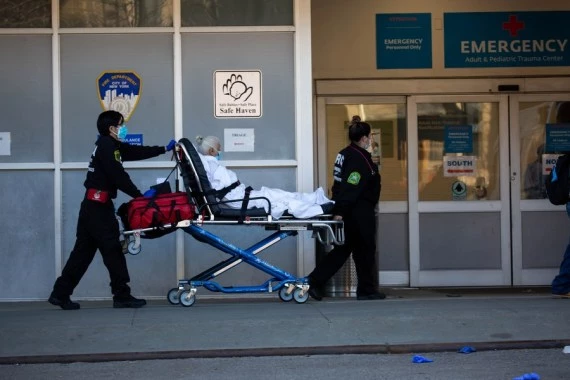 Medical workers wheel a patient into the emergency room at Maimonides Medical Center in the Brooklyn borough of New York, United States, March 8, 2021. (Xinhua/Michael Nagle)