Tightened COVID-19 restrictions spark protests, riots across Europe amid new pandemic wave #SootinClaimon.Com

#SootinClaimon.Com : ขอบคุณแหล่งข้อมูล : หนังสือพิมพ์ The Nation.

https://www.nationthailand.com/international/40009139


As winter arrives in the Northern Hemisphere, the European Union (EU) fears a new wave of COVID-19 infections. The level of concern for the COVID-19 situation in the EU was rated at 8.3 of 10, or “very high” last Friday by the European Center for Disease prevention and Control (ECDC).
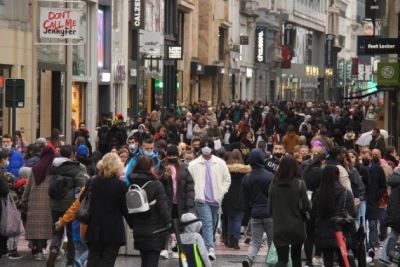
In response to the tightened COVID-19 measures, demonstrations were held around Europe this past weekend, amid rising new cases and a new wave of pandemic.

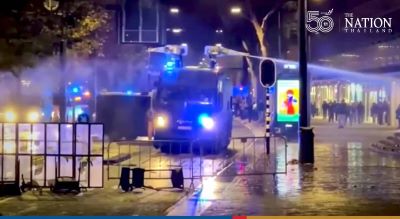
In Belgium and the Netherlands, the protests intensified into rioting, prompting the police to use tear gas and water cannons.
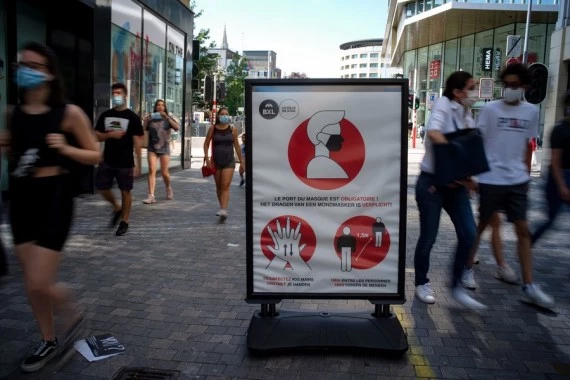
People walk on a business street in Brussels, Belgium, July 19, 2021. Belgium has witnessed a rise in COVID-19 cases recently. (Xinhua/Zhang Cheng)People walk on a business street in Brussels, Belgium, July 19, 2021. Belgium has witnessed a rise in COVID-19 cases recently. (Xinhua/Zhang Cheng)

Related Stories

RIOTS AND STRIKE

An estimated 35,000 people gathered in central Brussels on Sunday to protest against the reinforced measures that entered into force this weekend. These include the mandatory use of the COVID Safe Ticket (CST) and the obligation to wear face masks in areas where a CST is required.

The demonstration started shortly after 12 noon on Sunday near the Brussels North Station, with protesters brandishing banners saying “Together for Freedom” and “Resistance.”

The police used water cannons and tear gas to subdue demonstrators who threw fireworks at them.

Forty-two people were detained and two arrested, local police said late on Sunday and the mayor of the City of Brussels, Philippe Close, “strongly condemned” the riots.

In Rotterdam, the demonstration against the COVID-19 restrictions started last Friday evening when several hundred protesters gathered in the city center throwing fireworks and setting cars — among them at least one police vehicle — ablaze.

Photo taken on Nov. 1, 2021 shows a COVID-19 precaution notice to keep 1.5-meter distance in a shop in Amsterdam, the Netherlands. (Xinhua/Sylvia Lederer)Photo taken on Nov. 1, 2021 shows a COVID-19 precaution notice to keep 1.5-meter distance in a shop in Amsterdam, the Netherlands. (Xinhua/Sylvia Lederer)

The protest escalated into riot, and the police responded with water cannons and tear gas.

Around 50 people were arrested and four were injured and sent to hospital for treatment.

On Monday, Dutch Prime Minister Mark Rutte condemned the riots of the past three days in cities across the Netherlands and warned that everything possible would be done to punish the rioters.

“These are not corona protests, but pure violence by idiots, which has nothing to do with demonstrating,” Rutte said after consulting his fellow ministers.

Across Greece, restaurants and cafes remained closed last week in protest against the government’s new COVID-19 restrictions.

The measures have hit thousands of businesses hard, with many of them facing the risk of permanent closure, and further state support is urgently needed, the Panhellenic Federation of Restaurants and Related Professions (POESE) said in a press release.

“We are shutting down today so that we will not have to shut down forever,” protesters chanted during a rally held in the center of Athens.

“Catering stays closed throughout Greece” read banners on the closed doors of restaurants and cafes.

“We have suffered a lot in the past two years, we can’t cope with the difficult conditions,” labor union activist Iro Genetzaki told Xinhua during the protest.

People walk past a closed restaurant in Athens, Greece, on Nov. 16, 2021. (Xinhua/Marios Lolos)People walk past a closed restaurant in Athens, Greece, on Nov. 16, 2021. (Xinhua/Marios Lolos)

TIGHTENED COVID MEASURES

As winter arrives in the Northern Hemisphere, the European Union (EU) fears a new wave of COVID-19 infections.

The level of concern for the COVID-19 situation in the EU was rated at 8.3 of 10, or “very high” last Friday by the European Center for Disease prevention and Control (ECDC).

Wearing masks, hand-washing and ventilation are crucial non-pharmaceutical measures that must continue in order to fight COVID-19, and “it remains extremely important that we follow the non-pharmaceutical interventions,” said Stefan De Keersmaecker, European Commission spokesperson for Health, on Monday.

New measures to curb the spike in COVID-19 infections entered into force in Belgium on Saturday, making the use of the CST and the wearing of face masks mandatory indoors for everyone age ten and above.

The authorities reiterated their call for people to respect the 1.5-meter social distancing indoors and to limit social contacts outdoors, though no “bubbles” have been imposed for now.

In Greece, under the latest set of measures in effect since Nov. 6, in order to be served at cafes and restaurants, either indoors or outdoors, customers need to show proof of COVID-19 vaccination or recovery.

Unvaccinated individuals must present a recent negative rapid PCR (polymerase chain reaction) test to be able to enter retail shops, hair salons, public services and banks.

France’s Minister of Labor Elisabeth Borne on Monday called on French companies to strictly respect barrier gestures, especially the mask mandate, in order to enable the country to face the fifth COVID-19 wave.
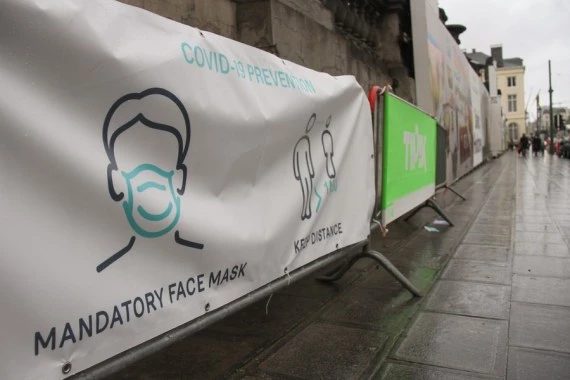
A sign to notice pedestrians wearing face masks and keeping social distance is seen in Brussels, Belgium, Nov. 5, 2021. (Xinhua/Zheng Huansong)A sign to notice pedestrians wearing face masks and keeping social distance is seen in Brussels, Belgium, Nov. 5, 2021. (Xinhua/Zheng Huansong)

“In business, we must re-mobilize to respect barrier gestures, put the mask back on in meetings, when we are in public spaces … It is very important at a time when we see that the pandemic is starting again,” she said.

In light of the worsening situation, France’s Vaccine Strategy Orientation Council (COSV) on Monday suggested that a booster shot for all adults should be considered.

In the face of the growing pandemic, Germany’s federal states have recently tightened their respective COVID-19 measures.

The southern state of Bavaria and the eastern state of Saxony have canceled their Christmas markets this year, and the western state of Hesse decided that only those vaccinated or recovered from COVID-19 will be allowed to enter indoor areas of restaurants, sports facilities and cultural institutions.

Gernot Marx, president of the German Interdisciplinary Association for Intensive Care and Emergency Medicine (DIVI), said at a live-streamed event on Monday that “the COVID-19 situation (in Germany) is very worrying and not under control at the moment.”

People walk past a sign to notify visitors of COVID-19 measures at a market in Berlin, Germany, on Nov. 15, 2021. (Xinhua/Shan Yuqi)People walk past a sign to notify visitors of COVID-19 measures at a market in Berlin, Germany, on Nov. 15, 2021. (Xinhua/Shan Yuqi)

Published : November 23, 2021

By : Xinhua
French PM tested positive for COVID-19, Belgian PM isolated #SootinClaimon.Com

#SootinClaimon.Com : ขอบคุณแหล่งข้อมูล : หนังสือพิมพ์ The Nation.

https://www.nationthailand.com/international/40009138


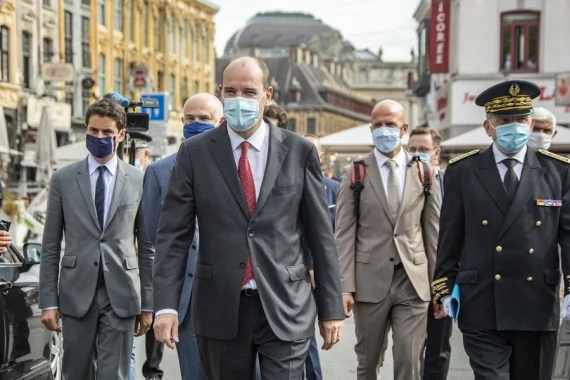
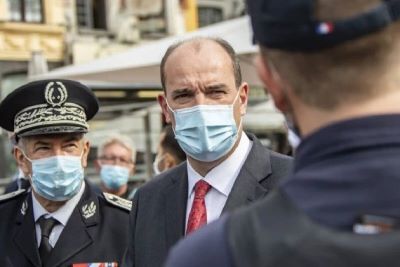
Belgian Prime Minister Alexander De Croo will be tested on Wednesday and will remain in quarantine until the result of his test, local media reported. The schedule of French Prime Minister Jean Castex is to be modified for the coming days in order for him to continue working in his isolation.

French Prime Minister Jean Castex has tested positive for COVID-19, French media reported on Monday.

Returning from Brussels Monday afternoon after meeting with his Belgian counterpart Alexander De Croo, Castex learnt that one of his daughters tested positive for COVID-19, Le Figaro reported.

De Croo will be tested on Wednesday and will remain in quarantine until the result of his test, local media reported.

Several senior members of the Belgian government will also go into quarantine to avoid any risks.

French ministers in the delegation include minister of the Armed Forces Florence Parly, Interior minister Gerald Darmanin, minister of Justice Eric Dupond-Moretti, and Secretary of State for European Affairs Clement Beaune.

Belgian Prime Minister Alexander De Croo (Front) attends a tribute ceremony in Verviers, Belgium, on July 20, 2021. (Xinhua/Zhang Cheng)Belgian Prime Minister Alexander De Croo (Front) attends a tribute ceremony in Verviers, Belgium, on July 20, 2021. (Xinhua/Zhang Cheng)

Related Stories

Castex “immediately got a PCR (polymerase chain reaction) test, which turned out to be positive,” the French newspaper cited the prime minister’s office as saying.

The schedule of the French head of government is to be modified for the coming days in order for him to continue working in his isolation.

 French Prime Minister Jean Castex (C, front) visits Lille as mask-wearing becomes mandatory in the city center amid concerns about an increase in COVID-19 cases, northern France, Aug. 3, 2020. (Xinhua/Sebastien Courdji)French Prime Minister Jean Castex (C, front) visits Lille as mask-wearing becomes mandatory in the city center amid concerns about an increase in COVID-19 cases, northern France, Aug. 3, 2020. (Xinhua/Sebastien Courdji)

Published : November 23, 2021

By : Xinhua

Asean reported over 25,000 new Covid-19 cases on Monday #SootinClaimon.Com

#SootinClaimon.Com : ขอบคุณแหล่งข้อมูล : หนังสือพิมพ์ The Nation.

https://www.nationthailand.com/international/40009136


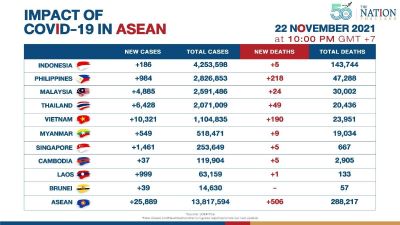
The number of Covid-19 cases crossed 13.81 million across Southeast Asia, with 25,889 new cases reported on Monday (November 22), lower than Sunday’s tally at 27,526. New deaths are at 506, increasing from Sunday’s number of 364. Total Covid-19 deaths in Asean are now at 288,217.

Singapore’s Public Health Ministry hopes to extend the Covid-19 national vaccination programme to children below the age of 12 in January next year. The ministry reported that children below the age of 12 now made up about 11.2 per cent of all Covid-19 cases in the country, increasing from 6.7 per cent in the last months. 

The ministry said that these children remain vulnerable because they are not yet eligible for vaccination to protect them from infection. And it’s generally harder to get them to comply with disciplined mask-wearing and safe separation and measures.

Meanwhile, Brunei’s Minister of Religious Affairs on Monday called on the public to protect themselves by getting vaccinated against Covid-19. He said the public should not be concerned about the vaccine as it is safe in Syarak with no impurities found to prevent us from taking it, adding that the vaccine proves to be effective and reduces the risk of infection. Parents were also urged to give consent to have their adolescent children, between the ages of 12 to 17, inoculated.
 

Published : November 23, 2021

By : THE NATION

Squeezed by mandates and restrictions, Europes anti-vaxxers rebel #SootinClaimon.Com

#SootinClaimon.Com : ขอบคุณแหล่งข้อมูล : หนังสือพิมพ์ The Nation.

https://www.nationthailand.com/international/40009132


Shouting cries of “freedom” and “resistance,” Europes unvaccinated are in open rebellion, taking to the streets against a host of new mandates and restrictions as the continents coronavirus cases soar. Their anger comes as their world is shrinking.

Squeezed by mandates and restrictions, Europes anti-vaxxers rebel

Branded with a proverbial Scarlet “A,” the anti-vaxxers of Europe are finding themselves ostracized from public life far more than their American counterparts.

Many are not taking it sitting down. The European Union is no stranger to protests against coronavirus measures. But the weekend saw a convergence of large and sometimes violent demonstrations in multiple countries. In what the mayor of Rotterdam, decried as an “orgy of violence” on Friday, Dutch police opened fire and arrested scores of rioters who set fires and lobbed stones at officers amid a new partial lockdown and proposed law that would ban the unvaccinated from entering businesses even with a negative coronavirus test. Thousands also marched against mandates or restrictions in Belgium, Croatia, Italy, Northern Ireland and Switzerland.

In Vienna, where the unvaccinated face the prospect of extended lockdowns and a revolutionary decree compelling them to take their jabs whether they like it or not, an estimated 40,000 demonstrators took to the streets Saturday, some of them clashing with police as night fell.

The simmering discontent was not confined to Europe. In Australia, thousands turned out against pandemic legislation in “freedom” marches in Melbourne, Sydney, Brisbane, Perth and Adelaide. France deployed special police forces to its overseas territory of Guadeloupe after days of unrest that saw protesters set fire to cars and block roads in opposition to French vaccine and health pass mandates.

The outburst of anger – particularly in Europe, a place American liberals often look to as a beacon of progressive values on climate change, social benefits and universal health care – illustrates just how challenging it may be for rich nations, now flush with vaccines, to overcome vaccine hesitancy and push closer to near-total coverage rates.

Europe’s creep toward winter has brought a dangerous escalation in cases – in some countries, the highest of the pandemic – and indoor gatherings in colder weather is not the only culprit. With nearly 67 percent of its population fully vaccinated, the European Union has leapfrogged the United States on doses administered. But across the continent, there are still stubborn geographic, demographic and ideological pockets of the unvaccinated serving as tinder for severe cases of the virus to rekindle.

In response, European leaders are embracing novel, coercive techniques to compel the unvaccinated to do their civic duty and take their shots, setting up a political experiment that is being closely watched on the other side of the Atlantic, where Washington has turned to more limited vaccine mandates for federal employees, government contractors, health-care workers and staff of large companies.

Italy’s “green pass” system imposes work suspensions or restrictions on access to a range of businesses for those without vaccinations or recent tests. France embraced a “health pass” requiring vaccination or a recent negative coronavirus test to access restaurants, cafes, movie theaters and more. In Romania, where the number of infections is skyrocketing, the unvaccinated were targeted in October for a special curfew that was later extended to everyone as cases continued to spike. Vaccination certificates are still required for regular activities like working out at gyms or shopping at malls.

No European nation has gone as far as Austria. A spike in cases coupled with vaccine hesitancy – 64 percent of the population is fully vaccinated, a rate lower than those in Italy, France, Portugal and Germany – prompted leaders there to announce a nationwide vaccination mandate starting in February. As a stopgap, the country last week declared a lockdown of the unvaccinated. The government later imposed Europe’s first broader national lockdown of the fall, one set to start Monday and last at least 10 days. After that, the lockdown may end for the vaccinated, but the unvaccinated will still face entry restrictions at hotels, restaurants, bars, nightclubs, gyms, cinemas, theaters, Christmas markets, ski resorts and for personal services such as salons.

That may leave anti-vaccine Austrians eating their schnitzels at home for the foreseeable future, and they are not amused. Some demonstrators wore a yellow star with the words “not vaccinated,” a reference the symbols warn by prisoners in Nazi concentration camps. The move drew outrage from officials like Interior Minister Karl Nehammer, who said the use of such symbols “insults the millions of victims of the Nazi dictatorship and their families.”

“Society is being massively divided and set against a group of people who are being shut out of public life and forced to do things we don’t want to do,” Katja Schoissenger, a mother of two protesting in Vienna on Saturday, told the New York Times. “I have nothing against people who want to be vaccinated. It is a free decision, and I think that’s OK and legitimate, but I am a young, healthy person and it’s not an issue for me.”

Some are questioning the imposition of such restrictions. Speaking to the BBC, Andrea Ammon, director for the European Center for Disease Prevention and Control, called mandatory vaccinations a “double-edged sword,” suggesting strict rules could make people who were still doubting the vaccines completely reject them. That could produce an even greater pool of government-resenting anti-vaxxers.

It’s unclear whether tough measures are worth the social unrest they cause. In Italy, my colleagues reported, vaccination rates ticked up 4.4 percentage points in the two months after the green pass law was announced. That was more than any other nation in Western Europe, but only marginally higher than the 3 percentage points increase seen across the European Union during the same period.

Europe’s vaccination holdouts share some commonalities with American anti-vaxxers, but they also have their own particular profile. They include members of far-right fringe groups, soccer fans, libertarians on both sides of the political spectrum and citizens scared off vaccines by an onslaught of misinformation.

Americans and European anti-vaxxers often share a distrust of government, but frequently for very different reasons. As Alix Kroeger wrote in the New Statesman, Europe’s vaccine resistant and hesitant tend to tilt geographically toward the southeastern part of the continent, those nations that once lived behind the Iron Curtain and where communist authorities and subsequent elected governments were often little trusted by the people, including on health advice.

Today, those nations – among them Romania, Bulgaria, Slovenia, Slovakia and Croatia – have by far the lowest vaccination rates in Europe.

“People don’t trust the state to act in the interest of the common good,” Florian Bieber, director of the Centre for Southeast European Studies at the University of Graz, in Austria, told Kroeger. “They don’t trust the messages coming from the state or even experts. They believe these are all driven by selfish interests.”

Published : November 23, 2021

By : The Washington Post

“Paradise for Dog Lovers” — Fantastic dog show in India #SootinClaimon.Com

#SootinClaimon.Com : ขอบคุณแหล่งข้อมูล : หนังสือพิมพ์ The Nation.

https://www.nationthailand.com/international/40009106


Pomeranian, Shih Tzu, German shepherd… In Amritsar, north India, a dog show is being held, attracting plenty of dog-lovers to bring their pets to participate. Dogs are playing happily in the show, as well as “making new friends.”

A Shih Tzu gets its hair combed during a dog show in Amritsar of IndiaA Shih Tzu gets its hair combed during a dog show in Amritsar of India

A pomeranian gets its hair trimmed during a dog show in Amritsar of IndiaA pomeranian gets its hair trimmed during a dog show in Amritsar of India

A German shepherd dog (R) looks at a pug during a dog show in Amritsar of IndiaA German shepherd dog (R) looks at a pug during a dog show in Amritsar of India

An American Bully dog is displayed during a dog show in Amritsar district of IndiaAn American Bully dog is displayed during a dog show in Amritsar district of India

A Shih Tzu dog shakes its head as it competes during a dog show in Amritsar district of IndiaA Shih Tzu dog shakes its head as it competes during a dog show in Amritsar district of India

Published : November 22, 2021

By : Xinhua

Israel reinforces security after fatal shooting attack in East Jerusalem #SootinClaimon.Com

#SootinClaimon.Com : ขอบคุณแหล่งข้อมูล : หนังสือพิมพ์ The Nation.

https://www.nationthailand.com/international/40009105


Israel reinforced its security forces in East Jerusalem on Sunday amid rising tensions in the flashpoint city following a shooting attack that killed one civilian and injured four.

At about 9 a.m. local time (0700 GMT), the attacker, identified by Palestinian media as Fadi Abu Shkhaidem, opened fire at civilians outside the Al-Aqsa Mosque compound, a contested site holy to both Muslims and Jews.

One person was critically injured in the shooting and died hours later in hospital, while four more sustained various degrees of injuries, according to statements from the Israeli government and medical facilities.

Israeli state-owned Kan news TV identified the victim as Eliyahu Kay, 26, from Modiin, a city west of Jerusalem. He recently migrated from South Africa to Israel and was employed at the Western Wall, known in Islam as the Buraq Wall, as a tourist guide.

The assailant was shot and killed by the police at the scene, the police said in a statement, adding two of the four injured were police officers who were wounded by shrapnel.   

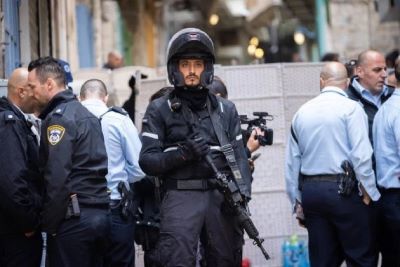
Israeli police officials gather near the site of a shooting incident in JerusalemIsraeli police officials gather near the site of a shooting incident in Jerusalem

Related Stories

Israeli Minister of Public Security Omer Barlev described the shooter as a member of Hamas and from the Shuafat refugee camp in East Jerusalem. During a tour at the scene, Barlev told journalists that the attacker used a submachine gun.

According to Barlev, the assailant arrived at the Al-Aqsa Mosque for prayers every day. “Today he arrived with a weapon and decided to shoot, unfortunately,” he said.

Israeli police officials gather near the site of a shooting incident in JerusalemIsraeli police officials gather near the site of a shooting incident in Jerusalem

The attacker Abu Shkhaidem, 42, was a teacher at a religious high school in Jerusalem, according to Israeli media.

No group has claimed responsibility for the attack but Hamas praised it and confirmed that Abu Shkhaidem was its member.

Speaking at the start of the weekly cabinet meeting, Israeli Prime Minister Naftali Bennett said he ordered security forces to be on alert to prevent possible “copycat” attacks that might follow Sunday’s attack.

“I have directed the security forces to prepare accordingly and be alert, also over concern for copycat attacks,” he said. “We need to be on heightened alert and prevent future attacks.”

It was the second attack in East Jerusalem within a week. On Wednesday, a Palestinian teenager was shot dead after he stabbed two police officers, the police said.

Israel occupied the West Bank and East Jerusalem, which are claimed by the Palestinians, in the 1967 Middle East war, and has controlled them ever since. The Palestinians have been seeking to establish an independent state on these territories together with the enclave Gaza Strip. 

People clean a pavement following a shooting incident in JerusalemPeople clean a pavement following a shooting incident in Jerusalem
 

Published : November 22, 2021

By : Xinhua

Two missionaries kidnapped in Haiti have been released, U.S. aid group says #SootinClaimon.Com

#SootinClaimon.Com : ขอบคุณแหล่งข้อมูล : หนังสือพิมพ์ The Nation.

https://www.nationthailand.com/international/40009093


Two of the 17 foreign missionaries kidnapped by a notorious street gang in Haiti last month have been released, Ohio-based Christian Aid Missionaries said Sunday.

Two missionaries kidnapped in Haiti have been released, U.S. aid group says

“Only limited information can be provided, but we are able to report that the two hostages who were released are safe, in good spirits, and being cared for,” the group said in a statement posted to its website. “We praise God for this!”

The Oct. 16 kidnappings of the missionaries and family members thrust the poverty-stricken Caribbean nation once more into the center of an international crisis. The group included 16 Americans and a Canadian. Authorities from the United States and Canada have said they are working closely with Haitian counterparts to secure their freedom.

The gang, 400 Mawozo, demanded $1 million per person held. The United States does not pay ransoms for kidnapped citizens.

For Haitians rich and poor, gang violence and kidnapping for ransoms have become commonplace. The country is suffering a surge in abductions that analysts say is the worst in the country’s history.

400 Mawozo has gained notoriety in Haiti for its use of mass kidnappings and abducting groups such as Christian clergy that were previously considered off-limits.

Haiti, the poorest nation in the Western Hemisphere, has the world’s highest rate of kidnappings per capita.

Published : November 22, 2021

By : The Washington Post

Space junk spreads, creating risk of no-go zones for satellites #SootinClaimon.Com

#SootinClaimon.Com : ขอบคุณแหล่งข้อมูล : หนังสือพิมพ์ The Nation.

https://www.nationthailand.com/international/40009077


The Russian missile test that shattered a dead satellite this week highlights a growing threat of space debris just as companies such as SpaceX and Boeing Co. make plans to launch as many as 65,000 commercial spacecraft into orbit in coming years.

The anti-satellite weapon smashed a Russian orbiter into at least 1,500 pieces, forming a belt of debris hurtling around the Earth at speeds up to 17,000 miles an hour. It forced ground control to awaken the sleeping crew of the International Space Station and ask them to close hatches and scramble into docked spacecraft for safety.

It also added to the amount of junk speeding through space thanks to failed satellites, discarded rocket boosters and weapons tests. This just as technology entrepreneurs and defense companies have announced plans to deploy constellations of satellites, adding to about 4,550 from all countries currently in orbit.

The Russian anti-satellite test “just makes everything worse,” said Brian Weeden, director of program planning for Secure World Foundation, a group that works for sustainable use of space.

“It’s not like the movie ‘Gravity’ where one thing happens and everything goes ‘boom,'” Weeden said. Instead there is “a tipping point, where it starts to accelerate” and the orbital environment deteriorates over decades.

Low-Earth orbit is an area of major concern because because that’s where companies want to locate small observation and communications satellites. These include Elon Musk’s Space Exploration Technologies Corp., which has more than 1,700 Starlink satellites already orbiting and plans is asking regulators for permission to add 30,000 more to provide broadband internet from space.

The U.S. Federal Communications Commission is reviewing a slew of applications from SpaceX and other companies rushing to take advantage of lower launch costs and growing appetite for data. Low orbits offer minimal lag time for data to bounce between a user on the ground and the spacecraft. Boeing, Amazon.com’s Kuiper Systems, and Astra Space Inc. were among companies submitting recent applications at the FCC for more than 35,000 satellites.

Already in some low-Earth orbits, the number of new objects and fragments generated from collisions exceeds those removed by natural atmospheric drag, the FCC said last year as it adopted rules to ease the threat from orbital debris. The agency regulates satellites because the spacecraft use wireless frequencies.

Other regions have sufficient densities of orbital debris to lead some analysts to conclude that they are close to or have already reached a “runaway” status, where the debris population will grow indefinitely, the FCC said.

“We’re at a time of transformative change in the human use of space,” said Jonathan McDowell, an astronomer at the Center for Astrophysics Harvard & Smithsonian research institute. “We are seeing more and more satellites getting damaged by orbital debris hits. Occasionally satellites get destroyed.”

There are about 4,550 operating satellites in orbit, with 3,790 in low-Earth orbit, according to a Sept. 1 tally by the Union of Concerned Scientists.

Satellite operator Viasat Inc. has warned of dangers from large constellations, saying failure risk of at least some satellites is high when thousands are in orbit.

With huge orbiting fleets, “dramatic increases in space collisions, and new space debris, are expected within just a few years,” Jim Bridenstine, a Viasat board member and former NASA administrator, told lawmakers at a U.S. Senate hearing last month.

More than 27,000 pieces of orbital debris are tracked by the Department of Defense, according to NASA. Near-Earth orbits hold much more debris that’s too small to be tracked, but large enough to threaten human spaceflight and robotic missions.

Those aboard the International Space Station took shelter for three passes of the debris field caused by the strike on the Russian satellite, Cosmos 1408, NASA said in a Nov. 15 statement.

Roughly a week before Monday’s missile strike by Russia, NASA moved the ISS to avoid a close encounter with debris remaining from a test by China that destroyed a weather satellite in 2007. The station has conducted 29 debris avoidance maneuvers since 1999, including three in 2020, NASA said in a May 26 posting online.

NASA has a set of long-standing guidelines for debris avoidance. Maneuvers are usually small and use the station’s Russian thrusters, or the propulsion systems on one of the docked spacecraft that carry passengers from Earth.

The Cosmos debris could cause problems for Musk’s SpaceX, astronomers said.

“There’s a real risk in the coming weeks that you could lose some of the Starlinks because they get in the way of this debris,” said McDowell.

SpaceX didn’t return emailed queries requesting comment. A Boeing representative also declined to comment on the risk to its fleet.

Nations are struggling with ways to reduce space debris, with techniques such as using magnetic plates to capture satellites, or using harpoons and nets, at the test stage, said McDowell. He suggested focusing on removing the largest pieces that may eventually cause the greatest number of fragments.

“At some point we have to start to clean this up,” he said.

Published : November 21, 2021

By : Bloomberg

Across Europe, protests swell against pandemic restrictions #SootinClaimon.Com

#SootinClaimon.Com : ขอบคุณแหล่งข้อมูล : หนังสือพิมพ์ The Nation.

https://www.nationthailand.com/international/40009076


BRUSSELS – Protests against coronavirus restrictions erupted across Europe – including clashes in Rotterdam and massive rallies in Vienna – as authorities announced more-stringent measures in an attempt to control rising cases ahead of the winter holidays.

At least seven people were injured and more than 50 arrested after protests in Rotterdam turned violent late Friday, with protesters throwing stones and police firing shots, according to Dutch police. Demonstrators decried a proposed law that would ban unvaccinated people from entering businesses even if they provide a negative test. They also protested a partial lockdown that went into effect last week and will last until at least Dec. 4, forcing restaurants and other establishments to close at 8 p.m.

In Vienna, tens of thousands of people took the streets Saturday after the country’s decision to mandate vaccines for everyone starting in February and impose new lockdowns beginning Monday.

In Italy, weekly protests against the coronavirus showed no signs of easing, with demonstrations in Rome including at the ancient Circus Maximus grounds. On social media, users posted videos from protests in other countries including France and Switzerland.

Ferd Grapperhaus, the Netherlands’ minister of security and justice, called for a “vigorous debate” over pandemic measures, but said “harassment and violence do not belong” there.

Rotterdam Mayor Ahmed Aboutaleb described the clashes as “an orgy of violence” and said “police felt it necessary to draw their weapons to defend themselves.”

One police officer was hospitalized with a leg injury and two protesters were struck by bullets. Officials are investigating whether they were hit with police gunfire, according to the Associated Press.

Europe is the world’s only region with coronavirus deaths on the rise, jumping by 5% since earlier this month, according to the World Health Organization. In response, authorities are tightening rules for those unvaccinated.

In Berlin, for example, only those who are vaccinated or have recovered from the virus can now go inside bars and restaurants. Greece reimposed some restrictions for unvaccinated people, the AP reported. Belgium mandated that people work from home at least four days a week.

The European Union relies on digital covid safe certificates to allow people to travel between E.U. countries without quarantining and – in many places – enter restaurants and other sites. The certificate shows if a person is vaccinated, has recently tested negative for the virus or has already recovered from the virus. The European Commission said Friday that the 27-nation bloc has so far issued 660 million certificates.

“The issuance of covid certificates is a very important tool to ensure safe, free movement in the European Union and also a very successful tool,” spokesman Christian Wigand told reporters Friday.

Published : November 21, 2021

By : The Washington Post

Thousands of Afghans evacuated during U.S. withdrawal awaiting resettlement #SootinClaimon.Com

#SootinClaimon.Com : ขอบคุณแหล่งข้อมูล : หนังสือพิมพ์ The Nation.

https://www.nationthailand.com/international/40009075


HOLLOMAN AIR FORCE BASE, N.M. – The U.S. government calls the 50-acre sprawl of tents on this desert Air Force base a “village.” The 4,300 Afghans temporarily housed here are the governments “guests.”

And the landscape of tents and trailers is called Aman Omid, which in Persian means “peace and hope” – the feelings U.S. officials say they are trying to foster here.

More than two months after the United States’ chaotic withdrawal from Afghanistan, the federal government is still in the process of resettling roughly 45,000 Afghans housed in temporary camps on U.S. military bases after they were airlifted from their home country.

Holloman Air Force Base in New Mexico is among eight facilities that became hubs for one of the largest humanitarian resettlement operations in U.S. history. Biden administration officials say about 73,000 Afghans have arrived in the United States since the fall of Kabul to the Taliban. Holloman received 7,100, half of them children, between late August and early October. They include Afghans who risked their lives to aid the U.S. government during its two-decade war effort in their country, officials say. Others are relatives of those who served or of U.S. citizens, as well as many others who felt at risk in Taliban-held Afghanistan.

“We are this generation’s Ellis Island,” Curtis Velasquez, the Air Force colonel who serves as the village “governor,” told reporters on a recent tour of the base. Reporters were shown an adult English class in progress, an impromptu cricket game and a cavernous dining hall that serves halal meals labeled in English, Dari and Pashto.

“We take pride in what we are doing here for our Afghan guests,” Velasquez said. He described the camp as “a safe haven where they can transition from that survival mode to a thriving mode.”

An Afghan boy plays soccer with a U.S military service member in a recreation center the refugee camp at Holloman Air Force Base in Alamogordo, N.M., on Nov. 4, 2021. MUST CREDIT: Washington Post photo by Salwan GeorgesAn Afghan boy plays soccer with a U.S military service member in a recreation center the refugee camp at Holloman Air Force Base in Alamogordo, N.M., on Nov. 4, 2021. MUST CREDIT: Washington Post photo by Salwan Georges

But the long-term fates of many Afghan evacuees are uncertain. While officials say all of the Afghans have been heavily vetted, most will start new lives in the United States as short-term “humanitarian parolees,” without an immediate path to permanent residency or the full host of benefits and services offered to refugees. To stay in the United States permanently, many – including those who served the U.S. mission – will need to navigate a severely backlogged visa and immigration system.

More ominous, Afghans and their advocates say, are the fates of the tens of thousands of others who were left behind.

– – –

As the name Aman Omid suggests, the official rhetoric at Holloman’s camp for evacuated Afghans centers on optimism, resilience and success.

The Afghans here are heroic and ambitious, say the military commanders and officials who run the camp, many of whom are themselves veterans of the war in Afghanistan.

“These Afghan guests have sacrificed much for America. I’d actually say that the majority of those in the village have risked more for American security than the vast majority of Americans have,” said Daniel Gabrielli, the Air Force brigadier general who heads operations at Aman Omid.

Less often acknowledged are the circumstances that brought them here: that America’s once-vanquished enemy, the Taliban, took control of the country as swiftly as the United States removed its last troops, and that American-affiliated Afghans were left acutely vulnerable and feeling betrayed. Officials also avoid dwelling on the fact that the Afghans housed here are the lucky ones – those who made it onto evacuation flights, amid panicked crowds, barricades and violence at Kabul International Airport. When Afghans ask what can be done to rescue the spouses, parents and children who didn’t make it onto a plane, the American officials at Holloman say they have struggled to provide helpful answers.

The U.S. State Department says its priority now is to facilitate the resettlement of those Afghans who are here and to assist any U.S. citizens and legal permanent residents still in Afghanistan.

The Biden administration has asked Congress to pass the Afghan Adjustment Act, a bill that would allow those paroled into the country to apply for green cards after a year, making it easier for them to become permanent residents and bring relatives left behind.

A State Department official said the government was working to evacuate some of those left behind, including parents and children separated at the airport, by “both chartering its own flights as well as working with airlines to reserve a certain number of seats on already-existing flights.” The official, who declined to confirm the effort on the record, did not say how Afghans who fear persecution from the Taliban might access a Taliban-controlled airport. But the official pointed to Qatar as the administration’s new formal go-between, per a memorandum signed by Secretary of State Antony Blinken earlier this month.

“I’ve not met one person who does not have family back there,” said Gabrielli.

“When the guests want to talk about their family back home, I encourage Airmen here to take the time to listen,” he added later in an email. “I will take unlimited time to hear their stories, and feel it builds trust and is cathartic for them as well.”

Those left behind include Rahatullah Doust’s wife and children. The 29-year-old former employee of the United Nations Development Program said his family tried to get into the Kabul airport multiple times, amid a frantic, surging crowd and Taliban sentries who beat people back, before deciding it was too dangerous to try again with a toddler and an infant.

“My daughter is very small – she wasn’t even 1-year-old – and I didn’t want to lose her. So I decided that, OK, I’ll go alone,” said Doust, who is now alone at Holloman. It is unclear how or when he’ll be able to bring his family to the United States. “I miss them,” he said, his eyes welling.

A 21-year-old at the camp, who gave her name only as Bibi, described her family’s own battle to reach an evacuation flight. Her father, a prominent Afghan businessman, didn’t make it.

“The Taliban was hitting everybody and they were attacking us. They hit my brother, my mom, my aunt,” she said. “My dad got separated in the airport.” He’s now in hiding “because the Taliban are searching for him,” she added.

– – –

In Washington, the Biden administration has walked a fine line in its attempts to persuade Americans to welcome tens of thousands of Afghans into their communities – emphasizing their valor and hard work – while also seeking to defend or deflect attention from the many thousands it did not evacuate.

Advocates for Afghans, including attorneys and veterans groups, estimate that there are potentially tens of thousands still in Afghanistan who are at risk because of their or their relatives’ affiliation with the U.S. occupation, and they want the Biden administration to do more.

“The U.S. military and diplomatic presence in Afghanistan may have ended in August but the U.S. government’s obligation did not,” Sunil Varghese, policy director for the International Refugee Assistance Project (IRAP), told reporters on a recent call, in which advocates lamented the Biden administration’s inaction.

“The U.S. has a legal and moral obligation to take action, and vulnerable Afghans cannot afford to wait longer,” Varghese said.

Rick Burns, who founded a nonprofit to assist Afghans and Iraqis and remains in touch with many, said, “We are receiving daily desperate pleas for help.”

“It is heart-wrenching and it is terribly difficult to have these conversations with people who you feel very personal relationships with and yet are in such horrible danger and such desperate situations in Afghanistan,” said Burns, a veteran of the wars in Afghanistan and Iraq.

At Holloman’s Aman Omid Village, officials avoid offering predictions on how quickly the Afghan families here will be able to leave and start over with apartments in new cities and short-term assistance from local resettlement agencies.

A couple thousand have already left. But the task force is authorized to run through March, meaning some of the thousands waiting for resettlement might still be here six months after their arrival – a product, officials and advocates say, of a national resettlement system that was largely dismantled by former president Donald Trump and still is not fully equipped.

In-demand resettlement destinations such as California, Virginia and Texas – where there are already large Afghan diaspora communities – are “saturated,” officials say; the resettlement groups simply can’t accommodate the numbers of Afghans who want to go there.

A screen mounted to the wall in the tent where State Department officials help Afghans navigate their resettlement cases advertises in a rotating slide show less-conventional options – places like Birmingham, Ala., and Chattanooga, Tenn. – that might be able to take them sooner.

In the meantime, camp infrastructure is steadily evolving to ease the long wait. The camp now has WiFi towers and indoor heating. The generators will soon be replaced with standard electricity.

There are communal TVs that play international cricket matches and Bollywood movies; English and cultural orientation classes; toys and art supplies for the children; and abundant dispensers of hot tea. Last week, the residents received winter coats and long underwear to prepare them for the months ahead. All of the adults are now vaccinated against the coronavirus, officials say.

As airmen move through the camp each day, children flock to them: to hang on their arms like a jungle gym, toss them soccer balls and try out newly acquired English phrases.

Some of the adults have noted that, with its cloudless blue sky, humming generators and horizon of arid mountains, the pale, gravelly landscape of Aman Omid’s tents and trailers bears a resemblance to Bagram Airfield – the former headquarters of U.S. military operations in Afghanistan. It was a base where many U.S. service members, diplomats and Afghans alike once worked, but has since been abandoned to the Taliban.

Gabrielli told reporters during the tour that being able to serve Afghans who helped the United States is deeply fulfilling for many of his airmen, particularly those who served, who may find “closure” in their participation here.

Asked whether there is much discussion of America’s Afghanistan legacy among airmen and others at the camp, Gabrielli said in an email that it has “personally been a humbling experience for me” to hear from Afghans about the military units they served with, as well as “listening to their stories and looking at the photos of them with American Generals and other leaders.”

He added: “I also encourage Airmen to keep in mind that while guests are happy and grateful for the opportunity to have a safe, new place to make their home, many are still grieving over the circumstances that brought them here.”

Published : November 21, 2021

By : The Washington Post