Inflation is dealing a fresh blow to the low-income workers whose finances fared worst when Covid-19 swept across Europe.
Many toward the bottom of the pay scale burned through savings as lockdown-induced furlough programs only partially covered their wages. Now, soaring energy and food costs are swallowing a disproportionate chunk of earnings to complete a double whammy.
Their plight stands in contrast to wealthier white-collar employees who squirreled away cash after swapping the office for home, aren’t so sensitive to swings in power prices and benefited as property and stock markets surged during the economic recovery.
The widening gap between the two groups — a major legacy of the coronavirus crisis — is a growing headache for euro-area policymakers.
Germany’s next government has committed to tackling unequal income distribution, while France has earmarked hundreds of millions of euros to help poor households cope with high electricity bills. Inequality considerations could be incorporated into decision-making at the European Central Bank, according to Executive Board member Isabel Schnabel.
The current squeeze on low-income households “is a very serious issue,” said Holger Schmieding, chief economist at Berenberg. While taming inflation is typically up to central banks, he said “this isn’t a matter for the ECB to do anything about at the moment — it’s a matter for governments to offer relief.”
Calls for action are only likely to grow louder. Even before the pandemic erupted, inequality was perceived to be too large, according to a report published Thursday by the Organization for Economic Cooperation and Development.
“Most people in most countries are strenuously calling for greater equality of economic outcome and opportunity,” the Paris-based group said.
The OECD found people generally favor re-distributive fiscal policies — meaning governments may face enduring pressure to act, even after inflation dies down.
Right now, it’s the path for prices — currently rising at the fastest pace since 2008 in the euro region — that’s under the spotlight.
The continent’s less well off tend to be more worried about inflation than higher-earners, according to European Commission survey data, with poorer households spending more of their incomes on the essentials where costs are currently surging.
In Italy, for instance, the price of tomatoes jumped 12% from a year ago in October, while increases for other food staples like pasta and olive oil are also outpacing headline inflation.
While conceding that the process is taking longer than anticipated, ECB President Christine Lagarde says price pressures will abate in 2022. But upside risks remain: supply chains, for one, could continue to see disruptions as ocean-freight rates stay elevated.
The debate is already widening.
Like other central banks, the ECB has been accused of contributing to rising inequality through quantitative easing. The ECB’s Schnabel said this month that “there is a risk that monetary policy may disproportionately benefit those in the higher ranks of the wealth distribution.”
ECB officials are set to review their asset-purchase programs in December.
Erik Nielsen, chief economist at UniCredit, said that while European income-distribution measures haven’t deteriorated as much as those in the U.S. and the U.K. in the last 10 or 20 years, the issue of inequality isn’t going anywhere.
“It’s more about a political feeling of fairness in life than anything else,” he said.
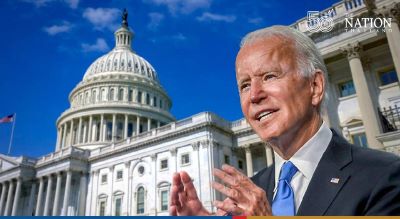
WASHINGTON – After nearly eight months of gridlock, President Joe Bidens push to overhaul the economy is finally gaining momentum as congressional Democrats overcome their internal divisions and advance his signature legislative initiatives.
Long stymied by seemingly intractable divisions, Biden in the same week signed into law a $1.2 trillion bipartisan infrastructure bill while also pushing through the House of Representatives a separate, $2 trillion social and climate policy measure that has become the centerpiece of the president’s vision to change the American economy. The president is also expected to pick the new chair of the Federal Reserve within days, a major decision shaping the nation’s economic fate.
The burst of progress on Biden’s economic agenda comes amid unresolved strains that the administration in recent months has struggled to confront, with high inflation emerging as a top concern for American voters amid the biggest price hikes in nearly three decades. Republicans have blamed the inflation problems on Biden’s economic agenda, but there are signs that the White House could soon push back more forcefully, saying that large corporations are partly to blame for the dramatic increase in costs.
White House aides also are hopeful that coronavirus booster shots, the authorization of vaccines for younger children, and predictions of fast economic growth for 2022 could represent a major turnaround. They have spent much of their first year in office refereeing legislative infighting and dealing with the pandemic’s continued economic impact.
“Consumers are out there in the economy buying goods; initial claims for unemployment [benefits] are almost where they were before the pandemic, and a lot of the disappointing job claims over the summer have been revised upward‚” said Mervin Jebaraj, director of the Center for Business and Economic Research at the University of Arkansas. “We’re coming to the end of 2021 in much better shape that I think most people expected even a few months ago, when delta was raging.”
Even as Biden secures long-awaited progress on his legislative agenda, the White House is weighing action to confront other problems. They are considering whether to escalate an attack on parts of corporate America over rising consumer prices, according to an administration official and three people with knowledge of the discussions who spoke on the condition of anonymity to reflect private meetings.
Several outside advisers have pitched senior White House officials – including White House Chief of Staff Ron Klain and White House National Economic Council Director Brian Deese – on an offensive in which the administration would amplify criticisms of large firms in heavily concentrated industries for passing higher prices on to consumers as they benefit from high profits, the people familiar with the matter said. The effort would be aimed at both directing voters’ attention to companies over inflation as well as giving companies a reason to think twice before raising prices. But the push could backfire, should it antagonize many of the firms it is highly dependent to resolve supply chain pressures ahead of the holiday season.
The White House took a step in this direction earlier this week, with Biden urging the Federal Trade Commission to escalate its investigation of anti-competitive behavior in the oil and gas industry, which the president alleged was leading to higher prices for drivers at the pump. Administration officials have discussed launching similar measures, with aides discussing calling attention to consolidation in the grocery sector as food prices rise, two people familiar with the matter said.
A senior White House official, who spoke on the condition of anonymity to reflect internal thinking, said the administration has been focused since the beginning of the administration on antitrust measures – from housing to agriculture – aimed in part at reducing consumer costs. Senior White House officials published an analysis in September on the role of concentration in the meatpacking industry on higher prices. The administration has also already appointed a number of aggressive antitrust advocates to key positions.
“The White House is working to make clear inflation is not happening for organic reasons; it’s happening because it’s profitable for enormous corporations to raise prices on consumers,” said Sarah Miller, executive director of the American Economic Liberties Project, a think tank that supports aggressive antitrust policy, who said her views had been made clear to the administration.
Miller acknowledged Biden’s letter to the FTC about oil and gas companies, but said: “I think that strategy can be expanded through resources the White House has to do a broader and more urgent investigation into rising prices in key industries for consumers and identifying excess profits that’s resulting in. They should do that now.”
Many economists are skeptical of whether publicly cajoling firms would actually lead them to lower their prices. And Biden has leaned heavily on the heads of companies such as FedEx, Walmart and Target over the supply-chain crunch, with the administration just this month touting executives’ commitments to stock their shelves ahead of the holidays. It is unclear how these corporations would react to being criticized over corporate consolidation.
Conservative and even some nonpartisan economic experts say that trends in consolidation since the start of the pandemic do not explain a massive increase in inflationary expectations over the last year.
“This is just a fantasy – there’s no corporate consolidation that explains it,” said Douglas Holtz-Eakin, a Republican policy analyst. “This is just an attempt to change the subject.”
The White House has found itself hemmed in on short-term price pressures even amid the advancements of the bipartisan infrastructure law and social spending bill – which are primarily intended to address long-term structural problems in the economy.
One of the federal government’s most traditional ways of dealing with inflation is through actions by the Federal Reserve, and Biden is expected to announce whom he will nominate to lead the agency in the next few days. Fed Chair Jerome Powell’s four-year term expires in early 2022.
In a previously undisclosed meeting at the White House on Monday, a bipartisan group of 10 centrist senators met with Biden around the signing of the bipartisan infrastructure law that they had helped broker. Biden gave comments to the group that were highly complimentary of Powell, two people who attended the meeting told The Washington Post, speaking on the condition of anonymity to reveal details of the private conversation. A White House spokesman said that the president had not yet made a decision about the Fed selection.
But later the same week, Powell came under increasing attack from two Democratic senators who joined Sen. Elizabeth Warren, D-Mass., in opposing the renomination of the central bank chair. Democratic Sens. Jeff Merkley of Oregon and Sheldon Whitehouse of Rhode Island said Powell had not done enough to use the regulatory power of the central bank to address the financial risks of climate change.
“President Biden must appoint a Fed Chair who will ensure the Fed is fulfilling its mandate to safeguard our financial system and shares the Administration’s view that fighting climate change is the responsibility of every policymaker,” Merkley and Whitehouse said. “That person is not Jerome H. Powell.”
Despite the internal divisions, the White House was buoyed Friday by passage through the House of the Build Back Better legislation. The bill would devote more than $2 trillion to dozens of key policy priorities, and the administration is eager to tout improvements to early-childhood education, energy policy, health care, housing, and other key policy areas where Americans are facing high costs.
“It puts us on the path to build our economy back better than before by rebuilding the backbone of America: working people and the middle class,” Biden said in a statement after the bill passed the House.
Conservatives have blasted the measure, with Rep. Jason Smith, R-Mo., saying in a statement: “Washington Democrats have spent months consumed by infighting and backroom dealmaking in pursuit of a partisan tax and spending agenda that bankrupts our economy, benefits the wealthy, and builds the Washington bureaucracy.”
The legislation will now head to the Senate, where Sens. Kyrsten Sinema, D-Ariz., and Joe Manchin, D-W.Va., have made clear it will have to undergo key changes before it can be approved. The revised package from the Senate would then have to be approved again by the House. Party leaders hope final passage of the bill could come before the end of the year.
Southeast Asia saw a decrease in new Covid-19 cases and related deaths on Saturday (November 20), collated data showed.
Asean countries reported 27,862 infections and 460 deaths on Saturday compared to 28,225 and 534 respectively on Friday.
– Singapore government will allow vaccinated people to hold gatherings and dine outdoor at a maximum of five people from the previous of two people, starting from Monday (November 22) onwards.
– International Labour Organisation revealed that Thailand, Phillippines, Brunei and Vietnam, where rely on tourism revenue, had laid off tourism-related personnel totalling over 1.6 million positions last year due to the Covid-19 crisis. The statistic was four times higher than layoffs in other industries.
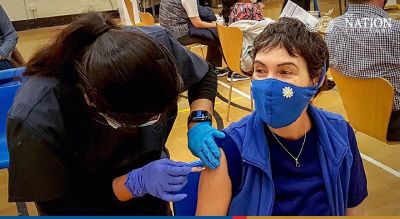
If CDC Director Rochelle Walensky signs off on broader use, the extra shots could be available for all adults as soon as this weekend.
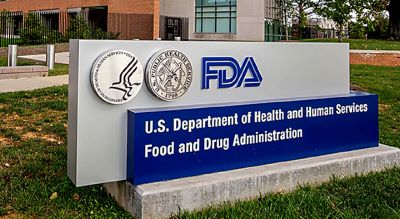
The U.S. Food and Drug Administration (FDA) on Friday authorized boosters of the Pfizer/BioNTech and Moderna COVID-19 vaccines for all adults.
The agency expanded emergency use authorization for booster doses of both the mRNA vaccines beyond who was previously eligible — boosters had been authorized for anyone 65 and older who was vaccinated with the Pfizer or Moderna vaccines at least six months ago and for certain adults at high risk of infection or of severe disease.
Pfizer and BioNTech requested authorization last week based on results of a Phase 3 trial involving more than 10,000 participants. It found boosters were safe and had an efficacy of 95 percent against symptomatic COVID-19 compared with the two-dose vaccine schedule in the period when the highly transmissible Delta was the dominant strain.
Moderna requested authorization of its 50-microgram booster dose for all adults on Wednesday. The company said the FDA based the Emergency Use Authorization (EUA) on the “totality of scientific evidence shared by the company,” including data that showed neutralizing antibodies had waned at about six months.
The outside vaccine experts of the U.S. Centers for Disease Control and Prevention (CDC) are scheduled to meet on Friday to discuss the FDA’s actions on the application from Pfizer-BioNTech and Moderna.
The advisers will recommend how the boosters should be used. If CDC Director Rochelle Walensky signs off on broader use, the extra shots could be available for all adults as soon as this weekend.
“The vaccine makers’ requests for broad authorization come as a growing number of states are offering boosters to all adults, going beyond the current guidance from the Centers for Disease Control and Prevention that recommends limiting eligibility to specific groups. Efforts to accelerate the booster campaign are designed to bolster waning immunity from the initial vaccinations and reduce breakthrough infections and viral transmission,” reported The Washington Post on Friday.
Using simple tools available at home, Palestinian boy Mohammed is passionate about making electronic devices by himself.
Mohammed al-Halaq, a Palestinian boy from Khan Younis in southern Gaza Strip, has made many electronic devices and robots using simple tools available at home.
The 14-year-old told Xinhua that he started making electronic devices when he was seven, and he used to disassemble toys powered by batteries.
The first toy he made for himself was a wooden car powered by batteries.
“I decided to make a racing car that has three tiers only… So I used wood to build the car body while manufactured its generator by linking electronic board with a battery,” he said.
Mohammed al-Halaq works on his inventions at home in the southern Gaza Strip city of Khan Younis, on Nov. 15, 2021. (Xinhua/Rizek Abdeljawad)
The teen spent about four days making his first toy, and gained praise from family and teachers with such an achievement.
His parents started to encourage him to invest in that hobby and provided him with a place where he could create small devices. His teacher encouraged him to create another toy using materials including wood, carton boxes, foam boards and plastic.
In a bid to improve skills, he went through specialized websites and YouTube videos, learning to make electronic devices.
He succeeded in making a small fridge with foam boards that contained a cooler made of capacitors powered by batteries. It also includes an external electronic board that shows the temperature in the refrigerator.
“Anyone can use it inside his own car, when he or she wants to go to the sea or to office,” the boy said. “You could stock it with bottles of drinks, bread or even chocolates.”
Mohammed al-Halaq works on his inventions at home in the southern Gaza Strip city of Khan Younis, on Nov. 15, 2021. (Xinhua/Rizek Abdeljawad)
Yet, his inspirations do not stop there. He dreamt of making a robot that would be used to help humans. Lacking experience or financial support, he joined a team of a non-profit organization, the Culture and Free Thought Association, that helps creative children with their own inventions.
After attending a series of workshops, al-Halaq succeeded in making his first robot that helps people with visual and hearing disabilities walk alone without fear of hitting an obstacle.
“The robot is like a small car that contains an electronic panel with sensors, and it works on a battery and remote control. As soon as the person who is using it approaches a wall or any obstacle on the road, the car rings an alarm, and the remote control vibrates in the user’s hand.”
Ahmed al-Saqqa, director of the scientific laboratory department in the institution, said his organization decided to sponsor the most creative children in Gaza, hoping that the Strip would have more inventors in the future.
Jamal al-Halaq, Mohammed’s father, said despite the security and political instability in Gaza, the family is determined to help the children develop their abilities so as to create a better future.
The Committee for a Responsible Federal Budget, a U.S. watchdog group, estimated that the bill would add about 750 billion U.S. ollars to the deficit over the next five years and about 160 billion dollars over ten years.
The U.S. House of Representatives on Friday narrowly passed President Joe Biden’s roughly 2-trillion-U.S.-dollar social spending and climate bill, sending it to the Senate, where it faces changes.
The House passed the so-called “Build Back Better” bill by a vote of 220-213, after House Republican Leader Kevin McCarthy on Thursday night delivered a lengthy floor speech to delay the final vote.
The bill includes 555 billion dollars in clean energy and climate investments, 400 billion dollars in funding for child care and free preschool, 200 billion dollars in child tax & earned income tax credits, and 150 billion dollars in home care for elderly and disabled Americans.
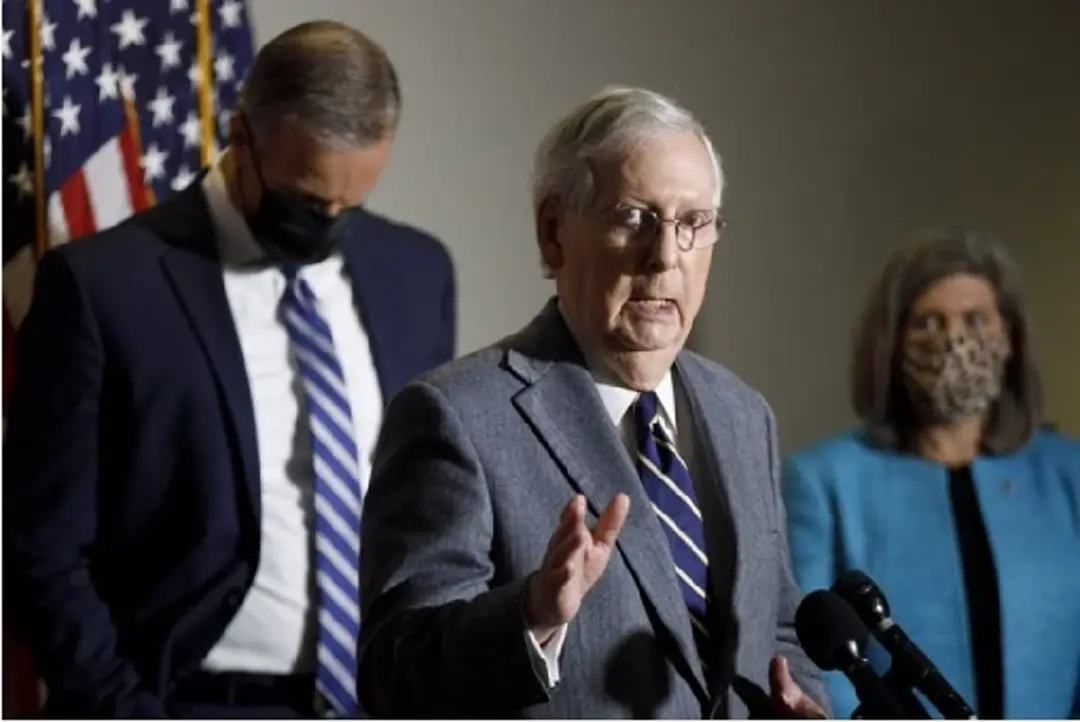
U.S. Senate Republican Leader Mitch McConnell (C) speaks during a press conference on Capitol Hill in Washington, D.C., the United States, Nov. 17, 2020. (Photo by Ting Shen/Xinhua)
“It puts us on the path to build our economy back better than before by rebuilding the backbone of America: working people and the middle class,” Biden said Friday in a statement after the vote.
The Congressional Budget Office (CBO) estimated on Thursday that the legislation would allocate 1.64 trillion dollars in new federal spending over ten years. If the tax credits in the bill are added to the spending tally, the figure would jump to 2.4 trillion dollars, well above Biden’s initial framework for a 1.75-trillion-dollar package.
The White House claimed that the framework would raise revenue of around 2 trillion dollars over a decade to fully pay for the social spending plan by imposing new taxes on the largest corporations and the wealthiest Americans.
But the CBO estimated that the legislation would increase the deficit by 367 billion dollars over ten years, not counting any additional revenue that may be generated by additional funding for tax enforcement.
The Committee for a Responsible Federal Budget, a U.S. watchdog group, also estimated that the bill would add about 750 billion dollars to the deficit over the next five years and about 160 billion dollars over ten years.
Now the bill goes to the Senate for consideration, where some senators have expressed concerns about the rising budget deficit and inflation pressures.
“Ninety percent of Americans are worried about inflation, but House Democrats just voted to let Washington D.C. print, borrow, and spend trillions more,” Senate Republican Leader Mitch McConnell said Friday in a statement.
“Our economy is shaky, but House Democrats just voted for historic tax hikes that would drain hundreds of billions of dollars out of U.S. industries and kill American jobs,” McConnell said.
Passage of the bill in the Senate will require unanimous support from the Democratic caucus, but the two key moderate Democrats, Joe Manchin of West Virginia and Kyrsten Sinema of Arizona, have yet to give their full public support. Democratic senators are expected to make extensive changes before voting on it, potentially in December, according to Bloomberg.
WASHINGTON – All American adults became eligible for coronavirus vaccine boosters on Friday, ending months of confusion over complicated guidelines that had slowed their uptake and prompted unilateral moves by governors from Maine to California to make the shots available more broadly.
Federal health officials hope a straightforward boosters-for-all policy will prompt millions more people to get the shots before they travel or gather with friends and family over the holidays. Many are concerned about the worsening picture as winter approaches. After new cases dipped to almost 69,000 on Oct. 25 – their lowest point in months – they began climbing again, with the seven-day average rising 40% to more than 96,000 on Thursday.
The final piece of the booster-policy overhaul fell into place early Friday evening when Rochelle Walensky, director of the Centers for Disease Control and Prevention, accepted two unanimous recommendations from the agency’s independent experts. The Advisory Committee on Immunization Practices said anyone 18 and older may get a booster and – to stress the urgency of increasing protection for the most vulnerable age group – anyone 50 and older should make sure they get one.
“Based on the compelling evidence, all adults over 18 should now have equitable access to a COVID-19 booster dose,” Walensky said in a statement. “Booster shots have demonstrated the ability to safely increase people’s protection against infection and severe outcomes and are an important public health tool to strengthen our defenses against the virus as we enter the winter holidays.”
The more forceful recommendation for those 50 and older had not been on the CDC advisory panel’s agenda and was added at the last minute. Panel members said it was important to convey that older adults have the clearest benefit versus risk, with far less chance than young people of developing the rare but serious cardiac side effects from the mRNA vaccines.
Grace Lee, a pediatrics professor at Stanford University and chair of the advisory panel, said she favored the callout to older people because many have a hard time keeping up with the guidelines. “That list keeps changing,” she said. “I’m not even sure I could keep up with who’s eligible and who’s not eligible.”
Earlier in the day, the Food and Drug Administration authorized Pfizer-BioNTech and Moderna boosters for people 18 and older who are at least six months past their second shot of the two-dose regimen.
“I have heard from I don’t know how many states, ‘everything is confusing here, can you make it simpler?'” Peter Marks, director of the FDA center that regulates vaccines, said in an interview. “I think this is pretty simple now: If you are over 18, and you have been vaccinated . . . it is time to go get a booster. Doesn’t matter which one you get, go get a booster.”
The new policy is an attempt to put into place a coherent federal position as about a dozen states moved ahead in recent days to give all adults access to boosters. Until Friday, federal guidelines said boosters were for people 65 or older as well as for others at high risk of covid-19 because of health problems or their job or living conditions. Any adult who received the single-dose Johnson & Johnson already has been eligible for a booster two months after vaccination.
Those categories covered a high proportion of vaccinated Americans, but experts said their complexity slowed the booster rollout because some people believed they didn’t need the shots or didn’t qualify for them. And some health-care providers were confused as well. Only about 38% of fully vaccinated people over 65, and 18% of all adults have gotten boosters, according to the CDC.
“Simplifying eligibility will allow staff across the states, territories and local health departments to focus on making vaccination – primarily the primary vaccination series – as easy and as accessible as possible,” said Nirav Shah, director of Maine Center for Disease Control and Prevention, president of the Association of State and Territorial health Officials.
Still, individuals who wanted boosters, regardless of their eligibility, were able to get them by attesting they qualified, so the simplified policy largely reflects what has been taking place on the ground.
The action on booster shots means the Biden administration has come full circle since August, when President Joe Biden and his top health aides announced plans to make boosters available to all adults beginning in late September. The administration backed off after receiving sharp criticism from many scientists and public health experts who said there was little evidence that young, healthy people needed the extra shot, especially because of concerns about a rare side effect involving inflammation of the heart muscle seen mostly in young men.
Three months later, with cases spiking, there was also more data – both on waning immunity and on the vaccines’ safety.
But data on side effects, presented for the first time Friday, provided reassurance: Of 26 million mRNA boosters given in the United States, there were a dozen confirmed reports of myocarditis, and another 38 pending investigation, said Tom Shimabukuro, a CDC vaccine safety official, citing preliminary data from one vaccine safety monitoring system. The median age of the dozen confirmed with myocarditis is 51. Ten were discharged from the hospital and six recovered from symptoms, he said.
And FDA’s Marks said the agency also took a close look at the potential risk of heart-related side effects in older male teenagers and young men. Updated information and analyses showed that the risks posed by the boosters were very low, and were far outweighed by the potential benefits of preventing covid-19, he said.
Nevertheless, the agency noted in its Moderna booster fact sheet for health care providers that some studies show a potentially higher risk of the cardiac side effect after the second shot of Moderna, compared with Pfizer-BioNTech. The FDA also noted a lower risk from the Moderna booster shot than from the initial vaccination. Some countries have restricted or barred the use of the Moderna vaccine in younger men because of concerns about that side effect.
The FDA and CDC decisions were largely praised by experts Friday, although some questioned just how much firepower the booster shots might bring to the pandemic battle.
David Dowdy, an epidemiologist at Johns Hopkins, expressed skepticism that boosters would affect the course of the pandemic.
“Whether that is going to have a major impact in terms of transmission, probably not,” he said. “A large fraction of transmission is still occurring from people who are not vaccinated.” Getting those people inoculated, he argued, should be the No. 1 priority.
Still, Dowdy backed giving all adults the option of getting extra doses. “The risk-benefit ratio is sufficiently favorable that if you want a booster, this is the time to do it, with cases going up,” he said.
Robert M. Wachter, professor and chairman of the department of medicine at the University of California at San Francisco, was more enthusiastic.
“The evidence is just crystal clear now that [vaccine] efficacy wanes for all infections” and that boosters can reduce breakthrough cases and vulnerability to long covid,” he said.
CDC official Sara Oliver told panel members Friday that the impact of a vaccine booster dose on transmission is unknown. But even a temporary boosting effect, she said, “may factor into the benefit risk balance, especially as we approach the winter and holidays with increased traveling and indoor gatherings.”
The American Medical Association applauded the agencies’ decisions, saying, “The scientific evidence is clear that the vaccines against COVID-19 are safe and remain effective. We continue to strongly urge everyone who has not yet been vaccinated against COVID-19 and is eligible, including children aged 5 and older and pregnant people, to get vaccinated as soon as possible to protect themselves and their loved ones.”
The new policy ends an awkward chapter for federal officials who have wrestled with the eligibility issue since summer and been leapfrogged by New York City and a growing number of states, including Louisiana, Maine and Colorado, that already endorsed widespread use of the extra shots to try to stave off a spike in cases.
“The states made the right decisions, but the optics are awful in appearing to go rogue and undermining the federal agencies,” said Peter Hotez, a professor of pediatrics and molecular virology and microbiology at Baylor College of Medicine.
While many experts expressed relief at the simpler recommendations, Jay A. Winsten, director of strategic media initiatives at the Harvard School of Public Health, said that the conflicting messages over recent weeks have taken a toll that will have an ongoing impact on people’s trust in public health.
“After months of confused and contradictory messaging, it’s baked into the coverage now and into the public psyche,” Winsten said. “The way they have handled this has done real damage to the agency’s credibility with a lot of people.”
WASHINGTON – Russian President Vladimir Putin is “playing chess” with the West by moving military forces and equipment along Russias border with Ukraine, Ukraines new defense minister said Friday while calling on the United States and European nations to hold the Kremlin accountable for any renewed aggression.
“He is testing the unity of the European Union, he is testing the unity of NATO allies, he is testing our society, Ukrainians, he is testing Poland, the Baltic countries,” Defense Minister Oleksiy Reznikov said in an interview during his visit to Washington, a trip that has included face-to-face talks with Defense Secretary Lloyd Austin and a request for additional military assistance.
Reznikov said he and his American counterpart came to the same conclusions about the situation on the Russia-Ukraine border, though he suggested some Ukrainian officials initially viewed the developments with less alarm, having grown numb to the threat from Russia after nearly eight years of war.
“We have the same assessment of the risks, of the threats, but the difference is in risk perception,” Reznikov said. “We are living in this standard of life for eight years, so we have like psychological immunity.”
Reznikov declined to go into detail about the request he made to the Pentagon.
Austin said ahead of Thursday’s meeting with Reznikov that the U.S. military was continuing to monitor the situation on the border between Russia and Ukraine and acknowledged Washington was unclear on the meaning of the latest moves.
“We are not sure exactly what Mr. Putin is up to, but these movements certainly have our attention,” Austin said, calling on Russia to be transparent about its military activities near the border.
Speaking to The Washington Post, Reznikov said he believed Putin was at an inflection point, deciding whether to “go through the Ukrainian border and burn the bridges, or he is still bargaining and trying to find something interesting for him.”
“I hope he has not made his decision on this point,” Reznikov said, accusing Putin of “trying to grow that fear in the hearts of people.”
Reznikov’s visit to the United States, his first as Ukraine’s newly minted defense minister, came as Putin gave an address to the Russian Foreign Ministry in Moscow outlining his view of global affairs. Putin had harsh words for the government of Ukrainian President Volodymyr Zelensky, which he accused of leading to a “dead end” the Minsk accords designed to solve the conflict in Ukraine’s east.
Putin also lashed out at exercises that the United States and its NATO allies have been conducting, often in conjunction with Ukraine, in the Black Sea region. The Post reported Friday that the White House has asked the Pentagon to provide a rundown of U.S. military activities and exercises in Europe and provide their policy justification, as Russia repeatedly raises concerns about the drills.
This week, Russia’s Foreign Ministry shocked diplomats by releasing traditionally confidential correspondence with France and Germany over a new round of peace talks involving France, Germany, Russia and Ukraine to discuss ending the conflict.
Russia’s release of the correspondence came after France accused Russia of refusing to commit to a new round of talks on the ministerial level.
Russian Foreign Minister Sergei Lavrov said such comments were “arrogant” and “not exactly appropriate or ethical” and released the correspondence in an attempt to dispute the claim.
Reznikov described his surprise at the Russian Foreign Ministry’s release of the letters and said it was perhaps the product of “something emotional” on the part of Lavrov.
Asked during a news conference whether his French and German counterparts had rattled him, Lavrov said: “We are all human. You could say they got to me.”
Reznikov declined to comment Friday on what specific piece of territory Russia may be eyeing, saying he didn’t want to give Moscow any ideas.
“Our intelligence, American intelligence and U.K. intelligence – we have the same perception,” Reznikov said. “So we know about that, and we agree.”
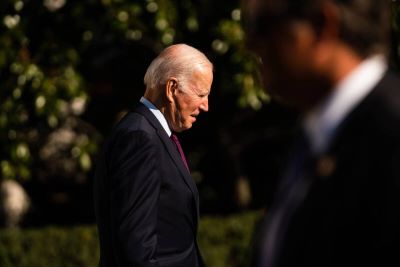
WASHINGTON – President Joe Biden was deemed “fit to successfully execute the duties of the Presidency” by his physician following a “routine physical” at Walter Reed National Military Medical Center Friday.
The examination included a colonoscopy requiring anesthesia, during which Biden temporarily transferred power to Vice President Kamala Harris. That made her the first woman to serve as acting president – for 85 minutes. White House press secretary Jen Psaki tweeted that Biden resumed his duties around 11:35 a.m., was in good spirits and had spoken to both Harris and White House Chief of Staff Ron Klain.
Photo Credit: Washington Post photo by Demetrius Freeman.
In a six-page summary of his physical released by the White House Friday evening, Kevin O’Connor – who has been Biden’s primary care doctor since 2009 – observed that Biden “has experienced increasing frequency and severity of ‘throat clearing’ and coughing during speaking engagements,” as well as that Biden’s “ambulatory gait is perceptibly stiffer and less fluid than it was a year or so ago.” O’Connor added that Biden confirmed these observations.
O’Connor concluded that Biden’s coughing and throat clearing – which critics have seized on as a sign that Biden is unwell – are the result of his existing gastroesophageal reflux, and that no additional treatment is needed other than continuing with his current regimen of Pepcid.
O’Connor also noted that while Biden’s stiff gait could be explained by the orthopedic and sports-related injuries he has previously sustained, “a gait disturbance can include a variety of neurologic pathologies”; the team he brought into assess Biden’s gait included spine, foot, ankle, radiology, and physical therapy, as well as movement disorder neurologic specialists.
Ultimately, however, Biden’s doctor concluded that Biden’s stiffness was the result of normal “wear and tear” to his spine, and noted that an “extremely detailed neurologic exam was reassuring in that there were no findings which would be consistent with any cerebellar or other central neurological disorder,” like a stroke or Parkinson’s.
He suggested that Biden would likely benefit from shoe orthotics.
That report also noted he does not use any tobacco products, does not drink any alcohol and works out at least five days per week. Biden’s report recorded him at nearly 6 feet tall and weighing 184 pounds,with a total cholesterol level at 100.
O’Sullivan concluded that Biden remains “a healthy, vigorous, 78-year-old male.”
White House officials have said for months that Biden, who turns 79 on Saturday and is the nation’s oldest president, would get an annual physical and be transparent about the results.
In her statement, Psaki noted that President George W. Bush had also briefly transferred power to his vice president under similar circumstances in 2002 and 2007.
Psaki said that Harris worked out of her office in the West Wing during the period – one hour and 25 minutes – that she had the powers of the presidency.
Speaking to reporters Friday, Psaki noted that when Biden selected Harris as his running mate, he knew he was making history and that “today was another chapter in that history.”
“I think that will be noted for many women, young girls across the country,” Psaki said.
Biden’s motorcade arrived at the hospital shortly before 9 a.m. Friday.
The records will be the first since Biden released a three-page summary of his medical records nearly two years ago, and come after the White House committed to releasing his records before the end of the year.
Biden also vowed as a candidate to be “totally transparent in terms of my health,” which came at a time when he was running against President Donald Trump, who had a record of being less than forthcoming about his own health and who sought to make Biden’s mental acuity and age an issue in their race.
During the campaign, Biden would often say it was legitimate for voters to question and consider his age as a factor, while he also attempted to prevent those questions from lingering by jogging onto a stage or being among the last to leave his events.
At times he has grown prickly over questions about his mental acuity and his fitness for office. When a reporter questioned him about his medical records during the campaign, Biden suggested a wrestling match. When an 83-year-old farmer in Iowa said he thought Biden might be too old for the job – noting how he noticed his own body and mind slowing down – Biden said he was prepared for a push-up contest, a footrace or an IQ test.
A group of doctors last year also reviewed available records on Biden and Trump to provide an assessment, determining Biden’s estimated life expectancy was nearly 97 years, given his health and family history (his mother died at 92, his father at 86).
In the White House, Biden’s health has continued to garner outsize attention because of both his age and criticism from Republicans who have seized on what they claim are his deteriorating mental and physical abilities. During the 2020 campaign, Trump repeatedly raised questions about Biden’s fitness for office, nicknaming him “Sleepy Joe.” And Trump’s base quickly took up the political attack, with some making veiled comments about Biden’s mental acumen and others offering more overt ones.
After Biden’s first news conference in March, for instance, Rep. Lauren Boebert, R-Colo., tweeted, “A President with cognitive decline is a national security risk.”
Also in March, Biden stumbled several times walking up the stairs to Air Force One, prompting another round of mocking and questions about his health, and forcing the White House to clarify that it was a windy day and the president was “100 percent fine.”
In a Pew survey in September, 56% of respondents said that “mentally sharp” described Biden not too well or not well at all. Asked Friday about voter concerns surrounding Biden’s physical and mental health, Psaki pointed to attacks being stoked by the former president and his allies.
“There is certainly quite a bit of conspiracy theory pushing out there on a range of social media platforms and even through the mouths of elected officials,” she said. “So that could certainly be a root cause.”
Biden’s last medical records came in December 2019, in a three-page summary written by his doctor and declaring him “healthy” and “vigorous.” That summary was the most complete glimpse into Biden’s health since the Obama-Biden campaign released 49 pages of records in 2008.
The December 2019 report indicated he was treated for an irregular heartbeat, gastroesophageal reflux and seasonal allergies.
It also showed he had a history of atrial fibrillation, which was discovered during a routine check before he had his gallbladder removed in 2003. Biden has never required any medication or electrical treatments to control the rate or rhythm of his heartbeat, but he does take a blood thinner. He also uses over-the-counter esomeprazole for gastroesophageal reflux and uses Allegra and Dymista to treat his sinus symptoms. It also noted Biden had no permanent damage from the aneurysms he suffered in 1988.
Since that time, the only known instance of Biden requiring medical attention came after he had a hairline fracture in his right foot shortly after he won the presidential election. The injury came while he was chasing his dog Major, grabbing his tail and then tripping on a throw rug. Biden wore a boot on his foot for a few weeks and visited an orthopedic specialist clinic shortly after his inauguration.
“Both small fractures of his foot are completely healed,” O’Connor said in February. “This injury has healed as expected,” he added, “and he will return to his usual exercise regimen.”
There is no requirement for a president to divulge their medical details, and there has been a long history of politicians, including presidents, attempting with withhold health information.
Woodrow Wilson kept it a secret when strokes paralyzed his left side, and Franklin D. Roosevelt famously masked the effects of polio. John F. Kennedy’s youthful appearance helped cover his chronic back pain and Addison’s disease.
Biden’s report is coming earlier than some of his immediate predecessors.
Trump’s first physical as president was released in January 2018, with a glowing report from Ronny Jackson, who was the White House physician at the time and, after allegations of misconduct derailed a nomination for secretary of Veterans Affairs, is now a Republican congressman from Texas.
Obama had his first medical checkup about a year after taking office. He was 48 at the time and deemed in “excellent health” but was still struggling to stop a 30-year smoking habit.
George W. Bush had his first physical as president Aug. 4, 2001, less than seven months after taking office and about a year since his last exam. He was 55 at the time and deemed “fit for duty.” George H.W. Bush released his physical results in May 1989.
Biden returned to the White House Friday afternoon, where he participated in the time-honored White House tradition of a turkey pardon. He is scheduled to travel later to Wilmington, Del., for the weekend.
WASHINGTON – The triumphant passage by House Democrats on Friday of President Joe Bidens chief domestic priority – a sweeping $2 trillion package that invests heavily in health care, the social safety net and climate – now sets up the ultimate test of his legislative acumen as Biden navigates a Senate with no room for error.
For the president, who has long touted his intimate knowledge of Capitol Hill and ability to negotiate complex congressional deals, failure to shepherd the “Build Back Better” package into law would be a devastating blow, handing his opponents a political cudgel while falling short of his promise to pass transformational legislation.
But its successful passage – combined with the $1 trillion bipartisan infrastructure law that Biden heralded this week and an earlier coronavirus relief package – would cap a historic set of domestic policy achievements for Biden and the Democratic-controlled Congress despite a narrowly divided and highly polarized environment.
Biden’s top aides are signaling that the president is prepared to scale back the party’s ambition further to accommodate the handful of moderate Democrats in the Senate who are reluctant to embrace the most expansive components of the package.
“The president would have loved to have seen his entire original proposal pass, but he also knows from having served 36 years in the Senate, that’s not how it goes,” White House press secretary Jen Psaki said Friday. “He’s someone who governs from the position of compromise not being a dirty word.”
The package already has shrunk from an initial target of $6 trillion to its current size of roughly $2 trillion in the interest of political viability. Biden “sees consensus as the way you get things done, and that’s certainly how we’re going to approach the next few weeks as well,” Psaki said
In a preview of Biden’s likely message – both to senators and voters he hopes will support the package – the president issued a statement Friday citing benefits such as lower prescription drug costs, universal pre-K, an extended child tax credit, senior care and a sizable climate package. Biden has also promoted the social spending bill while touring the country to promote his freshly signed infrastructure law.
“This is a blue-collar blueprint to rebuild America, and it leaves no one behind,” Biden said of the new infrastructure law at a General Motors plant in Michigan this week. Pivoting immediately to the pending package, Biden said, “The same goes for my Build Back Better Plan – it’s for our people.”
But the infrastructure package was a bipartisan effort, supported by 19 Senate Republicans and 13 House Republicans in addition to almost all Democrats. In contrast, Build Back Better is not expected to attract any Republican support, so every single Senate Democrat must sign on for it to pass, giving centrists, including Sens. Kyrsten Sinema, D-Ariz., and Joe Manchin, D-W.Va., enormous bargaining power.
There are plenty of challenges confronting Biden in the Senate. The House package includes four weeks of paid family and medical leave, a measure Manchin opposes. Immigration provisions cleared by House Democrats may not survive procedurally in the Senate, where the bill must follow strict parliamentary guidelines.
The House bill also significantly raises the cap on state and local tax deductions, a move designed to pick up the votes of Democrats representing high-tax districts but likely to be adjusted in the Senate.
Even in the ebullient aftermath of the House passage of the Build Back Better Act – teeing off a Biden campaign slogan that he has since replicated for his domestic and foreign policy agendas – Democratic lawmakers acknowledged that the $2 trillion measure was likely to be changed in the Senate.
The bill’s fortune in coming weeks – Democrats hope for final passage by Christmas – could determine the scope of Biden’s legacy. Most members of both parties believe Democrats will lose their majority next year in the House and possibly the Senate as well, and it could be years before the party again controls the White House and both chambers of Congress.
What’s less clear is whether passage of the bill would boost Biden’s low approval ratings. The story of Biden’s tenure so far has been accomplishments – a coronavirus vaccine drive, a covid-19 pandemic relief law, an infrastructure package, a pullout from Afghanistan – that are often messy and do little to strengthen his political standing.
Yet many Democrats believe that failing to pass Biden’s agenda would probably deal a severe political blow to the party. That’s created a dynamic where centrists repeatedly downsize liberals’ spending wishes and blunt efforts to hike taxes on wealthy corporations.
“We’re going to have work to do when the bill comes back from the Senate,” said Rep. Joe Neguse, D-Colo. But helping the party, Neguse said, was that the vast majority of the legislation already has been negotiated with Democrats on the other end of the Capitol.
Still, some Democrats say privately one likely scenario is Senate leaders embracing whatever version of the bill is palatable to Sinema and Manchin and the House largely accepting the result. That would deeply disappoint liberals, but they may have few other options.
Aside from one overarching red line – that the legislation should not raise taxes for those making than less than $400,000 annually – Biden has rarely imposed his views on Manchin and Sinema, stubborn negotiators who often have been at odds with the rest of the party.
At one point, Sinema said she would not support an increase in corporate tax rates that had been cut significantly by Republicans in 2017. Though it was a position held by virtually everyone across the Democratic Party on Capitol Hill, Biden acknowledged that once Sinema made her opposition clear, there was little choice but to drop the provision.
“Look, when you’re in the United States Senate and you’re president of the United States and you have 50 Democrats, every one is a president,” Biden remarked at a CNN town hall in Baltimore last month. “So you’ve got to work things out.”
In an interview with The Washington Post this week, Sinema said it was not Biden’s approach to push her into a specific position, saying “no one tells me what to do” and that if the administration tried, “it would not be effective.”
In negotiations, Sinema is “of the mind that you should be very frank, very honest, very upfront,” the senator said in the interview. “My experience is that the White House negotiators and the president himself, you know, appreciate and respect that.”
More vocal with his objections has been Manchin, who has opposed a paid leave program and a tax credit to encourage purchases of electric vehicles, beyond his objection to the overall size of the bill.
Psaki stressed Friday that administration officials continued to stay in touch with Manchin and his aides, signaling that Biden would engage directly with senators once the timing was right.
“We believe that he is operating and negotiating in good faith,” Psaki said of Manchin. White House officials have said the same about Sinema, despite the criticisms both have faced from Democratic colleagues on policy and tactics as the package has taken shape over the past several months.
Asked whether he would sign the bill into law even if paid family leave provisions were dropped – as Manchin has telegraphed he would demand – Biden said Friday: “I will sign it. Period.”
As the legislation now winds through the Senate, Democrats will also have to contend with liberals already frustrated that the package has shrunk from its initial size. In a statement Friday, Sen. Bernie Sanders, I-Vt., said Congress “must” expand Medicare coverage to cover dental, vision and hearing assistance, although the House bill included only hearing benefits.
“As this moves to the Senate and the Senate looks at the bill,” said Rep. Cori Bush, D-Mo., “if they want to mess with it at all, I hope what they remember is that anything you move out of this bill, you are saying, you’re preventing lifesaving change for people.”




 Mohammed al-Halaq works on his inventions at home in the southern Gaza Strip city of Khan Younis, on Nov. 15, 2021. (Xinhua/Rizek Abdeljawad)
 Mohammed al-Halaq works on his inventions at home in the southern Gaza Strip city of Khan Younis, on Nov. 15, 2021. (Xinhua/Rizek Abdeljawad)
 U.S. Senate Republican Leader Mitch McConnell (C) speaks during a press conference on Capitol Hill in Washington, D.C., the United States, Nov. 17, 2020. (Photo by Ting Shen/Xinhua)