Scientist who said lab-leak theory of covid-19 origin should be probed now says evidence points to Wuhan market #SootinClaimon.Com

#SootinClaimon.Com : ขอบคุณแหล่งข้อมูล : หนังสือพิมพ์ The Nation.

https://www.nationthailand.com/international/40008996


The location of early coronavirus infections in late 2019 in Wuhan, China, suggests the virus probably spread to humans from a market where wild and domestically farmed animals were sold and butchered, according to a peer-reviewed article published Thursday in the journal Science that is the latest salvo in the debate over how the pandemic began.
The article, by University of Arizona evolutionary virologist Michael Worobey – a specialist in the origins of viral epidemics – does not purport to answer all questions about the pandemic’s origins, nor is it likely to quell speculation that the virus might have emerged somehow from risky laboratory research.

Worobey has been open to the theory of a lab leak. He was one of the 18 scientists who wrote a much-publicized letter to Science in May calling for an investigation of all possible sources of the virus, including a laboratory accident. But he now contends that the geographic pattern of early cases strongly supports the hypothesis that the virus came from an infected animal at the Huanan Seafood Market – an argument that will probably revive the broader debate about the virus’s origins.

Worobey notes that more than half of the earliest documented illnesses from the virus were among people with a direct connection to the market, and he argues this was not merely the result of the early focus on the market as a potential source of the outbreak. He concludes that the first patient known to fall ill with the virus was a female seafood vendor at the market who became symptomatic on Dec. 11, 2019.

That contradicts a report earlier this year from investigators for the World Health Organization and China, who concluded that the first patient was a 41-year-old accountant with no connection to the market who became sick on Dec. 8. But Worobey said the accountant’s medical records reveal he visited the dentist that day to deal with retained baby teeth that needed to be pulled, but did not show symptoms from the coronavirus until Dec. 16, and was hospitalized six days after that.

The stealthy nature of the virus, which can spread asymptomatically, makes it highly likely that the pathogen began to spread many weeks before any of the cases that were identified. But Worobey said the locations and occupations of the first known patients point to a market origin, with the virus radiating outward into the city of 11 million.

“It becomes almost impossible to explain that pattern if that epidemic didn’t start there,” Worobey said in an interview.

Geography has been central to theories about the origin of the virus. Wuhan is home to the Wuhan Institute of Virology, where researchers study and conduct experiments upon coronaviruses that circulate abundantly in bats in central and southern China. The institute has been a focus of those who argue that an accidental leak from one of its research labs is the most likely explanation for the spillover of the virus into humans.

The Huanan Seafood Market is many miles, and across the Yangtze River, from the virology institute. Few of the early documented cases were anywhere near the laboratory. A second laboratory studying coronaviruses at the Wuhan CDC, which oversaw the city’s coronavirus response, relocated in late 2019 to a spot close to the market.

Worobey’s article immediately drew skeptical responses from two prominent scientists who, like Worobey, have been deeply engaged in the debate over the most likely scenario for the start of the pandemic.

“It is based on fragmentary information and to a large degree, hearsay,” David Relman, a professor of microbiology at Stanford University, said in an email after reading an embargoed copy. “In general, there is no way of verifying much of what he describes, and then concludes.”

Jesse Bloom, a computational biologist at the Fred Hutchinson Cancer Research Center in Seattle, said the quality of the data from China on early coronavirus infections is too poor to support any conclusion.

“I don’t feel like anything can be concluded with high or even really modest confidence about the exact origin of SARS-CoV-2 in Wuhan, simply because the underlying data are so limited,” Bloom said. He contends that genetic evidence from early virus samples points to the market as a superspreader event, but not as the location of the first set of infections.

Bloom has been among those sounding alarms about what he feels is overly risky research conducted at the Wuhan Institute of Virology. That research has generated tremendous controversy, with some Republican lawmakers and conservative media figures focusing on funding for some of the experiments, funneled via a nonprofit group, EcoHealth Alliance, from the National Institute of Allergy and Infectious Diseases, which is led by President Joe Biden’s chief pandemic medical adviser, Anthony Fauci.

Worobey’s paper drew strong praise from those favoring the natural zoonosis theory.

“Mike’s piece shows beyond a shadow of a doubt that in fact the Huanan market was the epicenter of the outbreak,” said Robert Garry, a virologist at Tulane University and one of the most vocal proponents of the zoonosis hypothesis.

Benjamin Neuman, a virologist at Texas A&M University who was one of the coronavirus experts to give SARS-CoV-2 its name in early 2020, called the report “detailed and compelling, in a way that the most detailed conspiracy timelines have not been. . . . When the evidence is laid out like this, the association with the market is strong long before anyone realized it – right from the start.”

Worobey and critics Relman and Bloom have one thing in common: They signed the letter to the journal Science in May that called for continued investigation into the virus’s origins, including the possibility of a lab leak.

Soon, public opinion polls showed more people favored the lab-leak theory than the market origin. And Biden ordered his intelligence agencies to look into the matter and report back within 90 days.

In the months since he signed the Science letter, Worobey has become more convinced that the pandemic began as a spillover in the market, where animals known to be capable of harboring the virus – such as raccoon dogs – were sold.

The Science letter was influential in taking conjecture that had once been derided as a conspiracy theory and propelling it into the mainstream of virus-origin debates, even making it, as Worobey puts it, “the leading contender” in the public mind for the origin of the pandemic.

“The pendulum has swung way too far to the other side,” he said.

It has been known since the start of the pandemic that the Huanan market was linked to many early cases, and the first news reports invariably cited it as the likely source of viral spillover. But the joint report from the WHO and China this year presented a murkier picture, noting that some cases in December 2019 had no link to the market: “No firm conclusion therefore about the role of the Huanan market in the origin of the outbreak, or how the infection was introduced into the market, can currently be drawn.”

The market was quickly closed, the animals culled before any were screened for SARS-CoV-2, and everything cleaned and sanitized soon after the outbreak began. Still, a subsequent investigation showed that traces of the virus were found on surfaces in the market, including drains, particularly in the area where vendors sold animals.

Worobey acknowledged that the clustering of infections could be misleading, saying the early focus on the market might have skewed data because epidemiologists might have looked for market-linked infections and missed infections occurring in areas getting less attention – a common tendency in research known as “ascertainment bias.” But he concluded that the timeline and geography of early cases rule out such an error.

Chinese officials have said the Huanan market was not the source of the pandemic. China’s government has pushed the idea that the coronavirus could have been brought to China from overseas, including from Fort Detrick in Maryland and through frozen food imports.

Worobey does not contend that he has proved definitively how the pandemic began. And his article is not a research study presenting fresh data, but rather is labeled a “Perspective” piece. Such articles typically aggregate and interpret information that for the most part has already been in the public domain.

Although the lab-leak idea was at first derided by many scientists and in the mainstream media as a conspiracy theory – one embraced by President Donald Trump and his allies as part of their rhetorical attacks on China and the “China virus” – the failure to find an animal host of the immediate precursor to SARS-CoV-2 has kept all hypotheses on the table.

The 90-day investigation conducted by U.S. intelligence agencies at the behest of Biden was inconclusive. Most agencies favored the natural zoonosis theory. One favored the lab leak. The only firm conclusion was that the virus was not a bioweapon.

Worobey said he was open to the possibility of a lab leak, simply because of the proximity of the Wuhan Institute of Virology to the first outbreak. But he examined the geography question more closely. If the virus came out of the lab, why did the first cases cluster in and around the market many miles away? And that market, he notes, had sold animals that were implicated in the first SARS epidemic of 2002-2003.

“It becomes almost absurd, in my mind, to imagine that this virus started at the Wuhan Institute of Virology, and almost immediately that person went to one of the few places that sold raccoon dogs and other animals that were implicated in SARS-1,” he said.

His paper does not mention the Wuhan CDC laboratory. Chinese officials have insisted that SARS-CoV-2 was never in one of the country’s laboratories, nor has it been found through tests in wild or domesticated animals.

Proponents of the lab-leak theory point to the lack of transparency of Chinese officials and the removal of experimental data from a database at the Wuhan Institute of Virology several months before the pandemic. Worobey’s market-origin theory suggests an alternative scenario, one in which authorities were not eager to find proof that the spillover happened in a market with live animals that may have been illegally captured and sold.

Worobey also suggests that Chinese officials may have been embarrassed that the country’s system for identifying and rapidly responding to novel pneumonia-like illnesses – a system put in place after the original SARS epidemic – was slow to detect the outbreak of illnesses caused by the novel coronavirus.

Published : November 19, 2021

By : The Washington Post
Europe returns to work-from-home to stem soaring covid cases #SootinClaimon.Com

#SootinClaimon.Com : ขอบคุณแหล่งข้อมูล : หนังสือพิมพ์ The Nation.

https://www.nationthailand.com/international/40008995


European countries are making a U-turn in their fight against a brutal fourth wave of the pandemic, increasingly forcing reluctant companies to let employees work from home.

Just months after people began to return to the office, Germany is poised to agree on mandatory remote working as long as there are no “operational reasons” that stand in the way.

The Belgian government on Wednesday decreed that employees need to work from home four days a week until mid-December. In Ireland and the Netherlands, people have already been instructed to work from home where possible.

The moves are part of a wider effort to contain a surge in coronavirus infections across the region. Europe has again become the epicenter of the pandemic, despite vaccination rates of around 70% and higher in many countries.

New measures are also being introduced to restrict access to public places for people who aren’t inoculated as authorities try to increase pressure on those who’ve resisted getting a Covid shot.

Governments are eschewing widespread lockdowns to avoid economic disruption and social unrest. Working from home is one of the least disruptive ways to limit contact among the broader population. Still, it’s impact is limited as mainly office roles have the luxury of tele-commuting.

Volkswagen advised its German employees to start working from home wherever possible as of Monday. That isn’t the case for assembly lines.

Europe’s largest automaker is preparing to adopt new rules that only allow access to factories and offices for people who are vaccinated, tested or have recovered from a Covid infection. The industrial giant also plans to ramp up its own capacity for vaccinations at its sites toward the end of this month, including for booster shots.

The reimposition of working rules isn’t uncontroversial. Voka, a Flemish network of companies, called the four-day teleworking mandate “incomprehensible and inexplicable,” arguing that hardly any infections take place at the office.

“Leave work organization to companies,” Hans Maertens, Voka’s managing director, said on Twitter. “Regulation, control, sanctions are coming at us, while we need entrepreneurship, consultation, collegiality, creativity.”

Despite the disruption, the impact of the latest restrictions is expected to be limited.

“People have learned to adapt, and fear levels remain low,” said Paul Donovan, chief economist for UBS. “It is fear, not the virus, that does the economic damage.”

The return to home working in parts of Europe stands in contrast to the situation in the U.K., which has so far resisted similar measures despite recording some of the region’s highest Covid tallies throughout the autumn. In recent days, officials have grown more circumspect as they urge Britons to get inoculated or bolster protection with boosters.

Asked earlier this week about the possibility of another lockdown this Christmas, Prime Minister Boris Johnson replied that there is nothing in the current data that signaled the need for restrictions, but warned: “clearly we cannot rule anything out.”

Transport data indicates many Britons are still working from home. London Tube journeys stood at 58.2 million in the four weeks to Oct. 17, a little more than half the levels before the pandemic struck the country.

Austrian Health Minister Wolfgang Mueckenstein has already appealed for workers to do their jobs at home if they can. On Friday, the Alpine nation’s federal and provincial leaders will assess whether formal measures are needed.

Countries in eastern Europe are trying to avoid imposing mandatory remote work. As hospitals become overrun again, authorities are focusing mainly on boosting low vaccination rates. Some like the Czech Republic are considering banning the unvaccinated from public events and services.

In Germany, new legislation is on the way to fight the pandemic. The law, which is being pushed through by the three parties that aim to form a ruling coalition, includes the work-from-home rule, and in some cases limits access to the workplace to people who are vaccinated, recovered or provide a negative test, as well as a raft of other measures.

Merkel’s conservative alliance, which is heading into opposition for the first time since 2005, has criticized the law and has threatened to block it in the Bundesrat, the upper house where the 16 states are represented, on Friday.

The number of daily new cases in Germany rose by more than 60,000 for the first time on Thursday. As intensive-care beds become scarce, Chancellor Angela Merkel called the situation “dramatic” and warned on Wednesday that the fourth wave of the pandemic is hitting Europe’s biggest economy “with full force.”

Merkel and Olaf Scholz, the Social Democrat set to replace her as chancellor early next month, will hold talks with regional premiers to coordinate the next steps — including the work-from-home measure — later on Thursday.

Published : November 19, 2021

By : Bloomberg

Oman Celebrates 51st National Day of the Renaissance #SootinClaimon.Com
#SootinClaimon.Com : ขอบคุณแหล่งข้อมูล : หนังสือพิมพ์ The Nation.

https://www.nationthailand.com/international/40008937


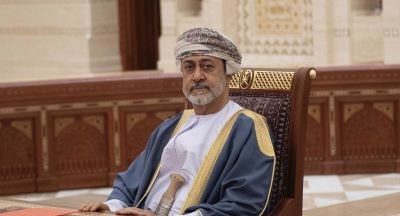
The Sultanate of Oman marks today the 51st National Day of the Renaissance, the 18th of November Anniversary.

The Sultanate of Oman marks today the 51st National Day of the Renaissance, the 18th of November Anniversary. The event comes around at a time when Omanis ponder about the achievements made so far and brace for further accomplishments, with firm resolve, under the astute leadership of HM Sultan Haitham Bin Tarik who pledged to hold high the banner of Renewed Renaissance, since he assumed power in the country on 11 January 2020.

In the beginning of this year, a Royal Decree No. 6/2021 promulgated the updated Basic Law of the State to serve as a basic pillar of continuous efforts to shape a better future for Oman and its citizens. It comprises 98 articles “enhancing the institutions of the State, safeguarding its territorial unity and its social texture, protecting its cultural foundations and consolidating public rights, liberties and duties”.

Oman Celebrates 51st National Day of the RenaissanceOman Celebrates 51st National Day of the Renaissance


The Basic Law of the State lays down a stable mechanism of transfer of rule, which reflects positively on political and economic aspects and affirms the principle of sovereignty and independence of the judiciary which serves as a basis of rule in the State. It makes education compulsory till the end of the Basic Education stage. It establishes a scholarly method for thought, development of talents and encouragement of innovation – which all conform with Oman Vision 2040. Articles (5) to (11) of the Basic Law of the State organize the mechanism of entitlement or succession to the throne in the Sultanate of Oman and makes it clearer and more straightforward.

Oman Celebrates 51st National Day of the RenaissanceOman Celebrates 51st National Day of the Renaissance

The Sultanate of Oman formed a Supreme Committee tasked with tackling developments resulting from Covid-19 pandemic. The Committee has been taking ‘moderate’ decisions and precautionary measures that ensure the safety of citizens and residents. The decisions resulted in the improvement of Covid-19 indicators, which registered great decline in mortality, infection, and hospitalization rates, while recovery from the disease reached 98.5%.

Meanwhile, the government accorded special attention to the ensuing economic impacts of Covid-19. The decisions, which considered the fallouts of the pandemic on establishments and companies, included exemption from fines of some services. Special exemptions were sanctioned to small and medium enterprises, in addition to a package of incentives for borrowers, individuals, banking institutions, financing and leasing firms.

Oman Celebrates 51st National Day of the RenaissanceOman Celebrates 51st National Day of the Renaissance

The designation of a Youth Day in Oman (26 October) reflects the attention accorded to the young generation and asserts the leadership’s deep conviction in the potential of youth in promoting the country’s development. HM the Sultan underscored the significance of devising a mechanism and for opening channels of communication with youth to explain all the requirements of the development process in all sectors. He gave directives to listen to youth and study their needs and aspirations to help them perform the role expected of them in contributing to the comprehensive nation-building march.

HM the Sultan also chaired a meeting of the Supervisory Committee of the National Employment Programme (NEP) on 5 July 2021. This placed employment in the realm of national priorities. HM the Sultan reiterated the importance of the NEP when he presided over a Council of Ministers on 15 June 2021, during which he gave directives for “devising suitable solutions to provide jobs in all departments of the public and private sector firms”.

Her Highness The Honourable Lady Assayida Ahd Abdullah Hamed Al BusaidiHer Highness The Honourable Lady Assayida Ahd Abdullah Hamed Al Busaidi
Omani women’s affairs take centre stage in the Renewed Renaissance thought of HM Sultan Haitham Bin Tarik, who has been keen that women enjoy their rights guaranteed by law and operate alongside men in different fields of national service.

The decline and fluctuation in oil prices and precautionary measures to address the impacts of Covid-19 affected the economies of many countries. Since Oman is not isolated from the global community, it had to take measures to address the situation. These included the initiation of a medium-term Fiscal Balance Plan (2020-2023). The programme was designed to bring down the general debt and to secure financial sustainability.

HM the Sultan endorsed the initiatives submitted by the departments concerned in a bid to develop the schema of social protection, to ensure the sustenance of decent livelihood for them and to alleviate the fallouts of this challenging stage.

The 10th Five-Year Plan (2021-2025), the first leg in the executive plan of Oman Vision 2040, which is based on four axes comprising 14 ‘national priorities’, 88 ‘strategic goals’ and 68 performance indicators

Oman Celebrates 51st National Day of the RenaissanceOman Celebrates 51st National Day of the Renaissance
The political and regional changes that happened during the Renewed Renaissance period proved that Oman’s foreign policy stands on firm grounds. Oman advocates principles of non-interference in the internal affairs of other countries, positive contribution to safeguarding international security, promoting common public interest through dialogue and understanding among countries and nations.

These principles were affirmed by Oman before the 76th UN General Assembly in New York last September. “Under the wise leadership of HM Sultan Haitham Bin Tarik, the Sultanate of Oman pursues its commitment to the basic fundamentals of its foreign policy embodied in good neighbourliness, non-interference in the internal affairs of other countries, respect for international law and international charters and support for cooperation among countries. Oman considers the settlement of disputes by peaceful means and through harmony and tolerance as a civilized conduct that leads to better and more lasting results than disputes can achieve”.

Oman Celebrates 51st National Day of the RenaissanceOman Celebrates 51st National Day of the RenaissanceOman’s persistent strive to serve global peace stem from its support for many initiatives and issues, like its backing to the positive developments emanating from Al Ula Summit in the Kingdom of Saudi Arabia, and the success of the efforts of reconciliation led by the State of Kuwait. In international podiums, Oman continued to reiterate the legitimacy of the Palestinian people. It also supported the settlement of the Yemeni issue through comprehensive political settlement. This is besides Oman’s stand for peaceful handling of the Iranian nuclear file and Oman’s continuous condemnation of all types of terrorism.
Embassy of the Sultanate of Oman – Bangkok

82 Saeng Thong Thani Bldg., 32nd Floor, North Sathorn Rd.,

Silom, Bangrak, Bangkok, Tel.: 02-6399380

Facebook: Bangkok.Embassy.om

Twitter: OmanEmbassyBkk

Published : November 18, 2021

Biden administration will invest billions to expand coronavirus vaccine manufacturing #SootinClaimon.Com

#SootinClaimon.Com : ขอบคุณแหล่งข้อมูล : หนังสือพิมพ์ The Nation.

https://www.nationthailand.com/international/40008961


WASHINGTON – The Biden administration is planning to invest billions of dollars to expand U.S. manufacturing capabilities of coronavirus vaccines to increase the supply of doses for poorer nations, the White House said Wednesday.

The White House is aiming to spur the production of at least 1 billion doses a year. The funds will support companies that make mRNA vaccines, such as Pfizer and Moderna, by helping them expand their capacity by funding facilities, equipment, staff and training.

For months, the United States has been under pressure to play a larger role in sharing vaccines with the world, and Wednesday announcement is the latest partnership between the federal government and pharmaceutical companies to bolster vaccine production during the pandemic. The effort is also designed to prepare the U.S. for future pandemics to ensure the country’s manufacturing will be able to quickly produce vaccines, the White House said.

“The goal is to guarantee capacity to produce approximately 100 million mRNA vaccines a month against covid or other pandemic viruses upon demand for the United States or global use,” said David Kessler, the administration’s chief science officer who oversees vaccine distribution. “We are looking to enter into a historic partnership with one or more experienced pharmaceutical partners. This partnership will be used for covid and any future pandemic viruses with the goal of having enough vaccines available within six to nine months of the identification of the virus.”

Kessler said the funds for the effort have already been allocated as part of the American Rescue Plan, the $1.9 trillion coronavirus relief package that President Joe Biden signed into law in March.

รูปภาพนี้มี Alt แอตทริบิวต์เป็นค่าว่าง ชื่อไฟล์คือ 5e2omwy0ixnpxfnzdsce.jpg

The Biomedical Advanced Research and Development Authority, known as BARDA, has published a “request for information,” seeking proposals from companies that have experience using mRNA technology. BARDA is the office within the Department of Health and Human Services responsible for developing vaccines and other medical countermeasures.

For months, activists have criticized the Biden administration for failing to scale up domestic vaccine manufacturing capacity to boost the global supply of vaccines. Protesters have gathered outside the homes of top officials in Washington in recent weeks, including White House chief of staff Ron Klain and covid coordinator Jeff Zients, demanding the White House do more to share vaccines with the world.

In September, activists gathered outside Klain’s house and set up a 12-foot pile of fake bones they said symbolized American inaction in combating the global coronavirus crisis.

Published : November 18, 2021

By : The Washington Post

Asean reported over 29,000 new Covid-19 cases on Wednesday #SootinClaimon.Com

#SootinClaimon.Com : ขอบคุณแหล่งข้อมูล : หนังสือพิมพ์ The Nation.

https://www.nationthailand.com/international/40008960


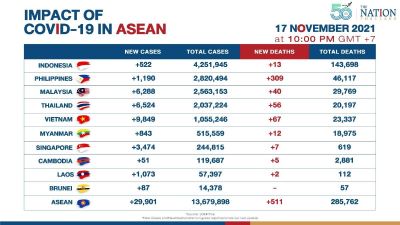
The number of Covid-19 cases crossed 13.67 million across Southeast Asia, with 29,901 new cases reported on Wednesday (November 17), higher than Tuesday’s tally at 27,014. New deaths are at 511, increasing from Tuesday’s number of 361. Total Covid-19 deaths in Asean are now at 285,762.

The Food and Drug Administration of the Philippines on Wednesday granted emergency use authorization for Covovax, the Covid-19 vaccine developed by U.S.-based biotechnology firm Novavax. The vaccine is administered in two doses with a three- to four-week interval. It was approved for use on adults 18 and above. Covovax has an efficacy rate of 89.7% and has reported very mild adverse events

Cambodia’s Phra Tabong and Udon Mechai provinces announced that returnees from Thailand are subject to 14 days quarantine. The authorities also established vaccination centres in these areas to give jabs to those who are willing to. Cambodia reported 51 new cases and 5 deaths on Wednesday, bringing cumulative cases in the country to 119,687 patients and total 2,881 deaths.

Published : November 18, 2021

By : THE NATION

Europe goes after the unvaccinated to fight winter virus surge #SootinClaimon.Com

#SootinClaimon.Com : ขอบคุณแหล่งข้อมูล : หนังสือพิมพ์ The Nation.

https://www.nationthailand.com/international/40008951


Its getting harder to be a vaccine holdout in Europe and continue with life as usual.

As governments battle another wave of the outbreak, new restrictions are being introduced, many aimed at the unvaccinated. That’s adding to the pressure on those who’ve resisted the shot so far.

Germany is proposing to limit access to the workplace to people who are inoculated, recovered or provide a negative test, and those who have refused shots are increasingly banned from cafes and hairdressers. The country, which has seen a surge in cases, has a vaccination rate below that of Italy, Spain and Portugal.

Ireland this week extended vaccine certs beyond restaurants and bars to include cinemas and theaters. And Austria set a new bar for tough measures with a lockdown on the unvaccinated, restricting their movements to work and shopping for essentials.

The moves mark a dramatic escalation in the campaign to increase vaccination rates, an effort that’s been given fresh impetus by the latest surge in Covid cases.

Alongside measures in Germany and elsewhere, some regional leaders in Italy want authorities to replicate the Austrian model. They’ve asked that if any new restrictions are introduced, they should apply only to the unvaccinated. Czech authorities are considering a similar clampdown.

Across the continent, governments have been slapping more and more restrictions on people who haven’t been inoculated in recent months, threatening fines and even suspending some health workers. The measures led to protests in a number of countries over the summer, some of which turned violent, as well as court battles.

In Austria, an anti-vax group won seats in a regional parliament in elections in September, a sign of how resistance is deeply embedded in some parts of society.

But for governments, toughening the rules is a necessary response amid repeated virus flare-ups.

Germany’s infection rate keeps setting record highs, with more than 50,000 new cases recorded on Thursday. In Croatia, where fewer than 50% of the population is fully vaccinated, deaths have soared recently.

“The fourth wave is hitting our country with full force,” German Chancellor Angela Merkel said Wednesday. “We urgently need to make progress on vaccinations.”

That’s creating a difficult situation for politicians, who are trying to get their countries through the pandemic without having to resort to another round of damaging widespread lockdowns.

And it’s not clear they’ll be able to avoid such drastic options. U.K. Prime Minister Boris Johnson this week warned that another lockdown can’t be ruled out this winter.

“History shows we cannot afford to be complacent,” Johnson said during a televised press conference.

That history lesson includes a warning shot over the summer, when the delta variant caused a spike in numbers in the U.K. and a number of European Union countries.

That surge ultimately proved relatively short lived, but countries may not be so lucky now as colder weather, along with more people spending time indoors, help the virus spread and take hold.

Waning antibody levels in some vaccinated people could also dramatically set back the virus battle. A number of countries are expanding their booster rollouts to sustain elevated levels of protection against Covid. Austria cut the validity of vaccine certs to nine months from 12 to encourage people to get a top-up shot.

Efforts to boost vaccinations have sometimes stumbled. Slovenia’s government faced protests after it tried in September to force unvaccinated public workers to work from home. The measure was ultimately halted by the country’s constitutional court.

Authorities have also been forced to revisit their Covid testing strategies. Germany reversed a decision to scrap free rapid tests and is bringing them back in hopes of getting control of the explosion of cases.

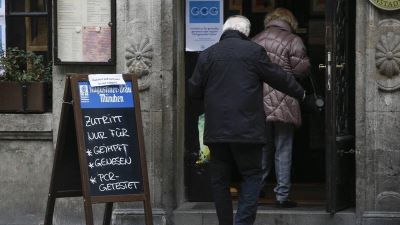
But a negative test won’t buy freedom for the unvaccinated like it did in the summer and early fall. Instead, many places are adopting a model where you have to show proof of vaccination or a recent bout of Covid along with a negative test. Where that’s not possible, big events are starting to get canceled.

That’s the case in Munich, where city officials on Tuesday said there will be no Christmas markets in the city center for the second year in a row. Smaller markets are still possible, for now, for the vaccinated, provided they bring a negative test result. But patrolling such a policy in the heart of Munich would be impossible.

“This is bitter news,” Mayor Dieter Reiter said. “But the dramatic situation in our hospitals and exponential rise in cases leave me no other choice.”

Published : November 18, 2021

By : Bloomberg

India to halt some coal-fired plants to clean Delhis air #SootinClaimon.Com

#SootinClaimon.Com : ขอบคุณแหล่งข้อมูล : หนังสือพิมพ์ The Nation.

https://www.nationthailand.com/international/40008950


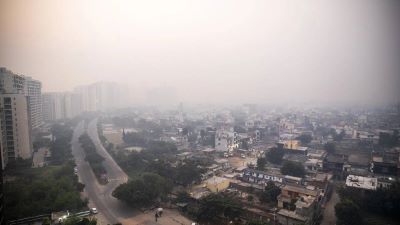
India has directed six coal-fired power plants located around Delhi to shut down until the end of this month as part of measures to clean some of the worlds dirtiest air, as a cloud of smog has enveloped the city and its suburbs for nearly two weeks.

The federal Environment Ministry late Tuesday also barred the entry of all trucks except those carrying essential items into the National Capital Region of Delhi and encouraged citizens to work from home to curb pollution. The decision came after officials from the Delhi government and the neighboring states of Uttar Pradesh, Punjab, Rajasthan and Haryana met to discuss ways to check the soaring pollution.

India’s Supreme Court on Monday called for urgent restrictions on vehicular movement and industrial activities in and around the capital. The city has ordered schools to only teach online until Nov. 20, halted construction activities and asked some government employees to work from home after the top court called the situation an “emergency” on Saturday.

About half the 13,210MW thermal power capacities in the capital region have been ordered shut to improve air quality. Thermal capacity of 6,300 MW capacity within a 300-kilometer (186 miles)-radius of Delhi that has been closed down includes two units of 2,400 MW in neighboring Haryana, two units of 2,180MW in Punjab and two of 2,320 MW in Uttar Pradesh.

India, which batted to prolong coal use at the COP26 in Glasgow last week, uses the dirtiest fossil fuel to fire almost 70% of its electricity needs.

The move is unlikely to have an impact on power supplies to the Indian capital and other states. Power companies are usually prepared for this annual exercise and tie up capacities in advance to deal with the situation. Any step that affects power supply would be counter-productive as it could lead to a jump in the use of diesel-fueled generators.

The Supreme Court Wednesday deferred its review of the new measures to Nov. 23 after the federal government’s top lawyer said the pollution levels are expected to drop because of the steps taken and due to favorable wind and weather conditions after Nov. 21.

During the hearing the court questioned the government on upgrading power plants and industries with non-polluting technologies. “Stricter regulations for thermal power plants are in place. The question is of implementation,” Solicitor General Tushar Mehta told the court. “There is a lack of exercise but not of will.”

The shutting down of power plants will help address emissions and cut pollution, said Jyoti Pande Lavakare, author of ‘Breathing Here is Injurious to Your Health’ and co-founder of civil society group Care for Air. But “We need a thought-through, ambitious plan, which is being led with leadership right from the top” to address the issue in the long term, she said.

A thick blanket of of toxic haze is an annual phenomenon in the northern city and its surroundings, especially as winter arrives and temperatures dip. Politicians and authorities have squabbled over a solution for years, with dialog picking up only when the pollution soars. However, as the pollution levels ebb the debate dies down and the issue has never caused any serious political fallout.

Speaking at the Bloomberg New Economy Forum in Singapore on Wednesday, Sunil Mittal, the billionaire chairman of Bharti Airtel Ltd. said he would fly back to Delhi later tonight, a city that is “covered in smog.”

“We can’t live like this,” Mittal said. “We talk about 5 million people dying of the pandemic; we don’t talk about how many people have been choked around the world.”

The air quality index, or AQI, for New Delhi was at 244 at 8:30 a.m. local time, according to website IQAir, which monitors air pollution around the world. Readings below 50 are considered safe, while anything above 300 is considered hazardous. PM2.5 concentration in the air was recorded 38.7 times above the WHO annual air quality guideline value, its said.

The toxic air quality across several Indian cities is driven by a combination of factors, including vehicular and factory emissions, road dust, construction activities and stubble burning by farmers.

Published : November 18, 2021

By : Bloomberg

Protesters disrupt the worlds largest coal port: This is us responding to the climate crisis #SootinClaimon.Com

#SootinClaimon.Com : ขอบคุณแหล่งข้อมูล : หนังสือพิมพ์ The Nation.

https://www.nationthailand.com/international/40008948


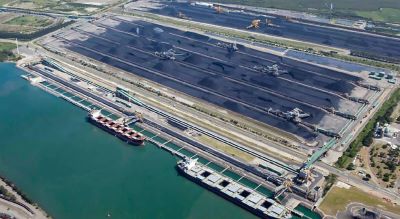
Two young women scaled a huge coal handling machine shortly before dawn on Wednesday, disrupting operations at the worlds largest coal port for several hours to protest what they say is Australias lack of action on climate change.

“My name is Hannah, and I am here abseiled off the world’s largest coal port,” 21-year-old Hannah Doole declared on a live-streamed video as she hovered high over massive piles of coal bound for export. “I’m here with my friend Zianna, and we’re stopping this coal terminal from loading all coal into ships and stopping all coal trains.”

Since officials met in Glasgow, Scotland, earlier this month to plot the planet’s path away from fossil fuels, Australia, the world’s second-biggest coal exporter, has showed little sign of changing course. Prime Minister Scott Morrison on Monday said the coal industry will be operating in the country for “decades to come.”

When he agreed last month to go carbon-neutral by 2050, the man who once brought a lump of coal into Parliament promised that his plan – which was short on details and long on speculative technology – would not crimp coal exports nor cost miners their jobs.

In the face of that apparent lack of urgency from government, protesters are increasingly taking matters into their own hands. A string of protests have disrupted the Port of Newcastle and surrounding railroads in the past two weeks, prompting police to establish a strike force to crack down on the high-profile stunts.

The protesters, from an activist group called Blockade Australia, plan to converge on Sydney, the commercial capital, in June next year, bringing the city to a halt.

“This is us responding to the climate crisis. This is humans trying to survive,” Doole said on Wednesday. “We are trying to induce the social tipping points, which will give us a chance at another generation,” she remarked on camera, pausing to laugh ironically, before adding: “What a wild thing to want.”

Despite the progress made at the COP26 climate summit, optimism about the agreement hangs on whether countries will actually deliver on the promises made in Glasgow. Coal production in China, the world’s largest consumer of coal, has surged to the highest levels in years as the country addresses power outages.

Matt Kean, the environment minister for New South Wales state, speaking on Sydney radio 2GB on Wednesday, said police need to “throw the book” at anti-coal activists, describing their dramatic stunts as “completely out of line.”

On Monday, another protester locked herself to a railway line leading to the port, preventing coal cars from entering. On Tuesday, two activists strapped themselves to another piece of coal-loading machinery. They hung in the air for several hours before being arrested.

Interfering with a railway or locomotive with the intention causing a derailment can result in prison sentences up to 14 years, police said, while other possible charges carry jail terms of up to 25 years. A local police minister described the protests as “nothing short of economic vandalism.” (A spokeswoman for the Port of Newcastle said other operations at the port were continuing, beyond the rail lines and coal-loading facilities.)

Doole and Zianna Faud, 28, were arrested and taken to a local police station about 9 a.m. local time. The live-streamed video showed authorities approaching on a metal gangway above the protesters, who were suspended on ropes below, with a police officer appearing to read them their rights.

According to a spokeswoman for the activist group, Faud appeared before Newcastle magistrates court on Wednesday, where she faced charges of hindering the working of mining equipment, which carries a maximum sentence of seven years imprisonment, and entering enclosed lands. She pleaded guilty and was given community service and a roughly $1,090 fine, and ordered not to associate with her co-accused, Doole, for two years.

Doole and three other activists were refused bail and will be seen by the court tomorrow.

“We are running rings around the police and the push back shows that direct action is effective,” Faud said in a statement following her release.

In the video, Doole said she considered the dangers before the protest – imagining herself running across piles of coal with police helicopters in pursuit. Then, she thought back to the time, a couple of summers ago, when thousands of Australians fled from their homes as wildfires raged and skies turned blood red. She and her family hunkered down in their property as towns around them burned.

“Getting chased by a police helicopter, that’s not fun. . . . But you know what scares me more?” she said. “I just think back to that New Year’s Eve, when I thought I was going to die in a fire, caused by climate change. And that’s the barest glimpse of what’s going to happen.”

Published : November 18, 2021

By : The Washington Post

U.S. and China to ease restrictions on journalists #SootinClaimon.Com

#SootinClaimon.Com : ขอบคุณแหล่งข้อมูล : หนังสือพิมพ์ The Nation.

https://www.nationthailand.com/international/40008947


China and the United States reached an agreement to loosen restrictions on journalists operating in each others countries, marking one of the first diplomatic breakthroughs between the Biden administration and Beijing as leaders from both countries met on Monday to keep tensions from spiraling into conflict.

Chinese Foreign Ministry spokesman Zhao Lijian said Wednesday that after several rounds of discussions, the two sides reached an agreement to lift visa limits on journalists, reversing policies that had severely curtailed travel and access for media professionals in both countries for more than a year.

Hours after President Biden and Chinese President Xi Jinping met in a virtual summit Monday, the official China Daily reported that the two governments had reached an agreement before the meeting. A spokesman for the U.S. Embassy in Beijing confirmed the report, adding that U.S. officials had been pressing for months on media access and visas for journalists working for U.S. media outlets in China.

In March 2020, Beijing expelled more than a dozen American journalists working for the Wall Street Journal, the New York Times and The Washington Post, a move China said was in retaliation for restrictions on Chinese nationals working for media outlets in the United States.

Since then, U.S. outlets operating in China have not been granted new visas for journalists. Their correspondents already based in the country were given short-term visas and were unable to leave the country without the risk of losing their accreditation.

Under the new agreement, U.S. journalists in China and Chinese journalists in the United States will be able to travel in and out of their country of assignment. According to the embassy spokesman, China committed to issuing visas for “a group of U.S. reporters,” provided they are eligible under Chinese law and regulations. The spokesman declined to say whether expelled journalists would be able to return but said the affected outlets would be granted new visas.

According to the agreement, the United States will begin issuing multiple-entry one-year visas to Chinese media professionals, up from 90-day visas that were given as part of tit-for-tat measures imposed by the Trump administration in an effort to pressure Beijing and Chinese state media operating in the United States. Zhao said China would give multiple-entry one-year visas to American journalists once the U.S. measures for Chinese journalists are in place.

“This hard-won achievement is in the interests of the media on both sides and is worth cherishing,” Zhao said.

“We welcome this progress but see it simply as initial steps,” the U.S. Embassy spokesman said, speaking on the condition of anonymity according to official policy. “We will continue to work toward expanding access and improving conditions for U.S. and other foreign media, and we will continue to advocate for media freedom as a reflection of our democratic values.”

Chinese authorities have for years sought to restrict the work of foreign media outlets operating in the country, from surveilling and detaining reporters to withholding visas as a way to punish those whose work was seen as too critical of the government.

The Trump administration, in an effort to push back, slashed the number of visas given to Chinese nationals working for Chinese state media in the United States. In response to the expulsion of American journalists in March last year, those visas were limited to 90 days.

Under Biden – who on Monday told Xi that “guardrails” are needed to ensure competition between the two countries does not turn into conflict – U.S. diplomats have begun to walk back some of those policies, engaging with China on trade and climate change. Reaching an agreement on journalist visas was seen as an easier task that could improve chances for other breakthroughs.

The State Department declined to say how many visas would be granted to U.S. journalists. Reporters in China said they continue to face restrictions on their work. Last year, Chinese authorities detained Australian citizen Cheng Lei, who worked for Chinese state media, and later detained Chinese national Haze Fan, working for Bloomberg News.

Last week, the family of Chinese citizen journalist Zhang Zhan – detained after filming the struggles of residents under lockdown in Wuhan at the beginning of the pandemic – said she would likely die soon as a result of a sustained hunger strike.

The agreement to allow more U.S. journalists into China comes two months before Beijing hosts the 2022 Winter Olympics. Earlier this month, the Foreign Correspondents Club of China said in a statement based on accounts from media outlets that reporters were being denied access to Olympic events, blocked from venues and berated for coverage that mentioned calls for boycotting the Games over China’s human rights record.

In response, Chinese Foreign Ministry spokesman Wang Wenbin described the statement as “not based on facts,” adding that China’s preparation for the Winter Olympics “follows the principle of openness.”

“We have always welcomed media outlets from across the world for reporting and coverage,” he said.

Published : November 18, 2021

By : The Washington Post

Uncle Sams story cycle — changing narrative of Indonesias wildlife efforts #SootinClaimon.Com

#SootinClaimon.Com : ขอบคุณแหล่งข้อมูล : หนังสือพิมพ์ The Nation.

https://www.nationthailand.com/international/40008930


Using shadow puppets made of cardboard waste, Uncle Sam tells the story of the many threats to Indonesias natural heritage, in particular the animals which may disappear forever without urgent help.

Samsudin, or “Uncle Sam”, is a man with a mission. Seven years ago, Sam left his job as a teacher to take to the road and become a full-time storyteller.

Since then, he has travelled all over Indonesia, encouraging children to be more aware of the world around them and to do what they can to protect the nation’s rich biodiversity.

Using shadow puppets made of cardboard waste, Uncle Sam tells the story of the many threats to Indonesia’s natural heritage, in particular the animals which may disappear forever without urgent help.

“The habitat for wild animals in Indonesia is threatened. Children need to know about it,” Samsudin told Xinhua on Monday.

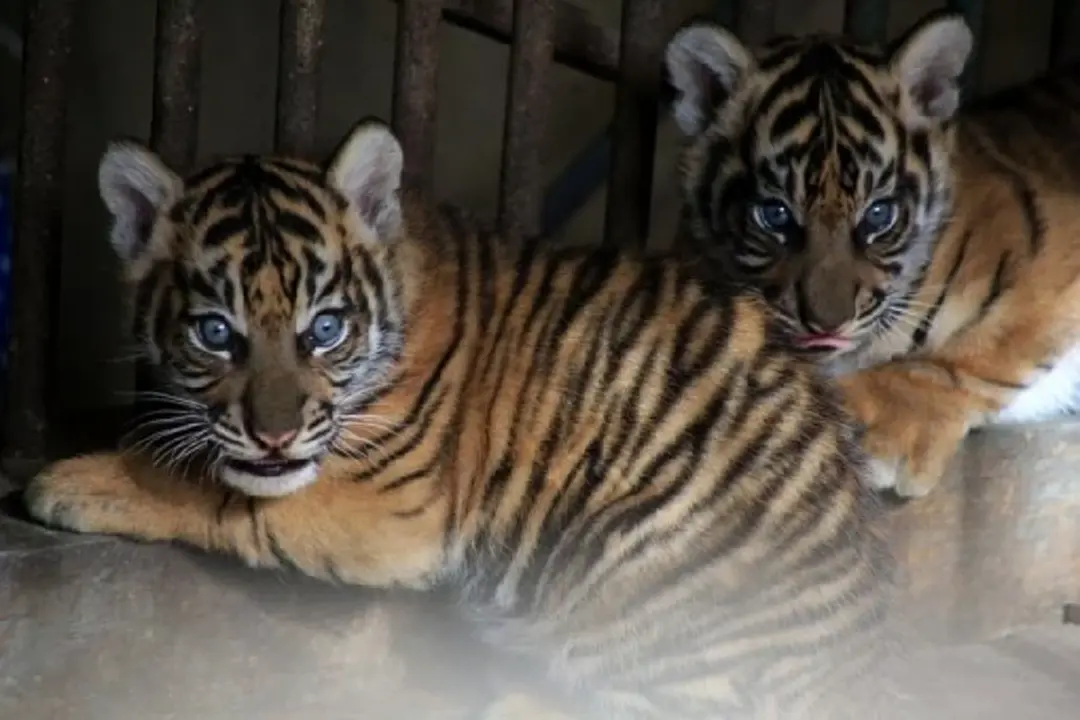
Two Sumatran tiger cubs, born on Dec. 12, 2019, are seen in the cage at Kinantan Wildlife Cultural Park in Bukittinggi district, West Sumatra, Indonesia, Jan. 30, 2020. (Photo by Andri Mardiansyah/Xinhua)Two Sumatran tiger cubs, born on Dec. 12, 2019, are seen in the cage at Kinantan Wildlife Cultural Park in Bukittinggi district, West Sumatra, Indonesia, Jan. 30, 2020. (Photo by Andri Mardiansyah/Xinhua)

To the children, the stories are funny, or wise, but the real lives of the animal protagonists are in real danger, as human activity drives them from their homes. His main character is a rhinoceros, critically endangered on the islands of Java and Sumatra. Sometimes he takes to the stage in a rhino costume. He also uses other animal characters such as Sumatran tigers, elephants, and orangutans to do the story-telling.

Uncle Sam is unique among storytellers in Indonesia, said Efi Fatary, who regularly invites him to visit a large housing estate in South Jakarta. “He uses simple words that children easily understand,” she said.

In 2016, Sam rode a bicycle from Java to Banda Aceh. His five-month odyssey left him in no doubt about the urgency of the situation. The archipelagic country has lost 300,000 square km of tree cover over the last 20 years, an area bigger than the U.S. state of Texas.

When an earthquake struck Lombok in West Nusa Tenggara province in 2018, Sam came to tell stories to children at evacuation camps. In the midst of the COVID-19 pandemic, he continued to tell stories via social media. Now Sam wants to share his message with the world.

“Children’s voices must be heard in global efforts to save forests and other habitats,” Uncle Sam said. 

Published : November 17, 2021

By : Xinhua