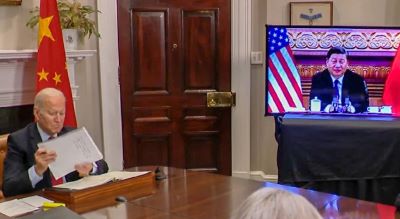
Political experts and scholars around the world view the virtual meeting between Chinese President Xi Jinping and his U.S. counterpart, Joe Biden, as a strong signal that would enhance positive expectations of the international community on bilateral ties.
The two heads of state had a virtual meeting on Tuesday. The two sides had thorough and in-depth communication and exchanges on issues of strategic, overarching and fundamental importance shaping the development of China-U.S. relations and on important issues of mutual interest.
Robert Lawrence Kuhn, chairman of the Kuhn Foundation, told Xinhua that the virtual meeting is an applauding step in navigating the bilateral relationship to the right direction.
Noting that the meeting was “exceedingly important” and “a small uptick in the right direction, he said the importance of the online meeting has been “significantly elevated” as the world is facing serious challenges that could hardly be tackled without the U.S.-China cooperation.
Kenneth Quinn, president emeritus of the World Food Prize Foundation and former U.S. ambassador to Cambodia, told Xinhua that close collaboration between the two sides is “absolutely essential” to enable humankind to meet the great challenges in the future, including food shortage, the negative impact from climate change, and public health risks.
Chinese President Xi Jinping meets with U.S. President Joe Biden via video link, in Beijing, capital of China, Nov. 16, 2021. (Xinhua/Ding Lin)
Calling the meeting “very encouraging,” Lyazid Benhami, vice-president of the Paris Association of French-Chinese Friendship, said that the two countries have obligation not only to their peoples but also to the rest of the world.
Cavince Adhere, an international relations scholar in Kenya, said that the world expects to see more stable and sustainable relations between the two countries. This raises prospects for a more stable international system which can facilitate global cooperation for the benefit of mankind.
“The rest of the world can make little progress in addressing the international challenges without full participation and cooperation of China and the United States,” he said, referring to such issues as the COVID-19 pandemic, and climate crisis.
Herman Tiu Laurel, founder of Philippine-BRICS Strategic Studies, said that China and the United States, two major powers on earth, shoulder the hope of the entire world for a safe, secure and healthy place attaining prosperity for all, which can only be achieved by the partnership of the two.
Faced with common challenges, the commitment and efforts towards durable and permanent peace, as well as stable international political and diplomatic environment is paramount for the major powers to promise and pursue, Laurel added.
World Health Organization (WHO) Director-General Tedros Adhanom Ghebreyesus has said that the “scandal” of global COVID-19 vaccine disparity must stop, according to a recent report by Voice of America (VOA).
The WHO chief noted in a press briefing on Friday that six times more COVID-19 boosters are administered a day than primary doses in low-income countries, VOA said in the report.
Tedros also said that countries with the highest vaccine coverage “continue to stockpile more vaccines,” while “low-income countries continue to wait” for the shots, according to the U.S. international broadcaster.
“This is a scandal that must stop now,” Tedros said.
COVAX, the vaccine-sharing scheme, could help alleviate the vaccine disparity, but it needs at least 550 million shots to achieve its goal of vaccinating 40 percent of every country’s population by the end of the year, Tedros said.
#SootinClaimon.Com : ขอบคุณแหล่งข้อมูล : หนังสือพิมพ์ The Nation.
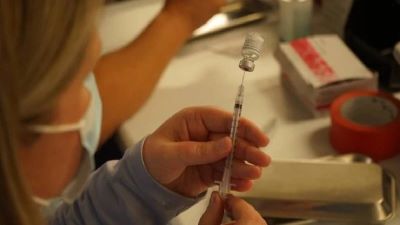
Pharmaceutical giant Pfizer requested emergency authorization Tuesday for its five-day antiviral pill regimen, Paxlovid, making it the second easy-to-take treatment aimed at keeping newly infected people out of the hospital to go before the Food and Drug Administration.
Pfizer’s submission came shortly after the company announced that the clinical trial testing the drug regimen had been halted early due to overwhelming evidence that it worked. When Paxlovid was given to people at high risk of severe illness within three days of symptom onset, it reduced the rate of death and hospitalization by 89% compared with people given a placebo.
Pfizer is requesting authorization for people who are at increased risk of hospitalization due to age or underlying medical conditions, and the submission will add to a busy holiday season for regulators. The clinical trial did not include people who fell sick after being vaccinated, but the FDA will decide on the final eligible population and usage of the drug.
Scientists at the Food and Drug Administration are already poring over the data on molnupiravir, an antiviral pill developed by Merck and its partner Ridgeback Biotherapeutics that cut risk of hospitalization and death in half in a clinical trial that was also stopped early because the drug was clearly effective. An external advisory committee to the agency is scheduled to meet Nov. 30 to discuss the safety and effectiveness of molnupiravir.
An agency spokeswoman did not immediately respond to questions about the possible timing of an advisory committee meeting focused on the Pfizer drug.
Pfizer is also testing its medicine in people who are at low risk of severe outcomes and in people who have been exposed to the virus, which could eventually lead to broader use.
Pfizer’s Paxlovid is a combination of a new molecule developed specifically to disable SARS-CoV-2 and ritonavir, an HIV medication that helps slow the breakdown of the coronavirus-specific drug. The company has begun manufacturing and packaging the drug in factories in Ireland, Germany and Italy and has projected having 180,000 pill packs available by the end of the year and 50 million in 2022.
The Washington Post reported that the Biden administration is set to announce this week that it has procured 10 million courses of treatment.
Pfizer has also licensed its drug to the United Nations-backed Medicines Patent Pool, which could increase access in poorer countries where half the world’s population lives. Lower-income countries would pay a not-for-profit price, according to Pfizer and the Medicines Patent Pool.
The Biden administration has also pre-purchased 3.1 million treatment courses of molnupiravir at a cost of $2.2 billion. Merck has forecast having 10 million treatment courses available by the end of the year and has also licensed its drug to the Medicines Patent Pool.
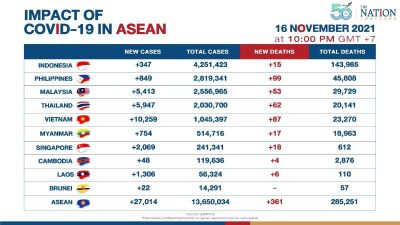
The number of Covid-19 cases crossed 13.65 million across Southeast Asia, with 27,014 new cases reported on Tuesday (November 16), higher than Monday’s tally at 25,571. New deaths are at 361, decreasing from Monday’s number of 365. Total Covid-19 deaths in Asean are now at 285,251.
Singapore set to expand the Vaccinated Travel Lane (VTL) programme to five more countries in the following weeks. From November 29, India and Indonesia will join the programme, while Qatar, Saudi Arabia and United Arab Emirates will join the programme from December 6 onward. Singapore reported 2,069 new patients and 18 deaths on Tuesday, bringing cumulative cases in the country to 241,341 patients and total 612 deaths.
Vietnam’s Hanoi Department of Health has agreed to reduce the waiting time between two AstraZeneca Covid-19 vaccine shots to four weeks from eight. The latest move aims to speed up the vaccination process in a safe and effective way, creating herd immunity as soon as possible, according to the Hanoi Center for Disease Control that proposed the shortening.
AstraZeneca is the first Covid-19 vaccine licensed and used in Vietnam. Currently, it is the main vaccine used for the Covid-19 vaccination campaign in Vietnam.
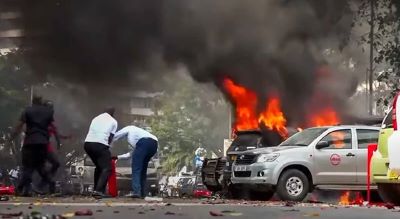
NAIROBI, Kenya – Twin blasts in the busy heart of the Ugandan capital, Kampala, on Tuesday killed at least three people and wounded another two dozen, a Health Ministry spokesman said.
The Islamic State claimed responsibility for the blasts and said that three of its operatives died in the attack.
Police spokesman Fred Enanga also said that the bombings were “suicide attacks” carried out by three assailants. One blast took place outside Kampala’s Central Police Station and the other near the parliamentary building.
Scenes broadcast on local news channels showed bloodied office workers fleeing from the sites of the explosions, which took place just after 10 a.m. Tuesday. Hours later, downtown Kampala’s streets were nearly emptied.
The apparent attacks were the latest in a string of bombings in Uganda attributed to regional terrorist groups. On Oct. 23, an explosion at a restaurant in a Kampala suburb killed one person and injured seven. Two days later, a suicide bomber detonated his explosives on a bus, killing only himself.
The Allied Democratic Forces, or ADF, an Islamist group that originated in Uganda but now mostly operates in remote areas of the neighboring Democratic Republic of Congo, claimed the restaurant attack. A concerted crackdown by Ugandan forces had suppressed ADF activity in the country in recent years.
The U.S. State Department considers the ADF to be a wing of the Islamic State, but details on coordination between the two groups remain murky.
The worst attack in recent memory in Uganda was a 2010 bombing of multiple bars by the Somali Islamist group al-Shabab. Revelers were watching the World Cup in the bars, and 74 people were killed. Uganda is a major supplier of troops to the African Union-sponsored military deployment in Somalia, which seeks to degrade al-Shabab.
China is accelerating plans to replace American and foreign technology, quietly empowering a secretive government-backed organization to vet and approve local suppliers in sensitive areas from cloud to semiconductors, people familiar with the matter said.
Formed in 2016 to advise the government, the Information Technology Application Innovation Working Committee has now been entrusted by Beijing to help set industry standards and train personnel to operate trusted software. The quasi-government body will devise and execute the “IT Application Innovation” plan, better known as Xinchuang in Chinese. It will choose from a basket of suppliers vetted under the plan to provide technology for sensitive sectors, from banking to data centers storing government data, a market that could be worth $125 billion by 2025.
So far, 1,800 Chinese suppliers of PCs, chips, networking and software have been invited to join the committee, the people said, asking not to be identified discussing private information. The organization has so far certified hundreds of local companies this year as committee members, the fastest pace in years, one of the people said.
The existence of the Xinchuang white-list, whose members and overarching goals haven’t been previously reported, is likely to inflame tensions just as Presidents Joe Biden and Xi Jinping wrapped up their first face-to-face virtual summit. It gives Beijing more leverage to replace foreign tech firms in sensitive sectors and quickens a push to help local champions achieve tech self-sufficiency and overcome sanctions first imposed by the Trump administration in fields like networking and chips.
“China is trying to develop homegrown technologies,” said Dan Wang, technology analyst at Gavekal Dragonomics. “This effort is more serious now that many more domestic firms now share that political goal, since no one can be sure that U.S. technologies can avoid U.S. export controls.”
The push to replace foreign suppliers is part of a broader effort by Beijing to exert control over its sprawling technology industry, including over data security. Already, the government has forced overseas cloud providers such as Amazon Web Services and Microsoft to set up joint ventures to operate on the mainland. Apple has also yielded its user data storage business to a government-backed operator in Guizhou. The grip is set to tighten, as the tech industry ministry gains more oversight of industrial and telecom data and proposes new rules that will require crucial data to be stored inside the country.
While few details have been revealed about the Xinchuang committee or its members, any companies that are more than 25% foreign-owned will be excluded from the panel, shutting out overseas suppliers including Intel Corp. and Microsoft. Chinese tech start-ups that are primarily funded by foreign investment will also face a higher bar, though Alibaba Group Holding and Tencent Holdings, the country’s two largest providers of cloud services, have managed to circumvent those rules by applying for membership through locally incorporated subsidiaries, the people said.
“U.S. choke-hold policies, exemplified by the Entity List, were the direct catalyst that pushed China to build the Xinchuang sector,” Shanghai-based research firm iResearch said in a report in July. “The blacklisting underlined the urgency for China to invest more in technology innovation and have the key technologies made in China.”
The Ministry of Industry and Information Technology and the China Electronics Standardization Association, which oversees the committee, didn’t respond to requests for comment. Alibaba representatives didn’t immediately respond to a written request seeking comment. A Tencent spokesperson declined to comment.
The committee had 1,160 members in July 2020, according to Netis, a cloud company that claimed it passed a complex review process. Other prominent companies include Beijing-based CPU maker Loongson, server maker Inspur and operating systems developer Standard Software. Westone, an information security company that could be tasked by Beijing with taking over Didi Global’s data management, is also a member.
Membership on the panel could give local suppliers a key advantage in having their technology approved under the Xinchuang plan, thus unlocking a billion-dollar market. Xinchuang-related business generated 162 billion yuan ($25 billion) in sales last year and is on track to reach nearly 800 billion yuan by 2025, according to a report co-authored by the China Software Industry Association.
“In every sector of the Xinchuang industry, there’s a significant imbalance between supply and demand,” it said. “Suppliers need to press the gas pedal to the floor in order to meet the demand.”
In September, the Xinhua-backed Economic Information Daily newspaper listed 40 top performers of the Xinchuang project, which included Huawei Technologies, Alibaba’s cloud unit and network security company Qi An Xin Technology Group. In an April list of 70 model cases in the Xinchuang industry, the Ministry of Industry and Information Technology praised Alibaba’s “100% self-developed” cloud platform for “providing a safe, trustworthy digital infrastructure for all levels of governments.”
Communist Party entities, the government and military will be the first to adopt Xinchuang products, followed by financial and state-owned companies, according to iResearch.
“Xinchuang can’t be built in one day, it’s a long-term strategy that helps China grow its own IT technologies,” the report said.
LONDON – British authorities are scrambling to understand the motives of the suspected bomber in a Liverpool taxi explosion who died in the blast, but that hasnt stopped them from quickly declaring the incident a terrorist attack.
On Sunday, a taxi exploded outside of Liverpool Women’s Hospital, and the following day, police designated it a terrorist incident even while acknowledging that “the motivation for this incident is yet to be understood.” Police have not pointed to a target for the attack or confirmed details reported in local media about the suspect’s background – but said it was declared a terrorist incident “given all the circumstances.”
British police have broad discretion in what they label a “terrorist incident,” as long as it’s consistent with the definition of terrorism in the Terrorism Act 2000, which includes the use or threat of serious violence “for the purpose of advancing a political, religious, racial or ideological cause.”
“The British state is fairly secretive,” said Tim Wilson, director of the Handa Center for the Study of Terrorism and Political Violence at the University of St. Andrews in Scotland. “In these kind of investigations, you get glimpses of how things work,” but it’s not as transparent as in the United States and some other European countries, he said.
Analysts said that in this case, the decision to label it as terrorism may be related to the use of an improvised explosive device in the attack, as well as other reasons not declared publicly.
According to guidance on the Crown Prosecution Service website, when explosives are used or threatened to be used, “it is not necessary to prove that the action is designed to influence the government or to intimidate the public or a section of the public, as is the case with other terrorist offences.”
“A bomb will always excite the attention of the terrorism police; there aren’t many people throwing around bombs except for terrorists in this country,” said Clive Walker, a professor emeritus of law at the University of Leeds. He noted that once an investigation is deemed a terrorist investigation, the local police force will have access to national resources, including intelligence services, specialist forensic officers and translation help. And it would still be possible for the police to “remove the terrorism interest” at a later stage, he added.
“There’s no clear bright line between terrorism and non-terrorism designations,” Walker said. “It’s based on judgment and the evidence before you. I don’t know for sure, but the common pattern is for police to go to his house, find his computer, arrest his friends,” who are sometimes then released.
Walker said only about 25% of those arrested under the Terrorism Act are ever charged. “It’s part of the investigative ploy to arrest a lot of people, find out what they know,” he said.
Analysts said that there will likely be much more that the police aren’t telling the public.
“Our investigators play things quite close to their chest, and they will tell you it’s a terrorist investigation – and they won’t tell you what they know about that,” said Nick Aldworth, Britain’s former counterterrorism national coordinator. “It’s quite common because there could be outstanding suspects or other leads you don’t want to lose,” he said.
Here’s what is known: Police named the passenger who was found dead as 32-year-old Emad al-Swealmeen. They indicated he was a suspect in a bombing that involved an “improvised explosive device” and suggested that he built the device that exploded when he was inside the taxicab.
Police arrested four of al-Swealmeen’s “associates” but released them shortly afterward without charge. They also searched al-Swealmeen’s residence, where they found what they called “significant items,” but did not provide further details.
The Greater Manchester Police said Tuesday that they had no further comment and did not respond to questions about how they had come to designate it a “terrorist incident.”
British authorities have gotten it wrong before. Shortly after the Sept. 11, 2001, terrorist attacks in the United States, British police arrested Lotfi Raissi, a pilot who spent five months in custody after police falsely accused him of training hijackers responsible for the attacks in New York and Washington. Years later, the British government said he was eligible for up to 2 million pounds ($2.7 million) in compensation.
For now, much of the alleged details about the suspect have trickled out in the British press.
A Christian couple who live in Liverpool told British media Tuesday that al-Swealmeen had lived with them in 2017. They said he had converted to Christianity around that time and had spent a few months at a mental health institution in the past.
The couple said they were in shock at the news of the attack.
“We were living cheek by jowl. There was never any suggestion of anything amiss,” Malcolm Hitchcott told ITV News, describing the man as a “very quiet fellow” who impressed with the “depth of his prayers” and knowledge of the Bible.
His wife, Elizabeth Hitchcott, said she was thankful he had not killed anybody else. “We just loved him,” she told the BBC. “He was a lovely guy.”
Malcolm Hitchcott was quoted as saying that al-Swealmeen was baptized at Liverpool Cathedral.
Liverpool Cathedral is near the hospital where the blast took place, and, at the exact time of Sunday’s attack, it was holding a Remembrance ceremony, an annual gathering where people gather to pay tribute to Britain’s war dead.
In a statement, leaders at the cathedral said they were shocked “at the news that the bomber on Sunday, was connected to our community.”
“Clearly we cannot speculate on the motivations of this individual. However we are clear that the actions of an individual do not reflect a whole community and we remain united with all in the city and country who work for peace,” they added.
The reason the device was detonated outside the women’s hospital remains unknown, police said, although they noted that the Remembrance ceremonies happening nearby were a “line of inquiry.”
It may also be possible that the hospital was the target. “The location is potentially the most disturbing aspect,” said Wilson, the academic. “What was the ultimate target? When I watch the video it looks like he took a taxi to a maternity hospital. There are horrific precedents of ISIS attacking maternity hospitals in Kabul,” he said, using an acronym to refer to the Islamic State terrorist group.
On Monday, Russ Jackson, head of the counterterrorism police in northwestern England, said that it would likely take some time, “perhaps many weeks,” until investigators are “confident on our understanding of what has taken place.”
U.S. pharmaceutical giant Pfizer has agreed to a license-sharing deal that would allow its experimental covid-19 drug to be manufactured more widely around the globe.
It’s an agreement that the company says could give more than half of the world’s population access to the treatment, even as Pfizer rebuffs calls to grant poorer countries access to its coronavirus vaccine formula.
The company said earlier this month that the drug, a pill regimen called Paxlovid, reduced the risk of covid hospitalization or death by 89% when administered within three days of the onset of symptoms. It has not yet received regulatory approval in the United States, but Pfizer said that it plans to seek authorization from the Food and Drug Administration as soon as possible.
“This license is so important because, if authorized or approved, this oral drug is particularly well-suited for low- and middle-income countries and could play a critical role in saving lives, contributing to global efforts to fight the current pandemic,” said Charles Gore, executive director of Medicines Patent Pool, the non-profit group that reached the agreement with Pfizer.
MPP is backed by the United Nations and has a mandate to facilitate global access to life-saving medicines. Pfizer is the second drug manufacturer to reach an agreement with the group, which can grant sub-licenses to other manufacturers to produce generic versions of the pill.
U.S. pharmaceutical giant Merck announced last month that it had agreed to share the license for its own covid-19 antiviral pill, molnupiravir, that it developed with Ridgeback Biotherapeutics.
The fact that a second covid-19 drug could see wider use with an MPP agreement is “very good news,” Ellen ‘t Hoen, director of the research group Medicines Law & Policy, said of the Pfizer agreement.
“This is setting the precedent that if you have a covid-19 countermeasure, you license for wider use,” said ‘t Hoen, who is also a member of an MPP expert advisory group.
Pfizer and MPP said in a joint statement that the deal would allow manufacturers to supply countries comprising some 53% of the world’s population – and that the company would offer tiered pricing based on a country’s ability to pay. Lower-income countries would pay a not-for-profit price.
Pfizer will also forgo royalties in low-income countries and waive them in others, so long as covid-19 remains an international public health emergency, the statement said.
“Oral antiviral treatments can play a vital role in reducing the severity of COVID-19 infections, decreasing the strain on our healthcare systems and saving lives,” said Albert Bourla, Pfizer’s chairman and chief executive officer.
“We must work to ensure that all people – regardless of where they live or their circumstances – have access to these breakthroughs, and we are pleased to be able to work with MPP to further our commitment to equity,” he said in a statement.
But while the covid-19 pills appear to mark a significant step toward managing the pandemic, experts say that the anti-virals are not a magic bullet – and that vaccine producers like Pfizer should license their intellectual property and know-how to the patent pool.
“After all, prevention is better than cure,” said ‘t Hoen.
In some countries where access to testing is limited, experts say that it could be difficult to diagnose patients in time to administer the pill regimen effectively.
Bourla, however, has been a vocal critic of those urging Pfizer to share its vaccine formula, which the company developed with the German firm BioNTech. He called the idea “nonsense” and “dangerous” at a forum last year.
Pfizer spokesman Kit Longley defended the company’s approach in a statement this week and raised concerns about the ability of organizations “without a proven track record” to manufacture high-quality vaccines.
“While we pursue our current strategy, we will continue to evaluate whether and where other options may be appropriate,” he said.
Paxlovid and molnupiravir are not designed to prevent infection but, as pill-based drugs, they are easier to store and administer than vaccines. They also do not rely on the complicated messenger RNA technology that powers the Pfizer shot.
Both drugs have been studied for use specifically in high-risk individuals. And Britain recently authorized molnupiravir only for patients who are 60 or older or have at least one underlying condition that puts them at risk of developing severe illness.
Molnupiravir works by garbling the virus’s genome while Paxlovid uses an experimental molecule to block an enzyme that the coronavirus needs to make copies of itself. The Pfizer molecule must be given in combination with ritonavir, an antiviral drug used to treat HIV that helps slow the molecule’s breakdown.
Having a combination of pills available could help prevent the coronavirus from developing a resistance to treatment, said Katherine Seley-Radtke, a chemistry professor at the University of Maryland, Baltimore County.
“If you can stop the replication at several steps or with multiple drugs, you exponentially decrease your chance of the virus developing resistance,” she said.
Pfizer says that it has already started manufacturing Paxlovid and that if the FDA authorizes the pill, it could be available right away – but in limited quantities.
WASHINGTON – President Joe Biden and Chinese President Xi Jinping met Monday in a virtual summit that featured no breakthroughs but enabled the two global superpowers to engage on a slew of sensitive issues that have strained ties – including Taiwan, trade and human rights.
In a three-and-a-half-hour conversation that the White House characterized as “respectful, straightforward and open,” the two sides did not make pledges or depart from established positions. But the engagement was an acknowledgment that conflict, whether over trade or the South China Sea, can have grave repercussions around the world.
Biden raised concerns about China’s suppression of minorities in Xinjiang province, about unfair trade and economic practices and its recent aggression against Taiwan.
Xi, according to China’s central broadcaster, offered assurances that China, which has pledged to unify Taiwan with China by force if necessary, would do its “utmost” to achieve peaceful “reunification.”
The two leaders also discussed the existential nature of the climate crisis and the important roles played by their respective countries, the world’s top two emitters of greenhouse gases. They also talked about how they would continue this engagement in the future.
“As I said before, it seems to be our responsibility – as leaders of China and the United States – to ensure that the competition between our countries does not veer into conflict, whether intended or unintended,” Biden told Xi in brief remarks in front of reporters at the White Hose before the summit began. “Just simple, straightforward competition. It seems to me we need to establish a common-sense guardrail, to be clear and honest where we disagree and work together where our interests intersect, especially on vital global issues like climate change.”
Xi said ideological divides and blocs would bring “inevitable calamity” to the world. “The consequences of the cold war are not far away,” he said, adding that China was willing to hold dialogues on human rights issues “on the basis of mutual respect,” but said Beijing would not support interference in its internal affairs, according to Xinhua, China’s official news agency.
Xi also warned that China would take “decisive measures” against any moves to support Taiwan’s independence from China whose ruling Chinese Communist Party has never governed Taiwan. “Such moves are extremely dangerous, just like playing with fire. Whoever plays with fire will get burned,” he said.
The discussion on Taiwan – perhaps the most fraught issue between the two countries – was “extended,” and Biden “clearly reaffirmed” the one-China policy acknowledging Beijing’s position that it is the sole legal government of China and related policy precepts, said a senior administration official, speaking on condition of anonymity to describe the private summit.
At the same time, Biden was clear about “maintaining peace and stability in the Taiwan Strait.” The White House, in a statement, said the United States “strongly opposes unilateral efforts to change the status quo.” China has ramped up threats against Taiwan, flying sorties near the island and holding military exercises simulating attacks on the island that it views as a breakaway province. On Monday, hours before the meeting, Taiwan’s Ministry of Defense said China had sent six aircraft into its air defense zone. Taiwan sees itself as a sovereign state.
Though the talks were long and wide-ranging, at least two potentially thorny topics did not arise, said a senior administration official, speaking on condition of anonymity to describe the private summit. One was the 2022 Winter Olympics in Beijing, which is the subject of calls for diplomatic boycotts to protest China’s alleged human rights abuses. Another was the issue of China not granting visas for U.S. journalists, after expelling more than a dozen American reporters last year in what Beijing said was retaliation for Washington imposing restrictions on its journalists.
Trade was raised, and Biden emphasized the need for China to uphold its commitments to buy additional goods from the United States, but it was not a “dominant part” of the conversation, the official said.
Overall, the White House sought to frame the relationship as one of “steady state” competition in which the lines of communication remain open, while the United States works with allies and partners to, as the official said, “to confront China where we need to” and work together “our interests . . . intersect.”
In an earlier briefing for reporters, the official said “unlike previous approaches to policy with respect to China, the Biden administration is not trying to change China through bilateral engagement… Rather we are trying to shape the international environment in a way that is favorable to us and our allies and partners.”
Biden and Xi also discussed covid and broader health security issues, including the importance of bringing an end to the pandemic, and the role of vaccines, the official said. They also exchanged views on the upcoming discussions around Iran’s potential return to nuclear talks.
White House press secretary Jen Psaki told reporters Monday that Biden was going into the meeting “from a position of strength,” especially compared with shortly after he took office.
She touted Biden’s sweeping $1.2 trillion infrastructure measure – a campaign promise that he signed into law Monday on the White House South Lawn – noting that it marks the first time in 20 years that the United States “will be investing more in infrastructure than China, and that is going to strengthen our competition at home, in addition to putting millions of people to work.”
She also pointed to Biden’s recent trip abroad – to the Group of 20 summit in Rome and the U.N. climate summit in Glasgow, Scotland – as an example of the president’s strategy for handling China through building the United States’ global alliances, especially with European partners.
“We have made enormous strides in building those relationships, including on the president’s trip just two weeks ago, where he had a range of conversations,” Psaki said.
Other top administration officials held multiple conversations with their Chinese counterparts to prepare for the summit. On Saturday, for instance, Secretary of State Antony Blinken pressed Wang Yi, the Chinese foreign minister, on rising tensions over Taiwan, expressing in a call concerns about Beijing’s “continued military, diplomatic and economic pressure” against the self-governing island.
Yet the United States and China have found common cause on climate, with the two countries pledging last week at the U.N. climate summit in Glasgow to work together on slowing global warming.
The Chinese president recently tightened his grip on power in Beijing with a new resolution that bolsters his position, allowing him to stay in his role until at least 2027 – a development that U.S. officials said made the direct discussion between Biden and Xi on Monday all the more critical.
The meeting began Monday almost exactly on schedule, at 7:46 p.m. Eastern time and ended at 11:24 p.m. The two communicated via interpreters.
Among the Chinese officials calling in from the Great Hall of the People in Beijing were Wang, economics czar and trade negotiator Liu He, and senior diplomat Yang Jiechi, as well as Vice Foreign Minister Xie Feng and Ding Xuexiang, director of the general office of the Central Committee of the Chinese Communist Party, a top political body, who is considered part of Xi’s inner circle. Biden administration attendees included Blinken, Treasury Secretary Janet Yellen and national security adviser Jake Sullivan.
Monday’s virtual meeting marked the third direct conversation since Biden took office in January; the last two discussions were over the phone, most recently on Sept. 9. Xi has not left China since the start of the coronavirus pandemic.
The relationship between the two men stretches back nearly a decade, to when Biden was vice president under President Barack Obama. Psaki stressed that the leaders’ rapport allows Biden “a level of candor, to be direct, not to hold back.”
Still, Psaki made clear that the relationship has its limits. In 2013, during a trip that Biden took to Asia, Xi welcomed the U.S. vice president as “my old friend” – a descriptor Biden rejected when asked about it in June, noting pointedly: “Let’s get something straight. We know each other well; we’re not old friends. It’s just pure business.”
Asked Monday about Biden’s June assessment, Psaki said she could confirm that the president “still does not consider him an old friend, so that remains consistent.”
Yet as the summit began, Xi seemed determined to reiterate his camaraderie with Biden – reviving what, depending on one’s perspective, is either a term of endearment or an unwelcome moniker.
“Good to see you, Mr. President and your colleagues,” Xi said, through an interpreter. “It’s the first time for us to meet virtually. Although it’s not as good as a face-to-face meeting, I’m very happy to see my old friend.”
Peskov said it was fundamentally wrong to blame Belarusian President Alexander Lukashenko for the problem.
Russia is ready to assist in resolving the migrant crisis on the Poland-Belarus border, Kremlin Spokesman Dmitry Peskov said on Monday.
Russia will fulfill the role of a “mediator” in the negotiations, Peskov told a daily briefing.
He refuted U.S. claims about Russia’s involvement in the escalating tensions and use of the situation to divert attention from the situation in Ukraine.
Peskov also said it was fundamentally wrong to blame Belarusian President Alexander Lukashenko for the problem.
He criticized the West for ignoring the humanitarian side of the issue, turning a blind eye to thousands of the refugees who are now trying to survive in the cold weather.
Since earlier this month, thousands of refugees from the Middle East and other regions have arrived at the Belarusian side of the border in an attempt to enter Poland and then Germany to seek asylum.
Poland has put troops on high alert along the border.
Similar tensions also appear on the Belarus-Latvia and Belarus-Lithuania borders.
It is the Western countries themselves who caused the crisis, because they fought many years in Iraq and Afghanistan and meanwhile high social benefits are attracting migrants, Russian President Vladimir Putin said last week.

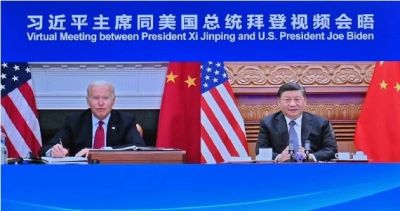
 Chinese President Xi Jinping meets with U.S. President Joe Biden via video link, in Beijing, capital of China, Nov. 16, 2021. (Xinhua/Ding Lin)