LONDON – A group of LGBTQ Afghans who fled their home country have arrived in Britain, the first in a wave that London has said it will evacuate, as advocates warn they have received calls from hundreds more people who fear being persecuted for their sexual orientation and gender identity after the Taliban takeover.
The 29 people, including students and activists who spoke out about their rights in Afghanistan, are the first of many more vulnerable LGBTQ Afghans that will arrive “in the coming months,” the Foreign Office said Saturday. It did not detail how they managed to leave.
The refugees landed Friday, just as a Taliban ministry official, appealing for the release of billions of dollars of central bank reserves, emphasized again that the Islamist militants did not recognize gay rights.
A spokesman for the finance ministry told Reuters that the Taliban would respect human rights and allow women to go to school within their harsh version of Islamic law, but added: “LGBT . . . That’s against our Sharia law.”
Afghanistan’s new leaders, who seized control in August, want foreign governments to “just give us our money” as the country grapples with a battered economy and rising hunger, he said.
While some aid has trickled in, the United Nations warns the country is on the verge of a starvation crisis. Experts also say untangling terrorism sanctions on the militant group which limit aid, many enshrined in U.N. resolutions, will be tricky.
The United States and European nations have frozen key sources of funding, wary of Taliban promises that it has changed. During its last reign in power, from 1996 to 2001, those who broke the rules, not least women and gay men, faced execution.
In a massive military evacuation – marked by violence and harrowing images – U.S. troops, British forces and their allies airlifted more than 100,000 people, though they acknowledged that many other vulnerable Afghans did not make it out.
Afghans worried about reprisal for working with Western forces or for their human-rights work scrambled to escape as the evacuation ended with the withdrawal of U.S. forces after 20 years of war. Those left behind include people who identify as LGBT and said they went into hiding, fearing they could be killed in a country where some had already felt unwelcome.
Friday’s new evacuees join 1,300 British and Afghan nationals whom the British government said it helped leave since the evacuation ended in late August.
Rainbow Railroad, a Canadian LGBTQ charity that helped organize the escape along with British rights group Stonewall, said it had fielded more than 700 requests for help and identified at least 200 people who need immediate rescue from Afghanistan. It also called on the Canadian and U.S. governments to step in to help airlift more people out.
“These 29 people faced grave and immediate threats to their lives because they are LGBTQI+ . . . They will begin to resettle and rebuild their lives in the country,” it said. “However, it is only the beginning.”
MOSCOW – A routine medical checkup in mid-September nearly cost Alexander Ivanov his life. The clinic was packed with people, almost no one wearing masks.
“Or distancing,” he said – a common sight in Russian public spaces and on transport. “I even told some of the people that they should be wearing masks, but people didn’t care.”
Three days later he fell ill with the coronavirus and wound up in intensive care in Yekaterinburg, in Russia’s Urals region. The 47-year-old resident – who was not vaccinated – watched other patients dying, thinking he was next.
Russia’s catastrophic “fourth wave” is a cautionary tale for a failing vaccination campaign, showing the difficulties in correcting course after the government’s confused, on-off messaging about covid-19.
Russia’s pandemic measures began with a strict lockdown in early 2020 and dropped before a crucial July 2020 vote on constitutional changes. This summer, Moscow brought in QR codes to prove vaccine status to enter bars, restaurants and cafes, but the unpopular measure was abandoned after a few weeks.
Some analysts say Russians’ distrust of authorities and skepticism of doctors – going back to Soviet times – helps explain the country’s vaccine reticence. Others blame anti-vaccine activists and rampant disinformation on social media.
But the result leaves Russia as a pandemic hot spot, while countries with higher vaccination rates are lifting restrictions.
Almost daily, a grim record of Russian deaths is marked: more than 1,100 a day, according to official figures. That is still understated, many independent analysts say. Hospitals are struggling and small business owners are angered by the reimposition of restrictions, including a partial lockdown from Thursday.
As authorities played down the crisis before September parliamentary elections, Russia’s vaccination rate hovered among the lowest globally. In recent weeks, officials have ramped up warnings about the coronavirus and the need for vaccines.
Russia’s Ministry of Health says it has fully vaccinated 8 million Russians since Oct. 14, bringing the current total to 50.9 million, or about 35 percent of the population. That compares to 74% in Canada, 72% in Japan, 68% in France, 67% in Britain, 66% in Germany and 57% in the United States, according to the Britain-based Global Change Data Lab.
Ivanov is not against the vaccine, but his attitude illustrates how the government failed to convince even those not opposed to vaccines. A retired policeman who spends a lot of time with his dogs and chickens at his small farm outside Yekaterinburg, he didn’t think the jab was necessary.
“I was planning to do it, but I just thought tomorrow. And tomorrow, tomorrow, tomorrow. I just didn’t get around to it,” said Ivanov. “I didn’t take this virus seriously at all. I thought it was like the flu, not dangerous at all. I was not afraid.”
In intensive care for several weeks, his only contact with the outside world was a doctor who reported his condition to his family and read them notes he wrote.
“So I wrote, ‘Don’t worry, I’m OK.’ But of course I was thinking I could die, especially when I saw people around me dying,” Ivanov said.
Vlad Nesterov – father-in-law of Ivanov’s daughter – had similar views about getting the virus. He also fell sick in late September, along with his family and almost everyone in the office where he worked.
Nesterov, a journalist, thinks he picked it up at an office birthday party. There was plenty of vodka and toasts and many guests later came down with covid-19.
“I’m not against the vaccine. It’s just that I thought that Jesus Christ would help me, and whatever should happen would happen,” said Nesterov. He spent four weeks battling the coronavirus at home, ill and constantly exhausted.
St. Petersburg doctor Lev Averbakh feels as is if he is wading against a tide of ignorance, apathy and disinformation. “I am so sick and tired of explaining to people what this virus is about and why they need to be vaccinated. This resistance from the population is huge,” he said in an interview.
Another doctor, Sergei, working in the “red zone” – or the coronavirus treatment unit – at a regional hospital, no longer feels much compassion for unvaccinated patients. He just thinks about the generous red zone bonus payments that means he earns double his normal pay.
“But we covid doctors are very cynical now, because of these covid payments. For us, covid is good, as awful as that might sound,” said the doctor, who spoke on the condition of anonymity because of fear of reprisals. “For us, the worse the covid situation is the better,” he saidreferring to doctors’ bonuses.
Afew months ago, he asked every one of 120 coronavirus patients under his direct care if they had been vaccinated. All said no, citing vague reasons such as “side effects or genetic problems,” he said.
His 200-bed hospital was ordered to add 70 extra beds when the disease peaked.
“And there was no space to put beds. We had to stick beds in the corridors, in the operating theaters, anywhere we could find a space,” said the doctor. Patients without coronavirus-related illnesses were sent home prematurely, he said, only to return soon after, sicker than ever.
With cases hitting record highs, hospitals across Russia are under similar intense pressures.
One person in Siberia took drastic action: he bought PPE gear, disguised himself as a nurse and snuck into the “red zone” at Tomsk Medical Sanitary Unit No. 2 to check on his 80-year-old grandmother.
Identifying himself only as Sergei, he videoed himself pulling on a white protective suit, surgical gloves, blue goggles and a mask, and walking up the hospital’s interior stairs.
“Grandma, hi. Quiet, quiet,” he said, approaching her bed, recording multiple black bruises on her arms and discovering that her diaper had not been changed and pressure sores had not been bandaged. The video was aired Wednesday on Tomsk independent television TV2.
He spent nearly nine and a half hours in the hospital the first day and returned a day later to find her unwashed, lying again in a dirty diaper, he said. On day three, a doctor confronted him and he fled.
Antonina Stoilova, head of therapeutics at the hospital, said all patients are properly cared for, TV2 reported.
Russian authorities have ordered a partial lockdown to regain control, including a nonworking week until Nov. 8. But instead of staying home, many people are jetting off on vacation to Egypt, Turkey or Russia’s Black Sea coast, according to travel agents cited in Russia media.
One Russian posted a TikTok video on Oct. 26 from Cide on Turkey’s Black Sea coast, panning across crowds frolicking in the sea. “The beaches are packed. The sea is warm. The temperature is 30 degrees (86 degrees Fahrenheit). People are delighted, resting. Only in Russia is there a lockdown,” she said.
Kremlin propagandist Margarita Simonyan, editor in chief of state-run RT, said on Telegram she had a change of heart about anti-vaccine claims because children were dying “en masse.”
“At first, the anti-vaxers evoked my understandable sympathy. People are afraid, people are not explained, people are confused,” she wrote Oct. 20. But now she calls them a threat to children’s lives.
“Choke on ventilators, crawl with an [oxygen] saturation of 70 in the corridors of jam-packed hospitals,” she wrote. “That’s your choice. But I cannot forgive you the deaths of my country’s children.”
But Tatiana Stanovaya, an analyst at Moscow-based think tank R. Politik, said President Vladimir Putin’s uneven messaging and resistance to mandatory vaccinations were more to blame.
“If any other country had the same information policy as Russia,” she said, “everything would be the same.”
NAIROBI, Kenya – Amid a near-total communications blackout, tens of thousands of protesters across Sudan took a well-coordinated protest movement back onto city streets Saturday after a military coup earlier this week.
The coup was the second in three years, and led by the same generals who ousted longtime dictator Omar Hassan al-Bashir in April 2019. A power-sharing arrangement with civilian leaders crumbled Monday as Lt. Gen. Abdel Fattah al-Burhan dissolved the joint government, detained prime minister Abdalla Hamdok, suspended the constitution and gave himself control.
Saturday’s mass protests – which were mirrored by rallies in global cities with large Sudanese populations – were part of a sustained effort by Sudanese professional organizations, political parties and ordinary citizens to force Sudan’s military into ceding the reins of government to civilians in the lead-up to democratic elections two years from now.
Despite a disruption of Internet service, organizations leading the protests posted videos of mass marches in different parts of the capital, Khartoum. Protesters reprised chants from 2019 and added slogans such as, “We are revolutionaries, we are free, and we will go the distance.”
In protests earlier this week, doctors’ associations said at least 11 people had been killed and more than 100 injured. On Saturday, one of the associations said two protesters had died from gunshot injuries sustained earlier in the day.
Sudan’s international partners including the United States, a major donor and creditor in the years since Bashir fell, had warned the military on Friday that further bloodshed would be “unacceptable.” No public investigation into the killings has been announced.
The United States, European nations and the World Bank all suspended aid to Sudan this week, and they worked behind the scenes to get Arab allies such as Egypt, Saudi Arabia and the United Emirates to pressure their partners in Sudan’s military to exercise restraint during the protests Saturday, multiple diplomats familiar with the negotiations said. The African Union suspended Sudan’s membership.
The protests are a bellwether for the military’s resolve to push forward with a coup that has provoked stronger international pushback than expected, the diplomats said, echoing analysts within and outside the country.
Civilian ministers and ambassadors have remained defiant, refusing to cooperate with the military, and dozens of officials – not to mention their supporters in the streets – were detained throughout the week. Hamdok was released, but Burhan said others will be freed only if they have been determined to have not committed crimes. Strikes have paralyzed the country and halted daily business.
“They’re failing coup d’etat 101,” said a former senior Western diplomat with years of experience in Sudan, who spoke on the condition of anonymity in accordance with diplomatic protocol. “Civilian leaders are emerging as heroes for resisting, and even close allies in Riyadh, Cairo and Abu Dhabi are questioning whether the coup was reckless.”
The American special envoy to the region, Jeffrey Feltman, had been in Khartoum in the hours before the coup, warning military leaders that hundreds of millions of dollars in assistance would be withdrawn if they took power. Burhan went ahead with the coup as soon as Feltman departed.
The aid suspensions have not forced Burhan’s hand so far, and Feltman released a statement Friday echoing an earlier one from President Joe Biden saying that “the Sudanese people must be allowed to protest peacefully this weekend, and the United States will be watching closely.”
A senior State Department official, also speaking on the condition of anonymity, said that although Hamdok had been released, he was still under what amounted to “house arrest” and that there was broad consensus among Washington and Sudan’s Arab allies that detained civilian leaders should be released.
Hamdok and Burhan had worked together with Washington to have Sudan removed from the United States’ list of state sponsors of terrorism, paving the way for Sudan’s reintegration into the global economy. The transitional civilian-military government also had passed a number of liberalizing reforms affecting public life after decades of Islamic law under Bashir.
In this week’s protests, placards and chants have often denounced the alleged role of the military’s allies in the Arab world in approving the coup. While details of such assurances remained murky, analysts said each ally had its own reasons for wanting the military to consolidate control in Sudan.
“Among Arab powers, there’s an unease about the prospect of a successful civilian transition in Sudan,” said Jonas Horner, an analyst with the International Crisis Group who was in Khartoum in the days leading up to the coup. “In Egypt especially, they worry it would provide a clear demonstrative effect to disaffected Egyptians after their own revolution was derailed.”
Sudan also has provided those allies with easy access to agricultural land and gold mining – parts of the economy that are largely controlled by military figures. Gen. Mohamed Hamdan Dagalo, better known as Hemedti, cultivated close ties with the UAE in recent years by providing soldiers from his paramilitary group, known as the Rapid Support Forces, to fight in wars in Yemen and Libya. Hemedti has supported Burhan’s power grab.
Sudanese protesters, in addition to demanding the restoration of a government that would eventually be civilian-led, have called for an end to military control of key economic sectors, creating a sort of “existential question” for military leaders, Horner said.
The senior former diplomat said that he was aware “as long as a month ago that the military was operating on the assurances of UAE, Egypt and the Saudis, each with varying degrees of certainty of giving a nod of support to a move to wrest power away from the civilian side.”
Since protests emerged in late 2018 over rising bread prices and morphed into a much larger movement against Bashir and the military, they have remained peaceful despite being met repeatedly with deadly violence from security forces.
Faced with public rage and the prospect of more damaging international sanctions, Burhan has pledged to create a new civilian government, though it is unclear who outside of the military will be keen to be the face of an isolated government with major legitimacy problems.
The State Department official said the Biden administration’s stance was that “the military cannot choose their civilian partners in the framework of a transitional government, and the civilians also cannot choose their military partner. Neither side can sideline the other.”
Even before the coup, the military had kept more than enough control to remain the country’s most powerful institution, Horner said. That control dates into the Bashir era, when Burhan and Hemedti were key commanders and the military focused on extracting Sudan’s natural resources and trading with Arab partners during decades of Western sanctions.
“The international community was working on an expectation of magnanimity – that the military would relinquish control – but what incentive do they have to just step away?” he said. “Burhan and Hemedti are thrashing out against the reality of their unpopularity, and, unfortunately, there are some regional actors protecting and even emboldening them to keep facing down the huge popular anger that just keeps growing.”
ROME – The Biden administration has struck a deal with European Union officials to lift some tariffs on steel and aluminum imports, resolving at this years Group of 20 summit a bitter trade standoff that began under president Donald Trump three years ago.
The deal announced Saturday allows “limited volumes” of steel and aluminum products from the EU to enter the United States tariff-free, Commerce Secretary Gina Raimondo said.
In return, the European Union will drop their retaliatory tariffs on American goods. The EU had been poised on Dec. 1 to boost tariffs to 50% on various U.S. products, including Harley-Davidson motorcycles and bourbon from Kentucky.
“This agreement is significant in that it will reduce costs for American manufacturers and consumers,” Raimondo said.
Biden officials have faced a difficult task in deciding how or whether to unwind Trump’s duties on imports, which were panned by many economists as raising prices for American consumers but in many cases were cheered by labor groups powerful among Democrats for shielding industry groups from foreign competition.
Administration officials said they expect the tariff agreement to help alleviate the current supply chain issues that are currently hampering manufacturing and distribution of key goods throughout the United States. It also will help ensure that all steel entering the United States from Europe will be made entirely on the continent, according to the administration.
It also calls on future negotiations to take “carbon intensity” levels in steel and aluminum into account in future trade talks, which Raimondo said would allow production of products that are “significantly cleaner” than steel and aluminum produced in China.
White House national security adviser Jake Sullivan said the tariff agreement removes “one of the largest bilateral irritants in the U.S.-EU relationship.”
Some experts said the measure is coming dispiritingly late given how long Biden has president and the high prices on many goods roiling the U.S. economy.
“I’m surprised it took this long. Trump put that on, it seemed, in a pique of anger with no obvious logic and it seemed easy to do to take it off. We’re eight, nine, months into his term of office,” said Dean Baker, a liberal economist. “It raises the prices at a time we’re having these supply chain problems.”
But the administration has been reluctant to antagonize the steel industry and other domestic producers protected by the tariffs.
In the electorally crucial state of Pennsylvania, for instance, the administration faces strong political pressure to maintain the tariffs on behalf of state steelworkers. An analysis by the Economic Policy Institute, a left-leaning think tank, found that the tariffs created more than 3,000 steelmaking jobs. Raimondo this month said the tariffs “helped save American jobs in the steel and aluminum industries.”
In a sign that the tariffs may , the American Iron and Steel institute praised Raimondo and U.S. Trade Representative Katherine Tai for maintaining enough of the tariff to “prevent another steel import surge that would undermine our industry and destroy good paying American jobs.”
The United States Steelworkers also released a statement on Saturday praising the agreement.
“We appreciate the Biden administration’s continued recognition that the American steel industry is critical to our national and economic security,” said Kevin Dempsey, president and CEO of the American Iron and Steel Institute in a statement.
ROME – President Joe Biden and the other national leaders gathered for the Group of 20 summit formally endorsed a new global minimum tax on Saturday, capping months of negotiations over the groundbreaking tax accord.
The new global minimum tax of 15% aims to reverse the decades-long decline in tax rates on corporations across the world, a trend experts say has deprived governments of revenue to fund social spending programs. The deal is a key achievement for Treasury Secretary Janet Yellen, who made an international floor on corporate taxes among the top priorities of her tenure and pushed forcefully for swift action on a deal.
The plan was already endorsed by the finance ministers of each country, but its official approval by the heads of state puts added pressure on the difficult task of turning what remains an aspirational agreement into legislation.
Nearly 140 countries representing more than 90% of total global economic output have endorsed the deal, but they each must implement the new standards in a process that could take time and overcome internal political opposition.
“Today, every G-20 head of state endorsed a historic agreement on new international tax rules, including a global minimum tax that will end the damaging race to the bottom on corporate taxation,” Yellen said in a statement Saturday. “It’s a critical moment for the U.S. and global economy.
The tax deal came together as leaders in Rome – some virtually due to the ongoing pandemic – are tackling a daunting international agenda over the course of the October summit, from climate change to pandemic preparedness to new measures to improve vaccine access. The U.N. Climate Change Summit, known as COP26, will get under way in Glasgow, Scotland, on Sunday, as global policymakers meet to discuss plans to limit greenhouse gas emissions and avoid the worst impacts of global warming.
Hoping to break with former president Donald Trump, Biden has emphasized a spirit of collaboration with America’s European partners – aiming to solidify global agreements on a range of pressing international challenges.
In line with that, the Biden administration on Saturday also struck a deal with European Union officials to lift some tariffs on steel and aluminum imports, resolving a bitter trade stand-off that began underTrump three years ago.
The deal allows “limited volumes” of steel and aluminum products from the EU to enter the United States tariff-free. In return, the EU will drop their retaliatory tariffs on American goods. The EU had been poised on Dec. 1 to boost tariffs to 50% on various U.S. products, including Harley-Davidson motorcycles and bourbon from Kentucky.
The minimum tax will be coupled with a broader change to global taxation intended to prevent countries and companies from undercutting the new floor.
Under the pact, corporations trying to evade taxation by shifting profits to low-tax countries will face a “top-up” tax, which would require them to pay the difference between the tax haven’s tax rate and the 15% minimum tax rate of the companies where they are headquartered. Supporters of the deal are also optimistic companies will not move to relocate their headquarters abroad, in part because so much of the world has committed to the new minimum. Treasury officials have said new “enforcement provisions” will impose tax penalties based in countries refusing to join the deal.
The deal includes not just these changes but a separate overhaul of how multinationals are taxed when earning profits in countries where they have no physical presence. That related but distinct tax deal is intended primarily to address anger in Europe over the U.S.-based tech giants that pay little in taxes in European countries despite earning substantial profits there. Several European leaders have said they see the measures as tied together.
Despite the accord, major hurdles remain toward the push for implementing an overhaul of the international tax system. The agreements set out a 10-year transition period, giving time for changes to take effect.
Congressional Republicans say the part of the deal related to the tech companies will require a change to U.S. treaty law – a move that requires two-thirds of U.S. Senators, and therefore GOP support, to win approval. Treasury has rejected this interpretation of the law, arguing the changes can be done without a new treaty, and said Republicans may support changes to clarify international law if favored by the business sector.
But the fate of key parts of the accord could wind up before the Supreme Court should the administration pursue unilateral action.
The United States already has a version of its own global minimum tax, created as part of the 2017 GOP tax act, that imposes a 10.5% minimum tax on U.S. multinational firms’ foreign earnings.
The Biden administration initially proposed raising the tax on foreign profits to 21% as a demonstration of America’s commitment to higher corporate taxes, but after negotiations with congressional Democrats, have instead proposed a 15% rate in line with the global agreement.
The spending-and-tax plan being discussed in Congress also includes a separate 15% tax minimum tax on the domestic profits of large U.S. companies. The U.S. corporate tax rate today stands as 21%, but many companies pay well below that thanks to deductions.
Republicans have slammed the global tax plan as fanciful thinking by an administration sacrificing part of the U.S. tax base to European rivals largely to secure a symbolic victory. Skeptics also note that key details in the plan, particularly pertaining to the part of the tax agreement related to taxing multinational tech firms, remain unresolved and that leaders could confront disagreements when bringing the plan to fruition.
“The Europeans have no particular interest in the global minimum tax, and will in subtle ways gut it so it’s effectively far less than 15 percent,” said Douglas Holtz-Eakin, a Republican policy analyst. “The deal was: ‘We’ll give you some more tax base, and in exchange you’ll raise taxes on yourself.’ But I wonder if we’ll get that deal in practice.”
Other critics contend that the plan could in fact punish some of the poorest countries, by shifting the base of taxation from where production occurs to corporate headquarters more often located in rich nations. Nigeria and other African countries, along with Pakistan and a handful of others, have balked at the agreement.
“The production occurs in the developing world,” said Joseph Stiglitz, an economist at Columbia University. “The fact they decided to give the tax to the advanced countries just shows the lack of empathy for the developing countries.”
A Treasury official said in a statement that the tax accord would help developing countries, in part because it would help poorer nations – which are far more dependent on corporate tax revenue to fund their government operations than the developed world – prevent firms from relocating to ta havens.
Yellen has been adamant that something has to be done to prevent corporations from playing countries off each other to push corporate tax rates lower and lower. The average corporate tax rate globally has fallen from about 40% in 1980 to roughly 23% in 2020, according to the Tax Foundation.
In 2017, roughly 40% of profits earned by the world’s multinational firms – or more than $700 billion – was stashed in tax havens.
The new minimum tax rate only applies to firms with more than $850 million in annual revenue and is expected to raise roughly $150 billion in additional global tax revenue every year, according to the Organization for Economic Cooperation and Development, which brokered the agreement.
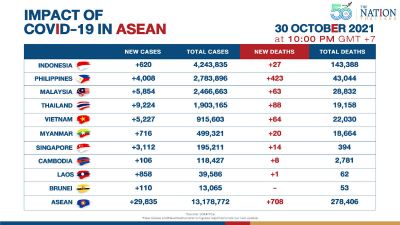
Southeast Asia witnessed a decline in new Covid-19 infections and a rise in deaths on Saturday (October 30), collated data showed.
Asean countries reported 29,835 infections and 708 deaths on Saturday compared to 30,486 and 334 respectively on Friday.
– Indonesian government has erected a monument in West Java to commemorate the sacrifice of 249 health workers and 44 civil servants who had died during the fight against Covid-19. The monument will be officially opened during Heroes Day on November 10.
Indonesia was suffered from the Covid-19 crisis the most as over 4.2 million people had been infected and over 140,000 people had died. The country’s first three Covid-19 cases had been found in West Java.
– Cambodia’s Agence Kampuchea Presse reportedly said on Friday that the Cambodian government has donated 200,000 doses of Sinopharm Covid-19 vaccine to Vietnam in a bid to enable Vietnam to contain the spread of disease effectively and strengthen bilateral cooperation between two countries.
Dr Or Vandine, Secretary of State at the Ministry of Health and Chairwoman of the Ad-hoc Commission for Covid-19 Vaccination was reportedly presided over the ceremony at Bavet-Moc Bai border gate in Svay Rieng province.
Cambodia has so far provided facemasks and medical supplies for Laos, Myanmar, Timor Leste and Nepal. Recently, Cambodia has also donated 200,000 Covid-19 vaccine doses to Laos.
The designation came after a drone attack targeted a U.S. base in the al-Tanf area in southern Syria last week.
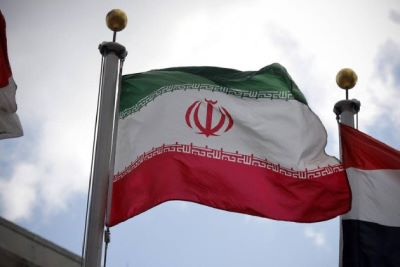
The United States on Friday imposed sanctions against companies and individuals related to Iran’s unmanned aerial vehicle (UAV) programs.
The Department of the Treasury said in a statement that it designated two companies and three individuals that provided “critical support” to the UAV program of Iran’s Islamic Revolutionary Guard Corps (IRGC). Brigadier General Saeed Aghajani, head of IRGC’s UAV Command, was also blacklisted for his leading role in directing UAV operations.
“Iran’s proliferation of UAVs across the region threatens international peace and stability. Iran and its proxy militants have used UAVs to attack U.S. forces, our partners, and international shipping,” said Deputy Secretary of the Treasury Wally Adeyemo. “Treasury will continue to hold Iran accountable for its irresponsible and violent acts.”
The designation came after a drone attack targeted a U.S. base in the al-Tanf area in southern Syria last week, with no injuries or deaths reported.
U.S. officials believed that Iran “resourced and encouraged the attack,” while noting the drones were not launched from Iran, according to a report by the Associated Press.
The move also came two days after Tehran said it would resume negotiations over the Iran nuclear deal before the end of November.
The United States and Iranian officials began indirect talks in Vienna this April to restore the 2015 nuclear agreement, but their disagreements remained significant after six rounds of negotiations, which have been interrupted due to Iran’s government transition.
To pressure Tehran, the Joe Biden administration has recently reiterated the window for negotiations on a return to the deal will not be open forever and warned of turning to other options if diplomacy fails.
The United States withdrew from the nuclear deal in May 2018 when Donald Trump was in office, and imposed sanctions on Iran. In response, Iran has gradually stopped implementing parts of its commitments to the deal since May 2019.
Working as a porter at a market, 18-year-old Nazir said “poverty has gripped my life as I hardly earn 400 afghani currently, while a bag of 21.5-kg rice was 2,000 afghani a couple of months ago but today it is 2,500 afghani which is beyond the purchasing power of ordinary people.”
“Freezing Afghanistan’s assets in America has led to price hike in the local market as the price of one sack flour (50 kg) was 1,200 afghani (13 U.S. dollars) but today it costs 2,300 afghani (25 U.S. dollars),” Kabul resident Noorzada said.
Accusing the United States of exacerbating the economic woes in Afghanistan, Noorzada said Washington’s antipathy to the Taliban government in Kabul has virtually deprived ordinary Afghans of their daily income.
“Usually, I work hard every day to increase my income but can hardly buy a bag of flour once a month, while in the past I took three flour bags home,” the 30-year-old man said.
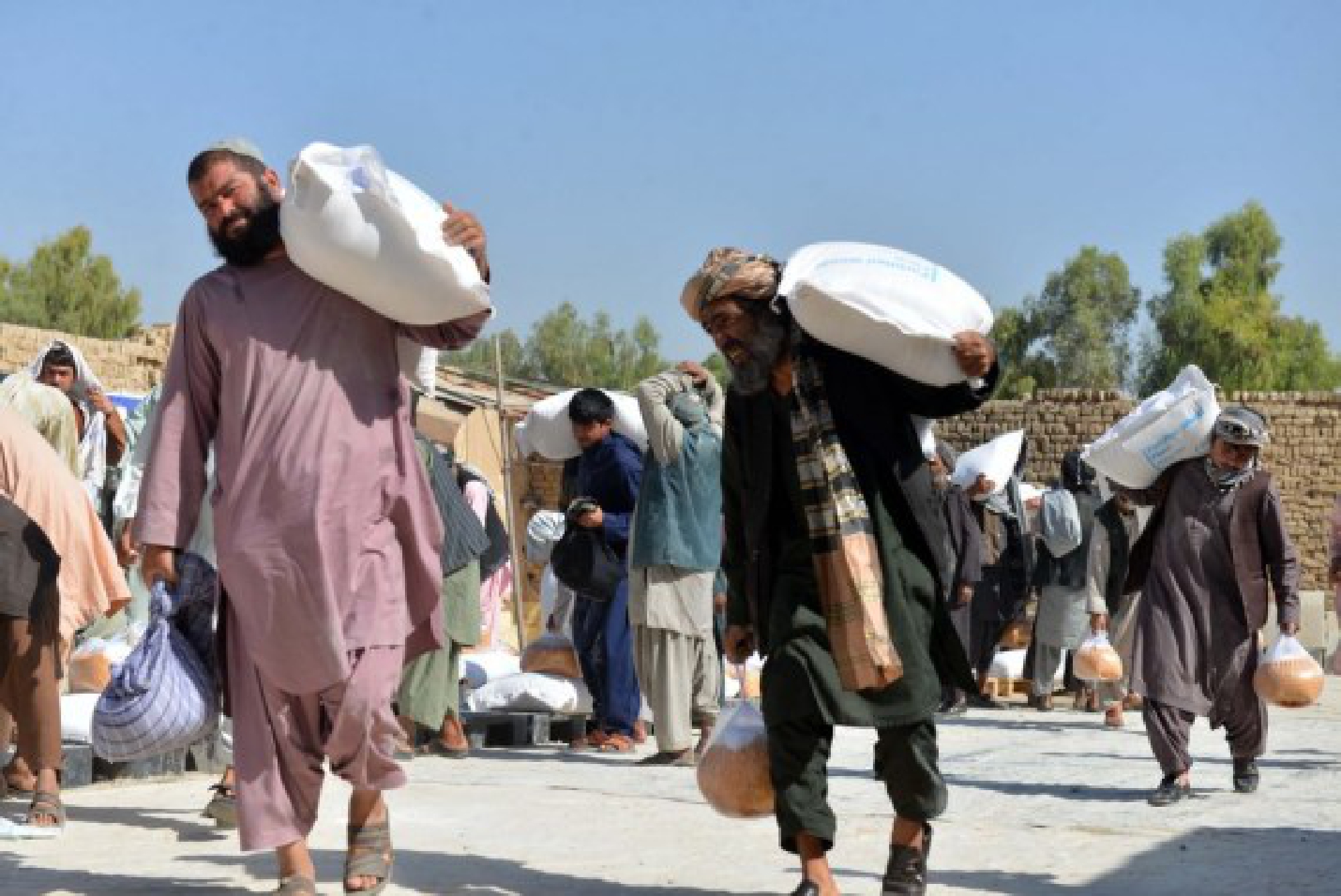
People carry relief assistance donated by World Food Programme (WFP) in Kandahar city, Afghanistan, Oct. 7, 2021. (Photo by Sanaullah Seiam/Xinhua)
Following Taliban’s takeover in mid August and announcement of the caretaker government on Sept. 7, the United States has frozen Afghanistan’s assets in U.S. banks after withdrawing U.S. troops and diplomats.
Washington has reportedly frozen some 9.5 billion U.S. dollars in assets of the Afghan central bank on charges of the presence of terrorist groups, such as al-Qaida and the hardliner Islamic State outfit, in the war-torn country.
Rejecting the U.S. accusation, Zabihullah Mujahid, spokesman of the Taliban interim government, has stressed that the Afghan soil will not be used against any country, including the United States.
Echoing Noorzada’s concerns, Kabul resident Nazir also blamed the United States for the skyrocketing prices in the Afghan markets, saying that Washington’s double standard policy has caused economic chaos and growing poverty in the already impoverished country.
“We have no economy, no work and no regular income. In the past months, I earned 1,500 afghani each day but nowadays I can hardly earn 400 afghani daily,” Nazir told Xinhua.
Working as a porter at a local market, 18-year-old Nazir said “poverty has gripped my life as I hardly earn 400 afghani currently, while a bag of 21.5-kg rice was 2,000 afghani a couple of months ago but today it is 2,500 afghani which is beyond the purchasing power of ordinary people.”
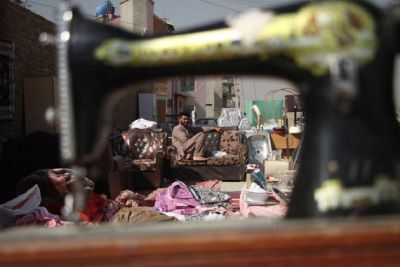
Second-hand goods are for sale at a market in Kabul, capital of Afghanistan, on Oct. 13, 2021. (Photo by Saifurahman Safi/Xinhua)
Economic hardship is palpable everywhere in conflict-torn Afghanistan including the capital Kabul, as many Kabul residents are selling their home appliances to survive.
Freezing Afghanistan’s assets by the United States, according to Afghans, has made the new administration unable to pay the monthly salaries of government employees and the lack of income has dismayed almost all Afghans.
“The prices of basic needs particularly the food stuff have gone up almost day by day and the reason for growing inflation is freezing Afghan assets by America,” shopkeeper Sayed Abid, 55, said.
According to Abid, 1 litter petrol costs 76 afghani, 1 litter diesel is 70 afghani and 1 litter liquid gas costs 90 afghani, and the prices will shoot up with depreciating afghani against the U.S. dollar. (1 U.S. dollar equals to 90 afghani)
A 23-year-old Maryland woman pleaded guilty and agreed to testify against her twin sister Friday in connection with the deadly attack on their younger brother in the familys townhouse basement.
The move by Lemae Matthews represents a major development in the long-running and bizarre case in Montgomery County, which has now implicated four people: The twins, one of their boyfriends, and one of the boyfriend’s friends. The victim, Christian Matthews, was beaten and strangled after being roused from his sleep on March 21, 2017. He was 17.
Washington Post photo by Dan Morse
In court Friday, prosecutors read a statement from Lemae Matthews recounting how she was on the main floor during the killing.
“I heard what sounded like furniture being slammed around and Christian yelling, ‘Stop! Stop!'” Matthews said, according to the statement.
She pleaded guilty to accessory after the fact to first-degree murder, and faces up to 10 years in prison.
She agreed to testify, according to prosecutors, if called in the pending first-degree murder trials of her twin sister, Leaundra Matthews, and one of the men who allegedly attacked Christian in the basement, Daniel Howard, who is now 25. The second accused assailant in the basement, Tysean Lipford, was convicted of second-degree murder in 2019 and is serving a 30-year sentence.
In her statement to prosecutors, Lemae Matthews said that around the time of the killing, there was bad blood between her twin sister and younger brother over Lipford, who was the father of Leaundra Matthews’s baby. When Lipford was interrogated by detectives in 2017, he confessed to killing Christian Matthews, according to court records. He said that Christian Matthews had threatened to harm Leaundra and their baby, the records show.
“Leaundra asked our mother to kick Christian out of the house, however our mother did not kick Christian out of the house,” Lemae Matthews told prosecutors.
A short time later, as the twins, Lipford and Howard were discussing Christian, Leaundra Matthews allegedly said she wanted her brother gone.
“By gone, she meant that she wanted him killed,” Lemae recalled in her statement to prosecutors. “I asked her if they could just beat Christian up instead, but Leaundra said she wanted him ‘gone.'”
Brian Shefferman, an attorney for Leaundra Matthews, declined to comment. Aaron Meyers, an attorney listed in court records for Howard, could not be reached for comment Friday. Both of their clients are being held in jail without bond.
Wearing a tan jail jumpsuit and a long white necklace bearing a cross, Lemae Matthews said little during Friday’s court hearing, other than answering standard questions designed to ensure she understood the terms of her guilty plea. Assistant State’s Attorney Patrick Mays read the statement Lemae Matthews gave to prosecutors two months ago,
On the night of the murder, in Montgomery’s Colesville area, Lemae Matthews said, her sister came into her bedroom and asked her to watch her baby while she headed out to pick up Lipford and Howard. “She told me that they were coming over to ‘handle’ Christian,” Lemae Matthews said. “I knew that they wanted to kill Christian but I hoped that they would just beat Christian up instead.”
While her sister was out, Lemae texted and spoke to her by phone. “Leaundra asked me to go to the basement and make sure that Christian was in his room,” Lemae recalled. “I went to the basement and could tell Christian was in his room laying down in bed under a blanket. He appeared to be asleep.”
Lemae Matthews reported that to her sister, and a short time later was told that Lipford and Howard had been dropped off near the townhouse. The men arrived a short time later, Lemae Mathews said, put on disposable gloves and slipped down to the basement.
In previously filed court documents, detectives alleged that Christian Matthews screamed and tried to run upstairs, but Lipford slammed a door to prevent his escape. His shouts became faint, the detectives alleged.
Lemae Matthews said she ran out of the townhouse, still holding the baby, and got into her sister’s car. A few minutes later, she said, Lipford and Howard joined them. “We got him,” they both said, with Howard adding that Christian cried before dying, according to Lemae Matthews’s account to prosecutors.
Leaundra Matthews drove the pair to their friend’s house and dropped them off, according to court records. Lemae Matthews said she wanted to call 911 – hoping that her brother was still alive – but was not allowed to do so until they returned home. When she finally did so, according to her statement to prosecutors, she was vague about what happened because she feared Howard, whom she referred to by his nickname.
“I lied to 911 and the police because I was scared of what Ghost would do if I told the truth,” she said.
Kevin Collins, an attorney for Lemae Matthews, declined to comment Friday. His client was permitted to be released from jail on a $10,000 bond by Judge Jeannie Eun Kyung Cho, who set her sentencing for March 4.
The allegations that one twin went along with the murderous plot of the other twin – even if she didn’t personally agree – is consistent with the behavioral and psychological bonds shared by many twins,Joan A. Friedman, a psychotherapist, author and national twin expert, said in an interview.
“They’re generally in this shared mentality – this kind of us against the world mind-set,” Friedman said. “They don’t question what the other one wants or needs or feels. They don’t think of themselves as individuals. They think of themselves as a pair.”
Friedman suspects the decision made by Lemae Matthews – to agree to testify against her twin sister – was extraordinarily difficult to make.
“They’re usually very loyal to each other, very attached, very secretive,” Friedman added. “Their bond is very strong.”
ROME – Senior leaders of the powerful Group of 20 nations on Friday announced the creation of a new global body for coordinating government responses to the next international pandemic, but the initiative faced immediate criticism because it appears to lack resources.
The G-20’s health and finance ministers, convening in Rome as part of an international summit, said the new “Joint Finance-Health Task Force” would improve planning between the wealthiest nations to respond to pandemics with both additional health-care resources and financing measures.
The G-20 includes nations like the United States, France, Italy, Russia, Brazil, China, India, Japan and a number of others.
But the announcement came without a pledge of any new funding, inviting criticisms from those already furious that the rich nations of the world are doing too little to help poor countries still being ravaged by the coronavirus.
“We remain committed to build on the lessons learned from the covid-19 crisis to increase investment into longer term health capacity,” the G-20 health and finance ministers said in a joint statement. “We expect the Task Force to report on how health and finance collaboration can strengthen efforts to prevent, detect, and respond to future health emergencies with cross-border potential.”
Treasury Secretary Janet L. Yellen and Indonesia’s Minister of Finance Sri Mulyani Indrawati had written the G-20 earlier in the month seeking support for the new initiative. Yellen and Sri Mulyani had asked for the G-20 leaders to commit to “ensuring the financing capacity” of the development banks, such as the World Bank, for meeting pandemic threats.
“The current pandemic revealed a lack of readiness at the country level and a lack of coordination among us,” Yellen and Sri Mulyani said. “For this reason, we strongly support launching a forum where health and finance ministers could begin the work of facilitating global cooperation and coordinating prevention, detection, information sharing, and, if needed, response.”
The coronavirus pandemic, which was detected in China in 2019 but moved quickly across the globe in 2020, exposed major lapses in coordination between countries as they struggled to determine the best responses. Countries also clashed over access to treatments, protective equipment and data.
In January, the G-20 tasked a High Level Independent Panel with proposing the financial framework needed to reduce the world’s vulnerability to future pandemics. In its July report, the panel called for a global governance and financing mechanism that would bolster existing institutions, including the World Health Organization. It called for a public funding increase of at least $75 billion over the next five years, or $15 billion per year. Doubling current spending levels was justified, the panel concluded, because the higher costs were “negligible compared to costs of another major pandemic.” The new G-20 announcement does not include such money.
The forward-looking nature of the announcement and the lack of financing prompted criticism from some economists who said the G-20 stopped far short of what was needed, particularly at a time when the existing pandemic continues to devastate poorer countries. Joseph Stiglitz, a Nobel Prize-winning economist at Columbia University, criticized the wealthy nations of the G-20, saying: “People are dying today – to talk about preparing for ‘the next one’ to me is unforgivable.”
“Covid has shown that pandemics are not just health issues,” said David Miliband, president of the International Rescue Committee and former Foreign Secretary of the United Kingdom, who served on the independent panel. “The World Health Organization is central, but pandemics are economic, national security and political, and they need more than health ministers to get the right kind of response.”
Only heads of state can accomplish the corralling, peer pressure and accountability necessary to take action in real time, Miliband said, recalling how the virus was allowed to spread rapidly in February 2020, in part as a result of inaction at the highest levels.
The ongoing pandemic is also revealing the need for greater coordination across public and private groups by bringing industry, trade and others to the table, said Sara Bennett, a professor of international health at the Johns Hopkins Bloomberg School of Public Health.
“While vaccine funding is essential, in many low income, fragile contexts there are significant challenges in getting shots in arms,” Bennett said. “The need to strengthen health systems drawing upon both public and private actors is key.”
J. Stephen Morrison, director of the Global Health Policy Center at the Center for Strategic and International Studies (CSIS), also expressed disappointment in the G-20 announcement, 20 months into the pandemic after “plenty of good analysis about what is failing and what needs to happen.”
The WHO, Morrison said, has demonstrated it does not have the authority and gravitas to tackle these kinds of threats in a fragmented world, in which global powers cannot agree. He also expressed concern that the lack of financing in the G-20 plan will deflate enthusiasm from the Biden administration.
The initiative will shift to a “coalition of the willing” approach, Morrison suggested, noting that the United States and Norway are already in talks at the United Nations.
Lawrence Gostin, a professor of global health law at Georgetown Law, said he was underwhelmed by the announcement.
“This is a document that says all of the right words and provides no clear pathway for a solution,” Gostin said. The G-20 has had an “extraordinarily bad track record” of providing financing for global health preparedness, Gostin said, and has failed to take an all-of-government approach. This new body, which will not be led by heads of state, also lacks political heft, he said.
T is also needed across public and private groups by bringing industry, trade and others to the table, said Sara Bennett, a professor of international health at the Johns Hopkins Bloomberg School of Public Health.
“It’s good that the efforts should strengthen a global health architecture, but we should also recognize that we don’t really have a global health architecture,” Peters wrote in an email. “Architecture implies design. We have global health organizational sprawl, with elements of good architectural ideas within a fragmented and deeply flawed system.”
The pandemic offered an opportunity to unite behind shared goals that has not been met by Friday’s announcement, experts said.
“We are beyond the time of meeting to do careful thinking,” Morrison said. “We know what the issues are. What’s needed is action at a high level.”
Miliband described the G20 response as at the “lower end of expectations for muscularity and impact,” failing to fill gaps in preparedness at the national, regional or global levels.
“There is a real danger with this G20 that people will think future pandemics have been taken care of,” Miliband said. “They haven’t.”


 People carry relief assistance donated by World Food Programme (WFP) in Kandahar city, Afghanistan, Oct. 7, 2021. (Photo by Sanaullah Seiam/Xinhua)
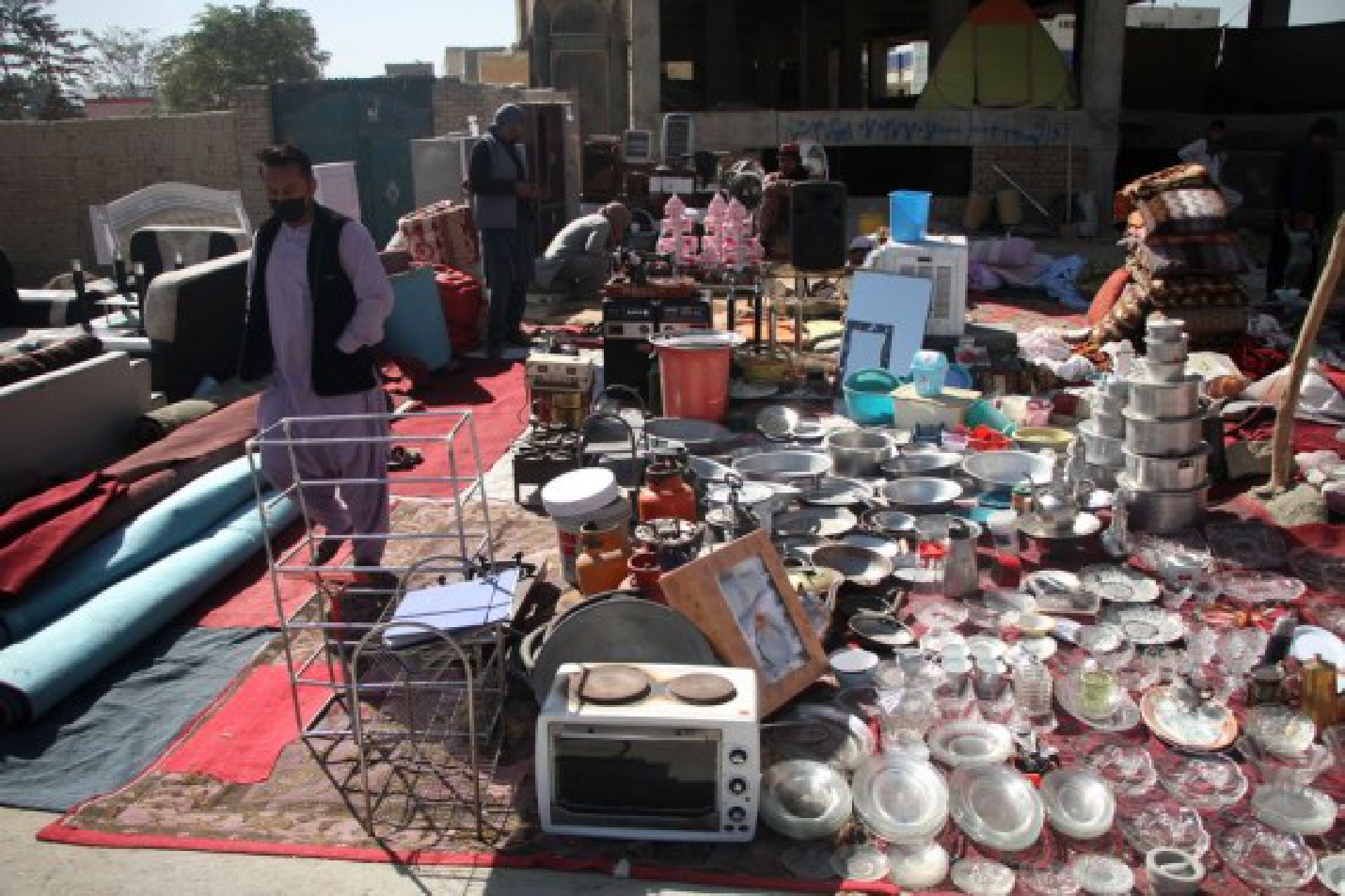 Second-hand goods are for sale at a market in Kabul, capital of Afghanistan, on Oct. 13, 2021. (Photo by Saifurahman Safi/Xinhua)

