Shanghai Disneyland and Disneytown will be temporarily closed from Monday to Tuesday for the purpose of epidemic prevention and control, said a notice released by the facility Sunday evening.
The reopening of the facility will be announced once it is decided, the notice said.
Earlier on Sunday evening, the facility said entry has been suspended to cooperate with COVID-19-related epidemiological investigation in other provinces and cities.
All tourists who had visited Disneyland and Disneytown during the weekend were required to report to their neighborhood, employer, or school, and conduct a nucleic acid test immediately at a nearby medical institution, Shanghai’s epidemic prevention and control headquarters said Sunday evening.
Issues high on the agenda of the 26th United Nations Conference of Parties on Climate Change (COP26) include finalizing the rules for the Paris Agreements market mechanism and wealthy countries unmet finance pledge to the developing countries to help them tackle climate-related challenges.
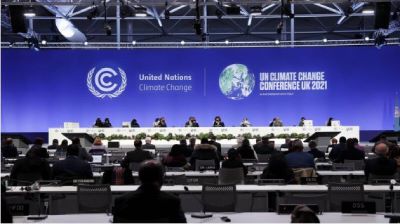
The 26th United Nations Conference of Parties on Climate Change (COP26), delayed by a year due to the COVID-19 pandemic, kicked off on Sunday in Glasgow, Scotland.
As the first conference after the five-year review cycle under the Paris Agreement inked in 2015, delegates are expected to review overall progress and plan future actions on climate change in the coming two weeks.
The conference comes at a time when the world has gone through a series of climate-change-related weather disasters, from severe flooding to wild fires.
A man walks past an Earth model at the conference hall of the United Nations Climate Change Conference in Copenhagen, capital of Denmark, Dec. 17, 2009. (Xinhua/Wu Wei)
Issues high on the agenda include finalizing the rules for the Paris Agreement’s market mechanism and wealthy countries’ unmet finance pledge to the developing countries to help them tackle climate-related challenges.
COP26 President Alok Sharma addresses the opening ceremony for COP26 in Glasgow, Scotland, the United Kingdom on Oct. 31, 2021. (Xinhua/Han Yan)
COP26 President Alok Sharma said in his speech at the opening ceremony: “We postponed COP26 by a year. But during that year, climate change did not take time off … And we know that the window to keep 1.5 degrees within reach is closing.”
“We know that our shared planet is changing for the worse. And we can only address that together, through this international system … And if we act now, and we act together, we can protect our precious planet,” he added.
The urgent task at the moment is that China and the United States must earnestly implement the consensus reached by the two heads of state, and make political preparations and provide necessary conditions for the next phase of exchanges, Chinese State Councilor and Foreign Minister Wang Yi said during his meeting with U.S. Secretary of State Antony Blinken.
Bilateral relations between China and the United States in the past few years have suffered an all-round impact due to the wrong China policy pursued by the United States, Chinese State Councilor and Foreign Minister Wang Yi said here on Sunday during his meeting with U.S. Secretary of State Antony Blinken.
The United States has wantonly interfered with China’s internal affairs, Wang stressed, noting that the current U.S. Congress has introduced more than 300 anti-China bills, and the United States has included more than 900 Chinese entities and individuals in various unilateral sanctions lists, which severely disrupted the normal bilateral exchanges.
Moreover, the United States is also patching up various small circles to suppress China on a global scale, and even exerting pressure on many small and medium-sized countries, Wang said, adding that these practices are not in line with the interests of the peoples of the two countries, not in line with the expectations of the international community, not in line with the development trend of the times, and hence China voices its clear opposition.
Participants attending the Group of Twenty (G20) Leaders
The important experience accumulated over the past four decades since the establishment of diplomatic relations between the two countries is that both China and the United States stand to gain from cooperation and lose from confrontation, Wang said, adding that the two sides have learned from contacts in Anchorage, Tianjin and Zurich that they must respect each other and treat each other equally.
The Secretary-General of the United Nations has repeatedly called for the world to prevent division and avoid a new cold war, Wang said, adding that the important consensus reached by the heads of state of China and the United States during the two phone conversations this year is that the two sides should restart dialogue and avoid confrontation.
The urgent task at the moment is that the two sides must earnestly implement the consensus reached by the two heads of state, and make political preparations and provide necessary conditions for the next phase of exchanges, Wang stressed.
Wang expressed the willingness to establish regular contacts with Blinken to exchange views timely and in a frank manner on how to manage and control differences between the two sides, properly resolve problems that arise, so as to enhance understanding, eliminate doubts, avoid misjudgments and explore cooperation.
The Taiwan issue is the most sensitive issue between China and the United States, Wang said, adding that if it is handled wrongly, it will cause subversive and overall damage to bilateral ties.
Wang pointed out that recently, the situation across the Taiwan Strait has become tense again, and the United States has repeatedly stated that this was caused by China’s change of the status quo, yet this is not a fact at all but a serious misleading to the international community.
Wang emphasized that the true status of the Taiwan issue is that there is only one China, Taiwan is a part of China, and the mainland and Taiwan belong to the same country, noting that historical experiences have repeatedly proved that any change to this status quo will seriously damage the stability across the Taiwan Strait and even create a crisis.
The crux of the current situation across the Taiwan Strait is because the Taiwan authorities have repeatedly tried to break through the one-China framework, and the United States’ connivance and support for “Taiwan independence” forces is also to blame, Wang said, stressing that to stop the development of the “Taiwan independence” tendency is to maintain peace across the Taiwan Strait.
We urge the United States to realize the serious harm of the “Taiwan independence,” to pursue a real one-China policy, instead of a fake one, to fulfill its commitments to China faithfully rather than treacherously. We also urge the United States to truly implement the one-China policy and put it into actions, instead of saying one thing and doing another, Wang said.
Photo taken on Sept. 24, 2015 shows the national flags of China (R) and the United States as well as the flag of Washington D.C. on the Constitution Avenue in Washington, capital of the United States. (Xinhua/Bao Dandan)
For his part, Blinken reiterated that the United States will continue to adhere to the one-China policy, and the two sides should develop bilateral relations in the spirit of mutual respect. The United States is willing to maintain communication with China, manage differences responsibly, and avoid confrontation or crisis, he noted.
Wang also expressed China’s solemn concern over various issues that the United States has harmed China’s legitimate rights and interests, and requested the U.S. side to change its course and push China-U.S. relations back to the track of healthy development.
The two sides also exchanged views on important issues such as climate change, energy supply, Iran nuclear issue, the situation on the Korean Peninsula, Myanmar, Afghanistan, and expressed their willingness to maintain dialogue on addressing various global challenges.
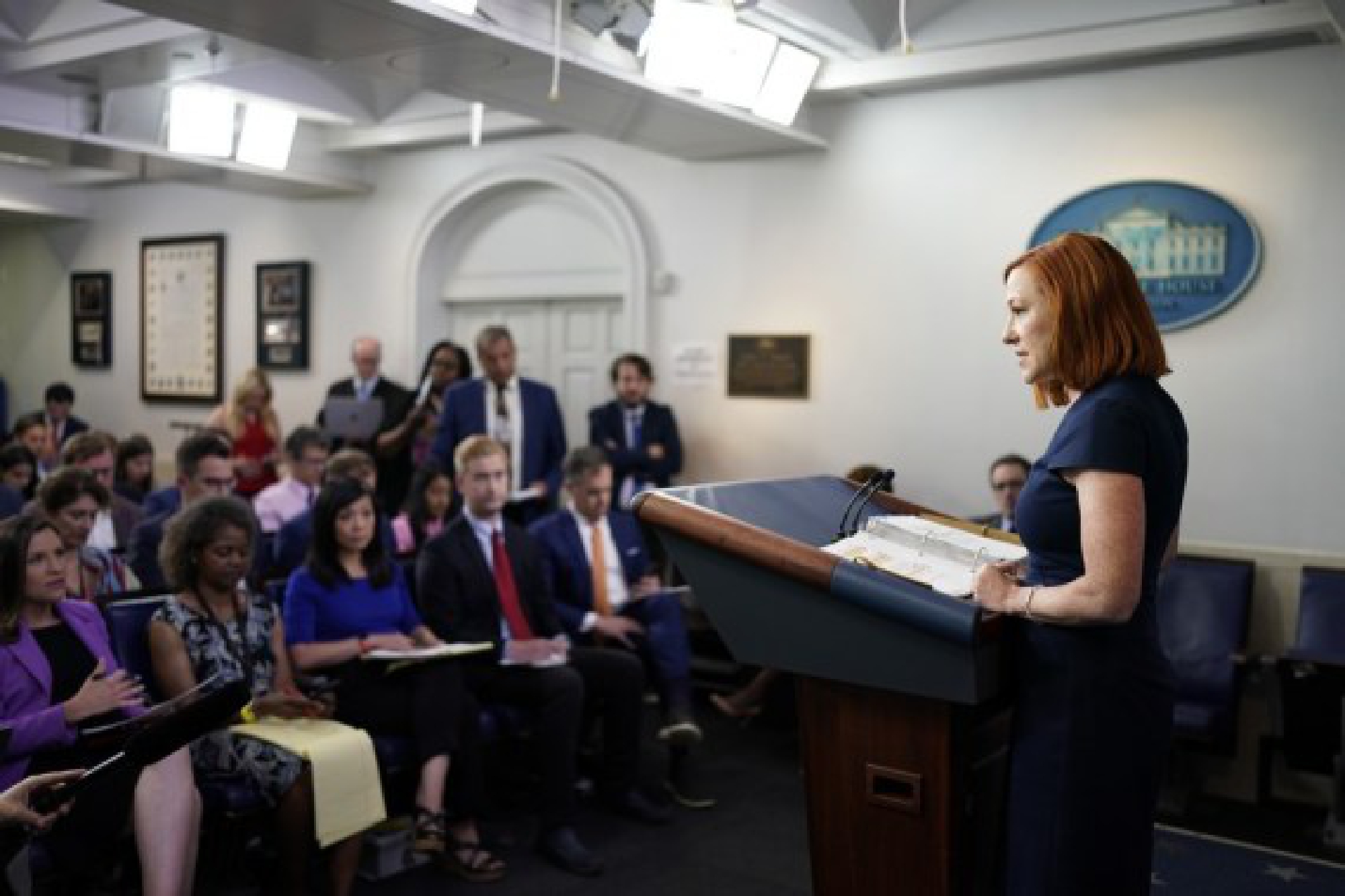
U.S. White House Press Secretary Jen Psaki on Sunday said she has tested positive for COVID-19.
The press secretary dropped off President Joe Biden’s ongoing trip in Europe before he departed, citing a family emergency, which is that members of her family have tested positive for the virus.
“While I have not had close contact in person with the president or senior members of the White House staff since Wednesday – and tested negative for four days after that last contact — I am disclosing today’s positive test out of an abundance of transparency,” Psaki said in a statement. “I last saw the president on Tuesday, when we sat outside more than six-feet apart, and wore masks.”
Psaki said she has been vaccinated and is experiencing mild symptoms. She will return to work after a 10-day quarantine following a negative test.
White House Press Secretary Jen Psaki (1st R) speaks during a press briefing at the White House in Washington, D.C., the United States, on June 8, 2021. (Photo by Ting Shen/Xinhua)
The press secretary dropped off President Joe Biden’s ongoing trip in Europe before he departed, citing a family emergency, which is that members of her family have tested positive for the virus.
She is among the highest-ranking administration officials to contract the disease, with a recent precedent being Homeland Security Secretary Alejandro Mayorkas.
White House press secretary regularly interacts with the president. Biden, who at age 78 is considered in the high-risk group should he be infected with the virus, has received his Pfizer coronavirus vaccine booster shot.
The “G20 Rome Leaders Declaration” pledges to use all available tools to address the consequences of the pandemic, sustain the recovery and remain vigilant to global challenges such as supply chain disruption.
The G20 Summit in Rome ended on Sunday with the adoption of a declaration reaffirming the crucial role of multilateralism and international cooperation in overcoming the global challenges arising from the COVID-19 pandemic.
The “G20 Rome Leaders’ Declaration” pledges to strengthen the common response to the pandemic and pave the way for a global recovery, with particular concern for the most vulnerable.
The leaders of the world’s major economies have pledged to use all available tools to address the consequences of the pandemic, sustain the recovery and remain vigilant to global challenges such as supply chain disruption.
A staff member works at a joint venture between China
The G20 Summit in Rome ended on Sunday with the adoption of a declaration reaffirming the crucial role of multilateralism and international cooperation in overcoming the global challenges arising from the COVID-19 pandemic.
The “G20 Rome Leaders’ Declaration” pledges to strengthen the common response to the pandemic and pave the way for a global recovery, with particular concern for the most vulnerable.
Aerial photo taken on Aug. 24, 2021 shows photovoltaic panels at a fish breeding base in Helan County of Yinchuan, northwest China
The leaders of the world’s major economies have pledged to use all available tools to address the consequences of the pandemic, sustain the recovery and remain vigilant to global challenges such as supply chain disruption.
Highlighting the essential role of vaccines in the fight against the pandemic, they vowed to advance efforts to ensure timely, equitable and universal access to safe, affordable, quality and effective vaccines, therapeutics and diagnostics, with particular regard to the needs of low- and middle-income countries.
“We will take steps to help boost the supply of vaccines and essential medical products and inputs in developing countries and remove relevant supply and financing constraints,” the declaration read.
Regarding climate change, the leaders remain committed to the Paris Agreement goal to hold the global average temperature increase well below two degrees Celsius and to pursue efforts to limit it to 1.5 degrees Celsius above pre-industrial levels.
“This summit was a success,” said Italy’s Prime Minister Mario Draghi at the closing press conference, adding that cooperation is essential on issues like climate, wealth and poverty.
“The form of cooperation we know best is multilateralism,” Draghi said, calling on G20 members to act swiftly together.
The G20 members account for almost two-thirds of the world’s population, over 80 percent of the global gross domestic product (GDP) and 75 percent of global trade.
The two-day summit was held both online and offline under the Italian Presidency of the G20. Indonesia will take over the rotating presidency from December 2021.
Photo taken on Oct. 30, 2021 shows a view of the Group of Twenty (G20) Leaders
Since the beginning of his administration in December 2018, Mexican President Andres Manuel Lopez Obrador has been combating the theft of fuel from Pemex pipelines.
At least one person died and 15 others were injured in an explosion near an illegal tap on a pipeline belonging to the state-owned Petroleos Mexicanos (Pemex) oil company in the central Mexican state of Puebla, local authorities said on Sunday.
Governor of Puebla Miguel Barbosa told a press conference that the accident occurred near a liquefied petroleum gas pipeline in the town of San Pablo Xochimehuacan, north of the state capital.
Some of the injured were taken to nearby hospitals after the explosion, which also damaged more than 50 buildings in the town, according to the authorities.
Since the beginning of his administration in December 2018, Mexican President Andres Manuel Lopez Obrador has been combating the theft of fuel from Pemex pipelines.
In January 2019, an explosion at an illegal pipeline tap in the town of Tlahuelilpan in the Mexican state of Hidalgo left 137 dead in one of the most serious tragedies related to fuel theft in the country’s history.
According to Taliban spokesman Zabihullah Mujahid, Afghanistan resumed the export of pine nuts to China on Sunday.
Afghanistan on Sunday resumed export of pine nuts to China, a Taliban spokesman confirmed.
“A cargo plane carrying pine nuts took off from Kabul International Airport to China after officials of Islamic Emirate of Afghanistan inaugurated the air corridor,” spokesman Zabihullah Mujahid wrote on Twitter.
In 2019, Afghanistan formally launched the pine nut export via an air corridor to a number of countries, including China.
Pine nut trees grow in eight eastern provinces of Afghanistan, including Khost, Paktia, Paktika, Kapisa, Kunar, Nangarhar, Nuristan and Laghman, according to the country’s pine nuts union.
Photo taken on Oct. 31, 2021, shows a cargo plane during a ceremony of resuming the export of pine nuts to China, at Kabul International Airport in Kabul, Afghanistan. (Photo by Saifurahman Safi/Xinhua)
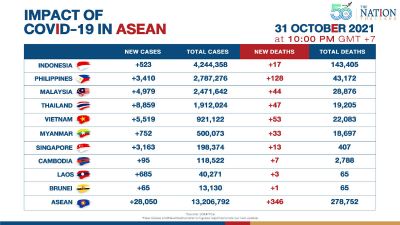
The number of Covid-19 cases crossed 13.2 million across Southeast Asia, with 28,050 new cases reported on Sunday (October 31), lower than Saturday’s tally at 29,835. New deaths are at 346, decreasing from Saturday’s number of 708. Total Covid-19 deaths in Asean are now at 278,752.
After two weeks of reopening Indonesia’s Bali Island on October 14 to travellers from 19 countries, no international flight has landed at its airport. Spokesman of Bali’s Ngurah Rai airport said on October 25 that it has yet to receive any request from airlines to land there. If airlines want to land in Bali, ideally they should give a notice of seven to 14 days in advance.
Meanwhile, Vietnam has assigned the Public Health and Foreign ministries to work with partners to speed up the issuing of vaccine passports to be completed before November 5. The passports aim to facilitate the entry of foreign visitors under the government’s plan to reopen the country to foreign tourists in November. So far, Vietnam has accepted vaccine passports from 72 countries and territories, including Thailand. Those traveling from these countries are subject to Covid-19 test and 7 days quarantine.
The coronavirus is on the cusp of having killed at least 5 million people since it first emerged in Wuhan, China, in late 2019, according to data compiled by Johns Hopkins University.
Nearly a quarter billion cases of the coronavirus have been reported. Despite the rollout of vaccines, global health experts warn that the pandemic is set to continue.
“With almost 50,000 deaths a week, the pandemic is far from over – and that’s just the reported deaths,” World Health Organization Director General Tedros Adhanom Ghebreyesus said at the World Health Summit in Berlin on Oct. 24.
Vaccines have blunted the worst impact of the pandemic in many countries, though their distribution has been marked by inequities that has meant they have not stopped the virus’s spread.
China leads the world in the number of vaccine doses administered, though some other nations have vaccinated a greater share of their population. A number of vaccines were developed and rolled out at record speed, and studies show most have impressive efficacy.
Billions of doses have been administered around the world, far more than the number of confirmed cases of the coronavirus since the start of the pandemic – though a large number of cases were probably never recorded, experts caution.
But the vaccine rollout has faced problems with global supply and pockets of opposition in many nations. Covax, a program backed by the World Health Organization to fairly distribute vaccines, only belatedly began distributing doses to low-income nations.
“I can’t say it’s surprising,” said Thomas J. Bollyky, a senior fellow at the Council on Foreign Relations, earlier this year. “In every previous pandemic where we have our global health crisis, where there has been limited supplies of medical intervention, wealthy nations have hoarded.”
The United States continues to have the highest cumulative number of confirmed cases and deaths globally. In early October, the U.S. death toll from covid-19, the disease caused by the virus, surpassed 700,000, despite the widespread availability of vaccines in the country.
Behind the United States, Brazil, India, Mexico and Russia have the largest cumulative numbers of cases.
India’s record-setting surge in spring 2021 meant that the country accounted then for about 1 in 3 of all new confirmed cases. The spike, which was blamed on complacency and the lifting of restrictions, along with the spread of variants, saw the country’s health-care system overwhelmed amid widespread oxygen shortages. Even after the surge in new cases subsided in mid-May, India still set records for the number of new daily deaths, with more than 4,500 deaths from covid-19 reported in a single 24-hour period.
In India, as in Britain and Brazil before it, the spread of the virus was blamed on fast-spreading variants rampant in the country, including the delta variant that was first identified in India.
Delta, also known as B.1.617.2, has become the dominant variant in many parts of the world. The variant is more virulent than many others and studies have shown that vaccines do not provide the same levels of protection against it, though they do still significantly reduce the likelihood of serious illness.
Some countries have seen success at controlling the virus – at a price.
In New Zealand, which closed its borders and ordered people to stay home as a first wave hit in the spring of 2020, confirmed that infections went down to zero for a time. Taiwan and Singapore have kept their outbreaks far smaller than those in other parts of the world, which some experts attribute to their early responses and sophisticated tracking and tracing.
China, the early epicenter of the crisis, has seen much of daily life return to normal. In the early months of the outbreak, it reported more cases than any other country. Its tally of new infections peaked in mid-February of 2020 and approached zero by mid-March of that year, although questions surround the accuracy of its data.
But maintaining these “zero covid” policies for almost two years has proved difficult. New Zealand Prime Minister Jacinda Ardern said this month that the country would phase out its pursuit of zero coronavirus cases and instead manage the spread of the virus through vaccines and “everyday public health measures” to keep residents safe.
“The Chinese government is keeping a close eye on what is happening overseas to work out whether giving up a ‘zero covid’ policy requires accepting a spike in cases,” Huang Yanzhong, a senior fellow for global public health at the Council on Foreign Relations, told The Washington Post in October. “That prospect is not acceptable for China.”
Countries that have successfully rolled out vaccines are also seeing gains. Britain, one of the hardest-hit countries in terms of cases and deaths, has excelled in the distribution of vaccine doses. It was the first country to roll out a fully tested vaccine to the general public in December, when it began distributing the vaccine developed by Pfizer.
Data released by Public Health England in March suggested that vaccinations had saved over 6,000 lives among people over 70, if not more.
But vaccinations have not ended the pandemic in Britain. Cases have risen since the country dropped its last remaining restrictions in July, despite high levels of vaccination across the country. Some scientists have suggested waning immunity from doses administered in the spring.
Though the WHO has officially called for a moratorium on “booster” shots for those already fully vaccinated, many nations around the world have begun rolling out the shots as official policy for at least part of their population – including the United States.
The new demand from high-income countries for both booster shots and vaccines for children has furthered the competition for doses, often leaving low- and middle-income nations further down the line. The WHO-backed Covax effort has struggled with supply and funding issues.
Only five African countries out of 54 are expected to hit the target of vaccinating 40 percent of their population by the end of the year, according to data from the WHO. Experts say the spread of the virus in countries with little protection from vaccines could lead to more variants and prolong the pandemic.
“Vaccine inequity is not just holding the poorest countries back – it is holding the world back,” Henrietta Fore, executive director of UNICEF, said in a statement released Oct. 27.
The Food and Drug Administration is delaying a decision on whether to make Modernas coronavirus vaccine available to adolescents because the agency needs more time to evaluate if the shot increases the risk of a rare cardiac side effect, the company said Sunday.
Moderna, a Cambridge, Mass., biotechnology company, said in a news release that the FDA indicated it will take until at least January to complete the review of Moderna’s application for use in 12- to 17-year- olds. The agency told the vaccine maker Friday evening it needed more time to analyze emerging international data on the risk of myocarditis, an inflammation of the heart muscle that in rare instances occurs after vaccination.
The agency’s action comes after several countries, including Japan and Nordic nations, raised concerns that the Moderna vaccine increases the risk of myocarditis in men 18 to 30 years old. In Finland and Sweden, authorities have recommended against the use of Moderna for men younger than 30.
Moderna asked the FDA in June to authorize its vaccine for adolescents. The shot is authorized for people 18 and older. The proposed vaccine regimen for adolescents is the same as that for adults – two 100-microgram shots, given 28 days apart.
The company also said Sunday it will delay asking the FDA for authorization of its vaccine for children 6 to 11 years old. That age group would receive two shots of a half dose of 50 micrograms.
The Moderna delays are occurring as Pfizer and its German partner, BioNTech, make rapid inroads with their vaccine into younger age groups.
The FDA last spring authorized the Pfizer-BioNTech vaccine for adolescents 12 to 15 years old. And on Friday, the agency cleared the vaccine for children 5 to 11, administered in two shots of 10 micrograms. That dose is one-third the adolescent and adult dose. The vaccine is expected to be available for younger children this week, following a review by immunization advisers to the Centers for Disease Control and Prevention and likely recommendation by CDC Director Rochelle Walensky.
In its statement, Moderna said “the safety of vaccine recipients is of paramount importance” and that it is working closely with the FDA.
The Washington Post reported in August that Moderna’s coronavirus vaccine for adolescents had been delayed. Federal health officials were scrutinizing reports that the shot might be associated with a higher risk of myocarditis in young men than the Pfizer-BioNTech vaccine, according to two people familiar with the review at the time who spoke on the condition of anonymity because they were not authorized to discuss the situation.
Federal officials concluded at that time that there was not a problem. But soon afterward, several Nordic countries said new information on the myocarditis rate in Moderna recipients was raising concerns, prompting the FDA to take another look, The Wall Street Journal reported recently. The Nordic data has not been publicly released.
Both the Moderna and Pfizer-BioNTech vaccines have been linked to an increased risk of myocarditis among young men after the second shot. Federal officials and physicians have said the vaccine-induced myocarditis tends to be mild and easily treated – and that covid-19, the disease caused by the virus, can cause much more severe myocarditis and other serious problems.
The Moderna and Pfizer-BioNTech vaccines use the same technological platform, known as messenger RNA.
Data from the United States on whether the myocarditis incidence in Moderna is higher than with the Pfizer-BioNTech vaccine has been mixed, with one data set showing a higher risk and other data not showing an increased risk.
Moderna said more than 1.5 million adolescents have received its coronavirus vaccine worldwide and that its global safety database does not suggest an increased risk of myocarditis in that age group. It added that it does not yet have access to data from some recent international analyses.


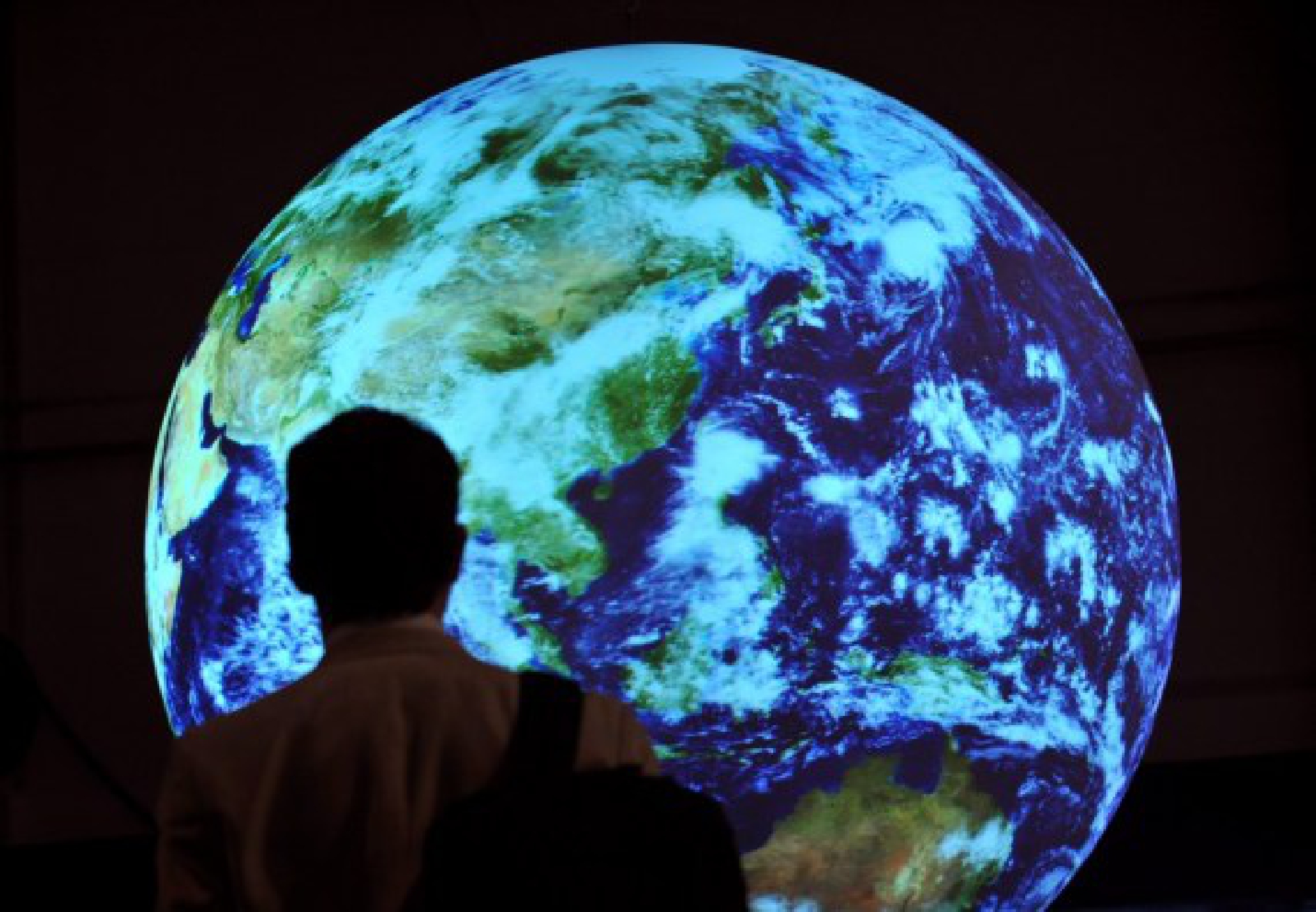 A man walks past an Earth model at the conference hall of the United Nations Climate Change Conference in Copenhagen, capital of Denmark, Dec. 17, 2009. (Xinhua/Wu Wei)
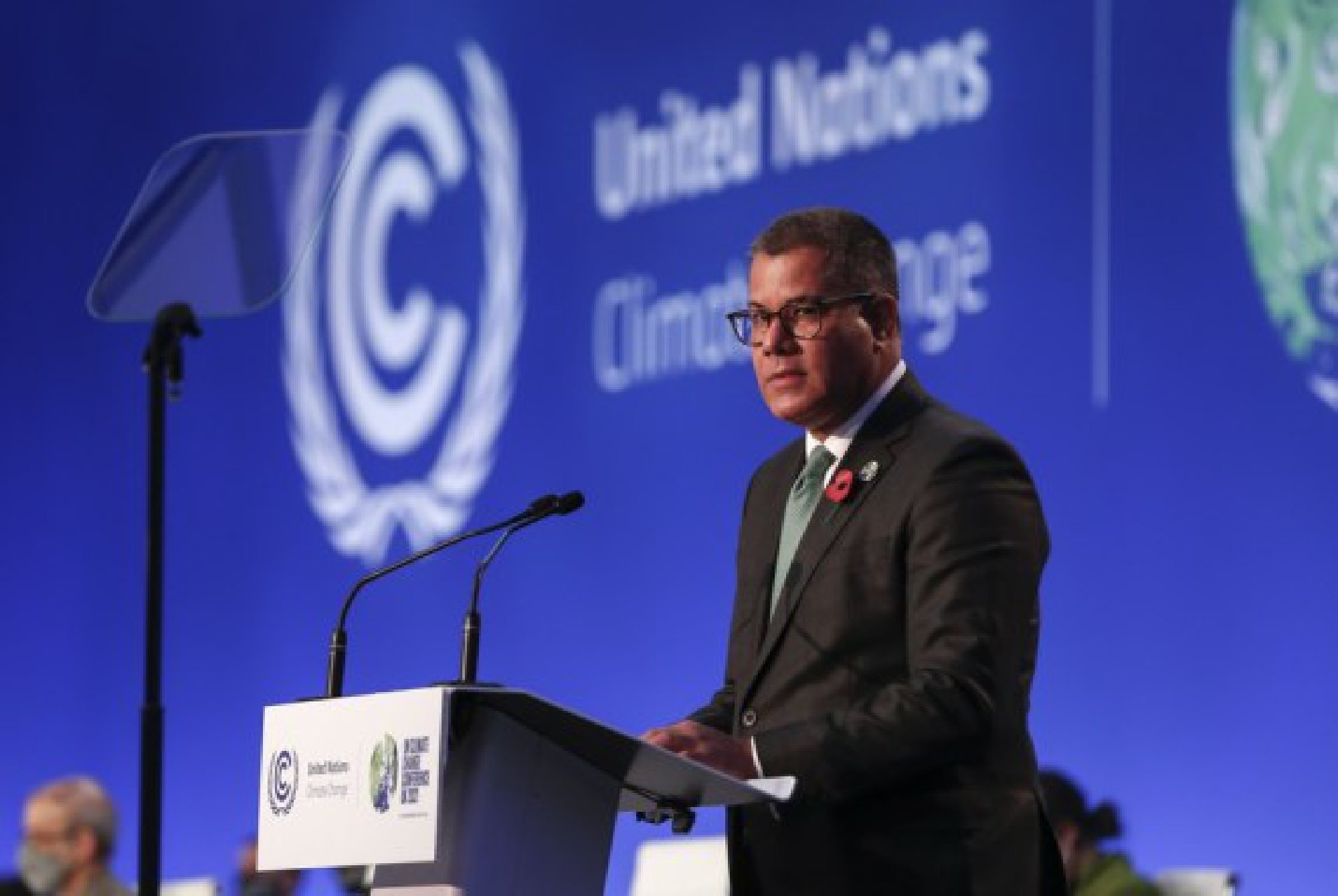 COP26 President Alok Sharma addresses the opening ceremony for COP26 in Glasgow, Scotland, the United Kingdom on Oct. 31, 2021. (Xinhua/Han Yan)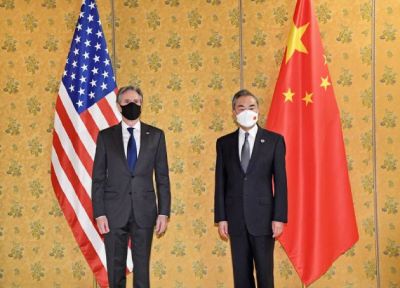
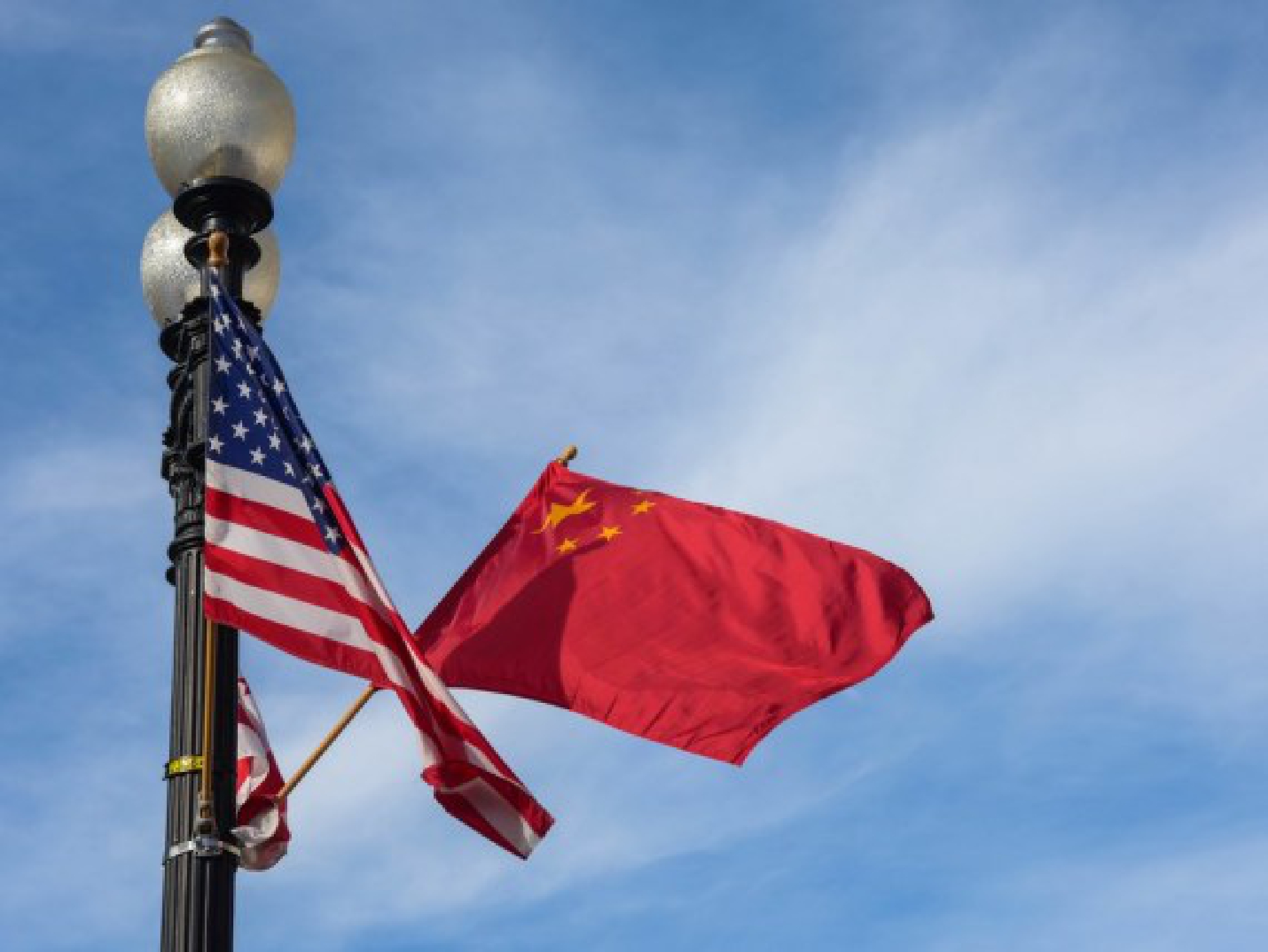 Photo taken on Sept. 24, 2015 shows the national flags of China (R) and the United States as well as the flag of Washington D.C. on the Constitution Avenue in Washington, capital of the United States. (Xinhua/Bao Dandan)
 White House Press Secretary Jen Psaki (1st R) speaks during a press briefing at the White House in Washington, D.C., the United States, on June 8, 2021. (Photo by Ting Shen/Xinhua)
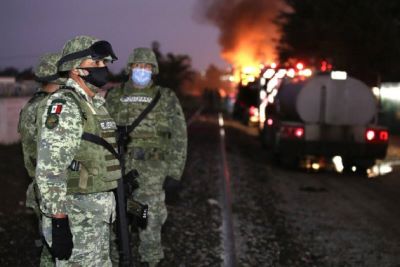

 Photo taken on Oct. 31, 2021, shows a cargo plane during a ceremony of resuming the export of pine nuts to China, at Kabul International Airport in Kabul, Afghanistan. (Photo by Saifurahman Safi/Xinhua)