The United States has the highest cumulative number of coronavirus-related deaths, followed by India and Brazil.
The worldwide death toll inflicted by the ongoing COVID-19 pandemic has surpassed five million, reaching 5,004,855 as of Tuesday, according to the latest data from the World Health Organization (WHO).
Globally, as of 5:40 p.m. CET (1640 GMT), there have been 246,951,274 confirmed COVID-19 cases, including 5,004,855 deaths, reported to the WHO, the data showed.
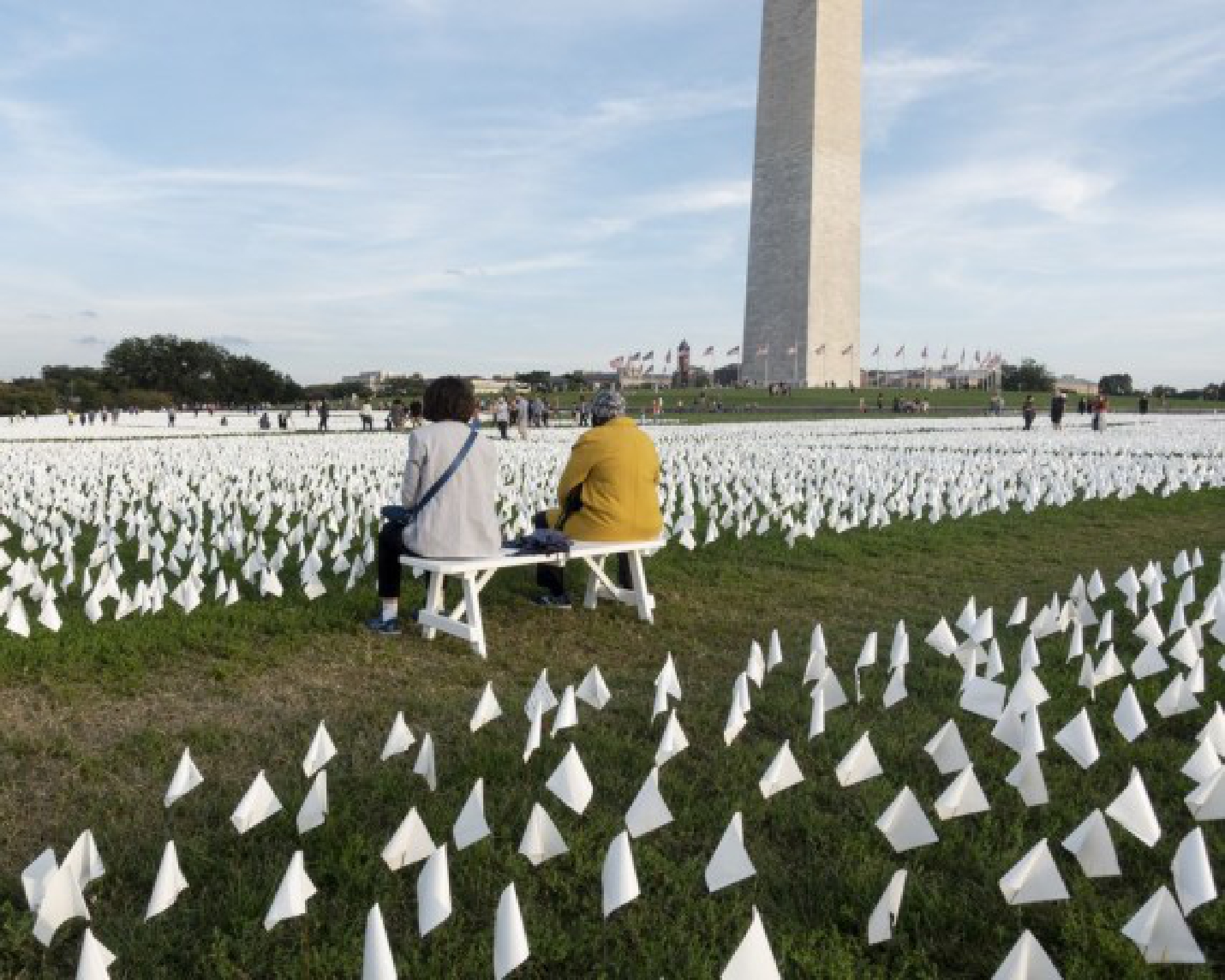
The United States has the highest cumulative number of confirmed cases and deaths, with almost 45.68 million cases and 740,366 deaths, accounting for nearly 18.5 percent and 14.8 percent respectively of the world’s totals.
White flags honoring the lives lost to COVID-19 are seen on the National Mall in Washington, D.C., the United States, on Oct. 2, 2021. (Xinhua/Liu Jie)
It is followed by India and Brazil, which have recorded confirmed cases exceeding 34.29 million and 21.81 million respectively, as well as 458,880 and 607,824 deaths. The three countries combined have accounted for more than 41 percent of all the confirmed cases and about 36 percent of all deaths worldwide.
In terms of WHO regional offices, the Americas and Europe have so far reported 93,711,700 and 77,231,883 confirmed cases, and 2,296,114 and 1,432,224 deaths, respectively. The two regions together account for nearly 70 percent of the world’s confirmed cases and about 74.5 percent of deaths.
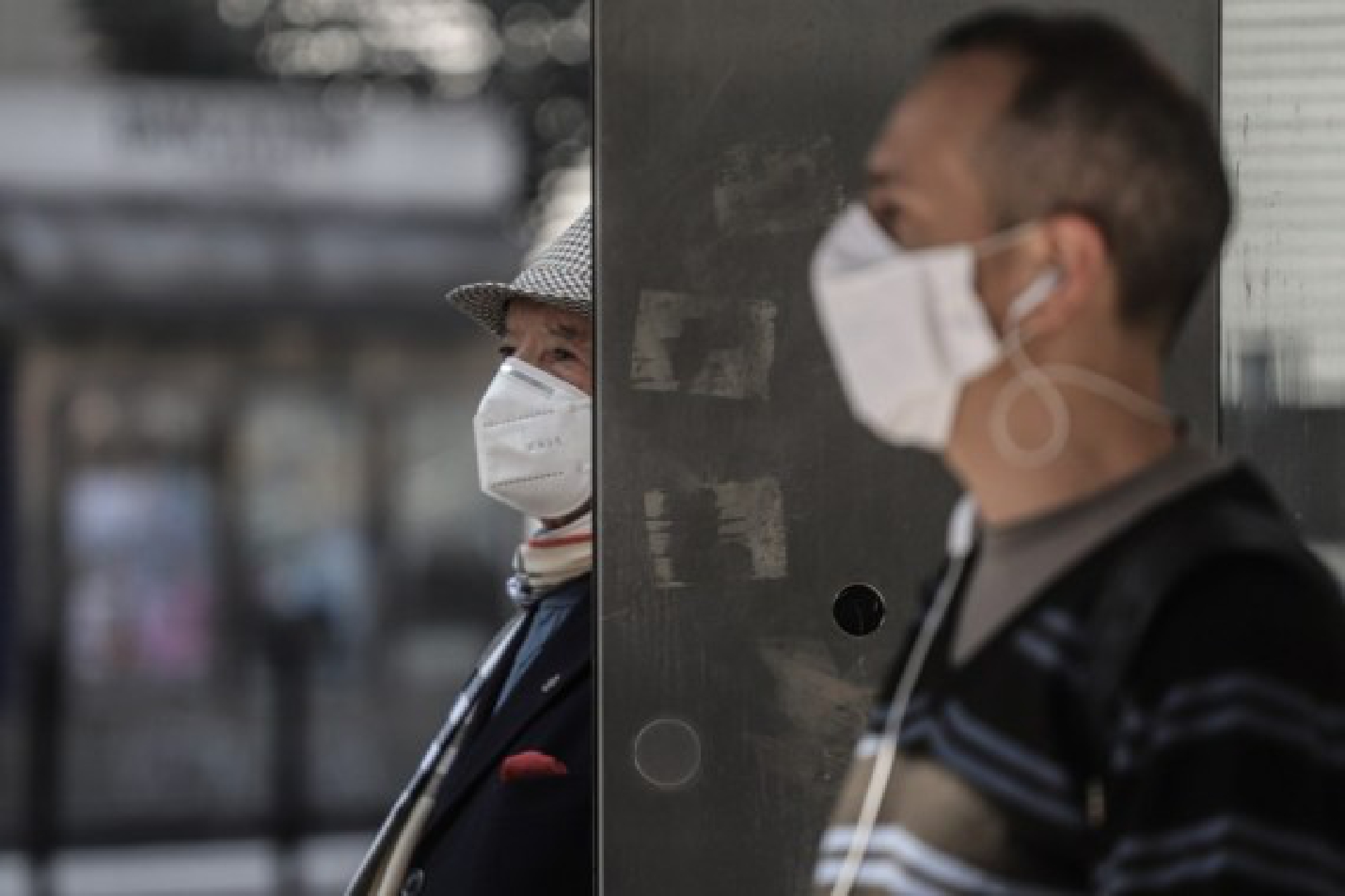
Men stand at a bus stop amid the COVID-19 outbreak in Sao Paulo, Brazil on Aug. 2, 2021. (Xinhua/Rahel Patrasso)
Advisers to the Centers for Disease Control and Prevention on Tuesday unanimously recommended the nations first coronavirus vaccine for younger children, in one of the last steps before the Pfizer-BioNTech pediatric shots can be given to more than 28 million children ages 5 to 11 across the United States.
CDC Director Rochelle Walensky is expected to endorse the recommendation later Tuesday, allowing some clinicians, pharmacies and other providers to begin giving the two-shot regimen as early as Wednesday.
The sign-off is a watershed moment in the fight against the pandemic, which has killed 745,000 people in the United States. Millions of families have waited for a children’s vaccine since the first adult shot was authorized last December, hoping their kids could finally resume in-person schooling and extracurricular activities without interruption – and that their own work schedules could return to normal.
“Today is a monumental day in the course of this pandemic and one that many of us have been very eager to see,” Walensky told advisers at the meeting’s start.
White House officials say the administration of pediatric vaccinations will be in full gear by next week – welcome news for families who live in multigenerational households and those eager to gather in large groups for the coming holidays. For the substantial number who remain distrustful of the vaccine, public health officials face a gargantuan task of convincing them to allow their kids to get the shots. That task is made more urgent by concerns about another coronavirus wave during the cold-weather months when people spend more time indoors and respiratory illnesses spread more easily.
Several panel members said they have vaccinated older children and grandchildren and plan to get the shots for younger children who are now eligible.
“We have one more vaccine that saves lives of children and we should be very confident to employ it,” said Sarah Long, a professor of pediatrics at Drexel University and a panel member. She said eight of her nine grandchildren would be vaccinated as of next week.
Beth Bell, a global health professor at the University of Washington, said many parents are clamoring for the vaccine and she felt a responsibility to make it available. “Will we gain additional knowledge as time goes on?” she asked. “Yes, of course we will. But we do have a pretty robust view of the situation at the moment. This is a huge step forward for children and parents.”
Parents have legitimate questions, Bell said, but the panel’s 14-0 vote is a way of telling them “that based on our expertise and the information that we have, we’re all very enthusiastic.”
Patricia Whitley-Williams, chair of the pediatrics department at the Robert Wood Johnson Medical School and a member of the National Medical Association, which represents African American physicians and their patients, said the vaccine is especially important for children at highest risk, many of whom depend on schools “as a safe haven, as well as the source of two meals a day, five days a week.”
Recent data show that children are getting infected and transmitting the virus as readily as adults, even though half of them show no symptoms. Vaccinating children is expected to reduce transmission by an estimated 8% among all age groups, or about 600,000 infections through next March, according to a CDC presentation.
Since the start of the pandemic, nearly 2 million children 5-to-11 have been infected by the virus, resulting in 8,300 hospitalizations, including more than 2,300 cases of a complication known as multisystem inflammatory syndrome, or MIS-C, and 94 deaths, according to data presented Tuesday. Among all children, there have been 745 deaths.
Walensky acknowledged the chance of a child getting severe covid-19, or developing long-term complications remains low. “But still,” she added, “the risk is too high and too devastating to our children – and far higher than for many other diseases for which we vaccinate children.”
Pediatric vaccinations may also cut down on time out of the classroom for children exposed to the virus at school since fully vaccinated individuals do not need to quarantine if they don’t show symptoms.
“There are children in the second grade who have never experienced a ‘normal’ school year,” Walensky told the panel. “There are students in middle school who missed out on school sports and extracurricular activities. There are missed proms and homecoming dances. . . . Pediatric vaccination has the power to help us change all of that.”
– – –
Side effects
Panel members had a robust debate about a rare heart-related complication called myocarditis that has been linked to both the Pfizer and Moderna vaccines, with males under 30 at highest risk. Follow-up study of the heart problems suggests the vaccine-related cases are generally mild and symptoms resolve promptly, officials have said.
“The risk of having some sort of bad heart involvement is much higher if you get covid than if you get this vaccine,” especially for children who develop the complication of MIS-C, said Matthew Oster, a pediatric cardiologist and medical officer at the CDC.
Myocarditis, which can have many causes, is generally not as common among 5-to-11-year-olds as it is among adolescents and young men. And while Pfizer’s clinical trial among that age group – which recorded no cases of myocarditis – was too small to forecast the risk for younger children, Oster said he expects to see fewer cases among younger kids.
Scientists say that while it is important to continue monitoring vaccine reactions, most complications would show up within several weeks of when the shots are administered. That’s why the FDA required two months of safety data for both kids’ and adults’ vaccines. CDC and FDA officials say the vaccines are being given under one of the most intensive safety monitoring efforts ever.
Immunization advocates say parents with questions should seek information from pediatricians and other knowledgeable people they trust. The CDC also plans to update its webpages about the vaccine, including one for providers on how to have conversations with parents, and another on myths and facts about coronavirus vaccines.
Amanda Dropic, a pediatrician and mother of four, is among those urging parents to get their kids vaccinated. All her children have been immunized to her great relief, she said, as part of clinical trials.
“I am so glad not to be worrying about long-haul covid, hospitalizations, kids’ dying,”‘ said Dropic, who lives in northern Kentucky. “It feels good. The kids want to go back to normal lives and having birthday parties and doing what kids like to do.”
Rosa Vasquez wants the same for her daughter, Xitlali Ramirez, 10, who was hospitalized at Children’s Hospital in Los Angeles last year for MIS-C, which can affect multiple organ systems and cause long-lasting effects. Why it sometimes develops after a coronavirus infection is not fully understood. The girl was in a coma for seven days.
“She was very, very sick,” Vasquez said. “Thank God she woke up.” Everyone else in the family – Vasquez, her husband and her two older children – has been vaccinated. The fifth-grader has eagerly awaited her turn. “She knows about the vaccine and she’s waiting for it,” Vasquez said. “She told me, ‘I don’t want to get sick again mom.'”
CDC officials say they plan to provide additional guidance to clinicians on a range of practical questions in coming days. An 11-year-old about to turn 12, for instance, should receive the dosage targeted to his or her age on that day. Vaccine dosages are based on age, not size or weight, unlike many other medications, according to a presentation. The children’s dosage is one third the size of that for adolescents and adults.
The vaccine is recommended for all 5-to-11-year-olds regardless of health issues or previous infections, officials said.
Based on clinical trial data, children may also experience fewer side effects than teens or young adults, with the most common being pain, swelling and redness at the injection site, according to a CDC presentation Tuesday.
By Wednesday, more than three million doses of the Pfizer-BioNTech pediatric vaccine are scheduled to arrive at state health departments, with several million more arriving Friday at designated spots, including pharmacies and federal entities, such as the Indian Health service, according to a federal health official who spoke on the condition of anonymity because they were not authorized to speak publicly.
White House coronavirus coordinator Jeff Zients has said a total of 15 million doses will be distributed to children’s hospitals, community health centers and rural health clinics “across the next week or so.”
But even with such efforts, some parents may initially struggle to sign up their kids.
The vaccine may not be widely available in counties that did not preorder it in the last two weeks. In Texas, for example, only 137 of the state’s 254 counties are slated to have vaccines available in the next 10 days, Texas Department of State Health Services spokeswoman Lara Anton said in an email. Providers in many rural counties have not yet placed orders, but the state is working to make shots available through health department-run clinics. In addition, some pharmacies in rural areas may receive vaccine directly from the federal government, Anton added.
More than 90 countries have signed the Global Methane Pledge, which requires a 30% cut in methane emissions by 2030, one of the Biden administrations priorities for the COP26 climate summit in Glasgow, Scotland.
The pledge’s signatories now include six of the 10 largest methane emitters and about 45% of global methane emissions.
On Tuesday, the Biden administration also unveiled a sweeping set of domestic policies to cut emissions of methane from oil and gas operations across the United States. The proposals, announced at the U.N. climate summit, represent one of the president’s most consequential efforts to combat climate change.
Proposed rules from the Environmental Protection Agency would establish standards for old wells, impose more frequent and stringent leak monitoring, and require the capture of natural gas that is found alongside oil and is often released into the atmosphere. They mark the first time the federal government has moved to comprehensively tackle the seepage of methane from U.S. oil and gas infrastructure.
President Joe Biden told delegates in Glasgow that cutting methane emissions is essential to keeping global warming to 1.5 degrees Celsius (2.7 degrees Fahrenheit) above levels in the late 1800s before widespread industrialization.
“One of the most important things we can do in this decisive decade – to keep 1.5 degrees in reach – is reduce our methane emissions as quickly as possible,” Biden said.
He said he hoped the world would surpass the pledges made. “Together we’re committed to collectively reduce our methane by 30 percent by 2030,” Biden said. “And I think we could probably go beyond that.”
Methane, the main component of natural gas, is the world’s second-largest contributor to climate change among greenhouse gases. Although it dissipates more quickly than carbon dioxide, it is 80 times as powerful during the first 20 years after it is released into the atmosphere.
Tackling methane is high on the agenda at the U.N. negotiations. The United States and the European Union have been pressing countries to sign the Global Methane Pledge to cut emissions. E.U. officials estimate that rapid reductions in methane could trim 0.3 degrees Celsius from overall global temperature rise by 2030.
Climate scientists say the world desperately needs drastic cuts in methane emissions to prevent catastrophic warming. Brazil on Monday said it had signed the methane pledge, and the White House said other top emitters to join included Indonesia, Pakistan, Argentina, Mexico, Nigeria, Iraq, Vietnam and Canada.
But some of the largest methane emitters still haven’t signed the pledge, including Russia and China.
“You’re not going to have everybody join,” said Steve Hamburg, chief scientist at the Environmental Defense Fund. “The fact that there’s now a large proportion of the global community signing on, that’s the real key.”
“The pledge to cut methane is the single biggest and fastest bite out of today’s warming,” Durwood Zaelke, president of the Institute for Governance and Sustainable Development, said in a statement.
In the Biden administration’s push to take on methane on the domestic front, the Transportation Department’s Pipeline and Hazardous Materials Safety Administration was expected to finalize a rule Tuesday extending federal pipeline safety standards to more than 400,000 miles of unregulated onshore gathering lines.
Previous efforts by the Obama administration to curb methane mostly focused on newer drilling sites and operations on federal lands. The oil industry has opposed federal methane regulations in the past, but many major companies have come to embrace them rather than face a patchwork of state rules.
Frank Macchiarola, senior vice president for policy, economics and regulatory affairs at the American Petroleum Institute, said the industry supports “a cost-effective rule” and has been working with Biden officials since the presidential transition to help craft the EPA requirements. The lobbying group said Tuesday that it was reviewing the EPA’s proposal.
The EPA announcement Tuesday reflects the Biden administration’s strategy to achieve near-term reductions in greenhouse gas emissions while convincing other nations that America can deliver on its ambitious climate goals.
“We need to lean in and set a very aggressive standard so that the industry understands what the rules of engagement are and what the expectations are,” EPA Administrator Michael Regan said in an interview last month.
“Methane is such a potent pollutant. It’s important that we understand what the contribution is from this industry, that it is monitored more effectively and that we get the deep methane emission reductions that we know we need in order to meet the president’s agenda,” he added.
The EPA is set to require most oil and gas operators to use special cameras or other instruments four times a year to spot and plug leaks of the invisible gas from compressor stations, as well as at sites the agency suspects are leaking more than three tons of methane annually. Drillers in Alaska’s North Slope region will be subject to a more permissive monitoring schedule and other requirements to account for extreme weather.
The agency will also require new and existing pneumatic controllers to have zero emissions. Those devices, used to control valves at oil and gas sites, are a leading source of methane emissions in the sector. Yet sales of zero-emission controllers have been slow, one industry executive said on the condition of anonymity, because oil field operators want to keep costs down and prefer to wait until the device is broken to replace it.
The EPA is also set to restrict the venting of natural gas found in oil wells, known as associated gas, requiring operators to route the gas to a pipeline when possible.
For the first time, older oil and gas wells, which are most prone to leaks, will have to curb methane. The new proposal will require states to develop their own methane rules for existing wells that are in line with federal guidelines, while the EPA will regulate all new wells.
“There is a general sense that at least when it comes to the oil and gas sector, a lot of the technologies and tools are available, so it is possible to cost-effectively reduce methane,” said Jeffrey Berman, director of energy transition analysis at the Rapidan Energy Group. “You can cost-effectively do a lot of the things that are required.”
This equipment includes better monitoring technology, zero-emission controllers, flares and valves.
Separately, the Pipeline and Hazardous Materials Safety Administration’s new rule will require oil and gas companies to report problems with pipelines carrying gas from wells to a centralized site.
When one of these pipes ruptures, it releases more than 1,000 metric tons of methane on average and can be deadly. The explosion in 2018 of a corroded 10-inch gas gathering line in Midland, Tex., killed a 3-year-old girl and badly burned members of her family.
“After years in development, these new regulations represent a major step to enhance and modernize pipeline safety and environmental standards,” Transportation Secretary Pete Buttigieg said in a statement. “This rule will improve safety, reduce greenhouse gas emissions, and result in more jobs for pipeline workers that are needed to help upgrade the safety and operations of these lines.”
The EPA proposal alone is estimated to reduce methane emissions by about 41 million tons through 2035 – an amount equal to taking more than 200 million passenger cars off the roads for a year. The agency plans to issue the final rule by the end of next year.
Republicans said the new EPA rule is ill-timed, as much of the world faces an energy crunch heading into winter. “This move by the Biden administration is yet another attack on U.S. energy,” said Sen. Shelley Moore Capito, W.Va., the ranking Republican on the Senate Environment and Public Works Committee.
Plugging methane leaks is not just good for the health of Earth’s climate system. It also decreases the accumulation of toxic and smog-forming chemicals around oil drilling sites that make the air difficult and dangerous to breathe. The EPA proposal would prevent the emission of 480,000 tons of toxic air pollutants through 2035.
For Sue Franklin, the rotten-egg stench of sulfur dioxide from wells less than a mile from her Permian Basin home in West Texas made falling asleep difficult. “Smelling them all night long would cause horrific headaches,” she said.
Two years ago, she and her husband, Jim, had had enough and moved about 28 miles away from the property on which they had intended to retire. But the effects linger for her, she said.
“I am getting older, so things were going to start going downhill for me anyway,” the 70-year-old said in a phone interview. “But I think that they rushed it along for me a little bit.”
Nearly 1,500 miles away in western Pennsylvania, Lois Bower-Bjornson stopped opening the windows in her home in Washington County after her teenage son, Gunnar, began getting severe nosebleeds. Urine tests revealed elevated levels of industrial chemicals in the family’s bodies.
Bower-Bjornson said she wants federal rules on leaks because she thinks the state government has failed to step up: No county in Pennsylvania has more drilling sites than hers.
“We’re an energy-producing state,” she said. “So if I could wave a magic wand and this would all go away, that would be fabulous. But realistically, we know that’s not happening.”
Only a few states, including Colorado and New Mexico, have tried to regulate emissions from the oil and gas sector on their own. The EPA put forward a regulation aimed at stopping leaks from new oil and gas equipment less than a year before President Barack Obama left office, but the Trump administration rolled it back.
Robert Kleinberg, a research scholar at Columbia University’s Center on Global Energy Policy, said past federal rules allowed industry to comply too easily, without restricting major sources of methane, such as unlit flares at oil and gas wells. Gas flaring, while wasteful, is designed to burn off methane before it escapes into the atmosphere.
“Things have changed a lot even in the 10 years since these rules were first written,” he said. “Yet EPA has just not kept up.”
The EPA’s proposal does not address some significant sources of methane emissions in the oil and gas sector, including abandoned wells and malfunctions in gas flaring. Officials said the agency plans to issue a supplemental proposal next year to address those issues.
Lauren Pagel, policy director at Earthworks, an environmental group that travels the country detecting leaks with infrared cameras, said Biden’s proposals are “an important step forward” but not sufficient.
“Our certified thermographers consistently uncover unlit flares that are venting massive amounts of methane into the atmosphere,” she said. “Any common-sense pollution standards would cover venting from all sources, including flares.”
Democratic lawmakers are trying to drive down methane even further by imposing a fee on excessive emissions. In recent days, the lawmakers inserted a plan to phase in payments for methane leaks above a certain threshold into Biden’s signature climate and social spending bill.
The fee would start at $900 per ton in 2023 and increase to $1,500 in 2025. Oil and gas firms could also tap $775 million in grants, loans and other spending from the EPA to help them plug leaks.
But much of the oil industry and some moderate Democrats oppose that plan. Aides to Sen. Joe Manchin III, D, who represents gas-producing West Virginia, declined to comment Monday on the methane fee proposal.
“Really, it’s just a tax on natural gas, which is counterproductive,” said Macchiarola, the oil and gas lobbyist.
More than 100 world leaders representing more than 85% of the worlds forests will pledge to halt deforestation over the next decade Tuesday at COP26, the U.N. climate summit underway in Glasgow, Scotland.
The announcement included Brazil, which is home to the Amazon rainforest, as well as Canada, Russia, Norway, Colombia and Indonesia. The United States also signed onto the agreement, which was backed by $12 billion in public funds and $7.2 billion in private money.
The destruction of forests is a major factor driving up global greenhouse gas emissions, according to the U.N. Intergovernmental Panel on Climate Change, with about 23% of total emissions stemming from agriculture, forestry and other land uses.
Trees play a critical role in absorbing carbon dioxide as they grow, thereby slowing global warming. When they are cut, and are either burned or decay, they release this carbon into the atmosphere.
While environmentalists and many politicians have worked to keep the world’s remaining forests intact for years during previous U.N. climate summits, they suggested the new agreement could make a turning point.
“Our challenge now must be to halt deforestation and begin restoring forests around the world, and we must do this within the decade or risk the collapse of forests world wide. It’s a huge undertaking,” naturalist David Attenborough said in a video prepared for the announcement. “We need to accelerate action on a global scale.”
Britain, which is co-hosting COP26 with Italy, has coined the mantra “coal, cars, cash and trees” to describe the top priorities at the climate summit: phasing out fossil fuels, switching to clean vehicles, mobilizing funding and stopping deforestation.
“Climate change and biodiversity are two sides of the same coin. We can’t deal with the devastating loss of habitat and species without tackling climate change,” British Prime Minister Boris Johnson said at event Tuesday.
In addition to the deforestation pledge, 28 countries also vowed to work to remove deforestation from the global supply chain – for goods such as palm oil, soy and cocoa. And 30 financial institutions covering more than $8.7 trillion in assets agreed to eliminate investment in commodity-driven deforestation.
“As consumers, we’ll all be able to enjoy guilt-free chocolate,” Johnson said. “I mean, I suppose that’s carbon guilt-free, not calorie guilt-free chocolate.”
In brief remarks at the event Tuesday, President Joe Biden pledged to take a “whole of government” approach to safeguarding forests, saying he would work with Congress to set aside $9 billion through 2030 to protect them.
Colombian President Iván Duque said his country – 52% of which is covered by tropical forests – would commit to protecting 30% of its territory by 2022. He added that Colombia was on track to fulfill its commitment under the “1 trillion tree” initiative announced at the World Economic Forum last year in Davos, Switzerland.
Other efforts in the past have fallen far short of their goals. In 2014, more than 200 governments, companies and civil society organizations signed the New York Declaration of Forests, which called for halving the rate deforestation by 2020 and halting it by 2030.
Instead, deforestation remains rampant worldwide. A satellite-based survey by Global Forest Watch found that, in 2020, the world lost nearly 100,00 square miles of tree cover – an area roughly the size of Colorado.
“It’s become abundantly clear that the destruction of nature writ large is causing unprecedented harm,” said Morgan Gillespy, director of the Food and Land Use Coalition at the World Resources Institute.
Outside of the global framework, several countries have undertaken their own efforts to safeguard trees. Pakistan, for instance, is in the midst of a “Ten Billion Tree Tsunami” reforestation campaign. The project is a combination of tree planting and forest protection initiatives that have previously proved extremely successful.
In Costa Rica, the government has been paying farmers to protect forests near their farms. The project was among the five inaugural winners of Prince William’s Earthshot prize, which highlights creative climate solutions and comes with a 1 million-pound prize.
As for the latest agreement, “it is unclear who has participated in the negotiations,” wrote Luciana Téllez Chávez, a researcher at Human Rights Watch. “The Forest Deal should commit to goals that are more ambitious, rather than simply duplicate past pledges to end deforestation by 2030.”
More details on COP26 proposals are expected throughout the conference, including on Saturday, which is themed as “nature” day.
“I can’t think of anything we can do that’s not founded on nature’s processes,” Partha Dasgupta, an emeritus professor of economics at the University of Cambridge, said in the COP26 video. “If we jeopardize that, it’s not just our economies that are in trouble – our lives are in trouble.”
The American nuclear submarine damaged last month in the South China Sea hit an uncharted seamount, USNI News reported, an explanation that would ease concerns that it had collided with a foreign vessel in the contested waterway.
An investigation into the Oct. 2 collision involving the USS Connecticut found the submarine had struck a previously unknown submerged feature, the U.S. Naval Institute website reported, citing a legislative source and two defense officials familiar with the findings. The matter has been sent to Vice Admiral Karl Thomas, the Seventh Fleet commander, for review whether further actions are warranted.
In response to a question about the report Tuesday, China’s foreign ministry repeated its demand for a “full account” of what happened, citing concerns about the crash’s location, any possible nuclear leakage and damage to the marine environment. “This fully shows the irresponsibility of the U.S.,” Foreign Ministry spokesman Wang Wenbin told a regular news briefing in Beijing.
Eleven sailors were injured in the incident, which damaged the Connecticut’s forward ballast tanks and forced the crew to make a weeklong voyage on the surface to return to port. The vessel is currently in Guam undergoing repairs, and the U.S. Navy has repeatedly said the nuclear reactor and propulsion system were not affected in the incident.
The Navy’s surface fleet has suffered several accidents in the Western Pacific, including back-to-back collisions involving two guided-missile destroyers in 2017, prompting the dismissal of the Seventh Fleet’s commander and investigations into naval training, policies and equipment. The latest incident had caused renewed attention about a backlog in maintenance for the U.S.’s attack submarine fleet.
The Connecticut collision initially fed speculation about whether it had been damaged in some interaction with China, since both countries have stepped up naval activities in the disputed water body.
It’s one of three Seawolf-class submarines, which the U.S. Navy describes as “exceptionally quiet, fast, well-armed, and equipped with advanced sensors.” The vessels have eight torpedo tubes and can hold as many as 50 weapons in its torpedo room.
“As the leaders gathered to discuss plans to protect against future pandemics, health experts and activists expressed concerns that the worlds richest nations were still not doing enough to help people in poor nations survive the current one.”
Group of 20 (G20) nations faces growing pressure on offering poor nations more COVID-19 vaccines, said a news report on India’s Wion News’ online portal Sunday.
“As the leaders gathered to discuss plans to protect against future pandemics, health experts and activists expressed concerns that the world’s richest nations were still not doing enough to help people in poor nations survive the current one,” said the report.
A man receives a shot of COVID-19 vaccine during the vaccination drive at a clinic in Misrod village, Bhopal, India, April 1, 2021. (Str/Xinhua)
U.S. President Joe Biden, who has promised to make the United States an “arsenal of vaccines,” would not announce concrete plans in regard to closing the gap between rich and poor nations on vaccination rates, advisers was quoted as saying.
The current vaccine equity gap between wealthier and low resource countries shows a disregard for the lives of the world’s poorest and most vulnerable, the World Health Organization (WHO) said in an open letter to G20 leaders.
For every 100 people in high-income countries, 133 doses of COVID-19 vaccine have been administered, while in low-income countries, only four doses per 100 people have been administered, according to the WHO.
Reasons for Bidens bad poll results could be record numbers of migrants at the southern border, the COVID-19 pandemic, the supply chain problem, and the massive spending bill, according to the Russian broadcaster RT.
Weak poll results continue to upset U.S. President Joe Biden, as over 70 percent of the respondents of an NBC News survey believed that the country is moving in the wrong direction, the Russian broadcaster RT reported recently.
Biden’s approval rate has been steadily declining in most surveys, with the latest job approval rating standing at 42 percent, down from 49 percent in August and 53 percent in April, the RT said in the report published Sunday.
More than half of the respondents disapproved of Biden’s job performance, representing an increase of 6 percent since August, the broadcaster said.
Photo taken on Oct. 28, 2021 shows the White House in Washington, D.C., the United States. (Xinhua/Liu Jie)
Reasons for Biden’s bad poll results could be record numbers of migrants at the southern border, the COVID-19 pandemic, the supply chain problem, and the massive spending bill, it added.
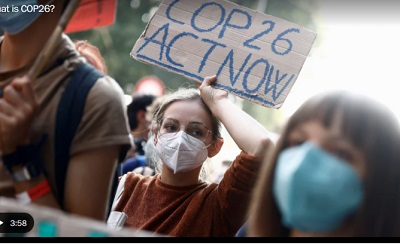
In the days and months leading up to the United Nations Climate Change Conference in Glasgow, Scotland, stark warnings from scientists and policymakers made clear that time is running out.
Without more ambitious action on emissions, the world is on a dangerous trajectory that “may lead to a temperature rise of about 2.7°C by the end of the century,” according to a U.N. report. Scientists say such a rise would have a catastrophic impact around the world.
The event, known as COP26, will involve two weeks of negotiations, during which countries will attempt to set bolder national targets for limiting emissions, help vulnerable and developing nations deal with existing climate catastrophes and finance shifts to greener economies as well as set rules that govern everything from carbon markets to how the world will measure its progress. As thousands of diplomats, activists and scientists will attend the event, here are some of the figures and groups who may have a substantial impact on the talks.
– The dealmakers:
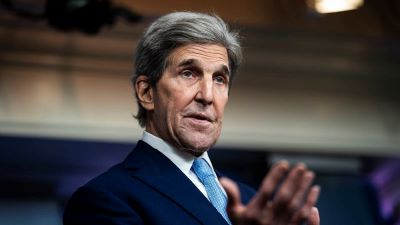
– John F. Kerry
President Joe Biden’s climate envoy and lead negotiator, Kerry is no stranger to global climate summits. As a senator, he attended the 1992 U.N. Earth Summit in Rio de Janeiro, which resulted in the first U.N. international framework to try to combat climate change. Since then he’s attended most of the organization’s climate summits.
As secretary of state under President Barack Obama, Kerry helped shape the 2015 Paris agreement and brings with him strong relationships with other negotiators, as well as a mandate from Biden to make climate a top priority for U.S. foreign policy.
But he may face some questions about the country’s domestic policies. Under Biden, the world’s richest economy and second-largest greenhouse gas emitter has so far failed to pass major legislation at home making the changes necessary to curb emissions, even as the administration has used its executive powers to push more climate-friendly policies.
For months, Kerry has been jetting around the world in an effort to compel other world leaders to embrace more ambitious emissions-cutting plans.
– Alok Sharma
A member of British Prime Minister Boris Johnson’s cabinet, Sharma is the president of COP26. Known for his steady, hard-working demeanor, the former secretary of state for business is likely to be focused on one thing: getting countries on board to sign an agreement.
He’s admitted that may be harder this year than it was in Paris but has also stressed that the climate summit is “our last best chance of getting this right.”
– Patricia Espinosa
A former Mexican politician, Espinosa is one of the top U.N. leaders on climate, holding the role of executive secretary of the United Nations Framework Convention on Climate Change since 2016. It’s her job to work with Sharma throughout the summit to get countries to agree on a framework for cutting emissions. She’s been in Sharma’s position before, as president of the conference when Mexico was the host in 2010.
Espinosa has not minced words on the urgency of addressing the crisis.
A failure to act would mean not only climate crises but flows of displaced people, the crumbling of institutions and unrest, she said in a recent U.N. report. “It would mean less food, so probably a crisis in food security. It would leave a lot more people vulnerable to terrible situations, terrorist groups and violent groups. It would mean a lot of sources of instability.”
– Mark Carney
The former governor of the Bank of England, Carney now serves as the United Nations Special Envoy for Climate Action and Finance. He’s been a leader in incorporating climate change into the financial sector, urging for incentives and regulations that get private companies on board.
Carney formed the Glasgow Financial Alliance for Net Zero, GFANZ, aimed at getting the private sector to echo the net zero goals some countries have already pledged.
But some feel his agenda isn’t going far enough. In October, dozens of organizations advocating for action against climate change signed a letter laying out concerns that the companies agreeing to the GFANZ net-zero pledge were doing so as a PR stunt rather than an earnest effort to strengthen climate action. Many of them, the letter said, continue to back fossil fuels.
– Ursula von der Leyen
The European Union has been a major leader on climate change in the last decade. Von der Leyen will likely keep pushing the bloc’s ambitious agenda and, along with Kerry and other allies, will urge the rest of the world to follow suit.
Since she became president of the European Commission in 2019, the E.U. has pledged to decrease its greenhouse gas emissions by 55 percent by 2030 and achieve a net-zero emissions balance by 2050.
But reaching those goals may be harder for some member states than others. Germany, for example, sees itself a champion of climate action, but some of its villages are still being wiped away for coal mining.
– The Wild Cards:
– Scott Morrison
The Australian Prime Minister famously held up a lump of coal in parliament in 2017, urging onlookers not to fear the substance as his rival Labor Party pushed for renewable energy.
Since taking the top job in Canberra, Morrison has been dragging his feet on major climate action, even as Australia suffers the effects of devastating fires and droughts linked to climate change.
But Morrison said he’s attending the Glasgow summit because it’s “important” and announced a 2050 net zero pledge, though he stopped short of laying out a more ambitious target for 2030. Some say it’s too little too late; others say at least it’s something.
Still, it’s not clear how much leverage the United States has over its close ally ever since it signed a major submarine deal with Australia in a strategic bid against China. House Speaker Nancy Pelosi (D-Calif.) raised eyebrows in September when she said Australia was “leading the way” on climate change, making some question whether the United States is wary of criticizing the country’s climate policies.
– Narendra Modi
That Modi is showing up at all signals India might be more serious about climate action than in years past. During the Paris negotiations, the country held out until the very end before agreeing to sign on.
Under the Paris agreement, countries were urged to improve on their nationally determined contributions, or NDCs, every five years. So far, India has not submitted an updated one ahead of Glasgow. The country still remains largely reliant on coal, with few concrete plans to curb those emissions. But it has made large steps on the renewable energy front. Speaking at the U.N. General Assembly in September, Modi again pledged to achieve 450 gigawatts of renewable energy capacity by 2030.
India was one of the few countries to meet its Paris commitments ahead of Glasgow, and while its emissions are high, officials note that when measured per person, the country of more than 1 billion people ranks 140th in the world.
Modi and his delegation are likely to demand more financial support from developed countries to speed India’s transition away from an emissions-dependent economy. India, China and other developing countries have long pointed out that developed nations also emitted massive amounts of greenhouse gases while they were growing their economies, and their countries need fair incentives to be able to curb their emissions.
– Xie Zhenhua
Chinese President Xi Jinping won’t be in Glasgow, though it’s unclear what sort of message that’s sending – Xi hasn’t traveled abroad during the coronavirus pandemic.
In his stead, Xie, a veteran climate official, will help lead China’s delegation. He headed China’s climate negotiations from 2007 to 2018 and has a strong and familiar relationship with Kerry, who has called him a “leader” and “capable advocate” for the country.
But relations between Washington and Beijing are strained, raising doubts that the two nations will be able to forge an agreement that meaningfully curbs China’s emissions in the near term.
China has pledged to peak emissions by 2030, but won’t say when exactly, and the country will still be increasing its use of coal until 2026. The world’s largest CO2 emitter, has announced a 2060 net zero pledge and vowed to stop building coal plants overseas. But it’s what China decides to do domestically that could make the most difference in whether carbon emissions can be curbed enough to prevent catastrophic warming.
– Ruslan Edelgeriyev
Russian President Vladimir Putin also won’t be at the summit. Instead Edelgeriyev, his chief climate envoy, will lead the delegation. The country only formally joined the Paris agreement in 2019, and has since pledged a 2060 net zero target, though it’s unclear how one of the world’s largest natural gas and oil producers will reach that goal.
The country has remained secretive about its methane emissions and has so far not signed onto the Global Methane Pledge, which aims to reduce methane emissions nearly a third by 2030.
– Abdulaziz bin Salman
Once seen as a great obstructer in negotiations, Saudi Arabia, the world’s largest oil exporter, has started to make pledges that indicate it’s more dedicated to climate action – so long as it can continue to export oil.
The country’s energy minister, Abdulaziz, called for a “comprehensive solution” to climate change at the Saudi Green Initiative Forum, according to Bloomberg News. He added that the world “cannot operate without fossil fuels, without hydrocarbons, without renewables . . . none of these things will be the savior.”
Saudi Arabia has made a 2060 net zero pledge but says it intends to use its income from exporting fossil fuels to fund initiatives to offset those emissions.
– Joaquim Leite
Brazilian President Jair Bolsonaro has voiced skepticism about climate change in the past and won’t be showing up to Glasgow. Even moments of hope on climate action for Brazil – home to the Amazon rainforest and seen as a valuable asset against fighting climate change – have led to disappointment for climate activists. At an April summit organized by Biden, Bolsonaro pledged to double the country’s environmental budget. One day later, he cut the country’s 2021 environmental budget by nearly a quarter.
Brazil’s environment minister, Leite, doesn’t appear to share Bolsonaro’s skepticism on the effects of global warming. He’s said he’s going to Glasgow with the intention of being part of the solution. Progress on scaling back deforestation, according to Leite, would be contingent on how much funding Brazil and other developing countries will receive to mitigate the economic effects.
– The most affected
– Alliance of Small Island States
With member states like the Maldives, the Bahamas, Fiji and Jamaica, the Alliance of Small Island States is sure to be one of the loudest voices at the conference calling for climate action.
The group was formed in 1990 with the sole purpose of giving a larger platform to the small nations most severely affected by the effects of global warming.
This year is no different. The organization is calling for ambitious action to keep the world from warming past 1.5 degrees Celsius; if it does, some of its members could be completely underwater.
Also at play is a 2009 pledge made in Copenhagen wherein countries vowed to give $100 billion a year by 2020 to poorer countries to help mitigate the effects of climate change. That pledge has failed, and the price tag is looking meager as estimates show the cost of addressing the effects of climate change could be in the trillions.
– African Group of Negotiators
The African Group of Negotiators on Climate Change was formed at the first COP in 1995 with the intention of presenting a unified voice from countries in the region in climate negotiations.
Ahead of the summit, the chair of the group, Tanguy Gahouma-Bekale, has called for developed countries to present 2050 net zero emissions goals and meet the $100 billion annual pledge. He stressed that Africa was at the mercy of the world’s larger emitters.
“Africa contributes the least emissions but suffers the brunt of the consequences,” Gahouma-Bekale said in a July statement. “In addition to the effects of the climate crisis such as food insecurity, population displacement and water scarcity, more than half of African countries are likely to experience climate-related conflicts.”
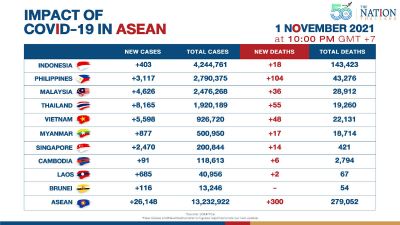
The number of Covid-19 cases crossed 13.23 million across Southeast Asia, with 26,148 new cases reported on Monday (November 1), lower than Sunday’s tally at 28,050. New deaths are at 300, decreasing from Sunday’s number of 346. Total Covid-19 deaths in Asean are now at 279,052.
Laos’ Prime Minister announced the extension of lockdown measures for another 15 days or until November 14 after the number of new Covid-19 patients in the country exceeded 500 patient per day in October, a 27.6 per cent increase from that in September. Laos reported 685 new cases and two deaths on Monday, bringing cumulative cases in the country to 40,956 patients and 67 deaths.
Meanwhile, Cambodia’s Prime Minister Hun Sen declared his country reopen and ready for a new way of life on Monday, having surpassed its Covid-19 vaccination target and recorded one of Asia’s highest inoculation rates. The country has achieved almost 86 per cent vaccination rate of the total 16 million population. More than two million people in Cambodia have already received booster shots against Covid-19.
Australia opened its borders for the first time in more than 18 months to permanent residents, citizens and their families, marking a softening of pandemic restrictions in a country that was once dubbed the “Hermit Kingdom” because of its strict coronavirus measures.
The states of Victoria and New South Wales and the Australian Capital Territory opened their borders to Australian residents and citizens returning to the country. Fully vaccinated individuals won’t need to spend two weeks in quarantine in a hotel at their own expense, as was the case before Nov. 1. Limits on the number of returning Australians will be lifted, although they will stay in place for unvaccinated individuals. Australians are also now free to travel overseas without the requirement of an exemption.
The easing of restrictions only applies to citizens and permanent residents. International travelers need an exemption to come into the country even if they are fully-vaccinated, according to Australia’s health department website.
The softening of restrictions comes as close to 80% of the population older than 16 is fully vaccinated against the virus, a benchmark Prime Minister Scott Morrison had set a month ago as a requirement to ease coronavirus guidelines. The state of Victoria has a vaccination rate of 80.7% of adults with the second dose, New South Wales hit 87.8% and the Australian Capital Territory (ACT) 92.7%, according to official data from Nov. 1.
The first travelers to reenter the country under these new guidelines were welcomed with hugs of teary-eyed family members and smiling crowds at the Sydney airport. “It’s been pretty stressful, so just to be able to come home without having to go quarantine is huge,” Carlie Boyd told the Guardian as she left a Qantas flight and was welcomed with hugs from her siblings.
“There were a lot of people on that flight who have loved ones who are about to die or had people who died this week, so for them to be able to get off the plane and go and see them straight away is pretty amazing,” she said.
Australia instituted one of the world’s harshest coronavirus closures on March 20, 2020, which left many Australian nationals stranded abroad. The country was an early coronavirus success, managing to keep the number of cases low, but a slow vaccination rollout and the spread of the delta variant prompted Morrison’s government to tighten restrictions in July 2021.
“A big day for Australia! We’re ready for takeoff!” Morrison said in a Facebook post as he celebrated the easing of travel restrictions. “As vaccination rates continue to rise around the country, I look forward to seeing even more border restrictions easing so families can be reunited and Australians can continue to reclaim their lives.”
Monday also marks the easing of restrictions between Australia and New Zealand. One-way, quarantine-free travel to Australia from anywhere in New Zealand will also be allowed Nov. 1 for certain provinces and territories. Fully vaccinated Singaporeans will also be able to travel to Australia from Singapore quarantine-free starting Nov. 21, the Australian government announced.

 White flags honoring the lives lost to COVID-19 are seen on the National Mall in Washington, D.C., the United States, on Oct. 2, 2021. (Xinhua/Liu Jie)
 Men stand at a bus stop amid the COVID-19 outbreak in Sao Paulo, Brazil on Aug. 2, 2021. (Xinhua/Rahel Patrasso)


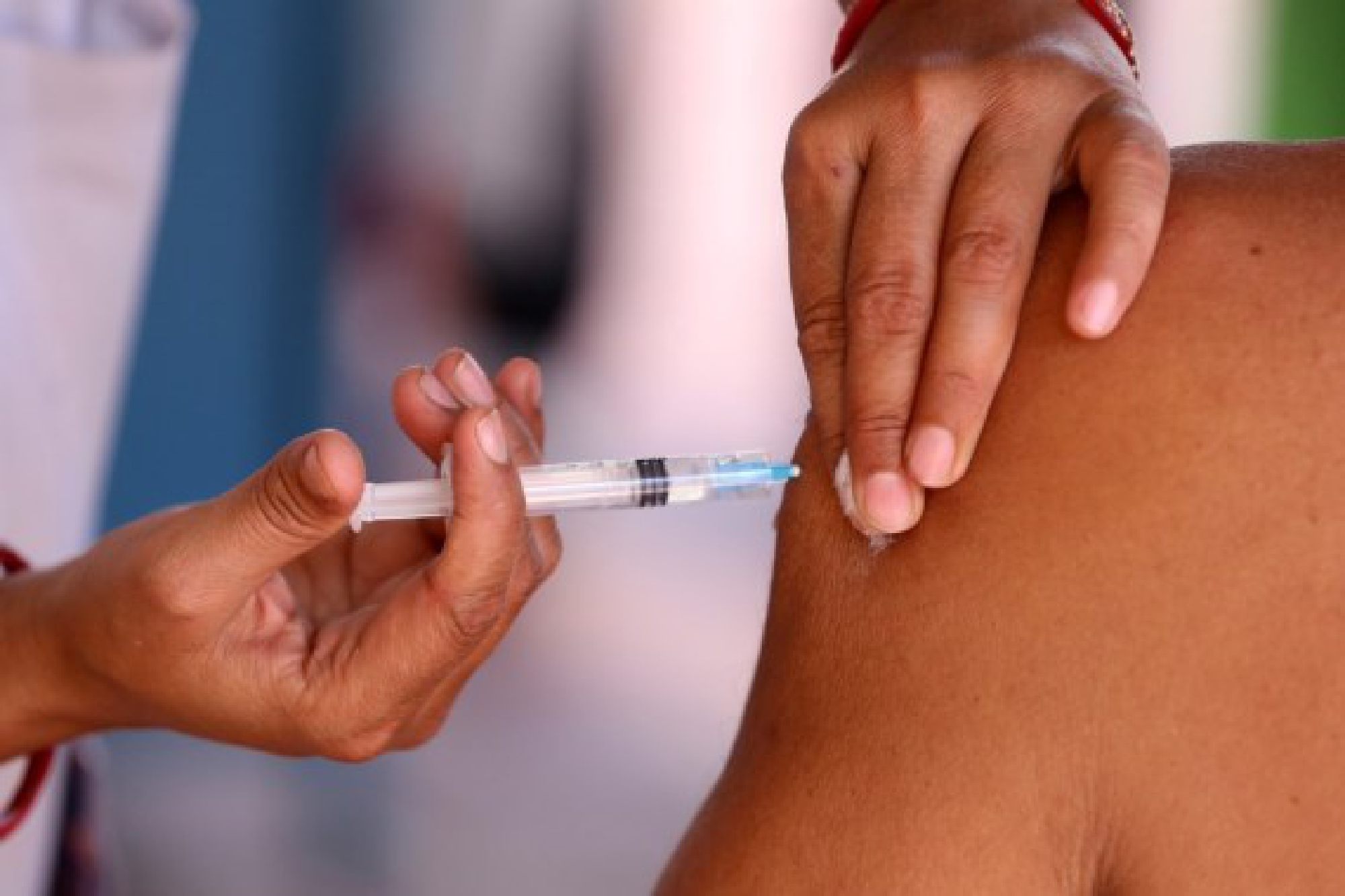 A man receives a shot of COVID-19 vaccine during the vaccination drive at a clinic in Misrod village, Bhopal, India, April 1, 2021. (Str/Xinhua)
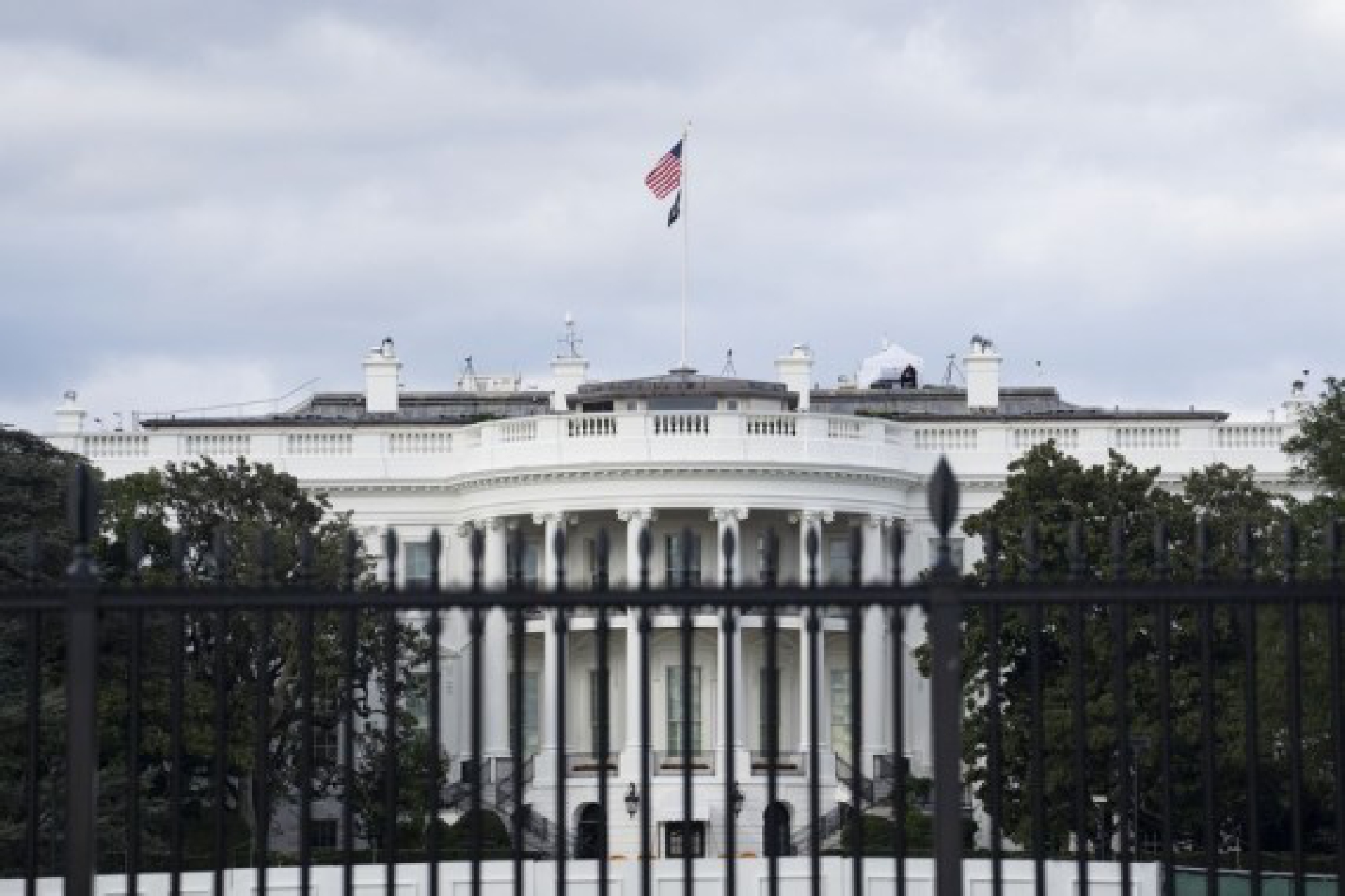 Photo taken on Oct. 28, 2021 shows the White House in Washington, D.C., the United States. (Xinhua/Liu Jie)