A recent speaker at the United Nations had a message that has been heard many times: refusing to drastically cut back on fossil fuels could drive humans to extinction. What made the speech unusual was the bearer of the warning: Frankie the Dinosaur.
Days out from the U.N. climate summit, known as COP26, in Glasgow, Scotland, the U.N. Development Program released a video of the computer-generated Frankie calling on the world not to “choose extinction.”
“Going extinct is a bad thing. And driving yourselves extinct? In 70 million years, that is the most ridiculous thing I have ever heard,” said Frankie, who is voiced in English by actor and songwriter Jack Black, from the podium of the U.N. General Assembly. “You are headed for a climate disaster and yet every year governments spend hundreds of billions of public funds on fossil fuel subsidies.”
The talking dinosaur closed out his speech by framing the global pandemic as an opportunity for countries to transition to green energy sources for their economies, which elicited an ovation from delegates in the video.
Ahead of the Glasgow climate talks, some of the world’s top carbon emitters are also calling on rich countries to do more to help finance the developing world’s transition away from fossil fuels.
India, the world’s third-largest emitter of carbon dioxide, said Wednesday it would not commit to a net-zero emissions target by mid-century. New Delhi instead called on developed nations to take “historic responsibility” for the greenhouse gases they have emitted over the centuries.
And a senior Chinese official said the same day that a lack of financial support from rich countries, such as their incomplete promise to mobilize $100 billion annually to the developing world by 2020, creates a “critical issue of mutual trust” between the two. China is the world’s top emitter of greenhouse gases.
“Many developed nations are pushing for more climate goals when they have yet to meet existing pledges,” China’s environment vice-minister Ye Min said. “All parties should realize that climate goals unsupported by action is like building palaces in the air.”
Governments worldwide spend about $423 billion every year subsidizing fossil fuels, which are responsible for three-fourths of total greenhouse gas emissions, according to a U.N. report published Wednesday.
The real cost is likely to be much higher, given negative effects of climate change such as the loss of biodiversity and the displacement of communities due to extreme weather.
Without more-ambitious pledges to cut emissions, the world is projected to warm 2.7 degrees Celsius (4.9 degrees Fahrenheit) by the end of the century compared with the end of the 1800s – far above the Paris climate accord’s goal of limiting warming to “well below” 2 degrees Celsius (3.6 Fahrenheit) compared with preindustrial levels.
Countries are “utterly failing,” U.N. Secretary General António Guterres said earlier this week.
“The era of half measures and hollow promises must end. The time for closing the leadership gap must begin in Glasgow,” Guterres said.
The figures, which exclude automobile dealers, gasoline stations and restaurants, exceed the previous record in 2020 when holiday sales grew 8.2 percent to 777.3 billion dollars.
U.S. holiday sales during November and December are expected to grow between 8.5 percent and 10.5 percent over 2020 to reach between 843.4 billion U.S. dollars and 859 billion dollars, the National Retail Federation (NRF) said on Wednesday.
The figures, which exclude automobile dealers, gasoline stations and restaurants, exceed the previous record in 2020 when holiday sales grew 8.2 percent to 777.3 billion dollars.
“Consumers are in a very favorable position going into the last few months of the year as income is rising and household balance sheets have never been stronger,” NRF President and CEO Matthew Shay said in a statement.
“Retailers are making significant investments in their supply chains and spending heavily to ensure they have products on their shelves to meet this time of exceptional consumer demand,” Shay said.
NRF chief economist Jack Kleinhenz noted that pandemic-related supply chain disruptions have caused shortages of merchandise and most of this year’s inflationary pressure.
“With the prospect of consumers seeking to shop early, inventories may be pulled down sooner and shortages may develop in the later weeks of the shopping season. However, if retailers can keep merchandise on the shelves and merchandise arrives before Christmas, it could be a stellar holiday sales season,” Kleinhenz said.
While e-commerce will remain important, households are also expected to shift back to in-store shopping and a more traditional holiday shopping experience during the upcoming holiday season, according to the NRF.
“We advocate the development of a procedure for the mutual recognition of vaccination certificates,” Putin said.
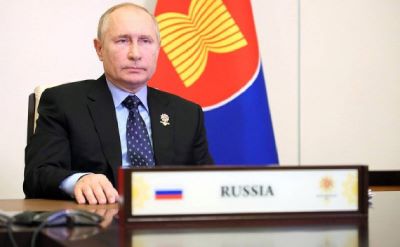
Russian President Vladimir Putin proposed the creation of a regional mechanism aimed at promoting closer cooperation against COVID-19 among Russia and countries of the Asia-Pacific region at the 16th East Asia Summit on Wednesday.
“We suggest that a regional mechanism for anti-pandemic collaboration be established under the aegis of the East Asia Summits, and we will shortly submit specific considerations on this score via the expert channels,” Putin said during his speech.
Among the COVID-19 response initiatives introduced by the president was a proposal to expand training opportunities for epidemiologists from ASEAN countries.
“We advocate the development of a procedure for the mutual recognition of vaccination certificates,” Putin said, adding that such a mechanism is necessary to ensure the free movement of citizens across the Asia-Pacific region.
“I would like to note that Russia is seeking to make a real contribution to efforts aimed at ensuring free and non-discriminatory access to vaccines against COVID-19 for citizens of all states,” he said.
Alongside anti-coronavirus cooperation, the Russian leader discussed economic relations and prospects for collaboration in the tourism sector.
He also pointed to the importance of joint efforts aimed at tackling climate change, including through coordinated approaches with regard to innovative solutions to decarbonization, and the development of low-emission industries.
The 16th East Asia Summit, which was chaired by Brunei, was held in the format of a video conference.
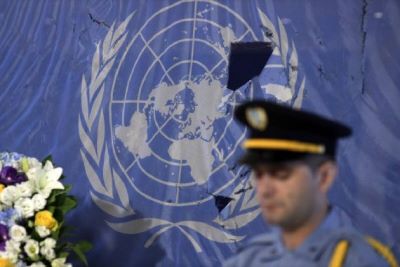
The number of abductions of UN personnel drastically increased to 17 in 2020, from six in 2019. Another seven personnel were abducted in the first six months of 2021.
Acts of violence and safety-related incidents claimed the lives of 28 UN civilian personnel in 2020 and the first six months of 2021, according to a report released Wednesday.
Of the 28 fatalities, seven were as a result of acts of violence, and 21 were due to safety-related incidents, shows the UN secretary-general’s latest report, “Safety and Security of Humanitarian Personnel and Protection of UN Personnel.”
The number of abductions of UN personnel drastically increased to 17 in 2020, from six in 2019. Another seven personnel were abducted in the first six months of 2021.
During the 18 months covered in the UN chief’s report, 153 personnel were injured due to acts of violence, and 157 others were injured due to safety-related incidents.
Overall, incidents relating to safety and security affected 2,217 UN personnel, compared with 2,162 in the previous 18 months.
During the latest reporting period, there were 45 attacks on UN premises, 164 attacks on UN vehicles and 177 intrusions into UN premises.
For the past 18 months, three major trends have persisted, with adverse effects on the levels and types of threats against UN and humanitarian personnel carrying out their critical work in volatile settings, says the report.
First, the role of non-state armed actors continued to gain prominence. Second, information technology, alongside its benefits, has posed threats associated with disinformation. Third, the expansion of violent extremism across continents continued, in particular in areas lacking employment opportunities for young people and basic state services such as security.
UN and humanitarian personnel continue to risk their lives to bring aid and hope to those in despair. They have prevented the worst outcomes in dire humanitarian situations. In the past 18 months, seven UN personnel and a reported 101 humanitarian personnel from nongovernmental organizations (NGOs) have lost their lives as a result of violence, says the report.
“I am deeply saddened by these deaths and express my sincere condolences to the bereaved families. I condemn, in the strongest terms, all forms of violence against United Nations and humanitarian personnel. The legacies of these fallen brave men and women live on in our commitment to continue to work, even in dangerous places, to create a better world,” said UN Secretary-General Antonio Guterres in the report.
He also voiced deep concern over the sharp rise in the number of abductions of UN and humanitarian personnel, with 17 abduction incidents affecting UN personnel in 2020, more than double the number of abductions in 2019. Similarly, the reported number of NGO humanitarian personnel abducted rose to 182 in 2020, compared with 127 in 2019.
During the 18 months, 27 uniformed peacekeepers died as a result of malicious acts — 12 in 2020, and 15 in the first six months of 2021.
The daily count of people getting dose 1 has been decreasing since mid-August, reaching a record low of 25,336 on Tuesday, according to latest data of the U.S. CDC.
The daily count of people receiving first shots of COVID-19 vaccines in the United States dropped to a record low since vaccines were available in the country last December, as experts stressed urgency for the vast unvaccinated to take the first step.
The daily count of people getting dose 1 has been decreasing since mid-August, reaching a record low of 25,336 on Tuesday, according to latest data of the U.S. Centers for Disease Control and Prevention (CDC).
The average number initiating vaccination each day is down 15 percent from last week.
The slowdown came as the recent wave of the pandemic continues to show signs of easing in the country. New daily COVID-19 cases in the United States have fallen by nearly 60 percent nationwide since a peak in mid-September brought by the highly transmissible Delta variant.
But some northeastern states are starting to see new outbreaks, and the nation is still averaging nearly 70,000 daily cases and more than 1,000 deaths per day, according to CDC data.
About 191 million people have been fully vaccinated in the United States as of Wednesday, accounting for 57.5 percent of the whole population. About 14.4 million people have received booster shots.
Advisers to the U.S. Food and Drug Administration (FDA) on Tuesday recommended authorizing the Pfizer-BioNTech COVID-19 vaccine for children ages 5 to 11. They found that the benefits of the vaccine outweighed the risks for this younger population.
It is now up to the FDA and the CDC to make a final decision. If authorized, it would be the first COVID-19 vaccine for younger children.
Health experts said getting younger kids eligible for COVID-19 vaccines could impact the trajectory of the pandemic. However, to convince the vast unvaccinated population to take the first step remains key to ending the pandemic.
Hong Kong has banned films that run contrary to the interests of a Beijing-drafted national security law, the latest crackdown on freedom of expression in the Asian financial hub.
The city’s opposition-free legislature amended the Film Censorship Bill on Wednesday, turning movie censors into gatekeepers of the security law with penalties as high as HK$1,000,000 ($130,000) and three years in prison for those who screen non-approved content.
Inspectors can search without a warrant a premises showing a film, including company offices or a private members’ club, and the Film Censorship Authority can demand more information about a screening under the new rules.
Questions hang over how the changes will impact streaming services such as Netflix Inc., which offers a documentary on student activist Joshua Wong in Hong Kong, for example. Netflix declined to comment, while Vimeo Inc., Amazon.com Inc. and Apple Inc. didn’t reply to questions about the changes.
“It is a treacherous climate for businesses having to make content decisions,” Darrell West, senior fellow at the Center for Technology Innovation at the Brookings Institution, said of the law, which makes no mention of online content but has repeated references to videotapes.
The changes are part of a wider legal assault on the freedom of expression and information once prized in the former British colony, but severely reduced in mainland China. Since the security law passed in June 2020, the city legislature has adopted an anti-doxxing law, moved to limit information available in the companies registry, and curtailed the content of public broadcaster Radio Television Hong Kong, which has axed programs critical of the government.
The city’s leader Chief Executive Carrie Lam said the Legislative Council had “delivered a brilliant performance” since all the political opposition had either been arrested, disqualified or resigned after Beijing mandated national security officials approve candidates. “They have done really well in terms of legislative amendments and proposals,” Lam said in a regular press briefing Tuesday.
Censorship had seeped into the industry even before the changes. In March, a local theater pulled the prizewinning documentary “Inside The Red Brick Wall” about 2019 anti-government protests. The film’s distributor, Ying E Chi, lost its government funding soon after.
Around the same time, the University of Hong Kong warned its student union that a screening of a documentary on the pro-independence activist Edward Leung could violate the security law.
Then in June, the government updated the censorship guidelines in relation to the security law, instructing censors to watch out for content “capable of being perceived as endorsing, supporting, promoting, glorifying, encouraging or inciting such acts or activity.”
Baking such censorship into law were “dictatorial manoeuvrings designed to undermine a vibrant Hong Kong film culture,” said Joseph Lee, director of the Global Asia Institute at Pace University in New York, who has published two papers on Hong Kong cinema. After decades producing global movie stars like Tony Leung, who starred in Marvel’s “Shang-Chi” blockbuster hit this summer, some in the film industry worried the amendments signaled the “death of Hong Kong Cinema,” Lee said.
“It is hard to imagine how film directors, executive producers and actors could stay politically neutral because China’s definition of politics focuses narrowly on any opinion and action thought to be a security threat,” he said.
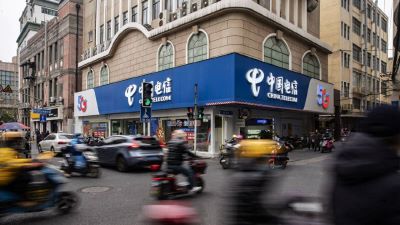
A U.S. ban of China Telecom (Americas) Corp. by regulators shows that broad concerns about Beijing persist in Washington, even as the Biden administration takes steps to improve communications between the worlds biggest economies.
The Federal Communications Commission, an independent government agency overseen by Congress, on Tuesday voted 4-0 to cancel permission to operate in the U.S. for the unit of China Telecom, one of three leading communications providers in China.
Though the company doesn’t do a lot of business in the U.S., being barred from the market is significant coming on the heels of the moves against other strategic Chinese tech giants, including Huawei Technologies Co.
“It’s an important action,” said Martijn Rasser, director of the technology and national security program at the Center for a New American Security in Washington. “It also sends a broader message to Beijing, that regardless of who’s president, the U.S. continues to be concerned about the risks posed by Chinese tech firms operating in the U.S.”
Leaders Joe Biden and Xi Jinping are expected to meet virtually later this year, as overall relations show signs of warming following a Sept. 9 phone call between them. Shortly afterward, the U.S. reached a deal to release Huawei Chief Financial Officer Meng Wanzhou from extradition proceedings in Canada — one of Beijing’s top demands.
Since then, the U.S. and China have moved to rebuild communication lines cut off during years of clashes during the Trump administration over everything from trade and Taiwan to tech and the origins of the coronavirus. Vice Premier Liu He and U.S. Treasury Secretary Janet Yellen this week held their second call in about four months, which China described as “pragmatic, candid and constructive.”
Still, areas of tension remain. In addition to U.S. sanctions and other punitive actions on Chinese officials and companies, the Biden administration’s overtures to Taiwan have angered Beijing. The Hang Seng Tech Index, which tracks mostly Chinese technology firms traded in Hong Kong, declined as much as 3.9% on Wednesday, the most in more than a month.
The case against China Telecom was first brought during former President Donald Trump’s administration, along with actions against China Unicom Americas Ltd., Pacific Networks Corp. and its subsidiary ComNet. The FCC is also moving toward ending authorizations for those companies.
The Trump administration pursued an aggressive strategy against China, using export controls, prohibitions and executive orders to block companies including China’s biggest technology company, Huawei, and chipmaker Semiconductor Manufacturing International Corp. The FCC has also stepped in with actions against Huawei, China Mobile Ltd. and others.
On Tuesday, the agency said that China Telecom (Americas) “raised significant national security and law enforcement risks.”
“Our record makes clear it operates as a subsidiary of a Chinese state-owned enterprise” giving the Chinese government’s ability to control its actions, said acting FCC Chairwoman Jessica Rosenworcel. “That can lead to real problems with our telecommunications networks,” including surveillance and misrouted traffic.
Beijing-based China Telecom is one of the largest phone companies in China and the second-largest wireless carrier in China with 370 million subscribers, according to an Oct. 22 securities filing by the company. Along with China Mobile and China Unicom, it dominates the Chinese telecommunications market, according to a U.S. Senate report last year.
“The FCC action is long overdue,” said Derek Scissors, senior fellow at the American Enterprise Institute. “The Chinese telecom majors are arms of the government much more than they are commercial enterprises.”
China Telecom earlier told the agency it’s an independent business based in the U.S. and isn’t subject to Chinese government control.
“The FCC’s decision is disappointing,” Ge Yu, a China Telecom spokesman, said in an email. “We plan to pursue all available options while continuing to serve our customers.” There was no response to an email sent to the press contact at the Chinese embassy in Washington.
The FCC’s action shows that more moves against Chinese tech may be brewing, said Roslyn Layton, co-founder of the China Tech Threat website that tracks Chinese technology and suggests policies to bolster security.
“This move demonstrates that the FCC is not afraid to take action against the world’s big players,” Layton said in an email.
In June the FCC proposed a ban on products from five Chinese companies including Huawei and surveillance camera-makers Hangzhou Hikvision Digital Technology Co. and Dahua Technology Co.
FCC Commissioner Brendan Carr has called for steps to bar Shenzhen, China-based drone maker SZ DJI Technology Co. from the U.S. market, calling it “a Huawei on wings.”
China Telecom needs to cease operations in the U.S. within 60 days of the FCC’s order being published, the agency said in a news release. The company’s U.S. business is dwarfed by its activities elsewhere.
The U.S. business’s contribution to the overall revenue and assets is small, China Telecom’s Chief Executive Officer Ke Ruiwen said during an earnings call in August 2020, without giving details. Its U.S. unit leases lines from American infrastructure providers and carriers to provide enterprise and wireless services.
China Telecom’s internet backbone reaches into the U.S., said John Byrne, an analyst with GlobalData.
“Essentially what they do is provide a very reliable domestic Chinese network for multinational companies in a variety of markets that are looking to access supply chain partners or customers. Conversely, they provide reliable U.S. connectivity for Chinese entities,” Byrne said.
“In the current environment, many Chinese operators and telecoms equipment vendors are being painted with the same brush — no real evidence of any misdoings but a general perception that they could commit some sort of malfeasance at the behest of Chinese government actors – corporate espionage or the like,” Byrne said. “And frankly there is no constituency at this moment for a U.S. politician or regulator appearing to take the side of the Chinese government.”
U.S. officials have said they get information about potential threats in confidential briefings.
Floods sparked by days of heavy rainfall ravaged the Italian island of Sicily Tuesday, forcing evacuations and officials to issue a stay-at-home notice amid the severe weather which also swept the region of Calabria, in southwest Italy.
At least two people died as a powerful cyclonic storm dumped an estimated 300 mm (11.8 inches) of water – almost half the average amount of the island’s expected annual rainfall – in just a few hours on Sunday and into Monday, the Sicilian Farmers’ Association said.
According to experts, the extreme wet weather is a result of a rare “medicane,” also known as a Mediterranean hurricane. Medicanes are typically smaller, and shorter in duration, than hurricanes, although they can still bring strong winds and torrential rain.
Italy’s fire department said Monday that firefighters had carried out close to 600 flood rescues in 24 hours, carrying out 400 rescue missions in Sicily and 180 in Calabria.
Videos shared to social media highlighted the scale of the destruction: streets turned into rivers, abandoned vehicles almost entirely submerged in murky, fast-flowing waters.
“I urge the entire population to not leave home except for emergency reasons,” the mayor of Catania, Salvo Pogliese, posted on Facebook, adding that streets were “overrun by water.”
On Sunday, the Department for Civil Protection issued a red alert – the most severe weather warning – for parts of Sicily and Calabria warning of a threat to life and property.
The rising water, torrential winds and flooding also forced schools to close.
The wet weather continued into Wednesday, with forecasters predicting more rainfall throughout the week.
The scenes come following a summer of deadly floods across Europe, that wreaked havoc across communities from Germany to Belgium to the United Kingdom.
A recent study found that extreme flooding is set to increase as global temperatures rise.
This month, leaders will gather in Glasgow, Scotland, for this year’s global climate conference – but most of the world is already feeling the repercussions of their inaction – be it through intense heat waves, flooding or wildfires.
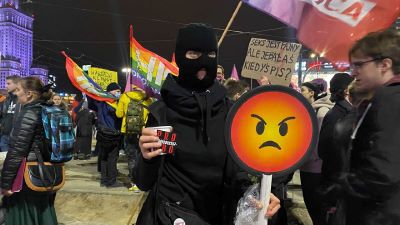
WARSAW – Most political parties in Poland have complaints about Facebooks algorithms, the obscure formulas that decide which posts pop up on a users news feed and which fade into the ether.
The far-right Confederation party does not.
It’s a “hate algorithm,” said Tomasz Grabarczyk, who heads the party’s social media team. But the Confederation’s content generally does well, including a slew of anti-lockdown, anti-immigration, vaccine-skeptic posts often punctuated with large red exclamation marks. “I think we are good with emotional messages,” he said.
That Facebook might be amplifying outrage – while driving polarization and elevating more-extreme parties around the world – has been ruminated on inside the company for years, according to the internal documents known as the Facebook Papers, which were disclosed by the whistleblower Frances Haugen to the Securities and Exchange Commission. Redacted versions were reviewed by a consortium of news organizations including The Washington Post.
In one April 2019 document detailing a research trip to the European Union, a Facebook team reported feedback from European politicians that an algorithm change the previous year – billed by Facebook chief executive Mark Zuckerberg as an effort to foster more “meaningful” interactions on the platform – had changed politics “for the worse.”
The Facebook team reported back specific concerns from Poland, where political parties had described a “social civil war” online. Such worries have prompted reviews by regulators and lawmakers across the continent, including proposals at the European Parliament to force more transparency from Silicon Valley’s tech giants.
The Eastern European country, led by the populist Law and Justice party since 2015, is bitterly divided between ardent supporters of the government and equally committed critics. Battle lines are drawn over such issues as abortion, LGBT rights and a fight with the E.U. over the primacy of the laws that bind the 27-nation bloc.
In Warsaw, the two major parties – Law and Justice and the opposition Civic Platform – accused social media of deepening the country’s political polarization, describing the situation as “unsustainable,” the Facebook report said.
“Across multiple European countries, major mainstream parties complained about the structural incentive to engage in attack politics,” the report said. “They see a clear link between this and the outsize influence of radical parties on the platform.”
An independent data analysis of major political parties in Poland that was conducted for The Post showed that after 2018, negative messages were more likely to receive a high number of shares. Previously, it appeared that more of a mix of positive and negative posts did well.
Some Facebook employees recognized the need to act, according to the documents, but it was not just out of concern over the potentially damaging impact on society, internal documents show. Some employees also felt revisions to its algorithms were best for long-term growth, likening such outrage-centric content to junk food.
“We can choose to be idle and keep feeding users fast-food, but that only works for so long,” the internal report said. “Many have already caught on to the fact that fast-food is linked to obesity and, therefore, its short-term value is not worth the long-term cost.”
For more than a decade, content has been ranked using a complex formula that assesses at least 10,000 data points every time it decides what to show. In 2018, Facebook made a big change to that formula to promote “meaningful social interactions.” These changes were billed as a design to make the news feed more focused on posts from family and friends and less from brands, businesses and the media. The process weighted the probability that a post would produce an interaction, such as a like, emoji or comment, more heavily than other factors.
But that appeared to backfire. Haugen, who this week took her campaign against her former employer to Europe, voiced a concern that Facebook’s algorithm amplifies the extreme.
“Anger and hate is the easiest way to grow on Facebook,” she told British lawmakers Monday. She will appear in Brussels early next month.
“Facebook wants blood,” said Anna Sikora, who handles social media for the left-wing Razem party, and who did not meet the Facebook team during its trip. “If we quote a stupid statement of our political opponent, our post reaches lots of people.”
Razem’s social media team tried to share more posts in groups or use short videos to get a wider reach. But that has had limited impact. “If there’s no blood, it is likely to only be seen by our social bubble,” she said. “Even most of our voters will never see it.”
In Europe, the details of the internal Facebook report – parts of which were first reported by the Wall Street Journal – have opened debate on the extent to which Facebook has fanned and shaped a trend in some countries toward more-toxic, deeply polarized politics.
Social media’s permeation of politics in Europe has occurred alongside epochal events that cleaved fresh divisions. Most notable was the 2015 migrant crisis – a huge wave of refugees and others from war-torn Syria and elsewhere – which helped to boost far-right parties and their nativist rhetoric across the continent.
When it comes to polarization, academic research does not support “the idea that Facebook, or social media more generally, is the primary cause of polarization,” said Facebook spokeswoman Dani Lever. “If it were true that Facebook is the chief cause of polarization, we would expect to see it going up wherever Facebook is popular. It isn’t.”
“Is a ranking change the source of the world’s divisions? No,” she said. “We’re continuing to make changes consistent with this goal, like new tests to reduce political content on Facebook based on research and feedback.”
Facebook has said its systems are not designed to push provocative material. “The argument that we deliberately push content that makes people angry for profit is deeply illogical,” Facebook Chief Executive Mark Zuckerburg said earlier this month. ‘We make money from ads, and advertisers consistently tell us they don’t want their ads next to harmful or angry content.”
Several fixes were floated within Facebook as part of the report on the impact of its algorithms on European politics – alongside similar complaints from media organizations – including rethinking “current incentive structures.”
Several employees suggest adjusting the weighting given to the angry emoji within the algorithms to make it less likely that negative posts break through. Angry emoji, like other emotional reactions, initially had five times the weighting of a like, the documents show. It was gradually downgraded, and by Oct. 1, 2020, the weight of an angry reaction had been reduced to zero.
So far, the Confederation hasn’t noticed much of an impact. “This algorithm is not the worst thing,” said Grabarczyk, a 27-year-old with neatly gelled hair, a suit, crisp white shirt and gold cuff links that look out of place in the party’s somewhat ramshackle office in central Warsaw.
With 664,000 followers, the party – Konfederacja in Polish and initially formed as a coalition of two parties – has the biggest presence of all the country’s political parties, despite having just 11 seats in the 569-seat Parliament. Grabarczyk said the party tiptoes along the “border” where it could run afoul of hate-speech moderators.
“Where is the wall, which as #Confederation we have been demanding for over 2 months?!” asks one of Confederation’s posts with a video of people trying to pull down barbed wiring; the video garnered 1,900 likes and reactions and more than 1,000 comments. Another video, with more than 4,900 likes and reactions, features a doctor raising questions about the vaccination of children: “No to propaganda and intimidation!” it concludes. “Pass it on!!”
Facebook says it knows people try to “game our systems” to avoid enforcement. “We work to identify and remove content that breaks our rules and prohibit altogether organizations that continuously violate our community standards, and have removed accounts connected to different political parties and social movements, including politicians associated with Konfederacja for violating our policies in the past,” said Lever.
Janusz Korwin-Mikke, one of the party’s politicians who was at the time the most popular Polish politician on Facebook, was banned from the platform last year.
– – –
It was the presidential election in 2015 that woke Polish politics to the powers of Facebook, said Pawel Rybicki, who worked on the campaign for President Andrzej Duda. “We used social media full-scale,” Rybicki said. Duda, an ally of Law and Justice, had been considered the underdog but won with 51.5% of the vote.
“It was like a war, and social media was the new gun for Polish political parties,” recalled Rybicki, who met with the Facebook team when it was in Warsaw but said he largely raised concerns regarding moderation.
A consultant to the social media team for the Civic Platform party, who spoke on the condition of anonymity to discuss that party’s social media strategy, described those days as the “wild West,” with apparently little content-moderation on Facebook. He said that he, like others, noticed a shift in 2018 with more-extreme content breaking through.
Facebook says it has had teams reviewing content in Polish prior to 2015 and currently has 40,000 people working on safety and security.
“The walls of the bubbles are thicker and thicker,” he said, referring to the echo chambers that different parts of society occupy on social media. “One bubble, that mainly delivers anti-democratic statements, [is] much more shown by Facebook.”
Internal messages show that such questions are continually dissected by Facebook employees, according to the documents. In one, they dug into a 2021 study’s finding that extreme parties tended to elicit relatively greater emotional responses on Facebook such as anger and love.
“I am not comfortable making judgments about some parties being less good for society and less worthy of distribution based on where they fall on the ideological spectrum,” responded one commenter inside the company. “All the parties in the analysis are legal.”
“I don’t think we should be judging political parties directly either,” another said. “But I do think we should be questioning what kinds of messages are being amplified by virtue of our algorithmic choices.”
The challenge for European regulators remains how to make sure Facebook and other social media platforms do not amplify far-right voices and further tear at the political center.
“It’s difficult to legislate,” said Alexandra Geese, a German lawmaker in the European Parliament involved in stewarding proposals to force greater openness by Facebook and other social media companies.
The key to any effort will be transparency regarding algorithms, she said. She called it “startling” that Facebook had never publicly revealed it had received feedback from European politicians on the negative impact of its algorithms.
“Many areas of our political debate seem broken because of division,” said Damian Collins, the head of the British parliamentary committee charged with drafting online safety legislation. “If that division is being driven by social media platforms in the way that they are being designed, that’s something that I think we have the right to know about, because that’s a direct attack on our democracy.”
– – –
A lack of data complicates any outside analysis of what is working and what is not on Facebook, said Dominik Batorski, a founder of Sotrender, a social media analytics firm, who met with the team from Facebook when it visited Warsaw.
While company’s analysis of public data on posts – such as reactions and shares – showed that negative posts appeared to break through more after 2018. Yet not everything in the findings reflected the complaints that Polish politicians voiced to Facebook.
According to Facebook’s internal report, the social media management team of one Polish political party (which was not named) described its shift: moving from a roughly even split of negative and positive messages, to 80% negative. The Civic Platform’s social media team did not say whether the Facebook report mirrored feedback from someone at the party. Law and Justice officials declined interview requests.
The Civic Platform appeared to shift to posts with more-negative sentiment in 2015, when the party lost elections and before the algorithmic changes, Batorski’s analysis showed. And in contrast, Law and Justice skewed more to the positive on its main Facebook page after 2018, Batorski said.
Batorski’s analysis took into account only official pages for the parties; much of their online war takes place on platforms not affiliated with the parties. Rhetoric attacking LGBT “ideology” during Law and Justice’s recent campaigns, for example, was not expressed on its main account, Batorski said.
Another analysis of Polish parties’ Facebook posts in one week last year, the 14 most popular were from the Confederation.
“Ranking top page posts by reactions and comment doesn’t paint a full or accurate picture of what people actually see on Facebook, because engagement doesn’t not equate or predict reach,” said Facebook’s Lever, referring to the number of people who actually get to see a post – data which is not public.
Batorski said Facebook had appeared proactive in gathering feedback ahead of European Parliament elections in 2019.
But he said Facebook focused on transparency regarding political advertisements, which is not as much of a concern in Europe because ad spending is generally low. He said he raised concerns over such issues as Facebook pages built solely to push negative campaigning.
The Confederation has been helped online by a galvanized and much younger support base than most other parties, giving it an outsize presence on social media. Only formed in late 2018, it won 7% of the vote in elections a year later. It had not expected to enter Parliament, Grabarczyk said.
“We did everything on the Internet, everything,” he said. “I’d say it’s 70% thanks to Facebook.”
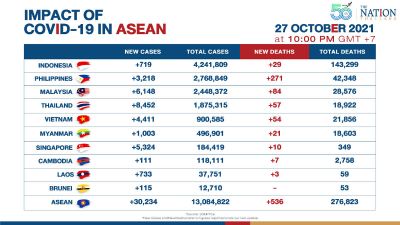
The number of Covid-19 cases crossed 13.08 million across Southeast Asia, with 30,234 new cases reported on Wednesday (October 27), higher than Tuesday’s tally at 27,325. New deaths are at 536, increasing from Tuesday’s number of 435. Total Covid-19 deaths in Asean are now at 276,823.
Vietnam has started vaccinating children aged 12-17 years in Ho Chi Minh City on Wednesday (October 27). Authority announced that the Covid-19 outbreak in the city is still under control, but it decided to vaccinate children as soon as possible to reduce the risk. The country reported 4,411 new cases and 54 deaths on Wednesday, bringing cumulative cases to 900,585 patients and total 21,856 deaths.
Meanwhile, Cambodian tourism minister has said that foreign visitors to enter the country must have been fully vaccinated against Covid-19 for at least 14 days before arrival. Visitors must also take a rapid test when they arrive at the airport. Only when the test comes out negative they can travel freely in the destinations that are considered safe by the government.