In latest legal setback, Florida judge rules Trump cant skirt Twitters terms just because he was president #SootinClaimon.Com

#SootinClaimon.Com : ขอบคุณแหล่งข้อมูล : หนังสือพิมพ์ The Nation.

https://www.nationthailand.com/international/40008066


A Florida federal judge ruled Tuesday that Donald Trumps status as a former president does not exclude him from following Twitters terms of service, the latest setback in his quest to get back on the social media platform after being banned this year.

U.S. District Judge Robert Scola Jr. granted Twitter’s motion to transfer the case from the Southern District of Florida to the Northern District of California, which is required by a clause in the company’s user agreement that all Twitter users sign. The case stems from Twitter permanently suspending Trump shortly after the Jan. 6 riot at the U.S. Capitol that led to five deaths and injuries to hundreds of people.

While Trump’s attorneys have argued that his status as former president exempts him from Twitter’s clause, and that it was in the public’s interest for the case to stay in Florida, Scola was unconvinced. In his 13-page ruling, the Miami judge noted that Trump, who lives in Florida, “has not advanced any legal authority to support his contention.”

“The Court finds that Trump’s status as President of the United States does not exclude him from the requirements of the forum selection clause in Twitter’s Terms of Service,” wrote Scola, an appointee of President Barack Obama. “The Plaintiffs have failed to satisfy their heavy burden to show that this case should not be transferred.”

The move followed a ruling from another Florida federal judge earlier this month who granted a similar request to move Trump’s lawsuit against Google-owned YouTube to a California court. Trump, who has asked a court to mandate that Twitter restore his account, has also filed a class-action lawsuit against Facebook, arguing, with little substantiation, that social media giants are “silencing” him and other conservatives. Trump has also argued, without evidence, that Twitter CEO Jack Dorsey “succumbed to the coercion efforts of Democratic lawmakers.”

Taylor Bulowich, a spokesman for Trump, did not immediately respond to a request for comment Wednesday. Neither Linda Cuadros nor a spokesperson for the American Conservative Union, who are listed as co-plaintiffs in Trump’s lawsuit, immediately responded to requests for comment. A spokesperson for Twitter did not immediately respond to a request for comment.

The ruling comes as Trump is fighting social media companies in the courts over alleged censorship issues, while simultaneously attempting to launch his own social media platform to, as he wrote, “stand up to the tyranny of Big Tech.” The former president announced last week he would be starting a new platform called Truth Social, even as pranksters were able to post a picture of a defecating pig to the “donaldjtrump” account on an unreleased test version of the site.

“We live in a world where the Taliban has a huge presence on Twitter, yet your favorite American President has been silenced,” Trump said. “This is unacceptable.”

Twitter banned Trump after the Jan. 6 uprising, saying it had made the decision “due to the risk of further incitement of violence.” The company noted two tweets in which the former president said that he would not be going to the inauguration and that his supporters would have “a GIANT VOICE long into the future.”

Months after Trump was banned from Twitter, Facebook and YouTube, he filed class-action lawsuits against the companies in July. The lawsuits, which legal experts and business associations say have little chance of succeeding in court, allege the companies violated Trump’s First Amendment rights by suspending his accounts. The First Amendment protects against censorship by the government, not by private companies.

“We’re demanding an end to the shadowbanning, a stop to the silencing, and a stop to the blacklisting, banishing and canceling that you know so well,” Trump said.

On Sept. 1, Twitter filed a motion in the Florida court to transfer the case to California, as required by the company’s terms of service. As Scola mentioned in his ruling, Twitter’s terms of service, which say that all disputes in federal court must be held in San Francisco, have been in effect since 2009 – the same year Trump started tweeting.

Trump asked earlier this month for a preliminary injunction that would restore his Twitter account while his lawsuit against the social media giant plays out.

Before Tuesday’s ruling on the Twitter case, another Miami judge ruled that Trump’s censorship lawsuit against YouTube would be headed to California, per the company’s terms of service. Trump accused YouTube of violating his constitutional rights by terminating an account he started as a private citizen and maintained during his presidency.

U.S. District Judge K. Michael Moore, an appointee of President George H.W. Bush, said in his Oct. 6 ruling that Trump and his attorneys had no legal authority in saying that a “former federal official is exempt from a forum-selection clause to which he agreed to in his individual capacity.”

John Coale, one of Trump’s attorneys, told Bloomberg News this month that the change in logistics in the YouTube case was a “pain in the butt,” but that he believed the case “is ultimately going to be decided in the Supreme Court.”

Scola echoed Moore’s earlier ruling, saying the Trump team’s argument that the case needed to stay in Florida, the former president’s home state, for the public’s interest fell flat.

“These arguments do not share a nexus with Florida and instead raise general national issues related to social media platforms,” Scola wrote.

Published : October 28, 2021

By : The Washington Post

U.S. strongly opposes Israeli settlement expansion in West Bank #SootinClaimon.Com

#SootinClaimon.Com : ขอบคุณแหล่งข้อมูล : หนังสือพิมพ์ The Nation.

https://www.nationthailand.com/international/40008041


“We strongly oppose the expansion of settlements, which is completely inconsistent with efforts to lower tensions and to ensure calm, and it damages the prospects for a two-state solution,” a State Department spokesperson said. “We also view plans for the retroactive legalization of illegal outposts as unacceptable.”

The United States on Tuesday voiced strong opposition to Israeli settlement expansion in the West Bank, saying such a move damages the prospects for a two-state solution.

“We are deeply concerned about the Israeli government’s plan to advance thousands of settlement units tomorrow, Wednesday, many of them deep in the West Bank,” State Department spokesperson Ned Price told reporters during a press briefing. “In addition, we are concerned about the publication of tenders on Sunday for 1,300 settlements units in a number of West Bank settlements.”

“We strongly oppose the expansion of settlements, which is completely inconsistent with efforts to lower tensions and to ensure calm, and it damages the prospects for a two-state solution,” he said. “We also view plans for the retroactive legalization of illegal outposts as unacceptable.”

Price added that the United States will continue to raise its views on this issue directly with senior Israeli officials in private discussions.

These comments were regarded as a rare and forceful criticism by Washington over the settlement issue.

Israel on Sunday issued tenders for the construction of around 1,355 new housing units in the existing West Bank settlements, alongside which the construction of more than 3,000 settlement homes will be advanced this week in occupied Palestinian territories.

According to Israeli and Palestinian estimates, about 650,000 Israeli settlers live in 164 settlements and 124 outposts in the West Bank and East Jerusalem.

Israeli settlement is one of the thorniest issues in the Palestinian-Israeli conflict and one of the main reasons hindering the last round of direct peace negotiations between the two sides in 2014.

Israel occupied the West Bank and East Jerusalem, which are claimed by the Palestinians, in the 1967 Middle East war, and has controlled them ever since.

Published : October 27, 2021

By : Xinhua

U.S. FDA advisors recommend authorizing Pfizer COVID-19 vaccine for children ages 5 to 11 #SootinClaimon.Com

#SootinClaimon.Com : ขอบคุณแหล่งข้อมูล : หนังสือพิมพ์ The Nation.

https://www.nationthailand.com/international/40008039


The FDA will consider formal authorization of the Pfizer-BioNTech COVID-19 vaccine based on its advisors recommendation. If authorized, it would be the first COVID-19 vaccine for younger children.

Advisors to the U.S. Food and Drug Administration (FDA) on Tuesday voted in favor of authorizing the Pfizer-BioNTech COVID-19 vaccine for children ages 5 to 11.

The decision came after a whole-day meeting of the FDA’s Vaccines and Related Biological Products Advisory Committee, which was held to discuss whether, based on the totality of scientific evidence available, the benefits of the Pfizer-BioNTech vaccine outweigh its risks for use in children 5 to 11 years of age.

The vaccine would be administered to younger kids as a 2-dose series, 3 weeks apart, according to the FDA.

People wait in line to receive the Pfizer/BioNTech COVID-19 vaccine at a mobile vaccine clinic in the Brooklyn borough of New York, United States, Aug. 23, 2021. (Photo by Michael Nagle/Xinhua)People wait in line to receive the Pfizer/BioNTech COVID-19 vaccine at a mobile vaccine clinic in the Brooklyn borough of New York, United States, Aug. 23, 2021. (Photo by Michael Nagle/Xinhua)


Related Stories

While children are far less likely than adults to get severely ill or die from COVID-19, data presented to the FDA advisors on Tuesday suggest that they can be as likely to catch and spread the disease.

Results from the Pfizer-BioNTech vaccine clinical trials show the vaccine is safe and 90.7 percent effective against symptomatic COVID-19 in children ages 5 to 11.

The most common side effects occurred after the second dose and included pain at the injection site, fatigue and headache.

There were no serious adverse events associated with the vaccine, according to the FDA.

The FDA will consider formal authorization of the vaccine based on its advisors’ recommendation. If authorized, it would be the first COVID-19 vaccine for younger children.

Once the FDA makes its authorization, the vaccine advisory group of U.S. Centers for Disease Control and Prevention (CDC) is set to meet on Nov. 2 to 3 on recommendations for the use of the vaccine for younger kids.

The Joe Biden administration said up to 15 million child-sized doses of Pfizer-BioNTech vaccine could be shipped out to providers soon.

Health officials expected first doses could start as early as the first week of November, pending final sign-off from the FDA and the CDC.

The decision came as the country has added almost 118,000 child COVID-19 cases over the past week, according to the latest data of the American Academy of Pediatrics (AAP).

Nearly 6.3 million children have tested positive for COVID-19 in the United States since the onset of the pandemic. Over 1 million child cases were added over the past six weeks, according to the AAP.

Zhang Zuofeng, chair of the Department of Epidemiology at the University of California, Los Angeles, told Xinhua that to vaccinate younger children will help add immunity to broader population and curb the pandemic in the country.

“Getting younger kids vaccinated will not only better protect this group of population, but also prevent the virus from spreading to other vulnerable groups,” Zhang said.

It will be another “significant step forward”, he noted.

Published : October 27, 2021

By : Xinhua

Fact Sheet: New Initiatives to Expand the U.S.-ASEAN Strategic Partnership #SootinClaimon.Com

#SootinClaimon.Com : ขอบคุณแหล่งข้อมูล : หนังสือพิมพ์ The Nation.

https://www.nationthailand.com/pr-news/international/40008040


U.S. President Joe Biden on Tuesday announced the intent to provide up to $102 million in new initiatives to expand the U.S.-ASEAN Strategic Partnership during the U.S.-ASEAN Summit.

According to the White House statement, the announcement reflects the Biden-Harris Administration’s deep commitment to ASEAN’s central role in the U.S. vision for a free and open Indo-Pacific.

U.S.-ASEAN Health Futures: The United States is committed to leading the global fight against the COVID-19 pandemic. The United States intends to provide up to $40 million in new efforts to accelerate joint research, strengthen health system capacity, and develop the next generation of human capital in health through the U.S.-ASEAN Health Futures initiative.  These efforts build on the more than $3.5 billion the United States has invested in supporting public health in ASEAN over the past 20 years. The Health futures initiative will both help address the current pandemic and strengthen ASEAN’s ability to prevent, detect, and respond to future zoonotic and other infectious disease outbreaks.  The Initiative’s activities may include the following:     

  • Expand USAID’s ASEAN Public Health Emergency Coordination System (APHECS) to support ASEAN member states’ response to COVID-19 and other public health emergencies through a regional framework to guide coordination and communication in public health emergencies.
  • Provide grants for emerging infectious disease research in ASEAN between U.S. scientists and early-career scientists in Southeast Asia, including a focus on promoting gender equity in this field.
  • Support projects to help control tuberculosis transmission related to cross-border and migration issues by developing transnational reporting systems and national action plans on tuberculosis.
  • Partner with regional hospitals through a new CDC cooperative agreement to detect and contain emerging infectious disease threats before spread occurs.
  • Promote cooperation to develop, implement, and enforce regulations and best practices to reduce risks of disease transmission from wildlife and strengthen mechanisms for monitoring, early warning, surveillance, prevention, and control of zoonotic diseases.
  • Expand the U.S.-ASEAN Health Futures Alumni Network through capacity building with programs including the flagship skills training program for young leaders (YSEALI), the Department of Health and Human Services Public Health Emergency Management Fellowship, and Fulbright U.S.-ASEAN programs. 
  • Provide USAID assistance to strengthen convergence of pharmaceutical standards and product quality in ASEAN.
  • Share information and strengthen networks to detect and combat high-threat antibiotic-resistant pathogens and vectors, prevent antimicrobial resistance, and enhance technical exchanges on health and emerging pandemic threats. 
  • Transform ASEAN states’ health workforces and university public health curricula and train the next generation of health professionals through multi-disciplinary approaches through the One Health Workforce – Next Generation project.
  • Enhance engagement through an ASEAN-U.S. Health Ministerial. 

U.S.-ASEAN Climate Futures:  The United States intends to provide up to $20.5 million for a new U.S.-ASEAN Climate Futures initiative dedicated to tackling the climate crisis and keeping the urgent goal of limiting global warming to 1.5 degrees Celsius within reach.  The Initiative’s activities may include the following:    

  • Launch the U.S.-ASEAN Climate Action Program to support ASEAN’s environment and sustainable development through climate change research, coordination, and innovation and improved Nationally Determined Contributions implementation.
  • Partner with ASEAN member state communities through the USAID Clean Air Catalyst program to better understand local pollution sources and identify solutions that lead to sustained progress on cleaner, healthier air.
  • Enhance climate adaptation through the USAID SERVIR Mekong initiative with NASA, which harnesses remote sensing technology and open data to help address development challenges related to a changing climate.
  • Expand smart power efforts through USAID’s new Southeast Asia Smart Power Program to decarbonize and strengthen the region’s power system by increasing regional energy trade and accelerating the deployment of clean energy technologies.
  • Invest in USAID’s new Sustainable Fish Asia project to strengthen ASEAN’s regional role in fisheries, address gender and labor concerns, enhance fisheries trade and compliance, and promote tools for combating illegal, unreported, and unregulated fishing.
  • Launch the Smart Transport Asia program to support best practices and state-of-the-art techniques to improve transportation systems and fuel economy standards, increase the use of clean transport technologies, and reduce energy consumption and emissions.
  • Establish a Smart Cities Business Innovation Fund to help cities in ASEAN develop and adopt innovations that support the transformative changes needed to address current and future urban challenges.
  • Elevate engagement through an ASEAN-U.S. Environment and Climate Change Ministerial and continued ASEAN-U.S. Energy Ministerials.  The first ASEAN-U.S. Energy Ministerial was held in September 2021. 

U.S.-ASEAN Economic Futures:  The Biden Administration continues efforts to promote economic growth and opportunity and build back better from the economic damage wrought from the COVID-19 pandemic. The United States plans to provide $10 million in new loans and the intent to provide up to an additional $10 million in new funding to support U.S.-ASEAN cooperation on trade and innovation. The Initiative’s activities may include the following:    

  • Expand USAID’s support to the ASEAN Single Window to foster the global development of interoperable Single Window systems to facilitate trade across the Pacific and adopt international best practices in customs technology.
  • Launch a U.S.-ASEAN Science and Technology Innovation Cooperation Program (STIC) to support innovative projects, support the digital economy, and facilitate connections between public and private laboratories, academia, policy makers, industries, and business associations in the United States and ASEAN.
  • Provide funds through the U.S. International Development Finance Corporation (DFC) to Integra Partners Fund II L.P., a venture capital fund focused on making impact investments in Southeast Asia in early-stage, impact-oriented technology investments that address a significant supply and demand gap in financial services, insurance, and healthcare.
  • Enhance transportation engagement through an ASEAN-U.S. Transportation Ministerial. 

Billion Futures:  The United States is committed to our combined one billion people and is announcing plans to provide $16 million in education-related loans, $1.5 million for English language teacher training, and the intent to provide up to $4 million in new funding to promote gender equality and equity.  The Initiative’s activities may include the following:    

  • Support ASEAN’s gender programs and initiatives such as the ASEAN Gender Mainstreaming Strategic Framework and ASEAN’s Women, Peace, and Security agenda.
  • Launch a new DFC loan portfolio guarantee with Pintek, an Indonesia-based digital lender facilitating educational loans for vocational training and higher education. 
  • Provide a 20-year DFC loan to support Fulbright University Vietnam (FUV) in Ho Chi Minh City, Vietnam’s first independent, non-profit liberal arts university. 
  • Strengthen people-to-people ties with ASEAN countries through the new “English Teacher Training Plus” initiative to enhance national capacity for English language teaching in ASEAN countries. 
  • Enhance engagement and promote gender equality, equity, and empowerment through an ASEAN-U.S. Ministerial on Women. 

The President looks forward to working with Congress to support these important initiatives.

Published : October 27, 2021

By : THE NATION

G20 Leaders Summit to focus on climate, health, global economy #SootinClaimon.Com

#SootinClaimon.Com : ขอบคุณแหล่งข้อมูล : หนังสือพิมพ์ The Nation.

https://www.nationthailand.com/international/40008037


The Group of 20 (G20) Leaders Summit slated for this weekend will broadly focus on climate change, health such as the distribution of COVID-19 vaccines and ways to improve pandemic preparedness, and the post-pandemic global economic recovery.

Luigi Mattiolo, a senior diplomatic advisor to Italy’s Prime Minister Mario Draghi, said on Tuesday that the upcoming Group of 20 (G20) Leaders’ Summit will broadly focus on three main areas: climate change, health and the global economic recovery.

Speaking to reporters via video conference, Mattiolo said that the discussions about climate change will assess progress made in the run-up to the 26th United Nations (UN) Climate Change Conference of the Parties (COP-26) to be held in Scotland, while the health-related negotiations will focus on issues such as the distribution of COVID-19 vaccines and ways to improve pandemic preparedness.

The negotiators will also consider ways to strengthen the post-pandemic global economic recovery and to make economic growth more sustainable, according to Mattiolo.

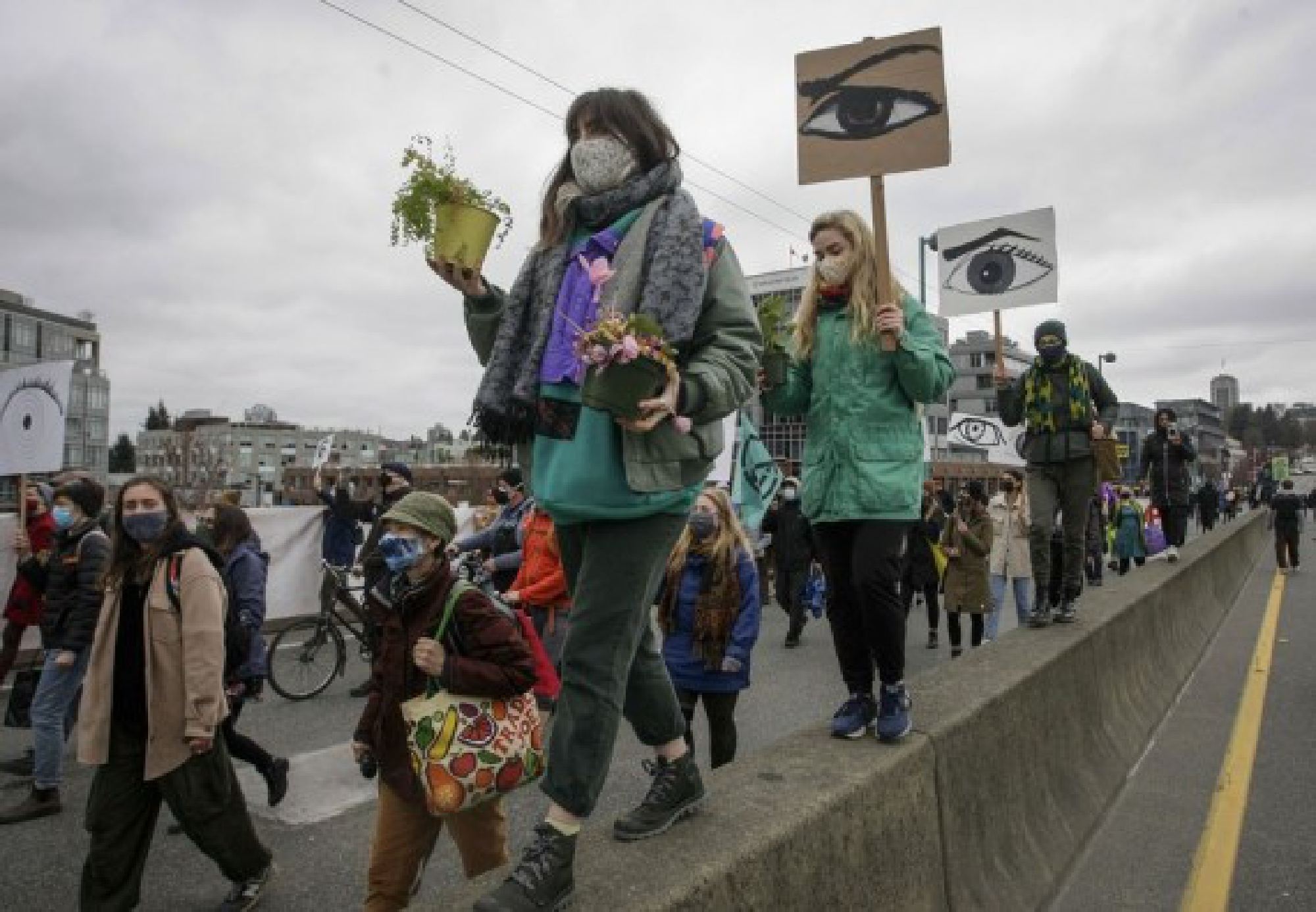
People march during a climate change protest in Vancouver, British Columbia, Canada, on March 27, 2021. (Xinhua/Liang Sen)People march during a climate change protest in Vancouver, British Columbia, Canada, on March 27, 2021. (Xinhua/Liang Sen)

Related Stories

The G20 summit, slated for this weekend, will also aim to help confront global crises, including the coronavirus pandemic, and will assess the situation in Afghanistan following the collapse of the country’s government.

The long-standing ministerial-level talks on finance, labor, education, foreign affairs, development, environmental protection, energy, culture, trade and agriculture are also on the event’s agenda.

The highlights of the ministerial meetings this year include: the finance summit focused on the international tax reform; the labor talks focused in part on gender equality; the negotiations on education, including the impacts of the pandemic on the education systems; and the discussions on the environment and energy, in preparation for the upcoming COP26 climate summit.

Each one of the series of talks held earlier in the year concluded with a final declaration that will be formally presented to the heads of state and government for its adoption.

“The big summit’s main role will be to review and adopt the conclusions of the many working groups, task forces and ministerial meetings,” Antonio Villafranca, research coordinator and head of the European Program at the Institute for International Political Studies (ISPI), a think tank, told Xinhua. “In Rome, the leaders will assess what has been done and what can still be done.”

One of the issues left to be decided, according to Villafranca, is whether the leaders would call for the curbing or elimination of the incentives that support the use of fossil fuels in the G20 countries.

A customer fuels a vehicle at a gas station in Berlin, capital of Germany, on Oct. 1, 2021. (Xinhua/Shan Yuqi)A customer fuels a vehicle at a gas station in Berlin, capital of Germany, on Oct. 1, 2021. (Xinhua/Shan Yuqi)

This decision will be significant since the G20 member states account for around 80 percent of the world’s primary energy use, according to an ISPI report.

If the leaders agree to reduce fossil fuel incentives it would also provide a boost to climate negotiations ahead of the COP26 climate negotiations, which get underway just as the G20 Leaders’ Summit closes.

But according to Raffaele Marchetti, an international relations professor at Rome’s LUISS University, the effectiveness of the G20 should not be measured by its ability to make decisions.

“The correct way to look at the G20 is as a forum for conversations between global leaders on important topics,” Marchetti told Xinhua. “It’s not necessarily a body for making major decisions. But those decisions can emerge from the discussions in the G20 context.”

“Other forums like the United Nations or the World Health Organization or the World Trade Organization are too large to be focused, and the G7 (Group of Seven) is too narrow and too dominated by western countries,” Marchetti said.

“But the G20 includes eastern and western powers alike. In most areas, it’s the best forum where the major powers — the United States, China and the European Union — are all involved.”

Photo taken on June 27, 2019 shows a logo of the Group of 20 (G20) summit at the entrance of the media center in Osaka, Japan. (Xinhua/Du Xiaoyi)Photo taken on June 27, 2019 shows a logo of the Group of 20 (G20) summit at the entrance of the media center in Osaka, Japan. (Xinhua/Du Xiaoyi)


Published : October 27, 2021

By : Xinhua

Largest Dutch pension fund ABP stops investing in fossil fuel assets #SootinClaimon.Com

#SootinClaimon.Com : ขอบคุณแหล่งข้อมูล : หนังสือพิมพ์ The Nation.

https://www.nationthailand.com/international/40008036


ABP, which has around three million clients in the Netherlands, said it will divest from the fossil fuel producers in phases.

ABP, the largest pension fund in the Netherlands, said on Tuesday that it will stop investing in producers of fossil fuels like oil, gas and coal.

The company stated that the reason for this decision lies in recently published reports by the International Energy Agency (IEA) and the United Nations Intergovernmental Panel on Climate Change (IPCC).

Since 2015, ABP has based its climate policy on the insights of the IPCC, whose latest report warned that stronger action is necessary to combat global warming.

Photo taken on Feb. 1, 2020 shows a glacier in the Weddell Sea off the Antarctic continent. (Xinhua/Liu Shiping)Photo taken on Feb. 1, 2020 shows a glacier in the Weddell Sea off the Antarctic continent. (Xinhua/Liu Shiping)

Related Stories

“We want to contribute to minimizing global warming to 1.5 degrees Celsius,” ABP Chairman of the Board Corien Wortmann said in a press release.

“We part with our investments in fossil fuel producers because we see insufficient opportunity for us as a shareholder to push for the necessary, significant acceleration of the energy transition at these companies,” she said.

“Where possible, we intend to increase our investments in renewable energy, already more than four billion euros, and our involvement in smart solutions for the energy transition,” Wortmann added.

ABP, which has around three million clients in the Netherlands, said it will divest from the fossil fuel producers in phases.

The bulk of its investments are expected to be sold by the first quarter of 2023. This concerns more than 15 billion euros (17.4 billion U.S. dollars) in assets, equal to almost three percent of ABP’s total assets. The fund does not expect the decision to have a negative impact on long-term returns.

Photo taken on Aug. 30, 2021 shows wind turbines in Plasencia, Spain. (Photo by Gustavo Valiente/Xinhua)Photo taken on Aug. 30, 2021 shows wind turbines in Plasencia, Spain. (Photo by Gustavo Valiente/Xinhua)
Published : October 27, 2021

By : Xinhua

UN chief calls for leadership in climate action ahead of Glasgow conference #SootinClaimon.Com

#SootinClaimon.Com : ขอบคุณแหล่งข้อมูล : หนังสือพิมพ์ The Nation.

https://www.nationthailand.com/international/40008035


“The era of half measures and hollow promises must end. The time for closing the leadership gap must begin in Glasgow,” UN Secretary-General Antonio Guterres said.

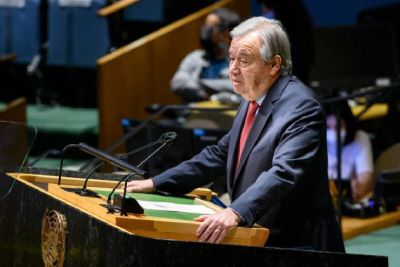
UN Secretary-General Antonio Guterres on Tuesday stressed the need to close the “leadership gap” in climate action before the UN Climate Change Conference in Glasgow, Scotland.

He made the plea at the launch of the UN Environment Programme’s Emissions Gap Report 2021, entitled “The Heat Is On.”

The report shows that with the present Nationally Determined Contributions and other firm commitments of countries around the world, the world is on track for a catastrophic global temperature rise of around 2.7 degrees Celsius above pre-industrial levels, he said.
 

Related Stories

“As the title of this year’s report puts it: ‘The heat is on.’ And as the contents of the report show: the leadership we need is off. Far off.”

The clock is ticking. The emissions gap is the result of a leadership gap. But leaders can still make this a turning point to a greener future instead of a tipping point to climate catastrophe, he said. “The era of half measures and hollow promises must end. The time for closing the leadership gap must begin in Glasgow.”

As world leaders prepare for Glasgow, this report is another thundering wake-up call.

Unless global carbon emissions are reduced by 45 percent from 2010 levels by 2030, the Paris Agreement goal of temperature rise of 1.5 degrees will not be obtained, he said.

Scientists are clear on the facts. Now leaders need to be just as clear in their actions. They need to come to Glasgow with bold, time-bound, front-loaded plans to reach net-zero emissions, he said. 

Published : October 27, 2021

By : Xinhua

Irans role in attack on U.S. troops in Syria signals new escalation #SootinClaimon.Com

#SootinClaimon.Com : ขอบคุณแหล่งข้อมูล : หนังสือพิมพ์ The Nation.

https://www.nationthailand.com/international/40008027


Iran appears to have been responsible for a drone attack last week on a U.S. outpost in Syria, suggesting that a new front could be opening in the low-level conflict that has simmered since the United States pulled out of the Iran nuclear accord in 2018.

Irans role in attack on U.S. troops in Syria signals new escalation

No U.S. casualties were reported in the attack on the isolated U.S. outpost at Tanf near the Jordanian and Iraqi borders, according to the U.S. military. But pro-Iranian media trumpeted it as a “victory,” and it was the first major attack on U.S. troops in Syria by Iran.

It also marked the biggest and most sophisticated strike against the relatively small U.S. force in Syria, which was deployed in 2015 to support Kurdish-led forces in the fight against the Islamic State.

At a news briefing Monday, Pentagon spokesman John Kirby refused to directly blame Iran for the barrage of rockets and exploding drones that caused considerable damage to the base, according to photographs circulating on social media. He described it as “a complex, coordinated and deliberate attack” and noted that similar attacks have been carried out by Iranian-allied Shiite militias against U.S. troops elsewhere.

News outlets affiliated with Iran have not attempted to downplay the likely involvement of Tehran and its allied militias, however, touting the attack in commentaries in recent days as a major success and hinting that more strikes against U.S. troops in Syria will follow.

They attributed the attack to a little known group called Allies of Syria, which earlier this month issued a statement threatening “harsh” retaliation for an Israeli airstrike against an Iranian base outside the Syrian city of Palmyra on Oct. 14. The Israeli strike, the statement said, was launched from the direction of Tanf.

The attack demonstrated “a great deal of boldness and strength” on the part of the Allies of Syria that will change the balance of power in Syria, said Iran’sFars News Agency, which is run by the Islamic Revolutionary Guard Corps, the military branch that oversees Iran’s extensive network of militias in the region.

The al-Ahed website, affiliated with Lebanon’s Hezbollah movement, said the attack heralded the start of “a new phase in the confrontation” in which Iran and its allies would seek to liberate Syria from U.S. troops. It noted that the American withdrawal from Afghanistan “happened only under the pressure of military operations and not political or diplomatic pressure.”

U.S. troops in neighboring Iraq have come under frequent rocket attacks over the past four years, and at least three similar attacks involving drones have been reported in the past year. The United States has retaliated with airstrikes against Iranian-allied militias in both Syria and Iraq, most recently in February, and it might respond to this one, too, Kirby said.

Until recently, the estimated 900 U.S. troops scattered thinly across a vast swath of northeastern Syria and at their lone outpost farther south at Tanf had been largely ignored by the Iranian troops and their militia allies backing President Bashar al-Assad.

That began to change over the summer with a series of largely unreported rocket attacks against U.S. bases in the Kurdish-controlled northeast, said Michael Knights, an analyst at the Washington Institute for Near East Policy. He attributed the shift to a decision by Iran to order its allies to refrain from attacking U.S. troops in Iraq to ensure stability in the run-up to parliamentary elections held earlier this month.

The escalation at the Tanf garrison is likely tied to the dimming prospects for a resumption of negotiations to renew the Iran nuclear accord, according to Ali Alfoneh, an Iran expert at the Arab Gulf States Institute.

So far, Iran’s new hard-line government has shown no inclination to return to the talks, and Robert Malley, the U.S. special representative to Iran, warned Monday that the effort to persuade it to do so has entered a “critical phase.”

Speaking in a conference call with reporters after consultations with allies in Europe and Arab states in the Persian Gulf, he described a “shared impatience” with Iran and said he discussed with allies “other tools” that might be used to prevent Iran from acquiring a nuclear weapon should Tehran continue to refuse to resume the talks.

Alfoneh said Iran may be seeking to secure leverage over the terms under which it returns to the talks by demonstrating its destructive capabilities against U.S. troops in the region. Other attacks may occur, he said, but “nothing major because it’s not in Iran’s interest to escalate too far.”

“This is part of the negotiation. Iran cannot negotiate without military pressure because the U.S. holds all the cards,” he said.

But the Tanf outpost, where a small number of U.S. troops are garrisoned in isolation from the bulk of the American force farther north, has long been a source of frustration to Iran as well as the government in Damascus. It straddles a key crossing on the Syrian-Iraqi border and cuts off a major trade route between Iran, Iraq and Syria, the reports in Iranian-affiliated news outlets noted.

Iran may also be eyeing a deadline for the departure of U.S. combat troops from Iraq at the end of December, which could provide another trigger for renewed pressure on U.S. forces in the region, Knights said.

“Toward the end of the year when the troops are supposed to leave Iraq and with the nuclear agreement not going that well, we’re going to see the temperature rise,” he predicted.

Published : October 27, 2021

By : The Washington Post

Australia proposes parental consent for children under 16 on social media #SootinClaimon.Com

#SootinClaimon.Com : ขอบคุณแหล่งข้อมูล : หนังสือพิมพ์ The Nation.

https://www.nationthailand.com/international/40008023


A draft law in Australia seeks to require social media platforms such as Facebook to seek parental consent for children and teens under 16 years old and to strengthen the protection of peoples personal information – or face hefty fines.

Australia proposes parental consent for children under 16 on social media

Seventeen million Australians use social media, but the existing privacy law “doesn’t provide specific protections against the misuse of Australians’ personal information by social media and other online platforms,” according to the proposed bill.

The draft law sets out an Online Privacy Code with the goal of strengthening the protection of users’ personal information, further protect children and vulnerable groups, and enhance penalties and enforcement mechanisms.

This new privacy code, if adopted, will apply to “organizations providing social media services,” which would include social media sites such as Facebook, dating sites such as Bumble, video-gaming platforms, videoconferencing services and online messaging platforms such as Zoom or WhatsApp, according to the bill’s explanatory paper.

It would also cover “organizations providing data brokerage services” (for instance, companies such as Nielsen and Experian) and “large online platforms” with at least 2.5 million users in the country, which would apply to companies such as Apple, Amazon and Google.

For children and vulnerable groups, the law would require companies that provide social media services to “take all reasonable steps to verify the age of individuals who use the social media service” and “obtain parental and guardian express consent before collecting, using or disclosing the personal information of a child under 16.”

Companies that breach these stipulations could face fines of up to $7.5 million.

Australia has adopted a raft of Internet regulations over the past year, including a law that pushed Facebook and Google to pay for news content and penalize executives over the streaming of violent images.

The negative effects of social media sites on children and teens has been in the spotlight since Frances Haugen, a former Facebook product manager, blew the whistle on the company’s internal practices. A series published by the Wall Street Journal revealed that internal research by Instagram detailed the negative effect the social media platform – which is owned by Facebook – had on the body image of teenage girls.

David Coleman, Australia’s assistant minister to the prime minister for mental health and suicide prevention, said in a statement that the landmark legislation will lead the world in its efforts to protect children from social media platforms. He pointed to a 2018 survey conducted in the country among over 4,000 people between the ages of 12 to 25 in which social media platforms were mentioned as the main cause behind the decline of mental health among young people.

“We’ve been actively calling for privacy regulation and understand the importance of ensuring Australia’s privacy laws evolve at a comparable pace to the rate of innovation and new technology we’re experiencing today,” Mia Garlick, Facebook’s director for public policy for Australia, New Zealand and the Pacific islands, said in a statement.

“We have supported the development of international codes around young people’s data, like the UK Age Appropriate Design Code,” she said. “We’re reviewing the draft bill and discussion paper released today, and look forward to working with the Australian government on this further.”

Published : October 27, 2021

By : The Washington Post

FDA advisers back Pfizer-BioNTech coronavirus vaccine for ages 5 to 11, saying benefits outweigh risks #SootinClaimon.Com

#SootinClaimon.Com : ขอบคุณแหล่งข้อมูล : หนังสือพิมพ์ The Nation.

https://www.nationthailand.com/international/40008020


WASHINGTON – More than 10 months after U.S. adults started receiving coronavirus vaccines, the nations younger children moved significantly closer to getting a shot of protection when advisers to the Food and Drug Administration on Tuesday endorsed the Pfizer-BioNTech vaccine.

FDA advisers back Pfizer-BioNTech coronavirus vaccine for ages 5 to 11, saying benefits outweigh risks

The advisory committee found that the benefits of the shot outweighed the risks of a rare cardiac side effect and voted 17 to 0 with one abstention to back the vaccine for children 5 to 11 years old, a group that numbers 28 million. While the advice is not binding, the agency is all but certain to grant emergency authorization for the vaccine, perhaps as soon as this week.

A pediatric vaccine has been eagerly anticipated by many parents who want to ensure their children’s safety at school and holiday gatherings. Experts say the immunizations will represent a milestone in a pandemic that has killed more than 737,000 people in the United States.

“To me, it seems that it is a hard decision but a clear one,” said Patrick S. Moore, a University of Pittsburgh microbiologist and committee member. He noted that 94 children between 5 and 11 have died of covid-19, and “all have names. All of them had mothers.”

The Centers for Disease Control and Prevention’s outside immunization advisers are scheduled to meet Nov. 2 to recommend how to use the vaccine. Once CDC Director Rochelle Walensky signs off, providers would be able to give the two-dose regimen as soon as the first week of November.

The authorization of the first pediatric vaccine would open the latest chapter in an extended effort to immunize the population of the United States against the coronavirus – an endeavor that began last December with the distribution of the Pfizer-BioNTech vaccine for certain adults.

Pfizer and its German partner BioNTech are expected to have immunity and safety data for children 2 to 4 years old this fall and results for children 6 months to 2 years old shortly thereafter. It is anticipated shots for the youngest children will become available in 2022.

The vote came after a vigorous debate over the safety of the vaccine, which has been linked to rare heart-related complications, such as myocarditis, an inflammation of the heart muscle. Some members of the committee questioned whether the shot should be used for all children, or just those at higher risk because of underlying medical conditions. Several expressed discomfort about making the decision without more information, while others said the data on safety and efficacy were strong enough to move ahead.

“So, I guess for me it’s always nerve wracking, I think, when you’re asked to make a decision for millions of children based on studies of only a few thousand children,” said Paul A. Offit, a vaccine expert at Children’s Hospital of Philadelphia. “I think I know enough to move forward with the yes vote, but, you know, it’s always never when you know everything, it’s when do you know enough?”

Amanda Cohn, a vaccine expert at the CDC and member of the panel, argued the data clearly showed the vaccine “will prevent deaths, will prevent ICU admissions and will prevent significant long-term adverse outcomes in children.”

But Michael G. Kurilla, an infectious-diseases expert at the National Institutes of Health who abstained from voting, was more skeptical.

“There are high-risk individuals, and I think they do need to be attended to. We do need to provide a vaccine for them,” Kurilla said. “But for many others, one dose or no dose, even. If they’ve had prior covid infection, they may not need anything more.”

Other panel members also said they would have preferred to make more specific recommendations to emphasize that high-risk children with underlying conditions or suppressed immune systems should get the vaccine, but healthy children may hold off.

James E.K. Hildreth Sr., chief executive of Meharry Medical College, said he hoped the CDC’s vaccine advisers, in their meeting next week, would “prioritize the vaccine in some way” for children who face the most risk from the virus. He said he voted to recommend the shot primarily because he wanted “to make sure that the children who really need this vaccine, primarily the black and brown children in our country, get the vaccine.”

Arnold Monto, a University of Michigan epidemiologist who is acting chairman of the panel, reminded other committee members that their vote was just the first step toward making the vaccine available. The CDC may be able to craft more clear guidelines for parents of children 5 to 11 years old, he added.

Cody Meissner, a pediatrician at Tufts Medical Center, said he was worried a broad authorization of the vaccine would lead to vaccine mandates at schools. He said he opposes them until more safety data is available.

The Pfizer-BioNTech and Moderna vaccines have been associated with myocarditis and pericarditis, which is an inflammation of the heart lining, after the second dose, particularly in adolescent boys and young men. The problem did not turn up in the Pfizer-BioNTech pediatric clinical trial, which experts say was too small to detect such a rare complication.

Much of the debate focused on the FDA’s use of statistical modeling to try to answer the key question for an emergency authorization: Do the vaccine’s benefits outweigh the risks?

Hong Yang, senior adviser at the FDA’s biostatistics office, told the committee the agency estimated how many hospitalizations caused by covid might be prevented by the vaccine compared with how many hospitalizations might occur because of vaccine-related heart complications.

The agency concluded the benefits outweighed the risks in almost all scenarios, except possibly when there are very low levels of viral transmission. Even then, the FDA said, the benefits might exceed the risks because vaccine-related myocarditis cases have tended to be mild, while covid can lead to serious illness and death.

Some panel members suggested, however, that the FDA assumed there would be more covid cases than will actually occur, considering the number of cases is declining. Such an overestimate would inflate the benefits of the vaccine.

But Monto cautioned that scientists have assumed in the past that the pandemic was waning and “been caught flat-footed as the rates again went up. So I think thinking that this is going to be the end of the wave permanently is maybe a little overly optimistic.”

William C. Gruber, senior vice president for vaccine clinical research and development at Pfizer, told the panel the vaccine could have salutary effects beyond preventing illness, including allowing more in-person school and reducing the transmission of the virus – an argument that resonated with several panel members.

There were 2,268 children originally in the Pfizer-BioNTech trial, two-thirds of whom received the vaccine with the rest receiving a placebo. After regulators asked the company to increase the trial size, partly to broaden its safety database, the trial was expanded to about 4,500 children.

The companies reported that the trial showed the vaccine is almost 91 percent effective in preventing symptomatic covid, with 16 cases of covid in the placebo group and three in the vaccine group. The regimen for 5- to 11-year-olds is 10 micrograms, one-third the dose for people 12 and older. As with the older group, children would receive the vaccine in two doses three weeks apart.

Throughout Tuesday, health officials stressed that while children are much less likely to become seriously ill from the virus, they are far from unscathed.

Peter Marks, director of the FDA’s Center for Biologics Evaluation and Research, said 1.9 million children 5 to 11 years old have been infected by the coronavirus and more than 8,300 have been hospitalized.

During the part of the meeting devoted to public comment, several people argued that the vaccine was not safe, that authorizing it would lead to mandates and urged the advisers to reject it. Others pressed for the vaccine to be cleared.

“We haven’t taken our daughter to eat inside of a restaurant or to the movies or on a plane since covid began,” said Belinda Macauley, an attorney in Thousand Oaks, Calif., who has an 8-year-old daughter, said. “My family is enthusiastically in favor of prompt approval and our daughter will get it the first day it’s authorized.”

Nevertheless, some experts predict there won’t be a huge flood of vaccinations anytime soon. Aaron E. Carroll, a pediatrician and chief health officer of Indiana University, said people are overestimating “how many parents will rush out and get their children vaccinated. Many parents will be conservative, they will want to wait.”

While a large proportion of older people are vaccinated, parents of small children tend to be young, with much lower immunization rates, Carroll noted, adding they are unlikely to get their children immunized if they have not been vaccinated themselves. Only about half of adolescents eligible for a vaccine have received it, with the numbers higher among the older adolescents, he said.

Carroll’s concern is backed up by a Kaiser Family Foundation report issued last month. It found that only about one-third of parents who have children 5 to 11 years old say they would vaccinate their children as soon as possible. Another third said they would “wait and see,” while 24 percent said they would “definitely not” get their children vaccinated. Seven percent say they would do so only if required.

Booster shots of the Moderna and Johnson & Johnson vaccines became available for some people last week after federal regulators gave their blessing to the additional doses and declared that people who are eligible for an additional shot could get any booster regardless of which vaccine they originally received.

As the authorization of the pediatric vaccine approaches, the Biden administration and Pfizer-BioNTech have been racing to prepare to distribute the vaccine and reduce the potential for confusion among medical providers administering pediatric and adult doses.

Nicholas W. Warne, Pfizer’s vice president of pharmaceutical research and development, told the FDA advisers the company will package the pediatric vaccine with orange vial caps, orange labels, orange boxes and orange shipping cartons to differentiate it from the vaccine given to adults and older children. The higher-dose vaccine for individuals 12 and older comes in a vial with a purple cap.

White House officials have said they have bought enough doses to vaccinate every child in the 5 to 11 age group. They plan to make the specially packaged vaccine available at more than 25,000 pediatricians and doctors offices, hospitals, pharmacies, community health centers, and school- and community-based clinics. They also will conduct a campaign to educate parents more fully about the vaccines.

Published : October 27, 2021