Localized fill-and-finish production of Sinovac vaccine facilitates Malaysias fight against COVID-19 #SootinClaimon.Com

#SootinClaimon.Com : ขอบคุณแหล่งข้อมูล : หนังสือพิมพ์ The Nation.

https://www.nationthailand.com/international/40007349


The locally fill-and-finish Sinovac jabs have been in use in Malaysia since getting regulatory approval in April. Some 14 million doses have been completed ahead of schedule as of July.

In a low-rise building of Malaysian pharmaceutical company Pharmaniaga Life Sciences (PLS) on the outskirts of Kuala Lumpur, the fill and finish operation is going on for the Sinovac COVID-19 vaccine.

The unassuming site has run non-stop — 24 hours a day and seven days a week — as a crucial part of Malaysia combating COVID-19. It also marks the close cooperation between the Southeast Asian country and China in time of the COVID-19 crisis.

ADVERTISEMENT

Manufacturing head Mohd Saharuddin Othman was still excited when recalling the arrival of first Sinovac vaccines from China on Feb. 27.

“It was a very emotional moment when the first bulk arrived … in our warehouse, I think the team was all motivated, to start to do the fill and finish,” he said, “The team knows this is our responsibility. This is our key moment … to support the government in fighting this COVID-19 pandemic.”

Production manager Mohd Ridhwan Kalantar Mastan introduces the fill and finish operation for Sinovac vaccines at Malaysian pharmaceutical company Pharmaniaga on the outskirts of Kuala Lumpur, Malaysia, Oct. 5, 2021. (Xinhua/Zhu Wei)Production manager Mohd Ridhwan Kalantar Mastan introduces the fill and finish operation for Sinovac vaccines at Malaysian pharmaceutical company Pharmaniaga on the outskirts of Kuala Lumpur, Malaysia, Oct. 5, 2021. (Xinhua/Zhu Wei)

Related Stories

Sinovac and Pharmaniaga in January signed the agreement on cooperation in localizing the fill-and-finish process of Sinovac’s CoronaVac vaccine, a move marking a milestone in Malaysia’s pharmaceutical industry.

Production manager Mohd Ridhwan Kalantar Mastan has overseen the Sinovac vaccine fill and finish operation at Pharmaniaga from the very beginning.

A technician works on the fill and finish operation for Sinovac vaccines at Malaysian pharmaceutical company Pharmaniaga on the outskirts of Kuala Lumpur, Malaysia, Oct. 5, 2021. (Xinhua/Zhu Wei)A technician works on the fill and finish operation for Sinovac vaccines at Malaysian pharmaceutical company Pharmaniaga on the outskirts of Kuala Lumpur, Malaysia, Oct. 5, 2021. (Xinhua/Zhu Wei)

“The moment that we find out that we will be part of this collaboration with Sinovac was a moment of relief,” said the manager. “Knowing that we can be able to produce vaccine locally, and this vaccine can be used for our people and our nation, a lot faster than what we would have if we hadn’t had Sinovac and Pharmaniaga to help us to do this.”

“So a very great sense of relief and a very great sense of pride and I’m proud as well to be part of this core team, to help the nation, to save lives and also even our family’s lives as well,” he said.

The coronavirus epidemic in Malaysia has worsened since the beginning of 2021, recording a daily high of 24,599 new cases on Aug. 26. As protracted restrictions took heavy tolls on economy and livelihoods, the Malaysian government has pinned its hope on the COVID-19 vaccine.

Mohd Ridhwan and Pharmaniaga workers have been racing against time to make sure the CoronaVac doses are available for the national inoculation program.

No public holidays for the non-stop production, Mohd Ridhwan said while observing the workflow.

They never lacked the will in preparing the vaccine for Malaysians’ fight against COVID-19, and took pride in their role in the efforts towards ending the pandemic.

“I take this role very seriously, as well because as a pharmacist, and production manager, our role is to ensure that the products being produced are safe at all times, and they are effective at all times,” he said.

A technician works on the fill and finish operation for Sinovac vaccines at Malaysian pharmaceutical company Pharmaniaga Life Sciences (PLS) on the outskirts of Kuala Lumpur, Malaysia, Oct. 5, 2021. (Xinhua/Zhu Wei)A technician works on the fill and finish operation for Sinovac vaccines at Malaysian pharmaceutical company Pharmaniaga Life Sciences (PLS) on the outskirts of Kuala Lumpur, Malaysia, Oct. 5, 2021. (Xinhua/Zhu Wei)

Their efforts paid off. The locally fill-and-finish Sinovac jabs have been in use since getting regulatory approval in April.

They have completed some 14 million doses ahead of schedule as of July, according to the manager.

The Malaysian government earlier approved the Sinovac vaccine for the use for teenagers aged 12 to 17 from Oct. 1.

As of Oct. 10, 90 percent of the Malaysian adult population have been fully vaccinated.

Mohd Saharuddin said the cooperation with Sinovac and its willingness to be engaging and open in technology transfer, enables Pharmaniaga to successfully build its CoronaVac operation with the Chinese technology and expertise on human vaccines.

He said the two sides have overcome in the collaboration many difficulties due to COVID-19, especially travel restrictions by using the digital and video conferencing technology, in addition to the language barrier.

A grateful Mohd Ridhwan was proud of making the vaccine fill-and-finish process happen.

“I think this transfer of technology of COVID-19 vaccine is a big, monumental technology transfer between country to country. We can also show and prove already that it is able to be done when we have the necessary guidance, and advice and technology source, then we can also replicate that in a different factory, with the collaboration of all the people,” he said.

The smooth collaboration was noted in the phone conversation between Chinese State Councilor and Foreign Minister Wang Yi and Malaysian Foreign Minister Saifuddin Abdullah on Sept. 29.

Saifuddin thanked China on the vaccine collaboration and Wang also pledged continued support from China for Malaysia’s pandemic response including for the vaccine collaboration, as well as joint efforts in tackling post-pandemic challenges.
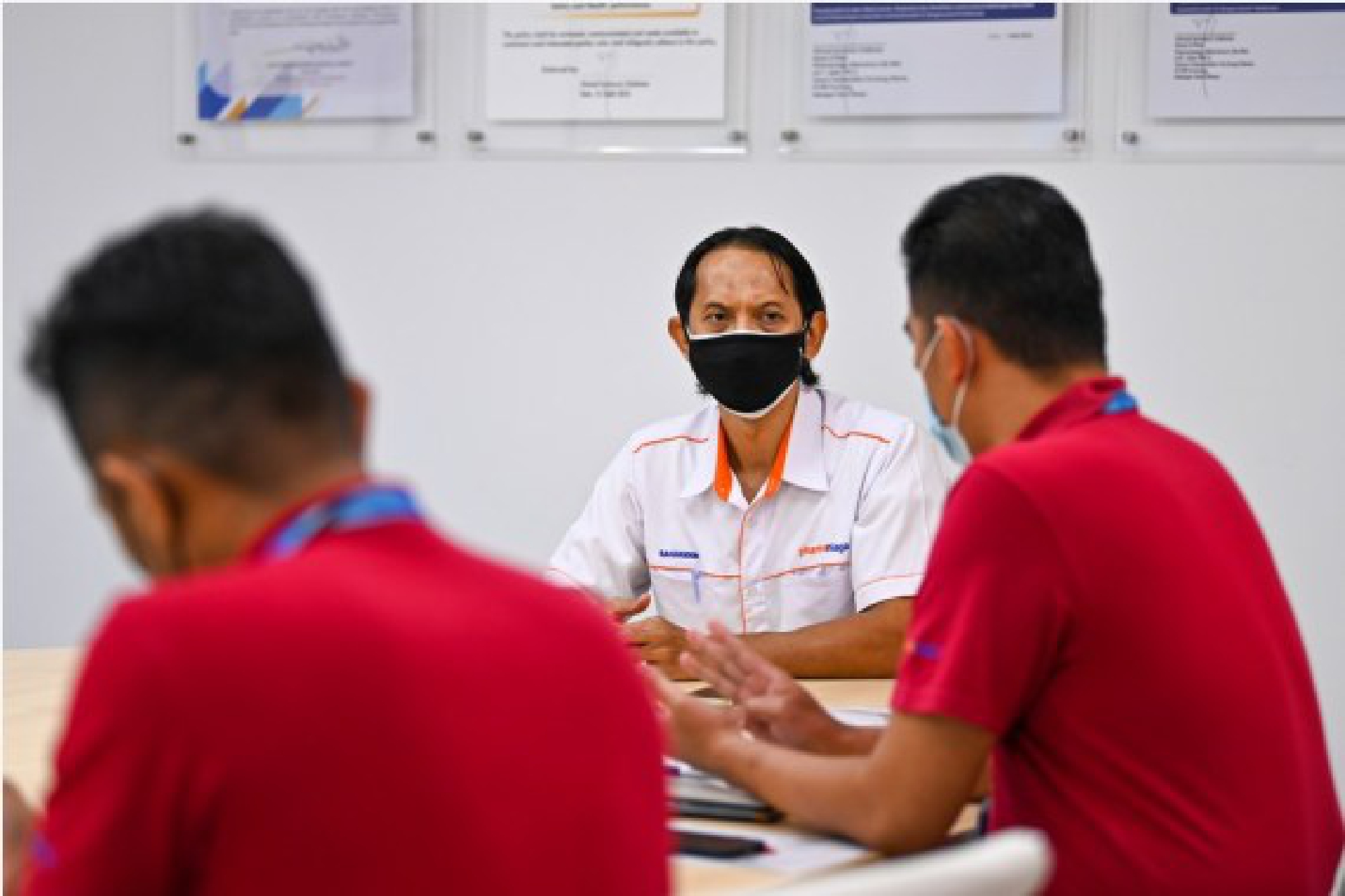
Manufacturing head Mohd Saharuddin Othman (C) attends a meeting about the fill and finish operation for Sinovac vaccines at Malaysian pharmaceutical company Pharmaniaga on the outskirts of Kuala Lumpur, Malaysia, Oct. 5, 2021. (Xinhua/Zhu Wei)Manufacturing head Mohd Saharuddin Othman (C) attends a meeting about the fill and finish operation for Sinovac vaccines at Malaysian pharmaceutical company Pharmaniaga on the outskirts of Kuala Lumpur, Malaysia, Oct. 5, 2021. (Xinhua/Zhu Wei)

Technicians work in a lab for the fill and finish operation for Sinovac vaccines at Malaysian pharmaceutical company Pharmaniaga Life Sciences (PLS) on the outskirts of Kuala Lumpur, Malaysia, Oct. 5, 2021. (Xinhua/Zhu Wei)Technicians work in a lab for the fill and finish operation for Sinovac vaccines at Malaysian pharmaceutical company Pharmaniaga Life Sciences (PLS) on the outskirts of Kuala Lumpur, Malaysia, Oct. 5, 2021. (Xinhua/Zhu Wei)

Published : October 11, 2021

By : Xinhua
Asean reported nearly 40,000 Covid-19 cases on Sunday #SootinClaimon.Com

#SootinClaimon.Com : ขอบคุณแหล่งข้อมูล : หนังสือพิมพ์ The Nation.

https://www.nationthailand.com/international/40007326


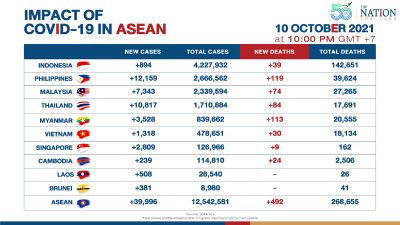
The number of Covid-19 cases crossed 12.54 million across Southeast Asia, with 39,996 new cases reported on Sunday (October 10), lower than Saturday’s tally at 41,994. New deaths are at 492, decreasing from Saturday’s number of 654. Total Covid-19 deaths in Asean are now at 268,655.

Cambodia may fully reopen its economy if the Covid-19 situation remains stable for at least 10 days after the nation celebrates the Pchum Ben religious festival between October 5 and 7. Prime Minister Hun Sen said any reopening was dependent on the people adjusting their lifestyles to live with the new normal, where Covid-19 will be viewed as endemic and no longer as a pandemic. Currently the country is reporting less than 300 new infections and about 20 Covid-19 deaths daily.

Meanwhile, Singapore is preparing to tighten rules for unvaccinated people to streamline its healthcare protocols to live with Covid-19 endemically. From October 13 onward, unvaccinated individuals in Singapore will no longer be able to dine at eateries or visit shopping malls and attractions. Exception will be made for children under 12 years and those who have recovered from Covid-19 and has negative lab testing result. 
 

Published : October 11, 2021

By : THE NATION

Taiwanese president responds to Xi call for peaceful reunification: Island will not bow to pressure #SootinClaimon.Com

#SootinClaimon.Com : ขอบคุณแหล่งข้อมูล : หนังสือพิมพ์ The Nation.

https://www.nationthailand.com/international/40007322


Taiwan will not “bow to pressure” from China for reunification, President Tsai Ing-wen said in a speech Sunday before a parade and military ceremony marking Taiwans National Day.

Taiwanese president responds to Xi call for peaceful reunification: Island will not bow to pressure

The island will continue to develop and invest in its defensive capabilities, Tsai said, “to ensure that nobody can force Taiwan to take the path China has laid out for us” – a path she said “offers neither a free and democratic way of life for Taiwan, nor sovereignty for our 23 million people.”

China sees Taiwan, separated from it by about 100 miles across the Taiwan Strait, as a breakaway province. Beijing has threatened to take control – by force if necessary – were Taiwan to move toward formal independence.

ADVERTISEMENT

The United States sells arms to Taiwan and supports its calls for a greater role in the global community, but has for decades refused to say whether it would send its military to defend Taiwan from a Chinese attack, under a policy known as “strategic ambiguity.”

The United States, like most countries, does not recognize Taiwan as an independent nation. It adheres to the one-China policy, which states that there is only one China, and which acknowledges the Chinese point of view that Taiwan is part of it.

But in recent years, as tensions have risen between the United States and China, Washington has made moves to bolster its support for Taiwan as a bulwark against Beijing.

U.S. troops have been stationed in Taiwan to train the island’s military for at least a year, the Wall Street Journal reported last week, citing unnamed U.S. government officials. China’s foreign ministry responded angrily to the report but with boilerplate language, including that “China will take all necessary measures to protect its sovereignty and territorial integrity.”

In recent days, Beijing has sent a record surge of warplanes into Taiwan’s air defense identification zone.

Now Taiwan “finds itself in a situation that is more complex and fluid than at any other point in the past 72 years,” Tsai said Sunday.

China’s President Xi Jinping on Saturday vowed to achieve what he called “the reunification of the motherland by peaceful means.”

“Compatriots on both sides of the Taiwan Strait should stand on the right side of history and join hands to achieve China’s complete unification,” Xi said during an event to commemorate the 110th anniversary of the revolution that overthrew China’s last imperial dynasty in 1911.

Some analysts view the Chinese military drills near the island as Beijing catering to domestic nationalists, or provocation aimed at Washington, but Taiwanese officials believe it shows China is ramping up its capabilities to invade their island in the next few years.

The 1911 Revolution led to the establishment of a Chinese nationalist government known as the Republic of China. After World War II, the Chinese Communist Party defeated ROC forces, which retreated to Taiwan and took over the island, whose official name is the Republic of China. The Chinese Communist Party never took control of the island.

“The historic mission of achieving the complete unification of our country must be realized, and can be realized,” Xi added.

Xi reiterated his support for Taiwanese reunification under the same “one country, two systems” model that allowed Hong Kong to be part of China but function under different laws and norms for decades after the end of British colonial rule. That approach has collapsed in recent years as Beijing has moved to exert direct control over Hong Kong, crush civil society and erode once-autonomous institutions.

In response to Xi’s speech, Taiwan’s presidential office said most Taiwanese reject that model and argued that developments in Hong Kong show how “one country, two systems” can turn on a dime.

On Sunday, at an event marking the same revolution, President Tsai called on the Taiwanese people to renew their commitment “that the Republic of China and the People’s Republic of China should not be subordinate to each other.”

Tsai, who warned recently in Foreign Affairs that “if Taiwan were to fall, the consequences would be catastrophic for regional peace and the democratic alliance system,” has sought to characterize the struggle for Taiwan’s freedom from China as a proxy battle for the broader future of global democracy, at a time when Western powers are struggling to come to terms with the rise of China.

The island is “standing on democracy’s first line of defense,” Tsai said in her speech Sunday. “Taiwan is willing to do its part to contribute to the peaceful development of the region.”

“We hope for an easing of cross-strait relations and will not act rashly, but there should be absolutely no illusions that the Taiwanese people will bow to pressure,” she said.

Published : October 11, 2021

By : The Washington Post

16 killed as parachuting flight crashes in Russias Tatarstan region #SootinClaimon.Com

#SootinClaimon.Com : ขอบคุณแหล่งข้อมูล : หนังสือพิมพ์ The Nation.

https://www.nationthailand.com/international/40007321


MOSCOW – Sixteen people died on a parachuting flight in Tatarstan, southern Russia, when their Let L-410 plane crashed shortly after takeoff Sunday. Six people were reported to be seriously injured.

16 killed as parachuting flight crashes in Russias Tatarstan region

The twin-engine plane failed to gain height and went down in a field, Russian officials said.

It was the third fatal L-410 crash in Russia since June.

ADVERTISEMENT

The pilot, co-pilot and 14 passengers died, including at least one who was on his first parachuting flight and two parachuting instructors.

The plane belonged to the Menzelinsk branch of a volunteer military organization known as DOSAAF.

It was the second crash of an L-410 parachuting flight in Russia this year. In June, four people were killed in a similar incident.

Rustam Minnikhanov, the head of the Tatarstan region, said Sunday that one of the plane’s engines failed. He said the pilots reported the problem at an altitude of about 230 feet and steered the plane to the left to avoid a settlement before crashing.

The plane broke in two and overturned on landing, with the front half severely damaged, Minnikhanov told journalists during a visit to the site.

Russia’s Investigative Committee said a criminal case has been opened amid allegations that air traffic safety rules were violated. Local media reported that investigators were examining whether the plane, which is designed to carry 19 passengers, was overloaded.

Local media reported that the plane had been in service since 1987. DOSAAF has suspended the use of L-410 aircraft pending the investigation’s conclusion.

One of those who died was Pavel Muzychenko, who posted about his love of skydiving on Facebook. He said he often traveled to Menzelinsk for skydiving trips.

Another victim was Ilnar Gaifullin, who was recently given the parachuting flight as a birthday gift and was making his first jump, local media reported.

The L-410 was designed for use on short runways, as well as unpaved, grassy and snowy areas. It can be configured for skydiving flights.

An L-410 crashed during a parachuting flight on June 19 near the settlement of Zhuravlyovo in Siberia. Both pilots, two parachuting instructors and another passenger died. There were 19 passengers.

An L-410 crashed last month in foggy conditions near Irkutsk in Siberia, killing a pilot and three of 16 passengers and injuring the others, four of them seriously.

The L-410 was designed by the formerly Czechoslovakian firm Let Kunovice, which is now Aircraft Industries. Since 2018, it has been produced in Russia in the Urals city of Yekaterinburg.

Russia has recorded more than 10 fatal crashes of small passenger planes and helicopters in 2021.

Published : October 11, 2021

By : The Washington Post

Small nonprofits helping resettle Afghan evacuees say they need more foundation and government support #SootinClaimon.Com

#SootinClaimon.Com : ขอบคุณแหล่งข้อมูล : หนังสือพิมพ์ The Nation.

https://www.nationthailand.com/international/40007320


At a storage unit in Landover, Md., in late September, dozens of volunteers hustled furniture into moving trucks. Their goal was to furnish three apartments by the end of the day – two for a family of eight from Afghanistan, and the other for a family from El Salvador.

“The yellow stuff is all going to the two bedrooms and the orange stuff for the one bedroom,” called out Laura Thompson Osuri, the director of Homes Not Borders, a Maryland-based nonprofit that focuses on furnishing homes for refugees resettling in the United States.

In previous years, the nonprofit would furnish about one to two homes each week, Osuri said. But since August, when the United States airlifted tens of thousands of people out of Afghanistan and began resettling many of them in the United States, it’s now moving at twice that pace – at times furnishing two apartments in a single day. They’ve rapidly expanded their budget – hiring new staff and purchasing additional storage space – all while relying on private donations.

ADVERTISEMENT

Thousands of Afghan evacuees have arrived in the D.C. area, where local nonprofits are moving at an accelerated rate to resettle them, in some cases with no government support. There are local offices of large resettlement agencies that have multimillion dollar contracts with the federal government to aid refugees. Then there are dozens of smaller nonprofits like Homes Not Borders that take on cases the large agencies are too busy to handle or that get referred to them by immigration attorneys or through word of mouth.

“We’re picking up the slack and doing a lot of work with little staff,” said Osuri, who founded Homes Not Borders in 2017. “I would definitely not say no to federal or state support. I think they definitely need to support all of us on the ground.”


Homes Not Borders director Laura Thompson, top, red mask, works with volunteers to select and load donated furniture and household items from the organizationHomes Not Borders director Laura Thompson, top, red mask, works with volunteers to select and load donated furniture and household items from the organization

The State Department could not provide figures on how many Afghan evacuees have refugee status. But many of the families being brought to the United States are coming through humanitarian parole, a process that lacks a legal path to citizenship and benefits that are offered to traditional refugees. Instead, they receive limited assistance for 90 days and receive a one-time stipend of roughly $1,200.

“That’s all they’re getting right now,” said Krish O’Mara Vignarajah, president and CEO of Lutheran Immigration and Refugee Service, one of the nine national organizations the federal government contracts with to resettle refugees. “Obviously, when you’re starting over a new country with nothing but the clothes on your back, it’s going to take more than that to reach self-sufficiency and successfully integrate.”

Typically, refugees would receive help in the form of money, food and medical assistance, among other things, for about five years until they found a job, but with humanitarian parole status, that’s not possible, according to Ruben Chandrasekar, the executive director of Maryland’s chapter of the International Rescue Committee, a national organization based in New York City.

Both the smaller nonprofits and the federally funded resettlement agencies have been working on finding ways to help those families find housing, food and other needs at zero cost, so the evacuees can retain as much of the stipend as possible while searching for work.

“While we’re very adept at, you know, helping our clients settle in and find work within three to four months when they start paying their bills and can meet their basic expenses, that process has to be expedited with the parolees,” Chandrasekar said. “They don’t have a social safety net to kind of keep them afloat . . . before the money runs out.”

Many of the federally funded organizations are also having to rapidly staff up after years of cuts. During the Trump administration, the refugee admittance cap fell to historic lows. President Donald Trump initially sought to allow 15,000 refugees into the United States for 2021, which would have been the lowest since the 1980 Refugee Act. In the process, offices that helped refugees closed and vital connections with different communities were lost, Vignarajah said. While it receives federal funding, leaders at Lutheran Social Services have previously said the organization has a $1.8 million funding gap as a result of resettling 500 refugees over the past month.

The Biden administration has since increased the refugee admission goal to about 125,000 for the next fiscal year, which started Oct. 1. Since then, resettlement agencies have been working with the U.S. State Department to reopen its offices.

“Our job is more difficult in that we’re ramping up significantly after hitting rock bottom,” Vignarajah said.

In Maryland, the International Rescue Committee projects it will resettle 1,150 individuals just in the next six months, Chandrasekar said. By contrast, during the Trump administration, the group resettled about 200 people from the U.S. refugee program and about 50-60 asylum seekers on average each year.

“We could see a fourfold increase in our workload year over year,” Chandrasekar said.

The sudden surge in need has had a “ripple effect” on other nonprofits focused on helping refugees, said Barbara Ferris, president of the International Women’s Democracy Center, a D.C.-based nonprofit that relies solely on private donations. Ferris’s organization has a program called Welcome Refugees that focuses on providing personalized support as refugees navigate settling in the United States. Usually, volunteers with the program focus on one family at a time, whether that’s helping family members settle into a home or helping them enroll their children in school.

Since August, Ferris has had families from Afghanistan referred to her organization through immigration attorneys and other resettlement agencies who are overwhelmed. Her nonprofit has fundraised and applied to grants to increase their budget by $100,000 to meet the needs of families who fled Afghanistan, she said. But the grant process can take six to eight months.

Ferris said she was recently on a call with 55 other organizations who specialize in refugee resettlement work. Her organization is helping plan a pop-up aid center in Arlington, Va., where they will distribute clothes to women, men and children who fled Afghanistan. They also plan to distribute forms families can use to list items they need such as a lamp or a crib. Organizers will then send the form out to their networks, find the items and deliver them to the family later. Many of these needs can’t wait for government support to come through, she said.

“Our goal is to get them into a stable situation as quickly as possible so that the trauma begins to decrease,” Ferris said.

In the case of Homes Not Borders, it partners with some of the federally funded resettlement agencies, like the International Rescue Committee and the Ethiopian Community Development Council, to furnish homes without expense to those who arrive under humanitarian parole. However, Homes Not Borders relies mostly on private donations, Osuri said.

Since August, the nonprofit has set up nearly 40 homes for about 170 people – saving the families $124,800, Osuri said.

Recently, Osuri’s nonprofit also began helping people under humanitarian parole that exist outside of the resettlement system, because they’ve left military bases and are staying with family in the area. They’ve found Homes Not Borders through word of mouth in the Afghan and refugee community.

While setting up a home in Riverdale, Md., in late September, volunteers from the nonprofit took about three to four hours to clean and furnish the two apartments for the family of eight from Afghanistan.

They assembled bunk beds, hung up wall art and cleaned some of the kitchen appliances in the apartments over a four-hour period. One of the organizations that Homes Not Borders partners with – called KindWorks – delivered fruits, vegetables and other meals to stock the fridge for the incoming family.

While Manizha Azizi, 44, helped place furniture in the apartment, she was also texting other Afghan families who had recently moved into the same apartment complex to check if they needed anything. Azizi came into the United States as a refugee from Afghanistan in 1985, after the Soviets invaded the country. She started volunteering in September, after she saw Afghans fleeing Kabul in the news.

“I’ve just kept coming back,” she said.

Many of the organizations so far said they haven’t had any shortages in private donations since August; rather, they’ve been overwhelmed with public support and have been trying to find the space to store everything.

Homes Not Borders started leasing a 2,500-square-foot storage space in July, thinking that would be enough for the next five years. But after August, they had to expand to another storage unit a few doors down to fit all the couches, kitchen appliances and other home goods they started receiving.

The International Rescue Committee branch in Maryland experienced a similar story – both its offices in Silver Spring and Baltimore received a high amount of donations, but without enough storage space for the items. They’ve asked people who are considering donating to check an Amazon wish list they’ve created, so the items can go directly to families in need immediately, rather than into storage.

Vignarajah emphasized that the process is still just gearing up – in the days to come, more families will be processed to move into the United States, and then agencies will have to work on getting people connected with jobs, setting up for English classes if needed and enrolling kids in public schools.

“This is the calm before the storm, but there’s really nothing calm about it,” Vignarajah said.

Published : October 11, 2021

By : The Washington Post

Pandora Papers: Leaks prompt investigations in some countries – and denial in others #SootinClaimon.Com

#SootinClaimon.Com : ขอบคุณแหล่งข้อมูล : หนังสือพิมพ์ The Nation.

https://www.nationthailand.com/international/40007315


Days after The Washington Post and partner news outlets published a series of stories based on the Pandora Papers, a trove of more than 11.9 million documents exposing the secretive financial dealings of the worlds elite, more than eight countries have promised investigations.

But not all of them have been as eager to look into the findings. Some governments whose nationals and politicians feature prominently in the records have instead gone the other way, doubling down on the denials, dismissing the revelations or ignoring them altogether.

– Jordan: Authorities appear to have tried to curb scrutiny in some places, such as Jordan. One of the key revelations included in the documents was the more than $100 million that King Abdullah II spent on luxury homes in London, California and other locations, hiding transactions through a network of offshore accounts. Jordan, with scant resources, relies heavily on U.S. funds.

ADVERTISEMENT

Most media outlets there avoided covering the leaks and the one that did ended up getting a swift call from Jordanian intelligence requesting that the story be removed from the site, according to the journalist who wrote it.

The royal court blasted media reports on the papers as “a threat to His Majesty’s and his family’s safety.” Its statement added that the king bought the residences with his own money, calling them neither “unusual nor improper.”

“None of these expenses have been funded by the state budget or treasury,” it said. And the king told tribal leaders at a gathering that he had nothing to hide.

– Russia: Several Russian outlets covered the leaks but the Kremlin was quick to dismiss the reports as “groundless.” Spokesperson Dmitry Peskov told reporters that the allegations were “hard to understand” and did not merit investigation.

The cache exposed assets stashed by Russian President Vladimir Putin and his inner circle, including the purchase of a waterfront apartment in Monaco by a Russian woman who reportedly had a child with the longtime leader.

The International Consortium of Investigative Journalists, which obtained the records, identified hundreds of offshore companies with 4,400 beneficial owners who were Russian – more than any other nationality. They include 46 Russian oligarchs.

Despite the evidence, however, the Kremlin has insisted that no secret riches were uncovered.

“We didn’t see any hidden wealth of Putin’s inner circle there,” Peskov said. “We haven’t seen anything special thus far.”

Meanwhile, the foreign ministry’s spokeswoman, Maria Zakharova, seized on the Pandora Papers to highlight reporting that South Dakota now rivals some of the world’s most notorious tax havens as a harbor for foreign money.

– Ukraine: The Pandora Papers named 38 Ukrainian politicians – the most out of any country – but President Volodymyr Zelensky, who campaigned as an anti-corruption candidate, has yet to respond to the investigation.

The leaks disclosed that Zelensky, a former comedian, and his partners in show business owned multiple offshore companies, including at least one that was involved in the purchase of several properties in central London.

Just before his election, Zelensky transferred his stake in one of the companies registered in the British Virgin Islands to an associate who later became the president’s top aide.

An adviser to Zelensky’s chief of staff said Monday that the Ukrainian leader established the offshore network in 2012 to “protect” the income generated by him and his associates in the entertainment industry under the pro-Russian government of Viktor Yanukovych.

“Journalists have de facto confirmed the president’s absolute respect for the standards of anti-corruption legislation,” the adviser, Mykhailo Podoliak, told Agence France-Presse.

– Lebanon: In Lebanon, the papers have fueled the belief that the ruling elite enriched themselves while the rest of the nation sank into its worst-ever economic crisis.

Six Lebanese nationals were named in the leaks, including Prime Minister Najib Mikati, his predecessor and the central bank governor. But few there are convinced that the government, whose corruption and negligence led last year to a deadly explosion of ammonium nitrate at the port in Beirut, will pursue allegations of financial impropriety.

The investigation revealed that the billionaire Mikati, now one of Lebanon’s richest men, used a Panama-based company to purchase a property in Monaco for more than $10 million in 2008. He recently formed a government that is in desperate need of foreign aid.

“Not all wealth is necessarily accumulated at the expense of public interest and the needy,” he said in a statement, adding that he had disclosed his offshore assets to authorities.

The previous prime minister, Hassan Diab, also denied wrongdoing after the files showed that he set up an offshore shell company in the British Virgin Islands.

“Is founding a company against the law?” Diab said, adding that he reserved the right to sue anyone trying to defame him.

– Britain: British officials have so far sought to downplay the revelations – or fired back at critics calling for further investigation.

The cache raised questions about London’s role as a global hub for tax avoidance. It also named a number of donors to the Conservative Party who have been linked to corruption schemes in other countries.

Britain’s finance minister Rishi Sunak said that the Revenue and Customs Department would review the information “to see if there is anything we can learn,” but defended Britain as having a “very strong” record when it comes to stamping out tax evasion.

Conservative Prime Minister Boris Johnson, however, laughed off questions about whether his party plans to return the funds from potentially corrupt donors, saying that all donations were vetted according to the rules.

“I’ll go and have a look at it if I have time,” Johnson said when asked by a reporter for comment on the Pandora Papers. He then made a dig at former Prime Minister Tony Blair, who was also named in the documents.

Blair and his wife, Cherie, have defended their 2017 decision to purchase an $8.8 million townhouse through the acquisition of an offshore company that was partially owned by a Bahraini minister.

The move saved the couple from paying more than $400,000 in taxes.

Published : October 10, 2021

By : The Washington Post

National Day Celebration of ROC (TAIWAN), OCTOBER 10, 2021 #SootinClaimon.Com

#SootinClaimon.Com : ขอบคุณแหล่งข้อมูล : หนังสือพิมพ์ The Nation.

https://www.nationthailand.com/pr-news/international/40007314


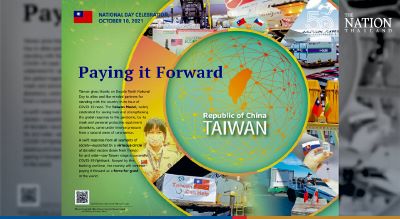
Paying it Forward

Taiwan gives thanks on Double Tenth National Day to allies and like-minded partners for standing in with Taiwan its hour of COVID-19 need. The Taiwan Model, widely celebrated for saving lives and strengthening the global response to the pandemic, by its mask and personal protective equipment donations, came under intense pressure from a second wave of coronavirus.


A swift response from all segments of society-supported by a virtuous circle of donated vaccine doses from friends far and wide-saw Taiwan stage a successful COVID-19 fightback. Buoyed by this backing and love, the country will continue paying it forward as a force for good in the world.

Published : October 10, 2021

Brazils COVID-19 death toll tops 600,000 #SootinClaimon.Com

#SootinClaimon.Com : ขอบคุณแหล่งข้อมูล : หนังสือพิมพ์ The Nation.

https://www.nationthailand.com/international/40007302


Brazil managed to emerge from the healthcare collapse caused by the second wave of COVID-19 infections between March and June, and is currently in a stable situation, with an average of 453 deaths per day, the lowest figure since November 2020.

Brazil, which has the world’s second-highest death toll from COVID-19 behind the United States, saw its death toll exceed 600,000 on Friday.

According to the latest data from the Ministry of Health, the South American nation logged 600,425 deaths and 21,550,730 cases, after registering 615 deaths and 18,172 cases in the last 24 hours.

ADVERTISEMENT

Brazil managed to emerge from the healthcare collapse caused by the second wave of COVID-19 infections between March and June, and is currently in a stable situation, with an average of 453 deaths per day, the lowest figure since November 2020.

Related Stories

It took the country 111 days to go from 500,000 COVID-19 deaths to 600,000, in contrast to the 51-day period it took to jump from 400,000 to 500,000 deaths registered in the first half of the year.

Brazil has the third-largest caseload worldwide, after the United States and India.

According to official data, Brazil has fully vaccinated 97.2 million people, or 45.5 percent of the population, while 148.8 million people, or 69.7 percent, have received one dose.  

Published : October 10, 2021

By : Xinhua

With headway made in battle against COVID-19, U.S. unsure of pandemics ending #SootinClaimon.Com

#SootinClaimon.Com : ขอบคุณแหล่งข้อมูล : หนังสือพิมพ์ The Nation.

https://www.nationthailand.com/international/40007301


The pandemic has been divisive, and the nations ability to end it depends on the ability of people to take collective action, said Rochelle Walensky, director of the U.S. CDC. “We are battling with one another and not battling with the common foe, which is the virus itself,” she added.

 COVID-19 outlook in the United States has improved a lot in recent weeks, with cases, hospitalizations and deaths all declining, but tens of thousands of Americans are still getting sick every day, and a top health official hesitates to predict an end date of the pandemic.

According to The New York Times (NYT) data analysis, the 7-day average of confirmed cases of the pandemic stood at 97,933 nationwide on Friday, with the 14-day change striking a 20-percent fall. COVID-19-related deaths were 1,770 on Friday, with the 14-day change realizing a 14-percent decrease.

ADVERTISEMENT

In particular, “case numbers have plummeted in the South, the region that had the worst outbreak this summer. Florida is averaging fewer than 4,000 new cases a day, down from more than 20,000 a day at the end of August,” reported NYT.

On the other side of the coin, the country surpassed 700,000 total deaths last week and continued to average more than 1,700 newly reported deaths a day, with the vast majority of people dying from the virus were unvaccinated.

Alaska led the country in recent cases per capita. “Hospitals in the state have been overwhelmed, forcing doctors to make wrenching decisions about who should be offered the most advanced care,” said the report.

Meanwhile, infections are rising in some Midwestern states that avoided the worst of the summer surge. New case reports in Minnesota are up 36 percent over the last two weeks, it added.

A COVID-19 testing van is parked at Times Square in New York, the United States, Oct. 2, 2021. (Photo by Michael Nagle/Xinhua)A COVID-19 testing van is parked at Times Square in New York, the United States, Oct. 2, 2021. (Photo by Michael Nagle/Xinhua)
Related Stories

END DATE

It is hard to predict when the COVID-19 pandemic will end. It largely depends on human behavior, and that might be a problem, director of the U.S. Centers for Disease Control and Prevention (CDC) Rochelle Walensky told reporters on Thursday in a session organized by the Health Coverage Fellowship, a health journalism program.

“We have a lot of the science right now; we have vaccines. What we can’t really predict is human behavior. And human behavior in this pandemic hasn’t served us very well,” she said, adding that with the current vaccination rate, there is not enough immunity in the United States to fight off the more contagious Delta variant.

“With the Delta variant, the R-naught is 8 or 9,” Walensky said. R-naught, or the basic reproduction number, signifies the average number of people to whom an infected person will spread the virus. “That means we need a lot of protection in the community to not have disease.”

On Saturday, the CDC updated that 216,573,911 people had received at least one dose of COVID-19 vaccine, making up 65.2 percent of the whole U.S. population. Fully vaccinated people stood at 186,917,921, accounting for 56.3 percent of the total. A total of 7,284,455 people, or 3.9 percent of the fully vaccinated group, received booster shots.

During the session, Walensky emphasized that there are still pockets of unvaccinated people in the United States, who are not protected. “The virus isn’t stupid. It’s going to go there,” she said.

The director said the pandemic has been divisive, and the nation’s ability to end it depends on the ability of people to take collective action. “We are battling with one another and not battling with the common foe, which is the virus itself,” she added.

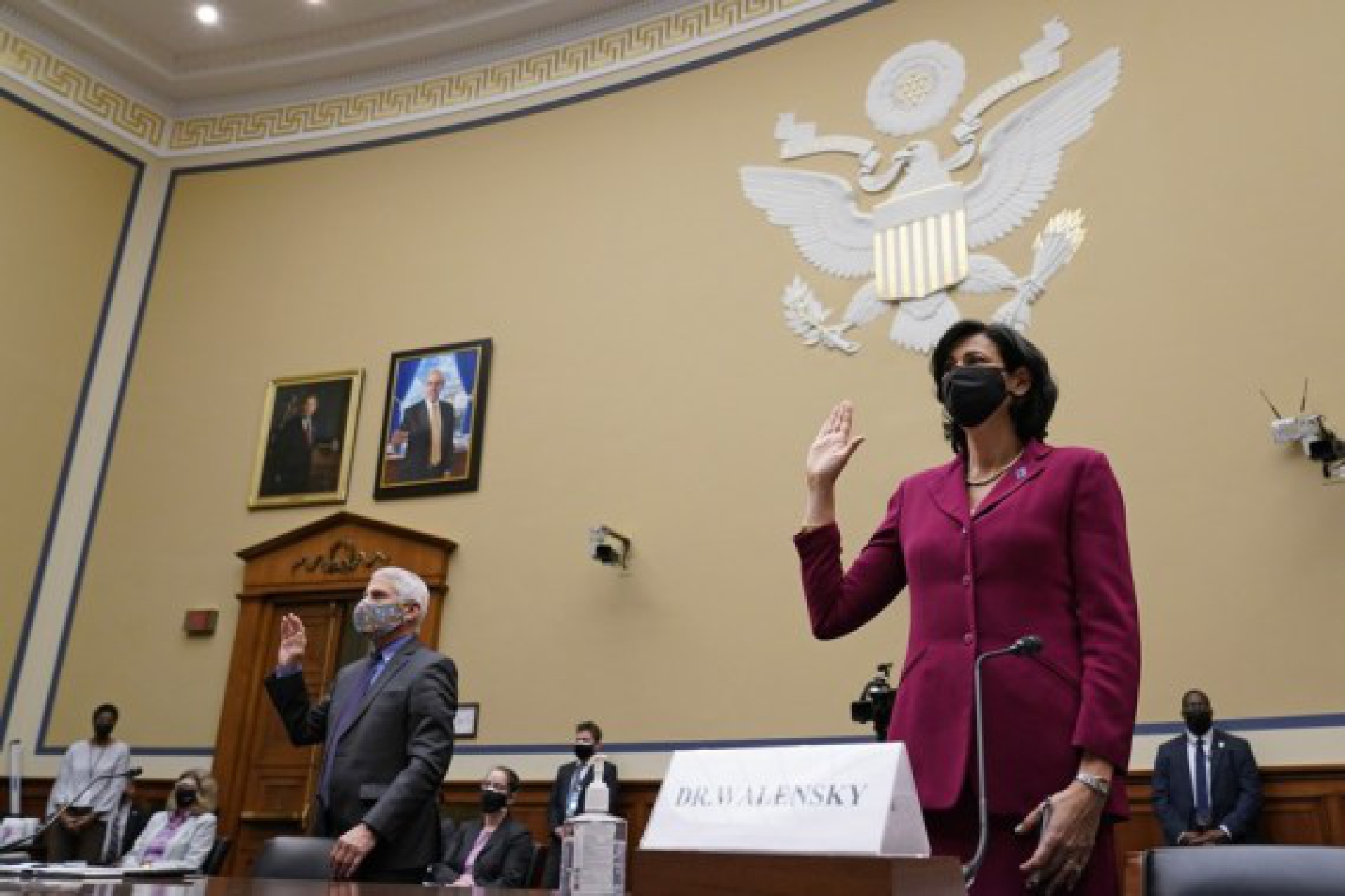
Rochelle Walensky (R), director of the U.S. Centers for Disease Control and Prevention (CDC), is sworn in before testifying at a hearing of U.S. House Select Subcommittee on the Coronavirus Crisis in Washington, D.C., the United States, on April 15, 2021. (Susan Walsh/Pool via Xinhua)Rochelle Walensky (R), director of the U.S. Centers for Disease Control and Prevention (CDC), is sworn in before testifying at a hearing of U.S. House Select Subcommittee on the Coronavirus Crisis in Washington, D.C., the United States, on April 15, 2021. (Susan Walsh/Pool via Xinhua)

OPTIMISTIC PROSPECTS

In a sign of improving COVID-19 conditions, as long as the numbers of newly confirmed infections and patients being admitted to hospitals remain stable and low, San Francisco in California will lift indoor masking requirements on Oct. 15, not only in offices and gyms, but also in indoor college classrooms, places of worship, employee commuter vehicles and other gatherings of people who meet regularly but don’t exceed 100 people. Everyone inside those places must be vaccinated.

The move would make San Francisco the first slice of the Bay Area to significantly relax the public indoor face covering requirements imposed in midsummer in response to the recent Delta surge. Employers or hosts must ensure that rooms are properly ventilated, children under 12 and guests are not present, and there have been no recent COVID-19 outbreaks, according to Mayor London Breed, who characterized the move as “an important step forward.”

“When I talk to office workers and business leaders, one of the things I continue to hear is that they’re anxious to get back to a more normal routine at work where they can interact with their colleagues,” said the mayor in a statement. “Our economy is bouncing back, the city feels like it is coming alive again, and this is yet another milestone in our recovery.”

Another positive sign is that the national number of people eligible for vaccinations could also soon increase substantially: Pfizer and BioNTech on Thursday asked federal regulators to authorize emergency use of their coronavirus vaccine for children aged 5 to 11, a move that could help protect more than 28 million people in the United States.

Rupali Limaye, a behavior scientist at Johns Hopkins Bloomberg School of Public Health who studies vaccine hesitancy, told NYT that parents’ getting their children aged 5 to 11 vaccinated would be a “huge game changer” because they represent a large proportion of population.

In the meantime, as the country nears colder temperatures that will push many people indoors, Yvonne Maldonado, an infectious disease expert at Stanford University, was quoted as saying that the next few months would be critical, but that the combination of increased vaccinations and natural immunity from infections could prevent another catastrophic wave like the one that struck last year.

Customers wearing face masks visit a shopping mall in San Francisco, the United States, Aug. 3, 2021. (Photo by Li Jianguo/Xinhua)Customers wearing face masks visit a shopping mall in San Francisco, the United States, Aug. 3, 2021. (Photo by Li Jianguo/Xinhua)

Published : October 10, 2021

By : Xinhua

At least 5 killed after boat capsizes in Bangladesh #SootinClaimon.Com

#SootinClaimon.Com : ขอบคุณแหล่งข้อมูล : หนังสือพิมพ์ The Nation.

https://www.nationthailand.com/international/40007298


The boat carrying about 18 people capsized following a collision with a sand-carrying vessel in the river in the early hours of Saturday.

 At least five bodies were recovered after a boat capsized in the Turag river in Savar, on the outskirts of Bangladesh capital Dhaka on Saturday.

Khaleda Yasmin, a duty officer of Fire Service and Civil Defense Headquarters, told Xinhua that “the bodies of three boys, a woman and a girl have so far been retrieved.”

ADVERTISEMENT

According to the official, the boat carrying about 18 people capsized following a collision with a sand-carrying vessel in the river in the early hours of Saturday.

Related Stories

Yasmin said most of the passengers were able to swim ashore after the incident.

Some passengers of the vessel are still missing, Yasmin added.

In Bangladesh, ferries are a major means of transport while most of them are often overcrowded.

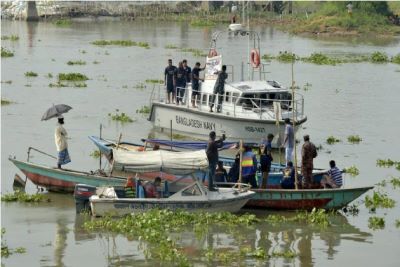
Rescuers retrieve bodies of victims following a boat accident in Savar on the outskirts of Dhaka, Bangladesh, Oct. 9, 2021. (Xinhua)Rescuers retrieve bodies of victims following a boat accident in Savar on the outskirts of Dhaka, Bangladesh, Oct. 9, 2021. (Xinhua)

Published : October 10, 2021

By : Xinhua