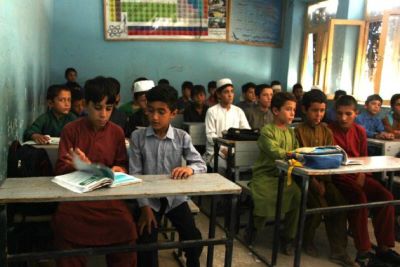
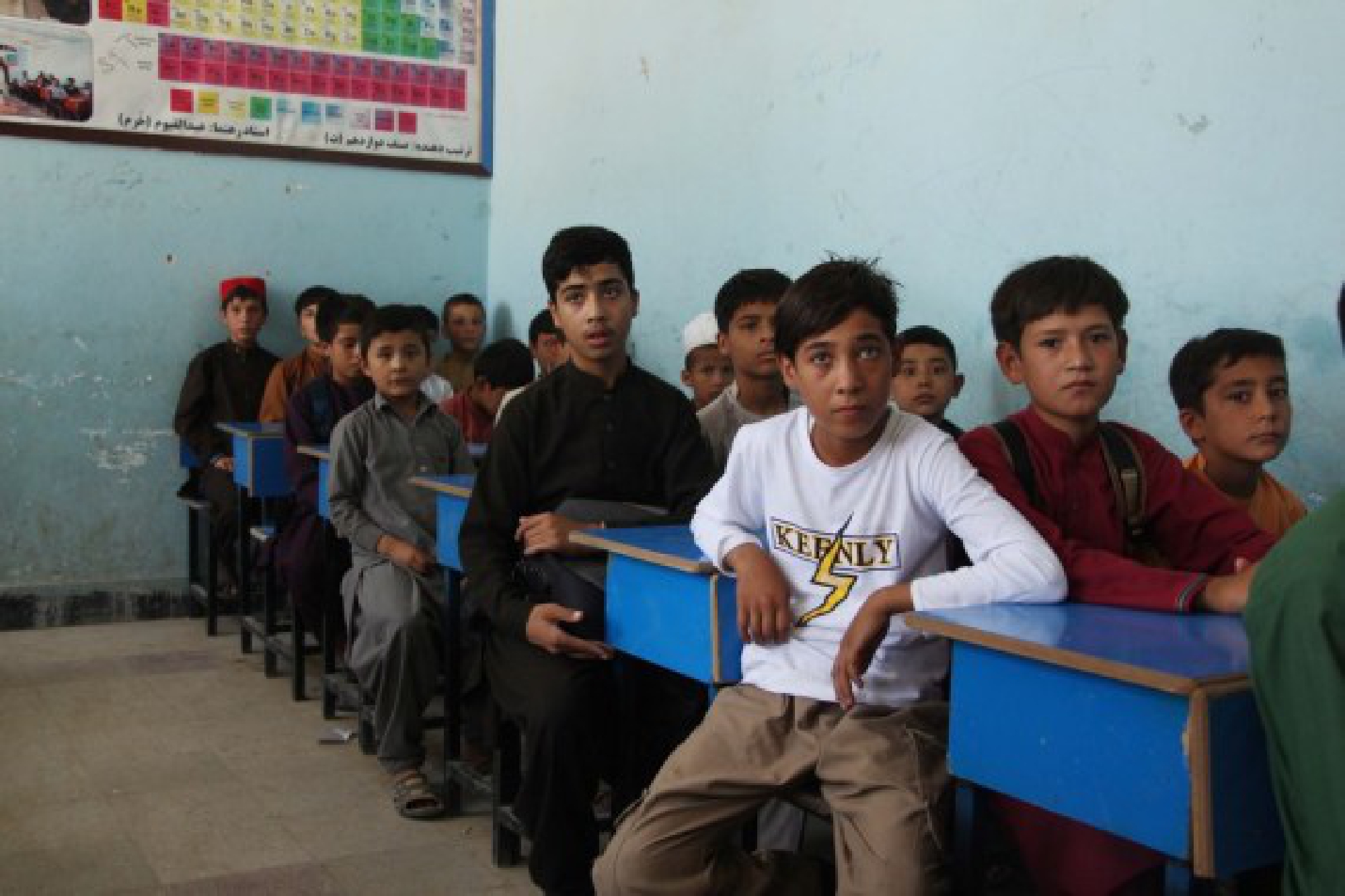
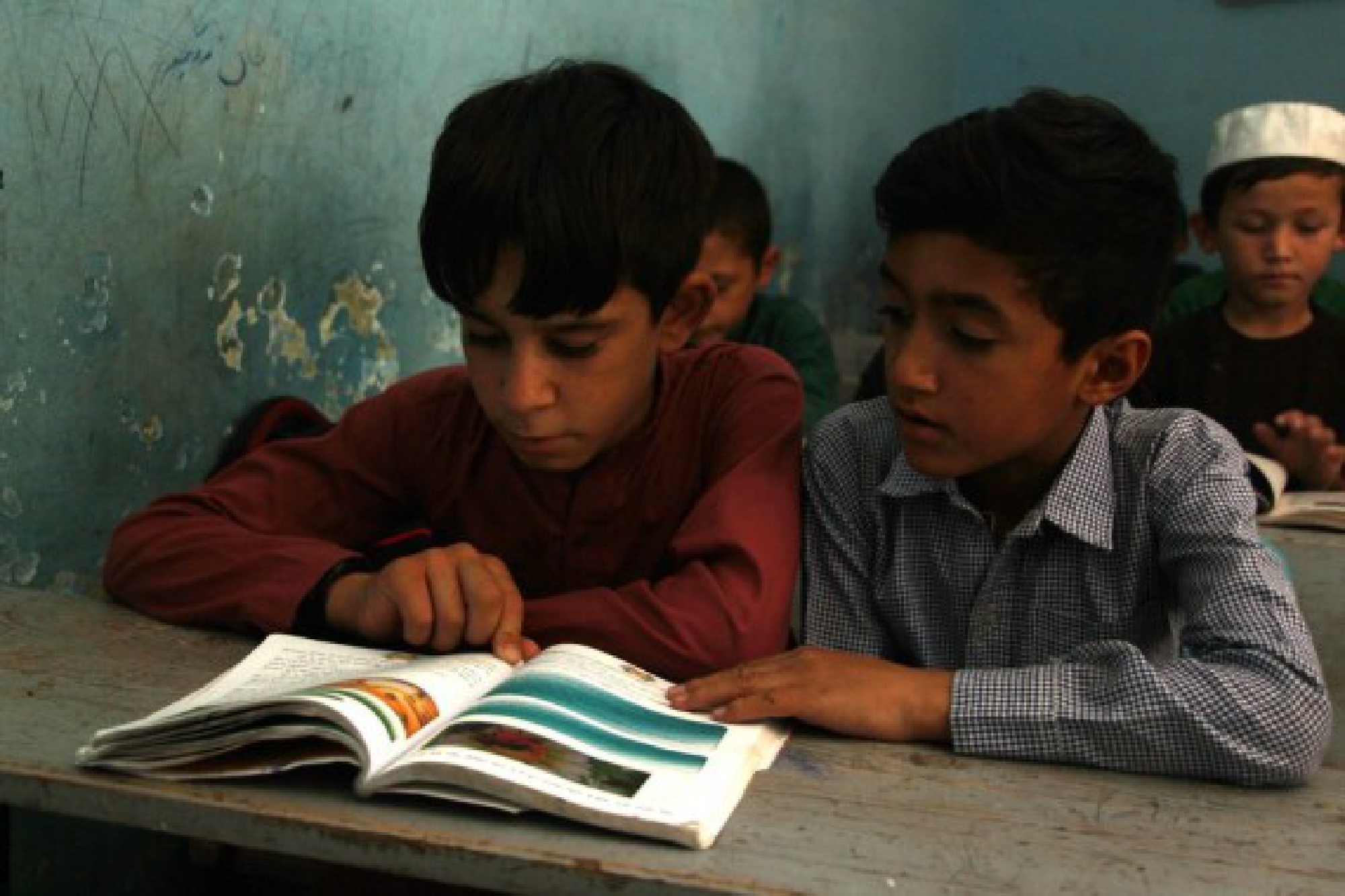
According to the Afghan Ministry of Education in Afghanistan, boy students and male teachers are required to return to schools in all 34 provinces. While the secondary and high schools for girls are still closed, a Taliban spokesman said the issues including the allocation of teachers and classrooms for the girls are still being discussed.
Sunday is the second day of reopening the secondary and high schools in Afghanistan.
In the Central Asian country, secondary schools, high schools and madrasas or religious schools reopened on Saturday, more than a month after the Taliban takeover of the country, the Ministry of Education said.
“Boy students and male teachers of all private and government-run secondary, high schools, and madrasas or religious schools are asked to return to schools in all 34 provinces of Afghanistan on Saturday,” the ministry said in a statement.
ADVERTISEMENT
The ministry didn’t say when the girls’ schools would reopen.
Primary schools for boys and girls have already reopened and the government-run universities have remained closed.
Afghan school students attend a classroom at a local school after the Taliban have taken control of the country in Kunduz province, Afghanistan, Aug. 22, 2021.
The education ministry said in another statement on Sunday that all the male personnel of the ministry should resume their duties and attend their offices from Monday.
The continued closure of the secondary and high schools for girls has caused concerns among the Afghan females who have termed the decision as a violation of the women rights.
“I want to become a doctor in the future but depriving me of education will bury my dream,” a girl student, Nadia, said.
Nadia, a ninth grader in a local school, said, “Going to school and getting education is my natural right.”
Taliban leaders have repeatedly said that Afghan women and girls have the right to study and work but only within the framework of Sharia or Islamic law.
Afghan women have demanded the country ensure their rights including study and work outside home.
Taliban spokesman Zabihullah Mujahid has said that girls’ schools will reopen and the newly formed caretaker government has been working on the procedure on how to separate the classrooms and teachers for girls.
Afghan school students attend a classroom at a local school after the Taliban have taken control of the country in Kunduz province, Afghanistan, Aug. 22, 2021.
Southeast Asia reported the lowest number of new Covid-19 cases and related deaths in months on Sunday.
Asean countries confirmed 63,862 new cases, lower than Saturday’s 69,759, and 1,094 deaths, down from the previous day’s 1,251.
The number of Covid-19 cases crossed 11.47 million with 252,056 deaths.
Indonesia’s Ministry for Maritime and Investment Affairs announced that it will reopen the country’s resort island of Bali for international visitors in October, as the number of Covid-19 cases has been declining. Indonesia will prioritise tourists from countries with controlled Covid-19 cases such as Singapore, Japan, South Korea and New Zealand. Bali Island had to postpone its reopening plan from July this year as cases of the delta variant was climbing, but the latest report confirmed that currently 96 per cent of island residents have been vaccinated with at least one shot.
Meanwhile, Laos’ Ministry of Health has officially approved vaccinations for students aged 17 years and above who will travel for the purposes of education, or who are preparing for tertiary entrance examinations at universities or other educational institutions. The recommended vaccine for this group is either Pfizer or Sinopharm. The country reported 371 new cases and no new deaths on Sunday, bringing cumulative cases in the country to 19,185 patients with 16 deaths.
MANILA – Filipino boxing legend Manny Pacquiao on Sunday officially announced he was running for president in next years elections, potentially facing off with incumbent state leader Rodrigo Dutertes chosen successor.
Pacquiao, 42, was nominated by a faction of PDP-Laban, the ruling party that fielded Duterte in 2016.
“I am a fighter and I will always be a fighter inside and outside the ring,” Pacquiao said at the party’s assembly over the weekend.
The news comes as no surprise to people in the Philippines, where the lines between celebrity and politics often blur.
Up until this year, the boxer-turned-senator was supportive of Duterte, the populist president who is most known for a bloody war on drugs that has left thousands dead. Duterte is expected to run for vice president, in what analysts and critics say is a move meant to circumvent a single-term limit on the presidency.
But since June, the pair have clashed publicly, with Pacquiao criticizing the president’s policies toward China and corruption.
Pacquiao chaired the PDP-Laban until he was unseated by Duterte’s allies in July.
ADVERTISEMENT
“When you are a champion in boxing, it does not mean to say that you are a champion in politics,” Duterte said of Pacquiao in July, adding that the star had, for years, heaped praise on his leadership.
Since taking office five years ago, Duterte has torn up the political playbook and has been widely condemned for his derogatory remarks against women and incitations to kill drug addicts and communists, among other outrageous statements.
The other party faction has nominated senator Christopher “Bong” Go, a former Duterte aide.
Analysts expect Go to be a proxy for Duterte, who is bound by a single-term limit as president and must stay in power in order to avoid potential arrest by the International Criminal Court. The ICC announced last week it would proceed with an investigation of killings under Duterte’s term.
Pacquiao is the only eight-division world champion in boxing’s history and, in 2019, was listed by Forbes as one of the world’s highest paid athletes with earnings of around $26 million.
Pacquiao has continued his matches while juggling a career in politics – first as a congressman, and then a senator – resulting in criticism about his absenteeism. In 2016, he came under fire and lost sponsorship from sportswear giant Nike when he called gay couples “worse than animals.”
Duterte’s daughter and Davao City mayor Sara Duterte-Carpio, who has led pre-election surveys, is also another contender for the presidency. Both Go and the younger Duterte denied they would seek the position – but nothing is final until the filing of candidacy closes in October.
“Work hard in silence, let success be the noise,” Pacquiao tweeted last week.
For years, the Netherlands has held the world title for having the tallest people on the planet. But new data from the office for national statistics suggests that the height of the average Dutch person is shrinking. And scientists are puzzled as to why.
At just over 6 feet for men and about 5-foot-6 for women, the Dutch are still the world’s tallest population. But the growth that has seen the country to the top of global height charts for decades appears to have ground to a halt.
“In the course of the last century we have become taller and taller, but since 1980 the growth has stopped,” government statisticians said Friday in a report on the findings written in Dutch.
Dutch women born in 2001 are, on average, more than half an inch shorter than those born in 1980, while for men the decline is 0.39 of an inch, or 1 centimeter.
The statisticians said the decrease relates partly to “the increased immigration of shorter new population groups and the children born from them in the Netherlands.”
Still, that doesn’t account for why growth also stagnated in the generations in which both parents were born in the Netherlands or in the generations in which all four grandparents were born in the Netherlands. “Men without a migration background did not get any taller, and women without a migration background show a downward trend,” the statisticians added.
The new data were based on a number of surveys by health officials of 719,000 Dutch-born individuals between the ages of 19 and 60, who self-reported their height, and used the average height at age 19 as a benchmark.
ADVERTISEMENT
Scientists have offered a number of explanations – including the possible economic ramifications of the 2007 financial crisis, the increased consumption of unhealthy food or even a shift from meat to plant-based diets, while noting that such theories are speculative at this stage.
Previous studies have shown that while the rest of the world got taller in recent years, Americans plateaued – growing heavier rather than taller; a change some experts have pegged to poor nutrition and shifts in migration. The average American man between the ages of 20 and 39 weighed about 197 pounds and stood at 5 feet 9 inches tall, according to a 2015-2016 health survey by the National Center for Health Statistics. The average woman of that age range was roughly 5 feet 4 inches tall and weighed about 168 pounds.
Such height studies are important, scientists say, because taller people generally live longer. They are less likely to have difficult pregnancies or to develop heart or respiratory diseases. Taller people may also earn more money and be more successful in school.
Majid Ezzati, an expert in global environmental health at Imperial College in London, said it would take a few more years of data to confirm whether the Dutch are experiencing a new trend. If they are, he said, it will most likely come down to nutrition. He told the Guardian newspaper that a Dutch school milk program was thought to be one reason the population had grown so tall in recent decades. In recent years, though, demand for fast-food has boomed.
It remains unclear whether poorer nutrition is limited to certain demographics, Ezzati said, or whether it reflects new fashions and social trends nationwide. He downplayed the role of migration, saying it wasn’t of a scale that would lead to a change in height.
Gert Stulp, an expert at the University of Groningen’s faculty of behavioral and social sciences, said that similar height trends in the United States indicate that fast food could be a factor.
“Diets may have changed,” Stulp told the Guardian. “This is believed to be the reason why the Americans are shrinking; poorer diets, more calories, but fewer nutrients.”
Previous studies have suggested that plant-based diets also could be playing a role, although Stulp said that remains speculative and “there is no evidence for that.”
The Islamic State affiliate in Afghanistan claimed responsibility Sunday for a series of blasts over the weekend in the countrys east that reportedly killed several people and injured tens more in another escalation of violence as the Taliban works to consolidate its control.
The improvised explosive devices were set off Saturday and Sunday around the city of Jalalabad, capital of the eastern province of Nangahar and known as a stronghold for the Islamic State-Khorasan (ISIS-K). Though they are both Islamist groups, ISIS-K opposes the Taliban, which it accuses of not being extreme enough.
The Islamic State group’s Amaq News Agency said on its Telegram channel that six attacks Saturday and Sunday killed or injured over 35 Taliban members, Reuters reported.
Bilal Karimi, a Taliban spokesman, said a bombing Sunday in Jalalabad targeted a Taliban vehicle, killing one child and injuring two people, among them a Taliban member.
“We have started investigations into the incident to reach the culprits,” Karimi said.
But three residents, speaking on the condition of anonymity because they feared angering the Taliban, told The Washington Post that at least three civilians were killed, including a child, and scores more injured in the attack. Residents said the blast also knocked down a major power line, though it was restored later in the day.
ADVERTISEMENT
The violence followed a series of explosions Saturday. One resident said four people were killed and 22 injured in five incidents in the city.
Karimi said that only “minor blasts” took place Saturday and “a number of casualties were reported,” without providing specifics.
ISIS-K previously claimed responsibility for an attack at the Kabul airport on Aug. 26, which killed some 170 Afghan civilians and 13 U.S. service members at the already chaotic end of the U.S. withdrawal of troops after two decades in Afghanistan.
The Taliban rapidly regained control of the country amid the hasty exit of U.S. forces last month. The extremist group has since faced pockets of public opposition, including a resistance movement in Panjshir province and street protests by women who oppose the Taliban’s brutal gender-based restrictions.
At the same time, the political vacuum left by the swift fall of Afghanistan’s Western-backed government could further embolden ISIS-K, analysts have warned. The Taliban and U.S. forces previously found common ground fighting the Islamic State affiliate.
The Taliban leadership has said the group has softened its stances since it last ruled Afghanistan, from 1996 to 2001, when it became an international pariah for policies such as banning education for girls. Over its last month in power, however, the Taliban has formed an all-male government, imposed dress codes and segregated women at universities, and told female employees to stay home. On Friday, the group ordered high schools for male students to reopen – but made no mention of schools for female students.
SYDNEY – Australias Prime Minister Scott Morrison said Sunday it had “deep and grave” concerns about the diesel-powered submarines it planned to buy from France – and that Paris knew this well before Canberra abruptly canceled that deal in favor of sharing nuclear submarine technology with the United States and Britain.
Morrison was pushing back on criticism from France that it left the country in the lurch by secretly negotiating the new three-nation pact, called AUKUS, even as he acknowledged only telling France about the new deal on the day it was announced.
“I think they would have had every reason to know that we had deep and grave concerns that the capability being delivered by the Attack Class submarine was not going to meet our strategic interests,” Morrison told reporters Sunday.
“This is an issue that had been raised by me directly some months ago and we continued to talk those issues through, including by defense ministers and others.”
France recalled its ambassadors from Australia and the United States – and lashed out at Australia’s “treason” – in the fray that has escalated tensions among allies.
The Biden administration’s surprise decision to share sensitive nuclear submarine technology with Australia also prompted a swift backlash from China – the apparent target of the pact announced Wednesday by Biden, Morrison and British Prime Minister Boris Johnson.
Under the previous $66 billion deal with Paris inked in 2016, Australia would have purchased 12 French diesel-powered submarines.
French Foreign Minister Jean-Yves Le Drian has said Australia told Paris about its plans just one hour before the announcement by the three leaders Wednesday.
ADVERTISEMENT
French government spokesman Gabriel Attal told French television on Sunday that President Joe Biden has requested a phone conversation with President Emmanuel Macron and that the exchange is expected to take place in the coming days.
While Morrison has previously said he had warned Macron of problems with the French contract during a visit to Paris in June, a French diplomatic official on Friday countered that in their meetings the Australians only asked whether the French submarines were still adequate for the changing threat environment.
Nuclear-powered submarines have a longer range, and they can travel underwater at a higher sustained speed than their diesel-electric-powered equivalents. That may offer advantages in a head-to-head with the Chinese military, which has significantly grown its navy in recent years and plans to expand its fleet of nuclear-powered submarines.
Australia’s defense minister, Peter Dutton, also defended his country’s handling of the French submarine contract on Sunday, describing his government as “upfront, open and honest” about its concerns with the deal. He noted the changing security dynamic in the Indo-Pacific region, where he said “the Chinese are pumping out submarines and frigates and aircraft carriers at a record rate.”
“We can understand of course, the French are upset at the cancellation of a contract but in the end, our job is to act in our national interest,” Dutton told Sky News.
The remote Faroe Islands has promised to review its four-century-old tradition of hunting dolphins, following global outrage over last weekends hunt in which nearly 1,500 of the sea mammals were slaughtered by locals.
In a statement, the government of the semi-independent Danish territory said it would evaluate the regulations surrounding the annual hunt known as the Grindadrap.
“We take this matter very seriously,” Prime Minister Bárður á Steig Nielsen said Thursday. “Although these hunts are considered sustainable, we will be looking closely at the dolphin hunts, and what part they should play in Faroese society.”
Last Sunday’s catch of 1,428 Atlantic white-sided dolphins is estimated to be the largest in Faroese history, and may have even been too great a catch to feed the the entire 50,000-person population of the territory located halfway between Scotland and Iceland.
Hunters in the Faroe Islands have been killing whales and dolphins since Viking times. Their meat is considered a key part of Faroese culture and is shared out among the community.
According to People for the Ethical Treatment of Animals, a survey of Faroese adults revealed that 7 percent of respondents consumed pilot whale meat and blubber regularly with almost half (47 percent) admitting they rarely or never ate them.
Environmentalists and marine conservation organizations have long condemned the annual killing, but outrage was particularly rife this year given the size of the pod.
Conservation organization Sea Shepherd denounced the killings, deeming the event a “brutal and badly mishandled massacre,” while social media users reacted to photos of bloody waters and beach-strewn dolphin carcasses in horror.
ADVERTISEMENT
The government acknowledged that the latest hunt “raised some issues,” and admitted last Sunday’s drive was “extraordinary” because the dolphin pod was “several times larger” than usual and that hunters had severely underestimated the size of the group.
The average of white-sided dolphins killed in each year’s hunt is usually estimated to be around 250, making last week’s haul six times larger than usual, which presented issues for locals who struggled to handle the pod.
Hunters round up the dolphins for hours, using jet-skis and boats, before eventually slaying the creatures for their meat and blubber. The practice is “legal but it’s not popular,” Sjurdur Skaale, a Danish lawmaker for the Faroe Islands, told the BBC last week.
“For such a hunt to take place in 2021 in very wealthy island community just 230 miles from the (United Kingdom) with no need or use for such a vast quantity of contaminated meat is outrageous,” said Robert Read, Sea Shepherd’s chief operating officer.
Dolphin drives have been adapted in recent years to make them more humane, with hunters asked to use a special tool to kill the animals and to hold a license. Given the size of last week’s slaying, some animal rights campaigners expressed concerns that the animals may not have been killed using the correct methods, meaning they may not have died instantly.
According to Skaale, if equipment specially designed to quickly sever the spinal chord of the whale or dolphin is used correctly, the creatures are killed in “less than a second.”
According to a recent poll from Kringvarp Føroya, the national broadcaster of the Faroe Islands, more than 83 percent of the population continue to support the killing of pilot whales – which are classified as a species of dolphin – but more than half of the islanders (53 percent) are opposed to killing the white-sided dolphin.
Hans Jacob Hermansen, the former chairman of the Faroe Islands’ association behind the annual dolphin killings, defended the practice last week.
Speaking to the Associated Press, Hermansen said the hunt was no different “from killing cattle or anything else,” and that reaction had likely been so strong because the slaughter took place in the public eye.
Afghan family ravaged by U.S. drone strike mistake wants headstones for the dead – and possible new life in America
KABUL, Afghanistan – By the time the American apology arrived, the lives of the Ahmadi family were already upended. And being falsely accused by the U.S. military of ties to the Islamic State was not the worst part of the ordeal.
There was their shattered family house. There were the nightmares, the bouts of crying and the screams triggered by the memory of a U.S. drone strike on Aug. 29 that killed 10 of their relatives, including seven children.
There were the fresh fears of persecution by the Taliban after the media spotlight on the family noted thatsome members, including survivors, worked for U.S.-based firms.
The Hellfire missile – the weapon used in the Pentagon’s capstone attack at the end of two-decade war – also killed the family’s only breadwinner, Zamarai Ahmadi.
“We didn’t have money to bury our relatives,” said his 32-year-old brother Emal on Saturday, steps away from the mangled carcass of a white Toyota sedan. “We had to borrow the funds.”
Without doubt, the Pentagon’s mea culpa Friday – that a series of miscalculations led to the wrongful targeting of Zamarai Ahmadi, an aid worker with a U.S.-based group – has lifted a heavy weight off the family.
“The Americans kept emphasizing they killed an ISIS-K terrorist,” said Emal, referring to the Islamic State’s Afghanistan branch. “Now we are happy they have acknowledged their mistake and confirmed that they killed innocent people.”
The remnants of a white Toyota sedan destroyed by a U.S. Hellfire missile, which also killed 10 people, are seen in Kabul, Afghanistan, on Sept. 18, 2021. MUST CREDIT: Photo by Lorenzo Tugnoli for The Washington Post
ADVERTISEMENT
What the family seeks now is to exit their American-made hell.
Family members in interviews on Saturday expressed no visible animosity toward the U.S. government for killing their loved ones. But forgiveness may be too strong a word.
Rather, the Ahmadis grasp onto a sense of pragmatism. They want compensation from the U.S. government and help in leaving Afghanistan and getting resettled in the United States or another safe country, family members said.
“You can see the situation in Afghanistan is not good,” said Samim Ahmadi, 24, the step son of Zamarai. “Whether in America or another country, we want peace and comfort for our remaining years. Everyone makes mistakes. The Americans cannot bring back our loved ones, but they can take us out of here.”
On Saturday came further worrisome signs from Afghanistan. A series of blasts rocked the eastern city of Jalalabad, potentially targeting Taliban vehicles, killing at least three people and wounding 20. There was no initial claims of responsibility, but the province is a bastion of the Islamic State.
Before last month’s drone strike, both Emal and Zamarai had applications in process to acquire special visas to enter the United States because of their work with American companies, said family members.
The drone strike has heightened the urgency to leave, they added.
“We are worried,” said Ajmal Ahmadi, another brother. “We feel under threat because we are so exposed to the public by the media. Everyone got to know that we have worked for foreigners, served in the Afghan army as well as the Afghan intelligence agency.”
They also want justice. Those responsible for their tragedy, such as the commander who oversaw the strike, the drone operator or anyone else who had visuals on the ground, need to be held accountable in a U.S. court, family members said.
“The U.S. government must punish those who launched the drone strike,” said Emal Ahmadi, slim and bearded, his firm voice at times softening with emotion. “They knew and saw there were children on the ground. Can anyone bring them back?”
Yet so far, family members said, they have had no contact with U.S. officials from any branch of the government, not even to offer their apology personally.
“They should have contacted us and at least asked us about our situation,” said Emal, shaking his head.
Until Friday, the Pentagon had defended last month’s operation as a “righteous strike.” Defense officials said they had tracked a white Toyota sedan for hours after it left a suspected Islamic State safe house and destroyed it to prevent an imminent suicide attack.
In reality, the car’s driver, Zamarai Ahmadi, was a longtime employee of Nutrition and Education International, a charity based in California. He was carrying large water canisters that were apparently mistaken for bombs, officials acknowledged, echoing earlier investigations by The Washington Post and other media outlets that raised questions about the attack.
– – –
Just before the drone strike, Ahmadi had pulled into his gated family compound, where he and his three brothers grew up in a working-class enclave west of Kabul’s airport. Now, they were all living there with their own families. Their kids played with each other every day in the courtyard.
On this evening, several jumped into Ahmadi’s car. That’s when the missile struck, a pinpoint attack that eviscerated the sedan and sprayed shrapnel into doors and walls, shattering windows.
Zamarai and three of his sons – Zamir, 20, Faisal, 16, and Farzad, 11 – were killed. The three children of another brother – Arween, 7, Binyamin, 6 and Ayat, 2 – also died, along with Emal’s 3-year-old daughter, Malika, and his nephew Nasser, 30. A cousin’s infant daughter, Sumaiya, was also among those killed.
The entire family depended on Zamarai’s $500 monthly salary, said Emal. With their house destroyed, the remaining 15 family members moved to his sister’s small, four-room home, an hour’s drive away.
“Every night we sleep on the roof because there is not enough space in the house,” said Ajmal Ahmadi. “For the first 15 days, I could not sleep. I kept having flashbacks of my brother, my nieces and nephews.”
The wives of Emal and another relative, Romal, are more traumatized, said family members. Both women witnessed the deaths of their children. “They have constant nightmares, often waking up screaming at night,” said Emal.
His 7-year-old daughter, Ada, still asks when her sister, Malika, will return home.
“I can’t bear to tell her that her sister is dead,” said Emal. “I’ve told her Malika is at the hospital and one day she will come back.”
Imran, 8, Ajmal’s son, recalled how he would ride bikes and play soccer with his cousins. They would pluck fresh grapes from vines for snacks.
“Now,” he said, “they are in the next world.”
The family tries to avoid their destroyed house as much as possible.
“Whenever our relatives come here, they remember everything about the explosion,” said Ajmal. “It is just too hard. We can no longer live in this house.”
Meanwhile, the family’s financial woes are growing. The brothers have lived off the savings of her sister for the past three weeks. Those savings are gone, and the family is forced to borrow money again, said Emal. They owe nearly $2,000, a princely sum in Afghanistan.
And they still have unfinished family business.
At a cemetery, a half-hour drive away, 10 graves are scattered on a rocky hill side. Each has a stone painted in red to mark its location and a white cloth with the name of the family member. The family cannot afford to buy the gravestones.
In Japan anime universe, Belle seeks to rewrite script on female power
TOKYO – In her life in rural Japan, Suzu is a freckled and shy 17-year-old who is self-conscious about her looks and has lost her will to play music after her moms death.
But in the virtual world, known as “U,” she transforms into Belle, an enchanting global pop superstar with flowing pink hair and a mesmerizing facial design that resembles freckles.
The animated film “Belle” – a hit in Japan that will make its U.S. debut at the New York Film Festivalon Sept. 25 – also carries a bit of artistic rebellion.
The film’s message of female empowerment has gained attention for flipping the script on anime, Japan’s signature style of animated movies and graphic novels that often portrays girls and women as weak, vacuous and hyper-sexualized.
The message has resonated in Japan during a time when growing numbers of women are calling for change – most recently laid bare through a string of sexist comments by high-ranking Olympic officials that drew fierce backlash.
“I feel that women characters in Japanese anime are often depicted through a lens of desire leading to their sexual exploitation, and too much is brushed off as a freedom of expression,” the film’s director, Mamoru Hosoda, said during an interview earlier this month at Studio Chizu, his animation studio in the Tokyo suburbs.
Director Mamoru Hosoda at his office in Tokyo on Sept. 9. MUST CREDIT: photo for The Washington Post by Shiho Fukada.
ADVERTISEMENT
From Disney princesses to Marvel superheroes, from anime to pop music, creators across genres are rethinking how to portray women and girls with agency and dignity, and show that being imperfect is beautiful, too. Global movements such as #MeToo have also underscored a sense of common purpose.
Hosoda said he hopes to draw attention to the ways that Japanese animation has shaped the public’s perceptions of women and girls, and what it means to be beautiful and powerful.
“Such exploitation [has been] . . . justified with the notion that it’s happening in a fantasy world, and not in reality. But I feel that, surely, such perceptions are connected and will influence our reality,” he added, as he sipped on coffee at his office, decorated with posters and figurines.
Japanese animation, which includes anime and manga, is among the country’s biggest cultural exports and has become popularized through digital streaming services.
But problematic female representation in anime, especially in television shows aimed at men, has been a concern for gender equality advocates. Such depictions are both overt – exaggerated breasts and barely clothed girls – and subtle, such as story lines in which girls are damsels in distress and secondary to boys.
In recent years, directors such as Hosoda have sought to challenge views in Japanese society that can devalue women, said Akiko Sugawa, professor at Japan’s Yokohama National University specializing in gender and anime studies.
“Anime has the power to create and break gender stereotypes,” she said.
Sugawa said there is still much room for improvement, including the need for more women and LGBTQ anime directors.
“There are now more positive portrayals of LGBTQ characters, issues and works that pose questions about societal problems. And with the rise of more diverse directors and anime decision-makers, there’s hope for more change to come,” Sugawa said.
“Belle” is a modern twist on the Disney classic “Beauty and the Beast.” After her mother dies while trying to save a child from danger, Suzu struggles to fit in at school. She joins the virtual world “U” as Belle, a talented performer with eye-catching outfits who instantaneously gains billions of followers.
With the computer savvy of her female best friend and the emotional support of her late mother’s female friends, Suzu/Belle embarks on an adventure to help a mysterious beast. Along the way, Belle performs several songs that can now be heard throughout shopping districts of Tokyo. Since its release in July, “Belle” has become Japan’s third-highest-grossing film this year.
In the movie, Hosoda seeks to give women and girls greater depth and humanity than is normally depicted in anime. Through Suzu/Belle, he juxtaposes the way that the inner beauty of Suzu and dynamism of Belle coexist in one person. For Suzu, an introverted teen, her online persona is not just an imagination or an escape, but rather a part of herself that she eventually grows into.
Hosoda said he wanted to give Belle more complexity, in the way the character of Beast in the original Disney movie was afforded that depth.
“Just like the beast having a duality, I wanted Belle to also have two sides and focus on how the two sides come to play, ultimately leading to her self-growth,” he said.
Mamoru Hosoda draws at his office in Studio Chizu in Tokyo on Sept. 9. MUST CREDIT: photo for The Washington Post by Shiho Fukada.
Hosoda received a 14-minute standing ovation when his movie premiered at the Cannes Film Festival in July. Belle has been replicated by cosplayers, who dress up as anime characters. The animated character Belle “performed” the movie’s title song at the Fuji Rock Festival last month.
On social media, Japanese fans have raved about the movie’s positive message, stunning visuals and catchy tunes. “Those who are feeling difficulty in their lives, those who want to change but can’t, I hope they see this film. It really helps you take a step forward,” one person tweeted.
Hosoda, 53, has long focused on the cyber world in his works, including the film versions of “Digimon” in1999 and 2000 and from his earliest feature films such as “Summer Wars.”
His movies, particularly in recent years, have depicted women and girls as independent and strong-willed characters, including the 2018 “Mirai,”a story about a boy who lashes out after his younger sister is born but learns the importance of family bonds. The movie earned Hosoda an Oscar nomination for best animated feature film.
But through “Belle,” Hosoda has delivered perhaps his most explicit message about female empowerment and the power of technology as a force for good. He said he was inspired by his 5-year-old daughter, as he contemplates the future she will face growing up.
“She is still in preschool and is quite introverted, so I imagined how she was going to survive once she gets on social media and begins having all sorts of online interactions,” he said.
Hosoda said he wanted to challenge the narratives warning against increasing reliance on the Internet.
“For the younger generation, the norm will be to live in both worlds and that both worlds are their realities,” he said. “And the Internet plays a huge role for them to raise their voice and go out into the world.”
“Belle” is scheduled to be released in U.S. theaters this winter.
Asean reports lowest Covid-related deaths this month, as new cases decline
Southeast Asia saw a decrease in new Covid-19 cases and the lowest death toll this month on Saturday, collated data showed.
Asean countries reported 69,759 infections and 1,251 deaths on Saturday compared to 72,071 and 1,345 respectively on Friday.
Singapore‘s Education Ministry said primary schools in the country will hold online classes for 10 days before the national exams after 935 new Covid-19 cases, the highest since April last year, were reported recently.
Students in primary school 1-5 must attend online classes from September 27 to October 6, while primary 6 students will take 2-3 days off before the national exams in order to reduce the risk of Covid-19 spreading in schools.
Vietnam‘s Health Ministry has approved the Cuba-made Abdala Covid-19 vaccine for emergency use.
ADVERTISEMENT
The protein subunit vaccine was developed by The Finlay Institute and The Center for Genetic Engineering and Biotechnology in Havana, Cuba.
During the third clinical trial, the vaccine initially gave 92.28 per cent immunity against Covid-19 after receiving three jabs.
Asean reports lowest Covid-related deaths this month, as new cases decline

 Afghan school students attend a classroom at a local school after the Taliban have taken control of the country in Kunduz province, Afghanistan, Aug. 22, 2021.
 Afghan school students attend a classroom at a local school after the Taliban have taken control of the country in Kunduz province, Afghanistan, Aug. 22, 2021.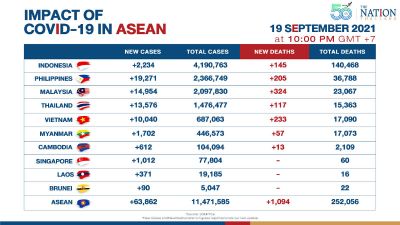

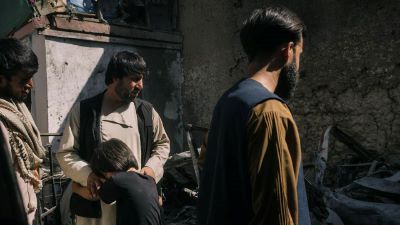
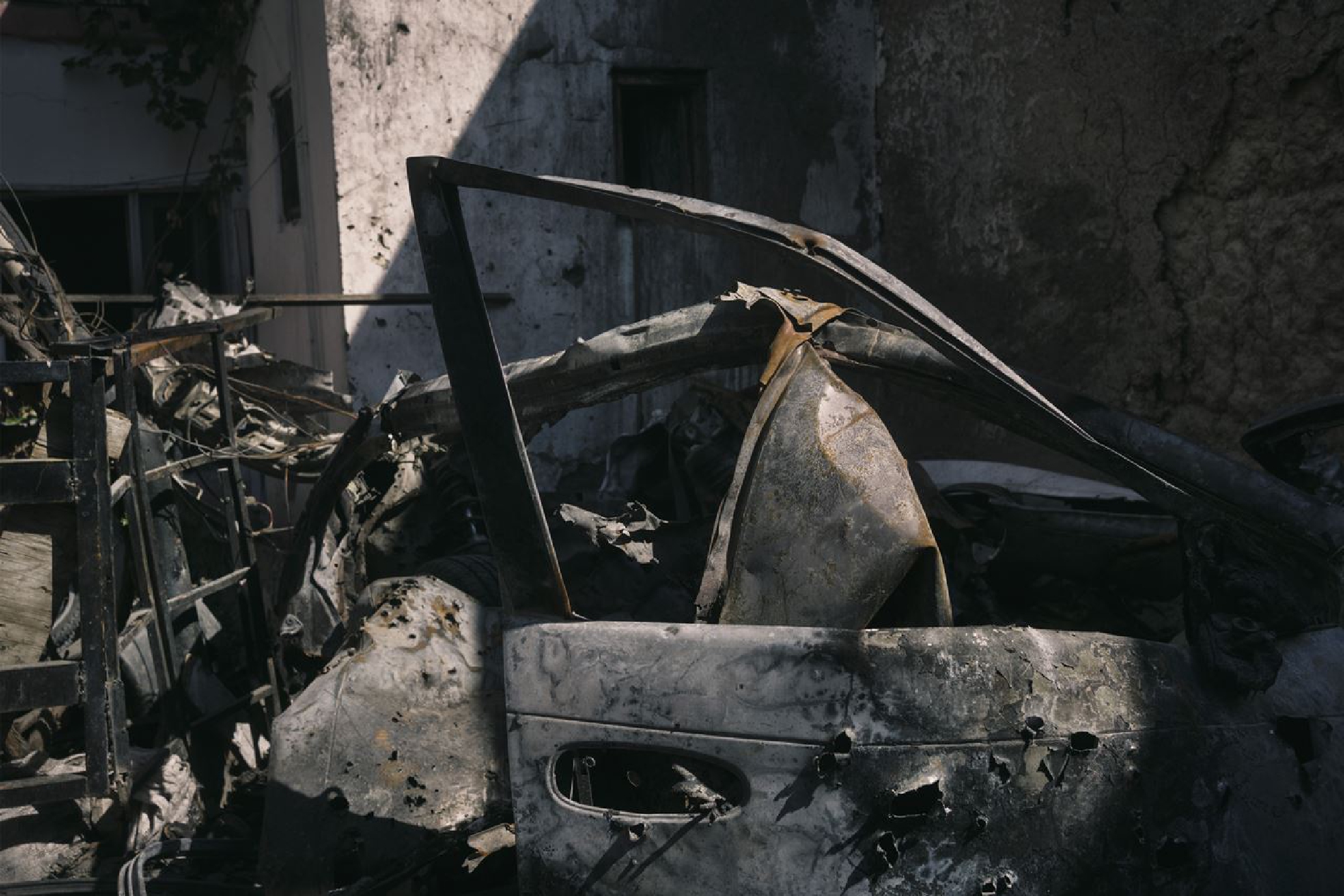 The remnants of a white Toyota sedan destroyed by a U.S. Hellfire missile, which also killed 10 people, are seen in Kabul, Afghanistan, on Sept. 18, 2021. MUST CREDIT: Photo by Lorenzo Tugnoli for The Washington Post
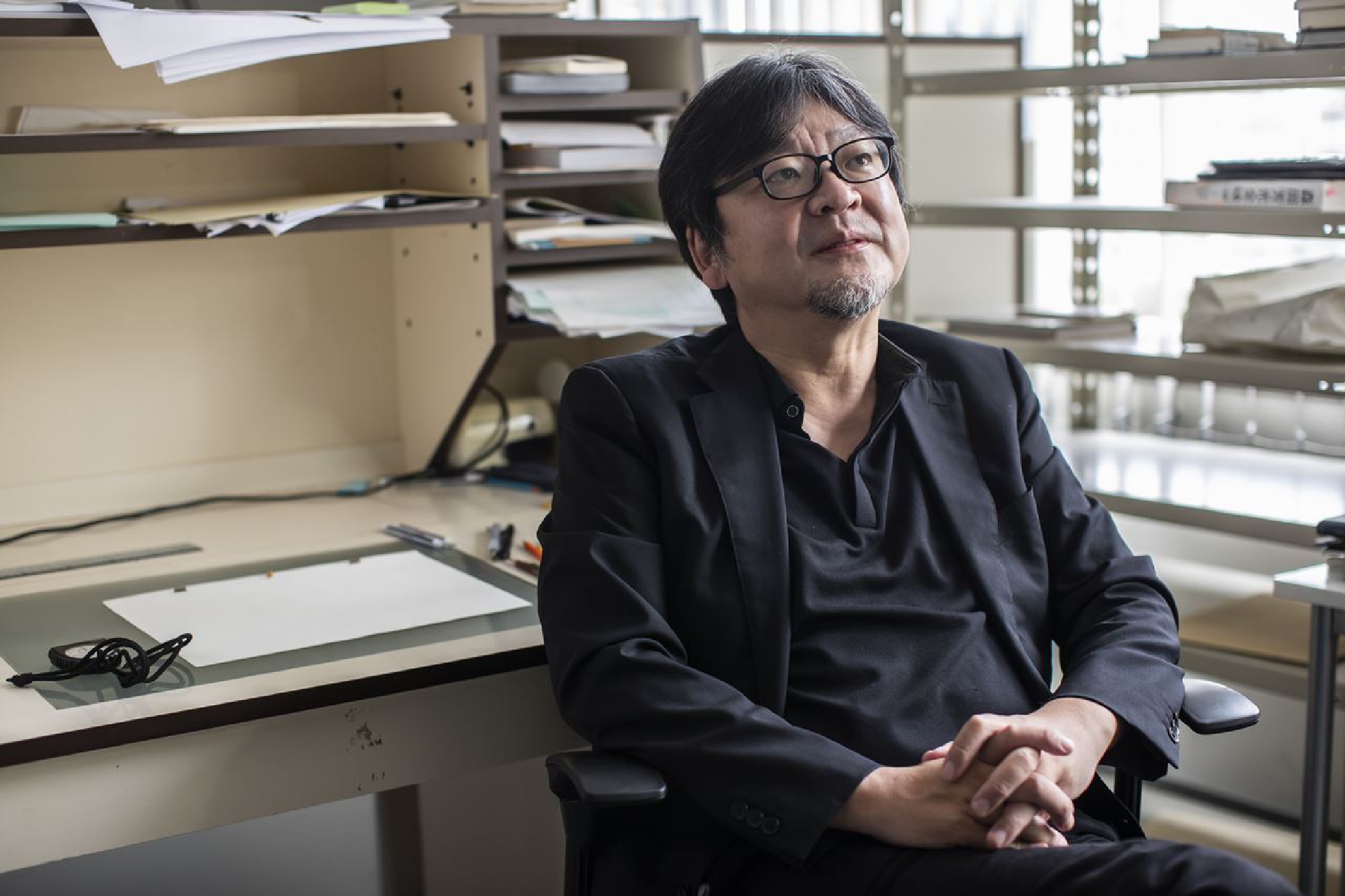 Director Mamoru Hosoda at his office in Tokyo on Sept. 9. MUST CREDIT: photo for The Washington Post by Shiho Fukada.
 Mamoru Hosoda draws at his office in Studio Chizu in Tokyo on Sept. 9. MUST CREDIT: photo for The Washington Post by Shiho Fukada.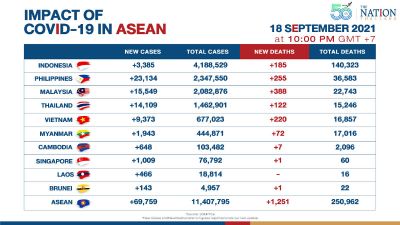
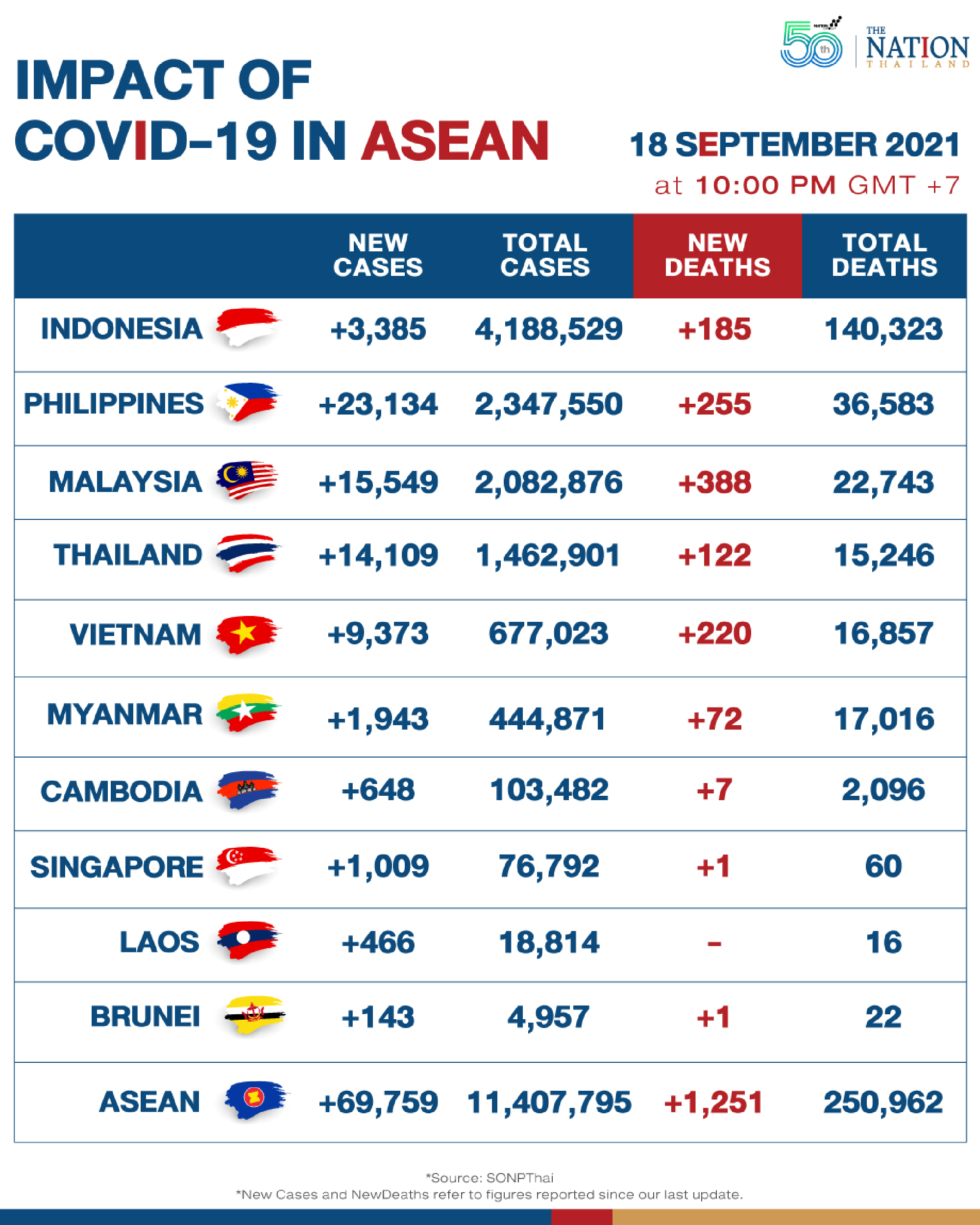 Asean reports lowest Covid-related deaths this month, as new cases decline
