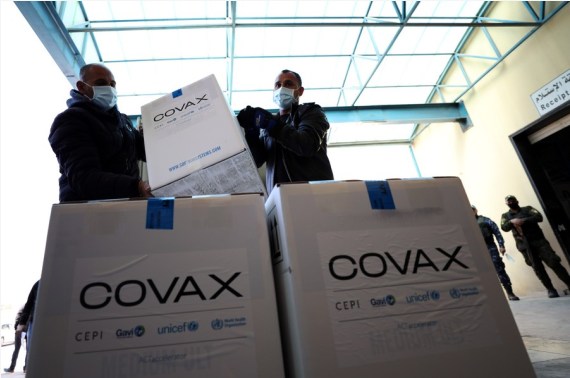
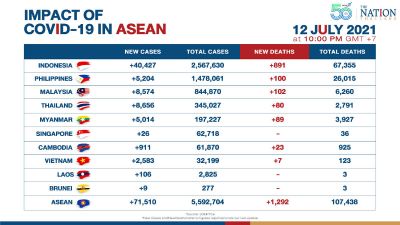
The number of Covid-19 cases in Southeast Asia crossed 5.67 million, with 78,547 new cases reported on Tuesday – higher than Monday’s tally of 71,510 – while there were 1,266 more deaths, a decrease from Monday’s 1,292, taking total coronavirus deaths in Asean to 108,704.
Indonesia on Tuesday reported 47,899 more cases – a new high for the country since the outbreak started in March 2020 – with 864 additional deaths, bringing cumulative cases there to 2,615,529 patients and a total of 68,219 deaths.
Malaysia meanwhile reported 11,079 new cases, which broke the neighbouring country’s record for the third time in less than a week. It is also the first time the country reported more than 10,000 infections in one day since the outbreak started in March 2020.
The government ordered temporary shutdown of a vaccination unit in Selangor after at least 204 staffers tested positive from a total of 453. It also urged people who visited the centre from July 9-12 to go into quarantine for at least 10 days.
Italy to ban cruise ships from docking in Venice, starting Aug. 1
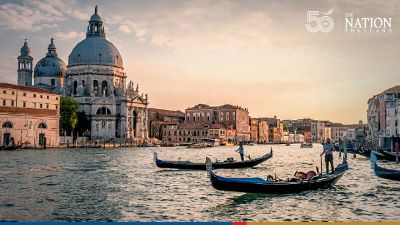
Aiming to protect a “national monument,” Italys government Tuesday moved to ban massive cruise ships from sailing directly into Venice and limit access to its fragile lagoon, definitively altering mass-scale tourism to the City of Canals.
The government’s decision, which will take effect Aug. 1, will put a stop to the contentious image that has come to symbolize many of overtouristed Venice’s problems: Fuel-guzzling ships, taller than the city’s bell towers, passing through the historic waterways and depositing thousands of passengers in the heart of the old city.
Prime Minister Mario Draghi called it a “step for the protection of the Venetian Lagoon.”
The move was made under pressure, just days before the United Nations’ cultural protection agency, UNESCO, was set to discuss listing Venice as an endangered World Heritage site. A UNESCO document from June specifically called on Italy to ban big cruise ships from the lagoon and move with the “utmost urgency.”
The cruise ships have long posed a conundrum in Venice, pitting economic needs – the cruise industry in Venice employs several thousand people – against a fragile ecosystem. Opponents of the cruise ships in Venice have protested for years, saying that the wakes caused by the ships contribute to erosion, and that day-tripping, mass-scale tourism is incompatible with a relatively small, compact city.
The ban applies to ships of more than 25,000 tons. The massive cruise ships that have sailed into Venice’s harbor can be nearly four times that weight.
Italy had taken a less comprehensive step to stop cruise liners from sailing to Venice this spring, when the cabinet passed a decree calling for provisions to detour the vessels outside the lagoon. That decree, however, made little immediate difference, as it would require the construction of a new port farther away, which would take several years. In the meantime, ships continued to be able to dock at an industrial port known as Marghera, which is still inside the lagoon, and at a port on Venice’s main island.
Under this new measure, large ships will not be allowed to dock at Venice’s main island, nor will they be able to travel through the city’s Giudecca Canal. A limited number of ships – one per week, at the current capacity, a government spokesman said – will have access to Marghera, but with a route that keeps the vessels farther away from the historic center of Venice. The spokesman said Marghera’s capacity will gradually be expanded and should reach two ships by next spring.
The pandemic had temporarily paused cruises worldwide, but in June, the MSC Orchestra – a 16-deck cruise ship – sailed through the Giudecca Canal, rolling past the iconic sights of Venice, including St. Mark’s Basilica and the Doge’s Palace.
“Here it is, the first big ship to come back to destroy our lagoon and pollute our city,” the No Big Ships Committee said on its Facebook page.
When the vessel departed Venice through the same canal, some Venice residents took their own small boats onto the water and protested.
The Italian government said Tuesday that it would establish a compensation fund for the cruise companies and those connected to the cruise terminal.
Even as the city contends with the issue of cruise liners, it also faces other threats. Delicately built on a shallow lagoon, Venice has been subject to the rising seas, battered by flooding in recent years. A costly, years-in-the-works construction project – called the MOSE – is supposed to provide a new barrier against the high tides.
“The continued deteriorating effects of human intervention, combined with climate change on the vulnerable lagoon ecosystem, threaten to result in irreversible change,” UNESCO had said last month.
Iran pushes state-sanctioned dating app to promote marriage
Irans Tebyan cultural center, affiliated with the countrys Islamic Propaganda Organization, offers marriage consulting on its website, answering questions such as, “One is introverted and the other is extroverted. What do we do?” and “Why cant we talk?” This week, Iran took its official push to promote marriage amid rising divorce rates a step further, with the introduction of a state-approved Islamic dating app.
Hamdam – which in Farsi means companion – is a dating app meant to address concerns in Iran over fertility, divorce and marriage. Fertility has been declining in Iran for the past eight years, reaching a low in 2019 and contributing to a shrinking population growth rates. Marriage rates are dropping, and divorce rates are rising, too.
Tebyan Media Institute Director Kamil Khojasteh at the app’s unveiling said that family values are the “devil’s target,” and Iran’s enemies impose their own ideas onto it. The app, with its pink, purple and heart-filled interface, works against that.
Mohammad Baqer Qalibaf, speaker of the Islamic Consultative Assembly, inaugurated the platform at a news conference. He said that choosing a spouse should come with rationality and awareness, adding that the platform is based on traditional family values and Islamic principles.
There are about 13 million single people aged 18 to 35 in Iran, the Associated Press reported. In 2019, the country reported over 170,000 divorces and 520,000 marriages.
The Iranian parliament has tried to stimulate population growth with the passage of a plan in March that includes health insurance for infertile couples, educational opportunities for student mothers, and medical services to pregnant women, the Tehran Times reported. The law also stipulates that higher education must raise awareness on the positive sides to childbearing. The government is financially supporting nongovernmental organizations that reduce marriage ages, facilitate youth marriage and encourage childbearing, the Times reported.
Rather than an open market, the app screens applicants with psychological tests, uploaded documents, and counseling to identify personality traits and characteristics. Then, applicants are offered the best choices from the platform’s point of view, the website stated.
A video of the app’s interface, posted to the Tebyan Cultural Center’s website, depicts an elaborate matchmaking process complete with questions with sliding scales, text boxes, and buttons.
In a Twitter thread, Aref Che, a content producer at Tebyan, said that the first appointment is only made in the presence of families and counselors, and dozens of consultants guide people through the process.
Not simply a matchmaking or dating system, the app supports families throughout their marriage through consulting, the platform’s Twitter page says.
In Iran, consensual sexual relationships outside of traditional marriage are criminalized.
The app is open to all people, including those who have a history of previous marriage, an app FAQ read. But it is only open to those desiring permanent marriage in the form of monogamy, it said.
According to the FAQ, the app does not use photos – which are “manipulative” and sometimes do not portray reality. “We have experienced many times in matching that the photo was not a good reason to reject or accept anyone,” the FAQ wrote. “What is achieved in a face-to-face meeting is much more complete than a soulless photograph.
A consultant for Hamdam, according to the app’s website, that the number of single people have increased – with one reason being that traditional methods of marriage – where parents were the actors – no longer work, compared to young people being the initiators of marriage today.
France and Greece mandate vaccinations for health workers amid delta variant surge
France and Greece have both announced plans to mandate coronavirus vaccinations for health-care workers as the more virulent delta variant gains ground across Europe, threatening even those nations with high or climbing inoculation rates.
French President Emmanuel Macron said in a televised address Monday that France was “facing a strong resumption of the epidemic” and that a slowing vaccination campaign could lead to rising hospitalizations later this summer.
“The equation is simple. The more we vaccinate, the less space we leave this virus to circulate,” he said.
In Greece, Prime Minister Kyriakos Mitsotakis also said Monday that health-care workers must be immunized starting Sept. 1, and that nursing staff will be required to begin receiving vaccinations immediately.
Both Macron and Mitsotakis announced Monday new measures that would provide vaccinated people with privileged access to activities such as indoor dining, entering shopping malls and cinemas and traveling on planes and trains. In France, those plans drew criticism from the hospitality sector on Tuesday, with some business representatives demanding the steps be delayed.
People in France will also be able to access restricted venues by providing proof of immunity through infection or a recent negative coronavirus test result, although the country will soon start charging for some tests that had been free.
The announcement prompted hundreds of thousands of French residents to book appointments for their first shot within the following hours. Online booking platform Doctolib called the surge an “absolute record.”
Meanwhile, Greek authorities said Tuesday that only fully vaccinated individuals would be allowed to use public indoor spaces in the country until Aug. 31, when the policy would be reassessed.
“The country will not shut down again because of some,” Mitsotakis said in his televised address Monday. “It is not Greece that is in danger, but unvaccinated Greeks.”
The moves to mandate coronavirus vaccinations for certain sectors of the population come as some nations are seeing immunization rates slow – even as the delta variant spreads – and are struggling to balance public health restrictions with individual liberties.
Italy announced in March that all health-care workers must be vaccinated or face a year-long suspension without pay, making it the first country in Europe to impose such a requirement. England is set to make vaccines required for home health workers, after a grace period beginning in October.
French Health Minister Olivier Véran said Monday that health workers in France would also be suspended without pay if they are not fully vaccinated by Sept. 15. The delta variant accounts for more than half of new infections in the country, Véran said.
ADVERTISEMENT
In remarks Monday, Tedros, the World Health Organization director general, said the delta variant is “ripping around the world at a scorching pace.”
But the agency has so far declined to support mandates for coronavirus vaccinations, instead saying in a recent policy brief that such policies “can be ethically justified, as they may be crucial to protect the health and well-being of the public.”
The aim of the new policies in France, Macron said in his address, is to “put restrictions on the unvaccinated rather than on everyone.”
While Macron stressed that – for now – vaccination would remain voluntary for most French, France’s conservative Le Figaro newspaper described the planned changes as paving “the way for mandatory vaccination for all.”
In France, 51% of people age 18 and over have received two doses of the coronavirus vaccine, according to the Health Ministry. But widespread vaccine hesitancy and declining case numbers have hobbled efforts to get more people to take the shots.
ADVERTISEMENT
More than 45% of adults in Greece are also fully immunized, according to the European Center for Disease Prevention and Control. Athens will begin vaccinating people between the ages of 15 and 17 later this week, the head of Greece’s vaccination committee, Maria Theodoridou, said Monday.
European Commission President Ursula von der Leyen said Tuesday on Twitter that more than 50% of adults in the European Union are fully vaccinated.
Published : July 14, 2021
By : The Washington Post · Erin Cunningham, Rick Noack
Merkel makes urgent appeal for Germans to get Covid-19 shots
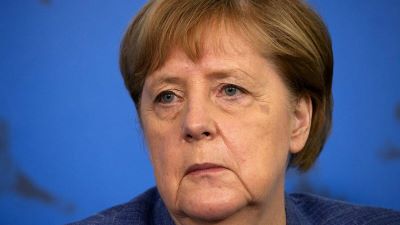
German Chancellor Angela Merkel reinforced the governments urgent appeal for people to get vaccinated against Covid-19, saying the inoculation campaign will be the deciding factor for the future course of the pandemic.
“The more are vaccinated, the more free we can be again,” Merkel said Tuesday during a visit to the RKI public-health institute. Still, Germany won’t follow France in requiring compulsory vaccination for health workers, she said.
Merkel and officials in her government have long said the vaccine campaign is the only way Europe’s biggest economy can return to — and maintain — something resembling normality. However, there is increasing evidence that the vaccination drive, which had accelerated rapidly after a sluggish start, is beginning to slow.
Health Minister Jens Spahn said it’s not a supply issue and there is plenty of vaccine available, adding that “there are no more excuses” for not getting a shot. Speaking alongside Merkel, he urged adults to get vaccinated in order to protect children under 12, who don’t have access to Covid inoculations.
The RKI has suggested that around 85% of the population between the ages of 12 and 59 and 90% of those over the age of 60 need to get immunized for Germany to reach so-called “herd immunity.”
Almost 59% of the population have received at least one dose, and 43% are fully vaccinated, according to the latest health ministry data. Germany will keep a pledge to offer a shot to all those who are eligible by the end of the summer, Spahn said.
Authorities have urged continued vigilance due to the spread of the more contagious delta variant of Covid-19. Germany’s seven-day incidence rate has edged up over the past week, but was still at only 6.5 per 100,000 people as of Tuesday, after rising as high as nearly 170 during the “third wave” in the spring.
Germany is doing everything possible to prevent another lockdown, Merkel said, warning that the pandemic is not over despite the progress made in vaccination.
Infection rates have shot up in some European countries. In Cyprus, the 14-day case notification rate per 100,000 inhabitants is at almost 500, according to the European Centre for Disease Prevention and Control. It’s more than 200 in Spain and Portugal, both popular destinations for German tourists.
Published : July 14, 2021
By : Syndication Washington Post, Bloomberg · Naomi Kresge, Patrick Donahue
Firms from Sony to noodle maker Urge Japan to pursue moon business
Japan needs to take commercial development of the moon more seriously if the country is to remain competitive in the budding space economy. Thats the message to the government from a group of Japanese companies ranging from Sony Corp. and top trading houses to an instant noodle maker.
The Lunar Industry Vision Council on Tuesday submitted a white paper to Shinji Inoue, Japan’s minister in charge of space policy, urging closer cooperation between the state and the private sector. The document calls for incentives to boost investment in space ventures, detailed regulations for exploitation of off-planet resources and greater access for companies to lunar missions.
Japan is among a handful of countries along with the U.S., United Arab Emirates and Luxembourg that have established a legal framework for commercial activity in space. The Japanese parliament last month passed legislation allowing the nation’s companies to extract and use space resources, given government’s permission. It is also part of the Artemis Accords, an international agreement among the U.S. and its allies allowing countries and companies to establish exclusive zones on the moon.
“There will be a paradigm shift in which the moon will be integrated into the Earth’s sphere of economic activity, forming into one ecosystem for space activities,” the council said in the report. “Japan has been lagging behind other countries in the development of such frontier areas, but now is the time for Japan to take the lead as a front-runner in the ‘Lunar Industrial Revolution’ that will create a new industry led by the private sector on the moon.”
The 33-page document titled “Lunar Industry Vision” is the first public statement by the advocacy group since it was formed in April. The organization comprises representatives from two of Japan’s top universities, several ruling party legislators and about 30 companies, including Sony’s research lab whose software powered the Aibo robot dog. Advertising giant Dentsu Group Inc., general contractor Obayashi Corp., industrial equipment maker Yokogawa Electric Corp. and the popular cup ramen brand Nissin are also members.
Even more than financial support from the government, Japan’s competitiveness in space depends on there being a self-sustaining lunar industry, the group said. The state can help by offering ride-sharing to the moon on public missions and making greater use of private transport providers, it said. Capital gains exemptions, tax deductions for research and development and special economic zones could increase private investment in space startups. The government can also encourage creation of new space ventures by using lunar data to build a simulated environment, the moon’s digital twin.
“I’m very excited to see this initiative from Japan where many non-space players have started activities in the lunar industry,” said Takeshi Hakamada, the founder of Ispace Inc., a Tokyo-based startup planning a mission to the moon. “I hope this activity, which started in Japan, will inspire similar initiatives around the world.”
More than 50 years after the Apollo 11 mission, the moon is once again a subject of geopolitical ambitions. NASA is targeting a return this decade with the Artemis program. Russia and China, whose Chang’e-5 probe brought back a moon sample late last year, announced plans for a joint lunar base. India plans another uncrewed moon landing after an attempt failed in 2019.
What’s different this time is that government-backed space agencies are joined by companies like Elon Musk’s Space Exploration Technologies Corp., Richard Branson’s Virgin Galactic Holdings Inc. and Blue Origin, owned by Amazon.com Inc. founder Jeff Bezos. Thanks to these private launch services, escaping Earth’s gravity is now much cheaper and launching a satellite into orbit costs about a 10th what it would have a decade ago.
Most business activities on the moon in the near future will be limited to assisting state-run missions with data gathering and transportation. Discovery of significant ice deposits, and the hydrogen energy locked inside, could turn Earth’s only natural satellite into a filling station on the way to Mars or beyond. Longer term, helium-3 in the moon’s regolith could be used as fuel for the next generations of spacecraft to explore deeper into space.
“The moon, as well as the area between the Earth and the moon known as cislunar space, will become the frontline of a new space ecosystem,” the Lunar Industry Vision Council said in the report. “It is necessary to start lunar exploration activities with a focus on lunar industrialization from this point forward.”
Published : July 14, 2021
By : Syndication Washington Post, Bloomberg · Pavel Alpeyev
Japan for first time mentions Taiwan stability in defense paper
Japan for the first time referred to the importance of stability around Taiwan in its annual defense report, ratcheting up its concerns over the island that has been a flashpoint in tensions between China and the U.S.
The wording in the “Defense of Japan” white paper released Tuesday increased friction between the two biggest economies in Asia. A spokesman for China’s Foreign Ministry told Tokyo not to interfere in Taiwan issues and said Beijing expressed “firm opposition” to the wording in the report.
“The stability of the situation around Taiwan is important, not only for the security of our country, but for the stability of the international community,” Japan’s Defense Ministry said in its white paper. “Our country must pay close attention to this, with an even greater sense of vigilance.”
The Japanese government has taken its concerns over Taiwan public in recent months, and the white paper comes after Deputy Prime Minister Taro Aso drew Chinese anger by saying in July that Japan and the U.S. would have to defend Taiwan in the event of a serious contingency.
“The Japanese side grossly interfered in China’s internal affairs, groundlessly blamed China’s normal defense construction and military activity, pointed fingers at China’s maritime activity, and hyped up the so-called China threat, which is wrong and irresponsible,” Chinese Foreign Ministry spokesman Zhao Lijian said at a regular briefing Tuesday.
Taiwan’s Foreign Ministry welcomed the wording in Japan’s white paper, saying in a statement Taipei would “continue to urge like-minded nations to pay attention to the importance of security and peace in the Taiwan Strait to regional prosperity and stability.”
While Japan has generally sought to avoid offending China, its biggest trading partner, U.S. President Joe Biden and Prime Minister Yoshihide Suga referred to the need for stability in the Taiwan Strait in a statement following their April summit in Washington. Defense Minister Nobuo Kishi also said in an interview last month the security of Taiwan was “directly connected” to that of Japan.
Taiwan is a key producer of the semiconductors needed to advance Japan’s economy, and the Luzon Strait to the south is an important shipping lane for the energy tankers resource-poor Japan relies on to power its factories and homes.
China sees Taiwan as part of its territory and hasn’t ruled out the use of force over the matter. Earlier this month, President Xi Jinping called his country’s quest to gain control of Taiwan a “historic mission” in a speech marking the 100th anniversary of the Chinese Communist Party.
“As the Biden administration makes clear it will support Taiwan in a military sense, it is unlikely China will compromise with the U.S. stance, and there is a possibility that a confrontation between the U.S. and China will emerge,” the Japanese ministry said in the report.
While reiterating it stands by the “One China” policy, Suga’s government has stepped up its support for Taiwan. Japan has donated more than two million doses of Covid-19 vaccine to its neighbor, even as Taipei blamed Beijing for its difficulty in sourcing its own supplies.
Tensions have grown around Taiwan in recent months, with China sending 28 military planes close to the island in June, the largest exercise this year, while the U.S. has continued to send warships through the Taiwan Strait. Japan is only 110 kilometers (70 miles) from Taiwan at its closest point.
Separately, Japan’s white paper also included a column on the sharp increase in South Korea’s defense spending. On current trends, South Korea’s defense budget will be 1.5 times that of Japan by 2025, the ministry said. The policy comes against the background of President Moon Jae-in’s desire to take back wartime operational control of the military from the U.S., according to the report.
While South Korea has spent heavily for decades to defend its side of the heavily militarized border with North Korea, Moon has embarked on one of the country’s biggest weapons build-ups in years, seeking to add an aircraft carrier and nuclear-powered submarine to project its power at a greater distance from its shores.
The publication of the column came as ties between the two U.S. allies remain chilly over disputes relating to Japan’s 1910-1945 colonization of the Korean Peninsula.
Published : July 14, 2021
By : Syndication Washington Post, Bloomberg · Isabel Reynolds
COVID-19 Delta variant spreading worldwide “at scorching pace”: WHO chief
At Mondays press conference, the WHO chief warned of the danger of easing measures while many countries in the world still lack vaccines for their population.
The virus variant first identified in India in October 2020 is continuing the spread around the world and has now been detected in 104 countries, he said.
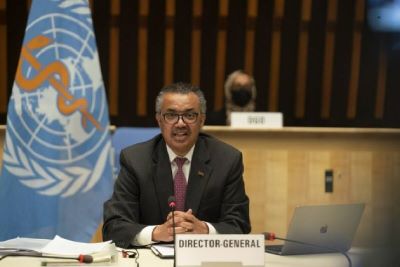
Tedros Adhanom Ghebreyesus, director-general of the World Health Organization (WHO), on Monday warned of the “devastating outbreaks” caused by the Delta variant of COVID-19, saying that the new strain of the virus was infecting people “at a scorching pace.”
“Last week marked the fourth consecutive week of increasing cases of COVID-19 globally,” Tedros said at a virtual press conference from Geneva, adding that “after ten weeks of declines, deaths are increasing again.”
The virus variant first identified in India in October 2020 is continuing the spread around the world and has now been detected in 104 countries, he said.
“The Delta variant is ripping around the world at a scorching pace, driving a new spike in cases and deaths.”
Leaders around the world have responded to the new rise in infections in markedly different ways, with countries such as France adopting new restrictions while others easing them. The United Kingdom (UK), for one, still intends to lift all restrictions on July 19.
Fans of England are seen during the final between England and Italy at the UEFA EURO 2020 in London, Britain
At Monday’s press conference, the WHO chief warned of the danger of easing measures while many countries in the world still lack vaccines for their population.
“The current collective strategy reminds me of a firefighting team taking on a forest blaze,” he said. “Hosing down part of it might reduce the flames in one area, but while it’s smoldering anywhere, sparks will eventually travel and grow again into a rolling furnace.”
Tedros reiterated his call on governments to share vaccines, adding that “the world should battle together to put out this pandemic inferno everywhere.”
People wait in line to receive COVID-19 vaccines during mass vaccination at Gelora Sepuluh November Stadium in Surabaya, East Java, Indonesia,
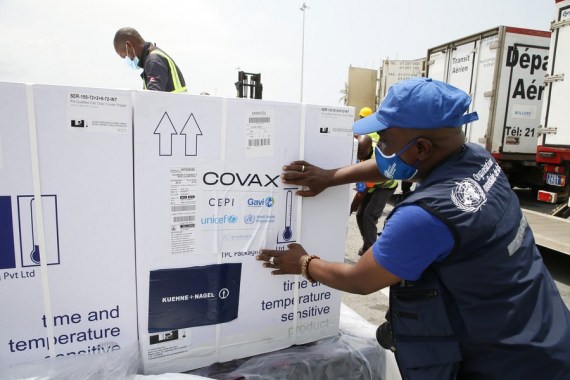
Chinese companies to supply 110 mln COVID-19 vaccines immediately to COVAX project
Gavi announced in a press release that it had signed advance purchase agreements with Sinopharm for its “BBIBP-CorV” inactivated virus vaccine and with Sinovac for its inactivated virus vaccine “CoronaVac”.
Two Chinese pharmaceutical companies will provide 110 million doses of COVID-19 vaccines immediately to participants of the COVAX project, announced the global Vaccine Alliance Gavi on Monday.
The Chinese Sinopharm and Sinovac vaccines have been approved earlier this year by the World Health Organization (WHO) for emergency use.
Gavi announced in a press release that it had signed advance purchase agreements with Sinopharm for its “BBIBP-CorV” inactivated virus vaccine and with Sinovac for its inactivated virus vaccine “CoronaVac”.
The agreements, which come at a time when the Delta variant of the virus is posing a rising risk, will begin to make 110 million doses immediately available to participants of the COVAX Facility, the international vaccine supply and distribution facility co-led by WHO, Gavi and other partners, read the press release.
According to the press release, 60 million doses of Sinopharm vaccine will be made available from July through this October, and 50 million doses of Sinovac vaccine will be made available from July through September this year.
In addition, Gavi said that it has the option to purchase a potential total of 170 million doses of the Sinopharm vaccine and up to 380 million doses of the Sinovac vaccine in Q4 of 2021 and in the first half of 2022.
“Thanks to this deal, and because these vaccines have already received WHO Emergency Use Listing, we can move to start supplying doses to countries immediately,” said Gavi CEO Seth Berkley.
An airport worker transports packages of Chinese COVID-19 vaccine at the Phnom Penh International Airport in Phnom Penh, Cambodia on July 10, 2021.
A source with the Permanent Mission of China to the United Nations in Geneva commented Monday that the signing of the agreement between Gavi and the two Chinese vaccine makers is an important move showing China’s commitment to treat vaccines as a “global public product.”
“The Chinese government has been actively encouraging and supporting Chinese vaccine research and development companies to participate in the COVAX to provide vaccines to developing countries,” the diplomat said, adding that China is willing to continue to work together with all parties to promote the fair distribution of vaccines and make positive contributions to global solidarity in the fight against the epidemic.
New Covid cases in Asean at record high as numbers soar in Indonesia
Southeast Asia reported a record 71,510 new Covid-19 cases on Monday. The tally was higher than Sunday’s 67,221, although the death toll of 1,292 on Monday was lower than the previous days 1,396.
Total Covid-19 cases in Asean crossed 5.59 million while the death toll in the region has climbed to 107,438.
The situation in Indonesia worsened on Monday with the country reporting a record 40,427 cases, and 891 deaths, bringing cumulative cases to 2,567,630 patients and deaths to 67,355. The government imposed a new lockdown on Java and Bali islands, and announced the highest social distancing measures in several cities on Sumatra, Kalimantan and Papua.
Vietnam reported 2,383 new cases and seven deaths on Monday, bringing cumulative cases in the country to 32,199 and 123 deaths. Of the total patients, 9,331 people have been cured and discharged. The government has shut down barber shops and beauty salons in Hanoi and prohibited eating in at restaurants as the infection rate in the city is climbing.





 Fans of England are seen during the final between England and Italy at the UEFA EURO 2020 in London, Britain
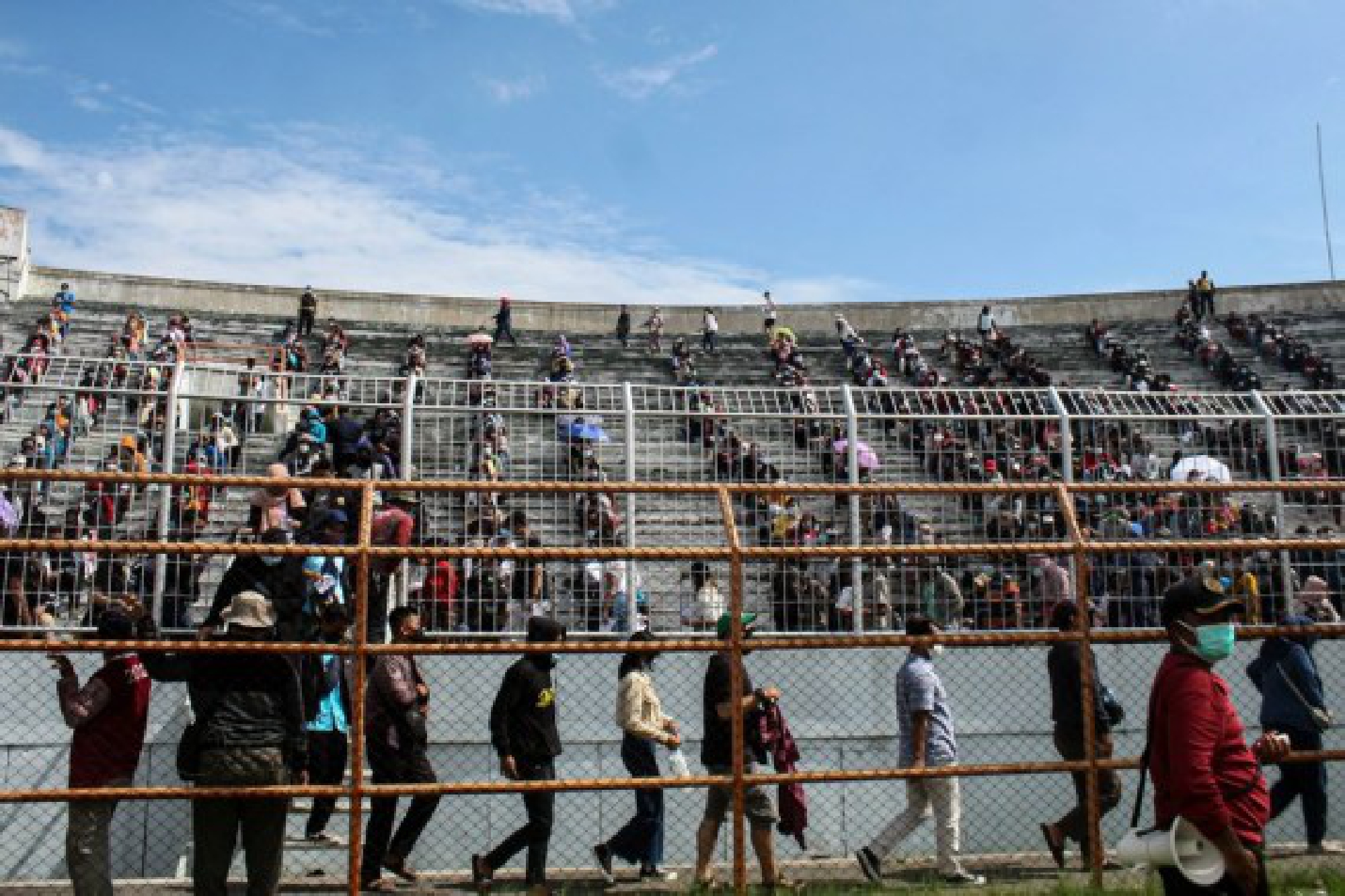 People wait in line to receive COVID-19 vaccines during mass vaccination at Gelora Sepuluh November Stadium in Surabaya, East Java, Indonesia,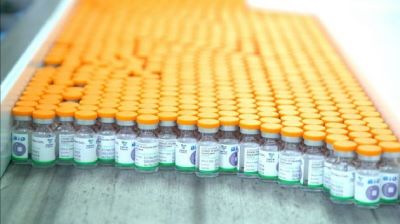
 An airport worker transports packages of Chinese COVID-19 vaccine at the Phnom Penh International Airport in Phnom Penh, Cambodia on July 10, 2021.