Covid vaccine makers take aim at bottlenecks to speed production
A new initiative aims to overcome bottlenecks that have hampered the production and global rollout of Covid-19 shots, linking manufacturers with suppliers of vital materials.
The platform, led by the Coalition for Epidemic Preparedness Innovations, will serve as a marketplace that matches up buyers and sellers of filters, lipids, vials, bioreactor bags and other key supplies used to make vaccines. The goal is to accelerate production of tens of millions of doses that can flow to Covax, the global distribution program that has fallen short of its initial targets.
Manufacturers see tackling component shortages as a way to address the inequitable access to vaccines that has left lower-income countries behind in the race to immunize. They have focused on eliminating bottlenecks and trade barriers, arguing against proposals to waive patent protection for shots. With an estimated 11 billion doses needed to escape the pandemic, some producers are struggling to hit full capacity.
“What we’re actually seeing is manufacturers unable to deliver the vaccines that they were promising just because of one small thing like a filter,” Melanie Saville, CEPI’s director of vaccine research and development, said in an interview. “This is a very practical solution for the short term.”
The head of Serum Institute of India, which is licensed to make vaccines from AstraZeneca and Novavax Inc., warned earlier this year that a U.S. law blocking the export of key items including bags and filters would probably cause serious bottlenecks. Novavax’s own production, meanwhile, has been held up by shortages.
“We always knew that scaling up manufacturing would be as big a challenge as actually finding and developing effective vaccines,” said Thomas Cueni, director general of the International Federation of Pharmaceutical Manufacturers & Associations in Geneva. “This is the biggest vaccination program in the history of mankind.”
Facing criticism, the U.S. earlier this year decided to help India by sending items needed for shots as part of an aid package. The Biden administration also started sharing vaccines abroad after the country took the initial hundreds of millions of doses made on its soil. Wealthy nations have obtained most of the limited supplies of vaccines produced so far.
Vaccine supply chains can involve more than 100 components. The new platform will focus on several areas, including lipids. Messenger RNA, the genetic material at the heart of the Pfizer and Moderna shots, needs a protective shell composed of four different types of the fatty material — collectively called a lipid nanoparticle — so that it can enter human cells.
The new marketplace will allow manufacturers and suppliers to confidentially lodge requests or offers to Oslo-based CEPI. The program gives suppliers a way to allocate unused materials and mobilize idle stock from vaccine programs that have failed or plan to scale down. It also could tap surplus supplies from manufacturers not involved with vaccines.
“It’s not the only thing that needs to happen,” CEPI’s Saville said. “Our objective is to get those doses of vaccines out in a timely manner, and that’s why we’re looking at multiple approaches.”
Published : July 16, 2021
By : Syndication Washington Post, Bloomberg · James Paton
Flooding rages across Germany and Belgium, killing at least 63 amid torrential rains
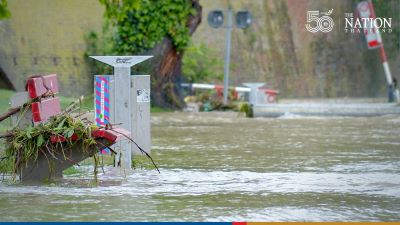
BERLIN – Devastating floods swept across a swath of western Europe on Thursday, engulfing whole villages in raging muddy brown waters, overturning cars and killing at least 63 people after a summer deluge at levels not seen in some areas for a century.
At least 58 people died in Germany, by far the worst-hit country, where whole villages were cut off from rescuers and helicopters ferried were deployed to pluck the stranded off rooftops. Some houses were simply washed away as a tributary of the Rhine burst its banks.
As night fell, there were fears the death toll could still climb, with dozens still unaccounted for.
Thousands bedding down for the night in makeshift shelters at gyms or with relatives after being evacuated from their homes over concern that, with more rainfall threatening, flooding could spread and dams could collapse.
At least five people were killed in Belgium, prompting the prime minister to appeal for international aid. Severe flooding also impacted the Netherlands, Luxembourg and Switzerland, and warnings were issued in more than a dozen regions of France.
Speaking from Washington, where she is on an official visit to meet with President Biden, German Chancellor Angela Merkel said that words such as “heavy rain” and “flood” were insufficient to describe the level of tragedy.
“In these hours, peaceful places are experiencing a catastrophe,” she said, describing her shock at seeing reports of people stranded on rooftops in extreme need.
“I mourn those who lost their lives in this disaster,” she said. “We don’t know the number yet. But there’ll be many.”
Some people drowned in the cellars of their houses, she said, and firefighters died while trying to rescue those stranded.
The extraordinary deluge of rain – at levels not seen in the area in the summer for at least 100 years – triggered calls to speed up action against climate change and boost flood protection amid erratic weather events. It came just a day after the European Union announced ambitious plans to reduce net greenhouse gas emissions by at least 55% below 1990 levels within less than a decade.
In the worst-hit parts of Germany, the rainfall in just 24 hours was double the normal long-term average for the entire month of July, according to the Deutscher Wetterdienst, Germany’s meteorological agency.
At least 28 people died in the state of Rhineland-Palatinate, authorities said. A region known for its wine growing, villages along the Ahr valley were swallowed by flood waters. As many as 18 people died in the district of Ahrweiler, police said. Earlier in the day, local police said that as many as 50 residents were trapped on the roofs of their homes awaiting rescue.
Videos showed city streets turned into swirling rivers and others engulfed by landslides. Cars were scooped up and tossed aside in crumpled wrecks. From the air, some villages appeared to have almost completely disappeared, only the tops of houses poking out from the floodwaters.
“Entire villages are flooded,” Malu Dreyer, the premier of Rhineland-Palatinate, one of the German states most devastated by flooding, said in a speech to the local parliament. “Houses float away just like that.”
Helicopters have been deployed for rescues, she added.
Police created a hotline for residents to report missing people, as rescue boats struggled to reach the area due to strong currents. “The consequences are devastating, and our first priority is still to save lives,” Jürgen Pföhler, the county commissioner of the Ahrweiler district said at a news conference. “All our efforts are concentrated on that.”
The area was declared a disaster zone.
In neighboring North Rhine-Westfalia state, the death toll had climbed to 30, according to the state’s interior ministry. The army deployed tanks and trucks to the city of Hagen, where three of its bridges were destroyed, to clear roads of rubble and debris.
In the western state’s district of Euskirchen, authorities said at least 15 people were killed. More than 4,500 people were evacuated from a string of villages after experts deemed a nearby dam unstable.
Emergency responders in the city of Solingen rescued about 130 people. “We got people out with aerial ladders, boats, buoys. It was all improvised,” a spokesman for the fire department told German news channel WDR.
Two firefighters sent to assist those trapped by rising waters in the Sauerland region died, according to the German news agency DPA.
The country’s biggest power distribution company, Westnetz, estimated Thursday that around 200,000 homes were without electricity as a result of the widespread flooding.
On Wednesday, the German weather service issued an extreme weather alert – a warning that environmental expert Bernd Mehlig said was “completely unusual in summer.”
The deluge unfolded as a plume of deep moisture, sourced from the Mediterranean, surged into central Europe.
A high-pressure zone over the eastern Atlantic, offshore France and the United Kingdom acted as a pump, steering the moisture plume through France into Belgium, the Netherlands and Germany.
ADVERTISEMENT
That was flanked by an unusually intense zone of low pressure to the east over central Europe, which helped generate the downpours.
The low was sandwiched between another area of high pressure over Eastern Europe, creating a weather system traffic jam that has allowed heavy rain to persist.
Computer models showed moisture levels in the atmosphere were comparable to those seen along the U.S. Gulf Coast during hurricane landfalls.
The exceptional intensity of the rainfall is consistent with what scientists anticipate with rising temperatures caused by human-induced climate change. Fred Hattermann, a hydrologist at the Potsdam Institute for Climate Impact Research, said such flooding incidents are happening “more often and more intensely” due to climate change.
The duration and frequency of such floods is likely to increase, he said. “What I fear most is that we will see things we never imagined.”
ADVERTISEMENT
A warmer atmosphere can hold more moisture, which then comes down as heavy rain, said Hattermann.
Higher temperatures also speed up evaporation, placing more water in the atmosphere for the kind of downpours that have occurred. A recent study in the Journal of Climate anticipates “large magnitude increases” in extreme precipitation in much of Europe in the coming decades.
While some commentators said it was a taste of the “new normal,” climate activist Greta Thunberg said there would be worse to come.
“This is not ‘the new normal,'” she wrote on Twitter. “We’re at the very beginning of a climate and ecological emergency, and extreme weather events will only become more and more frequent.”
Hannah Cloke, a professor of hydrology at the University of Reading in Britain, said warning signs abounded. “Forecasters could see this heavy rain coming and issued alerts early in the week, and yet the warnings were not taken seriously enough and preparations were inadequate,” she said.
“For so many people to die in floods in Europe in 2021 represents a monumental failure of the system,” she added. “These kind of high-energy, sudden summer torrents of rain are exactly what we expect in our rapidly heating climate. The fact that other parts of the Northern Hemisphere are currently suffering record-breaking heat waves and fires should serve as a reminder of just how much more dangerous our weather could become in an ever-warmer world.”
Steffen Seibert, a spokesman for the German government, said the severe flooding was “terrible.”
“Even though not every event, not every flooding or local incident, is related to climate change, many scientists tell us that the frequency, the intensity and the regularity with which this happens is a consequence of climate change,” he said.
Armin Laschet, the leader of the state of North Rhine-Westfalia who is vying to take over from Merkel in September elections, said more preparations for such extreme weather events are needed.
“We will be faced with such events over and over, and that means we need to speed up climate protection measures, on European, federal and global levels, because climate change isn’t confined to one state,” he said.
Parts of the Netherlands were also flooded, with a red code warning issued for Limburg province. Local media reported that many people were forced to evacuate and as many as 400 homes were without power.
Switzerland also issued travel and weather warnings this week as heavy rainfall and thunderstorms brought flooding to the city of Zurich.
The mayor of Liege in Belgium said those among its 200,000 residents who could leave the city should do so and that those who could not should move to the upper floors in their homes. One person died in the city and four others were killed in the Belgian district of Verviers.
Earlier this week in Britain, flash floods sparked widespread travel chaos, with parts of London experiencing a month’s worth of rain in just one day. Locals were evacuated and cars became trapped as floodwaters continued to rise. Late last month, a tornado swept through the Czech Republic, killing at least five people – an extremely unusual weather event for Central Europe.
Floodwaters in some areas began to recede later Thursday, but it was too early to assess the full toll of the flooding, with some areas still cut off from rescuers.
Yvonne Glasner from Dernau, in the Ahr valley, told Germany’s Die Welt newspaper that her family was forced to abandon their newly constructed home.
“We could never have imagined that the water would rise so quickly and so extremely,” she said. “Now we are worried that we won’t be able to live in our new house at all.”
She said that she had not been able to contact her in-laws for hours but had seen their car float past. She said she hoped they were awaiting rescue on a rooftop.
Published : July 16, 2021
By : The Washington Post · Loveday Morris, Jennifer Hassan, Luisa Beck
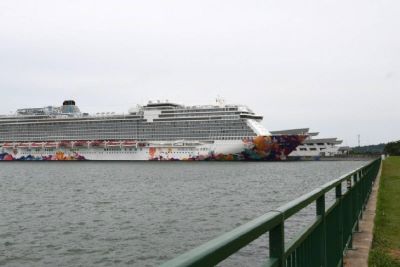
Asia Album: Cruise ship returns to Singapore after COVID-19 case found on board
A cruise ship returned to Singapore after a COVID-19 case was found on board, the Straits Times reported on Wednesday.
The newspaper quoted Annie Chang, Singapore Tourism Board’s director of the cruise, as saying that a 40-year-old passenger was identified as the close contact of a previously confirmed case, and was immediately isolated as part of onboard health protocols.
The passenger underwent polymerase chain reaction tests onboard and the result was positive, and has been taken to a hospital for further confirmatory testing.
Three traveling companions of the passenger were identified and isolated. They have tested negative for COVID-19 and further contact tracing is ongoing.
The ship, called World Dream, joined Genting Hong Kong’s Dream Cruises fleet in November 2017. It departed on Sunday for a four-day “cruise to nowhere.”
The ship returned to Singapore and arrived at the Marina Bay Cruise Centre at around 6:30 a.m. local time on Wednesday, a few hours ahead of schedule.
Passengers are seen aboard the cruise ship World Dream docked at the Marina Bay Cruise Centre in Singapore, July 14, 2021.
The passenger was tested negative during the mandatory pre-departure antigen rapid test on the day of departure, and was reported to have received two doses of the COVID-19 vaccine.
Passengers are seen aboard the cruise ship World Dream docked at the Marina Bay Cruise Centre in Singapore, July 14, 2021.
Passengers are seen aboard the cruise ship World Dream docked at the Marina Bay Cruise Centre in Singapore, July 14, 2021.
France holds Bastille Day celebration under coronavirus shadow
Because of the deterioration of the health situation, only 10,000 people were allowed to follow the celebration in the stands instead of 25,000. Wearing masks is the rule for all.
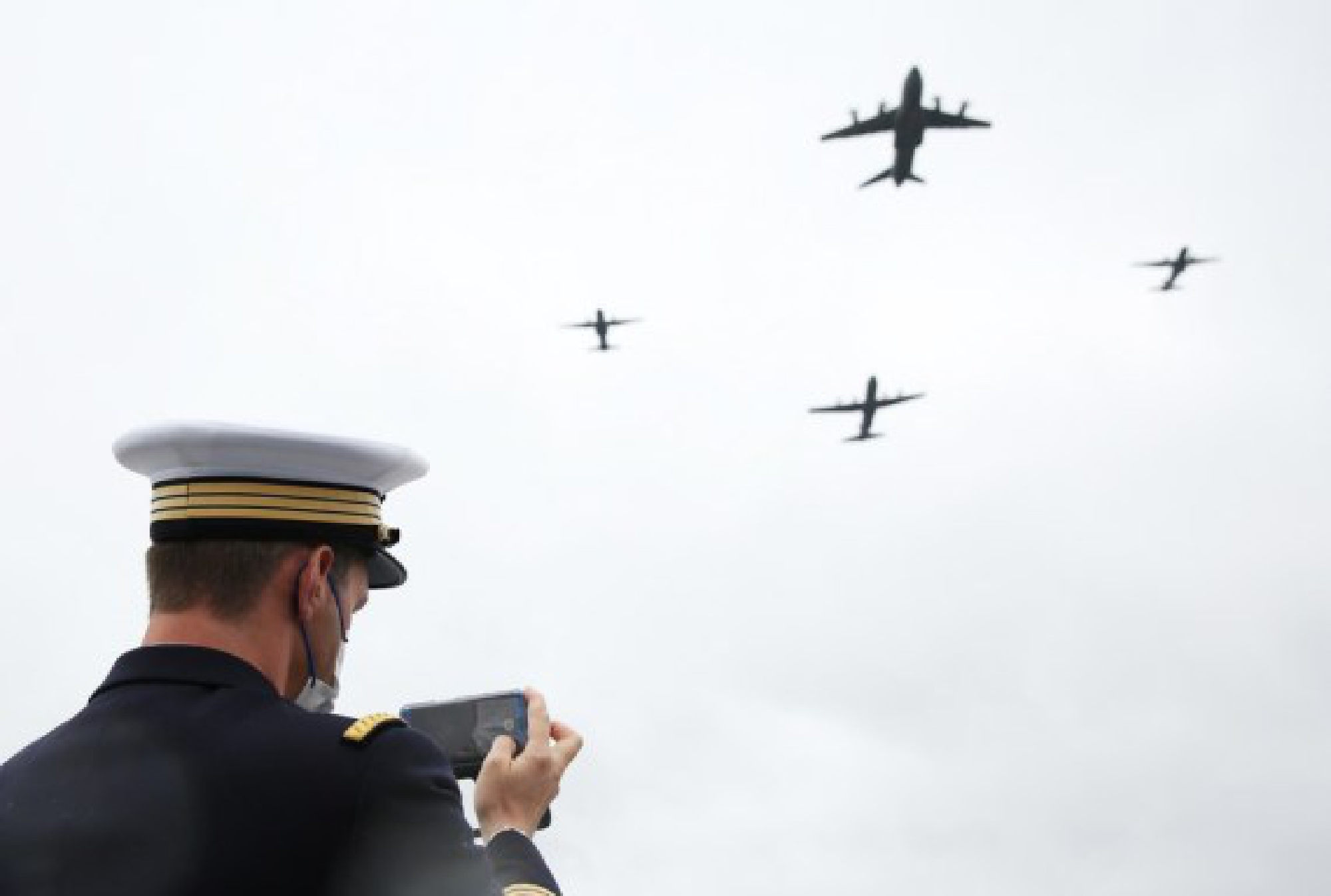
In the shadow of the pandemic, Macron maintained the Bastille Day rituals, including the traditional fly-over by the French air force and traditional troops parade.
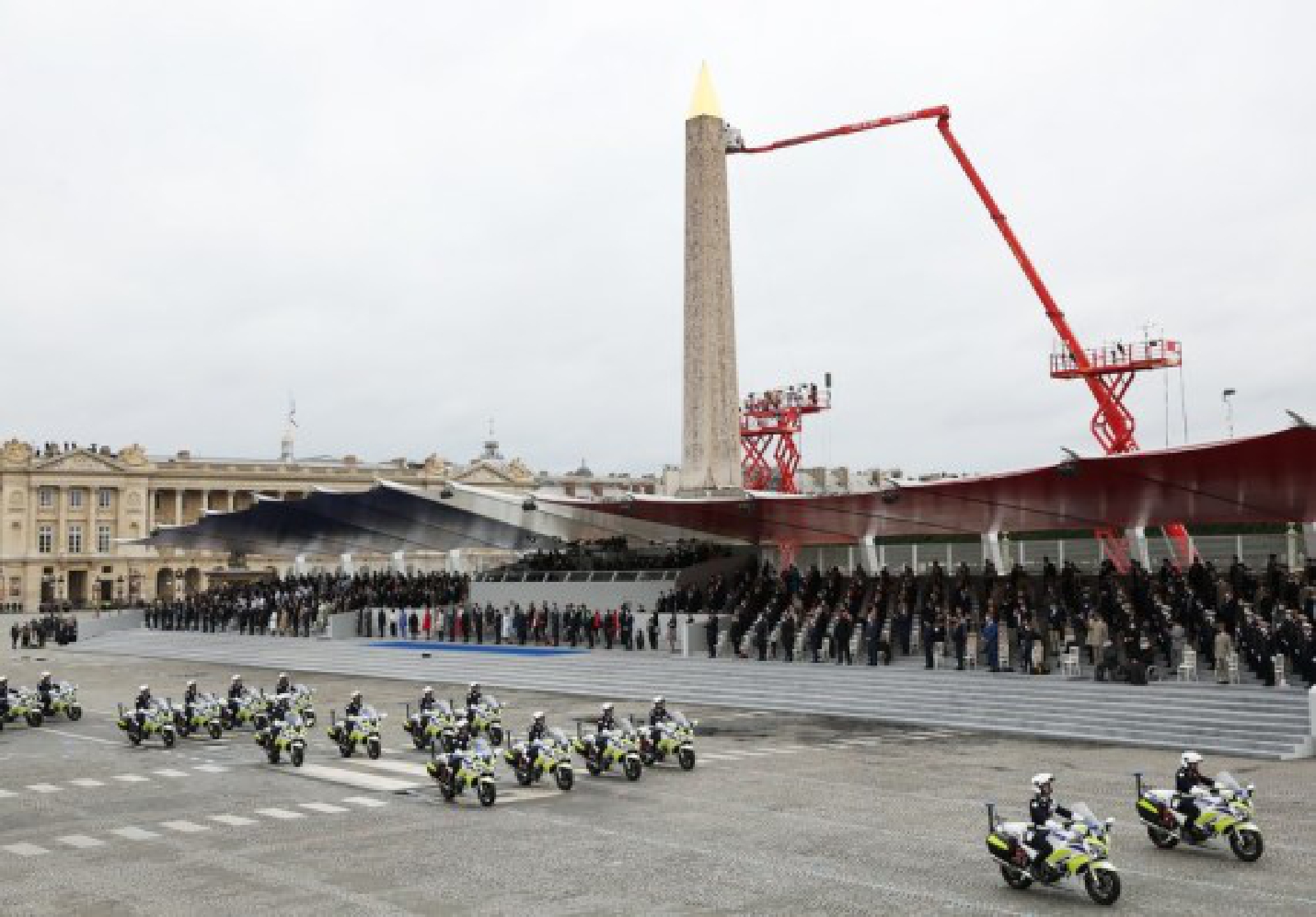
France on Wednesday held its annual Bastille Day celebrations with a traditional military parade down the famous avenue of the Champs Elysees in Paris amid restrictions on public gathering due to COVID-19.
Because of the deterioration of the health situation, only 10,000 people were allowed to follow the celebration in the stands instead of 25,000. Wearing masks is the rule for all, Paris police prefecture said.
Any spectator who wants to attend the ceremony should present the health pass. The certificate provides proof that a person has been vaccinated against the coronavirus, holds a recent negative PCR test, or has recently recovered from the respiratory disease, it added.
French air force aircrafts are seen during the annual Bastille Day military parade in Paris, France, July 14, 2021.
Similar restrictions are in place for those gathering to attend fireworks shows at the Eiffel tower and in many French cities later in the evening.
This year’s celebration coincides with a surge in the number of COVID-19 infections, fuelled by the highly transmissible Delta variant which may trigger a new wave of the pandemic.
Annual Bastille Day military parade is seen at the Place de la Concorde in Paris, France, July 14, 2021.
On Tuesday, 6,950 people tested positive for the coronavirus, compared to 4,081 registered the same day last week. The cumulative number of cases now stands at 5.82 million, according to the Health Ministry’s latest count.
“Faced with COVID-19, our vigilance must remain high,” President Emmanuel Macron’s office said.
In the shadow of the pandemic, Macron maintained the Bastille Day rituals, including the traditional fly-over by the French air force and traditional troops parade.
About 5,000 men and women from France’s army, navy and air force took part in the military parade, along with 221 armored vehicles, 200 horses and 97 jets and helicopters.
Bastille Day is celebrated as France’s national day on July 14. On this day of the year 1789, French citizens stormed the Bastille prison in Paris, sparking the French Revolution.
French Air Force Patrouille de France is seen during the annual Bastille Day military parade in Paris, France, July 14, 2021.
Fresh record as Asean sees over 90,000 new Covid-19 cases
The number of Covid-19 cases in Southeast Asia crossed 5.76 million, with 90,330 new cases reported on Wednesday – higher than Tuesday’s tally of 78,547 – while there were 1,519 more deaths, increasing from Tuesday’s 1,266 and taking total Covid-19 deaths in Asean to 110,223.
Indonesia reported 54,517 more cases, another new high, with 991 deaths, bringing cumulative cases in that country to 2,670,046 patients and a total of 69,210 deaths so far.
The government is concerned that the Delta variant of the virus is spreading to other regions beside Java Island and will result in a worsening shortage of medical professionals, oxygen and drugs.
Vietnam meanwhile reported 2,934 new cases on Wednesday, the country’s highest daily infections since the outbreak started, bringing cumulative cases to 37,434 patients and a total of 135 deaths so far.
The country’s Public Health Ministry has allowed the use of different vaccines for two doses: those who have received AstraZeneca as their first shot can have Pfizer for their second jab at an interval of 8-12 weeks. The country plans to distribute a fresh lot of 745,000 doses of Pfizer to areas with high infections.
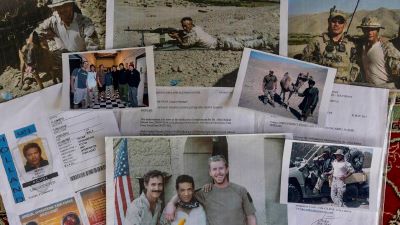
Biden administration could bring Afghan interpreters to military bases in U.S.
The Biden administration will begin flights later this month to evacuate interpreters and others who assisted the American war effort in Afghanistan, and it may house some Afghan nationals on military bases in the United States while their visa applications are processed, officials said Wednesday.
Pentagon spokesman John Kirby said the Defense Department was looking at “all options” to help the thousands of Afghan nationals seeking to emigrate, including the suitability of domestic and overseas facilities, as the United States ends its 20-year mission there and the Taliban continues its violent, alarming push to retake lost territory and undermine the central government.
President Joe Biden has defended his decision to end the campaign by Aug. 31, despite Taliban gains and bleak assessments of Afghanistan’s security forces, saying the country must now defend itself but promising not to abandon those who were crucial to U.S. operations there. “There is a home for you in the United States if you so choose,” Biden said last week.
The president was expected to meet Wednesday with Gen. Austin “Scott” Miller, who earlier this week stepped down as the top U.S. commander in Afghanistan and flew home, marking a symbolic end to U.S. military involvement there.
A senior administration official said the evacuation flights would begin this month as part of a program officials are calling Operation Allies Refuge. The initiative will support “interested and eligible Afghan nationals and their families who have supported the United States and our partners in Afghanistan and are in the [special immigrant visa] application pipeline,” said the official, who was not authorized to publicly discuss the matter and spoke on the condition of anonymity.
The flights are expected to start the last week of July and are being coordinated by officials from the departments of State, Defense and Homeland Security.
Tracey Jacobson, a former U.S. ambassador to Kosovo, Tajikistan and Turkmenistan, will lead a State Department unit overseeing the effort. Deputy homeland security adviser Russell E. Travers, a longtime intelligence professional and former acting director of the National Counterterrorism Center, will coordinate the interagency policy process.
The Biden administration, facing mounting pressure from lawmakers and veterans, has been scrambling in recent weeks to respond to mounting concerns about the safety of the former U.S. employees. Many of those individuals, some whose visa applications have taken years to move through a complex and meandering process, say their lives in jeopardy as the Taliban gains ground.
The militant group has swept across northern Afghanistan as U.S. and NATO forces have withdrawn in recent months, cutting off key transport routes and encroaching on provincial capitals. The Taliban advance, often the product of negotiated withdrawals by Afghan forces, underscores the shortcomings of the security forces that the United States and other NATO nations worked to build over 20 years.
Still unanswered as the White House promises to accelerate the evacuation process is how many will be airlifted initially. The State Department has said that about half of the approximately 18,000 applicants to the special Afghanistan visa program are at the very beginning of the process, suggesting those individuals may not be among those evacuated initially.
A decision to bring the Afghans to bases within the continental United States would represent a shift for the Biden administration, which has previously said it was considering transporting them to third countries or U.S. territories.
Experts have previously said that bringing the visa applicants to the mainland United States could be complicated from a legal perspective, in part because it would make it easier for them to access U.S. courts and attorneys if their applications are rejected.
If they are not moved to the continental United States, possible destinations could include bases on U.S. territories such as Guam, or Persian Gulf nations or countries in Central Asia.
White House press secretary Jen Psaki on Wednesday said the administration was not sharing information about where the Afghans will go due to “operational and security” reasons.
Kirby said the Pentagon had activated a working group to help identify applicants who may not necessarily be in the program but would qualify.
It is unclear to what degree the Pentagon has asked current and former service members to help keep communication lines open or reach applicants in hiding. Troops and veterans have strong bonds with their interpreters, often keeping in close contact over WhatsApp and social media whereas diplomatic officials may not have recent contact information for those who’ve fled their homes or changed their numbers.
Published : July 15, 2021
By : The Washington Post · Missy Ryan, Felicia Sonmez, Alex Horton
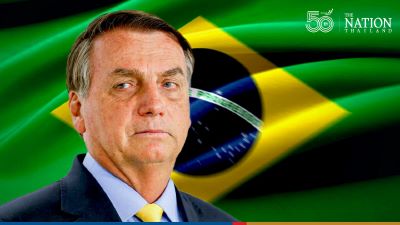
Brazilian President Jair Bolsonaro hospitalized after 10 days of hiccups
Theres holding your breath, getting spooked or sipping ice cold water – but Brazilian President Jair Bolsonaro cant seem to shake his case of hiccups.
The hiccups have persisted for so long – more than 10 days – that the country’s far-right leader has been hospitalized so doctors can try to figure out the cause.
In the many recent presidential live streams, Bolsonaro’s hiccuping is evident – and he has prefaced some appearances by with acknowledging his hiccupping and disrupted speech. In one July 8 clip, Bolsonaro hiccuped approximately 14 times within the first minute.
Bolsonaro has had a run of health scares. He nearly died on the 2018 campaign trail after being stabbed in the abdomen. He lost a lot of blood and suffered a serious wound to his intestine. He contacted covid-19 last July after playing down the coronavirus for months. While in quarantine, he was bitten by an emu-like giant bird. He’s had a stubborn cough, too.
“Hiccups” were trending on Google in relation to Bolsonaro this past week, Brazilian newspaper O Globo reported.
The president said that he had dental implant surgery Saturday, and he suggested a possible link between the post-implant medication and his ongoing hiccups.
He’s expected to be under observation at the Armed Forces Hospital in Brasilia for a day or two – although he will not necessarily remain in the hospital building. “He is feeling good and doing well,” the president’s press office said in a statement.
The hiccups and examinations caused Bolsonaro to cancel his entire agenda Wednesday, including meetings with the heads of the three branches of government.
Mark Larson, a Mayo Clinic gastroenterologist and internist, told The Washington Post that while transient hiccups are very common, persistence for more than a day is already quite rare. Bolsonaro’s 10-day spell is very rare.
He said that medications taken after the surgery, or even the surgery itself, could plausibly have triggered the symptoms.
Hiccups are involuntary contractions of your diaphragm – a dome-shaped muscle between your chest and abdomen. Normally, it contracts and relaxes to let air flow in and out of your body. But irritation can cause spasms, bringing a rush of air through your throat, Larson said. Your vocal cords rapidly close up and cause the distinct hiccup sound.
Hiccups can be caused by physical and emotional changes and disruptions – stress, sore throats, cold drinks or eating too fast, for example – so pinpointing any cause for the Brazilian president’s hiccup bout isn’t possible without an examination.
Prolonged hiccups can be a serious problem, or indicate one. Doctors recommend seeking medical attention if they persist longer than 48 hours, especially if they disrupt sleep.
Causes can range from something as small as swallowing too much air while chewing gum to something as serious as a tumor – and longer cases can be connected to damage or irritation to the nerves near the diaphragm.
In rare cases, hiccups persists for lengthy stretches. One man, the late Charles Osborne of Iowa, reportedly hiccuped for 68 years straight.
A specialist in Brasília told O Globo that Bolsonaro’s hiccups could be caused by the dental implant because of oral and phrenic nerve relationships. The specialist said it was unlikely that the stabbing had anything to do with the hiccups.
In a tweet Wednesday, however, Bolsonaro blamed health complications in the aftermath of the assassination attempt.
European Commission proposes ambitious climate change policies, urging U.S. and other nations to follow
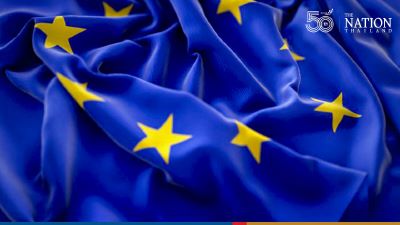
PARIS – The European Commission on Wednesday presented some of the worlds most ambitious plans to confront climate change, aiming to reduce net greenhouse gas emissions by at least 55% below 1990 levels within less than a decade.
The European Union’s executive branch said it would make Europe “the world’s first climate-neutral continent by 2050.” EU representatives urged the United States and other nations to follow.
The package of proposals – which consists of more than a dozen directives or regulations – was applauded by some environmental groups as a landmark effort. But it is unclear how many of the planned changes will remain in place after the bloc’s 27 member states and the European Parliament have examined and modified them in what is expected to be a years-long process.
Ottmar Edenhofer, a director at Germany’s Potsdam Institute for Climate Impact Research, said the plans are “by far the most comprehensive package we have seen in Europe.”
In a presentation of the proposals, Commission Executive Vice President Frans Timmermans evoked a future in which wars are fought over access to water and food unless urgent action is taken.
“There is no time to waste. People are dying in Northwest Canada because it’s 50 degrees Celsius [121 degrees Fahrenheit] there,” said Timmermans. “Northwest Canada!”
But European Commission President Ursula von der Leyen said maintaining social balance would also be a key objective, emphasizing that the package would seek to preserve jobs while curbing emissions.
Her comments reflected a weariness among some European member states, after ambitious climate plans in France and other countries sparked anti-government protests in recent years.
If passed, one of the most significant changes of the “Fit for 55” package would be the creation of a “carbon border adjustment mechanism,” which would impose tariffs on some goods imported from non-EU countries with weaker climate laws. In practice, environmental groups hope, this could become a powerful incentive for other nations to follow the bloc’s policies.
The proposal could also target U.S. imports, European lawmakers said.
“To the United States, I would say if you are so worried, then maybe it is time you come forward with very credible plans on decarbonization of your economy,” said Bas Eickhout, a European lawmaker from a Dutch green party. “We have heard a lot of announcements, but we have not seen many concrete policies.”
Experts said the United States will not be among the exporting nations that would be hardest hit by the proposed changes.
The European Commission also plans an expansion of the bloc’s carbon market to include cars, maritime transport and housing. Over the next decades, restrictions on vehicle emissions are expected to be gradually tightened. Emissions from new cars would have to be cut by 100% compared with current levels by 2035, according to the commission’s plans. In practice, this would mean the phasing out of all new cars running on gasoline. However, member states have so far been divided on the exact timeline. France, for instance, would prefer the deadline to be extended until 2040.
The target to phase out carbon dioxide emissions from vehicles by 2035 “is not only possible but would ensure Europe maintains its role as a leader in the climate transition,” said Helen Clarkson, chief executive of the Climate Group, a nonprofit that works with business and government to combat climate change, in a statement.
Climate activists did not universally embrace the EU’s proposals, with some saying the bloc must become even more ambitious over time to help limit Earth’s warming to 1.5 degrees Celsius, or 2.7 degrees Fahrenheit, over preindustrial levels – a key goal of the Paris climate accord.
In a statement, Wendel Trio, director of Climate Action Network Europe, praised the more aggressive goals set out this week but added that “only with further ambition will the package be turned into a policy framework that will bring us all to the 1.5C target.”
Others cautioned that the proposed changes would put a heavy financial burden on European citizens but allow industries to continue to pollute, threatening to derail the changes through popular protests before they can have an impact.
“What the Commission says is ‘Fit for 55’ is unfit for our planet and unfair to society,” said Barbara Mariani, policy manager for climate at the European Environmental Bureau, a nongovernmental organization, in a news release. “Europeans will be asked to pay to save the fossil fuels industry,” she said.
Von der Leyen pointed to plans for a social fund, which is expected to help compensate low-income families negatively affected by the changes.
But climate change researcher Edenhofer said it is inevitable that consumers will have to pay a price for the proposals. Politicians need to clearly communicate that we have to bear the costs because change is needed, he said.
“Without changing prices, this will never happen,” he said.
Published : July 15, 2021
By : The Washington Post · Rick Noack, Quentin Ariès
China slams sinister U.S. Over Hong Kong, digital trade deal
China accused the U.S. of waging a “sinister” campaign to halt its rise, as the Biden administration moved to counter Beijings growing global trade influence and domestic political crackdowns.
Chinese state media including the China Daily newspaper dismissed a possible U.S.-led digital trade agreement as a bid to defend American power in the Asia-Pacific region. Separately, the Chinese Foreign Ministry denounced a planned White House warning to American businesses in Hong Kong as an effort to mislead companies and malign the national security law that Beijing imposed on the Asian financial center last year.
“The U.S. confuses black and white and right and wrong, wantonly discredits the national security law and Hong Kong’s business environment, and attempts to mislead American and international businesses in Hong Kong,” the ministry’s Hong Kong branch said Wednesday. “Its sinister intention of playing the ‘Hong Kong card’ to curb China’s development is clear.”
The responses illustrate Beijing’s continued frustration with the U.S., as President Joe Biden implements a China strategy that extends and deepens his predecessor’s confrontational approach. The two sides are still trading barbs over data, security and human rights, even as their senior officials carry out talks on issues such as trade, climate change and Iran’s nuclear program.
U.S. Deputy Secretary of State Wendy Sherman is expected to visit China as part of a trip to the region next month, a person familiar with the matter said Tuesday. The South China Morning Post newspaper separately reported Wednesday that Sherman would meet with Vice Foreign Minister Xie Feng in Tianjin and discuss a possible meeting between Secretary of State Antony Blinken and Chinese Foreign Minister Wang Yi.
Still, China has continued to lash out at the U.S. in recent months, especially over what it views as foreign interference in its domestic affairs. The U.S. has led a loose coalition of mainly Western countries criticizing China’s efforts to crack down on political minorities in the predominately Muslim region of Xinjiang and the former British colony of Hong Kong.
The White House is preparing to warn American companies this week of the increasing risks of operating in Hong Kong, three people familiar with the matter said Tuesday. Those risks include the Chinese government’s ability to gain access to data that foreign companies store in Hong Kong, according to two of those people.
Beijing imposed the sweeping national security law — which bars subversion, terrorism, secession and foreign collusion — on Hong Kong last year following unprecedented and sometimes-violent democracy protests in the city. The law, which officials have used to jail democracy activists and much of the formal political opposition, has frayed ties between the finance hub and many western nations, including the U.S.
“Relevant laws in Hong Kong clearly protect the rights and interests of foreign investors,” Chinese Foreign Ministry spokesman Zhao Lijian told a regular news briefing Wednesday in Beijing. “Since the implementation of the national security law, Hong Kong society has returned to normal and the ‘Pearl of the Orient’ has become even shinier. The so-called alert is typical political manipulation and double standards.”
Meanwhile, the China Daily rejected a potential U.S. digital trade deal involving Pacific nations as “shackles restricting trade and their freedom of cooperation.” The English-language newspaper said the world’s two largest economies cannot decouple and it was “therefore absurd for it to try to force other countries to do that without finding them new sources of goods, services and capital to fill the vacuum caused by it forcing them to sever ties with China.”
Published : July 15, 2021
By : Syndication Washington Post, Bloomberg · Iain Marlow, Kari Lindberg
Some countries defend mixing vaccines after WHO suggests booster strategy is chaotic
Canadian and Thai health officials are defending the decision to mix different coronavirus vaccines after the World Health Organizations chief scientist suggested this week that combining doses was potentially unsafe.
The WHO’s Soumya Swaminathan said in a briefing Monday that plans by some countries to administer booster shots signaled a “dangerous trend” that could lead to “a chaotic situation . . . if citizens start deciding when and who will be taking a second, a third and a fourth dose.”
“We are in a bit of a data-free, evidence-free zone as far as ‘mix-and-match,'” she said. She later clarified on Twitter that she was concerned about individuals, rather than public health agencies that she said would have better data, deciding to get a mixed cocktail of shots.
A top Thai virologist fired back Tuesday, however, saying that authorities would forge ahead with plans to mix a first dose of the Sinovac vaccine with a second dose of the Oxford-AstraZeneca shot.
Canadian public health officials also defended their plan to offer messenger RNA vaccines as a second shot to people who received a first AstraZeneca dose. “We have taken some strong decisions that quite frankly, are bearing out,” Canadian Prime Minister Justin Trudeau told reporters Tuesday.
A statement issued by Ontario’s health minister noted that the province’s booster-shot program was “based on studies from the [United Kingdom], Spain and Germany that have found mixing vaccines is safe and produces a strong immune response.”
Canada’s mixed inoculation program came after the AstraZeneca shot was found to cause potentially fatal blood clots in a very small number of recipients, most of them young people.
A number of countries, including in Europe, have followed similar tracks, recommending that people who received a first AstraZeneca dose then follow up with an mRNA vaccine.
Vietnam, which is battling a wave of infections caused by the more contagious delta variant, said Tuesday that it would allow those who were administered a first AstraZeneca shot to get the Pfizer-BioNTech vaccine as a second dose.
Thailand, however, is seeking to bolster immune response amid questions over the Sinovac vaccine’s effectiveness against the delta variant and as it attempts to quash its worst outbreak of the pandemic. (Over 600 Thai health workers who were fully inoculated with the Sinovac shot later caught the virus.)
The goal of mixing the AstraZeneca and Chinese-made shots, chief virologist Yong Poovorawan said, is to reach a “booster” effect in a shorter period of time.
“We can’t wait 12 weeks [for a booster effect] in this outbreak where the disease is spreading fast,” he said, according to Agence France-Presse.
Researchers in Britain, Russia and the United States are all currently conducting clinical trials testing mixed-shot vaccine regimens.
In June, the U.S. National Institutes of Health said it was starting a trial in which fully vaccinated adults would be given a booster dose of different coronavirus vaccines.
“We need to prepare for the possibility of needing booster shots to counter waning immunity and to keep pace with an evolving virus,” the country’s top infectious-disease expert, Anthony S. Fauci, said in a statement announcing the study.
“The results of this trial are intended to inform public health policy decisions on the potential use of mixed vaccine schedules should booster doses be indicated,” said Fauci, who also serves as the director of NIH’s National Institute of Allergy and Infectious Diseases.


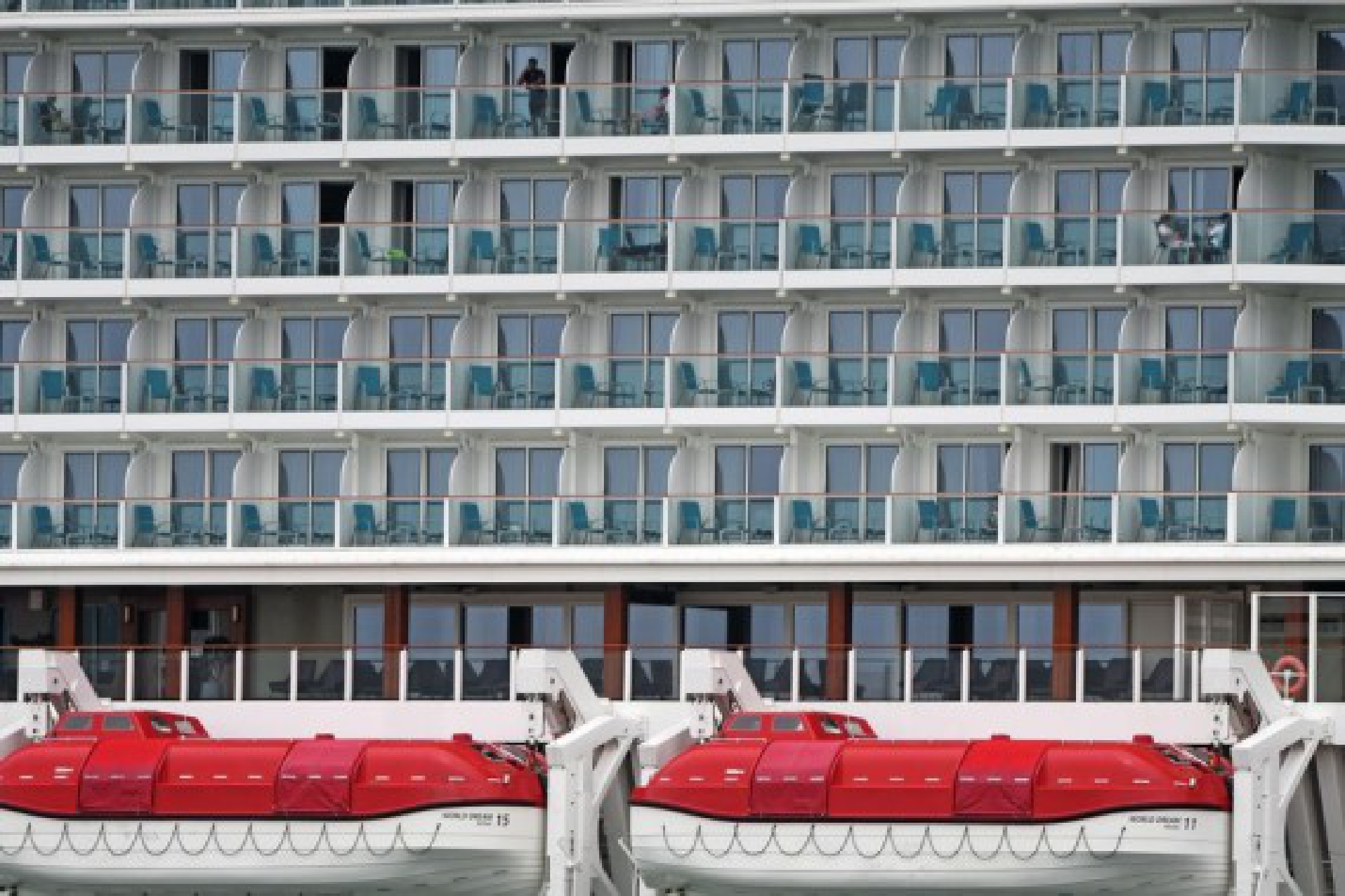 Passengers are seen aboard the cruise ship World Dream docked at the Marina Bay Cruise Centre in Singapore, July 14, 2021.
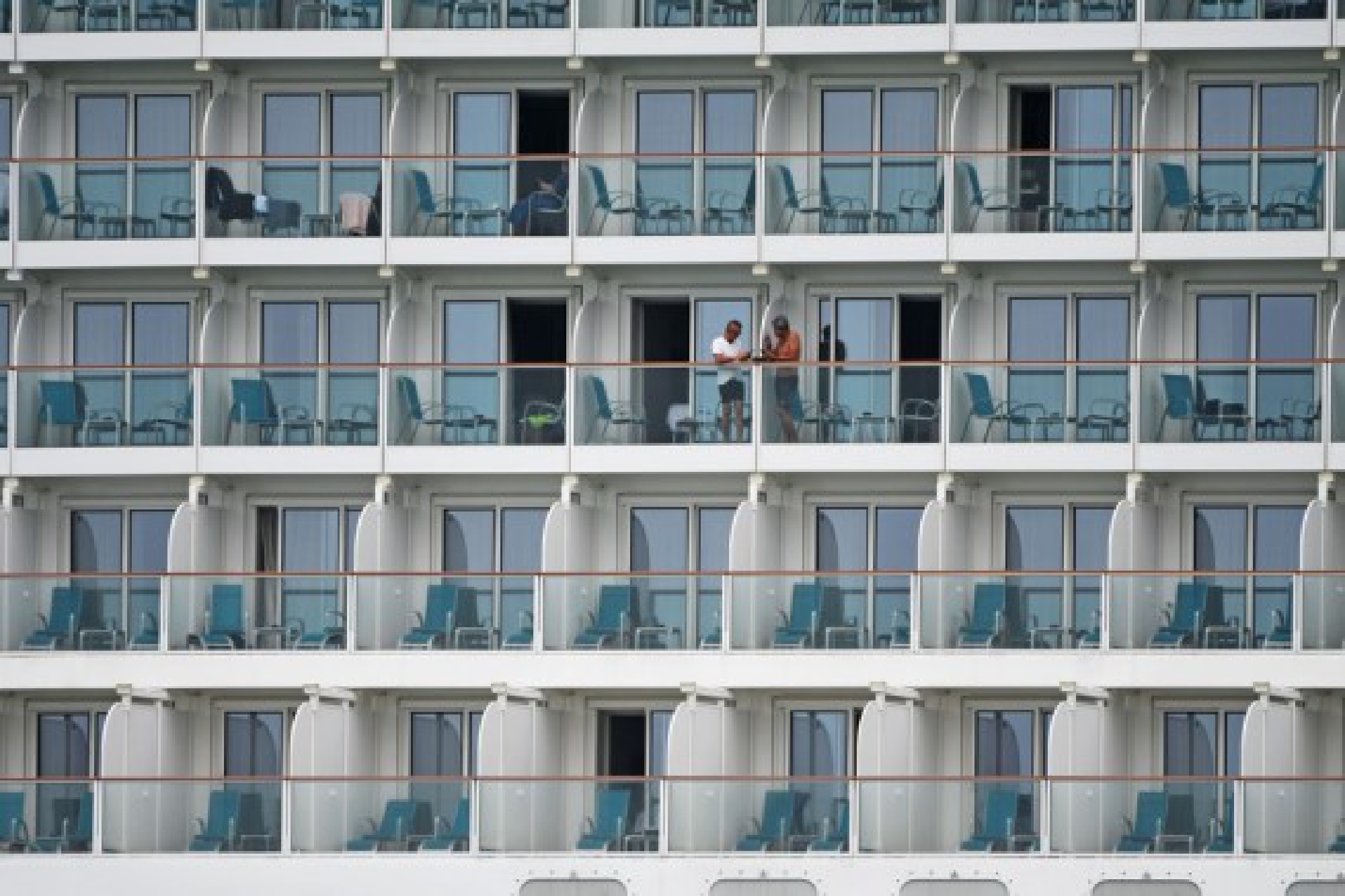 Passengers are seen aboard the cruise ship World Dream docked at the Marina Bay Cruise Centre in Singapore, July 14, 2021.
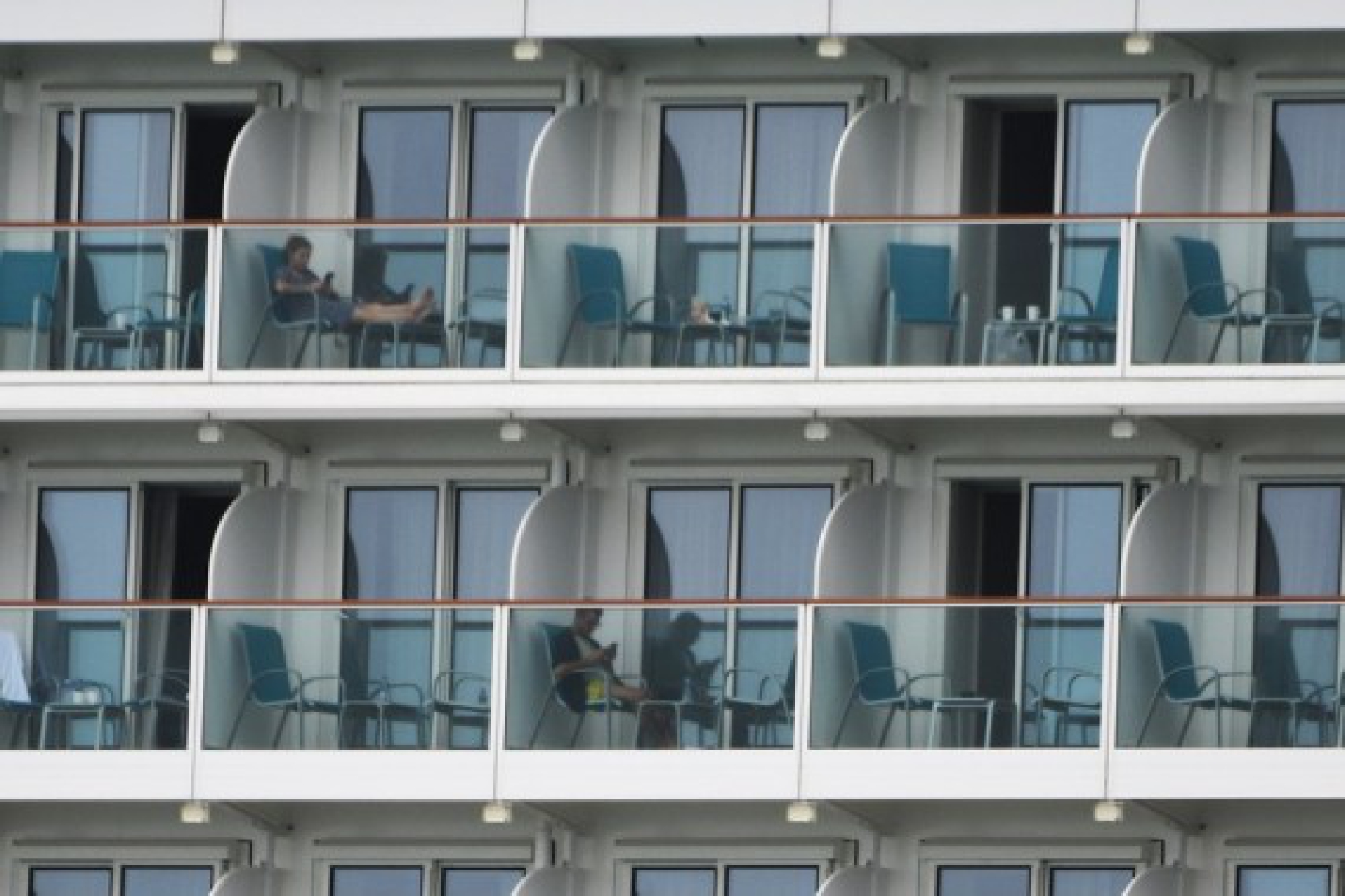 Passengers are seen aboard the cruise ship World Dream docked at the Marina Bay Cruise Centre in Singapore, July 14, 2021.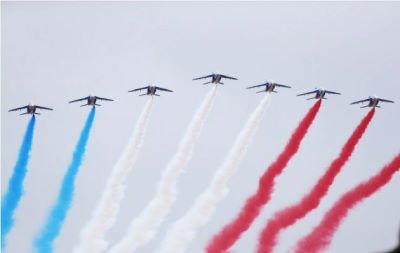
 French air force aircrafts are seen during the annual Bastille Day military parade in Paris, France, July 14, 2021.
 Annual Bastille Day military parade is seen at the Place de la Concorde in Paris, France, July 14, 2021.
 French Air Force Patrouille de France is seen during the annual Bastille Day military parade in Paris, France, July 14, 2021.