Taiwan to ease dining curbs but keeps mask mandate, ban on bars #SootinClaimon.Com

#SootinClaimon.Com : ขอบคุณแหล่งข้อมูล : หนังสือพิมพ์ The Nation.

https://www.nationthailand.com/international/40003012

Taiwan extended its soft lockdown while easing some of its covid curbs as the government weighs the need to revive the domestic economy against risks posed by the global spread of the delta variant.
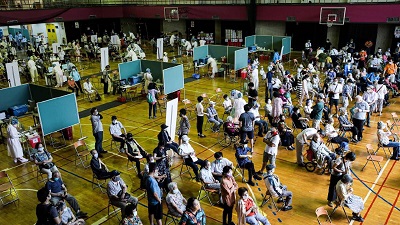
A vaccination center in Taipei administering AstraZeneca vaccines donated by Japan, on June 15, 2021. MUST CREDIT: Bloomberg photo by I-Hwa Cheng

Sporting venues such as gyms and golf courses, along with national parks, scenic areas, museums and movie theaters, will be allowed to reopen from Tuesday, the Central Epidemic Command Center said in a statement. Restaurants, night markets and food courts can host socially distanced customers. But bars and swimming pools will stay closed, and people must continue to wear masks in public.

There were just 18 newly confirmed domestic cases Thursday, the lowest number since May 13, according to Taiwan Centers for Disease Control data, as the soft lockdown measures succeeded in curbing the island’s worst outbreak of covid-19.

“We have had fewer than 10 cases from unknown sources on four days over the past week, and about three cluster infections in the community,” Health Minister Chen Shih-chung said at Thursday’s briefing. “We are on the verge of being able to lower the covid alert level. That’s why we need to be more careful and keep it at the current level, while easing some measures.”

While easing certain measures, the government extended the so-called level 3 alert to July 26, with indoor family and social gatherings limited to five people and outdoor ones to 10. Under the curbs, which have been in place since May 19, schools and recreational facilities including bars have been shut, and restaurants were only allowed to serve takeout.

Heath authorities are remaining cautious after a handful of infections of the delta variant were reported, a strain that has complicated the U.K.’s reopening and forced some countries to reimpose curbs.

“We are not ready to downgrade the covid-19 alert level yet” despite the local outbreak being under control, cabinet spokesperson Lo Ping-cheng said at briefing Thursday. But as the number of new cases has dropped from its peak in May, “it’s necessary to ease some controls to give industries like domestic consumption and services a breather.”

The restrictions are hurting retail spending and threatening jobs, even as the broader economy expanded 8.92% from a year earlier in the first quarter, the fastest pace in over a decade, on exports of semiconductors and other high-value products.

Restaurant and dining industry revenue slumped 19.1% in May from a year earlier, according to the economics ministry. Unemployment in Taiwan rose to its highest level in almost eight years in May, according to a government statement this week, which said there were 489,000 people out of work. Workers in food and beverage and hospitality sectors took the hardest hit.

Despite planning to ease rules, health authorities have emphasized the focus remains on containing the pandemic. Chen has said that rather than a piecemeal relaxation of curbs in different areas, “any changes would apply islandwide.”

There are some local rules as well, with Taipei having only just reopened its world-famous night markets, though with takeout services only, along with fewer food stands, daily temperature checks, and compulsory registration of customers. Authorities want people to have normal lives with a minimum of controls even before covid cases drop to zero, Taipei City Mayor Ko Wen-je said on Facebook earlier this month.

Taiwan confirmed the first locally transmitted delta cases in Pingtung County last month, after a woman and her grandson returned from Peru. The cluster totaled 17 as of Wednesday, with 13 confirmed to have the delta variant.

Delta could be a problem for Taiwan, which has inoculated only about 12% of its population so far. The government aims to vaccinate 20% to 25% of the population by the end of July, President Tsai Ing-wen said this week.

With a population of 23.5 million, Taiwan has had roughly 15,000 cases and just over 700 deaths from covid-19. At one point the island was close to the top of Bloomberg’s covid Resilience Ranking of economies that have best handled the pandemic. It then slid as the virus got a foothold, plunging in the most recent ranking which included steps taken to reopen to the outside world.

“Let’s see whether we can downgrade the covid alert level on July 26. That’s our real goal,” Chen said Thursday. “Let’s work together on that.”

Published : July 09, 2021

By : Syndication Washington Post, Bloomberg · Cindy Wang
Africa had worst week of covid-19 pandemic with more to come #SootinClaimon.Com

#SootinClaimon.Com : ขอบคุณแหล่งข้อมูล : หนังสือพิมพ์ The Nation.

https://www.nationthailand.com/international/40003011

Africa had its worst week of the coronavirus pandemic, with cases jumping 20% in seven days, and the situation is expected to intensify, according to Matshidiso Moeti, the World Health Organizations Africa director.

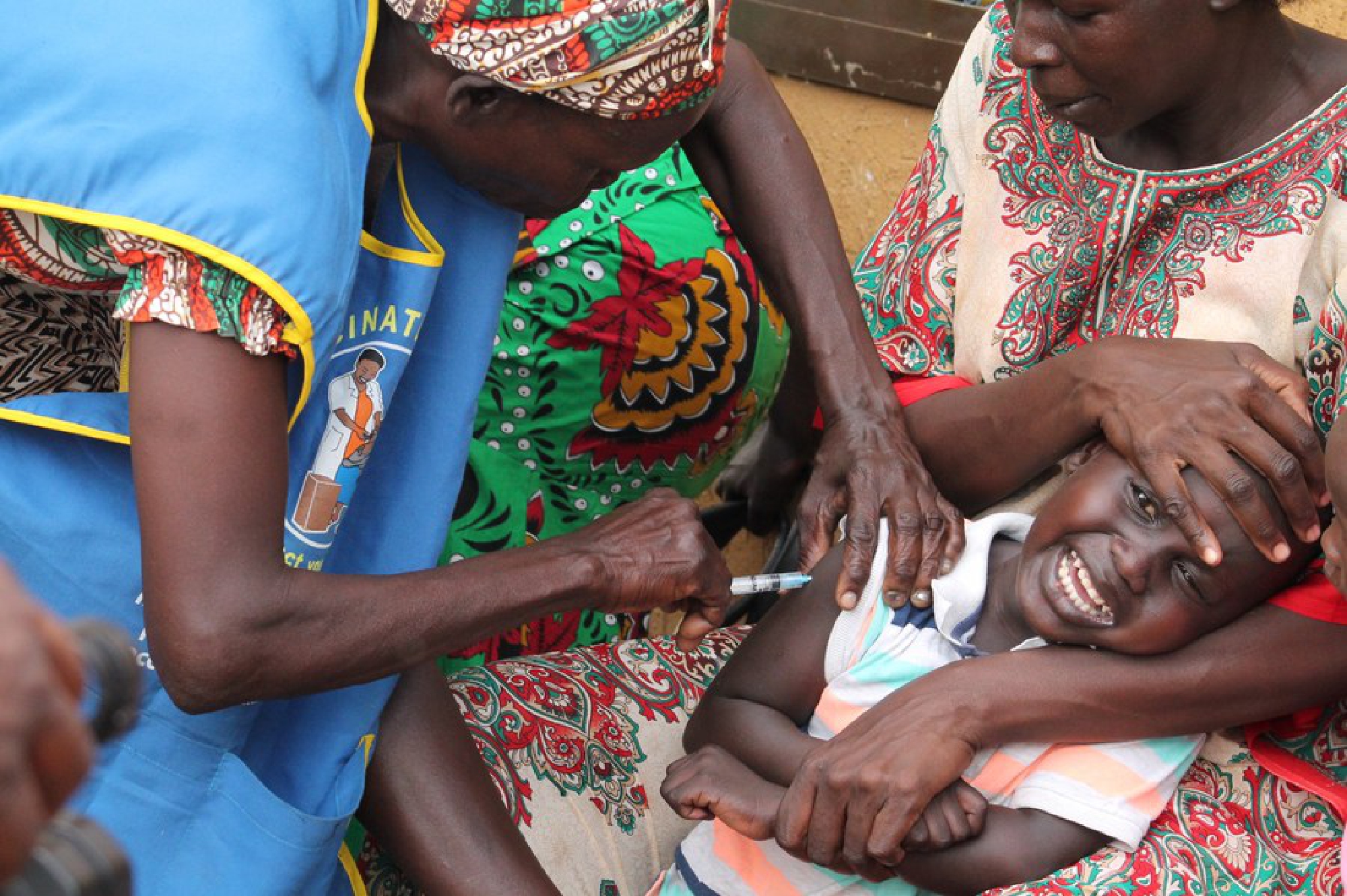
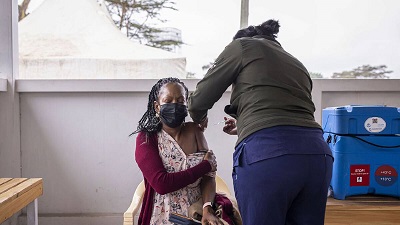
A resident receives a dose of the AstraZeneca Covid-19 vaccine at Mbagathi Hospital in Nairobi, Kenya, on July 6, 2021. MUST CREDIT: Bloomberg photo by Patrick Meinhardt.

“For Africa the worst is yet to come as the fast moving third wave continues to gain speed and new ground in countries,” Moeti said on a conference call. The end of this wave “is still going to be several weeks away.”

During the week to July 4 a record 251,000 coronavirus cases were recorded in Africa and cases are now doubling every 18 days, she said.

Sixteen African countries are now officially seeing a virus resurgence. That’s as the highly-transmissible delta variant has spread across the continent and is now dominating in many regions, said Tulio de Oliveira, the director of Krisp, a South African genome sequencing institute.

The current upsurge also comes while less than 2% of Africans are now fully vaccinated, meaning that hundreds of millions of people are still vulnerable to infection and severe illness.

Still, vaccine deliveries from the Covax vaccine-sharing initiative are gathering momentum, Moeti said. After almost grinding to a halt in May and early June, more than 1.6 million doses were delivered through Covax to the continent in the past two weeks and more than 20 million Johnson & Johnson and Pfizer shots are expected to arrive imminently from the U.S., she said.

Significant donations from Norway and Sweden are also currently being finalized and France will be sending 300,000 of the shots developed by AstraZeneca to Kenya and Somalia on Thursday, Moeti said.

“Covax had been working tirelessly to clinch dose-sharing pledges and procurement deals with manufacturers to ensure Africans get their vaccines,” Moeti said. “With much larger deliveries expected to be arriving in July and August, as a region we must use this time to prepare to rapidly expand the roll-out.”

Published : July 09, 2021

By : Syndication Washington Post, Bloomberg · Janice Kew

UN chief condemns assassination of Haitian president #SootinClaimon.Com

#SootinClaimon.Com : ขอบคุณแหล่งข้อมูล : หนังสือพิมพ์ The Nation.

https://www.nationthailand.com/international/40002982

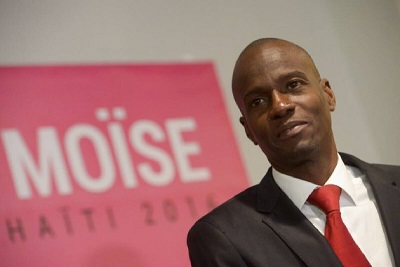
UN Secretary-General Antonio Guterres called on all Haitians to preserve the constitutional order, remain united in the face of this abhorrent act and reject all violence.

UN Secretary-General Antonio Guterres on Wednesday condemned “in the strongest terms” the assassination of Haitian President Jovenel Moise.

The perpetrators of this crime must be brought to justice. The secretary-general extended his deepest condolences to the people and government of Haiti and the family of the late president, said Stephane Dujarric, the spokesman for Guterres, in a statement.

The secretary-general called on all Haitians to preserve the constitutional order, remain united in the face of this abhorrent act and reject all violence, said the statement.

The United Nations will continue to stand with the government and the people of Haiti, it said. 

Published : July 08, 2021

By : xinhua

Vietnamese students take college entrance exam amid COVID-19 concerns #SootinClaimon.Com

#SootinClaimon.Com : ขอบคุณแหล่งข้อมูล : หนังสือพิมพ์ The Nation.

https://www.nationthailand.com/international/40002981

The annual national final exam takes place as Vietnam is still fighting its biggest wave of COVID-19 infection. While the majority of students took the exam on Wednesday and Thursday, nearly 11,600 students who tested positive for COVID-19 or lived in areas with high risks of the pandemic will sit for the exam later.

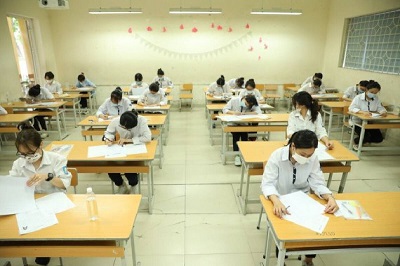
Over 993,000 Vietnamese high school students on Wednesday started sitting for the national final exam with strict COVID-19 control measures in place, Vietnam News Agency reported.

The annual exam takes place as Vietnam is still fighting its biggest wave of COVID-19 infection, which started in late April and has spread to more than 50 cities and provinces nationwide.

While the majority of students took the exam on Wednesday and Thursday, nearly 11,600 students who tested positive for COVID-19 or lived in areas with high risks of the pandemic will sit the exam later, the news agency cited Vietnam’s Ministry of Education and Training as reporting.

Localities have been allowed to postpone the exam if necessary to ensure safety and fairness for students, according to the report. In several localities such as the southern epidemic hotspot Ho Chi Minh City, large-scale nucleic acid tests were conducted for all students and personnel serving the exam.

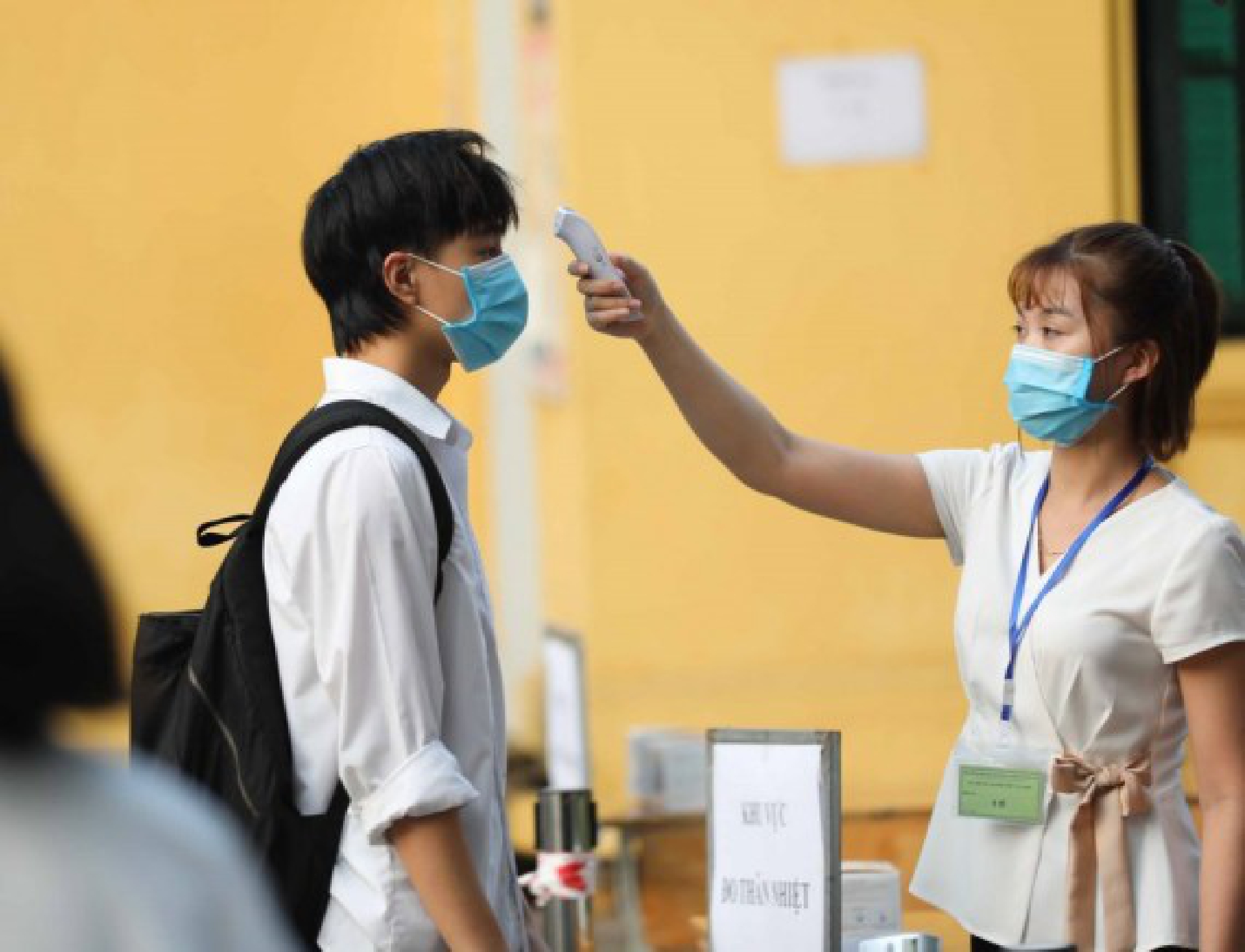
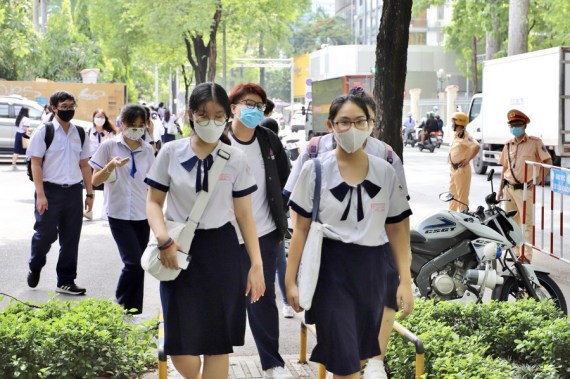
Similar to last year, examinees are requested to have their body temperature checked and have their hands disinfected before entering the test sites, as well as to wear medical masks during the exam.

A high school student has his temperature taken at a test site in Hanoi, Vietnam, July 7, 2021.A high school student has his temperature taken at a test site in Hanoi, Vietnam, July 7, 2021.
More than 1 million students registered for the national exam this year, said the ministry, compared to a little over 900,000 last year.

The exam includes four parts, including literature, maths, foreign language, and either a group of three natural science subjects (physics, chemistry and biology) or a group of three social science subjects (history, geography and civics).

Vietnam has integrated its high school graduation exam and university entrance exam into one national exam since 2015, mainly to save time and costs.

High school students leave a test site in southern Vietnam's Ho Chi Minh City, July 7, 2021.

Published : July 08, 2021

By : xinhua

Japan deploys 1,700 search and rescue personnel at site of fatal Atami mudflow #SootinClaimon.Com

#SootinClaimon.Com : ขอบคุณแหล่งข้อมูล : หนังสือพิมพ์ The Nation.

https://www.nationthailand.com/international/40002966

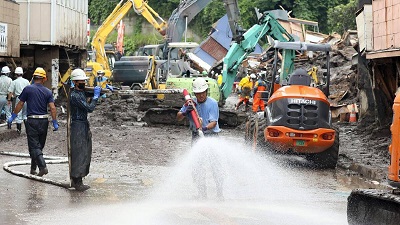
ATAMI, Shizuoka — About 1,700 search and rescue personnel were deployed in Atami, Shizuoka Prefecture, on Wednesday, five days after dozens of people went missing when a major mudslide hit their neighborhood.

Those at the site included police, firefighters and Self-Defense Forces personnel. Heavy machinery was also being used in the affected district to remove debris and soil left by the disaster.

Seven people have been confirmed dead from Saturday’s mudflow, the municipal government said. A total of 27 remained unaccounted for as of Wednesday, according to the city government and the prefectural police.

Published : July 08, 2021

By : Syndication Washington Post, Japan News

Egypt bids adieu to Suez Canal saga with payoff and a party #SootinClaimon.Com

#SootinClaimon.Com : ขอบคุณแหล่งข้อมูล : หนังสือพิมพ์ The Nation.

https://www.nationthailand.com/international/40002965

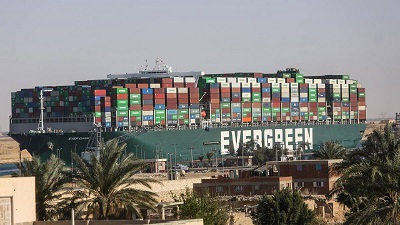
For a nation that provides safe passage for so many ships through its waters, Egypt offered up rather special treatment for the Ever Given.

The 400-meter-long container ship began its voyage out of the canal on Wednesday after a ceremony attended by dignitaries, diplomats and company officials from around the world. In fact, the last time the Suez Canal Authority, which hosted the event, promised this much fanfare was in 2015, when an $8 billion expansion project was completed within a year. The ship is slated to sail into the Mediterranean and then to Rotterdam.

This time though, the event was as much about closure as celebration. Because it was the Ever Given, the giant Japanese-owned vessel carrying some $1 billion worth of cargo, that last March lost control as it traveled north through the canal, crashing into the banks and blocking the waterway like a giant cork for nearly a week. It was an incident that roiled global markets and transfixed the world.

In a recorded comment, Yukito Higaki, president of the ship’s owner, Shoei Kisen Kaisha Ltd., voiced gratitude to the canal and to Suez Canal Authority chief Osama Rabie, personally. Separately, Khaled Abu Bakr, the SCA’s chief attorney in the case, said their negotiations wouldn’t have been possible had it not been for the “unprecedented skills” shown by the authority’s engineers in their efforts to free the ship.

“The Suez Canal Authority and all its employees were in a difficult test in front of the world and a race against time to open the navigation artery, the lifeblood of the world,” Rabie said, speaking at the event.

The ceremony was marked by the signing of a settlement deal between the canal authority and vessel owners, capping what turned into a public relations crisis for the overseers of the waterway and, by extension, Egypt itself. Details of the agreement weren’t disclosed.

Freeing the ship just six days after the incident last March may have won the authority some kudos, as well as providing relief for the estimated $10 billion worth of marine traffic that built up each day as a result. What happened next, in terms of determining blame and compensation, carried an equally high premium for Egypt, both domestically and abroad.

Abu Bakr, speaking in an open air hall against a backdrop of ships crossing the canal, said they were able to ensure that the SCA’s full rights were secured.

With the eyes of the world upon them, canal employees, along with outside help, worked around the clock to free the Ever Given. Often risking their lives, workers ensured that there was minimal damage to the ship, its 17,600 containers and the canal itself. In the end, the heavens offered a helping hand when unusually high tides allowed teams to refloat the vessel.

Just as tricky as freeing the ship, though, was the process of disentangling the arguments about blame and compensation.

Egypt had dodged a bullet by freeing the Ever Given so quickly and clearing the backlog of over 400 ships delayed by the incident. It now had to walk the line between recouping losses, both physical and perceived, and ensuring that it didn’t appear to give up its rights before a global audience or, at the same time, alienate its clients.

For the ship’s owners and insurers, it boiled down to a more basic calculus: What could or should they pay?

As the issue moved to the Egyptian courts, which ordered the Ever Given seized pending a resolution, the stakes grew on both sides. Egypt wanted more than $900 million. The counteroffer was around $150 million.

Neither side has commented on the size of the settlement or provided other details. Rabie, in an earlier television interview, said it was near the $550 million mark — the new figure that had been presented in revised court documents. He declined to be more specific.

But there’s more to the issue than money for Egypt.

While earnings from the Suez Canal are a key source of foreign revenue for the country, credibility is priceless. It’s something President Abdel-Fattah el-Sissi has been working to shore up.

Under his leadership, the canal-expansion project has been one of several major infrastructure efforts launched to the tune of hundreds of billions of Egyptian pounds. After the Ever Given incident, plans for another expansion were proposed.

The desire to project a new, modern Egypt, required the same of its officials and their ability to handle crisis. That was made clear by el-Sissi in one his conversations with Rabie during the effort to free the Ever Given.

The president says he asked the canal chief what the most challenging aspect of refloating the vessel might be. Rabie said it would be the offloading of the containers, a process some said may take up to three months.

“Let’s be ready,” the president says he told Rabie. “Whatever it costs we have to be ready in a crisis like this.”

Published : July 08, 2021

By : Syndication Washington Post, Bloomberg · Tarek El-Tablawy, Mirette Magdy, Abdel Latif Wahba

Tokyo records 920 infections as cases increase in capital #SootinClaimon.Com

#SootinClaimon.Com : ขอบคุณแหล่งข้อมูล : หนังสือพิมพ์ The Nation.

https://www.nationthailand.com/international/40002963

TOKYO – Tokyo confirmed 920 new cases of novel coronavirus infection on Wednesday, up by 206 from the same day last week.

The figure exceeded 900 for the first time since May 13, when 1,010 cases were recorded, and marked the 18th consecutive day that the daily figure increased from the same day the previous week.

According to the Tokyo metropolitan government, the moving average of new infections in the past seven days was 631.7, up by 24.3% from 508.4 in the preceding seven-day period.

Published : July 08, 2021

By : Syndication Washington Post, Japan News

Iceland tested a 4-day workweek. Employees were productive – and happier, researchers say. #SootinClaimon.Com

#SootinClaimon.Com : ขอบคุณแหล่งข้อมูล : หนังสือพิมพ์ The Nation.

https://www.nationthailand.com/international/40002962

Several large-scale trials of a four-day workweek in Iceland were an “overwhelming success,” with many workers shifting to shorter hours without affecting their productivity, and in some cases improving it, in what researchers called “groundbreaking evidence for the efficacy of working time reduction.”

Some of the trials’ key findings showed that a shorter week translated into increased well-being of employees among a range of indicators, from stress and burnout to health and work-life balance. These issues have become more pressing as reports of burnout among employees around the world have risen following more than a year of pandemic-related stress and deteriorated mental health.

The trials were conducted between 2015 and 2019, initiated by the Reykjavik City Council and the Icelandic national government in response to demands from trade unions and civil society organizations for shorter workweeks.

The trials ultimately involved 2,500 workers, more than 1% of the nation’s working population, who moved from working 40 hours a week to a 35- or 36-hour week, without a reduction in pay.

The results were gathered from a wide range of workplaces – from offices to preschools, social service providers and hospitals – leading researchers to conclude that the “transformative positive effects” of a shorter working week are beneficial for employees and businesses alike.

“This study shows that the world’s largest ever trial of a shorter working week in the public sector was by all measures an overwhelming success,” Will Stronge, director of research at the think tank Autonomy, said in a statement to The Washington Post, adding that the program serves as a “landmark pilot” that provides a “precedent for other public authorities.”

The Association for Sustainable Democracy (ALDA) in Iceland, along with Autonomy, a U.K.-based organization that does research on the future of work and economic planning and has been a longtime proponent of four-day weeks, published the findings of the large-scale trials of the program on Sunday.

Issues of work-life balance are “very much on people’s minds these days,” said John Pencavel, professor emeritus at Stanford University who has examined the relationship between hours and productivity. While Pencavel said he did not know enough about the Iceland findings to assess them, he said that research shows employees see diminishing returns at a certain point as their hours increase and also perform more poorly if they do not get enough rest days.

“You will get more in a week’s work if you work six days than if you work seven days,” he said in an interview.

It’s not just workers who are enticed by shorter workweeks, Pencavel said. Companies looking to increase their returns may find it attractive because it could mean paying less for the same output.

Others have noted the possible drawbacks for lower-wage, hourly workers in particular – groups that would lose income and are sometimes left out of the conversation.

“Very often when we think about life conflict and overwork, we have a vision of white-collar workers in mind,” Daniel Schneider, a Harvard Kennedy School professor who studies transformations in work, told Business Insider last year.

Participants in the program said the work-time reductions allowed them to run errands, participate in home duties, exercise and spend quality time with family and friends. This shift often translated into less stress at home and wider social well-being.

“This [reduction in hours] shows increased respect for the individual. That we are not just machines that just work . . . all day. Then sleep and get back to work. [But that] we are persons with desires and private lives, families and hobbies,” said one participant.

To be able to work less while providing the same level of service and productivity, workers and managers alike made strategic and creative changes to their working patterns and dynamics, constantly rethinking how tasks were completed and using working hours in a more efficient way.

One participant said his co-workers shortened meetings and in some instances avoided them altogether by sending emails or exchanging information electronically.

Other participants said they removed longer coffee breaks to stay focused on their work, with the promise of a shorter workweek motivating them to complete their tasks more efficiently, the study found.

The idea of the four-day week has been gaining ground in countries like New Zealand and Germany, as well as in Spain, where a left-wing party announced earlier this year that the government had agreed to test the proposal in a modest pilot program, the Guardian reported.

In the United States, companies of all sizes, from PepsiCo and Verizon to nonprofit organizations, are dealing with the risk of burnout by offering pandemic benefits to employees, including increased paid time off, flexible work schedules and remote work.

Other companies have also started experimenting with shorter working hours.

The crowdfunding platform Kickstarter recently announced it will experiment with a four-day workweek next year, the Atlantic reported. Buffer, a social media software firm, said early in 2021 that it would continue the four-day system “for the foreseeable future” after successful tests.

Stronge said that although the shift to remote working has given more autonomy to many workers, studies have shown that on average, remote workers have seen their load intensify. And in many cases they ended up working longer days.

“This is why it’s important that the conversation around how long we work for, as well as where we work, is growing. We can all identify the value of time for ourselves, which is different to controlling how we work,” he said.

Following the trials’ success in Iceland, trade unions engaged in contract negotiations and achieved permanent reductions in working hours, with approximately 86% of Iceland’s entire working population now either implementing shorter weeks or gaining the right to shorten their working hours, according to the report.

Stronge said these results show that the public sector is “ripe for being a pioneer” of a shorter working week because the government, as an employer, has “unparalleled control over working conditions within a huge chunk of the labour market,” he said.

Given that newly hired employees in the public sector pay income tax, he added, much of the cost of creating new jobs to take up any slack caused by reduced hours is recouped, which he argued makes shorter working hours “relatively cheap.”

As other countries experiment and undergo their own trials and challenges of implementation, in the public and private sectors, Stronge said, the Iceland trials showed that the key to success is to work with the staff “from the ground up throughout the process.”

“There are many examples emerging within the private sector of 4-day week best practice. Celebrating these cases, whilst encouraging others to adopt, will be important as public authorities and trade unions make the case for working time reduction,” he said.

Published : July 08, 2021

By : The Washington Post · Paulina Villegas, Hannah Knowles

Two-thirds of South Sudanese children in desperate need of support: UNICEF #SootinClaimon.Com
#SootinClaimon.Com : ขอบคุณแหล่งข้อมูล : หนังสือพิมพ์ The Nation.

https://www.nationthailand.com/international/40002937

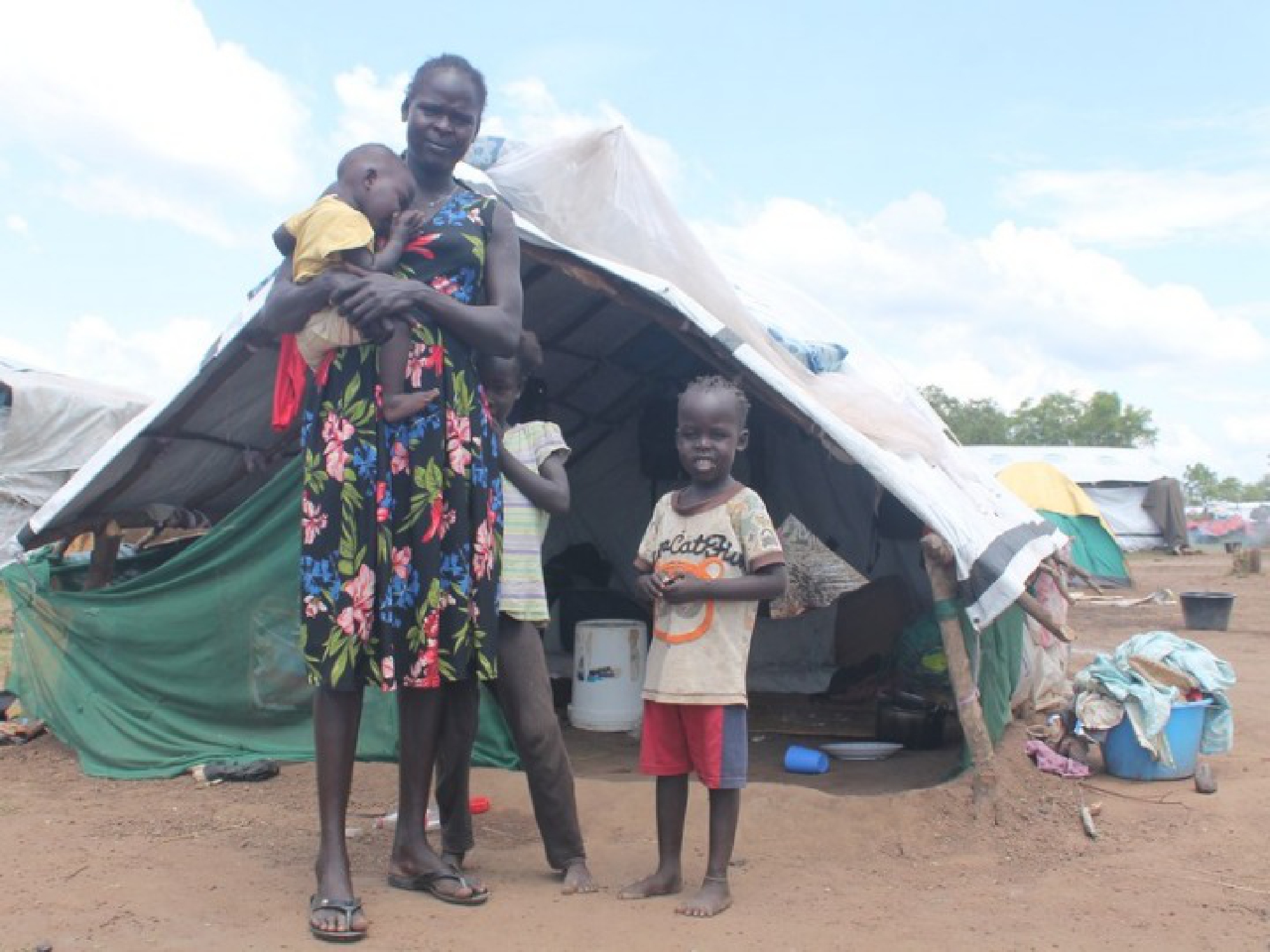
More than 300,000 children, the highest number ever in South Sudan, are expected to suffer from the worst form of malnutrition and are at risk of dying if treatment is not provided, the UNICEF warned.

Arecord 4.5 million children, or two out of three, in South Sudan are in desperate need of humanitarian support, said the UN Children’s Fund (UNICEF) on Tuesday, ahead of the 10th anniversary of the country’s independence.
Hopes that independence from Sudan would bring a new dawn for the country’s children have faded. Bouts of violence and conflict, recurring floods, droughts and other extreme weather events fuelled by climate change, and a deepening economic crisis have led to extremely high food insecurity, and one of the world’s worst humanitarian crises, said UNICEF in a press release.
The recent peace agreement, which has only partially been implemented, has so far failed to bring about any remedy to the challenges facing the country’s children and young people, it said.
“The hope and optimism that children and families in South Sudan felt at the birth of their country in 2011 have slowly turned to desperation and hopelessness,” said UNICEF Executive Director Henrietta Fore. “The childhood of many 10-year-old children in South Sudan today has been beset by violence, crises and rights abuses.”
Overall, 8.3 million people in South Sudan need humanitarian support, a much higher number than the levels seen during the 2013-2018 civil war, which ranged from 6.1 million to 7.5 million people, said UNICEF.
Two-thirds of South Sudanese children in desperate need of support: UNICEFTwo-thirds of South Sudanese children in desperate need of support: UNICEF
South Sudan’s child mortality rate is among the highest in the world, with 1 in 10 children not expected to reach their fifth birthday. High levels of food insecurity are of particular concern. Some 1.4 million children are expected to suffer from acute malnutrition this year, the highest figure since 2013. More than 300,000 children, the highest number ever in the country, are expected to suffer from the worst form of malnutrition and are at risk of dying if treatment is not provided, it warned.
The lack of funding is impeding UNICEF’s work in South Sudan. UNICEF’s appeal for 180 million U.S. dollars to assist the most vulnerable children this year is only one-third funded. The wider humanitarian response plan for South Sudan remains similarly underfunded. The crisis will worsen with the approach of the lean season. Lives will be lost without urgent action, warned the fund. Two-thirds of South Sudanese children in desperate need of support: UNICEFTwo-thirds of South Sudanese children in desperate need of support: UNICEF

Published : July 07, 2021

By : Xinhua

Nordic region, Arctic Circle feel the heat as brutal summer hits #SootinClaimon.Com

#SootinClaimon.Com : ขอบคุณแหล่งข้อมูล : หนังสือพิมพ์ The Nation.

https://www.nationthailand.com/international/40002924

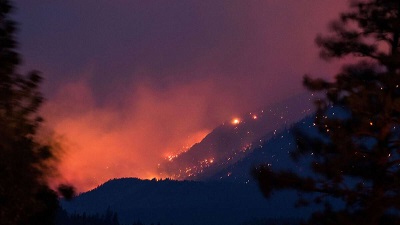
Record-high temperatures from Canada to Scandinavia and intense wildfires flaring up from California to Russias Far East are adding to extreme weather events recorded at the start of the summer in the Northern Hemisphere.

Temperatures in several towns in the north of the Nordic peninsula reached record highs over the weekend, according to local meteorological agencies. At the same time, unusual smoke and heat intensity from blazes in eastern Russia, the western U.S. and British Columbia are being monitored by Europe’s Copernicus agency.

“These fires are burning with high intensity and have been emitting large amounts of smoke into the atmosphere,” said Mark Parrington, a senior scientist and wildfire expert at the ECMWF Copernicus Atmosphere Monitoring Service. “A significant number of wildfires usually occur in regions with drier conditions and higher temperatures, and early evidence suggests that this might also be the case with these fires.”

Extremes are piling up in what’s poised to be a brutal summer as the planet warms. Climate change is intensifying many unusual weather patterns to the point that scientists are able to detect its influence nearly in real time. That’s been the case during the heatwave that’s boiled Canada and the U.S. northwest this season, as well as the heatwave that hit Siberia last year.

Far above the Arctic Circle, towns and villages are experiencing the hottest weather in decades. Temperatures in Nikkaloukta, Sweden, reached 85.8 Fahrenheit (29.9 Celsius) on Sunday, the hottest since 1950 when records began. In Finland, temperatures peaked at 92.3F (33.5C) in Kevo, Utsjoki, the Finnish Meteorological Institute said in a tweet on Monday. That’s the second-highest reading ever in Lapland, only beaten by 94.1F (34.5C) in 1914.

Research has shown that a severe and persistent heatwave in the Nordic region in 2018 was at least twice as likely because of human-caused climate change, according to Nikos Christidis, an attribution scientist from the U.K. Met Office.

The Swedish Meteorological Institute said there’s a big risk of forest fires in Lapland and other regions of northern Sweden. There’s also a danger of water shortages in other parts of the country. The high pressure system that caused the soaring temperatures is now giving way, but temperatures will remain near 86F (30C) in most of northern Sweden, according to SMHI meteorologist Johan Wiksten.

Elsewhere in the Northern Hemisphere, heat and drought are resulting in severe wildfires, according to Copernicus. In Russia’s Sakha Republic and the Far Eastern Federal District fire intensity is comparable to the levels observed in June over the past two years, which were also the worst on record for blazes. If fires and weather conditions remain on the same trajectory, that could lead to similar impacts for the rest of this season, Copernicus said.

Regions in the western U.S. and Canada’s British Columbia affected by heavy droughts have also been hit by wildfires early in the season. Daily fire radiative power, a measure of heat output, was well above average in Arizona during the whole month of June, emitting smoke pollution into the atmosphere. Satellite readings showed particularly strong fire intensity concentrated in a handful of very powerful blazes in British Columbia and California.

Wildfires are responsible for far greater air pollution than industrial emissions because they produce a combination of particulates, carbon monoxide and other pollutants, Copernicus said. The smoke poses serious health risks not just to those living near the fires, but also far from them, as wind can transport plumes over hundreds or thousands of kilometers.

Published : July 07, 2021

By : Syndication Washington Post, Bloomberg · Laura Millan Lombrana, Lars Paulsson