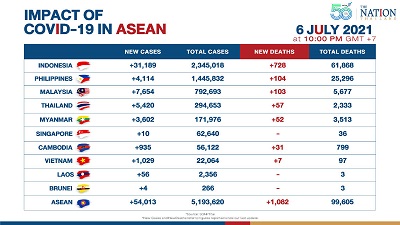
The number of Covid-19 cases in Southeast Asia crossed 5.19 million, with 54,013 new cases reported on Tuesday, higher than Monday’s tally of 52,726, while 1,082 more people lost their lives, increasing from Monday’s 802 and taking total Covid-19 deaths in Asean to 99,605.
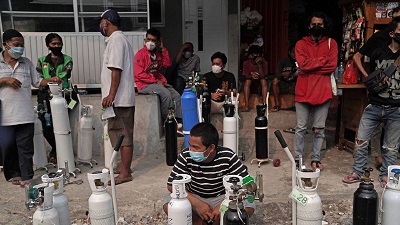
The Indonesian government is importing 10,000 oxygen concentrators from Singapore to treat severe Covid-19 patients after ordering all local oxygen manufacturers on Monday to supply hospitals first as they are facing a shortage of the canisters.
The country’s Public Health Ministry reported that more than 1,000 medical professionals have died due to Covid-19, 12 had already received two jabs.
Meanwhile, Vietnam halted all air travel to and from Ho Chi Minh City on Tuesday to curb the latest outbreak from spreading after the country reported over 1,000 new cases for two consecutive days. More than two-thirds of new patients are from Ho Chi Minh City, the country’s business hub in the southern region.
The city instructed its residents to stay at home and refrain from venturing out except in cases of emergency.
Indonesia reported another deadliest day in the coronavirus pandemic as hospitals become overwhelmed and local oxygen supply struggles to keep up with surging demand.
There were 31,189 confirmed cases in the 24 hours through midday Tuesday, with 728 people dying from the disease known as covid-19. Southeast Asia’s virus hot spot has breached fresh records in infections and fatalities for three straight days.
The government is prepared for worst-case scenarios, including if the number of daily cases reaches up to 70,000, said Luhut Panjaitan, who is overseeing the pandemic response in most-populated islands of Java and Bali.
Local producers are struggling to address the oxygen shortage. Hospitals are overloaded, with the bed occupancy rates in many areas already exceeding 100%. More than 30 patients died in a Yogyakarta hospital on Saturday after it briefly ran out of oxygen supply, CNN Indonesia reported.
Indonesia is preparing to import liquid oxygen from neighboring countries. Producers Linde Group, Air Products and Chemicals, Air Liquide and Iwatani are ready to supply the country through facilities in Singapore and Malaysia, which would take one week to arrive, Fridy Juwono, director for upstream chemicals at the Industry Ministry, said by phone on Tuesday.
On Java island, demand has spiked to as much as five times the normal amount of about 300 tons a day, while the country’s oxygen plants are already operating at full capacity to produce 1,700 tons a day, Juwono said.
Published : July 07, 2021
By : Syndication Washington Post, Bloomberg · Eko Listiyorini, Tassia Sipahutar
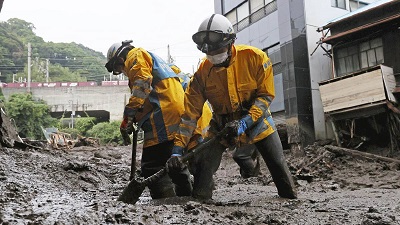
After mudflows moving at great speed devastated a residential area in Atami, Shizuoka Prefecture, the amount of remaining sludge and intermittent rainfall have impeded rescue efforts.
Police officers clear mud in a rescue operation on July 5, 2021, in Atami, Shizuoka Prefecture, Japan. MUST CREDIT: The Yomiuri Shimbun
Japan has thousands of mountain rivers where landslides like the one that happened in Atami could occur, and residents must be aware of the perilous nature of such areas.
“Dark brown water was flowing fast,” a resident said about the fatal landslide that occurred Saturday.
“Soil and sand surged down toward me,” said another, amazed by the force of the mudflow.
The first mudslide occurred near the upper reaches of the Aizome River at about 10:30 a.m.
According to the Shizuoka prefectural government, the mudslides were about 2 kilometers long and had a maximum width of about 120 meters. More than 100,000 cubic meters of earth are believed to have collapsed, sweeping away approximately 130 houses and buildings.
Yuki Matsushi, an associate professor at Kyoto University’s Disaster Prevention Research Institute, analyzed video taken by residents and aerial photos and concluded that at least two landslides occurred, with speeds reaching up to between 29 kph and 32 kph — making it almost impossible for people to run away from the mudflow.
“It appears that the first mudflow made the area wet, which allowed the second flow to increase in speed easily,” Matsushi said.
The Aizome River is designated as a mountain stream with a high risk of landslides occurring, and there is a prefecture-built debris-retaining dam about 400 meters downstream from the point where the mudflow began. The dam is 10 meters high and 43 meters wide, and can retain 4,200 cubic meters of soil.
“The enormous amount of mud easily exceeded the dam’s capacity,” a prefectural government official said.
A prefectural government field survey conducted on Sunday morning found small cracks on the slope near the mudslide’s starting point. Groundwater flowing from the collapsed slope increases with rainfall. The scope of the collapse is too large to stop with only emergency procedures, such as piling up sandbags and blocks.
“Anything can happen depending on the rain,” said an employee from the prefecture’s Atami civil engineering office.
Since Monday, Shizuoka Prefecture has commissioned the private sector to conduct visual monitoring during the daytime and inform Atami city of any sign of collapse near the site through the local fire department. In the case of possible imminent danger, a warning will be issued via smartphone using a notification called Area Mail Disaster Information Service, among other measures. Cameras have been installed to monitor the area at night, too.
Published : July 07, 2021
By : Syndication Washington Post, The Japan News-Yomiuri · Madoka Ishibashi, Naoto Nakamura
Britain daily coronavirus cases could reach 100,000 this summer as the government moves to end nearly all covid-related restrictions later this month, the countrys health secretary said Tuesday.
Sajid Javid told BBC Radio that coronavirus case numbers, currently hovering around 25,000 each day, were expected to double ahead of the July 19 deadline to lift restrictions, as the more transmissible delta variant drives a new surge in infections.
“As we ease and go into the summer, we expect them to rise significantly, and they could go as high as 100,000 case numbers,” Javid said. Even at its worst peak in January, Britain’s daily cases never surpassed 60,000 a day.
Japan will extend its “quasi-state of emergency” covering Tokyo through the Olympics, the Nikkei newspaper reported. The measures had been set to expire July 11, but the coronavirus caseload remains relatively high, and the vast majority of the population is unvaccinated.
Israel said Pfizer-BioNTech’s vaccine offered less protection against infection from the coronavirus than previously seen, although it remains highly effective at preventing severe disease. The new data come as the country grapples with a wave of delta variant cases.
There is no scientific evidence supporting the theory that the coronavirus escaped from a Chinese lab, and more recent studies suggest the virus evolved in nature, a group of scientists wrote in the Lancet on Monday. The authors are the same researchers who in February 2020 dismissed the lab leak idea as a conspiracy theory.
Germany is loosening restrictions on people entering from Britain, India, Portugal and Russia. Fully inoculated travelers from those countries will not have to quarantine; people who are not vaccinated will have to quarantine for five days if they test negative for the virus.
Australia’s New South Wales reported 18 new locally transmitted cases on Tuesday. Sydney, the state’s most populous city, remains in a lockdown that could end Friday.
The health secretary added it was more important to track the number of hospitalizations and deaths caused by the virus – outcomes that he said have been tempered by new covid-19 treatments and a successful vaccination campaign.
“What matters more than anything is hospitalization and death numbers, and that is where the link has been severely weakened,” Javid said.
“Just to put a number on that, if I may – at the moment, we are seeing around 25,000 new cases a day,” he said. “The last time we saw numbers like that … we sadly had deaths of around 500 a day. And now we are at about one-thirtieth of that.”
British Prime Minister Boris Johnson announced Monday that almost all government-mandated restrictions to control the pathogen’s spread would end in England on July 19, even as he cautioned that the pandemic was not over.
The decision has alarmed some health experts who say it is too early to lift curbs such as public mask mandates, pointing to the devastation wrought by the delta variant in India, where it was first detected.
According to Public Health England, the variant accounts for at least 95 percent of new cases in Britain.
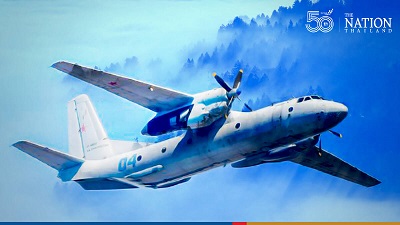
MOSCOW – Twenty-eight people were killed when a Soviet-era An-26 plane crashed in poor weather and low visibility in Russias Far Eastern region of Kamchatka Tuesday. There were no survivors.
Vladimir Solodov, the region’s governor, said the plane appeared to have been going around, making a second attempt to land at Palana Airport when it crashed. He said the fuselage and debris were found on the shore and in the sea.
Interfax cited a source saying that the plane collided with a rocky cliff as it approached. Izvestia newspaper published a photograph of the crash site high on the cliff, showing a burned patch of vegetation above a rocky cliff.
The plane was flying from the regional city of Petropavlovsk. Contact was lost with the plane about 10 minutes before it was due to land.
A second part of the plane was discovered in the sea, more than two miles from the shore, according to sources in the Pacific Fleet cited by Interfax.
It cited another source stating that the bad weather conditions and poor visibility were seen as the most likely cause of the crash.
Russia’s Investigative Committee said the crash was likely caused by bad weather, pilot error or a technical failure with the plane.
“The crew of the aircraft was experienced. It is too early to build scenarios,” Solodov told Interfax.
Six crew members were on the plane. Russian media reported two children were also on board. Efforts to reach the crash site were hindered by nightfall and the rising tide.
The plane has been in operation since 1982, Tass reported.
Deputy Director of the Kamchatka Aviation Enterprise Sergey Gorb, which operated the plane, told Izvestia newspaper that the cliff where the plane crashed was not on the plane’s flight path. He said a strong cross wind may have caused the disaster.
Russian online media MBKh reported that Kamchatka Aviation Enterprise was found to have committed violations of transport rules during a spot check by authorities in February, including allowing crew members to fly without proper training.
A crash occurred in the same spot in 2012, killing 10. Alcohol was found in the blood of both pilots in the 2012 crash.
Cambodian PM allows return of seized pet lion to owner
Under Cambodias law, people do not have the right to raise wild animals. However, Hun Sen said it was a special case that he had the lion returned to the owner because he saw that the owner had raised the animal like a family member since it was a cub.
Cambodian Prime Minister Samdech Techo Hun Sen has allowed the return of a confiscated male lion to its owner after netizens showed sympathy to the animal as it did not eat after being sent to a wildlife conservation center.
Authorities, together with animal rescue non-government organization Wildlife Alliance, seized the lion from home in the capital Phnom Penh’s Boeung Keng Kang district on June 27 after its appearance on TikTok videos and complaints made by neighbors.
Under Cambodia’s law, people do not have the right to raise wild animals. However, Hun Sen said it was a special case that he had the lion returned to the owner because he saw that the owner had raised the animal like a family member since it was a cub.
“This evening, I talked with Agriculture Minister (Veng Sakhon) and agreed to allow the owner to take back the lion on condition that he builds a proper cage to ensure the safety of people inside the house and his neighbors,” Hun Sen said in a post on his Facebook late on Sunday.
“Thank you our compatriots both inside and outside the country for raising suggestions and showing pity on the lion,” he said.
A lion is returned to its owner in Phnom Penh, Cambodia on July 5, 2021.The owner plays with his lion at home in Phnom Penh, Cambodia on July 5, 2021 after taking it back from the Phnom Tamao Wildlife Conservation and Rescue Center.
The lion had been handed over to the Phnom Tamao Wildlife Conservation and Rescue Center in southern Takeo province soon after the confiscation, and the owner of the lion was fined 30,000 U.S. dollars, according to local media reports.
In response to a Facebook user about what happened to the fine charged by authorities, Hun Sen said that if it was true, the money would be returned to the lion owner.
The owner took his lion back from the Phnom Tamao Wildlife Conservation and Rescue Center on Monday afternoon, and he promised to construct a proper enclosure for the lion.
Wildlife Alliance has said the 18-month-old lion, weighing over 70 kilograms, has been raised from a cub imported from overseas by the owner.
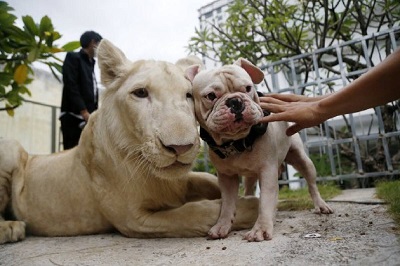
The lion plays with a dog at home in Phnom Penh, Cambodia on July 5, 2021.
Asean reports record number of Covid cases, as situation worsens in Indonesia
Southeast Asia reported a record number of Covid-19 cases on a single day, mostly due to the worsening situation in Indomesia.
Asean saw 52,726 new cases on Monday, higher than Sunday’s 49,404, while 802 patients died, down slightly from the previous day’s 809. Total Covid-19 cases crossed 5.13 million with 98,523 deaths.
Indonesia reported a new daily high of 29,745 cases, up from 27,233 on Saturday, and a record 558 deaths, taking cumulative cases in the country to 2,313,829 and the death toll to 61,140.
The rapidly increasing infections have caused severe shortage of ICU beds and oxygen canisters in major cities, especially in Jakarta.
Laos reported 56 new cases on Sunday, taking cumulative cases in the country to 2,300. Of these, 2,075 people have been cured and discharged. The government has introduced the “Lao Su Su” application as a one-stop platform for all Covid-19 related matters. People can check-in and check-out the venues they visit, book a Covid test as well as reserve a jab via this app.
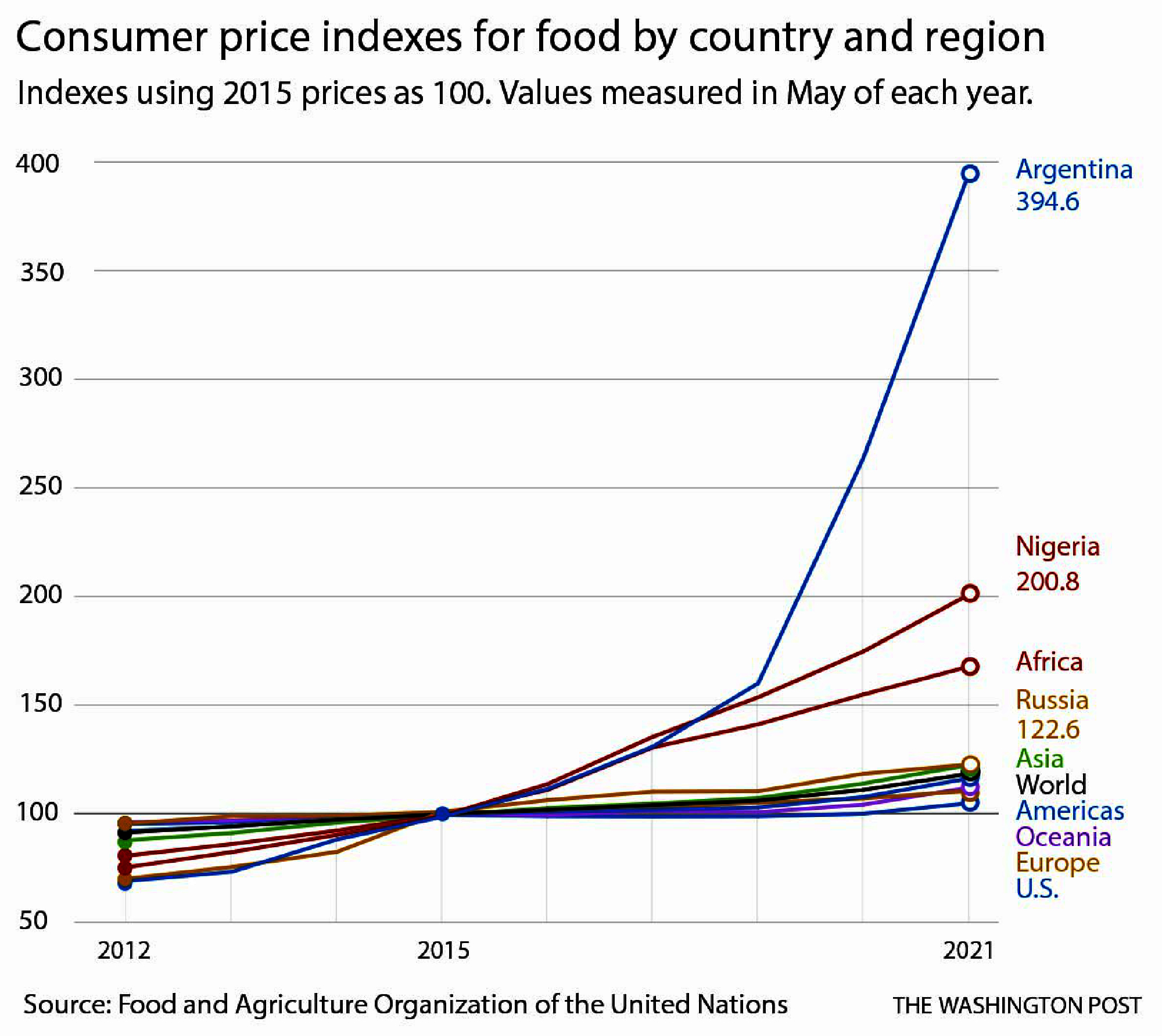
Surging global food prices put staple meals out of reach, from Nigerian jollof rice to Russian pasta and Argentine steak
A year of coronavirus pandemic saw a pot of jollof rice grow steadily more expensive in the Nigerian suburb of Nyanya.
At Nyanya Market, near Abuja, Nigeria’s capital, the price of the rice that forms the base for the dish went up by 10%.
A small tin of tomatoes? Twenty-nine percent costlier. And the onions? Their price jumped by a third, according to a Nigerian research firm.
Surging consumer food prices are a local problem – and a global one.
In Russia, an increase in pasta prices left President Vladimir Putin boiling. In India, it’s cooking oil, and in Lebanon, bread. In meat-loving Argentina, the cost of some cuts of beef has doubled, and beef consumption is at an all-time low.
The issue has made headlines the world over, including in the United States, where inflation has climbed to 5%, the highest level in 13 years.
The numbers are not rising uniformly, and analysts caution that higher food prices are not always bad news. But when disproportionately increasing food costs intertwine with other economic and social factors, the results can be hard to swallow.
“Even relatively well-off people complain about how food prices are seemingly on an unstoppable tear,” said Feyi Fawehinmi, a Nigerian author and analyst based in Britain.
The U.N. Food and Agriculture Organization said its food price index, which measures the global price of select foods, had in May hit highs not seen since 2011, up 40% year-on-year.
A variety of factors are to blame, including a surge in orders from China, fluctuating oil prices, a sliding U.S. dollar, and looming above all: the pandemic, and in some places, reopening.
But experts say that in the face of growing populations, globalization and climate change, higher prices may not be a blip.
“This is telling us something about the global food system not being adequate,” said Cullen Hendrix, a professor and director of sustainability initiatives at the University of Denver.
Around the world, the way people eat could change.
– Nigeria’s jollof rice price
SBM Intelligence has been tracking the prices of ingredients for jollof rice in Nigeria since 2015, in a “jollof index” that factors in the price of turkey, chicken, beef, seasoning, rice, tomatoes, onions and others.
In its latest quarterly report, the company announced that it had tracked an increase of 7.8% in the jollof index between March 2020 and March 2021. But the price increases were unevenly spread.
Although a few markets saw small declines, others, such as Nyanya, saw the price of a potful jump by nearly 16%. In Lagos, the cost of a bag of onions at a market doubled as producers complained of heists targeting the valuable vegetable.
Fawehinmi said the problem has only become worse. “I have had people I would never have expected ask me for money to buy food recently,” he said.
Surging global food prices put staple meals out of reach, from Nigerian jollof rice to Russian pasta and Argentine steak
Nigeria has struggled economically over the past year, with low global oil prices hurting one of its key exports. Unemployment hit 33% in 2020, while inflation has reached more than 18% for the past two months. And “militias have taken over major farmlands and key agricultural transport corridors” in northern states, said Ese Oikhala, a researcher with SBM Intelligence.
Other factors include border closures during the pandemic, designed to stop smuggling of goods including rice, and the devaluation of Nigeria’s currency, the naira.
– Russian pasta prices
Russia’s signature dish – beet-red borscht, with its mixture of vegetables, meat and dairy – has been used as indicator of rising food prices in the country, .
ADVERTISEMENT
This year, that “borscht index” has gone up: Mean prices of ingredients has risen by 12% since the pandemic began, according to official Russian data. But it was the price of pasta that caught Putin’s attention late last year.
At a cabinet meeting in December, Putin complained that Russians were eating “navy-style pasta,” referring to a Soviet-era dish eaten in hard times. “This is unacceptable! With such large harvests!” the Russian president added.
At the time, pasta prices had risen by 10.5%. The country subsequently imposed significant export and price controls on pasta.
Although inflation in Russia is not far higher than in the United States – hitting 6% this month – rising food prices have become a major political issue, with polling from spring showing 58% of Russians considered food prices the country’s biggest problem.
Russia is one of the world’s largest wheat exporters. The government has pledged to double its production of durum wheat by 2025 in an apparent bid to ensure pasta supplies.
ADVERTISEMENT
But some experts say the Russian state’s heavy hand in the food industry is part of the problem.
Linde Goetz of the Leibniz-Institute of Agricultural Development in Transition Economies said that because Russia’s domestic food industry had been “heavily subsidized and shielded from international competition” since 2014, it was inefficient and susceptible to rising commodity prices.
In a public appearance this past week, Putin said he hoped an upcoming harvest would lower food prices.
But the strategy may win only short-term political gains. “Long term – it doesn’t work,” said Andrey Sizov, head of the Moscow-based SovEcon agricultural consulting firm. “Check out what’s happening in Argentina.”
– Argentina’s rare steaks
Argentina is famous for its beef. But over the past year, lower meat consumption has threatened even the country’s famed “asado” barbecues.
The problem is price. In just a year, the price per kilogram of short rib has surged over 90%, according to the Institute for the Promotion of Argentine Beef.
In January, meat industry sources began complaining that meat consumption had fallen to record lows in the country, with annual beef consumption down to 49.7 kilograms per person in 2020 – less than half of its peak in 1956.
“The politics of meat prices are particularly dicey in Argentina,” said Benjamin Gedan, head of the Argentina Project at the Woodrow Wilson International Center for Scholars, noting that the government had been forced to take the drastic measure of stopping all beef exports for a month. Chinese demand had given the country a supply of U.S. dollars.
Even with inflation, a major problem in Argentina over recent years, expected to hit 50% this year, the government of Alberto Fernández has made food a priority. “Nothing worries me more than the hunger of Argentines,” Fernández said in May.
Governments have good reason to fear rising food prices. The World Bank recently warned that high food prices could force 7 million Nigerians into poverty and food prices have become a rallying cry for grass-roots opposition leaders.
The FAO’s food index price last hit this high in 2011. Some analysts have linked sharply rising bread prices in countries including Egypt and Syria to the unrest that took place during the Arab Spring.
But the relationship between international food prices and unrest is affected by numerous factors. Global prices, like the FAO index tracks, and the price that a consumer pays are rarely in sync.
Abdolreza Abbassian, a senior FAO economist who helped devise the food price index, said that while of the factors causing rising prices may be fading in the short term, in the longer term the trend is worsening volatility, because of geopolitical rivalries and climate change.
If the food prices keep rising, those hit hardest will be “consumers in emerging markets and developing economies still wrestling with the effects of the pandemic,” the International Monetary Fund warned recently.
“Global prices affect prices in local markets throughout the world to an unprecedented degree,” Hendrix said.
With the possibility of droughts over summer in the northern hemisphere growing regions such as the United States, Hendrix said, consumers around the world could be “looking at a really, really disturbing picture moving into fall.”
Hackers demand $70 million to unlock businesses hit by sprawling ransomware attack
A hacking group that experts said was behind the sprawling ransomware attack that hit hours before the beginning of the July Fourth holiday weekend is demanding $70 million to unlock the thousands of businesses affected by the hack.
REvil, the same Russian language group that was behind the attack on meat processor JBS, posted the demand on a dark website associated with the group.
The group wants the funds in bitcoin, a popular cryptocurrency, and said if it receives the money it will publish a “decryptor key,” or a computer code that will unlock the victims’ files.
The massive attack was carried out through software that helps businesses manage their computer systems, made by Miami-based firm Kaseya. Kaseya sells its tool to many large managed service providers, who in turn help small and midsize businesses monitor and control their computer networks.
Kaseya admitted this weekend it had been a victim of a “sophisticated cyberattack.” In an interview with the Associated Press, Kaseya CEO Fred Voccola estimated the number of affected companies to be in the low thousands, made up almost entirely of small businesses.
Already, the ransomware attack has temporarily shut down hundreds of Coop Sweden grocery stores because the cash registers were locked up. In New Zealand, nine schools were affected in some ways, forcing some students to shut down their computers, according to the New Zealand Herald. ESET Research said on Twitter it had identified victims in 17 countries so far.
The full scope of the attack likely won’t be known for quite some time – especially as many workers are still off for the holiday weekend in the United States. Researchers say hackers often plan their attacks for holidays to take advantage of fewer eyes on computer systems.
REvil’s request for a joint ransom is likely an acknowledgment that the hacking group wants to end the attack quickly, said Allan Liska, a researcher with the cybersecurity firm Recorded Future.
“To me that’s a sign that they realize that this is a bigger problem than they originally thought,” Liska said. “But I think behind the scenes, this is a lot more than they probably anticipated.”
The FBI said it is investigating the attack, and encouraged victims to report the effects to the agency.
“Due to the potential scale of this incident, the FBI and CISA may be unable to respond to each victim individually, but all information we receive will be useful in countering this threat,” the agency wrote in a public notice Sunday.
Anne Neuberger, deputy national security adviser for cyber and emerging technology, said in a statement Sunday that President Joe Biden had “directed the full resources” of the government to investigate the attack.
The attack comes just weeks after Biden met with Russian President Vladimir Putin and discussed starting consultations on addressing cyber attacks. Biden said Saturday in comments to press that the initial thinking was that the Russian government was not involved, but that the government was still looking into it.
Kaseya said in one of its regular updates that it is working with companies to mitigate the attack.
“We are confident we understand the scope of the issue and are partnering with each client to do everything possible to remediate,” the company wrote.
Ransomware attacks, which have been increasing in frequency and severity since late 2019, regularly use unsophisticated hacking methods to gain access to victims’ systems. Commonly, cybercriminals will send “phishing” emails to try to trick unsuspecting employees into clicking on a link or attachments and inadvertently downloading malware onto the system.
But this case appears to be different. Dutch researchers said this weekend that they had earlier identified a vulnerability within code used by Kaseya. The researchers were working with the company to patch it, but hackers appear to have found and exploited it first.
“During the entire process, Kaseya has shown that they were willing to put in the maximum effort and initiative into this case both to get this issue fixed and their customers patched,” researcher Victor Gevers wrote in a blog post Sunday. “They showed a genuine commitment to do the right thing. Unfortunately, we were beaten by REvil in the final sprint, as they could exploit the vulnerabilities before customers could even patch.”
Kaseya spokesperson Dana Liedholm confirmed in an email the company has been working with the researchers. The attack was the result of multiple vulnerabilities, including the one reported by the researchers, she said.
Published : July 06, 2021
By : The Washington Post · Rachel Lerman, Gerrit De Vynck
Army struggles to stop the smugglers who are partly behind Lebanons energy crisis
HAUCH AL-SAYED ALI, Lebanon – The pair of Lebanese army Land Rovers patrolling the lush terrain along the Syrian border pulled to a stop on a ridge overlooking a picturesque valley, and 1st Lt. Nicolas al-Turk hopped out.
His team of about 10 armed soldiers was hunting for signs of smugglers, including the makeshift metal bridges they often erect across the nearby Assi River to avoid military checkpoints. The troops had found some of these crossings in recent weeks and closed them off, Turk said. But it wasn’t enough. The illicit commerce in gasoline was still on the rise.
The Lebanese armed forces have lately stepped up their border patrols amid rising public fury over the smuggling of fuel to Syria in the middle of what is Lebanon’s most severe fuel crisis in its history.
Lebanon’s worsening financial meltdown has been accompanied by a dire shortage of imported fuel. Roads in cities like Beirut and Tripoli are now lined with cars queuing for hours to get their allotted amount of gasoline, at most a third of a tank. The waits are so long that people order food delivered to cars. Tensions are so high that scuffles have become normal. At least six shootings have taken place at gas stations over the past two weeks.
Taxis and Ubers are disappearing. Warnings abound of valet attendants siphoning fuel from cars they park.
Yet smugglers have discovered there’s good money to be made by buying gasoline in Lebanon at the heavily subsidized price and then selling it on the black market in Syria, which has a debilitating fuel crisis of its own.
Smuggling across the 250-mile border is not new, with an active illegal trade in both directions that includes arms, drugs, cigarettes, foodstuffs and people. The heightened campaign to stem the flow of gasoline across the border is proving no more successful than earlier efforts to stop other types of smuggling.
The border is simply too porous and unclear, explained Turk – it is not even formally demarcated.
Turk, a young, baby-faced officer, pointed to a shepherd tending his sheep in the valley below. That’s Syria, he said. He motioned to the terrain that swept up to within feet of where he stood. That’s also Syria. But a pair of distant hilltops overlooking the valley with houses scattered on the slopes were actually Lebanese territory, he said, illustrating the challenge his team faces.
“The border between Lebanon and Syria is intermeshed. Its geography is difficult,” Turk said. Mountains to his east and the river to his west hamper anti-smuggling efforts, he added.
Many Lebanese politicians blame the gasoline crisis partly on smuggling, though there are no publicly available figures about the amount of smuggled fuel. In April, Lebanon’s caretaker energy minister said the disparity in gasoline prices between Lebanon and Syria means smugglers can make huge profits next door.
On Wednesday, ex-foreign minister Gebran Bassil accused security forces and politicians of colluding with smuggling networks.
When the Lebanese central bank said in May that gasoline imports were actually up 10 percent in 2021 over the same period in 2019, it added to speculation that smuggling accounted for the growing shortfall facing consumers. The shortage seems especially suspicious because the central bank noted that overall economic activity – and thus the expected demand for fuel – had declined significantly since 2019.
ADVERTISEMENT
Lebanon’s economic depression has been described by the World Bank as “likely to rank in the top 10, possibly top 3, most severe crises episodes globally since the mid-nineteenth century.”
With the government running dangerously short on dollars, the value of the Lebanese pound has collapsed. Officially pegged at 1,507.5 to the dollar, the pound is now trading at above 17,000 to the dollar on the black market. The central bank has heavily subsidized fuel but on Monday reduced the subsidy. The price of gasoline has jumped 50 percent in the past week.
Outside a Beirut gas station last week, Zeina Hassoun, 35, had been waiting in line for more than five hours, since 7 a.m., and her frustration was spiking. Although the government had decided days earlier to tackle the fuel crisis in part by issuing ration cards for gasoline, Hassoun had a better suggestion: “Instead . . . let them go and stop the smuggling to Syria.”
Mohammed, a 35-year-old delivery man who usually waits about four hours to gas up his motorcycle, also blamed fuel smuggling but said he was sympathetic to the Syrian need for gas.
“There is a saying that goes, ‘As long as your brother is sick, you will be tired.’ As long as Syria is sick, Lebanon is tired,” said Mohammed, who spoke on the condition only his first name be used for fear of reprisal.
ADVERTISEMENT
Syria’s own fuel shortage stems from a series of crises, including an economy devastated after a decade of war, the destruction of domestic energy infrastructure, international sanctions and a foreign currency shortage. The government of President Bashar al-Assad also lost control of oil-producing territory to U.S.-backed Kurdish-led groups, and oil imports from Iran have been crimped by economic sanctions.
In Damascus, where gas lines can stretch for six hours or longer, queues for different stations at times cross and drivers have been known to get out of their vehicles, hold hands and spontaneously perform the Levantine dabkeh dance.
Lebanese views about fuel smuggling to Syria are colored by their politics. Large stretches of Lebanese territory along the Syrian border are controlled by the militant group Hezbollah, which is also a powerful political party. Detractors accuse Hezbollah, an ally of Assad, of operating robust smuggling networks.
The Lebanese army, which has received more than $2.5 billion in aid from the United States since 2006, has made concerted efforts to curb the illicit commerce, erecting watchtowers near the border and carrying out ambushes of suspected smugglers, but has received no help from its Syrian counterparts on the other side of the border. Lebanon’s army, like the country, is also deeply demoralized and facing economic peril, with military salaries having lost most of their value and soldiers no longer receiving meat rations.
Not long after Turk’s team had stopped along the ridge, the patrol turned a corner on a winding, deserted road and came upon an army van parked by the side of the road. The driver, a soldier in fatigues, had been bent beside the vehicle, and he jumped up in surprise, his face frozen. One hand was curved around a plastic gallon jug, the other clutching a hose.
He was siphoning gas out of the van, apparently for his own personal use.
Published : July 06, 2021
By : The Washington Post · Sarah Dadouch, Nader Durgham


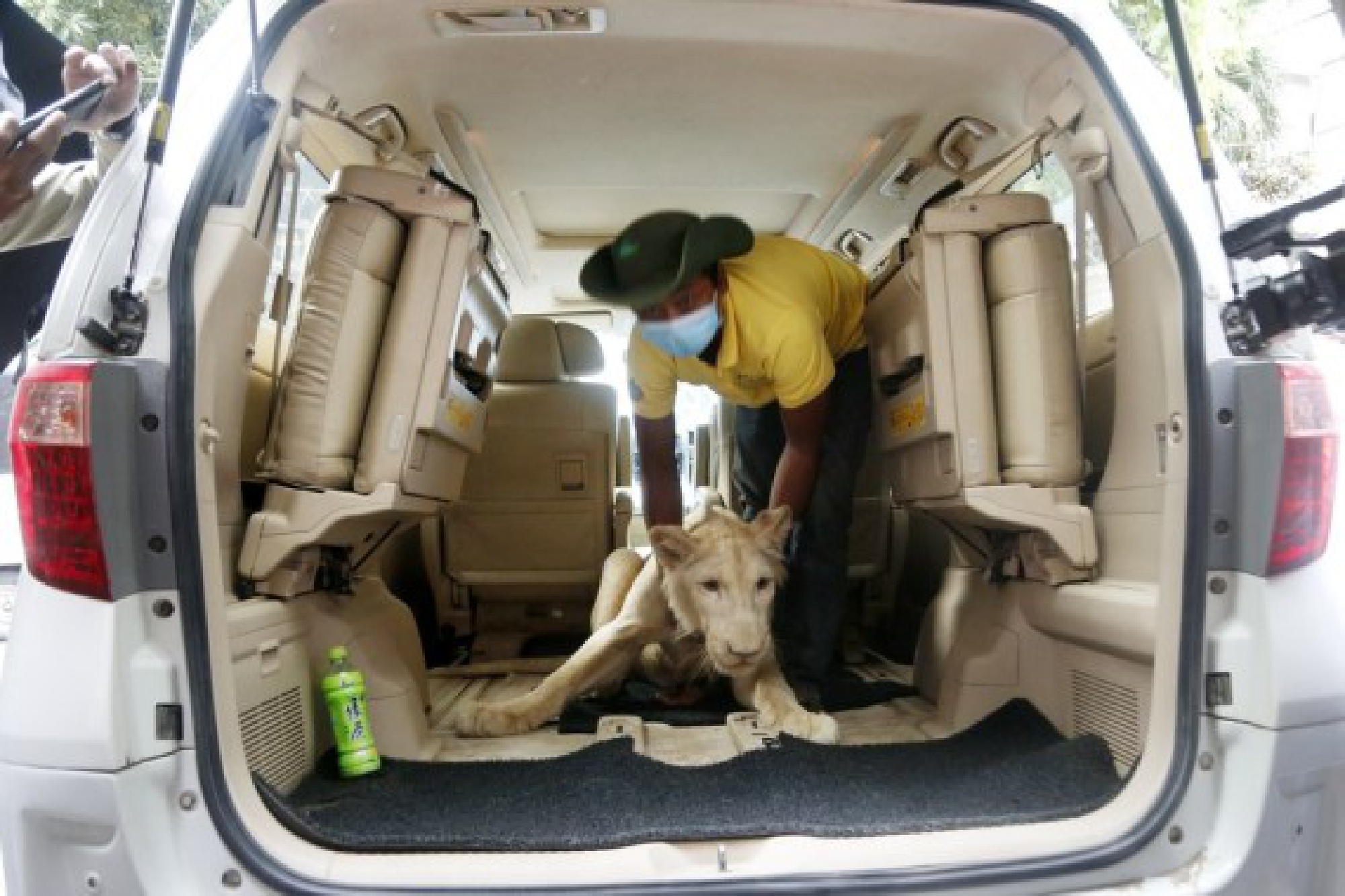 A lion is returned to its owner in Phnom Penh, Cambodia on July 5, 2021.
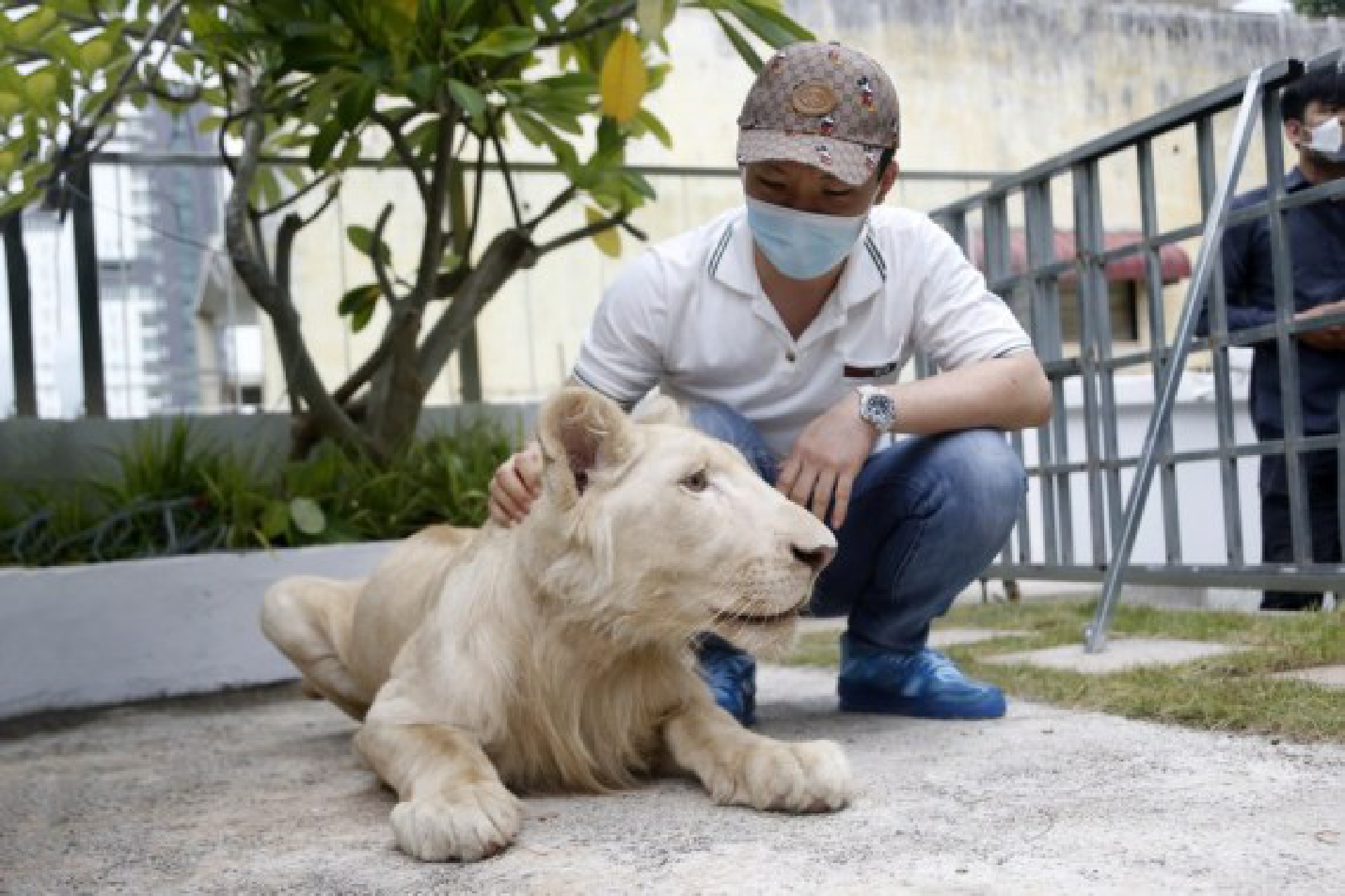 The owner plays with his lion at home in Phnom Penh, Cambodia on July 5, 2021 after taking it back from the Phnom Tamao Wildlife Conservation and Rescue Center.
 The lion plays with a dog at home in Phnom Penh, Cambodia on July 5, 2021.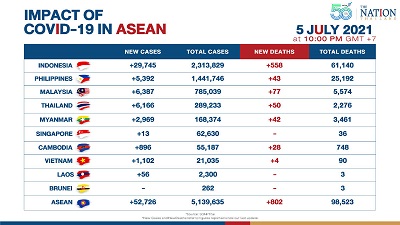

 Surging global food prices put staple meals out of reach, from Nigerian jollof rice to Russian pasta and Argentine steak