The last foreign scientist in the Wuhan lab speaks out #SootinClaimon.Com

#SootinClaimon.Com : ขอบคุณแหล่งข้อมูล : หนังสือพิมพ์ The Nation.

https://www.nationthailand.com/international/40002567

The last foreign scientist in the Wuhan lab speaks out


Danielle Anderson was working in what has become the worlds most notorious laboratory just weeks before the first known cases of Covid-19 emerged in central China. Yet, the Australian virologist still wonders what she missed.
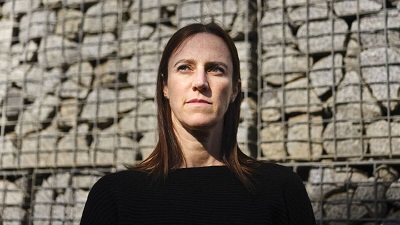
Danielle Anderson, a senior research fellow at the University of Melbourne’s Peter Doherty Institute for Infection and Immunity and the only foreign scientist to have undertaken research at the Wuhan Institute of Virology’s BSL-4 lab, poses in Melbourne, Australia, on June 22, 2021. MUST CREDIT: Bloomberg photo by James Bugg

An expert in bat-borne viruses, Anderson is the only foreign scientist to have undertaken research at the Wuhan Institute of Virology’s BSL-4 lab, the first in mainland China equipped to handle the planet’s deadliest pathogens. Her most recent stint ended in November 2019, giving Anderson an insider’s perspective on a place that’s become a flashpoint in the search for what caused the worst pandemic in a century.

The emergence of the coronavirus in the same city where institute scientists, clad head-to-toe in protective gear, study that exact family of viruses has stoked speculation that it might have leaked from the lab, possibly via an infected staffer or a contaminated object. China’s lack of transparency since the earliest days of the outbreak fueled those suspicions, which have been seized on by the U.S. That’s turned the quest to uncover the origins of the virus, critical for preventing future pandemics, into a geopolitical minefield.

The work of the lab and the director of its emerging infectious diseases section – Shi Zhengli, a long-time colleague of Anderson’s dubbed ‘Batwoman’ for her work hunting viruses in caves – is now shrouded in controversy. The U.S. has questioned the lab’s safety and alleged its scientists were engaged in contentious gain of function research that manipulated viruses in a manner that could have made them more dangerous.

It’s a stark contrast to the place Anderson described in an interview with Bloomberg News, the first in which she’s shared details about working at the lab.

Half-truths and distorted information have obscured an accurate accounting of the lab’s functions and activities, which were more routine than how they’ve been portrayed in the media, she said.

“It’s not that it was boring, but it was a regular lab that worked in the same way as any other high-containment lab,” Anderson said. “What people are saying is just not how it is.”

Now at Melbourne’s Peter Doherty Institute for Infection and Immunity, Anderson began collaborating with Wuhan researchers in 2016, when she was scientific director of the biosafety lab at Singapore’s Duke-NUS Medical School. Her research – which focuses on why lethal viruses like Ebola and Nipah cause no disease in the bats in which they perpetually circulate – complemented studies underway at the Chinese institute, which offered funding to encourage international collaboration.

A rising star in the virology community, Anderson, 42, says her work on Ebola in Wuhan was the realization of a life-long career goal. Her favorite movie is “Outbreak,” the 1995 film in which disease experts respond to a dangerous new virus – a job Anderson said she wanted to do. For her, that meant working on Ebola in a high-containment laboratory.

Anderson’s career has taken her all over the world. After obtaining an undergraduate degree from Deakin University in Geelong, Australia, she worked as a lab technician at the Dana-Farber Cancer Institute in Boston, then returned to Australia to complete a PhD under the supervision of eminent virologists John Mackenzie and Linfa Wang. She did post-doctoral work in Montreal, before moving to Singapore and working again with Wang, who described Anderson as “very committed and dedicated,” and similar in personality to Shi.

“They’re both very blunt with such high moral standards,” Wang said by phone from Singapore, where he’s the director of the emerging infectious diseases program at the Duke-NUS Medical School. “I’m very proud of what Danielle’s been able to do.”

Anderson was on the ground in Wuhan when experts believe the virus, now known as SARS-CoV-2, was beginning to spread. Daily visits for a period in late 2019 put her in close proximity to many others working at the 65-year-old research center. She was part of a group that gathered each morning at the Chinese Academy of Sciences to catch a bus that shuttled them to the institute about 20 miles away.

As the sole foreigner, Anderson stood out, and she said the other researchers there looked out for her.

“We went to dinners together, lunches, we saw each other outside of the lab,” she said.

From her first visit before it formally opened in 2018, Anderson was impressed with the institute’s maximum biocontainment lab. The concrete, bunker-style building has the highest biosafety designation, and requires air, water and waste to be filtered and sterilized before it leaves the facility. There were strict protocols and requirements aimed at containing the pathogens being studied, Anderson said, and researchers underwent 45 hours of training to be certified to work independently in the lab.

The induction process required scientists to demonstrate their knowledge of containment procedures and their competency in wearing air-pressured suits. “It’s very, very extensive,” Anderson said.

Entering and exiting the facility was a carefully choreographed endeavor, she said. Departures were made especially intricate by a requirement to take both a chemical shower and a personal shower – the timings of which were precisely planned.

These rules are mandatory across BSL-4 labs, though Anderson noted differences compared with similar facilities in Europe, Singapore and Australia in which she’s worked. The Wuhan lab uses a bespoke method to make and monitor its disinfectants daily, a system Anderson was inspired to introduce in her own lab. She was connected via a headset to colleagues in the lab’s command center to enable constant communication and safety vigilance – steps designed to ensure nothing went awry.

However, the Trump administration’s focus in 2020 on the idea the virus escaped from the Wuhan facility suggested that something went seriously wrong at the institute, the only one to specialize in virology, viral pathology and virus technology of the some 20 biological and biomedical research institutes of the Chinese Academy of Sciences.

Virologists and infectious disease experts initially dismissed the theory, noting that viruses jump from animals to humans with regularity. There was no clear evidence from within SARS-CoV-2’s genome that it had been artificially manipulated, or that the lab harbored progenitor strains of the pandemic virus. Political observers suggested the allegations had a strategic basis and were designed to put pressure on Beijing.

And yet, China’s actions raised questions. The government refused to allow international scientists into Wuhan in early 2020 when the outbreak was mushrooming, including experts from the U.S. Centers for Disease Control and Prevention, who were already in the region.

Beijing stonewalled on allowing World Health Organization experts into Wuhan for more than a year, and then provided only limited access. The WHO team’s final report, written with and vetted by Chinese researchers, played down the possibility of a lab leak. Instead, it said the virus probably spread via a bat through another animal, and gave some credence to a favored Chinese theory that it could have been transferred via frozen food.

China’s obfuscation led outside researchers to reconsider their stance. Last month, 18 scientists writing in the journal Science called for an investigation into Covid-19’s origins that would give balanced consideration to the possibility of a lab accident. Even the director-general of the WHO, Tedros Adhanom Ghebreyesus, said the lab theory hadn’t been studied extensively enough.

But it’s U.S. President Joe Biden’s consideration of the idea – previously dismissed by many as a Trumpist conspiracy theory – that has given it newfound legitimacy. Biden called on America’s intelligence agencies last month to redouble their efforts in rooting out the genesis of Covid-19 after an earlier report, disclosed by the Wall Street Journal, claimed three researchers from the lab were hospitalized with flu-like symptoms in November 2019.

Anderson said no one she knew at the Wuhan institute was ill toward the end of 2019. Moreover, there is a procedure for reporting symptoms that correspond with the pathogens handled in high-risk containment labs.

“If people were sick, I assume that I would have been sick – and I wasn’t,” she said. “I was tested for coronavirus in Singapore before I was vaccinated, and had never had it.”

Not only that, many of Anderson’s collaborators in Wuhan came to Singapore at the end of December for a gathering on Nipah virus. There was no word of any illness sweeping the laboratory, she said.

“There was no chatter,” Anderson said. “Scientists are gossipy and excited. There was nothing strange from my point of view going on at that point that would make you think something is going on here.”

The names of the scientists reported to have been hospitalized haven’t been disclosed. The Chinese government and Shi Zhengli, the lab’s now-famous bat-virus researcher, have repeatedly denied that anyone from the facility contracted Covid-19. Anderson’s work at the facility, and her funding, ended after the pandemic emerged and she focused on the novel coronavirus.

ADVERTISEMENT

It’s not that it’s impossible the virus spilled from there. Anderson, better than most people, understands how a pathogen can escape from a laboratory. SARS, an earlier coronavirus that emerged in Asia in 2002 and killed more than 700 people, subsequently made its way out of secure facilities a handful of times, she said.

If presented with evidence that such an accident spawned Covid-19, Anderson “could foresee how things could maybe happen,” she said. “I’m not naive enough to say I absolutely write this off.”

And yet, she still believes it most likely came from a natural source. Since it took researchers almost a decade to pin down where in nature the SARS pathogen emerged, Anderson says she’s not surprised they haven’t found the “smoking gun” bat responsible for the latest outbreak yet.

The Wuhan Institute of Virology is large enough that Anderson said she didn’t know what everyone was working on at the end of 2019. She is aware of published research from the lab that involved testing viral components for their propensity to infect human cells. Anderson is convinced no virus was made intentionally to infect people and deliberately released – one of the more disturbing theories to have emerged about the pandemic’s origins.

Anderson did concede that it would be theoretically possible for a scientist in the lab to be working on a gain of function technique to unknowingly infect themselves and to then unintentionally infect others in the community. But there’s no evidence that occurred and Anderson rated its likelihood as exceedingly slim.

Getting authorization to create a virus in this way typically requires many layers of approval, and there are scientific best practices that put strict limits on this kind of work. For example, a moratorium was placed on research that could be done on the 1918 Spanish Flu virus after scientists isolated it decades later.

Even if such a gain of function effort got clearance, it’s hard to achieve, Anderson said. The technique is called reverse genetics.

“It’s exceedingly difficult to actually make it work when you want it to work,” she said.

Anderson’s lab in Singapore was one of the first to isolate SARS-CoV-2 from a Covid patient outside China and then to grow the virus. It was complicated and challenging, even for a team used to working with coronaviruses that knew its biological characteristics, including which protein receptor it targets. These key facets wouldn’t be known by anyone trying to craft a new virus, she said. Even then, the material that researchers study – the virus’s basic building blocks and genetic fingerprint – aren’t initially infectious, so they would need to culture significant amounts to infect people.

Despite this, Anderson does think an investigation is needed to nail down the virus’s origin once and for all. She’s dumbfounded by the portrayal of the lab by some media outside China, and the toxic attacks on scientists that have ensued.

One of a dozen experts appointed to an international taskforce in November to study the origins of the virus, Anderson hasn’t sought public attention, especially since being targeted by U.S. extremists in early 2020 after she exposed false information about the pandemic posted online. The vitriol that ensued prompted her to file a police report. The threats of violence many coronavirus scientists have experienced over the past 18 months have made them hesitant to speak out because of the risk that their words will be misconstrued.

The elements known to trigger infectious outbreaks – the mixing of humans and animals, especially wildlife – were present in Wuhan, creating an environment conducive for the spillover of a new zoonotic disease. In that respect, the emergence of Covid-19 follows a familiar pattern. What’s shocking to Anderson is the way it unfurled into a global contagion.

“The pandemic is something no one could have imagined on this scale,” she said. Researchers must study Covid’s calamitous path to determine what went wrong and how to stop the spread of future pathogens with pandemic potential.

“The virus was in the right place at the right time and everything lined up to cause this disaster.”

Published : June 29, 2021

By : Syndication Washington Post, Bloomberg · Michelle Cortez
Kuwait starts to prevent unvaccinated from entering shopping malls to COVID-19 #SootinClaimon.Com

#SootinClaimon.Com : ขอบคุณแหล่งข้อมูล : หนังสือพิมพ์ The Nation.

https://www.nationthailand.com/international/40002543

Kuwait starts to prevent unvaccinated from entering shopping malls to COVID-19


Kuwait started on Sunday to implement a governments decision to allow only vaccinated citizens and residents to visit shopping malls, salons, gyms, and restaurants in the country.

Amid strict procedures, shopping malls, salons, gyms and restaurants in Kuwait reopened doors on Sunday to only those who have been vaccinated against the COVID-19.
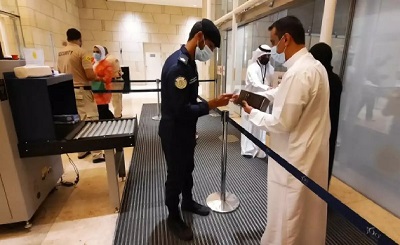
Malls in the Arab country witnessed on Sunday morning armed forces at their entrances who will help the implementation of the decision to prevent unvaccinated people from entering, except for pregnant women, those under 16 years, and those with a medical excuse.

According to the Ministry of Interior, about 400 of their men will be deployed in malls to help implement the health measures.

Amid strict procedures, the major malls began to receive visitors.

Shahd Al-Awadi, a customer in a mall, told Xinhua that vaccination certificates are being checked by the security of the mall, where visitors are obliged to show “Immune” and “Kuwait Mobile ID” applications.

“I came to the mall to enjoy breakfast, away from the crowds, where my friend called me and told me that the atmosphere in the mall is quieter and we should enjoy it as much as we can,” Al-Awadi said.

Al-Awadi affirmed that she totally supports the decision, explaining that she received vaccine to prevent the spread of coronavirus and protect the children and family especially the elderly ones, and it is her right to get privileges.

“It is illogical that we may be exposed to the risk of infection and the spread of the disease because of the few who refrain from vaccination,” she said.

Iman Hammadi, a saleswoman in a cosmetics store inside the mall, said that visitors are less than usual, expressing her fear that the situation will continue for a longer period and thus it will lead to the decline in sales revenues.


“If the situation continues, our target will be failing. The target depends on buyers. Fewer buyers, fewer sales, then less money for the company and salespeople,” Iman said sadly.

A citizen Nada Al-Waleed said that the municipality men at the gates check apps at people’s mobiles one by one. She hopes that the entry process will speed up and facilitate the visitors.

ADVERTISEMENT

Another citizen Ali Al-Nabhan felt the need to go to the mall on the day, just out of curiosity.

“I feel that I want to experience the privilege of being vaccinated, and curiosity led me to see the mall without the usual crowds,” he said.

“I think that the decisions of the Ministry of Health are the right things to do. Several other countries have made similar decisions, and we did not see objections from their people,” he said.


“Rather, they supported the decisions of their governments, which are interested in making the situation safe for them and their families,” he added.

However, citizen Talal Al-Mutawa, who is afraid of vaccination and decided to wait more than a year to be vaccinated, said that what is happening in the malls now deserves to be questioned.

“The malls are almost empty which means many people are afraid to be vaccinated,” he said. “The government’s decisions are supposed to motivate others and give them solutions, not to restrict people.”

On June 17, the Kuwaiti government decided to allow access to most public venues only for fully vaccinated people starting from June 27, in an effort to contain the spread of the Delta variant.    

Published : June 28, 2021

By : Xinhua

Malaysia mulls extending lockdown, as Asean reports over 39,000 Covid cases #SootinClaimon.Com

#SootinClaimon.Com : ขอบคุณแหล่งข้อมูล : หนังสือพิมพ์ The Nation.

https://www.nationthailand.com/international/40002533

Malaysia mulls extending lockdown, as Asean reports over 39,000 Covid cases


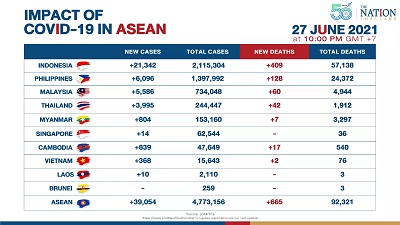
Southeast Asia reported a slight decline in new Covid-19 cases but saw more deaths on Sunday, collated data showed.

Asean had 39,054 new cases, lower than Saturday’s 40,222, while 665 patients died, up from 605 the previous day.

The number of Covid-19 cases crossed 4.77 million, while the death toll in the region rose to 92,321.

Indonesia reported a new high of 21,342 cases on Sunday and 409 deaths, bringing cumulative cases in the country to 2,115,304 patients with 57,138 deaths. Medical associations urged the government to impose the highest disease control measures in the country for at least 14 days to curb the outbreak, after it reported that more than 30 doctors had died due to Covid-19 in the past month.

Malaysia reported 5,586 new cases and 60 deaths on Sunday, driving cumulative cases in the country to 734,048 patients with 4,944 deaths. The prime minister said that the government might have to extend the lockdown, originally announced until June 28, as daily new cases were still far higher than 4,000 and the country’s inoculation target had not been achieved.

Published : June 28, 2021

By : THE NATION

Housing crisis poses crucial test for Biden administrations economic plans #SootinClaimon.Com

#SootinClaimon.Com : ขอบคุณแหล่งข้อมูล : หนังสือพิมพ์ The Nation.

https://www.nationthailand.com/international/40002531

Housing crisis poses crucial test for Biden administrations economic plans


WASHINGTON – The Biden administration mounted an aggressive push reshaping national housing policy in a span of 48 hours this past week, replacing a key regulator and pushing a flurry of other changes to try to address growing concerns within and outside the White House about a housing crisis for millions of renters and vulnerable Americans.

On Wednesday, the White House named a new acting director of the powerful Federal Housing Finance Agency, Sandra Thompson, who called out the lack of affordable housing and access to credit for many communities of color. The White House appointed her hours after tossing a Trump appointee.

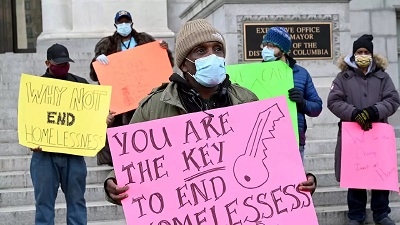
Then on Thursday, the Centers for Disease Control and Prevention extended its eviction moratorium by one month. The Biden administration also announced new initiatives to quicken the disbursal of rental relief and encourage local governments and courts to prevent evictions. As part of the effort, the White House will convene a summit this Wednesday for “immediate eviction prevention plans” to prevent an “eviction crisis.”

Housing has emerged as one of the most unequal and consequential parts of the economic recovery from the coronavirus pandemic. Low interest rates, cheap mortgages and bidding wars are fueling a housing boom for wealthier Americans and making homeownership out of reach for many first-time buyers. Meanwhile, housing is a top expense and worry for millions of renters and unemployed workers, and advocates fear a wave of homelessness once the CDC’s final moratorium lifts July 31.

It remains to be seen whether this bucket of housing policy shifts develops into a clear road map for how President Joe Biden plans to handle one of the largest parts of the economy. Housing is an area that Democrats have traditionally tried to backstop with government support to make it more accessible for more people.

“There isn’t anything that has changed in the intensity with which we’re working,” said Erika Poethig, special assistant to the president for housing and urban policy at the White House’s Domestic Policy Council. “I do think the expectation around the end of the moratorium, and the consequence of that, have raised public awareness to the broader housing affordability challenges, and the consequences to losing one’s shelter and housing and how devastating that is.”

While the Biden administration has focused extraordinary effort on passing the stimulus package, overhauling the tax code and ushering in major infrastructure investments, less public attention has been devoted to housing policy. However, some experts believe challenges – for renters, homeowners and the homeless – are fast approaching.

Even though Congress has allocated roughly $46 billion for emergency rental aid through pandemic-era aid packages, much of that money hasn’t reached tenants. On Thursday, the White House and Treasury Department released new guidance to help streamline application processes, calling for an “all hands-on-deck effort,” which is partly why the White House’s housing summit on Wednesday will bring together 50 cities to discuss plans for preventing evictions.

The delays in getting relief in the hands of vulnerable tenants is a key reason advocates were clamoring for an extension to the eviction moratorium.

For their part, the Biden administration said the decision to extend the eviction moratorium was not a political decision made by the White House but was made by career officials at the CDC. The CDC signaled there would be no further extensions beyond July 31.

Now, state and local governments that have struggled to quickly prop up programs to disburse the money have a little more time.

“In the next 30 days, there’s no excuse to get this money out,” said David Dworkin, president and chief executive of the National Housing Conference. “We have the money to pay the rent. We need to get it paid.”

Tara Raghuveer, the Homes Guarantee campaign director at People’s Action, a national grass-roots organizing network, said she has little confidence that much can change by the end of July. She described the new deadline and the administration’s push to hustle emergency rental relief out the door as “too little, too late.”

Raghuveer said there should have been the same level of urgency months ago. As the pandemic raged, Raghuveer said many landlords looked to loopholes that allowed them to remove people from their homes, despite the eviction moratorium. In Kansas City, Mo., where she is also a local organizer, Raghuveer said she could immediately think of several renters whose debts are piling up and who will promptly be evicted after July 31.

“We’re just circling the drain, and eventually, poor and working-class people are going down the drain,” Raghuveer said. “We could run around all we want for the next 30 days, as we have been for the last year, talking about how we are coming up on an eviction cliff, an eviction tsunami.”

Housing is central to the Biden’s administration efforts to address racial inequity, which includes boosting Black homeownership and increasing rental housing in neighborhoods with more educational and economic opportunities. The pandemic has only worsened racial and economic gaps, and some economists are worried there could be a repeat of what happened after the Great Recession, when Black homeownership plummeted and never recovered.

A senior White House official pointed to a range of additional housing priorities to help keep people in their homes. For example, Biden’s original proposal for the infrastructure package called the American Jobs Plan aimed to build and rehabilitate more than 500,000 homes for low- and middle-income home buyers, and invest $40 billion to improve public housing. (Those provisions weren’t included in the Senate bipartisan infrastructure deal reached Thursday but could be passed through reconciliation.) The White House official also said new leadership at FHFA would help expand access to credit, including for Black and Brown homeowners.

The decisions come as housing in America increasingly diverges along two tracks.

All over the country, buyers clamor in competitive bidding wars that often hinge on all-cash offers, well above asking price. Hefty price tags for building materials push prices even higher. Oftentimes, only wealthier Americans can enter the hot housing market and take advantage of low interest rates, high savings and the flexibility to work remotely.

Policymakers at the Federal Reserve say the boom in home prices doesn’t threaten financial stability. But there is concern that the Fed’s low interest rates and other supports for the economy are exacerbating the run-up in prices. It’s unclear if the price boom will fall back down.

“If we want to make housing affordable, we should be talking about how government subsidies, and how monetary policy – the Fed’s easy money policy of low interest rates and its purchase of nearly half a trillion dollars in mortgage-backed securities annually – are causing rapid home price inflation,” Sen. Patrick Toomey, R-Pa., said at a Thursday hearing. “The experiment of a vast subsidy framework combined with accommodative monetary policy have done little to address affordability.”

A key test for the administration will be ensuring access to affordable housing is not permanently held back by the covid crisis.

The White House appeared to step in that direction when it appointed Thompson as acting director of the FHFA. In a statement Wednesday night, Thompson pointed to “widespread lack of affordable housing and access to credit, especially in communities of color.”

FHFA oversees mortgage giants Fannie Mae and Freddie Mac, which guarantee roughly half of the $11 trillion U.S. mortgage market. Unrelated to the extended eviction moratorium, FHFA last week also announced it would extend a moratorium on foreclosures of mortgages backed up by the government for another month.

ADVERTISEMENT

Thompson replaced Trump appointee Mark Calabria, a libertarian economist. The switch at FHFA came immediately after the Supreme Court ruled that the FHFA’s leadership structure was unconstitutional, because it limited the president’s ability to remove the FHFA director, except “for cause.” Thompson previously served as deputy director of the Division of Housing Mission and Goals, overseeing FHFA’s housing and regulatory policy, fair lending and other regulatory matters.

In another move to nominate regulators with expertise on vulnerable homeowners, the administration last week tapped Julia Gordon for commissioner of the Federal Housing Administration, which insures mortgages for low- to moderate-income borrowers. Gordon previously led the National Community Stabilization Trust, which helps rehabilitate homes in underserved areas.

The administration also moved to reinstate a 2013 rule that codified a decades-old legal standard that the Trump administration had gutted. The rule was aimed at making the housing industry justify practices that hurt Black and Latino Americans, such as overly restrictive criminal-background policies and the use of artificial intelligence to predict creditworthiness.

Alicia Mazzara, an expert on the housing policy team at the Center on Budget and Policy Priorities, said housing issues often do not get enough attention from lawmakers. Mazzara, who has called for an expansion of the Housing Choice Voucher Program, said many renters would not be in such dire straits had there been more support going into the covid crisis.

Now the question is what comes next.

“With housing getting this much attention, I think the hope is this could be a moment for policymakers to say, ‘Hey, we should really enact some long-term solutions,’ ” Mazzara said. “It’s really hard to implement emergency fixes in an emergency.”

Published : June 28, 2021

By : The Washington Post · Rachel Siegel

Death toll rises to 9 in Florida condo collapse as search for the missing continues #SootinClaimon.Com

#SootinClaimon.Com : ขอบคุณแหล่งข้อมูล : หนังสือพิมพ์ The Nation.

https://www.nationthailand.com/international/40002530

Death toll rises to 9 in Florida condo collapse as search for the missing continues


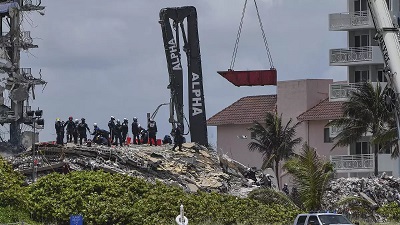
The search for survivors amid the rubble of a Surfside condominium building that partially collapsed entered a fourth day on Sunday.

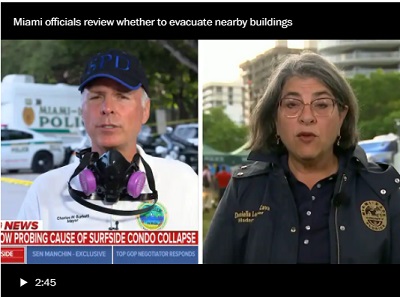
Miami-Dade County Mayor Daniella Levine Cava said the confirmed death toll in the condo collapse has risen to nine.

She said four more bodies have been found in the rubble.

As of Sunday, she said one victim died after being transported to the hospital, and eight victims were recovered on the scene. Four victims have been identified.

“My deepest condolences to the families, the friends, the communities of those who have lost their lives, and my prayers with the family and the whole community as they mourn,” she said. “We are making every effort to identify those others who have been recovered, and additionally contacting their family members as soon as we are able.”

Surfside Mayor Charles Burkett said search-and-rescue teams had made “substantial” progress overnight and that the fire that had been burning deep within the rubble seemed to have lessened as of Sunday morning.

“I was there this morning and I took a walk around the site and I did see a substantial difference from when I left at about 11 o’clock. So there is progress being made,” Burkett said on ABC’s “This Week” on Sunday.

“It’s moving along.”

Burkett said the only thing he was telling families and loved ones of those still unaccounted for was that crews planned to keep working until everyone was pulled out.

“We are working 24 hours a day, nonstop, nothing else on our mind, with the only objective of pulling their family members out of that rubble safely,” Burkett said. “We’ve got world-class search and rescue people. We’ve got the dogs, we’ve got the cranes. We are not resource poor. … We’ve had a luck problem. We just need to start to get a little more lucky right now.”

The director of emergency management for Florida on Sunday welcomed a team from the Israel Defense Forces to help with search-and-rescue efforts.

The delegation includes about 10 reserve officers, “all top experts in engineering & social care efforts,” according to IDF.

Members of task force teams from Israel and Mexico were set to assist with search-and-rescue efforts, Miami-Dade Fire Rescue Chief Alan Cominsky said on Friday.

A separate group of Israeli rescuers was at the site of the condo building within hours of the collapse, according to Cadena International, a humanitarian organization based in Miami.

– – –

A difficult decision looms as crews continue to sift through the rubble in Surfside’s condo collapse: when to shift the rescue effort to recovery.

Former Miami-Dade fire chief Dave Downey worked at the department for more than three decades and is helping the current chief make the call.

Downey said he has “held the weight” of two similar calls in Florida – one involving a collapsed parking garage, the other the 2018 Florida International University bridge collapse – and two during a mission to Haiti after the 2010 earthquake.

He said there are many elements beyond time to consider: Emergency teams must assess the effects of fire, smoke, rain and humidity and whether any gaps remain in the rubble where survivors could be waiting.

Downey said the final step of the decision-making process will be “de-layering” the collapsed floors using heavy cranes to uncover those possible gaps.

The main reason crews would switch from rescue to recovery is so they can employ new techniques to sort through the pile, he said. Any movements have to be precise at this point to avoid complicating rescue efforts or injuring someone. But in recovery mode, methods will focus on debris removal.

“Listen, we’re never going to say there’s never a chance for survivors,” he said in an interview Sunday.

He said the rescue-to-recovery decision could also apply only to specific areas of the pile, so rescue efforts could continue in one zone but move to recovery in another.

Making the call will not be easy, Downey said.

“It’s one of those things that weighs heavy,” he said. “I’ve sat in that seat.”

– – –

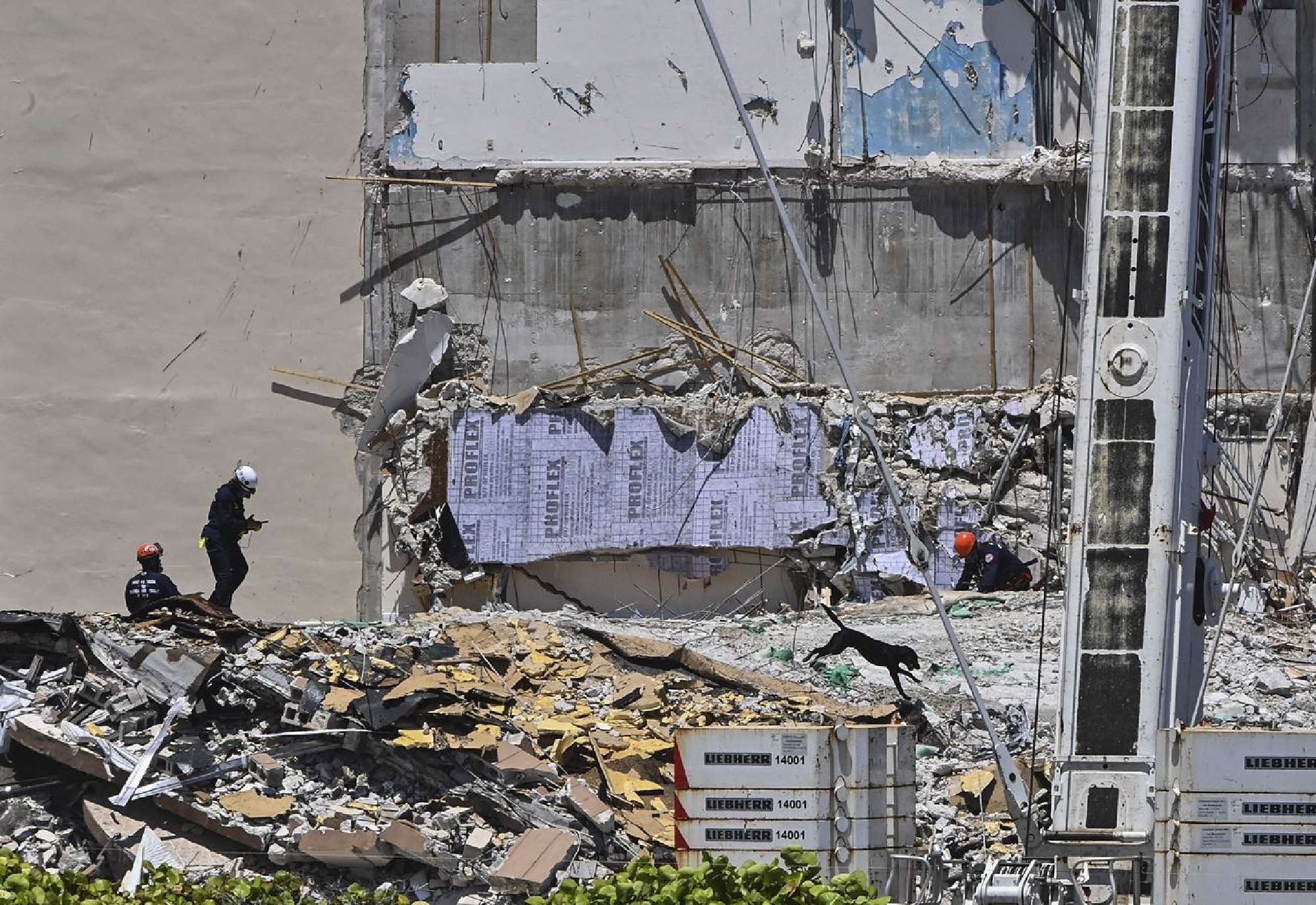
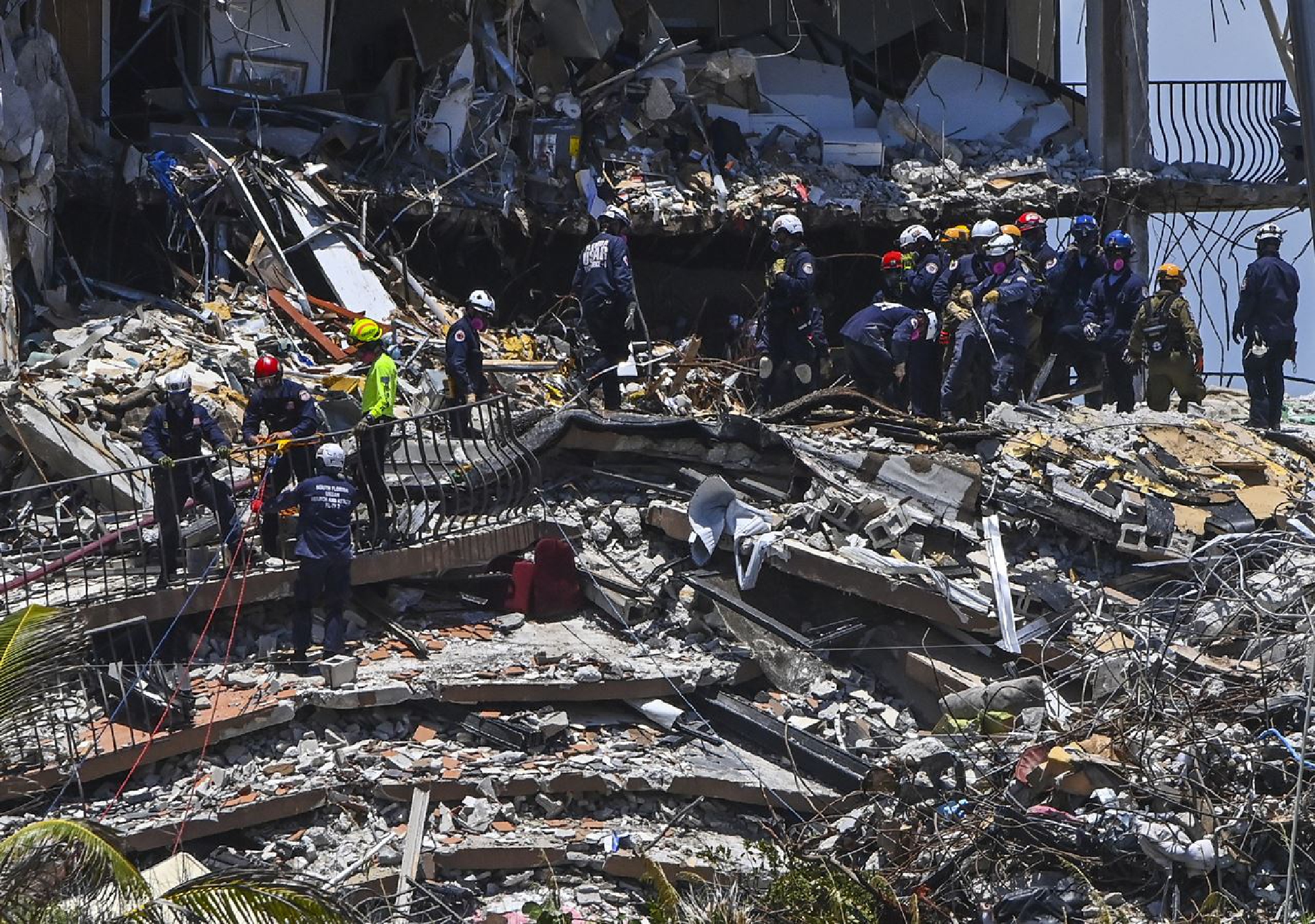
Rescue crew members and their search-and-rescue dog continue to look for survivors Sunday at the collapsed Champlain Towers South condominium building in Surfside, Fla. MUST CREDIT: Washington Post photo by Ricky Carioti.Rescue crew members and their search-and-rescue dog continue to look for survivors Sunday at the collapsed Champlain Towers South condominium building in Surfside, Fla. MUST CREDIT: Washington Post photo by Ricky Carioti.
At St. Joseph, a Catholic church a block from the condo building, worshipers gathered Sunday for Mass – but some of the regulars were absent.

Congregation members who lived in at least eight units of Champlain Towers South that collapsed Thursday were missing, according to the church. In some cases, whole families were unaccounted for.

“We pray for those still in the rubble,” deacon John Ermer said Saturday night. “We pray they survive.”

Despite the loss felt, clergy members spoke about a glimmer of hope they felt. Two congregants, Cesar and Carla Guerrero, were not in the building that night.

Marian Lopez, along with husband Alfredo and son Michael, were among those who made it out alive.

On Sunday morning, Marian had returned to the parish, helping with the Mass.

“She was in good spirits,” deacon Roberto Pineda said. “Because that’s what faith is all about. It’s about living.”

Rescue crew members search through rubble at Champlain Towers South. MUST CREDIT: Washington Post photo by Ricky Carioti.Rescue crew members search through rubble at Champlain Towers South. MUST CREDIT: Washington Post photo by Ricky Carioti.
ADVERTISEMENT

– – –

Arnie and Myriam Notkin had been missing for almost a day when, late Thursday night, their family got an unnerving call.

“We all froze,” said Jake Samuelson, the couple’s grandson. It was the Notkins’ landline phone in apartment 302 of the collapsed Champlain Towers South, he said. The one that sat next to their bed.

But only static came through when his sister picked up, he said. Two days later, that call and the slew that followed remain a mystery to them – one of many still hanging over the sudden destruction of the Surfside high-rise.

Scores of families like Samuleson’s are waiting to learn if their missing loved ones are among the dead as the search for survivors stretches into its fourth day. Samuelson, 23, said he flew into Florida from Atlanta Thursday night to join loved ones, feeling a need to see the ruined condo in person.

“We just want answers,” Samuelson said Saturday night. “If it is a sick prank we want to know if other people are experiencing this. Or if they are in the building we want to make everyone aware.”

At first, Samuelson said, his family largely dismissed the unsettling call. “My parents went to the building Thursday and saw the damage and just didn’t believe anyone could survive what had happened,” he said.

But the calls kept coming.

Samuelson, his mother, his aunt, and other loved ones went out Friday morning to provide authorities with DNA that could help identify victims, he said. When they got back that afternoon, he said, there were four missed calls from the condo landline: 11:16 a.m.,11:53 a.m.,12:13 p.m., 12:55 p.m., and 1:09 p.m. Then more: 2:59 p.m., 4:33 p.m., 6:13 p.m. Each time, his family tried to answer and got static.

They brought the matter to detectives, Samuelson said, and even their rabbi. Police confirmed that power to the condo was cut, he said, but did not address landlines, which can operate through an outage.

Eventually, they contacted local media. At 9:39 p.m. Saturday, Samuelson said, there was yet another call.

Arnie Notkin, 87, has served his community in all kinds of roles, his grandson said. He was a P.E. teacher in Miami and a Santa for the Surfside police holiday toy drive. “He made a lasting impact on all of his students who still talk about him today,” Samuelson said.

Myriam Notkin, Samuelson’s “abuela,” fled the Castro regime in Cuba as a teenager, working her way up as a banker in the United States, her grandson said. She became a Realtor, too. The Notkins have retired now, he added, but Myriam is “a woman in constant motion.”

When the coronavirus pandemic collided with Arnie’s birthday, Samuelson said, local police and fire officials helped celebrate from afar. The Notkins looked down from their condo balcony at a giant sign, colorful sign that said “HAPPY BIRTHDAY ARNIE! WE LOVE YOU.”

Samuelson said his family prays for a miracle and wants to cling to the calls as a hopeful sign rather than a fluke.

But still: “Even if they are real, do they have the capacity to save them? As of now it seems the answer would be no.”

Published : June 28, 2021

By : The Washington Post · Paulina Firozi, Hannah Knowles

UFO research institute opens in Fukushima, Japan #SootinClaimon.Com

#SootinClaimon.Com : ขอบคุณแหล่งข้อมูล : หนังสือพิมพ์ The Nation.

https://www.nationthailand.com/international/40002529

UFO research institute opens in Fukushima, Japan


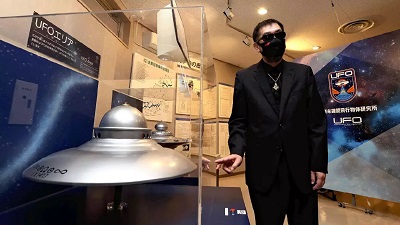
FUKUSHIMA, Japan – A research institute dedicated to studying unidentified flying objects has opened in Fukushima, with the hope of uncovering the mysteries surrounding UFOs.

The facility, known as the UFO research institute, plans to collect and analyze information on UFO sightings.

Members will be recruited from Japan and abroad. The institute is expected to contribute to the revitalization of the area as the only institution in Japan that specializes in UFOs, observers said.

Interest in UFOs is growing, and the U.S. Defense Department recently announced the launch of an investigation on UFO sightings.

The institute is housed in the UFO Fureaikan hall, which was built in 1992 by the Fukushima municipal government and Iino town, which merged with the city of Fukushima in 2008.

Takeharu Mikami, editor in chief of the monthly magazine Mu that features supernatural phenomenon, is the first director of the institute.

The institute is located near Mt. Senganmori, a mountain 462 meters above sea level and an area where there have been many reports of UFO sightings.

The institute plans to conduct a web-based survey on UFO sightings, first collecting information from the Mt. Senganmori area and then expanding to cover the entire country by the summer.

The institute plans to recruit members by appealing to those interested in UFOs and offering special privileges by classifying members into the “Earth System,” “Solar System” and “Galactic System” according to their membership fees.

The now-defunct town of Iino had been trying to revitalize itself through projects based on UFO sightings.

The Fukushima municipal government is supporting the institute in a bid to brighten up the world during the troubling times of the coronavirus pandemic, when people are feeling stagnant.

June 24, the day the institute opened, is called “UFO Day” by people interested in UFOs.

ADVERTISEMENT

“With people feeling down, I want them to look up at the sky and search for UFOs,” Mikami said. “I’d be happy if that cheers them up.”

Published : June 28, 2021

By : Syndication Washington Post, Japan News

Russia and China make war-gaming fashionable again in the West #SootinClaimon.Com

#SootinClaimon.Com : ขอบคุณแหล่งข้อมูล : หนังสือพิมพ์ The Nation.

https://www.nationthailand.com/international/40002528

Russia and China make war-gaming fashionable again in the West


Even as Russia massed over 100,000 troops on Ukraines borders in April, Andriy Zagorodnyuk felt sure President Vladimir Putin wouldnt go to war.

The former defense minister in Kyiv, who’d also spent years on projects to modernize Ukraine’s military, reasoned that Putin knew an invasion would be no walk in the park for Russia this time.

“Our task has been to make sure we can inflict unacceptable damage, a damage level so high that they will be demotivated to advance,” Zagorodnyuk said in a video interview from the Ukrainian capital.

That was a bold bet, though Ukraine had made dramatic improvements to its armed forces since a few thousand Russian troops, in uniforms with no identifiable markings, annexed Crimea without firing a shot in 2014. It could potentially have been catastrophically wrong.

Whatever Putin’s motives for the recent show of force (some of the additional troops have since pulled back), alongside tit-for-tat accusations with the U.K. over a British destroyer transit of Ukrainian waters, comparing military capabilities is difficult and becoming even more so. After a brief post-Cold War interlude in which the U.S. and its North Atlantic Treaty Organization partners had no serious peer competitors, now they do.

Many common measures of military strength are misleading. Based on defense spending alone, for example, Spain should be stronger than Turkey, NATO’s second-largest military power after the U.S.; Saudi Arabia should be easily able to swat Iran; and Britain could go toe-to-toe in any conflict with Russia. None of the above is the case.

But much more than a topline number goes into how effective a military is. Refining budget data, weighting weaponry for age and effectiveness, and accounting for intangibles such as morale, doctrine, training and geography are just some of the factors at play.

Defense dollars also overstate American strength relative to its rivals, according to Chairman of the Joint Chiefs of Staff, Gen. Mark Milley. “When everything is taken into account, and you normalize for the cost of personnel, etcetera, then you will find that the combined budgets of China and Russia do exceed that of the U.S. Department of Defense budget,” he told the House Armed Services Committee on June 23.

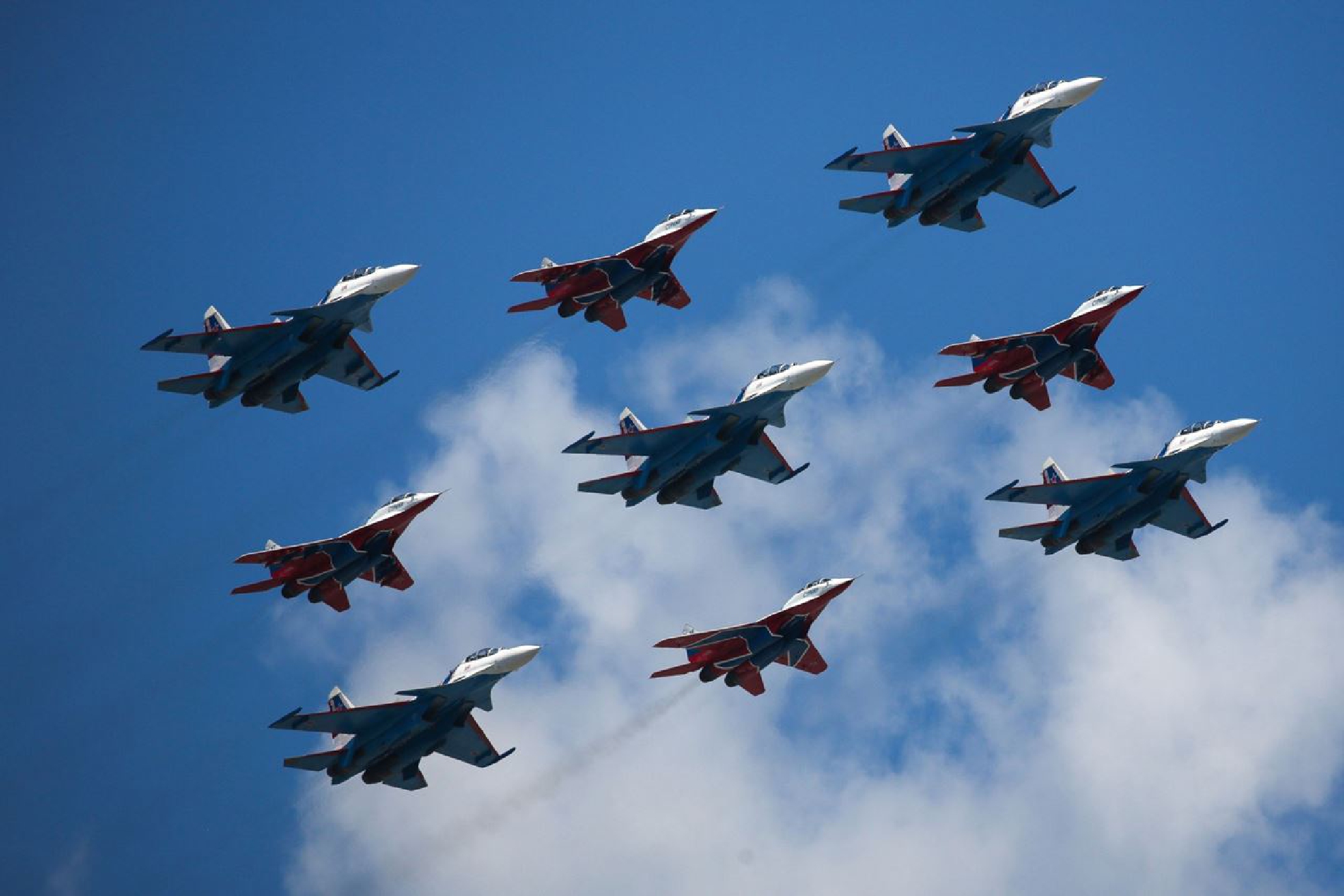
The Russian Knights and Strizhi aerobatic units fly Sukhoi Su-30SM and Mikoyan MiG-29 fighter jets during the victory day parade in Moscow on June 24, 2020. MUST CREDIT: Bloomberg photo by Andrey Rudakov.The Russian Knights and Strizhi aerobatic units fly Sukhoi Su-30SM and Mikoyan MiG-29 fighter jets during the victory day parade in Moscow on June 24, 2020. MUST CREDIT: Bloomberg photo by Andrey Rudakov.
According to their declared defense budgets, China spends about a third of the U.S. administration’s $715 billion request for the coming year and Russia one tenth.

For sure, governments and their intelligence agencies know more than they make public, and generals have motives for exaggerating the threats they face. Milley said in his testimony he would have to go into a classified session if the committee wanted him to explain the math behind his claim. His office also declined to provide details.

In March, Milley’s Chinese counterpart as top uniformed officer, Central Military Commission Vice Chairman Xu Qiliang, made a similar appeal to his legislature. He called for improved capabilities to attain “invincibility” against the threat of conflict with the U.S.

A U.S. State Department index comparing defense budgets around the world stresses the lack of clarity and gives broad spreads for each country – from $228 billion to $433 billion for China, and $66.5 billion to $159 billion for Russia in 2017, the latest available data.

Applying complex sets of information to particular geographies and scenarios is an industry that draws on hundreds of thousands of analysts in defense and intelligence agencies around the world.

Those services have been in growing demand since 2014, in large part because of Russia’s military modernization and its hybrid war in Ukraine, according to David Shlapak, a senior defense researcher at the Rand Corporation, a California-based think tank that works closely on scenario planning with the Pentagon.”When we started work on a Russia-NATO scenario in 2014, the first thing we did was go look at the literature – what we found was no one had thought seriously about a Russia-NATO war for 20 years,” says Shlapak, at the time co-director of the Rand Center for Gaming. “We were in Afghanistan, Iraq – the services had their hands full.”

China’s rapid military development, with a laser-like focus on challenging U.S. capabilities in the South China Sea and Taiwan Strait, has also contributed. Researchers at the University of Sydney warned last year that Chinese missiles could wipe out U.S. bases in the “opening hours” of any conflict. In October, President Xi Jinping rolled out the new People’s Liberation Army Rocket Force as part of a massive military parade.

And it isn’t just Ukraine or the U.S. that are rethinking their security postures. In March, a British defense and security review cited increased “global competition” and modernization by other nuclear powers to justify a controversial decision to increase the cap on Britain’s atomic warhead stockpile to 260 from 225. The decision reversed decades of nuclear arms reduction; Britain currently has 195 warheads, down from a Cold War peak of 520, according to a parliamentary briefing paper.

Russia, in particular, is developing new nuclear platforms and Putin has boasted of fielding hypersonic glide missiles that would be all but impossible to intercept, although their actual capabilities are essentially unknown.

One reason official data may understate Chinese defense spending is that it excludes some items the U.S. doesn’t, such as research and development, according to Fenella McGerty, a defense finance specialist at the International Institute for Strategic Studies in London. Exchange rate comparisons also inflate U.S. dominance because it gets less bang for its dollar — it’s a lot cheaper for Russia to build a plane, or for China to pay a soldier.

Attempts have been made – including by the United Nations in 1984 – to develop a purchasing power parity index that would make defense sector comparisons more reliable, but so far without success. That’s what McGerty is working on now and “it’s really hard,” she says. Much of the data needed is classified, disinformation is rampant, and there’s little market pricing to rely on.

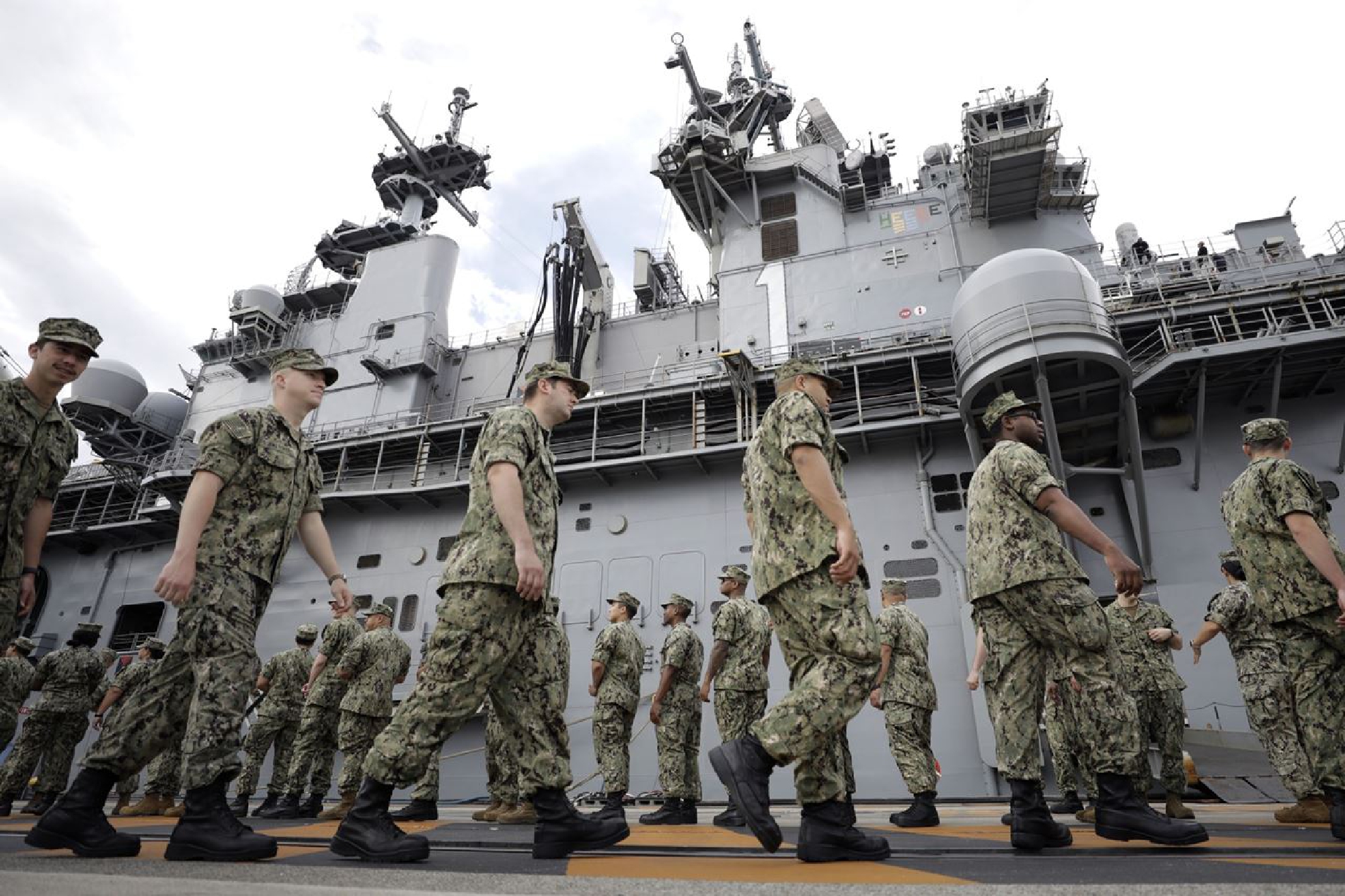
U.S. military personnel gather to board the USS Wasp aircraft carrier ahead of the Memorial Day address by President Trump at the U.S. naval base in Yokosuka, Kanagawa Prefecture, Japan, on May 28, 2019. MUST CREDIT: Bloomberg photo by Kiyoshi Ota.U.S. military personnel gather to board the USS Wasp aircraft carrier ahead of the Memorial Day address by President Trump at the U.S. naval base in Yokosuka, Kanagawa Prefecture, Japan, on May 28, 2019. MUST CREDIT: Bloomberg photo by Kiyoshi Ota.
ADVERTISEMENT

Comparing hardware isn’t much easier. In 2016, the U.S. Army’s Strategic Studies Group (now called the Future Studies Group) commissioned the Frederick S. Pardee Center for International Futures at the University of Denver to produce a weighted index of heavy weaponry. Pardee differentiated between generations of combat aircraft, for example, scoring them for effectiveness. Within that, they bumped up older aircraft supplied with new avionics and missiles.”Counts are interesting,” says Collin Meisel, who runs the program. “But when we talk about Chinese aircraft carriers, they have ramps that are dependent on wind and all kinds of other things. They aren’t nearly as capable as U.S. aircraft carriers.”

Pardee came up with an overall weighted index for each country’s share of global fire power: Iran scored just ahead of Saudi Arabia, Turkey twice as high as Spain, and Russia four times above the U.K.

Russia also outscored Ukraine by a factor of 12. The index was a first attempt and needs updating, Meisel cautioned.

To figure out how a 2021 Ukraine-Russia conflict would pan out, you’d also have to look at doctrines, training, morale, electronic war-fighting capabilities, command and control systems and, above all, geography, says Rand’s Shlapak. For the 2014 NATO-Russia war game in the Baltic States, he said, “we had people in Latvia and Estonia literally driving the roads we thought the Russians would use.” The project concluded Russia would win before NATO had a chance to respond.

Ukraine’s military has to plan for the possibility of a Russian assault from Belarus to the north, Russia and the separatist Donbas territories in the east, Crimea and the Black Sea to the south and Moldova’s separatist territory of Transnistria, to the west.

Ukraine has come a long way since 2014, when corruption had plundered its arsenals, some top commanders worked for Moscow and an antiquated doctrine left it paralyzed before Russia’s hybrid tactics, says Zagorodnyuk. A tech entrepreneur at the time, he recalls struggling to produce makeshift heaters for troops freezing on barricades – only to find out later the military had 25,000 unused heaters in storage.While the danger from Russia remains, a new doctrine and systems in Ukraine, more than 200,000 regular troops, an officer corps that has largely passed through NATO training, and better equipment mean it would be “relatively easy to get in, but very difficult to get out,” Zagorodnyuk said.

Maybe, except Russia’s military has improved since 2014, too. Says Yohann Michel, who covers land warfare for the Military Balance, the tome of comparative military data the IISS has published since 1959: “The capabilities gap has probably grown.”

Published : June 28, 2021

By : Syndication Washington Post, Bloomberg · Marc Champion, Daryna Krasnolutska

Now booming on Moscows black market: Fake vaccine certificates #SootinClaimon.Com

#SootinClaimon.Com : ขอบคุณแหล่งข้อมูล : หนังสือพิมพ์ The Nation.

https://www.nationthailand.com/international/40002526

Now booming on Moscows black market: Fake vaccine certificates


MOSCOW – It took just a few hours for fraudsters to act after Moscows mayor announced this month that coronavirus vaccinations were compulsory for most of the citys service-sector employees.

Now booming on Moscows black market: Fake vaccine certificates

Accounts advertising the availability of fake coronavirus vaccination certificates suddenly appeared as social media followers of Russians who identified as working at restaurants or bars.

A new black market was born with a deep potential clientele: the many Russians still hesitant to be vaccinated even amid a surge in coronavirus cases.

One bartender, who provided The Washington Post a copy of his private Instagram messages, sent a query to one account about the cost of a fraudulent vaccination certificate.

The response was immediate: The price was the equivalent of about $25 and the bartender just needed to provide his personal information. The bartender spoke on the condition of anonymity to discuss engaging with an illegal operation.

The increase in the number of people selling bogus vaccination certificates comes as Moscow has ordered 60 percent of workers who interact with the public – teachers, taxi drivers, salespeople and others – to get vaccinated or get different jobs. Their employers are subject to hefty fines for noncompliance.

The new rules,which begin taking effect Monday, also require that restaurants and bars limit admission to people with a QR code confirming their vaccination or proof of a negative PCR coronavirus test within the previous three days. Moscow authorities have further warned that hospitals will deny routine medical care to the unvaccinated.

The extraordinary measures – Moscow now has among the strictest vaccine rules – flow from Russia’s inability to gets its arms around the pandemic despite two homegrown vaccines, led by Sputnik V, that are widely available and free. Russia’s latest coronavirus wave also shows how vaccine hesitancy threatens to prolong the pandemic worldwide.

Just 15 percent of Muscovites had been vaccinated, Mayor Sergei Sobyanin said on June 16. The vaccine rates for all of Russia is lower, 11.5 percent – below anywhere in Europe except North Macedonia, according to Our World in Data. The United States has fully vaccinated more than 45 percent of its population.

But Moscow’s push to vaccinate its citizens has left many bitter.

Some people say they are more fearful of being vaccinated than they are of contracting the coronavirus. That makes buying a fake vaccination certificate an attractive option to try to beat the system.

“I’ve been partying since last summer, and I’ve been interacting with a lot of people, including those who actually had covid-19,” said Anna, a 23-year-old university student who declined to provide her surname to speak candidly because she had considered buying a false vaccination certificate, then decided against it.

“I didn’t get sick. I don’t have antibodies. So, I just made a conclusion that maybe I’m just not prone to getting it. Why should I get the vaccine if my body works well without it?” she added.”I just don’t trust it that much.”

Sobyanin said that about 90 percent of the new Moscow cases are the Delta variant. Infections in the city of about 12 million people have spiked to more than 8,500 per day this month, according to Russia’s coronavirus headquarters, and 98 coronavirus-related deaths were reported Friday in Moscow, a single-day record for the city.

The “explosive growth,” as Sobyanin put it, has led to sweeping new restrictions that will make it nearly impossible for the unvaccinated to work in most places or eat in any restaurants.

More than a dozen regions across Russia have followed Moscow’s lead in imposing some mandatory vaccination standards. Resorts in Sochi, the popular summer destination on the Black Sea, will be closed to unvaccinated vacationers as of Aug. 1.

By mid-June, there were 500 newly registered domain names for selling fake vaccination certificates, according to Forbes. Certificates also are sold on the messaging app Telegram and on Dark Web forums.

Some of the accounts purporting to sell the certificates have been deleted ahead of a promised crackdown by authorities.

Moscow tried to foil counterfeiters by insisting on registering vaccination certificates for QR codes – those square bar code mazes of lines and boxes – rather than just a physical document.

But, for a higher cost on the black market, even a vaccination certificate purchased illegally can be registered online.

It works like this: The seller of the fake certificate contacts a medical professional with access to vaccine doses, according to a flight attendant who is in the process of obtaining a fake certificate. She spoke on the condition of anonymity to protect her employment.

The medic then pours out a vial of the first dose and attaches the vial’s serial number to the client’s name in the state system, she said. Three weeks later, the same thing happens for the second shot. The vaccine certificate is then ready and is – for all intents and purposes – real.

Anna, the university student, said that while she was thinking about buying a fake vaccination certificate, she’s fearful of getting caught now that the schemes are in the spotlight. Moscow authorities launched 24 criminal cases against suspected vendors of fake vaccination certificates and detained several couriers delivering them to clients.

Russia’s internet regulator, Roskomnadzor, said it shut down 150 web pages and accounts selling phony documents. The Russian Interior Ministry said the average price of a fake certificate was up to $66.

Russia was the first country to authorize a coronavirus vaccine when it approved Sputnik V for mass use last August. But although the vaccine has been purchased by more than 60 countries, 62 percent of Russians polled in April said they would not take the vaccine, according to the Levada Center, an independent polling and research institute. Meanwhile, in a May survey by Levada, 55 percent of Russians who participated said they were not afraid of contracting the coronavirus.

Russian actor Egor Beroev, speaking at a prestigious television award ceremony on Tuesday, wore a yellow star on the lapel of his jacket and compared mandatory vaccinations to Nazi identification marks for Jews during World War II.

“Today I woke up in a world where it has become an identification mark: Are you a citizen or will you live in a reservation? Will you be able to go to venues and events? Will you enjoy all your rights and benefits?” Beroev said. “I have a question: How could we, the descendants of the (World War II) winners, allow this to happen?”

A troubled public relations campaign is to blame for Russians’ distrust of vaccines, said Pavel Volchkov, the head of the Genome Engineering Lab at the Moscow Institute of Physics and Technology.

He pointed to Russian state television channels highlighting extremely rare adverse reactions for some individuals abroad who received AstraZeneca and Pfizer-BioNTech vaccines. Though those vaccines are not available in Russia, the news reporting contributed to a fear of all vaccines, he said.

Most of Russia’s coronavirus restrictions were lifted a year ago and the few mandates that remained were rarely enforced. That created an environment in which people lacked the incentive to get vaccinated because they thought the coronavirus had been defeated, said the researcher Sergey Kolesnikov, who studies Russia’s health-care system at the Russian Academy of Sciences.

“I had a wonderful proposal to only sell vodka and tobacco to people who show you the vaccine certificate,” Kolesnikov said. “That’s a joke, of course. But then more than 50 percent of the population would have to get vaccinated.”

“Nihilism” is to blame for the surge in infections, contended Kremlin spokesman Dmitry Peskov, who, for a time last year, wore a protective badge called a “virus blocker” – a gadget with chlorine dioxide that purports to help shield against pathogens despite no scientific evidence that it works.

President Vladimir Putin himself has never appeared publicly in a mask. One missed opportunity to boost trust in the vaccine was the secrecy around his vaccination in March. The 68-year-old Putin said he would get vaccinated, but no photos or videos of his being vaccinated were released. The Kremlin would not reveal even which of the Russian vaccines Putin received.

ADVERTISEMENT

“There’s a trigger, especially among the younger generation here, that if the government says to do something, you need to do the opposite,” said Aleksey Lavrinenko, a 30-year-old Muscovite.

Lavrinenko got the Sputnik V vaccine the day after Sobyanin’s mandate, waiting in an hour-long line at a vaccination center in a luxury shopping center on Red Square. Like others, he received a free ice cream cone as a post-vaccination reward.

Moscow also has tried encouraged people to get vaccinated with lotteries for a free car or an apartment.

Lavrinenko said he got the vaccine only because he feared losing his restaurant job without it. Otherwise, he said, he probably would not have taken the shot.

“It seems like the population here is split in half,” he said. “There are people who are saying that, ‘Yes, vaccination is needed.’ And the other half is like, ‘No, we’ll all die from it.’ There are people who just categorically don’t want to do it and won’t.”

Published : June 28, 2021

By : The Washington Post · Isabelle Khurshudyan

U.S. first lady likely to attend Olympic opening ceremony #SootinClaimon.Com

#SootinClaimon.Com : ขอบคุณแหล่งข้อมูล : หนังสือพิมพ์ The Nation.

https://www.nationthailand.com/international/40002525

U.S. first lady likely to attend Olympic opening ceremony


The Japanese and U.S. governments are making arrangements for a visit to Japan by U.S. first lady Jill Biden that would coincide with the opening ceremony of the Tokyo Olympics on July 23, The Yomiuri Shimbun has learned.

U.S. first lady likely to attend Olympic opening ceremony

The two sides are looking into having the first lady attend the opening ceremony as well as meet with Prime Minister Yoshihide Suga and other officials during her stay, according to sources.

President Joe Biden will not be attending the ceremony, but the dispatching of his wife in his place sends a message of the importance of the relationship with Japan.

Jill Biden made her diplomatic “debut” earlier this month when she accompanied her husband at the Group of Seven summit in England. The Bidens met British Prime Minister Boris Johnson and his wife and other leaders.

The U.S. government sent then-Vice President Mike Pence to the 2018 Winter Olympics in Pyeongchang, South Korea, and then-Secretary of State John Kerry to the 2016 Rio de Janeiro Olympics.

When it comes to the first lady, Michelle Obama, the wife of former President Barack Obama, attended the opening ceremony of the London Olympics in 2012.

As for the upcoming opening ceremony, French President Emmanuel Macron, whose country will host the 2024 Paris Olympics and Paralympics, has expressed his intention to attend.

Published : June 28, 2021

By : Syndication Washington Post, Japan News

Sydney extends lockdown to more areas as local Covid-19 continues to spread. #SootinClaimon.Com
#SootinClaimon.Com : ขอบคุณแหล่งข้อมูล : หนังสือพิมพ์ The Nation.

https://www.nationthailand.com/international/40002514

Sydney extends lockdown to more areas as local Covid-19 continues to spread.

From 6:00 p.m. on Saturday, a two-week lockdown has been imposed on Greater Sydney and some surrounding areas including Wollongong, Blue Mountains and the Central Coast amid transmission risks of the Delta variant.

Australia’s most populous state of New South Wales (NSW) on Saturday extended lockdown to more areas as local transmission in the biggest city of Sydney still increased.
From 6:00 p.m. on Saturday, a two-week lockdown has been imposed on Greater Sydney and some surrounding areas including Wollongong, Blue Mountains and the Central Coast, extending from the four local government areas announced on Friday.
Under the new restrictions, which will last until midnight of July 9, people are only able to get out home for reasons including having to work or get educated outside the home, seeking medical attention, and purchasing essential goods and services. Sydney extends lockdown to more areas as local Covid-19 continues to spread.Sydney extends lockdown to more areas as local Covid-19 continues to spread.
Community sport was not permitted and weddings will be banned from 11:59 p.m. Sunday, while funerals will be limited to one person per 4 square meters with a cap of 100 people. Masks remained mandatory for all indoor venues except home.
NSW Premier Gladys Berejiklian told a press conference on Saturday afternoon that the authorities tightened the restrictions following health advice in a bid to curb the transmission given the high infectiousness of the Delta variant.
“When you have a contagious variant like the Delta virus, a three-day doesn’t work. If we’re going to do this, we need to do it properly,” said Berejiklian.

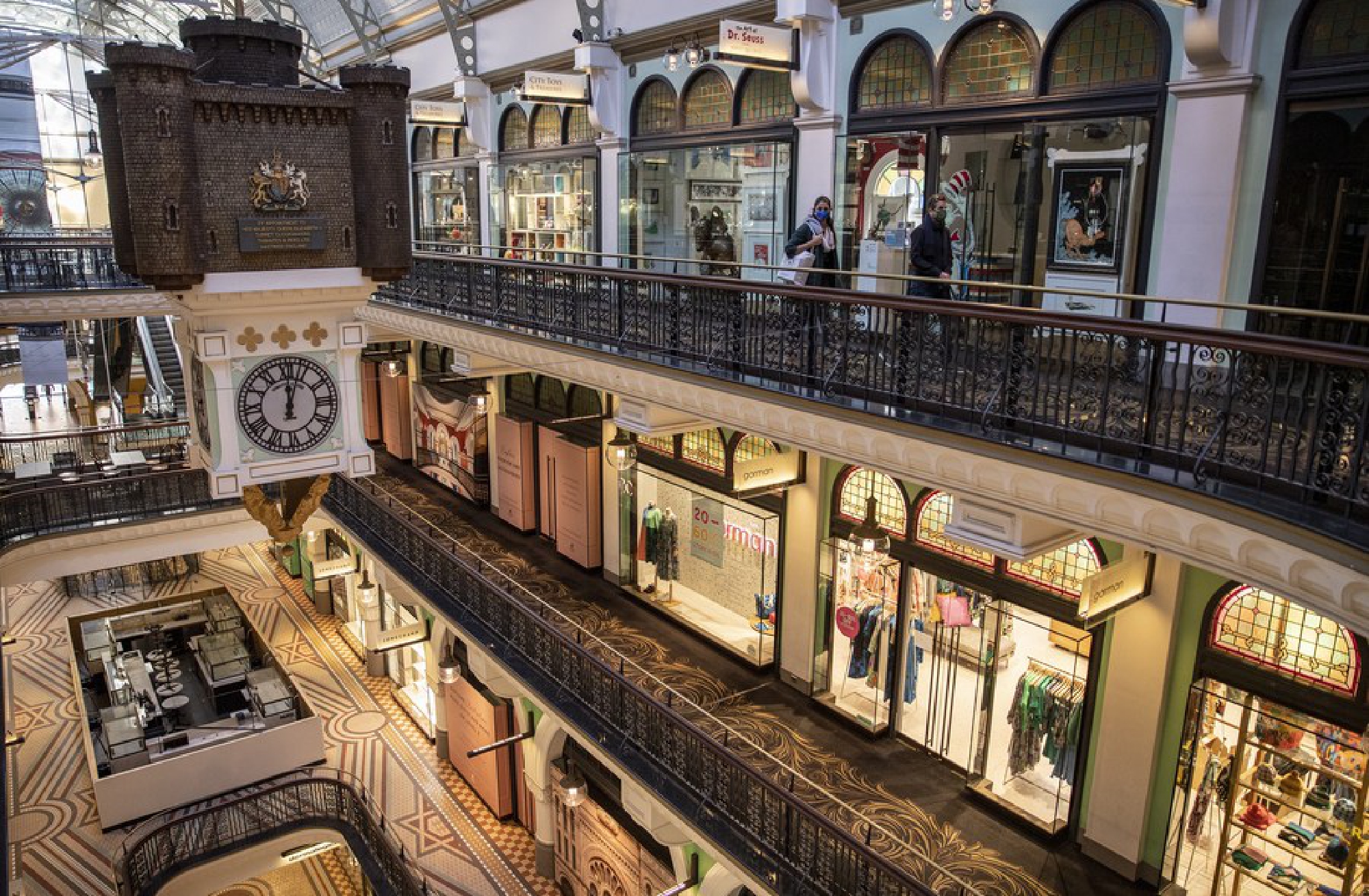
A shopping mall is visited by few customers amid the COVID-19 pandemic in Sydney, Australia, on June 26, 2021. (Xinhua/Bai Xuefei)
“If after seven days there’s a dramatic change in the trend, we’ll obviously evaluate the situation. But at this stage, the best health advice we have is that a two-week period or until midnight on Friday, July 9, is necessary, in order to make sure that we get to our target of zero community transmission, which has always been our target from the beginning of the pandemic.”
Even for those who already left Greater Sydney, so long as they have been in the zone since June 21, they have to follow the stay-at-home orders for that period for the 14 days since they left.
The state’s decision came after the state saw 82 locally acquired COVID-19 cases in total in the latest outbreak since June 16, when the index case for the Bondi cluster, a driver who transported international flight crew was found to be infected with the Delta variant. Sydney extends lockdown to more areas as local Covid-19 continues to spread.Sydney extends lockdown to more areas as local Covid-19 continues to spread.

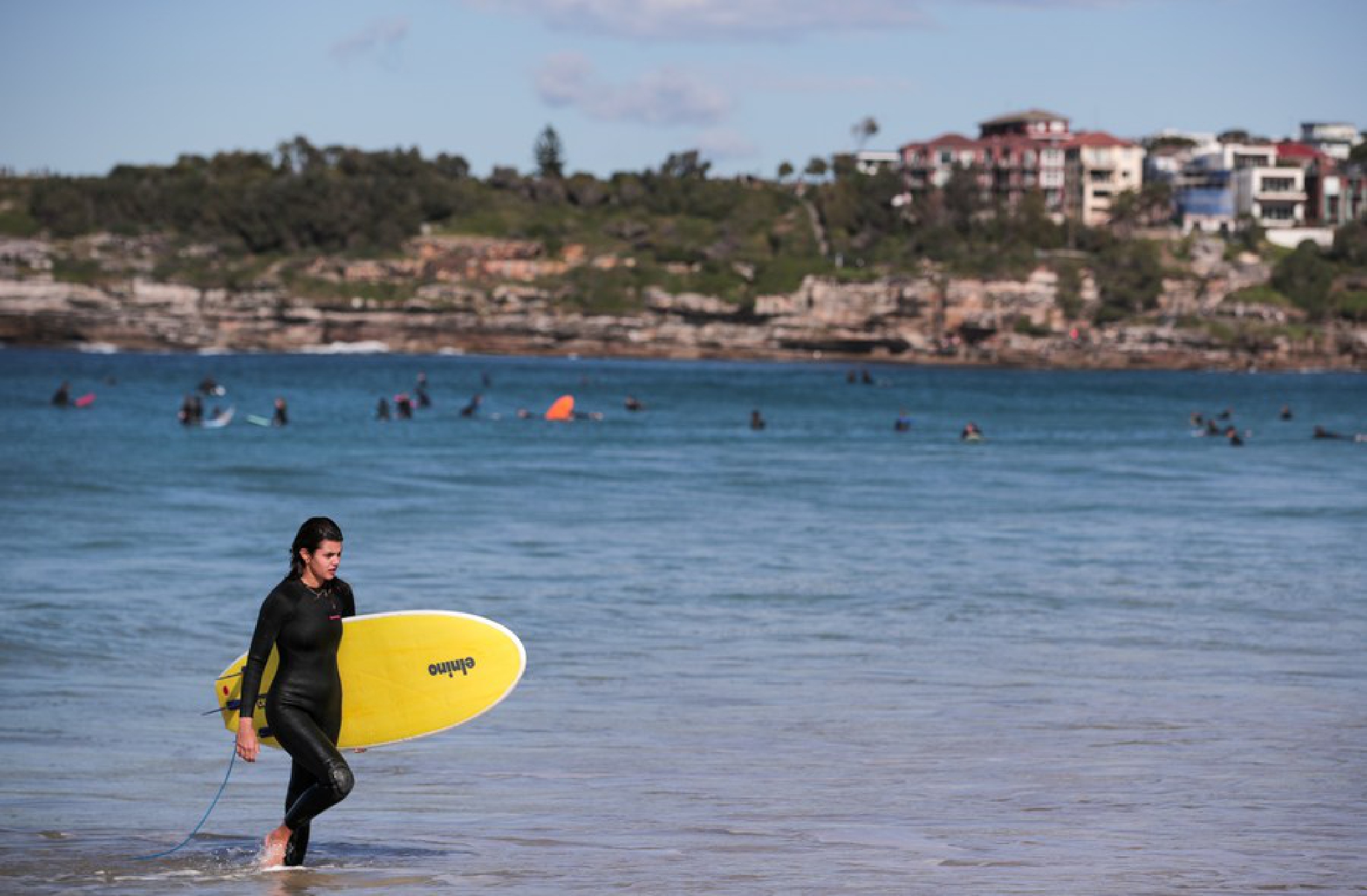
Surfers are seen at Bondi Beach in Sydney, Australia, on June 26, 2021. (Xinhua/Bai Xuefei)
The daily increase recorded on Saturday was 29 local cases in the 24 hours to 8:00 p.m. Friday night, among which 17 cases were announced on Friday morning.
Berejiklian said an earlier end of the two-week lockdown if the state could realize zero local transmission is unlikely, and she expected more cases in the coming days with the increasing exposure sites and public transport routes.
“The best advice from health is that we should brace ourselves for additional cases. Because the contact tracers have done such a good job in identifying potential cases and their close contacts, just from those numbers alone and how transmissible the virus is, we know that the numbers will go up in the next few days,” she said.

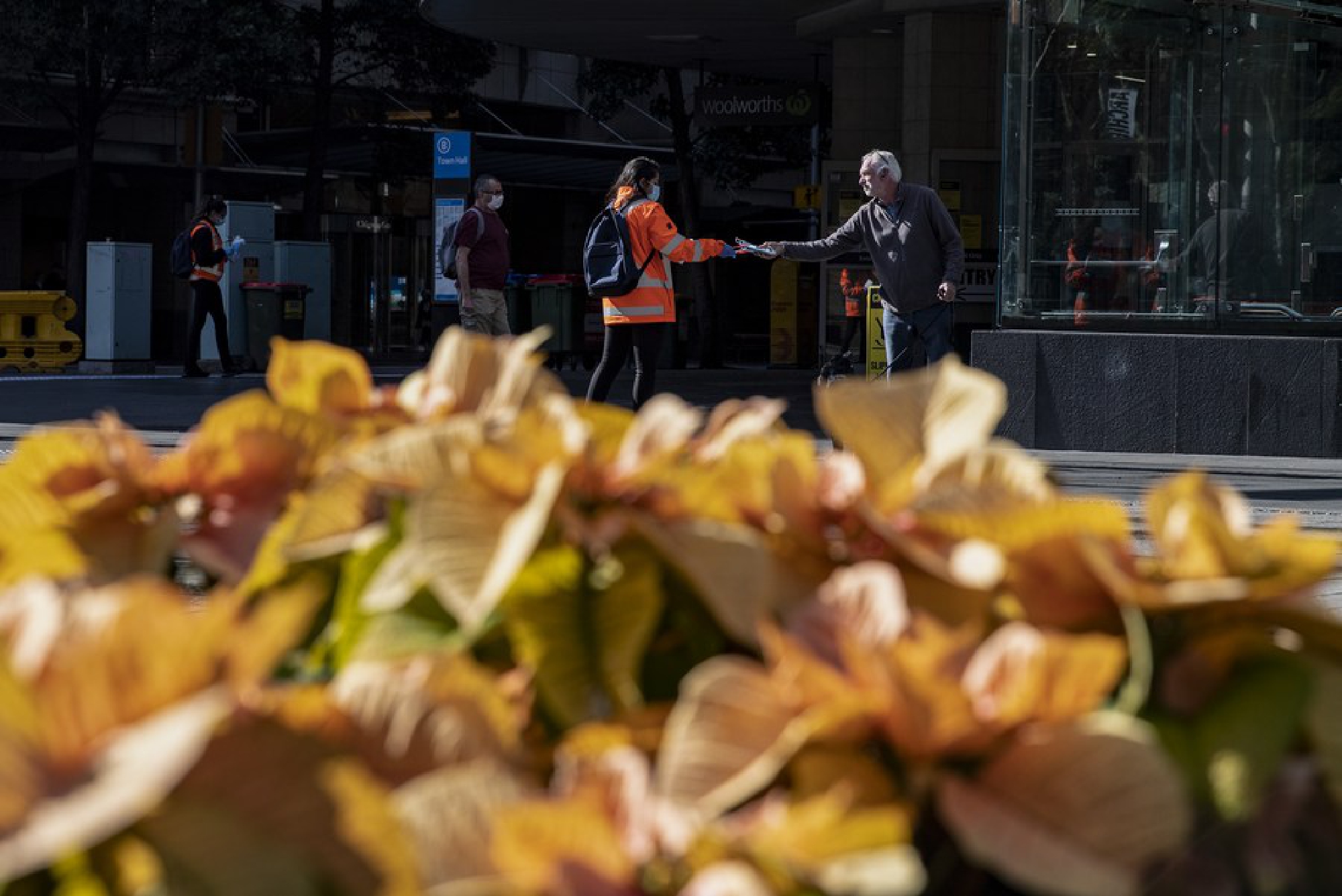
Free face masks are provided on the streets in Sydney CBD, Australia, on June 26, 2021. (Xinhua/Bai Xuefei)
Berejiklian also flagged to offer financial support for local businesses and people in need.
“So nobody should feel stressed or pressured to break any of the rules because of their financial situation. The NSW government will be there to support businesses and, of course, the Commonwealth support to households kicks in as well,” she said.
“We will provide that information and that detail in the next few days.”
With the NSW’s latest restriction, the state of Tasmania also decided to close borders to any travelers from the Greater Sydney area from 4:00 p.m. Saturday.  Sydney extends lockdown to more areas as local Covid-19 continues to spread.Sydney extends lockdown to more areas as local Covid-19 continues to spread.Sydney extends lockdown to more areas as local Covid-19 continues to spread.Sydney extends lockdown to more areas as local Covid-19 continues to spread.

ADVERTISEMENT

Published : June 27, 2021

By : Xinhua