The Embassy of the Republic of Korea in Thailand and the Mission of the Republic of Korea to ASEAN #SootinClaimon.Com

#SootinClaimon.Com : ขอบคุณแหล่งข้อมูล : หนังสือพิมพ์ The Nation.

https://www.nationthailand.com/international/40002405

The Embassy of the Republic of Korea in Thailand and the Mission of the Republic of Korea to ASEAN


The Embassy of the Republic of Korea in Thailand and the Mission of the Republic of Korea to ASEAN co-hosted the New Southern Policy Connectivity Forum on 22 June
The Embassy of the Republic of Korea in Thailand and the Mission of the Republic of Korea to ASEAN

The Embassy of the Republic of Korea in Thailand and the Mission of the Republic of Korea to ASEAN co-hosted the New Southern Policy Connectivity Forum on 22 June

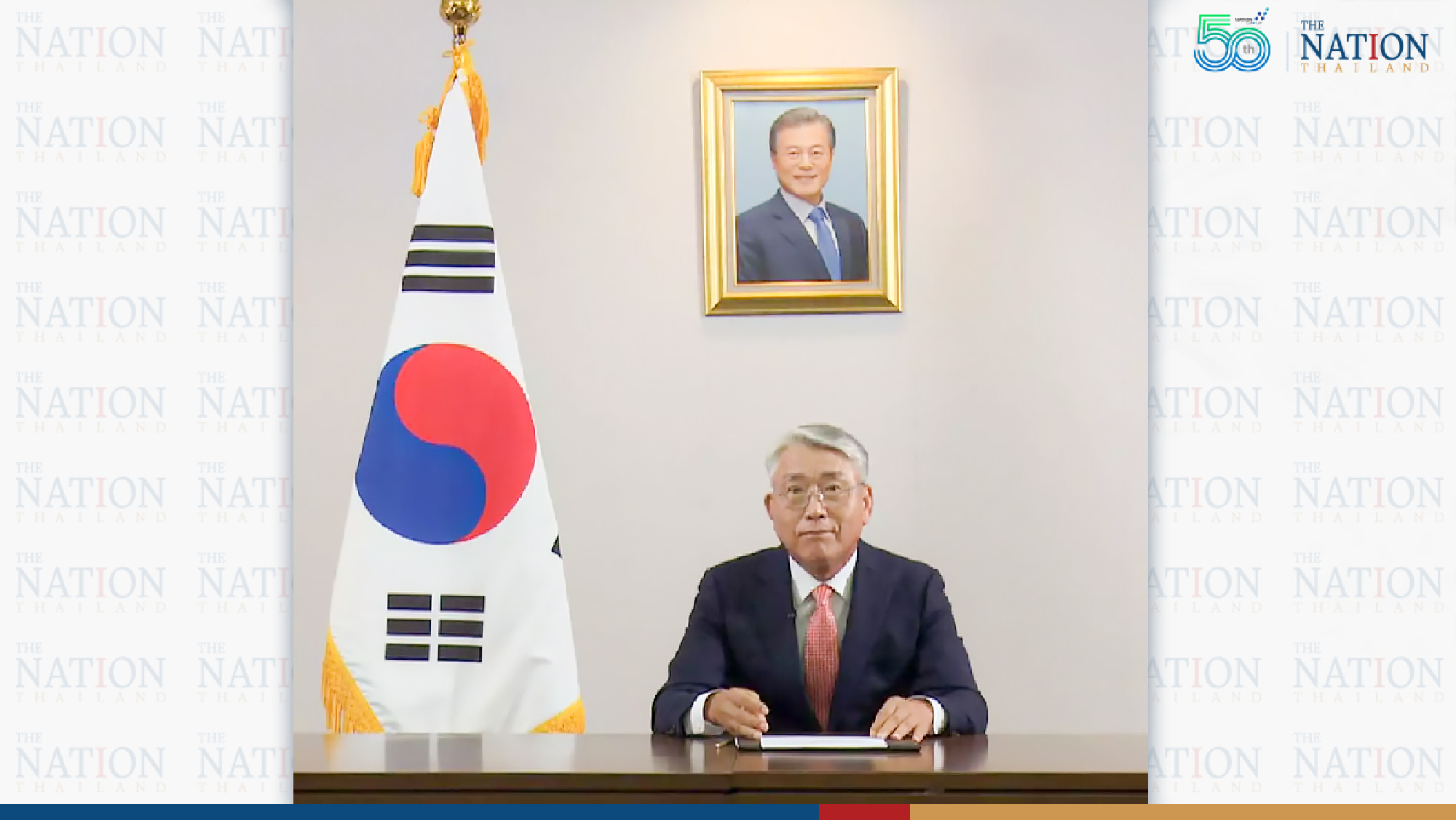
1. The Embassy of the Republic of Korea in Thailand and the Mission of the Republic of Korea to ASEAN co-hosted the New Southern Policy (NSP) Connectivity Forum entitled “Strengthening Partnership for Connectivity in Thailand, Mekong and ASEAN,” under the sponsorship of the Ministry of Foreign Affairs of Thailand, on 22 June via video conference.
The Embassy of the Republic of Korea in Thailand and the Mission of the Republic of Korea to ASEANThe Embassy of the Republic of Korea in Thailand and the Mission of the Republic of Korea to ASEAN2. The New Southern Policy Connectivity Forum has been launched this year, in realization of the New Southern Policy Plus, to take stock of ROK-ASEAN joint efforts on connectivity and discuss ways to advance them. The first NSP Connectivity Forum, which aims to discuss enhancing connectivity on a country-specific and also region-oriented basis, was held in Thailand and has played a leading role in strengthening connectivity in the Mekong sub-region, ASEAN and beyond.

3. H.E. Lee Wook-heon, Ambassador of the Republic of Korea to Thailand, in his Welcoming Remarks, suggested ways to cooperate on enhanced connectivity at three levels – Thailand, Mekong and ASEAN – emphasizing that connectivity has assumed even more importance since the COVID-19 pandemic. He emphasized that recovery and promotion of connectivity not only at the physical and institutional level but at the people-to-people level is a key task.

– He proposed deepening pragmatic cooperation with the Bio-Circular-Green (BCG) Economy Model and the Eastern Economic Corridor (EEC) of Thailand in areas such as smart cities and New and Renewable Energy, and promoting Mekong sub-region connectivity through the Mekong-ROK Cooperation Fund (MKCF) and the ROK’s contribution to ACMECS.

– He reiterated the importance of deepening collaboration on enhanced people-to-people connectivity between the ROK and ASEAN, underlining the importance of expanding opportunities for the future generations of the ROK and ASEAN to interact with each other and to gain a deeper mutual understanding,.

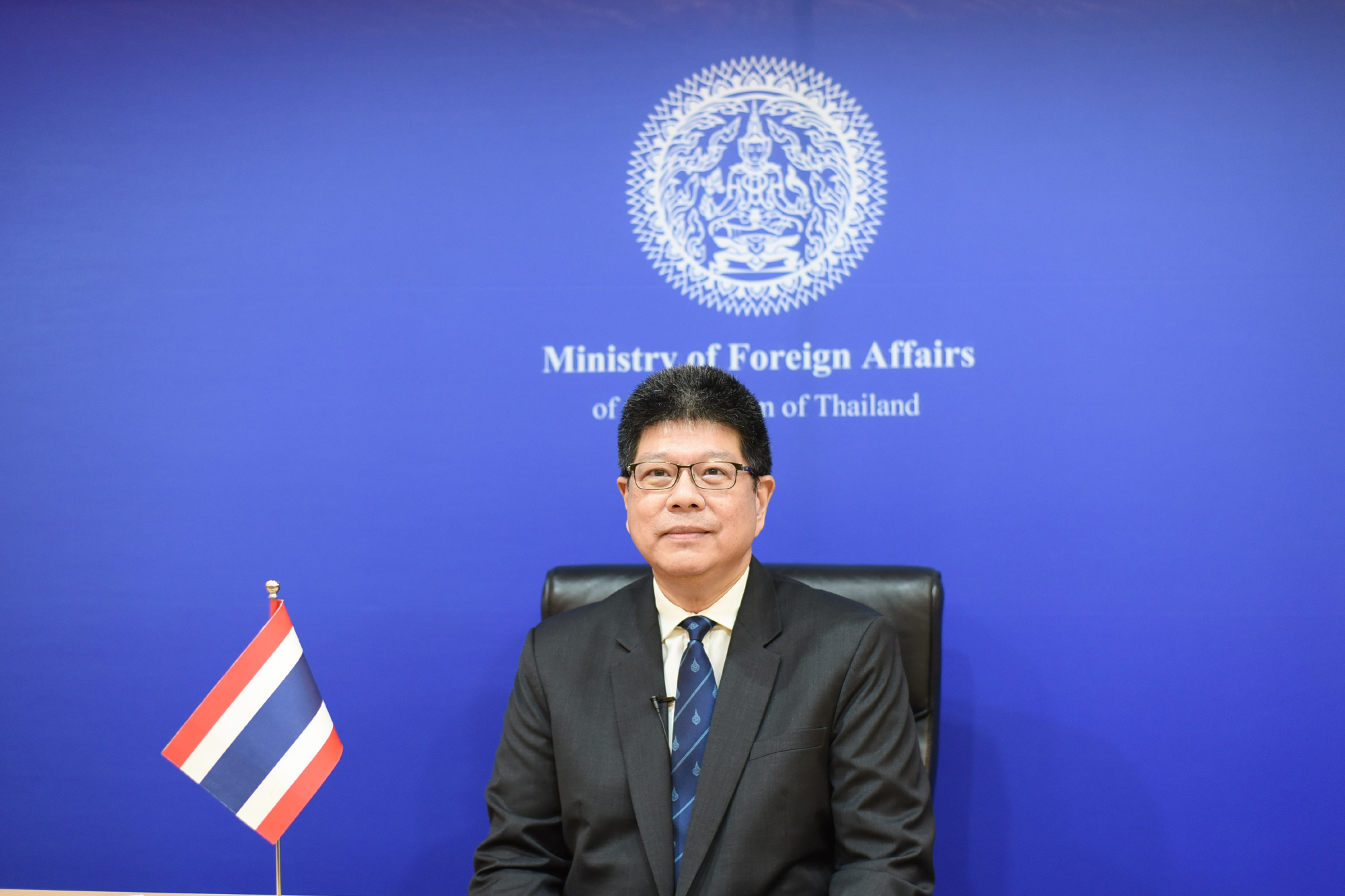
4. H.E. Thani Thongphakdi, Permanent Secretary of the Ministry of Foreign Affairs of Thailand, in his Congratulatory Message, noted the relevancy of the NSP Connectivity Forum, emphasizing that COVID-19 has served to emphasize the importance of interconnectedness and cooperation.

– He explained that as connectivity is at the top of Thailand’s agenda and also one of the priority areas under the ASEAN Outlook on the Indo-Pacific or AOIP, Thailand has proactively pushed forward the “Connecting the Connectivities” initiative in order to enhance synergies with various regional strategies including the New Southern Policy, whilst also looking forward to cooperation with partners for the effective implementation of the ASEAN Comprehensive Recovery Framework.

– He underlined that it should be our common goal to enhance people’s livelihoods, well-being and welfare with no one left behind, as reflected in the NSP vision to build a “people-centered community of peace and prosperity.” He proposed that the ROK, Thailand and ASEAN can cooperate further, in particular, in science, technology and innovation, smart infrastructure and smart cities, green development, digital trade and digital connectivity.
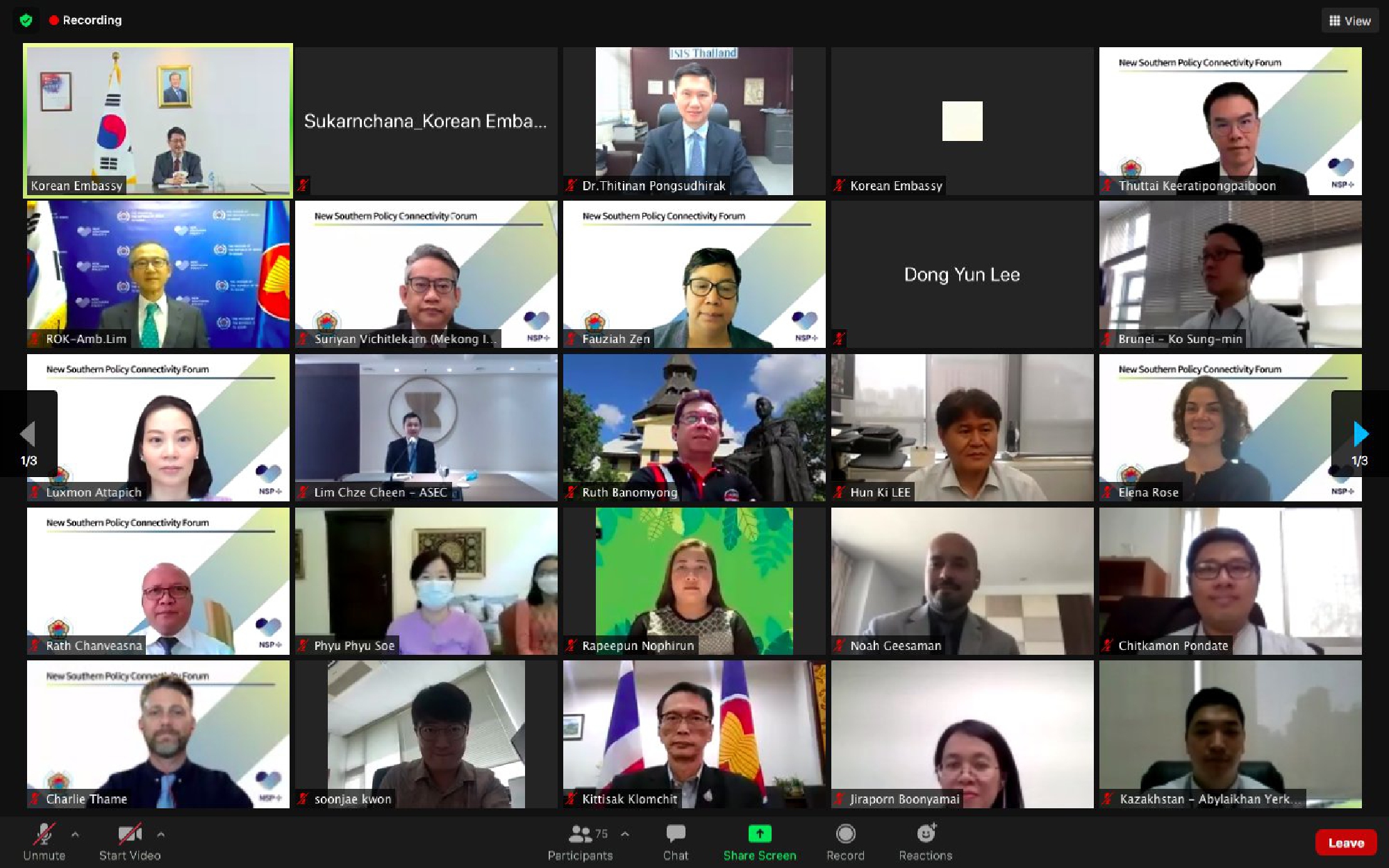
The Embassy of the Republic of Korea in Thailand and the Mission of the Republic of Korea to ASEANThe Embassy of the Republic of Korea in Thailand and the Mission of the Republic of Korea to ASEAN5. Session 1, under the theme of “Connectivity and Implementation of the MPAC 2025 in Thailand,” was attended by the ASEAN Secretariat, the Office of the National Economic and Social Development Council, the Institute of Security and International Studies at Chulalongkorn University and the Eastern Economic Corridor Office, providing an opportunity to review and share information on policies and main projects of Thailand on connectivity and recommendations on enhancing connectivity in Thailand.

ADVERTISEMENT

6. In Session 2, Executive Director of the Mekong Institute, gave a presentation on “partnership for strengthening connectivity in the Mekong region,” which was followed by panel discussions in which the Korea Transport Institute, Thammasat University, the Australian Embassy in Thailand (P4I) and the US Embassy in Thailand participated.

7. This Forum is also valued as an opportunity to seek harmonious partnership with main partner countries including the US and Australia, and to present a vision for synergies between the New Southern Policy and their initiatives in the region.

Published : June 24, 2021
Europe gets fresh virus warning as delta variant spreads #SootinClaimon.Com

#SootinClaimon.Com : ขอบคุณแหล่งข้อมูล : หนังสือพิมพ์ The Nation.

https://www.nationthailand.com/international/40002392

Europe gets fresh virus warning as delta variant spreads


The growing threat of the delta coronavirus variant in the European Union has prompted a fresh warning from the blocs disease prevention agency about the pace of vaccinations and not rushing reopenings.

Europe gets fresh virus warning as delta variant spreads

The mutation, first seen in India, is considered even more infectious than the alpha strain, and could hamper efforts to get past the pandemic. It accounts for at least 20% of new cases in Ireland and parts of Germany, while in localized hotspots such as Lisbon, the figure is above 60%.

In a threat assessment published Wednesday, the European Centre for Disease Prevention and Control said it’s likely the variant will “circulate extensively during the summer, particularly among younger individuals that are not targeted for vaccination.”

Delta has already taken hold in the U.K., and governments across the European Union have said it’s likely to become the dominant strain in their countries. But officials are somewhat in the dark about its current prevalence, given the low rates of genetic analysis in many countries.

While the delta variant is increasingly dominant in Europe, that’s happening as overall Covid-19 cases are plunging across most of the continent to the lowest levels since last summer.

The risk for Europe is a repeat of the dynamic that played out at the start of the year when lockdown measures had brought down Covid levels until another strain, the alpha variant, spread rapidly. That triggered a fresh wave of infections and another round of restrictions on movement and businesses.

“Modelling scenarios indicate that any relaxation over the summer months of the stringency of non-pharmaceutical measures that were in place in the EU/EEA in early June could lead to a fast and significant increase in daily cases in all age groups, with the highest incidence in those –ECDC Threat Assessment, June 23

One big difference now is that vaccination campaigns have kicked up a gear, meaning far more people are at least partially protected. Across the EU, almost 48% have got one shot.

But the ECDC said that those who have only received one dose are more vulnerable to delta compared with other variants, and second doses should be administered “within the minimum authorized interval.”

Despite being at the center of the delta outbreak, some U.K. figures offer reason for hope. New Covid cases are back at levels last seen in February, but there hasn’t been a corresponding increase in hospitalizations or deaths.

While there’s a lag between increases in positive tests and deaths, the figures suggest the U.K. could break the link between the two, and that the situation won’t get as out of control as before.

That’s good news for governments as they push on with reopening their economies. From the start of next month, the EU’s digital Covid-19 certificates will come into use, allowing free movement between the bloc’s 27 member states if people can prove vaccination, recovery or a negative test.

ADVERTISEMENT

“There are still too many individuals at risk,” said ECDC Director Andrea Ammon. “Until most of the vulnerable individuals are protected, we need to keep the circulation of the delta virus low by strictly adhering to public health measures, which worked for controlling the impact of other variants.”

Published : June 24, 2021

By : Syndication Washington Post, Bloomberg · Tim Loh

Japans top court rules married couples must take same surname #SootinClaimon.Com

#SootinClaimon.Com : ขอบคุณแหล่งข้อมูล : หนังสือพิมพ์ The Nation.

https://www.nationthailand.com/international/40002389

Japans top court rules married couples must take same surname


Japans Supreme Court ruled as constitutional a law that forces married couples to share the same family name, upholding provisions of a 19th century family registration system that critics contend promotes gender bias.

Japans top court rules married couples must take same surname

The top court Wednesday ruled against a petition brought by three Tokyo couples who tried to submit marriage applications using separate surnames and claimed their inability to do so was a breach of their right to equality under the law enshrined in Article 14 of the Constitution.

The court said in its ruling lawmakers should debate the matter in parliament, Jiji Press reported. This follows a similar recommendation the court made after it found in 2015 that married couples had no right to separate surnames.

The law dictating that couples must take the same surname when they marry mainly affects women, who say it can create complications for their careers. Members of Prime Minister Yoshihide Suga’s conservative ruling party, including Gender Equality Minister Tamayo Marukawa, have backed the law, which they say supports family unity.

“The ruling was disappointing,” Fujiko Sakakibara, a lawyer for the couples, told reporters outside the court. “It’s incomprehensible that this is constitutional.”

Technically, a man may take his wife’s family name, yet in practice only about 4% do so. While many women use their birth names as an “alias” at work, some say the dual identities can cause confusion and are an unnecessary burden.

Former Yahoo Japan executive director Shin Murakami said he has suffered years of unpleasant experiences after taking his wife’s family name, from difficulties with signing contracts to overseas travel. That motivated him to join a group of business executives pressing for change.

“If there are more options on offer, I think we’ll have a society where more people can be happy in their own way,” Murakami said in an email. “We should recognize the diversity that already exists in society.”

Public opinion has swung behind the change in the past few years. A poll by the Nikkei newspaper in March found 67% of respondents were in favor of allowing couples the option of having separate names, by contrast with the 35% who favored the idea in a previous poll in 2015.

Minister Marukawa told reporters after the ruling that debate on the issue had become more active since she took office, Kyodo News reported, adding she planned to increase her understanding of the situation through opinion polls.

The gap between the public and the views of some lawmakers echoes that seen on the issue of same-sex marriage, which is not recognized in Japan, although a court ruling earlier this year indicated change may be on the horizon. Parliament also failed to pass a law promoting “understanding” of LGBT issues ahead of the Olympics, which had been promised by the ruling Liberal Democratic Party.

ADVERTISEMENT

Published : June 24, 2021

By : Syndication Washington Post, Bloomberg · Isabel Reynolds, Marika Katanuma, Yuko Takeo

Chinese mainland sees no new locally transmitted Covid-19 cases #SootinClaimon.Com

#SootinClaimon.Com : ขอบคุณแหล่งข้อมูล : หนังสือพิมพ์ The Nation.

https://www.nationthailand.com/international/40002358

Chinese mainland sees no new locally transmitted Covid-19 cases


The Chinese mainland on Tuesday reported 24 imported Covid-19 cases but no new locally transmitted cases, the National Health Commission said in its daily report on Wednesday.

Chinese mainland sees no new locally transmitted Covid-19 cases

Among the imported cases, 12 were reported in Sichuan, six in Shanghai, three in Guangdong, two in Jiangsu, and one in Fujian.

No new suspected cases and no new deaths related to COVID-19 were reported on Tuesday.

A total of 6,461 imported cases had been reported on the mainland by the end of Tuesday. Among them, 6,073 had been discharged from hospitals following recovery, and 388 remained hospitalized. No deaths had been reported among the imported cases.

The total number of confirmed COVID-19 cases on the mainland reached 91,653 by Tuesday, including 514 patients still receiving treatment, 16 of whom were in severe condition.

A total of 86,503 patients had been discharged from hospitals following recovery on the mainland, and 4,636 had died as a result of the virus.

There was one suspected COVID-19 case on the mainland on Tuesday.

A total of 21 asymptomatic cases were newly reported, all from outside the mainland. There were 468 asymptomatic cases, including 447 arriving from outside the mainland, under medical observation by Tuesday.

By the end of Tuesday, 11,896 confirmed COVID-19 cases, including 210 deaths, had been reported in the Hong Kong Special Administrative Region (SAR), while 53 cases had been reported in the Macao SAR, and 14,157 cases, including 575 deaths, had been reported in Taiwan.

A total of 11,618 COVID-19 patients in the Hong Kong SAR had been discharged from hospitals following recovery, while 51 had been discharged in the Macao SAR, and 8,087 had been discharged in Taiwan.

Published : June 23, 2021

By : Xinhua

Asean sees 27,720 new Covid cases #SootinClaimon.Com

#SootinClaimon.Com : ขอบคุณแหล่งข้อมูล : หนังสือพิมพ์ The Nation.

https://www.nationthailand.com/international/40002342

Asean sees 27,720 new Covid cases


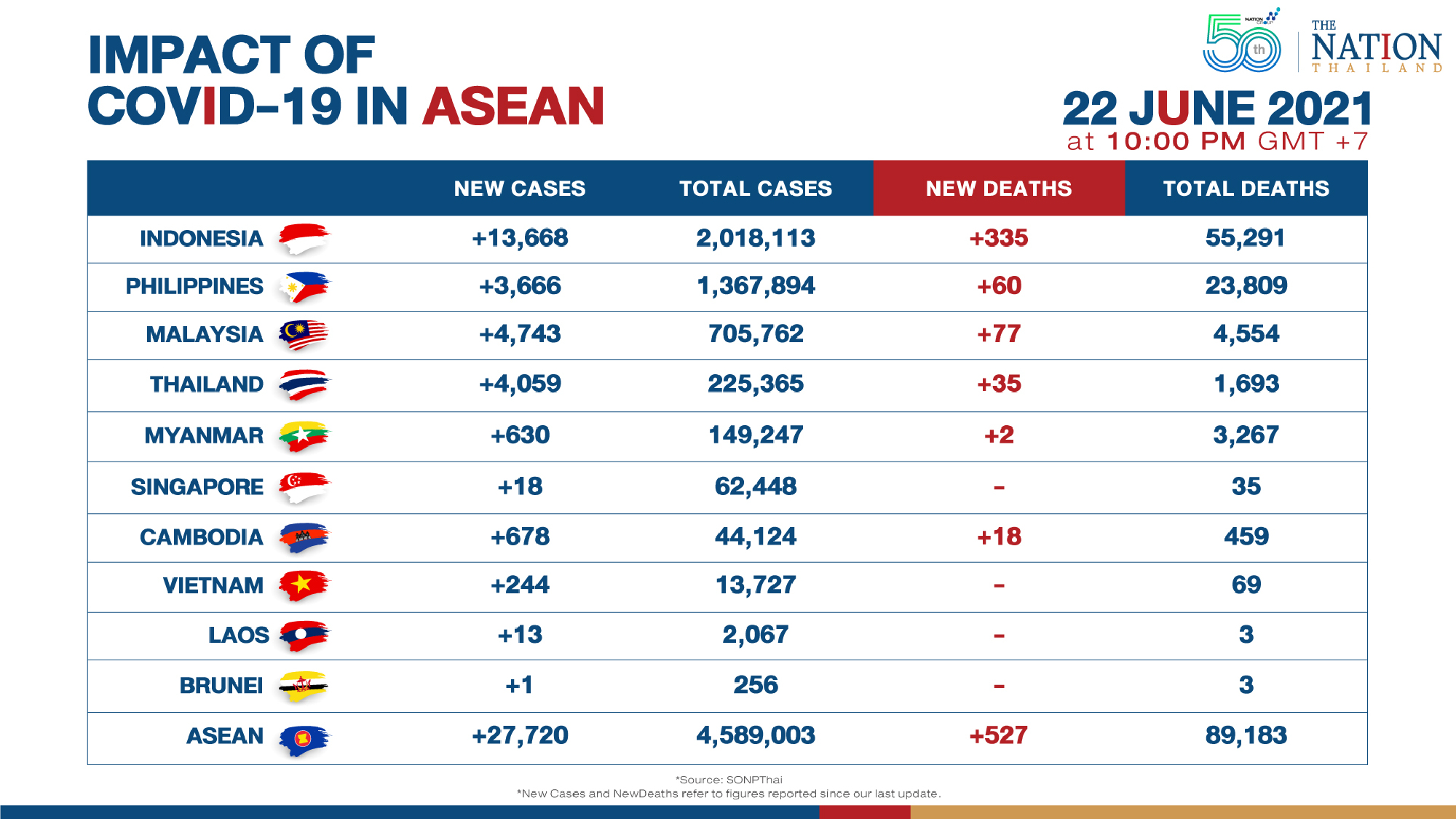
The number of Covid-19 cases in Southeast Asia crossed 4.58 million, with 27,720 new cases reported on Tuesday, lower than Monday’s tally of 29,194, while there were 527 new deaths, decreasing from Monday’s 537 and taking total coronavirus deaths in Asean to 89,183.

Asean sees 27,720 new Covid cases

Philippines’ President Rodrigo Duterte threatened to jail anyone who refuses the Covid-19 vaccine while the government reported that the Delta variant of the virus, which was discovered in India recently, has been found among domestic infections.

As of June 20, the Philippines has inoculated more than 2.1 million of its population, which is well behind the target of 70 million people this year from a total of 110 million.

Vietnam meanwhile is easing some of the disease control measures in Hanoi from Wednesday after the country began seeing decreasing infections. Restaurants, coffee shops and beauty salons will be allowed to open until 9pm but must make sure customers maintain social distancing and do not exceed 50 per cent of capacity. Establishments will be allowed to sell alcohol beverages only for takeaway.

Published : June 23, 2021

By : THE NATION

Vaccine shortages hit global supply program, halting rollouts #SootinClaimon.Com

#SootinClaimon.Com : ขอบคุณแหล่งข้อมูล : หนังสือพิมพ์ The Nation.

https://www.nationthailand.com/international/40002337

Vaccine shortages hit global supply program, halting rollouts


A string of nations across Africa, Asia and other regions have run out of Covid-19 vaccines or are on the brink of doing so, months after receiving first shipments from a global program meant to equitably distribute the lifesaving shots.

Vaccine shortages hit global supply program, halting rollouts

When the supplies arrived in developing countries earlier this year through the Covax effort, they were seen as an important step in narrowing a glaring gap in global access. Today, many of those same countries are facing vaccine shortages and are unsure when they will receive donations from wealthy countries.

A World Health Organization adviser on Monday said that of 80 lower-income countries that have received vaccines through the program, about 40 are either out of vaccines or on the verge.

“Well over half of countries have run out of stock and are calling for additional vaccine,” the adviser, Bruce Aylward, told reporters. “But in reality it’s probably much higher.”

In the race to end the pandemic, it’s vaccine against virus. Slowdowns in inoculation programs can leave room for problematic new variants to emerge that could reignite infection counts or put already vaccinated people back at risk. Countries without rich health budgets can be forced onto the more-expensive private market. And if supplies don’t get restocked, vulnerable populations of older people and health workers can be left only partially vaccinated while awaiting the delivery of second doses.

Seven countries in Africa, including Ivory Coast, Gambia and Kenya, have used all of their Covax stocks, according to the WHO, while others in Asia, Latin America and beyond are at risk of exhausting their supplies. In response, many are slowing or halting vaccine programs while they await new shipments or look for alternate sources.

Covax was set up last year to ensure equitable access to vaccines around the globe, and was organized by the vaccine-access nonprofit Gavi, the Vaccine Alliance, another group known as CEPI, or the Coalition for Epidemic Preparedness Innovations, and the WHO. It established a global purchasing and distribution pool, particularly for less-wealthy nations that were unable to strike large pre-purchase deals or manufacture their own vaccines.

Its goal is to deliver 1.8 billion doses to more than 90 lower-income economies by early 2022. So far, it has shipped only 88 million – about as many as the number of doses already administered in the U.S. states of California, Texas and New York, according to Bloomberg’s Vaccine Tracker. The program is heavily reliant on AstraZeneca’s two-dose vaccine, but has been hamstrung by delays in shipments from a key manufacturer of those shots, the Serum Institute of India, after the country halted exports to tackle a devastating outbreak at home.

In Africa, Ivory Coast has used about 730,000 doses of AstraZeneca’s vaccine and is now relying on about 100,000 doses of the Pfizer vaccine it received last week. The country is looking to acquire millions of additional doses to maintain public faith in the program and ensure it can complete protection for those who received the initial dose.

In Ghana and Ivory Coast, the start of Covax rollouts on March 1 marked a key moment that Unicef Executive Director Henrietta Fore called a “hopeful light at the end of the tunnel.” Ghana has since used more than 90% of its doses. While the country has signed pacts with a number of suppliers, including an agreement for Russia’s Sputnik V vaccine, supply challenges have hampered deliveries. Another West African country, Gambia, said last week it has run out of AstraZeneca shots. The country is turning to Sinopharm Group Co. and plans to introduce the Chinese company’s vaccine next month.

Elsewhere in Africa, Eswatini (formerly Swaziland), Lesotho, Malawi and Rwanda have exhausted all the vaccines they received through Covax. Seven more, including Angola, Uganda, Ethiopia and Egypt, have used more than 80% of supplies, according to the WHO.

It’s not just an issue in Africa. Vaccination has slowed to a crawl in Bangladesh, and the government has turned to China and Russia to secure more supplies. Sri Lanka is awaiting health ministry approval to give people Pfizer’s vaccine as the second dose amid a shortfall in AstraZeneca shots.

In Nepal, supply shortages have slowed the vaccine program, and the country has managed to fully vaccinate less than 3% of the population.

“Vaccination to the entire population is a dream that is quite far off,” said Tara Nath Pokhrel, the family welfare director at Nepal’s health ministry.

WHO Director-General Tedros Adhanom Ghebreyesus has welcomed the donation of vaccines from wealthy countries, but has also urged them to increase and accelerate their contributions to help regions confronting a surge in cases. The Group of Seven earlier this month pledged to donate vaccine doses to developing nations, while President Joe Biden announced that the U.S. would begin shipping a half-billion donated doses of Pfizer vaccines to countries in “dire need” in August. On Monday, the U.S. delayed a separate shipping target for 80 million donated vaccine doses, many of which are meant for developing nations.

Many of the nations running short face another problem: After giving the first dose of shots to priority populations like the elderly or health workers, they’re not receiving enough to give the second shot, Kate O’Brien, who heads the WHO’s vaccination division, told reporters last week.

“They just don’t have more doses that are coming at this point,” O’Brien said.

A huge number of countries will need to suspend second doses, Aylward, the WHO adviser, said last week. Countries including Nepal and Sri Lanka are “very desperate in trying to access doses,” he said. “We have quite a substantial problem.”

The supply shortages have exacerbated vaccine inequality. Wealthy countries have administered 68 doses per 100 people on average, compared with just 2 doses per 100 in Africa, according to the WHO. Disease experts have warned that as long as the coronavirus continues to circulate widely, it will have more opportunities to mutate into new variants that could be more transmissible or evade vaccines.

ADVERTISEMENT

The delta variant, the fast-spreading version first identified in India, has been reported in 14 African countries, and Covid cases across the continent are nearing the peak of more than 120,000 weekly cases seen in July 2020.

Supply uncertainty could undermine confidence in vaccine programs in countries that are struggling to fight Covid-19 on top of other health threats.

“It takes so much effort to put in place a vaccination program, it doesn’t help peoples’ trust in their government and health systems,” said Els Torreele, a health researcher at University College London. “You’re talking about countries where there’s already a lot of fragility.”

Other countries in Africa face a different dilemma and are grappling with logistics challenges, hesitancy and misinformation. Almost two dozen nations have used less than half of the doses they have received so far, and almost 1.3 million AstraZeneca doses in 18 countries must be used by the end of August to avoid expiration, according to the WHO.

“It’s not just having the vaccines, it’s rolling them out,” Torreele said. “In poor countries they may not have additional money for that.”

Published : June 23, 2021

By : Syndication Washington Post, Bloomberg · James Paton, Corinne Gretler

U.S. seizes websites linked to Iranian government propaganda #SootinClaimon.Com

#SootinClaimon.Com : ขอบคุณแหล่งข้อมูล : หนังสือพิมพ์ The Nation.

https://www.nationthailand.com/international/40002333

U.S. seizes websites linked to Iranian government propaganda


WASHINGTON – The U.S. Justice Department moved Tuesday to seize more than 30 Web domains linked to Iranian state media, as American officials continued their efforts to counter what they say is Iranian propaganda at a time of simmering tensions between the two countries.

U.S. seizes websites linked to Iranian government propaganda

Anumber of the domains, including some used by English-language Press TV, an Iranian state-owned news channel, posted notices Tuesday indicating they had been taken down by U.S. authorities. The websites for Al-Alam TV, another Iran-owned news channel that broadcasts in Arabic, and the website for Al-Masirah, a Beirut-based outlet that serves as a mouthpiece for an Iranian-allied rebel group in Yemen, posted similar notices.

The move by the Justice Department came during delicate negotiations between Iran and the United States to revive a 2015 nuclear deal, and a day after Iran’s new president-elect, Ebrahim Raisi, took a hard line toward the U.S., ruling out the possibility of meeting with President Joe Biden and declaring he would not negotiate over his country’s ballistic missile program.

Iran’s government had no immediate response to the U.S. action.

The websites were targeted for distributing propaganda, according to a person familiar with the matter, who spoke on the condition of anonymity because corresponding court documents detailing the U.S. government’s action had not been made public yet.

Press TV and Al-Alam are owned by the official Islamic Republic of Iran Broadcasting, or IRIB, and carry content that often reflects the views of more hard-line factions in Iran’s leadership. In recent weeks, Press TV has reported extensively on nuclear negotiations between Iran and world powers in Vienna and aired several exclusive interviews with Tehran’s lead negotiator in the talks.

The site, which remained accessible from some places Tuesday, carried a breaking news story calling the seizures “a coordinated action.” The news service, which often criticizes American foreign policy, “has repeatedly fallen victim to censorship on multiple fronts, including Twitter and Instagram besides Google and its services,” the story said.

Al-Alam, which was also partly accessible, ran a brief item saying its website had been blocked, a move the channel called contrary to “freedom of opinion.”

Last year, federal prosecutors in the United States seized more than 100 domain names that officials said were unlawfully used by Iran’s government to engage in a “global disinformation campaign.”

Court papers filed in that case said the domains were used by Iran’s Islamic Revolutionary Guard Corps. Four of the sites seized in that action purported to be genuine news outlets. Some of the seized sites, the U.S. government said, spread Iranian propaganda in the hopes of influencing U.S. policy, in violation of the Foreign Agents Registration Act, while others spread Iranian propaganda in other countries.

Those sites, U.S. officials said, also violated U.S. sanctions against both the Iranian government and the IRGC.

Published : June 23, 2021

By : The Washington Post · Devlin Barrett, Kareem Fahim

E.U. opens antitrust investigation into Googles core moneymaker: Advertising #SootinClaimon.Com

#SootinClaimon.Com : ขอบคุณแหล่งข้อมูล : หนังสือพิมพ์ The Nation.

https://www.nationthailand.com/international/40002331

E.U. opens antitrust investigation into Googles core moneymaker: Advertising


The European Union has launched an investigation to determine whether Google exerts too much control over the sprawling online marketing industry, in which advertisers can surveil, target and influence consumers through nearly any tech platform in which they engage.

E.U. opens antitrust investigation into Googles core moneymaker: Advertising

The Silicon Valley company is present “at almost all levels of the supply chain for online display advertising,” said Margrethe Vestager, an executive vice president of the European Commission and a longtime critic of Big Tech. Her investigation will focus on whether Google’s many footholds in the video-advertising supply chain allow it to boost its own services and downgrade competing ones. The company’s data collection tools, which hoover up vast quantities of user information, could give it an unfair advantage, she added.

Advertising technology encompasses a dizzying number of products and tools built by hundreds of companies. Some are used by Web publishers to sell ad space, while others are used by advertisers to buy it. In between sit levels of exchanges and advertising networks that connect the two. Although many companies compete at each level, Google dominates the landscape, selling tools for nearly every step.

Because the tech giant is also one of the largest sellers of online advertising space, it has been accused by competitors of using its heft in the industry to push people to buy its own ads over others.

The investigation announced Tuesday appears to focus on several of the company’s video advertising products. Placing ads on Google-owned YouTube requires going through Google’s ad-buying platform, essentially forcing advertisers to use the Google tool if they want access to the massive video site’s 2 billion users.

The commission is interested in ways that this ad management tool creates restrictions against other ad-tech firms looking to reach customers through YouTube.

The commission wants to determine whether certain Google-designed virtual platforms are favoring the company’s other products in such a way that shuts competitors out of the ad industry’s virtual supply chain.

“We are concerned that Google has made it harder for rival online advertising services to compete in the so-called ad tech stack,” Vestager said.

Google contends that its tech services fees are lower than reported industry averages and that most publishers use a range of advertising technologies.

“Thousands of European businesses use our advertising products to reach new customers and fund their websites every single day,” a Google spokeswoman said in an email. “They choose them because they’re competitive and effective.”

The investigation comes just two weeks after the French government fined Google 220 million euros for abusing its position in the advertising tech market. The company agreed to change some of its tools so they plug in more easily with competitors’ products, French authorities said.

In the United States, lawmakers have zeroed in on Google’s advertising business, too. Politicians have likened the online advertising industry to the stock market, but where Google plays the role of both exchange and broker, allowing it to see the most favorable prices and prioritize its bids over those of others.

A 2020 lawsuit from the Texas attorney general also makes that claim and argues that Google’s practices have pushed up the cost of advertising for businesses, therefore harming American consumers.

Dina Srinivasan, a Yale University fellow who also is a paid consultant in Texas’s suit, said in a recent paper that Google’s preeminence in the global advertising market is enabled by the government’s lack of intervention. She wrote that the company “steers buy and sell orders” to its own businesses and “abuses access to inside information.”

“In the market for electronically traded equities, we require exchanges to provide traders with fair access to data and speed, we identify and manage intermediary conflicts of interest, and we require trading disclosures to help police the market,” Srinivasan wrote. “Because ads now trade on electronic trading venues too, should we borrow these three competition principles to protect the integrity of advertising?”

Google has called the Texas lawsuit “meritless” and is fighting it in court.

Tuesday’s E.U. investigation is just the latest of several actions by Europe attempting to rein in Silicon Valley. A 2016 E.U. regulation forced companies to adhere to strict privacy requirements related to their collection and use of online data, forcing some companies to reshape their practices for fear of steep fines. And under Vestager’s leadership, the European Commission has fined Google billions of dollars for its practices in several other markets.

The investigation announced Tuesday could also turn a critical eye toward how the company handles user data. In particular, several recent policies from the company have the effect of shutting off other firms’ access to user data, while Google continues to leverage it for ad-targeting purposes. By collecting users’ data and refusing to share it with competitors – which is increasingly the case for the company’s browser-based ad-targeting and mobile products – Google may have a leg up compared to its competitors.

ADVERTISEMENT

In Tuesday’s announcement, Vestager said Google’s presence throughout this virtual supply chain has prevented other companies from monetizing a lucrative industry.

“A level playing field is of the essence for everyone in the supply chain,” she wrote. “Fair competition is important – both for advertisers to reach consumers on publishers’ sites and for publishers to sell their space to advertisers, to generate revenues and funding for content.”

Published : June 23, 2021

By : The Washington Post · Aaron Gregg, Gerrit De Vynck

On the 80th anniversary of the outbreak of the Great Patriotic war #SootinClaimon.Com

#SootinClaimon.Com : ขอบคุณแหล่งข้อมูล : หนังสือพิมพ์ The Nation.

https://www.nationthailand.com/international/40002149

On the 80th anniversary of the outbreak of the Great Patriotic war


On this day, state flags in Russia are lowered. Entertainment events and programs are suspended or shortened. The country leadership lays mourning wreaths at the Tomb of the Unknown Soldier in Moscow.

On the 80th anniversary of the outbreak of the Great Patriotic war

22 June 2021 marks the 80th anniversary of the outbreak of the Great Patriotic war of the people of the Soviet Union against Nazi Germany and, the most sanguinary conflict in the Russian history. The Great Patriotic war is also, undoubtedly, the most important confrontation within a broader World War II.

At dawn on June 22, 1941 Nazi Germany attacked the Soviet Union without a declaration of war. Its aircrafts started massive bombing of airfields, railroad hubs, naval bases, places of permanent deployment of troops and many cities to a depth of up to 250-300 kilometers in the Soviet territory.

By this time, Nazi Germany had occupied or invaded many European countries (Poland, Denmark Norway, Belgium, The Netherlands, Luxembourg, France and others), and the Soviet people took the most powerful blow. Romania, Italy, Slovakia, Finland, Hungary, and in mid-August Norway joined the aggression against the USSR. The Soviet people responded to the enemy with a unified resistance, standing to the death, defending the fatherland.

The Nazi invasion caught the Soviet Union off guard. Our country was unprepared to fight with such a mighty enemy. New models of tanks and planes were yet to be developed. All these factors contributed to a colossal cost that the country had to pay for the victory. The losses born by the Soviet Union throughout a four-year long heroic ordeal to restore peace are both terrific and terrifying.

Soviet losses alone accounted for 40% of total casualties in WWII. About one million Soviet soldiers gave their lives during the liberation of the peoples of Europe. The combined human losses of the USSR during the war were 27 million people. More than 8.7 million of them died on battlefields, 7.42 million people were deliberately exterminated by the Nazis in the occupied territories, and more than 4.1 million died from the brutal conditions of the occupation regime. 5.27 million people were taken to hard labor in Germany and its neighboring countries, which were also under German occupation. More than half of them, 2.65 million returned home. More than 450,000 immigrated and 2.16 million were killed or died in captivity.

The human and material losses suffered by the country because of the Nazi aggression are incomparable. History has never known such destruction, barbarism and inhumanity, as was marked by the murderous acts of the Nazis on Soviet soil.

ADVERTISEMENT

Today we are seeing increasing attempts to falsify the history of WWII: to belittle or keep completely silent about the role of the USSR in defeating Nazism, to whitewash the villains, to put executioners and their victims on the same level, and to question the outcomes of the war and the verdicts of the Nuremberg Tribunal. The goal of such speculation is clear. It is not only to denigrate modern Russia as the successor of the Soviet Union, but also to cover up the unseemly role of their own states’ complicity with the Hitler regime, to justify the ugly excesses of neo-Nazis and an unscrupulous war on monuments to soldiers-liberators.

It is worth reminding everyone that our country made a decisive contribution to defeating the Hitler war machine and liberating Europe and the world from Nazism.

22 June is also known in Russia as a Day of Remembrance and Sorrow. Since 1992 this day became an official commemorative date. On October 24, 2007 Russian President Vladimir Putin signed amendments to the law “On the days of military glory and anniversaries in Russia,” which added a new one to the list of anniversaries – June 22 – the Day of Remembrance and Sorrow.

On this day, state flags in Russia are lowered. Entertainment events and programs are suspended or shortened. The country leadership lays mourning wreaths at the Tomb of the Unknown Soldier in Moscow. The Russian people mourn for all compatriots who defended their homeland at the cost of their lives or became victims of the wars, especially the Great Patriotic War of 1941-1945 years.

History is here to draw lessons from it. One of them is that a desire to rule the world inevitably ends in failure. So do attempts to ensure one’s own security at the expense of another’s. It is trust, along with realism in international relations that will ensure a lasting and enduring peace in the world.

Published : June 22, 2021

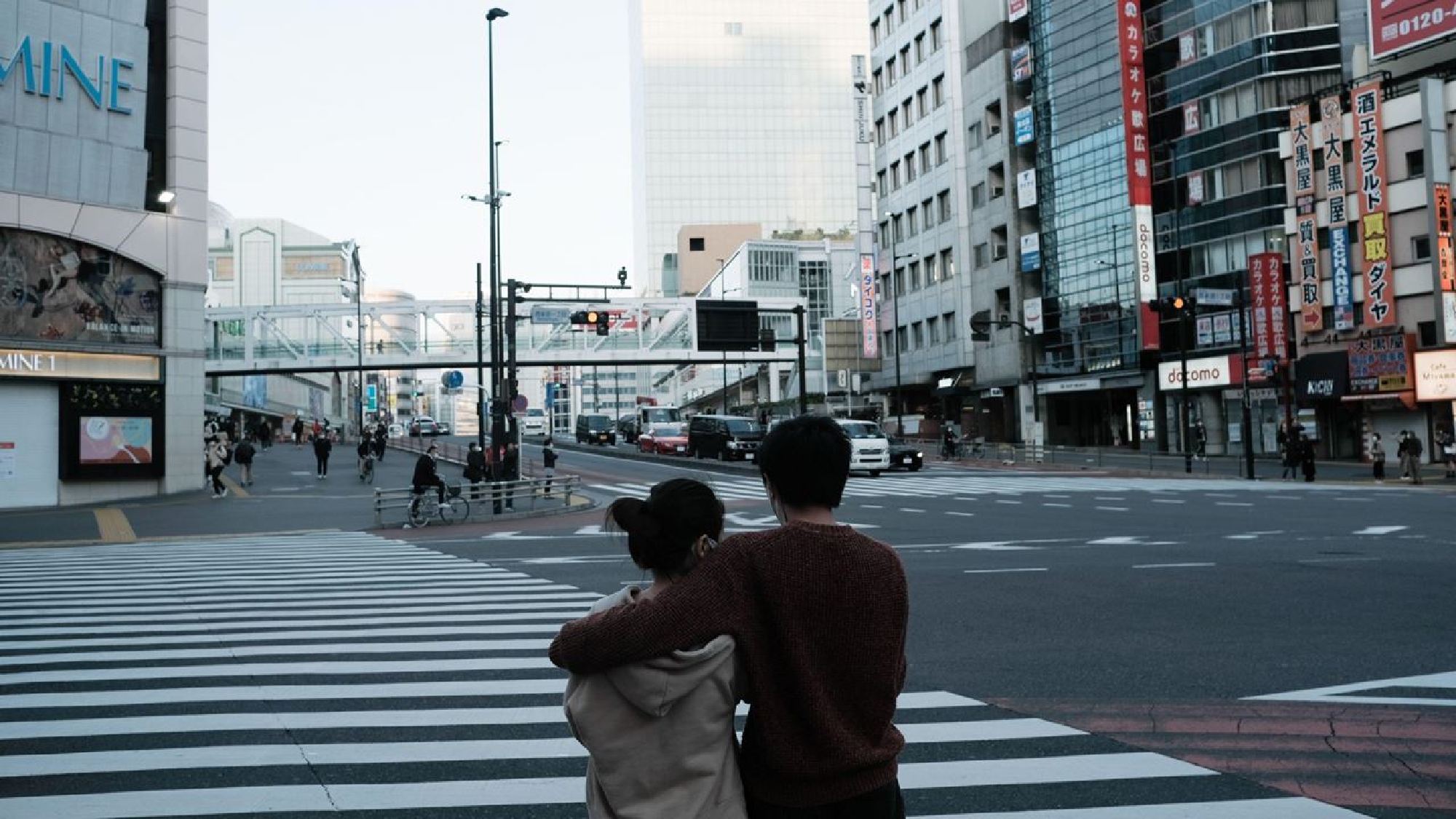
Up to 10,000 domestic spectators to be allowed at Tokyo Olympics venues #SootinClaimon.Com

#SootinClaimon.Com : ขอบคุณแหล่งข้อมูล : หนังสือพิมพ์ The Nation.

https://www.nationthailand.com/international/40002310

Up to 10,000 domestic spectators to be allowed at Tokyo Olympics venues


The Tokyo 2020 organising committee announced on Monday that Japanese spectators would be allowed to attend events at the Olympic Games this summer with the attendance capped at up to 50 per cent of a venue’s capacity, or a maximum of 10,000 people, said Patthama Leesawaskrakul, a member of the International Olympic Committee (IOC).

Up to 10,000 domestic spectators to be allowed at Tokyo Olympics venues

“The number has been agreed on by the IOC, the International Paralympic Committee (IPC), the Japanese government, Tokyo Metropolitan Government and local organisers to ensure the safety of Olympic fans amid the ongoing Covid-19 pandemic,” she said. “However, it remains to be seen whether the Japanese government will announce another state of emergency to curb the outbreak after July 12.”

According to Patthama, fans attending events at the Tokyo Olympics, which will be held from July 23 to August 8, will need to adhere to disease control measures. They include a mandatory wearing of face mask at all time, no shouting or loud talking, and spectators must leave the venue immediately after the event ends.

A decision on spectators at the Paralympics, which will be held from August 24 to September 5, will be delayed until July 16, a week before the Olympics open.

Japanese media reports said that as many as 20,000 people could attend the Olympic opening ceremony at the main stadium, but organisers said the number would “not be that high”.

Published : June 22, 2021

By : THE NATION