Slight decline in new Covid-19 cases and deaths in Asean
For the second successive day, Southeast Asia saw a decline in new Covid-19 cases and deaths, collated data showed.
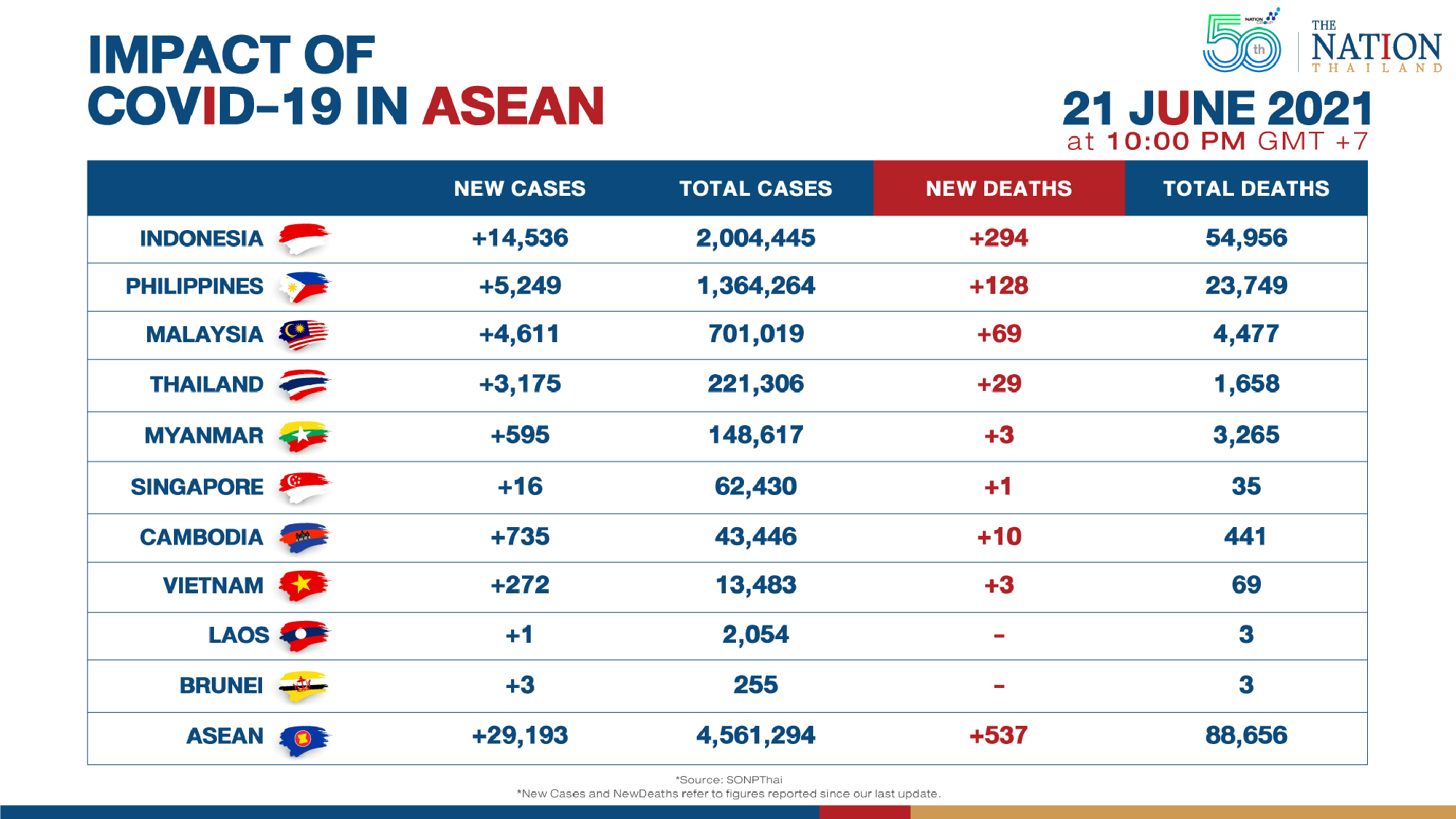
There were 29,193 new cases on Monday, lower than Sunday’s 29,907, and 537 deaths against 558 the previous day.
The number of Covid-19 cases in Asean crossed 4.56 million and the death toll rose to 88,656.
Indonesia reported 14,536 new cases and 294 deaths on Monday, taking cumulative cases in the country above the 2 million mark, while the death toll rose to 54,956.
The government announced the enforcement of disease control measures in areas that have high infection rate for 14 days, from June 22 to July 5.
The Philippines reported 5,249 new cases and 128 deaths on Monday, the second highest in the region.
Cumulative cases in the country increased to 1,364,239 with 23,749 deaths.
The Philippine president said that the wearing of both face mask and face shield when inside and outside buildings was mandatory and would continue to be enforced in crowded areas.
Del. Norton wants a memorial for enslaved Africans who may have arrived at the Georgetown port
WASHINGTON – At the Georgetown Waterfront, where wealthy boaters parked their yachts, Andrena Crockett started seeing slave ships instead.
The Georgetown University graduate went looking for the stains of slavery all over the neighborhood, finding them obscured by the diners and shoppers who throng the waterfront park and main drag of the famous D.C. neighborhood.
At the building that once housed the old Georgetown Market and Dean & DeLuca, discolored bricks marked what Crockett thought could be the only vestige of a tunnel that led into the market’s basement, where she learned enslaved people awaited auction.
She believes an untold number of them were trafficked through the old Georgetown port – disembarking after a harrowing journey on the Middle Passage.
“I said, ‘I don’t want anybody else to not know this information,’ ” said Crockett, the founder of the Georgetown African American Historic Landmark Project.
Now, as the nation celebrates Juneteenth – the new federal holiday marking the end of slavery in Texas on June 19, 1865 – Del. Eleanor Holmes Norton, D-D.C., has introduced a bill to establish a federal memorial on the waterfront commemorating an unknown number of kidnapped Africans who may have landed at Georgetown in the mid-1700s.
The history is largely unsettled due to a lack of records, with some scholars disputing slave ships reached Georgetown while traveling the North Potomac. An investigation is underway, with the help of the National Park Service, to learn more.
Crockett’s organization would help oversee the creation of the memorial – a “powerful marker of truth-telling and remembrance,” Norton said. She added that, if approved in Congress, it would still need to go through a federal process to select a design and location.
“I think people forget that the District is as old as the 13 colonies, and that means among other things that slavery was thriving here. It thrived on the Georgetown waterfront,” Norton said in an interview. “It’s known as a glamorous part of the city today, but it’s not sufficiently memorialized as a place for the slave trade.”
The Georgetown African American Historic Landmark Project is now working with the architect of the African Burial Ground National Monument to study 18th century ship records that could illuminate whether enslaved Africans arrived at the Georgetown port.
The architect, Rodney Leon, said he’ll be leading a master’s course at Yale University this fall that will investigate at least 11 Middle Passage journeys recorded as docking at “North Potomac,” according to Emory University’s Trans-Atlantic Slave Trade database.
The goal, Leon said, is to determine which of the ships, if any, docked specifically at Georgetown, while framing those details in the broader context of the growth of the slave trade in colonial America.
“If we can identify that in our historic research, that will go I think a long way in establishing how this memorial can be manifested and how it can start to tell that story,” said Leon, who also designed the United Nations’ memorial to the victims of the trans-Atlantic slave trade.
The National Park Service, which oversees the waterfront park and has held informative events about its slavery history with Crockett, is also assisting in the research.
Jim Johnston, the biographer of Yarrow Mamout, an enslaved Muslim from Guinea who gained his freedom and became a prominent Georgetown property owner and entrepreneur, is skeptical. The author of “From Slave Ship to Harvard: Yarrow Mamout and the History of an African American Family” said he welcomed the investigation but found it unlikely that slave ships would have docked at Georgetown.
The “North Potomac” notation in the Emory University database refers to a British customs station at St. Mary’s where ships passed through before continuing up the river to sell enslaved Africans they were carrying. Johnston said there is a lack of primary sources or newspaper announcements indicating the ships traveled as far as Georgetown. Mamout’s enslaver, for example, traveled to Annapolis, where Mamout arrived, even though the enslaver lived in Washington.
“They would have stopped at all the plantations along the way that they know of and try to sell slaves,” Johnston said of the ships that passed through North Potomac. “Georgetown was the end of the line.”
Crockett said she became engrossed in learning Georgetown’s African American history after her alma mater revealed that its Jesuit priests sold 272 enslaved laborers in 1838 to save the school financially. She thought about the buildings she sat in through classes years ago, having no inkling of the hundreds of enslaved laborers who could have walked the same grounds.
And she started to see that same story in bustling downtown Georgetown, where shoppers and diners and boaters, she thought, could be overlooking significant Black history hidden in plain sight.
Her research took her almost building by building. The slave pen on O Street that is now a block of rowhouses. The historical Mount Zion United Methodist Church. The residence of Yarrow Mamout.
Two years ago, she said, the waterfront earned a UNESCO “Site of Memory” designation, for historical places associated with slavery.
She developed a historic tour around all the key sites, tracing the rich religious and cultural landmarks established by the once-booming Black population in Georgetown. Her organization has placed bronze markers at eight locations, with two more on the way.
But the history of the arriving slave ships at the Georgetown port is more uncertain. Maurice Jackson, a history professor at Georgetown University, said that “in a way, that’s a beautiful thing” – because “everything is up for discovery.”
“We do know slave ships came there. We know the names of a couple. But we don’t know much more than that,” Jackson said, referring to the North Potomac ships. “We know that slaves were dropped off there. And we know that the Georgetown port was a major slave depot.”
The port long predated the incorporation of Georgetown in 1751, but Johnston said that if any enslaved people arrived at Georgetown it would more likely have happened been after 1751 when the town was more established. The port grew into a busy trading hub, mirroring the growth of tobacco exports – and by extension, the slave trade. Before long the port rivaled the Alexandria and Annapolis ports, where enslaved people were bought and sold.
ADVERTISEMENT
Records from Emory University’s database show that ships carrying enslaved Africans began docking at “North Potomac” in 1732, first on a ship called the Liverpool Merchant. More than 1,400 people, mostly from Gambia, would pass through North Potomac over the next three decades before being sold into slavery at locations Crockett said she hopes the investigation uncovers.
“We just want to remember their contributions,” Crockett said of the effort to establish the federal monument. “We want them to know that we honor what they did. We are here because they survived. And all we want to do is call their names, uncover who they are.”
Canada eases border rules but draws airline chiefs condemnation
The Canadian government will loosen Covid-19 travel restrictions for fully vaccinated people amid warnings that a return to a completely open border will take awhile longer.
Canadian citizens and residents who’ve received two shots will be exempt from a 14-day quarantine on arrival to the country, Prime Minister Justin Trudeau’s government said in a statement Monday. Travelers will still need to show they’ve tested negative for Covid-19 before they cross into Canada and take a second test at the border. Those arriving by air, who are currently expected to do the first three days of their quarantine in a hotel, will be exempt from that requirement.
The changes — effective July 5 — are a first, incremental step toward easing restrictions as the government faces mounting impatience to permit more freedom of movement between the U.S. and Canada. A fuller reopening that allows tourist travel to resume won’t happen until 75% of Canadians are fully vaccinated, Trudeau’s border chief said on Sunday.
The government’s cautious approach drew condemnation from the head of the global airline lobby group. “I don’t understand Canada,” Willie Walsh, CEO of the International Air Transport Association, said Monday during an interview in Paris.
“This isn’t only about holidays, these are business decisions. Future decisions will be made on people’s experiences and my experience of Canada is very poor,” Walsh said. IATA is based in Montreal, and he said he can’t visit its headquarters.
The U.S.-Canada border has been closed to most travel since March 2020. On Friday, the governments extended restrictions on non-essential trips until at least July 21.
“We haven’t reached the finish line, and the finish line is when a significant majority of Canadians, approximately 75%, are fully vaccinated,” Public Safety Minister Bill Blair told the Canadian Broadcasting on Sunday. At present, less than a fifth of Canadians have received two shots, according to data compiled by CTV News.
The border restrictions have kept families apart, blocked tourists and students, and hampered the world’s largest bilateral trading relationship. While trucks and trains continued to move goods, Canada’s tourism and travel-related businesses lost an estimated $16 billion (CA$20 billion) in revenue last year, according to one estimate.
The new measures announced Monday will primarily help Canadians living in the U.S. come home without the added costs and burden associated with the full quarantine. It could also expedite entry for new immigrants and non-permanent residents like international students.
Travelers will still need to quarantine until they receive the results of the second Covid-19 test. The new rules don’t apply to tourists, and non-residents and partially-vaccinated Canadians who come into the country still need to do the full quarantine.
“The fact that it is easier for vaccinated Canadians to fly to Paris than it is to drive to Buffalo demonstrates how illogical the present policy is,” Perrin Beatty, chief executive officer of the Canadian Chamber of Commerce, said in an emailed statement. “It is time for common sense, guided by science, to dictate a well-considered reopening plan.”
Airlines, tour operators and other businesses on both sides of the border have been pleading for a more comprehensive reopening plan, with the vital summer season about to begin, and Canada’s go-slow approach is causing frustration. Blair’s announcement Friday that Canada would extend most border restrictions was met with some unusually blunt language from Brian Higgins, a New York Congressman who represents a border district.
Canada prioritized giving first doses to as many people as possible before moving on to second doses amid a shortage in vaccine supplies. As a result, some 66% of Canadians have received one shot, but only 18% have had two, the CTV data show. By contrast, about 45% of Americans have had two doses, according to the Bloomberg Vaccine Tracker.
Despite its cautious stance, Trudeau’s government had approved a travel exemption for National Hockey League teams earlier this month for the final rounds of championship playoffs.
ADVERTISEMENT
But last week, the head coach of the Montreal Canadiens tested positive in Las Vegas after traveling while only partially vaccinated, according to a statement from the NHL.
Canada is expecting the delivery of 68 million doses by the end of July that should be enough to fully vaccinate the eligible population. Asked if that might allow Canada to reopen the border by the end of August, Blair said while he didn’t want to get ahead of the country’s public health agency, he was hopeful.
“Clearly, as those vaccines arrive and as Canadians continue to get in those lines and get vaccines into their arms, we’re really optimistic that we can meet that threshold of 75%,” he said.
Published : June 22, 2021
By : Syndication Washington Post, Bloomberg · Kait Bolongaro, Tara Patel
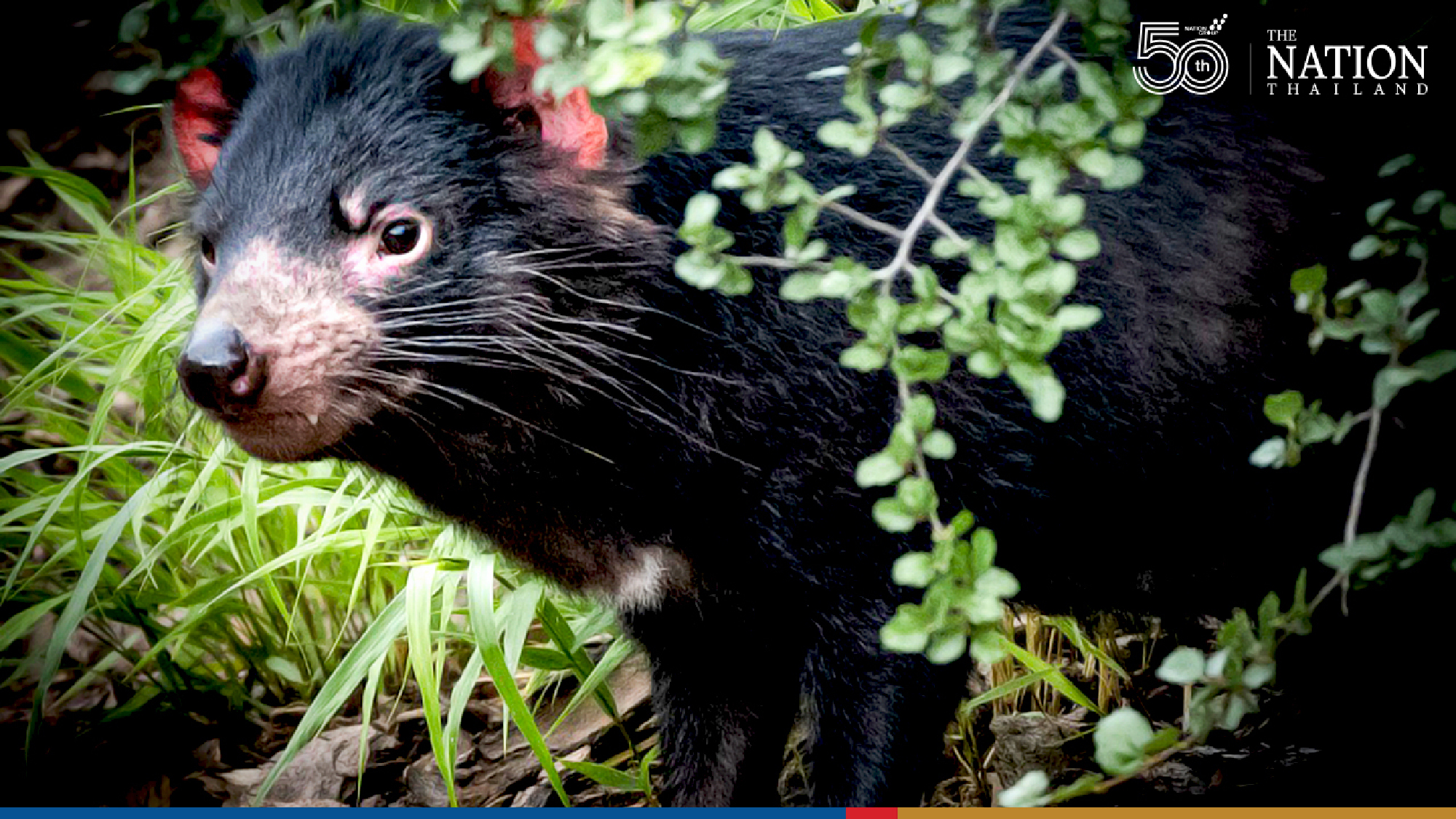
Scientists moved Tasmanian devils to protect them. Now the predatory mammals are imperiling penguins.
An attempt to save Tasmanian devils has resulted in a decimated penguin population and threatened bird species on an island east of Tasmania in Australia, according to a Tasmanian conservation group.
BirdLife Tasmania said the 28 Tasmanian devils released on the nearly 45 square miles of Maria Island between 2012 and 2013 grew to an estimated 100 by 2016, the Guardian reported. The 3,000 breeding little penguins that were on the island a decade ago have entirely disappeared since the introduction of the carnivorous marsupials, according to BirdLife Tasmania.
Eric Woehler, a researcher for the group, told the BBC that losing 3,000 penguins from an island that serves as a national park and refuge for birds is a “major blow,” yet a predictable one based on research of human intervention in nature.
“Every time humans have deliberately or accidentally introduced mammals to oceanic islands, there’s always been the same outcome . . . a catastrophic impact on one or more bird species,” he told the Guardian.
The erasure of the little penguins from Maria Island marks another disturbing turn in wildlife populations for the nation. In recent months, Australia has seen mice devastate agricultural lands and spiders cover towns with webs.
The Tasmanian devils were originally shipped to the island through a collaboration between the Australian and Tasmanian governments to protect them from devil facial tumor disease, a transmissible cancer spread through biting that causes the appearance of tumors on the face or inside the mouth.
The disease led the population of the endangered species to dwindle from 140,000 to 20,000 since the illness was first seen by scientists around the mid-1990s, according to National Geographic.
A paper published in December in the journal Science found that spread of the disease has appeared to slow but suggested that scientists should be careful when making decisions to increase the population.
The slowing spread of the infection and the growing numbers of Tasmanian devils have come with an increased threat to other species, a prediction nearly a decade old.
A 2011 Tasmanian Department of Primary Industries, Parks, Water and Environment report anticipated that the devils’ predatory tendencies would lead to negative consequences for penguin and shearwater bird populations, the Guardian reported.
Last year, researchers found that shearwater colonies continued to decrease over the years and reached zero occupancy within four years of the introduction of the devils. Researchers for the study published in Biological Conservation, a peer-reviewed journal, also noted that “conservation translocations of endangered predators must consider trade-offs between their protection and potential impacts on non-threatened native prey species.”
A Tasmanian government spokesperson told foreign media outlets that its joint effort with the Australian government, the Save the Tasmanian Devil Program, will continue to adapt its programs along with science and priorities, the Guardian reported. The spokesperson also noted that Maria Island remains important for restoring and maintaining the devil population in Tasmania.
ADVERTISEMENT
The devils have had a “catastrophic ecological impact on the bird fauna on Maria Island,” Woehler told the Guardian, suggesting the population could be moved as numbers for the species continue to climb in other parts of the country, he told the Guardian.
While the little penguins are no longer on Maria Island, populations can be found in other parts of Australia. Phillip Island on Australia’s southern coast is home to the country’s largest colony of little penguins, with over 32,000 breeding penguins found on the Summerland Peninsula, according to the Penguin Foundation.
Asean reports most number of Covid-linked deaths in over two weeks
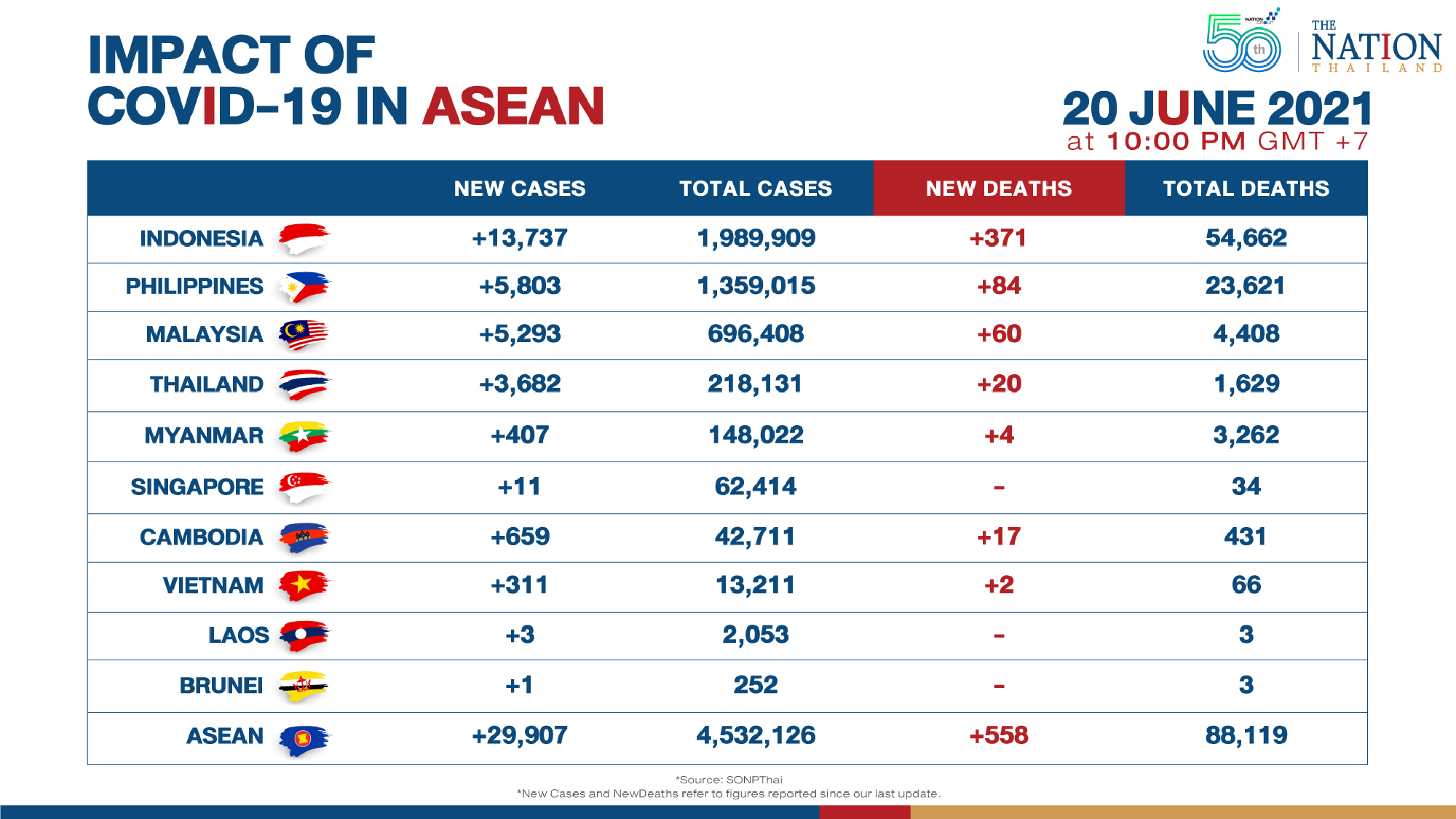
Southeast Asia reported 29,907 new Covid-19 cases on Sunday, lower than Saturday’s 30,980, however deaths were the highest in over two weeks at 558, increasing from the previous days 534.
The number of Covid-19 cases in Asean crossed 4.53 million, while the death toll rose to 88,119.
Philippines reported 5,803 new cases and 84 deaths on Sunday, the second highest in the region behind Indonesia, bringing cumulative cases in the country to 1,359,015 patients and 23,621 deaths. The Philippine government has signed a purchase contract with Pfizer for 40 million doses of vaccine, which will be delivered within the next eight weeks. So far, the government has procured a total of 157 million doses of vaccine.
Cambodia reported 659 new cases and 17 deaths on Sunday, driving cumulative cases in the country to 42,711 and 431 deaths. The public health ministry reported seven new infections of the delta variant of the virus. Of these, five patients were workers returning from Thailand.
Scientists battle over the ultimate origin story: Where did the coronavirus come from?
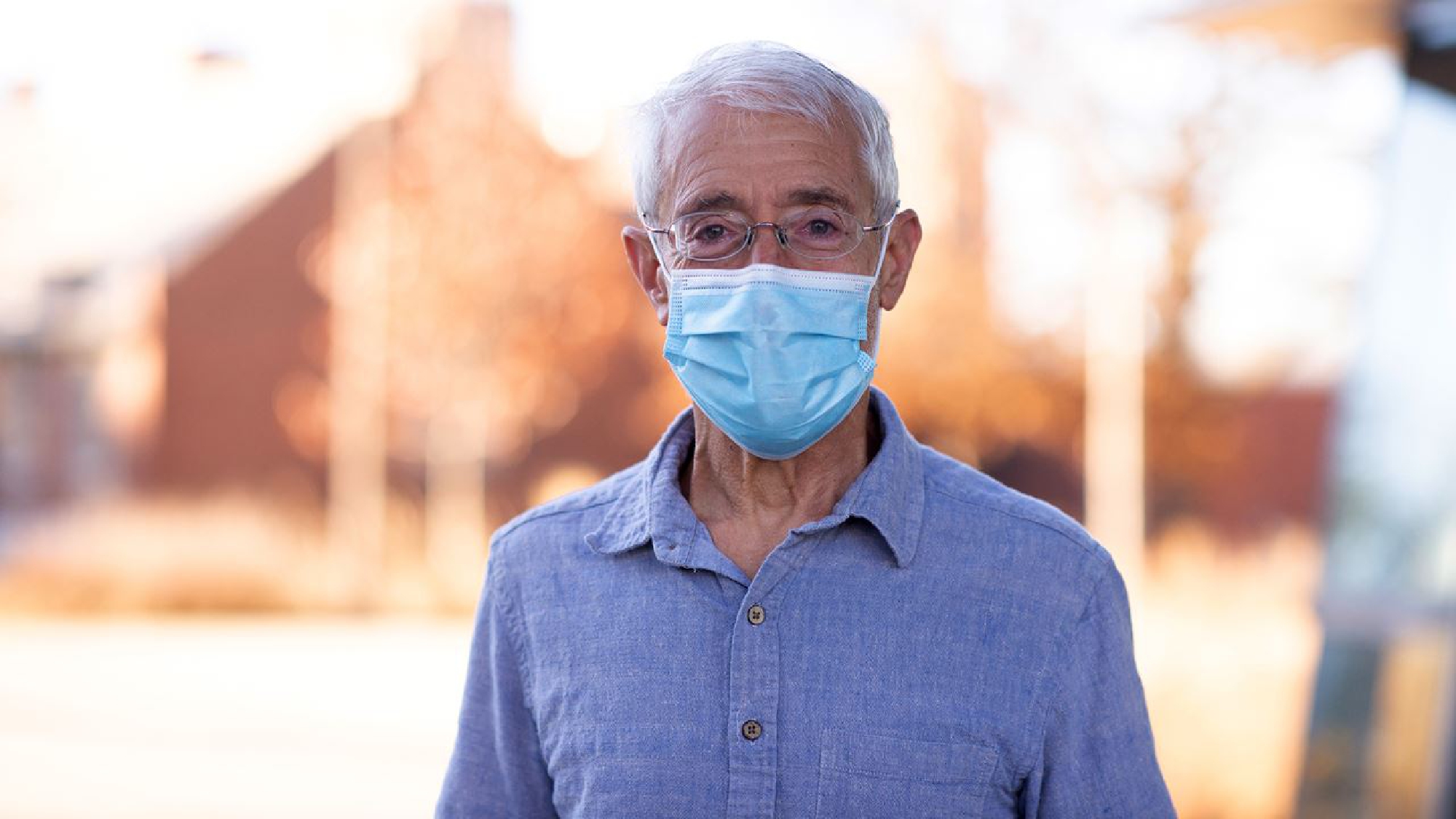
Stanley Perlman, who has been studying coronaviruses for 39 years, got a nasty email June 4: “Dr. Frankenstein just wants more public money and wants to research things he shouldnt be messing with. THANKS A LOT FOR CORONA LOSER.”
Perlman, a mild-mannered, grandfatherly virologist at the University of Iowa, didn’t know the author of the dyspeptic email and had nothing to do with the emergence of the coronavirus. But he had co-signed a letter to the Lancet in February 2020 saying SARS-CoV-2 was not a bioengineered virus and condemning “conspiracy theories suggesting that COVID-19 does not have a natural origin.”
That remains the consensus of many scientists – but the “lab leak” theory has never gone away and has become louder than ever. It is not a theory so much as a constellation of scenarios that imagine how the virus may have emanated from a laboratory in China, ranging from the accidental to the sinister.
It dominates news coverage and public discussion of the origin of the pandemic, shoving aside the natural zoonosis hypothesis – which asserts that, like so many previous infectious pathogens, the novel coronavirus most likely jumped unassisted into the human population from a still-unidentified animal host.
Scientists haven’t found that animal, however. Some virologists, including Perlman, have said they can’t rule out some kind of unintentional laboratory accident.
It’s possible, for example, that researchers studying coronaviruses in Wuhan did not even know they had SARS-CoV-2 in their facility. The new openness to such scenarios culminated last month when the journal Science published a letter from 18 prominent scientists calling for a more robust probe of the virus’s origin and criticizing a World Health Organization report that called a lab leak “extremely unlikely.”
This is a fraught moment not only for virologists, but for scientists broadly. They have had to deal with some version of the “Frankenstein” meme for generations. Now, they’re faced with suspicion that somehow they are responsible for a plague that has killed millions of people.
The situation has exacerbated long-standing tensions within the sprawling and often cantankerous scientific community. The lab-origin possibility has reignited debate over “gain of function” experiments that, in an effort to anticipate future pandemics, may alter the potency of viruses in secure laboratory settings. Scientists have clashed repeatedly over the risks and rewards of that kind of research for the past decade.
“There’s sniping going on in all directions,” said Marcia McNutt, president of the National Academy of Sciences.
Her message to everyone: Cool it. She doesn’t think a scientist who is open to the possibility of a laboratory accident should be labeled a conspiracy theorist. And some people are proclaiming certainties about the origin of the virus despite having limited knowledge or expertise, she said.
“If anyone is going to come out strongly on one hypothesis or another, the scientific method says that there should be evidence to back it. I worry when some people are very willing to be firm about one origin or the other but fail to either have the evidence or the expertise to back it up,” McNutt said.
Scientists battle over the ultimate origin story: Where did the coronavirus come from?
McNutt and the presidents of the national academies of medicine and engineering published a letter Tuesday staking out a neutral position amid all this rancor. It advocated for a probe “guided by scientific principles” that would consider multiple scenarios for the origin of the pandemic. It called on China to share information about research there. And it defended scientists.
“(M)isinformation, unsubstantiated claims, and personal attacks on scientists surrounding the different theories of how the virus emerged are unacceptable, and are sowing public confusion and risk undermining the public’s trust in science and scientists, including those still leading efforts to bring the pandemic under control,” the letter said.
Francis Collins, director of the National Institutes of Health, said in an interview that “it’s deeply disheartening to see this terribly difficult worldwide situation that has taken almost 4 million lives and somehow turned into a motivation to demonize some of the scientists who have done the most to try to get through this.”
He cited Anthony Fauci, the director since 1984 of the National Institute of Allergy and Infectious Diseases. Fauci has managed to serve seven presidents by avoiding political quagmires, but in recent weeks he has been excoriated in the right-wing news media and by some prominent Republican officials for his institute’s past funding of virus research at the Wuhan lab. Peter Navarro, who served as Donald Trump’s trade representative, went so far as to declare in March that “Tony Fauci is the father of the virus.”
Fauci this month fired back.
“It’s very dangerous, because a lot of what you’re seeing as attacks on me, quite frankly, are attacks on science. Because all of the things that I have spoken about consistently from the very beginning have been fundamentally based on science,” he said on MSNBC. “Science and the truth are being attacked.”
There is more noise than signal here. The lab-leak hypotheses lack direct evidence. Chinese scientists deny they had SARS-CoV-2 or its immediate ancestor in-house. The leak conjectures are fashioned around unknowns, missing information, inconsistent statements by scientists and a lack of transparency among Chinese officials. Suspicion and speculation fill holes in the narrative.
But scientists who support a natural origin have yawning gaps in their own story. They have not identified the intermediate animal host carrying SARS-CoV-2.
So where did this awful thing come from? That is a legitimate scientific mystery. The stakes are high, and crucial pieces of information are absent. As a result, the quest to understand the origin of the pandemic has been caught up in political battles and ideological maelstroms. There’s a hunt for villains before the crime has been fully documented.
“This discussion has just gotten so acerbic. It’s just been terrible,” Perlman said.
Collins and Fauci have called for Chinese scientists to open their records to inspection. President Joe Biden echoed that this month, saying China should let investigators have access to the laboratories: “We have not had access to determine whether or not this was the consequence of the marketplace of animals and environment … or an experiment gone awry in the lab.”
Biden has ordered his intelligence agencies to sort through all possibilities and report back no later than August.
The main argument in favor of natural zoonosis – one that unfolded beyond the walls of a lab – is that this has happened before with countless viruses, including coronaviruses. SARS, the coronavirus that caused a deadly outbreak in 2002 and 2003 but was throttled before it became a pandemic, first passed through an intermediate animal sold in markets – Himalayan palm civets. Scientists believe this new coronavirus probably passed through an intermediate host as well.
For many scientists, the lab-leak hypotheses remain a classic example of an extraordinary claim that requires extraordinary evidence.
Susan Weiss, a virologist at the University of Pennsylvania who has studied coronaviruses for 40 years, invokes the adage about what people should expect to see coming if they hear hoofbeats.
“You know the thing about horses and zebras,” she said. “Zoonosis is the horse, and the lab leak is the zebra.”
There are many variations on the lab-leak theory, some requiring scientific subterfuge – a conspiracy, in other words, to hide what was being done in the lab. Such hypotheses, built on suspicions of missing information and deception, are hard to disprove. Scientists adhering to the natural origin hypothesis are unlikely to embrace a rival hypothesis that requires, as a fundamental assumption, an impenetrable wall of deceit.
They are more likely, however, to be open to the possibility of an accident at a lab, one without nefarious intent, perhaps involving a virus that slipped into the facility under the radar amid legitimate research efforts.
But the Wuhan Institute of Virology remains something of a black box. Critics say the WHO investigators who delivered a report on the virus origin did only a cursory investigation of the institute. They also note that the WHO investigators included Peter Daszak, president of the EcoHealth Alliance, an organization that directed a grant from Fauci’s institute to the Wuhan lab. Daszak also signed the 2020 Lancet letter denouncing conspiracy theories about a lab origin.
Even the director general of the WHO, Tedros Adhanom Ghebreyesus, distanced himself from the WHO report’s dismissal of the lab theory and called for a more thorough investigation.
That was followed by calls from scientists to probe more deeply into lab-leak scenarios. The letter to the journal Science, in particular, helped put the imprimatur of mainstream science on an idea previously marginalized as a conspiracy theory.
Perlman said he would not have signed the letter if asked, because of “false balance.”
“It made it sound like all possibilities are equal, which I don’t think is true,” Perlman said.
“There isn’t any balance of plausibility,” Columbia University epidemiologist W. Ian Lipkin said.
Stanford University microbiologist David Relman, one of the organizers of the letter to Science, said the political climate last year made many scientists hesitant to express openness to the lab-leak idea. They did not want to align themselves with a theory closely associated with Trump and his allies, who referred to the coronavirus as “the China virus.”
Relman took the leap, though: In November, he published an essay in the Proceedings of the National Academy of Sciences discussing possible origins of SARS-CoV-2, including laboratory manipulation: “Even though a definitive answer may not be forthcoming, and even though an objective analysis requires addressing some uncomfortable possibilities, it is crucial that we pursue this question.”
Relman said two scientists who were asked to sign the letter to Science expressed concern that it could contribute to anti-Asian bigotry. Only one signed. Relman noted that the letter concluded with an affirmation of support for Chinese scientists fighting the pandemic.
Relman said he goes back and forth on whether a natural or laboratory origin of SARS-CoV-2 is more likely. He is open to the possibility that Chinese officials haven’t been forthcoming about their laboratory experiments.
“It seems more likely that either the virus was grown unknowingly and produced an asymptomatic infection, and none of that was recognized, or a laboratory worker infected themselves unknowingly during collection of samples from a natural viral reservoir, like a cave with bats,” Relman said.
“It is also theoretically possible there was some engineering going on there with some recent ancestor viruses that haven’t been talked about, that haven’t been published,” he said. “That would then suggest there has been a deliberate effort to not talk about some work that was going on there.”
Some scientists are dismayed by what they’re reading and hearing. They think the case for natural zoonosis remains strong. A significant fraction of early coronavirus infections were linked to a sprawling Wuhan market where, according to the WHO report, traces of SARS-CoV-2 were found in drains and other surfaces near animal stalls.
A report published this month in the journal Nature said the Wuhan markets in the 21/2 years before the pandemic sold more than 47,000 animals from 38 species, including raccoon dogs, weasels, badgers, hedgehogs, marmots, minks, bamboo rats and flying squirrels. SARS-CoV-2 has been shown to be a highly precocious virus that can infect many different kinds of animals. It has been found in domesticated and stray cats across Wuhan.
Although tens of thousands of animals have been tested in China in the search for the intermediate host, researchers have not found a precursor strain of SARS-CoV-2. The animal origins of many zoonotic diseases, including Ebola, have never been conclusively established. Surveillance of viruses capable of jumping into the human species remains spotty.
“Somewhere it’s out there, and there’s a ton of it, and we just haven’t flipped over enough stones yet,” said Benjamin Neuman, a virologist at Texas A&M University who, like Perlman, was one of the scientists who gave SARS-CoV-2 its name in early 2020.
He is irritated that some fellow virologists have lent weight to the lab-leak idea.
“This is distressing,” he said. “I feel like they’re taking the lab coat off when they say these things.”
Robert Garry Jr., a Tulane University virologist who co-authored an influential Nature Medicine paper in March 2020 saying SARS-CoV-2 was not engineered, is similarly emphatic that a natural origin outside of a lab remains most likely. He said the virus has genetic features that “scream” natural evolution. He noted the clustering of early cases linked to the market and pointed out that the virus has mutated into more transmissible variants – a sign, he said, that the virus is still adapting to the human species.
ADVERTISEMENT
“I think people are frustrated, and a lot of people are looking for somebody to hang this on,” he said. He added, “You can’t get over the fact that the outbreak started in Wuhan and there’s a large institute of virology that studies coronaviruses there.”
A fact sheet posted by the State Department on Jan. 15, during the final days of the Trump administration, said several people who worked at the Wuhan Institute of Virology were hospitalized in fall 2019 with symptoms consistent with covid-19 or seasonal influenza. There has been no public documentation of who these workers were, their medical diagnoses or any illnesses among their close contacts.
The controversy put a spotlight on earlier documented instances in which a laboratory accident led to an infection. For example, nine SARS infections in 2004 were traced to laboratory research in Beijing that came after the original outbreak of SARS. And in 1977, Russian research on influenza may have led to the escape of a flu strain that became pandemic.
At the center of the Wuhan lab controversy is Shi Zhengli, a world-renowned coronavirus researcher who has collaborated with U.S. scientists. Shi has said she scoured records in her lab and found no evidence that SARS-CoV-2 was ever present. In an interview with the journal Science last year, she said Trump’s allegations jeopardized the academic work and personal lives of her team, adding, “He owes us an apology.”
Although they may be skeptical about a colleague’s research findings, scientists generally assume their colleagues in the international scientific community are honest. But there are lab-leak scenarios that do not require deception. Accidents can happen unknowingly.
Lipkin, the Columbia epidemiologist, was a co-author of the Nature Medicine paper saying the virus was not engineered, and he hasn’t changed his mind. But he has hedged his assessment in recent months, as first noted in a Medium post by science journalist Donald McNeil Jr. Lipkin said it’s possible that the Wuhan scientists had the coronavirus in-house and simply didn’t realize it.
“If they’ve got hundreds of bat samples that are coming in, and some of them aren’t characterized, how would they know whether this virus was or wasn’t in this lab? They wouldn’t,” Lipkin said.
Lipkin said two scientific papers co-authored by Shi indicated bat coronaviruses were handled in biosafety level 2 laboratories, rather than more secure BSL-3 or BSL-4 labs. That raises the possibility of sloppy handling of a dangerous virus, he said.
An accidental infection in a lab with an undocumented virus would be nearly impossible to distinguish from one that occurred outside the lab, he said.
“We may never know where this thing came from,” Lipkin said.
Science is not a list of knowns so much as a process of exploring the unknown, and scientists by nature are comfortable with uncertainty, ambiguity and provisional conclusions. But the pandemic is a global catastrophe that has killed and sickened millions of people, and there are demands for definitive answers about how this happened. Scientists may never be able to provide answers that satisfy everyone.
“On both sides, there’s really a lack of information. That’s why we have such extensive discussions and, in some cases, vituperative discussions,” Perlman said. “There’s really no data. It’s really just opinions.”
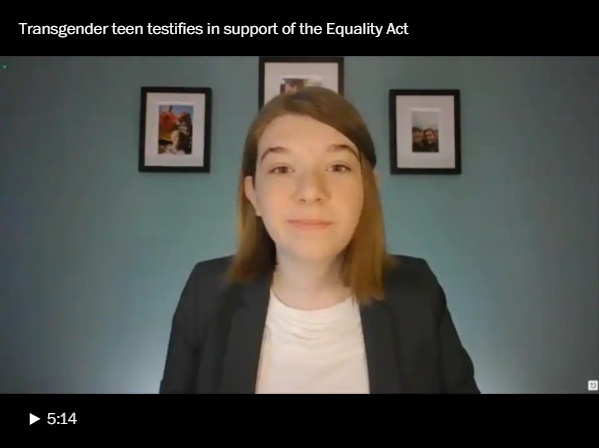
The push for LGBTQ civil rights stalls in the Senate as advocates search for Republican support
WASHINGTON – The long march toward equal rights for gay, lesbian and transgender Americans – whose advocates have eyed major advances with complete Democratic control in Washington – has run into a wall of opposition in the U.S. Senate.
Floundering alongside other liberal priorities such as voting rights, gun control and police reform, legislation that would write protections for LGBTQ Americans into the nation’s foundational civil rights law have stalled due to sharpening Republican rhetoric, one key Democrat’s insistence on bipartisanship, and the Senate’s 60-vote supermajority rule.
While Senate Majority Leader Charles Schumer, D-N.Y., hinted at a potential action this month – the annual LGBTQ Pride Month – Senate aides and advocates say there are no immediate plans to vote on the Equality Act, which would add sexual orientation and gender identity to the protected classes of the 1964 Civil Rights Act alongside race, color, religion and national origin.
Sen. Tammy Baldwin, D-Wis., one of two openly gay senators, said that she has quietly been lobbying Republican colleagues on the issue and that there has been only “incremental progress,” though efforts are continuing.
“So long as negotiations are productive and we’re making progress, I think we should hold off” on a vote, she said. “There may be a time where there’s an impasse. I’m still trying to find 10 Republicans.”
The House passed the legislation in February, 224 to 206, with only three Republicans joining all 221 Democrats in support. The Senate companion bill is sponsored by 49 Democrats and no Republicans. Sen. Joe Manchin III, D-W.Va., is the Democratic holdout, and the lone Republican who had sponsored a previous version of the bill, Susan Collins (Maine), is not yet doing so in this Congress.
The partisanship around the issue on Capitol Hill stands in contrast to the wide-ranging support for LGBTQ rights among the public at large, in corporate America, and even in the federal judiciary, which has delivered a string of rulings expanding those rights – including a landmark Supreme Court opinion last year written by conservative Justice Neil M. Gorsuch that effectively banned employment discrimination on the basis of sexual identity.
But lawmakers, aides and advocates say that significant obstacles to progress on the Equality Act remain, including polarized views on how to protect the rights of religious institutions that condemn homosexuality and Republicans’ increasing reliance on transgender rights as a wedge issue.
Schumer last month said the bill was “one of the things we’re considering” for a vote during Pride Month but added, “it’s a very busy June.” And while individual conversations are taking place, according to Baldwin and Sen. Jeff Merkley, D-Ore., the lead Senate author, there appears to be no organized negotiation underway as there has been on other hot-button issues.
“We’re talking about immigration, infrastructure, policing,” Sen. John Cornyn, R-Texas, a key GOP figure on civil rights matters, said this month. “But not much on the Equality Act.”
The backdrop is a new Republican push to target LGBTQ rights. Advocates count at least 17 new state laws passed this year targeting the community, most of them specifically aimed at transgender Americans. When the House debated the Equality Act earlier this year, numerous Republicans came to the floor to warn of dire consequences if the bill were enacted.
Rep. Andrew S. Clyde, R-Ga., said passing the bill would be “opening the door for predatory men to prey on [women] in the most vulnerable of places – in shelters, changing rooms, and showers.” Many others raised fears it would put cisgender women athletes at a competitive disadvantage against transgender women, and some said it would open the door to government-funded abortions.
The sharp-edged rhetoric has continued, even as the spotlight has turned elsewhere on Capitol Hill. At the Faith & Freedom Coalition’s Road to Majority conference Friday in Florida, Sen. Marsha Blackburn, R-Tenn., launched an extended attack on the bill, claiming it would “mean that boys who self-identify as female are competing against your daughters and granddaughters in sports” and that “domestic abuse shelters would have to take in men who self-identify as females.”
“They say, ‘Let’s treat everybody equal.’ We have equality. We have provisions in our Constitution,” she said.
The corps of advocates who see the Equality Act as the capstone of a 50-year struggle for LGBTQ civil rights say they remain optimistic that progress can be made on a lawmaker-by-lawmaker basis. They believe that at least 10 Republicans will ultimately be open to passing the law, vaulting a potential filibuster, and that Manchin will support the bill once a critical mass of Republicans get on board.
Alphonso David, president of the Human Rights Campaign, the nation’s most prominent LGBTQ rights organization, said the main thrust of the advocacy has been combating “misinformation” about the bill – including the notion that it would impinge on religious freedom.
“We’ve had the First Amendment on the books for decades. We’ve had a clear separation between church and state for decades. The Equality Act does not change the fundamental principles that support religious freedom,” he said. “We heard some of the same arguments, if you will, in the 1960s when the Civil Rights Act was amended – that this would really radically affect how religious institutions function. That didn’t happen.”
The push has been complicated by the federal courts, which have taken up major cases dealing with LGBTQ rights in recent years. Some Republicans have cited last year’s surprise decision banning employment discrimination in declaring that they no longer see a need for broader civil rights legislation. And on Thursday, a unanimous Supreme Court rejected a Philadelphia agency’s decision to sideline organizations that refused to place foster children with same-sex couples on religious grounds – a narrow decision that did not establish a broad new religious freedom doctrine.
But the advocates argue that the courts have left major gaps in LGBTQ rights – such as excluding discrimination in housing, public accommodations and jury service – while also pointing out that existing statutes and court decisions do plenty to preserve religious freedom.
“I like the Equality Act how it’s written – I think it is appropriate and fair,” said Mara Keisling, founder and executive director of the National Center for Transgender Equality. But, she said, “no bill is perfect, and if there’s some particular thing that anybody wants to talk about, I say we talk about it.”
Some GOP congressional aides, however, said that the Equality Act’s supporters have not been open enough to policy concessions. Tyler Deaton, a political consultant who has helped build GOP support for LGBTQ rights, said the legislation will have to change to win a sufficient number of Republican votes, noting that numerous states who have passed similar civil rights laws have written in those protections.
“Especially in the wake of the Supreme Court’s most recent ruling, it’s critical that Democrats work with Republicans in the Senate who agree that LGBTQ Americans need federal protections, and people of faith deserve a Civil Rights Act that respects them as well,” Deaton said.
In explaining his opposition to the bill in 2019, Manchin expressed general support for LGBTQ rights but cited the discomfort of school officials in his home state with the bill’s gender implications, saying he was “not convinced that the Equality Act as written provides sufficient guidance to the local officials who will be responsible for implementing it.” He vowed to “build broad bipartisan support and find a viable path forward for these critical protections.”
The bill’s proponents have been reticent to discuss any changes that would address the GOP objections about transgender sports and other issues they have used as political cudgels. Instead, they have focused on convincing lawmakers that their fears are simply misplaced.
ADVERTISEMENT
Women’s sports and other anti-trans issues are “not a primary conversation that anybody in the Senate seems to really want to have,” Keisling said. “Everybody who has looked at that issue understands it is entirely a red herring, red meat, disgraceful diversion.”
Democrats and advocates have been especially perplexed by Collins’s decision not to co-sponsor the reintroduced bill this year after serving as its lone GOP co-sponsor in the previous Congress and joining Democrats on numerous other LGBTQ rights issues, such as opposing a constitutional amendment banning same-sex marriage and repealing the military’s “don’t ask, don’t tell” policy.
Some have privately speculated that the HRC’s decision to endorse Collins’s opponent, Democrat Sara Gideon, in her 2020 reelection campaign may have soured Collins on the legislation.
Annie Clark, a spokeswoman for Collins, said the endorsement decision has nothing to do with her position and that she “supports protecting the civil rights of all Americans, regardless of their sexual orientation or gender identity.”
“The Equality Act was a starting point for negotiations, and in its current form, it cannot pass,” Clark said. “That’s why there are ongoing discussions among senators and stakeholders about a path forward.”
Collins is seeking amendments that would protect the right of domestic violence shelters to serve men and women separately based on their birth gender as well as protections for faith-based service providers, such as Catholic Charities.
“I would hope that [the endorsement] is not a factor,” David said. “Look, I think if an elected official supports LGBTQ rights, what one organization may or may not do should not affect that senator’s fundamental principles.”
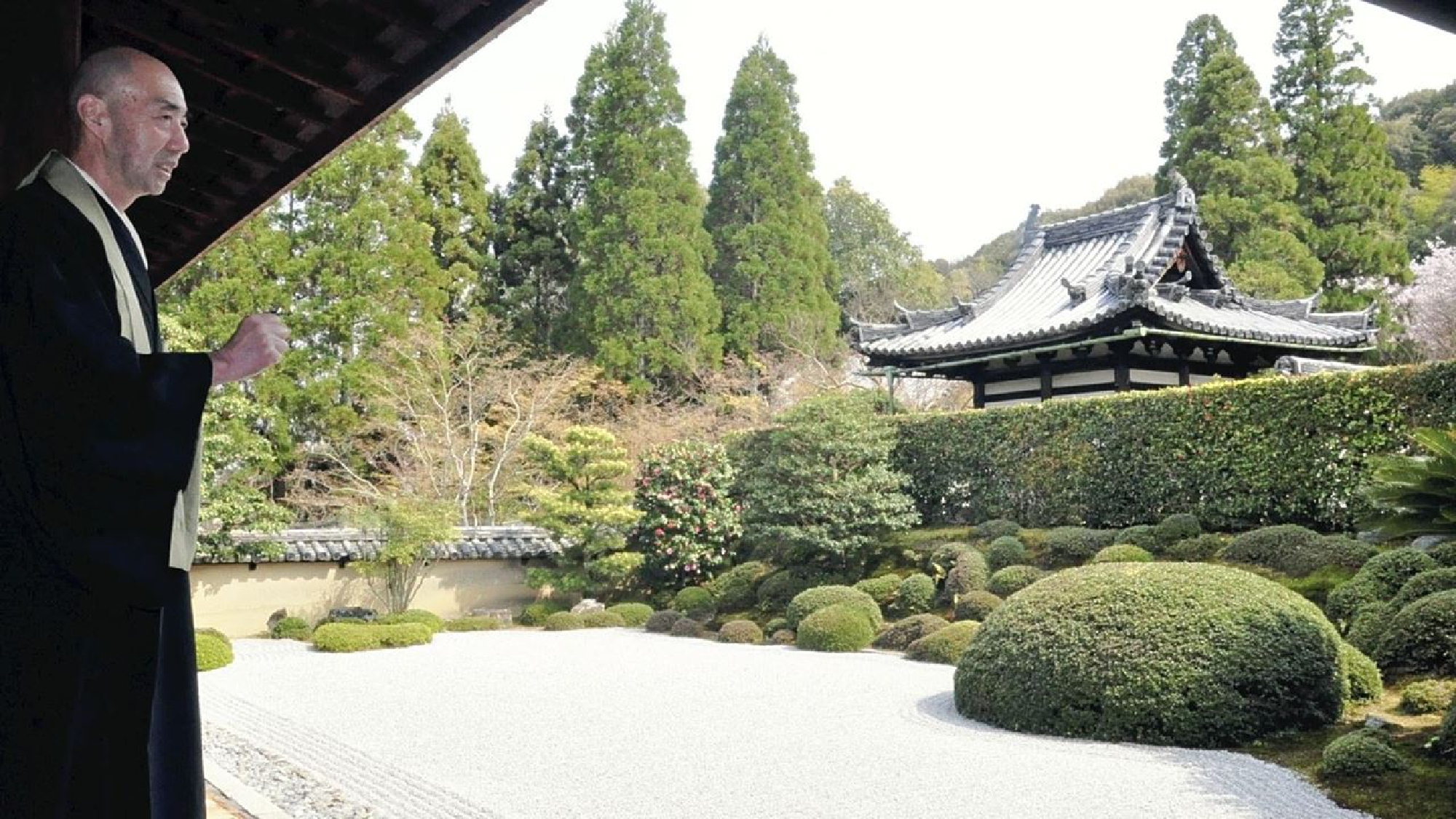
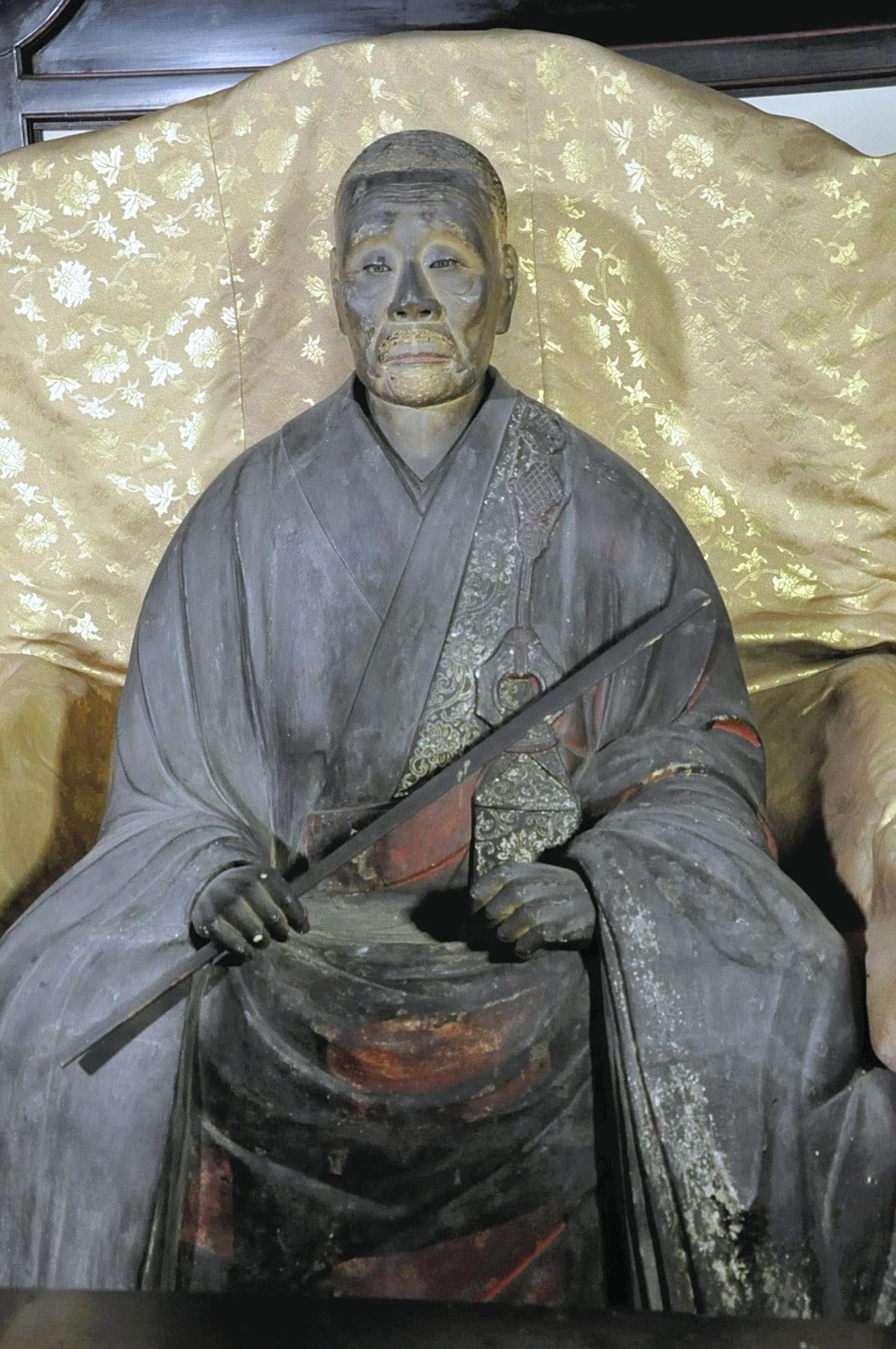
TOKYO – The most popular monk in Japanese history is probably Ikkyu Sojun (1394-1481), who served as the abbot of Daitokuji temple — one of the Kyoto Gozan, or top five eminent Zen temples in Kyoto.
Ikkyu is liked not just for his religious achievements but as a result of many events in his life that have resonated with later generations. Stories from his time as a boy monk are particularly famous, but all these tales were created in the Edo period (1603-1867) and later. First conveyed through oral storytelling and other means, they eventually found their way into books for adults and children.
Children loved the anime series “Ikkyu-san” that was broadcast in the 1970s and ’80s. All 296 episodes can be seen on Amazon Prime Video.
In one episode, retired shogun Ashikaga Yoshimitsu summons Ikkyu after hearing about his reputation for wit and asks him to vanquish a tiger on a folding screen. The shogun says the tiger escapes from the screen at night and causes trouble.
Ikkyu replies, “I’ll catch the tiger, so please take it out of the painting.” Yoshimitsu is left speechless.
Tales like these are called tonchi stories, using a Japanese word that means extemporaneous wisdom or wit. The boy Ikkyu always trips up adults using his wit.
According to Japanese literature scholar Masahiko Oka, a storyteller from the Meiji era (1868-1912) named Shogetsudo Dongyoku created the tiger story by incorporating ideas from the novel “Nanso Satomi Hakkenden” and other tales.
Nevertheless, there must be a reason why Ikkyu was chosen as the main character. In real life, Ikkyu was a high priest who devoted himself to reviving Daitokuji temple after it was devastated during the Onin War (1467-77), in which feudal lords from all over the country fought in Kyoto.
Ikkyu was also a critic of the Kyoto Gozan school of Zen Buddhism, which ended up becoming the official philosophy of the Muromachi shogunate.
Ikkyu vehemently rejected secular thinking obsessed with honor and gain, and was known for his satirical, unrestrained remarks and eccentric behavior. As a result, he continued to be popular even in the Edo period among people who opposed religious authorities.
Another story involves Ikkyu’s friend Rennyo, who restored the Jodo Shinshu sect of Buddhism, now the largest sect. One day when Rennyo was not at home, Ikkyu entered his room and took a nap, using as a pillow a statue of Buddha that Rennyo kept nearby and worshipped. When Rennyo came home, he saw Ikkyu and said, “Hey, what are you doing with my business equipment!”The two monks then broke up laughing, as one of them used the Buddha statue as a pillow and the other called it business equipment.
Ikkyu was also known as a poet. A Chinese poem that he created at the age of 15 about springtime, in which he dreamed about the fragrance of flowers, was recited by people all over Kyoto.
ADVERTISEMENT
In his later years, Ikkyu lived at Shuonan temple in what is present-day Kyotanabe, in the southern suburbs of Kyoto Prefecture. At 78, he met a blind woman named Shinjo who was probably around 30 years old at the time, and fell madly in love with her. He left many poems on the themes of romance and sensuality.
Ikkyu’s words describing the female body are explicit. I will not quote those parts here, but there is beautiful poetry such as “I will embrace you more tightly and love you. / In the futon at midnight, I find your sensual face. It’s like a dream.”
Published : June 21, 2021
By : Syndication Washington Post, The Japan News-Yomiuri · Yasuhiko Mori
Death of famed Afghan commander in Taliban massacre highlights the countrys struggles and fears
KABUL, Afgahnistan – He was a generals son, a U.S.-trained officer with a dazzling academic record and a daring military reputation.
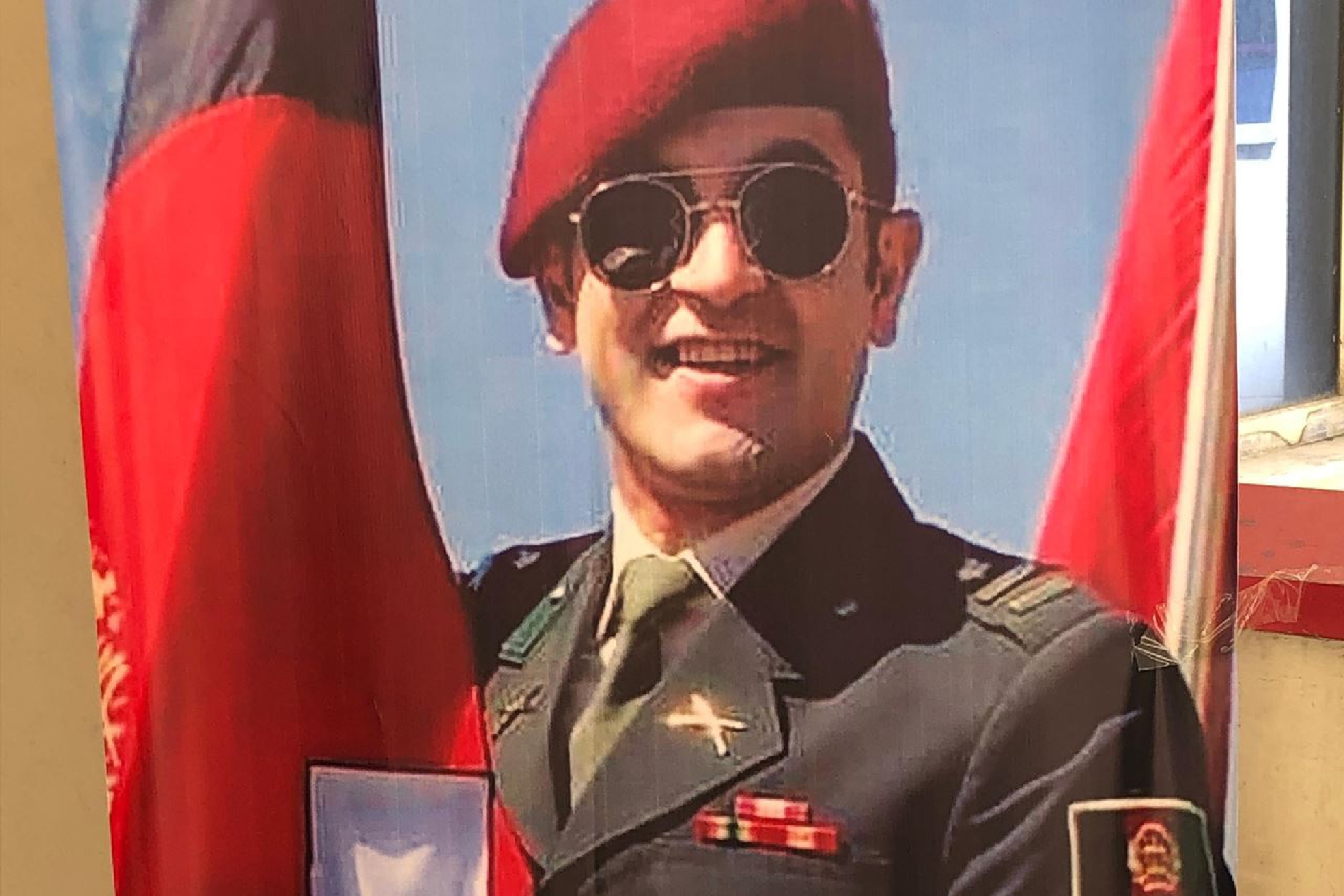
Col. Sohrab Azimi, a field commander in Afghan special forces that often rescue troops and retake outposts from Taliban attacks, symbolized the country’s best hope to fend off an insurgent takeover as U.S. troops began to withdraw from the fight.
Azimi, 31, and his squad of 22 men were massacred Wednesday by Taliban forces while defending a base in northern Faryab province and waiting for reinforcements.
The loss unleashed a flood of emotions across social media – grief, anger and fear that even the nation’s most skilled defenders would be undercut by poor military leadership and the departure of Afghanistan’s major foreign military ally.
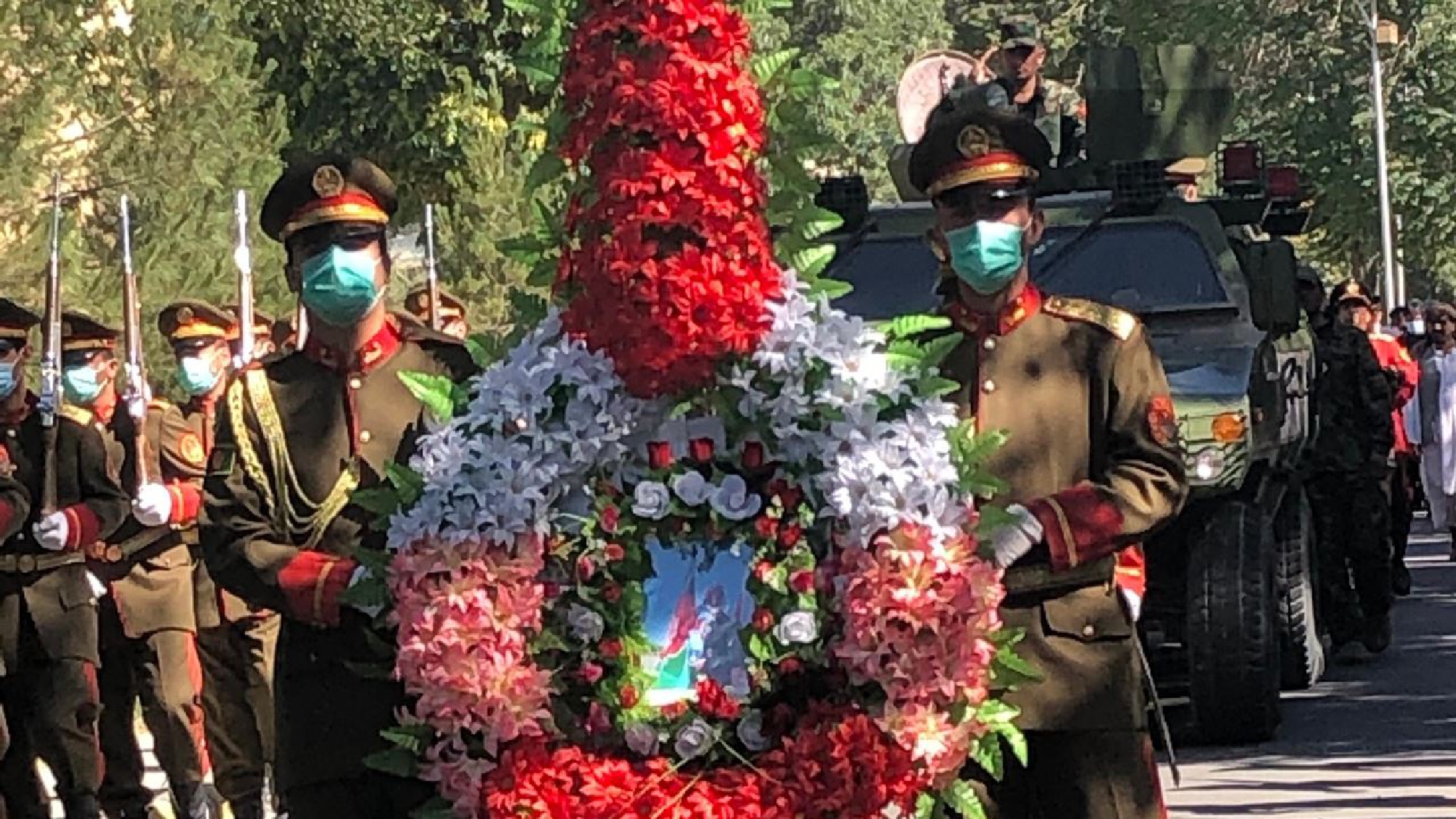
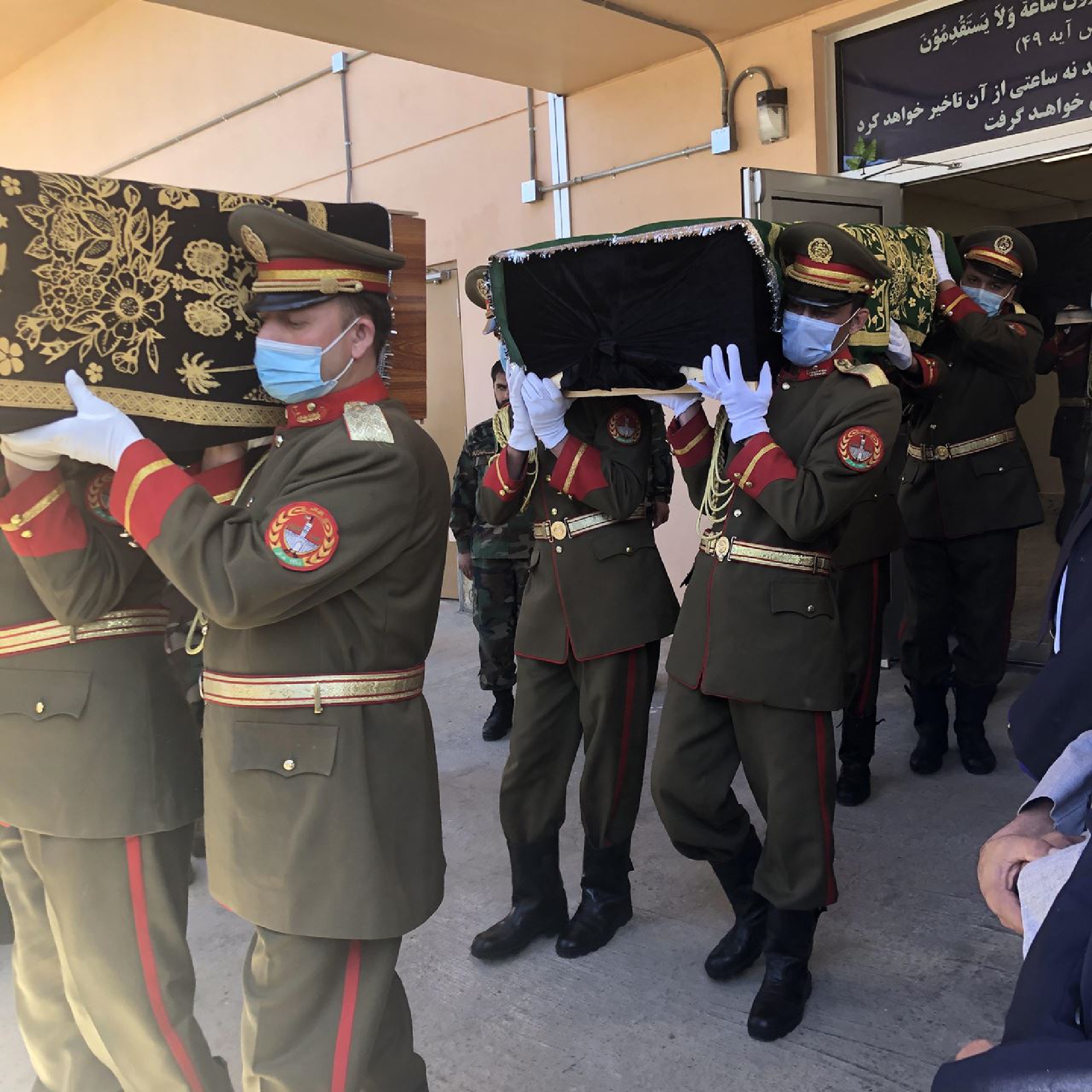
At a ceremony outside a military hospital in Kabul on Saturday morning, a Muslim cleric blessed the velvet-draped coffins of Azimi and two other commandos, released by the Taliban after negotiations with the International Committee of the Red Cross. They were lifted onto artillery trucks, followed by goose-stepping soldiers and a marching band, then loaded into ambulances.
“This is the price we pay for defending our country’s independence, freedom and dignity,” Rangin Dadfar Spanta, a former foreign minister, told the silent, mostly uniformed crowd that included Azimi’s father, a retired army general. The two men, classmates from another era, embraced and wept.
“No one will be allowed to occupy our landor take our freedom away,” Spanta vowed.
But in Faryab, one of numerous provinces where the Taliban have launched repeated assaults in recent months, the mass killing added to a deepening sense of despair and defeat. After weeks of attacks that wore down local security forces and led many to surrender, the highly trained commandos sent to save the day had been surrounded, isolated and mowed down en masse.
“Government forces don’t have the will to fight. Their morale is weak and there is little coordination among the forces,” Sayed Babur Jamal, a provincial legislator, said Saturday.
He said the insurgents control eight districts in Faryaband continue to overrun military and police bases, seizing military vehicles and weapons from surrendering local forces.
“There is a strong possibility that Faryab will fall,” he said.
A poster showing an image of the late Afghan commando leader, Col. Sohrab Azimi, 31, in Kabul on June 18. MUST CREDIT: Washington Post photo by Pamela Constable.
Officials say the pace and aggression of Taliban attacks have increased since the Biden administration announced in April that all remaining troops would be withdrawn by Sept. 11. In some areas, local forces have surrendered after negotiations between community elders and the Taliban. In others, departing U.S. troops have destroyed bases or stripped them of everything usable to keep them from falling into Taliban hands.
Despite the drumbeat of attacks, military officials play down the significance of local Taliban advances and note that many are quickly reversed. After the commando slayings in Faryab’s Dawlat Abad district, the district was recaptured by Afghan forces by Thursday, with insurgents suffering heavy casualties, authorities said.
“The situation that has happened does not mean the victory and power of the Taliban,” Fawad Ahmad, a spokesman for the Ministry of Defense, said Friday in response to written questions. He said the Afghan security forces have sufficient “combat and professional capabilities” to defend Afghanistan.
“A Taliban victory through military means is impossible,” he said.
Many Afghans say the curtailing of U.S. airstrikes has been a critical loss for ground forces, and some suggest that such strikes could have saved Azimi and his men. Another widespread complaint is ongoing discord and poor coordination by senior Afghan military officials. Some field commanders, desperate for supplies and food, have resorted to appealing for help on social media.
The volatility in Afghanistan could affect how the U.S. military departs in coming days.
On Saturday, two U.S. defense officials said that discussions are underway that would delay the U.S. military’s expected withdrawal from its largest airfield in Afghanistan, Bagram air base, by early July.
One official, speaking on the condition of anonymity because of the sensitivity of the issue, said that some service members at Bagram already have been told to expect their departure to be postponed. The second official acknowledged that discussions to delay are underway, without describing the plan as definitive.
The air base has been used for years to launch both manned strike aircraft and drones. Without it, the United States is expected to rely on long-range flights from bases in the Middle East to provide air support in Afghanistan.
Officials at the top U.S. military headquarters in Kabul referred questions about the delay to counterparts in the United States, who declined to comment on any delay.
“While we cannot provide any timeline for closure of any specific facility in Afghanistan, we are still firmly on track to safely and deliberately withdraw all combat forces from Afghanistan by September in accordance with the direction of the president,” Navy Capt. Bill Urban said.
Davood Moradian, director of the Afghan Institute for Strategic Studies and a distant relative of Azimi, said the Faryab fiasco exposed a “huge failure of the system” as the country confronts several problems at once.
“People love the army and admire the commandos, but the government and the military are poorly led, U.S. troops are leaving, and the Taliban are feeling bolder. It is a tragic triangle,” he said.
For the Taliban, Azimi’s killing was a potential propaganda coup.
The group released a video showing him with bullet holes in his chest, lying amid the corpses of men he had led in battle. But Azimi’s father, Zahir, a former Defense Ministry spokesman, wrote on Facebook that he felt pride when he saw the bullets had struck his son from the front.
“You fought face to face with your enemy until the last moment,” he wrote.
In an interview at his home Friday, the elder Azimi also noted that his son – who studied in the United States and Turkey, held several academic degrees and married an American citizen – could have easily chosen a prestigious desk job or foreign posting.
“He had many opportunities, but he wanted to go into operations. Regular Afghan families related to him, those who lost husband and sons,” he said.
The elder Azimi, 67, who fought Taliban extremists before they took power in 1996, said he was disturbed by the lack of planning that had preceded the dangerous mission in Faryab, leaving the commandos with no backup.
He said that with up to 50 of 370 Afghan districts under Taliban control or attack, it would be better to temporarily withdraw from some vulnerable areas and prevent bloodshed.
The ex-general said he respected Biden’s decision to withdraw U.S. forces but that the president was wrong to rush into the pullout just months after U.S. officials signed a deal with Taliban leaders.
“[The Taliban] came to believe they were winning, and they began to attract thousands of volunteer fighters and support from abroad,” he said. “They have a lot more capacity now.”
Afghan soldiers carry the coffin holding the remains of Col. Sohrab Azimi from a mourning ceremony in Kabul on June 19. MUST CREDIT: Washington Post photo by Pamela Constable.
ADVERTISEMENT
Among hundreds of visitors who called on the Azimi family in recent days, former classmates of the slain commando leader were far more critical. Some bitterly accused the United States of abandoning them for selfish interests at the worst possible time.
“They left the fight and left the field to the Taliban,” said one former classmate. He identified himself only as Sulieman to express a critical opinion. “They preached values like democracy, but now they are going, and we are losing our best men, the real warriors and patriots like Sohrab who fought for those values.”
The slain commando leader was promoted posthumously to brigadier general. His body was flown Saturday to Herat, his ancestral base in far western Afghanistan, and buried before sunset.
Israel struggles to restore vaccine swap deal after Palestinians reject doses for being too old
TEL AVIV – Israeli officials are working to revive talks to deliver vaccine doses to the Palestinian Authority after a deal last Friday was suddenly called off by P.A. officials who said that the vaccines were too close to their expiration date and do not meet their standards.
Some 5 million Palestinians in the West Bank and Gaza are still without sufficient vaccine supplies as shipments from other sources continue to lag even while their neighbor, Israel, is mostly returning to pre-pandemic life.
The announcement and abrupt cancellation of the deal has given rise to conspiracy theories and further damaged the low standing of the Palestinian Authority among its people.
On Friday, Israeli officials celebrated the finalization of the three-way deal between the two governments and Pfizer, by which Israel would ship more than 1 million doses of its vaccine to the Palestinian Authority, in exchange for a similar number of doses to be delivered back to Israel later this year.
Israeli officials signaled that the move marked the beginning of a chapter of re-engagement between Israel and the Palestinians after more than a decade under right-wing Prime Minister Benjamin Netanyahu.
Israeli Health Minister Nitzan Horowitz tweeted on Friday that the “vaccine exchange is in the interest of all parties” and that he hoped it would promote “cooperation between Israel and her Palestinian neighbors.”
“Corona does not recognize borders or differentiate between peoples,” he added.
Hours later, however, Palestinian Prime Minister Mohammad Shtayyeh scrapped the deal, saying that the first shipment of some 100,000 Pfizer doses was due to expire at the end of the month and so too close to their expiration date.
At a news conference Friday evening, Palestinian Health Minister Mai al-Kaila said health officials who inspected the vaccines found they “did not meet standards and so we decided to return them.”
The Israeli Health Ministry said they would not accept returned doses and that if they were not used by the Palestinian Authority they would need to be thrown out.
The vaccine exchange had been in the works for several months under Netanyahu and it had been made clear to all sides that the first doses shipped out would be the first to expire, as is also protocol in Israel, said an Israeli official who spoke on the condition of anonymity due to the sensitivity of the issue.
He added that Israel had also offered to donate syringes and other medical equipment to assist with the inoculation campaign, though the PA refused the offer.
After the deal was canceled on Friday, rumors circulated on social media that Israel, in collusion with the P.A., had been trying to “poison” Palestinians with expired doses. Palestinian opposition activists are calling for an independent investigation into the deal and its co-signers.
“We can buy vaccines ourselves and we do not need Israel,” said a Fatah official who spoke on the condition of anonymity. He said that the already deeply unpopular Palestinian Authority has potentially lost an even greater amount of legitimacy in its vaccine campaign with last week’s announcement.
Since its inoculation rollout kicked off in December, Israel has established itself as a global vaccine leader after purchasing millions of doses at above-market prices and signing a data-sharing agreement with Pfizer. On June 15, the Israeli government ended the mask mandate for most indoor spaces, citing health experts who had concluded that Israel has reached a version of herd immunity.
Shipments from Covax – the WHO-linked global vaccination program – Russia, China, the UAE, and several thousand doses donated from Israel have trickled into Ramallah over the past year, though significantly behind the expected schedule.
Kaila, the health minister, said on Saturday that 106 new cases, one death in the West Bank and one death in Gaza had been recorded since Friday. She said that of the some 5 million Palestinians living in the West Bank and Gaza, 270,800 have been fully vaccinated and another 174,800 have received the first jab. That number includes around 100,000 Palestinian day laborers who were inoculated by the Israeli army in March.
Israel manages all travel and trade into to the West Bank, most of which is under full Israeli control, as well as into Gaza, which is under a joint Israeli-Egyptian blockade.
For months, human rights organizations have called for Israel, as an occupying power, to provide medical intervention that would bolster the lagging vaccination campaign in the Palestinian territories. But Netanyahu repeatedly asserted that the Palestinian Authority was responsible for public health under the terms of the Oslo accords.
ADVERTISEMENT
“Israel denied us vaccines for a very long time, even when they had extra millions, now that they’re closed to expiring they made this deal,” said Mustafa Barghouti, a Palestinian physician and political opposition activist. “Israel wanted to exchange the doses for fresh ones, to sell us something that’s corrupt, and now, as we wait for shipments from Covax and WHO, we’ll need to do a lot of damage control.”

 Scientists battle over the ultimate origin story: Where did the coronavirus come from?
 A poster showing an image of the late Afghan commando leader, Col. Sohrab Azimi, 31, in Kabul on June 18. MUST CREDIT: Washington Post photo by Pamela Constable.
 Afghan soldiers carry the coffin holding the remains of Col. Sohrab Azimi from a mourning ceremony in Kabul on June 19. MUST CREDIT: Washington Post photo by Pamela Constable.

