Over 16,600 new Covid-19 cases reported across Asean
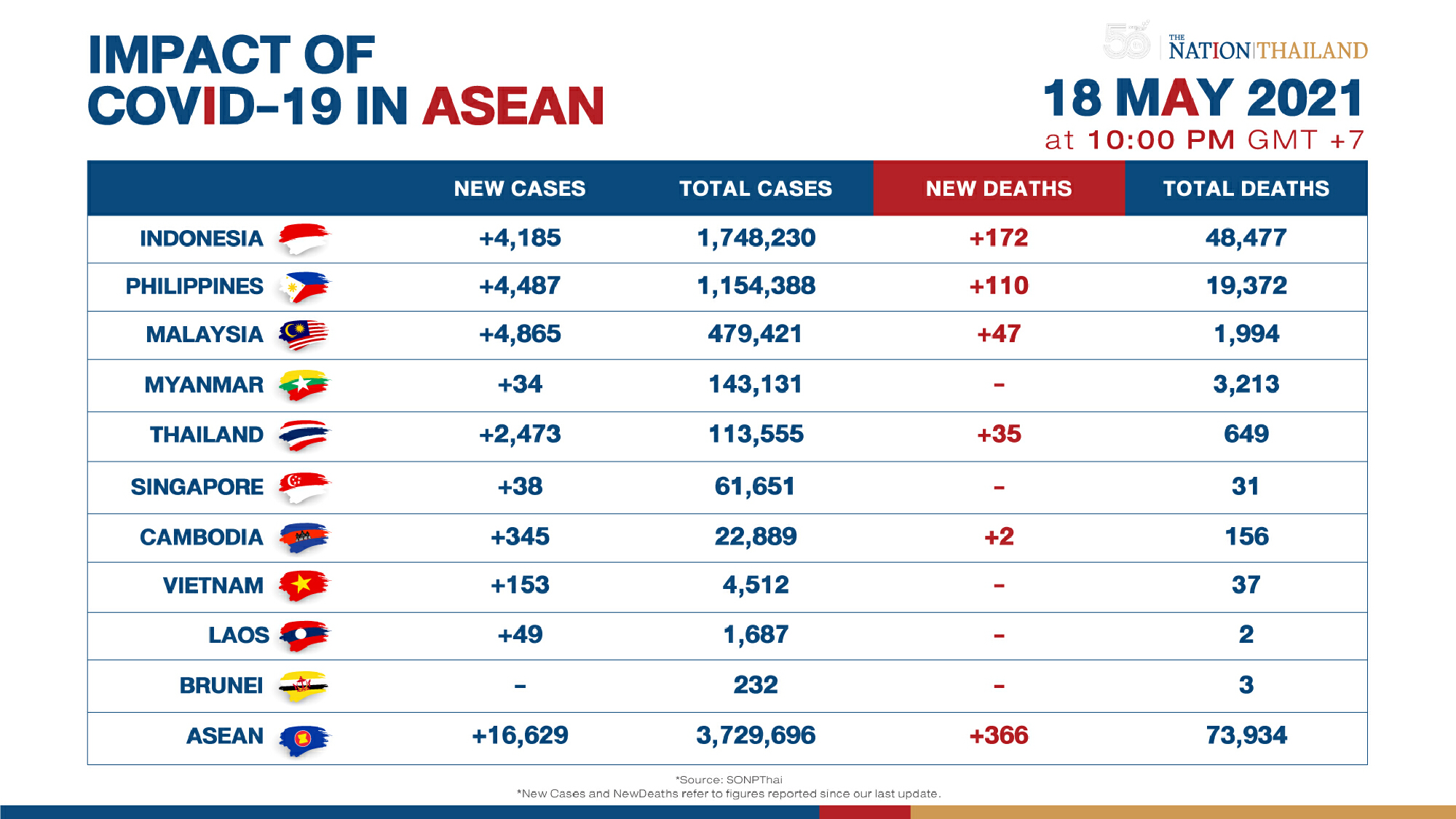
The number of Covid-19 cases crossed 3.72 million across Southeast Asia, with 16,629 new cases reported on Tuesday, lower than Monday’s tally of 25,006.
New deaths were put at 366, increasing from 360 on Monday, with total virus deaths in the region being 73,934 so far.
Indonesia reported a slightly lower number of new cases – 4,185 patients – compared to the day before and 172 new deaths. Total deaths in the country stand at 48,477, while 1,612,239 people have been cured and discharged. The government on Tuesday started allowing private companies to vaccinate their employees, with priority given to entry level labourers.
Singapore reported 38 new infections, driving the number of cumulative cases in that country to 61,651. Of these, 61,0134 have been cured and discharged. The government is planning to delay the vaccination of the second jab to 6-8 weeks after the first jab, aiming to provide every citizen with the first jab by August.
Biden says Fords new electric pickup will help U.S. compete with China
DEARBORN, Mich. – President Joe Biden used the advent of an American-made electric pickup truck to pitch his $2.3 trillion infrastructure package on Tuesday, arguing that the United States needs to make up ground against Chinese auto manufacturers with a jump on the electric vehicle market.
Biden got a sneak peek at the Ford F-150 Lightning, an electric version of the iconic pickup and a marquee product for Ford Motor Co. and its union workforce.
“The future of the auto industry is electric. There’s no turning back,” Biden said at the Rouge plant, where he also got a chance to test-drive the truck on a track. He floored it.
“This sucker’s quick!” he told reporters.
The symbolism of Biden visiting Michigan workers creating a brawny electric pickup is part of the administration’s broader argument, to Congress and gas-guzzling motorists alike, that the nation will need to shift away from traditional vehicles faster than many might imagine to make inroads on climate change.
Biden’s $2.3 trillion infrastructure plan includes $174 billion to spur electric vehicle development and production, a sum greater than that proposed for rebuilding highways and bridges. That quickly became a focus of opposition by Republicans in Congress who take issue with Biden’s broad definition of infrastructure in the bill.
Transportation is the nation’s single biggest contributor of U.S. emissions causing climate change, and transportation and environmental experts say shifting millions of drivers toward electric vehicles is a necessary step.
But the vehicles still carry an air of urban exoticism or weakness for many, and are dismissed as impractical by some would-be customers who have not driven them, even as owners of Teslas and other electric vehicles sing their praises.
“I think people hear ‘electric vehicle’ and they think Tesla, which is a luxury car or froufrou, and they don’t think about a hard-working vehicle that everyday people drive and that’s the image we need to change,” Rep. Debbie Dingell, D-Mich., said in an interview.
Tesla has also introduced an electric pickup truck, and it is taking orders ahead of production, but its design is radically different from that of traditional pickups such as the F-150. Ford rivals Chevrolet and Dodge also have electric pickups in the works.
Dingell, a longtime Biden ally, said she had urged the White House for months to consider using the rollout of the new F-150, which officially occurs Wednesday, as a moment to highlight environmental commitment and American auto manufacturing.
Tuesday’s presidential event took on aspects outside automobile production. Dearborn has one of the largest populations of Arab Americans in the country, and Biden’s visit was preceded by demonstrations seeking greater U.S. action to rein in Israel as it presses an air campaign against Palestinian militants. The event was planned before the outbreak of violence between Israel and Hamas militants in the Gaza Strip.
Rep. Rashida Tlaib, D-Mich., a frequent critic of Israel, greeted Biden at the airport and spoke briefly with Biden out of earshot of reporters.
“I want to say to you that I admire your intellect. I admire your passion,” Biden said near the beginning of his remarks at the plant. “And I admire your concern for so many other people. And from my heart, I pray that your grandmom and family are well. I promise you I’m going to do everything to see that they are, in the West Bank,” he said.
Ford President Bill Ford welcomed Biden and talked up the new truck to booming country music.
“The most popular vehicle in American history is going electric and digital, and it’s awesome,” Ford said.
Making cars with traditional internal combustion engines employs more workers than electric vehicles, but Ford noted that the Lightning will add 500 jobs to the Rouge plant’s 7,300 workers.
More significantly, United Auto Workers President Rory Gamble helped introduce Biden and praised what he called the partnership between the automaker and union workers to revitalize the plant and build the new truck.
“I’m ready for the challenges that the new technology will bring for us, and at the same time protecting American jobs,” Gamble said.
Biden, who jokingly began his remarks by saying, “My name is Joe Biden and I’m a car guy,” also went off-script briefly to thank the union.
“The UAW elected me,” for his first Senate term, Biden said.
There was a strong note of mercantile populism in Biden’s address, including a bid for more U.S. manufacturing of electric vehicle batteries and specialty components and a pledge to crack down on U.S. companies that try to skirt buy-American rules.
China is “leading in this race” to develop and build batteries and invest in research toward electric vehicles, Biden said.
“But I got news for them. They will not win this race. We can’t let them. We have to move fast, and that’s what we’re doing here.”
Ford’s electric Mustang Mach-E, which has been praised by some finicky car buffs, marked an early success in efforts to begin shifting the view of electric vehicles in the American imagination.
The electric version of Ford’s nearly omnipresent F-150 workhorse – it is annually a top-selling vehicle – represents an even bigger symbolic move for the U.S. automaker.
In a business where marketing power has long touted how many tons a truck can haul, not how many tons of carbon dioxide it dumps into the air, Ford’s launch of an all-electric pickup marks a major shift.
It’s a shift that dovetails with Biden’s climate push.
Biden has set a goal of cutting total U.S. emissions – including the 1.9 billion metric tons each year from transportation – to zero by 2050, arguing that doing so will help revive American manufacturing, improve quality of life and prevent severe environmental consequences.
But as a White House hungry for a bipartisan win continues negotiating with congressional Republicans on a major infrastructure bill, the immediate future of far-reaching electric vehicle policies has come into question.
House Speaker Nancy Pelosi, D-Calif., last week noted that Republican leaders were skeptical, in a White House meeting with Biden, about electric vehicles proposals in his infrastructure push.
Biden’s plan calls for major spending on consumer incentives and other policies, and the administration offered new details Tuesday. It said, for example, that the incentives would not go toward “expensive luxury models,” according to a White House fact sheet, though how that would be defined remained unclear.
The plan would also provide tax credits for heavy-duty trucks that produce no emissions, in contrast to today’s highly polluting diesel versions, and for manufacturing clean vehicles. The administration also proposes grants to spur production of high-capacity batteries in the United States.
Many Democrats in Congress have been adamant that electric vehicles retain a prime position despite whatever infrastructure compromises may come. House Transportation Committee Chair Peter DeFazio voiced frustration last week with GOP objections over electric vehicles.
“GM’s going all electric, OK? FedEx is going electric, with semis. . . . The world’s going electric. Are we going to keep up with the world? Are we going to deal with climate change or not?” DeFazio said.
Biden arrived at the Ford plant in his usual, massive, gasoline-powered armored car and a long, gasoline-powered motorcade.
“I think it’s going to take some time to continue to grow the electric vehicle industry in our country,” White House press secretary Jen Psaki told reporters traveling with Biden to Michigan.
Published : May 19, 2021
By : The Washington Post · Anne Gearan, Michael Laris
Coronavirus variant from India could quickly become dominant, U.K. scientists warn
LONDON – British scientists have raised alarm about the coronavirus variant first found in India, advising the government in technical papers that it could be as much as 50% more contagious than the highly transmissible U.K. strain that became dominant in many places around the world this spring.
Much remains unknown about the new variant – known as B.1.617.2 – in part because India has done so little genetic sequencing. Indian officials can’t say how much it is responsible for the devastating outbreak there.
But Britain runs a world-leading consortium of genetic sequencing laboratories that are constantly on the lookout for new “variants of concern,” and the arrival of Indian strain has scientists and government officials here very concerned.
British health authorities have recalibrated their vaccine strategy. Whereas previously people had to wait 12 weeks between their first and second doses, that’s been reduced to eight weeks. And the extension of eligibility to younger age groups is being accelerated.
Prime Minister Boris Johnson still went ahead with easing social distancing measures this week. Pubs and restaurants opened indoors on Monday. But the government has warned that the variant could delay plans for a full reopening on June 21.
“We will continue to take very, very draconian action in respect of all variants coming from wherever around the world,” Johnson said while visiting a vaccination center on Tuesday.
He added: “We will know a lot more in a few days” about infection rates, severity of illness, and “to what extent our vaccine program has sufficiently fortified us.”
While the total number of new infections in Britain by the Indian variant remain small, the growth rate is high. Health Secretary Matt Hancock told Parliament that confirmed cases involving B.1617.2 had doubled in five days and that as of Monday there were 2,323 cases in Britain. While hotspots have been identified in northwest England and in London, the variant has been detected in locations throughout the country.
Scientists advising the government say B.1617.2 appears to more infectious than the coronavirus variant first discovered in southeast England late last year, known informally as the Kent variant. They worry the variant from India could quickly overtake the Kent strain and become the new dominant virus.
It is unknown if B.1617.2 produces more severe disease. It is also uncertain whether the three vaccines in use here – Pfizer, Moderna and AstraZeneca – will work as well against the new variant, although preliminary laboratory studies suggest they will.
Hancock told broadcasters that the majority of people in the hospital with coronavirus in the hotspot of Bolton, in northwest England, were eligible for a vaccine but hadn’t taken it.
He called that “frustrating” and why “it’s so important for everybody to come forward and get this jab.”
Nearly 55% of people in Britain have received at least one vaccine dose and about 34% are fully vaccinated.
A strain that proves more contagious, just as social distancing measures are relaxed, could quickly move through the population that remains vulnerable. Modeling by scientific advisers to the government concluded that a new variant 30% to 40% more transmissible than the existing Kent strain could produce a third wave as high as the January surge in Britain.
And so the government has introduced surge testing in the variant hotspots, while redoubling efforts to get people vaccinated, including accelerating the timing of second doses for all people over 50. In Bolton, Blackburn and Darwen in northwest England, health-care workers began going door-to-door over the weekend to offer vaccinations.
In Scotland, vaccines will soon be offered to younger people, aged 18-39, living in Glasgow neighborhoods experiencing an outbreak linked to the Indian variant. The health minister in Wales said they were also considering targeted vaccinations.
Hancock told the BBC that if the variant continues to spread, some areas could see local lockdowns return, though the government is loath to resort to that.
“The approach we’re taking in Bolton and Blackburn is to absolutely pile in testing and vaccinations to try to get on top of this,” Hancock said.
Sharon Peacock, director of the U.K. Covid-19 Genomics Consortium, which studies variants, said public health actions – like testing, contact tracing and isolation of those infected – “buy us time,” but a highly transmissible variant carries “a biological passport for international travel and global spread.”
“What that means in practice will depend on vaccine efficacy and the number of people vaccinated. There is no evidence at the moment that vaccines won’t work,” Peacock told science journalists. But she cautioned that most laboratory studies so far have not focused on the important genetic mutations of this new variation.
Johnson’s government has been criticized for being slow to put India on the travel ban of “red list” countries not welcome in British airports.
An investigation by the Sunday Times newspaper estimated that 20,000 passengers from India were allowed to enter Britain while Johnson delayed imposing a travel ban until April 23. The Times contended that he had not wanted to upset India’s prime minister while the two countries were negotiating a trade deal.
Britain’s Environment Secretary George Eustice brushed aside the idea, telling ITV on Tuesday, “we did put India on the list as soon as we saw an uptick in prevalence and well before the Indian variant was declared a variant of concern.”
Why 20 million U.S. doses is good news for vaccine equity, but not nearly enough to close the global vaccine gap
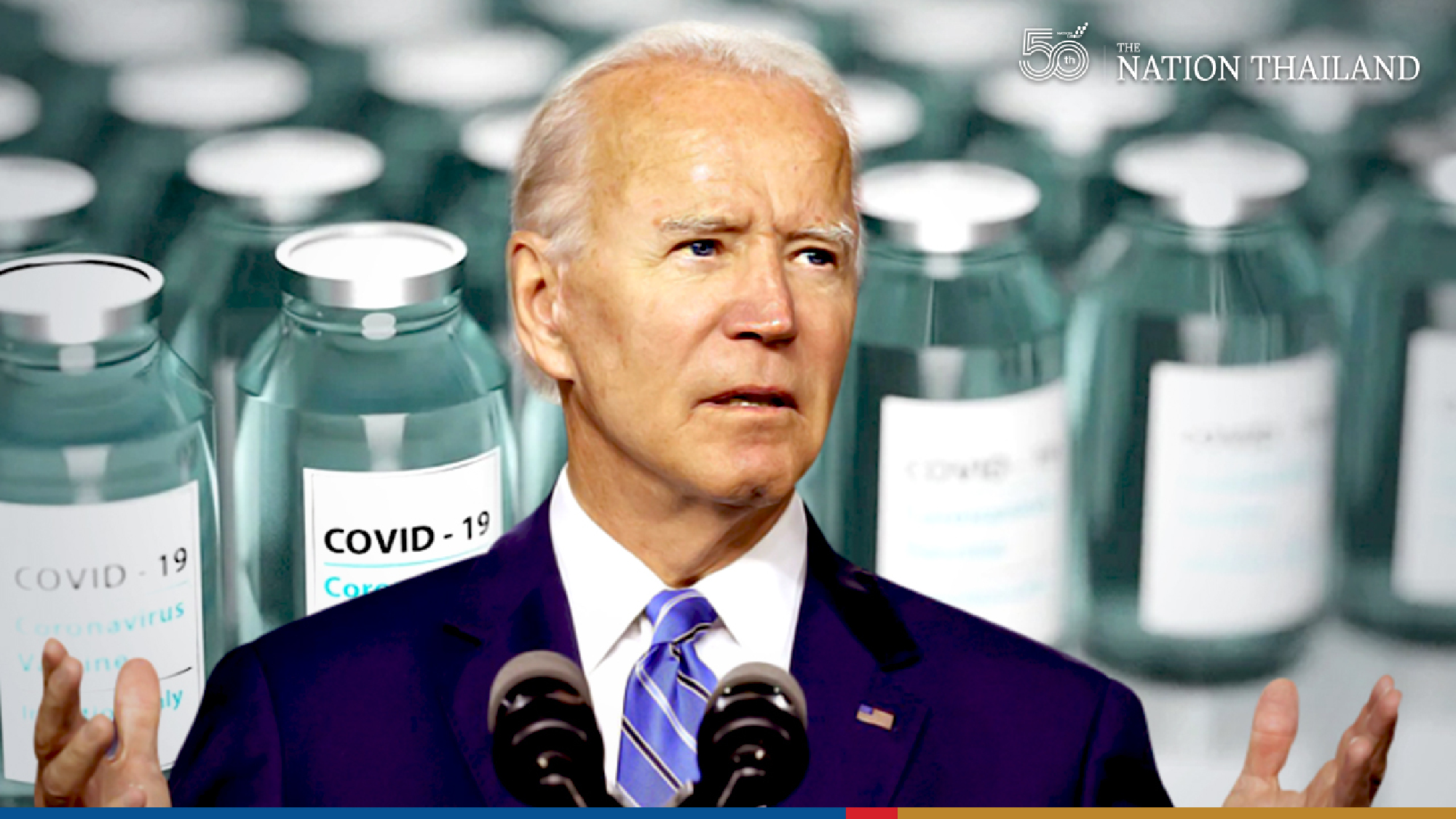
President Joe Biden announced Monday that his administration will send at least 20 million doses of U.S.-authorized coronavirus vaccines abroad by the end of June, a decision that followed months of calls for the United States to do more to close the growing vaccine gap.
This is the first time the United States has agreed to share vaccines approved for domestic use, namely the Pfizer-BioNTech, Moderna and Johnson & Johnson shots. It will add to the 60 million doses of the AstraZeneca vaccine the country already pledged.
The decision to donate a share of the country’s considerable surplus signals the administration’s recognition that inequity in access may prolong the pandemic, as well as Biden’s desire to engage in the type of “vaccine diplomacy” that China and Russia have been touting for months.
But 20 million, or even 80 million, doses represent just a tiny fraction of what experts say is need to end the pandemic.
– – –
Is 20 million doses a lot?
It depends how you look at it.
For the large number of countries still scrambling to secure vaccines, any boost to global supply is good news. While the United States, Israel, Britain and a small number of other countries press ahead with well-stocked vaccination campaigns, most rollouts are just getting started. Reaching as many as possible, as quickly as possible, is critically important.
Biden also stressed that the number of doses the United States is donating exceeds what other countries are giving. He noted, for instance, that the country has promised to share 13% of vaccine produced domestically – five times more than any other country. (France has promised 500,000 doses by June and at least 5% of its total doses by the end of 2021; New Zealand pledged 1.6 million doses.)
Viewed from a different perspective, 20 million looks modest. The United States and other relatively wealthy countries bought up a disproportionate share of near-term supply, effectively cutting others out. Researchers from Duke University estimated last month that the United States could have 300 million surplus doses by this summer. Some argue that the U.S. should have shared more, sooner.
U.S. donations to date represent a fraction of what is needed to vaccinate the world. A World Health Organization-backed push to distribute vaccines, for instance, aims to deliver up to 2 billion doses this year, with an eye to vaccinating 20% of the populations of countries in need – a target it may not hit.
Citing a severe supply crunch exacerbated by the crisis in India, the initiative, known as Covax, said this week that it is expecting a 190 million-dose shortfall by June. India was expected to play a critical role in supplying Covax, but vaccine exports have plummeted amid a domestic surge in cases. A spokesman for India’s Ministry of External Affairs said he had no information on the timeline for resuming exports.
“The clearest pathway out of this pandemic is a global, equitable distribution of vaccines, diagnostics and therapeutics,” read a UNICEF statement published Monday. “But COVAX is undersupplied.”
– – –
Why not just increase supply?
Nearly everyone agrees that upping supply is essential, but there is little consensus on how to do it.
After months of criticism and accusations of “vaccine apartheid,” the Biden White House recently threw its support behind a proposal to waive intellectual property protections for coronavirus vaccines, a decision seen by liberals as a step toward vaccinating those in need, but staunchly opposed by the pharmaceutical industry and some foreign governments.
Negotiations over the proposal are underway, but will probably take months. The head of the World Trade Organization said she will press member countries to reach an agreement no later than December – far away as the pandemic rages on.
After Biden’s turnaround, the European Union said it was open to talks. Germany remains skeptical. “The protection of intellectual property is a source of innovation and must remain so in the future,” a spokeswoman for the government recently said, according to German news media.
Even those who support the proposal emphasize that a waiver alone is not a meaningful step unless it is coupled with a broader effort to transfer technology and know-how to places where the doses are needed most.
– – –
What comes next?
For next steps on vaccine equity, the world will be watching a health summit in Rome this week, when European officials are expected to sketch out their vision for vaccinating the world. Some anticipate that E.U. leaders will focus less on the waiver proposal and more on plans to boost manufacturing, particularly in low-income countries.
Those waiting for the next big U.S. move probably will have to wait longer. Biden hinted Monday that next steps will be coordinated with close allies, particularly at the Group of Seven meeting next month.
“I expect to announce progress in this area at the G-7 Summit in the United Kingdom in June which I plan on attending,” he said Monday. “This is a unique moment in history, and it requires American leadership.”
Covax is already urging participants to act quickly to donate doses and to sketch out plans to narrow the vaccine gap in the months and years ahead.
Israel says it will step up strikes on Hamas tunnels despite cease-fire calls as clashes erupt in the West Bank
TEL AVIV – The Israeli military Tuesday said it plans to expand its bombardment of the Hamas tunnel networks that run under civilian areas in Gaza in the coming days despite growing international calls for a cease-fire. Violence engulfed the occupied West Bank, where Palestinians held demonstrations in solidarity.
In a day of escalating conflict on multiple fronts, at least three Palestinians in the West Bank died and more than 120 were injured, many by live ammunition, in confrontations with Israeli soldiers, health authorities there said.
Israeli commanders said protesters had “fired extensively’ at Israeli troops, injuring two soldiers. The Palestinian demonstrations, in the West Bank and towns across Israel, came on the ninth day of conflict between Hamas and Israel.
Rocket sirens sounded across southern Israel Tuesday as volleys were fired from Gaza following Israeli airstrikes overnight. Two Thai workers in Israel were killed in rocket strikes, Israeli police said.
Earlier in the day, the Israeli military said 62 fighter jets dropped 110 “guided armaments” overnight on targets in Gaza, focusing on the Hamas tunnel networks that snake under densely populated territory.
President Joe Biden has joined growing international calls for a cease-fire, but there was no sign the operation was coming to an end. Israeli military spokesman Lt. Col. Jonathan Conricus called the tunnels the “backbone” of Hamas’s operations and said the campaign to obliterate the subterranean network “will be expanded” in the coming days.
As long as the militant group can fire rockets, Conricus said, “the topic of any de-escalation is obviously not on the table.” He said targets would be chosen to avoid civilian casualties as much as possible.
But strikes are hitting tunnels under residential streets. At least 42 people were killed during Israeli airstrikes early Sunday, according to Gaza health authorities. Israel has said those were unintended casualties caused when buildings collapsed in strikes that targeted tunnels.
“That kind of event is something we are trying to minimize,” Conricus said.
Palestinian militants targeted Israeli towns and cities near Gaza with rockets and large-caliber mortar fire, the armed groups said in statements Tuesday.
Dramatic footage that circulated on social media showed a rocket slamming into the side of a high-rise building in Ashdod, an Israeli port city north of Gaza.
The two Thai workers were killed in the Eshkol region in southern Israel, police said. An Israeli soldier was injured in a mortar attack near the Gaza border, the Israeli military said.
The armed wing of Hamas said it had “bombarded” the city of Sderot, launched missiles at Ashdod and attacked a group of Israeli soldiers north of Gaza.
The fighting prompted Israel to close the Kerem Shalom border crossing that it said was opened briefly earlier Tuesday to allow some aid to enter the besieged enclave. The crossing is the main source of fuel for the Gaza Strip; shortages mean that many Gazans are getting only three or four hours of power a day.
Israel, under growing international pressure, has so far declined entreaties from outside mediators, including Egyptians, to halt its campaign, two officials familiar with cease-fire talks told The Washington Post. The officials spoke on the condition of anonymity to discuss negotiations.
“The [Israel Defense Forces are] not talking about a cease-fire,” the military’s chief spokesman, Brig. Gen. Hidai Zilberman, told Israel’s Army Radio on Tuesday, Reuters reported. “We’re focused on the firing.”
U.S. Secretary of State Antony Blinken said the United States received intelligence from Israel on the bombing Saturday of the high-rise building in Gaza that housed the Associated Press and other outlets.
“We did seek further information from Israel on this question,” the secretary of state said at a news conference in Iceland. “It’s my understanding that we’ve received some further information through intelligence channels, and it’s not something I can comment on.”
The 12-story al-Jalaa tower was destroyed during an Israeli bombardment of Gaza City that followed a barrage of Hamas rocket fire from the Gaza Strip. The attack drew international condemnation. Israel said the tower contained military assets belonging to Hamas.
Palestinians called a general strike Tuesday in solidarity with Gaza and against the Israeli occupation. Peaceful protests took place in many towns and cities. The strike, organized by an array of grass-roots groups and political parties, was also taken up by Arab communities in Israel.
Ines Abdel Razak, a Palestinian activist from Jerusalem, described the strikes as a “moment of mobilization and rising.”
“I think we’re all trying to follow and build this momentum,” she said.
Shops closed their shutters in Jerusalem, the West Bank and in mixed cities and Arab neighborhoods in Israel from Lod to Jaffa and Haifa. Construction sites lay idle. Many students stayed home from school. Some restaurants in West Jerusalem closed or served limited menus as Palestinian workers stayed away.
“Everybody is taking part in the strike because people felt that the threat is very close to them,” said Raja Zaatary, a spokesman for the Arab High-Follow Up Committee, one of the organizers.
“People say it’s not just about Gaza and Jerusalem and al-Aqsa,” he said, referring to a key mosque in Jerusalem. “It’s about our neighborhoods, our houses, our future.”
For some it meant putting their livelihoods at risk. Aya Baidossi, a 23-year-old architect from Baqa Gharbiya in northern Israel, said she sent her boss a message Monday saying she would not be coming into work because of the strike. After a brief text exchange, she said, she was fired.
Baidossi said she “was always far from politic,” but joined in the strike because “I want to join with my people. . . . We feel that this country is not giving us our rights.”
But in the West Bank, some demonstrations turned to bloodshed. In Ramallah, protesters chanted and waved Palestinian flags under a cloud of dark smoke from burning tires. Then demonstrators marched toward the nearby Israeli settlement of Beit El.
Israeli drones were soon shown on a live broadcast dropping tear gas canisters on demonstrators. Medics ferried the wounded to ambulances. Protesters threw stones at army vehicles. The Israeli military said soldiers were fired on from among the demonstrations – an unusual occurrence in the routine clashes between Palestinians and security forces.
Palestinian health authorities said at least 14 people were injured by live ammunition in Ramallah. Another 25 people in Nablus, three in Bethlehem and one in Jenin suffered gunshot wounds, they said.
The Israeli military said soldiers thwarted an attack by an armed Palestinian man in the restive city of Hebron.
In Gaza, the Israeli assault has devastated the civilian infrastructure, according to the United Nations and relief agencies, disrupting power lines, sanitation networks and other basic services.
Airstrikes have damaged or destroyed nearly 450 buildings across Gaza, displacing more than 52,000 people, a spokesman for the U.N. Office for the Coordination of Humanitarian Affairs said Tuesday in Geneva.
Of those displaced, about 47,000 have sought refuge in 58 U.N.-run schools in Gaza, the United Nations said.
Published : May 19, 2021
By : The Washington Post · Loveday Morris, Miriam Berger, Hazem Balousha, Erin Cunningham
Biden proposes billions for cybersecurity after wave of attacks
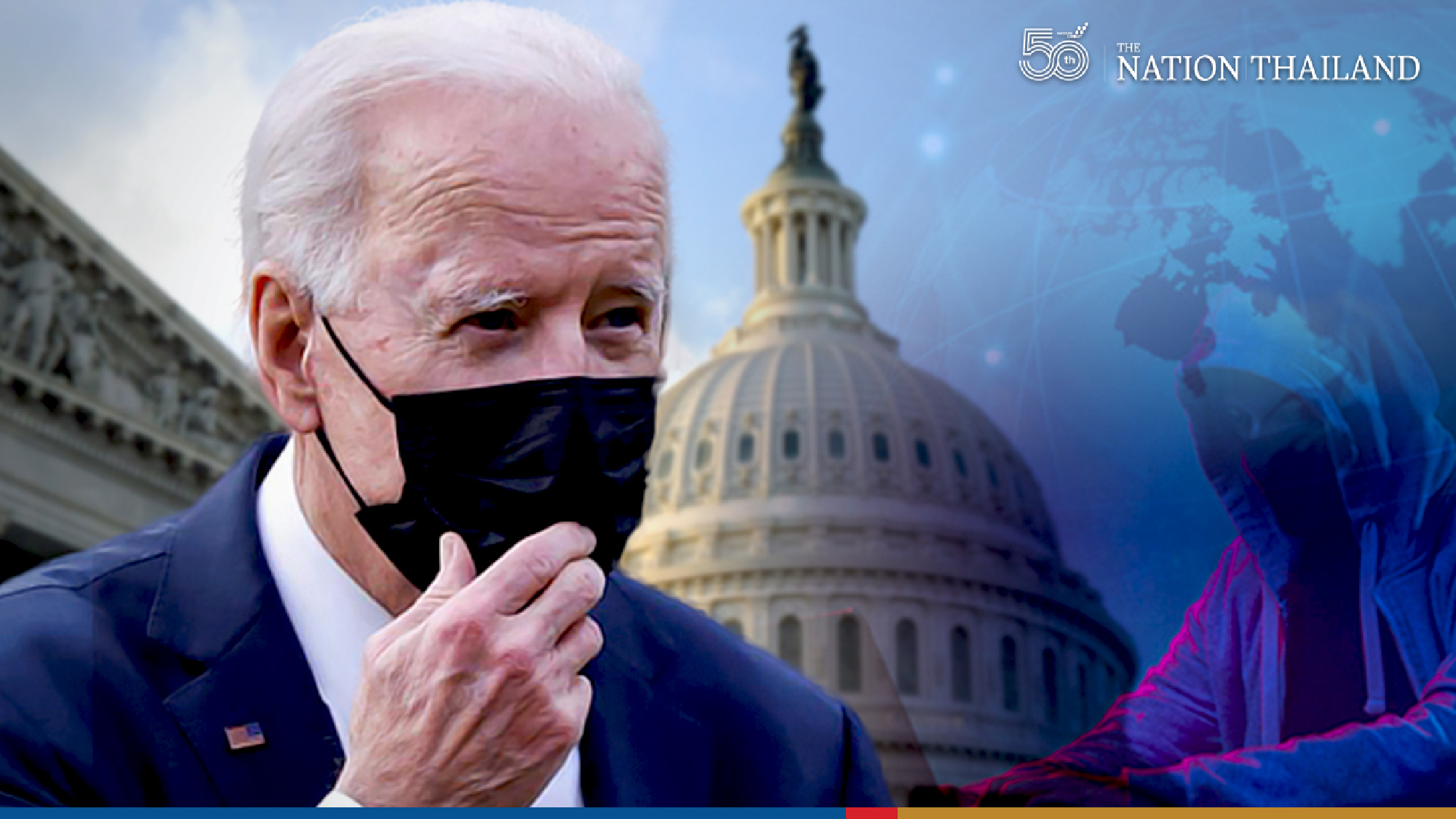
President Joe Bidens infrastructure proposal includes billions of dollars tied to improving cybersecurity, an area of intensified interest after the ransomware attack on the Colonial Pipeline Co. sent U.S. gasoline prices soaring last week.
But the exact amount that will be spent on improving cyber defenses remains to be seen.
The $2 trillion American Jobs Plan, as the infrastructure proposal is known, includes $20 billion for state, local and tribal governments to modernize their energy systems contingent upon meeting cybersecurity standards, as well as $2 billion for grid resilience in high-risk areas that will be contingent on meeting cybersecurity targets, the White House said in a fact sheet obtained by Bloomberg News ahead of its release Tuesday.
The administration is also characterizing the plan’s call for $100 billion for high-speed broadband access as part of its wider security effort, since grant recipients will be asked to source from “trusted vendors” and implement cybersecurity measures. In addition, the plan lays out a new tax credit for transmission infrastructure that the administration believes will encourage stronger cyber capabilities.
The White House is negotiating with a group of Senate Republicans on an infrastructure bill that would include much of Biden’s proposal, with a counter-proposal expected from the senators on Tuesday. The original infrastructure plan, which was released at the end of March, doesn’t mention the need for cybersecurity spending.
Administration officials, speaking on the condition of anonymity to preview the outline of cybersecurity proposals, stressed that the jobs plan proposals are just one part of a broader effort to elevate cyber issues across the federal government. “Cybersecurity is one of the preeminent challenges of our time, which is why President Biden has made strengthening U.S. cybersecurity capabilities a top priority,” the White House said in the fact sheet.
Biden signed an executive order on May 12 intended to improve the federal government’s information sharing about cyberattacks with the private sector while adopting better safety practices throughout the government. The order is intended to help the U.S. respond more swiftly to attacks on both public and private infrastructure.
Biden’s fiscal 2022 budget blueprint, released last month, included $2.1 billion for the Cybersecurity and Infrastructure Security Agency, $110 million more than its funding for 2021. The American Rescue Plan, signed by Biden in March, authorized an additional $1.65 billion for cybersecurity efforts. That includes $1 billion for the federal government’s Technology Modernization Fund, which will go toward immediate security upgrades and a shift to a secure cloud infrastructure, and $650 million for CISA to improve its response capabilities and to upgrade its ability to support security projects at federal departments and agencies.
The Colonial attack is the latest in a series of devastating hacks against American government agencies, businesses and health facilities. They include a cyber-attack by Russian hackers that targeted software updates in Texas-based SolarWinds Corp., which were then received by some of its customers. In all, nine government agencies and about 100 companies were infiltrated by the Russian hackers, using the SolarWinds’s backdoor and other methods.
The pipeline ransomware attack came after the Biden administration had announced several initiatives to try to curb ransomware, a type of attack in which hackers encrypt computer files and demand payment to restore access. The number of ransomware attacks has been growing in recent years and the targets have included hospitals, schools, businesses and police departments. The Colonial attack was attributed to a group called DarkSide. Biden and cybersecurity experts said there is some evidence linking the group to Russia.
While the administration’s proposals don’t yet explicitly offer aid to companies such as Colonial, officials said they plan to extend federal funding to the oil and gas sector in the coming weeks. In the meantime, senior administration officials called for private companies to help themselves by prioritizing spending on the security of its operational systems.
The Biden administration began a 100-day effort in April to improve the cybersecurity of electric utilities’ industrial control systems. It plans to move on to natural gas, water supply and chemical pipelines, Biden said last week as he responded to the Colonial crisis.
Published : May 19, 2021
By : Syndication Washington Post, Bloomberg · Jennifer Epstein, Kartikay Mehrotra
U.S. stocks declined for a second day with losses steepening in the final 15 minutes of trading as investors weighed the rush to reopen the economy against inflationary pressure from a rise in commodity prices.
All three of the main U.S. equity benchmarks closed lower after megacap technology stocks including Amazon.com Inc., Microsoft Corp. and Alphabet Inc. erased earlier gains. Nine of the main 11 S&P 500 industry groups declined, with energy stocks leading losses as oil prices dropped amid a report that significant progress has been made to revive the U.S.-Iran nuclear deal. AT&T Inc. plunged the most in the benchmark gauge after the company said it plans to spin off its media operations. Walmart Inc. rallied the most in six weeks after boosting its profit outlook.
Stocks have been volatile after touching a record in early May as investors assessed economic growth prospects against a covid-19 resurgence in countries including India. Minutes from the latest Federal Reserve meeting, due Wednesday, may offer clues on inflation pressure and hints of a timeline for tapering stimulus. Fed Vice Chair Richard Clarida said Monday that the weak U.S. jobs report showed the economy had not yet reached the threshold to warrant scaling back asset purchases. Inflation concerns intensified last week when the government reported the fastest increase in consumer prices since 2008 and commodities from iron ore to Brent crude rose to multiyear highs.
“The market has been trying to process a very unusual economic environment and a confluence of factors that it has not faced for a long time,” said David Donabedian, chief investment officer of CIBC Private Wealth Management. “It’s a new set of circumstances for markets, so we’ve had more churn over the last couple of weeks. I personally would say that the stock market has absorbed it all extremely well because there’s still a high conviction view on earnings being strong.”
Global investor sentiment is “unambiguously bullish,” Bank of America Corp. strategists led by Michael Hartnett said, citing the firm’s latest fund manager survey. Inflation topped the list of the biggest tail risks, followed by a bond market taper tantrum and asset bubbles, while covid-19 was only in fourth place.
“The fact that inflation and interest rates are on the way up, I think we have to recognize that returns overall in the U.S. equity market from this point will be very modest and perhaps volatile compared to what we have enjoyed especially over the last 12 to 15 months,” Abby Joseph Cohen, senior investment strategist at Goldman Sachs Group Inc., said in an interview on Bloomberg TV. “What appeals to me is that investors are acting like investors again. There is less emphasis on momentum and there’s more emphasis on relative valuation and which of the companies that have the strongest cash flow growth and are investing that cash flow growth.”
West Texas Intermediate crude extended declines after the BBC Persian news channel, citing Russian diplomat Mikhail Ulyanov, reported that a major announcement may be made on Wednesday regarding talks to broker an agreement between Iran and the U.S. and revive the 2015 nuclear deal. A return to the accord could allow for the removal of U.S. sanctions on Iran’s crude exports and bring more supply to the market.
Elsewhere, bitcoin fell to the lowest since February after the People’s Bank of China reiterated that the digital tokens cannot be used as a form of payment. Coinbase Global Inc. fell after Monday’s drop below the reference price used in its April direct listing.
These are some of the main moves in markets:
Stocks
– The S&P 500 fell 0.9% as of 4:07 p.m. EDT
– The Nasdaq 100 fell 0.7%
– The Dow Jones industrial average fell 0.8%
– The MSCI World index was little changed
Currencies
– The Bloomberg Dollar Spot Index fell 0.3%
– The euro rose 0.6% to $1.2226
– The British pound rose 0.4% to $1.4187
– The Japanese yen rose 0.3% to 108.92 per dollar
Bonds
– The yield on 10-year Treasuries was little changed at 1.64%
– Germany’s 10-year yield advanced one basis point to -0.10%
– Britain’s 10-year yield was little changed at 0.87%
Commodities
– West Texas Intermediate crude fell 1.2% to $65 a barrel
– Gold futures rose 0.1% to $1,870 an ounce
Published : May 19, 2021
By : Syndication Washington Post, Bloomberg · Claire Ballentine, Vildana Hajric
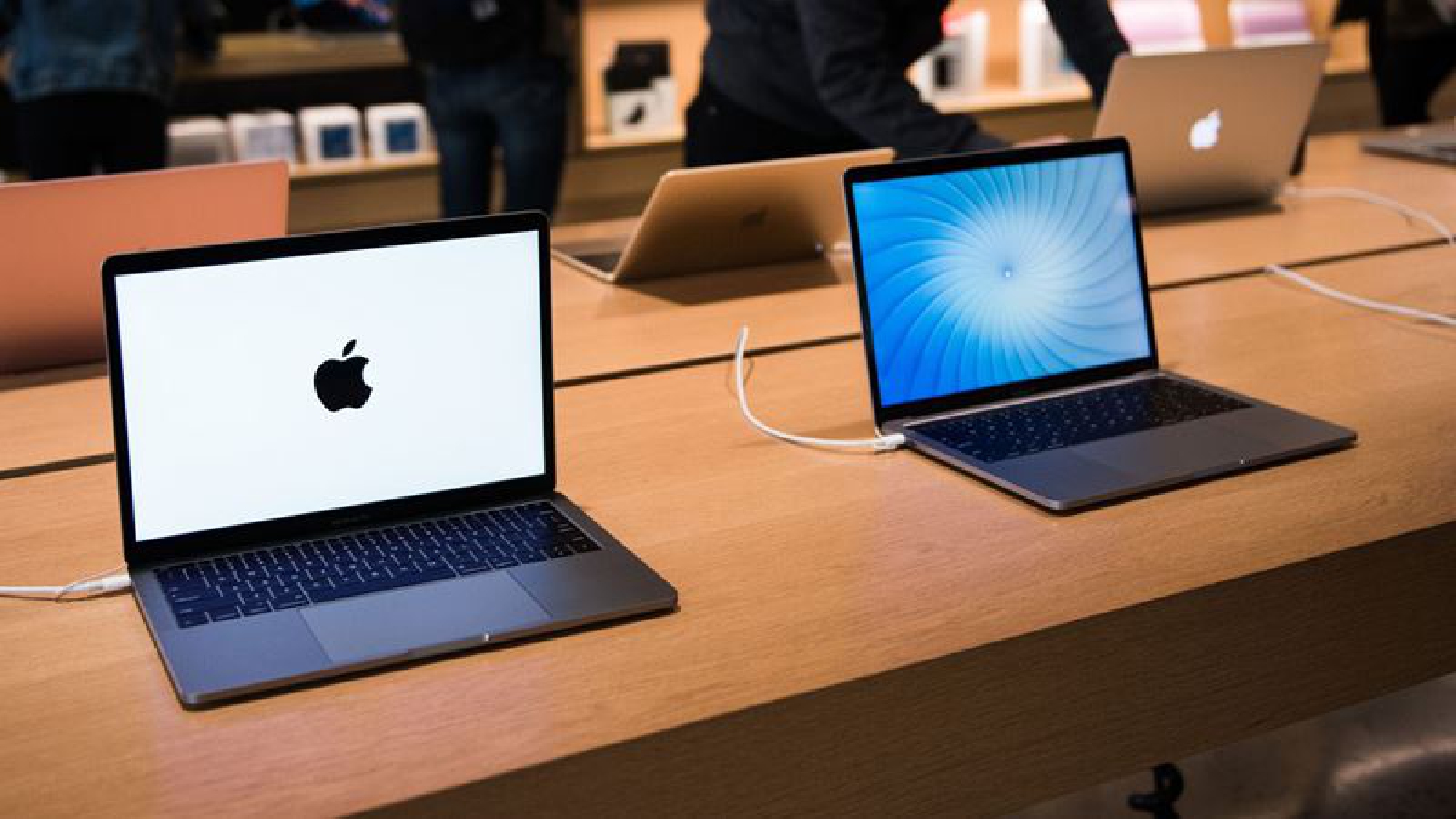
Apple is preparing to release several new Mac laptops and desktops with faster processors, new designs and improved connectivity to external devices, accelerating the companys effort to replace Intel chips and leapfrog rival PC makers.
The overhaul encompasses a broad range of Macs, including Apple’s higher-end laptop, the MacBook Pro; the laptop aimed at the mass market, the MacBook Air; and its desktop computers, the Mac Pro, iMac and Mac mini, according to people familiar with the matter.
Redesigned MacBook Pros are expected to debut as soon as early this summer, said the people, who requested anonymity to discuss an internal matter, followed by a revamped MacBook Air, a new low-end MacBook Pro and an all-new Mac Pro workstation. The company is also working on a higher-end Mac mini desktop and larger iMac. The machines will feature processors designed in-house that will greatly outpace the performance and capabilities of the current M1 chips, the people said.
Apple plans to launch the redesigned MacBook Pros in 14-inch (code name J314) and 16-inch screen (J316) sizes. They’ll have a redesigned chassis, magnetic MagSafe charger and more ports for connecting external drives and devices. Apple is also bringing back the HDMI port and SD card slot, which it nixed in previous versions, sparking criticism from photographers and the like.
Apple on Tuesday said the new 24-inch iMac will be available in stores on May 21. The shares were mostly unchanged.
PC shipments jumped 32% in the first quarter, Gartner said last month, the fastest year-over-year growth since the firm began tracking the market in 2000. Apple was the fourth-leading seller with 15% of the U.S. market, an increase from 12% in the quarter a year earlier, and 8% globally.
The Mac line of products has been a growing contributor to the company’s revenue, generating $9.1 billion in Apple’s January-March quarter, or 10% of total sales.
Apple last fall started replacing Intel processors with M1 chips, based on the same technology in the iPhone and iPad. Those eat less power and let the Mac run the same apps as the mobile devices. Now more powerful iterations of the company’s silicon are coming to the Mac line. They’ll have more graphics and computing cores, boosting speeds for everyday tasks and such intensive work as video editing and programming.
For the new MacBook Pros, Apple is planning two different chips, codenamed Jade C-Chop and Jade C-Die: both include eight high-performance cores and two energy-efficient cores for a total of 10, but will be offered in either 16 or 32 graphics core variations.
The high-performance cores kick in for more complex jobs, while the energy-efficient cores operate at slower speeds for more basic needs like web browsing, preserving battery life. The new chips differ from the M1’s design, which has four high-performance cores, four energy-efficient cores and eight graphics cores in the current 13-inch MacBook Pro.
The chips also include up to 64 gigabytes of memory versus a maximum of 16 on the M1. They’ll have an improved Neural Engine, which processes machine-learning tasks, and enable the addition of more Thunderbolt ports, which let users sync data and connect to external devices, than the two on the current M1 MacBook Pro.
This will be the first time professional Macs get in-house main processors; eventually the company will stop selling the high-end Intel MacBook Pros.
Apple has also been working on a more powerful version of the Mac mini (code name J374) with the same chip as the next MacBook Pro. It’s expected to have four ports versus the pair available on the current low-end version and to sit above the current entry-level M1 Mac Mini. Apple could delay or cancel the new mini’s launch — as it has in the past — but eventually the company will likely replace the Intel-equipped version it now sells.
An Apple spokeswoman declined to comment.
Buyers of the high-end Mac Pro desktop planned for next year will likely have a choice of two processors that are either twice or four times as powerful as the new high-end MacBook Pro chip.
Codenamed Jade 2C-Die and Jade 4C-Die, a redesigned Mac Pro is planned to come in 20 or 40 computing core variations, made up of 16 high-performance or 32 high-performance cores and four or eight high-efficiency cores. The chips would also include either 64 core or 128 core options for graphics. The computing core counts top the 28 core maximum offered by today’s Intel Mac Pro chips, while the higher-end graphics chips would replace parts now made by Advanced Micro Devices.
The new Mac Pro has been in the works for several months and is expected to look like a smaller version of the current design, which was launched in 2019, Bloomberg News has reported. Apple has also been working on a larger iMac with in-house processors, but development of that version was paused months ago in part to let Apple focus on releasing the redesigned 24-inch model this month.
For a redesigned, higher-end MacBook Air planned for as early as the end of the year, Apple is planning a direct successor to the M1 processor. That chip, codenamed Staten, will include the same number of computing cores as the M1 but run faster. It will also see the number of graphics cores increase from seven or eight to nine or 10. Apple is also planning an update to the low-end 13-inch MacBook Pro with that same chip.
As early as 2022, Apple plans to replace the last remaining Intel part with an in-house version. Apple’s current M1 Macs still use an Intel component known as a USB Retimer, which helps power the USB-C and Thunderbolt ports on its computers.
Published : May 19, 2021
By : Syndication Washington Post, Bloomberg · Mark Gurman
Japanese doctors call for Olympics cancellation as Tokyo struggles to contain covid
A major Japanese physicians group has joined the chorus of voices calling on Tokyo and the International Olympic Committee to cancel the upcoming 2020 Tokyo Games.
The appeal, made in a letter to Japanese Prime Minister Yoshihide Suga that was released this week, comes amid concerns that the health-care system in Asia’s second-largest economy cannot accommodate both the potential medical needs of thousands of international athletes, coaches and media while fighting yet another spike in coronavirus infections.
The Japanese capital on Tuesday reported 732 new coronavirus infections and 19 of Japan’s 47 prefectures are operating under a state of emergency to combat the pandemic.
“We strongly request that the authorities convince the IOC that holding the Olympics is difficult and obtain its decision to cancel the Games,” said the Tokyo Medical Practitioners Association.
Tokyo hospitals “have their hands full and have almost no spare capacity,” the association of roughly 6,000 primary care physicians added.
The association is at least the second doctors’ group in recent weeks to call for the cancellation of the Olympics. It comes amid signs that Japanese public opinion has turned sharply against hosting the already-delayed Games this summer; one petition calling for the event’s cancellation has amassed over 370,000 signatures.
A poll released on Monday by the Asahi Shimbun indicated that just 14% of Japanese residents want the Games, which are set to kick off on July 23, to start as scheduled this summer.
Suga, the prime minister, has insisted that a “safe and secure” Olympics can be carried out. Only a single-digit percentage of the country’s seniors were vaccinated with at least one dose as of Sunday, one of the lowest rates in an advanced economy, the Nikkei has reported.
With over 25,000 new patients, Asean sees big jump in Covid cases
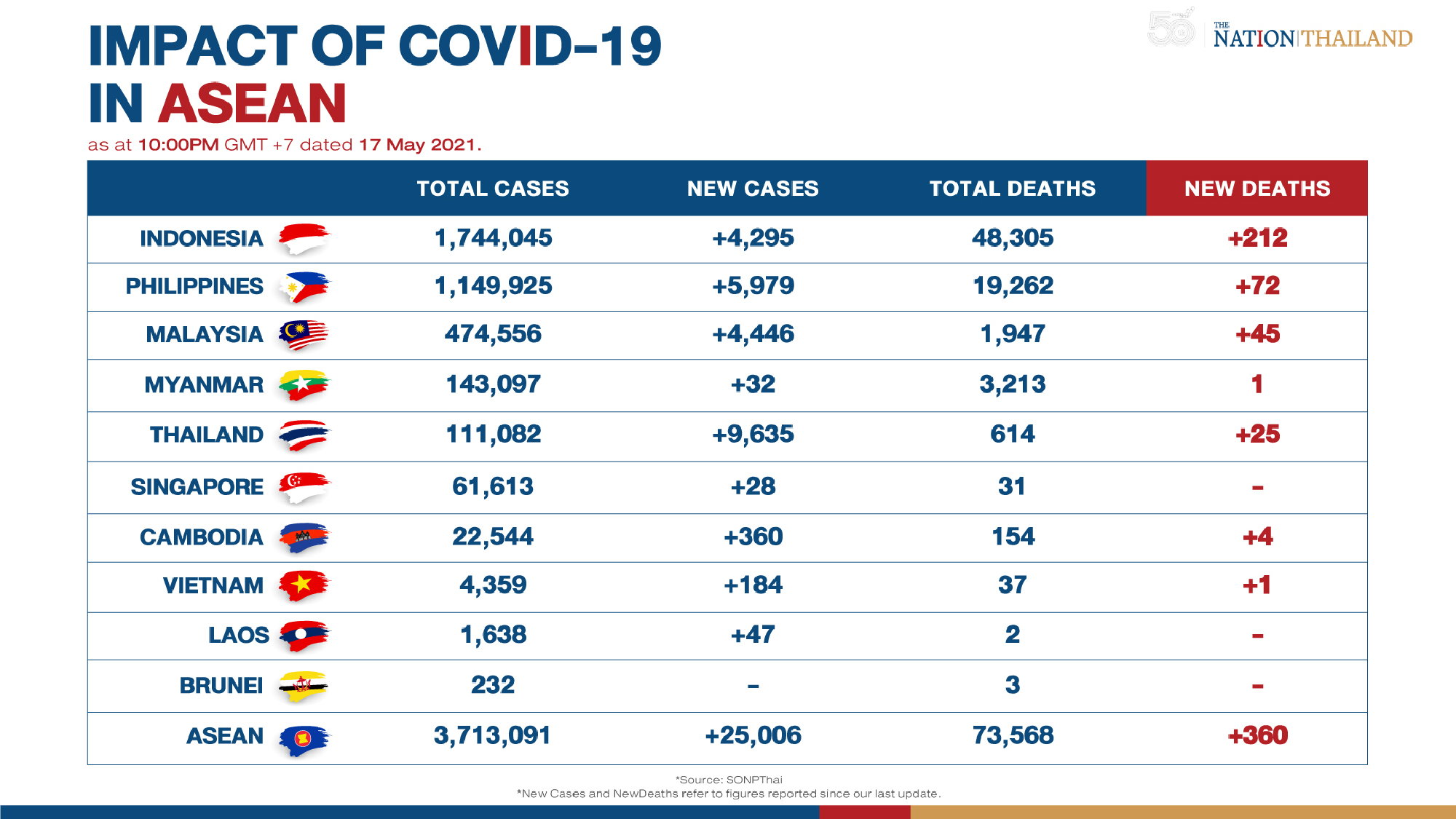
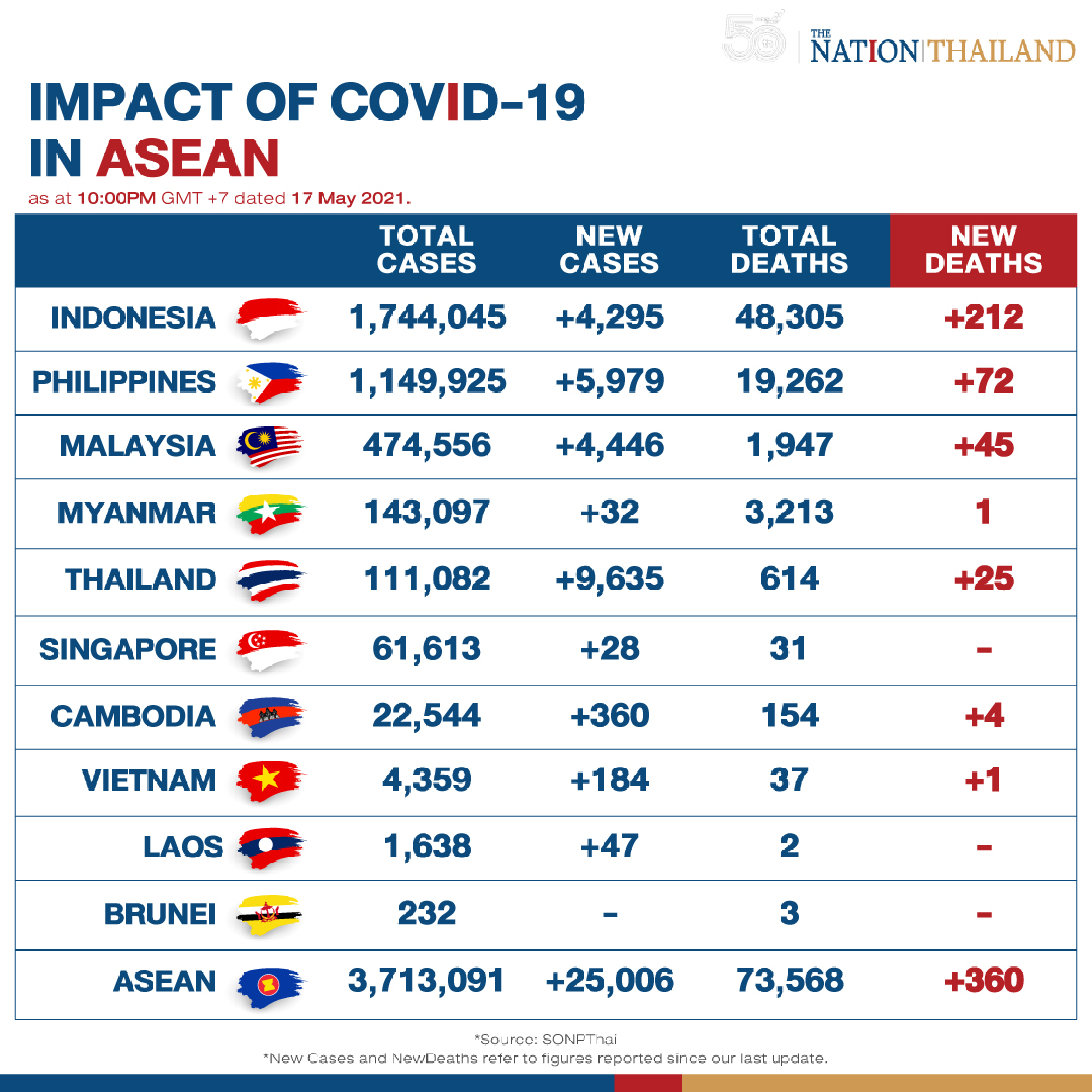
Asean countries saw a steep rise in Covid-19 cases on Monday, with 25,006 new patients compared to Sunday’s 15,568.
The total number of Covid-19 cases since the pandemic crossed 3.71 million across Southeast Asia.
The region also saw more deaths with 360 Covid-19 patients succumbing on Monday, up sharply from Sunday’s 229. Total deaths in Asean from Covid-19 have risen to 73,568.
Thailand had the highest number of new cases in Asean on Monday, mostly from cluster cases in prisons. With 9,635 cases and 25 deaths, Thailand’s cumulative total climbed up to 111,082, while 614 have died so far.
Other countries in the region, except Singapore and Vietnam, also reported higher infections on Monday. Vietnam reported 184 new cases, only slightly lower than Sunday’s 190 which was the highest number of infections the country had seen on a single day.
Brunei was the only country in Asean to report no new cases on Monday. Cumulative cases in the country totalled 232 with three deaths so far.
With over 25,000 new patients, Asean sees big jump in Covid cases






 With over 25,000 new patients, Asean sees big jump in Covid cases
