CDC says fully vaccinated Americans no longer need masks indoors or outdoors in most cases #SootinClaimon.Com

#SootinClaimon.Com : ขอบคุณแหล่งข้อมูล : หนังสือพิมพ์ The Nation.

https://www.nationthailand.com/international/40000857

CDC says fully vaccinated Americans no longer need masks indoors or outdoors in most cases


WASHINGTON – Americans who are fully vaccinated can go without masks or physical distancing in most cases, even when they are indoors or in large groups, federal officials said Thursday, paving the way for a full reopening of society.

CDC says fully vaccinated Americans no longer need masks indoors or outdoors in most cases

The change represents a huge shift symbolically and practically for pandemic-weary Americans, millions of whom have lived with the restrictions for more than a year. A growing number have complained they cannot do more even after being fully vaccinated and criticized the Centers for Disease Control and Prevention for being overly cautious. More than 154 million Americans have had at least one shot and 117 million are fully vaccinated, about 35% of the population.

“We have all longed for this moment when we can get back to some sense of normalcy,” CDC Director Rochelle Walensky said at a briefing. “Based on the continuing downward trajectory of cases, the scientific data on the performance of our vaccines and our understanding of how the virus spreads, that moment has come for those who are fully vaccinated.”

Walensky cited a growing body of real-world evidence demonstrating the efficacy of the coronavirus vaccines and noted the shots offer protection even against more contagious variants circulating in the United States. She also noted the rarity of breakthrough infections in those who are fully vaccinated and the lesser severity of the relatively few infections that have occurred.

She did leave open the possibility that the restrictions could return should the pandemic worsen. “This past year has shown us that this virus can be unpredictable,” she said.

The relaxation of masking does not apply to airplanes, buses, trains and other public transportation, to health-care settings, or where state or local restrictions still require them, Walensky said. Officials also noted that some business settings may require masks, especially since some workers may remain unvaccinated.

Walensky urged those who are immune-compromised to speak with their doctors before giving up their masks, and said that those who are not vaccinated remain at risk for mild or severe illness and death and should still wear masks.

“The science is . . . very clear about unvaccinated people,” she said. “You remain at risk of mild or severe illness of death of spreading the disease to others. You should still mask and you should get vaccinated right away.”

The updated guidance means that millions of fully vaccinated Americans can begin returning to pre-pandemic activities, including in-person school and work, which many have eschewed since March 2020. Individuals are considered fully vaccinated two weeks after the one-dose Johnson & Johnson shot or the second dose of either the Pfizer-BioNTech or Moderna vaccines.

In part as a result of that mass vaccination effort, the country is seeing the lowest number of new daily cases it has had in eight months, and deaths have decreased from a high of about 3,000 per day on average in January, to about 600 per day, as many of the most vulnerable, including the elderly, have been inoculated.

“This is a day that I think will be marked as a true turning point in the pandemic in the United States,” said Richard Besser, former acting director of the CDC and president and chief executive of the Robert Wood Johnson Foundation. “The idea that people who are fully vaccinated can take off their masks, can go outside, can go inside, be around people and not have to worry about covid anymore, that’s absolutely huge.”

Appearing in the White House Rose Garden without a mask Thursday afternoon, President Biden celebrated the update as “a great day for America” and said fully vaccinated people can shake hands and hug again without fear of contracting covid-19. Biden had been criticized for wearing a mask during his recent speech to Congress.

The president, who has set a goal that 70% of American adults be vaccinated by July Fourth, also praised those who had gotten the shots. “When your country asked you to get vaccinated, you did,” he said. “The American people stepped up. You did what I consider to be your patriotic duty. That’s how we have gotten to this day.”

Still, the guidelines left many unanswered questions, especially for businesses struggling with how to protect employees when they return to the workplace, essential workers who have frequent contact with the public and the parents of children younger than 12 who are still ineligible for the shots.

One leading business group said the updated guidance underscores the uncertainty faced by companies trying to decide precautions in the absence of a uniform standard.

Harold Kim, president of the U.S. Chamber Institute for Legal Reform. said commercial establishments have faced an evolving set of federal, state and local guidelines throughout the pandemic – sometimes at odds with one another. “We never had a playbook,” he said.

A union representing 1.3 million grocery and retail workers criticized the guidance as confusing and said it failed to consider the impact on essential workers who face frequent exposure to individuals who are not vaccinated and refuse to wear masks.

“Millions of Americans are doing the right thing and getting vaccinated, but essential workers are still forced to play mask police for shoppers who are unvaccinated and refuse to follow local COVID safety measures,” said Marc Perrone, president of the United Food and Commercial Workers. “Are they now supposed to become the vaccination police?”

A public health law expert said the CDC “has now lurched from overcaution to abandoning caution.”

“It’s clear that outdoor activity is safe without masks and distancing, but indoor venues still pose risks,” said Lawrence Gostin, faculty director of the O’Neill Institute for National and Global Health Law and Georgetown University Law Center. “The difference between a supermarket, a restaurant or a gym (where masks aren’t required) and an airport (where they are) doesn’t make sense and isn’t supported by science.”

The new CDC guidance is likely to be echoed by state and local governments, who typically follow the lead of federal health officials, said Michael Fraser, chief executive of the Association of State and Territorial Health Officials, which represents public health agencies.

Fraser called the policy “a sensible approach, knowing what we know today, which is different from what we knew two months ago or six months ago.”

Federal, state and local officials have worked to counter vaccine indifference or hesitancy by sending out mobile clinics to rural and other hard-to-reach areas and administering vaccinations at sports games and offering incentives such as free tickets, beer, and hunting licenses for those who get a shot.

Ohio’s Republican governor, Mike DeWine, upped the ante Wednesday by saying that five state residents who are vaccinated could win $1 million in a vaccination lottery; he announced a separate drawing for vaccinated teenagers who will be eligible for a full four-year scholarship to state universities.

The Biden administration is also working to boost vaccine education to persuade those who are hesitant to get the shots.

“There’s still work to be done to help people who are questioning, or [who] don’t trust the vaccines. And I’m hoping some of this attention to the ability to do more will motivate some,” said Julie Morita, executive vice president of the Robert Wood Johnson Foundation and a member of Biden’s transition covid-19 task force.

Sen. Susan Collins, R-Maine, who had grilled Walensky about what Collins had described as overly restrictive guidance at a hearing earlier this week, praised the mask update, but said it was overdue.

“It’s so important that people be able to have confidence in CDC’s guidelines because otherwise they won’t follow them,” Collins said, adding the agency had “lagged the science and the overwhelming opinion of public health experts” on wearing masks outside and on its recommendations for summer camps.

In its summer camp guidance, the CDC has said that masks should be worn by vaccinated adults and children at all times, including outdoors, except when swimming and eating.

Collins, who acknowledged that Maine is a major location for summer camps, called on the agency to update that as well. She noted that children 12 years old and over can now be vaccinated, and that even though younger children can’t get the shots, almost all camp activities are outdoors.

Children under 12 years old who are unvaccinated still need to take precautions, including wearing a well-fitted mask, and the agency is looking to update its guidance for camps soon, said CDC spokesman Jason McDonald.

Others shared Collins’ view that the update was overdue but lauded that it was done.

“This is an important recognition that the level of covid risk for most people has fallen substantially,” said Scott Gottlieb, an FDA commissioner under President Donald Trump. “. . . We’re well served by CDC’s move today to relax their guidance and give a green light to those who felt bound by their mandates.”

Carlos del Rio, professor of medicine at Emory University in Atlanta, said he believed the update would persuade more people to get the shots.

“Young people say, ‘Why should I get vaccinated? I’m not going to die of this.’ What they want to hear is, ‘You can take your mask off,'” del Rio said, adding that it doesn’t help to promote vaccinations if officials tell people to “get vaccinated, but do the same thing.”

Others defended the CDC, saying it had to move cautiously with a new and unpredictable virus, and arguing that updated guidance was appropriate only after there was sufficient evidence the vaccines were as effective in the real world as they had been in clinical trials.

“To expect the CDC to be nimble and make decisions before it gets the data it needs would be a big mistake,” Fraser said.

Jason Schwartz, an assistant professor of health policy and management at the Yale School of Public Health, acknowledged mixed messages from the CDC but said that reflected “earlier stages of the pandemic and earlier stages of our knowledge about how the virus transmitted.”

Published : May 14, 2021

By : The Washington Post · Yasmeen Abutaleb, Laurie McGinley
Biden announces $7.4 billion to hire more public health workers amid pandemic #SootinClaimon.Com

#SootinClaimon.Com : ขอบคุณแหล่งข้อมูล : หนังสือพิมพ์ The Nation.

https://www.nationthailand.com/international/40000856

Biden announces $7.4 billion to hire more public health workers amid pandemic


WASHINGTON – The White House announced Thursday that it is investing $7.4 billion to hire more public health workers to deal with the coronavirus pandemic and future health crises. The money will come from the $1.9 trillion coronavirus relief package, which Congress passed in March.

Biden announces $7.4 billion to hire more public health workers amid pandemic

The funds could give a much-needed boost to America’s crumbling public health infrastructure. After decades of chronic underfunding, U.S. public health departments last year showed how ill-equipped they are to carry out basic functions, let alone serve as the last line of defense against the most acute threat to the nation’s health in generations.

The Biden administration said $4.4 billion will go toward boosting states’ overstretched public health departments, allowing them to hire disease specialists to do contact tracing, case management, and support outbreak investigations and school nurses to help schools reopen. Some of the money will also go to expanding the Epidemic Intelligence Service at the Centers for Disease Control and Prevention – which plays a critical role in containing outbreaks.

The remaining $3 billion will be used to create a new grant program to train and modernize the country’s public health workforce. Applicants for those grants will be asked to prioritize recruiting staff from the communities they will serve, especially those from underrepresented backgrounds.

In the years before the pandemic struck, local public health agencies had lost almost a quarter of their overall workforce since 2008 – a reduction of almost 60,000 workers, according to national associations of health officials. The agencies’ main source of federal funding – the CDC’s emergency preparedness budget – had been cut 30 percent since 2003.

A new report published this month by the nonprofit Trust for America’s Health found that the underfunding of U.S. public health played an outsized role in the country’s disastrous response.

In the wake of the pandemic, America has spent trillions of dollars. Much of that could have saved if the nation had just spent a few billion more on public health in the previous years, the report found.

“Unfortunately, a pattern has emerged: the country temporarily pays attention to public health investment when there is a crisis and then moves on when the emergency passes,” the report concluded. “This boom-bust cycle has left the nation’s public health infrastructure on weak footing.”

Among the report’s recommendations is that Congress establish an annual, regularly occurring $4.5 billion infusion to public health to prepare for future crises, including the next pandemic.

A majority of America supports such funding, according to a poll released Thursday by the Robert Wood Johnson Foundation and Harvard T.H. Chan School of Public Health. The poll found 71% of the public favors substantially increasing federal spending on improving the nation’s public health programs. In addition, 72% said they believe the activities of public health agencies in the United States are extremely or very important to the health of the United States.

Published : May 14, 2021

By : The Washington Post · William Wan

Covid cases pass 3.6 million in Asean countries #SootinClaimon.Com

#SootinClaimon.Com : ขอบคุณแหล่งข้อมูล : หนังสือพิมพ์ The Nation.

https://www.nationthailand.com/international/40000821

Covid cases pass 3.6 million in Asean countries


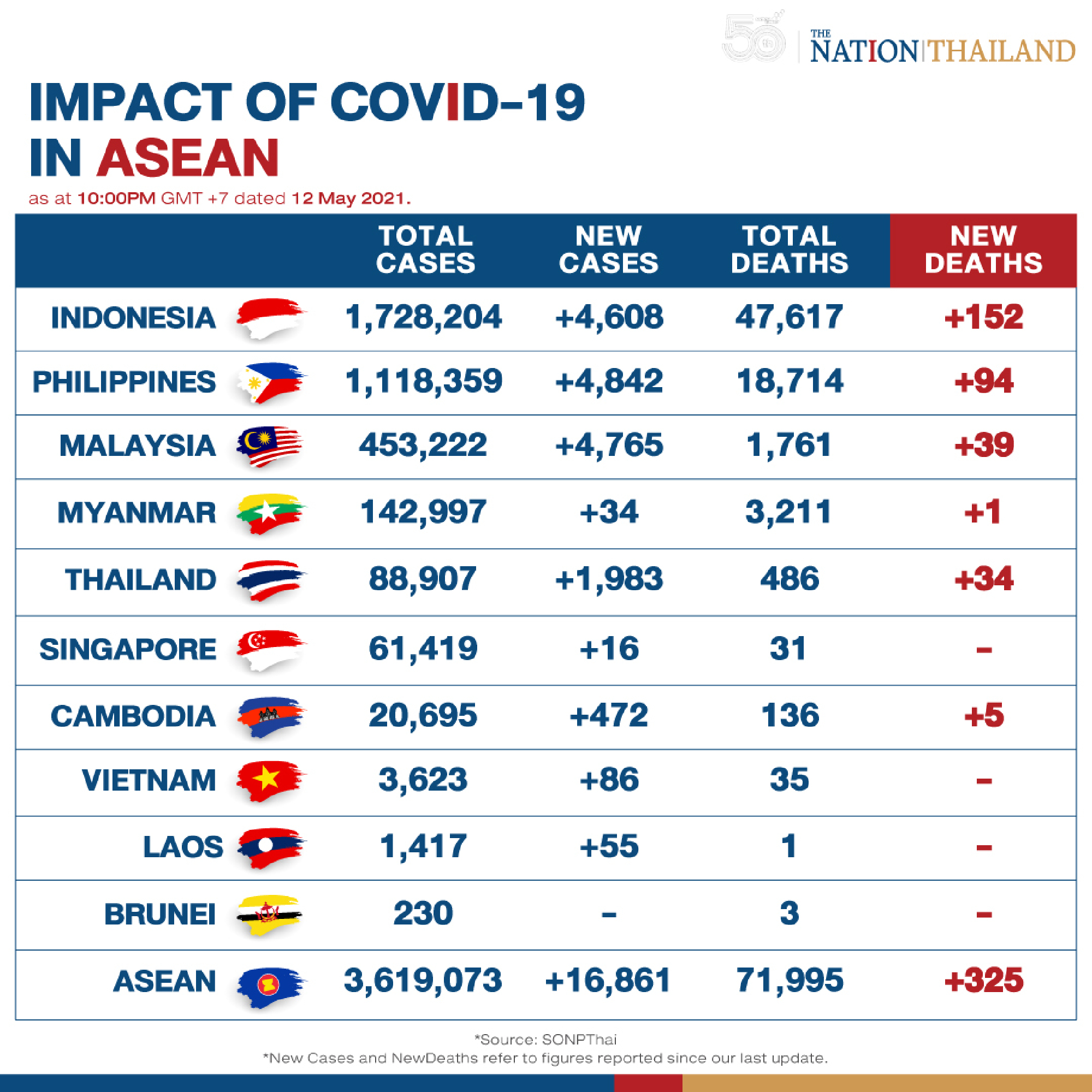
The number of Covid-19 cases crossed 3.61 million across Southeast Asia, with 16,861 new cases reported on Thursday, slightly higher than Wednesday.

Covid cases pass 3.6 million in Asean countries

Laos confirmed 55 new cases, bringing the number of its patients to 1,417. The country’s National Centre for Laboratory and Epidemiology said the transmission has become common within families, particularly after people failed to comply with regulations such as self-isolating and reducing the chances of infecting family members.

Malaysia meanwhile recorded its highest daily death toll of 39 on Wednesday, surpassing the previous high of 26 recorded on Sunday and bringing the national death toll to 1,761 as new infections rose by 4,765 cases.

As that nation entered another national lockdown, the Health Ministry warned the number of new daily infections may exceed 5,000 by the middle of this month and urged the public to adhere to strict anti-Covid measures, especially during Hari Raya festivities.

Moreover, Malaysia has confirmed that 62 domestic Covid-19 cases are of the South African B.1.351 variant while two cases are related to the Indian B.1.617.

Published : May 13, 2021

By : THE NATION

Gold slumps after U.S. inflation comes in higher than expected #SootinClaimon.Com

#SootinClaimon.Com : ขอบคุณแหล่งข้อมูล : หนังสือพิมพ์ The Nation.

https://www.nationthailand.com/international/40000819

Gold slumps after U.S. inflation comes in higher than expected


Gold fell, pressured by gains in bond yields and the dollar after consumer price data showed the U.S. experienced higher-than-expected inflation in April.

Gold slumps after U.S. inflation comes in higher than expected

CPI data showed prices grew 0.8% from a month earlier, four times the median analyst estimate and the highest since 2009, intensifying the already-heated debate about how long inflationary pressures will last. Treasury yields and the greenback gained on the news, while U.S. equities declined. Rising yields reduce non-interest-bearing bullion’s appeal, and a stronger dollar hurts the precious metal as it’s priced in the greenback.

Markets were already concerned about rising inflation amid surging commodity prices, which sparked a sell-off in global equities on Tuesday. Higher prices could prompt the Federal Reserve to raise rates earlier than expected, hurting certain stocks as well as gold.

“Gold is approximately 50% correlated with Treasuries, so it gets hit as interest rates rise. On top of that, the dollar is rallying on higher U.S. rates,” said Jay Hatfield, president of Infrastructure Capital Management. “The stock market dipping on the inflation data showed that investors fear that the Fed may need to tighten soon.”

Policymakers at the central bank have been unified in supporting the case for low interest rates. “The outlook is bright, but risks remain, and we are far from our goals,” Governor Lael Brainard told a virtual event Tuesday. Cleveland Fed President Loretta Mester and James Bullard of St. Louis voiced similarly dovish views.

The CPI data comes amid concerns the economic recovery may not be proceeding as hoped. Gold rose to the highest in three months earlier this week after a report Friday showed a surprise slowdown in U.S. job growth, supporting the case for continued economic stimulus.

Spot gold retreated as much as 0.9% to $1,820.86 an ounce after the news, before trading at $1,823.49 at 11:44 a.m. in New York. Prices hit $1,845.51 on Monday, the highest since Feb. 11. Silver, platinum and palladium fell. The Bloomberg Dollar Spot Index strengthened 0.6% though remained near the lowest since early January.

Published : May 13, 2021

By : Syndication Washington Post, Bloomberg · Yvonne Yue Li

Oil extends gain with U.S. crude supply falling for second week #SootinClaimon.Com

#SootinClaimon.Com : ขอบคุณแหล่งข้อมูล : หนังสือพิมพ์ The Nation.

https://www.nationthailand.com/international/40000818

Oil extends gain with U.S. crude supply falling for second week


Oil advanced as a second straight weekly decline in U.S. crude inventories bolstered the outlook that the world has drained a record supply glut built up last year.

Oil extends gain with U.S. crude supply falling for second week

Futures in New York rose as much as 2.1% on Wednesday, while global benchmark Brent crude neared $70 a barrel. A U.S. government report showed domestic crude inventories fell to the lowest since late February last week. Meanwhile, gasoline supplies rose by 378,000 barrels, the Energy Information Administration report showed.

Declining crude stockpiles in the U.S. support the International Energy Agency’s view that the world has largely worked off the surplus it accumulated when the pandemic devastated demand. While the agency cut its oil consumption forecasts in a monthly report, it said the glut is now just a small fraction of levels seen at the depths of the coronavirus fallout last year.

“Inventories are still trending in the right direction,” said Quinn Kiley, a portfolio manager at Tortoise, a firm that manages roughly $8 billion in energy-related assets. “The economy globally is reopening and that should continue, so we should see continuing draws.”

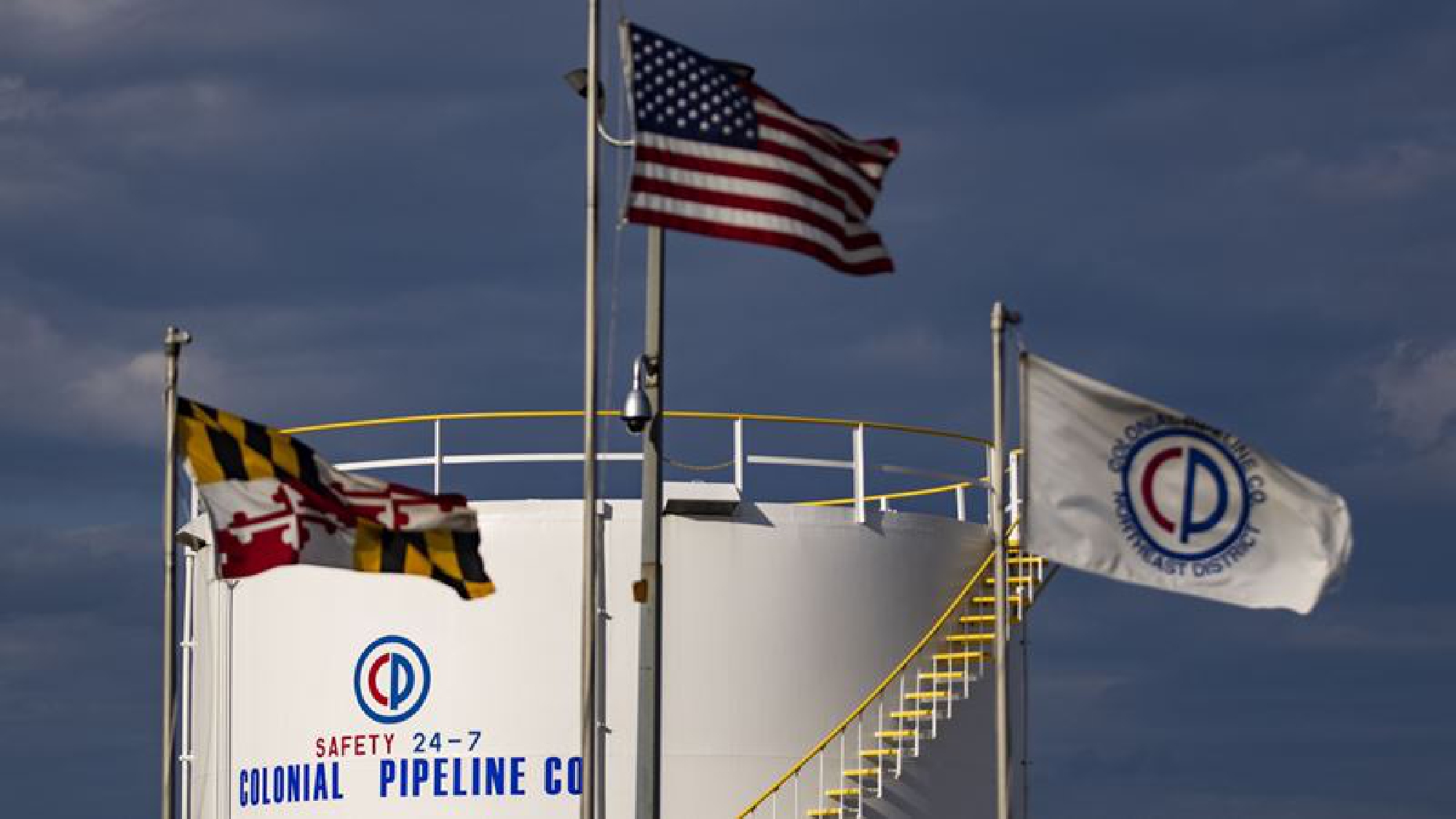
The weekly storage report shows domestic supply levels ahead of the cyberattack that halted the largest U.S. oil-products pipeline system. Panic-buying spurred by the ongoing outage of the Colonial Pipeline has pushed retail gasoline prices above $3 a gallon for the first time in more than six years, before the upcoming summer travel season unleashes a wave of pent-up demand from over a year of mobility restrictions.

Still, the impact of the shutdown on headline crude prices is muted for now. The market remains buoyed by prospects for recovering energy demand around the world and broader bets on global inflation. U.S. consumer prices rose by 0.8% last month, exceeding forecasts, official figures showed Wednesday.

“The outlook for demand remains fragile,” Toril Bosoni, head of the IEA’s oil markets and industry division, said in a Bloomberg television interview. But the agency is “expecting a very strong recovery in demand growth in the second half of the year.”

West Texas Intermediate for June delivery was up $1.25 at $66.53 a barrel as of 11:05 a.m. in New York. Brent for July settlement climbed $1.31 to $69.86 a barrel. The U.S. average retail gasoline price was at $3.008 a gallon, according to auto club AAA.

The EIA report showed crude exports falling by the most on record to the lowest since 2018. While the figure jumped above 4 million barrels a day the previous week, it has struggled to consistently top 3 million barrels a day for several months.

The report also points to the state of gasoline inventories on the U.S. East Coast before Colonial was idled. Stockpiles of the fuel in the Central Atlantic fell 1.15 million barrels last week, though they remained near the region’s five-year average, providing some cushion to last through the pipeline outage. But in the Lower Atlantic, which is the most reliant on the pipeline, gasoline inventories were at their lowest since 2016 for this time of year, even with a 815,000-barrel build last week.

Even if Colonial does manage to restart on Wednesday, it’ll take days to fully restore shipments, according to U.S. Energy Secretary Jennifer Granholm. As part of the administration’s effort to ease the growing burden on consumers, regulators have taken a first step toward waiving rules that bar foreign ships from hauling products from one U.S. port to another.

Published : May 13, 2021

By : Syndication Washington Post, Bloomberg · Andres Guerra Luz

Stocks, bonds decline amid price pressure concerns #SootinClaimon.Com

#SootinClaimon.Com : ขอบคุณแหล่งข้อมูล : หนังสือพิมพ์ The Nation.

https://www.nationthailand.com/international/40000817

Stocks, bonds decline amid price pressure concerns


U.S. stocks slumped for a third day and bond yields climbed after a report showed inflation rose more than forecast, adding to concern that price pressures will stifle a recovery in the worlds biggest economy.

Stocks, bonds decline amid price pressure concerns

The technology sector continues to lead the retreat in equities, with Apple and Microsoft pacing declines in the Nasdaq 100. Cathie Wood’s ARK Innovation ETF resumed its slide, bringing this year’s loss to about 18%. After closing at a record high on Friday, the benchmark S&P 500 slumped the most since Feb. 25. Energy was the only one of the 11 industry sectors in the green. Treasury yields moved briefly off the highs of the day after a successful 10-year note auction.

“The markets have been hovering around all-time highs with a lot of the reopening trade already priced in,” said Mike Loewengart, managing director of investment strategy at E*Trade Financial. “So it’s not out of the question that the outsized inflation read could bring us back down to earth a bit.”

The debate over whether inflation will be persistent enough to force the Federal Reserve to tighten policy sooner than current guidance suggests comes as abundant stimulus has powered a rally in global equities, raising concerns valuations had become expensive. Fed Vice Chair Richard Clarida said he was surprised by the rise in consumer prices and “we would not hesitate to act” to bring inflation down to its goals if needed.

The consumer price index increased 0.8% from the prior month after a 0.6% gain in March. Excluding the volatile food and energy components, the so-called core CPI rose 0.9% from March.

“The CPI data point feeds into a myopic narrative that the U.S. is overheating and the Fed is one step away from tightening,” said Mike Bailey, director of research at FBB Capital Partners. “Bears will feast on this tightening theme in the short term, but my sense is inflation will prove fleeting and markets will revert back to a more bullish view of moderate growth and lower risk of Fed tightening until we get to a full recovery.”

Elsewhere, the claim among advocates that Bitcoin is an inflation hedge appears to be in question after the CPI report. The digital asset slumped as much as 5.8% to around $53,600.

European stocks closed mostly higher, lifted by optimism about economic re-openings and booming commodities.

Copper and iron ore were on course for records amid a broadening commodities boom. Oil was steady above $65 per barrel. The biggest U.S. pipeline is still closed in the wake of a cyberattack, leading to acute fuel shortages in some parts of the nation.

These are some of the main moves in markets:

Stocks

The S&P 500 fell 2.1%, more than any closing loss since Feb. 25 as of 4:04 p.m.EDT

The Nasdaq 100 fell 2.6%, falling for the third straight day, the longest losing streak since May 5

The Dow Jones industrial average fell 2%, more than any closing loss since Jan. 29

The MSCI World index fell 1.7%, more than any closing loss since Jan. 29

Currencies

The Bloomberg Dollar Spot Index rose 0.7%, more than any closing gain since April 30

The euro slipped 0.6%, more than any closing loss since April 30

The British pound slipped 0.6%, more than any closing loss since April 30

The Japanese yen slipped 0.9%, more than any closing loss since March 4

Bonds

The yield on 10-year Treasurys advanced seven basis points, more than any closing gain since March 12

Germany’s 10-year yield advanced four basis points, climbing for the sixth straight day, the longest winning streak since Feb. 8

Britain’s 10-year yield advanced five basis points, more than any closing gain since March 12

Commodities

West Texas Intermediate crude rose 0.8%, climbing for the fourth straight day, the longest winning streak since April 15

Gold futures fell 0.9% to $1,820 an ounce

Published : May 13, 2021

By : Syndication Washington Post, Bloomberg · Kamaron Leach, Vildana Hajric

U.S. agrees to remove xiaomi from blacklist after lawsuit #SootinClaimon.Com

#SootinClaimon.Com : ขอบคุณแหล่งข้อมูล : หนังสือพิมพ์ The Nation.

https://www.nationthailand.com/international/40000816

U.S. agrees to remove xiaomi from blacklist after lawsuit


Xiaomi Corp. and the U.S. government have reached an agreement to set aside a Trump administration blacklisting that could have restricted American investment in the Chinese smartphone maker.

U.S. agrees to remove xiaomi from blacklist after lawsuit

The Chinese smartphone giant had sued the government earlier this year, after the U.S. Defense Department under former President Donald Trump issued an order designating the firm as a Communist Chinese Military Company, which would have led to a de-listing from U.S. exchanges and deletion from global benchmark indexes. The U.S. Defense Department has now agreed that a final order vacating the designation “would be appropriate,” according to a filing to the U.S. courts Tuesday.

Xiaomi declined to comment. Chinese Foreign Ministry spokeswoman Hua Chunying said at a regular press briefing in Beijing she wasn’t aware of any deal the firm may have reached with the U.S.

“The Parties have agreed upon a path forward that would resolve this litigation without the need for contested briefing,” according to the filing, which didn’t state whether the agreement included any conditions for removal. The parties involved are negotiating over specific terms and will file a separate joint proposal before May 20.

The U.S. government remains concerned about American investments in companies linked to the Chinese military, said Emily Horne, a spokeswoman for the White House National Security Council.

“The Biden Administration is deeply concerned about potential U.S. investments in companies linked to the Chinese military and fully committed to keeping up pressure on such companies,” she said in a statement.

Shares of Xiaomi rallied as much as 6.7% in Hong Kong trading Wednesday, while the spread on its 2030 dollar note narrowed 10 basis points to 177, the smallest since January.

Xiaomi, which makes robot vacuum cleaners, electric bikes and wearable devices alongside smartphones, had been an unexpected target for the Trump administration. Co-founded by billionaire entrepreneur Lei Jun more than 10 years ago, with U.S. chipmaker Qualcomm Inc. as one of the earliest investors, the company has insisted it is not owned or controlled by the Chinese military.

A U.S. court in March sided with Xiaomi in the lawsuit and placed a temporary halt on the ban. U.S. District Judge Rudolph Contreras said at the time Xiaomi was likely to win a full reversal of the ban as the litigation unfolds and issued an initial injunction to prevent the company from suffering “irreparable harm.”

The agreement marks a rare victory for China’s technology giants caught in the crosshairs of the U.S. government, as the two nations clashed over issues ranging from trade to human rights and Hong Kong’s rule. Trump had signed an order in November barring American investment in Chinese firms owned or controlled by the military in a bid to pressure Beijing over what the U.S. has described as abusive business practices. The order against Xiaomi, alongside a handful of other Chinese firms, was issued in the waning days of his administration.

Trump had also gone after Chinese behemoths including ByteDance Ltd., owner of the hit video app TikTok, and Tencent Holdings Ltd., which owns the WeChat super app. Huawei Technologies Co. was the hardest hit, after it was barred from buying American-made components and shut out of infrastructure projects around the world.

There are signs the Biden administration intends to keep up the pressure on China, even as the U.S. backs away from the blacklisting of Xiaomi. It this week extended a 2019 executive order barring U.S. companies from using telecommunications equipment made by firms like Huawei that it accuses of posing a national security risk. Meanwhile, Congress is moving with increasing urgency on bipartisan legislation to confront China and bolster U.S. competitiveness in technology and critical manufacturing.

Published : May 13, 2021

By : Syndication Washington Post, Bloomberg

U.S. track team cancels Olympics training in Japan on virus #SootinClaimon.Com

#SootinClaimon.Com : ขอบคุณแหล่งข้อมูล : หนังสือพิมพ์ The Nation.

https://www.nationthailand.com/international/40000815

U.S. track team cancels Olympics training in Japan on virus


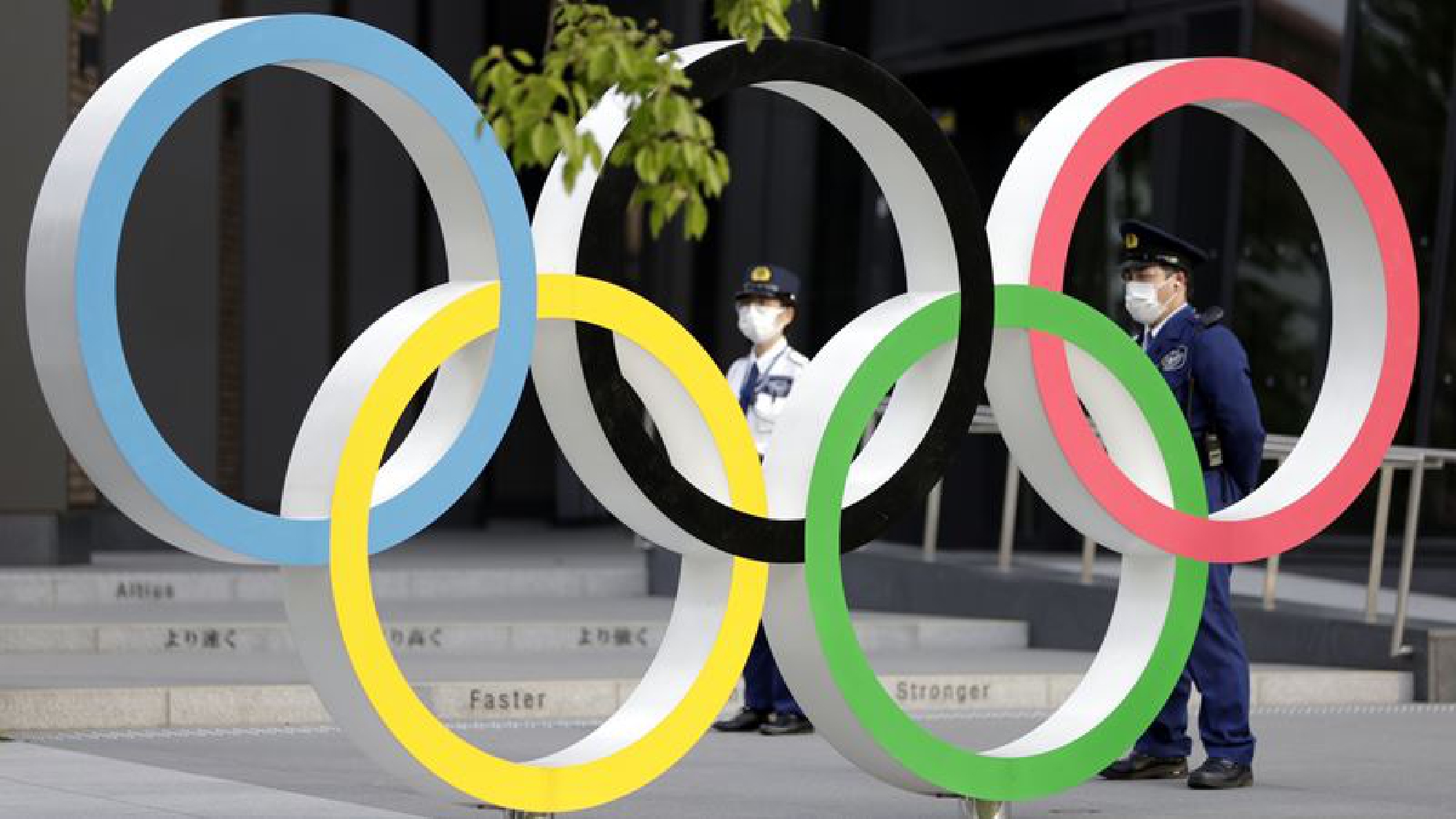
The U.S. national track & field team has canceled its training planned outside Tokyo for the 2020 Olympics due to safety concerns for the athletes, in another blow to the sporting event which has come under strong opposition from the Japanese public.

U.S. track team cancels Olympics training in Japan on virus

The U.S. team notified the decision last month to authorities in Chiba prefecture, located next to Tokyo, saying the pandemic would put athletes’ safety at risk, according to Takuya Iida, an official in charge of the training camps in the prefecture. The team had planned to train in July and August. Some other national teams have also canceled training camps for similar reasons, he said.

Earlier this week, International Olympic Committee President Thomas Bach postponed his trip to Japan this month after the government decided to extend the state of emergency in Tokyo and other areas due to concerns over a rise in virus cases.

Despite the infections, Japanese Prime Minister Yoshihide Suga, the Tokyo organizers as well as the IOC have repeatedly said the games will proceed from July 23 as planned in a safe environment. However calls from the Japanese public to cancel the event have been increasing, with nearly 60% of those surveyed voicing opposition in holding the event this summer, according to a Yomiuri poll published Monday. As of Wednesday, more than 330,000 people signed an online petition calling for the games to be called off.

Published : May 13, 2021

By : Syndication Washington Post, Bloomberg · Ayai Tomisawa

Amazon wins fight to throw out $303 million EU tax bill #SootinClaimon.Com

#SootinClaimon.Com : ขอบคุณแหล่งข้อมูล : หนังสือพิมพ์ The Nation.

https://www.nationthailand.com/international/40000814

Amazon wins fight to throw out $303 million EU tax bill


Amazon.com won its bid to topple a 250 million-euro ($303 million) tax bill in another blow to European Union competition chief Margrethe Vestagers crackdown on preferential fiscal deals.

Amazon wins fight to throw out $303 million EU tax bill

Regulators failed to show that the U.S. online retailer was given special treatment by Luxembourg’s tax authority in violation of state-aid rules, the EU General Court ruled on Wednesday.

Amazon’s victory follows last year’s landmark court defeat for the EU commissioner against Apple, which contested a record 13 billion-euro tax order. The tech giants were both targeted as part of Vestager’s eight-year crusade against allegedly unfair treatment doled out by EU nations such as Luxembourg, Ireland and the Netherlands to attract some of the world’s leading firms.

The European Commission “did not prove to the requisite legal standard that there was an undue reduction of the tax burden of a European subsidiary of the Amazon group,” the Luxembourg-based EU judges said.

It was not all bad news for Vestager, as judges rejected Engie’s appeal against an order to pay back about 120 million euros to Luxembourg. They also said that the commission “cannot be accused of having exceeded its powers,” by probing tax issues. Both of Wednesday’s decisions can be appealed.

Court challenges are piling up, as companies hit with tax-repayment orders from Vestager argue that deals to reduce their fiscal liabilities were legal before the EU labeled them as unfair subsidies. Since last year’s Apple case, EU enforcement against so-called tax rulings handed out by nations to selected businesses has slowed.

The Amazon “ruling is a blow” and “shows again that case-by-case investigations do not solve large-scale tax dodging,” said Chiara Putaturo, a tax expert with Oxfam EU. It “shows the urgent need for the EU to do more to end corporate tax avoidance and bolster government coffers to help fuel the recovery.”

How big companies reduce their tax bills has become a political focus with EU regulators planning a new tax on technology firms if global tax reforms can’t be agreed.

While the amount at stake in the Amazon case is relatively tiny following a record earnings quarter for the company, tax experts see the outcome of its appeal helping to shape ongoing cases. These include probes into Dutch tax treatment of Nike Inc. and Ikea units.

Amazon said the court’s decision “is in line with our long-standing position that we followed all applicable laws” and that the company “received no special treatment,” according to an emailed statement.

“We’re committed to Europe and follow the law in every jurisdiction in which we operate,” Amazon said. “We have invested 78 billion euros since 2010 and have 60 fulfilment centers, 100 corporate offices and development centers, and employ over 135,000 people in a wide variety of well-paid roles.”

The commission didn’t immediately respond to a request for comment.

Luxembourg’s finance ministry said the ruling in Amazon confirms that its tax treatment at the time wasn’t state aid. On Engie, Luxembourg “will examine the judgment with all due diligence and reserves all its rights,” the ministry said in a statement.

Amazon is one of several tech giants under fire for tax structures that may allow it to pay less than rivals. Its tax deal with Luxembourg, the base for the retailer’s European operations, allowed the company to cut its taxable profits “to a quarter of what they were in reality,” the commission decided in 2017.

The regulator found that Amazon’s tax rulings “significantly” reduced taxable profits and “did not reflect economic reality.” The structure was in place from May 2006 to June 2014, the EU said. The company then changed to a new structure.

In Engie’s case, the EU decided Luxembourg had selectively deviated from provisions of national law to help lower the tax bill for France’s former natural-gas monopoly.

Engie declined to immediately comment.

Amazon’s European retail business paid no corporate tax in Luxembourg last year, reporting a 1.2 billion euro loss which exempted it from corporate tax on revenue of 44 billion euros, the New York Times said this month.

Amazon said in a recent blog post that “what Amazon pays in corporate tax in an entity in Luxembourg with what Amazon pays Europe-wide” are often “wrongly conflated” in media reports.

“We pay corporate tax in countries across Europe amounting to hundreds of millions of euros, and we operate in full compliance with local tax laws everywhere,” it said.

Published : May 13, 2021

By : Syndication Washington Post, Bloomberg · Stephanie Bodoni

Whats behind the violence in Israel and Gaza? #SootinClaimon.Com

#SootinClaimon.Com : ขอบคุณแหล่งข้อมูล : หนังสือพิมพ์ The Nation.

https://www.nationthailand.com/international/40000813

Whats behind the violence in Israel and Gaza?


JERUSALEM – The worst violence in years continued to shake Israel and the Gaza Strip on Wednesday after a long night of Israeli airstrikes that were met by rocket fire from Palestinian militants.

Whats behind the violence in Israel and Gaza?

The death toll now includes 48 Gaza residents, including 14 children, according to Palestinian health officials. On the Israeli side, emergency response officials say that at least six people, including one teenager, are dead.

Meanwhile, Palestinian citizens of Israel poured into the streets despite the warnings of air raid sirens, burning cars and fighting with police.

The escalation follows weeks of clashes and demonstrations amid rising tensions in Jerusalem. On Monday morning, hundreds of Palestinians were injured in a police raid on the al-Aqsa Mosque compound in Jerusalem, one of the holiest sites in Islam. By the evening, militants in the Gaza Strip had fired rockets toward Jerusalem for the first time in years, and Israel responded with airstrikes.

A confluence of factors – some decades old, others more immediate – has contributed to the surging volatility and violence.

Here’s what you need to know.

– What’s behind the unrest in Jerusalem in recent days?

Monday began with more than 300 Palestinians – who had come to pray at al-Aqsa Mosque in Jerusalem’s Old City during the holy month of Ramadan – injured in clashes with Israeli forces, who fired rubber bullets, tear gas and stun grenades. Confrontations between Israeli police, Palestinian protesters and far-right Jewish Israelis continued throughout the day.

The city remained tense ahead of a contentious march by nationalist Jews, which was set to pass through Palestinian neighborhoods as part of a flag-waving Israeli holiday, Jerusalem Day. The route was to include Damascus Gate, one of the few centers of Palestinian life in the contested city. In recent weeks, Israeli forces and Palestinians have clashed over Israeli restrictions on nightly gatherings there after the Ramadan fast.

Soon before the march was due to proceed, Israeli authorities ordered it rerouted. Organizers called it off in protest but said participants should still gather at the Western Wall, the holiest site in the city for Jews, situated below al-Aqsa Mosque, which Jews call the Temple Mount compound.

That was around the same time that Hamas, an extremist group that controls the Gaza Strip, announced that it would fire rockets if Israeli settlers did not withdraw from al-Aqsa Mosque and Sheikh Jarrah, a predominantly Palestinian neighborhood of East Jerusalem where Arab families are facing evictions after years of court battles waged by Israeli settlers. The area has seen nightly confrontations between Israeli far-right nationalists and Palestinians, who have faced a heavy-handed police response.

– How did this escalate into rocket attacks and airstrikes?

On Monday evening, Hamas fired rockets toward Jerusalem and southern Israel. Israel responded with airstrikes that continued into Tuesday, and were met with even more fire. The Israel Defense Forces said that one rocket was being fired toward Israel every three minutes, on average.

Additional skirmishes broke out in the West Bank on Tuesday, resulting in hundreds of arrests and at least one Palestinian fatality.

The Israeli army said that of the more than 1,050 rockets and mortar shells Hamas fired at Tel Aviv since Monday – including ones that hit a bus and injured a 5-year-old child – 850 landed in Israel or were intercepted by its Iron Dome antimissile defense system.

Some 200 failed to clear the border and landed back in Gaza, the Israeli army said. Israeli residents who live near the Gaza Strip were told to stay home on Wednesday due to fears that they could be hit by rockets or targeted by snipers. Schools and businesses were closed across the area.

Officials on both sides are bracing for the conflict to grow even more deadly. By Tuesday, the focus had shifted to whether Israel and Hamas might return to war for the first time since 2014.

Israeli airstrikes also continued in Gaza. Health officials said that the strikes were adding new strain to an overwhelmed health-care system that has been grappling with a surge in coronavirus infections.

Whats behind the violence in Israel and Gaza?

https://www.washingtonpost.com/video/c/embed/fea451f8-a498-4866-b0f9-1e9e9bc724d6?ptvads=block&playthrough=false

– What are the political factors?

Israeli Prime Minister Benjamin Netanyahu is fighting for his political survival after four recent deadlocked elections that have left Israel in political turmoil. He is at the helm of a caretaker government as he fights corruption charges, while opposition parties struggle to form a viable alternative government.

The prime minister has aligned himself with far-right politicians. Among them are Itamar Ben-Gvir, head of the extremist Jewish Power party, who has been part of the confrontations in Sheikh Jarrah and around the Temple Mount.

Netanyahu’s critics say tensions have in part been permitted to escalate because he was distracted by these other affairs.

For Palestinians, several recent developments have stoked fears and frustrations over the future of their demands for sovereignty and rights in Jerusalem and an end to the Israeli occupation.

In late April, President Mahmoud Abbas, head of the Palestinian Authority, which has control over some parts of the West Bank, announced he was postponing what were supposed to be the first Palestinian elections in 15 years. In theory, the elections were to take place in the Israeli-occupied West Bank, Gaza Strip and East Jerusalem. But Abbas is at odds with Hamas, which rules in Gaza, and Israel has barred the Palestinian Authority from operating in East Jerusalem, where most Palestinians are not Israeli citizens. Abbas, who was lagging in polls, blamed the cancellation on Israel, saying it had not agreed to a mechanism for East Jerusalemites to vote.

Against that backdrop, Israeli restrictions around access to the Damascus Gate and al-Aqsa Mosque became flash points as many Palestinians gathered there to observe Ramadan.

– What else is at play here?

Conflicts around al-Aqsa Mosque have flared up before, igniting tensions around the Middle East. But in recent days, international attention has also increased around the decades-old legal battle in Sheikh Jarrah, where a group of Israelis is trying to evict and replace mostly refugee Palestinian families from homes. Many Palestinians say the case is emblematic of their displacement from Jerusalem. Palestinians citizens of Israel, as well as Palestinians in the West Bank and neighboring Arab countries, have been holding protests in solidarity with Sheikh Jarrah.

A final ruling by the Supreme Court was originally set for Monday – but it was postponed Sunday by Israel’s attorney general in an effort to de-escalate tensions.

In the meantime, Hamas, which has fought three wars with Israel, has sought to fill the political void. The militant group is also facing its own pressures in the Gaza Strip, which is beset by multiple humanitarian crises 14 years into an Israeli- and Egyptian-led siege.

Regionally, relations between neighboring Jordan, which is a custodian of the al-Aqsa Mosque, and Israel are tense. That’s in part because Israel has been growing closer with Arab gulf countries, such as the United Arab Emirates, with which it signed a normalization agreement in September. These developments have also angered Palestinians, who say these deals come at the expense of their rights.

– What could happen next?

The Israeli military has deployed 5,000 reservists and ramped up its presence at the Gaza border, and Netanyahu warned Tuesday that Israel intends to “increase both the intensity of the attacks and the rate of attacks.” Hamas has pledged to retaliate, while Palestinian Prime Minister Mohammad Shtayyeh has asked the United Nations Security Council to intervene.

In the past, Arab states including Egypt and Qatar have stepped in to mediate tentative cease-fires. An Egyptian official told the Associated Press on Tuesday that Cairo is working behind the scenes to negotiate a truce but that Israel’s actions in Jerusalem had complicated those efforts.

The United States, which has condemned the violence on both sides, is also working behind the scenes to de-escalate the conflict. The Biden administration is trying to work with Egypt to negotiate a cease-fire and plans to send an envoy to Israel on Wednesday, Axios reports.

Published : May 13, 2021

By : The Washington Post · Miriam Berger, Antonia Noori Farzan