Police shootings of children spark new outcry, calls for training to deal with adolescents in crisis #SootinClaimon.Com

#SootinClaimon.Com : ขอบคุณแหล่งข้อมูล : หนังสือพิมพ์ The Nation.

https://www.nationthailand.com/international/40000812

Police shootings of children spark new outcry, calls for training to deal with adolescents in crisis


Stavian Rodriguez squeezed his 15-year-old body through the drive-through window of the Okie Gas Express convenience store, poking his hands out first so police could see that they were empty. He jumped to the ground, holding his hands in the air, then lifted his shirt to reveal a gun tucked into his front waistband. Using the tips of his thumb and index finger, Rodriguez gently pinched the end of the barrel far from the trigger and dropped the weapon to the ground.

Police shootings of children spark new outcry, calls for training to deal with adolescents in crisis

As the gun hit the pavement, Rodriguez reached for his rear pocket; a volley of bullets burst out and the teenager sank to the ground, surveillance and camera footage show. Dozens of Oklahoma City police officers had responded last November to the 911 call at the convenience store, where Rodriguez was a robbery suspect. Five of them shot 13 bullets into the teen, from his head to his feet.

He is one of 112 children who have been fatally shot and killed by police between Jan. 1, 2015, and Monday, according to a Washington Post database that tracks fatal police shootings. Over the same period of time, 6,168 adults were shot by police.

“They knew he was a child. They were joking about whether he was in there calling his mom,” said Cameo Holland, Rodriguez’s mother, referring to conversations recorded on officers’ body cameras. “No one was asking, ‘How do we tactically approach this so no one dies today?’ “

The five officers who fired shots into Holland’s child are now facing first-degree manslaughter charges. This is a rare response by prosecutors who tend to side with police investigators who routinely clear officers of wrongdoing. Prosecutors must also consider whether they can persuade jurors, who tend to trust police more than other witnesses. The department said the officers shot because they perceived a threat, and the officers’ attorneys say the shooting was justified.

The long-standing question of how fatal police shootings of children could be avoided and lives spared has engulfed the nation in recent weeks. The debate was renewed by the death of 13-year-old Adam Toledo, who was killed by an officer on March 29 in Chicago and further fueled by another fatal police shooting of a knife-wielding 16-year-old, Ma’Khia Bryant, on April 20 in Columbus, Ohio.

Three other children were shot and killed by police during the three-week span between Toledo’s and Bryant’s deaths.

Police leaders have asked the public to withhold judgment in the Toledo and Bryant cases until the investigations into their shootings are complete. But they acknowledge that communities are less likely to listen as they become increasingly weary and distrustful of police. A Washington Post-ABC News poll in April showed that 55% of Americans said they were not confident that police are adequately trained to avoid excessive use of force – up from 52% in July and 44% in 2014.

Patrick Yoes, national president of the Fraternal Order of Police, said he hopes the public will recognize that officers are faced with instant life-or-death decisions and that even a child can be dangerous, especially if armed.

Of Officer Nicholas Reardon, who shot Bryant, Yoes said: “I assure you he wasn’t focused on her age. He was focused on the knife. He was looking to save a life. Even children can pose a threat.”

Lawrence Miller, a clinical, forensic and police psychologist based in Palm Beach County, Fla., said there is no national standard or set of protocols regarding how officers should handle encounters with children.

He and other police training experts said they know of no academies or programs that offer specialized training to officers in this area as they do for other segments of society, such as the mentally ill.

“They need to talk to them like they are children, not yell a bunch of commands at them,” Miller said.

Of the 112 people younger than 18 who have been fatally shot by police, according to The Post’s database, five were shot and killed by Columbus Police Department officers, the most of any single agency. Nine other departments had multiple fatal shootings of children. In the other 87 departments with such shootings since 2015, one child’s death was recorded.

The database shows that the circumstances leading to the shootings of children are varied, with about half beginning with a robbery, a traffic stop, a stolen car or a 911 call. Most of the incidents took place during daytime hours; one appears to have involved alcohol use by the child; 19 of the children were experiencing a mental health crisis at the time of the shooting.

The database shows that children are frequently armed with a gun or a knife during these fatal police encounters, but not as often as adults who die by police gunfire – 63% of the time for children vs. 76% for adults.

Sixty-six percent of the children who died in police shootings were Black, Latino, Asian or Native American compared to 44% of adults who were racial minorities.

Children also were more often shot while running from police: 50% compared to 33% of adults.

The youngest of the children who have died were 6-year-olds – Kameron Prescott in Texas and Jeremy Mardis in Louisiana. Both were killed as police fired at but missed the suspects who were their intended targets.

The renewed focus on shootings of children owes much to their visibility: Videos of the Toledo and Bryant killings went viral, prompting national protests and stinging rebukes of police from high-profile celebrities and politicians.

Public pressure prompted police officials to quickly release body-camera video of the incidents. In one, Bryant, who was Black, appears to be swinging a knife at two girls before she is shot. In another, Toledo, who was Latino, is running from police before he stops and turns, tossing an object that police say was a firearm. A split second later, after turning toward the officers with his hands raised, he is shot in the chest.

Among the 112 deaths of children in the database, five incidents have resulted in officers being criminally charged, according to a Post analysis. Four officers in three cases have been found guilty on charges that ranged from murder to aggravated assault. An officer in a fourth case faced a single homicide charge, which allowed jurors to chose between murder or manslaughter, but they ultimately acquitted him.

In the fifth case, the five officers who fired the lethal shots at Rodriguez last year were charged in March with first-degree manslaughter. They have pleaded not guilty. No trial date has been set.

Prosecutors dispute the police department’s and the union’s characterization of the events that led to Rodriguez’s death. The department initially said in a news release that the teen was shot because he “did not follow officers’ commands” and had been “holding a pistol” when he climbed through the window.

“Our brave officers leave their families behind and walk into dangerous situations every day to protect and serve this community,” Oklahoma City Fraternal Order of Police Lodge 123 Vice President Mark Nelson said in a statement several days after the shooting. “Officers often provide commands in tense moments to ensure the safety of all individuals involved. Police training and experience tells us furtive movements and a lack of following commands present a deadly threat.”

Since then, additional videos became public – from police body cameras, news camera crews and surveillance cameras – and a more complex picture of what happened that night in November began to emerge.

Court documents say security footage from inside the store, along with a police interview with the clerk, shows that the robbery began with Rodriguez pointing a gun at the employee as he demanded money. Another teen, 17-year-old Wyatt Cheatham, loaded packs of cigarettes into a backpack. (Cheatham entered a guilty plea on April 19 on a felony charge of robbery with a firearm.)

Both youths left the store briefly, and after about two minutes, Rodriguez returned alone and demanded more money, according to court records.

The clerk escaped through a window and used a security system to lock Rodriguez inside, court records say. He called 911 and officers poured into the parking lot within minutes, several taking cover behind the gas pumps.

For more than 10 minutes, officers yelled conflicting and overlapping commands to Rodriguez as he hid inside the store, video and court documents show. In charging documents, prosecutors said there appeared to be no commanding officer organizing the response.

Police body-camera videos also captured officers joking about Rodriguez and the robbery during the standoff. “He’s probably calling his mom,” one says. Another says, “Oops,” and Officer Bethany Sears laughs and adds, “I messed up,” speculating on the teenager’s state of mind as he hides.

Minutes later, Rodriguez stuck his hands through the window and pulled himself through. On a half-dozen videos, officers can be heard simultaneously yelling different commands at him – “Hands!” “Facedown! On the ground!” “Drop it!”

A strobe light from at least one of the patrol cars – often used to disorient suspects – flashed into Rodriguez’s face.

As he dropped the gun to the ground, the teen reached for his left rear pocket.

At that moment, Officer Sarah Carli fired a 40 mm foam projectile that struck the teenager, according to prosecutors.

Almost immediately, the other officers fired at him, the video shows. “A cellphone was recovered from the left rear pocket he had his hand in at the time he was shot,” the prosecutors’ affidavit said.

On a body-camera video, Rodriguez winces in pain as officers yell at the teen to show his hands. Officer John Skuta can be heard repeatedly muttering “Damn it.”

Then officers quickly huddle, video shows, and one of them tells Officer Brad Pemberton to shut off his body-camera video. Police are only required to leave their cameras on when they are interacting with the public, according to department policy.

Pemberton, Sears, Skuta and Officers Jared Barton and Corey Adams were those charged with first-degree manslaughter, which carries a sentence of between four years and life in prison.

Attorneys representing the officers who have been charged say the shooting was legally justified because Rodriguez reached toward the back of his pants after he dropped the gun. At that moment, they say, officers thought he could have been reaching for a second weapon.

“This case is ultimately about whether each individual officer responded to a perceived threat in a way that was reasonable and in accordance with the law,” the attorneys said in a joint statement. “Five officers, with similar training, came to the same conclusion when the suspect made a sharp movement toward his waistband after being told to show officers his hands and get on the ground. While the results were tragic, the officers’ actions were reasonable and legally justified under the circumstances created by an armed robbery suspect.”

David Thomas, a forensics psychologist and former police officer, said there is a natural assumption that officers know how to respond differently in tense encounters if it becomes clear that they are dealing with a child.

“They think they will put on their father’s hat or mother’s hat and be able to sit down and talk to a child without being a macho cop,” he said. “Or have a big brother or big sister conversation. Training for this – it just doesn’t exist.”

Miller, the Florida psychologist, said that children’s responses to police commands are often found “at both ends of the spectrum.” They are either quickly compliant or, he said, become confused or defiant and attempt to run away.

“They are egocentric, impulsive, unpredictable,” Miller said of teens. “They are less likely to show the kind of restraint adults tend to, unless there is a mental illness or drugs involved.”

Thomas said it would be helpful for officers to learn more about development of the human brain, which is not complete until someone reaches their mid-20s. That can make teens more impulsive.

Miller said officers often put themselves and children at risk by underestimating them, especially if they are slight in build. He said the Rodriguez case is an example of this, as police joked about the unfolding scene, and, in some cases, stood out in the open at the window where they knew the teen would have to exit.

“It should never have never gotten to that point. Being a child, in a sense, worked against the decedent. If it was an adult, they would have taken cover,” Miller said. “They would have probably had him strip down to his skivvies so they wouldn’t have to worry about whether he had a weapon on him.”

Holland, Rodriguez’s mother, said without the video that documented how police handled the incident, prosecutors would have been left with the version of events that the police department presented after the shooting.

In 66% of the database incidents involving children, there is no video documentation. Sometimes the only witnesses who support an officers’ contention that a shooting was justified are fellow officers at the scene.

The 2016 fatal shooting of 13-year-old Tyre King falls into this category. Like Bryant, the Black teen was fatally shot by a Columbus officer.

The officer, Bryan Mason, said the teen was reaching into his shorts for a weapon – which turned out to be a BB gun – when Mason shot and killed him. A fellow officer backed up Mason’s description of the incident, court records show. However, three civilian eyewitnesses, including a nun, said they did not see this movement, instead saying the teen appeared to be trying to run away, according to court records.

It was Mason’s fourth shooting – and the first fatal one – in six years, personnel records show. City officials said the shooting was within department policy, as they determined his previous three shootings had been, and a grand jury declined to bring charges. Mason’s attorney did not respond to calls and emails seeking comment. Mason could not be reached for comment.

In all five incidents in which children were shot by police, the Columbus department determined that the shootings were justified.

“This is never an outcome Columbus police want to see. Any loss of life is tragic, even more so when it involves a juvenile,” said Columbus Public Safety Director Ned Pettus “Each of these incidents is singular and has to be evaluated on its own merits and circumstances. Our priority every day on every call is to protect life and safety.”

Dearrea King, the teen’s grandmother, said police need to understand why children – particularly those who are racial minorities – sometimes do not comply with their commands.

“These kids are running away because they are afraid,” said King, who has a lawsuit pending against the city. “They are trying to get someplace safe because they do not trust the police.”

Like Mason, three of the Oklahoma City police officers involved in Rodriguez’s shooting had also been cleared in previous shootings. In each case involving the Oklahoma City officers, the person they shot died.

Holland said she worries that when departments justify police shootings, future shootings could be fueled.

“They are used to shooting people and they are used to not having a lot of consequences,” she said. “How do you [kill] multiple people and are somehow still fit to carry a gun? Supposedly they are traumatized from these shootings. If they are so traumatized, why don’t they do something different?”

Published : May 13, 2021

By : The Washington Post · Kimberly Kindy, Julie Tate, Jennifer Jenkins, Ted Mellnik

Biden hails coronavirus vaccine for 12- to 15-year-olds as one more giant step in fight against the pandemic #SootinClaimon.Com

#SootinClaimon.Com : ขอบคุณแหล่งข้อมูล : หนังสือพิมพ์ The Nation.

https://www.nationthailand.com/international/40000811

Biden hails coronavirus vaccine for 12- to 15-year-olds as one more giant step in fight against the pandemic


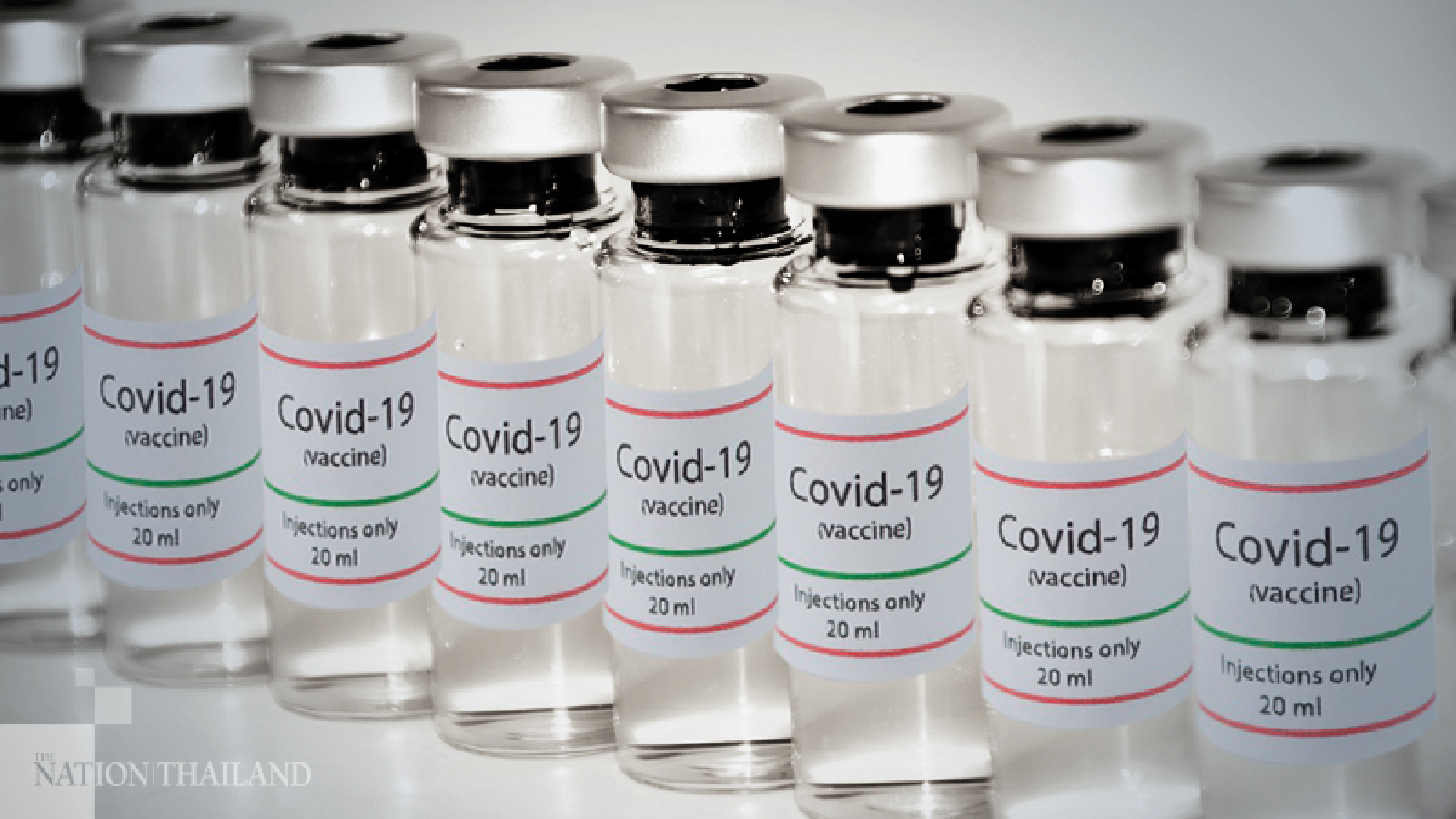
WASHINGTON – A federal advisory panel threw its support Wednesday behind the use of the Pfizer-BioNTech coronavirus vaccine in children as young as 12, paving the way for millions of adolescents to get the shots, and making it easier for state and local officials to reopen schools and summer camps.

Biden hails coronavirus vaccine for 12- to 15-year-olds as one more giant step in fight against the pandemic

The decision was hailed by President Joe Biden “as one more giant step in our fight against the pandemic,” and he called on parents to get their kids inoculated. “The bottom line is this: A vaccine for kids between the ages of 12 and 15 . . . [is] safe, effective, easy, fast and free,” he said. “So my hope is that parents will take advantage of the vaccine and get their kids vaccinated.”

The vote Wednesday afternoon by the Advisory Committee on Immunization Practices, an independent group of medical and public health experts, was 14 in favor, with one recusal. CDC Director Rochelle Walensky signed off by day’s end, giving the green light for the two-dose vaccine to be used in 12- to 15-year-olds.

“Getting adolescents vaccinated means their faster return to social activities and can provide parents and caregivers peace of mind knowing their family is protected,” Walensky said.

The Food and Drug Administration cleared the vaccine for emergency use in that age group Monday, saying it was safe and effective at the same dose that is being given to those 16 and older.

Biden said that 15,000 pharmacies are ready to start vaccinating adolescents as soon as Thursday, saying most of those pharmacies are no farther from family’s homes than their neighborhood schools. Children will be able to receive their two Pfizer shots in different places if they change locations this summer, he said.

The vaccine’s cold-storage requirements and large lot size – 1,170 doses is the minimum order – make it more challenging to be distributed immediately to doctors’ offices. But Biden said officials are also mobilizing to find ways to equip doctor’s offices, including pediatricians, so they can give the shots to patients coming for check-ups, or other services. He described these efforts as enabling parents and children to consult the doctors they trust.

Vaccinating children is a key to boosting the level of immunity in the population, and reducing hospitalizations and deaths, experts say. As more adults are vaccinated, adolescents 12- to 17-years-old are making up a greater proportion of infections, accounting for 9% of cases reported in April, according to CDC data presented at the meeting. That’s even higher than cases among people 65 and older, now that many people in that age group are vaccinated.

“Older children can have severe disease from covid-19 infection,” said Kathy Poehling, a pediatrics professor at Wake Forest University and member of the advisory panel, who described a teenager with covid-19 who suffered a heart attack as a result of the disease, and who survived. While deaths are uncommon in children, she and others noted that covid-19 deaths are one of the top 10 causes of death for children.

“Many parents and adolescents want to be protected by being vaccinated. And I’m so glad we have the vote to enable them to do that today,” she said.

Jose Romero, the panel chair and Arkansas’ health secretary, said the action brings the United States “one more step closer to gaining immunity and bringing the pandemic closer to the end.”

Referring to studies of the effectiveness of the Pfizer-BioNTech and Moderna vaccines in children as young as infants, Romero added that “we still have the younger age group to deal with, and we are dealing with that. And we still need to vaccinate the rest of the world. But we’ve made significant steps.”

Some states, including Arkansas, Delaware and Georgia, did not wait for the CDC decision, opening up eligibility on Tuesday, a day after the FDA authorized the vaccine for younger teens. But many other states and providers were waiting for the recommendation; some insurance plans won’t reimburse providers for the administration fee without the CDC sign-off.

Vaccination of a significant number of adolescents could also allow U.S. schools and summer camps to relax masking and social-distancing measures recommended by the CDC, and help speed a return to normalcy. There are almost 17 million adolescents in the 12- to 15-year-old age group in the United States, accounting for about 5.3% of the U.S. population and almost 27% of the population younger than 16, according to the Kaiser Family Foundation.

The only debate by the advisory panel occurred when members questioned whether the Pfizer-BioNTech vaccine should be given alongside other childhood or adolescent vaccines in the absence of data on how it might interact with them. That’s an issue because routine immunizations have fallen sharply during the pandemic, a decline of nearly 12 million doses as of May 2, compared with 2019, according to a CDC presentation.

The gap is largest in vaccines primarily given to adolescents, including the one targeting the human papillomavirus, known as HPV, and another to prevent tetanus, diphtheria, and pertussis.

A CDC slideset presented at the meeting said that “substantial data” have been collected regarding the safety of coronavirus vaccines and also noted that “extensive experience” with other vaccines demonstrates their side effects and ability to generate an immune response are “generally similar when vaccines are administered simultaneously as when they are administered alone.”

For that reason, the presentation said that covid-19 and other vaccines “may now be administered without regard to timing,” including giving them on the same day as well as within 14 days.

But several panel members said they wanted more data, asking manufacturers to study how the Pfizer-BioNTech vaccine might interact with other routine vaccines. Sarah Long, a pediatrics professor at Drexel University said she was “not at all comfortable with deciding right now how these vaccines can be used concurrently with anything, without any data.”

After the discussion, panel members agreed the vaccine could be given at the same time as other vaccines, but asked that the CDC spell out more detailed instructions for providers that would take into account whether a patient is behind on recommended vaccines, or at risk of becoming so, and whether certain vaccines are more likely to produce side effects.

Yvonne Maldonado, a pediatrics professor at Stanford University and the panel’s liaison from the American Academy of Pediatrics, said the pediatrics group would be issuing a statement to support the administration of multiple vaccines at the same time, “given the importance of routine vaccinations and the need for rapid uptake of covid-19 vaccines.”

The FDA based its emergency authorization Monday on a trial of nearly 2,300 adolescents between 12 and 15 years old, half of whom received the same two-shot regimen shown effective and safe in adults. There were no cases of covid-19 among fully vaccinated adolescents, compared with 16 among children given a placebo, suggesting the regimen offered similar protection to younger recipients as it does to adults.

The younger teens had the same side effects as adults, mostly soreness at the injection site and flu-like fever, chills or aches, especially after the second dose.

In testimony before a Senate committee Tuesday, Walensky encouraged parents to get their children vaccinated, saying she knew some wanted to wait to see how the administration of shots goes.

“Some parents want to be first, but I’m also encouraging children to ask for the vaccine,” she said. “I have a 16-year-old myself, and I can tell you he wanted to get the vaccine. He wants his life back. These kids want to go back to school.”

Biden said his administration would launch a public education campaign about the vaccine and partner with a variety of organizations to encourage children to get vaccinated.

In Alaska, some school districts already have scheduled vaccination clinics for Thursday and Friday because parents are eager for their children to get the shots before the school year ends, Anne Zink, Alaska’s chief medical officer, told reporters Tuesday.

“States have been planning and preparing for, and are now rolling out their plans for vaccinating this group of adolescents,” said Nirav Shah, director of Maine’s Center for Disease Control and Prevention and president of the Association of State and Territorial Health Officials.

There is no federal legal requirement for parents or guardians to give consent for coronavirus vaccinations or any other vaccination. But the vaccines must be given according to state vaccination laws, including those related to consent.

Most coronavirus vaccines worldwide have been authorized for adults. Pfizer’s vaccine is being used in multiple countries, including the United States, for teens as young as 16. Canada recently became the first to expand use to those 12 and older. Parents, school administrators and public health officials have eagerly awaited approval for the shot to be made available to more children in the United States, particularly with the growing gap between what vaccinated and unvaccinated people may do safely.

Although adolescents are less likely than adults to be hospitalized or have severe illness because of coronavirus infection, there is no way to predict the few who will become critically ill or develop a rare, dangerous inflammatory syndrome. Out of more than 581,000 covid-19 deaths in the United States, only about 300 have been among those younger than 18. But that exceeds the number of children who die in a bad flu season.

Parents’ eagerness to get their children vaccinated varies. A CDC presentation, citing four surveys, said about half of parents plan to get their children vaccinated.

A Kaiser Family Foundation survey found three in 10 parents of children ages 12 to 15 say they will get their children inoculated as soon as a vaccine is available; one-quarter say they will wait a while to see how the vaccine is working; 18% plan to get their children vaccinated if their schools require it; and nearly a quarter say they will definitely not have their children vaccinated.

The Kaiser poll found that parents’ intentions about having their children vaccinated against the coronavirus largely align with their attitudes toward being vaccinated themselves.

Sara Oliver, a CDC medical officer and the lead of the panel’s covid-19 working group, said officials plan to promote adolescent vaccination as quickly and equitably as possible.

The plan is to expand vaccinations down to 12-year-olds at existing sites as part of an “early summer sprint” in May and June, followed by increased access in June and July that will include children’s hospitals and large health-care providers serving adolescents. A back-to-school campaign will kick off later in the summer and include school-based vaccination programs and pharmacies after the start of the school year.

Published : May 13, 2021

By : The Washington Post · Lena H. Sun, Fenit Nirappil

Job openings surge to a record high 8.12 million #SootinClaimon.Com

#SootinClaimon.Com : ขอบคุณแหล่งข้อมูล : หนังสือพิมพ์ The Nation.

https://www.nationthailand.com/international/40000780

Job openings surge to a record high 8.12 million


U.S. job openings surged in March to a record high, underscoring a rapid increase in labor demand as vaccinations accelerate and states reopen their economies.

Job openings surge to a record high 8.12 million

The number of available positions increased to 8.12 million during the month, the highest in data back to 2000, from an upwardly revised 7.53 million in February, the Labor Department’s Job Openings and Labor Turnover Survey, or JOLTS, showed Tuesday. The median estimate in a Bloomberg survey of economists called for 7.5 million openings.

The number of vacancies exceeded hires by more than 2 million, the largest gap on record and evidence of current hiring challenges. Many employers say they are unable to fill positions because of ongoing fears of catching the coronavirus, child-care responsibilities and generous unemployment benefits.

The number of vacancies is consistent with accelerating demand as the economy reopens, with many companies trying to fill positions lost during the pandemic.

In another sign the economy is strengthening, the median single-family home price rose by the most on record in the first quarter.

The number of people who voluntarily left their jobs increased to 3.51 million, while the quits rate held at 2.4%. Separations, which include both layoffs and quits, decreased to 5.32 million from 5.43 million as dismissals declined.

The increase in openings was fairly broad, including more available positions in accommodation and food services, manufacturing and construction. Openings in accommodation and food services approached 1 million in March, the second-most in data to 2000.

Hires increased to 6 million in March, while the hires rate rose to 4.2%.

The April employment report from the Labor Department last week showed that the U.S. added 266,000 jobs, far below economists estimates for a 1 million gain. The weaker-than-expected payroll increase against the backdrop of record-high job openings indicates that labor supply, rather than demand for workers, is holding back employment growth.

Job openings increased in all regions, led by bigger monthly gains in the Midwest and Northeast.

Published : May 12, 2021

By : Syndication Washington Post, Bloomberg · Olivia Rockeman

Stocks slide for second day #SootinClaimon.Com

#SootinClaimon.Com : ขอบคุณแหล่งข้อมูล : หนังสือพิมพ์ The Nation.

https://www.nationthailand.com/international/40000779

Stocks slide for second day


Energy, financial and industrials shares led U.S. stocks lower as the pullback centered in the technology sector widened while investors remained on edge over the threat of inflation.

Stocks slide for second day

The tech-heavy Nasdaq 100 erased a loss of almost 2% to finish little changed as some dip buyers emerged. The benchmark S&P 500 dropped for a second day after setting a record high on Friday. Treasury yields edged up and the dollar traded near the lowest levels of this year.

Debate rages over whether the expected jump in price pressures will be enduring enough to force the Federal Reserve into tightening policy sooner than current guidance suggests. Fed Governor Lael Brainard said policymakers must show continued patience as distortions in the post-pandemic boom sort themselves out while the economy is still far from the central bank’s objectives.

“I just think that in general there’s this thought that inflation may rear its ugly head,” said JJ Kinahan, chief market strategist at TD Ameritrade. “We see a little bit higher rates, not significantly, but a bit higher rates. And I think this struggle between value and growth also continues at the same time.”

Among the biggest pandemic winners, tech stocks whose valuations often depend on earnings prospects far into the future are now at the center of the inflation debate. That was epitomized in Cathie Wood’s Ark Innovation ETF, which has tumbled about 15% so far this year after surging almost 150% in 2020.

Even after the declines, the Nasdaq Composite trades at 26 times the 12-month projected profits, while the gauge of European technology shares enjoys a valuation of 29 times.

Wednesday’s U.S. inflation report along with a series of U.S. government bond auctions this week are seen as the next factors to deepen or arrest the slide. The latest reading is expected to show an accelerated pace of consumer-price increases, with the year-on-year comparison made starker by the pandemic shock in 2020.

“What’s interesting about tech and the sell-off is that it comes in the face of stable yields, a Fed that is likely on hold for a while and some very strong earnings,” said Michael Arone, chief investment strategist for the U.S. SPDR exchange-traded fund business at State Street Global Advisors. “Markets seem to be anticipating some time of move in rates and inflation that could be problematic for the tech and growth trade.”

Copper prices traded near a record, while iron also rallied. Oil rose as fuel shortages are expanding across several U.S. states in the East Coast and South as filling stations run dry amid the unprecedented pipeline disruption caused by a criminal hack.

These are some of the main moves in markets:

Stocks

– The S&P 500 fell 0.9% to the lowest since April 22 as of 4 p.m. EDT

– The Nasdaq 100 fell 0.1% to the lowest since April 1

– The Dow Jones industrial average fell 1.4%, more than any closing loss since Feb. 26

– The MSCI World index fell 1.2%, more than any closing loss since March 4

Currencies

– The Bloomberg Dollar Spot Index was little changed

– The euro rose 0.2% to $1.2149

– The British pound rose 0.2% to the highest in about three years

– The Japanese yen rose 0.1% to 108.66 per dollar

Bonds

– The yield on 10-year Treasurys advanced two basis points, climbing for the fourth straight day, the longest winning streak since March 19

– Germany’s 10-year yield advanced five basis points, more than any closing gain since March 3

– Britain’s 10-year yield advanced five basis points, more than any closing gain since March 18

Commodities

– West Texas Intermediate crude rose 0.7% to $65 a barrel

– Gold futures rose 0.1%, climbing for the fifth straight day, the longest winning streak since Jan. 5

Published : May 12, 2021

By : Syndication Washington Post, Bloomberg · Claire Ballentine, Vildana Hajric

Fuel shortages crop up in Southeast, gas prices climb after pipeline hack #SootinClaimon.Com

#SootinClaimon.Com : ขอบคุณแหล่งข้อมูล : หนังสือพิมพ์ The Nation.

https://www.nationthailand.com/international/40000778

Fuel shortages crop up in Southeast, gas prices climb after pipeline hack


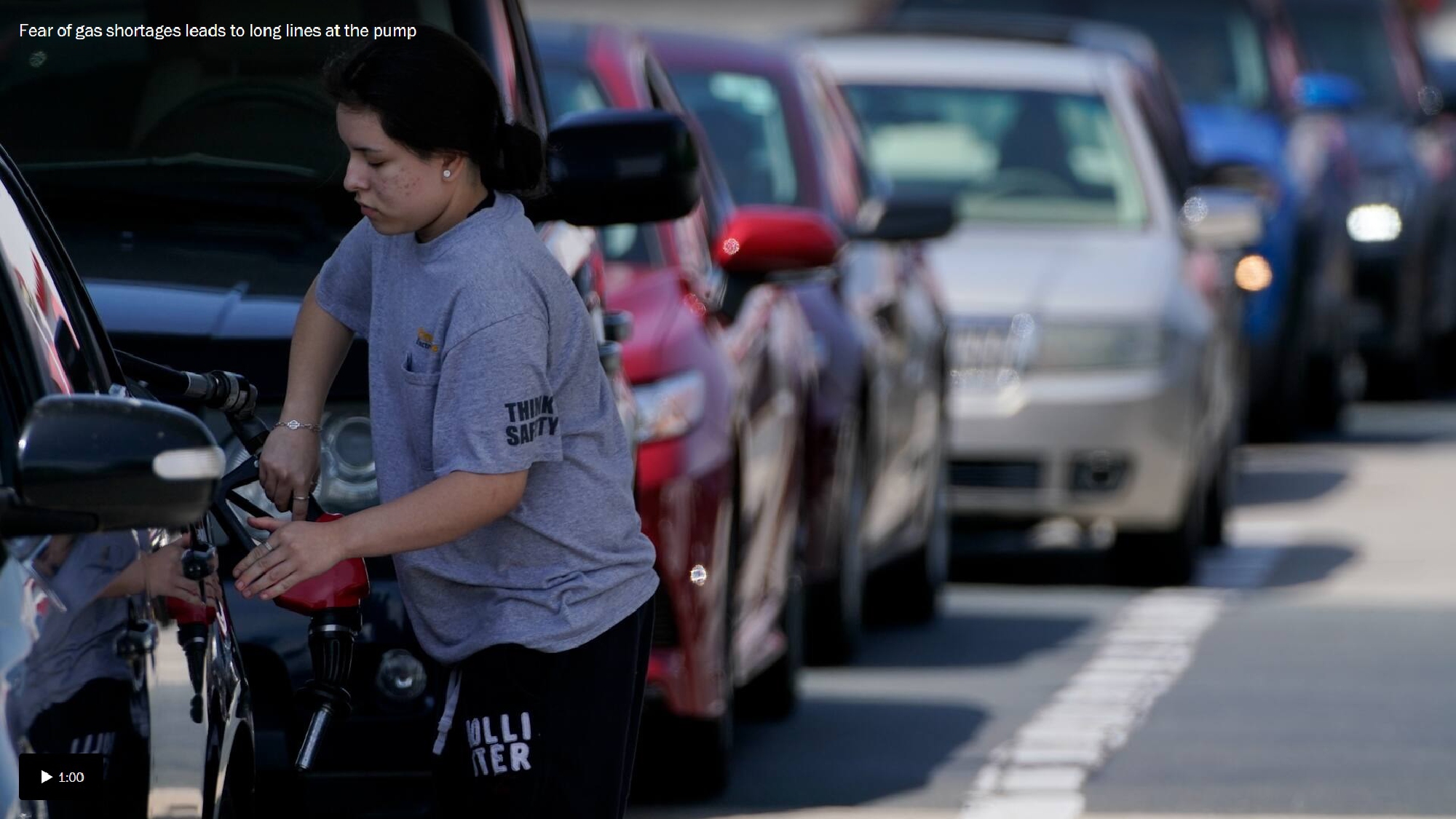
WASHINGTON – Lines of panicked drivers overwhelmed gas stations in the Southeast on Tuesday, as rising prices fed fears of shortages in the aftermath of a ransomware attack that forced the nations largest fuel pipeline offline.

Fuel shortages crop up in Southeast, gas prices climb after pipeline hack

In Atlanta, 1 of every 5 gas stations was reported to be out of fuel Tuesday evening.

“Look how crazy we’re all getting, over every little thing,” said Allan Hardy, a plumber who had driven from Myrtle Beach, S.C., to Wilmington, N.C., and saw long lines at every service station on the road, save for those that had already run out of gas. “And the only reason this shortage isn’t worse is that a lot of people aren’t working right now. Today it’s our oil pipeline, but what will it be tomorrow? If this kind of thing comes at another time, you just can’t gauge how bad it might get.”

In Washington, Energy Secretary Jennifer Granholm said the Southeast can expect a “crunch” that will take several days to alleviate.

“We have gasoline,” she said during a White House briefing. “We just have to get it to the right places. And that’s why I think the next couple of days will be challenging.”

She said Colonial Pipeline officials had told her that a decision on a “full restart” could come as soon as Wednesday evening.

The Colonial Pipeline system, which moves about 45% of the East Coast’s fuel, shut down Friday after hackers thought to be based in the former Soviet Union infiltrated servers and encrypted its data, demanding a fee to restore access. Homeland Security Secretary Alejandro Mayorkas, who was at the White House briefing, said American organizations have lost more than $350 million this year as a result of ransomware attacks.

“The threat is not imminent,” he said. “It is upon us.”

Now consumers are seeing some of the fallout as Colonial pushes to resume service by the end of the week.

As of Tuesday, governors in North Carolina, Georgia and Virginia had declared states of emergency and taken steps to relax fuel transport rules to ease pain at the pump.

More than 7% of gas stations in Virginia, 8% in North Carolina and 5% in Georgia were without fuel late Tuesday afternoon, according to Patrick De Haan, an oil analyst at Gas Buddy. A number of stations in Florida, Alabama and South Carolina also reported dry pumps. De Haan said fuel demand in these states spiked 40% on Monday, and cautioned against panic-buying, which will only exacerbate the shortages.

“It is vital that motorists do not overwhelm the system by filling their tanks,” De Haan said in analysis.

But plenty of motorists weren’t listening.

The owner of Masonboro Country Store in Wilmington, Musa Agil, said lines began forming just after 6 a.m. and had not abated all day, blocking the flow of traffic on two-lane Masonboro Loop Road. He spent the day “managing traffic and trying to keep the peace” as some motorists cut lines and others filled up a dozen tanks and jugs.

By 3 p.m. Agil was down to his last 200 gallons and told the packed parking lot that he would soon have to shut down. “Some people are selfish, taking more gas than they need,” he said. “But most people are just scared.”

Granholm said there is “no cause for hoarding gasoline” because the pipeline will be “substantially” back online by the weekend. But local news outlets from Florida to North Carolina reported long lines and dry pumps.

The national average for a gallon of gasoline stood at $2.98 on Tuesday, according to AAA. That’s an 8-cent jump on the week, and a penny shy of prices not seen since November 2014.

Granholm had a warning for service station operators: “We will have no tolerance for price-gouging,” she said, and she urged consumers to inform their state attorney general’s office if they suspect it is taking place.

Some Republican officeholders took shots at the Biden administration over the shutdown. Rep. Madison Cawthorn, R-N.C., ignoring four years of friendliness among some in the GOP toward Moscow, told Fox News, “The Biden administration must finally step up and acknowledge that their weak stance on Russia has real-world consequences.”

Fuel shortages crop up in Southeast, gas prices climb after pipeline hack

At a gas station just down the road from Agil’s, drivers spread blame for the debacle all around: at the Biden administration; at Rep. Alexandria Ocasio-Cortez, D-N.Y., and the Green New Deal; at the gas stations and oil companies supposedly hoarding and gouging; and at the Russians and their hackers. Finally one man in a black pickup truck pointed the finger somewhere closer to home.

“This is our fault,” Devin Singer of Wilmington said. “This whole thing. The people’s fault. Same thing with the whole toilet paper shortage. Everybody wants something and nobody has it, so we all freak out and then nobody can get it. It’s mass hysteria.”

Mayorkas said the Biden administration is prepared, if necessary, to waive the Jones Act, which normally forbids foreign-flagged ships from carrying cargoes between U.S. ports. The Federal Railroad Administration is analyzing the possibility of shipping gasoline or jet fuel by train, Granholm said.

“These are not easy solutions,” she cautioned. “The pipe is the best way to go.”

The Colonial Pipeline carries fuel from Gulf Coast refineries to customers on the East Coast. The company says the pipeline provides fuel for 50 million Americans and several major airports.

“This shutdown will have implications on both gasoline supply and prices, but the impact will vary regionally. Areas including Mississippi, Tennessee and the east coast from Georgia into Delaware are most likely to experience limited fuel availability and price increases, as early as this week,” Jeanette McGee, AAA spokeswoman, said in a statement. “These states may see prices increase three to seven cents this week.”

The FBI issued a statement confirming that DarkSide, a criminal ransomware group based in Eastern Europe, was behind the cyberattack.

Ransomware attacks have become a global scourge, affecting banks, hospitals, universities and municipalities in recent years. Almost 2,400 organizations in the United States were victimized last year alone, one security firm reported. But the attackers are increasingly targeting industrial sectors because these firms are more willing to pay up to regain control of their systems, experts say.

Roughly 43% of infrastructure organizations victimized by such attacks submit to ransom demands, more than any other industry, according to the Sophos 2021 “State of Ransomware” report. The report said that 64% of infrastructure organizations surveyed saw a spike in cyberattacks in 2020 and that 57% of IT managers felt such attacks had become too sophisticated for them to fend off effectively on their own.

“The unfortunate truth is that infrastructure today is so vulnerable that just about anyone who wants to get in can get in,” Dan Schiappa, Sophos chief product officer, said in comments emailed to The Post. He called infrastructure an easy and lucrative target. “They’re hitting where it hurts, hedging bets on a large payout.”

“In cyberspace,” Mayorkas said, “one is only as strong as one’s weakest link.”

Analysts have focused on the vulnerabilities of America’s aging infrastructure; the Colonial Pipeline system was installed in the 1970s. But some warn that new technologies are also at risk of cyberattack.

Power grid infrastructure is a likely target, said Pavel Molchanov, an energy analyst with Raymond James. The principal advantages of the smart grid – digitization and decentralization – also offer more pathways for cybercriminals to target, he said.

Elias Bou-Harb, an associate professor at the University of Texas at San Antonio, has studied electric vehicle charging stations, and in an unpublished paper he writes: “The EV charging ecosystem – one of the world’s most proliferating ecosystems – suffers from critical vulnerabilities within its most fundamental entities.” In the rush to install charging stations across the country, he wrote, vendors have paid too little attention to keeping them secure from hackers.

Published : May 12, 2021

By : The Washington Post · Taylor Telford, Will Englund, Rory Loverty

China population still growing, if slowly, according to once-a-decade census #SootinClaimon.Com

#SootinClaimon.Com : ขอบคุณแหล่งข้อมูล : หนังสือพิมพ์ The Nation.

https://www.nationthailand.com/international/40000777

China population still growing, if slowly, according to once-a-decade census


SEOUL – The official word from Beijing is that Chinas population is still growing – if barely.

China population still growing, if slowly, according to once-a-decade census

China released its once-a-decade census on Tuesday, rejecting whispers that the country may have reached the inflection point where its population begins to shrink. Still, officials acknowledged the looming demographic challenges ahead with an aging population and a low birthrate.

According to the census, China’s population reached 1.41 billion in 2020, up from 1.4 billion in 2019. Average annual population growth over the past decade was 0.53% per year.

“The population growth rate will continue to slow down in the future,” said Ning Jizhe, a commissioner of China’s National Bureau of Statistics, at a news conference in Beijing.

Ning declined to forecast when China’s population will peak, but said China’s population will remain above 1.4 billion for a while.

The census report was originally slated for an April release, and its delay prompted speculation. The Financial Times reported on Tuesday, citing sources close to the National Statistics Bureau, that the original figure had come in below 1.4 billion and was revised up.

Asked about the delay at the news conference, Zeng Yuping, the bureau’s chief methodologist, said officials decided to push back the release to add more details to the report because of public interest.

“That’s why it took longer to prepare the data,” he said.

China is still the world’s most populous country, but India is narrowing the gap.

Chinese economists have warned of a potential demographic crisis if not enough children are born in coming years. It will mean China’s society will be strained with fewer young working people to support a larger aging population.

China said its population has reached 1.41 billion in 2020, with “low-speed” growth over the past 10 years, in the closely watched release of its once-a-decade census.

Published : May 12, 2021

By : The Washington Post · Eva Dou

Boris Johnson gives vision for British revival post-pandemic #SootinClaimon.Com

#SootinClaimon.Com : ขอบคุณแหล่งข้อมูล : หนังสือพิมพ์ The Nation.

https://www.nationthailand.com/international/40000776

Boris Johnson gives vision for British revival post-pandemic


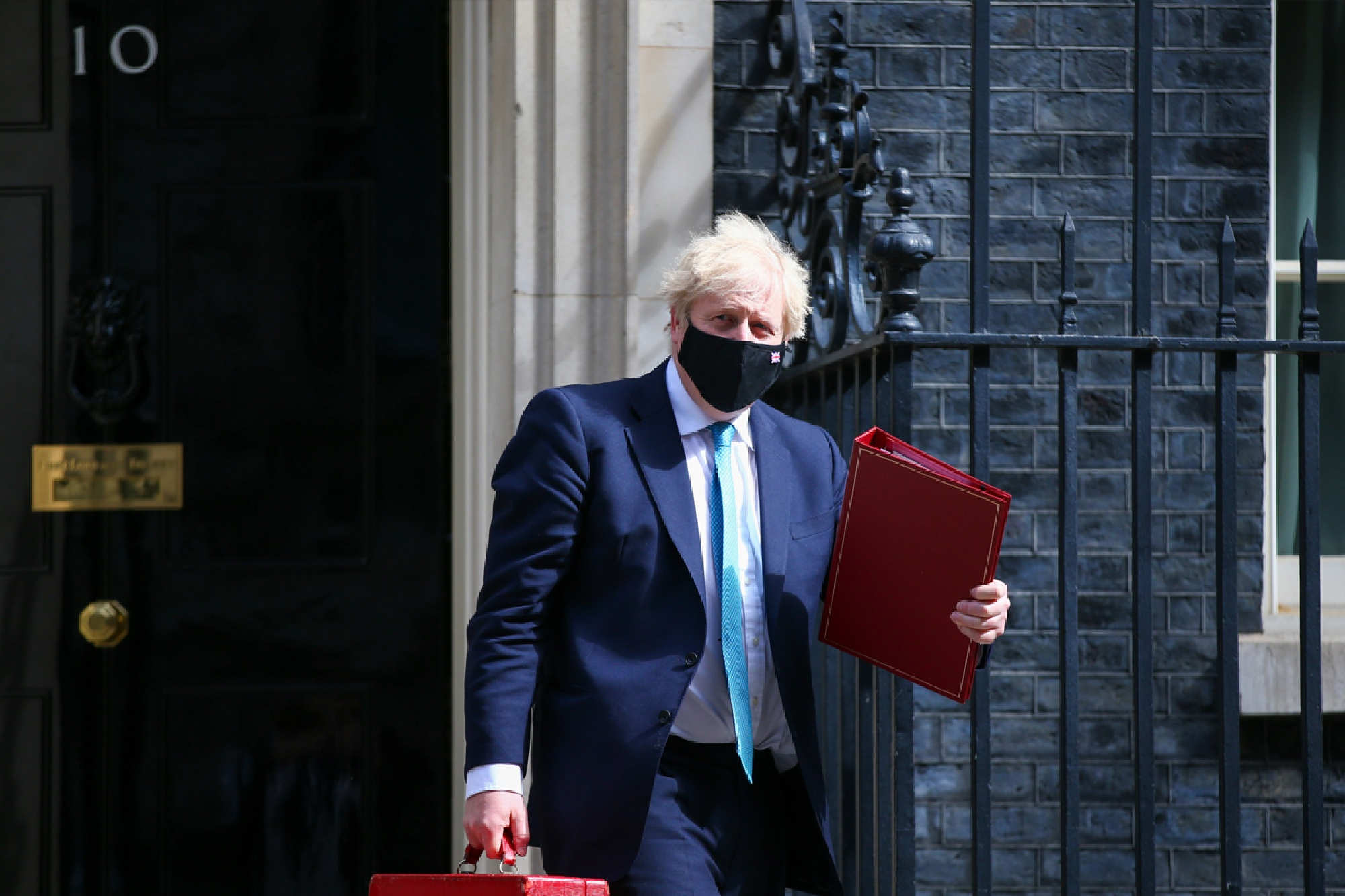
Prime Minister Boris Johnson set out his blueprint for the U.K.s revival after the coronavirus crisis, promising new laws to unleash “the nations full potential” and saying the country must not return to how things used to be done.

Boris Johnson gives vision for British revival post-pandemic

In the traditional speech to Parliament by Queen Elizabeth II, the government set out a legislative program with measures to spread broadband internet and 5G mobile coverage, boost homeownership and reform health care.

The overarching theme is one of recovery from a pandemic that hit the U.K. with its biggest crisis since World War II, with more than 127,000 deaths.

At the same time, Johnson aims to take advantage of the U.K.’s new freedom from European Union rules to set its own state subsidy regime for businesses, reform government procurement and create at least eight freeports.

Writing the foreword to the speech, Johnson returned to the theme of helping economically disadvantaged regions of the U.K. It’s a message that won him a big majority in 2019 elections and he cemented those gains in local votes last week.

“We have been given an historic opportunity to change things for the better, level up opportunities across the whole of the United Kingdom and address the problems that have constrained us far too often before,” Johnson wrote.

A successful vaccination program, with two-thirds of adults having received at least one shot, has enabled Johnson to press ahead with lifting the pandemic lockdown in stages, allowing the economy gradually to reopen. Yet with so much financial support given to businesses and citizens, the government will also need to address the impact on public finances.

Opposition Labour Party leader Keir Starmer said Johnson’s plans lack ambition and fail to commit to legislation on important issues such as social care reform. He also criticized a lack of measures to tackle unemployment and increase pay for workers.

The government’s plan is “packed with short-term gimmicks and distant promises,” Starmer said in the House of Commons. “It misses the urgency and the scale of the transformation that’s needed.”

These are the highlights from the package:

– Extra funding to the NHS to continue fighting the pandemic, prepare for booster vaccinations and tackle a backlog of health care; reforms to make health provision more efficient and joined-up between different parts of government and invest in preventive strategies such as reducing obesity, smoking, drug-use

– A Subsidy Control Bill will create a new system of state aid to free local authorities and devolved administrations from “bureaucratic” EU controls

– A Procurement Bill overhauling how the government spends some 290 billion of taxpayer’s money by simplifying processes and opening up government contracts to more innovative companies, small businesses and charities

– The Telecoms Security Bill will put a new duty of securing the security of the entire U.K. telecoms networks on network providers such as BT Group and Vodafone Group. Failure to meet standards would be met with fines of 10% of turnover or 100,000 pounds ($141,000) per day

– A draft bill on oil resilience to address threats to security of fuel supply. It would give government the powers to direct companies to act to ensure fuel supply

– The Counter-State Threats Bill will create a register of foreign spies in the U.K. and will update espionage laws, some of which date from previous world wars

– Laws to create the Advanced Research and Invention Agency, an 800 million-pound body designed to fund high-risk, high reward scientific research as ministers aim to turn Britain into a scientific superpower

– An Innovation Strategy outlining priority areas and seeking to attract business investment

– Legislation to create freeports at East Midlands Airport, Felixstowe and Harwich, Humber, Liverpool City Region, Plymouth and South Devon, Solent, Teesside, and Thames, as well as at further sites in Scotland, Wales and Northern Ireland

– An Environment Bill to boost investment in green industries and creating jobs by putting the environment at the heart of all government decision-making. It also aims to tackle air pollution, protect water resources and increase biodiversity

– A white paper setting out how the government will pursue its “leveling up” agenda to equalize opportunities across the country

– Creating a new building safety regulator, to avoid tragedies like the Grenfell Tower fire

– Measures to restrict the charging of ground rents on residential long leases

– A plan to repeal the Fixed-Term Parliaments Act and give the prime minister the power to trigger an election when he decides the time is right. A law to require voters to show identification at the polling station

Published : May 12, 2021

By : Syndication Washington Post, Bloomberg · Tim Ross, Alex Morales

At least 9 dead in rare Russian school shooting #SootinClaimon.Com

#SootinClaimon.Com : ขอบคุณแหล่งข้อมูล : หนังสือพิมพ์ The Nation.

https://www.nationthailand.com/international/40000775

At least 9 dead in rare Russian school shooting


MOSCOW – At least seven students and two adults were killed and 20 people were injured Tuesday when a gunman opened fire at a school in the Russian city of Kazan, a regional official said, prompting President Vladimir Putin to call for tighter gun controls.

At least 9 dead in rare Russian school shooting

Video footage shared on social media showed students hurling themselves from third-floor windows to escape the gunfire in Kazan, about 500 miles east of Moscow. Two children died jumping from the windows, according to the RIA news agency.

The students killed were between the ages of 7 and 9, officials said. The alleged shooter was taken into custody, said the head of the Tatarstan region, Rustam Minnikhanov.

An account on the Telegram messaging app, purportedly belonging to the alleged shooter, contained posts in which he described himself as a “god” and said he planned to kill a “huge number” of people before committing suicide, according to Russian media. The account was later blocked.

Speaking to local reporters in Kazan, Minnikhanov described the suspect as a “19-year-old terrorist” whose weapon was registered in his name and that “no accomplices have been established.”

Putin ordered a plane with medics, psychologists and equipment to be dispatched to Kazan to assist the victims. He has also instructed the head of the Russian National Guard to “urgently” draft a new regulation on what kind of weapons can be owned by civilians, Kremlin spokesman Dmitry Peskov said.

Russia’s laws on civilian gun ownership are considered strict. To obtain a license for hunting and sport firearms, applicants are required to pass psychological exams. It is illegal for Russians to own guns that shoot in bursts or have magazines with more than a 10-cartridge capacity.

“The thing is that firearms, which are used as assault rifles and similar weapons in certain countries, are sometimes registered as hunting guns. The Russian National Guard will urgently consider the issue,” Peskov said.

Lawmaker Alexander Khinshtein wrote on Telegram that the suspect registered a Hatsan Escort, a Turkish-made shotgun, on April 28. It’s the same kind of gun that was used in a 2018 school shooting at a college in Russian-annexed Crimea.

School shootings are a relative rarity in Russia. A 2004 assault on a school in Beslan in the North Caucasus, in which more than 330 people were killed, was the work of Islamist separatists. In 2014, a teenage student in Moscow shot a teacher and a police officer and took more than 20 of his classmates hostage.

Since then, more than 20 incidents involving weapons have been recorded in schools and colleges across Russia.

Published : May 12, 2021

By : The Washington Post · Isabelle Khurshudyan

Some consumer-friendly air purifiers destroy the coronavirus, and they have FDA certification to prove it #SootinClaimon.Com

#SootinClaimon.Com : ขอบคุณแหล่งข้อมูล : หนังสือพิมพ์ The Nation.

https://www.nationthailand.com/international/40000774

Some consumer-friendly air purifiers destroy the coronavirus, and they have FDA certification to prove it


Scribners Catskill Lodge in Hunter, N.Y., was one in a nationwide sea of hotel establishments to temporarily close last year when the pandemic wiped out tourism and travel.

Some consumer-friendly air purifiers destroy the coronavirus, and they have FDA certification to prove it

Between mid-March and June, the hotel’s managers did what many other closed hospitality establishments did – focused on a reopening strategy involving deep cleanings, temperature checks and other coronavirus-related safety precautions. As shutdown restrictions eased, the hotel reopened in time for summer travelers, but rooms were held vacant for 48 hours between guests. Each room has built-in cooling systems, and staff would turn the fans on full blast, hoping to send stray respiratory droplets out the window before the next vacationer was set to arrive.

“Air quality was something we were really concerned about,” said Kate Lala, director of operations at the redesigned 1960′s motor lodge.

Now the hotel thinks it has found a better way. While researching novel disinfecting methods, Lala stumbled across an air purifier brand that promised to do what most others couldn’t – suck the virus in and kill it, rather than collecting the germs and possibly recirculating them.

The hotel invested, buying one for each of its 38 rooms and additional units for its common areas. Guests and staff are still required to wear masks in public spaces, but Lala has confidence in the air purifiers. “This is probably going to be the way of the world for some time, and safe air is probably going to be a priority for travelers for some time to come, and we wanted to be able to provide that,” she said.

People have used portable air purifiers for decades to trap odors, allergens and viruses. But in the age of covid-19, as governors across the country are lifting coronavirus restrictions (capacity restraints and other restrictions will lift for most venues in Washington D.C. by May 21), the makers of these machines are hoping to give people greater peace of mind amid a new normal.

It’s a situation that presents a prime opportunity for air-filtration companies seeking to take advantage of an onslaught of people spending more time indoors this summer. Data suggests that sales surged 57% across the air-treatment market last year when the Centers for Disease Control and Prevention suggested that increased ventilation and HEPA air cleaners should be part of a layered approach to reduce coronavirus exposure.

In the hotel’s case, air filters sold by San Francisco-based Molekule were the key to operating at total capacity, Lala said. The portable devices also help housekeeping staff feel “somewhat comfortable entering a room” after guests check out, she added.

Still, not all air purifiers are created equal.

You can buy generic air filters on Amazon for relatively little money that claim to hold on to viruses. According to the market research firm Verify Markets, products sold under $150, covering up to 400 square feet, were among the most popular choices last year.

Those medically proven to be effective against the coronavirus cost more than twice that amount, however.

The Food and Drug Administration has cleared some air purifiers for medical use, which means they can be deployed in hospitals and home health-care settings to clear the air of infected droplets. The medical-grade devices had to demonstrate that they can capture 99.99% of claimed particulates under FDA standards.

Last year, the health agency temporarily bent its rules for manufacturers to market their filtration systems as combating SARS-CoV-2 if the products proved effective against pathogens of a similar size. Molekule sought and was granted further approval, which involved extensive safety and effectiveness testing, according to company chief executive Jaya Rao.

“It wasn’t just enough to tell the FDA that we filtered it out. It was important to go to the next level and show that there was no residual virus on the filter and that the virus is actually getting destroyed,” Rao said.

While standard purifiers use fan and filter systems to trap large particles circulating through the air, Molekule’s devices rely on a special UV-A light to break down the pollutants on a molecular level. A chemical reaction caused by the light destroys the particles once internal filters trap them, and what comes out is disinfected air, Rao said.

Destroying the virus means that people don’t have to come in contact with it when replacing or cleaning air filters.

Molekule’s testing was conducted in a room-size chamber, where its devices destroyed a proxy virus known as MS2 within two hours. According to the company, the brand’s technology reduced the virus’s concentration by more than 99.999%.

Molekule’s Air Mini and Air Mini Plus received FDA Class II medical device clearance in March. They’re now sold online for $399 and $499, covering rooms up to 250 square feet. If you want to cover more space, you need more than one air purifier or you could buy a larger, more powerful machine. But those cost up to $1,199 for spaces up to 1,000 square feet.

The company’s closest competitor, San Francisco-based Brondell, was cleared by the FDA two months earlier to capture and eliminate the airborne coronavirus through a similar UV-light process. Brondell’s $650 plug-in device with sanitizing technology from Hong Kong’s Aurabeat is sold at Best Buy, Home Depot and Target.

The device claims to clear airborne coronavirus particles from a room within 15 minutes. It has also been popular with dentist offices and schools, including Cornell University, according to Parker Benthin, vice president of sales at Brondell.

Not every company that has sought FDA clearance has received it.

It has been six months since Dallas-based ActivePure applied for permission to deploy its air purifiers against the virus. Testing showed that it could destroy RNA viruses that are more difficult to kill than the coronavirus. It has yet to be approved by the FDA.

Regardless, it’s important to remember that air filtration is far from a cure or a vaccine.

The Environmental Protection Agency warns that disinfecting the air alone is not enough to protect people from the coronavirus. “When used along with other best practices recommended by CDC and others, filtration can be part of a plan to protect people indoors,” the EPA says.

Still, a stamp of approval by the nation’s federal health agency helps companies stand out in a field riddled with new low-cost devices and congested with unproven marketing claims, firms say.

“It’s more than just saying, ‘Hey, we did a test in our garage,’ or ‘We just think our product should do something like this,’ ” Benthin said. “It’s actually saying that there is quality control, and we are third-party verified and scientifically substantiated” to work.

Published : May 12, 2021

By : The Washington Post · Dalvin Brown

With Pfizer coronavirus vaccine authorized for adolescents, some parents scramble to make appointments while others are wary #SootinClaimon.Com

#SootinClaimon.Com : ขอบคุณแหล่งข้อมูล : หนังสือพิมพ์ The Nation.

https://www.nationthailand.com/international/40000773

With Pfizer coronavirus vaccine authorized for adolescents, some parents scramble to make appointments while others are wary


Judy Fisher has been trying frantically to get a coronavirus vaccine appointment for her twin 12-year-olds. She has downloaded apps for every drugstore chain in New York City, is strategizing on multiple text chains and looking into out-of-state appointments, hoping to get her daughter and son fully vaccinated so they can see their friends and go to summer camp.

With Pfizer coronavirus vaccine authorized for adolescents, some parents scramble to make appointments while others are wary

“I’m foaming at the mouth to get them vaccinated so they can have some semblance of a normal summer,” Fisher said. “I cry when I think about all they have missed already.”

After a year of stifling confinement and missed schooling, children ages 12 to 15 have been cleared to receive the Pfizer-BioNTech coronavirus vaccine under emergency use. The decision that the two-shot regimen is safe and effective for younger adolescents had been highly anticipated by many parents and pediatricians, particularly with the growing gap between what vaccinated and unvaccinated people may do safely.

Expert advisers to the Centers for Disease Control and Prevention are scheduled to meet Wednesday to recommend how the vaccine should be used among 12- to 15-year-olds. If the panel of experts, known as the Advisory Committee on Immunization Practices, recommends the vaccine for use and CDC Director Rochelle Walensky signs off on the recommendation – both actions are widely expected – the inoculation can be given anywhere authorized to administer the shots. Walensky on Tuesday urged parents to vaccinate their children and urged children to ask for the vaccine if their parents were hesitant.

Some states were not waiting for the CDC action: Teens 12 and older were eligible to get the Pfizer vaccine on Tuesday in Arkansas, Delaware and Georgia, officials said.

The desire to get adolescents vaccinated and concerns about the shots for them mirror those among adults, said Nirav Shah, director of the Maine Center for Disease Control and Prevention. Some parents are extremely eager for their children to get vaccinated, others are motivated by convenience, and a third group has lots of questions and some are “not in favor of vaccinating,” Shah said.

Some places are seeing enormous demand: at Children’s National Hospital in Washington, 5,900 children have signed up for preregistration. Other parents are much more hesitant to get their children vaccinated.

A survey published last week by the Kaiser Family Foundation found only 3 in 10 parents with children ages 12 to 15 said they would get their child vaccinated as soon as possible. A quarter said they would wait to see how the vaccine is working and 18 percent said they would do it only if required by schools. Almost a quarter said they will definitely not be getting their child vaccinated.

“I am absolutely not injecting this poison into my children,” said Concetta Comparato, a mother of three in Sayreville, N.J. Comparato said she is not opposed to vaccines; she said her children have received all of their childhood immunizations. But she worries not enough time has passed to know how the vaccine could affect adolescents long-term. Two of her children have high-functioning autism. One has developmental delays.

“I don’t feel like I know how this could affect them and their conditions,” she said. She said the ubiquitous advocacy for the vaccines has only made her more suspicious. “If it’s so trustworthy, why does the government and other people feel like they need to push it so heavily?”

Health officials are realizing they need to talk about the vaccine not only to parents and guardians, but to children themselves. Anne Zink, the chief medical officer for Alaska and incoming president of the Association of State and Territorial Health Officials, said children might have different concerns than adults. School officials, she said, will play a pivotal role in talking about the vaccine.

Gena Krug of Berlin, N.J., signed her 13-year-old daughter Catie up for the first available vaccine appointment. Catie said she’s looking forward to simply not having to worry.

“Just having it not be the first thing on your mind,” Catie said of the virus. “Scared you’re going to get it, that you might give it to others and what you may be missing out on because of that.”

Catie last week came down with a fever. Her parents rushed her to get tested at an urgent care, and retraced their steps, telling every family member and friend they came into contact with that they might be at risk – only to have the test results come back negative.

“To not have to have that constant stress anymore, that will be such a relief,” said Krug, 44.

But health officials will be contending with many challenges when it comes to vaccinating adolescents.

Experts say they are worried especially about access to the vaccines in minority and rural communities, which could cause those populations to lag behind in vaccinations – as they have for adults. Umair Shah, the health secretary in Washington state, said that older children tend to get hit harder than young children by covid-19, the disease caused by the coronavirus. The severity of that infection is more common among Black and Latino children compared to their White counterparts, he said, and among those with underlying health conditions.

The vaccine’s cold storage requirements and large lot size – 1,170 doses is the minimum order – makes it harder for doses to be distributed to doctors’ offices. Some health officials are breaking up trays for pediatric offices and putting them into special containers packed with dry ice.

“If you’re a small pediatric practice or a rural one, the Pfizer vaccine is not going to be highly possible. There’s cold storage issues. There’s questions about what you do with leftover shots,” said Nathaniel Beers, a pediatrician at Children’s National Hospital.

Experts are also still trying working through whether other annual vaccines can be given at the same time as the coronavirus vaccine. Beers said he wants to be sure pediatricians don’t solely focus on the coronavirus vaccine at the expense of vaccines that prevent other diseases. But, officials said, pediatricians are used to overcoming logistical issues and hurdles to administer childhood immunizations.

“If there’s one thing pediatricians and nurses in our field know how to do it’s shots,” said Frank Esper, a pediatric infectious-disease specialist at Cleveland Clinic Children’s Hospital.

The consent process for children receiving the coronavirus vaccine will be similar to that governing adults, officials said. But in some places, such as Maine, state officials do not require the parent to be on-site. They can sign a consent form to allow their adolescent be vaccinated at a school-based clinic, Nirav Shah said. In Maine, a 13-year-old can “get their parent on the line and give verbal consent,” he said.

Shah and other state health officials said they been planning for months to vaccinate this new age group and are trying to use the school calendar to help parents plan. In some states, officials have been planning clinics in schools before the academic year ends; in others the vaccine will be more readily available initially at mass vaccination sites and drugstores dispensing the Pfizer shot.

In recent weeks, Anupriya Chaudhuri was wavering on getting her two boys – ages 13 and 15 – the vaccine, especially after a flood of news coverage on rare blood clotting issues possibly related to the Johnson & Johnson vaccine. But in recent days, her family has been particularly unnerved by the surge of cases and deaths in India.

“The growing worries in India and here about variants, it’s accelerated my desire to get my kids vaccinated,” Chaudhuri said. “And it’s reassuring to me that it’s taken so long to get these approved for younger age groups. They don’t seem to be jumping the gun and are really taking due diligence.”

Felecia Perez, a mother of two in Massachusetts, said she believes in vaccinating her children, but feels like it’s too soon to know for certain the coronavirus inoculation is safe for her daughters.

“I’m not saying this was rushed, but it definitely will not be going into my children for a long time,” said Perez, who works as a home health aide, “We do not know the long-term effect of this in children. It’s a no from me.”

Zink said preteens and teenagers have suffered during the pandemic.

“They have been in and out of school, in and out of sports, their lives have really been disrupted,” she said.

Zink’s 16-year-old daughter has been vaccinated and her mother recounted the girl’s joy at hanging out and hugging her friends.

“She says being vaccinated is simply the best,” Zink said.

Published : May 12, 2021

By : The Washington Post · William Wan, Lena H. Sun, Laura Meckler