Xi to address summit on climate issues #SootinClaimon.Com

#SootinClaimon.Com : ขอบคุณแหล่งข้อมูล : หนังสือพิมพ์ The Nation.

https://www.nationthailand.com/international/40000089

Xi to address summit on climate issues


Event expected to work as cooperation platform for nations to tackle challenges
Xi to address summit on climate issues

President Xi Jinping’s participation in the upcoming climate summit could make the widely watched meeting more constructive and fruitful as the world is gearing up for more ambitious climate goals.

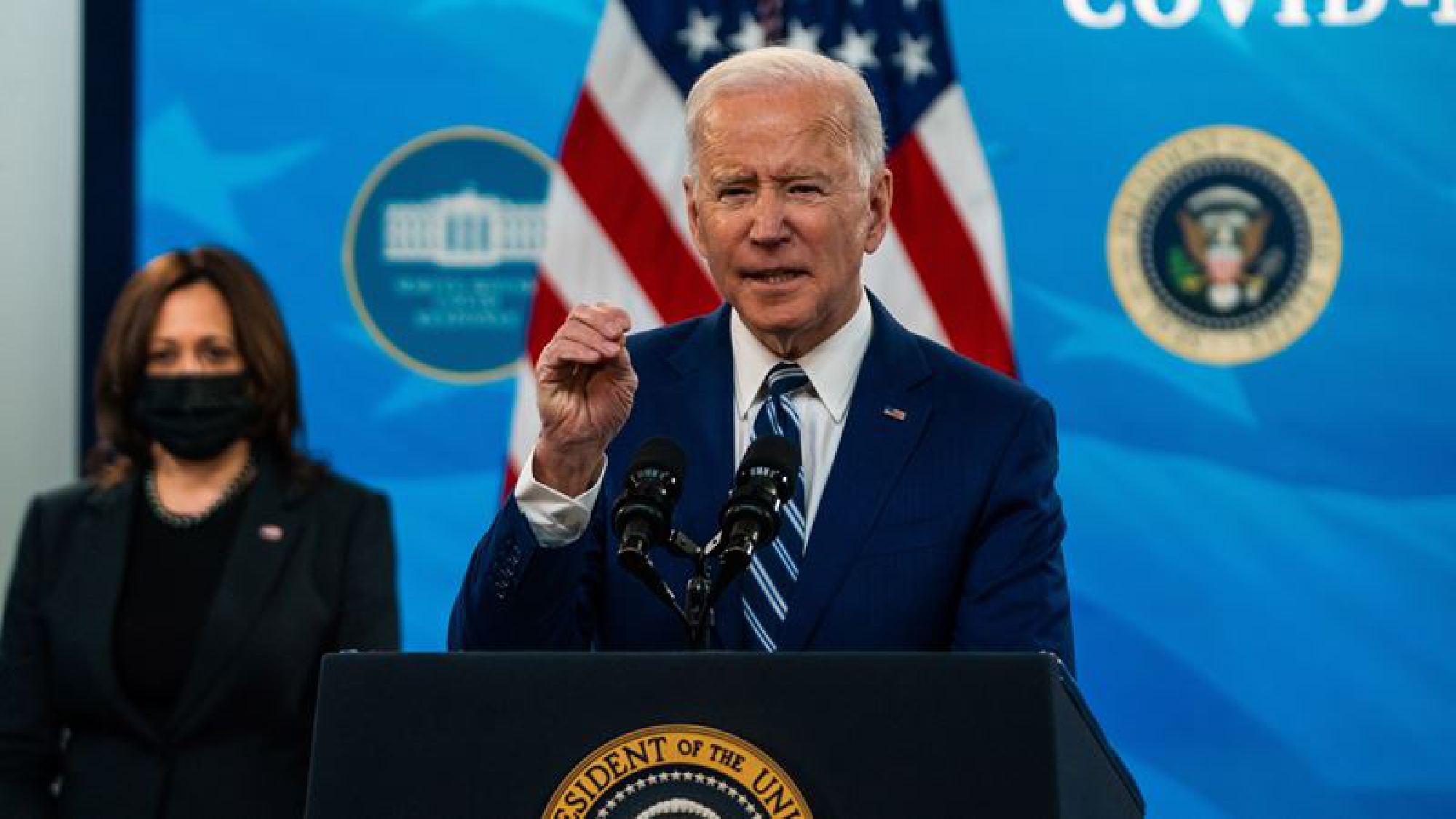
At the invitation of United States President Joe Biden, Xi will take part in the Leaders Summit on Climate and deliver an important speech to the summit via video link from Beijing on Thursday, Foreign Ministry spokeswoman Hua Chunying announced on Wednesday.

The two-day meeting, which could see the participation of about 40 world leaders, has drawn global attention, as it’s the first summit hosted by the US on climate issues since the departure from office of former US president Donald Trump, who was noted for his disregard of the global climate crisis.

It also comes as the world is in dire need of a concerted effort to implement the Paris Agreement and take the issue a step forward.

At a news briefing on Wednesday, Foreign Ministry spokesman Wang Wenbin said that China hopes that the summit can be an “exchange and cooperation platform for global cooperation to tackle climate challenges, facilitate the effective and comprehensive implementation of the Paris Agreement, and promote concerted efforts in global climate and environmental governance”.

In the past week, China has engaged in a series of high-level climate talks. On Friday, the top leaders of China, France and Germany agreed during a virtual summit to jointly work toward an equitable and reasonable climate governance mechanism.

At the meeting, Xi reiterated China’s commitments to peak its carbon emissions before 2030 and attain carbon neutrality before 2060. He also said China had decided to adopt the Kigali Amendment to the Montreal Protocol and is stepping up curbs on emissions of non-CO2 greenhouse gases.

China and the US issued a joint statement on Sunday on coping with climate change after Xie Zhenhua, China’s special envoy for climate change affairs, and US Special Presidential Envoy for Climate John Kerry met in Shanghai.

In his written address to a forum on carbon neutrality on Tuesday in Beijing, Xie said, “The joint statement issued after the China-US climate dialogue fully demonstrates that we can work together toward a sustainable future only via pragmatic cooperation and with joint efforts to seek for answers and paths.”

Sino-US cooperation vital

The joint statement said the two countries will beef up their respective climate action while joining hands in efforts to bring the goals included in the landmark Paris Agreement into reality.

The Paris Agreement, adopted in 2015, aims to keep the global temperature increase this century below 2 C from preindustrial levels and to pursue efforts to limit the temperature increase even further to 1.5 C.

Richie Merzian, a former Australian government negotiator to the United Nations Framework Convention on Climate Change, said he expected to see a positive outcome from possible talks between China and the US during the summit.

“It’s only because China and the US came together in 2015 that we had a Paris Agreement,” Merzian, who is also director of the Climate and Energy Program at the Australia Institute, said in an interview with Xinhua News Agency. “That is how important both those countries are to global efforts.”

China and the United States have been widely praised for laying the foundations of international support for the Paris Agreement. Following Xi’s visit to the US in June 2013, then US president Barack Obama visited China in November 2014.

On Nov 12, 2014, the two presidents made public the China-US Joint Announcement on Climate Change, which said they “resolved to work closely together over the next year to address major impediments to reaching a successful global climate agreement in Paris”.

Merzian said it was in the interests of China and the US to address climate change, as both of them suffered consequences such as increased frequency and severity of extreme weather events.

The scholar also noted that countries could benefit from the new economy to be created in climate change mitigation efforts. “Those are the green technologies that China has been doing so well, manufacturing and shipping out to the world and also implementing domestically,” he said.

“So really, everyone benefits when China and the US can work together,” he said.

Lin Jiaqiao, co-founder and co-director of the Beijing-based Rock Environment and Energy Institute, said he saw electric vehicles and renewable energy as two sectors offering potential for cooperation between China and the US.

The two countries have listed these two sectors as strategies to decarbonize their economies, as well as to increase employment opportunities and stimulate economic growth. However, they still need to hammer out a substantive cooperation framework for the sectors based on the consensus outlined in their joint climate statement, Lin said.

More targets envisioned

Experts have also expressed high expectations about major economies unveiling more ambitious climate targets before or at the virtual summit.

According to a statement by the US government, by the time of the summit, the US will announce an ambitious 2030 emissions target as its new Nationally Determined Contribution for post-2020 climate action under the Paris Agreement.

Quoting unnamed sources, The Associated Press said in a report on Tuesday that Biden will pledge to cut US greenhouse gas emissions by at least half by 2030, which is nearly double the nation’s previous commitment.

“While China announced an updated nationally determined contribution last December, the ball is now in the US court,” said Zhang Jianyu, founder and chief representative of the Environmental Defense Fund’s China program.

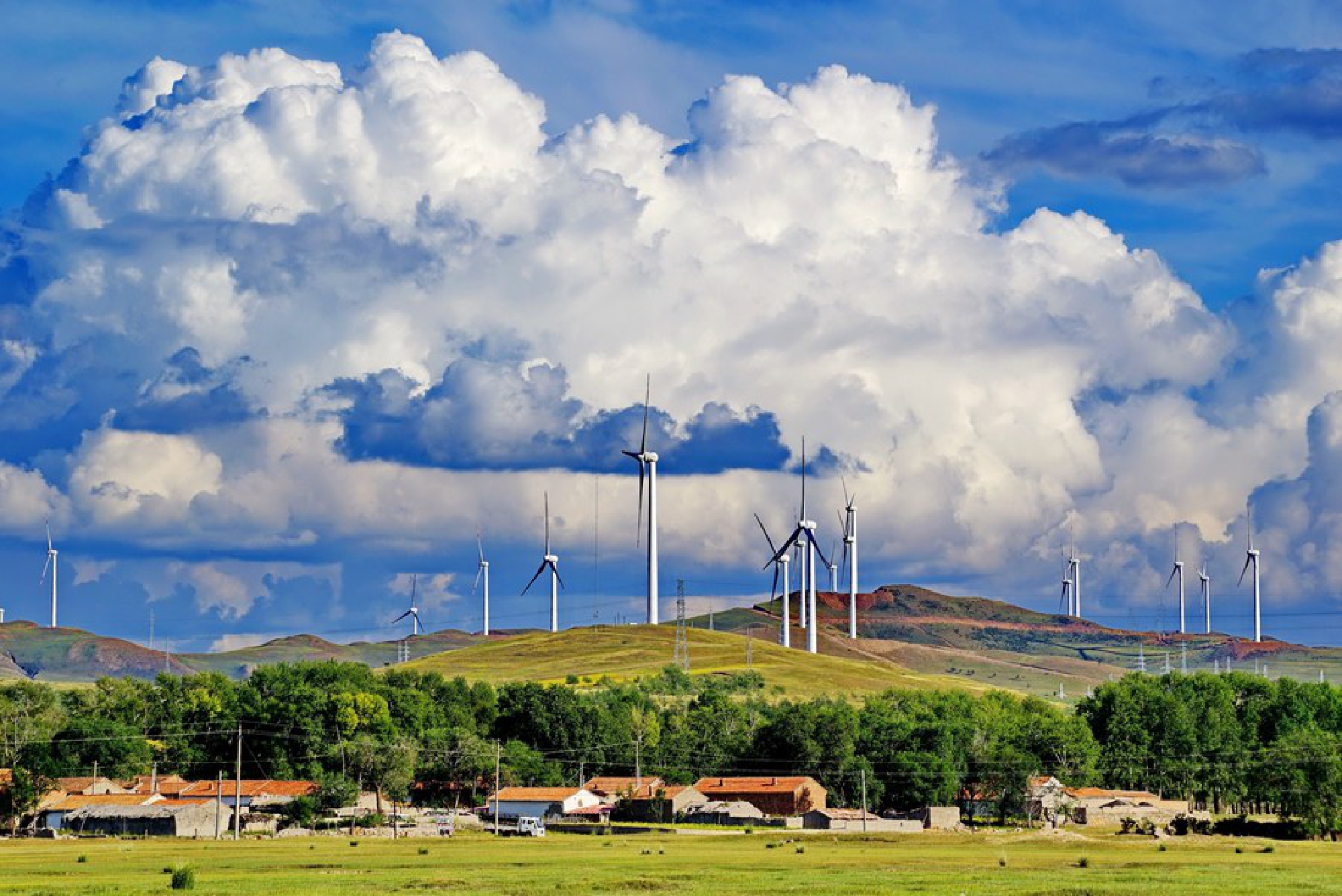
China announced late last year that it will lower its carbon dioxide emissions per unit of GDP by over 65 percent from the 2005 level and increase the share of non-fossil fuels in primary energy consumption to around 25 percent by 2030. The country will also increase the share of non-fossil fuels in primary energy consumption to around 25 percent.

The European Union also reached a tentative climate deal on Wednesday that is intended to make the bloc climate neutral by 2050.

“Our political commitment to becoming the first climate neutral continent by 2050 is now also a legal commitment. The climate law sets the EU on a green path for a generation,” European Commission President Ursula von der Leyen said early on Wednesday.

Under the provisional deal reached after officials negotiated through the night, the EU will also commit itself to an intermediate target of cutting greenhouse gas emissions by at least 55 percent by 2030 compared with 1990 levels, AP reported.

On Tuesday, the UK government pledged to cut carbon emissions by more than three-quarters of their 1990 levels by 2035 while closing a loophole that had left much of the pollution from airplanes and ships out of the tally, according to AP.

On Wednesday, Russian President Vladimir Putin said that Russia’s emissions of greenhouse gases should be less than the EU’s over the next 30 years, but that it would be difficult to reach that goal given Russia’s size, Reuters reported.

Published : April 22, 2021

By : HOU LIQIANG/China Daily

Stocks rebound as dip buyers fuel reopening trade #SootinClaimon.Com

#SootinClaimon.Com : ขอบคุณแหล่งข้อมูล : หนังสือพิมพ์ The Nation.

https://www.nationthailand.com/international/40000085

Stocks rebound as dip buyers fuel reopening trade


Stocks snapped a two-day drop as dip buyers emerged, fueling a rally in companies that stand to benefit the most from an economic revival. Treasuries were little changed.

Stocks rebound as dip buyers fuel reopening trade

Most major groups in the S&P 500 rose, with raw-material, energy and industrial shares leading the charge. A gauge of small caps climbed more than 2%, outperforming major benchmarks. CSX Corp. paced gains in the Dow Jones Transportation Average after a strong revenue outlook. Netflix Inc. tumbled on disappointing subscriber figures. The Canadian dollar advanced as the nation’s central bank said it’ll pare back asset purchases and move up its expected timeline for potential rate hikes.

Equities rebounded as traders sifted through corporate results for signs on whether an anticipated jump in profits would bring with it forecasts for stronger growth. Earlier losses were driven by concern over a flare-up in coronavirus cases around the world that could jeopardize an economic rebound, with stocks trading near their all-time highs.

“Investors are trying to figure out what’s going to accelerate through the reopening based on earnings and guidance, while simultaneously keeping an eye on any reports of a coronavirus resurgence globally,” said Mike Loukas, chief executive officer at TrueMark Investments. “It’ll be a tug-of-war for direction on certain days.”

Earnings season may be just the spark the Russell 2000 needs after trailing major benchmarks this month. The gauge’s revenue is set to grow by 8.7%, beating the S&P 500’s by 226 basis points, wrote Bloomberg Intelligence’s Michael Casper and Gina Martin Adams. The small-cap index’s cyclical sectors — led by raw-material, financial and consumer-discretionary companies — are expected to drive the sales growth, according to analysts’ consensus estimates.

These are some of the main moves in markets:

Stocks

The S&P 500 climbed 0.9% at 4 p.m. EDT.

The Stoxx Europe 600 Index rose 0.7%.

The MSCI All-Country World Index gained 0.4%.

Currencies

The Bloomberg Dollar Spot Index decreased 0.1%.

The euro was little changed at $1.2034.

The Japanese yen was little changed at 108.07 per dollar.

Bonds

The yield on 10-year Treasurys fell one basis point to 1.55%.

Germany’s 10-year yield was unchanged at -0.26%.

Britain’s 10-year yield climbed one basis point to 0.74%.

Commodities

West Texas Intermediate crude fell 2.7% to $61 a barrel.

Gold gained 0.9% to $1,794.90 an ounce.

Published : April 22, 2021

By : Syndication Washington Post, Bloomberg · Rita Nazareth, Kamaron Leach

Biden says guilty verdict in Floyd murder offers a chance at reform #SootinClaimon.Com

#SootinClaimon.Com : ขอบคุณแหล่งข้อมูล : หนังสือพิมพ์ The Nation.

https://www.nationthailand.com/international/40000084

Biden says guilty verdict in Floyd murder offers a chance at reform


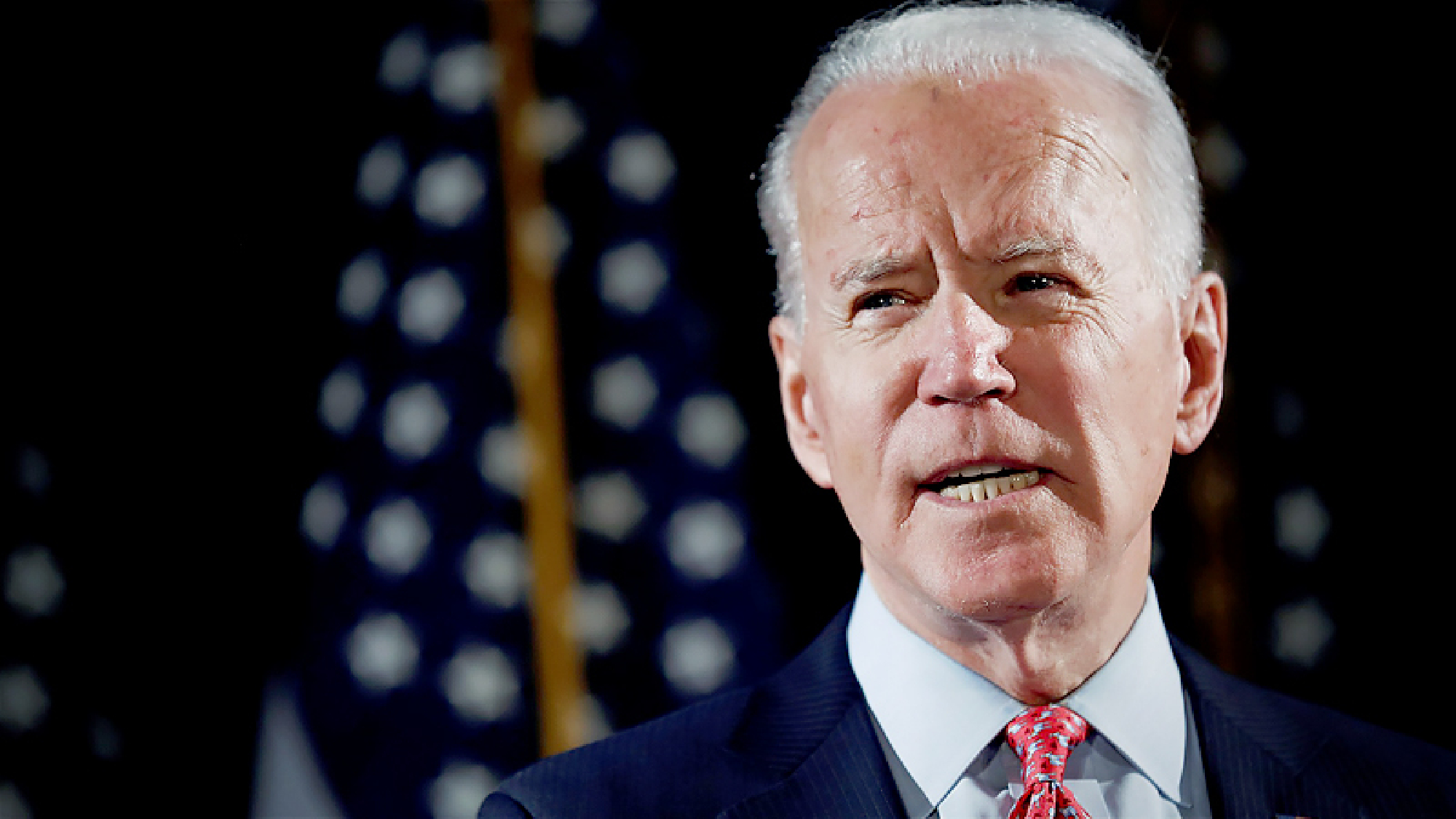
WASHINGTON – Almost immediately after former Minneapolis police officer Derek Chauvin was found guilty of murdering George Floyd late Tuesday afternoon, President Joe Biden was on the phone from the Oval Office, eager to talk to Floyds family.

Biden says guilty verdict in Floyd murder offers a chance at reform

“At least, God, now there is some justice,” Biden told a tearful family, gathered in a courthouse hallway and crowded around with the president on speakerphone. “We’re all so relieved . . . Guilty on all three counts. It’s really important.”

The family urged him to ensure police reform was accomplished, that the moment was used to usher in new change in a country grappling with frequent spasms of violence and an underpinning of racial unrest.

“You got it, pal,” Biden said, in video captured by family attorney Ben Crump. “That and a lot more . . . This gives us a shot to deal with genuine, systemic racism.”

He then offered to bring them to Washington on Air Force One.

The guilty verdicts on all counts against Chauvin, who is White, for killing Floyd, who was Black, makes this case different than many previous ones – creating a potential inflection point for a president who made racial equity and police reform a centerpiece of his presidential campaign, but who hasn’t yet placed it at the forefront of his presidency.

In a striking scene, the man who was the vice president to the nation’s first Black president was joined by the woman he chose as the nation’s first Black vice president. The two of them watched the verdict together in the Private Dining Room at the White House before calling the family afterward and then offering back-to-back remarks to the nation.

“Black Americans, and black men in particular, have been treated throughout the course of our history as less than human,” Harris said in raw and pointed remarks. “Black men are fathers. And brothers. And sons. And uncles. And grandfathers. And friends. And neighbors.”

A president who never marched for civil rights – even though at times he claimed he did – and who admittedly was the one wearing a suit jacket rather than the flak jackets or tie-dyed shirts of 1960s protesters is now in a unique role at a unique moment in history.

Biden on Tuesday was not necessarily soothing a skittish nation – one that was prepared for widespread protests, with helicopters hovering over boarded-up downtowns around the country – but instead is now attempting to create momentum for police reform.

“This can be a moment of significant change,” Biden said. “We have a chance to change the trajectory in this country.”

His remarks to the nation came hours after he made extraordinary comments earlier in the day as the jury was still deliberating, saying that he viewed the evidence as “overwhelming” and said he was praying for “the right verdict.”

Floyd’s death nearly a year ago, and the national protests that came afterward, were a key moment for Biden’s presidential campaign. They triggered new policies and commitments, and prompted Biden to make his calls for racial equity and an overhaul of the criminal justice system a more central element of his message.

The death spurred Biden to make one of his first trips after a lengthy period of staying at home due to the coronavirus pandemic, traveling to visit the Floyd family in Houston and developing a personal connection that he has often referenced since. He also recorded a video that played at the funeral.

“The original sin of this country still stains our nation today, and sometimes we manage to overlook it,” he said four days after Floyd’s death. “None of us can turn away. None of us can be silent. None of us can any longer, can we hear the words ‘I can’t breathe’ and do nothing.”

He said that it was “a national crisis” that called out for “real leadership.”

“It’s going to require those of us who sit in some position of influence to finally deal with the abuse of power,” he said.

Yet for Biden’s first three months in office, there has not been a concerted push for police reform – even as there have been a number of high-profile shootings. He has abandoned his pledge to form a police oversight commission. White House officials have pointed toward appointments he has made at the Justice Department, and insist they will investigate police misconduct.

Biden supports congressional legislation named after Floyd, but officials have not detailed efforts Biden has made to ensure its passage, the way he has on other top priorities like covid relief legislation.

Fatal police shootings have remained constant since The Washington Post began tracking them in 2015, and there has been little change since Biden took office. There have been 274 shootings so far this year, putting it on course to be the same number this year – around 1,000 – as it has been in recent years without a major shift in police culture or restrictions on gun ownership.

“Enough. Enough. Enough of the senseless killings,” Biden said in his remarks on Tuesday evening.

“Today’s verdict is a step forward,” he added. “Such a verdict is also much too rare. For so many people it seems like it took a unique convergence of factors.”

He said that having a killing that took place in broad daylight – extending for nearly 10 minutes and captured on video – highlighted in full view what many Black Americans deal with daily. He also noted how remarkable it was that fellow police officers testified against Chauvin, rather than close ranks around him.

“Most men and women who wear the badge serve their communities honorably,” Biden said. “But those few who fail to meet that standard must be held accountable . . . Today’s verdict sends that message. But it’s not enough. It can’t stop here.”

Biden has been closely following the trial and he called Floyd’s brother Philonise on Monday after the jury was sequestered.

“They’re a good family,” Biden said earlier on Tuesday. “And they’re calling for peace and tranquility no matter what that verdict is.”

But Biden also went further, calling the evidence for a guilty verdict “overwhelming,” an unusually blunt assessment from the White House on a volatile case that has not yet been decided.

“I’m praying the verdict is the right verdict, which is, I think – it’s overwhelming, in my view,” Biden said.

He added: “I wouldn’t say that unless the jury was sequestered now.”

While the comments may not have had any bearing on the case itself, they were highly unusual from a president and could provide another reason for Chauvin’s defense to argue the trial has not been fair.

Making Biden’s comments even more notable, the state judge overseeing the case had warned Monday that politicians should avoid publicly opining on the case. That rebuke was aimed at Rep. Maxine Waters, D-Calif., who on Saturday night said protesters should “stay on the street” and “get more confrontational” if there is not a guilty verdict.

Judge Peter Cahill denied the defense’s motion for a mistrial because of Waters’s comments, though he said that they may have given the defense attorney a reason to file an appeal.

Biden’s comments drew swift criticism from lawyers, including some usually sympathetic to him.

“No sitting President should be publicly weighing in on how a jury should rule in a pending criminal matter,” tweeted Bradley Moss, a lawyer who specializes in national security. “No president, liberal or conservative, democrat or republican.”

As president, Donald Trump was often criticized by Democrats and legal ethicists for giving his opinion on legal matters that were not yet resolved, especially if they were under the jurisdiction of federal officials. Chauvin’s trial is being handled by the state of Minnesota.

After Biden made the comments Tuesday, White House press secretary Jen Psaki stressed that he had waited until after the trial was completed and the jury was sequestered to offer any opinion, arguing that meant he was not infringing on the prospect of an impartial decision.

“I don’t think he would see it as weighing in on the verdict,” Psaki said. “He was conveying what many people are feeling across the country, which is compassion for the family, what a difficult time this is, what a difficult time this is for many Americans across the country who have been watching this trial very closely.”

Later in the day, in the call with Floyd’s family after the verdict, Biden referenced the compassion he felt for them. He spoke specifically of Floyd’s young daughter, Gianna, and pointed to her as a rallying cry.

“I keep thinking of her words, ‘Daddy’s gonna change the world,’ ” Biden told the family. “Well, we got a shot to make change.”

Published : April 22, 2021

By : The Washington Post · Matt Viser

Biden presses employers to provide paid time off for vaccine shots, recovery #SootinClaimon.Com

#SootinClaimon.Com : ขอบคุณแหล่งข้อมูล : หนังสือพิมพ์ The Nation.

https://www.nationthailand.com/international/40000083

Biden presses employers to provide paid time off for vaccine shots, recovery


WASHINGTON – President Joe Biden on Wednesday sought to jump-start suddenly slowing vaccinations of Americans against covid-19, pressing businesses and nonprofits to give employees paid time off for the shots and touting government funding to underwrite some of the costs of that time.

Biden presses employers to provide paid time off for vaccine shots, recovery

The initiative, designed to encourage millions of unvaccinated people to get immunized, sends one of the strongest signals yet that vaccine demand is emerging as a bigger challenge than supply. It marks a shift from months of long waiting lists and limited opportunities for Americans to get vaccinated. Biden announced Wednesday that the United States will hit 200 million vaccination shots by Thursday, a target he had set out to meet by the end of April.

“I’m calling on every employer large and small in every state to give employees the time off they need, with pay, to get vaccinated,” Biden said. “No working American should lose a single dollar from their paycheck because they chose to fulfill their patriotic duty of getting vaccinated.”

Repeatedly declaring the country had entered a “new phase” in which all Americans ages 16 and older can get vaccinated, Biden warned that “the broad swath of American adults still remain largely unvaccinated,” and lamented that “too many younger Americans may still think they don’t need to get vaccinated.”

“To put it simply, if you’re waiting for your turn, wait no longer,” he said.

Biden’s pitch comes amid both hopeful and concerning signs in the nationwide effort to vaccinate people as quickly as possible. After weeks of accelerating daily inoculations, the average daily number of reported shots in arms slowed significantly over the past week, with an 11 percent drop in daily shots administered nationally, according to data from the Centers for Disease Control and Prevention.

More than 40% of the U.S. population has received at least one dose of the vaccine. At the same time, most Americans who haven’t been immunized say they’re unlikely to get the shots, a recent poll showed. Meanwhile, a pause in the use of Johnson & Johnson’s vaccine has complicated efforts to swiftly administer shots.

In an afternoon speech at the White House, Biden called on all companies to provide employees with paid time off to get shots and to rest if they feel unwell afterward.

The president highlighted a tax credit in his $1.9 trillion pandemic relief law, which will reimburse businesses and nonprofits with fewer than 500 employees for up to $511 per day of paid vaccination leave offered between April 1 and Sept. 30, to a maximum of 10 work days.

“Every employee should get paid leave to get a shot, and businesses should know that they can provide it without a hit to their bottom line,” Biden said. “There’s no excuse for not getting it done.”

At least 133 million people have received one or both doses of the vaccine in the United States, according to Washington Post data. More than 86 million people are fully vaccinated, the data show. By Thursday, Biden said, 80% of American seniors will have had at least one shot.

But many Americans are still reluctant to get vaccinated. Polling shows opposition to the vaccine is much more pronounced among Republicans than Democrats.

The new tax credit is part of the government’s quest to buttress efforts in the private sector aimed at encouraging vaccination. Large employers from American Airlines to Target have unveiled incentives for employees to get vaccinated, from an extra day off next year to free rides to vaccination sites.

The success of those initiatives could help determine how businesses approach requiring the vaccine for their employees – a vexed political debate that the administration has sought to leave to the private sector.

Short of mandates, however, Biden administration officials said they had examined research showing employers have outsize influence in reaching the remaining unvaccinated population. The tax credit, they said, would provide the financial support necessary to allow small businesses to make vaccination convenient for their employees.

The approach is wise, experts said, because some of the workers most at risk of coronavirus exposure may be reluctant to get vaccinated if it means sacrificing limited time off.

“I think it’s a very smart move,” said Dorit Rubinstein Reiss, a professor at the University of California Hastings College of the Law. An even more immediate way to support small businesses in guaranteeing paid time off, she said, would be to provide direct payments to employers who show that they’re providing this benefit.

Nirav Shah, director of the Maine Center for Disease Control and Prevention and president of the Association of State and Territorial Health Officials, welcomed the announcement, saying it was vital for government to help remove various “social determinants” blocking access to vaccination, from work to transportation to child care.

As Biden approaches his 100th day in office, he is eager to highlight the progress he has made in combating the pandemic. The president has made fighting the coronavirus the dominant focus of the early part of his presidency. He campaigned aggressively on the issue last year and signed the sweeping covid-19 relief bill into law earlier this year.

Biden pledged in a news conference in late March that the U.S. would administer 200 million coronavirus vaccine shots by the end of April – doubling a prior goal of 100 million shots in his first 100 days in office. On Wednesday, he called hitting that milestone ahead of that deadline an “incredible achievement for the nation.”

The president delivered his Wednesday address just days after residents 16 and older became eligible for vaccination, a dynamic Biden promoted this week in a video.

“We have enough of it, you need to be protected, and you need in turn to protect your neighbors and your family. So please, get the vaccine,” Biden says in the video.

Biden said Wednesday he hoped the U.S. could help provide other countries with vaccines to address the pandemic, but that domestic supply had not yet reached a high enough level to do that in earnest.

“We don’t have enough to be confident to give it send it abroad now. But I expect we’re going to be able to do that,” he said.

Published : April 22, 2021

By : The Washington Post · Sean Sullivan, Isaac Stanley-Becker

Verdict heard around the world: Global reactions to the George Floyd case #SootinClaimon.Com

#SootinClaimon.Com : ขอบคุณแหล่งข้อมูล : หนังสือพิมพ์ The Nation.

https://www.nationthailand.com/international/40000082

Verdict heard around the world: Global reactions to the George Floyd case


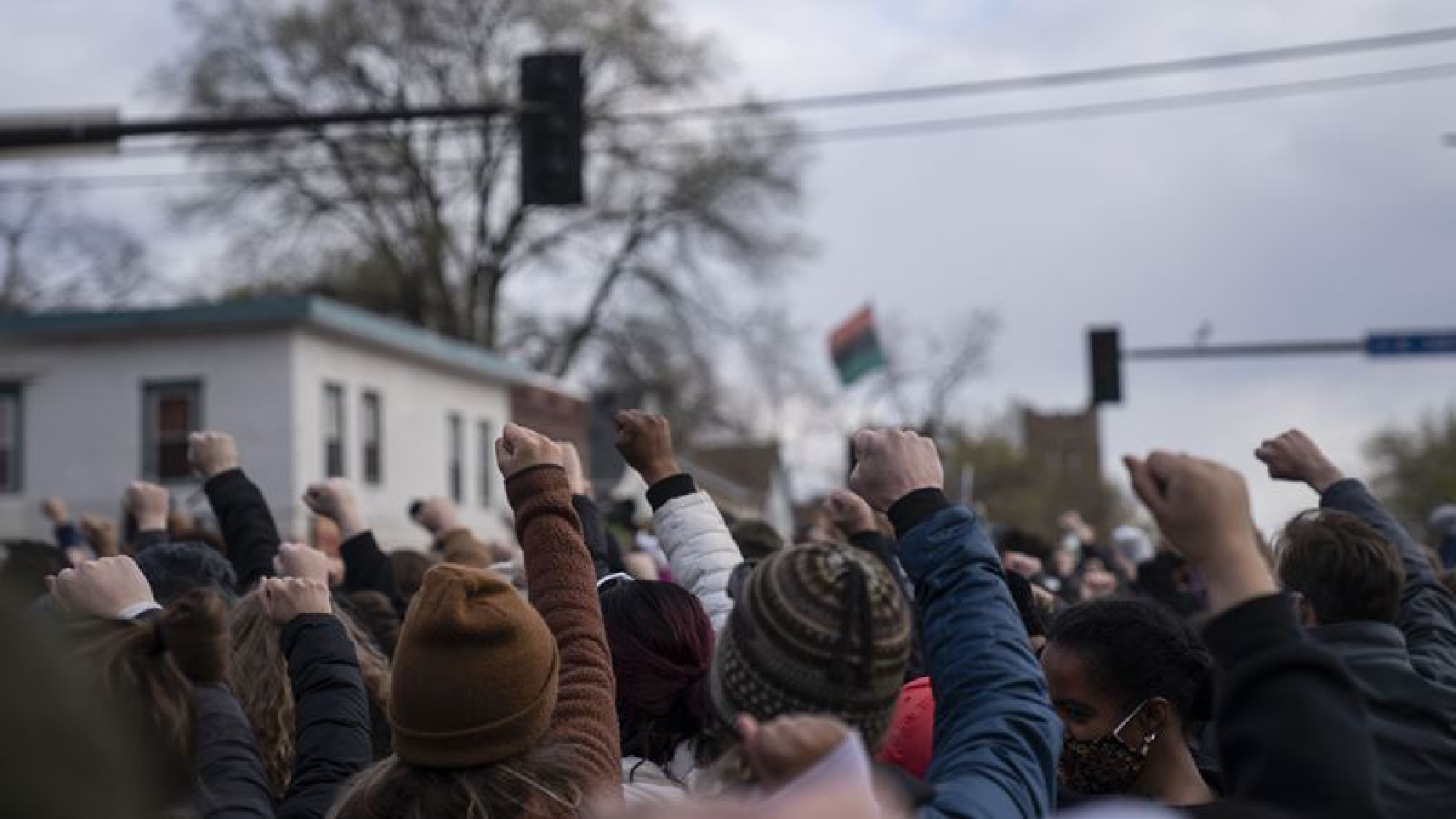
The conviction of former Minneapolis police officer Derek Chauvin in the killing of George Floyd resonated globally, with foreign dignitaries and community leaders reacting to a verdict that revived calls for an international reckoning on racial inequality in justice systems around the world.

Verdict heard around the world: Global reactions to the George Floyd case

Chauvin, who is White, was found guilty Tuesday of second-degree unintentional murder, third-degree murder and second-degree manslaughter in the death of Floyd, a Black man he pinned down outside a grocery store last year.

Foreign media outlets ran live coverage, showing how the trial resonated far beyond its national context, and highlighting the outsized role the U.S. racial justice conversation plays internationally as the rest of the world is forced to grapple with its own race relations.

“I got messages from all over the world – Ghana, London – saying we can’t breathe until you can breathe,” said George Floyd’s brother Philonise. “Well, today we are able to breathe again. Justice for George means freedom for all.”

British Prime Minister Boris Johnson wrote on Twitter on Tuesday that he “was appalled by the death of George Floyd and welcome this verdict,” while the leader of the opposition Labour Party, Keir Starmer, simply wrote “justice.”

London Mayor Sadiq Khan tweeted that the verdict itself won’t heal the pain of loss for Floyd’s family, which reverberated around the world. “The guilty verdict must be the beginning of real change – not the end.”

The ruling made the front pages of several British dailies on Wednesday – including The Times of London and The Daily Telegraph.

“Guilty, Guilty, Guilty,” read the front cover of The Metro, while The Daily Mail asked “Now can George Floyd verdict bring peace to America’s race turmoil?”

In Canada, Prime Minister Justin Trudeau welcomed the verdict but said it “underlines that there’s an awful lot of work to do.”

Floyd’s killing proved to be a moment of reckoning not only in the United States but across the world, as protesters took to the streets calling for justice in his case and pointing to what they saw as parallels in their own communities. In Britain last year, they chanted for Mark Duggan, a 29-year-old who was shot by police during his attempted arrest in 2011. In France, they said the name Adama Traoré, a 24-year-old who died in police custody in 2016.

In Japan, crowds last year gathered in Osaka holding signs that read “Black lives matter” while in Germany protesters took to the streets of Berlin holding up placards that said “white silence is violence,” and “I can’t breathe.”

Foreign news outlets featured prominent coverage of the verdict on their websites, with the Australian Broadcasting Corp. running live coverage and French newspaper Le Monde featuring it at the top of its website.

In Australia, where Floyd’s death last year spurred a resurgence in activism over Indigenous people’s deaths in custody, the guilty verdict led to fresh calls for authorities to scrutinize more than 400 Aboriginal deaths in custody, along with a painful realization that such a conviction would be unlikely there.

“Even [compared to] somewhere like America that is seen as Ground Zero for police brutality, Australia is less accountable to the brutality of its prison and police officers,” said Latoya Aroha Rule, who lost a brother, Wayne Fella Morrison, in 2016 after he was pinned down by seven correctional officers and placed facedown in the back of a prison van, his hands and feet bound with restraints and a spit-hood pulled over his head. An inquest into his death begins next week.

“An outcome like George Floyd’s case is not possible for our case,” said Rule, who helped organize Black Lives Matter rallies in cities across Australia last year. “It took more than a year and a very long history of civil rights advocacy to get to this point, to charge one officer for one murder. But it does only take one injustice sometimes, when people choose to act. I have to remain hopeful this will have some implication in the global racial violence and injustice movement.”

On Twitter, people also pointed to the case of David Dungay Jr., a 26-year-old Aboriginal man who died in similar circumstances in a Sydney correctional facility in 2015 after being restrained by five prison guards in his cell.

Video footage aired at a subsequent inquest showed Dungay telling the guards who were pinning him to his bed “I can’t breathe” at least 12 times. The inquest didn’t recommend disciplinary action against the guards.

The effort to connect George Floyd’s death to racial justice issues around the world has faced resistance from some leaders. In Australia, Prime Minister Scott Morrison and other conservative lawmakers blamed last year’s protests on fringe groups they said were using the U.S. protests to stoke divisions. Morrison’s office didn’t respond to a request for comment on the verdict.

Even as many around the world welcomed the verdict, a top police official in Australia’s most populous state appeared on television and radio decrying a Sydney school for allowing anti-police and Black Lives Matter posters in classrooms, calling it “indoctrination” and maintaining there was no “race problem” in Australia.

“The racist rants . . . lines about how white lives don’t matter or they matter too much; this is the sort of racism that gets the United States into trouble. It has got no place in Australia,” said David Elliott, the New South Wales police minister.

Published : April 22, 2021

By : The Washington Post · Siobhán O’Grady, Rachel Pannett, Jennifer Hassan

Homegrown Indian covid vaccine already in use shows 78% efficacy #SootinClaimon.Com

#SootinClaimon.Com : ขอบคุณแหล่งข้อมูล : หนังสือพิมพ์ The Nation.

https://www.nationthailand.com/international/40000081

Homegrown Indian covid vaccine already in use shows 78% efficacy


An Indian covid-19 shot showed 78% efficacy from interim data at preventing mild, moderate and severe reactions to the disease and worked against most variants of the virus as the South Asian nation struggles to contain a record surge across the country.

Homegrown Indian covid vaccine already in use shows 78% efficacy

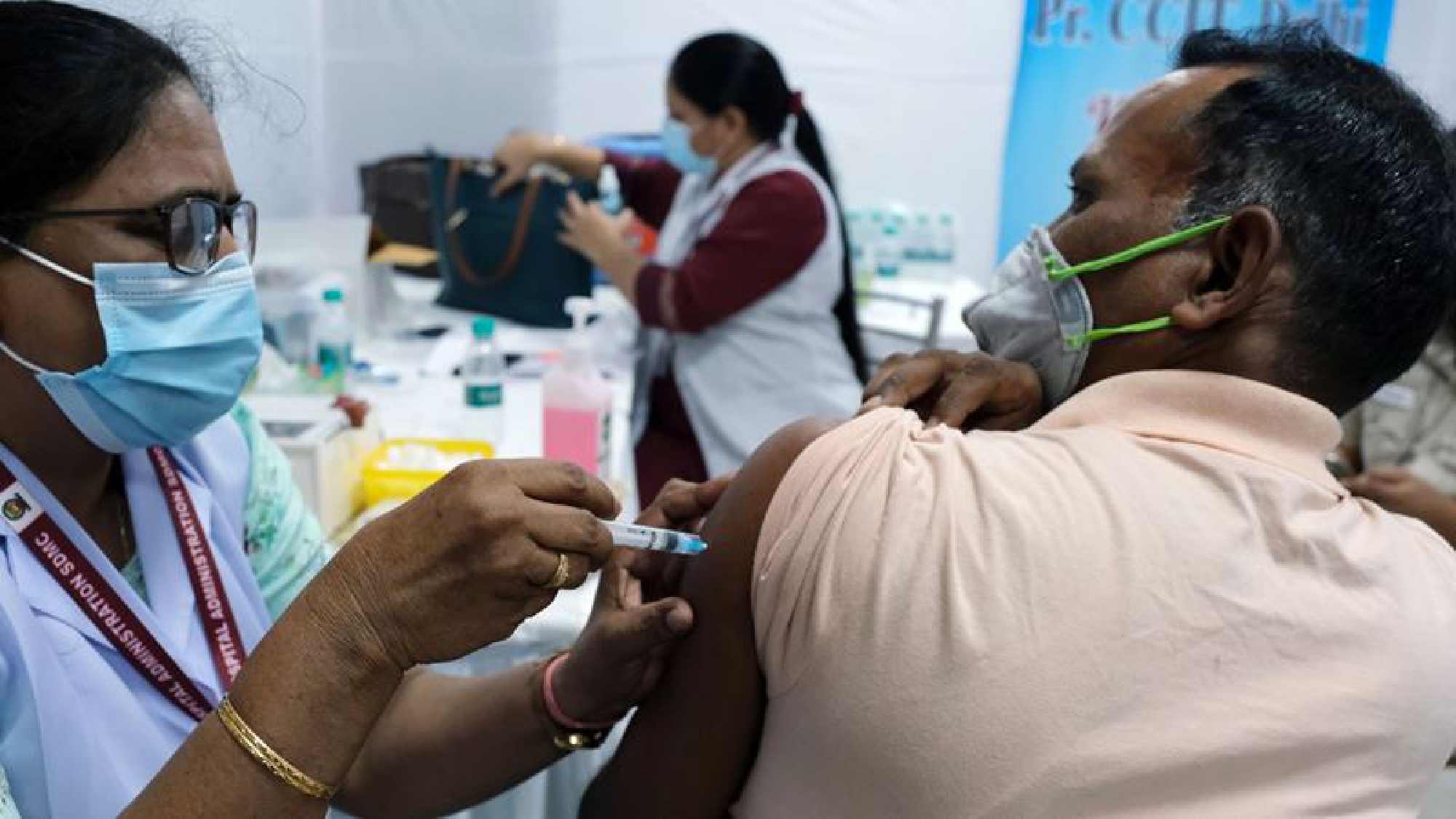
The inoculation known as Covaxin, a two-shot injection that uses an inactivated or dead form the virus, also showed 100% efficacy at preventing severe symptoms and hospitalizations against the coronavirus, vaccine maker Bharat Biotech International and the Indian Council for Medical Research, the co-developers, said in a joint statement on Wednesday.

The data from final stage trials that enrolled 25,800 participants has yet to be peer reviewed and a final analysis will be available from June, according to the statement.

“Covaxin works well against most variants of SARS-CoV-2,” Balram Bhargava, the director general of the Indian Council of Medical Research, said in the statement, which added that several million doses of Covaxin had already been administered in the country. The medical agency also said in a Tweet that the vaccine “effectively neutralizes” a double mutant strain that has been detected and caused widespread concern in India.

The latest readings add to another interim statement last month that claimed the vaccine showed an 81% efficacy rate in those without prior infection after a second dose, adding to certainty over Covaxin after the shot was contentiously approved in January before it had completed Phase 3 testing. The vaccine was repeatedly marred by controversies almost as soon as work on its development was authorized last June. Those ranged from unrealistic government schedules for its release to sporadic reports of adverse reactions.

Now with India’s health system on the verge of collapse as it hits record rates of covid infections and deaths, the government is pressuring the country’s vaccine makers to quickly speed up their output amid a supply crunch. Bharat Biotech, which has been earmarked for a 650 million rupee ($8.6 million) government grant, said on Tuesday that it would try to scale up production of Covaxin to about 700 million doses on an annual basis and double its output by June and then push out nearly 100 million doses per month by September.

India has currently authorized three vaccines. Two of them from Astrazeneca Plc and Bharat Biotech are already in use, while the third — Russia’s Sputnik V — was greenlit last week. The South Asian nation has also fast-tracked approval for foreign vaccines.

Despite India curbing vaccine exports this month as it attempts to get a grip on a new and overwhelming wave, Bharat Biotech said more than 60 countries have expressed interest in Covaxin, which “has quietly validated our efforts,” Suchitra Ella, the company’s joint managing director, said in the statement.

However, in March Brazil’s health agency blocked the country’s importation of 20 million Covaxin doses after inspectors said Bharat Biotech’s facilities didn’t meet requirements following an audit.

Published : April 22, 2021

By : Syndication Washington Post, Bloomberg · Chris

South Korea court dismisses comfort women compensation case #SootinClaimon.Com

#SootinClaimon.Com : ขอบคุณแหล่งข้อมูล : หนังสือพิมพ์ The Nation.

https://www.nationthailand.com/international/40000079

South Korea court dismisses comfort women compensation case


A South Korean court dismissed a lawsuit against Japan to compensate women forced to work in its World War II-era front-line brothels, a boost for Tokyo amid a series of Korean court rulings awarding damages that sent relations plummeting between the U.S. allies.

South Korea court dismisses comfort women compensation case

The Seoul Central District Court ruled Wednesday that Japan had sovereign immunity in the case brought on behalf of 20 plaintiffs, and as a foreign state, was not liable to pay compensation in a South Korean civil suit.

The court said in its decision that diplomatic friction with Japan would be “inevitable” if the principle of state immunity is denied. It added a 2015 bilateral agreement between South Korea and Japan that set up a compensation fund for the victims euphemistically called “comfort women” was still in effect.

The ruling came after the same Seoul court, but with a different panel of judges and plaintiffs, in January reached a landmark decision that ordered the Japanese government to pay 100 million won ($90,000) each in the case brought on behalf of 12 other women forced to work in front-line brothels

That decision, which came just before Joe Biden took office, widened the rift between the two U.S. military allies crucial to check China’s growing global clout and North Korea’s atomic ambitions. Once in the White House, Biden sent his top envoys on their debut trip abroad in their posts to Japan and South Korea to ease tensions in the two countries that host the bulk of the U.S. military presence in Asia.

Japan has said the lawsuits violated international law and should be dismissed. Tokyo also said all claims were “settled completely and finally” under a 1965 agreement, which accompanied the treaty establishing diplomatic ties between the two countries.

Japan’s top government spokesman Katsunobu Kato refrained from commenting on the Wednesday decision as Tokyo examines the ruling. He added in a news briefing, “the January ruling violated international law and the agreement between Japan and South Korea.”

South Korea’s Foreign Ministry said in a statement the government would like to refrain from making detailed comments on the court’s decision, adding Seoul will do all it can to “restore the honor and dignity” of the women. The government has previously said it believes the individual suffering of many victims was not covered by the treaty.

In 2015, Japan and South Korea announced a “final and irreversible” agreement that came with a personal apology to the women from former Japanese Prime Minister Shinzo Abe as well as about $9.3 million for a compensation fund.

But some of the women protested, arguing the deal was made without consultations and violated their constitutional rights. South Korean President Moon Jae-in, who took office in 2017, has effectively shut down the fund, made by his predecessor.

Tensions further flared between the neighbors after a series of South Korean court decisions from late 2018 demanding Japan pay compensation to Koreans conscripted to work at Japanese factories and mines during the country’s 1910-1945 colonial rule over the Korean Peninsula.

The U.S. was forced to step in when South Korea threatened in 2019 to withdraw from a joint intelligence-sharing agreement, with Moon backing down at the last minute after facing pressure from Washington.|

Historians say anywhere from 50,000 to 200,000 women — many of them Korean — were forced into service in Japan’s military brothels.

Published : April 22, 2021

By : Syndication Washington Post, Bloomberg · Jeong-Ho Lee

Airlines see covid setbacks driving industry to $48 billion loss #SootinClaimon.Com

#SootinClaimon.Com : ขอบคุณแหล่งข้อมูล : หนังสือพิมพ์ The Nation.

https://www.nationthailand.com/international/40000078

Airlines see covid setbacks driving industry to $48 billion loss


The airline industrys chief lobby group widened its estimate for losses this year by about a quarter, saying new covid-19 flare-ups and mutations have pushed back the timeline for a restart of global air travel.

Airlines see covid setbacks driving industry to $48 billion loss

Carriers will lose about $48 billion in 2021, the International Air Transport Association said Wednesday in an online presentation. It had earlier forecast a $38 billion deficit.

“This crisis is longer and deeper than anyone could have expected,” said Willie Walsh, the former chief of British Airways owner IAG, who’s now IATA’s director general. “Losses will be reduced from 2020, but the pain of the crisis increases.”

The downward pivot comes as airlines contend with new travel bans and restrictions arising from outbreaks in large aviation markets such as India and Brazil. Governments of countries that have ramped up vaccinations most quickly have become cautious about restarting travel to prevent the import of new variants that could prove resistant to jabs.

This week, the U.S. State Department said it would declare about 80% of the world’s nations no-go zones. In Europe, the U.K. has held off on confirming a plan to restart travel in mid-May, saying it will decide closer to the date. While some countries are starting to open up to vaccinated tourists, progress toward so-called vaccine passports has proven slow and complex.

After the industry lost about $126 billion in the teeth of the crisis during 2020, there were high hopes for a rebound in air travel during the first half of this year. IATA now says the crucial summer season is at risk.

Demand will reach 43% of 2019 levels during 2021 — a more optimistic outlook than issued in February, but less bullish than in December, when vaccines were first being rolled out. At that time IATA saw traffic this year recovering to about half of pre-pandemic levels.

In the U.S., investors have turned sour on the chance of a quick recovery in aviation, sending a Standard & Poor’s index of major airlines to 10 straight days of declines this month, the longest streak since at least 1989. In Europe, trans-Atlantic specialist Virgin Atlantic Airways Ltd. said Wednesday that it won’t get its fleet fully back in the air until October or November.

Regional highlights of the IATA forecast:

– North American carriers are best placed to take advantage of rapid vaccination programs because of the large domestic market in the U.S.

– Testing and increasing the pace of an unsteady vaccine roll-out is the key to recovery for the struggling market in Europe. The return to profit will take longest in this region

The new estimates assume a partial reopening of some markets in Europe in time for summer flying, and also of some trans-Atlantic services, IATA Chief Economist Brian Pearce said. These routes should be fully open in the fourth quarter, with more than 75% of relevant populations vaccinated, he said.

While optimism for the second half hinges mainly on the continuing rebound of large domestic markets like the U.S. and China, Walsh said he’s a little more upbeat about Europe than IATA’s official projections.

Testing of the group’s Travel Pass app is continuing with more than 50 airlines signed up.

Published : April 22, 2021

By : Syndication Washington Post, Bloomberg · Christopher Jasper, Siddharth Philip

Bidens mammoth education agenda would expand the federal role from cradle to college #SootinClaimon.Com

#SootinClaimon.Com : ขอบคุณแหล่งข้อมูล : หนังสือพิมพ์ The Nation.

https://www.nationthailand.com/international/40000077

Bidens mammoth education agenda would expand the federal role from cradle to college


WASHINGTON – The federal government has long been a bit player in education. Under an expansive vision being rolled out this spring by President Joe Biden, that would change.

Bidens mammoth education agenda would expand the federal role from cradle to college

Biden has proposed – or is expected to propose – a half dozen education programs that would constitute the largest federal investment in education in at least a half century. Any one of them would be significant on its own. Taken together, if approved by Congress, they form a cradle-to-college plan that aims to reduce inequities that course through American schools by infusing hundreds of billions of dollars into virtually every level of the system.

“These are truly unprecedented investments in education,” said Sarah Abernathy, executive director of the Committee for Education Funding.

Much of Biden’s strategy is focused on cold, hard cash, a show-me-the-money plan that would more than double federal support to high-poverty districts, rebuild crumbling schools and subsidize pre-K and community college alike. It’s excited educators up and down the system, but left some allies wondering if the administration is doing enough to use the money to drive policy changes by states and districts. For their part, Republicans oppose such sweeping new spending as well as the tax increases proposed to offset some of the cost.

Should Biden’s entire agenda become law, the U.S. educational system could morph from a 13-year guarantee – where children are entitled to free education from kindergarten through 12th grade – to a 17-year promise, where prekindergarten is available starting at age 3 and tuition is free through two years of community college.

“Think of it this way: Joe Biden is adding four years to a student’s education. It’s the largest increase in educational time since high school became universal,” said Rahm Emanuel, a longtime Biden ally who championed similar policies for early childhood and community college when he was Chicago’s mayor. Early-childhood education, he said, will prepare children to learn, while postsecondary programs prepare them for the workforce.

Already, Biden has signed into law the $1.9 trillion coronavirus relief package, which injects $125 billioninto the K-12 system and nearly $40 billion for higher education – more than doubling the Education Department’s annual budget. It also included a one-year expansion of the child tax credit, expected to reduce child poverty by half, that Democrats hope to make permanent.

Then Biden proposed a huge infrastructure package, which includes $100 billion to rebuild schools, plus $48 billion for the workforce development system and $12 billion for community colleges.

This month, Biden unveiled a discretionary budget proposal that seeks a 41% increase in the Education Department pre-pandemic budget, far more than any presidential request since the agency was created in 1979. It includes additional money for community schools, students with disabilities and school counselors. Biden also signaled that he would request a big increase in the Pell Grant, which subsidizes college tuition for low-income students, when he makes his full budget request.

A $200 billion pre-K plan, along with tuition-free community college and $225 billion for child care, is expected this month as part of a package the White House calls the American Families Plan.

Emanuel compared the Biden approach to the pandemic to postwar moments in American history – providing a moment to rethink the scope of what government can do. Administration officials say the shutdown of schools exposed inequities that were always present but now are impossible to ignore.

“It’s a commitment to address systemically some of the issues that have existed in our system for many, many years,” said Education Secretary Miguel Cardona. He called the pre-K and community college investments essential “bookends” to the existing K-12 system that are needed to set children on the right path and, later, prepare them for the world of work.

– – –

So far, the administration has included almost no new demands in exchange for the enormous amount of funding that would support state and local education programs. That stands in contrast to the Obama administration, which used far less money – a $4.3 billion grant program called Race to the Top – to push states to make enormous policy changes, such as adopting Common Core curriculum standards and evaluating teachers based in part on test scores.

Some Biden allies say the president should insist on equity-driven reforms by states and districts as a condition for receiving so much new money.

“If we want to close that spending gap, we really need states and districts to step up,” said former education secretary John King, who is now president of Education Trust, an advocacy and research group focused on equity issues.

For example, he said, the administration could require states to adopt more-equitable systems for distributing state funds to local school districts as a condition of receiving new federal money. King recently announced a run for Maryland governor.

A senior administration official responded that Biden has “made clear” that he plans to tie new money to ensuring that more equitable funding systems are in place, though the administration has yet to formally propose this.

Sen. Michael Bennet, D-Colo., a former superintendent of the Denver Public Schools, generally supports the new spending but said he would like to see some fundamental changes in the Title I formula to direct more money to high-poverty schools if the government is going to increase spending so dramatically. He’d also like to see the money used to drive policy. For instance, he said, he’d like to see schools incentivized to pay teachers at high-poverty schools more.

“It would be a shame if we spend all this money and we do it in ways that don’t transform outcomes for kids,” Bennet said. “We’ve got to change the system. I don’t believe the system works well for kids living in poverty.”

The Biden program could, in some cases, reach far into the middle class – such as with the pre-K and community college plans. Much of it is targeted, though, to those who need it most.

Because schools are funded primarily by local property taxes, there are large gaps between tax collections in wealthy, mostly White school districts and high-poverty districts, which are more likely to educate students of color. The big boost to Title I could close some of the gap because the funding would disproportionately aid school districts with large concentrations of poverty.

At the college level, Biden is asking for an increase of $600 million more for programs at minority-serving institutions, historically Black and tribal colleges, and community colleges. These schools have fewer resources than others, and most of their students have low incomes.

“This is a president saying I prioritize these institutions. I’m willing to put my money where my mouth is . . . and I can’t tell you the last time a president has put an investment in these schools in his budget,” said Lodriguez Murray, vice president for public policy and government affairs at the United Negro College Fund.

Proposing this agenda is, of course, different from passing it into law. Some of these ideas have been popular with Republicans, at least in the states. GOP governors in Tennessee and Maryland, for instance, have backed programs to make community college more accessible. But that’s a far cry from winning GOP votes for hundreds of billions of dollars in new spending.

After Biden put out his coronavirus rescue package in January, Rep. Virginia Foxx, R-N.C., said the plan “just throws around more taxpayer money with no regard for its efficacy and regurgitates left-wing policy priorities.” The plan got no Republican votes in the House or Senate.

Biden does enjoy support for his education agenda among liberals, who are pushing him to aggressively confront educational inequity, and centrist Democrats, who like several pieces of this package.

“He’s investing in things like apprenticeships and community colleges and pre-K and all kinds of things that moderate Democrats love,” said Lanae Erickson, who heads social policy at Third Way, a centrist Democratic think tank. “There’s something in there for everybody in the party and that’s how he’s keeping folks on board.”

– – –

It’s an obvious contrast to former president Donald Trump, who repeatedly, though unsuccessfully, asked Congress to slash education spending. It’s also a contrast to Democratic predecessors.

Former president Barack Obama favored many of the same ideas as Biden but spent much of his two terms negotiating with a GOP Congress over spending cuts, not spending increases.

Even when he had a Democratic Congress, Obama did not ask for this level of spending. After passing into law a recovery act meant to respond to the 2008 financial crisis, he telegraphed his interest in fiscal responsibility. At his first Cabinet meeting in April 2009, he announced that federal agencies would be hunting for cuts and efficiencies, saying he had challenged his secretaries to find $100 million in reductions.

Former president Bill Clinton proposed targeted programs, but famously declared that the “era of big government is over.”

“There was a big fight in the early days of the Clinton administration as to whether the first Clinton budget, which really set the tone for the entire administration, was going to be a traditional let ‘er rip public investment budget or reassuring the bond markets,” said William Galston, a senior fellow at the Brookings Institution, who served as a domestic policy adviser in the Clinton White House. Clinton chose to reassure the markets. “The Clinton administration was really focused on economic growth much more than on government growth.”

Since then, he said, there’s been a “sea change” in economic policy and an abandonment by both parties of the centrist coalition that worked to keep deficits in check.

The liberal wing of the Democratic Party has gained power, and public attitudes about the role of government have shifted. A Pew Research Center survey last summer found 59% of Americans think government should do more to solve problems, compared to 39% who said government is doing too many things best left to businesses and individuals.

The share saying government should do more has risen steadily since 2015, when it was 47%. Democrats are far more likely than Republicans to say government should do more, but the share has risen among people in both parties.

That instinct for more government involvement is manifesting itself in Biden’s focus on equity. Murray, of the United Negro College Fund, said the education proposals show Biden’s commitment to communities that helped usher him into the White House.

“It’s a recognition of who brought him to the dance,” he said. “This is the first time in a long time where African Americans aren’t served with words but served with policy rewards.”

Published : April 22, 2021

By : The Washington Post · Laura Meckler, Danielle Douglas-Gabriel

Bidens climate summit attracts 40 leaders, including Putin, Xi #SootinClaimon.Com

#SootinClaimon.Com : ขอบคุณแหล่งข้อมูล : หนังสือพิมพ์ The Nation.

https://www.nationthailand.com/international/40000076

Bidens climate summit attracts 40 leaders, including Putin, Xi


President Joe Biden will bring together this week the leaders of dozens of nations in a two-day virtual summit meant to invigorate the global fight against climate change and restore U.S. credibility on the issue.

Bidens climate summit attracts 40 leaders, including Putin, Xi

The heads of state of all 40 nations invited have agreed to attend the event, which begins on Thursday, as Biden seeks to prove the U.S. is committed to making the deep cuts to greenhouse gas emissions needed to avert the most catastrophic consequences of climate change.

The gathering is aimed at driving more aggressive climate action that can keep average temperatures from rising more than 1.5 degrees Celsius (2.7 degrees Fahrenheit), a key tipping point.

The leaders of some of the world’s top-emitting countries will appear alongside officials from smaller, island nations that are already dealing with the consequences of a warming planet. Chinese President Xi Jinping is slated to appear during the conference and Russian President Vladimir Putin is set to make live remarks.

About 18 top executives from the U.S. government, including Secretary of State Antony Blinken and Treasury Secretary Janet Yellen, will participate.

Biden administration officials said they are “upping the ante” on climate change and climate ambition and intend to utilize all the tools available, including finance. The agenda calls for a focus on nature-based solutions the first day, and investing in innovation on the second.

The administration officials, noting that the U.S. is responsible for 13% of global greenhouse gas emissions, anticipate that the participating nations will use the forum to make announcements about their own plans for combating climate change.

The officials also plan to point to sustained action by corporations and state and local governments to confront climate change as a sign of enduring U.S. progress, even amid the term of former President Donald Trump, who rolled back climate regulations.

Biden has made combating climate change a priority. He’s launched an interagency task force, deputized a White House climate czar to coordinate action and directed agencies to consider a suite of new rules meant to spur clean energy. This week’s summit marks his first big step to address climate on the global stage.

In the weeks leading up to the summit, Special Presidential Envoy for Climate John Kerry has been traveling the globe, working to coax stronger emissions-cutting pledges from U.S. allies. Some of those efforts have borne fruit, as Japan, Canada and other nations are expected to outline more aggressive targets for paring planet-warming greenhouse gases.

Even before it starts, the U.S. climate summit is helping galvanize greater ambition, said David Waskow, director of the World Resources Institute’s International Climate Initiative. Still, a key test will be how much funding the Biden administration dedicates to aiding developing nations in adapting to climate change and pursuing clean energy projects, Waskow said.

“Clearly the summit has propelled action in the early part of the year,” Waskow said. “There’s much more to be done, but this does give the traction that we need.”

Kerry’s push so far has not prompted India, the world’s third-biggest emitter, to declare a target for achieving net-zero emissions domestically. And other nations, such as Brazil, are seeking more financial support to curb deforestation in the Amazon rainforest.

Other challenges surround negotiations with China, as the U.S. seeks to compartmentalize talks on climate amid concerns around trade, intellectual property and human rights. Secretary of State Antony Blinken warned Monday that the U.S. won’t let other countries use climate progress as a chip “to excuse bad behavior in other areas.”

Xi, meanwhile, issued a veiled critique of his own on Tuesday, as he urged other nations to avoid “bossing others around,” and insisted that “the future destiny of the world should be decided by all countries.”

The U.S. pledge would require dramatic changes in the U.S. energy landscape, from the way electricity is generated to the cars traversing the nation’s highways. The U.S. would also need to curtail emissions from the industrial sector, with carbon-capture technology deployed at ethanol factories, cement makers and petrochemical plants.

Ahead of the summit Thursday and Friday, Biden is set to announce a U.S. vow to at least halve domestic greenhouse gas emissions from 2005 levels by the end of the decade, according to people familiar with the matter.

The Biden administration also is advancing a slate of policies meant to buttress that carbon-cutting pledge — including work to marshal U.S. government spending on electric vehicles and devote more money to helping other nations pursue clean energy.

The efforts are seen as critical to reassuring countries wary of the U.S. commitment, after former President Donald Trump withdrew from the Paris climate accord and dismantled domestic policies key to driving the country’s previously promised emissions cuts.

Published : April 22, 2021

By : Syndication Washington Post, Bloomberg · Jennifer A. Dlouhy, Jennifer Epstein