Hong Kong to ease covid restrictions for vaccinated people #SootinClaimon.Com

#SootinClaimon.Com : ขอบคุณแหล่งข้อมูล : หนังสือพิมพ์ The Nation.

https://www.nationthailand.com/news/30404825

Hong Kong to ease covid restrictions for vaccinated people

InternationalApr 13. 2021

By Syndication Washington Post, Bloomberg · Felix Tam, Jinshan Hong

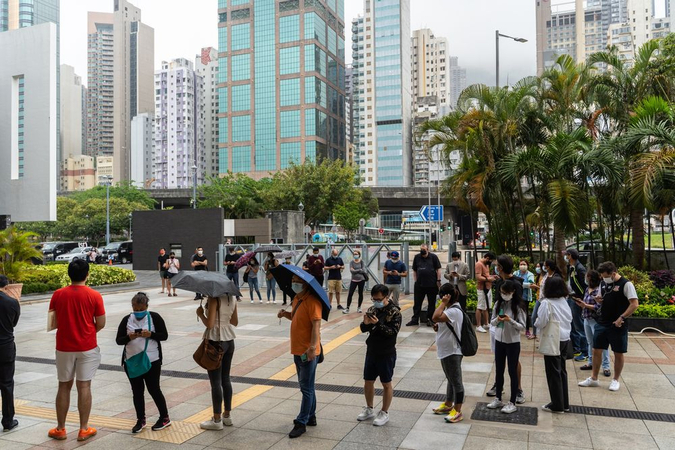
Hong Kong plans to ease social-distancing rules for those vaccinated against the coronavirus to incentivize more people to get inoculated so the city can further reopen for business.

Now that Hong Kong’s outbreak is “obviously contained,” the government will consider “vaccine bubbles” that allow vaccinated people greater freedom of movement, Chief Executive Carrie Lam said at a briefing Monday. If more people get vaccinated, restaurants could extend dine-in hours to 2 a.m. and as many as eight people would be able to sit at a table, up from four now, she said. Bars and nightclubs could reopen on a limited basis if all staff and customers are vaccinated and use the government’s contact tracing app.

“I hereby encourage all citizens to get vaccinated and support our new direction in fighting the pandemic to protect ourselves and family members,” Lam said. “Hong Kong’s vaccination rate can be improved further. In other words, it’s not ideal, especially considering that we have very sufficient supply and convenient infrastructure.”

Hong Kong had administered about 834,800 vaccine doses in total to the public as of Sunday. About 7.7% of the population have received at least one dose.

For now, social-distancing measures will be extended for another two weeks to April 28 as authorities monitor the virus situation following the Easter holiday.

“If suddenly Hong Kong faces a major surge as a result of the Easter holiday, then we may need to revisit and refine these measures,” Lam said. Otherwise, the new measures could be introduced if preparatory work and discussions with stakeholders can be completed within the two-week period.

Hong Kong’s vaccine drive has been hampered by public distrust of the Beijing-backed government and the Chinese-made Sinovac Biotech Ltd. vaccine. It suffered another blow last month when packaging defects were found on a batch of shots developed by BioNTech SE and Pfizer Inc. — the other vaccine available in the city — that led to a temporary halt in those vaccinations.

About 348,600 people have received a first dose of the Sinovac vaccine and 230,300 have had the BioNTech vaccine, the government said Sunday. Sinovac accounts for roughly 146,700 second doses, and BioNTech about 109,200. Hong Kong has a population of 7.5 million.

The government said it may also cut quarantine time for people arriving from areas deemed to be low risk and ease access for more visitors from mainland China. Such moves are key to reopening the city and boosting an economy that’s been starved of big-spending tourists. Hong Kong had about 97% fewer visitor arrivals in February than in the same month last year.

Hong Kong last month cut mandatory hotel quarantine to 14 days from 21 for people coming from low-risk areas including Singapore, Australia and New Zealand. Visitors from mainland China, Macao and Taiwan also currently face 14 days compulsory quarantine. Only a limited quota of Hong Kong citizens arriving from Macao and the southern Chinese province of Guangdong have been exempt from quarantine.

With its economy in free fall, Myanmar braces for the worst #SootinClaimon.Com

#SootinClaimon.Com : ขอบคุณแหล่งข้อมูล : หนังสือพิมพ์ The Nation.

https://www.nationthailand.com/news/30404824

With its economy in free fall, Myanmar braces for the worst

InternationalApr 13. 2021

By Syndication Washington Post, Bloomberg

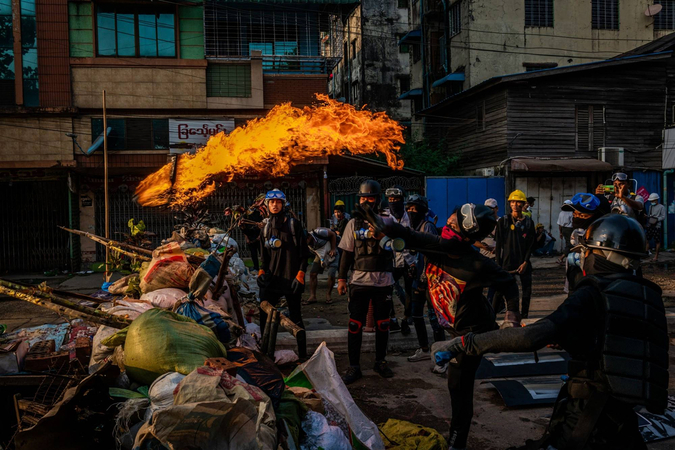
With a tea shop right next to key protest zones in Myanmar’s biggest city, Soe is never quite sure whether he should keep the business open.

If protesters enter to evade authorities, the 43-year-old risks getting shot, arrested or having his property destroyed as the military and police hunt them down. But if he turns away fleeing demonstrators, he may face a backlash on Facebook and a boycott of his tea shop, among hundreds in Yangon that have long served as de facto community centers.

“Now we can’t open our shop on a daily basis but we have to pay regular rental fees, municipal fees, labor wages,” said Soe, using only his first name because of concerns for his personal safety. “Many tea shop owners in Yangon are not sure how long they’ll be able to survive if this crisis continues.”

Small businesses like Soe’s are on the front lines of an economy now seemingly in free fall after a group of generals seized power on Feb. 1. The junta has killed at least 614 civilians since then, driving away foreign investors as Western nations put on new sanctions. Their opponents in the Civil Disobedience Movement, meanwhile, are pushing to tank the economy to deprive the military of financial resources.

Shipping lines have suspended operations as truck drivers strike, leaving cargo containers trapped at the ports. Restrictions on cash withdrawals have businesses struggling to pay employees. The military has restricted internet access, making it harder to reach customers. And thousands of civil servants aligned with the protesters are refusing to work, leaving areas with limited public services.

Altogether it amounts to a speedy erosion of the economic gains Myanmar reaped after investors rushed in a decade ago following a shift toward democracy. An economy that averaged growth rates of more than 6% over the past 10 years — more than doubling gross domestic product — is now projected by the World Bank to shrink 10% in 2021, by far the worst in Asia as countries rebound from a pandemic-induced slump.

“We are deeply concerned,” Aaditya Mattoo, the World Bank’s chief economist for Asia, said in an interview. “A 10% contraction in growth for a poor country seems to me disaster enough already. And when I add to it all the other costs, which have an impact on long term growth, I think we have a pretty dismal scenario.”

Some analysts are expecting things to get even worse: Fitch Solutions is projecting a “conservative” 20% contraction for the 2020-21 fiscal year. It said this month the rising death toll combined with increased social instability means “all areas of GDP by expenditure are set to collapse.”

“There is no worst-case scenario on the economy which we can rule out,” Fitch said.

At the moment in Yangon, there’s still no sign of a humanitarian crisis. Supermarkets, convenience stories and small shops still have plenty of food, and prices of rice and other staples are relatively stable. But signs of distress are popping up, like long queues outside banks and ATMs after some banks capped daily withdrawals from ATMs at $135 (200,000 kyat). Demand for gold and U.S. dollars is rising.

“We understand that only 10% of the total number of branches in Myanmar have reopened, and we are aware of the difficulties to withdraw cash at ATMs,” junta spokesman Major General Zaw Min Tun said on Friday at a news briefing.

The junta is vowing to ride out the storm. Aung Naing Oo, the regime’s investment minister, said last month the government expects to see a “slight impact” on foreign investment.

But even business elites in Myanmar aren’t convinced that this is merely a temporary blip.

“No one can predict how long it will take to get back to normal,” said Maung Maung Lay, senior vice president of the Union of Myanmar Federation of Chamber of Commerce and Industry. “Frankly speaking, the future of our economy is now uncertain.”

Western investors have largely shunned Myanmar since allegations surfaced in 2017 of genocide against minority Rohingya Muslims, prompting the government to focus on attracting capital from Asian countries like Singapore and China. But even though China blocked the United Nations Security Council from imposing sanctions after the coup, it remains wary of supporting Myanmar’s generals — particularly after several Chinese-owned factories were torched amid the protests.

“Beijing’s displeasure with the coup and its aftermath, and the attacks on its businesses, mean that neither the Chinese state nor many Chinese companies are likely to rush to invest,” the Brussels-based International Crisis Group said in a report this month.

That doesn’t leave the junta many places to turn to revive growth. Myanmar’s purchasing managers index last month fell further to a record low 27.5, according to IHS Markit data — well below the 48.9 average since the series began in December 2015 for a measure in which 50 is the dividing line between respondents seeing an expansion and contraction in demand. “The generals had a big miscalculation in going through with the coup,” said Moe Thuzar, a fellow at Singapore’s ISEAS-Yusof Ishak Institute. “They wanted to project a more business-friendly attitude — and thought this is where they could have an edge over the National League for Democracy government — and it backfired big time.”

Now the question is just how bad things might get. The World Bank last month warned of a “sharp increase in poverty,” while the United Nations World Food Program said the crisis “will severely undermine the ability of the poorest and most vulnerable to put enough food on the family table.”

The situation on the ground is likely to turn into a “withering stalemate” as the army seeks to take control of the streets while the civil disobedience campaign keeps much of the country ungovernable, according to Thant Myint U, author of “The Hidden History of Burma: Race, Capitalism, and the Crisis of Democracy in the 21st Century.”

“The economy will collapse, destroying the lives of millions of people,” he said. “Whatever happens afterward it will be impossible for Myanmar to recover for many years.”

Low efficacy of Chinese shots sows concern on global rollout #SootinClaimon.Com

#SootinClaimon.Com : ขอบคุณแหล่งข้อมูล : หนังสือพิมพ์ The Nation.

https://www.nationthailand.com/news/30404823

Low efficacy of Chinese shots sows concern on global rollout

InternationalApr 13. 2021

By Syndication Washington Post, Bloomberg

Concern is mounting that China’s coronavirus vaccines are less effective at quelling the disease, raising questions about nations from Brazil to Hungary that are depending on the shots and the country’s own mammoth inoculation drive.

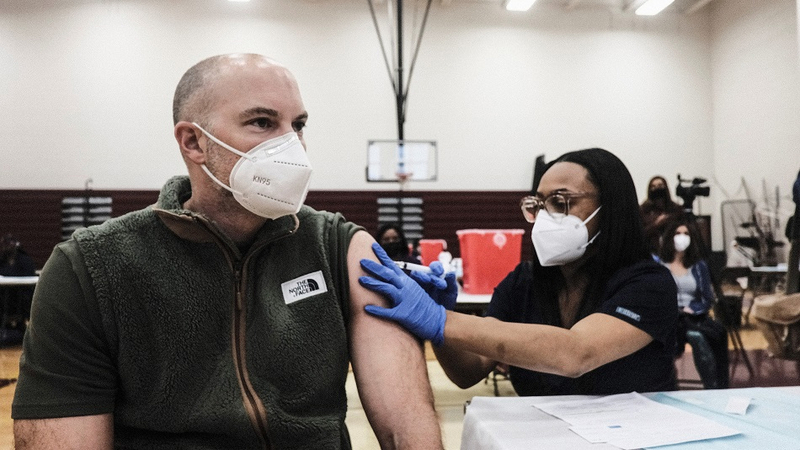
While vaccines developed by Pfizer Inc., Moderna Inc. and even Russia’s Sputnik shot have delivered protection rates of more than 90%, Chinese candidates have generally reported much lower efficacy results. Research released Sunday showed the rate for Sinovac Biotech Ltd.’s vaccine — deployed in Indonesia and Brazil — was just above 50%, barely meeting the minimum protection required for coronavirus vaccines by leading global drug regulators. The other Chinese shots have reported efficacy rates of between 66% to 79%.

Anxiety over that disparity spilled into the open at the weekend when George Fu Gao, head of the Chinese Center for Disease Prevention and Control, said at a forum that something needed to be done to address the low protection rate of the Chinese vaccines, according to local news outlet the Paper.

The rare admission by a senior official appeared to go viral on social media before China’s censors swung into action, with posts and media reports about Gao’s comments quickly edited or taken down. Gao then backtracked, telling state-backed newspaper the Global Times on Sunday that his remarks were misinterpreted, and were meant only to suggest ways to improve the efficacy of vaccines.

Gao suggested that following up inoculations with additional booster shots and mixing different types of vaccines could help tackle the effectiveness issue, according to the Global Times.

The concerns put a question mark over a vast swathe of the global vaccine rollout, particularly in the developing world, with richer countries’ domination of supplies of the highly effective mRNA vaccines seeing nations like Turkey and Indonesia turn instead to China’s shots.

Beijing, which is also donating vaccines to some nations, has been ramping up its own inoculation drive. It aims to vaccinate 40% of China’s population — or 560 million people — by the end of June, an ambitious effort that will require it to move at twice the pace of the U.S.

“They don’t really trust it themselves,” said Therese Hesketh, an expert on China’s health-care system at University College London. “They really did a rush job on the vaccine and the clinical trials have never been properly scrutinized. I’m aware from colleagues in China that there’s huge vaccine hesitancy anyway.”

Chinese vaccine developers have been repeatedly criticized for a lack of transparency and lag foreign peers in publishing full trial data in peer-reviewed medical journals. The weekend study out of Sinovac vaccine’s late stage trial in Brazil came three months after its first efficacy readouts, while state-owned Sinopharm has yet to publish full data from Phase III trials for its two inactivated coronavirus vaccines.

While a separate Sinovac study involving more than 10,000 people in Turkey put the vaccine’s efficacy at 83.5%, it just added to questions about the shot’s efficacy. The company has said that differences in the severity of outbreaks, various covid strains in circulation and the definition by which virus cases are identified in studies have all contributed to different results across several trial sites.

“The confusion that has arisen highlights the importance of full transparency with publication of results of trials in the peer-reviewed literature,” said Martin McKee, professor of European Public Health at the London School of Hygiene and Tropical Medicine.

One reason for the low efficacy in the Brazil trial, according to the study’s researchers, was that the two doses of the vaccine were administered at a short interval of 14 days. The researchers noted “a trend to higher efficacy” among a limited number of participants who got their second dose in no less than 21 days.

Home to the world’s second worst covid outbreak after the U.S., the stakes are high for Brazil’s vaccination rollout. The country is relying on both the Sinovac shot, known as CoronaVac, and the booster from AstraZeneca Plc and Oxford University which has encountered controversy after some people experienced blood clots.

At home, China is already walking a tightrope in trying to keep its vaccination rates on par with some other countries, especially the U.S., to avoid a delay in lifting border restrictions and resuming international travel.

While China is working on more effective vaccines, including shots that deploy mRNA technology, it should continue to roll out those that have been approved for now, said Benjamin Cowling, head of epidemiology and biostatistics at the University of Hong Kong.

“They can provide a high level of protection, particularly against severe covid,” he said.

Fearing a heavy-handed approach could draw a backlash, officials in China have so far refrained from making shots mandatory, and have spoken out against forced inoculation. Officials have instead dangled rewards and applied peer pressure among workers in the massive state sector to significantly raise vaccination rates, and are now issuing nearly 4 million doses a day from less than 1 million at the start of the year.

Minnesota officer who shot Daunte Wright apparently meant to use Taser but fired gun, police chief says #SootinClaimon.Com

#SootinClaimon.Com : ขอบคุณแหล่งข้อมูล : หนังสือพิมพ์ The Nation.

https://www.nationthailand.com/news/30404822

Minnesota officer who shot Daunte Wright apparently meant to use Taser but fired gun, police chief says

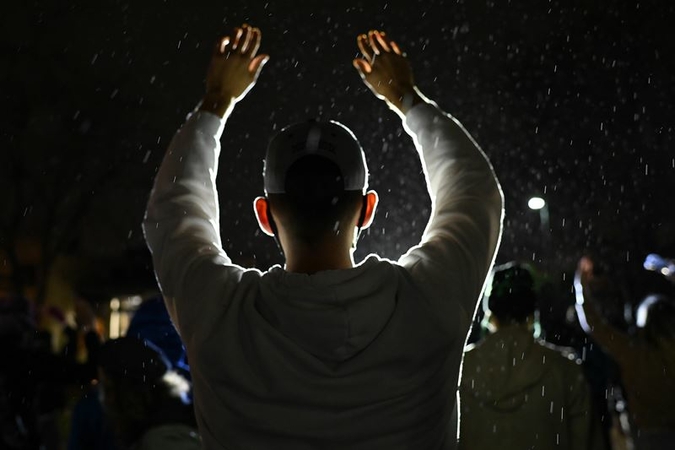
InternationalApr 13. 2021Demonstrators protest the fatal police shooting of Daunte Wright outside the Brooklyn Center Police Station on April 11, 2021 in Brooklyn Center, Minnesota. MUST CREDIT:Demonstrators protest the fatal police shooting of Daunte Wright outside the Brooklyn Center Police Station on April 11, 2021 in Brooklyn Center, Minnesota. MUST CREDIT:

By The Washington Post · Kim Bellware, Andrea Salcedo, Sheila Regan

BROOKLYN CENTER, Minn. – The suburban Minneapolis police officer who fatally shot a 20-year-old unarmed Black man during a traffic stop Sunday apparently meant to fire a stun gun but instead made an “accidental discharge” from her gun, her police chief said Monday.

Demonstrators protest the fatal police shooting of Daunte Wright outside the Brooklyn Center Police Station on April 11, 2021 in Brooklyn Center, Minnesota. MUST CREDIT:

Less than 24 hours after an officer with the Brooklyn Center Police Department shot and killed Daunte Wright, Police Chief Tim Gannon played an unedited clip of police body-camera video showing the fatal incident for the media and members of the community at a City Hall news conference.

The video shows two male officers approach Wright’s car – one on the driver’s side, the other on the passenger side. A third officer approaches later as the two attempt to handcuff Wright, who is now standing outside the vehicle. As Wright struggles away from the two men, the third officer is heard threatening to stun Wright with a Taser.

In the chaotic seven seconds that follow, the female officer, who already has a weapon drawn, is heard yelling, “I’ll Tase you!” and “Taser, Taser, Taser!” before firing.

Immediately after she is heard saying, “Holy s—, I shot him,” apparently realizing that she had fired her service weapon instead of her stun gun.

Gannon described it as an “accidental discharge that resulted in the tragic death of Mr. Wright.”

Gannon declined to identify the officer, but described her as a veteran of the department and said she was immediately placed on leave while the shooting was investigated.

Meanwhile, several dozen gathered in the rain outside the Brooklyn Center Police Department as police and National Guard troops stood watch.

Chioma Nnadi, a 42-year-old business owner said she had been following previous police shootings on TV, but this one was different because it was her own city.

“This could be my son. This could be my brother,” she said. “How would you feel if Daunte was your own brother, your own husband, your own son?

Nnadi felt her heart breaking. “I am a mother, and I feel for the mother of Daunte,” she said. “I am not feeling good about it at all. I sat my son down and sat my husband down and said, ‘Please be careful.’ “

The suburban Minneapolis community was on edge Monday after a day of grief-filled protests that gave way to late-night clashes with heavily armed law enforcement and break-ins at several local businesses overnight.

News of Wright’s death prompted fresh outcry over police use of force in the Minneapolis area from weary residents. Ten miles away, the high-profile murder trial of formal Minneapolis police officer Derek Chauvin was underway for the 2020 killing of George Floyd.

Wright is at least the 262nd person shot and killed by police this year, according to a Washington Post database tracking such shootings. The swift cascade of reactions to his death indicates how accustomed the United States – and the Twin Cities area in particular – have grown to responding to such incidents.

By noon Monday, President Joe Biden had phoned Brooklyn Center Mayor Mike Elliott to express his support; the Minnesota Twins Major League Baseball team and the National Basketball Association’s Minnesota Timberwolves announced that they would postpone Monday’s games; and the mayors of Minneapolis and St. Paul each announced evening curfews.

Minnesota Gov. Tim Walz, a Democrat, expressed his sympathies to Wright’s family during an afternoon news conference and said it was important to acknowledge that “we don’t have to continue having these press conferences, and having what may be a routine traffic stop and a 20-year-old dead, a family devastated and a community on edge.”

He pledged to demand that the state legislature hold hearings on police policies he said have passed in other states with the support of law enforcement and community groups.

“We can stop pretending that this is just the natural order of the universe and that things happen this way,” Walz added.

Jaylani Hussein, executive director of the Minnesota chapter of the Council on American-Islamic Relations whose group works on civil rights issues in the area beyond the Muslim community, said a familiar pattern is playing out once again in the area.

“Nothing has fundamentally changed since the killing of George Floyd. Nothing,” Hussein said. “Police officers can still do whatever they’ve been doing without any measure of accountability.”

Wright is the latest person in the United States to be shot by a police officer who said he or she meant to pull their stun gun but inadvertently drew and shot a firearm instead, according to an analysis by The Washington Post.

The chief said police stopped Wright just before 2 p.m. Sunday in a largely residential part of Brooklyn Center for having expired registration tags. At Monday’s news conference, an angry audience member noted that the state’s Department of Motor Vehicles was experiencing a two- to three-month backlog because of the coronavirus pandemic. The chief said that after running Wright’s identification, it was discovered that he had an outstanding warrant for a misdemeanor, and police tried to arrest him.

When Wright appeared to try to get back into his car, the officer fired a single shot. Wright drove for several blocks before striking another vehicle, and he was pronounced dead at the scene, police said. A female passenger in the car with Wright was injured and was taken to the hospital.

Outside City Hall on Monday, several community members gathered in search of answers and to show solidarity.

Jarvis Naylor, a 37-year-old landscaper who rents properties in North Minneapolis, said he always comes out to protest when Black men are killed by police.

“It is something that I must do. It’s something I always do,” Naylor said. “I try to be a part of the ones that are peaceful, so then you can really get the message out. With George Floyd I was part of the cleanup.”

Originally from Illinois, he said he has come to learn what it’s really like in Minnesota. “I just feel like it’s open season against Black men and there’s no consequence,” he said.

Wright’s family members said he had spoken to them by phone just moments before he was shot.

Aubrey Wright, 42, said his son had recently asked his mother for $50 for a carwash, and was headed there when he was stopped. They had recently bought him the car, his father told The Post. Wright’s family said he told them that he was pulled over for having an air freshener dangling from his mirror, allegedly blocking his view.

Daunte Wright’s mother, Katie Wright, told the Star-Tribune that her son had called her after being pulled over and that she heard a commotion and someone yelling “Daunte, don’t run” before the line disconnected. Moments later, she said, her son’s girlfriend, who was in the car, called back and said he’d been shot.

Aubrey Wright, who was at a grocery store, said his wife called him about 2 p.m. with the news. “She was screaming over the phone. She was saying, ‘Daunte was shot!’ ” he said.

When Aubrey Wright arrived at the scene less than 10 minutes later, he said, he saw his son’s 2011 Buick LaCrosse partially destroyed and his son’s body covered with a white sheet on the sidewalk.

After news of the shooting circulated through the community, several young residents went to the Brooklyn Center Police Department to gather in protest said Hussein of civil rights group CAIR-MN.

“We tried to keep folks safe. It was peaceful, they were standing in the street and kind of protesting and all of a sudden we saw about eight vans come in with what looked like riot gear police,” Hussein said.

As protesters lingered on the scene, police gave orders to disperse and fired flash bangs and tear gas. The Minnesota National Guard, which is deployed to the Twin Cities for the Chauvin trial, later arrived to assist police as numerous businesses in the area were broken into.

Aubrey Wright questioned whether police had to use lethal force.

“I know my son. He was scared. He still [had] the mind of a 17-year-old because we babied him,” Wright said. “If he was resisting an arrest, you could Tase him. I don’t understand it.”

Daunte Wright, who had a 2-year-old son, dropped out of high school about two years ago because of a learning disability, his father said. Since then, he worked in retail and fast food restaurants to support his son. He planned to go back to school to get his GED.

“He was a great kid,” Aubrey Wright said. “He was a normal kid. He was never in serious trouble. He enjoyed spending time with his 2-year-old son. He loved his son.”

Mexico’s new migrant policy adds to U.S. border woes #SootinClaimon.Com

#SootinClaimon.Com : ขอบคุณแหล่งข้อมูล : หนังสือพิมพ์ The Nation.

https://www.nationthailand.com/news/30404791

Mexico’s new migrant policy adds to U.S. border woes

InternationalApr 12. 2021Migrants, mostly from Central America, stay in dorms at the Good Samaritan shelter in Ciudad Juarez, Mexico. MUST CREDIT: Washington Post photo by Michael Robinson ChavezMigrants, mostly from Central America, stay in dorms at the Good Samaritan shelter in Ciudad Juarez, Mexico. MUST CREDIT: Washington Post photo by Michael Robinson Chavez

By The Washington Post · Mary Beth Sheridan

CIUDAD JUÁREZ, Mexico – The message popped up on Pastor Juan Fierro’s phone one recent afternoon. U.S. border agents had expelled another group of Central American families to this Mexican city. Could someone take them in?

Fierro, an evangelical minister, was startled by the request. During most of the pandemic, officials in Juarez had sent newly arrived migrants to a quarantine center for 14 days. Suddenly it was full. “There was no place to take care of these people,” Fierro said. So his staff at the Good Samaritan shelter hauled bunk beds into an empty room and penned it in with battered wooden benches. Within days, the rudimentary “quarantine” center held 23 women and children.

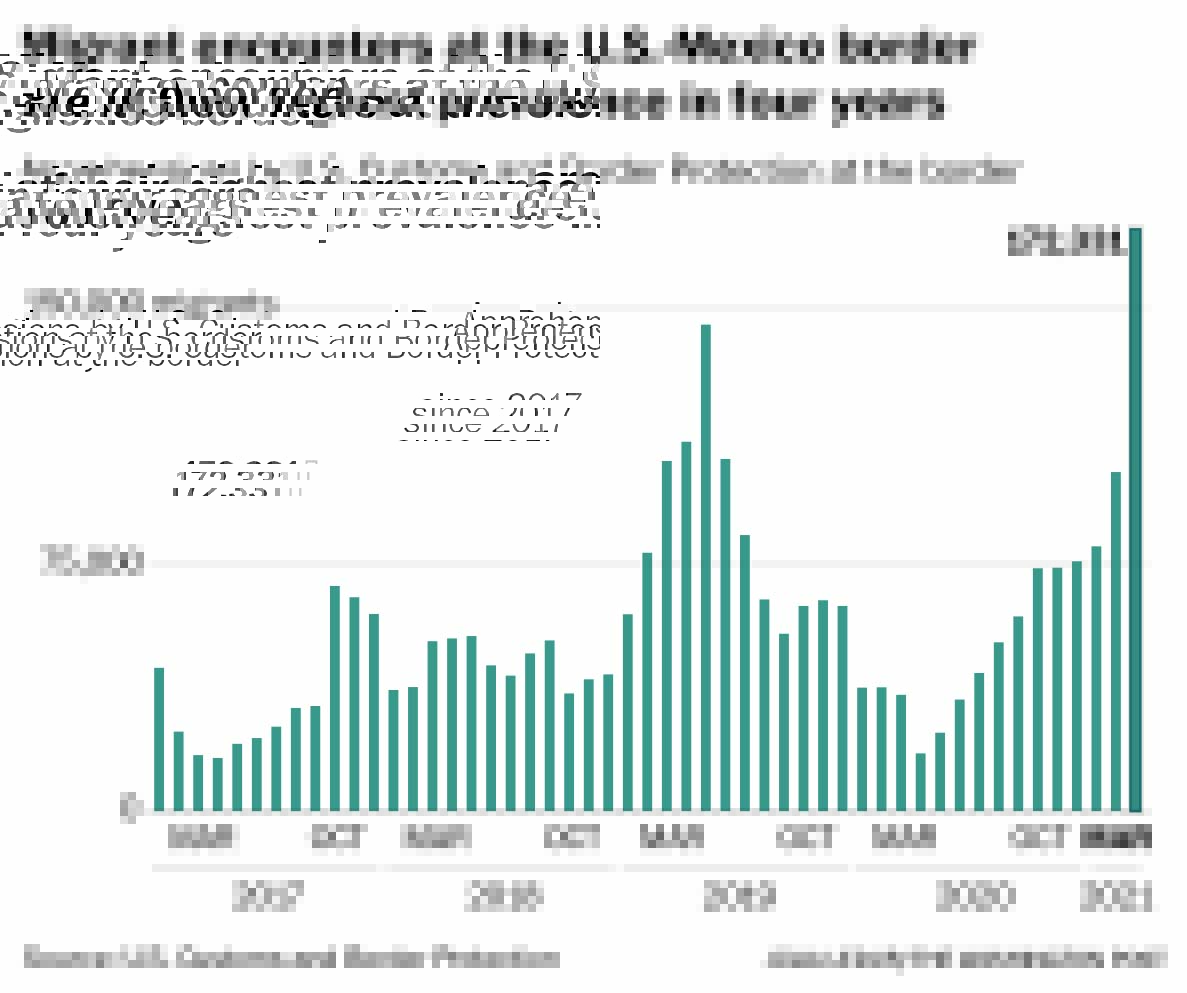
President Joe Biden hoped to put the brakes on a surge of U.S.-bound Central American families by relying on a Trump-era policy to return them to Mexico. But increasingly, this country is straining to cope with the influx. Mexico is now limiting the number of families it will allow back. That’s forced the U.S. government to accept most of them as their numbers soar: About 53,000 members of family units were taken into custody in March, compared with 7,300 in January.

Mexico’s pushback has created a new obstacle as the Biden administration struggles to deal with what could be the biggest wave of migrants at the U.S. southern border in 20 years. Pressured by President Donald Trump, Mexico became a crucial buffer zone between Central America and the United States. Its authorities deported tens of thousands of U.S.-bound migrants and took back asylum seekers to await their U.S. court dates. As the coronavirus pandemic descended on both countries last year, the Trump administration adopted one of the most restrictive border policies ever, using a health measure called Title 42 to expel nearly all Central American migrants and asylum seekers to Mexico.

The Biden administration continued to use that rule for families and solo adults, while exempting unaccompanied children. Now U.S. officials fear that Mexico’s refusal to go along with the family expulsions will have a cascade effect. As more Central Americans succeed in entering the U.S. immigration system, their relatives and neighbors back home are deciding to make the journey.

They include Ingrid Posas, 33, who left Honduras in mid-February after seeing Facebook posts of friends who had made it into the United States.

“We heard they were letting families in. That’s why I came,” she said, sitting with her 4-year-old daughter on a bench at the Good Samaritan center’s quarantine site, under a curtain of laundry hanging from clotheslines.

Mexican authorities say their abrupt refusal to accept most families follows a new law that bars children from being detained in adult migration facilities. It sailed through Mexico’s Congress at the end of last year, receiving little press attention.

U.N. agencies and human rights activists had long pressed for such legislation. But the government has few shelters for children in northern Mexico. So just weeks after the law took effect in January, Mexican authorities said they had no more room for Central American families expelled from the Rio Grande Valley of South Texas, the busiest crossing point.

“It certainly snuck up on us,” said a senior Biden administration official, who spoke on the condition of anonymity to discuss diplomatic issues.

Administration officials then asked whether those families could be flown to other parts of the border and expelled. Mexican authorities “agreed to a limited number,” the senior official said.

In Juárez, that’s been set at 100 family members each day, according to local officials and activists. Even that number is taxing resources in this industrial city across the Rio Grande from El Paso, Texas. More than 1,700 migrants and asylum seekers have filled Juárez’s 20 shelters, sleeping in bunk beds in dorm-style rooms or on mattresses on the floor. That’s more than during the last migration peak in summer 2019. But now there’s a pandemic. And the religious and civic organizations that run most of the shelters have little access to coronavirus tests.

“When they ask me, Father, can you care for these 80 or 120 people – who will guarantee they don’t have covid?” asked the Rev. Javier Calvillo, the Catholic priest who runs Casa del Migrante, one of the largest shelters. The pink-brick complex already weathered one outbreak last fall. Fifteen of his staffers and three dozen migrants were infected. He’s now refusing to receive some of the families.

Across town, the Rev. Hector Trejo, an Episcopalian priest, worries about how many people he can accommodate during the pandemic. He has set a 60-person limit at his shelter at Espiritu Santo church, half the usual capacity. In February, though, local authorities called to say 100 Haitians had just been expelled to Juarez. Could he take half of them?

“At that moment I had 53 people,” he said. “We broke our rules, by necessity.” Three more times last month, the number of migrants at the shelter swelled to more than 100.

Critics say the lack of shelter space is only part of the problem. The Mexican government, they suggest, is using the new law as an excuse to avoid doing the Biden administration’s bidding – or to obtain something in return, such as coronavirus vaccines.

“Everyone knows that Mexican laws are meaningless if the federal government doesn’t want to respect them,” said former foreign minister Jorge Castañeda, a frequent critic of President Andrés Manuel López Obrador. Mexican authorities could easily comply with the new law by transforming unused schools into makeshift centers for migrant families, he said. But the federal government has shown no desire to do so, or to increase the budget for new shelters.

That’s left local officials scrambling. In Juárez, they’ve worked with international organizations and the federal government to set up a shelter in a gym where as many as 500 arriving migrants can be quarantined and tested for the coronavirus. It significantly expanded a quarantine system that until recently had centered on a hotel with capacity for 108 people managed by the International Organization for Migration. But within days of opening last week, the municipal shelter held more than 150 people, raising concerns that it could fill up, too.

Biden said last month that he was negotiating with López Obrador about the Central American families reaching the U.S. border. “They should all be going back,” he declared. U.S. officials say they’ve asked the Mexican government to delay implementation of the new law. So far, though, that has not happened. In February, the United States returned about 40% of the families who crossed the border, but as traffic has surged, the portion has dropped to 10%-20%.

Mexico’s Foreign Ministry said the country “receives certain immigrants depending on institutional capacities” and in compliance with domestic laws. López Obrador has criticized the Biden administration for not investing more in development projects in southern Mexico and Central America to prevent citizens from leaving. “We are ready to do our part and work together in fighting human trafficking and protecting human rights, especially those of children,” he tweeted Wednesday after a phone call with Vice President Kamala Harris.

U.S. officials are also scrambling to house migrant families and unaccompanied children on the American side of the border. Many families are being released with orders to appear in immigration court, but their cases could drag on for months or years. That’s motivating more people in Central America to make the journey.

Xeni, a 25-year-old Honduran, left her home in the province of Comayagua in mid-March. She was hoping to reunite with her husband, who had migrated to Florida in 2019. “Many people from my town had crossed” the U.S. border in recent weeks, she said. She traveled by raft across the Rio Grande from the Mexican city of Reynosa to McAllen, Texas, with her small son and daughter. They waded ashore in what she remembers as a brief moment of jubilation.

“Call Daddy,” her 6-year-old son, Wilson, told her. “Tell him to come get us.”

But Xeni was one of the unlucky ones. U.S. border agents took her and the children into custody and put them on a plane. She said the agents told her that the family was being taken to a different city for processing. When they landed in El Paso, they were bused to a bridge leading into Juarez. On a recent evening, she sat at the cafeteria at a migrant shelter, cradling her 3-year-old daughter, who repeatedly coughed.

“We were all tricked,” Xeni said, speaking on the condition that her last name not be used, for fear of problems with the U.S. immigration system.

U.S. Customs and Border Protection said in a statement that migrants from the Rio Grande Valley were being sent to three other border crossings – Laredo, Texas; San Diego; and El Paso – so they could be processed “as safely and expeditiously as possible.” It added that because of coronavirus restrictions, “The border is not open.”

Activists worry that migrants such as Xeni have no legal status – neither immigration court appointments in the United States, nor work permits in Mexico. “This is provoking chaos on the border,” Fierro said.

The situation could become more complicated if the Title 42 expulsions end. Biden administration officials have said the policy is under review; but as the pandemic wanes, it will eventually become moot. The administration has terminated the Migrant Protection Protocols, a Trump-era program that required asylum seekers to wait in Mexico for their court dates. It has not announced a new system to process those arriving at the border.

Many migrants say they cannot return home, because they fled violence or spent all their money on the journey. Some are traveling to other border points to cross, or instructing their children to walk into the United States alone, knowing the Biden administration is not expelling unaccompanied minors.

Xeni said she cannot go back to Honduras because her home was damaged by two hurricanes in November. And she’s desperate to give her children a better life. So desperate that she’s considering a drastic step.

“The only option I have is to send the kids over the bridge,” she said.

Effectiveness of Chinese vaccines ‘not high’ and needs improvement, says top health official #SootinClaimon.Com

#SootinClaimon.Com : ขอบคุณแหล่งข้อมูล : หนังสือพิมพ์ The Nation.

https://www.nationthailand.com/news/30404790

Effectiveness of Chinese vaccines ‘not high’ and needs improvement, says top health official

InternationalApr 12. 2021

By The Washington Post · Gerry Shih

TAIPEI, Taiwan – The head of the Chinese Center for Disease Control and Prevention conceded that the efficacy of Chinese coronavirus vaccines is “not high” and that they may require improvements, marking a rare admission from a government that has staked its international credibility on its doses.

The comments on Saturday from George Gao come after the government has already distributed hundreds of millions of doses to other countries, even though the rollout has been dogged by questions over why Chinese pharmaceutical firms have not released detailed clinical trial data about the vaccines’ efficacy.

China has struck deals to supply many of its allies and economic partners in the developing world and boasted that world leaders – including in Indonesia, Pakistan and the United Arab Emirates – have taken the shots.

There have been signs that some countries remain skeptical: The UAE recently experimented with administering three shots of the Chinese Sinopharm vaccine, instead of two, over reports of low numbers of antibodies produced in some people, while Singapore has stockpiled but not usedSinovac shots.

China is “formally considering” options to change its vaccines to “solve the problem that the efficacy of the existing vaccines is not high,” Gao said at a conference in Chengdu.

Gao added that one possibility was to adjust the dosage or increase the number of doses. He said another option was to mix vaccines that are made with different technologies, in an apparent admission that China needs to develop messenger RNA vaccines using the revolutionary genetic technology that Western countries have harnessed.

Gao’s remarks, which appeared inadvertent and quickly spread through Chinese social media on Saturday before being mostly censored, marked a departure from the rosy assessments of Chinese-made vaccines by the government. By Sunday, Internet users were intentionally misspelling words in their posts while discussing Gao’s comments to keep them from being removed.

Sinopharm and Sinovac use a conventional method of producing vaccines that contains inactivated germs, while other countries’ offerings, including those by Pfizer-BioNTech and Moderna, rely on a newfangled technique that uses messenger RNA (mRNA) to stimulate an immune response.

The mRNA vaccines are widely accepted as having higher efficacy rates, and Chinese pharmaceutical executives have said they are racing to catch up and master mRNA technology themselves.

The admission by the head of the Chinese CDC undercut other arms of the government, including its propaganda organs and diplomats, who have spent months touting Chinese vaccines as part of a soft power push while aggressively sowing doubt about Western alternatives by questioning the efficacy and safety of mRNA technology.

On Sunday, the Global Times, a state-run newspaper that has led the way in pushing theories about the coronavirus originating from outside China, hit back at the “hyped up” reports of Gao’s comments.

It quoted Gao as saying that his comments had been misunderstood and that he was speaking in general terms about how scientists, internationally, should improve their vaccine development.

“I was struck by what Gao said, not because it is significantly different from what we have already known but because it deviates from the official narrative on the effectiveness of Chinese and Western vaccines,” said Yanzhong Huang, a senior fellow at the Council on Foreign Relations. “I think he was trying to push for the approval of the use of Pfizer-BioNTech vaccines in China and/or the acceleration of the development of China’s own mRNA vaccines.”

Even before Gao’s comments, there have been discussion about whether the Chinese companies should tweak their formulations or vaccination regimen. Executives at Sinopharm, the state pharmaceutical giant, said in March that they were assessing whether to include a third booster shot as part of their vaccine’s standard administering procedure. The company said last week that it would begin clinical tests on a third vaccine.

More than 60 countries have approved at least one of China’s vaccines for use. They have been in high demand, especially among lower-income countries, which have not been able to acquire the other vaccines.

Sinopharm has reported a 79 percent efficacy rate for its vaccine – without releasing any data – while trials for Sinovac in Brazil and Turkey have shown an efficacy rate of just 50 percent and more than 80 percent, respectively.

Yet even though both drugmakers carried out mass clinical trials earlier than most other pharmaceutical companies last year, the data has not been still not been published in a peer-reviewed journal.

Foreigners traveling to China, however, have been encouraged to use these Chinese-made vaccines to enjoy streamlined access into the country.

In Turkey, where the Sinovac is in wide use, there has been little concern about the effectiveness of the vaccine. Rather, the worry has been that China won’t be able to deliver the promised 100 million doses amid delays in shipments.

Brazil, Egypt and other nations also have been clamoring for more doses as China has throttled back exports in the face of domestic demand even as cases have been surging worldwide.

South Korean battery makers reach last-minute settlement #SootinClaimon.Com

#SootinClaimon.Com : ขอบคุณแหล่งข้อมูล : หนังสือพิมพ์ The Nation.

https://www.nationthailand.com/news/30404789

South Korean battery makers reach last-minute settlement

InternationalApr 12. 2021

By The Washington Post · Steven Mufson

Two South Korean industrial giants have reached a last-minute, $1.8 billion global settlement of a trade secrets case that will allow a pair of new plants in Commerce, Ga., to move ahead with plans to supply batteries for Ford and Volkswagen electric vehicles.

The deal is a victory for President Joe Biden, who has been eager to create jobs, build a U.S.-based supply chain for electric vehicles and move toward slowing climate change – all without taking sides in a dispute between the firms over intellectual property.

“This settlement agreement is a win for American workers and the American auto industry,” Biden said in a statement on Sunday. He said the United States needs “a strong, diversified and resilient U.S-based electric vehicle battery supply chain, so we can supply the growing global demand for these vehicles and components.”

SK Innovationcan now complete construction of its $2.6 billion manufacturing facilities, which will employ 1,000 workers by the end of this year. By 2024, the plants will have 2,600 workers and annually churn out lithium ion batteries for more than 300,000 electric vehicles annually, mostly for Ford and VW brands.

Under the terms of the settlement, which was announced Sunday, SK Innovation will pay its rival LG Energy Solutions $1.8 billion, part in cash and part in future royalties. LG Energy will drop litigation before the U.S. International Trade Commission, a U.S. federal court and South Korean courts.

Jong Hyun Kim, chief executive of LG Energy Solution, and Jun Kim, chief executive of SK Innovation, said in a joint statement that they would “compete in an amicable way.” They said they were “dedicated to work together to support the Biden Administration’s climate agenda and to develop a robust U.S. supply chain.”

The two companies agreed not to sue each other for 10 years.

LG Energy Solution had accused SK of stealing trade secrets and destroying documents. In April 2019, it sought to limit SK’s battery output in the United States and said the country had no battery shortage.

The trade commission sided with LG and restricted SK’s ability to operate its plants in the United States. SK would have been barred from importing crucial battery components for 10 years. Butthe company still could have imported enough to supply batteries to certain VW brands for two years and for certain Ford brands for four years, including Ford’s best-selling F-150 pickup truck. During that period, VW and Ford were supposed to line up new suppliers.

The Biden administration, which had until Sunday to overturn the ITC ruling, feared that finding new suppliers could prove difficult if the automobile industry rushes to expand its offerings of electric vehicles. The administration has cited the need to overhaul American car and truck fleets and make them all electric. The settlement gives the president a boost on the jobs front and among climate activists and those worried about climate change.

The likelihood of Biden reversing the ITC ruling pressured LG to reduce its settlement demands, according to a person familiar with the talks, who spoke Saturday on the condition of anonymity to protect business relations. U.S. Trade Representative Katherine Tai and top South Korean government officials also got involved in the negotiations.

Tai, who has been in office for only two weeks, noted in a statement Sunday that the deal left the United States in “a stronger position to drive innovation and growth of clean energy technology envisioned in the American Jobs Plan while also respecting the rights of technology innovators at the heart of trade and manufacturing policy.”

Scott Keogh, chief executive of the Volkswagen Group of America, also applauded the outcome. “With the intellectual property issues between the two companies now settled, our complete focus now shifts to where it should be: the start of U.S. production of the all-electric ID.4 SUV in 2022, assembled by proud, skilled workers in Tennessee,” Keogh said in a statement.

The SK battery plants, located 70 miles northeast of Atlanta, have drawn support from Georgia Republicans and Democrats, including Republican Gov. Brian Kemp, Democratic Sens. Raphael Warnock and Jon Ossoff, and former Atlanta mayor Andrew Young, a Democrat. Kemp said in a statement in February that Biden and his administration “have the opportunity to support thousands of hardworking Georgians – and their communities – who would benefit from SK Innovation’s continued success in our state.”

The state of Georgia has provided $300 million in grants, land and other incentives to the South Korean company.

The settlement allows Biden to sidestep a conflict with the ITC. The president has the authority to overturn commission rulings within 60 days, a power generally delegated to the U.S. trade representative. But a president has done so only once. In August 2013, President Barack Obama reversed an ITC ruling that would have imposed a ban on the sale of some older Apple iPhones and iPads, dealing a blow to Samsung Electronics Co. in a long-running patent battle between those two companies.

SK, South Korea’s third largest conglomerate, had lined up prominent advocates to press its case, including former Obama administration officials. Former deputy attorney general Sally Yates, a Georgia native, said its factory should stay open to avoid disrupting the U.S. economy and efforts to fight climate change. She said the two South Korean firms should argue their positions in U.S. District Court, where LG was suing SK.

“We have a severe shortage of EV batteries in the U.S. with insufficient domestic production, and the SK plant in Georgia is necessary to address this supply chain threat,” she wrote.

LG, however, had contended that the Biden administration should let the ITC process work. David K. Callahan, a partner at Latham & Watkins, last week disputed the idea that the United States is heading toward a shortage of EV batteries. He said LG Chem has a plant in Holland, Mich., that has been making batteries for about eight years and a joint venture with General Motors in Lordstown, Ohio. Last month, he said, LG announced $4.5 billion in commitments for two additional battery plants.

Americans desperate to get out set stage for gasoline comeback #SootinClaimon.Com

#SootinClaimon.Com : ขอบคุณแหล่งข้อมูล : หนังสือพิมพ์ The Nation.

https://www.nationthailand.com/news/30404787

Americans desperate to get out set stage for gasoline comeback

InternationalApr 12. 2021Fuel pumps at a Kum & Go gas station in Colorado Springs, Colo., on March 17, 2021. MUST CREDIT: Bloomberg photo by Chet Strange.Fuel pumps at a Kum & Go gas station in Colorado Springs, Colo., on March 17, 2021. MUST CREDIT: Bloomberg photo by Chet Strange.

By Syndication Washington Post, Bloomberg · Jeffrey Bair, Andres Guerra Luz, Bre Bradham

Americans are getting ready to rekindle their love affair with the open road, unleashing a full-fledged recovery for gasoline that could send demand to a record.

Traffic is already roaring back in cities like Houston as offices reopen. Things will really start taking off this summer as pent-up travel demand finally busts out thanks to the increase in vaccinations. After almost half of Americans ended up canceling trips in 2020, many are planning to take an extra week of vacation this year to make up for lost time. Theme parks are gearing up for an influx of visitors, and attendance at national parks is expected to swell.

Demand is predicted to be so hot that Phillips 66 is set to reverse the flow of one of its pipelines starting May 1 so it can carry gasoline from Texas into Denver as more tourists head west.

Charles Ocasek, a 24-year-old, is one of them. In late May, he’s hitting the road for the first time since the pandemic started, driving his 2004 Nissan Pathfinder from the Chicago suburbs out to the Rocky Mountain resort town of Telluride, Colorado, for a meet-up with friends. He’s been living with his parents who are in their 60s, so the specter of getting and spreading Covid kept him from traveling until now. But by next month, he’ll be fully vaccinated, and he’s planning more trips for the summer.

“I’m tentatively planning on taking a month or a month-and-a-half and doing a multi-state road trip all over the country,” Ocasek said.

The surge in consumption means gasoline is likely going to be even more expensive than the U.S. government is forecasting. The Energy Information Administration last week said average pump prices this summer will be more than 30% higher than last year at $2.78 a gallon. But many analysts are estimating prices will hit $3 a gallon for the first time since 2014.

Rising gasoline prices will be another marker of inflation that impacts Americans unevenly. Just like soaring food bills, more expensive fuel hits harder for lower-income families, with the costs making up a larger share of spending. That comes amid the unequal economic recovery, with the Black unemployment rate still trending high and lower labor-market participation among Americans without college educations.

Meanwhile, crude traders are widely anticipating a meaningful return of fuel demand in the world’s largest oil consuming country to help drive the next leg higher in prices.

A big part of oil’s rally so far this year has been on the supply side, with the OPEC+ alliance displaying strict output management and higher prices not yet drawing U.S. shale producers out in force. But crude has pulled back from multi-year highs in recent weeks, and will continue to face resistance until concerns over consumption start to fade.

“Prices are higher today than where they were pre-pandemic, despite demand not all the way back,” said Peter McNally, global head for industrials, materials and energy at Third Bridge. “Vaccines are now being mass-distributed to the biggest consumers of energy, as we’re getting to business travelers and family vacationers, which we haven’t seen to date.”

One of the most bullish predictions for fuel use comes from Mark Le Dain, vice president for strategy at refinery consultant and software company Validere, founded at Harvard. He says this summer will be the strongest one ever for gasoline demand, beating the previous all-time high set in 2019. He cited an increase in bookings for national and state parks and a shortage of rental-car availability along with the return to work from people who haven’t gone back yet.

For a record 2021 to happen, Americans will have to add about 1 million barrels of gasoline consumption a day to levels as of March 26. The extra portion alone would be enough to fill 1.5 million empty F-150 Ford pickups.

Even so, “there are a lot of things aligning right now to show demand being strong,” Le Dain said.

National retail prices for gasoline averaged $2.87 on Wednesday. As demand strengthens this summer, the price will hit at least $3, according to Patrick DeHaan, head of petroleum analysis at retail tracker GasBuddy, Robert Yawger, head of the futures division at Mizuho Securities and Trisha Curtis, chief executive officer at analysis firm PetroNerds in Denver.

“I’m not sure when it happens, but yes, it happens,” Curtis said.

A surge in gasoline burning will also bring a jump for greenhouse gas emissions after declines in traffic congestion helped to clear the air last year.

It’s not just road trips that will boost demand for fuels.

U.S. airlines are bringing back more pilots as they prepare for a travel rebound, and jet fuel consumption is on the rise. Still, that segment of the oil market has much further to climb before hitting pre-pandemic levels.

Outside of travel, another linchpin for the oil recovery will be how many people burn fuel to go back to work, and for how many days a week.

“There is a slow return back to offices for workers, but it takes time,” said Jeff Lenard, vice president for strategic industry initiatives at the National Association of Convenience Stores.

One thing that could scuttle the recovery would be a spike in Covid-19 cases. The U.S. Centers for Disease Control and Prevention this month said that fully vaccinated people can resume recreational travel in the U.S. at “low risk,” but CDC Director Rochelle Walensky has also warned of “impending doom” as cases begin to rise again.

Jennifer Fink, 54, and her husband, John, are looking forward to getting out of their home in the San Francisco Bay area for the first time since the pandemic started. They’re planning a mid-summer road trip up through Oregon and Washington state to Tofino, British Columbia. But they’re also keeping an eye on travel restrictions and canceled plans for trips last year when California was forced back into lockdown. Fink is more optimistic this time after getting her first dose of the vaccine. Her husband is already fully vaccinated.

“Maybe the fifth or sixth time is the charm, and we’ll be able to go somewhere,” she said.

Americans on average are planning to take 13 vacation days this year, up from just eight days in 2020, according to a study from travel giant Expedia Group. A study from AARP showed that just over half of Baby Boomers plan to travel in 2021, and nearly a quarter of those making plans didn’t travel at all last year.

“What we’re hearing more and more is that people are just desperate to go out and do the stuff that they were not able to do,” Seema Shah, chief strategist at Principal Global Investors, said last month in an interview on Bloomberg Television. “There could be certainly some upside surprises to come.”

For immigrants, IDs prove to be a barrier to a dose of protection #SootinClaimon.Com

#SootinClaimon.Com : ขอบคุณแหล่งข้อมูล : หนังสือพิมพ์ The Nation.

https://www.nationthailand.com/news/30404761

For immigrants, IDs prove to be a barrier to a dose of protection

InternationalApr 11. 2021A volunteer at the Brazilian Worker Center prepares to seat individuals in a waiting room at the mobile vaccination event on April 2, 2021, in Boston. MUST CREDIT: Photo by Sophie Park for The Washington PostA volunteer at the Brazilian Worker Center prepares to seat individuals in a waiting room at the mobile vaccination event on April 2, 2021, in Boston. MUST CREDIT: Photo by Sophie Park for The Washington Post

By The Washington Post · Akilah Johnson

BOSTON – The line started outside, on a street usually teeming with people waiting to enter college bars, and snaked up the stairs of an old firehouse to the Brazilian Worker Center, where shots of the coronavirus vaccine were being administered on this cold New England spring morning.

Finally, it was Maria Sousa’s turn. She had been waiting for more than an hour with her husband and daughter when a center volunteer greeted them in Portuguese and guided them to the registration desk, where they presented their identification – Brazilian passports.

Getting vaccinated here was the only option they considered.

Immigrants have been turned away from pharmacies and other places after being asked for driver’s licenses, Social Security numbers or health insurance cards – specific documentation not mandated by states or the federal government but often requested at vaccination sites across the country, including right down the road from here. Often the request comes in English, a language many of the vaccine-seekers don’t fully understand.

Some state agencies and businesses that provide vaccinations have acknowledged the problem and vowed that it will stop.

Sousa’s family wasn’t willing to take the risk.

Here, there was someone to intervene if requests for more information arose – and they did. When the woman behind the desk entered Sousa’s name, a picture popped up on her screen. Since the 43-year-old was wearing a mask, the woman asked for an address to determine whether it was the same person. When the address didn’t match what was in the system, she pressed for more information.

Watching as a volunteer tried to help Sousa, the center’s executive director stepped in. The registrars were to accept whatever ID was presented, using the center’s address if necessary.

The life-or-death race to get as many people vaccinated as possible before the coronavirus spawns more viral mutations, like the one that emerged in Brazil, started slowly but has accelerated as many of those crossing the finish line possess the wherewithal and inclination to navigate a mazelike system. As the nation nears the point where supply soon outpaces demand, the unvaccinated will increasingly be people who are reluctant or who are rebuffed by barriers blocking their way.

“We’ve done a good job of equality in rolling out the vaccine. A lot of states have opened to everyone 16 and over now,” said Jeffrey Hines, medical director for diversity, inclusion and health equity at Wellstar Health System in Atlanta. “But equality is not equity.”

Equality means giving everyone the same resources and opportunities, whereas equity takes into account people’s varying circumstances and allocates resources based on need to reach an equal outcome.

“Equality can get things done quickly,” Hines said. “Equity needs to be done more intentionally.”

The federal government says everyone has a right to the coronavirus vaccine regardless of immigration status, with the Department of Homeland Security calling it “a moral and public health imperative to ensure that all individuals residing in the United States have access to the vaccine.”

But each state’s registration process is different, and vaccination sites often make up their own rules – policies inflaming racial and ethnic divides in coronavirus vaccinations.

Twenty-six states restrict access to people who live and work there, status that can be proved with a utility bill or a work ID. But only about one-quarter of state websites make it clear that undocumented immigrants are eligible for the shot and that getting vaccinated will not negatively affect immigration status, according to recent analyses by the health policy group Kaiser Family Foundation.

Only 10 states and the District of Columbia, which have residency requirements, also allow undocumented immigrants to obtain driver’s licenses or state identification cards.

Massachusetts is not one of them, and the state’s website telling people how to prepare for their vaccine appointment says that although vaccination sites might request an ID or insurance card, “that only applies to people that have them.”

“The idea of having to be ID’d is a major source of stress for immigrants,” said Natalícia Tracy, executive director of Boston’s Brazilian Worker Center, a nonprofit dedicated to defending and advancing labor and immigrant rights. “When people ask for ID, they say Massachusetts ID. They don’t say any ID.”

It is often left up to the very people made vulnerable by these ad hoc rules to push back against them.

Experts and immigration advocates say that while talk about closing the gap in vaccination rates has focused largely on bolstering acceptance of vaccines, access to them must be part of the conversation, too. That’s especially true, they say, in communities still reeling from immigration policies implemented during the Trump administration that were openly hostile to immigrants of color.

“It’s very easy to say vaccine hesitation,” said Frankie Miranda, president of the Hispanic Federation, a New York-based nonprofit and advocacy group.

Instead, he said, a constellation of factors come into play, including the time and technology required to book appointments online, the need for transportation to vaccination sites and translation services – even the language used on promotional fliers.

Take, for instance, a colorful, bilingual bulletin advertising a recent drive-through vaccination event in one North Carolina county. It included images of a diverse cluster of masked essential workers, a group made up disproportionately of people of color and immigrants. Yet in English and Spanish, the flier proclaimed “citizens 65 and older” are eligible for vaccination.

“Already, you’re sending the message: don’t come here,” Miranda said. “This is an example where language can hamper your efforts to reach out to the community you actually want to help.”

Many immigrants won’t risk the consequences of coming forward to be vaccinated at unfamiliar places,advocates and public health experts say – even though their jobs, housing and underlying health conditions place them at higher risk of infection.

“Vulnerable populations are going to go to those places where they have trust,” Hines said. “They may not necessarily go to the mass vax site.”

Administering thousands of shots at big facilities might be a quicker way to get as many people vaccinated as possible, but “you’re going to chip away” at the number of unvaccinated people in marginalized communities by using trusted spaces, he said.

The Brazilian Worker Center administered more than 200 shots on Good Friday. But that was only a small fraction of those seeking protection. The center’s vaccination waiting list: 2,500, and growing.

“If it was not for the center, we wouldn’t take the vaccine,” said Sousa, whose family emigrated 18 months ago from São Paulo.

“There’s a tremendous amount of distress in the immigrant community. Rumors run rampant,” said Thomas Saenz, president and general counsel of the Mexican American Legal Defense and Educational Fund. “There needs to be a much more substantial and very targeted investment in outreach – almost on the scale of census outreach after the failed attempt to add a citizenship question. It’s absolutely necessary.”

During the 2020 Census, local, state and federal agencies sought to assuage the fears of immigrants and their families, both legal and undocumented, urging them to “fight the undercount” and participate in the enumeration.

“We have to call out people’s fears and address them directly. It can’t be generic, ‘We should all get vaccinated, and it’s a good thing,’ ” Saenz said. “We need to be very clear about the message: Absolutely no one will face any consequence related to immigration enforcement or any other enforcement. It’s got to be that specific.”

Despite thecoronavirus carving a disproportionate path of death and disease through communities of color, vaccination rates in counties with predominantly Black and Latino populations are lower than those with mostly Native American, White or Asian American residents, federaldata shows.

Covid-19 was the leading cause of death among Latinos and led Black people to have the highest age-adjusted death rate overall last year, according to the Centers for Disease Control and Prevention.

There is little to no data on the infection, death or vaccination rates of immigrants specifically.

From nearly two decades of work advocating for immigrants, Juvencio Rocha-Peralta, executive director of the grass-roots Association of Mexicans in North Carolina,said he knew when the pandemic began that “this community was going to be invisible.”

Conversations about public health and marginalized people in the state tended to exclude Latino immigrants, especially on the local level, said Rocha-Peralta, whose organization has recently partnered with health departments to hold vaccination events. “They’re talking about White and Black, and that’s all,” he said, but the needs of the immigrant community are distinct.

“This community doesn’t have documents. Don’t have driver’s licenses like everybody else,” he said. “But we still continue to see information out there requiring identification, which is a big no-no. It’s a fear for the community.”

Tracy, the head of the Brazilian Worker Center, personally confronted the issue when she received her dose at a mass vaccination site in Boston.

A friend accompanying her was offered a vaccination without an appointment or a request for ID. He declined, saying he was there to support Tracy, who is Afro-Brazilian.

“The woman then turned to me and said, ‘What’s your name? Let me see a Massachusetts ID. I want to make sure you’re a Massachusetts resident,’ ” Tracy said.

“I was so upset. I felt she racially profiled me,” Tracy said. “Here she is willing to give a vaccine to someone – a White male without an accent – who didn’t have an appointment without asking for ID. If I was undocumented that would have freaked me out.”

A survivor of labor-trafficking who arrived in the United States as a 19-year-old whospoke no English and with an eighth-grade education, Tracy said she identifies with “being voiceless, being invisible, marginalized.”

“I’m totally obsessed with justice and get pissed about inequality,” she said in her cramped office, her doctorate from Boston University resting in a frame on the wall behind her desk.

The Brazilian Worker Center advocates for the nearly 100,000 Brazilians in Massachusetts. It fought to reunite children separated from their families by the Trump administration’s hard-line immigration policies, ensured members were counted by the census, and established a food program when the pandemic forced people out of work and into hunger.

Tracy said the center’s vaccination clinics were partly inspired by the health activism of the Black Panther party, which deemed inadequate social services a form of oppression. The Panthers opened free health clinics across the country, including one in Boston, that offered checkups, immunizations, blood tests and health education.

She said she encountered resistance to the idea of administering vaccines at first, saying local officials wanted the center to focus on vaccine education. Tracy persisted, saying she made “noise everywhere I went” by insisting that access was necessary to eliminate disparities.

Then the center’s first vaccination clinic was scheduled, with the help of Lawyers for Civil Rights, a nonprofit that promotes equal opportunity and fights discrimination on behalf of people of color and immigrants,and the Whittier Street Health Center, which provides primary care and support services to primarily low-income and racially and ethnically diverse populations. Excited, she hopped online and made a quick video to let Facebook followers know.

Immediately, the center was enveloped by demand, and the phones haven’t stopped ringing since.

South Korean battery makers reach last-minute settlement #SootinClaimon.Com

#SootinClaimon.Com : ขอบคุณแหล่งข้อมูล : หนังสือพิมพ์ The Nation.

https://www.nationthailand.com/news/30404760

South Korean battery makers reach last-minute settlement

InternationalApr 11. 2021

By The Washington Post · Steven Mufson

Two South Korean industrial giants have reached a last-minute global settlement that will allow a pair of new plants in Commerce, Ga., to move ahead with plans to supply batteries for Ford and VW electric vehicles, according to people familiar with the negotiations.

The deal will be a victory for President Joe Biden, who has been eager to create jobs, build a U.S.-based supply chain for electric vehicles and move toward slowing climate change – all without taking sides in a dispute between the firms over intellectual property.

SK Innovationcan now complete construction of its $2.6 billion manufacturing facilities, which will employ 1,000 workers by the end of this year. By 2024, the plants will have 2,600 workers and churn out lithium ion batteries for more than 300,000 electric vehicles, mostly for Ford and VW brands.

The settlement will cover not only a ruling by the U.S. International Trade Commission but also litigation in federal court.

LG Energy Solution had accused SK of stealing trade secrets and destroying documents. In April 2019, it sought to limit SK’s battery output in the United States and said there was no battery shortage in the United States.

Lawyers for both companies declined to comment Saturday.

The trade commission sided with LG and restricted SK’s ability to operate its plants in this country. SK would have been barred from importing crucial battery components for 10 years. Butthe company still could have imported enough to supply batteries to certain VW brands for two years and for certain Ford brands for four years, including Ford’s best-selling F-150 pickup truck. During that period, VW and Ford were supposed to line up new suppliers.

The Biden administration, which had until Sunday to overturn the ITC ruling, feared that finding new suppliers could prove difficult if the automobile industry rushes to expand its offerings of electric vehicles. The administration has cited the need to overhaul the American car and truck fleets and make them all electric. The settlement gives the president a boost on the jobs front and among climate activists and those worried about climate change.

The SK battery plants, located 70 miles northeast of Atlanta, have drawn support from Georgia Republicans and Democrats, including Republican Gov. Brian Kemp, Democratic Sen. Raphael Warnock and Democratic former Atlanta mayor Andrew Young. Kemp said in a statement in February that Biden and his administration “have the opportunity to support thousands of hardworking Georgians – and their communities – who would benefit from SK Innovation’s continued success in our state.”

The state of Georgia has provided $300 million in grants, free land and other incentives to the South Korean company.

The settlement, which is expected to be announced this weekend, allows Biden to sidestep a conflict with the ITC. The president has the authority to overturn commission rulings within 60 days, a power generally delegated to the U.S. trade representative. But a president has done so only once. In August 2013, President Barack Obama reversed an ITC ruling that would have imposed a ban on the sale of some older Apple iPhones and iPads, dealing a blow to Samsung Electronics Co. in a long-running patent battle between those two companies.

SK, South Korea’s third largest conglomerate, had lined up prominent advocates to press its case, including former Obama administration officials. Former deputy attorney general Sally Yates, a Georgia native, said its factory should stay open to avoid disrupting the U.S. economy and efforts to fight climate change. She said the two South Korean firms should argue their positions in U.S. District Court, where LG is already suing SK.

“We have a severe shortage of EV batteries in the U.S. with insufficient domestic production, and the SK plant in Georgia is necessary to address this supply chain threat,” she wrote.

LG, however, had contended that the Biden administration should let the ITC process work. David K. Callahan, a partner at Latham & Watkins, last week disputed the idea that the United States is heading toward a shortage of EV batteries. He said LG Chem has a plant in Holland, Mich., that has been making batteries for about eight years and a joint venture with General Motors in Lordstown, Ohio. Last month, he said, LG announced $4.5 billion in commitments for two additional battery plants.

Separately, Samsung announced last month it would build a plant to make battery cells, which Samsung already imports and then assembles.