
Officer who shot Daunte Wright resigns, as does Brooklyn Center police chief #SootinClaimon.Com

#SootinClaimon.Com : ขอบคุณแหล่งข้อมูล : หนังสือพิมพ์ The Nation.

https://www.nationthailand.com/news/30404870

Officer who shot Daunte Wright resigns, as does Brooklyn Center police chief

InternationalApr 14. 2021Aubrey Wright, the father of Daunte Wright, is surrounded and embraced as he attends a news conference outside the Hennepin County Government Center on Tuesday, April 13, 2021. MUST CREDIT: Washington Post photo by Joshua LottAubrey Wright, the father of Daunte Wright, is surrounded and embraced as he attends a news conference outside the Hennepin County Government Center on Tuesday, April 13, 2021. MUST CREDIT: Washington Post photo by Joshua Lott

By The Washington Post · Kim Bellware, Tim Craig, Jared Goyette

BROOKLYN CENTER, Minn. – The police officer who fatally shot an unarmed Black man in a Minneapolis suburb Sunday has resigned, as has the police chief, the latest shake-up in a town reeling from the shooting.
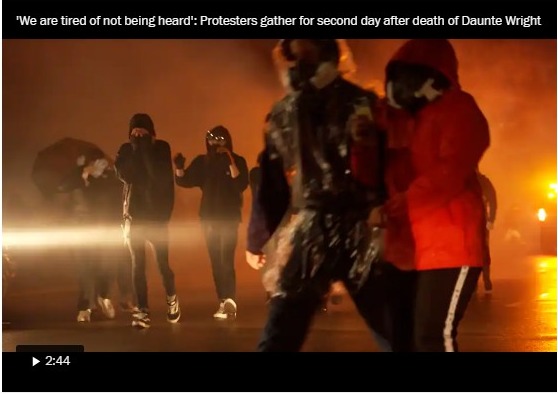
The resignations did little to quell the calls for justice for Daunte Wright, 20, who was shot during a traffic stop. On Tuesday, Wright’s family called for the officer who shot Wright to be charged with murder. “Prosecute them, like they would prosecute us,” Nyesha Wright, the victim’s aunt, said at a news conference. “We want the highest justice.”

Her comments came amid a chaotic 24 hours in Brooklyn Center. On Monday night, the City Council fired the city manager and transferred control of the police department to the mayor. Late Tuesday morning, Kimberly Potter, the veteran officer who fatally shot Wright, resigned.

Moments later, Mayor Mike Elliott announced that Police Chief Tim Gannon had resigned as well.

The developments come as a major police trial is playing out 10 miles from where Wright was shot. Closing arguments in the trial of former Minneapolis officer Derek Chauvin are expected to start next week, fueling concerns from state and local officials that Wright’s shooting will add to an already tense atmosphere.

“This couldn’t have happened at a worse time,” Elliott previously said following Wright’s shooting. “We are collectively devastated.”

Outside the Hennepin County Court House in downtown Minneapolis on Tuesday, Wright’s family spoke to the media for more than an hour as the news of Potter’s resignation began to circulate. During the news conference, family members wept and hugged as Wright’s 2-year-old son cried.

Jeffrey Storms, a Wright family attorney, criticized the police’s characterization of Potter’s actions as an accident. “An accident is knocking over a glass of milk, it’s not an accident to take your gun out of your holster,” Storms said. “Don’t tell us it’s an accident because it undermines the tragic loss of life that this family has experienced.”

The family gathered with members of George Floyd’s family and with civil rights attorney Ben Crump, who now represents both families.

Shortly before they appeared before the media, Courtney Ross, Floyd’s girlfriend who testified in Chauvin’s murder trial last week, walked over to console Wright’s mother, Katie.

“Say his name,” they chanted, in between tears. “Daunte Wright.”

During Tuesday’s news conference, Katie Wright recounted her final phone call with her son, in which he called to say he had been stopped by police over an air freshener in his car and was being asked about insurance.

Katie Wright instructed her son to take down the dangling air freshener and offered to speak to police to provide the insurance information. She then heard officers return and tell Daunte to get out of the car.

“Am I in trouble?” she heard her son ask. She said the officers told her they would explain when he got out of the car. “I heard him get out of the car, and I could hear the officers scruffling with him,” she said. “Then I heard the police officer ask him to hang up the phone.”

Katie Wright said she didn’t know what had happened until Daunte’s girlfriend, who had been in the car with him, told her he had been shot.

Police body camera footage released Monday showed two male officers approach either side of Wright’s Buick before he was placed against the car and searched. A third officer, later identified as Potter, approaches as one of the male officers tries to handcuff Wright as he struggles to get back into the car.

Potter is heard off camera threatening to Taser Wright twice before shouting “Taser! Taser! Taser!” and firing what was actually a gun. Potter is then heard swearing and saying, “I just shot him.” Wright, who drove several blocks before crashing, was pronounced dead at the scene.

Crump said Minneapolis-area police officers should use more discretion in enforcing traffic violations, and questioned how a veteran officer could fail to differentiate the size and weight of a her gun versus her Taser.

At least 40 people were arrested at protests over Wright’s killing on Sunday and Monday night, despite a four-county 7 p.m. curfew enacted by Gov. Tim Walz, a Democrat.

After heavily armed law enforcement used aggressive crowd dispersal measures such as flash-bang grenades and chemical irritants on protesters Sunday night, the Brooklyn County City Council passed a resolution limiting the techniques their police department was authorized to use against crowds. Several businesses sustained damage both nights.

Walz declined to renew the countywide curfews, though mayors in Minneapolis, Saint Paul, Maple Grove and Brooklyn Center ordered local curfews for Tuesday night.

Elliott and interim police Chief Tony Gruenig fielded heated questions over the lack of Black officers in the roughly 50-person department. They also acknowledged that none of the current officers who police the streets of Brooklyn Center live in the city itself.

Residents also raised questions about alleged ties between police unions and the Washington County Attorneys Office, which is handling charging decisions in Potter’s case, instead of the Hennepin County Attorneys Office.

The shooting took place in Hennepin County, but Mike Freeman, the county attorney there, sent the case to Washington County Attorney Pete Orput’s office under a policy initiated in the wake of Floyd’s killing meant to avoid the appearance of conflicts by having prosecutors review police shootings from other jurisdictions.

Elliott pledged to ask Walz to reassign Potter’s case to Minnesota Attorney General Keith Ellison, a Democrat.

Under state law, a case can only be reassigned at request of the governor or a county attorney, said former Minnesota attorney general Lori Swanson, Ellison’s predecessor. “When communities ask, it certainly has influence, but legally, a mayor or local unit of government doesn’t have the authority to make it happen,” Swanson said.

Reassigning cases is rare and typically happens when rural counties that are unaccustomed to prosecuting murder cases require assistance, she said. The Chauvin trial, which was initiated by the Hennepin County prosecutor before moving to Ellison’s office, is a notable exception.

Orput said Tuesday that he hoped to make a charging decision and announcement in Potter’s case on Wednesday.

The Minnesota Bureau of Criminal Apprehension is also investigating the matter, though their decision will no longer impact Potter’s employment following her voluntary resignation.

In her Tuesday resignation letter, Potter wrote she had “loved every minute of being a police officer and serving this community to the best of my ability.” Her resignation, she said, was in the best interest of the community, the police department and her fellow officers.

Potter’s resignation raised concerns among residents at City Hall on Tuesday that herleaving before she could be terminated was a protective move to keep her pension and law enforcement certification, which would enable her to potentially work on a different police force.

Members of the community urged Elliott to reject Potter’s resignation to keep open the potential for her to be formally terminated. It was unclear if the mayor’s formal acceptance of an officer’s resignation impacts its ultimate efficacy.

Neither Potter nor Gannon could immediately be reached for comment Tuesday.

Alfreda Daniels Juasemai, a community organizer who works with a coalition of local groups in Brooklyn Center including a nonprofit was among the those who said it was critical that officers like Potter not be allowed to resign so they could rejoin a different department.

“If a police officer who worked in a department for 26 years cannot tell the difference between a Taser and a gun, and she kills somebody – and then she’s going to resign and go to another police department and work there? She’s a danger to any community she goes to,” Juasemai said.

Biden will withdraw all U.S. forces from Afghanistan by Sept. 11, 2021 #SootinClaimon.Com

#SootinClaimon.Com : ขอบคุณแหล่งข้อมูล : หนังสือพิมพ์ The Nation.

https://www.nationthailand.com/news/30404869

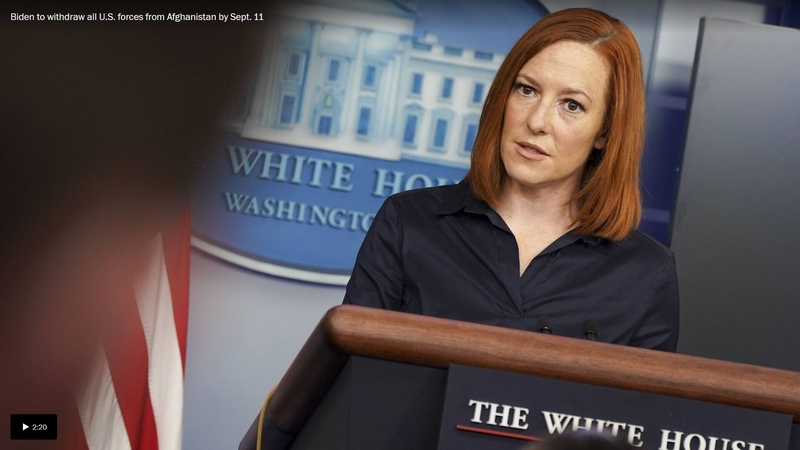
Biden will withdraw all U.S. forces from Afghanistan by Sept. 11, 2021

InternationalApr 14. 2021

By The Washington Post · Missy Ryan, Karen DeYoung

WASHINGTON – President Joe Biden will withdraw all American troops from Afghanistan over the coming months, people familiar with the plans said, completing the military exit by or before the 20th anniversary of the Sept. 11, 2001, attacks that first drew the United States into its longest war.

https://www.washingtonpost.com/video/c/embed/b7ce50f9-a788-4101-a71e-ad9e7ec65c1e?ptvads=block&playthrough=false 

The decision, which Biden is expected to announce on Wednesday, will keep thousands of U.S. forces in the country beyond the May 1 exit deadline that the Trump administration negotiated last year with the Taliban, according to a senior administration official who briefed reporters Tuesday under rules of anonymity set by the White House.

https://www.washingtonpost.com/video/c/embed/dd9210b9-f583-4371-bd51-ad261626fc20?ptvads=block&playthrough=false

While the Taliban has vowed to renew attacks on U.S. and NATO personnel if foreign troops are not out by the deadline, they made no initial statement in response to the announcement, and it is not clear if the militants will follow through with the earlier threats given Biden’s plan for a phased withdrawal between now and September.

Officially, there are 2,500 U.S. troops in Afghanistan, although the number fluctuates and is currently about 1,000 more than that. There are also up to an additional 7,000 foreign forces in the coalition there, the majority of them NATO troops.

Biden’s decision comes after an administration review of U.S. options in Afghanistan, where U.S.-midwived peace talks have failed to advance as hoped and the Taliban remains a potent force despite two decades of effort by the United States to defeat the militants and establish stable, democratic governance. The war has cost trillions of dollars in addition to the lives of more than 2,000 U.S. service members and at least 100,000 Afghan civilians.

“This is the immediate, practical reality that our policy review discovered,” said one person familiar with the closed-door deliberations who like others spoke on the condition of anonymity to discuss policy planning. “If we break the May 1st deadline negotiated by the previous administration with no clear plan to exit, we will be back at war with the Taliban, and that was not something President Biden believed was in the national interest.”

The goal is to move to “zero” troops by September, the senior administration official said. “This is not conditions-based. The president has judged that a conditions-based approach…is a recipe for staying in Afghanistan forever. He has reached the conclusion that the United States will complete its drawdown, and will remove its forces from Afghanistan before September 11.”

The decision highlights the trade-offs the Biden administration is willing to make to shift the U.S. global focus away from the counterinsurgency campaigns that dominated the post-9/11 world to current priorities, including increasing military competition with China.

In addition to major domestic challenges, “the reality is that the United States has big strategic interests in the world,” the person familiar with the deliberations said, “like nonproliferation, like an increasingly aggressive and assertive Russia, like North Korea and Iran, whose nuclear programs pose a threat to the United States,” as well as China. “The main threats to the American homeland are actually from other places: from Africa, from parts of the Middle East – Syria and Yemen.”

“Afghanistan just does not rise to the level of those other threats at this point,” the person said. “That does not mean we’re turning away from Afghanistan. We are going to remain committed to the government, remain committed diplomatically. But in terms of where we will be investing force posture, our blood and treasure, we believe that other priorities merit that investment.”

Immediate reaction in Washington was divided. In a statement on the Senate floor, Minority Leader Mitch McConnell called it “reckless” and “a grave mistake. It is retreat in the face of an enemy that has not yet been vanquished and abdication of American leadership.”

McConnell pointed to a 2019 amendment – passed by a supermajority of senators when Trump called for full withdrawal from Syria – that requires the administration to “certify that conditions have been met for the enduring defeat of al-Qaida and [the Islamic State] before initiating any significant withdrawal of United States forces from Syria or Afghanistan.”

“Can President Biden certify that right now?” McConnell asked.

But while McConnell cited “broad political support” for an ongoing military presence in Afghanistan, other lawmakers called it the right decision. “There are no good, easy decisions here,” said House Armed Services Committee Chairman Adam Smith, D-Wash. “Given the options, I think this is the best choice.”

“We cannot impose a solution on Afghanistan,” Smith said in an interview. “I don’t doubt for a second there is going to continue to be violence and turbulence,” but the main transnational terrorist threat is now elsewhere. “We can only be in so many places. We have to make choices, and those choices are not easy. It’s not as if we didn’t put in the time in Afghanistan,” he said.

Some officials have warned that a U.S. exit will lead to the collapse of the Kabul government while jeopardizing gains made over the past two decades in health, education and women’s rights.

Biden administration officials say the United States intends to remain closely involved in the peace process and will continue to provide humanitarian aid and assistance to the Afghan government and security forces, which remains almost totally dependent on foreign support.

“What we will not do is use our troops as bargaining chips,” the senior official said.

“We went to Afghanistan to deliver justice to those who attacked us on Sept. 11. … We believe we achieved that objective some years ago,” the senior official said, and now judge the threat to the United States “to be at a level that we can address it without a persistent military footprint.”

Biden, who argued unsuccessfully during the Obama administration for a small, counterterrorism-focused presence, had already hinted that the United States would remain for only a limited time beyond the May 1 deadline.

Late last month, he said he did not expect U.S. troops to be deployed there next year. “We will leave,” he said at a White House news conference. “But the question is when we leave.”

Administration officials were in the process of notifying officials in NATO nations as well as Afghan officials and the Taliban on Tuesday. Afghan President Ashraf Ghani, in a statement from his office, said he would have no statement until an upcoming phone call with Biden “to officially share details of the new withdrawal plan.”

The senior official also said the Taliban had been informed of the decision, reminded of its commitments under the Trump agreement, and warned against attacking departing U.S. forces. Taliban spokesman Zabihullah Mujahid said that the militants would make an official response “when the U.S. formally announces” its plans, presumably by Biden on Wednesday.

The official said that the U.S. withdrawal would be fully coordinated with NATO and other coalition partners. Citing NATO’s “in together, out together” mantra, the senior official said “we will take the time we need to execute that, and no more time than that.” The official said withdrawal would begin before May 1, and might well be completed before September.

Many NATO governments have said they have no desire or ability to remain without the logistical, security and other support the U.S. forces provide.

Blinken and Defense Secretary Lloyd Austin are in Brussels Tuesday and Wednesday informing their NATO counterparts. Germany has the second largest force in Afghanistan, numbering more than 1,000. Officials there have cautioned that they would need months to organize an orderly departure.

In early March, Blinken launched a last-ditch diplomatic effort to bring the Taliban and the Afghan government together to end the war with an interim power-sharing arrangement. He warned Ghani in a sharply-worded letter that time was growing short.

The hope was to accelerate a negotiating process begun under President Donald Trump in 2019, when White House envoy Zalmay Khalilzad started talks with militant leaders in Doha, the capital of Qatar. That led to a February 2020 agreement signed by Secretary of State Mike Pompeo under which the United States pledged to withdraw its forces by May 1, 2021, in exchange for Taliban severance of all ties with al-Qaida, and agreement to begin negotiations with the Afghan government toward a cease-fire and peace accord.

While the inter-Afghan talks began in September, they have made little progress. At the same time, the Taliban has increased its attacks on Afghan troops and expanded its territorial control. As the new administration launched its review, the Pentagon and the United Nations reported that the militants had not complied with their commitments under the Trump agreement.

Many Afghan experts have concluded that the Taliban are moving closer to a military victory, but that they may be reluctant to take over as a pariah government, which could result in a loss of international support and aid for the country.

Biden’s choice was a stark one. With U.S. public opinion and Congress divided, staying could lead to political difficulties at home and renewed Taliban attacks on U.S. forces. At the same time, an abrupt American departure could undermine any achievements made in the past two decades, reduce the possibility of a peace deal and lead to a Taliban takeover.

John Sopko, the independent special inspector for Afghanistan reconstruction, warned Congress last month that U.S. withdrawal without a peace agreement in place would be “a disaster,” and mean government collapse. Others have warned of civil war, as regional warlords have amassed and armed their own forces.

Blinken’s warning to Ghani, along with the interim government proposal, seemed to have little effect. He called for a conference of Taliban and Afghan leaders to take place in Turkey this month, and a U.N.-convened meeting of regional governments, including Iran, along with the United States, to push diplomacy.

Although Turkey announced Tuesday the Afghan meeting would go ahead on April 24, Mohammad Naeem, spokesman for the Taliban political office, said Tuesday that no decision on attendance had been made. No U.N. meeting has been confirmed. Khalilzad’s shuttle diplomacy among the Afghans and with regional leaders have yet to bring the two sides together in agreement.

The person familiar with the administration’s deliberations rejected the suggestion that these apparent failures precipitated Biden’s decision. The United States, the person said, would continue its diplomatic efforts to bring peace. But time had proven that the presence of U.S. troops, even at much higher levels, was not effective leverage at moving the parties beyond where they have been willing to go, he said.

Rep. Elissa Slotkin, D-Mich., a former CIA analyst and senior security official in administrations of both parties, said Congress would need a full accounting of plans to secure U.S. diplomats in Afghanistan and ensure that global extremists from al-Qaida and the Islamic State are unable to gain renewed strength.

The senior official said that any potential for resurgence of al-Qaida in Afghanistan, where U.S. intelligence currently assesses its presence as relatively small, “will be met with vigilance.

Drawing the “lesson from Iraq,” where the Islamic State turning into a major fighting force after the bulk of U.S. troops left, “we have to have the intelligence and military capabilities positioned in the region and the attention of our national security apparatus sufficiently focused to insure” that if al-Qaida “begins to emerge” the United States “will deal with it,” the senior official said.

While officials said Biden would end the military mission entirely, they acknowledged that a still-undetermined number of troops would remain to secure the U.S. embassy in Kabul, where diplomats would be vulnerable if security deteriorates in the Afghan capital.

In 2014, the then-commander of U.S. forces in Afghanistan described a plan to use a residual force of 1,000 troops to secure the embassy as part of an earlier blueprint for pulling out American troops.

During his campaign, Biden said his preference was to leave a counterterrorism force of about 1,500 troops in Afghanistan even as other forces withdrew. That now appears to be off the table.

But it’s unclear how the administration may use civilian contractors and intelligence officials now working alongside military personnel to retain a capacity to discern and respond to extremist threats. The U.S. government has routinely assigned military personnel under CIA or other intelligence agency authority in overseas missions, allowing them to conduct certain activities without technically counting as part of a military footprint. The senior official declined to comment on the issue.

Retired Gen. Colin Powell, former secretary of state and chairman of the Joint Chiefs of Staffs, said the decision to leave was overdue.

“I wouldn’t say enough is enough,” said Powell, who was in charge of George W. Bush’s State Department during the 9/11 attacks and the beginning of the U.S. war in Afghanistan. “I’d say we’ve done all we can do … What are those troops being told they’re there for? It’s time to bring it to an end.”

The Soviet Union, which occupied Afghanistan for a decade until it abruptly withdrew in 1989, “did it the same way,” Powell said. “They got tired, and they marched out and back home. How long did anybody remember that?”

U.S. recommends pausing J&J vaccinations on clotting concern #SootinClaimon.Com

#SootinClaimon.Com : ขอบคุณแหล่งข้อมูล : หนังสือพิมพ์ The Nation.

https://www.nationthailand.com/news/30404868

U.S. recommends pausing J&J vaccinations on clotting concern

InternationalApr 14. 2021A healthcare worker prepares to administer Johnson & Johnson Janssen Covid-19 vaccines in San Rafael, Calif., on March 25, 2021. MUST CREDIT: Bloomberg photo by David Paul MorrisA healthcare worker prepares to administer Johnson & Johnson Janssen Covid-19 vaccines in San Rafael, Calif., on March 25, 2021. MUST CREDIT: Bloomberg photo by David Paul Morris

By Syndication Washington Post, Bloomberg · John Lauerman

U.S. health officials recommended a pause in the use of Johnson & Johnson’s coronavirus vaccine on concerns about rare and severe blood clotting side effects.

A type of brain blood clot called cerebral venous sinus thrombosis was seen in combination with low levels of blood platelets in six women between the ages of 18 and 48, the U.S. Centers for Disease Control and Prevention and Food and Drug Administration said Tuesday in a joint statement. As of April 12, more than 6.8 million doses of the vaccine have been administered, the agencies said.

The CDC will convene a meeting Wednesday of its Advisory Committee on Immunization Practices to review the cases and assess their potential significance. The FDA will review the CDC assessment as it also investigates these cases, according to the statement

The recommended pause may further complicate efforts to vaccinate the world, just weeks after a vaccine relying on a similar approach and developed by AstraZeneca Plc and the University of Oxford raised similar concerns in Europe. It could also slow the U.S. vaccination campaign, where officials are relying on a pledged 100 million doses of J&J’s vaccine to help cover all adults by the end of May.

“We are recommending a pause in the use of this vaccine out of an abundance of caution,” the CDC and the FDA said in the statement. “This is important, in part, to ensure that the health care provider community is aware of the potential for these adverse events and can plan for proper recognition and management due to the unique treatment required with this type of blood clot.”

Concerns about blood clots could discourage some people from taking the J&J shot, which has so far proved popular because it’s a single dose.

The move follows cases of similar clots that have followed the use of the AstraZeneca vaccine in Europe, particularly in younger adults. The clotting concern has prompted many countries to impose age restrictions on use of the Astra vaccine, which was co-developed with the University of Oxford.

J&J has also begun shipments to the European Union. The bloc’s drugs regulator, the European Medicines Agency, did not immediately respond to a request for comment.

The EMA has also said that it’s assessing blood clots in people who received the J&J vaccine, after four serious cases of unusual clots accompanied by low blood platelets, one of which was fatal, emerged.

J&J representatives didn’t immediately respond to a request for comment.

Bodies pile up at India crematoriums overwhelmed by virus surge #SootinClaimon.Com

#SootinClaimon.Com : ขอบคุณแหล่งข้อมูล : หนังสือพิมพ์ The Nation.

https://www.nationthailand.com/news/30404867

Bodies pile up at India crematoriums overwhelmed by virus surge

InternationalApr 14. 2021A health care worker administers a rapid antigen test near the Gateway of India monument in Mumbai, India, on Wednesday, March 31, 2021. MUST CREDIT: Bloomberg photo by Dhiraj SinghA health care worker administers a rapid antigen test near the Gateway of India monument in Mumbai, India, on Wednesday, March 31, 2021. MUST CREDIT: Bloomberg photo by Dhiraj Singh

By Syndication Washington Post, Bloomberg · Dhwani Pandya, Upmanyu Trivedi, Sudhi Ranjan Sen

India’s crematoriums and burial grounds are working overtime to cope with the surging number of deaths from the country’s escalating coronavirus outbreak.

India is now the world’s second worst-hit nation, having overtaken Brazil once again Monday with a sharp jump up in daily new infections over the last 10 days for a grand total of nearly 13.7 million cases. On Tuesday the country reported 161,736 new cases and 879 deaths — more than four times the daily average in January.

Local media has been filled with grim reports of melting furnaces at crematoriums running nonstop, bodies piling up and smoke from continuously burning flesh creating another health risk for locals. Workers at six crematoriums across the country confirmed the scenes in phone interviews, saying they’ve seen covid-19 deaths climbing.

“Earlier 15 to 20 bodies were coming in a day and now around 80 to 100 dead bodies are coming daily,” said Kamlesh Sailor, the president of a trust operating a crematorium in Surat, a city in the industry-heavy western state of Gujarat. Even after the crematorium doubled capacity when India’s first virus wave struck last year and started operating 24 hours a day, families still need to wait at least two to three hours to cremate the bodies of their relatives, he added.

“We can’t afford to have long queues of people at the crematorium, as that again increases the risk of spreading infection,” Sailor said. “The situation is likely to worsen going ahead as hospitals across the city are filled to capacity.”

The deluge of infections and deaths highlight just how unprepared Prime Minister Narendra Modi’s administration has been to deal with the latest wave of the epidemic. In the past weeks large crowds have gathered for elections rallies in five states, festivals, and religious pilgrimages — indicating things could get even worse for the country and its crematoriums.

Even with the rise in deaths, experts say India is still underreporting fatalities. Death registration data was patchy even before the virus struck, with the vast majority — especially in rural villages — taking place at home and going undocumented. For others that get reported the cause of death listed is often anodyne — old age or heart attack. Experts believe that only between 20%-30% of all deaths in India are properly medically certified.

Media footage of queues at hospitals, critical medicine shortages, and an exodus of migrant workers heading to rural villages in fear of another lockdown has been reminiscent of the strict shutdown roughly a year ago that gave rise to one of the worst humanitarian crises the region has seen in decades.

“There was a lull period in January and February with a much lower number of covid deaths, but now in the last three weeks it is overflowing,” said Namrata Singh, chief executive officer at Antim Yatra, a private funeral service provider in Delhi and Mumbai.

In the national capital New Delhi, the largest burial ground and cremation centers reported an average of 8-9 covid deaths a day, up from one or two a month ago. They are preparing for more after the city on Monday reported a record high of over 11,000 new infections.

At Nigambodh Ghat, New Delhi’s largest cremation ground on the banks of Yamuna river, the administration has “made provision to increase the number of wood pyres and have also planned for additional manpower,” said Jai Prakash, the mayor of North Delhi Municipal Corporation.

The High Court in Gujarat on Monday urged the state government to take quick measures to deal with the growing health crisis and asked for a report in two days. The state’s lawyer, Kamal Trivedi, told the court that last week the government compelled some hospitals to set aside facilities for covid treatment.

Over in Surat, which sits north of India’s financial center of Mumbai, Sailor called on the government to “give death-related information truthfully.”

“They should reveal both covid and suspected Covid-related deaths, but that is not happening,” he said. “The true picture can actually benefit people as they will be aware and take more precautions.”

Egypt seizes the Ever Given, saying its owners owe nearly $1 billion for Suez Canal traffic jam #SootinClaimon.Comtion.

#SootinClaimon.Com : ขอบคุณแหล่งข้อมูล : หนังสือพิมพ์ The Nation.

https://www.nationthailand.com/news/30404866

Egypt seizes the Ever Given, saying its owners owe nearly $1 billion for Suez Canal traffic jam

InternationalApr 14. 2021

By The Washington Post · Antonia Noori Farzan

A few weeks ago, Egypt was frantically trying to get the massive container ship Ever Given out of the Suez Canal.

Now, authorities are saying that the vessel is not allowed to leave.

In the latest complication to the ill-fated voyage, Egypt has seized the Ever Given over its owners’ “failure to pay an amount of $900 million,” the state-run news outlet Ahram Gate reported. That amount represents the total compensation that Egypt believes it is owed for the six-day blockage of the Suez Canal, including lost revenue from ships that would ordinarily have traveled through the canal during that time, as well as costs for damage to the crucial waterway and the equipment and manpower deployed in the 144-hour scramble to free the ship.

Since being dislodged from the narrow section of the canal where it ran aground in late March, blocking commerce worth billions of dollars, the Ever Given has been anchored in Egypt’s Great Bitter Lake, which is located at the midpoint of the canal. Twenty-five crew members, all Indian nationals, remain stuck on board.

The ruling allowing Egypt to seize the Ever Given was issued by a court in the city of Ismailia, on the west bank of the canal, according to the Ahram Gate website. The Suez Canal Authority, which made the request, noted that Egypt’s maritime trade laws allow the “precautionary seizure” of vessels that have outstanding debts, including failure to pay the costs emanating from an accident.

“The vessel will remain here until investigations are complete and compensation is paid,” Osama Rabie, chairman of the Suez Canal Authority (SCA), told Egyptian state television last week, according to the Wall Street Journal. “The minute they agree to compensation, the vessel will be allowed to move.”

But the National Union of Seafarers in India argues that refusing to let the crew off the ship effectively amounts to holding them for ransom. “If the SCA has suffered losses, they can sort it out with those involved with the ship,” the union’s general secretary, Abdulgani Serang, told the Times of India on Sunday.

The Ever Given is owned by Shoei Kisen Kaisha, a Japanese holding company, but leased by Evergreen Marine Corp., a Taiwan-based conglomerate. A separate German firm, Bernhard Schulte Shipmanagement, was responsible for hiring the crew.

Egypt has not said which company it expects to pay for the damage, but Shoei Kisen Kaisha told the Journal last week that it was “in the middle of negotiations” with Suez authorities. The company has filed a lawsuit in British court aimed at limiting its liability for the incident.

Investigations into how the Ever Given became lodged sideways in the canal are still ongoing. In a recent interview, Rabie suggested that the captain could have “made a mistake” with the boat’s steering or speed, according to Kyodo News. He emphasized that the two Suez Canal pilots who were on board the boat to offer guidance were not ultimately responsible for making decisions, and dismissed the idea that strong winds had pushed the boat off course.

Rabie did not cite any evidence or say how he arrived at that conclusion.

China, Taiwan, S.Korea oppose Japan’s plan to release Fukushima water into ocean #SootinClaimon.Com

#SootinClaimon.Com : ขอบคุณแหล่งข้อมูล : หนังสือพิมพ์ The Nation.

https://www.nationthailand.com/news/30404865

China, Taiwan, S.Korea oppose Japan’s plan to release Fukushima water into ocean

InternationalApr 14. 2021An employee passes storage tanks for contaminated water at Tokyo Electric Power Co.'s Fukushima Dai-ichi nuclear power plant in Okuma, Fukushima, Japan, on Feb. 23, 2017. MUST CREDIT: Bloomberg photo by Tomohiro OhsumiAn employee passes storage tanks for contaminated water at Tokyo Electric Power Co.’s Fukushima Dai-ichi nuclear power plant in Okuma, Fukushima, Japan, on Feb. 23, 2017. MUST CREDIT: Bloomberg photo by Tomohiro Ohsumi
By Syndication Washington Post, Bloomberg · Aaron Clark

U.S. partners South Korea and Taiwan joined China in opposing Japan’s plan to release radioactive water from the wrecked Fukushima Dai-ichi nuclear power plant into the Pacific Ocean starting in about two years.

The three Asian governments, all with coastlines nearby, swiftly criticized Japan’s announcement Tuesday that it would conduct controlled releases that are expected to last for several decades. South Korea said the move posed a risk to the marine environment and the safety of neighboring countries, while China said it reserved the right to take further action.

“Despite doubts and opposition from home and abroad, Japan has unilaterally decided to release the Fukushima nuclear wastewater into the sea before exhausting all safe ways of disposal and without fully consulting with neighboring countries and the international community,” Chinese Foreign Ministry spokesman Zhao Lijian told reporters in Beijing. “This is highly irresponsible.”

The U.S., on the other hand, said the approach appeared to be in line with global standards while the head of the International Atomic Energy Agency said the global body would help ensure the plan is carried out “without an adverse impact on human health and the environment.”

“Disposing of the treated water is an unavoidable issue for decommissioning the Fukushima nuclear power plant,” Japan Prime Minister Yoshihide Suga said.

The decision ends years of debate over how to dispose of the water, which is enough to fill more than 500 Olympic-sized swimming pools. It has been leaking into the reactors that suffered core meltdowns after an earthquake and tsunami in 2011.

The U.S. backing comes as Suga prepares to become the first foreign leader to hold an in-person summit with President Joe Biden in Washington ahead of a climate conference, where Japan may announce new 2030 emissions reduction targets. To meet its vow to be carbon neutral by 2050, some government officials contend Japan will need to restart almost every nuclear reactor it shuttered in the aftermath of the 2011 meltdowns, and then build more.

“We thank Japan for its transparent efforts in its decision to dispose of the treated water from the Fukushima Daiichi site,” U.S. Secretary of State Antony Blinken said on Twitter.

Discharges are common practice in the industry, and Japan has said the releases will meet global guidelines. A panel within Japan’s Ministry of Economy, Trade and Industry recommended last year the water be released into the ocean or evaporated. The proposal stipulated that any water released into the environment must be repurified and diluted to meet standards, and that the discharges take place over decades, according to a December 2019 report from METI.

While Tokyo Electric Power Co. Holdings Inc. cycles in water to keep fuel and debris cool at the Fukushima site, fresh groundwater flows in daily and becomes contaminated. That water is pumped out and cleaned in a process that removes most of the radioactive elements except for tritium. Then it’s stored in one of roughly 1,000 tanks at the site, which are forecast to be full by mid-2022.

Greenpeace criticized Japan’s plan to release the treated Fukushima water into the ocean and said there are other options that should be considered.

“Rather than using the best available technology to minimize radiation hazards by storing and processing the water over the long term, they have opted for the cheapest option, dumping the water into the Pacific Ocean,” the group said.

The International Atomic Energy Agency said in a report in April 2020 that METI’s recommendations were “based on a sufficiently comprehensive analysis and on a sound scientific and technical basis.”

Taiwan’s Atomic Energy Council expressed regret about the decision, saying it had expressed opposition to the plan earlier. The body in Taipei said it set up 33 monitoring spots in waters nearby Taiwan to assess any impact of radioactivity.

Hu Xijin, an editor at the Communist Party-backed Global Times newspaper, said the U.S. approved of the plan “to cement Japan’s loyalty.”

“The U.S. thinks it’s far from Japan and has the least risk,” he wrote on Twitter. “But ocean currents mean it will face the same risk in future.”

Business Roundtable starts major ad campaign opposing tax hikes #SootinClaimon.Com

#SootinClaimon.Com : ขอบคุณแหล่งข้อมูล : หนังสือพิมพ์ The Nation.

https://www.nationthailand.com/news/30404829

Business Roundtable starts major ad campaign opposing tax hikes

InternationalApr 13. 2021

By Syndication Washington Post, Bloomberg · Nancy Cook

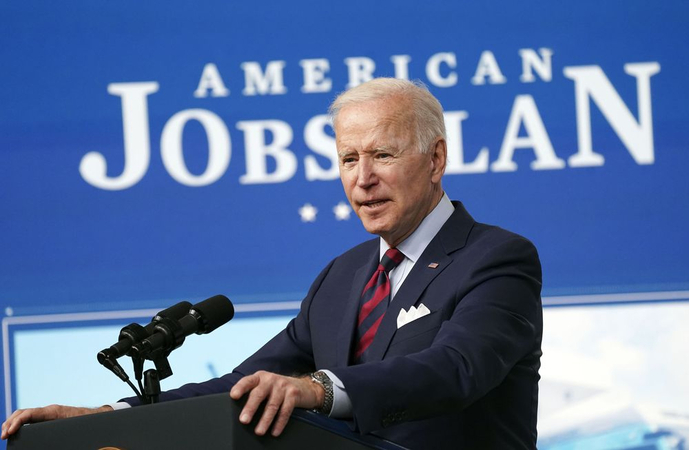
As congressional lawmakers return from a two-week recess, the Business Roundtable is starting a multimillion-dollar campaign aimed at stopping tax increases proposed as part of President Joe Biden’s $2.25 trillion infrastructure plan.

The group’s radio and digital advertisements, airing within the Washington, D.C., market, will praise the current tax regime and contend that the Biden administration shouldn’t attempt to raise corporate tax rates during an economic downturn.

According to a copy of the 30-second script obtained by Bloomberg News, the ad will say: “We’re not out of the woods on covid-19, but we’re getting there. And as we emerge, we need an economy that grows and creates opportunity.”

The spot goes onto to say that current rates, established by the 2017 Republican-backed tax law, “created record low unemployment, higher wages and brought business back to America” before the 2020 arrival of the pandemic.

Critics say Donald Trump’s tax bill pushed the corporate tax rate lower than many CEOs thought it needed to go, and overwhelmingly handed tax cuts to the wealthy.

The Roundtable’s push comes as Republican lawmakers and business and conservative groups are making a variety of plans to fight Biden’s proposed tax increases.

Marc Short, who was chief of staff to former Vice President Mike Pence, is running another group, called the Coalition to Protect American Workers, with a $25 million budget. Half of that will go toward ads fighting the tax hikes in key states and congressional districts ahead of the 2022 mid-term elections.

Biden has spent the past two weeks promoting his infrastructure proposal, called the American Jobs Plan, and contending that more than 70% of Republican voters support parts of it, including rebuilding roads and bridges and expanding broadband access and job training.

The Business Roundtable’s advertising campaign in the Washington market is just its first phase. In the coming weeks, the group will run ads in 19 markets across 13 states.

“We’re focused on communicating the positive aspects of a competitive tax system and why increases would work at cross purposes with the economic recovery, job creation and long-term growth,” said Jessica Boulanger, a spokeswoman for the group.

Coinbase sails toward $100 billion valuation on crypto frenzy #SootinClaimon.Com

#SootinClaimon.Com : ขอบคุณแหล่งข้อมูล : หนังสือพิมพ์ The Nation.

https://www.nationthailand.com/news/30404828

Coinbase sails toward $100 billion valuation on crypto frenzy

InternationalApr 13. 2021The Coinbase logo on a laptop computer arranged in Hastings-on-Hudson, N.Y., on Jan. 5, 2021. MUST CREDIT: Bloomberg photo by Tiffany Hagler-GeardThe Coinbase logo on a laptop computer arranged in Hastings-on-Hudson, N.Y., on Jan. 5, 2021. MUST CREDIT: Bloomberg photo by Tiffany Hagler-Geard

By Syndication Washington Post, Bloomberg · Matthew Leising, Ben Bain

Looks like Wall Street is about to get 100 billion new reasons to believe in Bitcoin.

Coinbase Global Inc., the fast-growing exchange at the center of the speculative frenzy in cryptocurrencies, is expected to go public this week at a staggering valuation of about $100 billion. That’s more than the venerable New York Stock Exchange and Nasdaq Stock Market combined — for a company that didn’t even exist a decade ago.

If all goes according to plan, Wednesday’s scheduled direct listing on Nasdaq will cement Coinbase’s position as the Big Board of the U.S. crypto scene and a potent symbol of the risks and rewards of the new era of digital money. Its founders, Brian Armstrong and Fred Ehrsam, own stakes worth $15 billion and $2 billion, respectively, according to Bloomberg estimates.

The bottom line at the San Francisco-based exchange would seem to justify the sky-high valuation, at least recently. Coinbase said last week it expects to report first-quarter profit of $730 million to $800 million, more than double what it earned in all of 2020. And revenue in the first three months of 2021 probably surpassed all of the $1.3 billion total for last year. That compares with the $5.6 billion of revenue Nasdaq generated last year.

Coinbase has 56 million verified users and adds about 13,000 new retail customers a day, according to cryptocurrency analytics firm Messari.

“Coinbase is one of the most prominent cryptocurrency exchanges in the world,” Mira Christanto, an analyst who covers the company for Messari, said in a research report. “The market has shown that investors are hungry for crypto exposure through equity markets.”

It’s an astounding ascent for a company started in a San Francisco apartment in 2012 by Armstrong and Ehrsam, who met online in a Bitcoin forum on Reddit. The apparent demand for Coinbase shares mirrors the appetite for all things crypto: Bitcoin has surged almost eightfold in the past year, hitting a record $61,742 in mid-March.

The opportunity for Coinbase now is to capture the increasing number of institutional and corporate customers, such as MicroStrategy Inc. and Tesla Inc., that are buying Bitcoin for the long haul.

“That’s going to be the holy grail for them if they can hold on to that business, because those folks are seen more as holders than traders,” said Julie Chariell, a senior analyst at Bloomberg Intelligence for fintech and payments firms.

Providing additional products such as custody services might mean Coinbase could look more like a bank than an exchange in a few years, according to Chariell. “It’s a broader play, getting to be a one-stop shop for whatever you want to do with your crypto assets,” she said.

Coinbase spokesman Elliott Suthers declined to make any company officials available for comment, citing the “quiet period” Coinbase is required to maintain before its Nasdaq listing.

It’s been a long and sometime grueling road to the planned debut, and there are still risks to its business model.

Coinbase disclosed in filings for the share sale that it had received a subpoena from the Securities and Exchange Commission. According to a person familiar with the matter, the inquiry was related to XRP, the digital token created by Ripple that’s the subject of an SEC lawsuit alleging it was sold as an unregistered security.

That same month, the SEC announced it was suing Ripple and two of its founders for violating U.S. securities laws. Coinbase was forced to delist XRP, which at the time was the third most valuable cryptocurrency in the world.

It’s difficult to tell how the loss of XRP affected Coinbase’s earnings because Bitcoin at the same time was skyrocketing to records, said Bloomberg Intelligence’s Chariell. A greater risk would be the need to delist many of the alt coins Coinbase now offers if the SEC case determines XRP is a security.

“It is a risk, definitely, but I just don’t think it’s a big risk at this point,” she said.

Despite the XRP scrutiny, Coinbase’s expansion plans seem to be working. In 2020, coins on the exchange other than Bitcoin and Ether accounted for the largest revenue share, at 44%, according to its SEC filing.

“It made economic sense for Coinbase to list high-demand tokens due to higher competition from other exchanges,” Messari’s Christanto said.

Another risk: Coinbase’s fortunes tend to correspond to Bitcoin’s volatile history. The exchange only turned a profit last year as institutional demand for crypto assets propelled Bitcoin and other coins such as Ether to new highs. The recent lean years, known as the crypto winter, stretched from 2018 to 2019, with Bitcoin hitting a low of about $3,100 in December 2018. Until then, Coinbase was known for listing only the big hitters in the crypto world, including Bitcoin, Litecoin and Ether.

Coinbase’s prospects won’t come down to a single token like XRP. The majority of its revenue comes from trading fees, with retail customers charged an average of 1.4% and institutional clients about 0.05%, according to Christanto.

To get it through the lean years, Coinbase has conducted seven fundraising rounds for a haul of more than $500 million since September 2012, Messari research shows. That’s on top of the revenue from selling Bitcoin and Ether, which more than tripled last year to $134 million, according to Messari.

All of that has provided a strong financial position for Coinbase to list publicly. Based on figures provided by the company, Chariell calculated that 5.5 million monthly users equates to $3 billion in 2020 revenue. The top 12 fintech firms to go public in the last six months have had price-to-sales ratios of 36 times, she said. Multiplying that by 2020 revenue gets you a very large number.

“You’re easily over $100 billion in market cap,” she said.

Biden team eyes potential threat from China’s digital yuan #SootinClaimon.Com

#SootinClaimon.Com : ขอบคุณแหล่งข้อมูล : หนังสือพิมพ์ The Nation.

https://www.nationthailand.com/news/30404827

Biden team eyes potential threat from China’s digital yuan

InternationalApr 13. 2021Signage for the digital yuan, or E-CNY, at self check-out counter at supermarket in Shenzhen, China, Nov. 20, 2020. MUST CREDIT: Bloomberg photo by Yan CongSignage for the digital yuan, or E-CNY, at self check-out counter at supermarket in Shenzhen, China, Nov. 20, 2020. MUST CREDIT: Bloomberg photo by Yan Cong

By Syndication Washington Post, Bloomberg · Saleha Mohsin

The Biden administration is stepping up scrutiny of China’s plans for a digital yuan, with some officials concerned the move could kick off a long-term bid to topple the dollar as the world’s dominant reserve currency, according to people familiar with the matter.

Now that China’s digital-currency efforts are gathering momentum, officials at the Treasury, State Department, Pentagon and National Security Council are bolstering their efforts to understand the potential implications, the people said.

American officials are less worried about an immediate challenge to the current structure of the global financial system, but are eager to understand how the digital yuan will be distributed, and whether it could also be used to work around U.S. sanctions, the people said on the condition of anonymity.

A Treasury spokeswoman declined to comment. A National Security Council spokeswoman did not reply to a request for comment.

The People’s Bank of China has rolled out trial issuance of a digital yuan in cities across the country, putting it on track to be the first major central bank to issue a virtual currency. A broader roll-out is expected for the Winter Olympics in Beijing next February, giving the effort international exposure.

Many key details of the digital yuan are still in flux, including specifics on how it would be distributed. China’s recent establishment of a joint venture with SWIFT, the messaging nexus through which most cross-border settlements pass through today, suggests it is possible a digital yuan could work within the current financial architecture rather than outside of it.

U.S. officials are reassured that China’s intentions aren’t to use the digital yuan to evade American sanctions, according to people familiar with the matter. The dollar’s current dominance in cross-border transactions gives the U.S. Treasury the power to cut off much of a business or even a country’s access to the global financial system.

China’s officials have said the main intentions of the digital yuan are to replace banknotes and coins, to reduce the incentive to use cryptocurrencies and to complement the current private-sector run electronic payments system — dominated by Ant Group Co.’s Alipay and Tencent Holdings Ltd.’s WeChat Pay. The PBOC has been working for years on the digital yuan, also called the e-CNY, having set up a specialist research team in 2014.

​​”To provide a backup or redundancy for the retail payment system, the central bank has to step up” and provide digital-currency services, Mu Changchun, the director of the PBOC’s digital-currency research institute, said at an event last month.

Beyond seeking a backup to privately run e-payments, Chinese regulators have more broadly been expanding their oversight of the country’s digital champions. Ant Group was told by Beijing to become a financial holding company, which will be regulated more like a bank. China also imposed a $2.8 billion antitrust fine on Ant’s affiliate Alibaba Group Holding Ltd.

The PBOC is also examining the potential for using the digital yuan in cross-border payments, launching a project studying the issue with a unit of the Bank for International Settlements along with the United Arab Emirates, Thailand and Hong Kong’s monetary authority.

The Biden administration isn’t planning to take any action to counter longer-term threats from China’s digital currency, the people familiar with the discussions said. However, China’s plans have given renewed impetus to efforts to consider the creation of a digital dollar, they said.

Members of Congress have also been increasingly interested in a digital dollar, aware of China’s moves, and asked Federal Reserve Chair Jerome Powell and Treasury Secretary Janet Yellen about the issue in hearings earlier this year.

Powell said in February the Fed was looking “very carefully” at a digital dollar. “We don’t need to be the first. We need to get it right.”

Yellen has signaled interest in research into the viability of a digital dollar, a shift from a lack of enthusiasm under her predecessor, Steven Mnuchin.

“It makes sense for central banks to be looking at” issuing sovereign digital currencies, she said at a virtual conference in February. Yellen said a digital version of the dollar could help address hurdles to financial inclusion in the U.S. among low-income households.

A recent report from the U.S. Director of National Intelligence said the extent of the threat of any foreign digital currency to the dollar’s centrality in the global financial system “will depend on the regulatory rules that are established.”

China’s currency makes up little more than 2% of global foreign exchange reserves compared with nearly 60% for the U.S. dollar. Policy decisions, rather than technical developments, will also be necessary to push forward yuan internationalization, as China maintains a strict regime of capital controls.

China’s financial system is too “fragile and weak” to pose a real threat to the dollar’s status as the world’s reserve currency, according to Mark Sobel, U.S. chairman for the Official Monetary and Financial Institutions Forum.

“At the end of the the day, the markets have more confidence in the Fed” than China’s central bank, said Sobel, a former senior U.S. Treasury official for international matters.

India approves Russia’s Sputnik V vaccine for emergency use #SootinClaimon.Com

#SootinClaimon.Com : ขอบคุณแหล่งข้อมูล : หนังสือพิมพ์ The Nation.

https://www.nationthailand.com/news/30404826

India approves Russia’s Sputnik V vaccine for emergency use

InternationalApr 13. 2021India approves Russia's Sputnik V vaccine for emergency use. Shown, a box of the vaccine in 2021. MUST CREDIT: Bloomberg photo by Asim HafeezIndia approves Russia’s Sputnik V vaccine for emergency use. Shown, a box of the vaccine in 2021. MUST CREDIT: Bloomberg photo by Asim Hafeez

By Syndication Washington Post, Bloomberg · Abhijit Roy Chowdhury, Chris Kay

India granted emergency use approval to Russia’s highly effective Sputnik V coronavirus vaccine, making it the third such shot approved by the nation as it races to contain an escalating health crisis amid a record daily surge in infections.

Dr. Reddy’s Laboratories Ltd., the Indian drugmaker that has partnered with Russia to supply this vaccine, has received the regulatory approval, a person familiar with the matter said, who asked not to be identified as they’re not authorized to speak publicly. A spokesperson for Dr. Reddy’s did not immediately respond to a query while V. G. Somani, the drug controller general of India, could not be reached for a comment.

The Hyderabad-based company approached the Indian drug regulator seeking emergency regulatory approval in February after it was deemed safe in Phase 2 human trials in January. It proceeded to the larger Phase 3 trials soon after. Dr. Reddy’s shares closed almost 5% higher in Mumbai after the news broke on Monday.

India is trying to curb a second wave that has already overwhelmed hospitals and put the Asian nation on track to overtake Brazil as the second worst-hit country. Some parts of India have already imposed partial lockdowns while some states such as Maharashtra — where financial hub Mumbai is located — are seeing vaccine shortages. Adding a third vaccine to its arsenal will hopefully ease the shortfall.

Vaccination is also key to fending off further stay-at-home orders and re-opening the economy after a national lockdown in March last year caused a historic recession. India already allows shots made by Astrazeneca Plc’s local partner, Serum Institute of India Ltd., and Hyderabad-based Bharat Biotech International Ltd. Sputnik’s emergency use approval was earlier reported by CNBC-TV18 and other local news outlets.

With Sputnik V winning international recognition in February, overcoming early skepticism, countries are lining up for supplies after peer-reviewed results published in The Lancet medical journal showed the Russian vaccine — with 92% efficacy — protects against the deadly virus just as well as the mRNA shots from Pfizer Inc. and Moderna Inc.

Sputnik V uses a platform based on the adenovirus, which causes the common cold, and has been studied in vaccine development for decades.

Besides Dr. Reddy’s, Russia has tied up with a bunch of Indian drugmakers in recent weeks including Gland Pharma Ltd., Panacea Biotech Ltd., Virchow Biotech Private Ltd. and Stelis Biopharma to produce as many as 852 million doses of Sputnik.

Still, the road to approval was slower than initially anticipated. In September, when Dr. Reddy’s and the Russian Direct Investment Fund announced their partnership, they said deliveries of the vaccine to India, which has required local bridging trials before approval, could potentially begin in late 2020.

India’s inoculation drive, which saw a tepid response in the initial weeks endangering its target of reaching about a quarter of its population by August, is now picking up. Bharat reported 81% efficacy of its Covid vaccine on March 3, days after Prime Minister Narendra Modi got the shot and urged Indians to step forward for inoculation. Sign ups among those willing to be vaccinated has improved in the past month.

India is expanding the campaign to all those over the age of 45 from April 1 and New Delhi has slowed vaccine exports as it seeks to shore up its own immunization drive. So far, more than 104 million vaccination doses have been administered.