Biden to mend World Health Organization ties, Fauci to speak
InternationalJan 21. 2021The World Health Organization regional office for the Americas in Washington, D.C., on Aug. 26, 2020. MUST CREDIT: Bloomberg photo by Stefani Reynolds.
By Syndication Washington Post, Bloomberg · David Wainer, John Lauerman, Mario Parker
President-elect Joe Biden plans to take immediate steps Wednesday after he is inaugurated to re-engage with the World Health Organization and send top U.S. medical expert Anthony Fauci to speak to the group in a strong repudiation of Donald Trump’s snubs during the coronavirus pandemic.
The incoming administration plans to participate in the WHO executive board meeting this week, with Fauci, the top U.S. infectious disease expert, heading the delegation and speaking. Once the U.S. resumes its engagement with the WHO, the new administration will work with the body to strengthen and reform the group, according to a fact sheet released by the Biden transition team.
Trump announced in May that the U.S. would exit the WHO because of what he said was its undue deference to China and failure to provide accurate information about the coronavirus. He often blasted the organization and also has publicly belittled Fauci and diminished his role in past months.
In announcing these changes, Biden is underscoring that he intends to set a new science-based tone in seeking to reverse Trump’s dismissal of virus mitigation strategies and international cooperation in addressing the pandemic.
The U.S. had been the WHO’s largest contributor, providing $400 million to $500 million in mandatory and voluntary contributions, and Trump’s decision last year drew sharp criticism in Congress, as well as from allies in Europe. The WHO has been heavily involved in the fight against the coronavirus, especially in poor countries. The Geneva-based group said it looks forward to the participation of the U.S. delegation at Thursday’s executive board meeting.
Meanwhile, the president-elect said he would sign an executive order requiring masks and physical distancing in all federal buildings — including government office buildings — as well as on federal lands and by federal employees and contractors in an attempt to help stem the spread of the surging coronavirus. He said this will be part of a “100 days masking challenge” to get Americans to wear masks in public.
“This is not a political statement; this is about the health of our families and the economic recovery of our nation,” said Jeff Zients, who will be the new administration’s covid response coordinator.
Biden is expected to sign another order in coming days requiring masks on trains and planes, which also fall under federal jurisdiction.
The approach represents a reversal of the stance taken by Trump, who clashed with public health officials by at times casting doubt on the benefits of wearing masks and generally refusing to wear them himself.
During the campaign, Biden suggested he’d impose a national mask mandate, citing face coverings’ ability to slow the spread of the virus. But there’s no clear authority for a presidential order outside of areas controlled by the federal government. Biden later revised his approach to focus on federal property and interstate travel.
Biden faces a challenge in persuading Americans to wear masks after Trump and Republican officials across the country politicized their use.
On Tuesday, as U.S. deaths topped 400,000 in the world’s worst covid-19 death toll, Antony Blinken, Biden’s choice for secretary of state, signaled that a U.S. rift with WHO may be healing and that the U.S. would join Covax, the 92-nation collaboration seeking to deploy Covid-19 vaccines around the world. While the Trump administration has given some $18 billion to vaccine and drug development through Operation Warp Speed, it declined to participate in Covax.
“The combination of rejoining, taking part in Covax and looking at how we can help make sure the vaccine is equitably distributed is something we’re going to take on,” Blinken told the Senate Foreign Relations Committee during his confirmation hearing on Tuesday.
The program plans to distribute some 2 billion doses around the world by the end of 2021. WHO Director-General Tedros Adhanom Ghebreyesus, whose agency leads Covax along with the Coalition for Epidemic Preparedness Initiatives and Gavi, the Vaccine Alliance, has expressed concern that drugmakers are prioritizing wealthier countries for vaccine clearances and distribution. That could delay distribution through Covax.
U.S. participation could help shore up the vaccine-equity program. China is one of the partner nations, and although its vaccines are not among those procured by Covax, Chinese drugmaker Sinovac Biotech said it has submitted data on its shot for pre-qualification. The EU is also supporting the plan.
Biden instructs Education Department to extend pause on federal student loan payments through September
InternationalJan 21. 2021Joe Biden, then the presumptive Democratic nominee, appears in August with running mate Kamala D. Harris in Wilmington, Del. MUST CREDIT: Washington Post photo by Toni L. Sandys
By The Washington Post · Danielle Douglas-Gabriel
WASHINGTON – On his first day in office, President Joe Biden is asking the Education Department to extend the suspension of federal student loan payments through Sept. 30.
The move arrives days before the moratorium is set to expire at the end of this month. It makes good on Biden’s pledge to give borrowers some breathing room as the economy struggles to find its footing.
On a call with reporters Tuesday, Brian Deese, the incoming director of the National Economic Council, spoke of the struggles of many households, particularly Black and Latino families, to pay basic expenses and said that student loan debt is often weighed against the costs of food and housing.
“In this moment of economic hardship, we want to reduce the burden of these financial trade-offs,” Deese said.
To that end, consumer advocates and liberal lawmakers had hoped Biden would use executive authority to cancel some portion of the $1.6 trillion in outstanding student debt. Deese said the administration supports forgiving up to $10,000 in debt per person through congressional action.
The Democratic-controlled House passed legislation last year affording cancellation to borrowers through a stimulus package shelved by Senate Majority Leader Mitch McConnell, R-Ky.
Sen. Chuck Schumer, D-N.Y., the incoming majority leader, has been unwavering in his support for debt cancellation and could clear a path forward. That would be a formidable challenge given the slim majority Democrats will have in the Senate, but advocates say it’s not impossible.
In the meantime, about 41 million Americans will continue to benefit from the federal government’s pause of student loan payments.
“This is really important,” said Jessica Thompson, policy and research director at the Institute for College Access & Success. “It allows borrowers to take a sigh of relief, (and) get out of this cycle of being reliant on the current politics of the day determining whether they’re going to have to start paying again.”
When the Education Department approves Biden’s request, all borrowers with student loans held by the Education Department will see their payments automatically suspended until Sept. 30 without penalty or accrual of interest. Each month until then will still count toward loan forgiveness for borrowers in public-service jobs. It will also count toward student loan rehabilitation, a federal program that erases a default from a person’s credit report after nine consecutive payments.
Collections on defaulted, federally held loans are still halted, and any borrower with defaulted federal loans whose wages are being garnished will receive a refund. However, the directive still excludes more than 7 million borrowers whose federal loans are held by private companies or universities.
The Trump administration in March gave borrowers the option of postponing payments for at least 60 days as the coronavirus pandemic battered the economy. Congress later codified the reprieve in the stimulus package, known as the Cares Act, and made it automatic. The Trump administration twice extended the moratorium before leaving office.
Thompson said the latest extension will give the Education Department, the administration and Congress time to figure out how to successfully transition millions of borrowers back into repayment.
“It’s going to take a fair amount of thought to do this well, to do it carefully and to make sure we aren’t setting people up for failure or default when we try to kick-start payments,” Thompson said.
While many borrowers might have an easy time resuming payments, some will struggle to get back on track with their payments. Consistent and accurate information from the department and its contractors about options for people facing hardships will be essential to avoid a wave of defaults, Thompson said.
The Education Department reported a spike in people defaulting on their federal student loans in 2019 after exiting forbearance provided in the wake of natural disasters such as Hurricane Harvey and the California wildfires.
MOSCOW – Russian opposition leader Alexei Navalny wasted no time showing why the Kremlin finds him such a threat: From behind bars in a coronavirus isolation cell, he released a bombshell video accusing President Vladimir Putin of colossal corruption.
The YouTube video – released Tuesday less than 48 hours after Navalny returned to Russia in a direct challenge to Putin and his security services – crossed all Putin’s red lines.
It also underscores that Navalny and his supporters appear united and organized five months after the opposition leader suffered a near-fatal nerve agent poisoning he claims was ordered by Putin. The Kremlin denies the claim.
Protests by Navalny’s backers are planned across Russia on Saturday.
But videos and social media – anchored by his network of 40 offices across Russia – remain the core of Navalny’s opposition power, pointing out alleged abuses and indulgences by Russia’s leaders under Putin. Navalny’s election efforts back candidates with the best chances of ousting members of Putin’s party.
This time, the video pointed directly at Putin. It included a photo of teenager Elizaveta Krivonogikh, whom it claimed was the secret daughter Putin fathered with a lover. Navalny’s video also published an architectural plan and drone footage of a gigantic palace near Gelendzhik on the Black Sea, including a cellar winery, an indoor ice rink and a casino. The video alleged it was built for Putin using a complex “slush fund.”
“Putin’s palace: History of the world’s largest bribe,” viewed more than 25 million times, also named former gymnast Alina Kabaeva as another woman who allegedly received benefits such as apartments for herself and her family through Putin. Neither Kabaeva nor Krivonogikh has commented publicly.
Putin’s spokesman Dmitry Peskov said the video was “a con,” and “pure nonsense,” denying the palace was related to Putin, but he gave no details on who they say is the owner. Peskov also has rejected a November report by a Russian outlet, Proekt media, that Krivonogikh was related to Putin as “unfounded and unconvincing.”
Releasing such an explosive video while in the clutches of a judicial system notorious for its politicized decisions is a risk for Navalny.
He was detained Sunday upon his return from Berlin and faces at least two and a half years on charges he violated a suspended sentence. He also is looking at possible lengthy prison terms in two other criminal cases for alleged fraud and embezzlement. Navalny says the charges are political.
After surviving poisoning by a Novichok group nerve agent in August during a trip to Siberia, he directly confronted the domestic intelligence service, or FSB. Navalny phoned a member of the hit team that investigative reporting group Bellingcat linked to the crime, tricking him into revealing details of the poisoning last month.
Navalny, 44, is seen by the Kremlin and securocrats as an enemy of the state, according to political analyst Tatiana Stanovaya of R. Politik analytical firm. Bringing down Navalny was now seen as “a matter of honor” by the FSB, she said.
“They want to see Navalny destroyed in prison, physically and mentally weak and vulnerable,” she said. “They don’t care about protests or elections. They would like to see the West increase sanctions because it gives them more arguments to insist on this harsh line in Russian policy.”
Leonid Volkov, head of Navalny’s network of 40 regional offices, believes Navalny’s life remains in danger.
“The situation is very dangerous indeed because, technically and practically, Alexei Navalny is now in the custody of the very people who tried to poison him,” said Volkov, who is organizing the protests planned for Saturday. The Kremlin denies any link to the poisoning.
“The Russian Orwellian reality actually demands a lot of bravery now,” he added.
Navalny’s poisoning sent the message that serious opposition rivals to Putin would not be tolerated. Since then, authorities have passed a raft of laws aimed at Navalny and other dissidents, making it harder to protest, oppose the regime or to expose corruption by security officials and others.
“There were some unwritten rules about what you could do and not do to be on the safe side, but this has changed,” Volkov said. “So what really makes practical sense is to do what you have to do and that’s it.”
Navalny was still in intensive care in Berlin after his poisoning when he conceived the video as what he sees as the definitive account of Putin’s corrupt regime. He called it “psychological portrait” of a man he says was an unexceptional former KGB agent who became obsessed with amassing unlimited wealth and staying in power.
The video’s visualizations of luxury palace interiors with ornate Italian furniture are based on drawings that Navalny said were leaked by a contractor “stunned and enraged by the luxurious decorations and the insane prices of the furnishings.”
There were details: a wine-production cellar with classical musical piped 24 hours a day to help the vintages mature; a hookah room with a pole-dancing stage; a tunnel to a sea lookout; an underground ice hockey rink, a two-story theater, a casino and an “aquadiscoteque.” There were custom-made sofas for $27,000, and tables costing up to $56,000.
Businessman Sergei Kolesnikov revealed some details in 2010, saying he had been involved in the project to build a residence for Putin. Photographs of the lavish interiors were posted online by workers in 2011.
On Navalny’s first day in Moscow’s Matrosskaya Tishina detention center on Tuesday, Vladimir Ashurkov, London-based executive director of Navalny’s Anti-Corruption Foundation, called on Western governments to issue sanctions against a list of eight Russians with links to Putin. The roster includes billionaires Roman Abramovich, owner of Chelsea soccer club in Britain, and Health Minister Mikhail Murashko for “covering up Alexei’s poisoning and hindering efforts to evacuate him to Germany for medical treatment.”
“People on the short list are some of the key architects of the system of corruption, restriction of political freedom and oppression that Putin’s regime has built over years in Russia,” Ashurkov said in an interview.
“It will be a deterrent to other people not on this list,” he added. “The message is that there will be consequences to the support of Putin’s regime and to the oppression that these people bring to Russia.”
There has been no immediate reaction to the sanctions appeal.
Ashurkov said Navalny knew he might be jailed, but “will find a way to have his voice heard.” At the same time, Putin’s popularity has been ebbing, real incomes declining and the Kremlin is struggling to ignite a sense of national momentum and pride amid the crippling pandemic.
“People are depressed,” said Dmitry Gudkov, an opposition figure unaffiliated with Navalny, adding that many people were angered by Navalny’s detention but afraid to heed his call for street protests. “Many people are threatened by the regime because people were sent to prison for just participating in actions and meetings.”
“Putin is losing popularity, and law enforcement and the FSB and repression will be the key instruments to sustain power,” Gudkov said. “If you can’t buy loyalty, you can trade on fears. You can intimidate people and threaten people to prevent them from participating in actions. That’s the trend in our country.”
At the end of the video, Navalny urges people to “believe in our strength” and take to the streets.
“All we have to do is stop being patient. Stop wasting your life and your taxes enriching these people,” he said. “Our future is in our hands.”
‘We will be back in some form,’ Trump tells crowd as he leaves Washington
InternationalJan 21. 2021President Donald Trump and First Lady Melania Trump wave as they board Air Force One at Joint Base Andrews in Suitland, Md., on January 20, 2021. MUST CREDIT: Photo for The Washington Post by Will Newton
By The Washington Post · Anne Gearan, Philip Rucker
WASHINGTON – President Donald Trump departed Washington for the final time Wednesday morning with a melancholy farewell – and a vow to return to the political arena – though he still did not directly acknowledge that voters had turned him away.
Trump had imagined a showy military send-off that more resembled authoritarian pageantry than the placid rituals of American electoral democracy. In the end, a military band played “Hail to the Chief” and cannons fired in salute after a modest crowd of a few hundred aides and other loyalists showed up at Joint Base Andrews to see him off.
“This is a great, great country. It is my greatest honor and privilege to have been your president,” Trump said as his audience chanted, “Thank you, Trump!”
“I will always fight for you,” Trump said. “I will be watching. I will be listening. And I will tell you that the future of this country has never been better. I wish the new administration great luck and great success. I think they’ll have great success. They have the foundation to do something really spectacular.”
As Trump concluded his remarks, he vowed, “We will be back in some form,” and he told his supporters, “Have a good life.”
Trump and first lady Melania Trump boarded Air Force One shortly before 9 a.m. for their final flight on the presidential aircraft, arriving at Palm Beach International Airport in South Florida just before 11 a.m. They will take up residence in Palm Beach at Trump’s private Mar-a-Lago Club.
Trump modeled his send-off event on the martial-themed arrival and departure ceremonies for foreign dignitaries. With a stiff wind whipping the American flags behind him, the outgoing president spoke from a stage lined with campaign-style bunting, with Air Force One in the background.
But for all Trump’s love of a spectacle, the event had more of a feel of a county fair than a big-budget extravaganza. In a Trumpian twist, the music that played as he ended his remarks was the Village People’s “YMCA,” a sing-along staple from his boisterous political rallies. Then, as Air Force One began to roll on the tarmac, Frank Sinatra’s “I Did It My Way” blared from the loudspeakers.
Guests included outgoing White House chief of staff Mark Meadows, senior policy adviser Stephen Miller, former White House physician and now Rep. Ronny Jackson, R-Texas, and other current and former aides, including former press secretary Sean Spicer. The Trumps also were joined by members of his family, including daughter Ivanka Trump and son-in-law Jared Kushner, both senior White House advisers.
Noticably absent from Trump’s send-off were the three elected Republicans who had worked most closely with him – Vice President Mike Pence, Senate Majority Leader Mitch McConnell, Ky., and House Minority Leader Kevin McCarthy, R-Calif. All three instead attended Biden’s inauguration, which Trump decided not to attend, bucking the traditional transfer of power.
Earlier in the chilly winter morning, the Trumps walked out of the White House residence for the final time. A subdued Trump told reporters that serving had been the “honor of a lifetime.”
The Trumps then boarded Marine One, which lifted off the South Lawn at 8:17 a.m. and carried the couple into the brilliant morning sky. They flew over a fortified city of checkpoints and armed soldiers amid threats of another attempted insurrection by Trump supporters.
Trump released a farewell video on Tuesday in which he noted the arrival of a new administration and wished it luck, but did not mention Biden by name, nor did he concede or directly address his own defeat.
Instead, Trump touted his record as president and declared that “the movement we started is only just beginning.”
“We did what we came here to do – and so much more,” he said.
The message, which was recorded at the White House on Monday, was released at roughly the same time that Biden, his wife Jill Biden and other family members arrived by plane at Andrews from Delaware, Biden’s home state.
On the same tarmac Wednesday morning, Trump was celebrated by an ad hoc gathering of supporters and a red-carpet ceremony. A booming sound system played pop music and selections from the Trump campaign rally playlist, including “Billie Jean” and “Saturday Night’s Alright.”
President Donald Trump, left, and first lady Melania Trump stop to speak to the news media as they depart the White House for the last time on Wednesday, Jan. 20 2021. MUST CREDIT: Washington Post photo by Bill O’Leary
Trump leaves as the nation reached the grim milestone of 400,000 dead, with tens of thousands more deaths expected before the grinding coronavirus pandemic subsides.
The crowd stood shoulder to shoulder in front of the stage despite public health recommendations against close contact with others, even outdoors. Most in the crowd wore face masks, a change from Trump campaign events and some high-profile gatherings at the White House dubbed super-spreader events.
In one of his final acts as president, Trump granted pardons early Wednesday morning to 143 people, including former White House strategist Stephen K. Bannon and other well-connected celebrities, as well as nonviolent drug offenders. But despite his interest in doing so, Trump ultimately did not preemptively pardon himself or members of his immediate family.
In Trump’s four years in office, America has become more divided than at any other point in recent history – spurred, in part, by the president’s inflammatory rhetoric toward his political opponents and toward immigrants, people of color, women and other groups.
On the eve of Trump’s departure, McConnell pointedly accused Trump of having “provoked” the violent mob that stormed the U.S. Capitol on Jan. 6.
Nonetheless, in his taped farewell address, Trump attempted to cast his presidency as one marked by a bipartisan spirit.
“Our agenda was not about right or left, it wasn’t about Republican or Democrat, but about the good of a nation, and that means the whole nation,” Trump said.
He condemned the violence but did not address his own role in urging his supporters to march on the seat of the national legislature in his name. He also did not retract his false claim that the Nov. 3 election was “rigged” and stolen from him.
“All Americans were horrified by the assault on our Capitol. Political violence is an attack on everything we cherish as Americans,” Trump said. “It can never be tolerated. Now, as I prepare to hand power over to a new administration at noon on Wednesday, I want you to know that the movement we started is only just beginning.”
In his video, Trump also declared, “We built the greatest economy in the history of the world,” in what amounts to his 493rd time repeating the falsehood, according to The Washington Post’s Fact Checker.
Trump last week became the first president in U.S. history to have been impeached twice. The Senate is expected to begin its trial of Trump next week, with Democrats pressing not only for conviction but also for Trump to be barred from running for office again.
Trump had announced earlier this month that he would not attend Biden’s swearing-in. Biden said the decision was one of the few things he and Trump agreed on.
But the snub means that Biden will become president without the symbolic handoff that has been the norm since Andrew Johnson, the last president to voluntarily skip the inauguration of his successor.
Trump did leave a note for Biden in the presidential Resolute Desk, as has been customary for departing presidents, according to a White House official. The official did not disclose what was written.
The rival celebration at the military base formerly known as Andrews Air Force Base breaks yet another norm of presidential behavior. Recent departing presidents have kept the focus on the new guy, with only low-key public demonstrations of gratitude for staff and friends.
Trump was still president when he departed, so the retrofitted Boeing 747 jet he used was properly called Air Force One. Recent past presidents have left Washington on the same plane, but only as a courtesy extended by the new president.
Trump had planned to switch out the iconic blue and white paint job on the presidential jets for a bolder design, and proudly displayed a model of his Air Force One design in the Oval Office, but it is not clear whether the project will go forward now.
Trump was gone from the city before the other expected courtesies of inauguration morning would have begun. In recent times, those have included a morning visit at the White House between the outgoing first couple and the incoming one. The Trumps and the Bidens did not meet at all.
By the time Biden was sworn in at the Capitol, site of the attempted insurrection two weeks before, the defeated Republican was already in his new home state of Florida. Trump landed in West Palm Beach to blue skies, his adult children and others trailing him off the plane.
There were no formal greeters at the airport as is typical for a president, and he rode in a black SUV with American flags – not the armored limousine nicknamed “The Beast.”
Supporters and a few protesters lined the road to Palm Beach and Trump’s home at his members-only Mar-a-Lago Club.
Some had Trump-Pence 2020 flags. Signs included “We Love You 45.” Reporters traveling with him also spotted a “You’re fired” sign.
Trump’s motorcade slowed repeatedly as it passed groups of supporters, apparently so Trump could take in the support and wave.
WASHINGTON – President Joe Biden signed a blizzard of executive orders Wednesday on the coronavirus, immigration and climate change – launching a 10-day cascade of directives reversing the policies of his GOP predecessor as Democrats pushed for even more sweeping and prompt legislative action.
The most pressing of his priorities are measures to combat the ongoing deadly coronavirus pandemic. Biden signed executive actions to require masks on all federal grounds and asked agencies to extend moratoriums on evictions and on federal student loan payments.
He urged Americans to don face coverings for 100 days while reviving a global health unit in the National Security Council – allowed to go dormant during the Trump administration – to oversee pandemic preparedness and response. Biden also began to reverse several steps taken by former president Donald Trump by embracing the World Health Organization,revoking the permit for the Keystone XL pipeline and rejoining the Paris climate agreement.
Biden, who enters the White House during a time of historic crisis, said Wednesday he wants to move quickly to address the country’s big, urgent problems with a spirit of unity and national purpose. The pandemic has killed 400,000 Americans, the economy has shed millions of jobs and just two weeks ago, thousands of rioters stormed the Capitol in an attempt to overturn the results of the Nov. 3 election, which Biden won by 7 million votes.
In his first appearance from the Oval Office, Biden said his administrative actions were “all starting points” as he signed a sampling of the executive orders.
“I think some of the things we’re going to be doing are going to be bold and vital,” he said in brief remarks. “And there’s no time to start like today.”
The freshly-inaugurated president’s rush to roll back some of Trump’s most controversial policies reflected the years of pent-up frustration among Democrats that they had been largely powerless to stop an administration that espoused policies they vehemently opposed.
Acting expeditiously, Democrats said, was particularly vital as the nation continues to battle a once-in-a-century pandemic that continues to kill thousands of Americans a day and batters the fragile economy.
“We’ll press forward with speed and urgency, for we have much to do in this winter of peril and possibility,” Biden said in his inaugural address. “Few periods in our nation’s history have been more challenging or difficult than the one we’re in now.”
But the new White House, as well as its Democratic allies on Capitol Hill, are keenly aware that expansive policy changes they want to implement in the first months of Biden’s presidency will also require the assent of Congress, and almost certainly the support of some Republicans, particularly in the Senate.
Some of his actions drew swift criticism from GOP lawmakers who had largely endorsed the policies of Trump, if not the former president’s rhetoric and style.
“President Trump created the best economy in the world by limiting bureaucratic regulations and President Biden should seek to build on this success instead of diminishing it,” said Rep. James Comer, R-Ky., the ranking Republican on the House Oversight and Government Reform Committee. “Government does not know best, the American people do.”
Sen. John Barrasso of Wyoming, the No. 3 Senate Republican, stressed that Biden’s inaugural address was one of “unity and it’s important to govern that way as well.”
Most of the 17 directives that Biden signed Wednesday had been signaled previously by Biden or staff members. Taken together with the two legislative plans he has sent to Congress – coronavirus relief and an immigration overhaul – the orders highlight Biden’s immediate priorities, while sending a message that his administration plans to reengage on the global stage.
Jen Psaki, the new White House press secretary, noted that the 15 executive actions and two additional agency directives were far more than the two orders Trump signed on his first day four years ago.
GOP lawmakers were particularly critical of the Biden administration’s decision to roll back key energy and climate regulations of his predecessor, arguing that doing so would ultimately cost jobs.
Biden’s “policies from Day One hurt American workers and our economy,” said Sen. Shelley Moore Capito, R-W.Va. Pointing to the Biden administration’s climate actions, she continued: “This virtue signaling comes at the expense of low-income and rural families that rely upon industries opposed by liberal environmental groups.”
Biden’s coronavirus legislation is already facing stiff challenges in Congress, as Democrats hold only narrow majorities in both chambers and Republican support is still needed to pass most bills in the Senate. The White House nonetheless hopes to court a smaller circle of influential GOP lawmakers, particularly senators, and had reached out to key Republicans such as Sen. Lisa Murkowski of Alaska to get their input on their virus aid plan.
“It’s going to require, I think, a fair amount of debate and consideration,” Murkowski said Wednesday. “But he’s made it clear that this is his initial priority. I don’t disagree with that.”
Biden White House officials have emphasized the need for Congress to approve his larger relief package, which would extend unemployment benefits; dole out an additional $1,400 in stimulus payments for millions of Americans; and devote tens of billions of dollars to economic needs such as rental, housing and food assistance, among other measures.
But acting Wednesday on his own, Biden asked the Education Department to consider extending a freeze on both interest and principal payments for federal student loans until Sept. 30, while requesting that the Centers for Disease Control and Prevention extend a moratorium on evictions that expires after this month to at least through March.
He also asked three key agencies – the Department of Veterans Affairs, Agriculture and Housing and Urban Development – to extend foreclosure moratoriums for federally backed mortgages under their purview through at least the end of March.
“These are emergency measures that will help to make sure that no American is put in the place of having to make the decision to pay their student loan payment or put food on the table in the short term and will help to provide some near-term relief,” said Brian Deese, the new director of the White House National Economic Council.
On immigration, Biden signed an order repealing the ban on travel from several majority-Muslim nations, while nullifying the Trump administration’s directive that attempted to exclude the counting of noncitizens from the U.S. census.
Another action called on the Department of Homeland Security to continue an Obama-era initiative protecting “dreamers” from deportation and issuing them work permits as long as they qualified under the requirements laid out when the program, Deferred Action for Childhood Arrivals, began in 2012. Biden also will end the national emergency over the border that Trump declared as a way to circumvent Congress when lawmakers would not grant him funding for his wall.
On climate change, Biden signed an order revoking the permit, issued by the Trump administration, that allowed for the construction of the Keystone XL pipeline and to rejoin the Paris climate accord. The United States will officially be part of the 189-country climate agreement in 30 days.
On racial equity issues, Biden rescinded the “1776 Commission” established by the Trump administration, which the outgoing president framed last year as a “pro-American curriculum that celebrates the truth” about U.S. history but that the incoming administration says tries to erase the racial scars of America’s past.
Biden plans to continue rolling out executive orders in coming days. According to guidance shared with Capitol Hill, he plans to issue administrative actions relating to the coronavirus on Thursday and economic relief on Friday. A “Buy American” action will come Monday, and an order addressing racial equity issues will follow Tuesday.
He will announce actions on climate change on Jan. 27, health care on Jan. 28, immigration on Jan. 29, and international affairs and national security on Feb. 1.
Upcoming executive actions will revoke the ban on transgender people from serving in the military, as well as reversing the so-called global gag rule that blocks U.S. aid to organizations abroad that perform abortions or offer counseling on the procedure, Psaki said.
InternationalJan 21. 2021On the eve of his inauguration, President Biden and first lady Dr. Jill Biden visited the covid-19 memorial at the reflecting pool. MUST CREDIT: Washington Post photo by Demetrius Freeman
By The Washington Post · Aaron Blake · NATIONAL, POLITICS, WHITEHOUSE
INAUGURAL-BLAKE-ANALYSIS: Joe Biden was sworn in Wednesday as our nation’s 46th president. Below, some takeaways from his inauguration speech.
1. The ‘uncivil war’ plaguing our country
Looming over Biden’s inauguration were the events of two weeks ago, when supporters of now-former president Donald Trump stormed the U.S. Capitol in a last-ditch effort to overturn the election results.
Thankfully, such violence was not repeated Wednesday. But it was something Biden couldn’t ignore. And in his speech, he called for an end to the “uncivil war” that has plagued American politics of late, calling for conciliation and understanding.
“We must end this uncivil war that pits red against blue, rural versus urban, conservative versus liberal,” Biden said. “We can do this if we open our souls instead of hardening our hearts, if we show a little tolerance and humility, and if we’re willing to stand in the other person’s shoes – as my mom would say, ‘Just for a moment, stand in their shoes.’ “
Biden repeatedly called for unity, but he also cast particular parts of the resistance to his presidency as enemies of democracy and our founding principles.
“We face an attack on our democracy and on the truth,” Biden said at another point, notably mentioning this alongside the threat posed by the coronavirus.
He added at another point, “We must reject the culture in which facts themselves are manipulated and even manufactured.” Also, “There is truth and there are lies – lies told for power and for profit.”
2. A marked contrast to Trump’s inaugural
Any incoming president can’t help but be compared with the president they’re replacing, and Biden’s inauguration provided a marked contrast to his predecessor.
Trump’s signature speeches in 2016 and 2017 – at the Republican National Convention and his inauguration – painted a dark picture of America, most with the phrase “American carnage” from his first speech as president. It was an America that Trump said was in need of his leadership because it was in such dire straits, even as Trump characteristically hyperbolized the details, such as the true threat of violent crime, historically speaking.
In contrast, Biden’s speech painted our democracy not as in jeopardy from such violence but resilient in the face of it.
“Here we stand just days after a riotous mob thought they could use violence to silence the will of the people, to stop the work of our democracy, to drive us from this sacred ground,” Biden said. “It did not happen. It will never happen. Not today, not tomorrow, not ever. Not ever.”
Biden frequently noted the challenges the country faces, as Trump sought to do, but he did so with a much more uplifting tone, even suggesting that the country had already overcome one of its darkest days – again, apparently referring to the events of two weeks ago.
“Together we shall write an American story of hope, not fear. Of unity, not division. Of light, not darkness,” Biden said. “A story of decency and dignity, love and healing, greatness and goodness. May this be the story that guides us, the story that inspires us and the story that tells ages yet to come that we answered the call of history; we met the moment; democracy and hope, truth and justice did not die on our watch but thrived; that America secured liberty at home and stood once again as a beacon to the world.”
In his comments about what happened two weeks ago, Biden made a point to emphasize unity, but he also suggested that the threat to democracy Trump lit won’t soon be extinguished – an acknowledgment that this is something both he and the country will have to deal with moving forward.
3. A call for ‘boldness’ from a pragmatist
Biden emerged as the pragmatic pick in a Democratic presidential primary field full of mostly more-liberal candidates. Democrats apparently decided he was the best vessel through which to defeat Trump. And most of Biden’s Cabinet picks have been in keeping with his political modus operandi.
Biden got a sudden boost after his election, thanks to Democrats taking control of the Senate in a pair of runoffs in Georgia, with Vice President Harris as the tie-breaking vote. But the Senate remains split, 50 to 50, and the House is about as close as it’s been in two decades. A big question is how big Biden goes with his agenda.
Whatever his plans, he argued in his speech for big, rather than incremental, change.
“Now we’re going to be tested,” Biden said. “Are we going to step up? All of us? It’s time for boldness, for there is so much to do. And this is certain: I promise you, we will be judged, you and I, by how we resolve these cascading crises of our era. Will we rise to the occasion, is the question. Will we master this rare and difficult hour?”
The question, as with any speech, is how much this is rhetoric and how much action is behind it – along with how Biden defines “boldness.” No president is going to take office promising to take half-measures or to bow to their opponents. That would be a poor negotiating stance.
But Biden has also been pursuing the presidency for the better part of four decades, having run his first campaign in 1988, and he now has his hands on it. How he chooses to use that power – and the cooperation he gets from Congress – are yet to be determined.
4. A message to other countries
One of the key messages of Biden’s speech was directed not at Americans, but those abroad who might have thought this country lost its way. Polls showed views of the United States sunk to new lows on Trump’s watch, even as he promised to make our country great – and respected – again.
But Biden signaled to other countries that the work of rebuilding trust and alliances would begin now – and suggested that recent events show the United States’ resilience in the fact of such challenges.
“So here’s my message to those beyond our borders: America has been tested, and we’ve come out stronger for it,” Biden said, building on themes addressed above. “We will repair our alliances and engage with the world once again – not to meet yesterday’s challenges, but today’s and tomorrow’s challenges.”
In a clear break from the previous administration, he added: “And we’ll lead, not merely by the example of our power, but by the power of our example. We’ll be a strong and trusted partner for peace, progress and security.”
The message seemed to be: This was a blip, and you can trust us to work with you again.
U.S. to rejoin Paris climate accord; Biden works to overturn Trump’s climate policies
InternationalJan 21. 2021The sun sets over Bears Ears National Monument in Utah. MUST CREDIT: Washington Post photo by Katherine Frey.
By The Washington Post · Juliet Eilperin, Steven Mufson, Brady Dennis
WASHINGTON – During his first moments in the Oval Office on Wednesday, President Joe Biden moved to return the United States to the Paris climate accord and directed federal agencies to begin unraveling Donald Trump’s environmental policies – the first step in what Biden has vowed will be a sustained effort to safeguard the nation’s air and water, protect endangered species and combat climate change at home and abroad.
Biden’s executive order recommitting the United States to the international struggle to slow global warming fulfilled a campaign promise and represented a repudiation of the “America First” approach of Trump, who officially withdrew the nation from the Paris agreement Nov. 4 after years of disparaging it.
Biden also ordered federal agencies to review scores of climate and environmental policies enacted during the Trump years and, if possible, to quickly reverse them. Nearly half of the regulations the new administration is targeting come from the Environmental Protection Agency, on issues as varied as potable water, dangerous chemicals and gas-mileage standards.
“A cry for survival comes from the planet itself. A cry that can’t be any more desperate or any more clear,” Biden, who has listed tackling climate change as one of his core priorities, said in his inaugural address Wednesday. Listing the challenges the nation faces, he pointed to “the battle to save our planet by getting the climate under control.”
Biden’s new national climate adviser, Gina McCarthy, told reporters this week that the moves will “begin undoing some of the harmful actions that happened in the previous administration’s watch, so that we can move forward in combating the climate crisis.”
McCarthy said Biden would sign “a broad executive order that takes steps that are imperative to address our climate crisis, and will also create good union jobs and advance environmental justice while reversing more than 100 of the previous administration’s harmful policies.”
Biden is expected to take more action Jan. 27, according to a document obtained by The Washington Post. He plans to sign an executive order elevating climate in domestic and national security policy; direct “science and evidence based decision-making” in federal agencies; reestablish the Presidential Council of Advisers on Science and Technology and announce that U.S. data that will help underpin the Climate Leadership Summit that Biden will host in Washington in late April.
Although incoming presidents often sign executive orders on their first day, the chasm between Biden’s agenda and Trump’s legacy is one of the widest in recent decades. Nowhere is that contrast more pronounced than on climate change – which Trump largely dismissed – and the environment, where Trump and his deputies scaled back protections to benefit the fossil fuel industry.
Biden comes to office with a sense of urgency about climate change that is unmatched by any previous occupant of the White House, and he is installing throughout the government people who share his views. The regulations he is instructing agencies to review include a recent Labor Department rule preventing environmentally sustainable mutual funds from being default retirement investments and a Transportation Department regulation making it easier to transport liquefied natural gas by rail.
“At this moment of profound crisis, we have the opportunity to build a more resilient, sustainable economy, one that will put the United States on an irreversible path to achieve net-zero emissions economywide no later than 2050,” McCarthy said.
Gina McCarthy, an appointee for deputy national climate adviser to President-elect Joe Biden, says the executive orders aim to “move forward in combating the climate crisis.” She is photographed Dec. 19, 2021, in Wilmington, Del. MUST CREDIT: Washington Post photo by Jonathan Newton
That pledge came as welcome news to many in the international community, which has forged ahead with efforts to combat climate change in recent years without cooperation from the world’s second-largest emitter of greenhouse gases.
“The United States is such an important actor internationally. So this day today has been creating a lot of expectation everywhere,” Patricia Espinosa, executive secretary of the U.N. Framework Convention on Climate Change, said in an interview. “Very few generations have the opportunity to really influence a historical change in the way that humanity evolves. This is one of those moments. So it means a lot to have the U.S. back.”
Although many of Biden’s actions on Wednesday will take effect over time – the country will again formally become a party to the Paris agreement 30 days from now – his most immediate action will be to rescind the presidential permit Trump granted the Keystone XL pipeline to transport crude oil from Canada across the border into the United States. The project became a flash point for climate activists during the Obama administration, and Biden pledged during the campaign to block it.
Industry executives made it clear Wednesday that they were prepared to work with Biden but warned him against pushing to abolish fossil fuels.
The American Petroleum Institute’s chief executive, Mike Sommers, said in a statement that though his members “support the ambitions of the Paris Agreement,” the new administration should keep in mind “models show that this agreement between nations cannot be achieved without access to natural gas.”
And he took issue with Biden’s decision on the Keystone pipeline permit, saying, “Revoking the Keystone XL pipeline is a significant step backwards both for environmental progress and our economic recovery.”
Sen. Shelley Moore Capito, R-W.Va., a senior member of the Senate Environment and Public Works Committee, foreshadowed the opposition Biden’s agenda could face in Congress. “In these next four years, it is imperative that Congress aggressively exercises oversight and pushes back on the worst impulses of Washington bureaucrats,” she said.
Conservationists lauded the quick push to roll back so many of Trump’s policies.
“Today we are feeling the first rays of hope after four dark years where racial violence and injustice, destruction of our environment and disdain for climate science became standard operating procedure for a government that was supposed to represent us all,” said Jamie Williams, president of the Wilderness Society.
Dozens of steps that Biden began during his first hours in office will take months, if not longer, to complete.
He is instructing the EPA and the Transportation Department to strengthen fuel-efficiency standards for cars and light trucks, which Trump weakened. He asked two other departments – interior and commerce – to review the boundaries and protections Trump had scaled back for national monuments in Utah and off the coast of New England.
Biden can change the boundaries of a national monument with the stroke of a pen, and though U.S. automakers probably are willing to strike a deal with the new administration on more-ambitious gas-mileage standards for the nation’s cars and pickup trucks, reversing other Trump policies will be more challenging.
Biden plans to impose a temporary moratorium on all oil and natural gas leasing activities in the Arctic National Wildlife Refuge, which is home to caribou, polar bears and Indigenous people. On Tuesday, the Interior Department’s Bureau of Land Management (BLM) signed and issued nine leases it auctioned earlier this month, spanning 437,804 acres on the refuge’s coastal plain.
All but two of the new leases were won by the Alaska Industrial Development and Export Authority, an arm of the state government. The sale raised a total of about $14 million, less than 2% of what congressional Republicans projected when they opened the near-pristine reserve to drilling in 2017.
BLM Alaska Director Chad Padgett said Tuesday that the leases “reflect a solid commitment by both the state and industry to pursue responsible oil and gas development on the Alaska’s North Slope.”
In some instances, Biden is setting the stage for changes that will reverberate throughout the federal government. For instance, he will revive an interagency working group Trump disbanded in 2017 that sets the “social cost of carbon,” an estimation of the economic damage caused by the release of a ton of carbon dioxide into the atmosphere.
Policymakers factor this figure into the cost-and-benefit calculations they make on a host of issues, including permitting new oil wells and imposing stricter pollution controls on coal- and gas-fired power plants. Under the Obama administration’s formula, the price per ton would now stand at $52, but Trump officials reduced it to between $1 and $7 per ton.
Many economists suggest that the Biden administration start at $125 per ton to better reflect new research on the economic damage of climate change and market realities.
“It is the one way you can uniformly incorporate the cost of climate change into decisions across all of government,” Kevin Rennert, who directs the Social Cost of Carbon Initiative at the environmental think tank Resources for the Future, said in an interview.
Biden’s environmental push on Day 1 far surpassed that of any other president, but only time will show how much of his agenda he can achieve – and how successfully he can rebuild the nation’s image around the world, particularly when it comes to leading on climate action.
“Rejoining the Paris agreement is only the beginning, and the incoming administration appears to know this,” Brandon Wu, director of policy and campaigns at ActionAid USA, said in an email. “In order to make truly meaningful progress towards global cooperation on climate, the Biden administration must follow up with concrete actions. There’s simply no reason for other countries to trust our word if we fail, again, to act on our own emissions and use the significant resources at our disposal to support the world’s most vulnerable countries.”
Biden pledges to defeat extremism and culture of lies as he confronts Trump’s legacy
InternationalJan 21. 2021President Joe Biden, Vice President Kamala Harris, and Maj. Gen Omar Jones, commanding general, Joint Task Force participate in a wreath-laying ceremony at the Tomb of the Unknowns on Wednesday, Jan. 20, 2021, in Arlington National Cemetery in Arlington, Va. MUST CREDIT: Washington Post photo by Katherine Frey
By The Washington Post · Dan Balz · NATIONAL, POLITICS
The inauguration of President Joe Biden marked the traditional transfer of power that has taken place every four years through two centuries of the nation’s history. This year the day was far more than that, a moment both somber and hopeful in a country reeling from a pandemic and economic distress in a capital city locked down by threats of violence from far-right extremists.
For Biden, Wednesday’s ceremonies represented the fulfillment of decades of personal ambition to serve as president. But if it was a day for him to celebrate that achievement, it was also a day to reckon with what the four years of Donald Trump’s presidency have done to the country and the monumental task of repair and restoration that is now the new president’s responsibility.
Biden ran for president with a pledge to rebuild a sense of normalcy after the chaos and divisiveness of the Trump presidency. But the shocking attack on the Capitol on Jan. 6 underscored that a return to normalcy will require presidential resolve in the face of white supremacist threats to democracy as much as or more than customary calls for unity and bipartisan cooperation that long have been central to Biden’s makeup.
The 46th president did not shrink from the duality of what he called this moment of “crisis and challenge,” the urgency of confronting immediate problems that threaten people’s health and welfare as well as the deeper, embedded problems of racial injustice and domestic terrorism by those who fear a changing America.
One measure of how much the attacks of two weeks ago could affect Biden’s presidency was the degree to which he confronted those threats directly and repeatedly. “Here we stand,” Biden said, “just days after a riotous mob thought they could use violence to silence the will of the people, to stop the work of our democracy, to drive us from this sacred ground. It did not happen. It will never happen, not today, not tomorrow, not ever. Not ever.”
Rarely has a nation needed the renewal that is promised with every inauguration. The absence of the president, who became the first in more than a century not to attend his successor’s swearing-in, along with the tableau and pageantry on a socially distanced West Front of the Capitol, signaled an eagerness on the part of many, though not all, to move past the Trump years.
As expected, unity was Biden’s principal theme. But there was nothing soft-edged about the meaning of his words. Instead the appeals for America to come together came with a rhetorical determination to confront the existential threats that rose up under Trump. Kate Masur, a historian and professor at Northwestern University, emailed during the speech that she was hearing echoes of Abraham Lincoln’s inaugural address in 1861, a time when seven states already had seceded from the union and the nation was heading toward bloody war.
That Lincoln speech is often remembered for his appeals for unity, for his summoning up of America’s “better angels,” his invocation of the “mystic chords of memory” and his plea that the passions of the day not “break our bonds of affection.” Much of the speech, however, was a condemnation of the secessionist movement and a steely promise to defend the Constitution and preserve the union.
“In some ways the combined force of right-wing authoritarian and white supremacist tendencies in the United States, plus the media climate and disinformation and people’s suffering and resentments, combine to form a more existential threat than we’ve seen in a very long time,” Masur said.
America is not at a point today that it was when Lincoln spoke weeks before the Civil War began, but the “uncivil war” that Biden described is a reminder that what exists today goes beyond familiar talk of political polarization or legislative gridlock to what could be the biggest long-term challenge of Biden’s presidency – a country in which a minority of the people reject many truths, hold to Trump’s words and, in the extreme, are prepared to fight.
No president in modern times, perhaps ever, has inherited the collective set of problems that greeted Biden as he took the oath of office on a clear and cold day, and in a few words he captured all that afflicts the country: “anger, resentment and hatred, extremism, lawlessness, violence, disease, joblessness and hopelessness.”
In his inaugural address, Biden sought to follow the example of Franklin D. Roosevelt, who in 1933 during the depths of the Great Depression, said, “This nation asks for action, and action now.” Biden said, “We will press forward with speed and urgency, for we have much to do in this winter of peril and significant possibilities. Much to repair. Much to restore. Much to heal. Much to build. And much to gain. Few people in our nation’s history have been more challenged or found a time more challenging or difficult than the time we’re in now.”
Emblematic of that promise to move swiftly were the 17 executive orders awaiting Biden’s signature after his swearing-in, with more to come in days ahead. More difficult than signing those orders will be showing that he has a strategy to slow the spread of the coronavirus and to produce and deliver vaccinations to enough people quickly enough to return the country to something resembling life before the virus arrived a year ago. How effective the American people judge that response to be will go far in coloring broader perceptions of Biden’s leadership.
The new president also has outlined the $1.9 trillion package to deal with the coronavirus and provide economic assistance to struggling Americans, businesses and state and local governments, to be followed next month by a sizable economic recovery package. On these legislative priorities, he faces a stern test: Can he persuade Republicans to support the package – and how much is he prepared to compromise to win that support – or will he decide to stand his ground and turn to the budgetary process known as reconciliation to push it through with a simple majority vote of his own party?
In addition, there are his commitments to an ambitious strategy to combat climate change and the promise to redraw the nation’s immigration system, including a path to citizenship for those here without documentation. And mindful of who helped to make him president, and the swearing-in of Kamala Harris as the first female, Black and South Asian vice president, he also noted that cries of racial justice “400 years in the making . . . will be deferred no more.”
As he noted Wednesday, almost any of these individual challenges would consume a new administration. He does not have the luxury of ignoring any of them.
The desire for national renewal and rejuvenation also comes with demands for accountability – for those rioters who stormed the Capitol and for a president who, as Senate Republican leader Mitch McConnell of Kentucky said, provoked the mob by feeding it lies. Trump’s impeachment trial will hover over the early days of Biden’s presidency, and while he will not be an active participant, it too will color attitudes of Americans about the state of the nation.
On the day the Capitol was overrun, Biden said the attack and the efforts to undermine the results of the election meant that work of the coming four years must be the restoration of democracy. Presidential historian Robert Dallek, noting the significance of the moment Biden assumed the presidency, said, “What helps him a lot is the villainy of Donald Trump and that Trump has fallen into a ditch. There is nothing like having a failed predecessor to give you a running start.”
Timothy Snyder, a historian and Yale University professor, said that until the country is freed from the fear of mob rule in all its forms, whether from violence or intimidation or threats of either, the freedoms that all Americans take as part of the country’s basic values will not exist.
Snyder called this a moment of possible restructuring over which Biden will preside.
“That’s the only upside of Trump being president and a failed coup,” he said. “It opens a window to do things that are more far-reaching. That window’s going to be open, it’s going to be open for a little while.”
Biden said Wednesday’s ceremonies symbolized not the triumph of a candidate but of the cause of democracy. But if democracy met the stress test between November and Inauguration Day, the system remains under duress. Biden’s task, and that of the nation he seeks to unify, is to assure that the forces that threatened democracy are confronted and defeated.
By The Washington Post · Glenn Kessler, Salvador Rizzo
President Donald Trump’s farewell address was essentially a mini version of one of his campaign rallies – minus the cheers and applause. Since his campaign rallies were a rich source of false or misleading claims, the president brought out some of his favorite golden oldies, many of which are on The Washington Post’s list of Bottomless Pinocchios. Here’s quick guide to what was wrong or exaggerated.
“We also built the greatest economy in the history of the world. . . . Powered by these policies, we built the greatest economy in the history of the world.”
This is Trump’s favorite false claim, so there should be no surprise he said it twice. (In The Post’s database of Trump’s claims, we only count a falsehood once per venue.)
By just about any key measure in the modern era, Presidents Dwight Eisenhower, Lyndon Johnson and Bill Clinton presided over stronger economic growth than Trump.
The gross domestic product grew at an annual rate of 2.3% in 2019, slipping from 2.9% in 2018 and 2.4% in 2017. But in 1997, 1998 and 1999, GDP grew 4.5%, 4.5% and 4.7%, respectively. Yet even that period paled in comparison with the postwar boom in the 1950s and in the 1960s. Growth between 1962 and 1966 ranged from 4.4% to 6.6%. In 1950 and 1951, it was 8.7% and 8%, respectively.
Meanwhile, the unemployment rate reached a low of 3.5% under Trump, but it dipped as low as 2.5% in 1953. (After the coronavirus pandemic tanked the economy, Trump jacked up his claim even more, falsely saying it had been the greatest economy in the history of the world.)
This marks the 493rd time that Trump used a variation of this line, meaning he said it on average every other day.
– – –
“All Americans were horrified by the assault on our Capitol. Political violence is an attack on everything we cherish as Americans. It can never be tolerated.”
This statement is not especially credible in light of the president’s actions on Jan. 6. “Trump at first hesitated to tell his supporters to stand down when they stormed the Capitol,” The Post reported. “He was captivated by the spectacle playing out on live television and entranced by the notion that the rioters were fighting for him, people with knowledge of the events said.” Trump resisted advice from aides to call for an end to the violence. When he finally issued a video that afternoon telling the rioters to “go home,” he also declared his support for them by saying, “We love you.” Then, for several days, Trump refused to lower Americans flags in honor of two U.S. Capitol police officers who died after the violent riot by his supporters. He finally relented after enormous public pressure.
– – –
“Our agenda was not about right or left. It wasn’t about Republican or Democrat, but about the good of a nation.”
This is a line that actually never appeared in Trump’s campaign speeches. Instead, he constantly attacked Democrats as a force of evil, so it’s doubtful he really believes this.
“Remember this it’s all Democrat run cities, radical left Democrats, Democrats,” he said at Oct. 31 rally. “You look at what’s going on all Democrat run cities. Republicans have no problems, our cities are doing great.” At a Jan. 4 rally, Trump declared that Democrats will “turn our entire country into one giant sanctuary for criminal aliens, setting loose tens of thousands of dangerous offenders and putting MS-13 gang members straight into your children’s schools.” On Nov. 4, Trump said: “Joe Biden is a globalist who spent 47 years outsourcing your jobs, opening your borders, and sacrificing American blood and treasure on ridiculous, endless foreign wars. Most of you have never even heard of some of these countries. . . . A vote for Biden is a vote to give control of government over to the globalist, Communist, Socialist, the wealthy, liberal, hypocrites who want to silence, censor, cancel, and punish you.”
– – –
“We passed the largest package of tax cuts and reforms in American history.”
This is Trump’s second favorite falsehood, and this marks the 295th time he said it.
Even before Trump’s tax cut was crafted, he promised it would be the biggest in U.S. history – bigger than Ronald Reagan’s 1981 tax cut. Reagan’s tax cut amounted to 2.9% of the gross domestic product, and none of the proposals under consideration came close to that level. Yet Trump persisted in this fiction even when the tax cut was eventually crafted to be the equivalent of 0.9% of GDP, making it the eighth largest tax cut in 100 years.
– – –
“We slashed more job-killing regulations than any administration had ever done before.”
Trump may have grounds to brag about his efforts to peel back regulations, but his claim of the most or biggest regulation cuts cannot be easily verified and appears to be false. There is no reliable metric on which to judge this claim – or to compare him to previous presidents. Many experts say the most significant regulatory changes in U.S. history were the deregulation of airline, rail and trucking industries during the Carter administration, which are estimated to provide consumers with $70 billion in annual benefits.
A detailed November 2020 report by the Penn Program on Regulation concluded that “without exception, each major claim we have uncovered by the President or other White House official about regulation turns out to be exaggerated, misleading, or downright untrue.” The report said that the Trump administration had not reduced the overall number of pages from the regulatory code book, and that it will have completed far more regulatory actions than deregulatory ones once the full data is examined.
– – –
“We imposed historic and monumental tariffs on China. . . . Billions and billions of dollars were pouring into the U.S.”
Trump regularly brags that the United States reaps billions of dollars from tariffs he has imposed on other countries, such as China. But tariffs – essentially a tax – are generally paid by importers, such as U.S. companies, who in turn pass on most or all of the costs to consumers or producers who may use Chinese materials in their products. So, ultimately, Americans are footing the bill for Trump’s tariffs, not the Chinese. The president is fooling himself if he thinks otherwise.
The China tariff revenue has been greatly reduced by payments – totaling $28 billion – the government has made to farmers who lost business because China stopped buying U.S. soybeans, hogs, cotton and other products in response. Through Jan. 13, 2020, the Trump tariffs have garnered about $75 billion on products from China, according to Customs and Border Protection.
– – –
“We also unlocked our energy resources and became the world’s No. 1 producer of oil and natural gas, by far.”
Trump takes too much credit. The energy boom he’s referring to began during the Obama administration.
The United States has led the world in natural gas production since 2009. Crude oil production has been increasing rapidly since 2010, reaching record levels in August 2018, according to U.S. Energy Information Administration data. In September 2018, the United States passed Russia and Saudi Arabia to become the largest crude oil producer. It is expected to hold that position, according to predictions from the International Energy Agency.
– – –
“We passed nearly $4 trillion in economic relief, saved or supported over 50 million jobs and slashed the unemployment rate in half.”
“Fifty million” is a dubious number cooked up by the Trump administration.
In fact, officials told Reuters that the number referred to the total number of workers employed by businesses that were approved for loans under the Paycheck Protection Program.
“The PPP likely did not save 51 million jobs, or anywhere close to it,” Reuters concluded after interviews with economists and an analysis of the program’s data. “Half a dozen economists put the number of jobs saved by the initiative at only a fraction of 51 million – ranging between 1 million and 14 million.”
The Post found dubious numbers in the data. For instance, Fire Protection Systems, a sprinkler system installer in Kent, Wash., retained more than 500 jobs using its PPP funds. But the company says it has 20 employees.
– – –
“[I] stood up to Big Pharma in so many ways, but especially in our effort to get ‘favored nations’ clauses added, which will give us the lowest prescription drug prices anywhere in the world.”
In a move widely regarded as a political play seven weeks before the election, Trump announced that he had signed an executive order to lower Medicare drug prices through what is known as the “most favored nation policy.”
The mostly toothless order has not been implemented and faces legal roadblocks. It would require pharmaceutical companies to accept much lower payments – an aggressive move that the industry is fighting vociferously.
Trump did not need to issue any executive orders for his administration to start experimenting with new Medicare payments, but he clearly wanted to be able to claim that he was doing something on drug prices before the Nov. 3 election.
After the election, Trump announced that the Department of Health and Human Services had issued an “interim final rule,” meaning the administration skipped the normal rulemaking process, which requires weeks to collect public comments.
That could make it difficult for the Biden administration to defend the policy in court if the pharmaceutical industry sues over the rule. In late December, a federal judge issued a nationwide injunction that prevented the Centers for Medicare and Medicaid Services, or CMS, from carrying out the “most favored nations” rule as scheduled on Jan. 1.
The judge wrote in her temporary order that the CMS had not followed required procedures for notice and comment before imposing such sweeping changes.
– – –
“We passed VA Choice.”
False. The Veterans Access, Choice and Accountability Act was signed by President Barack Obama in 2014, in the wake of the Phoenix VA scandal. The law allows veterans to seek private medical care, with costs covered, when VA wait times exceed a certain period. One of the lead authors was Sen. John McCain, R-Ariz.
This is one of Trump’s most insidious falsehoods. Not only did he take more and more credit for the 2014 law as his term progressed but in public remarks he would often erase the roles that Obama and McCain played. (“McCain didn’t get the job done for our great vets and the VA, and they knew it,” he said in 2019.)
Trump signed the Mission Act in 2018, an update and expansion of the Choice program.
– – –
“We appointed nearly 300 federal judges to interpret our Constitution as written for years.”
Trump nominated and the Senate confirmed 226 federal judges, “well below the totals of recent two-term presidents, including Obama (320), George W. Bush (322) and Bill Clinton (367),” according to the Pew Research Center.
– – –
“The American people pleaded with Washington to finally secure the nation’s borders. I am pleased to say we answered that plea and achieved the most secure border in U.S. history.”
Unauthorized migration “had been generally declining” from 2000 to 2017, according to a report by the nonpartisan Congressional Research Service. Then it spiked in the latter half of Trump’s term, despite years of draconian measures to stop migrants from entering the United States.
The number of people detained at the U.S.-Mexico border by immigration officials began to increase again in 2019 and 2020.
– – –
“This includes historic agreements with Mexico, Guatemala, Honduras and El Salvador, along with more than 450 miles of powerful, new wall.”
The regional asylum agreements Trump negotiated with these four countries have encountered significant roadblocks in U.S. courts. The Trump administration wanted a system in which asylum applicants no longer were released into the United States while they awaited immigration hearings, but instead remained in Mexico or Guatemala.
Trump’s new asylum rules were set to take effect last week, but they were blocked by a federal judge in San Francisco.
At the close of 2020, the Trump administration had built nearly 40 miles of bollard-style fencing where none existed on the border – a small fraction of the 450 miles Trump claimed. The administration also had built 344 miles of fencing to replace run-down barriers that already existed.
– – –
“The world respects us again. Please don’t lose that respect.”
Surveys show that in many developed countries, favorable opinions of the United States tanked under Trump, especially regarding the country’s management of the coronavirus pandemic.
“For instance, just 41% in the United Kingdom express a favorable opinion of the U.S., the lowest percentage registered in any Pew Research Center survey there,” according to Pew. “In France, only 31% see the U.S. positively, matching the grim ratings from March 2003, at the height of U.S.-France tensions over the Iraq War. Germans give the U.S. particularly low marks on the survey: 26% rate the U.S. favorably, similar to the 25% in the same March 2003 poll.”
– – –
“NATO countries are now paying hundreds of billions of dollars more than when I arrived just a few years ago. It was very unfair. We were paying the cost for the world. Now the world is helping us.”
During the 2016 presidential election, Trump consistently inflated the U.S. contribution to the North Atlantic Treaty Organization. Once he became president, his inaccuracy has persisted, but with a twist. Nearly 150 times, he has claimed that “hundreds of billions” of dollars have come into NATO because of his complaints. In this speech, he even suggests this money might be coming to the United States.
Instead, NATO members have increased defense spending as a share of their economies – a process that was started before Trump announced presidential his candidacy. In terms of direct funding of NATO, the United States paid the largest share – about 22%. Germany is second, with about 15%, though Trump sought an agreement to make the payments equal.
Trump sometimes suggests NATO members “owe” money to the United States or are “delinquent,” but that is not the case. NATO members are required to meet a guideline of spending at least 2% of their gross domestic product on defense by 2024. He also claims that NATO spending was at a low point when he came into office, but that’s not true. It had fallen after the end of the Cold War but had started rising sharply after 2014, after Russia seized Crimea from Ukraine.
NATO estimates that European NATO and Canada will add $130 billion in cumulative defense spending through 2020, in 2015 dollars, as an increase over 2016 spending. NATO also estimates the cumulative figure will rise to $400 billion through 2024.
– – –
“Perhaps most importantly of all, with nearly $3 trillion, we fully rebuilt the American military, all made in the USA.”
This is false. Trump is adding up four fiscal years of military funding, but the money is not all spent, only a portion of it is destined for new equipment and the equipment is not all built. The actual amount spent on military equipment since he became president is much less, about 20% of the total. The rest was spent on personnel, operations and maintenance, research and development, and more. Trump’s spending on military equipment is not particularly new or unusual.
– – –
“The Abraham Accords opened the doors to a future of peace and harmony, not violence and bloodshed.”
Trump’s reference to “violence and bloodshed” is misleading. Unlike Jordan and Egypt, the Arab and North African nations extending diplomatic recognition to Israel during his presidency have never been at war with the Jewish state. The source of much of the violence remains the conflict between Israel and the Palestinians – an issue that Trump largely ignored. Helping win diplomatic recognition for Israel from Arab states is a noteworthy achievement.
Trump sometimes adds that the deals came with “no cost.” In reality, the Trump administration made a number of deals to coax Middle Eastern and North African leaders into recognizing Israel, such as weapons sales and upending U.S. policy toward the Western Sahara region claimed by Morocco.
– – –
“I am especially proud to be the first president in decades who has started no new wars.”
Trump appears to be referring to Jimmy Carter as the last president with no new wars, but this is highly debatable. It depends on whether one counts Obama’s intervention in Syria as a “new war” or an extension of the conflict in Iraq started under President George W. Bush. (The Islamic State terror group emerged in the aftermath of that war.) Obama did not deploy any troops to Libya when NATO began a campaign in Libya aimed at saving civilians in Benghazi threatened by Libyan government forces. Meanwhile, Trump ramped up commitments in Iraq and Syria initially to fight ISIS (while also launching air strikes on Syria for chemical weapons), added troops in Afghanistan, and escalated hostilities with Iran, including the killing of Iranian General Qasem Soleimani. Trump said that strike was carried out in accordance with the a resolution in 2001.
WASHINGTON – Retired Gen. Lloyd Austin vowed Tuesday to eradicate extremism in the ranks if confirmed as the next defense secretary as the Pentagon struggles to address a growing internal threat in the wake of this month’s riot at the U.S. Capitol.
“We can never take our hands off the wheel on this,” Austin, who would become the country’s first African American Pentagon chief, told lawmakers who were considering his nomination by President-elect Joe Biden. “This has no place in the military of the United States of America.”
Austin, who before his 2016 retirement served as head of U.S. Central Command and previously commander of U.S. troops in Iraq, made reference to a consequential episode earlier in his career when, as a young officer in the 82nd Airborne Division, a network of skinhead soldiers was uncovered after the killing of an African American couple near the division’s base.
Nearly two dozen soldiers were later found to have links to neo-Nazi or extremist groups. A distressing realization, Austin said, was that military leaders had not picked up on signs about the threat. “We just didn’t know what to look for,” he said.
Austin’s reference to the 25-year-old incident signifies the urgency of the military’s challenge today in identifying and addressing anti-government and racist currents, among the numerous challenges he will face if he becomes Biden’s Pentagon chief.
The former general, who since his retirement has stayed out of the political fray, would face a host of other obstacles, including accelerating the effort to effectively compete against China, winding down insurgent wars and repairing defense alliances strained by hostility from President Donald Trump. He would have to grapple with a flattened defense budget and improve morale among a Pentagon workforce buffeted by leadership upheaval.
Before any of that could occur, Austin would need to surmount an additional hurdle in the form of attaining a congressional waiver to a requirement that defense secretaries be out of the military for at least seven years.
After Trump’s election in 2016, lawmakers voted to approve a waiver for Jim Mattis, another former commander who had been retired for less than seven years, as defense secretary – the second time such an exception had been granted. But some Democrats voiced discomfort with the move, fretting that it would undermine the U.S. tradition of civilian control of the military.
“I know that being a member of the president’s Cabinet – a political appointee – requires a different perspective and unique duties from a career in uniform,” Austin said.
While several senators, including Tom Cotton, R-Ark., Elizabeth Warren, D-Mass., and Tammy Duckworth, D-Ill., have said they would oppose granting Austin the waiver, which must also pass the House of Representatives, Austin is expected to receive the dispensation and be confirmed.
Because a final confirmation vote is not expected until Friday at the earliest, David Norquist, currently deputy defense secretary, will serve as acting Pentagon chief until Austin is in place, according to a transition official who spoke on the condition of anonymity to discuss internal plans.
How effectively Austin can transform into a political being after a long career in uniform remains to be seen. Trump’s two confirmed defense secretaries, Mattis and Mark Esper, regularly sought to steer the military away from political fighting but were sometimes criticized for appearing as if they remained in uniform themselves, citing the apolitical position of the military and “best military advice” despite their inherently political role.
Austin emphasized that he would surround himself by career civilians rather than former military officers, in contrast to Mattis, who filled many of the top-level civilian positions across the Pentagon with former uniformed officers.
Austin, 67, the son of a postal worker and a homemaker from Thomasville, Ga., comes under a renewed congressional spotlight after a career in which he repeatedly broke racial barriers at the department, including serving as the first Black officer to command an infantry division in combat, lead Central Command and serve as vice chief of staff of the Army.
“There is kind of a sad commentary here, and that is: It shouldn’t have taken us this long to get here. There should have been someone who preceded me,” Austin said in a video released by the Biden campaign in which he discussed pioneering African American troops, including the Tuskegee Airmen and the Montford Point Marines. “My goal is not to be the last.”
Austin spoke as the current Pentagon leaders promise to take on what they acknowledge is a serious problem with support for white nationalism and anti-government movements in the military community. The issue has come under renewed scrutiny after the Jan. 6 attempted Capitol insurrection, in which a pro-Trump mob including a number of current and former members of the military stormed Congress as lawmakers gathered to certify Biden’s electoral win.
On Tuesday, officials said a dozen members of the massive National Guard force assembled to help secure Biden’s inauguration had been removed from the assignment, at least several of whom were believed to have sympathies for anti-government groups.
Austin said that the military should more effectively screen recruits for extremist ties and that it can also ensure that leaders across the department are attuned to what their subordinates are doing, reading and thinking to ensure that everyone is embracing the values of the U.S. military.
“I also think we need to do a better job of, once we have people on board, that we are paying attention to them, that we are creating the right kind of environment for them to live in and that they are embracing the values that we think are important in the military and the values that are important for this country,” he said.
Austin probably will face ongoing scrutiny over his ties to the defense industry, including his position as a member of the board of directors of weapons manufacturer Raytheon, whose bombs have been linked to Saudi airstrikes on civilian sites in Yemen.
Warren pressed Austin on his membership on the boards of Raytheon and United Technologies after he retired from the military. Austin agreed to extend his recusal on matters involving Raytheon for four years and said he would not serve on any defense contractor boards or become a lobbyist after leaving the Pentagon for a second time.
“Quite frankly, I’ll be too old to sit on the board of a defense contractor after my service. I have no intent to be a lobbyist as well,” he said.
Warren thanked Austin for being willing to operate under more constraints than are required by law. “Going above and beyond what federal law requires, as you are doing here, sends a powerful message that you are working on behalf of the American people and no one else,” Warren said.
Before retiring, Austin kept a lower public profile than other senior officers, declining to invite reporters to join his tours of the Middle East, as other Central Command leaders have done. That decision reduced public visibility into the activities of American troops operating in the region. In response to questions on the matter, Austin promised to conduct regular briefings and TV interviews and to be open to the media as defense secretary.

 The World Health Organization regional office for the Americas in Washington, D.C., on Aug. 26, 2020. MUST CREDIT: Bloomberg photo by Stefani Reynolds.
 Joe Biden, then the presumptive Democratic nominee, appears in August with running mate Kamala D. Harris in Wilmington, Del. MUST CREDIT: Washington Post photo by Toni L. Sandys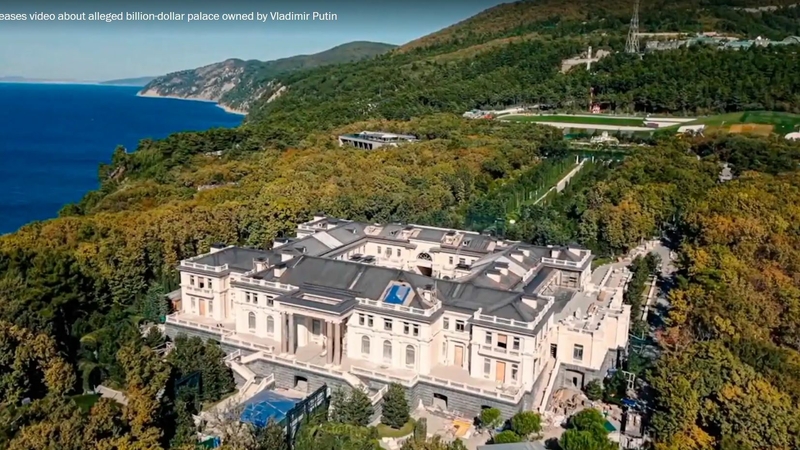
 President Donald Trump and First Lady Melania Trump wave as they board Air Force One at Joint Base Andrews in Suitland, Md., on January 20, 2021. MUST CREDIT: Photo for The Washington Post by Will Newton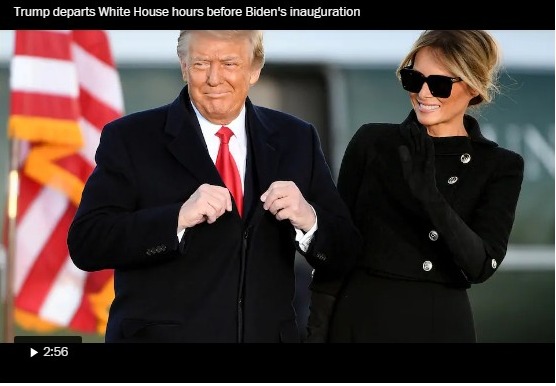
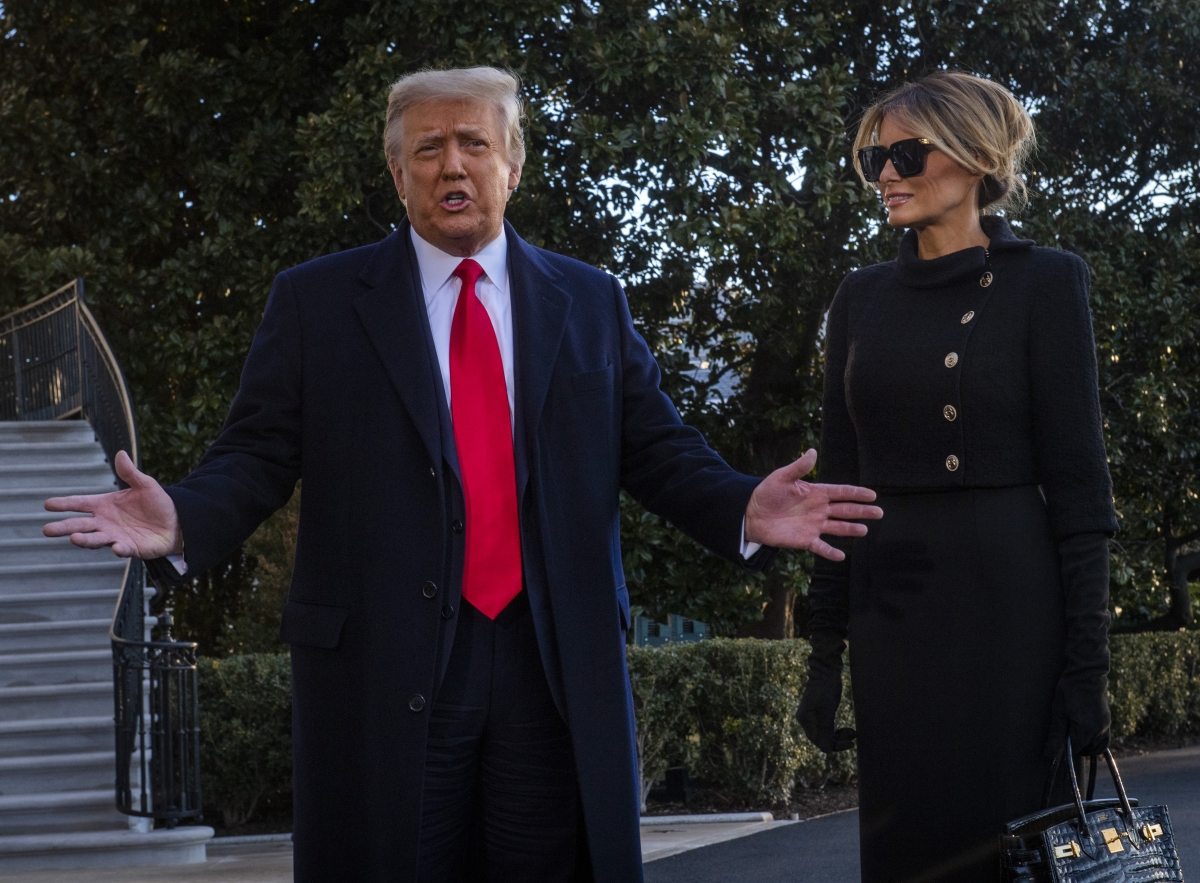
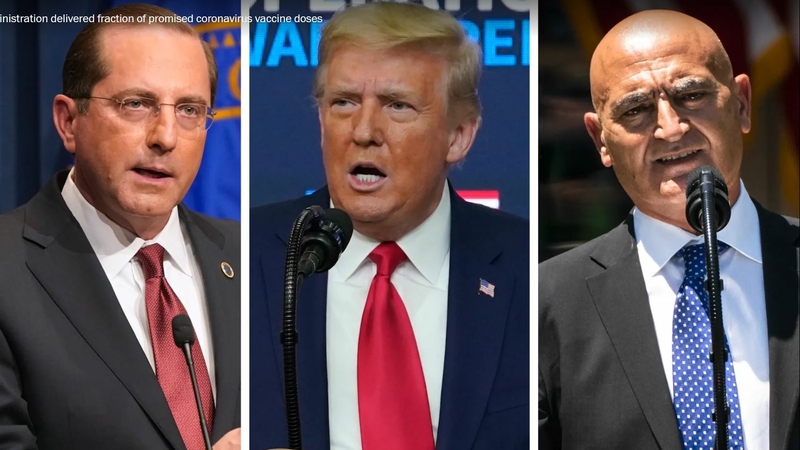
 On the eve of his inauguration, President Biden and first lady Dr. Jill Biden visited the covid-19 memorial at the reflecting pool. MUST CREDIT: Washington Post photo by Demetrius Freeman
 The sun sets over Bears Ears National Monument in Utah. MUST CREDIT: Washington Post photo by Katherine Frey.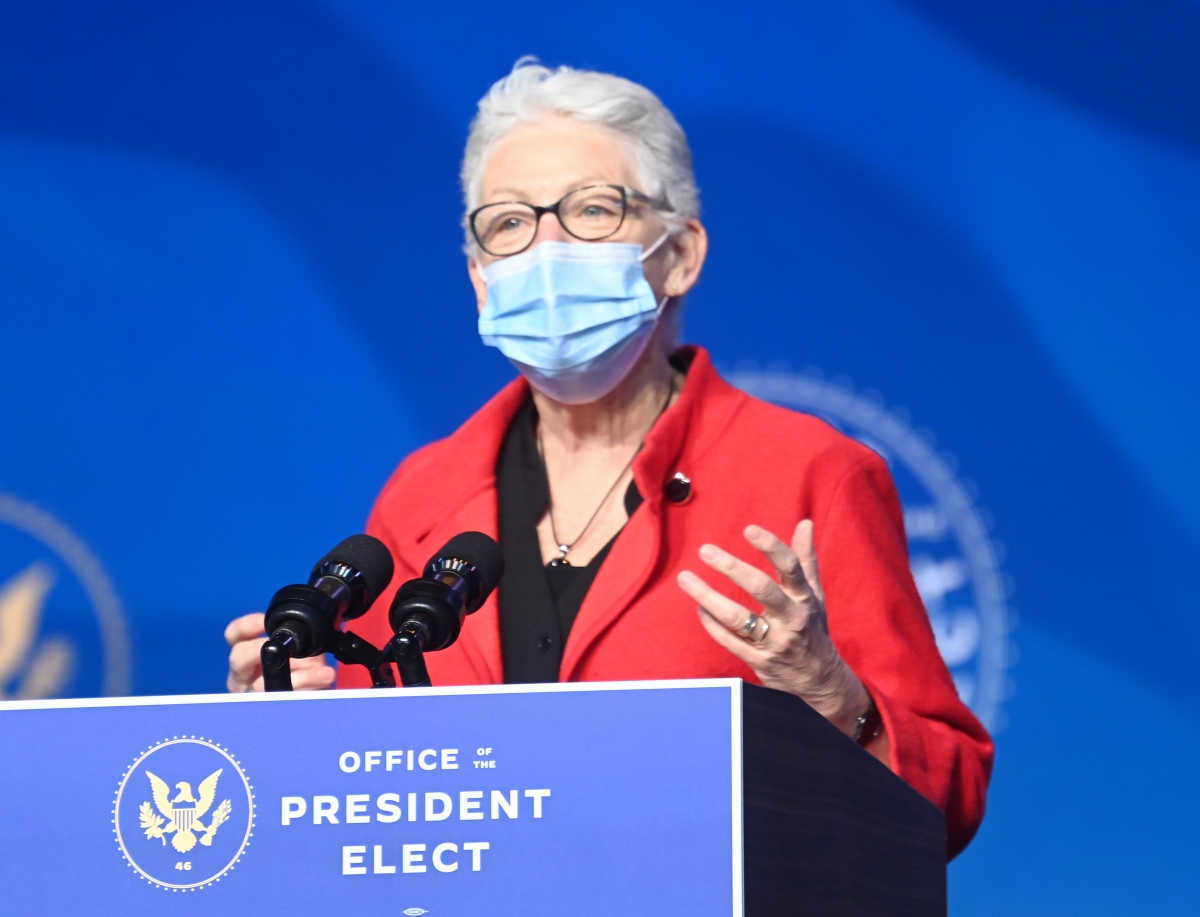
 President Joe Biden, Vice President Kamala Harris, and Maj. Gen Omar Jones, commanding general, Joint Task Force participate in a wreath-laying ceremony at the Tomb of the Unknowns on Wednesday, Jan. 20, 2021, in Arlington National Cemetery in Arlington, Va. MUST CREDIT: Washington Post photo by Katherine Frey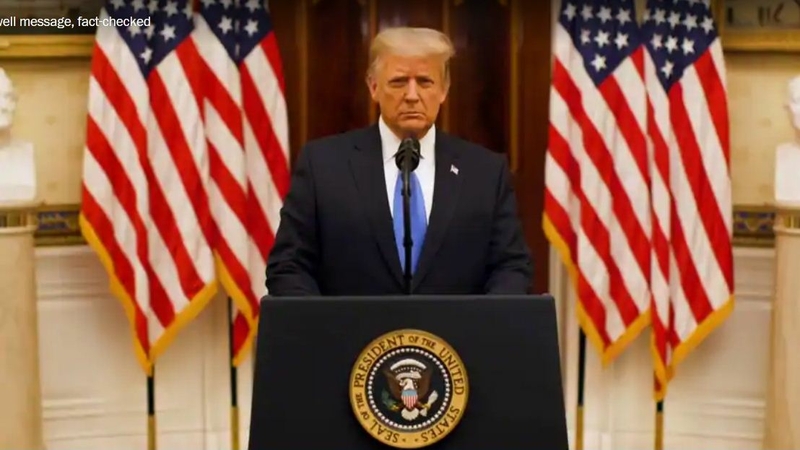
 SootinClaimon.Com