
Biden presides over memorial for 400,000 Americans who have died of covid-19 #SootinClaimon.Com

#SootinClaimon.Com : ขอบคุณแหล่งข้อมูล : หนังสือพิมพ์ The Nation.

Biden presides over memorial for 400,000 Americans who have died of covid-19

InternationalJan 20. 2021

By The Washington Post · Matt Viser, Annie Linskey

WASHINGTON – President-elect Joe Biden opened his inaugural commemorations Tuesday evening by honoring the 400,000 Americans who have died because of the coronavirus pandemic, marking the final hours before his swearing-in with a somber reminder of the struggles facing the nation he will lead Wednesday.

https://www.washingtonpost.com/video/c/embed/16b4ed5d-736d-4573-addd-cb8ce8e5a84b?ptvads=block&playthrough=false

Biden, returning to Washington for the first time since winning the election, presided over the first national mourning event amid the pandemic, and it set the tone for an inauguration that will be marked with more solemnity than jubilation.

Lanterns surrounding the Reflecting Pool next to the Lincoln Memorial shone to represent the dead, and buildings across the nation lit in a united effort to honor those lost. As the sun set with vibrant tangerine hues over a largely desolate, security-conscious downtown District of Columbia, Biden explicitly called on Americans to remember the victims and implicitly signaled the swift changes he would try to bring to the presidency.

Four years after President Donald Trump entered office talking about “American carnage” and insisting that “I alone can fix it,” Biden sought to project an optimism rooted in the possibilities of a country united and working together.

“Between sundown and dusk, let us shine the lights in the darkness,” Biden said in brief remarks that left the images to speak louder than his words. “To heal, we must remember. It’s hard sometimes to remember, but that’s how we heal. It’s important to do that as a nation. That’s why we’re here today.”

Earlier, a Michigan nurse, Lori Marie Key, sang “Amazing Grace,” and after Biden spoke, gospel singer Yolanda Adams performed “Hallelujah.”

As she did, Biden; his wife, Jill Biden; Vice President-elect Kamala Harris; and her husband, Doug Emhoff, turned to gaze across the darkened pool. In a space that is usually crowded with people for a pre-inaugural concert, the dominant image instead was one of a void framed by light.

The ceremony was meant as a demarcation between Biden’s presidency and the tenure of Trump, who has mostly ignored the swiftly rising coronavirus caseloads and death toll for months, after insisting during the campaign that the virus would soon disappear.

Biden and Harris have cited tackling the virus – by persuading more Americans to use preventive measures and by vaccinating millions vulnerable to it – and the parallel economic collapse as their top priorities when their administration takes power Wednesday.

Inauguration planners also organized other iconic buildings – including the Empire State Building in New York and the Space Needle in Seattle – to light up Tuesday night, and invited cities and towns across the country to join in the national moment of tribute.

“For many months, we have grieved by ourselves,” Harris said Tuesday night. “Tonight, we grieve and begin healing together.”

Biden’s appearance at the Reflecting Pool came hours after he offered an emotional farewell to his home state, weeping openly several times as he spoke in front of a bank of Delaware flags before boarding a flight to Washington for his swearing-in as president at noon Wednesday.

“I know these are dark times. But there’s always light,” Biden said from the Major Joseph R. “Beau” Biden III National Guard/Reserve Center at New Castle Airport, a venue named for his son, who died of brain cancer in 2015.

“You’ve been there for us in the good and the bad and never walked away,” Biden said, after calling out to several friends in the audience. “And I am proud, proud, proud, proud to be a son of Delaware.”

As Biden spoke, tears rolled down his face and he fought for control several times.

Paraphrasing an adage from Irish writer James Joyce, Biden said: “Excuse the emotion. But when I die, Delaware will be written on my heart.”

Biden said his only regret was that his eldest son, who had been the state’s attorney general and was looking toward a run for governor before his death, was not the one leaving for Washington to be sworn in as president. Biden’s two surviving children and six of his grandchildren accompanied him to Washington.

The emotion of the Reflecting Pool commemoration and Biden’s raw goodbye to Delaware matched the tumultuous moment in the country’s history as he prepares to take over as president.

More than 20,000 National Guard troops are billeted in the nation’s capital to keep peace during the inauguration. And less than two hours after he spoke, the nation passed the 400,000 mark in covid-19 deaths, as the coronavirus continues to spread across the nation amid a struggling effort to vaccinate the most vulnerable.

As a result, the events leading to the inauguration have been subdued rather than celebratory and festive.

Even before the riot by Trump supporters at the U.S. Capitol two weeks ago, many events associated with a transfer of power had been scaled back because of the virus.

On Inauguration Day, formal balls will be replaced with online events. The National Mall, where inaugural observers would have stood, was devoid of people, instead turned into an artistic canvas filled with hundreds of lights and tens of thousands of flags.

Additional security precautions, including scrapping a train ride Biden planned from Wilmington, Del., to Washington, were made in the days since a deadly mob stormed the Capitol directly after remarks at a rally by Trump.

After the memorial service on Tuesday night, Biden and his family went to Blair House, the official presidential guesthouse across the street from the White House. The White House had extended an invitation for Biden to use the property, but Biden’s aides over the past week had declined to say whether he would stay at the home, as every president-elect has done since Jimmy Carter.

Biden, who will be the nation’s second Catholic president after John F. Kennedy, is planning to attend Mass at St. Matthew’s Cathedral on Wednesday morning. He will be joined by a bipartisan group of congressional leaders.

For the first time in recent memory, the incoming and outgoing presidents are not expected to meet on Inauguration Day. Trump plans to depart the White House for Florida in the morning and will be the first outgoing president to boycott his successor’s inauguration since Andrew Johnson declined to attend President Ulysses S. Grant’s swearing-in in 1869.

Vice President Mike Pence, however, said Tuesday that he would attend Biden’s inauguration rather than Trump’s farewell ceremony at Joint Base Andrews in Maryland.

Biden’s speech on Wednesday is expected to run 20 to 30 minutes and will be “built around the theme of unity” and offer “a forward-looking vision for his presidency while addressing the moment we are living in as a country,” according to an aide who spoke on the condition of anonymity to discuss private planning.

The inauguration will close the most tumultuous transition in modern history, one that was marked by weeks of false accusations by Trump and other Republicans about the election results, which culminated two weeks ago with a pro-Trump mob storming the steps where Biden will take the oath of office.

Biden is planning an immediate burst of executive actions designed to undo a slew of measures carried out by Trump over the past four years. He is planning to immediately reenter the Paris climate accords and repeal the ban on U.S. entry for citizens of some majority-Muslim countries.

Biden is expected to sign an order extending nationwide restrictions on evictions and foreclosures and implement a mask-wearing mandate on federal property.

Biden’s team has circulated a top-line list of tentative executive orders that lawmakers should expect to be rolled out over each of the next seven days – an early look at policies and messages the new White House expects to press ahead on in its opening days.

They include directives in key areas in which Biden had promised action, including fighting the coronavirus, providing economic relief, requiring the federal government to procure American goods, forging racial equality, combating climate change, improving access to health care, overhauling the immigration system and restoring the country’s leadership abroad.

The list of Biden’s pending executive orders, confirmed by two people who have seen it and who spoke on the condition of anonymity because they were not authorized to discuss it publicly, gives a broad overview of what the incoming administration plans to do on its own – without Congress, if necessary – to address the immediate priorities.

The president-elect plans to issue administrative actions relating to the coronavirus on Thursday and economic relief on Friday. A “Buy American” action is slated for Monday, and an order addressing issues of racial equity is anticipated for Tuesday.

Biden plans to announce actions on climate change on Jan. 27, health care on Jan. 28, immigration on Jan. 29, and on Feb. 1, he is expected to take action on international affairs and national security.

Biden also plans to file on Wednesday a sweeping immigration bill, which includes an eight-year pathway to citizenship for immigrants without legal status and an expansion of refugee admissions. At the same time, he plans to press aggressively for a $1.9 trillion coronavirus relief package.

Biden’s final few days as a private citizen included a mix of family time and homages to his past and to the crises faced by the country.

The president-elect, Jill Biden and other family members packed canned goods and rice into boxes on Monday at Philabundance, Philadelphia’s largest hunger-relief program. It was part of a national day of service that kicked the inaugural festivities into high gear, and aides said more than 150 boxes of food were packaged.

On Sunday, his granddaughter Naomi posted a photo of Joe Biden with one of his dogs – an empty box and a framed photo propped on the floor in the background, nodding to the packing going on around them.

“This is kind of emotional for me,” Biden said in Delaware on Tuesday afternoon, addressing a small audience that included longtime friends and allies. “You’ve been with me my whole career – and through the good times and the bad.”

Biden recalled how his parents moved to the state from Pennsylvania under economic duress. He recounted standing on a train platform 12 years earlier, awaiting President-elect Barack Obama and speaking to his sons about the changes that had prompted the nation to elect the first Black president.

And now, he said, he was headed to Washington to meet up with Harris, who will be the first female, first Black and first Asian American vice president.

“I said, ‘Don’t tell me things can’t change. They can. And they do,’ ” Biden said. “That’s America. That’s Delaware. A place of hope and light and limitless possibilities.”

Europe sets sights on vaccinating 70% of adults by summer #SootinClaimon.Com

#SootinClaimon.Com : ขอบคุณแหล่งข้อมูล : หนังสือพิมพ์ The Nation.

Europe sets sights on vaccinating 70% of adults by summer

InternationalJan 20. 2021

By Syndication Washington Post, Bloomberg · Jonathan Stearns

The European Union will aim to vaccinate at least 70% of its adult population against the coronavirus by summer as the bloc grapples with new variants that threaten to trigger more social curbs and economic damage.

The European Commission’s covid-19 plan, first reported by Bloomberg on Monday, also urged national governments to vaccinate at least 80% of health workers and people over the age of 80 by March.

“Meeting these two targets would, in a first instance, reduce death and hospitalization rates, relieve pressure on healthcare systems and then put Europe on track for herd immunity, helping to protect those who cannot be vaccinated and providing a bulwark against the spread of the virus,” the Brussels-based commission said on Tuesday.

With the virus killing more than 400,000 people in the EU since the spring of 2020 and hobbling the European economy, the bloc is setting its hopes on vaccines from various drugmakers while urging stepped-up testing and tracing. The EU has approved two vaccines since mid-December and has six more in the pipeline.

“We are still far from overcoming this pandemic,” EU Health Commissioner Stella Kyriakides told the European Parliament. “But we have also turned a page and we begin 2021 with a powerful tool at hand to progressively put an end to this pandemic.”

While health policy is largely a national responsibility in the EU, the commission is pushing member countries to act in coordinated ways to tackle the coronavirus — including when it comes to the procurement of vaccines. The commission has secured around 2.3 billion vaccine doses for the bloc as a whole through advance purchase agreements.

So far, more than 13 million doses have been delivered to EU countries, the commission said on Tuesday. These are the vaccines from Pfizer Inc.-BioNTech SE, which have delivered 12.3 million doses to date, and from Moderna Inc., which has delivered 850,000 doses so far, according to the commission, which said more than 5 million vaccinations have been administered across the EU.

EU leaders are due to discuss the pandemic during a video conference on Thursday. After Pfizer triggered concerns last week about the pace of vaccine deliveries in Europe by announcing the renovation of a factory in Belgium, the commission stressed the need to bolster output in general.

“We will need to ramp up the supply of vaccines,” the commission said. “The commission and member states should work together with companies to ensure that new production comes on stream as quickly as possible.”

The commission also urged EU governments to do more to track virus mutations through genome sequencing, saying only one of them is testing more than 1% of samples and all others are either not sequencing enough or at all.

“The recent emergence of new variants of the virus is a real cause for concern,” the commission said. “All EU member states should reach a capacity of sequencing at least 5% — and preferably 10% — of positive test results.”

12 members of the National Guard removed from inauguration duty #SootinClaimon.Com

#SootinClaimon.Com : ขอบคุณแหล่งข้อมูล : หนังสือพิมพ์ The Nation.

12 members of the National Guard removed from inauguration duty

InternationalJan 20. 2021National Guard members patrol near the U.S. Capitol a day before the presidential inauguration. MUST CREDIT: Washington Post photo by Joshua LottNational Guard members patrol near the U.S. Capitol a day before the presidential inauguration. MUST CREDIT: Washington Post photo by Joshua Lott

By The Washington Post · Dan Lamothe, Paul Sonne, Alex Horton

A dozen members of the National Guard have been removed from inauguration duty as the federal government screens troops involved for security concerns, senior U.S. defense officials said Tuesday, one day before President-elect Joe Biden is set to take over as commander in chief.

The service members include at least two with possible sympathies for anti-government groups, said two U.S. officials, speaking on the condition of anonymity because of the sensitivity of the issue. Another 10 were removed for other reasons that defense officials declined to detail, but said it does have to do with extremism.

“These are vetting efforts that identify any questionable behavior in the past, or any potential link to questionable behavior not related to extremism,” said Jonathan Rath Hoffman, the chief Pentagon spokesman. He said that defense officials are not asking questions right now, and proactively removing people “out of an abundance of caution.”

Army Gen. Daniel Hokanson, the chief of the National Guard Bureau, declined to provide specifics about the two service members alleged to have expressed common cause with anti-government groups, but said they made “inappropriate comments.” One of those individuals was flagged for concern within his unit, while the other was reported to authorities, defense officials said.

The 12 service members removed represent a fraction of 1 percent of the 25,000 members of the National Guard deployed in Washington for the inauguration following the Jan. 6 assault on the U.S. Capitol by a mob that sought to stop the certification of Biden as the next president. The group, supporting President Donald Trump, smashed its way into Congress in an attack that led to the death of five people, including a police officer.

Democratic lawmakers sought vetting of National Guard members deployed for the inauguration afterward, citing the arrest of numerous veterans in the mob. The names of guardsmen supporting the inauguration were then sent to the FBI for vetting.

Army Gen. Daniel Hokanson, the chief of the National Guard Bureau, said that some of the guardsmen who have been flagged will be pulled “off the line” where guardsmen have formed a security perimeter around the Capitol, White House and other federal buildings. He said he is “not concerned” that a large part of the National Guard has security concerns, citing the small percentage who were removed after screening.

“Let me be clear: Extremism is not tolerated in any branch of the United States military,” Hokanson said. “If there are reported issues, our leaders will address them immediately and in accordance with established department policies and in coordination with law enforcement.”

The Pentagon on Tuesday referred questions about the guardsmen who have been removed to the Secret Service, which in turn said that any questions about National Guard personnel should be directed to the Defense Department.

“In order to maintain critical operational security surrounding the 59th Presidential Inauguration, the U.S. Secret Service and our law enforcement partners will not be commenting on the means and methods used to conduct the agency mission, inclusive of protective intelligence matters,” the Secret Service said in a statement. “Any questions specific to National Guard Bureau personnel should be directed to the Defense Department and the National Guard Bureau.”

The Associated Press first reported that some guardsmen would be removed from inauguration duty.

Not all of the Guardsmen being removed from inauguration duty necessarily have far-right militia ties; in some cases the military is removing individuals flagged by the FBI without knowing the reason they were flagged out of an abundance of caution, according to one official.

Guardsmen closer to the inner workings of the inauguration, like those overseeing access points, may receive higher levels of screening, said Michael Taheri, a retired Air Force major general and former director of staff for the National Guard Bureau.

Background checks for service members have broadened in recent years to include social media activity and more frequent monitoring, Taheri said, mirroring how private companies comb online behavior for prospective hires.

“My guess is there is a lot of open stuff out there,” he said.

About 25,000 guardsmen are expected to serve in the inauguration, following the deadly attack on the U.S. Capitol on Jan. 6 by a mob that sought to stop the certification of Biden as the victor in the election over Trump. Democratic lawmakers have sought the vetting as a precaution following the arrest of several veterans and at least two current service members in the group.

Among the service members arrested are a current Virginia National Guard member who previously served in the Marine Corps and an Army reservist, according to court documents and defense officials.

Biden’s nominee for national intelligence chief faces questions on China, domestic extremism #SootinClaimon.Com

#SootinClaimon.Com : ขอบคุณแหล่งข้อมูล : หนังสือพิมพ์ The Nation.

Biden’s nominee for national intelligence chief faces questions on China, domestic extremism

InternationalJan 20. 2021Avril Haines appears before the Senate Intelligence Committee during a hearing about her nomination to be director of national security on Tuesday, Jan. 19, 2021. MUST CREDIT: Washington Post photo by Melina MaraAvril Haines appears before the Senate Intelligence Committee during a hearing about her nomination to be director of national security on Tuesday, Jan. 19, 2021. MUST CREDIT: Washington Post photo by Melina Mara

By The Washington Post · Shane Harris, Ellen Nakashima

WASHINGTON – Avril Haines, President-elect Joe Biden’s nominee for director of national intelligence, took questions from senators Tuesday in a confirmation hearing that was notably free of the partisan rancor that has characterized so many oversight sessions during the Trump administration.

Discussion about China dominated much of the hearing, one of the rare issues that has attracted a bipartisan consensus for action on Capitol Hill in recent years. Senators pressed Haines on how she planed to counteract that country’s aggressive espionage operations targeting U.S. companies.

Sen. Mark Warner, D-Va., the committee’s incoming chairman and a former telecommunications executive, noted how his own views toward Beijing have hardened over the years, and he asked Haines to say whether China, under Communist Party rule, was an adversary of the United States.

She gave a measured answer.

“China is adversarial and an adversary on some issues,” Haines said, “and on other issues, we try to cooperate with them.” She noted that climate change is one area where the United States has sought Beijing’s cooperation.

But, she said, “that does not mitigate the fact that in espionage and other ways, they are an adversary,” and the intelligence community has to work to counter its “aggressive and unfair actions in these spaces.”

Sen. Ben Sasse, R-Neb., criticized the intelligence community for, in his eyes, being “way too slow to pivot to the primary focus we need to have on China,” including not having enough Mandarin-speaking analysts, and he solicited from Haines a commitment to address the issue. She said she recognized that “China is focused on a very long-term horizon, where the United States frequently is not.”

Haines took firmer positions on other policies. Revisiting one of the intelligence community’s darkest chapters, she unequivocally described waterboarding as “torture” and said that even if such interrogation techniques elicited useful and accurate information, she would never authorize their use.

“I believe that waterboarding is, in fact, torture – constitutes torture under the law,” said Haines, a lawyer who was deputy CIA director during the Obama administration. “And I believe all of those techniques that involve cruel, inhuman, degrading treatment are unlawful.”

Several senators also asked Haines what role the intelligence agencies should play in preventing political violence and the rise in domestic extremism that was laid bare in the Jan. 6 attack on the Capitol by supporters of President Donald Trump and has led to an unprecedented level of security to protect Wednesday’s inauguration ceremony.

Haines emphasized that by law, the intelligence agencies address foreign threats and that the FBI and the Homeland Security Department would take the lead on domestic ones. But she noted that to the extent that U.S. groups have connections with foreign extremists, the intelligence agencies would support the work of law enforcement and security agencies.

Sen. Jack Reed, D-R.I., incoming chairman of the Armed Services Committee, raised the issue of the recent Russian hacks of U.S. government agencies and private-sector computer networks, calling it “one of the most significant events that [has] transpired in recent months.” He expressed dismay that the breaches went undetected for many months and that it was a private cybersecurity firm – not U.S. intelligence agencies – that discovered them.

Haines agreed. “It was pretty alarming that we found out about it through a private company rather than finding out about it ourselves,” she said.

She told Reed that “this is a major concern,” but she deferred on offering an opinion on how significant the operation was, saying she had not “had a full classified briefing” on the matter.

U.S. officials have said that the hack probably was perpetrated by Russian intelligence operatives, and that they have debated whether to characterize it as an act of espionage or warfare. Haines offered no solid proposals on how to counter foreign intrusions. But she said she favored a strategy of deterring adversaries by imposing sanctions and using criminal indictments.

Haines said it was possible to promote norms of acceptable behavior among nations in cyberspace without a treaty, something the United States has long resisted because it also attacks foreign computer networks to steal information and disable infrastructure.

Warner said it was Haines’s job to help the intelligence agencies recover from a period of intense politicization. For years, Trump has derided the CIA and other agencies as dens of conspirators trying to undermine his presidency by fabricating a “hoax” that Russia tried to help him win the White House. His administration declassified intelligence about Russia’s interference in the 2016 election that some officials said could compromise U.S. intelligence sources.

“Our intelligence professionals have been unfairly maligned; their expertise, knowledge and analysis has often been ignored and ridiculed by a president uninterested in facts contradicting his political interests,” Warner said.

Haines committed to “safeguard the integrity” of the intelligence community and to ensure that its work was free from political influence.

“When it comes to intelligence, there is simply no place for politics – ever,” she said.

If confirmed, Haines would make history as the first woman to serve as the director of national intelligence.

Gina Haspel, the first woman to run the CIA, the most influential of all the spy agencies, is retiring after 36 years serving as an intelligence officer, the agency announced Tuesday on Twitter.

Biden has nominated William Burns, a career diplomat, to succeed her.

Biden bids an emotional farewell to Delaware as he heads to Washington #SootinClaimon.Com

#SootinClaimon.Com : ขอบคุณแหล่งข้อมูล : หนังสือพิมพ์ The Nation.

Biden bids an emotional farewell to Delaware as he heads to Washington

InternationalJan 20. 2021President-elect Joe Biden during a sending-off event in Wilmington, Del., on Jan. 19. MUST CREDIT: Washington Post photo by Demetrius Freeman.President-elect Joe Biden during a sending-off event in Wilmington, Del., on Jan. 19. MUST CREDIT: Washington Post photo by Demetrius Freeman.
By The Washington Post · Matt Viser, Annie Linskey

WILMINGTON, Del. – President-elect Joe Biden offered an emotional farewell to his home state Tuesday, weeping openly several times as he spoke in front of a bank of Delaware flags before boarding a flight to Washington for his swearing-in as president at noon Wednesday.

“I know these are dark times. But there’s always light,” Biden said from the Major Joseph R. “Beau” Biden III National Guard/Reserve Center at the New Castle Airport, a venue named after his son, who died of brain cancer in 2015.

“You’ve been there for us in the good and the bad and never walked away,” Biden said, after calling out to several friends in the audience. “And I am proud, proud, proud, proud to be a son of Delaware.”

As Biden spoke, tears rolled down his face, and he fought for control several times.

Paraphrasing an adage from Irish writer James Joyce, Biden said: “Excuse the emotion. But when I die, Delaware will be written on my heart.”

Biden said his only regret was that his eldest son, who had been the state’s attorney general and was looking toward a run for governor before his death, was not the one leaving for Washington to be sworn in as president. Biden’s plane arrived at Joint Base Andrews two hours later.

Biden’s raw goodbye matched the tumultuous moment in the country’s history as he prepares to take over as president.

More than 20,000 troops are billeted in the nation’s capital to keep peace during Biden’s inauguration. And roughly 400,000 Americans have died from covid-19, which is spreading across the nation amid a struggling effort to vaccinate the most vulnerable.

As a result, the events leading up to the inauguration will be subdued rather than celebratory and festive.

Even before the Capitol riot two weeks ago, many events associated with a transfer of power had already been scaled back due to the virus. Biden’s first event in Washington, on Tuesday evening, will be a commemoration of those who have died in the pandemic; lights will shine from the Reflecting Pool before the Lincoln Memorial and on buildings throughout the country.

On Inauguration Day, the National Mall will be filled with flags instead of people. White-tie balls will be replaced with online events.

Additional security precautions were made in the days since President Donald Trump incited a deadly mob to storm the Capitol, including scrapping a train ride Biden planned from Wilmington to Washington.

Still, Biden’s team was busy planning for the next few days and circulated a top-line list of tentative executive orders that lawmakers should expect to be rolled out over each of the next seven days – an early look at policies and messages the new White House expects to drive in its opening days.

They include directives in key areas where Biden had promised action, including fighting the coronavirus, providing economic relief, requiring the federal government to procure American goods, forging racial equality, combating climate change, improving access to health care, overhauling the immigration system and restoring the country’s leadership abroad.

The list of Biden’s pending executive orders, confirmed by two people who have seen it, gives a broad overview of what the incoming administration plans to do on its own – without Congress if necessary – to address the immediate priorities.

The president-elect plans to issue administrative actions relating to the coronavirus on Thursday and economic relief on Friday. A “Buy American” action will come on Monday, and an order addressing racial equity issues will follow on Tuesday.

Biden will announce actions on climate change on Jan. 27, health care on Jan. 28, immigration on Jan. 29, and on Feb. 1, he will take action on international affairs and national security.

Biden’s final few days as a private citizen included a mix of family time and homages to his past and to the crises faced by the country.

The president-elect; his wife, Jill; and other family members packed canned goods and rice into boxes on Monday at Philabundance, Philadelphia’s largest hunger-relief program. It was part of a national day of service that kicked the inaugural festivities into high gear, and aides said more than 150 boxes of food were packaged.

On Sunday, his granddaughter Naomi posted a photo of Biden with one of his dogs – an empty box and framed photos propped on the floor in the background, nodding to the packing going on around them.

“This is kind of emotional for me,” Biden told the crowd in Delaware on Tuesday afternoon to an small audience that included longtime friends and allies. “You’ve been with me my whole career – and through the good times and the bad.”

Biden recalled how his parents moved to the state from Pennsylvania under economic duress. He recounted standing on a train platform 12 years earlier, awaiting then-President-elect Barack Obama and speaking to his sons about the changes that had prompted the nation to elect the first Black president.

And now, he said, he was headed to Washington to meet up with Kamala Harris, who will be the first female, first Black and first Asian American vice president.

“I said, ‘Don’t tell me things can’t change. They can,’ ” Biden said. “And they do. That’s America. That’s Delaware. A place of hope, life and limitless possibilities.”

At the 11th hour, Trump administration declares China’s treatment of Muslims in Xinjiang ‘genocide’ #SootinClaimon.Com

#SootinClaimon.Com : ขอบคุณแหล่งข้อมูล : หนังสือพิมพ์ The Nation.

At the 11th hour, Trump administration declares China’s treatment of Muslims in Xinjiang ‘genocide’

InternationalJan 20. 2021

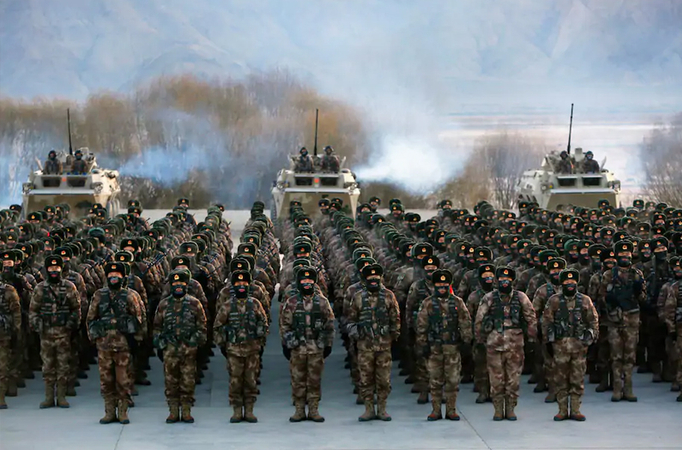
Chinese soldiers train in northwestern China's Xinjiang Uighur Autonomous Region on Jan. 4. (AP)

Chinese soldiers train in northwestern China’s Xinjiang Uighur Autonomous Region on Jan. 4. (AP)

By The Washington Post · John Hudson

On his last full day in office, Secretary of State Mike Pompeo declared that China had committed “genocide” and “crimes against humanity” through a campaign of internment, forced labor and forced sterilization of predominantly Muslim Uighurs in the Xinjiang region.

In an embarrassing blow to Beijing, Pompeo said Tuesday that the United States has documented a dramatic escalation in China’s “decades-long” campaign of repression against Uighurs and other ethnic and religious minorities since at least March 2017.

The “morally repugnant, wholesale policies, practices, and abuses are designed systematically to discriminate against and surveil ethnic [Uighurs] as a unique demographic and ethnic group, restrict their freedom to travel, emigrate, and attend schools, and deny other basic human rights of assembly, speech, and worship,” Pompeo said in a statement.

The 11th-hour determination means that the incoming Biden administration will largely have to deal with the diplomatic blowback from the decision, not the Trump administration. China denies accusations of mistreatment.

The determination does not force immediate sanctions or other penalties on China, but it may have implications for whether companies decide to do business in Xinjiang, which is a major supplier of cotton around the world.

The move is likely to put further strain on the world’s two largest economies, whose relations plunged to their lowest depths during the Trump administration.

Pompeo has hailed the Trump administration as a truth-teller on U.S.-China relations and said that it came to this determination not because of “domestic political concern” but because “it is right.”

President Donald Trump’s former national security adviser John Bolton, however, said Trump expressed approval for China’s use of Uighur concentration camps in Xinjiang during a meeting with Chinese President Xi Jinping.

“Trump said that Xi should go ahead with building the camps, which Trump thought was exactly the right thing to do,” Bolton wrote in his memoir “The Room Where It Happened.” The administration has denied this account.

The State Department decision follows the passage of legislation by Congress on Dec. 27 requiring the United States to make a finding within 90 days about whether China’s practices in Xinjiang constitute crimes against humanity or genocide.

“It’s an indication of serious concern, but that it’s coming literally less than 24 hours to go in this administration – so that in some ways undermines that message,” said Sophie Richardson, a specialist on China issues at Human Rights Watch.

Merkel strikes deal to extend and tighten German virus curbs #SootinClaimon.Com

#SootinClaimon.Com : ขอบคุณแหล่งข้อมูล : หนังสือพิมพ์ The Nation.

Merkel strikes deal to extend and tighten German virus curbs

InternationalJan 20. 2021

By Syndication Washington Post, Bloomberg · Arne Delfs, Raymond Colitt

Chancellor Angela Merkel and regional leaders agreed to extend and tighten Germany’s coronavirus restrictions as they step up efforts to check the stubborn spread of the disease.

On a video call Tuesday, Merkel and the premiers of the 16 states decided to prolong lockdown rules — which include closing schools and nonessential stores — until mid-February, according to a person familiar with the agreement, who asked not to be identified discussing confidential information.

They also moved to limit private meetings to only one other person, make medical face masks obligatory on public transport and agreed to intensify pressure on companies to allow employees to work from home where possible, another person familiar with the talks said. The call was brought forward by almost a week due to concern faster-spreading variants of the disease could establish themselves in Europe’s biggest economy.

Authorities were under pressure to act with the contagion rate still nearly triple a government target, despite increasingly stringent curbs — including tighter limits on private gatherings and movement restrictions in hard-hit areas. The country has had 2.05 million covid-19 cases and nearly 48,000 deaths.

While infections have been receding in recent days, Merkel has warned that the new mutations could cause a surge like in Britain and Ireland.

Some of the regional leaders — who are responsible for health policy under Germany’s federal system — were pushing back against Merkel’s bid to prolong school closures, and a final decision on the issue had yet to be made, Der Spiegel magazine reported earlier, without identifying the source of its information.

Tuesday’s talks marked the first since Armin Laschet — the premier of North Rhine-Westphalia — was elected head of Merkel’s Christian Democrats. He’ll compete with Markus Soeder — his Bavarian counterpart from the CSU sister party — for the right to be the conservative bloc’s chancellor candidate in September elections.

Ahead of the tighter measures, Merkel’s administration expanded aid to affected companies with additional support totaling at least $12 billion (10 billion euros) in the coming weeks. That includes bridge financing of as much as 1.5 million euros a month and writing off unsold winter goods.

“We have the strength to continue taking massive action to offset the coronavirus crisis, and we will do exactly that,” Finance Minister Olaf Scholz said Tuesday in Berlin. “We will continue to do everything to support companies and workers, and protect health.”

Extended lockdowns are likely to cause German output to shrink in the first three months of 2021, with Bloomberg Economics forecasting a 3% contraction before a rebound starts in the second quarter.

Germany risks severe economic consequences if it fails to contain the pandemic, with companies carrying too much debt and cash reserves exhausted, according to one of the country’s leading economists.

“I’m afraid we’re too optimistic about getting out of this crisis quickly,” said Marcel Fratzscher, president of the German Institute for Economic Research, or DIW.

The country has still fared relatively well compared with its European peers, mainly due to the extensive fiscal support and a large manufacturing sector that is less exposed to restrictions than shops and restaurants. Investors grew more confident, with ZEW’s gauge of expectations for the next six months rising to 61.8 in January from 55.0 a month earlier.

Europe has emerged as a global hot spot for the virus, with more than 401,000 fatalities and nearly 17 million infections. The European Union is urging member states to do more to track dangerous virus mutations with genome sequencing. Only one is testing more than 1% of samples, while some others aren’t sequencing at all.

Janet Yellen faces critical choice for global economy, poor nations rocked by coronavirus #SootinClaimon.Com

#SootinClaimon.Com : ขอบคุณแหล่งข้อมูล : หนังสือพิมพ์ The Nation.

Janet Yellen faces critical choice for global economy, poor nations rocked by coronavirus

InternationalJan 20. 2021Janet Yellen, President- elect Joe Biden's pick to be Treasury Secretary, speaks in Wilmington, Del., on Dec. 1, 2020. MUST CREDIT: Washington Post photo by Demetrius FreemanJanet Yellen, President- elect Joe Biden’s pick to be Treasury Secretary, speaks in Wilmington, Del., on Dec. 1, 2020. MUST CREDIT: Washington Post photo by Demetrius Freeman
By The Washington Post · Jeff Stein, David J. Lynch

WASHINGTON – An International Monetary Fund proposal to approve emergency financial backing for nations reeling from the devastating economic impact of the coronavirus has the support of the overwhelming majority of its 189 member countries.

But for months, the initiative has been blocked almost single-handedly by the Trump administration, which has used effective U.S. veto power over IMF decisions to reject theinternational consensus.

The fate of the additional IMF aid will soon fall in large part to incoming treasury secretary Janet Yellen, the former chairwoman of the Federal Reserve.

Even as she confronts daunting domestic economic needs, Yellen will face an early foreign policy test in the battle over the IMF’s special drawing rights or “SDRs.” Established as an international reserve asset in 1969, the SDRs can be converted into one of five major currencies, including the dollar or Japanese yen. The IMF can dramatically increase the amount of SDRs in circulation at no cost to U.S. taxpayers, economists say, allowing countries to stabilize their financial reserves and prevent capital flight.

The proposed increase in the IMF’s crisis war chest is backed by American farmers and manufacturers hoping to revive their overseas markets, as well as global antipoverty advocates such as Oxfam and the International Rescue Committee. Larry Summers, a former Treasury Secretary, calls the move a “no brainer.”

Yet Yellen has seemed skeptical, echoing in the past objections to the plan raised by her predecessor, Treasury Secretary Steven Mnuchin.

“A large share of the money goes to developed countries like the United States. It’s unclear that this strategy would provide sufficient funds to stressed emerging markets,” Yellen said in an interview with the Brookings Institution in April.

Mnuchin had raised similar concerns, saying last year that 70 percent of an SDR increase would go to members of the Group of 20 nations, which don’t need the help. Only 3 percent would reach low-income countries, he said.

Mnuchin also told reporters last month that approving additional special drawing rights would effectively turn the IMF into “the equivalent of a central bank” by having it serve as a source of global emergency liquidity.

Some Democrats on Capitol Hill may seek to force Yellen’s hand. Sens. Dick Durbin, D-Ill., the No. 2 Senate Democrat, and Bernie Sanders, I-Vt., have pushed legislation to increase the amount of SDRs in circulation by 2 trillion or roughly $2.9 trillion. Durbin, Sanders and incoming Senate Finance Committee chair Ron Wyden, D-Ore., are circulating a letter to Yellen urging her support for swift passage of their proposal, saying it would help “solve the urgent crises of poverty, hunger and disease being experienced by hundreds of millions of people worldwide.” That effort has been approved by the House but stalled amid Republican opposition in the Senate.

Yellen could unilaterally approve U.S. support for the IMF issuing additional SDRs of about $650 billion, although she would have to give Congress 90 days notice before doing so, according to Mark Weisbrot, an economist at the Center for Economic and Policy Research, a left-leaning think tank.

A Biden transition spokesman did not respond to a request for comment.

Additional IMF aid could help some of those suffering the most from the pandemic and its economic consequences.

UNICEF estimates that 2 million children under five years of age could die this year due to a lack of health care and nutrition, with more than 140 million children being added to the ranks of the global poor due to economic deterioration caused by covid-19. World Food Programme director David Beasley recently said in the Guardian: “We are losing the battle against hunger as never before.” Concerns have also emerged about poor countries’ ability to pay for the coronavirus vaccine.

IMF Managing Director Kristalina Georgieva told reporters earlier this month that she plans to immediately start working with the incoming Biden administration on SDRs, touting them as “one of the instruments” for shoring up developing economies.

“It would avoid an enormous amount of suffering around the world and redound to the benefit of the United States,” said Joseph Stiglitz, a Nobel Prize winning economist at Columbia University who mentored Yellen and remains a friend. Stiglitz said there is no good economic rationale against a dramatic increase in SDRs. “There’s a very broad consensus among economists that this is a good thing to do.”

Summers, who also served as chief economist at the World Bank, added that dramatically expanding SDRs would “require no U.S. budget cost” and is more urgent now given the spread of mutations of the coronavirus.

“This is a place where the new Biden administration needs to step up on behalf of American humanitarian values and economic common sense,” added Gene Sperling, an economist who advised Biden during the presidential campaign and served as a top economic adviser to President Clinton. “This is the least we should do.”

The dispute over IMF credit facilities illustrates the complex global agenda that awaits Yellen, if she is confirmed, as expected. Yellen weathered her first Senate committee confirmation hearing on Tuesday.

The former Federal Reserve chief is best known for her views on issues of domestic economic policy, ranging from deficit spending to wealth inequality. But her portfolio at the Treasury Department will also include enormous powers that could shape the global economy, including the ability to impose sanctions on nations that choke them off from international markets and bludgeon their economies.

“Quite possibly the most important decisions Treasury Secretary Yellen can really make will be in the international arena, where there has been an incredible vacuum of U.S. leadership,” said Summers, who served as treasury secretary during the Clinton administration.

SDRs are only one part of Yellen’s international portfolio. She and her deputy, Adewale “Wally” Adeyemo, also will be kept busy managing the active global sanctions agenda they will inherit from the Trump administration.

From his first days in office, President Donald Trump’s enthusiasm for unilateral presidential power drew him to economic sanctions, which offer a middle ground between diplomacy and military force. In February 2017, the new president responded to an Iranian missile test by slapping sanctions on 25 companies and individuals involved in the military program.

Ever since, sanctions have been the administration’s preferred tool in disputes with both adversaries such as China, Russia, and Venezuela, and allies such as Turkey. Trump has resorted to sanctions nearly twice as often as his predecessors, according to statistics compiled by Adam Smith, a partner at Gibson Dunn.

Trump has added an average of more than 1,000 individuals or companies to the government’s sanction list each year, blocking any assets held by U.S. financial institutions and barring any American person or company from doing business with them. The comparable figures for Presidents Barack Obama and George W. Bush are 533 and 435, respectively.

Treasury’s list of “Specially Designated Nationals and Blocked Persons” fills a 1,528-page online report.

“There’s been a steady increase since 2001. But Trump has taken it to new levels,” said Smith, a senior sanctions adviser at Treasury during the Obama administration.

Those figures probably understate recent U.S. activism. They don’t take into consideration that Trump targeted more large foreign companies than his predecessors and they exclude export controls, Smith said.

By contrast, Biden is likely to seek allied agreement whenever possible before imposing new financial restrictions. Sen. Maria Cantwell, D-Wash., told Yellen to be “aggressive” in the administration’s use of sanctions policy during the Senate finance committee hearing on Tuesday. Yellen responded by saying she would be tasking Adeyemo with a review of U.S. sanctions policy to ensure their efficacy.

“You can be sure I will be focused on making sure they’re used strategically and appropriately,” Yellen said of sanctions.

Yellen won’t be the only Cabinet officer to grapple with key sanctions decisions in the administration’s early months. More than a dozen federal agencies play an active role in sanctions implementation or enforcement, according to a 2020 General Accounting Office analysis. Last week, the Commerce Department added several companies, including China’s state-owned oil exploration company, China National Offshore Oil Corporation (CNOOC), to an export blacklist barring it from U.S. suppliers. More than a dozen federal agencies play a role in sanctions implementation or enforcement, according to a 2020 Government Accountability Office analysis. So for many of the most consequential measures, she will be one of several players in an interagency debate.

Commerce has made frequent use of its power over U.S. exports in service of Trump’s foreign policy goals.

But the details of implementing that ban, which only applies to CNOOC activities in the disputed South China Sea, will be left to the Biden team. Commerce also is leaving unfinished proposed regulations designed to largely prevent information technology gear from six countries – China, Russia, Iran, North Korea, Cuba and the Venezuelan government of Nicolas Maduro – from being used in U.S. communications networks.

The department must provide 60 days for public comments on the proposed restriction, meaning its ultimate fate rests with Biden’s commerce secretary-designate Gina Raimondo.

Yellen also will be drawn into some of the administration’s core foreign policy debates, including how to lure Iran back to the negotiating table. U.S. officials credited tough sanctions for getting Tehran to agree to the 2015 nuclear deal.

Trump quit the deal three years later, preferring to tighten the screws on Tehran in hopes of securing a more comprehensive settlement.

On Friday, Secretary of State Mike Pompeo announced new sanctions on the Islamic Republic of Iran Shipping Lines, its CEO and several companies that shipped steel to Iran via the Iranian shipping company.

“It’s just become so messy. There are so many cooks in this kitchen,” said Smith.

Treasury’s Office of Foreign Asset Control (OFAC) has struggled to keep pace with the rising workload. Though Congress has agreed to fund a larger staff, the department has had trouble competing with the private sector and other government agencies for talent. In fiscal 2020, 21 percent of OFAC’s 259 authorized staff positions were vacant, GAO said.

The proliferation of U.S. sanctions have imposed costs on global businesses, sparking grumbling from some foreign executives and government officials. In a 2016 speech, Treasury Secretary Jack Lew in a 2016 speech warned that Washington risked driving companies away from the U.S. financial system if it overdid the use of sanctions.

“Sanctions should not be used lightly. They can strain diplomatic relationships, introduce instability into the global economy, and impose real costs on companies here and abroad,” Lew said.

Brexit finance shift to France to accelerate, central bank says #SootinClaimon.Com

#SootinClaimon.Com : ขอบคุณแหล่งข้อมูล : หนังสือพิมพ์ The Nation.

Brexit finance shift to France to accelerate, central bank says

InternationalJan 20. 2021

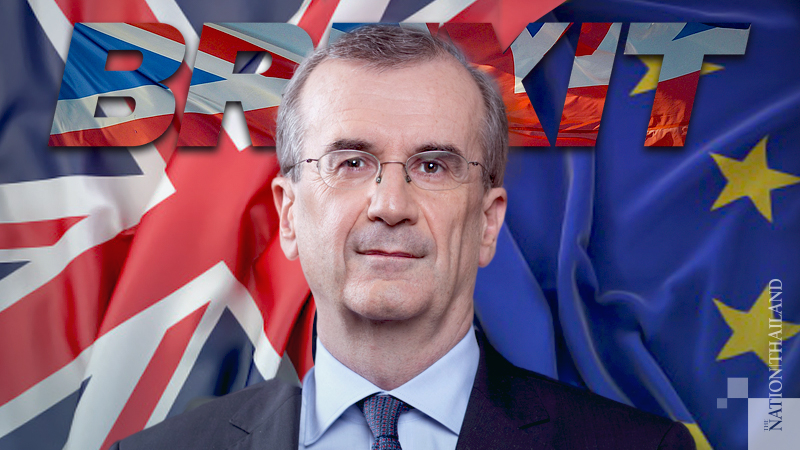
Bank of France Governor Francois Villeroy de Galhau

Bank of France Governor Francois Villeroy de Galhau

By Syndication Washington Post, Bloomberg · Alexandre Rajbhandari, William Horobin

The shift of jobs and assets to Paris after Brexit will accelerate this year, providing Europe with an opportunity to strengthen its own financial infrastructure, according to Bank of France Governor Francois Villeroy de Galhau.

Financial institutions had transferred about 2,500 jobs and $206 billion (170 billion euros) worth of assets to France as of the end of 2020, with further relocations expected, Villeroy de Galhau said in an online speech on Tuesday.

The protracted departure of the U.K. from the European Union has triggered a tide of businesses moving from London to the continent’s main financial hubs, he said. In 2019, The European Central Bank estimated that 24 banks will settle in the bloc and a total of 1.3 trillion euros in assets will eventually move from London to the euro area.

European countries have been promoting their own financial centers to attract businesses leaving London. Germany’s Bundesbank said 400 billion euros in assets have been transferred to the country as of the end of 2020, a figure that is set to increase after Morgan Stanley shifts 100 billion euros over the coming months.

Villeroy de Galhau said the U.K.’s departure and post-pandemic recovery plans provide an opportunity for the EU to strengthen its own market structures to ensure its financial autonomy. In particular, the bloc should reinforce capabilities for clearing, an area long dominated by London. The economic recovery from the pandemic also a chance to improve the existing financial system, he said.

“It is now or never that we should seize the double opportunity of Brexit and the reconstruction to make a capital markets union,” Villeroy said.

Villeroy welcomed the ECB’s decision to allow banks to partially resume dividend payments, but said it’s only a very cautious first step that will allow them to attract investors and raise capital. The low returns on equity among French banks, roughly half the level of their U.S. counterparts, remains a challenge for the sector, he said.

Fire at homeless encampment interrupts inauguration rehearsal at U.S. Capitol #SootinClaimon.Com

#SootinClaimon.Com : ขอบคุณแหล่งข้อมูล : หนังสือพิมพ์ The Nation.

Fire at homeless encampment interrupts inauguration rehearsal at U.S. Capitol

InternationalJan 19. 2021

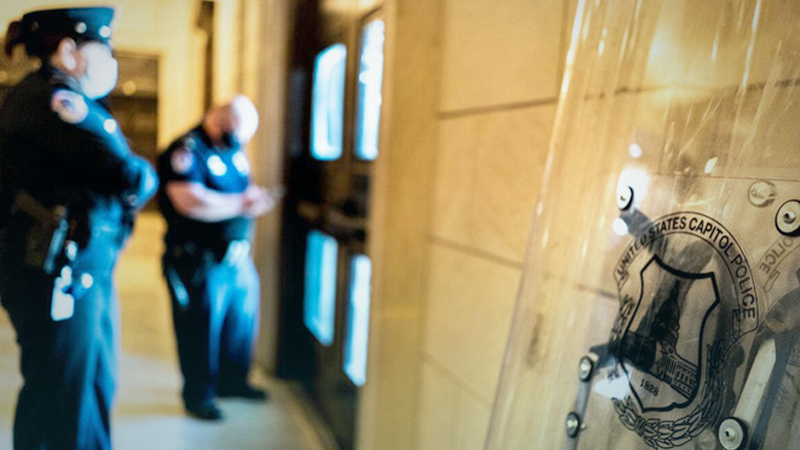
Capitol Police secure the rotunda doors as the U.S. Capitol becomes locked down because of a fire nearby. Police cleared the scene a short time later, and
no injuries were reported. (Melina Mara/ The Washington Post)

Capitol Police secure the rotunda doors as the U.S. Capitol becomes locked down because of a fire nearby. Police cleared the scene a short time later, and no injuries were reported. (Melina Mara/ The Washington Post)

By The Washington Post · John Wagner, Katherine Shaver

WASHINGTON – The Capitol Police on Monday alerted people at the Capitol and surrounding complex not to enter or exit for a brief period because of what was characterized as “an external security threat,” which turned out to be a small fire several blocks away.

A rehearsal for Wednesday’s inauguration of President-elect Joe Biden and Vice President-elect Kamala D. Harris was underway at the time; U.S. Capitol police quickly ushered participants inside the rotunda and locked the doors.

“Due to an external security threat located under the bridge on I-295 at First and F Streets SE, no entry or exit is permitted at this time,” the police said in an alert that went out to members of Congress, staffers and others who work inside the building shortly after 10 a.m. “You may move throughout the buildings but stay away from exterior windows and doors. If you are outside, seek cover.”

From the Capitol, where Biden is scheduled to sworn in at noon Wednesday, smoke could be seen coming from the location of the bridge.

Shortly afterward, D.C. firefighters announced that they had responded “to an outside fire in the 100 block of H St SE that has been extinguished.”

“There were no injuries. This accounts for smoke that many have seen,” D.C. Fire and Emergency Medical Services said on Twitter.

The alert was lifted and the all-clear given shortly after 11 a.m., and the rehearsal resumed.

D.C. police spokesman Stephen Benson said the fire started at a homeless encampment. He said the alert was sent because of the proximity of the fire to the Capitol, which – along with much of the rest of downtown Washington – has been on high alert since the Jan. 6 breach of the Capitol by a mob protesting President Trump’s election defeat.

The fire occurred after propane in a Coleman heater exploded, said D.C. Fire spokesman Vito Maggiolo.

He called the explosion was “very minor” and said firefighters extinguished the blaze quickly. A woman who had been using the heater suffered minor injuries but declined to be taken to a hospital, Maggiolo said.