As the House impeached Trump for a second time last week, Senate Majority Leader Mitch McConnell, R-Ky., sent word that the Senate wouldn’t begin an impeachment trial immediately. And as The Washington Post’s Seung Min Kim reports, there is a real question about just how quickly it might proceed – especially given the need to confirm members of Biden’s Cabinet and to consider Biden’s new proposal for a $1.9 trillion coronavirus package.
But what’s evident is that we’re headed for an impeachment trial not for a president – but for a former president. And there’s reason to believe that could change the political calculus for Republicans, even Trump’s conviction might remain unlikely. That’s because it could provide them cover to do what many of them really want to do, which is to try to rid themselves of Trump moving forward.
Republican pushback on impeachment has often been focused – as was the pushback on he Russia investigation – on the idea that it was an attempt to overturn the 2016 election. That’s now off the table. Trump will complete his term. Any punishment will have no bearing on the ability of the man who was elected for four years to serve those four years.
But there is a clear and obvious motivation for Republicans who might not have done so previously to consider convicting Trump, even as it will remain politically difficult.
For weeks after the 2020 election, those around Trump sent word that he might run again in 2024. It was an odd thing to be talking about at a time in which they were saying he had actually won and that evidence would soon be presented to that effect (that evidence is still nonexistent). But at its basest political level, it seemed to send a message to Republican officeholders who might go wobbly that he intended to stick around and that they had better stick up for him.
Most of that was before Trump supporters tried to hijack the seat of American government last week, though. Since then, all of it has been cast in a new light. Even many of those who entertained or fomented Trump’s conspiracy theories about the election have gotten a reality check about the true cost of supporting an effort that alleged a stolen election. And even if they don’t think Trump’s conduct was impeachable or worthy of removal, they have a very good idea of just how things can spiral out of control if he’s still around.
A historic number of Trump’s fellow Republicans in the House did vote to impeach, even as that historic number only amounted to 10. But others who opposed impeachment faulted Trump, including House Minority Leader Kevin McCarthy, R-Calif.,, and fewer actually spent any time truly defending him. Perhaps most notably, McConnell sent a significant signal that he might vote to convict Trump in the Senate.
To convict Trump in the Senate, there would need to be more GOP votes against him (about 17) than in the House – despite the much smaller chamber. But Senate Republicans have generally expressed more concern about Trump’s actions than have their House colleagues. They also, unlike their House colleagues, won’t be voting on a president who sits in office at that time.
According to The Washington Post’s latest whip count, at least 12 Republicans have suggested they would be open to conviction.
There would be plenty of repercussions involved, but with Trump’s removal now off the table, the big political impact would be on his disqualification. This would require a separate vote, but it’s extremely difficult to see GOP senators convicting him without taking that extra step. How would you let a guy who you would be saying incited an insurrection – as the impeachment article charges – return to the office from which he allegedly did just that? It would seem a formality at that point. In addition, it might require only a simple majority vote rather than 67, though that’s somewhat of an open legal question.
And all the details aside, this could also be the most immediate potential benefit for the GOP. While they’ve frequently given Trump the fealty he demands over his four years in office, it has generally been a matter of his leverage and their desire to use his presidency to accomplish things. They’ve now lost that power. The GOP’s losses in Trump’s reelection bid, combined with the House and the Senate, mark the first time a party has lost all three in four years since 1932. This is reportedly a factor for McConnell, and it could given the party the extra incentive to try to turn the page.
Trump looming over 2024 makes turning that page difficult. Even if he doesn’t actually plan to run, he has plenty of incentive to venture in that direction to keep himself relevant and give himself a platform. And a potential nightmare scenario for the GOP – which too few have considered at this point – is if, in light of the relatively mild rebukes he’s received from his party and if the party were to flirt with nominating another candidate, he were to go the third-party route. Trump repeatedly threatened to do this in 2016, but it would be potentially catastrophic for the party in 2024, given how much of a base he’s built, even if that base were even significantly diminished. (See: Theodore Roosevelt, Bull Moose.)
Thus far, the base is diminished, with a Pew Research Center poll released Friday showing just 60 percent of Republicans approve of him – a marked decline from any previous point in his presidency. But it’s still a majority.
The choice ahead for Republicans is whether they feel he should be held accountable for what happened last week, yes. But just as politics have colored their previous decisions about him, so, too, will they color this one. To the extent it’s a political calculation, it will be about whether preventing Trump from storming the party again in 2024 will be worth the immediate pain of banishing him from doing so.
That political calculation has been rather simple for the GOP for four years, but it changes once he’s out of office. And allowing him to skate on this is extremely fraught for them, as well.
Man who shot video of fatal Capitol shooting is arrested, remains focus of political storm
InternationalJan 17. 2021John Earle Sullivan, 26, after his arrest Saturday in Utah on charges of participating in the attack on the U.S. Capitol. MUST CREDIT: TCSO/Tooele County Sheriff’s Office.
By The Washington Post · Tom Jackman, Marissa J. Lang, Jon Swaine
WASHINGTON – He’s a speed skater. He organizes protests, alienating activists on both ends of the political spectrum. He drove an Uber. And his 40-minute video following rioters through the U.S. Capitol on Jan. 6, capturing the fatal shooting of a Trump supporter, has placed John Earle Sullivan – “Activist John” – at the center of a conservative campaign to blame liberal groups for the Capitol siege.
The video also landed him in jail. Federal authorities tracking down Capitol trespassers watched Sullivan’s video, interviewed him and then obtained warrants Thursday charging him with causing a civil disorder, trespassing and disorderly conduct. Sullivan repeatedly exhorted rioters to enter the building and overwhelm police, and seemed to convince Capitol Police officers to walk away from the glass door entry to the House Speaker’s Lobby, his video shows. Moments later, with Sullivan screaming warnings about a gun, rioter Ashli Babbitt is shot and killed on the video by a Capitol Police officer.
Sullivan later claimed he was there to document – not participate – in the event.
His video attracted the attention of right wing leaders, including President Donald Trump’s lawyer, Rudy Giuliani, who said it showed that antifa was the true organizer of the attack; and Rep. Mo Brooks, R-Ala), who called Sullivan a “BLM & fascist #ANTIFA supporter arrested for role in Capitol assaults.”
But Sullivan is hardly the darling of the left. He began organizing protests in Utah last year, and at one of the first, one of the protesters shot a motorist, said Lex Scott, a racial justice organizer who founded Black Lives Matter Utah more than seven years ago.
“He came in to chase clout and get those media headlines,” Scott said of Sullivan. “Now, it’s not my place to ever tell anyone how to be an activist or what their goals should be . . . but the fact is that Black Lives Matter Utah has never had one arrest in seven years. We’ve never caused any violence, any destruction of property and this man comes in here and taints our reputation in a day.”
Activists in Utah have spent months condemning Sullivan, who has at turns identified himself as a racial justice protester and leftist documentarian, and warned others to be leery of his motives and any events he sponsored.
“John Sullivan has exploited Black people, profited off of our pain and hurt the movement,” said Tyeise Bellamy, the founder of Black Lives for Humanity Movement, a Salt Lake City group that works with the homeless. “We’ve been telling people this for months. So now, to see him up there as this poster child for folks to say, ‘look, look, look, look, it was Black Lives Matter all along – or antifa all along,’ we will not allow you to say he is part of our movement to justify the destruction, insecurity and racism of the right.”
Sullivan is one of four sons of Jack and Lisa Sullivan who grew up in Stafford, Va., about 45 miles from Washington. A friend, who requested anonymity to discuss Sullivan’s personal history, said the boys were adopted and raised in the Mormon faith and had an isolated, conservative upbringing. His brother James is a conservative activist. His parents, who now live in Utah, did not return calls Friday seeking comment.
The boys enjoyed inline skating, and John Sullivan and one of his brothers later switched to the ice and began speed skating. There is a 400-meter speed-skating rink in Kearns, Utah, near Salt Lake City, where Olympic-caliber skaters train, and Sullivan moved there to train, then tried to qualify for the 2018 Winter Olympics. He did not make the U.S. team. He also began driving an Uber, and the company used him in a blog and television commercial.
The first time racial justice activists in Utah had heard of Sullivan, he was leading marches last year through the streets of Provo – the home city of Brigham Young University, which according to the U.S. Census Bureau has a Black population of less than 1 percent.
He organized rallies under a group he formed and dubbed Insurgence USA, which activists said Sullivan used to fundraise and solicit donations from individuals who felt compelled to support racial justice movements in the aftermath of the police killing of George Floyd in Minneapolis. His website sells “Rise Against the Norm” T-shirts, “Insurgence USA” face masks and other merchandise.
As near daily protests exploded in cities around the country, Sullivan’s demonstrations attracted large crowds despite his dubious history as an organizer, Black Lives Matter Utah organizer Scott said.
He held rallies featuring Black organizers. But attendees said one demonstration also featured members of the Proud Boys, an all-male extremist group with ties to white nationalism. The Proud Boys who attended, organizers said, told the crowd they wished to make peace with Black activists.
In a different demonstration on June 29, Sullivan led crowds through the heavily trafficked streets of Provo. Authorities later said the group did not secure a permit, KSL- TV reported. Cars zipped past, some nearly hitting protesters who marched on the asphalt, said Bellamy, who was there.
As night fell, the crowd began to thin. Just after 8:30 p.m., a large, white SUV sped toward the group, knocking several protesters out of the way. Police said a man fired at the driver, who suffered non-life threatening wounds and later drove himself to the hospital. The alleged shooter was arrested on charges of attempted aggravated murder, aggravated assault, rioting and threatening the use of a weapon in a fight and Sullivan was charged with rioting. The case is pending.
Black Lives Matter organizers say the fallout stemming from that protest has been broad and far-reaching, sullying the reputation of Black Lives Matter Utah, an organization that had previously held meetings with officials including Sen. Mitt Romney, Gov. Gary Herbert and Sen. Mike Lee – all Republicans – and conducted peaceful marches and vigils throughout the state. Racial justice protests in Salt Lake City, Provo and other parts of the state have since been dogged by armed counterdemonstrators who often show up in tactical gear.
Then later in the summer, Sullivan helped organize a pro-gun rights rally and marched with self-styled militia members at the Utah Capitol, KSL-TV reported, further infuriating Black activists.
Sullivan’s reputation as an agitator and bad actor has followed him into other protest circles. In encrypted chats among left-leaning activists, organizers routinely flag posts by Sullivan to new members, saying “don’t trust that guy” and, pointing to his past ties with the Proud Boys, “he’s a double agent.”
Sullivan visited Washington in December to observe his brother James speak at the Million MAGA march. At one point Sullivan was surrounded and frisked by Proud Boys who suspected he was antifa, said his friend, who saw the incident. The friend said that episode led him to try to blend in with those around him on Jan 6. “I’m sure that that experience in a large way affected his behavior at the Capitol.”
Sullivan’s 40-minute video begins with him already on a terrace of the Capitol, looking out at the roiling mob. Then, he follows rioters as they confront police at various points and enter the Capitol, and can be heard shouting, “We accomplished this s—. We did this together…We are all a part of this history” and “Let’s burn this s— down.”
Sullivan wanders the halls of the Capitol, always recording, refusing officers’ commands to leave, the video shows. Eventually, he joins a group pressing up against the glass doors to the Speaker’s Lobby, and implores the officers there to leave for their own safety. “I don’t want you to get hurt,” Sullivan can be heard saying. “We will make a path.” The officers then leave, and seconds later Babbitt is killed as she tries to climb into the lobby.
Sullivan has called himself a “video journalist,” but admitted to the FBI that he has no connections to any media outlet. The Washington Post licensed a portion of his video for a story on the shooting.
As conservative media outlets began pointing to him as evidence of liberal involvement in the riot, Sullivan posted a video on YouTube on Jan. 9 explaining his actions. “I was there just to document the events and to be a part of history,” Sullivan said in the video. He said he was not a member of Black Lives Matter, but did support the black community.
“I’m not here to assert myself or my beliefs on other people,” Sullivan said. “I just want to give people the footage, the video.”
In an interview with Rolling Stone magazine on Monday, Sullivan explained his seemingly boisterous support of the rioters. He said he needed to blend in, since he was dressed in black with no red hat or MAGA gear. “I was worried about people recognizing me and thinking that I was antifa or, like, BLM or whatever,” Sullivan said. “I had to relate to these people, and build trust in the short amount of time I had there to get where I need to go: To the front of the crowd to see the dynamic between the police and the protesters.”
Sullivan was accompanied for some of his time in the Capitol by Jade Sacker, a Los Angeles-based filmmaker who has been making a documentary about Sullivan and his brother James since last year.
Sacker, a freelancer who has worked for publications including Foreign Policy and Atlas Obscura, said that she did not witness the Babbitt shooting and that she had urged Sullivan at one point not to cause any damage.
“I was just there to document what was going on,” said Sacker. “I don’t think that John is violent. And I certainly don’t think that it was ever his intention to hurt anyone.”
Sullivan was taken into custody in Tooele County, Utah, on Thursday after the FBI obtained a warrant for his arrest in Washington. He made his first appearance in federal court in Salt Lake City on Friday afternoon, and was ordered released pending a detention hearing next week. Sullivan’s lawyer, Mary Corporon, said Friday evening that she had no comment.
Pompeo’s last-minute actions on foreign policy will complicate Biden’s plans
InternationalJan 17. 2021WILMINGTON, DE ‐ January 15, 2021: President- elect Joe Biden in Wilmington, Del., on Jan. 15, 2021. MUST CREDIT: Washington Post photo by Demetrius Freeman.
By The Washington Post · Karen DeYoung
WASHINGTON – While President Donald Trump and many of his top aides seem to have left the nation’s business behind, largely disappearing from view in the days since Joe Biden’s election was formalized and Trump-inspired violence erupted, one corner of the administration has moved into overdrive.
Secretary of State Mike Pompeo has made near-daily announcements of major foreign policy actions, many of which appear designed to cement Trump priorities and create roadblocks to new directions already charted by the incoming Biden team.
Among the barriers put in place are the relisting of Cuba as a state sponsor of terrorism, the designation of Yemen’s Houthi rebels as terrorists, the removal of long-standing restrictions on contacts between senior U.S. officials and their Taiwanese counterparts, the recognition of Moroccan sovereignty over the long-contested Western Sahara, the fast-track approval of controversial arms sales and a slew of new sanctions against Iran.
All of those changes can be undone. But each complicates the challenges Biden will face in putting his own stamp on policy.
Biden officials express little doubt that most, if not all, of them are motivated by domestic politics. But they have not spoken out against them, in part because of the “one president at a time” tradition regarding U.S. national security interests overseas.
“We’ve taken note of these last-minute maneuvers,” said a senior Biden transition official, who spoke on the condition of anonymity before the inauguration. Each is being reviewed, the official said, “and the incoming administration will render a verdict based exclusively on one criterion: the national interest.”
A White House official cited differing rationales for several of the recent moves, saying that some of them had been under consideration for some time. “It’s not like one size fits all,” the official said.
Trump adviser Jared Kushner pushed for recent decisions on matters such as Morocco and arms sales to the United Arab Emirates and Saudi Arabia as part of the payoff for Arab countries that agreed to normalize relations with Israel. Much of the rest, including actions on Cuba and Taiwan, “Pompeo just kind of did on his own,” the official said.
“I wouldn’t dispute that there were a lot of domestic political incentives for Pompeo to give a final push on Cuba, Iran and Taiwan,” said another person with direct knowledge of the policy process. Officials spoke on the condition of anonymity to discuss internal deliberations.
While Biden has remained silent, lawmakers have spoken out against some of the actions. Both Republicans and Democrats have criticized the Houthi designation – announced Jan. 10, to take effect the day before Biden’s inauguration – as have numerous humanitarian organizations working to keep millions of Yemenis from starving.
U.S. involvement in the Yemen war has long been controversial. Saudi Arabia is accused of causing thousands of civilian deaths in its fight against the Iranian-backed Houthis who control much of the country.
Bipartisan majorities, with no sympathy for Iran or the Houthis, have cited human rights concerns in repeated efforts to block Yemen-used military assistance to the Saudis, and their partner in the war, the United Arab Emirates, with measures that Trump has vetoed or otherwise circumvented.
Objections to the terrorist designation center primarily on what Senate Foreign Relations Committee Chairman James Risch, R-Idaho, and House Foreign Affairs Committee ranking Republican Michael McCaul of Texas said would be “devastating humanitarian impacts.”
Yemen, with more than 24 million people who rely on outside assistance for survival, imports about 90 percent of its food. Under the designation, aid organizations helping starving Yemenis in Houthi areas could be charged with criminal acts. “Good intentions must not be eclipsed by significant unintended consequences,” Risch and McCaul said in a statement Monday following Pompeo’s announcement.
Treasury officials, including Secretary Steven Mnuchin, opposed the designation, arguing that the action was so rushed that sanctions waivers to ensure the steady flow of food and other supplies to civilians were not ready to be implemented.
Others objected internally based on concerns that it would undermine ongoing diplomatic efforts to resolve the war and accomplish little. “The reason there was dissent . . . was the question: What do we get from this? What leverage does it give us” in pushing a diplomatic solution, the person familiar with the process said. “The feeling from a lot of us was that it doesn’t give us much.”
Biden has said that he intends to cut back on arms sales to the Saudis and push for more diplomacy and humanitarian assistance for Yemen. But reversing the Houthi designation cannot be done with the stroke of a pen. Under statute, it requires an act of Congress, or an administration review, after which the secretary of state finds that changed circumstances on the ground of U.S. national security warrant a reversal.
Pompeo’s main motivation appeared to be another opportunity to cast Iran as the primary generator of problems in the Middle East and to place additional obstacles in Biden’s path. The administration emphatically opposes his plans to reenter the international nuclear deal with Tehran that Trump exited in 2018.
Both Biden and the Iranians have said they are willing to trade “compliance for compliance,” with each side reversing the steps they have taken outside the parameters of the agreement since the U.S. withdrawal. For Iran, that means reversing the activation of additional uranium-enriching centrifuges, and a return to sharp limits on the quantity and quality of enriched material.
For the United States, it means lifting of all nuclear-related sanctions, as agreed in the deal, formally known as the Joint Comprehensive Plan of Action (JCPOA). But most U.S. sanctions – charging terrorism support, ballistic missile development and other types of activity – remain, and Pompeo has piled on even more measures in recent days.
Iran is expected to demand that those sanctions – which have been secondarily applied to other nations doing business in Iran, including in Europe – also be eased. But any effort by Biden to negotiate over them will probably be time-consuming and run into congressional objections. In an additional land mine laid this past week, Pompeo declared, in a Wednesday announcement that puzzled intelligence and counterterrorism experts who saw no substantive evidence, that Iran is the now the “new home base” and “operational headquarters” for al-Qaida.
Biden’s argument is that once the nuclear issue is back on track – with Iran’s breakout time for production of enough fissile material to build a weapon put back from two or three months to at least one year, where it was when Trump quit the deal – he will build international and domestic support and push for additional agreements.
But time is short to unravel and analyze the tangle of new measures that the current administration has put in place, and tempers are high all around. In Iran, where the economy is foundering, parliament has decreed that sanctions must be lifted by early February or Iran itself will leave the JCPOA. Iran is also about to enter into a heated political season, with presidential elections scheduled for early summer.
Pompeo has spent much of the past year berating China and arguing that the Trump administration’s hard-line policies are one of the many areas in which the president “flipped the script” on traditional appeasement. Biden has said he shares concerns about Chinese territorial and trade aggression, but he wants to review the situation and join with like-minded democracies, particularly in Europe, in confronting Beijing.
China experts see the most volatile part of the relationship as Taiwan, where the administration has softened restrictions on arms sales and diplomatic relations that were enshrined decades ago in laws governing U.S.-China relations.
Most recently, Pompeo announced Jan. 9 that he was removing all “self-imposed restrictions” on interactions between high-level U.S. officials, including in the military, with their Taiwanese counterparts. The United States, he said, would no longer “appease the Communist regime in Beijing.”
The State Department scheduled a visit to Taipei this past week by Kelly Craft, the U.S. ambassador to the United Nations, following precedent-shattering trips there last summer by senior American delegations. The trip did not take place, however, after Pompeo abruptly canceled all scheduled diplomatic travel – including his own – on Tuesday, citing the need to assist in the change of administrations here.
Like many of the other last-minute administration actions, Biden could simply reverse the new Taiwan policies if he chooses. But Pompeo has put him in a difficult position, requiring an overt act that could be seen as pro-China at a time when he is still developing and implementing his own strategic posture toward Beijing.
“Why are they doing these things?” asked a former senior U.S. diplomat, speculating as to Pompeo’s additional motivation. “The fact is that a substantial number of extreme right-wing representatives [in Congress] have never bought the idea of normalization with China. And the embers of ‘two Chinas’ never fully died out.
“I’m inclined to believe this is heavily Pompeo-driven, as opposed to Trump thinking things up. I believe Pompeo is laying down these markers as a campaign platform for 2024,” the former diplomat said.
Biden has also said he intends to return to the diplomatic normalization with Cuba established under the Obama administration, a task made more difficult this past week by Pompeo’s re-designation of Cuba as a state sponsor of terrorism.
The move was widely seen as a gift to what future Republican presidential candidates see as an important domestic constituency – Cuban American voters in southern Florida – with little credible policy basis. Reversing it will be important to Biden’s plans, but it will be time-consuming.
U.S. law outlines two paths to reverse the designation. In the first, the president must certify to Congress that there has been “a fundamental change in the leadership and policies of the government of the country concerned,” that “government is not supporting acts of international terrorism” and that it will not in the future.
For the second, the president must notify Congress, 45 days before a recission takes place, that the government in question has not provided support for acts of international terrorism over the previous six months, and that it promises it will not.
A lab in Italy reported a cluster of the U.K. coronavirus variant. But that wasn’t enough to stop the spread.
InternationalJan 17. 2021Photo by: Federica Valabrega — For the Washington Post
By The Washington Post · Chico Harlan, Stefano Pitrelli
TERAMO, Italy – The virus hunter saw the apparent pattern come into view over several hours in late December, as he studied genetic sequences from positive coronavirus tests in his region. He found four cases involving the new, highly infectious British variant, in the same hilltop town.
“A cluster,” said Alessio Lorusso, the virologist.
His findings were a rare, initial insight into the mutated forms of the virus reaching new parts of the world. Most countries, including the United States and across Europe, do not perform enough genomic surveillance to adequately track the virus’s changes – to the alarm of disease control agencies, which warn that governments could be blind to dangerous mutations.
But the scenario in Italy’s mountainous center shows how even when a worrisome variant is detected early, governments can miss the narrow window to mount a rapid response and limit the spread. Containment measures come too late, in the wait for more substantial evidence. And the virus races ahead.
Lorusso’s director quickly notified the affected region of the four cases. But it took more than two weeks for any official confirmation to reach the town of Guardiagrele and its population of 9,000. During that time, overall coronavirus cases there tripled, from 35 on Dec. 28 to more than 100 by mid-January. Of those, 29 have been confirmed to involve the British variant, compared with the 76 cases identified in the entire United States, where surveillance is highly lacking.
No targeted restrictions have been imposed on Guardiagrele or the surrounding region of Abruzzo, though there is a plan to soon perform widespread testing.
In Britain, the variant – known officially as B.1.1.7 – has forced a national lockdown, after the mutation defied regional measures that had curbed less transmissible strains. Though the variant appears responsive to vaccines and is not thought to be more deadly, it has spread so widely, and so overwhelmed hospitals, that it is causing the death toll to skyrocket, as well. In recent days, Britain has seen more per capita deaths than any other populous country, including the United States.
Scientists worry a similar escalation could follow elsewhere. On Friday, the Centers for Disease Control and Prevention warned the variant could become dominant in the United States by March. The timeline could be even shorter for some countries in Europe.
“If you don’t act now, in two months, in all of Europe, we’ll have the British variant taking the place of the current ones,” said Walter Ricciardi, a World Health Organization adviser to Italy’s Health Ministry.
He said that if a highly transmissible variant is detected in a particular place, it is important to act quickly, with widespread testing and restrictions on movement.
“You have to immediately lock down the area,” Ricciardi said.
Virologist Alessio Lorusso oversees genetic analysis of coronavirus samples in Teramo, Italy. MUST CREDIT: photo for The Washington Post by Federica Valabrega.
To the extent that Italy has an early warning system, it depends on scientists such as Lorusso, 39, a bearded man who could pass for a retired wrestler outside the confines of his white-walled lab. He says he “likes viruses.” He has spent much of the past year working 14-hour days, squinting at genomic code, watching SARS-CoV-2 evolve. The lab where he works, the Experimental Zooprophylactic Institute of Teramo, has now identified more than 50 instances of the British variant in the Abruzzo region. But the British variant is far from the dominant strain in the area.
“The variant with the greatest fitness will replace the others,” he said. “It’s just a fact.”
For Lorusso and his lab, the British variant is fairly easy to hunt down. That’s because it leaves a telltale: One of the most commonly used coronavirus testing machines, produced by the company Thermo Fisher, checks for the presence of three genes. In the British variant, one of those genes is missing. For somebody with the B.1.1.7 strain, the test result looks puzzling: positive-negative-positive.
Such a readout is hardly a definitive indication of B.1.1.7; some less concerning variants can yield a similar result. But it provides a starting point, and Lorusso’s lab can then select swabs for deeper analysis.
Walking through the lab this past week, Lorusso stopped at the area where the swabs were being processed – 96 at a time, several thousand per day. In the room with the Thermo Fisher machine, he took a look at some recent test results – each corresponding to a person, who had been awaiting news of the outcome. In one batch of 96, nobody had the positive-negative-positive pattern. But in the next batch, 12 did.
Lorusso sat down at a computer, logging on to a system that tracks the personal information of everyone swabbed.
He checked for the home address of the one person who’d tested positive-negative-positive.
Guardiagrele.
He checked another.
Guardiagrele.
“Same neighborhood,” he said.
He’d still have to sequence the code to know if it was B.1.1.7. But already, there was a growing number of newly arrived swabs revealing that same pattern.
– – –
Italy reported its first detected case involving the British variant on Dec. 20, in a traveler who had arrived from Britain. The government in Rome stopped flights from the United Kingdom the same day.
But even by then, the variant was apparently already circulating in Italy.
Lorusso spotted the initial four cases from Guardiagrele – three within one family – on Dec. 26, and by Dec. 30, according to a document, the lab had informed regional government officials.
Regional officials, in turn, said they needed national government confirmation of the lab results. Into mid-January, the region was insisting there was still no “definitive proof” of a variant that might be spreading differently.
“The region never said to me, ‘Dear mayor, there is a cluster in your town of the most infectious variant, so you’d better put a stop to everything,’ ” said Guardiagrele’s mayor, Donatello Di Prinzio. “Had that been the case, I would have taken all the required actions.”
Instead, after the end of a national holiday lockdown, all of Abruzzo – including his town – landed back in the lightest tier of Italian restrictions, with shops and hair salons open, and restaurants allowed to offered dine-in service until 6 p.m.
Meanwhile, coronavirus infections in the town were rising rapidly, reaching a point far exceeding anything from earlier waves. A local media report pointed to the variant, and there was speculation about it on Facebook. But without official word, the mayor said he didn’t want to be alarmist.
“I only talk when there is data on my hand and official information,” he said.
While he waited, Di Prinzio asked the region to send civil protection officers, who could supplement a depleted local police unit and help enforce basic distancing measures.
Then, on Tuesday, he was invited to a video conference with a provincial official and mayors from seven other towns that were seeing significant case increases. The authorities agreed to launch a mass-testing campaign in those towns, starting in Guardiagrele. It would kick off Jan. 23 – more than three weeks after Lorusso’s initial findings.
One of the provincial officials involved with the health response, Giuseppe Torzi, said “measures need to be stricter” in places with the variant, but the crux of the response would be the same: try to isolate the positive cases and reduce contacts.
“I could list situations where there’s no English variant and yet there’s been a monstrous increase,” Torzi said. “So it’s not as if the other virus is some joke.”
– – –
On Friday, Guardiagrele received definitive word of the variant’s arrival, but not because of a national confirmation. Instead, Lorusso’s lab notified the region, as well as a provincial health director, of updated, more extensive findings. Torzi called the mayor, feeling this time no further research was needed.
The province of Chieti, one portion of Abruzzo, had 51 cases of the variant.
Twenty-nine of those were in Guardiagrele.
That news coincided with a national government order that a large part of the country, including the Abruzzo region, would on the basis of infection rates be classified in the middle tier of coronavirus restrictions, which includes the closure of restaurants for in-person dining. Nonessential travel between regions will be banned through mid-February. But there has been no indication that Guardiagrele would be sealed off, as has happened in numerous hot spot Italian towns throughout the past year.
Speaking to The Washington Post by phone on Friday, Di Prinzio said he would redouble his request for residents to wear masks and keep their distance. He’d already closed a market. Nothing else would change. Even if he wanted to impose a lockdown, he said there was little point; other towns might well have the same problem, and it would have to be a coordinated effort.
Another lab doing genomic sequencing, at the University of Chieti, said it had traced a case in one town, San Giovanni Teatino, back to Guardiagrele, carried by a woman who works there.
“For such reason,” the university wrote to the region, “it is possible to hypothesize that in these cases we are witnessing a progressive expansion of such a variant across the territory.”
Lorusso, who said he had not been monitoring the policy response in the wake of his findings, said he realized people around the world were suddenly scrambling to understand the implications of this variant and others. He emphasized that even the most infectious strain could be curbed with rigorous distancing, mask-wearing and a reduction in social contact. Over the course of a day at the lab, he mentioned it so many times that he came to seem almost protective of the virus. The changes in SARS-CoV-2 were logical, not alarming, he said. The spread of the British variant, and any other highly infectious strains, depended on the behavior and decisions of humans.
“Viruses search for a host,” he said. “It’s human habits that make the pandemic.”
Trump to flee Washington and seek rehabilitation in a MAGA oasis: Florida
InternationalJan 17. 2021President Donald Trump greets visitors and staff members as he walks to board Marine One and depart from the South Lawn at the White House on Tuesday, Jan 12, 2021. MUST CREDIT: Washington Post photo by Jabin Botsford
By The Washington Post · Philip Rucker, Josh Dawsey, Ashley Parker
WASHINGTON – President Donald Trump will leave Washington this week politically wounded, silenced on social media and essentially unwelcome in his lifelong hometown of New York.
By migrating instead to Palm Beach, Fla., Trump plans to inhabit an alternate reality of adoration and affirmation. The defeated president will take up residence at his gilded Mar-a-Lago Club, where dues-paying members applaud him whenever he eats meals or mingles on the deck. He is sure to take in the same celebratory fervor whenever he plays golf at one of the two Trump-branded courses nearby.
In Florida – one of only two top battleground states Trump won last November – Trump will be living in a veritable MAGA oasis, to use the acronym for his “Make American Great Again” campaign slogan. South Florida has fast become a hub of right-wing power brokers and media characters, and some of Trump’s adult children are making plans to move to the area.
Even as Trump broods privately over his second impeachment last week and the election he continues to falsely insist he won, his aides are at work to establish a Trump fiefdom in the Sunshine State aimed at maintaining his influence over Republican politics, according to allies and advisers, some of whom requested anonymity to reveal internal discussions.
Some of Trump’s associates are buzzing about a possible presidential library and museum – likely located, yes, in Florida – and about the birth of a family dynasty, should his children, Donald Jr. or Ivanka, someday run for political office. Florida is seen as a better launchpad for the Trumps than New York, given the outgoing president’s popularity in the former. Some in Trump’s orbit are talking up the idea of Ivanka possibly running for Senate in 2022, when the term of Sen. Marco Rubio, R-Fla., will be up.
Trump has become something of a pariah in the nation’s capital of Washington and its financial center of New York in the wake of the Jan. 6 riot at the Capitol that he incited, but Florida offers him a place to try to rehabilitate himself.
Newsmax chief executive Christopher Ruddy, a longtime Trump friend and Mar-a-Lago member, predicted that the president would remain a powerful force in politics and the media regardless of his current woes.
“We don’t know what legal issues are going to arise, but discounting those, I think he’s going to remain a global force,” Ruddy said. “I think he’s going to like being post-president more than he liked being president, because you have a lot of the perks without as many of the restrictions.”
Trump may have imagined a mischief-making, mega-rally farewell – complete with a tease about reclaiming the White House in 2024 – to draw attention from President-elect Joe Biden’s inauguration and to remind fellow Republicans that he still rules the roost.
But there will be no such grand departure in the wake of the Capitol insurrection.
Trump instead is winding down his presidency largely out of public view, though he still intends to take some actions in his four days remaining as president. There remain sharp disputes among the president and his advisers about a final round of pardons he may issue, including for members of the Trump family, according to people familiar with the discussions. The president continues to talk about wanting to pardon himself, they said.
The White House is a fortress guarded by armed military ahead of Wednesday’s inauguration and now practically deserted. “It looks like a war zone around here,” one official said.
Aides spent last week boxing up their offices and desks – White House chief of staff Mark Meadows’ wife, Debbie, was spotted packing a taxidermy bird into an SUV. Aides posed for goodbye photos; snared oversized framed snapshots of Trump’s presidency from West Wing walls; and scavenged for challenge coins and other mementos.
Staffers stood on West Executive Drive for a big send-off Thursday for Larry Kudlow, the National Economic Council director and one of the most well-liked figures in the West Wing.
Four years of roaring commotion are ending in a whimper. An aggrieved Trump has told aides he is uninterested in doing ceremonial events, a senior administration official said.
Other than flying last Tuesday to Texas to autograph a piece of the soaring steel border wall his administration constructed, Trump has demurred on suggestions from advisers to spend his final days touting his achievements and attempting to burnish his legacy.
Rather, Trump has been consumed with anger over his impeachment Wednesday by the House for inciting the Capitol riot, advisers said. He is also upset by the silence from many of his most vigorous defenders, and is nursing feelings of betrayal from Republican congressional leaders, they said.
As aides visited with him to say goodbye and take farewell pictures, Trump complained bitterly about Rep. Liz Cheney, R-Wyo., and other Republicans who voted to impeach him. “They’ll have primaries, all of them,” one aide recalled Trump saying on Thursday.
Homing in on Rep. Tom Rice, R-S.C., who voted for impeachment, the president referred to himself in the third person and remarked, “You can’t vote against Trump in South Carolina,” according to the aide, who like some others interviewed spoke on the condition of anonymity to disclose private conversations.
Some aides have tried to explain to Trump that these and many other members of Congress are angry about the attack and scared for their lives, but the president has often returned to his popularity among Republican voters in their districts and has shown no remorse for his role in the riot, two officials said.
Aides said Trump has occasionally brought up the Georgia Senate races unprompted with them, arguing that he is not to blame for the two Republican incumbents, Kelly Loeffler and David Perdue, losing both seats in the Jan. 5 runoff elections – and why the candidates, particularly Loeffler, were bad.
Michael D’Antonio, a Trump biographer, said the president’s state of victimhood fits the narrative he has concocted for his entire life.
“This is the end that he would have scripted for himself, actually,” D’Antonio said. “He has always imagined himself as an embattled person. He’s talked about life itself being a constant struggle for survival and how he’s surrounded by enemies . . . that the world conspires against him and that he is a lonely hero who is underappreciated and besieged.”
One of Trump’s final Oval Office visitors was Mike Lindell, the My Pillow founder and television pitchman, who showed up Friday afternoon brandishing notes that he said were from a lawyer, whom he would not identify, advising to institute “martial law” and install Trump loyalist Kash Patel in the CIA leadership.
Lindell, a vociferous supporter of the president, spent the afternoon at the White House but said in an interview that he left unsatisfied. “I had to make an appointment like everyone else,” he said. “People were lined up to see him.”
Lindell claimed ignorance about the contents of the memo, which was partially captured by a Washington Post photographer as Lindell waited to enter the White House.
“I didn’t know what was in it,” he said. “I didn’t know who some of the people even were.” He explained that the unnamed lawyer asked him, “If you get a meeting, can you drop this off?”
Lindell said he presented his information to the president for about five minutes before Trump referred him to White House Counsel’s Office. He also argued that China and Russia hacked the election, bringing a false article from The American Report, a conspiracy-theory right-wing website, as his evidence.
Lindell said he has been working with a large team to try to prove widespread voter fraud and falsely argued that Trump had won by 11 million votes. “I have spent a lot of money and gone down every rabbit hole in this country,” he said.
But Lindell said Trump was noncommittal on what he’d do with the information and told him to talk to the lawyers, who were dismissive and argued with him.
“They were skeptical,” Lindell said. “They were disinterested, very disinterested. They are giving the president the wrong advice.”
He said the lawyers did not allow him to see Trump again.
With Trump cocooned in the White House, Vice President Mike Pence has looked more like the commander in chief. He visited the Federal Emergency Management Agency headquarters last week for a briefing on inauguration security preparations and visited with National Guard soldiers stationed at the Capitol.
On Saturday, Pence departed on a two-day trip to Naval Air Station Lemoore in California and Fort Drum in New York to personally thank service members and to tout the administration’s foreign policy achievements.
Trump is leaving office with his popularity at one of the lowest points of his presidency. Just 38% of Americans approve of his job performance and 60% disapprove, according to a Washington Post-ABC News poll conducted after the Capitol attack and released on Friday. The survey found that 15% said Trump would be remembered by history as an “outstanding” president, while 48% said he would be remembered as “poor” and 11% as “below average.”
Trump, who has refused to participate in traditional transfer-of-power rituals, plans to leave Washington on Wednesday morning, just before Biden is inaugurated. Trump instead will stage his own departure ceremony at Joint Base Andrews before his final trip aboard Air Force One. A military ceremony is being planned similar to the receptions visiting dignitaries receive for state visits.
In New York, residents have long shunned him and Mayor Bill de Blasio, a Democrat, last week announced the city was terminating its contracts with the Trump Organization because of the Capitol insurrection.
But in Florida, Trump looks to be surrounded by supporters, including some of his adult children.
Donald Trump Jr. and his girlfriend, Kimberly Guilfoyle, are shopping for a house in Jupiter, Fla., about 15 miles from Palm Beach, according to a person familiar with their plans, confirming a New York Post report. Trump Jr.’s ex-wife, Vanessa, and their five children moved to the area last year, this person said.
Ivanka Trump and husband Jared Kushner, both White House senior advisers, recently purchased land owned by pop star Julio Iglesias in Indian Creek, a gated private island near Miami that is home to wealthy celebrities, business figures and professional athletes, including Jay-Z, Beyoncé and football star Tom Brady.
Daughter Tiffany Trump also is shopping for property in Miami, according to Page Six.
Trump will have a small post-presidential staff working for him in Florida, including a trio of White House aides – Cassidy Hutchinson, Nick Luna and Molly Michael – according to an administration official, who confirmed a Bloomberg report.
South Florida is home to talk-radio stars Rush Limbaugh and Mark Levin, conservative commentator Ann Coulter and several Fox personalities, including Geraldo Rivera and Dan Bongino. And at least two of Trump’s Cabinet members – Commerce Secretary Wilbur Ross and Housing and Urban Development Secretary Ben Carson – have homes in South Florida.
Broward and Palm Beach counties also are home to a growing number of Republican direct-mail firms as well as server farms and other companies that handle back-end processing for conservative digital operations.
And Newsmax – whose cable channel has seen a surge in viewers in recent months as Trump, angry over Fox News Channel’s coverage of the election and its aftermath, has urged his fans to migrate – is headquartered in West Palm Beach.
“It’s sort of like his home state, in a way,” Ruddy said. “There’s a lot of New Yorkers there, a lot of personal friends he has that live down there. It’s a New York environment.”
In addition, MSNBC’s Joe Scarborough and Mika Brezinski, whose show Trump regularly watches and attacks despite their sharply critical assessments of him, spend time in South Florida and sometimes broadcast their show from there.
Rick Wilson, a longtime Republican strategist in Florida who is a senior adviser to the anti-Trump Lincoln Project, explained the state’s appeal to Trump – including that Florida’s Republican base is especially “Trumpy.”
“It fits in with Florida’s overall character of being the magnet for all insanity in the universe,” Wilson said. “We are what we are in the great state of Florida, and that is a state of lives restarting and second-chances and reboots and low property taxes and liberal bankruptcy laws and a fairly casual approach to public ethics. Florida, in some freakish, horrible way, is the Trumpiest of states. This is the logical place for them to come.”
Trump has floated a 2024 bid and his campaign and the Republican Party raised more than $200 million after the election with fundraising bids to help overturn it. Much of that money will go to Save America, a leadership PAC Trump set up after the election that will allow him to support candidates and maintain political influence after leaving office.
Speculation is also coursing through Trump World about a possible presidential library and museum. No announcements have been made, but two people familiar with internal discussions said it is likely to be located in Florida and run by Dan Scavino, one of Trump’s longest-serving and most loyal aides who advises him on social media and most recently served as deputy White House chief of staff.
One of these people, who was a top fundraiser on Trump’s campaign, said the president has told supporters he wants to raise $2 billion for the library – a far greater sum than has been raised for past presidential libraries – and thinks he can collect it in small-dollar donations from his grass-roots supporters.
“I thought to myself, what is this alternative fantasy life you’re living?” this fundraiser said. “I have no clue where they think they’ll get this money raised. Anyone who gives to him will be radioactive.”
Asked about raising money for the library, another former top Trump fundraiser wrote in a text message: “Insane.” This person noted that, “except for the wackos, everybody’s running for the hills.”
The mood in the West Wing has been generally dour, aides said, with many deeply upset over the president’s actions on Jan. 6 and frantically searching to find a job.
Aides said Trump has been working only sporadically in the Oval Office, spending a lot of time lately in the residence. He also has been bouncing around the West Wing taking pictures with departing staffers.
One senior administration official who visited with the president last week described his mood as decent. But when asked whether it seemed like he had made peace with the fact that his presidency was coming to an end, this official said, “I doubt it. It’s probably just like a moment there.”
Thomas V. Mike Miller Jr., pillar of Maryland’s state capital for decades, dies at 78
InternationalJan 16. 2021Thomas V. Mike Miller in 2018. Washington Post photo by Marvin Joseph.
By The Washington Post, Paul Schwartzman
For decades, he was the man to see in Maryland’s state capital, a country-boy Democrat who rose to the heights of power in the General Assembly and used his commanding influence to direct politics and policy across the state.
Thomas V. Mike Miller Jr., the nation’s longest-serving president of a state Senate and a pillar of Maryland government for nearly a half-century, died Jan. 15 at his home in Chesapeake Beach, Md. He was 78. The cause was complications from prostate cancer, said family spokesman Jake Weissmann.
A thick-shouldered pragmatist who had no use for ideologues, Miller led the campaign to legalize casino gambling in Maryland and, despite his centrist views, facilitated the passage of progressive laws including legalization of same-sex marriage and the repeal of the death penalty.
Nearly two years after he announced his cancer diagnosis, Miller’s passing unleashed a wave of grief in Annapolis and further sealed a complete leadership transformation at the State House he presided over for 33 years. Because of his illness, Miller relinquished the Senate presidency in October 2019 but retained his seat as a rank-and-file member until Dec. 23, when he resigned.
A shrewd tactician, Miller controlled the Senate under six governors and endured as opponents derided him as an autocrat, as demographics in his home base of Prince George’s County shifted, and as Maryland’s political culture drifted left.
“Mike Miller was the cornerstone for all the progress that has occurred in the state over the past three decades,” said Timothy F. Maloney, a prominent trial lawyer and former Democratic state delegate representing Prince George’s. “There has been no major initiative that has occurred without Mike’s leadership. He saw everything from a historical context and tried to get ahead of history to see where things were going.”
A backslapping raconteur, Miller was a singular presence as he ruled the Senate. His mane of white hair and chiseled features invited reminders of the Founding Fathers, at least in appearance – comparisons that Miller rarely discouraged.
Mr. Miller sometimes got himself into trouble for his freewheeling banter. In 1989, as he was emerging as a statewide political force, he used a profanity to describe Baltimore, a blunder that quashed whatever hope had to run for governor.
As the Senate’s leader, Miller was unafraid to lacerate rivals, accusing Democratic Gov. William Donald Schaefer of hiring “eunuchs and sycophants” and comparing Democrat Parris Glendening, then Prince George’s County executive, to a “baboon.” In the heat of one election season, he promised Democrats would “bury” Republicans “six feet deep, faces up.”
Miller clung to his grudges as if they were prized treasures. Those who “crossed the boss,” as one colleague described betraying Miller, could find their legislative proposals – and their political careers – extinguished. After then-Del. Patricia Billings, D-Montgomery, opposed legislation he supported, Miller sent her a Christmas card. “I haven’t forgotten your vote,” he wrote.
“Working for Mike was like working in the Mafia – you go out feet first,” said Gerard Evans, a lobbyist and longtime friend. “You’re either in the organization or – if you p—-d him off – you were dead politically and functionally.”
Miller could offer foes a second chance, but only if it served a larger political purpose. “If he needed you, he brought you back,” said former state senator Gloria Lawlah, D-Prince George’s, who mended fences with Miller after a falling-out. “He was the master of power and control.”
Miller waved off suggestions he commanded the Senate with a heavy hand, saying he sought to delegate power and promote fellow senators.
Grudges? Not him, he insisted.
“I forgive and forget,” he said during an interview for this obituary. “Honestly and truly.”
Asked who, if anyone, intimidated him over the years in Annapolis, Miller, without hesitation, said, “I was never afraid of anyone.”
– – –
Thomas Vincent Mike Miller Jr. was born Dec. 3, 1942, in Clinton, Md., where his grandfather founded B.K. Miller’s, a general store that Miller’s father eventually took over. At the intersection of Old Branch Avenue and Woodyard Road, the store was a center of Prince George’s life, a few yards from the church where the Miller family attended services and down the street from the modest brick building where Miller eventually opened a law office.
As the oldest of 10 children, Miller navigated family squabbles – often instigated by his volatile father – and developed skills that helped him later maneuver in Annapolis. From boyhood through early adulthood, Miller worked at his family’s store and learned lessons that would stay with him as a politician.
“You were taught the customer was always right. And so when I ran, I treated my constituents like they were my customers,” Miller said in the interview. “It gave me huge exposure to people, their issues and their problems.”
His parents’ politics spanned the Democratic spectrum, with his father a conservative and his mother a New Dealer who encouraged her son to go to law school. “She was determined that I was not going to work in the store,” he once told The Washington Post.
He got his introduction to politics in 1962 as a driver for Frank Small Jr., a Republican gubernatorial candidate who lived next door to the Millers. Miller befriended Small’s press consultant, Lawrence J. Hogan Sr., who would become a U.S. congressman and Prince George’s County executive. Hogan’s son, Larry, for whom Miller babysat, became Maryland governor during the last years of Miller’s reign in Annapolis.
“He had more political contacts at 18 years old than I’ve ever had any time I’ve been alive,” Thomas Farrington, who worked alongside Miller in the Young Democrats in the 1970s, once told The Washington Post.
Miller graduated from the University of Maryland in 1964 with a bachelor’s degree in business administration and a law degree in 1967. In 1965, he married Patricia Given, a college classmate. In addition to his wife, survivors include five children – Melissa Miller of Chesapeake Beach, Michelle Miller Fink and Melanie Miller, both of Annapolis, Tommy Miller Jr. of West River, Md., and Amanda Miller Stokely of Sunderland, Md. – as well as three brothers, five sisters and 15 grandchildren.
In 1970, with the backing of the Prince George’s Democratic machine, Miller won his first political race, capturing a House of Delegates seat. Four years later, he was elected to the state Senate as a conservative Democrat.
As an intern in Miller’s office in 1977, Evans learned that his boss could be “unreasonably” demanding. At Miller’s urging, Evans suggested legislative ideas, including a bill allowing victims of domestic abuse to seek compensation.
“Don’t ever suggest another bill!” Miller yelled, according to Evans. Miller, he said, was afraid of seeming too liberal in a conservative district. “It was nothing more basic than getting reelected,” Evans said. “His core was delivering as a retail politician.”
Miller’s early years in the state legislature and his reign as a boss of the Prince George’s Democratic organization coincided with the county’s transition from majority White to majority Black. Miller adapted by forging alliances with a number of rising Black leaders.
Nonetheless, some African Americans chafed at what they regarded as Miller’s dictatorial control over local politics. “He appears to be with you,” former state senator Tommie Broadwater Jr., D-Prince George’s, once told The Post. “If you don’t know him, you’ll think he’s the best of buddies. But he will stab you in the back.”
Miller, when asked about Broadwater’s description, replied: “That’s not a bad analysis.”
In Annapolis, Miller’s influence was growing. Melvin Steinberg, then the Senate’s leader, described Miller as his “enforcer” and appointed him chairman of the powerful Judiciary Committee.
Blair Lee IV, then Montgomery County’s chief lobbyist, learned the consequence of opposing legislation Miller supported one day as he walked along a State House corridor. “All of a sudden I saw this curly-haired guy coming around the corner. He sees me and puts both hands on my lapels and backed me against the wall,” Lee once told The Post. “He has got an Irish temper and an Irish humor, but you never know which one he’ll be in at that minute.”
In 1986, as Schaefer became governor, the state’s 47 senators elected Miller Steinberg’s successor. At 44, Miller assumed the Senate’s throne, fueling chatter that he was on a glide path to becoming governor. Three years later, Miller hosted a swanky fundraiser in Baltimore, an event that many regarded as his statewide coming-out party.
A few hours before the fundraiser, Miller agreed to an interview with a local television reporter, who asked why he was hosting the affair far from his legislative district. “It helps educate my constituents as to why Baltimore needs the economic help,” Miller said. “I mean Baltimore is a g—– ghetto. It’s worse than inner-city Washington, D.C. It is s—.”
“I hope you’re not going to play this on tape,” Miller said, laughing nervously before adding that Baltimore “is a war zone. I mean, it’s crack. I mean, it’s these dime bags of PCP. . . . Fifty percent of the kids that start out in school don’t graduate. So looking at things from a statewide perspective, we really have to do things to help.”
The station aired Miller’s comments, causing a furor that dogged him for decades. Miller cited the incident as his sole political regret.
But Miller also said he did not regret that the incident may have ended his statewide potential. As it turned out, he served another three decades as Senate president, his influence uninterrupted at the State House while moving trucks pulled up to the governor’s mansion across the way every four or eight years.
– – –
Of all the governors who presided during his reign, Miller said his favorite was Democrat Marvin Mandel because he knew how to build support for legislation “and would reward you for working with him.” The worst governor, he said, was Schaefer, because “he didn’t understand governance. He wanted to spend money that we didn’t have to spend. He thought he could print money in the basement of the State House.”
By his own account, Miller’s crowning achievement was the legalization of casino gambling and the subsequent launch of gaming in Prince George’s, despite fierce opposition from church leaders and civic groups. In a show of political gamesmanship, Miller forced two special sessions of the Assembly, after which the fate of what became the MGM Casino at National Harbor was left to voters to decide in a 2012 referendum. It passed by 100,000 votes.
“Everybody wants to take credit for MGM,” Lawlah said. “It was Mike Miller’s baby. He never took his eye off of it.”
Miller survived various threats to his power, including a failed attempt to oust him in 2000 led by state Sen. Thomas Bromwell, D-Baltimore. Two years later, the legislature’s ethics panel rebuked Miller for yelling at two appeals court judges about a pending dispute over redistricting maps. He also faced scrutiny from federal prosecutors investigating contributions to a campaign fund he oversaw. No charges were filed.
Miller often attributed his political endurance to his ability to “see what’s going to happen before it happens.” Despite his own reservations, he facilitated the abolition of the death penalty in Maryland in 2013 after polls showed the public supported the ban. Even as he voted no, he allowed a bill legalizing same-sex marriage to move forward in 2012, a shift he attributed not only to political pragmatism but to his friendships with people who were gay.
“He didn’t live in a world where he would substitute his core beliefs for what he saw as the larger consensus,” said Todd Eberly, a St. Mary’s College of Maryland political scientist. “He’s a good representative of what it used to be like when two sides were able to compromise.”
For all his adaptability, Miller was stubborn when it came to history. In 2017, he was widely criticized for opposing the removal from the state capitol grounds of a statue of Roger Taney, the Maryland-born Supreme Court chief justice who supported the 1857 Dred Scott decision that Blacks in free or slave states could not be citizens.
Miller, who regarded himself as the curator of State House history, hung portraits on his office walls of past Maryland governors, including segregationists. He also had a rendering of the trial of Mary Surratt, a Clinton native and a co-conspirator in President Abraham Lincoln’s assassination.
“Somebody could walk into my office and say, ‘Why is that picture on your wall?’ ” Miller said in the interview for this obituary. “Because of my love of history, I’m not politically correct. But, you know, they were products of their times. They’re products of history.”
As 2019 began, Miller divulged that he had cancer but kept showing up in Annapolis, eager to demonstrate his vigor even as he was undergoing chemotherapy. “I’m in the game, I’m on top of it, I’m right there,” he told reporters one afternoon before unleashing a string of invectives, as if to prove his point.
Ever the pragmatist, he had reached out months before to four newly elected senators, progressives who had defeated his more moderate lieutenants in the 2018 Democratic primary. He understood that his style of politics – dealmaking and consensus-building – had become an antiquated art form in an era dominated by President Trump and extreme rhetoric.
As much as anything, he yearned for a return to the political center.
“It’s really time for me to get out of politics,” he said in the interview. “Our democracy is the oldest in the history of the world, but it’s on very shaky legs. I see the Democrats going further to the left, and the Republicans going further to the right, until something absolutely horrible happens and people realize they’ve made a terrible mistake.”
Whatever happens, Miller said, it would no longer be his problem.
InternationalJan 16. 2021The House votes to impeach President Trump earlier this week, paving the way for a Senate trial, whose shape is not yet clear. Washington Post photo by Melina Mara.
By The Washington Post, Seung Min Kim
WASHINGTON – Democratic lawmakers eager to punish President Donald Trump for his role in fomenting last week’s deadly attack on the Capitol are grappling with how elaborate and lengthy a Senate trial should be, as President-elect Joe Biden ramps up pressure on Congress to swiftly implement his ambitious agenda.
Few if any Senate Democrats want a lengthy impeachment proceeding, senators and aides said Friday – particularly as Biden faces a raft of crises with potentially no Cabinet secretary in place on the first day of his presidency, a break from past practice. Some have suggested the trial be put on pause to first tackle confirmations and pandemic relief.
But Senate leaders have not yet found a way to move ahead simultaneously on the impeachment trial and the chamber’s normal activities, such as confirming nominees, despite Biden urging them to do so.
Once an impeachment trial of a president begins in the Senate, it traditionally supersedes all other business. To do otherwise would almost certainly require consent from all 100 senators, many of whom might not share the political incentive to help move along Biden’s priorities expeditiously.
Democrats are increasingly talking up the possibility of a quick trial, arguing that there is only a single, relatively straightforward charge – that Trump incited insurrection by egging on the crowd before it assaulted the Capitol.
“It’s a simple allegation, and the facts are mostly not in dispute,” Sen. Brian Schatz, D-Hawaii, said Friday. “We can do this responsibly without allowing it to take too long.”
Barring a major reversal from Senate Majority Leader Mitch McConnell, R-Ky., who would have to agree to reconvene the Senate earlier than planned, Trump’s second impeachment trial is set to begin at 1 p.m. on Wednesday – one hour after Biden becomes president.
House Speaker Nancy Pelosi, D-Calif., could delay the starting date by withholding the article of impeachment until a later time. At a news conference Friday, Pelosi declined to specify when she will send the article to the Senate.
“On January 6th, there was an act of insurrection perpetrated on the Capitol of the United States, incentivized by the president of the United States,” Pelosi said, adding, “So urgent was the matter, they’re now working on taking this to trial. . . . You’ll be the first to know when we announce that we’re going over there.”
Biden has not said publicly how he believes the impeachment trial should proceed, other than to suggest that the Senate tackle other agenda items simultaneously. In private, he has deferred to Democratic leaders such as Pelosi on strategy.
But in a sign of how sweeping his agenda is likely to be, Biden on Friday unveiled a $1.9 trillion relief package that he said was urgently needed to fight the pandemic. Ronald A. Klain, Biden’s incoming White House chief of staff, said there are ways for the Senate to tackle both the relief package and the impeachment trial.
“Obviously, there will have to be committee work on this proposal that the president-elect put forward, that can obviously go on while impeachment trial is going on,” Klain said in a Washington Post Live interview. “There will be floor time outside of the impeachment trial, and hopefully the trial will not be a lengthy trial.”
Jen Psaki, the incoming White House press secretary, said there is precedent for the Senate juggling multiple priorities during impeachment proceedings, noting that Senate committees held hearings as Trump’s first trial unfolded last year. However, the Senate did not take any floor votes for the duration of that trial, which lasted three weeks.
Privately among Senate Democrats, a sense is growing that the “sooner we can get this over with, the better,” said one aide familiar with the dynamics, who spoke on the condition of anonymity to discuss internal matters. Some Democrats said they hoped their Republican colleagues, exhausted by the outgoing president’s antics, would agree to help the Senate move on.
But some GOP senators may prefer to slow down the trial in hopes of bogging down Biden’s initiatives, include the pandemic relief package, which several Republicans have already said they oppose.
McConnell noted this week that the three previous presidential impeachment trials conducted by the Senate lasted for several weeks – 83, 37 and 21 days, respectively. He suggested there was little reason to believe this one would be any different.
Some Democrats have suggested either indefinitely withholding the article from the Senate or devising other procedural delays so that senators can first handle Biden’s nominations and the coronavirus aid package.
“If there is a mechanism by which to either delay the trial or to be able to do it in parts, I would certainly support that,” Sen. Chris Murphy, D-Conn., said in an appearance with the Atlantic Council on Friday. “I think that confirmation and covid relief legislation is more important right now than expediting the trial of a president who has already left office.”
Bifurcating the Senate calendar – by, for example, conducting regular business in the morning and the trial in the afternoon – could also have the unintended effect of prolonging a trial, which few Democrats want.
The nine House impeachment managers tapped by Pelosi earlier this week, who will act as prosecutors during the trial, have declined to discuss details of their strategy such as whether they plan to call witnesses. Doing so could allow powerful testimony on the riot and Trump’s role in it, but could also prolong the proceedings.
House Democrats announced Friday that they have tapped two outside lawyers – Barry Berke and Joshua Matz – to serve as impeachment counsels as they prepare for the trial.
As for the defendant, it remained unclear Friday whom Trump would pick to lead his defense. White House counsel Pat Cipollone and deputy counsel Pat Philbin, who steered his legal strategy last year, have privately indicated they don’t want to do so again, and would be under no imperative to defend Trump when he officially becomes a private citizen.
One option discussed last year – to choose key Trump allies among House Republicans to defend Trump – is also unlikely, because congressional ethics rules bar members of Congress from serving as a “fiduciary” to an outside interest, according to a GOP official familiar with the procedure who spoke on the condition of anonymity to discuss strategy.
Senate Minority Leader Chuck Schumer, D-N.Y., who is set to become majority leader next week, said Friday that the trial and the Senate’s other work are both priorities.
“Donald Trump remains a threat to our democracy and will be held accountable for what he’s done, whether or not he’s president during trial,” Schumer said in his weekly address aired Friday. “At the same time, the Senate’s work on behalf of the American people will not be deterred.”
Because the trial will be held after Trump leaves office, congressional leaders do not believe Chief Justice John Roberts Jr. will be summoned to preside over the Senate proceedings, according to a Democratic official familiar with the matter, who spoke on the condition of anonymity to disclose internal conversations.
The Supreme Court has declined to comment on whether Roberts would be involved.
By The Washington Post, Joanna Slater and Niha Masih
NEW DELHI – The boxes began arriving at airports across this vast nation earlier this week, escorted by police and stamped with a message of hope: “May all be free from disease.”
India is set to launch on Saturday one of the world’s largest vaccination campaigns with the aim of immunizing 300 million people by this summer.
The mammoth undertaking is a leap forward in the fight against the coronavirus in India, second only to the United States in its total number of cases.
The effort is being buoyed by two locally-made vaccines and India’s prior experience with large-scale immunization campaigns. But what might have been a triumph for the country’s vaccine industry has been dogged by controversy.
The Indian government granted emergency approval to two vaccines – a locally manufactured version of the Oxford-AstraZeneca vaccine and a vaccine called Covaxin developed by Bharat Biotech, an Indian pharmaceutical company.
Only the Oxford-AstraZeneca vaccine has completed a Phase 3 clinical trial for safety and efficacy. Bharat Biotech has finished earlier-stage trials on its vaccine but has so far provided no data on whether it works. Yet both vaccines will be administered starting Saturday, and people being immunized will not be able to choose which they receive.
Complicating matters further, Indian regulators have said that the Bharat Biotech vaccine will be used in “clinical trial mode,” a phrase that left experts baffled. One of India’s foremost vaccine experts, Gagandeep Kang, told an interviewer that she had “no clue” what it meant.
Unlike the United States and the United Kingdom, India is starting its vaccination campaign at a moment when the virus is in retreat. New cases have dropped drastically since peaking in September: India is recording about 14,000 cases a day and fewer than 200 deaths.
The massive vaccine push is expected to kick off at 3,000 sites across the country on Saturday, a number that authorities say will grow in the coming weeks.
To start, the Indian government has purchased 11 million doses of the AstraZeneca vaccine, manufactured by Serum Institute of India, and 5.5 million doses of the Bharat Biotech vaccine. Both vaccines were sold at $2.75 a dose (the Pfizer vaccine, by comparison, costs $19.50). If targets are met, 300,000 people could receive doses on Saturday.
The first to receive vaccines will be approximately 30 million health-care workers, soldiers, paramilitary personnel and municipal employees dealing with sanitation. They’ll receive it free of cost. Then the immunization drive will target 270 million people over the age of 50 as well as those below 50 who have co-morbidities.
The rollout of the vaccine program matters not just for India, but for the entire developing world. India is a vaccine powerhouse with a proven track record of low-cost manufacturing. Serum Institute of India is the world’s largest vaccine maker by volume.
Serum Institute will be a major supplier to COVAX, a global initiative backed by the World Health Organization to distribute vaccines equitably to poorer countries. Several countries – including Brazil, Bangladesh and Nepal – are looking to purchase vaccines directly from Indian companies.
Adar Poonawalla, the chief executive officer of Serum Institute, said that the company would start delivering doses to COVAX by the end of this month. The company has also forged deals to supply the AstraZeneca vaccine to Saudi Arabia, Bangladesh, Myanmar and Morocco, he said.
In India, health officials have been preparing for weeks – registering recipients, training vaccinators and conducting dry runs. Neither the AstraZeneca vaccine nor the Bharat Biotech vaccine requires ultracold storage, a crucial plus in a country such as India.
Rajesh Bhaskar, the official in charge of covid-19 management in the state of Punjab, said he expected to be able to vaccinate 30,000 people on Saturday and to complete the immunization of the state’s health-care workers within 10 days.
“There is a sense of relief, big relief,” he said. “We hope this will suppress the pandemic and eventually we will get rid of it.”
The distribution effort has already spread across the country. In Chandrapur, a predominantly rural district in central India, an initial shipment of 20,000 doses of the AstraZeneca vaccine arrived by road in a government van earlier this week.
They were stored in an ice-lined refrigerator guarded by a private security firm specially hired for the occasion, said Rajukumar Gahlot, the district’s health officer. Nearly 100 health-care personnel in the district have contracted covid-19, he said. Six of them died.
The AstraZeneca vaccine will represent the large majority of vaccines administered on Saturday, but Covaxin is also a key part of the launch, particularly in cities. There remains “a lot of conjecture” around how regulators reached the decision to grant emergency approval to the Bharat Biotech vaccine in the absence of efficacy data, said Anant Bhan, a public health and bioethics expert.
Bhan said that by granting approval to Bharat Biotech’s vaccine in “clinical trial mode,” regulators raised many unanswered questions. Critics of the government went further. “Indians are not guinea pigs,” Manish Tewari, a spokesman for the opposition party, told Asian News International.
Bharat Biotech declined to respond to questions about concerns over the efficacy of its vaccine, but it has pointed to the results of early-stage studies showing an immune response as an indicator of future results.
Bharat Biotech’s vaccine is “incredibly safe but I don’t know if the d— thing works,” said one expert on India’s vaccine industry who spoke on the condition of anonymity to comment frankly. Both vaccines are “less than ideal,” the expert added, noting that the data on the efficacy of the AstraZeneca vaccine showed huge variations, partly as the result of a dosing mistake.
Some experts worry that the lack of transparency in the process of approving vaccines for emergency use could undermine confidence in them more broadly. That would represent a break from the past in India, a place where vaccine skepticism is low and immunization is seen as an essential tool in reducing mortality.
The organization Margo St. James founded in 1973 was called COYOTE – short for Call Off Your Old Tired Ethics – but she and her associates also referred to themselves as a “loose union of women” or, winkingly, a “union of loose women.”
St. James, a self-described erstwhile prostitute, emerged from the countercultural ferment of San Francisco in the early 1970s as an outspoken advocate for sex workers, their rights and the decriminalization of their profession.
Peppering her impassioned arguments with saucy humor, she fashioned herself a grande dame of what is often dubbed the world’s oldest profession and became an irresistible subject for the local, national and international media in her heyday.
“It’s a service which is demanded by society,” she told Canada’s Globe and Mail in 1980, referring to prostitution. “We have to accept the viability of sexual service as a means of work – it’s just like someone doing your nails, doing your hair, or giving you an enema in the hospital.”
St. James, who once ran for the San Francisco Board of Supervisors on the slogan “The Lady Is a . . . Champ,” died Jan. 11 at a nursing home in Bellingham, Wash. She was 83 and had complications from dementia, said her sister, Claudette Sterk.
St. James was known in San Francisco as the convener of the Hookers’ Ball, a COYOTE fundraiser that for years was one of the city’s most colorful political events. At its height, in 1978, it attracted 20,000 guests, including a sizable contingent of politicians.
“In any other city in America, the photo opportunities alone would ruin a political career,” a Washington Post reporter wrote in 1996, describing that year’s attendees as clad in attire “largely constructed of leather thongs and neoprene, with lots of cutouts.”
“But not in San Francisco,” the dispatch continued, “a city that revels in its tolerance of lifestyles and activities that would be scandalous elsewhere.”
St. James had moved to the city in the late 1950s from Washington state, where she was born Margaret Jean St. James in Bellingham on Sept. 12, 1937. She grew up on her father’s dairy farm and was married around the time of her high school graduation to an older classmate, Don Sobjack. Shortly thereafter, their son, Don Sobjack Jr., was born.
“I knew that was a mistake,” St. James told the Guardian in 1986, reflecting on her sudden entry into parenthood. “I knew I would be a bad mother.”
Nurturing ambitions to become an artist, she settled in San Francisco, leaving her husband and son behind. She said she did not engage in prostitution until after she was arrested on false accusations of having done so.
Police had become suspicious of the volume of people going to and from her home, and she conceded to the Windy City Times of Chicago in 2011 that “a lot of friends came over to my house after work, and there was a lot of pot-smoking and sex.”
But “your Honor,” she recalled telling the judge in her case, “I’ve never turned a trick in my life.” His reply, she said, was that “anyone who knows the language is obviously a professional.”
St. James said she enrolled in law school in part to appeal her conviction, which was ultimately overturned. By her account, she began taking money for sex to pay her tuition. She did not complete law school and said that at various points she earned income by working as a process server, private detective, car parker, restaurant hostess and deckhand on a dinner cruise boat.
Although her tactics at times seemed high on entertainment value – she once made her entrance at the Hookers’ Ball astride an elephant – her mission was deeply serious, part of a broader movement to gain greater health services, legal rights and financial security for sex workers.
“We are trying to funnel sex workers into the mainstream,” she told the Globe and Mail. “We’ve got to demystify it. We’ve got to accept them as human beings.”
In addition to founding COYOTE, St. James established the St. James Infirmary, a clinic that serves sex workers in San Francisco. In the 1980s, she moved to Europe with Gail Pheterson, a fellow activist and author of the volume “A Vindication of the Rights of Whores.” There St. James helped organize international conferences of sex workers in Amsterdam in 1985 and in Brussels the following year, hammering out a World Charter for Prostitutes’ Rights.
St. James later returned to the United States, making her bid for elective office in San Francisco in 1996. (She was said to have sought the Republican nomination for president in 1980, but the extent of her efforts were unclear.)
Claiming to have “the support of the bohemians, the old hippies, the gays,” as well as “the veterans and the longshoremen and the politicians,” she promised to install a red light outside her office, to be turned on when she was present in City Hall.
Her experience in politics, she argued, was greater than many voters realized.
“I’m perceived as an outsider, but I’ve really been on the inside all these years – sitting on their laps in the smoke-filled rooms,” she said on CBS at the time. “So now I want to come in the front door and I want a place at the table.”
St. James won endorsements from Mayor Willie Brown and poet Lawrence Ferlinghetti, among others, but in a race for one of six seats, she came in seventh place.
In the later years of her life, she returned to Washington state, where she lived with her second husband, Paul Avery, a California crime reporter who had covered cases including the serial murders of the Zodiac Killer and the kidnapping of heiress Patty Hearst by the Symbionese Liberation Army in 1974. He died in 2000 after seven years of marriage.
Besides her sister, St. James’s survivors include her son, Don Sobjack of Custer, Wash.; a brother; a half brother; three grandchildren; and nine great-grandchildren.
St. James was a unionist to the core. Once, a newspaper reported that she had been a madam, and she agitated for a retraction, according to The Washington Post.
2020 rivals hottest year on record, pushing Earth closer to a critical climate threshold
InternationalJan 15. 2021Inmate firefighters watch as the El Dorado Fire burns a hillside near homes in Mountain Home Village, Calif., inside the San Bernardino National Forest on Sept. 9. MUST CREDIT: Photo by Kyle Grillot for The Washington Post.
By The Washington Post · Chris Mooney, Andrew Freedman, John Muyskens
The year 2020, which witnessed terrifying blazes from California to Siberia and a record number of tropical cyclones in the Atlantic, rivaled and possibly even equaled the hottest year on record, according to multiple scientific announcements Thursday.
Only the “super” El Niño year of 2016 appears to have been slightly hotter in the era of reliable measurements dating to the late 1800s, according to the results from NASA, the National Oceanic and Atmospheric Administration, the United Kingdom’s Met Office and Berkeley Earth. NASA finds that 2020 edged out 2016 by less than a hundredth of a degree Celsius, while the other three groups say it fell shy by a mere .01 to .02 degrees Celsius (.02 to .04 degrees Fahrenheit).
“The last seven years have been the seven warmest on record,” said Ahira Sánchez-Lugo, a climate expert with NOAA’s National Centers for Environmental Information. “And the 10 warmest years have now occurred since 2005.”
Experts said that another year as hot as 2016 coming so soon suggests a swift step up the climate escalator. And it implies that a momentous new temperature record – breaching the critical 1.5 degrees Celsius (2.7 degrees Fahrenheit) warming threshold for the first time – could occur as soon as later this decade.
Particularly striking is the unassuming way that 2020 joined the ranks of the very hottest years. Unlike 2016, it did so without any substantial boost from an El Niño. The El Niño phenomenon, part of a natural climate cycle with global consequences, spreads unusually warm waters across the tropical Pacific Ocean and generally unleashes hotter temperatures as a result.
But 2020 was the opposite: A La Niña developed later in the year. La Niña years tend to be relatively cool in comparison with El Niño years. Except, perhaps, when the planet is changing so quickly.
“It is somewhat shocking to me how fast the warming seems to be proceeding,” said Andrew Dessler, a climate scientist at Texas A&M University, in an email.
And those very high temperatures had sweeping consequences across the globe.
– – –
2020 was characterized by some of the biggest wildfires on record in Siberia, Australia, the Western United States and the Pantanal, a vast, carbon-rich wetlands ecosystem in South America. In most of these cases, climate change played a key role, according to scientific studies.
“It truly was the year of global fire. From the devastating fires in Australia . . . to the fires in the largest wetlands in South America to the coastline of California, the fires that occurred in 2020 responded to very dry conditions and warm temperatures on several continents,” said Merritt Turetsky, a climate scientist at the University of Colorado Boulder.
The year began with severe fires in eastern Australia that devastated some of the nation’s most biologically productive landscapes. As many as 3 billion animals, including species such as the koala and kangaroo, perished. The fires were so intense they lofted smoke high into the stratosphere, and the smoke is still swirling aloft a year later.
In the western United States, the 2020 wildfire season was devastating and deadly, with a total of about $16 billion in losses, and Colorado and California saw their largest blazes in state history. Five of the six largest wildfires in California history occurred in 2020, including the biggest blaze, known as the August Complex. That fire alone burned more than 1 million acres, becoming the state’s first “gigafire.” The region was smothered in noxious smoke for months, a severe assault on people’s lungs even as they hunkered down because of the coronavirus pandemic.
In California as well as Australia, climate change has meant hotter, drier weather, with faster-spreading blazes and fires that burn more intensely. California had its hottest fall on record, following an unusually hot and dry summer, which primed the region for firestorms. Los Angeles hit an record high of 121 degrees Fahrenheit (49.4 degrees Celsius) on Sept. 6, which came during one of a series of scorching heat waves that ratcheted up the fire threat.
Tarps cover homes after Hurricane Laura and Hurricane Delta landed in southwest Louisiana on Oct. 11. MUST CREDIT: Photo by Callaghan O’Hare for The Washington Post.
Some of 2020’s most extreme climate conditions were focused in northern Siberia and parts of the Arctic, with annual average temperatures between 3 and 6 degrees Celsius (5.4 to 10.8 degrees Fahrenheit) above normal. In certain months, these anomalies topped 8 degrees Celsius (14.4 degrees Fahrenheit). Even after a somewhat cooler December compared with previous months, Siberia stands out on 2020 temperature maps as a large red splotch of unusually hot conditions. The Arctic as a whole is warming at about three times the rate of the rest of the globe.
In the remote Siberian town of Verkhoyansk, about 3,000 miles east of Moscow, the mercury climbed to 100.4 degrees Fahrenheit (38 degrees Celsius) on June 20, the highest temperature recorded north of the Arctic Circle since record-keeping began in 1885.
The warmer-than-usual conditions had cascading consequences. Wildfires in the Siberian Arctic began early, in May, and continued later than average, through October. These blazes set a record for the amount of carbon dioxide released north of the Arctic Circle.
“These extreme events are happening in the context of continuing impacts on Arctic communities who are dealing with the hazards of ground collapse from permafrost thaw, loss of land and sea ice, and, overall, an increasingly unfrozen Arctic,” said Sue Natali, Arctic program director at the Woodwell Climate Research Center. “And this is what we’re seeing at [an approximately] 1 C global temperature increase, so 1.5 C or more is very much a concern.”
Data from NASA shows that since 1970, the Arctic has warmed by an average of 2.94 degrees Celsius, or 5.29 degrees Fahrenheit, compared with the global average of 0.95 Celsius, or 1.71 degrees Fahrenheit, during the same period. Scientists call the phenomenon “Arctic amplification.”
Researchers studying global warming’s role in extreme events found that the Siberian heat wave, including the 100-degree temperature and January-to-June average temperatures, would not have occurred without human-caused global warming.
– – –
Last week, the Copernicus Climate Change Service in Europe also pronounced that 2020 tied with 2016 for the title of warmest year. The group’s data showed the gap between the two at just under .01 degrees Celsius (.02 degrees Fahrenheit).
Overall, the final 2020 result represents a “photo finish,” said Zeke Hausfather, a climate expert at the Breakthrough Institute who works on the Berkeley Earth temperature database. “For most of the records, 2020 will be effectively tied with 2016, within the uncertainty of our estimates.”
2020’s extreme heat means that the planet last year (and in 2016) was roughly 1.2 degrees Celsius, or 2.16 degrees Fahrenheit, warmer than it was in the late 1800s, which climate researchers dub the preindustrial period. The United Kingdom’s Met Office puts that figure even higher, at just shy of 1.3 degrees Celsius (2.34 degrees Fahrenheit) of warming, when compared with the preindustrial period from 1850 to 1900.
It all has scientists concerned that a very momentous climate record could be coming quite soon: We could see a year that breaches, for the first time, the 1.5 degrees Celsius (2.7 degrees Fahrenheit) temperature threshold.
The logic is simple: Lately the Earth has been warming at slightly over 0.2 degrees Celsius (0.36 degrees Fahrenheit) per decade, explained NASA’s Gavin Schmidt, who directs the Goddard Institute for Space Studies, which maintains one of the major temperature data sets.
Meanwhile, individual years can vary in temperature by more than 0.1 degrees Celsius (0.18 degrees Fahrenheit) because of natural factors that shape the climate, such as the El Niño and La Niña cycle in the Pacific.
What this effectively means is that, while every year won’t be warmer than the last, records will occur at regular intervals. And although no one can say precisely when it will occur, a first leap over 1.5 degrees Celsius could soon be among them.
“I think it will happen by 2030 perhaps,” Schmidt said. “But then, being permanently over that won’t happen for another decade.”
Scientists have become increasingly concerned that if the planet holds a temperature at or above 1.5 degrees Celsius of warming for long, there could be severe impacts, such as the loss of most of the globe’s coral reefs, increasing risks of a nearly ice-free Arctic Ocean in the summer and further destabilization of the polar ice sheets, locking in large-scale sea-level rise.
The 2015 Paris climate agreement set an aspirational global warming limit of 1.5 degrees Celsius. That agreement, which the incoming Biden administration intends to rejoin after the Trump administration walked away from it, set a more firm limit of “well below” 2 degrees Celsius, or 3.6 Fahrenheit, of warming.
– – –
It wasn’t just wildfires: 2020 featured the busiest Atlantic hurricane season on record, with the most named storms to make landfall in a single season in U.S. history. Two hurricanes struck within 14 miles of each other along the western Louisiana coast, devastating the city of Lake Charles. With warmer-than-average water temperatures throughout the Atlantic basin, many storms rapidly intensified, a trend tied to climate change.
In all, 30 named storms with top winds of at least 39 mph developed in the Atlantic basin, of which 13 became hurricanes (top winds of 74 mph or greater). Six of those storms became major hurricanes of Category 3 intensity or greater. This eclipsed the record season of 2005, when 28 named storms formed, and was only the second year forecasters were forced to dip into the Greek alphabet for names.
Globally, 2020 tied 2018’s record for the most named tropical cyclones observed: 103 of them, according to the NOAA’s Sanchez-Lugo. That’s far above the average of around 80.
Overall, climate scientists say the disasters of 2020 are but a preview of what’s to come if greenhouse gas emissions are not quickly curtailed.
“What keeps us climate scientists up in the dead of night is wondering what we don’t know about the self-reinforcing or vicious cycles in the Earth’s climate system,” said Katharine Hayhoe, a professor at Texas Tech University, in an email. “The further and faster we push it beyond anything experienced in the history of human civilization on this planet, the greater the risk of serious and even dangerous consequences. And this year, we’ve seen that in spades.
“It’s no longer a question of when the impacts of climate change will manifest themselves: They are already here and now. The only question remaining is how much worse it will get. And the answer to that question is up to us.”

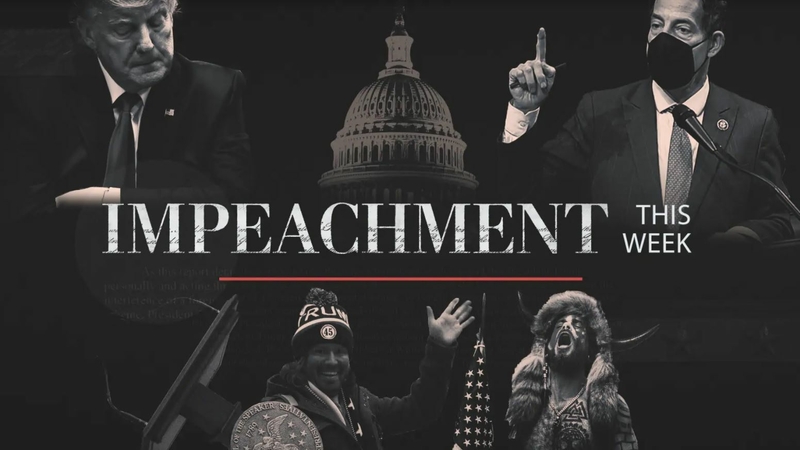
 John Earle Sullivan, 26, after his arrest Saturday in Utah on charges of participating in the attack on the U.S. Capitol. MUST CREDIT: TCSO/Tooele County Sheriff’s Office.
 WILMINGTON, DE ‐ January 15, 2021: President- elect Joe Biden in Wilmington, Del., on Jan. 15, 2021. MUST CREDIT: Washington Post photo by Demetrius Freeman.
 Photo by: Federica Valabrega — For the Washington Post

 President Donald Trump greets visitors and staff members as he walks to board Marine One and depart from the South Lawn at the White House on Tuesday, Jan 12, 2021. MUST CREDIT: Washington Post photo by Jabin Botsford
 Thomas V. Mike Miller in 2018. Washington Post photo by Marvin Joseph.
 The House votes to impeach President Trump earlier this week, paving the way for a Senate trial, whose shape is not yet clear. Washington Post photo by Melina Mara.

 Inmate firefighters watch as the El Dorado Fire burns a hillside near homes in Mountain Home Village, Calif., inside the San Bernardino National Forest on Sept. 9. MUST CREDIT: Photo by Kyle Grillot for The Washington Post.
 SootinClaimon.Com