[Philippines] Easy entry of 4 million Chinese raises fears of ‘soft invasion’
InternationalOct 29. 2020CHINESE PRESENCE Chinese workers help build the China-funded Estrella-Pantaleon bridge project to connect Mandaluyong and Makati cities. Sen. Francis “Kiko” Pangilinan is seeking a Senate investigation into the presence of 4 million Chinese nationals in the country since 2017, saying it has national security implications amid fears of an “orchestrated soft invasion” by China. —RICHARD A. REYES
By DJ Yap Philippine Daily Inquirer/ANN
MANILA, Philippines — The unhampered entry of millions of Chinese nationals into the Philippines may be the start of an “orchestrated soft invasion” by China, an opposition senator warned on Wednesday.
In a proposed resolution, Sen. Francis Pangilinan called for an inquiry into the “national security implications of the entry of around 4 million Chinese into the country since 2017.”
“It is worrying, especially considering we have issues [with China] in the West Philippine Sea,” he said.
Immigration rackets
The proposed inquiry in aid of legislation stemmed from the findings of a Senate committee that corrupt Bureau of Immigration (BI) officers had allowed the hitch-free entry of 4 million Chinese nationals since 2017 in exchange for billions of pesos in bribes through various rackets.
The moneymaking operations uncovered during hearings held by the committee on women, children, family relations and gender equality included the “pastillas” racket and the visa-upon-arrival (VUA) policy.
The panel chair, Sen. Risa Hontiveros, estimated that P40 billion had exchanged hands in these rackets.
“Given the lenient requirements for foreign national retirees and the seemingly unchecked entry of some 4 million Chinese nationals into the country, there is a need to look into whether this is an orchestrated ‘soft invasion’ of our country,” Pangilinan said in the proposed resolution he filed on Tuesday.
Cash-strapped neighbors
Soft invasion was the term used by Capt. Jim Fanell, former intelligence chief of the US Navy’s Pacific Fleet, to describe China’s strategy of “invading” its cash-strapped neighbors, especially the island nations in the region.
Fanell said in a November 2019 television interview that the Chinese were “coming in with soft power and lots of cash to buy out local officials, to gain access to ports and airfields, and resources that give them a controlling monopoly in the islands.”
Pangilinan noted that the hearings led by Hontiveros found that it was Department of Justice Order No. 41 issued by Justice Secretary Vitaliano Aguirre II in 2017 that paved the way for the virtually unhampered entry of Chinese nationals under the VUA policy.
Senators learned that of the 4 million Chinese who entered the country since 2017, 150,000 did so under the VUA.
Pangilinan also cited the recent disclosure by the Philippine Retirement Authority (PRA) that the Chinese comprised the biggest group of foreigners who had availed themselves of the special retirees residence visa (SRRV), which makes the Philippines their “second home” that they could freely enter anytime.
Soldier’s age
The PRA, an agency under the tourism department, said nearly 40 percent of the foreign retirees, or about 28,000, were Chinese. Many of them were as young as 35.
After Sen. Richard Gordon raised the alarm that retirees of “soldier’s age” could pose a national security problem, the PRA suspended issuing new SRRVs pending a review of the retirement program.
In his resolution, Pangilinan said China’s increased presence in the country was not limited to the millions of its nationals who had entered the Philippines since 2017.
“In July, the Philippine government protested the presence of more than a hundred Chinese vessels, which are believed to be part of China’s fishing militia, [at] Pag-asa Island and the West Philippine Sea,” he said.
“Filipino fishermen in the area who are civilians and have no military training, unlike their Chinese counterparts, are subjected to threats and harassment. Moreover, the country’s natural resources are exploited,” he added.
China funds
Pangilinan cited other soft invasion concerns involving the investment and infrastructure projects funded by China, as well as debt exposure, geopolitical risks, and sovereignty issues.
He said the government must not be tempted to sell out to China.
“The Philippines is for Filipinos. Some of our officials should not be blinded by money and exchange the Philippines for a few pieces of silver,” Pangilinan said.
Diplomats of South Korea and Japan held talks in Seoul on Thursday that were expected to focus on a prolonged row between the two countries over Tokyo’s wartime forced labor and export curbs.
The meeting between Kim Jung-han, director general for Asia and Pacific affairs at the foreign ministry, and his Japanese counterpart, Shigeki Takizaki, marked the first such talks since Japan’s Prime Minister Yoshihide Suga took office last month.
Takizaki arrived here Wednesday on a three-day visit.
Ahead of the talks with Kim, the Japanese official also met separately with Seoul’s top nuclear negotiator, Lee Do-hoon, for discussions on the Korean Peninsula and North Korea’s denuclearization. Takizaki doubles as Japan’s chief nuclear envoy.
His visit comes at a time when relations between Seoul and Tokyo remain badly frayed over the issue of compensating Korean forced labor victims and Tokyo’s export restrictions on Seoul imposed in retaliation for South Korean court rulings that ordered Japanese companies to pay damages to the victims.
South Korea has taken steps to auction off some of the South Korea-based assets owned by Nippon Steel Corp. to cash them out for the compensation.
Japan has warned of countermeasures if the procedure goes ahead and urged South Korea to come up with a solution, based on its claim that reparation issues stemming from the 1910-45 period when Korea was a Japanese colony were settled by a 1965 treaty that normalized their bilateral relations.
Also on the agenda for the talks was likely to be Japan’s potential discharge into the sea of contaminated water from its Fukushima nuclear plant, to which Seoul is paying close attention in terms of potential environmental impacts.
Thursday’s talks also marked the first in-person meeting between Kim and Takizaki since February, as the coronavirus pandemic has put restraints on physical meetings. Their last working level talks took place virtually in June. (Yonhap)
Indonesian health authorities confirmed Wednesday that the total number of COVID-19 cases has reached 400,000 eight months into the outbreak.
According to Health Ministry data released on Wednesday afternoon, there were 4,029 new cases on Wednesday, bringing the overall tally to 400,483. A total of 13,612 people have died of the disease, while 325,793 people have recovered.
Jakarta remains the country’s epicenter of the outbreak with 103,552 cases as of Wednesday, followed by East Java with 51,732.
The announcement was made as people began an extended weekend after the government declared Oct. 28 and Oct. 30 collective leave days for the public holiday celebrating the birthday of Prophet Muhammad (Maulid) on Thursday.
Epidemiologists warned that the long holiday weekend would be a test for the country.
National COVID-19 task force spokesperson Wiku Adisasmito urged people to consider all risks when deciding to go on a holiday. He reminded the public to adhere to the government’s strict health protocols on wearing masks and washing hands regularly.
He also encouraged offices to take anticipatory measures by taking note of employees with plans to go on vacation in regions that have been declared medium- or high-risk zones.
By The Washington Post · Robert Barnes · NATIONAL, POLITICS, COURTSLAW WASHINGTON – Democrats won two significant Supreme Court victories involving voting deadlines in key battleground states Wednesday, as the justices allowed extended periods for receiving mail-in ballots in Pennsylvania and North Carolina.
They declined to disturb decisions that allow Pennsylvania officials to receive ballots cast by Election Day and received within three days, while the grace period set by the elections board in North Carolina is nine days.
In both of the cases, the Republican Party and GOP legislators had opposed the extensions, and President Donald Trump has railed on the campaign trail about the mail-in vote.
Three conservative justices – Clarence Thomas, Samuel Alito Jr. and Neil Gorsuch – objected in both cases.
New Justice Amy Coney Barrett did not to participate in either case. Her decision did not signal a blanket recusal in election cases involving Trump, who nominated her, as Democratic senators sought for her to pledge during the confirmation process. Instead, Barrett indicated through a court spokeswoman that the cases needed prompt decisions andthat, having started work Tuesday, she did not have time to fully review the legal arguments.
The court in the past few days has confronted deadline extensions for mail-in ballots in three states. It did not allow one in Wisconsin championed by Democrats. The seemingly contradictory decisions appeared based on a difference noted by Chief Justice John Roberts Jr.: that the court should be reluctant to approve changes imposed by federal judges, as in Wisconsin, but view those imposed by state courts or agencies differently, as was the case in Pennsylvania and North Carolina.
Moreover, the issue in Pennsylvania, a state that proved vital to Trump’s election four years ago and is key to his reelection, might not be settled.
Thomas, Alito and Gorsuch signaled that they might want to revisit the case after the election, and even indicated the votes received after Election Day ultimately might not be counted.
The three penned a statement criticizing the ruling by the Pennsylvania Supreme Court that called for three extra days to receive mail-in ballots because of the crush of requests brought on by fears of the coronavirus pandemic, writing that it was probably unconstitutional.
“There is a strong likelihood that the State Supreme Court decision violates the Federal Constitution,” wrote Alito.
“The provisions of the Federal Constitution conferring on state legislatures, not state courts, the authority to make rules governing federal elections would be meaningless if a state court could override the rules adopted by the legislature simply by claiming that a state constitutional provision gave the courts the authority to make whatever rules it thought appropriate for the conduct of a fair election.”
The Pennsylvania Supreme Court decision to grant the extra time was based on a “Free and Equal Elections Clause” in the commonwealth’s constitution.
According to the majority, that provision requires elections to be “conducted in a manner which guarantees, to the greatest degree possible, a voter’s right to equal participation in the electoral process,” and affords courts “broad authority to craft meaningful remedies when required.”
The justices who voted not to accept the Republican request did not explain their reasoning, although the court said additional statements may be forthcoming.
Justice Brett Kavanaugh, who earlier this month had voted with the other three conservatives to grant a Republican request to stop the deadline extension in Pennsylvania, did not join Alito’s statement.
On Oct. 19, the Supreme Court’s 4 to 4 vote left the Pennsylvania court’s ruling in place. But Republicans renewed their request when it became clear that Barrett, Trump’s third appointee to the court, would be confirmed in time to make a last-ditch pitch.
Trump on Wednesday said at a news conference that he was depending on courts to keep states from counting ballots received after Election Day, even those clearly postmarked before then.
“Hopefully the few states remaining that want to take a lot of time after November 3rd to count ballots, that won’t be allowed by the various courts,” the president said.
The president apparently was referring to ballots received after Nov. 3, because states always are counting votes after Election Day, and do not certify the outcome for weeks.
Alito said there was not enough time to review the Pennsylvania court’s decision before the election.
But he noted that the denial of the motion to take it up now “is not a denial of a request for this court to order that ballots received after election day be segregated so that if the State Supreme Court’s decision is ultimately overturned, a targeted remedy will be available.”
With that in mind, Pennsylvania Attorney General Josh Shapiro, a Democrat, said in a statement the fight might not be over, and urged voters not to depend on the mail.
“The Commonwealth has taken careful steps to ensure all eligible Pennsylvania votes will be counted and to stave off further anticipated legal challenges,” he said. “We call on all voters to submit their mail-in ballots to a drop box or county election office as soon as possible.”
In the North Carolina case, a divided federal appeals court had upheld a decision of the North Carolina elections board to extend the deadline for receipt of mail-in votes postmarked by Election Day, calling the measure a “common sense change” at a time when the U.S. Postal Service is inundated with ballots.
In a 12-to-3 ruling, the U.S. Court of Appeals for the 4th Circuit rejected Republican efforts to block the extension, which would allow counting ballots received up to nine days after the election.
The dispute divided North Carolina’s government, where Republicans control the legislature but the governor and attorney general are Democrats.
Attorney General Joshua Stein defended the elections board, saying it was doing exactly what the legislature has empowered it to do.
“The board – a bipartisan body whose members are appointed by the governor from lists submitted by the two major political parties – unanimously concluded that the challenged measures were appropriate in light of the COVID 19 pandemic emergency and the resulting mail delays,” Stein’s brief to the Supreme Court said, referring to the disease caused by the novel coronavirus.
“In recent elections, the state board has frequently exercised its authority to extend statutory deadlines and make other adjustments to deal with exigent circumstances.”
For instance, in the past three years alone, the board has twice extended the absentee-ballot receipt deadline after hurricanes hit the state. “No one challenged those extensions,” Stein said.
In July, the Postal Service warned North Carolina that it might not be able to meet the state’s standards for return of absentee ballots, Stein said.
But Republican legislative leaders tried to block the extension in state and federal court. A district judge rejected their request for an injunction because of concerns about changing voting rules so close to an election. The lawmakers, joined by national Republican committees and the president, then asked the appeals court to intervene.
At the Supreme Court, House Speaker Timothy Moore and Senate President Philip Berger said that the extension could raise “the specter of a post-election dispute over the validity of ballots received during the disputed period in North Carolina.”
They said the actions of the bipartisan election board was an “an unprecedented effort to usurp the North Carolina General Assembly’s prerogative to regulate federal elections in North Carolina.”
Gorsuch agreed, in a dissent joined by Thomas and Alito.
“Last-minute changes by largely unaccountable bodies . . . invite confusion, risk altering election outcomes, and in the process threaten voter confidence in the results,” he wrote.
He noted that the court had turned down the extension in Wisconsin and said, “in some respects, this case may be even more egregious.”
As in the Pennsylvania case, he said the court owed deference to the legislature, which he said saw its work earlier in the summer undone by the elections board and state judges, who he said “worked together to override a carefully tailored legislative response to COVID.”
The Pennsylvania cases are Scarnati v. Boockvar and Republican Party v.Boockvar. The North Carolina cases are Moore v. Circosta and Wise v. Circosta.
Philadelphia imposes curfew, calls in National Guard as protests continue over Walter Wallace shooting
InternationalOct 29. 2020Around 1,000 demonstrators protested the fatal police shooting of Walter Wallace Jr. in Philadelphia. Wallace Jr. was fatally shot by two Philadelphia police officers after refusing to drop a knife he was holding. MUST CREDIT: Washington Post photo by Joshua Lott,
By The Washington Post · Robert Klemko, Katie Shepherd, Maura Ewing, Mark Berman, Griff Witte · NATIONAL, COURTSLAW, RACE PHILADELPHIA – The mayor imposed a curfew on Philadelphia on Wednesday and called in the National Guard following successive nights of rioting after police shot to death a Black man whose family said he was in the midst of a mental health crisis.
The moves by Philadelphia Mayor Jim Kenney, a Democrat, were aimed at curbing incidents of looting, fires and dozens of minor injuries to officers that officials said were caused by people taking advantage of the backlash against the shooting of Walter Wallace Jr. to commit crime. The unrest disrupted peaceful protests against police violence, including one that was called off Wednesday night in response to the imposed curfew starting 9 p.m.
“The looting that has taken place … is distressing to say the least, and it is unacceptable,” Kenney said in an afternoon news conference. Those carrying out mayhem, he added, are “doing a great disservice to the many others who want to exercise their First Amendment rights by protesting.”
Thousands of people have marched through the city in recent days, demanding justice for Wallace, who was 27, and an end to the discriminatory policing that they say has targeted Black residents.
“We’re out here to decimate the system that’s meant to decimate us,” said Mikal Woods, a 24-year-old Black man who lives in the West Philadelphia neighborhood that has been rocked by the shooting and subsequent protests. “They shot that man to kill him. Fourteen times.”
The order to shut down the city overnight came as Philadelphia’s police union demanded that authorities release information about the Monday afternoon shooting that has so far been kept out of public view. “Release what you have. Support your officers, back your officers and let’s get a handle on this thing,” said union president John McNesby, noting that Wallace was armed with a knife when he was shot.
Police Commissioner Danielle Outlaw declined, at least for now. She said officers’ body-cam footage and the audio from a 911 call would be released publicly, but not before Wallace’s family has the opportunity to review them. Outlaw said that would happen “in the near future,” but didn’t specify when.
The unrest in Pennsylvania’s largest city has unfolded in the waning days of a presidential race in which racial justice and law enforcement are both high on the agenda and the state could tip the balance. President Donald Trump and former vice president Joe Biden continued on Wednesday to offer markedly different responses to Wallace’s shooting, and its aftermath.
Biden has expressed sympathy for the Wallace family, vowed to prioritize reforms in the way communities respond to mental health crises and condemned destructive behavior, while expressing solidarity with protesters. On Wednesday, the Democratic nominee noted that Wallace’s family has urged calm and an end to the violence.
“I think to be able to protest is totally legitimate, totally reasonable,” Biden told reporters after voting in Delaware. “But there’s no excuse for the looting.”
Trump has not mentioned Wallace by name, only referring to his death obliquely, calling it “a terrible event.”
But he has repeatedly castigated Democratic officials in Philadelphia and Pennsylvania, blaming them for the disorder Monday and Tuesday nights.
“What I’m witnessing is terrible,” Trump said. “The mayor, or whoever it is, is allowing people to riot and loot and not stop them. It’s also just a horrible thing.”
The president said federal resources would be available “within one hour” if local officials asked.
Kenney on Wednesday said Trump “brings no positive help to any situation.” The mayor’s request for National Guard troops was approved by Pennsylvania Gov. Tom Wolf, a Democrat, who also on Wednesday signed an emergency proclamation authorizing state resources to be sent to the city.
Officials said the National Guard would be on the streets by Friday night, and that the forces would be assigned to protect buildings and other key sites.
Outlaw, the police commissioner, acknowledged Wednesday that the city had been caught off guard by the scale of the rioting and by the location. Much of Tuesday night’s looting took place at big-box stores in the city’s Port Richmond section, an area that she said had not been on the department’s radar as a potential target. She said as many as 1,000 people were involved, having converged on the site after probably having receiving word via a group text.
“We had zero information to warn us of this,” Outlaw said.
Police on Tuesday night made 81 arrests, mostly for burglary. Nearly two dozen officers were injured, most with cuts and bruises from thrown objects. One was hospitalized Monday night with a broken leg after being struck by a truck, the police commissioner said.
“They’re bringing bricks in backpacks,” she said. “We’re not talking about little stones or pebbles.”
Wallace died Monday after two Philadelphia police officers shot him multiple times while responding to a call reporting a man with a knife. His family said he suffered from mental health issues, which his doctors had been treating with medication. A lawyer for the family told the Associated Press on Tuesday that Wallace’s relatives had called for an ambulance to take him to the hospital for medical care, but police showed up instead.
A video of the fatal encounter raised questions about why officers approached a man in an apparent mental health crisis with guns drawn and why they did not first try to subdue Wallace with a less lethal weapon. Authorities have said the officers were not armed with Tasers due to budget restrictions that have prevented widespread distribution of the devices.
Wallace is among at least 806 people fatally shot by police so far this year as of Wednesday, according to The Washington Post’s database tracking such shootings. Mental health issues have been a consistent element of these fatal shootings since The Post began its database in 2015. This year, 1 in 5 fatal shootings by police have involved people who were suffering from mental health issues or in the midst of a crisis.
This recurring pattern has prompted questions about whether police have the training needed to respond to such issues and spurred calls for officials to find different ways to respond.
Officials have pleaded for patience as they investigate what happened when Wallace was killed. Authorities have released few details about the episode, saying they were still trying to understand what the officers knew when they encountered him and why they opened fire. Cellphone video shows Wallace advancing toward the officers when shots ring out.
On Tuesday, officers took a more aggressive tack than they had on Monday, filling the streets with lines of riot police blocking the path of demonstrators, who had gathered at Malcolm X Park in West Philadelphia and wound their way through residential streets.
“Who killed Walter Wallace?” protesters chanted. “No justice, no peace! No racist police!”
As protesters marched, a truck lit up with photos of Wallace rolled through the streets, a neon message displayed on its rear doors reading: “I don’t hate cops. I hate that cops don’t speak against the killing of Blacks by cops.”
Pascale Vallee, a 34-year-old graduate student studying public health, said the killing of Wallace was “shameful.” She said she saw his death as “the intersection of so many ‘-isms’: racism, ableism.”
“He needed social supports,” she added, “not bullets.”
As the protests spread out from West Philadelphia into several other parts of the city and grew increasingly volatile late Tuesday, the Philadelphia Police Department issued a request for residents near the unrest to stay home and remain indoors.
By 2:30 a.m. Wednesday, the protests near 52nd Street were broken up by police, who detained and arrested dozens as they marched toward angry crowds. Officers chanted, “Move, back! Move, back!” and repelled rocks, bricks, kicks and shoves with scuffed plastic shields and batons.
Walter Wallace Sr., the father of the man killed Monday, denounced the looting Tuesday evening. “They’re not helping my family; they’re showing disrespect,” Wallace Sr. told the Philadelphia Inquirer. “Stop this violence and chaos. People have businesses. We all got to eat.”
It was a message echoed late Wednesday afternoon by Bonitto Redley, 69, owner of Hill’s Barber Shop, as he prepared for the curfew to kick in.
“The people who are destroying property are not protesters,” said Redley, whose business has been a fixture in the neighborhood for more than 40 years. “They’re not worried about Wallace being dead. They’re not worried about his family. They’re robbers, losers.”
Trump, Biden push opposing strategies in closing days
InternationalOct 29. 2020Joe Biden and his wife, Jill, exit a polling place after voting in Wilmington, Del. In the final days of the campaign, Biden and President Trump have crystallized opposing messages on the pandemic. MUST CREDIT: Washington Post photo by Demetrius Freeman
By The Washington Post · Anne Gearan, Amy B Wang, John Wagner · NATIONAL, POLITICS
WASHINGTON – President Donald Trump pushed ahead Wednesday with a strategy for the closing days of the campaign that minimizes the threat from the coronavirus pandemic, misstates his record in confronting it and mocks Democratic nominee Joe Biden’s caution in campaigning amid a disease that has killed more than 225,000 Americans.
Biden, during remarks in Delaware, blasted Trump for what he characterized as recklessness in handling the pandemic as Trump held crowded rallies in Arizona.
With five days to go before Election Day on Nov. 3, the two candidates have crystallized opposing messages on a pandemic that has affected most aspects of American life, including voting.
Biden holds small, carefully staged events where he typically wears a mask and asks attendees to stand far apart. He blames Trump for failing to check the spread of the virus and calls the election a referendum on Trump’s leadership during the crisis.
Trump tells crowds that the pandemic is nearly over and that precautions such as school closures are themselves dangerous, while he assembles tens of thousands of people for political rallies despite mandates and public health advice against large gatherings.
“We’re rounding the turn, regardless,” Trump said near the start of remarks in Bullhead City, Ariz.
“Normal life will fully resume. That’s what we want, right? Normal life,” Trump said.
It is a message intended to project optimism not supported by science, as public health experts predict many more months of disruption. Trump is betting that his defiance and nonchalance – including about his own covid-19 diagnosis and hospitalization this month – will resonate with Americans fed up with pandemic restrictions.
“This election is a choice between a Trump boom and a Biden lockdown,” Trump said in Arizona, a battleground state he carried four years ago but where recent polls show a competitive race.
People standing behind Trump mostly wore masks, as recommended by public health authorities, but many in the larger crowd in front of him did not. Trump mocked masks, saying the virus can easily penetrate some of them, and he ridiculed the recommendation by California Gov. Gavin Newsom, a Democrat, that people replace their masks between bites when dining out.
“And boy, you know, when you have spaghetti and meat sauce, that mask is not looking” good, Trump said to laughter.
Trump does not wear a mask when campaigning. He has also complained that the news media is intentionally trying to undermine him by focusing heavily on the pandemic.
“Covid, Covid, Covid is the unified chant of the Fake News Lamestream Media,” he tweeted Wednesday. “They will talk about nothing else until November 4th., when the Election will be (hopefully!) over.”
Meanwhile, a drop in the stock market threatens to cloud Trump’s campaign message that he is delivering an economic recovery that will soon become a boom.
The Dow Jones industrial average fell 943 points Wednesday and is down nearly 9% since Sept. 2.
The sell-off that began two weeks ago has been triggered by a nationwide surge in new coronavirus cases and dimming prospects for an economic relief package in Congress.
Biden’s running mate, Sen. Kamala Harris, D-Calif., also campaigned in Arizona on Wednesday, while Vice President Mike Pence went to Wisconsin and Michigan, two states Trump narrowly carried in 2016 but where Biden holds now leads in recent polls. Pence has been widely criticized by Democrats and public health experts for continuing to travel despite at least five people in his office testing positive for the novel coronavirus last week.
Trump campaigned in both Midwestern states Tuesday, where he mocked pandemic restrictions imposed by Democratic governors.
Biden leads Trump by nine percentage points nationally, 52% to 43%, according to a Washington Post average of national polls since Oct. 12.
A pair of Post-ABC News polls released Wednesday show Biden narrowly ahead of Trump among likely voters in Michigan by 51% to 44% and ahead among likely voters in Wisconsin by 57% to 40%. Trump is also trailing in recent polls in Pennsylvania and Arizona, with a closer race in Florida.
The Biden campaign believes it is well-served by hammering the message that Trump has mishandled the pandemic and that his reelection would endanger the health care that Americans receive under the Affordable Care Act.
Biden on Wednesday lambasted what he called Trump’s premature declaration of victory over the coronavirus, and he pledged to put in the hard work needed to “get our lives back a lot more quickly.”
“Even if I win, it’s going to take a lot of hard work to end this pandemic,” Biden said in Wilmington, Del. “I’m not running on the false promise of being able to end this pandemic by flipping a switch.”
He promised that if elected, “we will deal honestly with the American people, and we’ll never, ever, ever quit.”
“That’s how we’ll shut down this virus so we can get back to our lives a lot more quickly than the pace we’re going now,” he said.
Biden pointed to the situation Tuesday night at the site of Trump’s rally in Omaha, where hundreds of attendees waiting to depart on buses stood in the cold for hours as police scrambled to help those most at risk.
“Several folks ended up in the hospital,” Biden said. “It’s an image that captured President Trump’s whole approach to this crisis.”
The image Trump cared about – of a packed house cheering him on – had already happened, Biden suggested.
“He gets his photo op, and he gets out,” Biden said. “He leaves everyone else to suffer the consequence of his failure to make a responsible plan. It seems like he just doesn’t care much about it.”
In the two weeks leading up to the election, Biden’s schedule has been relatively sparse compared with Trump’s. Biden on Monday visited one of his field offices in Chester, Pa., about 20 minutes from his home in Delaware, and on Tuesday traveled to Georgia to campaign in Warm Springs and Atlanta. On Wednesday he was back in Delaware, this time to meet with health experts advising him on covid-19.
Biden – who enjoys higher poll numbers on the question of who voters trust more to handle the pandemic – avoids shaking hands with supporters, opting instead to elbow bump if he comes close enough to them at all. He generally wears a mask, if not two, and at times has kept his mask on even while speaking from a lectern.
Social distancing is enforced at his rallies, sometimes with white circles drawn on the ground or spaced-out chairs. At a Florida car rally this week featuring former president Barack Obama, an announcer repeatedly reminded the crowd to stay within touching distance of their vehicles at all times.
“I don’t like the idea of all this distance, but it’s necessary,” Biden said at his car rally Saturday in Bucks County, Pa., where he spoke to rows of vehicles and heard honks instead of applause. “What we don’t want to do is become superspreaders.”
The Biden campaign confirmed Wednesday that it is dispatching Harris to Texas – traditionally a Republican state that Trump carried by nine percentage points in 2016 – amid fresh signs of a tight race there this year.
The campaign said Harris would make three stops Friday – in Fort Worth, McAllen and Houston – marking the first visit to the state this cycle by a member of the Democratic ticket. Democratic lawmakers in Texas were notified this week that the trip was in the works.
Confirmation of Harris’s plans coincided with a change in the state’s rating Wednesday by the Cook Political Report from “Leans Republican” to “Toss Up.” The publication noted Biden doesn’t need to carry the state to prevail in the electoral college but said it is “clear that it’s more competitive than ever.”
A Post average of recent polls shows Trump leading Biden in Texas by three percentage points.
Apple’s shifting supply chain creates boomtowns in rural Vietnam
InternationalOct 28. 2020Customers shop for phone cases at a makeshift market near the Van Trung Industrial Park in Bac Giang province, Vietnam, on Oct. 9, 2020. MUST CREDIT: Bloomberg photo by Linh Pham.
By Syndication Washington Post, Bloomberg · John Boudreau, Nguyen Dieu Tu Uyen · BUSINESS, WORLD, US-GLOBAL-MARKETS, ASIA-PACIFIC
Not long ago Vietnam’s Bac Giang province was one of the nation’s poorest regions, known for producing rice, lychees and poultry dubbed “running chicken.” That was before the global tech supply chain shifted its way.
Now officials in the rural area north of Hanoi host representatives from Apple and Hon Hai Precision Industry. The growth in foreign investment is almost doubling every year — even during the coronavirus pandemic — and the province forecasts the value of exports this year will reach $11 billion, a tenfold leap in six years. Residents have swapped loud, dirty motorbikes for new Honda two-wheelers while others drive Toyota SUVs and Mercedes sedans on freshly paved roads.
Buffaloes graze in front of a hotel and karaoke bar near the Van Trung Industrial Park in Bac Giang province, Vietnam, on Oct. 10, 2020. MUST CREDIT: Bloomberg photo by Linh Pham.
“Life is heaven now and it’s thanks to the factories,” said Nguyen Van Lanh, 64. His family, which once couldn’t afford to buy meat, runs boarding rooms for workers built with their factory salary savings. One relative with a loan business for plant employees drives a red Mercedes-Benz.
The boom in Bac Giang highlights how the shift in the world’s supply chains is touching regions previously left behind. Vietnam’s ability to attract more sophisticated manufacturing is accelerating with rising Chinese labor costs, the U.S.-China trade war and logistics vulnerabilities amid the epidemic, which the nation’s Communist leaders have so far successfully curtailed.
During the decades after the Vietnam War as the country opened its borders to foreign investors and trade, Bac Giang remained poor. Its 2010 per capita income was $650, about half that of the nation overall, according to government statistics. The region’s flood-prone plains produced low-yielding crops, so its residents looked for factory jobs some 1,700 kilometers from home in the south. Now the province is experiencing its first boom as per capita income is forecast at $3,000 this year.
Manufacturers are knocking on the doors of Vietnam’s northern provinces and committing billions of dollars to set up operations, including Samsung Electronics, where it is producing about half its smartphones. Apple assembly partner Pegatron plans to invest $1 billion in the northern port city of Haiphong, local media reported, following moves to Vietnam of other suppliers for the Cupertino, California company. Apple recently posted Vietnam job openings, including for a mechanical quality engineer, and managers for supply chain operations and government relations.
Vietnam’s success, though, is creating a swelling trade surplus with the U.S., its largest export market, reaching $34.8 billion by July. Driven in part by device shipments, the imbalance triggered tariff threats. U.S. Trade Representative Robert Lighthizer announced an investigation into Vietnam’s currency policy earlier this month.
For now, investments from electronics suppliers continue pouring in as other sectors struggle amid the pandemic. The country’s tourism revenue has been slashed by about 50% and garment and other factories are laying off tens of thousands of workers as exports in the trade-dependent economy stall. Economic growth is forecast to slow to 2%-3% in 2020 from last year’s 7.02%, though the government expects a recovery to 6%-7% between 2021 and 2025.
Vietnam’s low costs, political stability, investor-friendly policies, improving infrastructure and state-backed efforts to promote tech startups make the country appealing, said Gene Tyndall, a supply chain expert at Atlanta-based eMATE Consulting.
In the heart of Bac Giang, where cows still roam the streets, a six-lane thoroughfare now replaces a one-lane road. Almost two dozen industrial parks for factories are proposed as pile drivers and cranes dot the landscape. The local economy expanded by 10.9% in the first nine months of 2020 from a year earlier compared with 2.12% growth for the entire country during the same period.
“We are living the changing of the global supply chain,” said Nguyen Dai Luong, deputy chairman of the People’s Committee in Viet Yen district, where four of the province’s five operating industrial parks are located. The pace of manufacturers moving to Bac Giang has surged since 2016 as companies poured $3.8 billion into the province, a fourfold increase from the previous four years.
The government is building a river port for transporting parts and, at Apple’s request, provided land for workers’ housing near the 16-hectare complex of Luxshare Precision Industry, the world’s biggest manufacturer of AirPods, Luong said.
Bac Giang has nearly full employment, with residents of nearby provinces rushing in to chase the electronics gold rush at companies such as Luxshare. The Chinese company will hire 20,000 workers in the last four months of the year, bringing the total to 47,000 in his district, Luong said. The company employs 12,000 elsewhere in the province, he said.
Electronics assembly line workers can earn an after-tax salary of about $5,500 a year, including overtime and bonuses, more than the nation’s average annual salary of less than $3,000, Luong said.
Nguyen Thi Ha, 22, mixed concrete for a construction company before joining an assembly line making 10 million dong ($431) a month. “I used to earn about half of that working under the sun and sometimes in the rain,” said Ha, who declined to identify her Taiwanese employer.
Factory workers pack restaurants like Lao Chu Quan, downing pitchers of beer, plates of pork cooked on an outdoor rotisserie and fresh fish hot pot. “They spend freely,” said Nguyen Thi Ly, the 26-year-old manager whose family owns a Mazda automobile and five new motorbikes after having “almost nothing” before the factories came. “Our lives have changed, amazingly.”
The sudden growth comes with a cost: Electronics assembly lines are high-pressured. Hoang Phuong Duy, 30, participated in a brief September labor strike at Luxshare that was triggered by a change in overtime pay calculation, leading to tense standoffs between workers and supervisors who don’t speak Vietnamese.
Duy said the company quickly resolved the dispute to the workers’ satisfaction. “It’s very hard working on assembly lines,” he added. “We always have to be very fast with an intense concentration while working long hours.”
Vietnam’s challenge going forward is to ensure that education improves so the country can avoid the “middle-income trap” once factories leave as costs eventually rise and pivot to a high-skilled economy, said Scott Rozelle, a Stanford University development economist.
A high-quality education for future generations is the dream of Bac Giang residents such as boarding house owner Lanh, who as a child harvested rice from a “basket boat” on flooded fields where factories now rise up.
“We hardly had anything to eat and clothes to wear,” he said of his childhood. Gazing down at his 3-month-old granddaughter, he added: “She will have plenty of food to eat and the best clothes to wear. We will send her to a university so she can have more opportunities than we ever had.”
By The Washington Post · Erica Werner · NATIONAL, BUSINESS, CONGRESS WASHINGTON – President Donald Trump said Tuesday that the White House would approve a big stimulus package after the election and predicted that Republicans would retake control of the House of Representatives even though the GOP is widely expected to lose seats in the chamber next week.
“After the election, we’ll get the best stimulus package you’ve ever seen,” he said.
Trump’s comments came as the prospects of an economic relief deal appear to be withering after months of talks, a scenario that – combined with rising numbers of coronavirus cases – sent the stock market sharply lower Monday.
Congress left Washington until after the election without passing any new economic or health care relief measures even as the coronavirus pandemic surges and the economy sputters. Prospects for a stimulus deal remain in doubt and negotiations have largely been shelved after repeated failed attempts to broker a compromise.
Earlier Tuesday, Trump blamed House Speaker Nancy Pelosi, D-Calif., for the lack of an agreement, though his Twitter post had a grammatical mistake and it’s unclear what he meant.
“Pelosi only looking to Bail Out badly run Democrat Cities,” he wrote. “Tap, Tap, Taping us along. She has little interest in helping out the ‘people’.”
Talks faltered in part because the bipartisan urgency that the White House and Congress shared earlier this year evaporated over the summer as the November elections neared. Instead, the White House and Democratic leaders dug in during talks and never closed in on an agreement.
After days of bitterly partisan debate and a vote late Monday confirming Amy Coney Barrett to the Supreme Court, senators are headed back home to campaign for re-election. The House has been out of session for weeks, although Pelosi and Treasury Secretary Steven Mnuchin have continued to negotiate around a new $2 trillion relief bill.
Their talks showed scant evidence of progress, but neither Pelosi nor Mnuchin seems to want to be the one to say it’s over. Pelosi continues to insist she wants a deal before the election that would include another round of $1,200 stimulus checks, among other things. But at the same time, her rhetoric has shifted in recent days to emphasize the possibility of a bigger and better relief bill passing in future, with retroactive benefits — a scenario that would seem possible only under a Biden administration.
“The Democratic message to the American people is: ‘Help Is on the Way. It Will Be Safer, Bigger, Better and Retroactive,'” Pelosi wrote in a letter to House Democrats this week.
The inaction by Congress leaves the public without a lifeline, at a moment when covid cases and hospitalizations are on the rise in multiple midwestern states and elsewhere. An unprecedented $3 trillion stimulus Congress approved in the spring has largely run its course, with unemployment benefits, aid to small businesses, support for the airline industry, rental assistance and other programs expiring.
Despite fitful efforts at bipartisan talks, Congress has not acted since — ignoring pleas from economic leaders such as Federal Reserve Chairman Jerome Powell that more help was needed to boost the nascent recovery.
“As the covid pandemic surges again, the American people desperately need additional relief to deal with the economic fallout, but Speaker Pelosi’s intransigence and the Trump administration’s ineptitude have combined to deny it to them, at least until after the election,” said Michael Steel, a GOP strategist who was a top aide to former House Speaker John Boehner, R-Ohio.
There are multiple reasons for the collective failure. Trump’s approach was erratic, as he ping-ponged from calling off talks to demanding even more money than Pelosi. He never latched onto a consistent message, making it easier for congressional Republicans to ignore his haphazard directives as he lagged in polls. That added to Pelosi’s leverage at a moment when she’s expected to grow her majority in the November elections, eliminating any political imperative for her to make a deal.
In an interview on MSNBC late Monday, Pelosi pointed to White House chief of staff Mark Meadows’ comment over the weekend saying that “We are not going to control the pandemic.”
“This was big with Mark Meadows saying ‘We didn’t intend to control this.’ So, that gave us much more leverage, but the fact is we have to control the virus. We have to control the virus. But in addition to that, we cannot sell our souls,” Pelosi said. “I know, just say, ‘OK, well, let’s just do it, whatever way they want to do it. We’ll do it again.’ No. We’ve got to crush the virus.”
Senate Republicans under the leadership of Majority Leader Mitch McConnell, R-Ky., had little interest in the giant deal Pelosi and Mnuchin were negotiating, as they began to decouple their political fates from an unpopular president and eye future campaigns when a vote for enormous deficit spending could hurt more than it would help.
Throughout the debate on Barrett’s nomination, Democrats bashed McConnell and Republicans for jamming through a Supreme Court nomination instead of passing new covid relief. But the complaints fell on deaf ears as Republicans blamed Pelosi for the failure to act.
“Well, we’ve been working on coronavirus relief. Unfortunately, the speaker has not be able to agree to anything remotely reasonable,” McConnell said on Fox News Channel following the vote to confirm Barrett. “We can do two things at once. And we were trying to do two things at once. What we can do consistent with the Constitution, consistent with the fact there is a Republican president and a Republican Senate is confirm the vacancy to the Supreme Court.”
The next chance for action on Covid relief will come when Congress returns to Washington for a “lame duck” session following the election, though each sides negotiating position could change depending on the electoral results.
“We’ll come back in November,” said Senate Appropriations Chairman Richard Shelby, R-Ala. “The question might be, will there be something then?”
Chances for action in the lame duck are uncertain. Congress will be facing a Dec. 11 deadline when government funding will expire, requiring passage of new spending legislation to avoid a government shutdown. It’s possible new relief legislation could pass then.
If not, the country will likely have to wait until February for the next possible bill.
National Guard responds as protests over Walter Wallace killing engulf Philadelphia
InternationalOct 28. 2020Demonstrators protest the fatal police shooting of Walter Wallace Jr. on Tuesday night in Philadelphia. Wallace Jr. was fatally shot by two Philadelphia police officers after refusing to drop a knife he was holding. MUST CREDIT: Washington Post photo by Joshua Lott
By The Washington Post · Robert Klemko, Katie Shepherd, Maura Ewing · NATIONAL, POLITICS, COURTSLAW, RACE
PHILADELPHIA- On the second night of mass demonstrations over the fatal police shooting of a 27-year-old Black man, about 1,000 protesters marched through the streets of West Philadelphia on Tuesday demanding justice for Walter Wallace Jr.
Following a smaller protest that turned destructive on Monday, Pennsylvania Gov. Tom Wolf, a Democrat, authorized the National Guard to deploy troops Tuesday to help police protect property and quell unrest in the state’s largest city.
Monday’s demonstrations and looting left shops damaged and at least 30 officers injured, including one hospitalized with a broken leg after being struck by a truck. On Tuesday, police and protesters clashed again, but officers, aided by National Guardsmen, took a more aggressive tack, filling the streets with lines of riot cops who stopped marchers and made several arrests much earlier in the evening.
On Tuesday evening, a racially diverse crowd gathered at Malcolm X park in West Philadelphia, near the neighborhood where Wallace was shot and killed by police on Monday. The group wound through residential streets until their path collided with a line of police officers in riot gear. Protesters chanted directly to the police.
“Who killed Walter Wallace?” they asked. “No justice, no peace. No racist police.”
Wallace died Monday after two Philadelphia police officers shot him multiple times while responding to a call reporting a man with a knife. His family said he suffered from mental health issues, which his doctors had been treating with medication. A video of the fatal encounter raised questions about why officers approached an apparent mental health crisis with guns drawn and why they did not first attempt to subdue Wallace with a less lethal weapon, such as a Taser.
“We’re out here to decimate the system that’s meant to decimate us,” said Mikal Woods, a 24-year-old Black man who lives in the West Philadelphia neighborhood that has been rocked by the shooting and subsequent protests. “They shot that man to kill him. Fourteen times.”
“I’ve been afraid of the police every day of my life,” he added.
Some pockets of the city’s demonstrations remained calm as late evening turned to night. As protesters marched, a truck lit up with photos of Wallace rolled through a largely peaceful crowd in West Philadelphia. A neon message displayed on its rear doors read: “I don’t hate cops. I hate that cops don’t speak against the killing of Blacks by cops.”
Pascale Vallee, a 34-year-old graduate student studying Public Health, said that the killing of Wallace was “shameful.”
She said she saw his death as “the intersection of so many ‘-isms’: Racism, ableism.”
“He needed social supports,” she added, “not bullets.”
As the protests spread out from West Philadelphia into several other parts of the city and grew increasingly volatile late Tuesday, the Philadelphia Police Department issued a request for residents near the unrest to stay home and remain indoors.
“These areas are experiencing widespread demonstrations that have turned violent with looting,” the city’s Office of Emergency Management said in statement on Twitter Tuesday night.
According to a statement by the Philedelphia Police Department, people in the large crowd began to loot businesses near Castor and Aramingo Avenues in north Philadelphia just before 9 p.m.
Helmeted police armed with batons and cops with large riot shields clashed with protesters late Tuesday night. Officers tackled several people, hitting them with batons. It is unclear how many arrests had been made late Tuesday.
Tuesday night’s tension between protesters and police is nothing new, said Charles M, a local middle school math teacher who declined to give his last name.
“West Philly and the cops have had a problem for a long time,” he said.
The teacher, who is Black, stood to the side of the crowd, scanning it.
“My main reason for being out here is making sure people don’t mess it up,” he said.
He was on the lookout for “agitators,” who he said were generally white people dressed in all black with their faces covered. A cohort meeting this description did later wind through the crowd.
“They’re the ones that spray paint, they’re the ones that throw bricks,” he said. “When you talk with them, engage with them, they split.”
Carrie Lam to visit Beijing to discuss plans to revive economy
InternationalOct 28. 2020Hong Kong Chief Executive Carrie Lam Cheng Yuet-ngor meets the press at Central Government Offices on Oct 27, 2020. (PARKER ZHENG / CHINA DAILY)
By Wang Zhan China Daily/ANN
HONG KONG – Hong Kong’s Chief Executive Carrie Lam Cheng Yuet-ngor said on Tuesday she will travel to Beijing next week for a three-day visit to discuss plans to revive the global financial hub’s economy, which has been battered by the coronavirus crisis that came on the heels of anti-government protests.
Lam, speaking at a weekly news briefing ahead of an Executive Council meeting, said she would leave for Shenzhen next Tuesday before travelling to Beijing.
“My trip to Beijing this time is solely on the economic side that is in light of the economic situation, which of course is very serious in Hong Kong,” Lam said on Tuesday.
She will be accompanied by five principal officials – Secretary for Financial Services and the Treasury Christopher Hui Ching-yu, Secretary for Transport and Housing Frank Chan Fan, Secretary for Innovation and Technology Alfred Sit Wing-hang, Secretary for Food and Health Sophia Chan Siu-chee and Secretary for Constitutional and Mainland Affairs Erick Tsang Kwok-wai, as well as the Director of the Chief Executive’s Office Eric Chan Kwok-ki.
Lam will call on Beijing for three days, and her stops at Guangzhou and Shenzhen on the return leg will focus on the development of the Guangdong-Hong Kong-Macao Greater Bay Area as well as cooperation plans between Hong Kong and Shenzhen. Lam’s trip to the mainland is estimated to last four to five days. The CE said the delegation will solely focus on economic issues during the visit. She added that the trip will not affect the scheduling of Policy Address, currently expected to be delivered by the end of November.

 CHINESE PRESENCE Chinese workers help build the China-funded Estrella-Pantaleon bridge project to connect Mandaluyong and Makati cities. Sen. Francis “Kiko” Pangilinan is seeking a Senate investigation into the presence of 4 million Chinese nationals in the country since 2017, saying it has national security implications amid fears of an “orchestrated soft invasion” by China. —RICHARD A. REYES
  Shigeki Takizaki (Yonhap)
 Around 1,000 demonstrators protested the fatal police shooting of Walter Wallace Jr. in Philadelphia. Wallace Jr. was fatally shot by two Philadelphia police officers after refusing to drop a knife he was holding. MUST CREDIT: Washington Post photo by Joshua Lott,
  Joe Biden and his wife, Jill, exit a polling place after voting in Wilmington, Del. In the final days of the campaign, Biden and President Trump have crystallized opposing messages on the pandemic. MUST CREDIT: Washington Post photo by Demetrius Freeman
  Customers shop for phone cases at a makeshift market near the Van Trung Industrial Park in Bac Giang province, Vietnam, on Oct. 9, 2020. MUST CREDIT: Bloomberg photo by Linh Pham.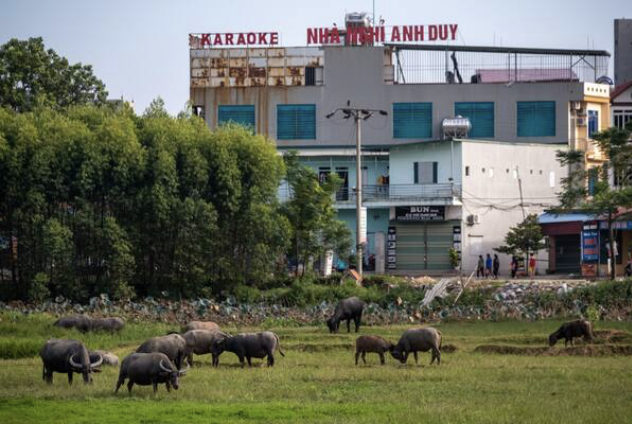

 Demonstrators protest the fatal police shooting of Walter Wallace Jr. on Tuesday night in Philadelphia. Wallace Jr. was fatally shot by two Philadelphia police officers after refusing to drop a knife he was holding. MUST CREDIT: Washington Post photo by Joshua Lott
  Hong Kong Chief Executive Carrie Lam Cheng Yuet-ngor meets the press at Central Government Offices on Oct 27, 2020. (PARKER ZHENG / CHINA DAILY)
  SootinClaimon.Com