Super typhoon Noru brings strong wind and heavy rain to the Philippines
SUNDAY, SEPTEMBER 25, 2022
Heavy rain and powerful winds lashed the Philippines’ northern island on Sunday as authorities issued an extreme emergency alert as super typhoon Noru approaches.
Typhoon Noru became a super typhoon “after a period of explosive intensification,” with sustained winds increasing to 185 km (115 miles) per hour from 120 kph on Saturday evening, the disaster agency said in an advisory.
It will continue intensifying and may make landfall on Sunday evening with 195kph winds and gusts to up to 240 kph (121 to 150 mph), it said.
Noru, the 11th tropical cyclone to hit the Philippines this year, will bring heavy to torrential rains over the capital region and nearby provinces on Sunday evening.
Founder of Tsuta, world’s first Michelin-starred ramen shop, dies at 43
SUNDAY, SEPTEMBER 25, 2022
Yuki Onishi, the founder and head chef of the world’s first Michelin-starred ramen eatery Tsuta, has died. He was 43. The cause of death was acute heart failure, according to media reports.
It was not immediately clear when he died, but Tsuta staff paid tribute to Onishi on Friday on the company’s website and social media.
“He was a meticulous and talented chef who enhanced the popularity of ramen across borders beyond Japan,” the message read. “While mourning with his relatives and friends, Tsuta staff worldwide will strive to continue his legacy.”
Tsuta, formally known as Japanese Soba Noodles Tsuta, is known for its trademark dish, shoyu (soya sauce) ramen with a chicken and seafood dashi (stock) base infused with black truffle oil.
Onishi was written into the pantheon of Japanese culinary greats when, in 2016, Tsuta became the first ramen shop to win a coveted Michelin star.
Ramen has long been seen in Japan as no-frills, quick and cheap. But Mr Onishi believed that the noodle dish could be elevated into a culinary art form by achieving a delicate balance of flavours.
He was born in 1979 in the city of Fujisawa in Kanagawa prefecture, south of Tokyo. His first brush with making ramen came at 18 after he graduated from senior high school when he worked at his father’s ramen shop, Nanae Aji no Mise Mejiro.
But he was torn between continuing to make a living from selling ramen and his interests in the fashion industry. At age 22, he decided to pursue his passion, working as a merchandiser for a Tokyo-based fashion company.
The role took him around fashion circuits overseas.
But these travels gave him a “culture shock” and the realisation that his calling was in spreading the charms of Japan’s cuisine in its use of dashi and emphasis on umami flavouring.
He quit his job at the age of 28, returning to work in the kitchen of his father’s shop.
In January 2012, Onishi opened Tsuta as a humble nine-seater eatery in the old-school Sugamo district in Tokyo.
The store caused a stir when it was first entered into the Michelin Bib Gourmand list of “good quality, good value restaurants” in 2015, before being awarded a star for four straight years from 2016 to 2019.
It opened its first overseas store in 2016, in Singapore’s Pacific Plaza.
Tsuta has been inducted into the domestic Ramen Walker Grand Prix’s hall of fame and has produced in-flight meals for Japan Airlines international flights. Tsuta cup noodles are also sold in Japan’s convenience stores.
Onishi shut the Sugamo outlet in November 2019, moving to the more cosmopolitan Yoyogi-Uehara district a month later.
The outlet has been closed since Tuesday due to “various circumstances”, the company said on social media.
Onishi’s elder brother Yoshimi, who runs the ramen shop Uzutokaminari in Fujisawa, wrote on Twitter: “In his lifetime, Yuki was indebted to many people. I thank everyone from the bottom of my heart on his behalf.”
He said the funeral was a quiet family affair so as not to add to the physical and mental stress on his elderly parents, but added: “To those who want to pay their respects, please eat Yuki’s ramen when Tsuta reopens.”
Overseas, Tsuta now has three outlets in Singapore – at Jewel Changi Airport, 313@Somerset and Takashimaya – as well as two in Bangkok that opened this year. A new store is due to open in New York in November.
Brian Chua, chief executive of Tsuta Global, said in a statement to The Sunday Times: “Chef Yuki dedicated his life in pursuit of ramen excellence, as he constantly thought of ways to improve the taste of his ramen. I remember him telling me that his aim was always to create the one and only original taste that differentiates him from the rest.”
He added: “Our team is focused on preserving Chef Yuki’s legacy, serving his signature ramen to the world.”
Malaysia’s next general election to cost over RM1 billion: Election commission
SUNDAY, SEPTEMBER 25, 2022
The cost of holding the coming general election will be over RM1bil, says Election Commission (EC) chairman Abdul Ghani Salleh.
“The estimated cost is about RM1.1bil,” he said when contacted by The Star recently.
“This is more than double the estimated RM500mil spent for the 14th General Election in 2018, and almost triple the RM400mil spent for the 13th General Election.”
He said the EC would also have to increase the manpower needed to carry out the coming polls by more than 100,000 persons.
“There will also be an increase in the number of personnel on duty, from 260,000 during the last general election to about 366,000 for the coming one,” he said.
Asia Metropolitan University paves the way for postgraduate learning
The increase in cost and manpower, he added, was due to the higher number of new voters following the implementation of Undi18 and automatic voter registration.
“As at Aug 16, a total of 21,160,936 registered voters were gazetted based on the July verified rolls,” Abdul Ghani said.
There were about 14.9 million registered voters in 2018.
In July 2019, the Dewan Rakyat passed the amendments to Article 119(1) of the Federal Constitution, reducing the minimum voting age in Malaysia from 21 to 18 years old and also allowing the automatic registration of voters.
Due to logistical issues and the outbreak of Covid-19 in 2020, the amendments were only implemented in Dec 15 last year.
The number of polling streams and centres would also be increased for the 15th General Election (GE15), Abdul Ghani said.
“There will be 9,560 polling centres during GE15 compared to 9,010 during the previous general election.
“The polling streams will also be increased to 38,990 compared to 29,054 previously,” he said.
Asked if the EC had begun ordering indelible ink for the coming polls, Abdul Ghani refused to comment.
The use of indelible ink was introduced in the general election in 2013 to prevent possible repeat voting.
Japanese Defence Minister says N.Korea’s ballistic missile launch unacceptable
SUNDAY, SEPTEMBER 25, 2022
Japan’s Defence Minister condemned North Korea’s firing of a ballistic missile toward its east coast on Sunday ahead of planned military drills by South Korean and US forces involving an aircraft carrier and a visit to the region by US Vice President Kamala Harris.
Defence Minister Yasukazu Hamada said North Korea’s repeated launches of ballistic missiles are a threat to the region and the international community which is even more unacceptable as the invasion of Ukraine is ongoing.
Japan estimates that the missile reached a maximum altitude of 50 km and may have flown on an irregular trajectory. Hamada said it fell outside Japan’s exclusive economic zone and there were no reports of problems with shipping or air traffic.
It was the first time the North carried out such a launch after firing eight short-range ballistic missiles in one day in early June.
Fiona slams Canada’s Atlantic coast, capsizing homes
SUNDAY, SEPTEMBER 25, 2022
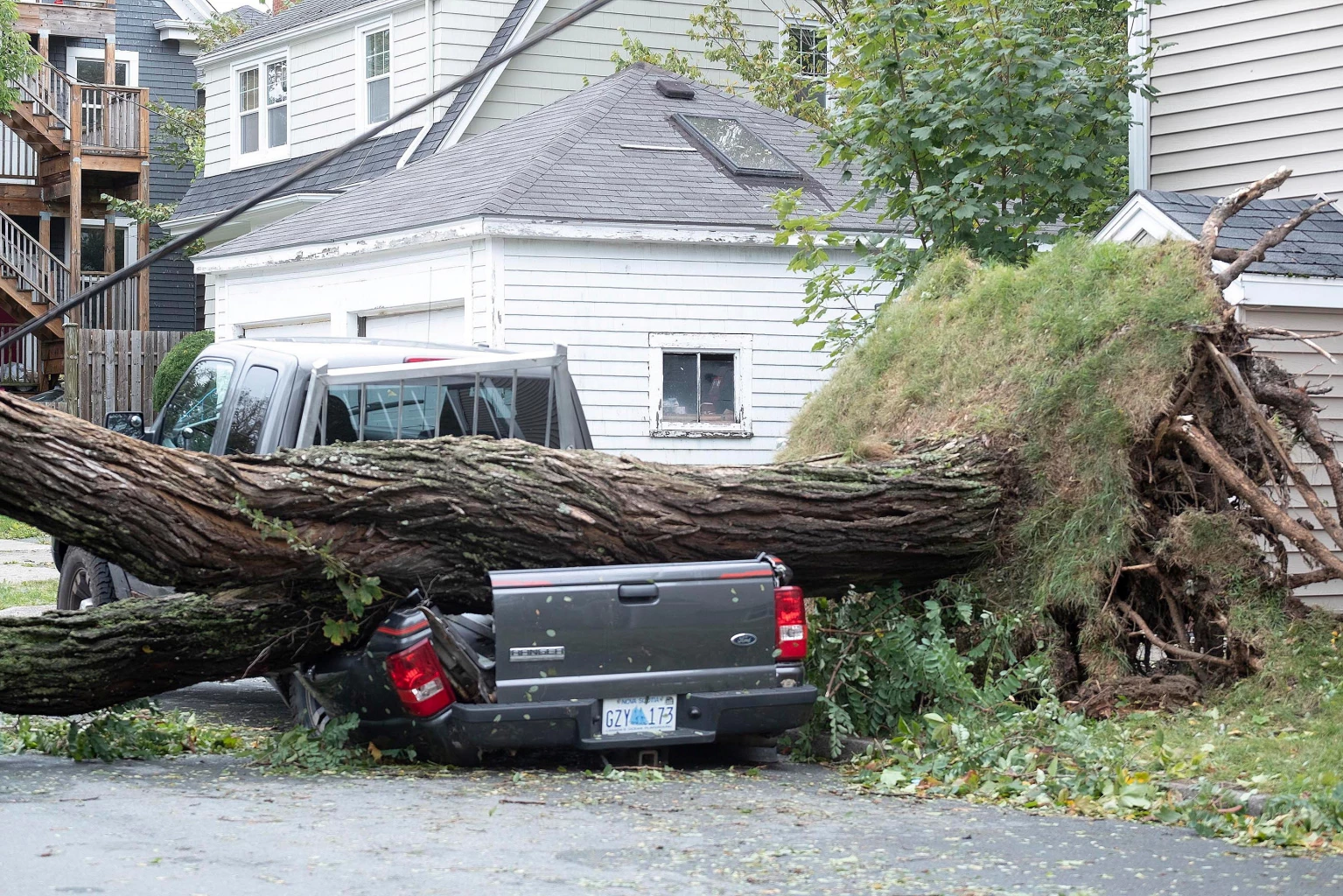
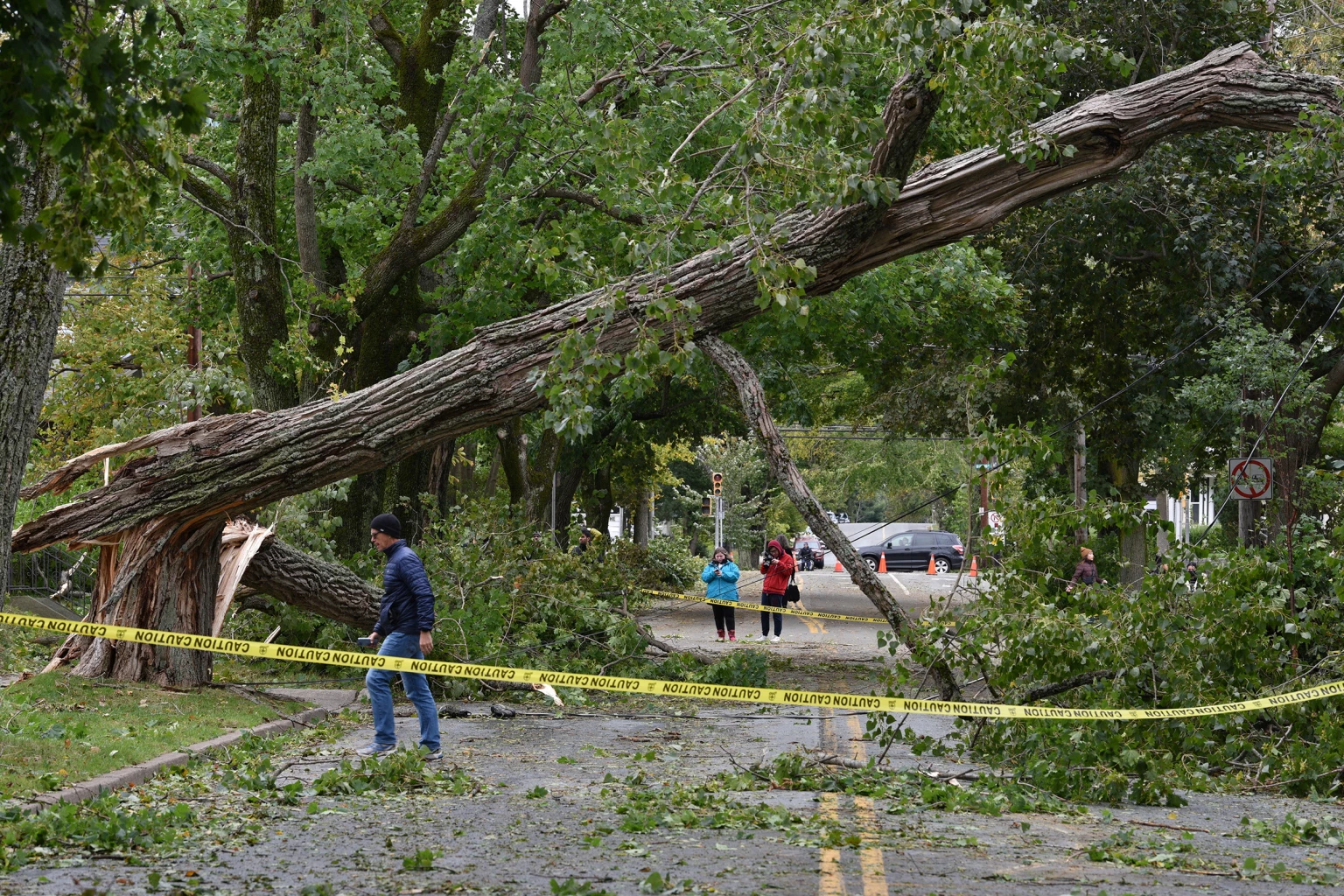
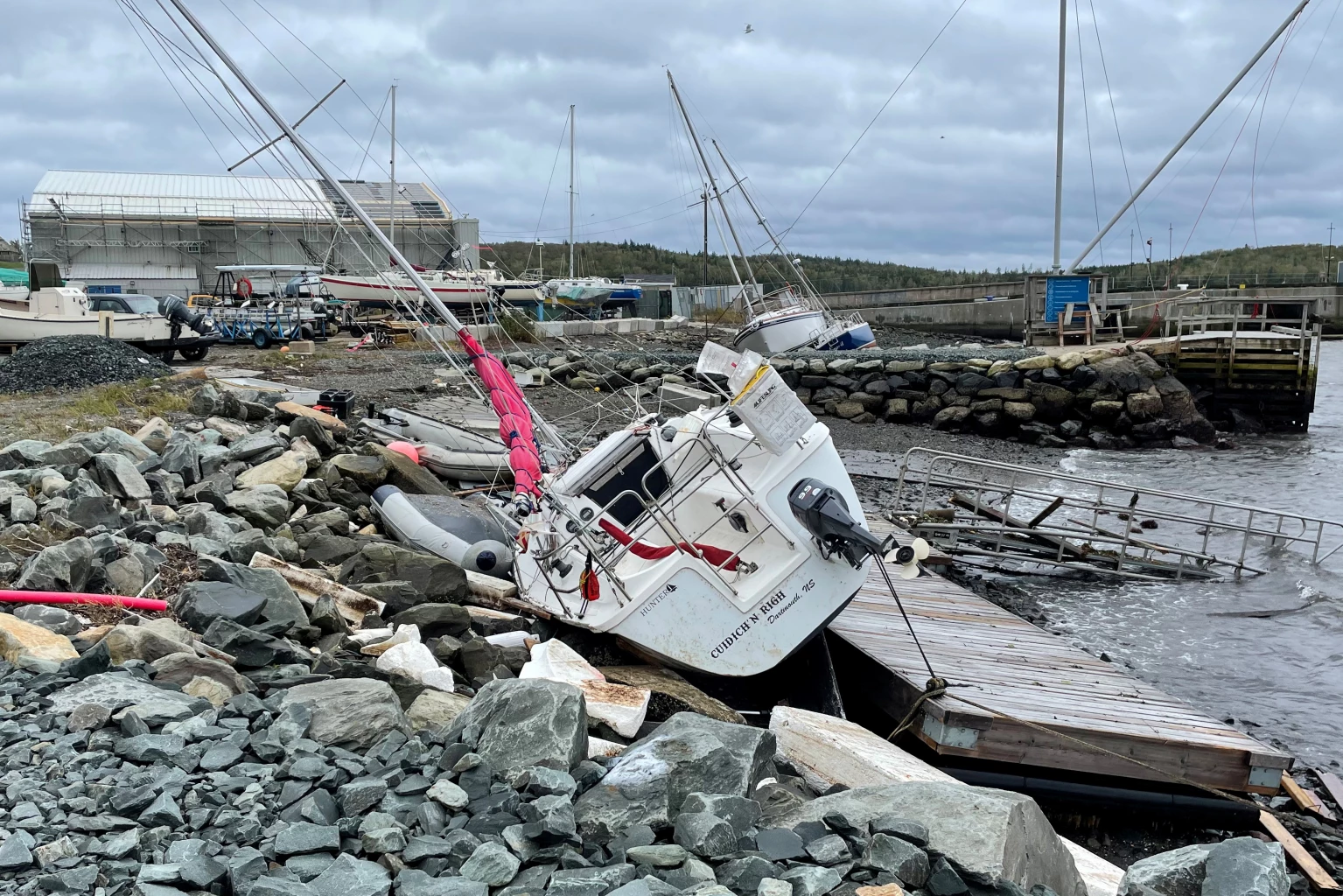
Canadian Prime Minister Justin Trudeau described storm Fiona as “very powerful and dangerous” on Saturday after it ripped into eastern Canada with hurricane-force winds, forcing evacuations, knocking down trees and powerlines, and even capsizing houses near the ocean.
“People have seen their homes washed away, seen the winds, ripped schools, roofs off. But as Canadians, as we always do in times of difficulty, we will be there for each other,” Trudeau said at a press conference.
The U.S. National Hurricane Center (NHC) said the centre of the storm, downgraded to Post-Tropical Cyclone Fiona, was now in the Gulf of St. Lawrence and losing some steam. The NHC cancelled hurricane and tropical storm warnings for the region.
Port aux Basques, on the southwest tip of Newfoundland with a population of 4,067, bore the brunt of the storm’s rage.
The mayor was forced to declare a state of emergency and evacuated parts of the town that suffered flooding and road washouts.
Mayor Brian Buttons from Channel-Port Aux Basques in Newfoundland said he was declaring a state of emergency on Saturday after powerful storm Fiona slammed into eastern Canada.
“My only message to you people right now is if you don’t leave now, we may not be able to get you out of there when we really need to, so you need to go now.” Mayor Buttons warned his citizens.
Several homes and an apartment building were dragged out to sea, Rene Roy, editor-in-chief of Wreckhouse Weekly in Port aux Basques, told the Canadian Broadcasting Corp.
“With the storm track the way it is, that puts southwestern parts of Newfoundland and Labrador right in that area of some of those extreme wind,” Bob Robichaud, a meteorologist with the Canadian Hurricane Centre, said at an online briefing by officials.
“That coupled with the fact that they’re wide open to the incoming surf and storm surge, that’s why you’re seeing what you’re seeing there right now,” he added.
Trudeau met on Saturday morning with members of a government emergency response team, and later told reporters that the armed forces would be deployed to help with the clean-up.
Trudeau had delayed his planned Saturday departure for Japan to attend the funeral of former Prime Minister Shinzo Abe but said he now would no longer make the trip. Instead, he said he would visit the storm-damaged region as soon as possible.
“The last thing I want to do is displace any of the extraordinary emergency teams and authorities who are rightly focusing on everything needed on the ground,” Trudeau told reporters. “But I will be out there to see people and to demonstrate that all Canadians stand with them as quickly as is responsible.”
Federal assistance has already been approved for Nova Scotia, Trudeau said, and more requests are expected.
Some 79% of customers, or 414,000, were without power in Nova Scotia, and 95%, or 82,000, had lost power on Prince Edward Island, utility companies said. Police across the region reported multiple road closures. The region was also experiencing spotty mobile phone service.
Fiona, which nearly a week ago battered Puerto Rico and other parts of the Caribbean, killed at least eight and knocked out power for virtually all of Puerto Rico’s 3.3 million people during a sweltering heat wave.
Fiona made landfall between Canso and Guysborough, Nova Scotia, where the Canadian Hurricane Centre said it recorded what may have been the lowest barometric pressure of any storm to hit land in the country’s history.
Ian Hubbard, the meteorologist for the Canadian Hurricane Centre, told Reuters it appears Fiona lived up to expectations that it would be a “historical” storm.
Storms are not uncommon in the region and typically cross over rapidly, but Fiona is expected to impact a very large area.
While scientists have not yet determined whether climate change influenced Fiona’s strength or behaviour, there is strong evidence that these devastating storms are getting worse.
A social media user captured Storm Fiona battering Nova Scotia on Saturday as it ripped into eastern Canada with hurricane-force winds, forcing evacuations, and knocking down trees and powerlines.
The video showed lightning forks and trees bending in the wind, as well as sparks coming from powerlines damaged in the storm.
Image released showing Queen resting place in Windsor
SUNDAY, SEPTEMBER 25, 2022
Buckingham Palace published a photograph on Saturday from Queen Elizabeth’s final resting place at the royal chapel in Windsor, featuring a ledger stone bearing her name and those of her parents, and husband Prince Philip.
The stone, made of black Belgian marble, sits in the King George VI Memorial Chapel which Queen Elizabeth commissioned in 1962 as a burial place for George VI, her father. The queen was interred there on Monday after a state funeral in Westminister Abbey.
The brass lettering on the stone reads “George VI 1895-1952 / Elizabeth 1900-2002” on the top two lines, followed by a garter star and then “Elizabeth II 1926-2022 / Philip 1921-2021” on the bottom two lines.
Queen Elizabeth’s sister, Princess Margaret, is also interred at the chapel, at Windsor Castle west of London.
Elizabeth died on Sept. 8 at Balmoral Castle, her summer home in the Scottish highlands, after 70 years on the throne. Her son Charles became King Charles III.
‘It is nonsense’ Ukrainians rebuff Russia’s referendums on occupied territories
FRIDAY, SEPTEMBER 23, 2022
Ukrainians rebuffed on Friday Russia’s plans to hold referendums on occupied territories of Ukraine. The referendum came just two days after Russia announced the mobilization of 300,000 reservists.
“This referendum will not give Muscovy no upper hand. All of it (referendum) is a nonsense, bluff, and political manipulation to frighten us and the Western countries with their nuclear stuff,” said Oleksandr Yaroshenko, a 65-year-old local resident.
Eugenia Gapchinska, an artist, said that she is not afraid of Putin possibly executing a nuclear strike as an answer for attacking the territories he considers Russian.
“I don’t care what Putin does. We have been ready for a long time either we will die or live in a free country,” She told Reuters.
Russian-installed leaders in occupied areas of four Ukrainian regions set out plans for referendums on joining Russia this week.
Russian officials portrayed the move as one that would give Moscow a claim to territory that it could defend with any means possible.
Ukraine dismissed it as a stunt by Russia to try to reclaim the initiative after crushing losses on the battlefield.
Water found in samples brought from asteroid Ryugu
FRIDAY, SEPTEMBER 23, 2022
Water has been found in samples from the asteroid Ryugu brought to Earth by Japan’s Hayabusa2 explorer, according to a study published in the US journal Science.
It is the first-ever discovery of water that takes a liquid form at room temperature from any sample collected outside Earth, according to the study by a team of researchers mainly from Tohoku University and the Japan Aerospace Exploration Agency.
The outcome is expected to lead to a better understanding of the origin of the ocean on Earth.
Tohoku University professor Tomoki Nakamura and his teammates analyzed 17 grains of Ryugu sand using systems including the SPring-8 large synchrotron radiation facility in Sayo, Hyogo Prefecture, western Japan.
The team examined the sand grains, 1 to 8 millimetres in size, in detail, looking into their internal structures, mineral composition, hardness and other properties.
As a result, water was found trapped inside tiny holes on iron sulfide crystals inside the sand grains.
It was carbonated water containing carbon dioxide as well as salts and organic matter. The water is believed to have been trapped inside when the crystals formed inside Ryugu’s parent body.
Simulations based on the analysis result have found that the parent body formed on the outer rim of the solar system about 2 million years after the birth of the solar system 4.6 billion years ago.
The parent body was about 100 kilometres in diameter, and the volume of water on it was equal to that of rock. It moved into an orbit closer to Earth and collided with another astronomical body, creating pieces that later gathered to form Ryugu, whose diameter is about 900 meters.
In this process, water mostly evaporated into space, so there is very little left in the present-day Ryugu.
“What we found is the same water that existed abundantly on the parent body. Such astronomical bodies supply water to Earth if they collide with it,” Nakamura said.
“The water contains organic matters and salt, so we found evidence directly linked to the origins of the ocean and organic matters on Earth,” Nakamura said.
Sex crime chat room still near us, this time using deepfakes
FRIDAY, SEPTEMBER 23, 2022
Digital chat rooms that share or sell deepfake pornography content remain prevalent despite a new provision to punish related crimes implemented two years ago in South Korea.
Deepfake content refers to digitally manipulated videos and images that are hard to distinguish from genuine content. Most pornographic deepfake content grafts a person’s face — usually an acquaintance or celebrity — onto sexually explicit videos.
According to ReSET, a digital sex crime victim support group, one of the Telegram chat rooms they are monitoring had 2,193 users waiting to enter the upper-grade room as of Sept. 16, the group said on Thursday.
Like “Nth Room” case, in which a cartel distributed sexually exploitative content through Telegram, this cartel is also using several chat rooms divided into stages to avoid investigation.
According to a report that South Korean Rep. Her Euna from People Power Party received from the Korean National Police Agency, a total of 264 cases of distributing deepfake content were reported from 2021 to August this year, but suspects were arrested in only 121 of them.
Recently, Park Ji-hyun, former co-chair of the emergency steering committee for the Democratic Party of Korea who contributed to the initial investigation of the “Nth Room” and the “Baksa Room” cases, stressed the seriousness of the deepfake crime by revealing that there is a Telegram chat room targeting her, producing and distributing content with her face and information.
The main reason that hinders investigation is the use of social media operated by overseas corporations and servers, on which the majority of digital crime takes place, an activist at ReSET pointed out. This has fueled calls for Korea to join the Convention on Cybercrime, also known as the Budapest Convention.
The convention, created in 2001 under the lead of the Council of Europe, aims for efficient judicial cooperation among member countries on cybercrimes. Currently, 67 countries are participating. The police decided to review joining the Budapest Convention by the first half of next year.
Brazil’s indigenous women run for Congress to fight Bolsonaro policies
FRIDAY, SEPTEMBER 23, 2022
A record number of indigenous leaders, most of them women, are running for federal office in Brazil’s election next month, in a backlash against the policies of President Jair Bolsonaro.
As the destruction of the Amazon rainforest, invasions of indigenous lands and violence against their peoples have surged under Bolsonaro, several of these candidates say they are joining the political fray with a sense of urgency.
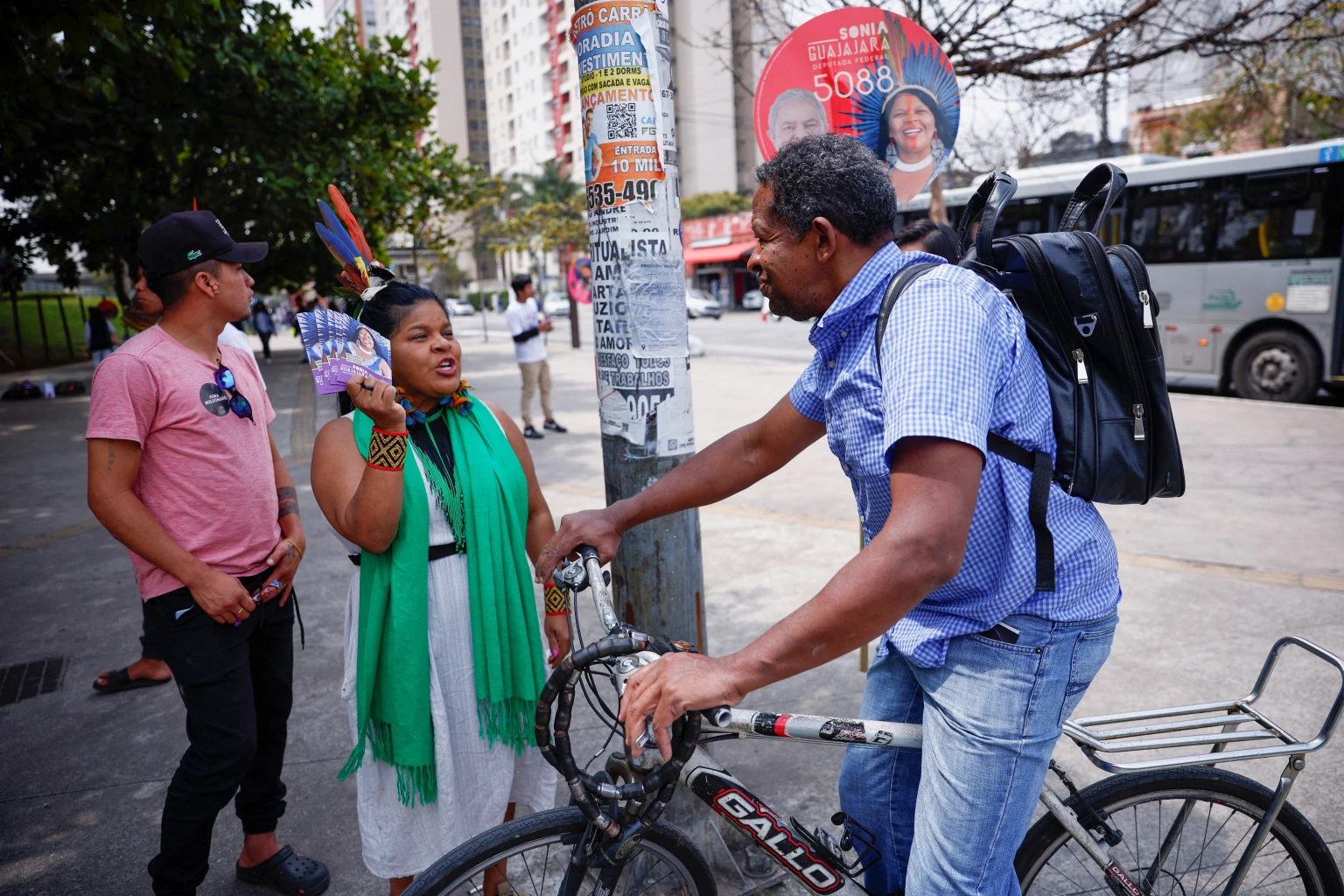
For Sonia Guajajara the election is crucial. Guajajara is the head of Brazil’s main indigenous umbrella organization, the Articulation of Indigenous Peoples of Brazil (APIB), and is running for Congress. “Today, it is the women who are taking up the fight and leading the struggle of indigenous people in Brazil.”
Brazil’s electoral authorities have registered 60 indigenous candidates for the two houses of Congress this year, including 31 women – the most on record.
Many say their main objective is to unwind the policies of Bolsonaro, who has stopped demarcating indigenous territory and pushed for mining and industrial farming on existing reservations, emboldening violent land grabs and illegal miners.
Bolsonaro says indigenous people should take up the customs and economic activities of their fellow Brazilians and has decried the protection of native reservations as a barrier to progress.
His office and federal indigenous agency FUNAI did not respond to requests for comment.
By contrast, Bolsonaro’s leftist rival, former President Luiz Inacio Lula da Silva, has vowed fresh funding to curb deforestation and protect indigenous rights, proposing a new ministry attending to Brazil’s 1 million indigenous people.
“We want a ministry with an indigenous minister,” Guajajara told Reuters.
Indigenous leaders are also pushing to block legislation backed by Bolsonaro and the powerful farm caucus to rule out new reservations on land that was not occupied by native people in 1988 when Brazil’s constitution was ratified. Indigenous people say that policy is illegal because their land rights are guaranteed by the constitution even if they had been evicted.
“My worst fear is that Bolsonaro will be reelected and my greatest hope is Lula will occupy power,” said Tereza Arapium, running for a seat in the Rio de Janeiro state legislature.
Deforestation of Brazil’s Amazon has risen to a 15-year high under Bolsonaro, threatening the habitat of many of Brazil’s roughly 300 tribes, considered by environmentalists to be essential in protecting the rainforest.
“Our relationship with the land, has saved the environment, the savannah, the Amazon, the Atlantic Forest, the Pampas and the Caatinga region,” said Celia Xakriaba, who is running for Congress from the state of Minas Gerais.
Another priority cited by indigenous candidates is reforming institutions meant to protect their peoples and territories, along with the biodiversity of the rainforest.
They say FUNAI will have to be restored after Bolsonaro gutted the agency by reducing staff and replacing anthropologists with police and former military officers.
Brazil’s first indigenous congressman, the Xavante tribesman Mario Juruna, was elected in 1982. He carried a tape recorder because he said he did not trust the word of non-indigenous Brazilians. Four decades passed before the election of another indigenous representative in Congress – a woman, Joenia Wapichana, from the state of Roraima.
In recent years, women have been increasingly common in tribal leadership roles, with more female chieftains taking up the fight to defend their rights.
” I strongly believe in this power, in the strength of these women, in the ability of these women today to be in Congress making this journey and raising these voices in favour of this collective,” said Vanda Witoto, running for Congress from Manaus, the largest city in the Amazon.
They face a steep challenge in a lower house where farm interests and a large evangelical caucus hold sway, frequently attacking indigenous rights, she said.
Witoto said they have a gigantic task ahead to try to stop bills that ‘open up their territories to mining and agribusiness.