Wind And Solar Top 10% Of Global Power Generation For First Time

#SootinClaimon.Com : ขอบคุณแหล่งข้อมูล : หนังสือพิมพ์ The Nation.

https://www.nationthailand.com/world/40020300

Wind and solar top 10% of global power generation for first time

Wind And Solar Top 10% Of Global Power Generation For First Time

WEDNESDAY, SEPTEMBER 21, 2022

Renewables Made A Record Contribution To Global Grids In 2021, But Coal-Fired Power And Emissions Jumped To New Highs, According To BloombergNEF’s Power Transition Trends

The world’s wind and solar projects combined to meet more than a tenth of global electricity demand for the first time in 2022, according to research company BloombergNEF (BNEF).

At the same time overall electricity demand, production from coal-fired power plants, and emissions all surged in 2021 as the global economy regained its footing following the Covid-19 pandemic.

Michael R. Bloomberg, UN Secretary General’s Special Envoy for Climate Ambition and Solutions, and Founder of Bloomberg LP and Bloomberg Philanthropies said: “New spikes in coal generation are a troubling sign for the economy, our health, and the fight against climate change. This report should be a rallying cry to leaders around the world that the transition to clean energy requires bigger and bolder actions, including actions that empower nations that have contributed the least to climate change – but bear many of its worst consequences – to make progress tackling it.”

With nearly 3,000 terawatt-hours of electricity produced, wind and solar accounted for a combined 10.5% of global 2021 generation, BNEF found in its annual Power Transition Trends report.

Wind’s contribution to the global total rose to 6.8% while solar climbed to 3.7%.

A decade ago, these two technologies combined accounted for well under 1% of total electricity production. In all, 39% of all power produced globally in 2021 was carbon-free. Hydro and nuclear projects met just over one-quarter of the world’s electricity needs.

Wind and solar top 10% of global power generation for first time

Every year since 2017, wind and solar have accounted for the majority of new power-generating capacity added to global grids. In 2021, they hit record three-quarters of the 364 gigawatts of new capacity built. Including hydro, nuclear and others, zero-carbon power accounted for 85% of all new capacity added.

“Renewables are now the default choice for most countries looking to add or even replace power-generating capacity,” said Luiza Demôro, head of energy transitions at BloombergNEF. “This is no longer due to mandates or subsidies, but simply because these technologies are more often the most cost-competitive.”

Solar continued to expand at a particularly fierce pace in 2021, both in terms of new capacity additions and new markets. Solar was half of all global capacity added, at 182 gigawatts. Its contribution to global grids topped 1,000 terawatt-hours for the first time.

Solar has also become essentially ubiquitous. In nearly half of all countries tracked by BNEF where some capacity was added, solar was the top choice in terms of volume. At least 112 countries now have at least one megawatt of solar capacity installed.

Despite the incredible inroads renewables have made, the Power Transition Trends report paints a stark picture of the enormous work that remains for the power system to address its role in climate change.

As the global economy recovers from the Covid-19 pandemic, electricity demand surged 5.6% year on year, putting new strains on existing infrastructure and fossil fuel supply chains.

Lower-than-expected production from hydro plants and higher natural gas prices also helped put coal-fired power back in the spotlight in more markets.

Production from coal plants set records by jumping 8.5% from 2020-2021 (up 750 terawatt-hours on a net basis) to 9,600 terawatt-hours. Over 85% of that generation came from 10 countries, with China, India and the US alone accounting for 72%.

Meanwhile, countries continued to complete the construction of new coal plants in 2021, and coal still accounts for the single largest share of global capacity at 27%. One small bright spot: the speed at which new coal is being added to the grid is slowing. Just 13 gigawatts of new coal-fired capacity were completed in 2021, down from 31 gigawatts in 2020 and 83 gigawatts in 2012.

Nonetheless, the result was a commensurate 7% spike in global CO2 emissions from the power sector in 2021 compared to 2020. Power-sector emissions set a new high at 13,600 megatons of CO2, BNEF estimates.

“It was a year of highs and highs, for the best and worst reasons,” said Ethan Zindler, head of Americas at BNEF. “Renewables grew very fast, but coal’s comeback and the fact that countries – including those that have pledged to achieve net-zero emissions – continue building the coal is really disconcerting.”

BNEF’s Power Transition Trends report was produced in partnership with Bloomberg Philanthropies and will be officially released at the United Nations Climate Action: Race to Zero and Resilience Forum in New York today.

Angelina Jolie Visits People Affected By Floods In Pakistan

#SootinClaimon.Com : ขอบคุณแหล่งข้อมูล : หนังสือพิมพ์ The Nation.

https://www.nationthailand.com/world/asia-pacific/40020295

Angelina Jolie visits people affected by floods in Pakistan

Angelina Jolie Visits People Affected By Floods In Pakistan

WEDNESDAY, SEPTEMBER 21, 2022

Humanitarian, Activist And Hollywood Star Angelina Jolie Arrived In Pakistan On Tuesday Afternoon To Support And Directly Speak To Families Affected By Floods.

According to a press release issued by the International Rescue Committee, Jolie has arrived to witness and gain an understanding of the situation and to hear from people about their needs and steps to prevent such suffering in the future.

The actor reportedly arrived in Dadu’s Zamzama oil fields via helicopter and used a boat to survey the area in Johi and its surrounding areas. She is expected to provide aid to flood-affected people.

Jolie previously visited Pakistan in 2010 and 2005 to meet victims of the earthquakes. She is currently visiting as part of the International Rescue Committee’s (IRC) emergency response operations.

The Maleficent actor will highlight the urgent support needed for the people of Pakistan and long-term solutions to address the crises of climate change and human displacement.

In the press release, the IRC hoped that her visit will prompt the international community — particularly the US which contributes the most to carbon emissions — to act and provide urgent support to countries bearing the brunt of the climate crisis.

IRC Pakistan Country Director Shabnam Baloch said, “The climate crisis is destroying lives and futures in Pakistan, with severe consequences, especially for women and children. The resulting economic loss from these floods will likely lead to food insecurity and an increase in violence against women and girls. We need immediate support to reach people in urgent need, and long-term investments to stop climate change from destroying our collective futures. With more rains expected in the coming months, we hope Angelina Jolie’s visit will help the world wake up and take action.”

The Committee’s latest assessment reveals that people are in urgent need of food, clean drinking water, shelter and healthcare. A survey reported that women and young girls have no access to menstrual hygiene products either. The IRC has reached more than 50,000 women and girls with humanitarian assistance, including hygiene kits to address the sanitary concerns raised by women.

Dawn

Asia News Network

Asean Sets Up Panel To Review Thorny Issues Affecting Trade Deal With India

#SootinClaimon.Com : ขอบคุณแหล่งข้อมูล : หนังสือพิมพ์ The Nation.

https://www.nationthailand.com/world/asean/40020294

Asean sets up panel to review thorny issues affecting trade deal with India

Asean Sets Up Panel To Review Thorny Issues Affecting Trade Deal With India

WEDNESDAY, SEPTEMBER 21, 2022

THE NATION

Asean Economic Ministers Set Up A Joint Committee To Hold Talks With India On Issues That Are Obstructing A Free Trade Deal, Especially The Requirement For Goods To Show The Country Of Origin, Which Is Hard To Comply With, The Vice Commerce Minister Said On Wednesday.

Sansern Samalapa said the committee was established during the 19th Asean Economic Ministerial Meeting in Cambodia on September 16.

Sansern was assigned by Commerce Minister Jurin Laksanawisit to attend the meeting on his behalf.

Apart from setting up the committee, the meeting endorsed the scope for reviewing the Asean-India Trade in Goods Agreement, or AITIGA.

The committee will be in charge of holding talks on reviewing the AITIGA, which came into effect on January 1, 2010.

So far, India has reduced import tariffs to zero per cent on 73 per cent of goods imported from Asean countries, Sansern said.

But, he hastened to add, Thai companies have been receiving little benefit from the free-trade agreement because of the strict requirement that goods must show proof of the country from which they originate.

Asean sets up panel to review thorny issues affecting trade deal with IndiaAs a result, Sansern said, the renegotiations would be a good chance to review the issue to respond to the current manufacturing structure of Asean countries. The talks would also touch on other obstacles coming in the way of the free-trade agreement between India and Asean, Sansern added.

During the meeting, the Asean ministers also discussed economic cooperation with the Asean-India Business Council.

The council called for a review of the AITIGA to be more comprehensive and to cover more products, Sansern said.

Asean sets up panel to review thorny issues affecting trade deal with IndiaHe said the council also called on Asean and India to make customs clearance more convenient for companies on both sides.

Last year, the value of bilateral trade between Asean and India was US$91.49 billion (3.37 trillion baht), an increase of 39.26 per cent from the previous year.

Asean exported goods worth $53.7 billion and imported $37.7 billion worth of products.

The value of trade between Thailand and India was $14.94 billion, an increase of 52.52 per cent, with the kingdom’s exports totalling $8.5 billion and imports amounting to $4.3 billion.

THE NATION

ADB Lowers Developing Asia Growth Outlook As Global Risks Mount

#SootinClaimon.Com : ขอบคุณแหล่งข้อมูล : หนังสือพิมพ์ The Nation.

https://www.nationthailand.com/world/asia-pacific/40020293

ADB Lowers Developing Asia Growth Outlook as Global Risks Mount

ADB Lowers Developing Asia Growth Outlook As Global Risks Mount

WEDNESDAY, SEPTEMBER 21, 2022

The Asian Development Bank (ADB) Again Lowered Its Forecasts For Economic Growth In Developing Asia And The Pacific, Amid Mounting Challenges That Include Increased Monetary Tightening By Central Banks, Fallout From The Russian Invasion Of Ukraine, And Covid-19 Lockdowns In China (PRC).

In September, the ADB lowered its economic forecast for Thailand from 3.0 per cent of growth, which was predicted in April, to 2.9 per cent.

Also in September, the ADB lowered its forecast of Thailand’s economic expansion next year from 4.5 per cent, which was predicted in April, to 4.2 per cent.

The region’s economy is expected to grow 4.3% this year, compared with the bank’s projection in April of a 5.2% expansion, according to an update of the Asian Development Outlook (ADO) 2022, released today. The growth forecast for next year has been lowered to 4.9% from 5.3%, while the region’s inflation forecast has been raised. Excluding the PRC, the rest of developing Asia is projected to grow by 5.3% in both 2022 and 2023.

Domestic consumer spending and investment are driving growth as economies in the region continue to relax pandemic restrictions, thanks in part to vaccination drives and declining COVID-19 mortality. However, the continuing invasion of Ukraine has heightened global uncertainty, worsened supply disruptions, and unsettled energy and food markets. More aggressive monetary tightening by the US Federal Reserve and the European Central Bank is denting global demand and rattling financial markets. Meanwhile, sporadic COVID-19 outbreaks and new lockdowns have slowed growth in the PRC, the region’s largest economy.

ADB Lowers Developing Asia Growth Outlook as Global Risks Mount

“Developing Asia continues to recover, but risks loom large,” said ADB Chief Economist Albert Park. “A significant downturn in the world economy would severely undermine demand for the region’s exports. Stronger-than-expected monetary tightening in advanced economies could lead to financial instability. And growth in the PRC faces challenges from recurrent lockdowns and a weak property sector. Governments in developing Asia need to remain vigilant against these risks and take the necessary steps to contain inflation without derailing growth.”

The world’s major advanced economies are forecast to grow 1.9% in 2022 and 1.0% in 2023, slower than projected earlier this year. High inflation has prompted the US and the euro area to aggressively tighten monetary policy, weakening demand in these economies, which also continue to be affected by supply-chain disruptions and uncertainty from the invasion of Ukraine.

ADB raised its forecast for inflation in developing Asia this year to 4.5% from a previous projection of 3.7%. The forecast for next year is 4.0%, up from 3.1%. While inflation in the region remains lower than elsewhere, supply disruptions continue to push up food and fuel prices.

The PRC’s growth outlook for this year was downgraded to 3.3% from a 5.0% projection in April. This will be the first year in more than 3 decades that the rest of developing Asia will grow faster than the PRC. The forecast for India was lowered to 7.0% from 7.5%, due to higher-than-expected inflation and monetary tightening.

Robust domestic demand in Indonesia and the Philippines are contributing to an improved outlook of 5.1% growth this year for Southeast Asia, although weaker prospects for global demand have led to a downgrade in the forecast for next year.

The outlook for 2022 has also improved for the Caucasus and Central Asia, which are expected to see 3.9% growth this year, and for the economies of the Pacific, projected to expand by 4.7% as tourism continues to bounce back from the pandemic.

The update to the Asian Development Outlook (ADO) 2022 includes a theme chapter titled Entrepreneurship in the Digital Age. The chapter looks at how digital entrepreneurship can lead to greater growth and innovation, and how governments in the region can create an environment for digital entrepreneurs to thrive.

ADB is committed to achieving a prosperous, inclusive, resilient, and sustainable Asia and the Pacific while sustaining its efforts to eradicate extreme poverty. Established in 1966, it is owned by 68 members—49 from the region.

Putin Signs Decree On Partial Military Mobilisation

#SootinClaimon.Com : ขอบคุณแหล่งข้อมูล : หนังสือพิมพ์ The Nation.

https://www.nationthailand.com/world/russia-central-asia/40020287

Putin signs decree on partial military mobilisation

Putin Signs Decree On Partial Military Mobilisation

WEDNESDAY, SEPTEMBER 21, 2022

President Vladimir Putin On Wednesday (September 21) Ordered Russia’s First Mobilisation Since World War Two, Warning That Moscow Would Respond With The Might Of All Its Vast Arsenal If The West Continued With What He Called Its “Nuclear Blackmail.”

The blunt warning from Russia’s paramount leader, whose country has more nuclear warheads than even the United States, marks the biggest escalation of the conflict, which began on February 24 when Moscow sent troops into Ukraine in what it casts as its “special military operation”.

“If the territorial integrity of our country is threatened, we use all available means to protect our people – this is not a bluff,” Putin said in a televised address to the nation.

Putin accused the West of plotting to destroy Russia and gave his explicit support to referendums that will be held in swathes of Ukraine controlled by Russian troops, the first step to the formal annexation of a chunk of Ukraine the size of Hungary.

The conflict in Ukraine, which has triggered the worst confrontation with the West since the 1962 Cuban Missile Crisis, has killed tens of thousands and sent an inflationary wave crashing through the global economy.

Putin said he had signed a decree on partial mobilisation. The mobilisation, which affects anyone who has served as a professional soldier in Russia rather than a conscript, begins immediately.

Sergei Shoigu, Russia’s defence minister, said separately he expected 300,000 people to be called up.

After pro-Russian officials in four areas of Ukraine controlled by Russian soldiers asked for referendums on joining Russia a day earlier, Putin said Moscow did not have the moral right to give them up to “executioners”

Russia, Putin said, would support the decisions of the people of the Donbas and the Kherson and Zaporizhzhia regions of Ukraine. That paves the way for the formal annexation of about 15% of Ukrainian territory.

Putin said his aim was to “liberate” east Ukraine’s Donbas region, and that most people living in regions under Russian control did not want to be ruled by Kyiv anymore.

World Leaders Slam Russia’s Invasion Of Ukraine At UN General Assembly

#SootinClaimon.Com : ขอบคุณแหล่งข้อมูล : หนังสือพิมพ์ The Nation.

https://www.nationthailand.com/world/us-canada/40020280

World leaders slam Russia's invasion of Ukraine at UN General Assembly

World Leaders Slam Russia’s Invasion Of Ukraine At UN General Assembly

WEDNESDAY, SEPTEMBER 21, 2022

During The 77th Session Of The United Nations General Assembly, Russia’s Invasion Of Ukraine Was High On The Agenda Amid Soaring Prices For Energy And Food.

Italian Prime Minister, Mario Draghi, denounced Russia’s invasion of Ukraine on Tuesday, as world leaders meet at the United Nations in New York.

Draghi said it was imperative to find a lasting solution for peace.

”We can only emerge from crises by looking to the future, with courage and ambition. Our goal is peace. Such peace must be deemed acceptable to Ukraine. The only one that can be lasting and sustainable. So far, Russia has not shown that it wants an end to the conflict,” he said.

Looking to the future, Draghi said he hoped Russia would ”return to the principles it chose to subscribe to in 1945.”

Russian President Vladimir Putin will only give up his “imperial ambitions” that risk destroying Ukraine and Russia if he recognizes he cannot win the war, German Chancellor Olaf Scholz said. 

“This is why we will not accept any peace dictated by Russia and this is why Ukraine must be able to fend off Russia’s attack,” Scholz said in his first address to the United Nations General Assembly.

The return of imperialism, with Putin’s war on Ukraine, was not just a disaster for Europe but for the global, rules-based peace order, the chancellor said. He called on the U.N. to defend this from those who would prefer a world where the “strong rule the weak.” he said.

“Do we watch helplessly as some want to catapult us back into a world order where war is a common means of politics, independent nations must join their stronger neighbours or colonial masters, and prosperity and human rights are a privilege for the lucky few?” Scholz asked.

“Or do we manage together to ensure the multipolar world of the 21st century remains a multilateral world? My answer, as a German and European, is: we must manage it,” he added.

World leaders slam Russia's invasion of Ukraine at UN General Assembly

To better achieve this end, the global south needed a greater say in world affairs, Scholz said. With greater responsibility would come greater conviction, he said.

Scholz announced Berlin would host a conference on the reconstruction of Ukraine on Oct. 25. Germany would help the Kyiv government with the “enormous cost of rebuilding the country,” Scholz added.

Japanese Prime Minister Fumio Kishida, addressing the United Nations General Assembly, condemned Russia’s invasion of Ukraine as destabilising the international order to its core and said the rule of law, not coercion by power, should prevail.

World leaders slam Russia's invasion of Ukraine at UN General Assembly

“Russia’s invasion of Ukraine is a conduct that tramples the philosophy and principles of the U.N. charter … It should never be tolerated,” Kishida said.

Kishida, who hails from Hiroshima, the first city to ever suffer an atomic bombing, also denounced the threat of nuclear weapons by Russia.

Russia invaded Ukraine on Feb. 24, and, shortly after, Russian President Vladimir Putin obliquely raised the possibility of a nuclear strike.

Last month, a Russian diplomat said at the United Nations that the conflict in Ukraine did not warrant Russia’s use of nuclear weapons, but Moscow could decide to use its nuclear arsenal in response to “direct aggression” by NATO countries over the invasion.

“The threat of nuclear weapons, like what Russia did this time, let alone the use of them, are serious threats to peace and safety of the international community, and are never be acceptable,” Kishida said.

The Russian invasion of Ukraine also dominated the Polish president’s address to the United Nations General Assembly, in which he said, Russia’s war “must be lost.”

While the conflict has garnered much attention since it began earlier this year, it is naturally of special significance to Poland, which shares a border with Ukraine.

World leaders slam Russia's invasion of Ukraine at UN General Assembly

Speaking at the UNGA, Polish President Adrzej Duda embraced the righteousness of the Ukrainian cause.

But it is for further, more concrete reasons that Russia’s invasion fully occupied the time given to Duda at the U.N.

As he explained during his speech, Duda’s nation of 38 million residents has seen an uptick of some two or three million since the conflict began seven months ago.

But the masses swelling into Poland have been taken care of by the country, its leader said, with all having been provided with “dignified accommodation.”

Romania’s President Klaus Werner Iohannis also broached Russia’s invasion of Ukraine at the United Nations General Assembly and said there was “no justification for bloodshed, destruction, and human suffering”.

World leaders slam Russia's invasion of Ukraine at UN General Assembly

Iohannis said that since February more than 2.3 million Ukrainians have fled to Romania, where they are granted access to education, health services, and the labour market.

According to Iohannis, Romania is trying to help manage the global food crisis and has assisted to export four million tons of Ukrainian grain.

World leaders slam Russia's invasion of Ukraine at UN General Assembly

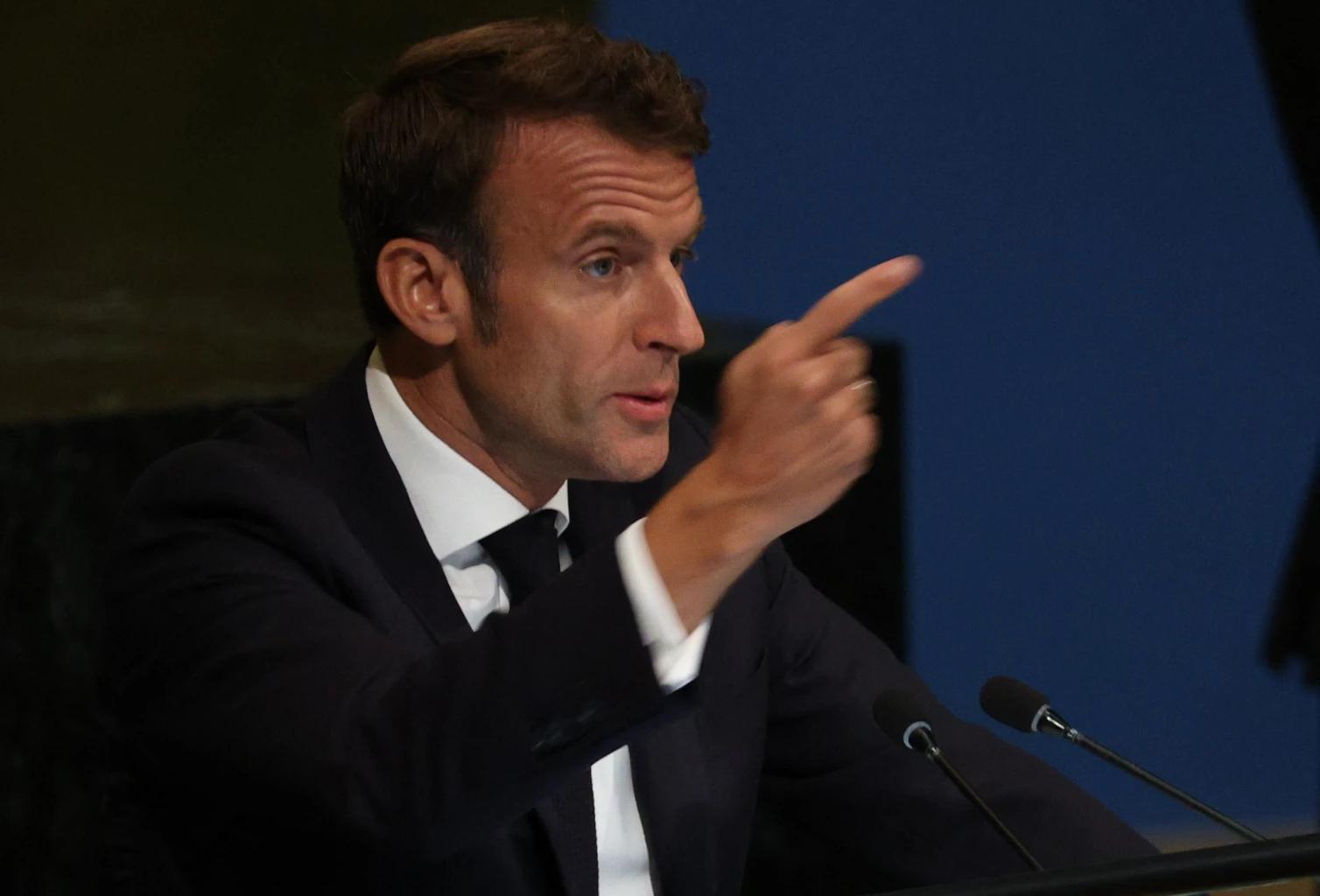
French President Emmanuel Macron accused Russia of modern-day imperialism that was based on the law of the jungle and pleaded for neutral countries to stop being complicit by remaining silent about Russia’s invasion of Ukraine.

In a speech to world leaders at the United Nations General Assembly, Macron warned that Russia’s invasion of Ukraine was dividing the world and restoring the “age of imperialism and colonies.”

“I know that there are countries here that have chosen a form of neutrality vis-a-vis this war. But I want to tell you with honesty today, those who think that are not aligned they are wrong they are making a historic error” Macron said in a 30-minute speech that called on countries to no longer sit on the fence.

“Russia, a permanent member of the security council, through an act of aggression, an invasion, an annexation broke our collective security, it deliberately violated the UN Charter and the principles of sovereign equality of states,” he said.

Macron dismissed the narrative that the West was trying to defend outdated values to serve its interests and that the rest of the world had suffered because of it.

Western allies have been competing with Russia for diplomatic influence since the Kremlin began its invasion on Feb. 24.

Putin on Feb. 24 ordered what he calls a “special military operation” in Ukraine to root out dangerous nationalists and “denazify” the country. The war has killed thousands, destroyed cities and sent millions fleeing their homes in the former Soviet republic.

Reuters

US, UK Officials Slam Russia’s ‘Utter Contempt’ For The United Nations

#SootinClaimon.Com : ขอบคุณแหล่งข้อมูล : หนังสือพิมพ์ The Nation.

https://www.nationthailand.com/world/us-canada/40020277

US, UK officials slam Russia's ‘utter contempt’ for the United Nations

US, UK Officials Slam Russia’s ‘Utter Contempt’ For The United Nations

WEDNESDAY, SEPTEMBER 21, 2022

US Secretary Of State Antony Blinken On Tuesday Said The US Will ‘Never Recognize’ Russia’s Plans To Hold Referenda In Parts Of Ukraine.

“Let me be very clear if these referenda proceed and if Russia purports to annex Ukrainian territory, the United States will never, never recognize it,” Blinken said alongside British Foreign Secretary James Cleverly.

Speaking on the sidelines of the United Nations summit, Blinken added that the actions by Russian President Vladimir Putin show his “utter contempt and disdain for the United Nations”.

Cleverly echoed similar remarks afterwards and encouraged other countries to call out Putin’s “aggressive actions” against the people of Ukraine.

Russian-installed leaders in occupied areas of four Ukrainian regions on Tuesday set out plans for referendums on joining Russia, a challenge to the West that could sharply escalate the war and sparked condemnation from Ukraine and its allies.

In the apparently coordinated move, pro-Russian figures announced referendums for Sept. 23-27 in Luhansk, Donetsk, Kherson and Zaporizhzhia provinces, representing around 15% of Ukrainian territory, or an area about the size of Hungary.

Russia already considers Luhansk and Donetsk, which together make up the Donbas region Moscow partially occupied in 2014, to be independent states. Ukraine and the West consider all parts of Ukraine held by Russian forces to be illegally occupied.

Rate Hikes, Ukraine War, China Woes Darken Asia Economic Outlook, Says ADB

#SootinClaimon.Com : ขอบคุณแหล่งข้อมูล : หนังสือพิมพ์ The Nation.

https://www.nationthailand.com/world/asia-pacific/40020273

Rate hikes, Ukraine war, China woes darken Asia economic outlook, says ADB

Rate Hikes, Ukraine War, China Woes Darken Asia Economic Outlook, Says ADB

WEDNESDAY, SEPTEMBER 21, 2022

The Asian Development Bank (ADB) On Wednesday Further Slashed Its Growth Forecasts For Developing Asia For 2022 And 2023 Amid Mounting Risks From Increased Central Bank Tightening, The Fallout From The War In Ukraine And Covid-19 Lockdowns In China.

The ADB now expects the bloc’s combined economy, which includes China and India, to grow 4.3% this year, after previously trimming the forecast to 4.6% in July from 5.2% in April. By 2023, the ADB expects the region’s economy to expand 4.9%, slower than the April and July forecasts of 5.3% and 5.2%, respectively, it said in the September edition of its flagship Asian Development Outlook report.

“Growth in developing Asia is expected to weaken. GDP growth forecast for the region is revised downward,” ADB Chief Economist Albert Park said during a virtual briefing on Tuesday (September 20), as he warned a significant global economic downturn would severely undermine demand for the region’s exports.

China’s economy will likely expand by 3.3% this year, further cutting the growth forecast after trimming it to 4.0% from 5.0% in April. The ADB expects the world’s second-largest economy to grow 4.5% next year, slower than the previous estimate of 4.8%.

The outlook for the sub-regions this year remained mixed, with Southeast Asia and Central Asia expected to grow faster than previously projected at 5.1% and 3.9%, respectively.

The ADB, however, kept its growth forecast for South Asia at 6.5%, despite a lower growth estimate for India and an economic crisis in Sri Lanka.

The Manila-based lender at the same time raised its inflation forecasts in the region, as supply disruptions continue to underpin food and fuel prices.

Average inflation in developing Asia this year is now expected to hit 4.5%, up from April and July forecasts of 3.7% and 4.2%, respectively. By 2023, inflation is seen hitting 4.0%, compared with projections of 3.1% in April and 3.5% in July.

Hong Kong May Face Second-Highest Fiscal Deficit Ever: Finance Chief

#SootinClaimon.Com : ขอบคุณแหล่งข้อมูล : หนังสือพิมพ์ The Nation.

https://www.nationthailand.com/world/china/40020266

Hong Kong may face second-highest fiscal deficit ever: finance chief

Hong Kong May Face Second-Highest Fiscal Deficit Ever: Finance Chief

TUESDAY, SEPTEMBER 20, 2022

Hong Kong’s Fiscal Deficit This Year Is Expected To Exceed HK$100 Billion ($12.74 Billion), Almost Double The HK$56.3 Billion Estimated In The Budget, Financial Secretary Paul Chan Mo-Po Said In His Blog On Sunday.

The deficit would mark the second-highest ever, behind only the HK$232.5 billion record in 2020, Chan said, adding that the number will be even worse if it excludes the HK$35 billion raised through the issuing of Green Bonds this year.

The government’s financial reserves may also fall further, to about HK$800 billion, the finance chief warned.

“Both the external economic momentum and conditions of local markets have encountered a strike by the pandemic and the tightened monetary policies of central banks,” he said.

Revenue from profits and salary taxes is going to fall short of expectations because of faltering exports, private consumption and investment, while stamp-duty and land-sale incomes are also weak, Chan added.

On Friday, the government announced it will further extend the rental or fee concessions applicable to government properties and short-term tenancies and waivers to alleviate enterprises’ financial pressures.

Chan said one of the government’s priorities is improving people’s livelihoods in the short and medium term while maintaining healthy and sustainable public finances at the same time.

According to recent research by the Hong Kong Trade Development Council released on Monday, Covid-19-related issues have remained among the top concerns for Hong Kong exporters over the next three months.

Five hundred Hong Kong traders from six major industry sectors, including clothing, electronics, jewellery, machinery, timepieces, and toys, were interviewed for the survey. COVID-19 persistence and the border closure, cited by 40.2 per cent and 22.6 per cent of respondents respectively, are the major impediments to export performance.

Exporters’ confidence improved slightly over short-term prospects, as evidenced by the HKTDC Export Index, which gained 1.9 points over the third quarter to 32.8. Yet an index reading below 50 still indicates pessimism.

In another telling finding, exporters are facing downward pressure on prices, as indicated by a fall in the Trade Value Index of 11.5 points to 40.2. The decline from above 50 to less reflects a shift from optimism to pessimism.

Irina Fan, HKTDC’s director of research, said a majority of the respondents in the latest exporters’ survey view the shortening of the mainland’s Covid-19 quarantine requirement, to seven days of isolation plus three days of home confinement, as positive for business.

Fan added that enabling more-flexible business travel arrangements, the gradual resumption of cross-border commerce and trade, and a smoother production flow were cited as top benefits.

On the bright side, the city’s jobless rate has improved this year from a high of 5.4 per cent in the February-April period to 4.3 per cent from May through July, and 4.1 per cent in the June-August period.

Chan said he also expects the second phase of electronic consumption vouchers, which will be issued from October 1, could inject over HK$15 billion into the market.

Liu Yifan

China Daily

Asia News Network

Renewable Energy Generation Capacity Rises To 20% In South Korea

#SootinClaimon.Com : ขอบคุณแหล่งข้อมูล : หนังสือพิมพ์ The Nation.

https://www.nationthailand.com/world/asia-pacific/40020265

Renewable energy generation capacity rises to 20% in South Korea

Renewable Energy Generation Capacity Rises To 20% In South Korea

TUESDAY, SEPTEMBER 20, 2022

Capacity For Generation Of Renewable Energy For The First Time Is Exceeding 20 Per Cent Of Total Power Production In South Korea This Year, State Data Showed On Tuesday.

According to the Korea Power Exchange, renewable energy capacity totalled 27,103 megawatts as of September — 20.1 per cent of the total 134,719MW power generation facilities.

It is estimated that the portion surpassed the 20 per cent level for the first time in August, after posting 19.8 per cent in July. Renewable energy includes solar, hydro and wind power as well as bio-backed generation.

Data showed that liquefied natural gas accounted for the highest share of the total energy output with 30.8 per cent, followed by coal at 27.2 per cent, renewable energy with 20.1 per cent and nuclear power with 17.3 per cent.

Electricity generation capacity by renewables first outpaced nuclear power generation in September last year and has since been growing.

But nuclear power is likely to curb the growth of renewable energy in power generation again in the years to come as the incumbent Yoon Suk-yeol administration has made moves to nullify the previous government’s drive to phase out nuclear power.

According to the power generation policy unveiled by the Industry Ministry, the government has the goal of expanding the portion of nuclear power to 32.8 per cent of total output by 2030, setting the share of renewable energy at 21.5 per cent.

Compared to an earlier plan for 2030 suggested by the previous Moon Jae-in administration, the revised portion of nuclear power is higher by 8.9 percentage points and the latter is lower by 8.7 percentage points.

Further, there are predictions that solar power generation business will be scaled back as the industry ministry has decided to look into allegations about unauthorised loans worth 261 billion won (6.9 billion baht) for some solar energy projects during the Moon administration.

Market insiders have raised concerns that local enterprises would have difficulty fulfilling the RE100 target, under which they will use 100 per cent renewable energy without resorting to fossil fuels, by 2050.

Samsung Electronics and many others, including some public firms, have joined the RE100 scheme, which was initiated by developed countries.

“The government will continue to expand the portion of renewable energy for businesses’ to attain the goal of RE100,” an official said. “There will not be any particular problem in terms of supply of renewable energy as the portion will climb to 21.5 per cent in 2030.”

The Korea Herald

Asia News Network